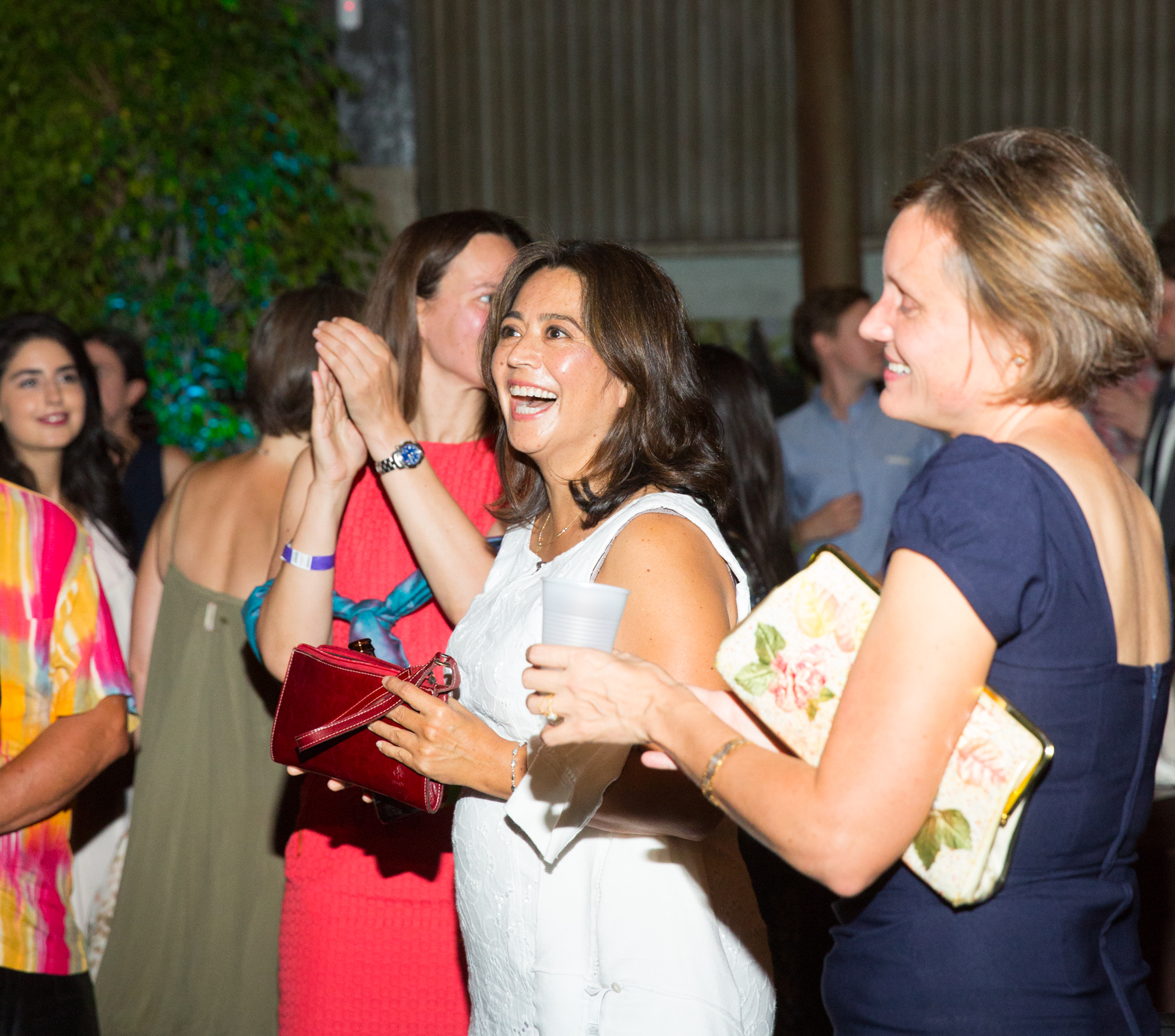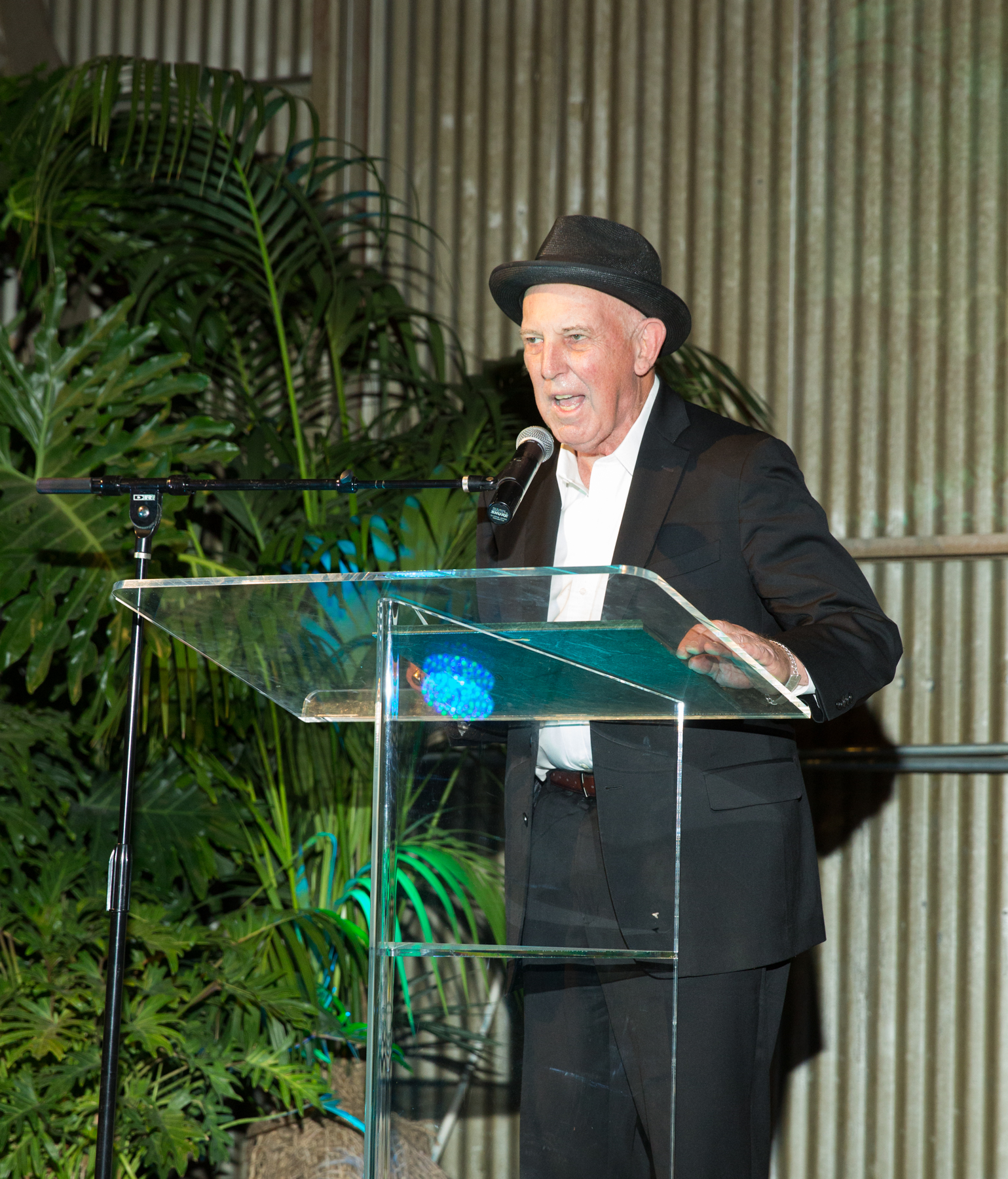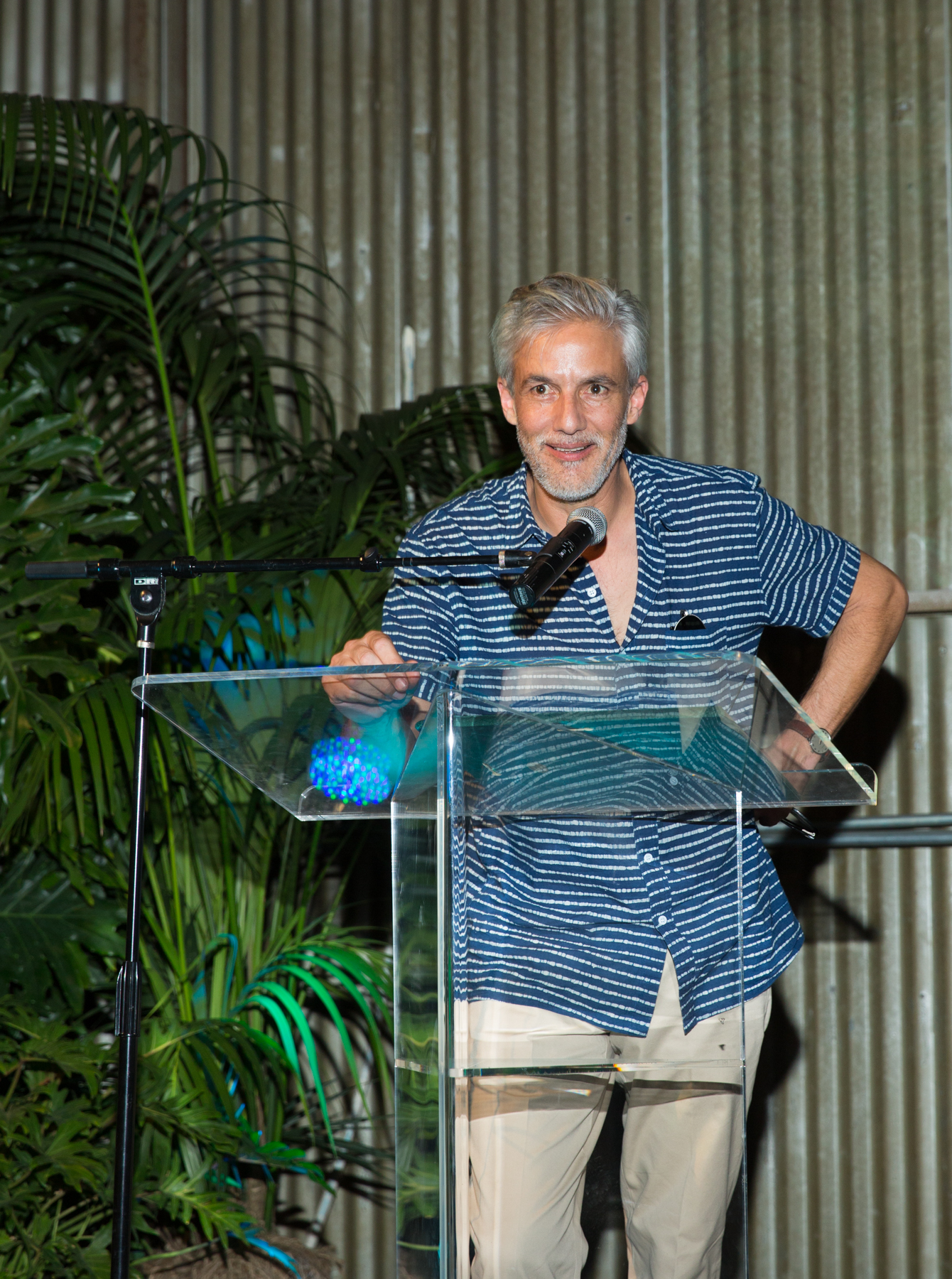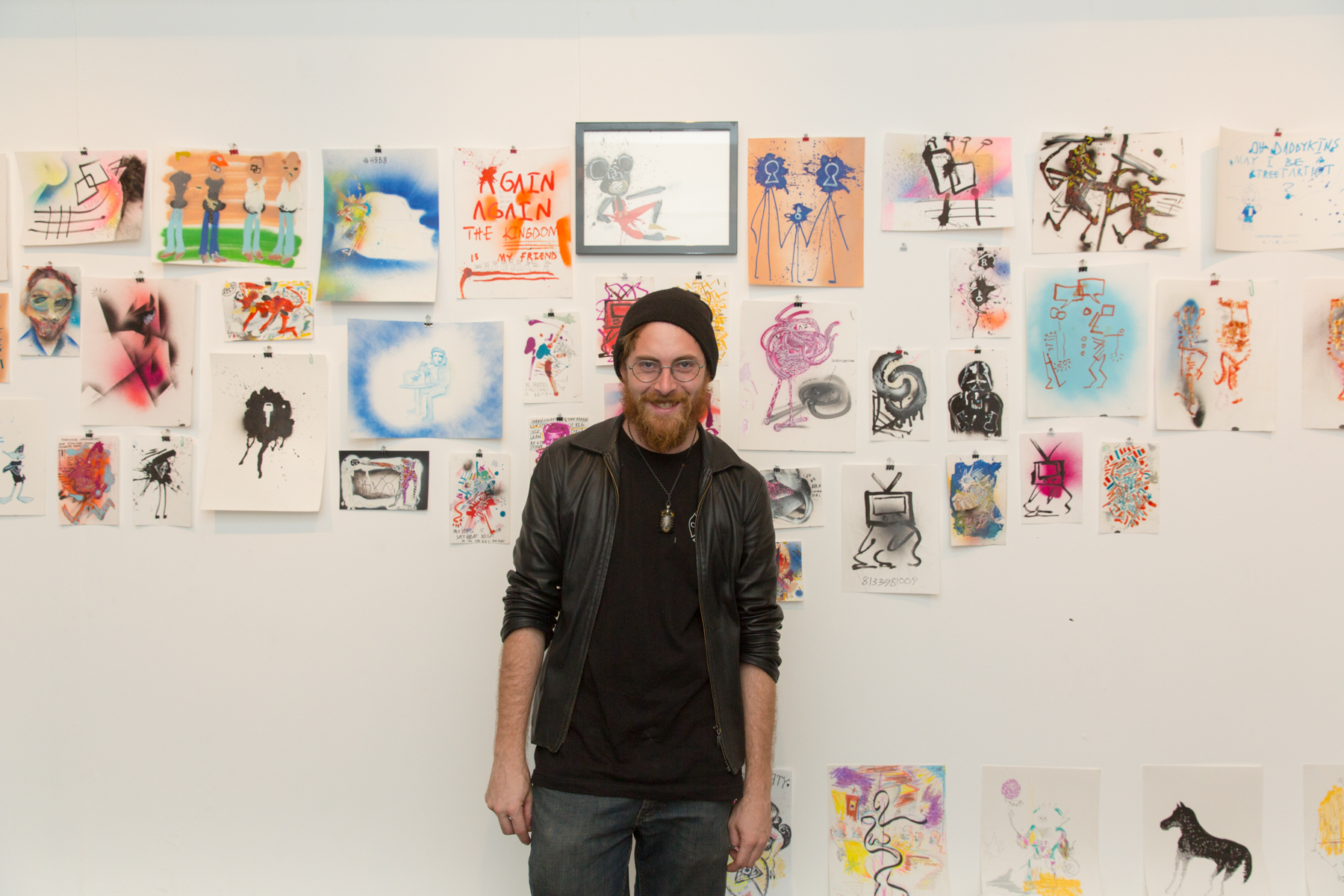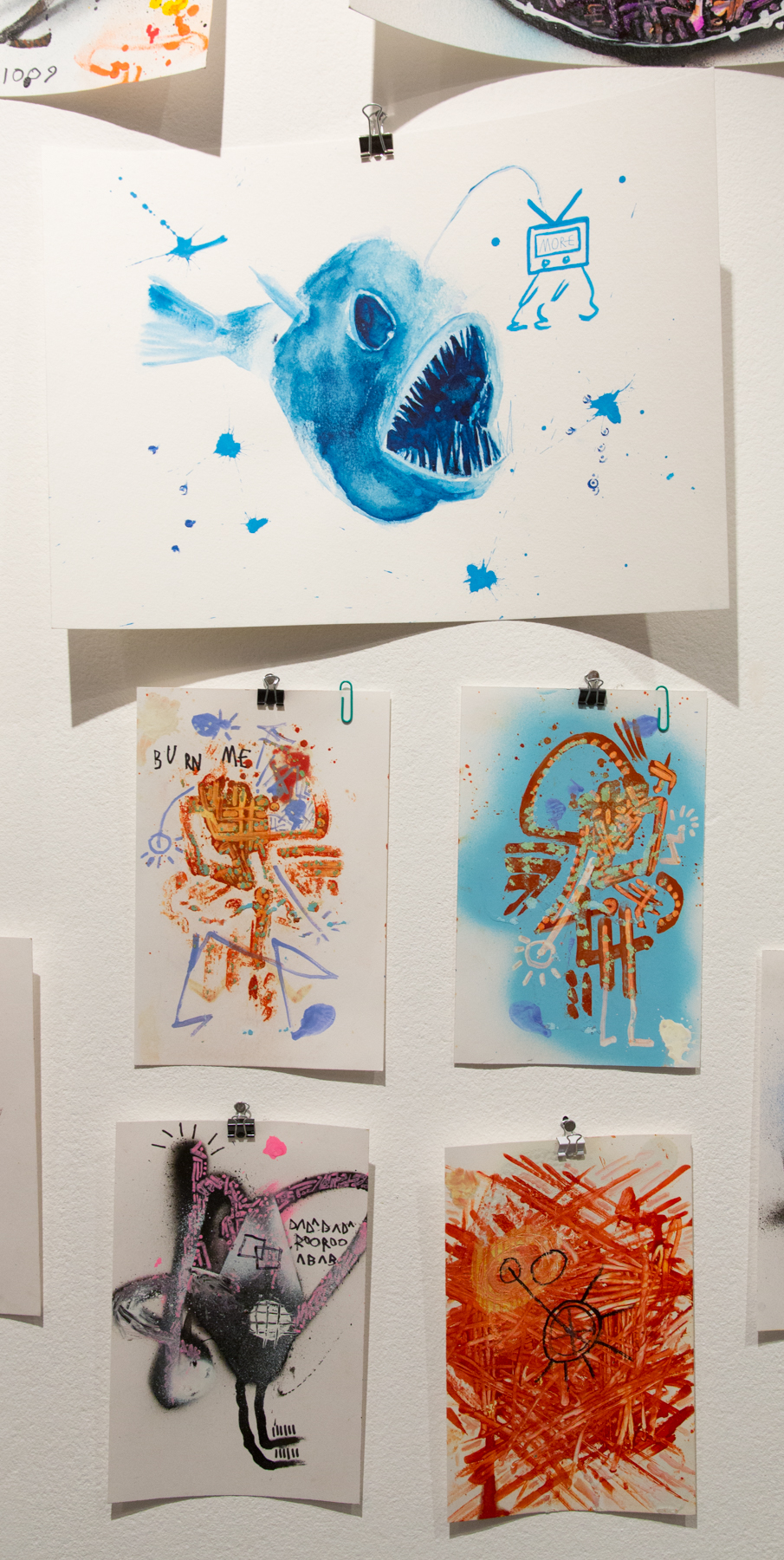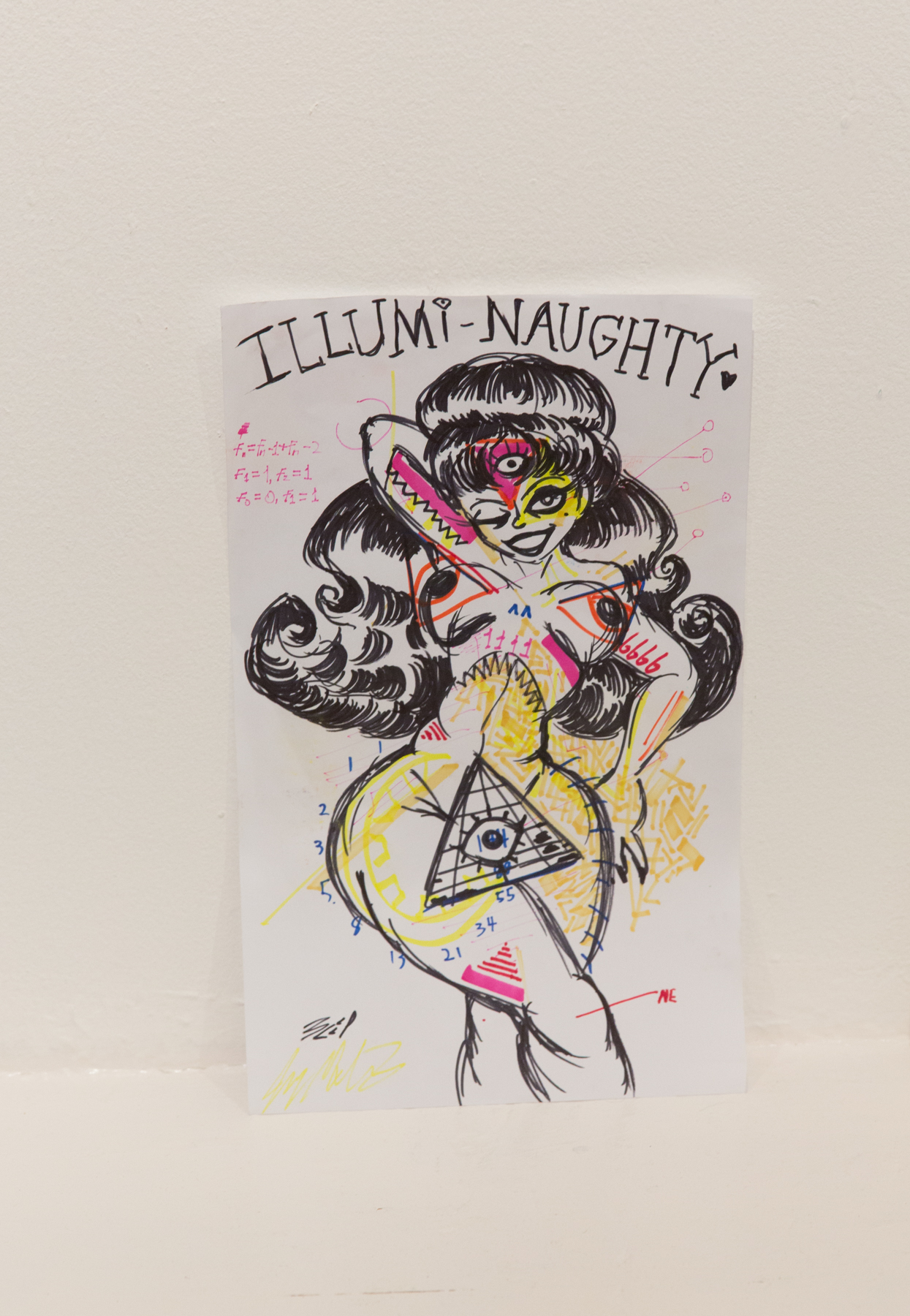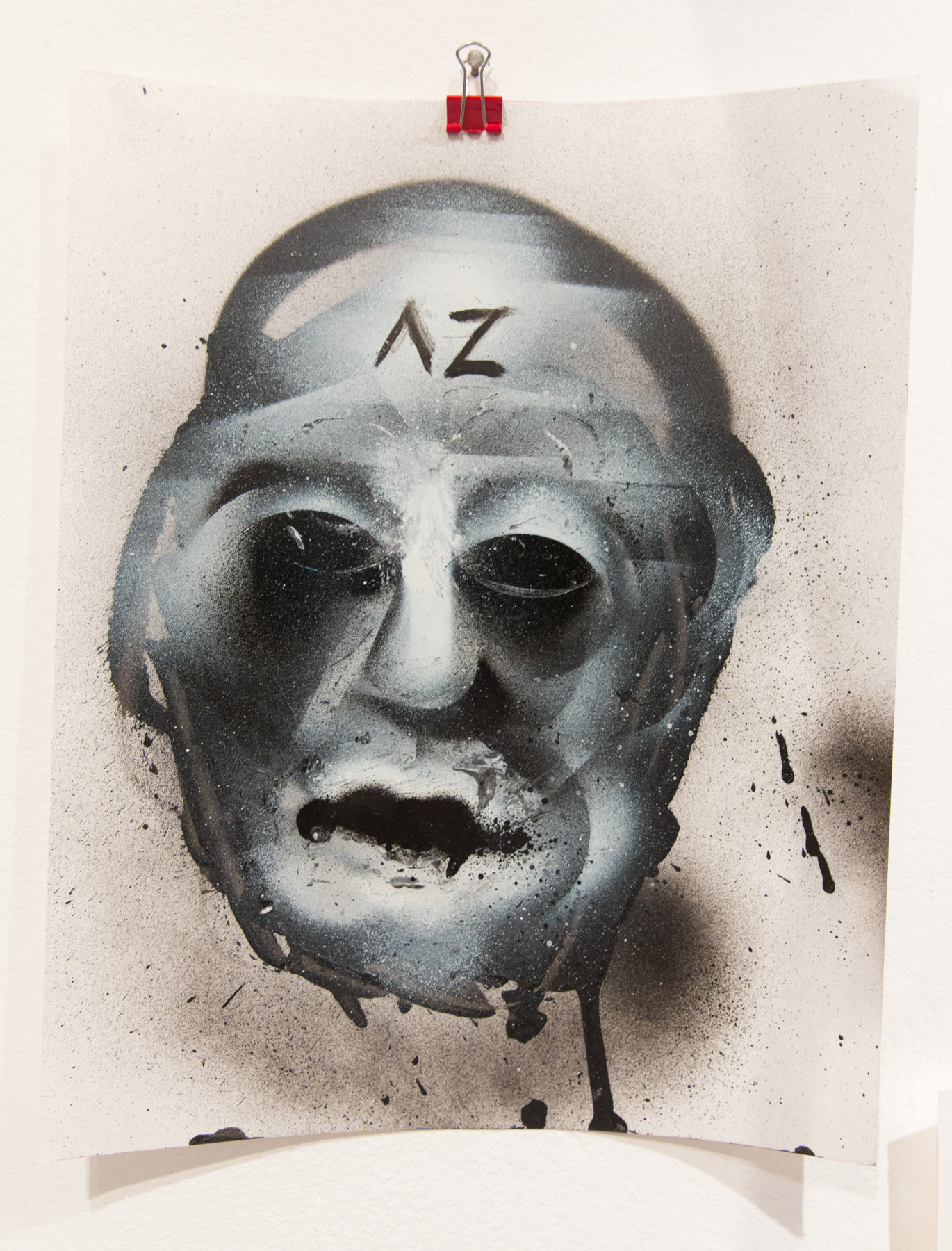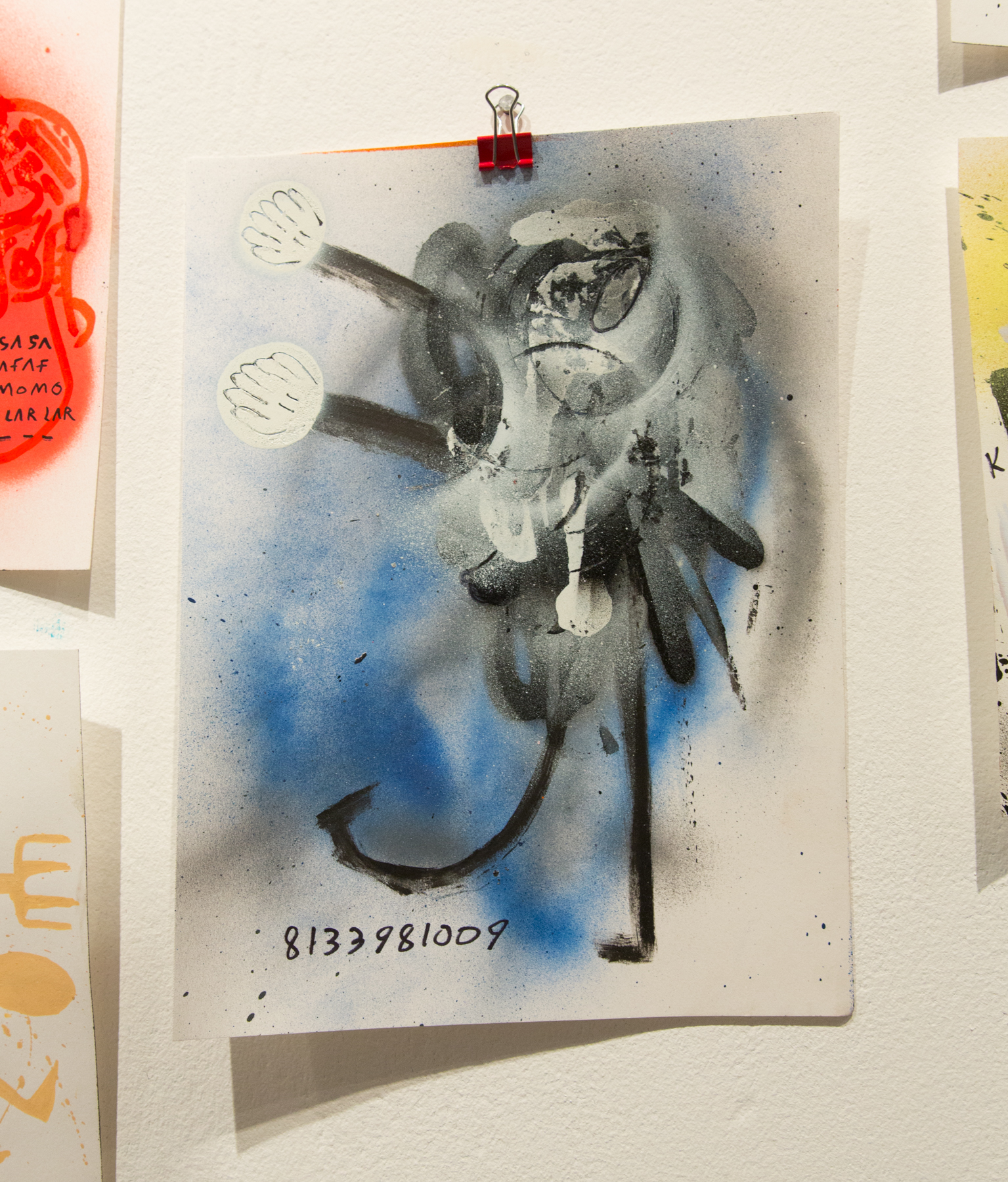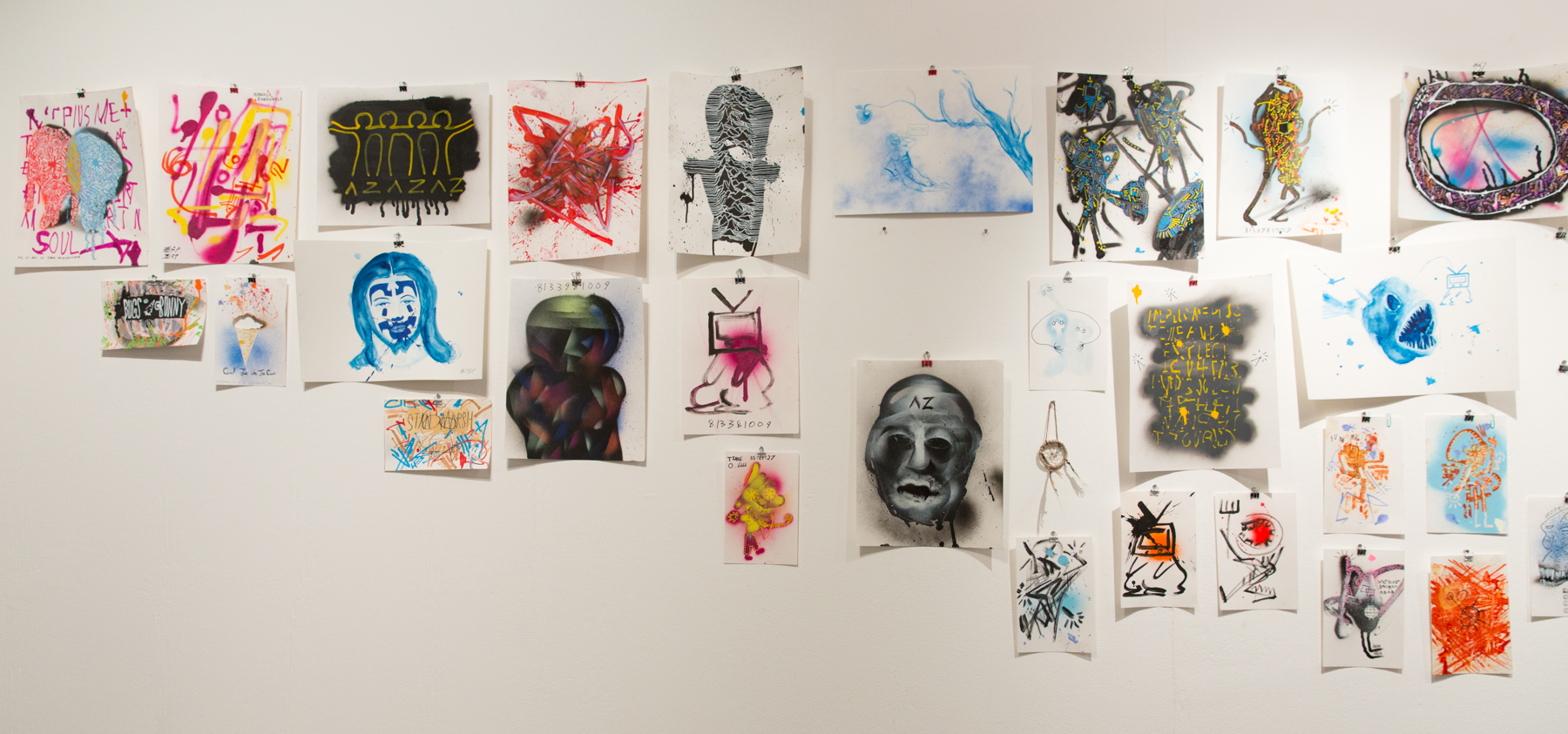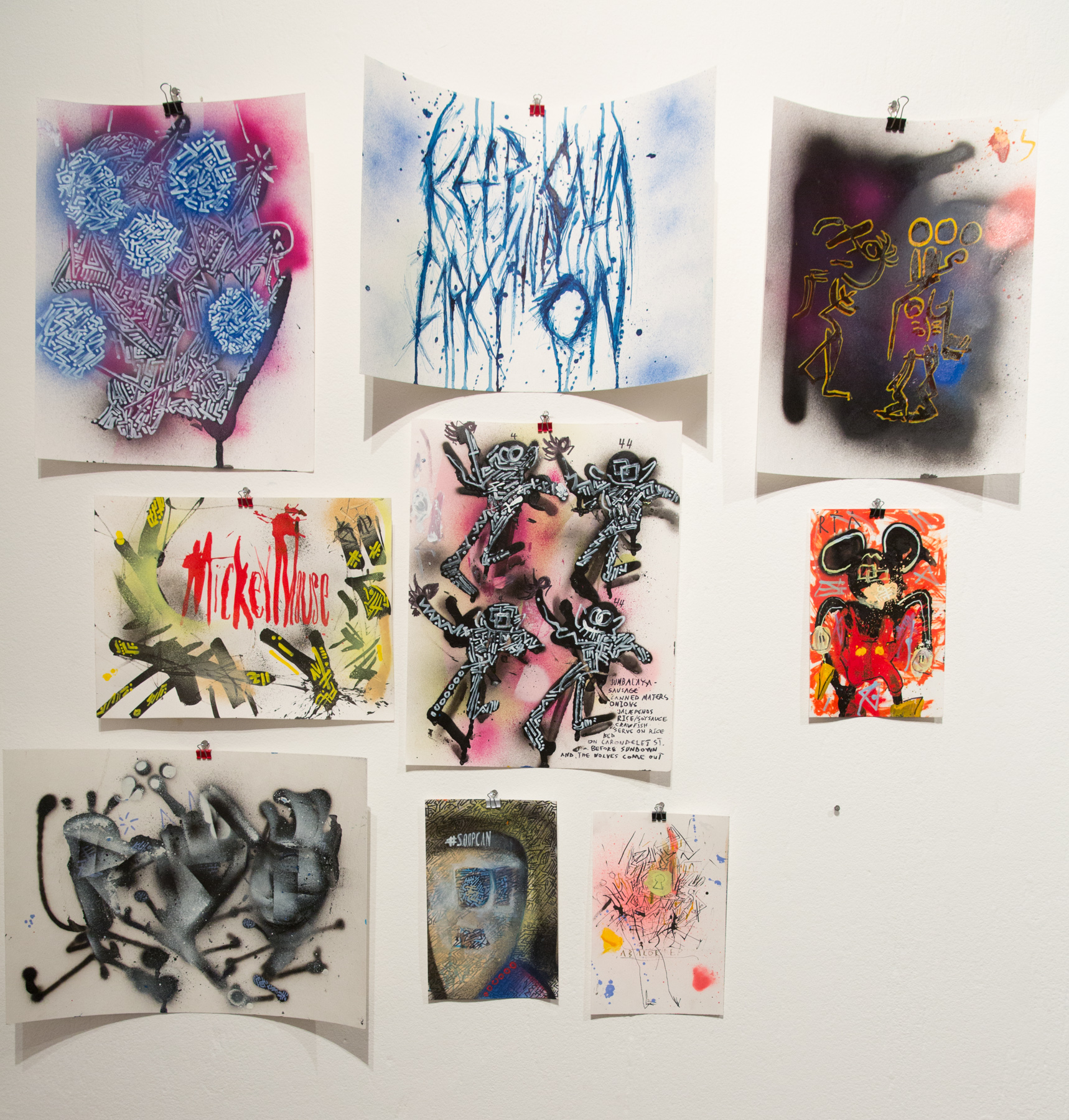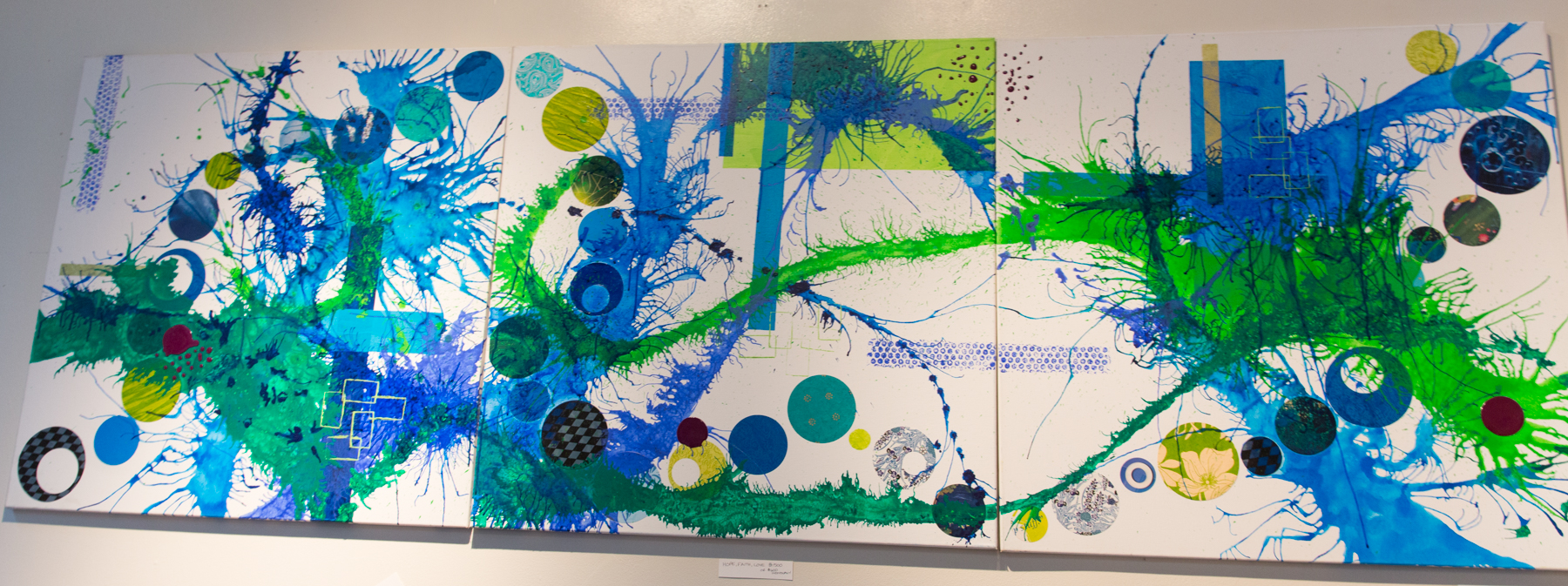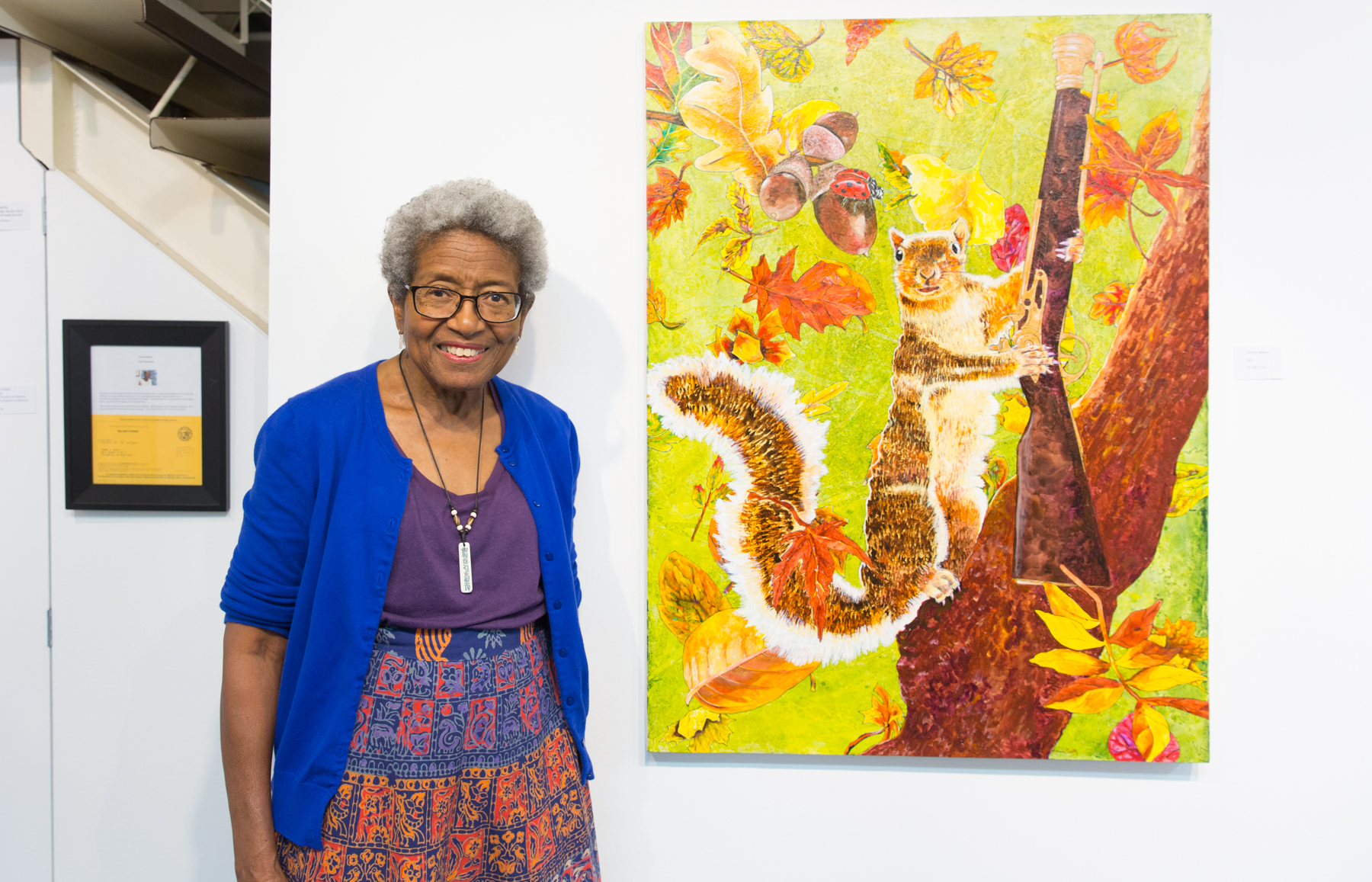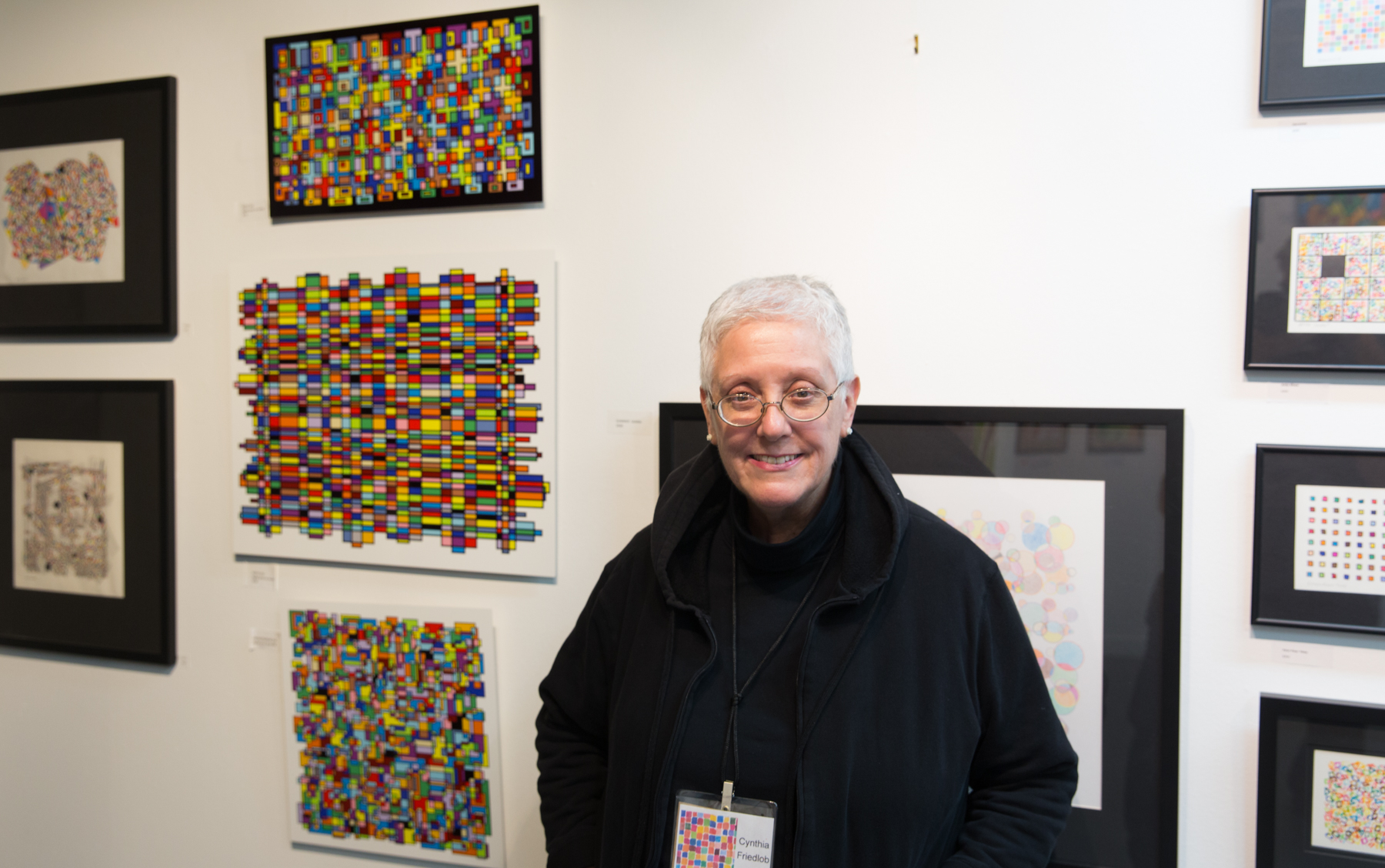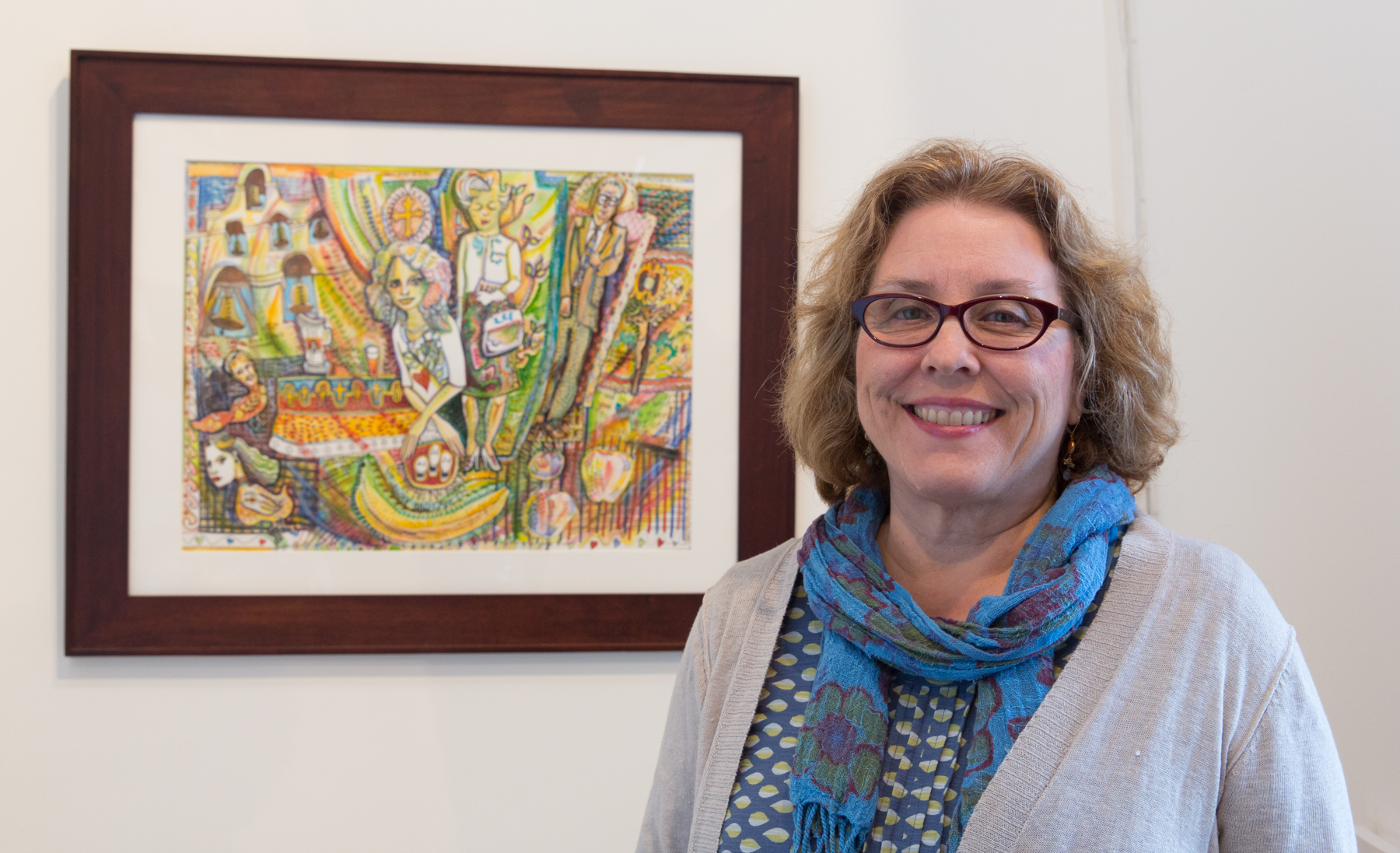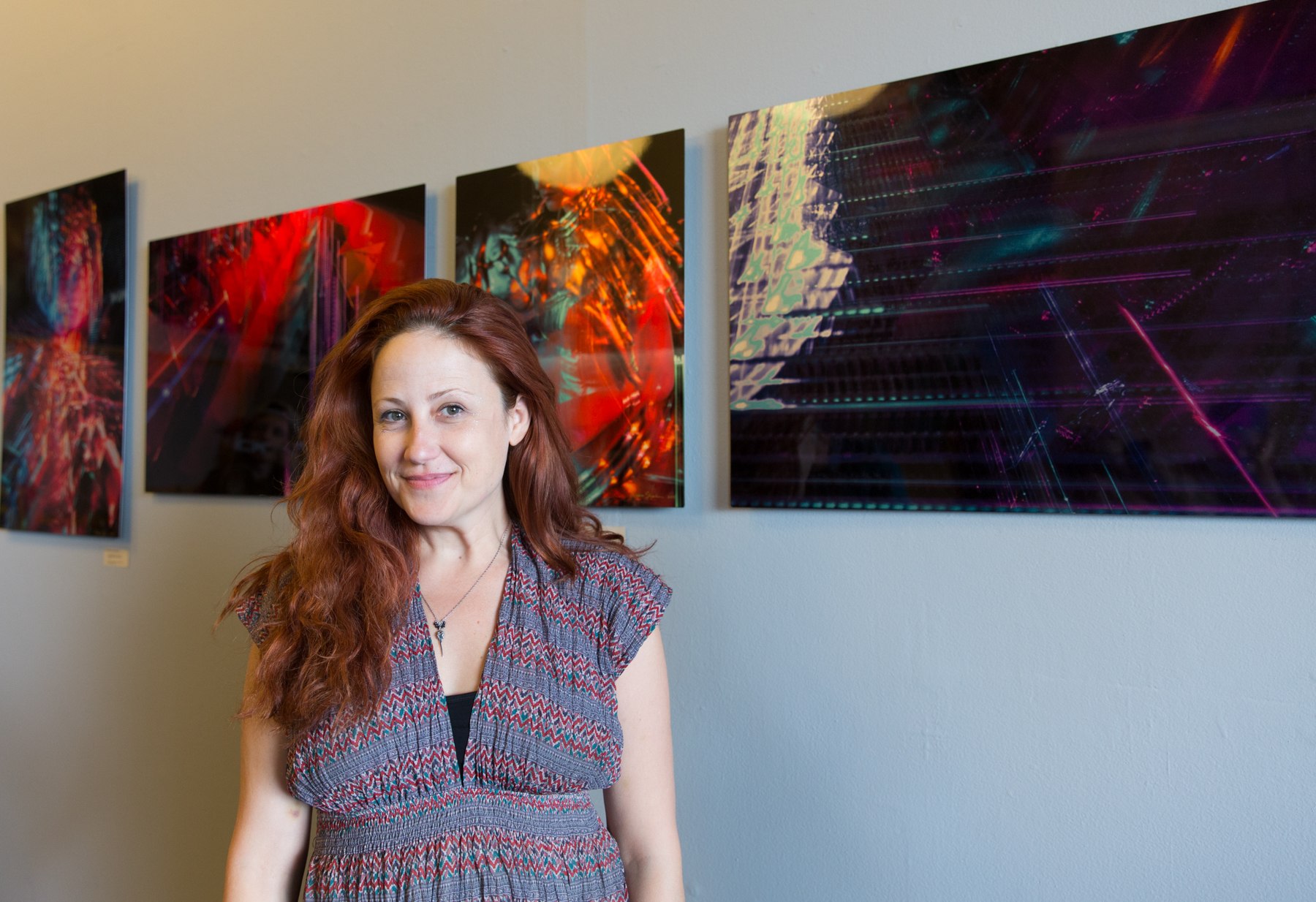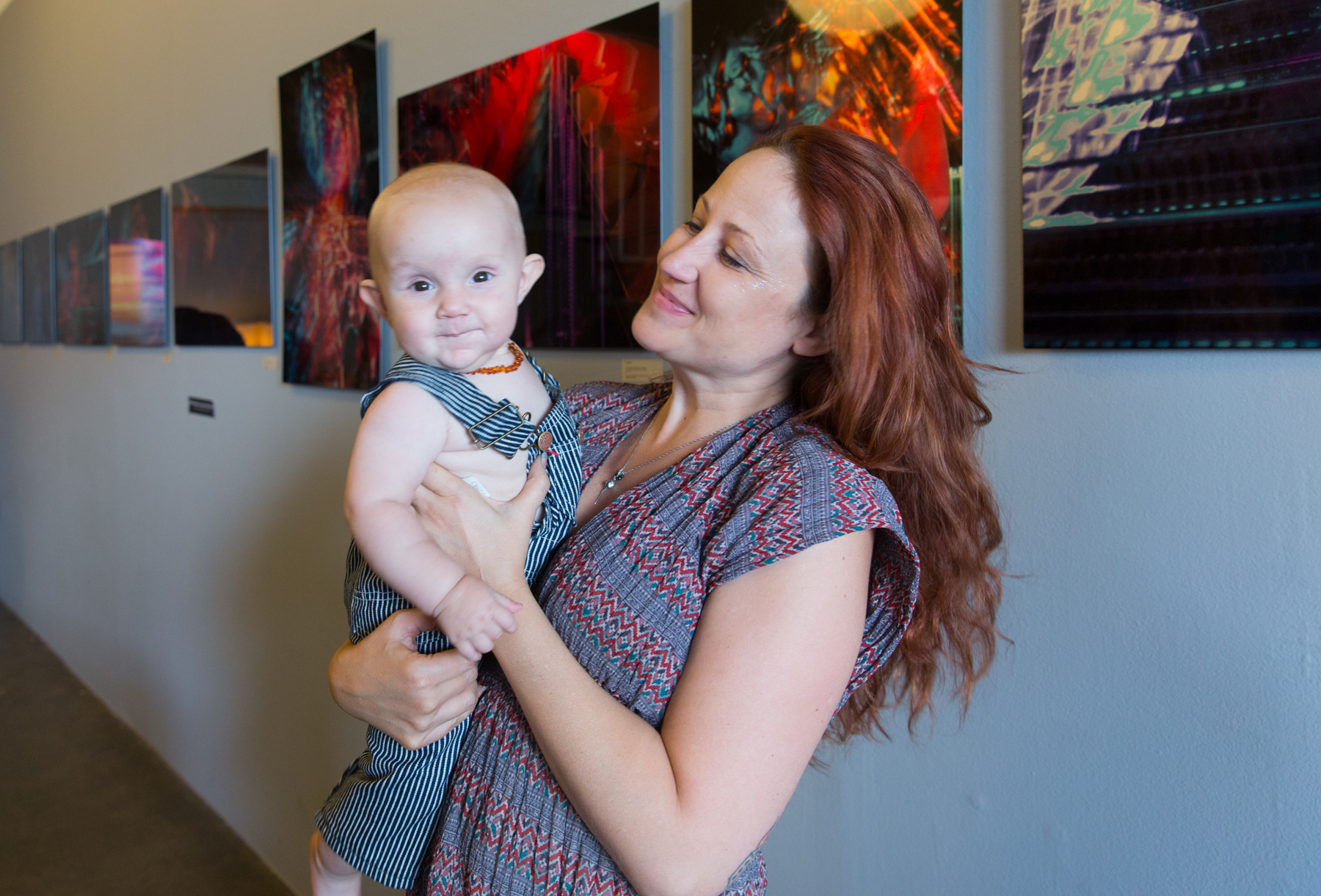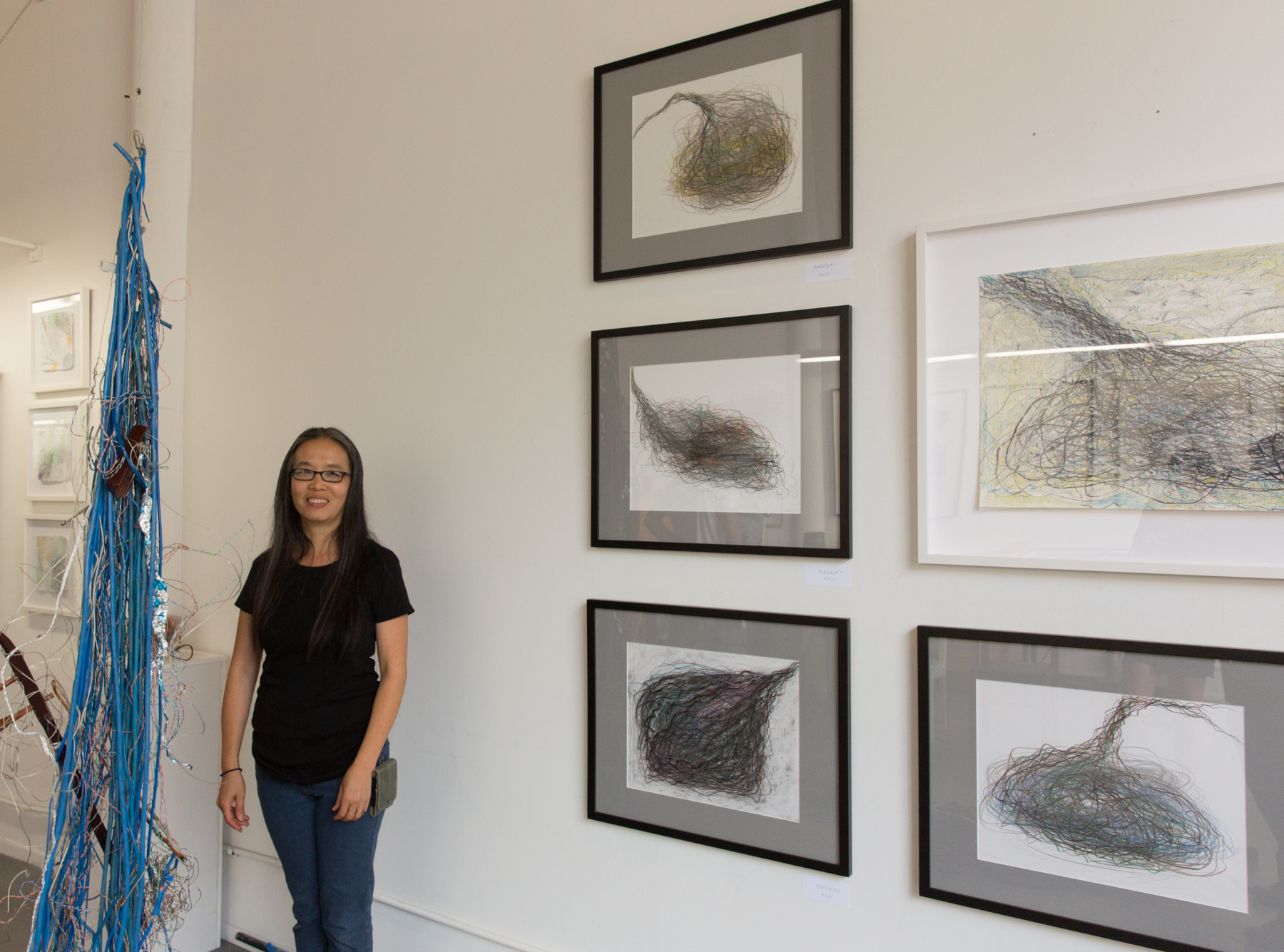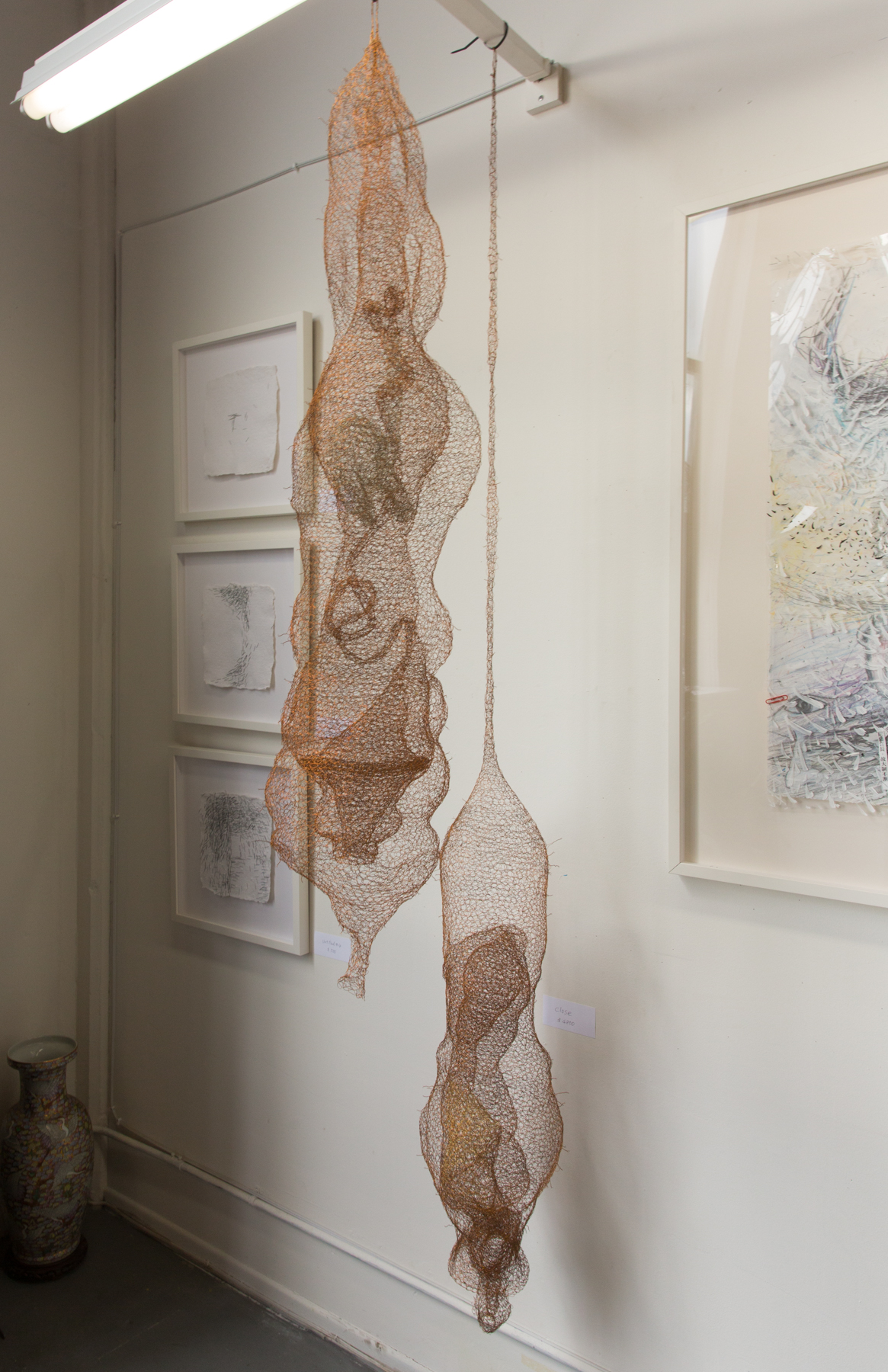

South Bay Contemporary in San Pedro has a fascinating new exhibit running through October 10th. Via Negativa: The Transcendence of the unReal explores the idea of clarifying religious experience and language through knowledge of what God is not, rather than what He is. Visually and texturally stunning, the theme behind the show adds heft to works that individually show substantial perceptive power.
Via Negativa – South Bay Contemporary – Photos by Jack Burke
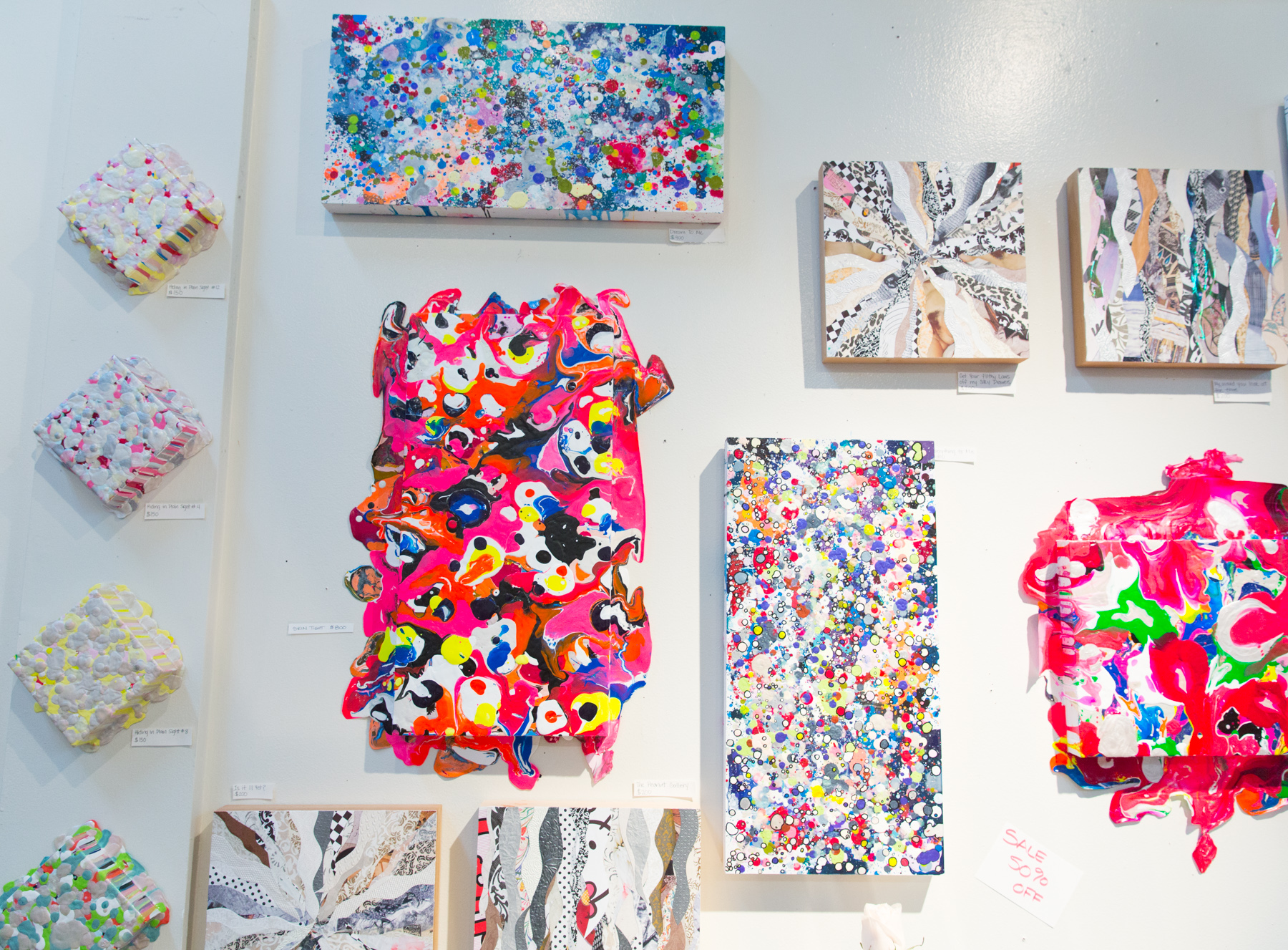
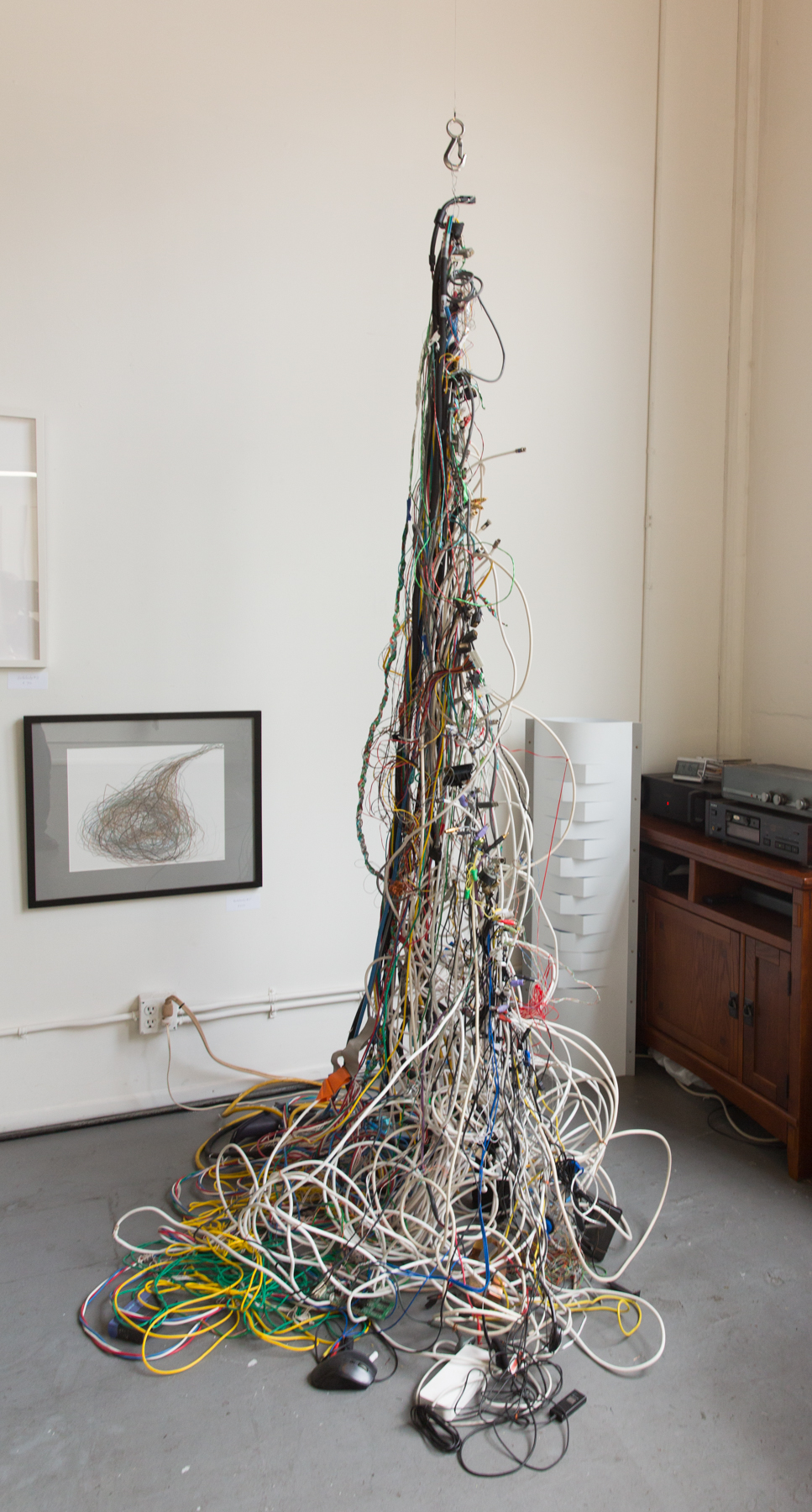
Guest curated by the Cerritos College Art Gallery, curator James MacDevitt, avoids a direct depiction of what is unknowable, instead presenting a swirling enigma in lieu of the concrete world. While the entire exhibition bristles with visual excitement, some standouts include untitled wood and neon pieces by Lisa Schulte, Shannon Willis’ fascinating sculpture created with ping pong balls and LED colored light strips, “Spiritual Aspiration,’ the single channel video “Wind and Water Study’ by David O’Brien, and the spidery wires of Christopher Pate’s “Emergent Action.”
MacDevitt explains the roots of the show. “When offered a space as guest curator here, I decided to extend the Cerritos show I curated with an exhibit that, like the show there, also attempts to know and to understand the unknowable.” At Cerritos, MacDevitt says the exhibition “tried to visualize big data, the artists worked with ideas like mystic diagrams. Here we are looking at apophatic theology – knowing something by what it’s not. The artists use issues of tangential stimulation and play around with animate objects. Ther’s a vitalist energy that expresses both science and religion without being dogmatic about one or another. Both, after all, are attempts to know. They are just different strategies for knowing.”
Perhaps, where the intersection of science and religion meet, art is created. Judge for yourselves, and enjoy an exhibit that makes you think about deep questions, but is also quite a lot of fun.
South Bay Contemporary is located at 401 Mesa Street, 3rd floor, in San Pedro.
The San Pedro art walk continues to be a wonderful opportunity to find exciting art. A highlight of this month’s walk was discovering the work of artist Angelica Sotiriou. Her paintings have a mystical, magical quality that draws the viewer into her unique vision.
“It’s my voice. I’ve known since I was a child, the only way I can survive is my art. It’s my world,” Sotiriou says. Working with acrylics, she considers herself a contemplative, narrative painter. “My work – I get lost in it. It’s like little portals have opened.” Viewed, this makes perfect sense. Spend any time looking at the paintings and there is the sensation of being pulled into the paintings.
“All my pieces have to do with looking for light,” Sotiriou relates. Viewing her paintings with their mix of deep blues, rich gold, and shimmering white, she has found it. There is a dimensional quality to her work that reaches beneath the surface of the canvas, and exudes spirituality. The golds and blues have the resonance of 12th Century icons that have time traveled to the present. When first viewed, we were unaware that the artist was raised in a Greek Orthodox family, or that she had incorporated her religious faith into her paintings. And yet, knowing none of this, to the viewer, her work radiantly expresses pure faith, wonder, and belief. Possibly the best way to describe these pieces is transcendent.
Sotiriou’s studio – photo by Jack Burke
In Sotiriou’s studio, the artist’s work, past, present, and in process, all stunningly present images of light and life. “For the first 20 years I created large narrative bas-relief figurative sculptures. Currently I’m working on a crepuscular series, inspired by the beauty of light coming through clouds.” On her website, the artist says “My recent drawings and paintings have been a personal journey of uncovering and revealing pathways, windows and portals of light and of spirit.” The paintings seem to glow, as if light came from inside the canvas, or the canvas itself was a window.
While many of the artist’s works are large scale, averaging 8′ by 4′, some are more diminutive in size.
Contemplative Narrative Paintings – Angelica Sotriou – Photos by Jack Burke
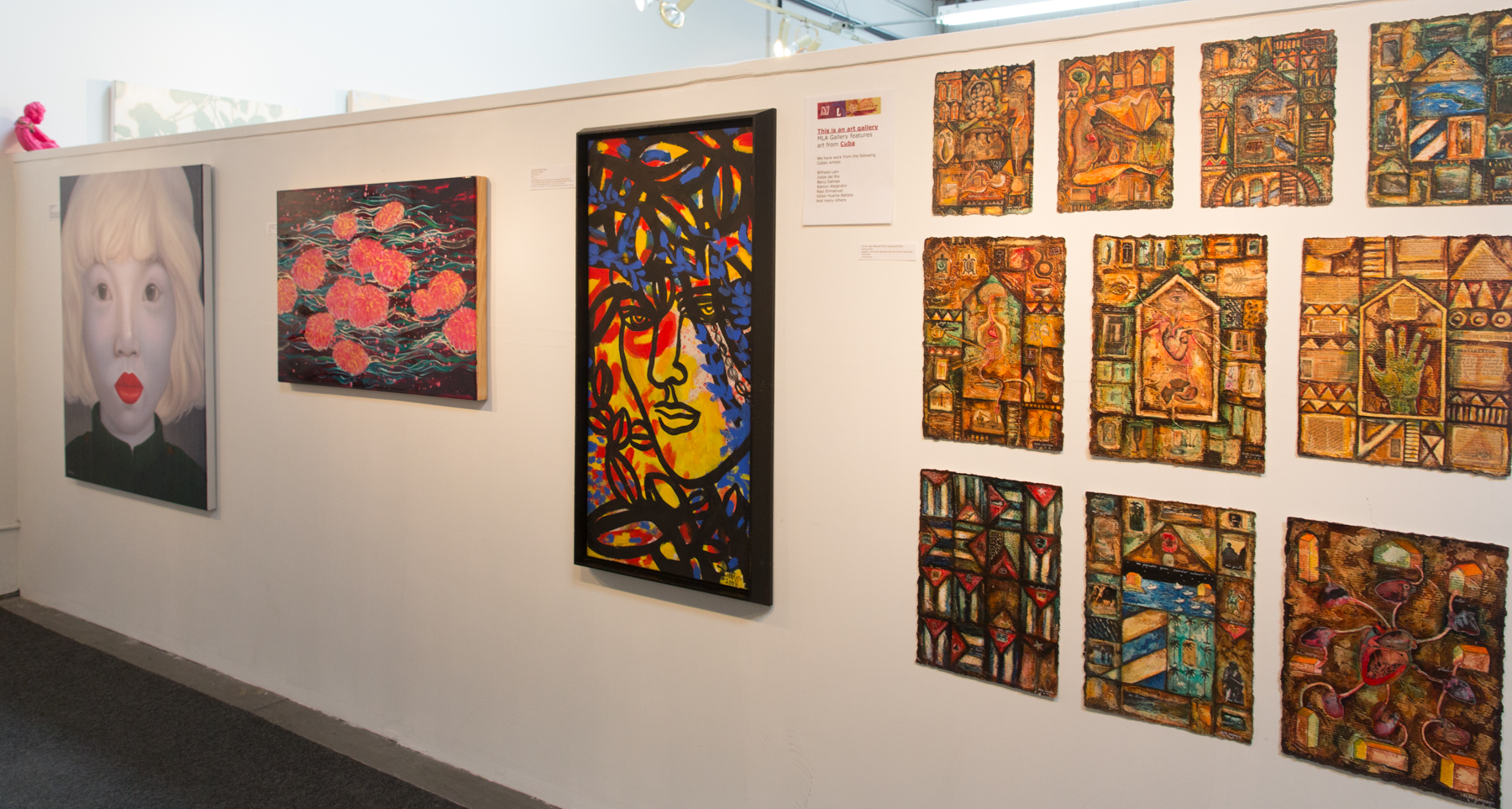
The artist has this quote posted around her gallery and studio:
“I don’t know how But suddenly there is no darkness left at all The sun has poured itself inside me From a thousand wounds.” – Nikoforos Vretakos
Sotiriou has taught art throughout California, and holds masters degrees from UCLA. From sculptural pieces to acrylic paintings, the artist has been exhibiting in San Pedro since 2001. See her astonishing work at Loft 2, Second Floor gallery at 401 Mesa Street in San Pedro.
Artist Angelica Sotiriou right, author left – Photo by Jack Burke
Genie Davis; Photos by Jack Burke and courtesy of artist
It’s midnight in Arches National Park. Open twenty-four hours, the red rock arches, towers, and spindles are a lot less crowded in the dark than they were at eight o’clock this morning when we joined other tourists in short hikes beneath, around, and within iconic formations called Windows, Park Avenue, and Skyline Arch.
Arches National Park
Now we’re standing in soft, ankle deep sand beneath the dark and sinuous curves of Sandstone Arch. Above the arch is a sky full of stars, speckled with the last of the streaking Perseids. Directly next to me, my partner and photographer is doing mysterious lighting adjustments to create the ultimate portrait of us illuminated beneath the stars, beneath the arch, somehow magically visible, carved into radiance out of the darkness.
We pose, smile, freeze, hold it until the flash goes off. Then darkness and silence returns. I’d worried about snakes or scorpions, almost missed this adventure of quiet. I almost missed looking up at the Milky Way, the sliver of a moon, the North Star burning bright. After an hour or so, we’re done, and driving back to our tent.
Not an ordinary tent set up around a fire ring, but our deluxe safari tent, a part of Moab Under Canvas, the ultimate Utah glamping experience.
Moab Under Canvas Photo by Jack Burke
What’s glamping? Well, think of it as a superior camping experience. Tents are already set up for you, some have their own en-suite bathrooms – ours did – and those that do not, have access to privately sectioned luxury bathhouses. Located on 40 acres just 7 miles from Arches National Park and practically across the road from the entrance to Canyonlands National Park’s Island in the Sky section, the site consists of canvas tents and small canvas tipis. Some tents sit on raised wooden platforms and have porches. We were lucky enough to have one of these, which commanded a sweeping view across a scrubby desert plain to picturesque red rock cliffs. Tents with porches and bathrooms are the deluxe variety, with some even including a sitting area with a sofa bed.
Deluxe Safari Tent Photos by Jack Burke
Ours had a king bed, a wood-burning stove that we didn’t use in August, and that coveted in-tent bathroom equipped with a sink, flush toilet, and a shower operated with a pull chain. Heated by propane, we had plenty of hot water to wash off the midnight red rock dust.
We also had that porch, and two deck chairs, the perfect excuse to bundle up – even though it was August, on this night the temperature dropped to a cool fifty-nine degrees – and continue to stargaze.
Night at Moab Under Canvas – Photo by Jack Burke
The deluxe tents are positioned along a gravel road away from the tighter cluster of tipis, safari tents, and private group bathhouses. Closer to the center of camp, the staff – who are available 24-hours, as is access to the Moab Under Canvas office for hot beverages, cold water, and electronic device charging – sets up a bonfire each night.
Moab Under Canvas encampment – Photos by Jack Burke
Tipis have cots, plush sleeping bags, tables and chairs, and are just about as cost effective as pitching your own tent. Safari tents are large and comfortable, the Deluxe tent cabins like ours have the same features as the safari – bed, coat rack, dresser, rug, table and chairs, plus the bathroom and porch. 20 plus tents and 14 tipis make up the encampment. Families or groups can have a tipi moved next to any type of tent, adding extra sleeping room and privacy.
Tipi time – Photos by Jack Burke
But I wasn’t thinking of tipis. I was obsessed with our porch. It was the perfect spot to eat a bagel with cream cheese and sprouts, ordered from a local café and delivered to the site’s office for breakfast. It was a good bagel, but it went better with distant cliffs reddening in early morning light. Between hikes, the porch was the place to kick back and relax with a beer. And at night, that night, to keep watching the sky spiral on and on, stars sprinkled like sugar across a black velvet cloth.
The porch, the porch
Moab Under Canvas isn’t the only glamping site owned by Sarah and Jake Dusek. Yellowstone and Glacier are two other outposts, both of which I’m hoping to see. Moab was the last to open in 2014. The Dusek’s goal was to provide an authentic, close-to-the-land experience, without the headaches of setting up a tent, finding a chemical toilet in the dark, or forgoing showers and organic shampoo. They succeeded in all these things, and in something more: establishing a feast of a vacation spot with a side of adventure and a topping of starlight. Midnight wanderings in nearby national parks, optional.
Moab Under Canvas
13784 US-191, Moab, UT 84532
(801) 895-3213
Genie Davis, Photos by Jack Burke (Copyright Jack Burke)
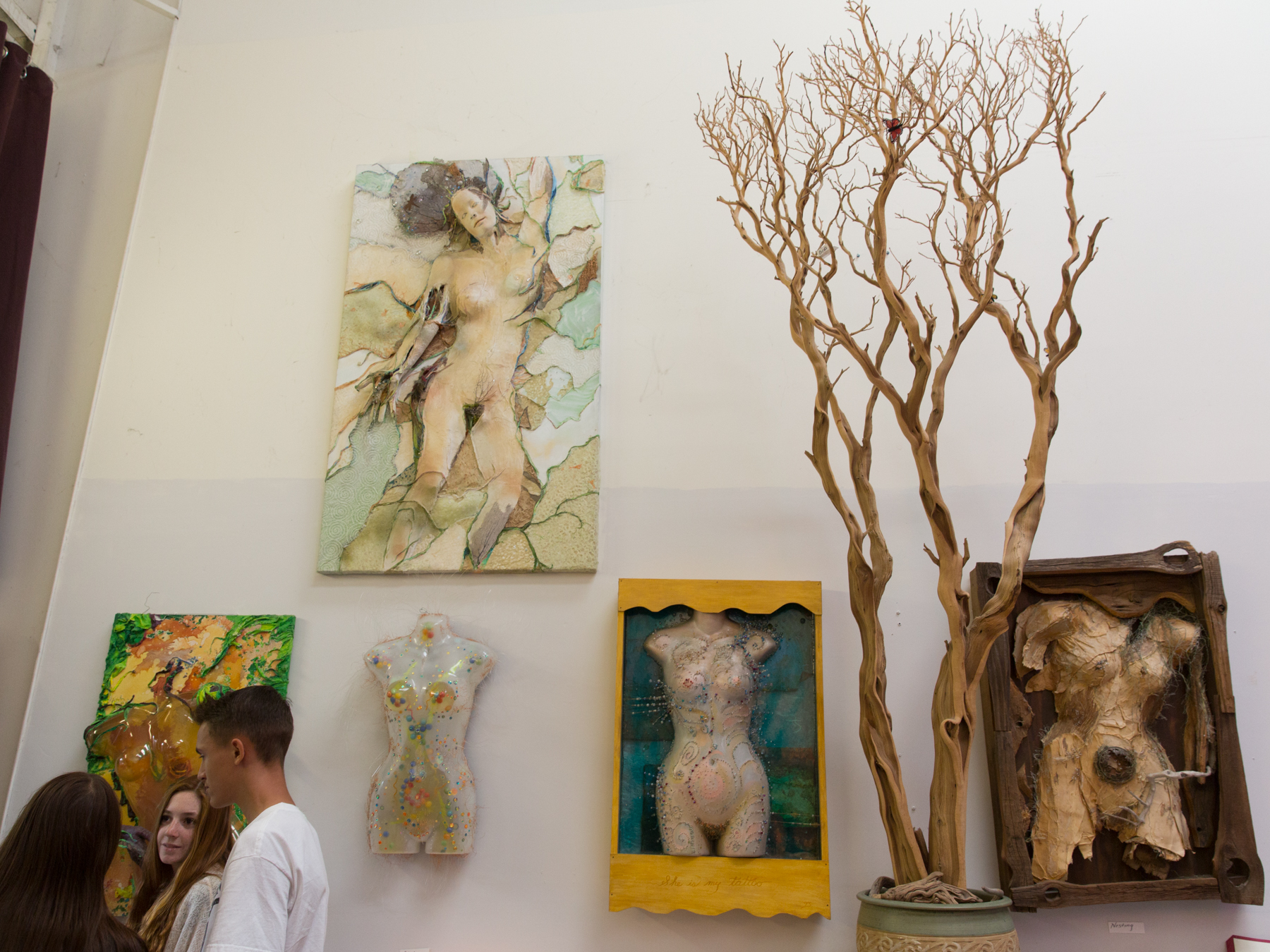
Torrance Museum of Art – Closing Reception – The Studio System – All photos by Jack Burke
For a long time, the South Bay – those beach-close communities just south of LAX – were regarded as a place where art events were few and far between. No longer.
The Torrance Art Museum, which is about to celebrate its 10th anniversary with an anniversary fundraiser on September 12th, is one strong part of the South Bay’s emergence into the Los Angeles art culture zeitgeist. On the 12th, guests attending the free event can purchase artworks from artists who’ve exhibited at the museum throughout the decade – each selling for a bargain price of $100.00. Funds raised are for museum arts and education programs and future renovations.
No better example of TAM’s stewardship of the arts – and a commitment to the cutting edge – can be shown than the museum’s August month- long main gallery exhibit, Studio System. The show featured eleven local working artists in a month-long experimental residency which was designed to bridge the gap between artists and the public. This intimate experiment ran from August 1 to 29. The artists were there to create; last Saturday, a closing reception displayed their works.
A lively, fun evening, the ability to interact with the artists and study their work offered an insider view of the creation process. Participating artists were: Sydney Croskery, Elizabeth Dorbad, Nancy Evans, Josh Hagler, Seth Kaufman, Hung Viet Nguyen, Don Porcella, Dickson Schneider, Mariangeles Soto-Diaz, Vincent Tomczyk, and Valerie Wilcox.
Over the course of the month, artist Dickson Schneider made his art even more accessible, distributing his work to viewers for free. Artists were committed to discussing the ideas and processes behind their art as well as their concrete materials and artistic vision with museum visitors. That dialog was on-going throughout the crowded reception.
Also on display Saturday were large-scale works by sculptor and artist Kay Whitney. Her evocative, industrial felt-based pieces were both supple and sinewy, creating sensual shapes of depth and breadth. The exhibit, titled, “A Deceit,” deceived only in the material’s transforming capabilities: the pieces are not cast in bronze, after all, and Whitney is more than willing to tweak and rearrange them, altering perception and meaning.
With shows like these, TAM is well worth celebrating – don’t forget their 10th anniversary fundraiser on September 12th.