
The Horror of It All – Screamtacular at the Academy Museum of Motion Pictures

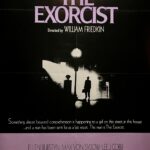
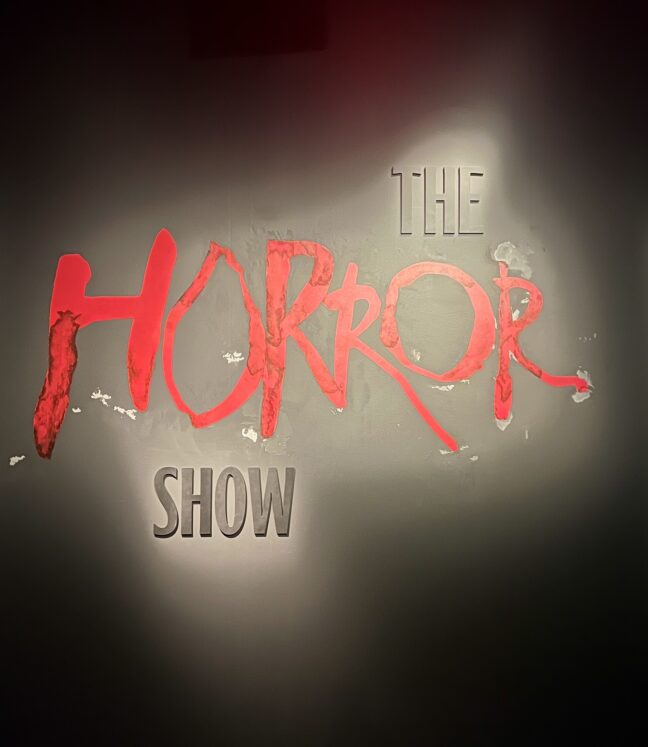
With perfect timing, both for the Halloween season and the current wave of exciting new horror films hitting film screens, The Horror Show exhibition opened this weekend at The Academy Museum of Motion Pictures.

The beautifully curated exhibition is paired with public programming and film screenings, including a retrospective John Carpenter series, a Halloween evening screening of The Craft, and a 50th anniversary presentation of Carrie on November 19th which will include a talk with star Sissy Spacek.
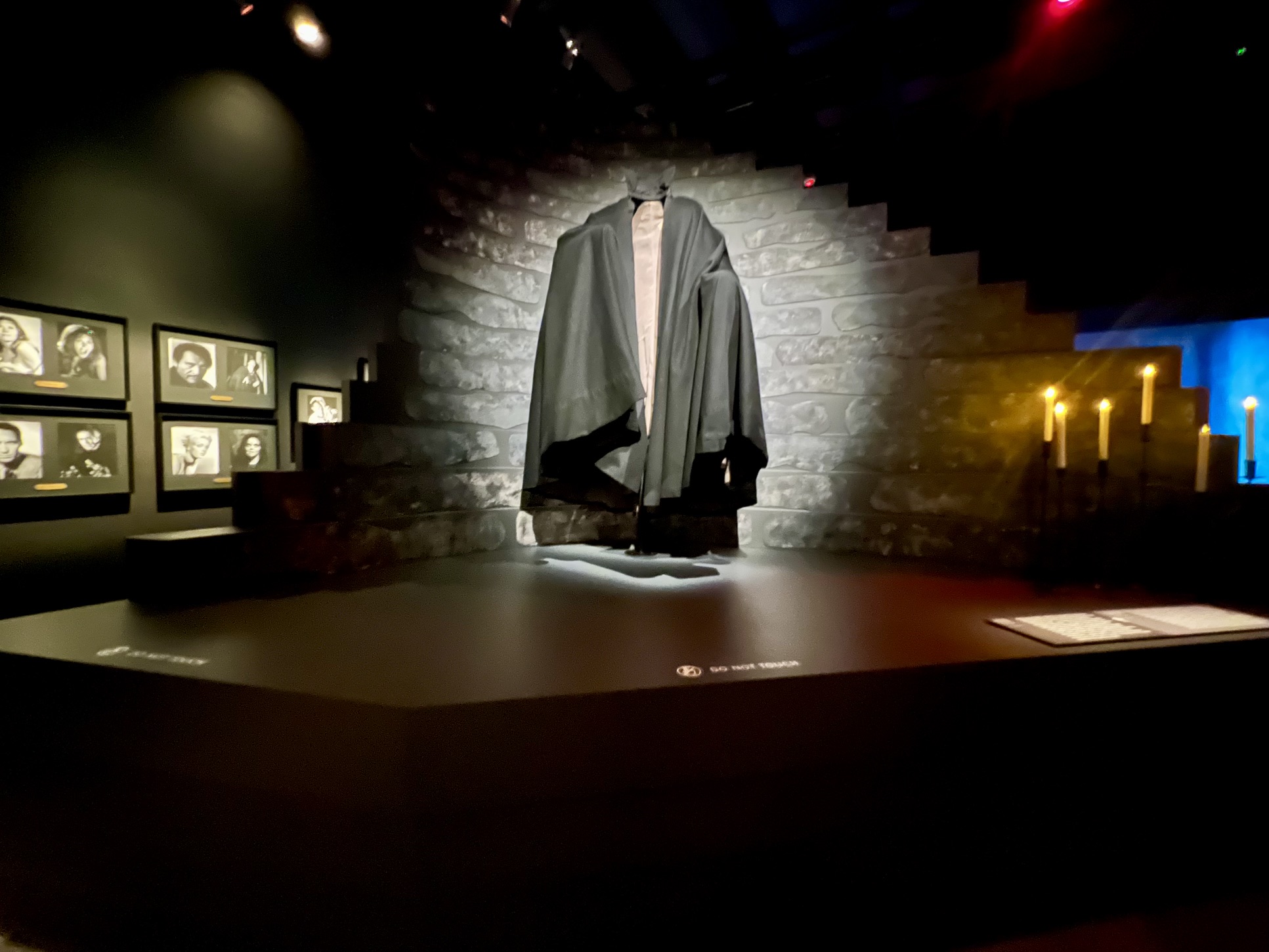
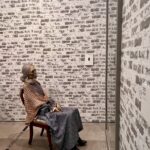
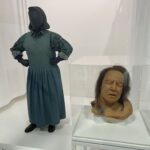
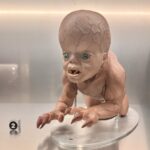
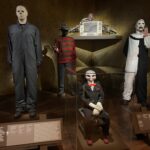
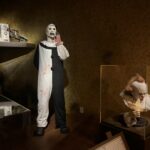
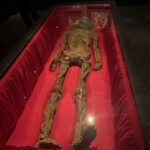
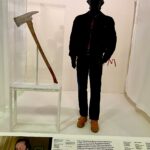
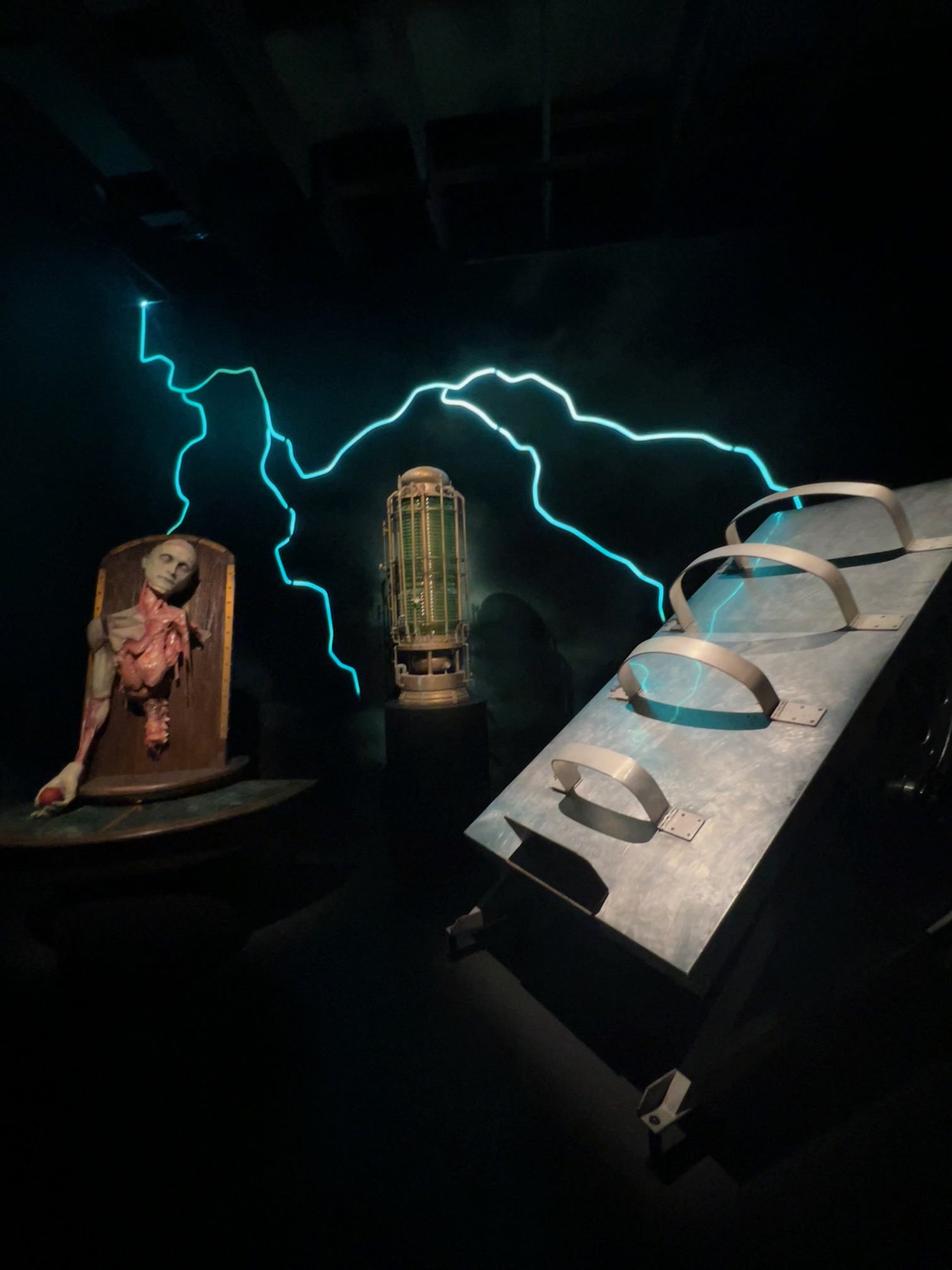
From the splendor of the original Dracula cape, generously donated to the museum by the Lugosi family and luminously restored by the museum team to a “pose with Mrs. Bates” tribute to Psycho. this absorbing exhibition covers costumes, special effects, masks, movie posters, original concept art work, props, and of course, projected clips of classic films. The vast collection includes over 300 items on display, from memorabilia to monsters. It is worth nothing that the gift of Bela Lugosi’s heirloom Dracula cape was a major influence in creating the exhibition itself, and this iconic costume is being shown to the public for the first time.
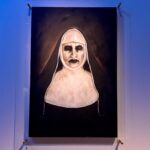
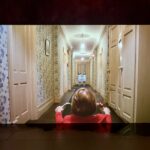
It’s an immersively constructed exhibition divided into multple “chambers” of beloved horrors: Gothic, Psychological, Science, Slasher, Religion, and Ghosts. Guests enter the exhibition space through a dark gallery space that begins the experience with a horror soundscape.
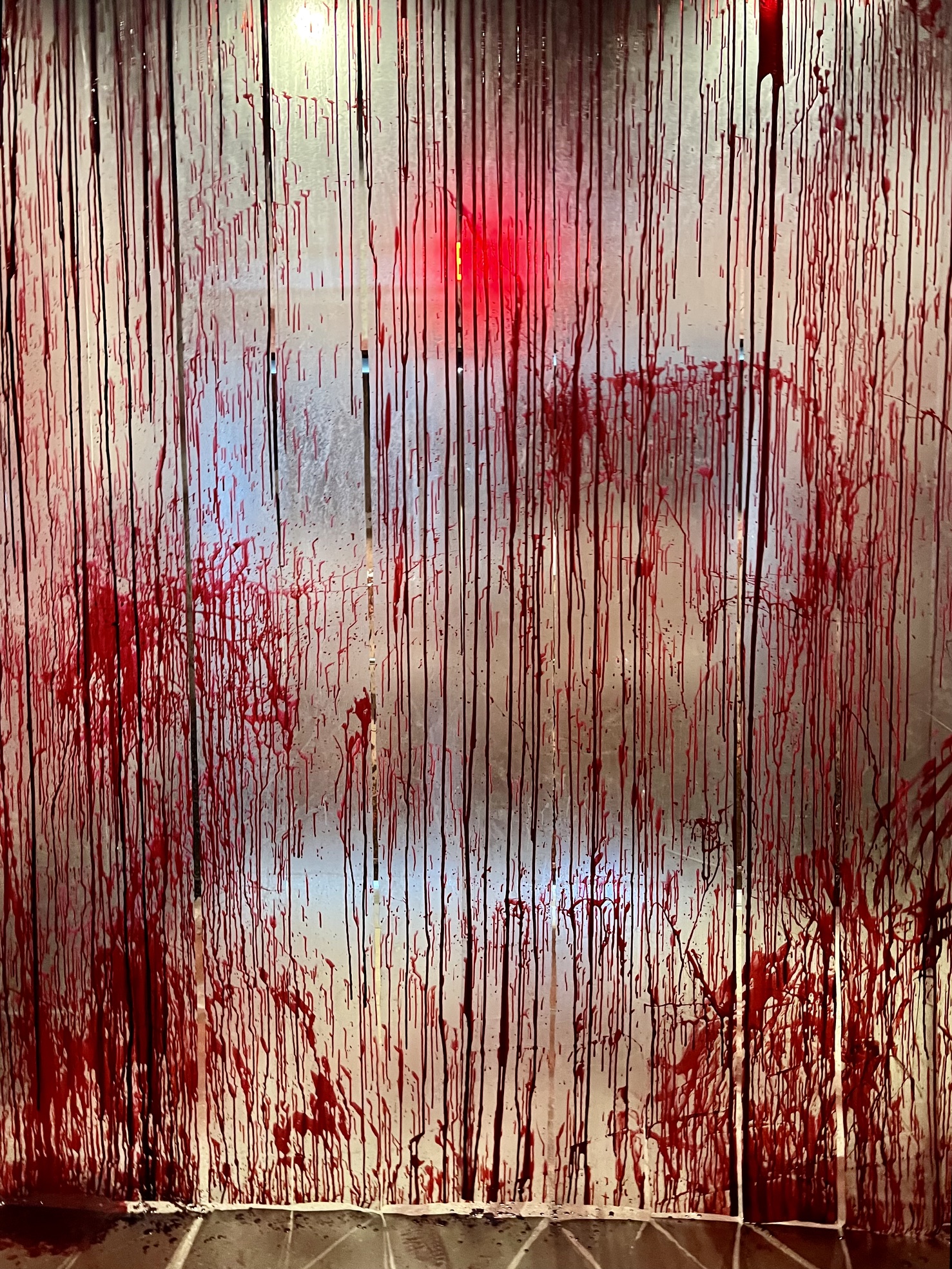
Exiting the exhibition is done through a cinematic-blood spill and splattered plastic curtains.
The exhibition is pure nirvana for horror afficiandos such as myself, but it is a true pleasure for all cinema fans, and a fun experiential romp through the knowledge of all things horror, and horror movies. Among the especially fascinating artifacts are the dailies from the film shoot of horror classic The Texas Chainsaw Massacre.  Brilliant and breathtakingly terrifying images and scenes didn’t happen by magic, but rather through cinematic wherewithal and persistence that only looks like it was conjured up whole.
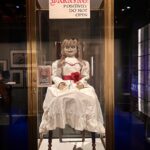
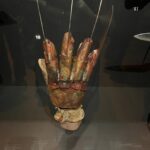
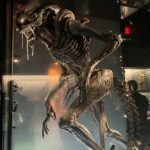
And speaking of the conjuring, “Annabelle” from many of The Conjuring series films is eerily encased in her infamous glass case, marked “Do Not Open;” Freddie Krueger’s ominous claw glove;  practical effects from The Ring and Alien are among the treasures on display.
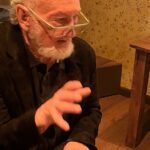
Speaking of Freddie, Robert Englund, who played the Nightmare on Elm Street nightmare himself, was present at The Horror Show opening.  He expressed his gratitude for the museum’s recognition of the genre, which was not always as well-respected as it is today. Saying he was “proud of the Academy” for creating such a celebratory exhibition, he also noted that while when he first started acting in horror films “you kind of got the lousy table in the commissary by the kitchen door,” today “horror has saved studios and many majors.”  He adds “I think we’ve finally arrived.”
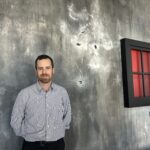
Nicholas Barlow,  one of the exhibition’s main curators,  noted that senior curator Jessica Niebel had proposed a horror exhibition before the museum even opened. “The date was pushed back, and now we are opening during a time in which there is a real love and hunger for horror,” he noted, adding that “Horror fans are very knowledgeable about the genre, so we were able to go deep across large swaths of horror history.”
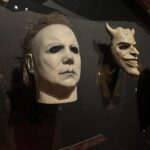
According to Barlow, “One of the things to focus on in this exhibition is championing the creators as brilliant, ingenious filmmakers. People made so much for so little” in terms of budget. ”
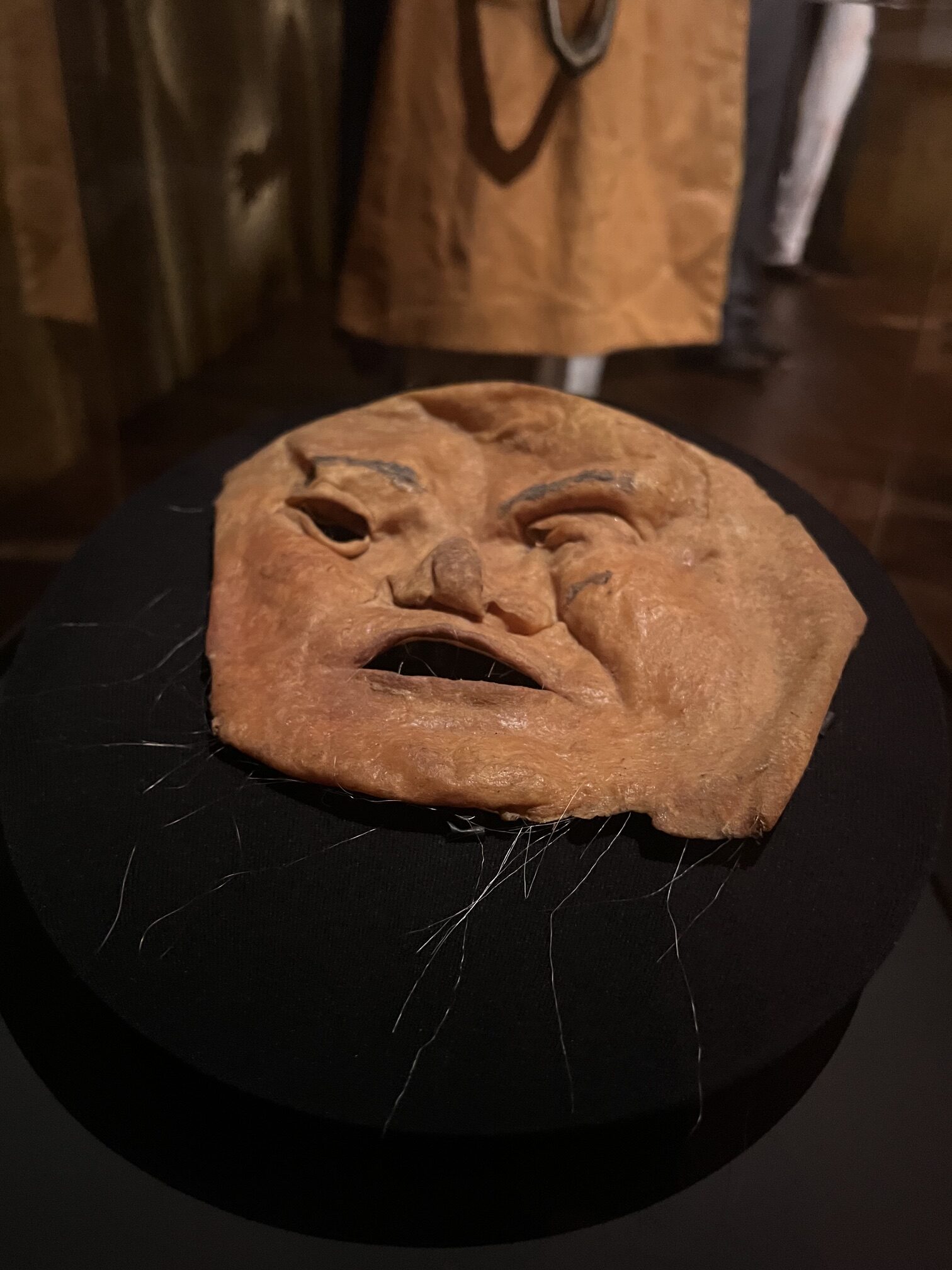
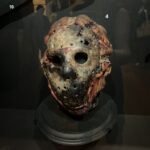
The curator is proud to have “the original Leatherface [test] mask from 1974’s The Texas Chain Saw Massacre on loan from the University of Texas’ Harry Ransom Center. And along with that object we have dailies from the film that show it was really just a bunch of kids shooting on a shoestring…so simple, but the production of a masterpiece.”
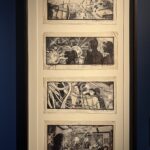
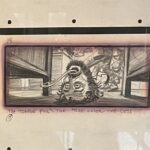
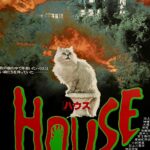
He also noted the exhibitions focus on artwork, including poster art. And, he pointes out “There are many drawings made by real craftsmen as blueprints to design sets. We get to celebrate them as art objects and iconic pieces of art…the building blocks of the films” which “imagined this world.”
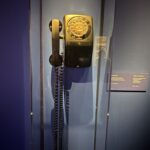
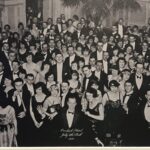
The Horror Show invites viewers into this marvelous and bloody universe through July 25th, 2027. The Academy Museum is located at 6067 Wilshiver Blvd. in mid-city. Be there and be scared!

  • Genie Davis; photos by Genie Davis and Charlie Davis
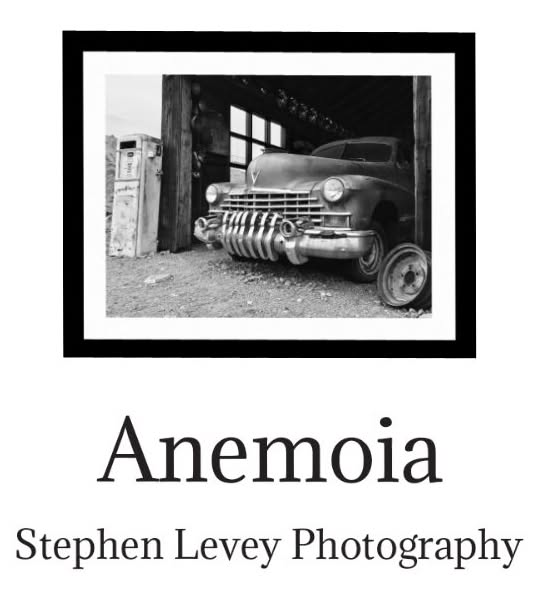


Anemoia Is a Beautiful Longing

One of the many beautiful series of work created by photographer Stephen Levey is coming to the gallery space of two other fantastic photographic artists, Diane and Bruce Cockerill.

Levey’s Anemoia lives up to its elegaic name, which refers to “nostalgia for a time or place you have never personally known or experienced.”

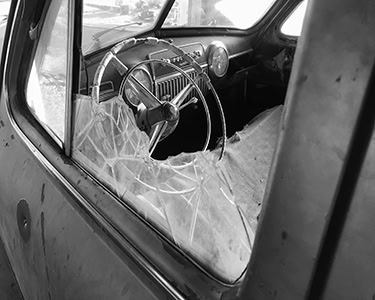
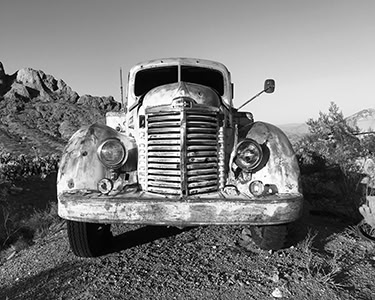
The lovely exhibition consists of ten black and white framed images that were taken by the artist on  a ranch, located in a secret spot in the Nevada Hills back in 2018. Viewing them allows one to honestly assimilate anemoia, and feel the experience of seeing this special place for yourself.

Levey’s prolific and often profound photographic career has been curtailed, the casualty of a terrible accident that nearly took his life, and that has led to repeated and terrible health challenges. Certainly taking home one of these splendid, rich photographs is an excellent way to provide a bit of support, as well as acknowledgment of his gifted work.

Come see these compelling and carefully curated images at San Pedro’s First Thursday art walk, October 1st, from 6 – 9 p.m., and again on Saturday, October 10th, from 2 – 5 p.m.

The studio/gallery is located at 364 W. 7th Street – San Pedro, CA 90731, in the heart of the San Pedro arts district. For more information: dianecockerill617@gmail.com. To contribute to Stephen Levey’s GoFundMe, visit https://gofund.me/04817ca7

  • Genie Davis; photos provided by the artist via Diane Cockerill

The Magical World of Glenn Waggner’s Figurative Art

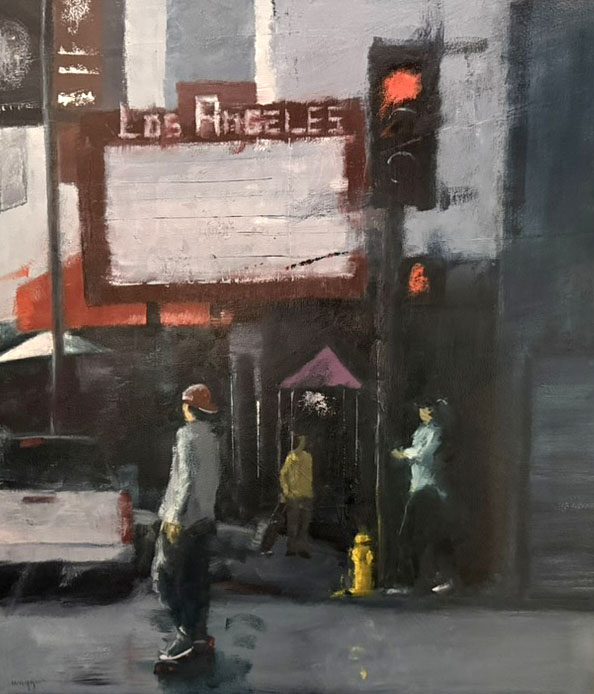
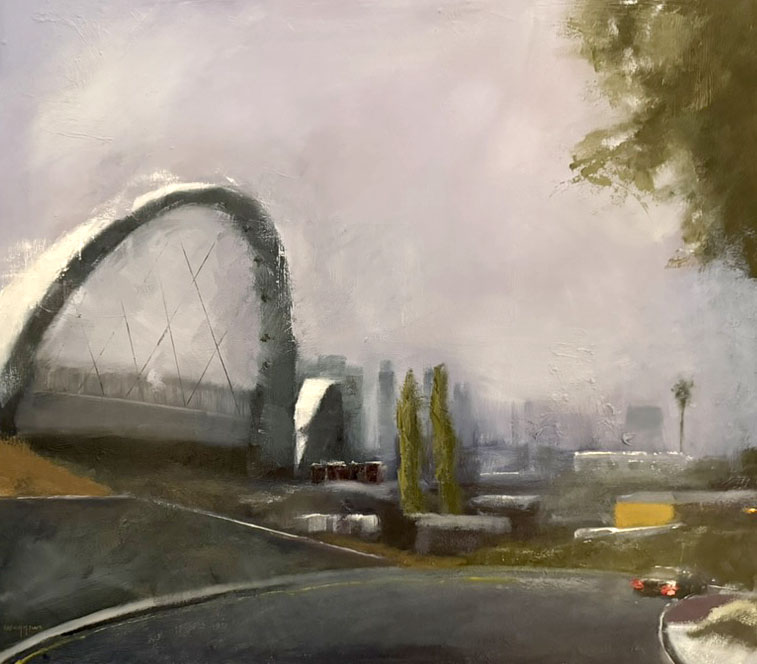
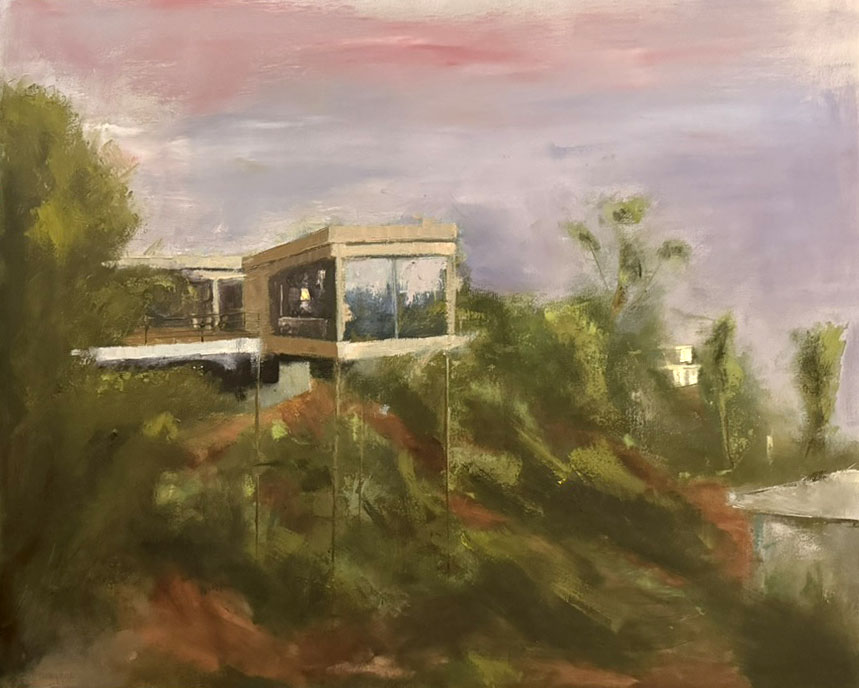
Every picture tells a story, and for artist Glenn Waggner, it’s a magical one, merging the real world with a sense of wit and wonder. Working in oil,  Waggner creates resonant, meaningful figurative works that soar with imagination and devote themselves to indelible detail.

Waggner is both an architecht and an artist, and as such, it is perhaps unsurprising that he says he is “inspired by cities and mostly urban environments. A few times I have been in certain places where I had the feeling that everything was perfect. That’s what I want to paint.”

When he first began his journey as an artist he says he “started out painting twisting buildings at impossible angles. The work evolved into a more realistic portrayal while becoming more abstracted and looser. He adds that “Over time, the lighting and tones have become a little more surreal, like the lighting that occurs during an eclipse or seen in dreams.”

Make no mistake, Waggner’s worlds have that special hint of the magical that transforms even the most recognizable scene of getting morning coffee at a stand or hailing a taxi.  He works in oils exclusively and finds that he plans to keep that medium as his first choice for creation.

“I switched to acrylics for a short time, and while I found the colors were the same, acrylics dried way too fast for me. I like to blend the paint in layers to give it a richness,” he points out.

Thematically, he says he is moving toward a change, however. “I am heading towards a more abstracted, expressionistic style. Not abstract expressionism, but more of a disruption of images.”

While he is currently exhibiting a solo exhibition at Diversions Fine Arts Gallery, he will also be exhibiting at the Brewery Artwalk in November, where he has shown for ten years; and returning to DFA for an exhibition in a December group show.

He is also looking forward to building a new body of work for future shows, and regardless of the changes he is planning in his work thematically, he will always tell wonderful stories. Asked what comes first, the story-making or the visual art, he says “The visuals almost always come first. The narrative develops naturally during creation. I also like to have fun with titles.”

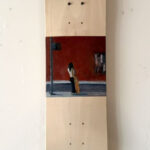
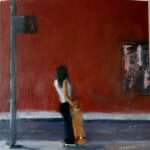
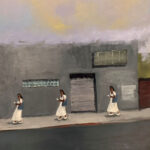
Above: Waggner uses a skateboard for a canvas for his “Mall Grip;” detail of same; a look at “Girl Times Three.”

Waggner adds that “I love it when people see my work and [I can] watch it trigger memories or a narrative, many times completely different from what I see or intend.”

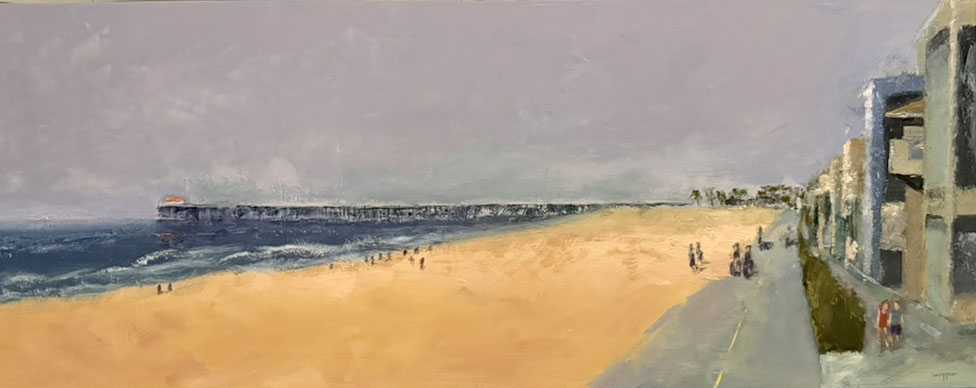
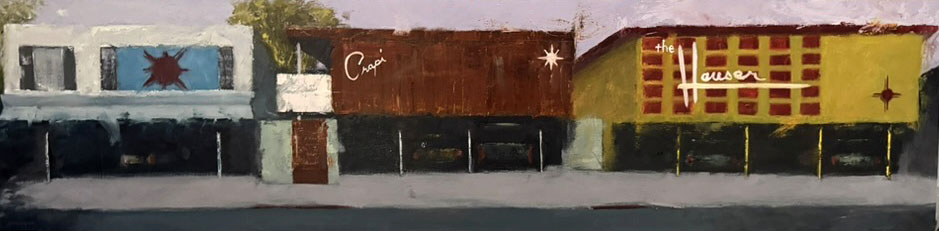
Certainly in his current exhibition, there are a wide range of pieces that could and do evoke memories and stories in the viewer, such as a stunning, panoramic take on LA’s Dingbat architecture; another such dimensional piece depicting a stunning view of the Strand beach walk, sea and sky…

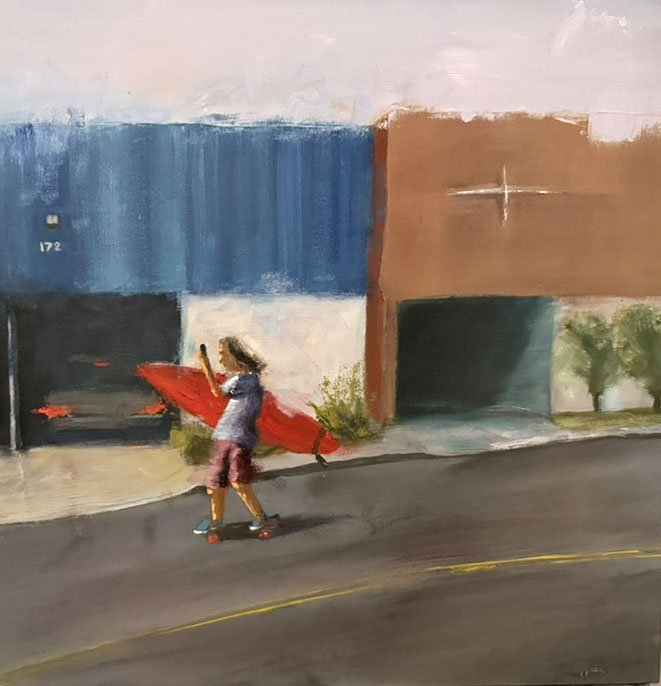
…and even a simple and warmly recognizable image of a surf-board-carrying youth, holding his iPhone as he does what the title suggests, “Texting in Sick” in order to catch a wave.

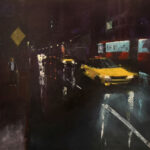
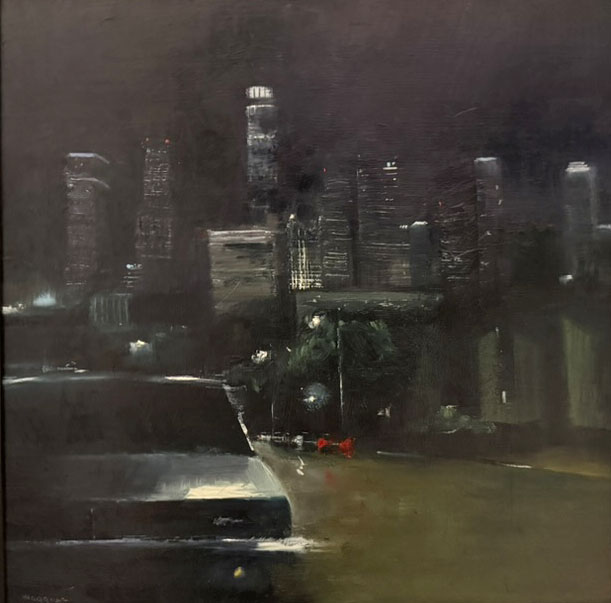
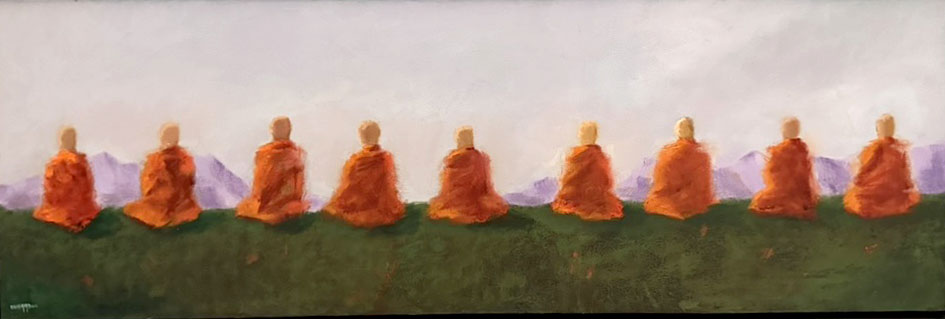
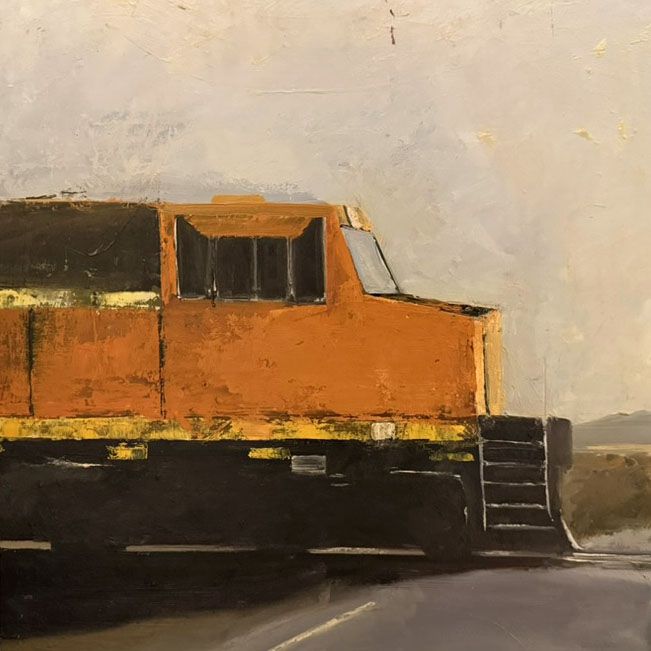
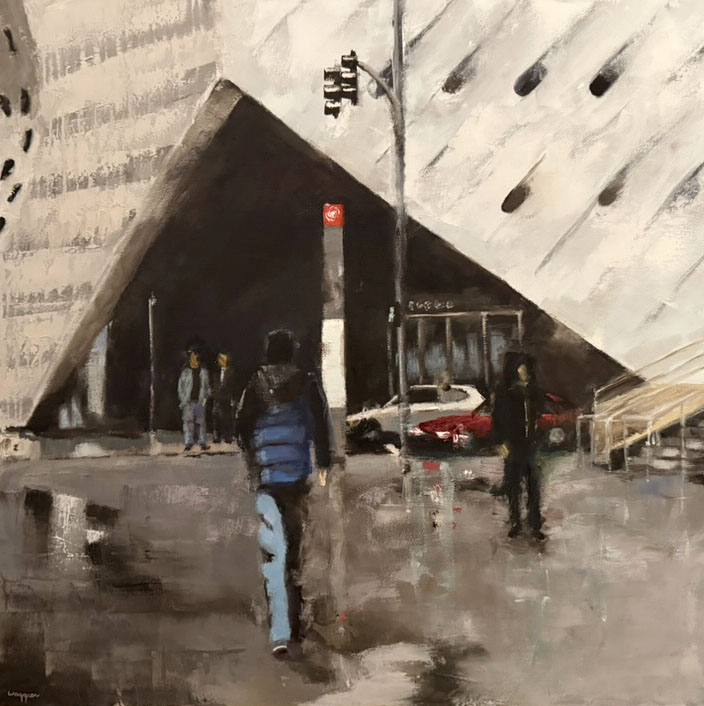
There are orange clad monks in meditation, a dark car on a rain-slick road, a mustard-yellow train engine chugging on, and even a lovely portrait of the Broad Museum in DTLA.

Take a peak at these and other examples of Waggner’s bountiful, beautiful slice-of-life visual stories in Golden Days, now at Diversions Fine Arts Gallery located at 1069 N. Aviation Blvd. in Redondo Beach through October 4th.

  • Genie Davis; photos courtesy of the artist and Davis
 

Dataland: An Immersive Adventure in AI Art

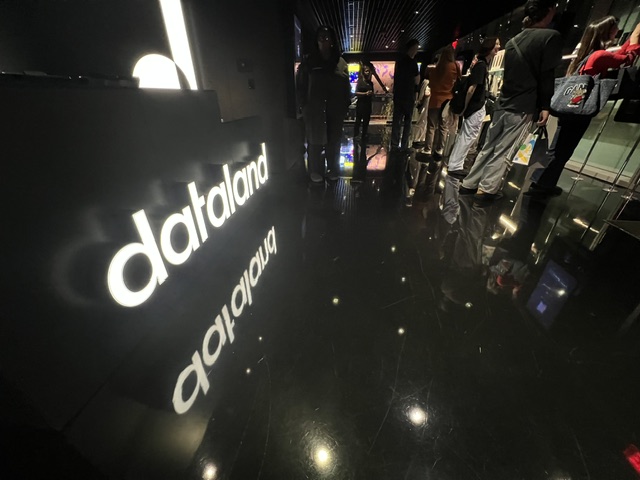
Dataland is literally something else as far as an art experience. Fiercely, even reverentially experiential, it is an immersive adventure into “living” AI. It is in a way a combination of familiar things rendered into something entirely different.
For me it was one part IMAX viewing experience; one part the traveling Van Gogh exhibition Immersive Van Gogh with its 360-degree, floor-to-ceiling animated digital video projections; and one part reminiscent of Images in Space and Time, an international collection of fine art holographs which originally came to Los Angeles in the 1990s via the California Museum of Science and Industry. The latter was semi-permanently located in the concourse galleries close to where Dataland is now.

The bottom line with Dataland is that it is entirely unique and a lot of fun, a spectacle of light and color and moving images.

The experience begins by listening to an introduction to the experience, and then donning a neck-wrap device the emits scents related to the visuals, and a wristband not dissimilar to a Fitbit, which measures your own personal metrics, which are then monitored by the AI.

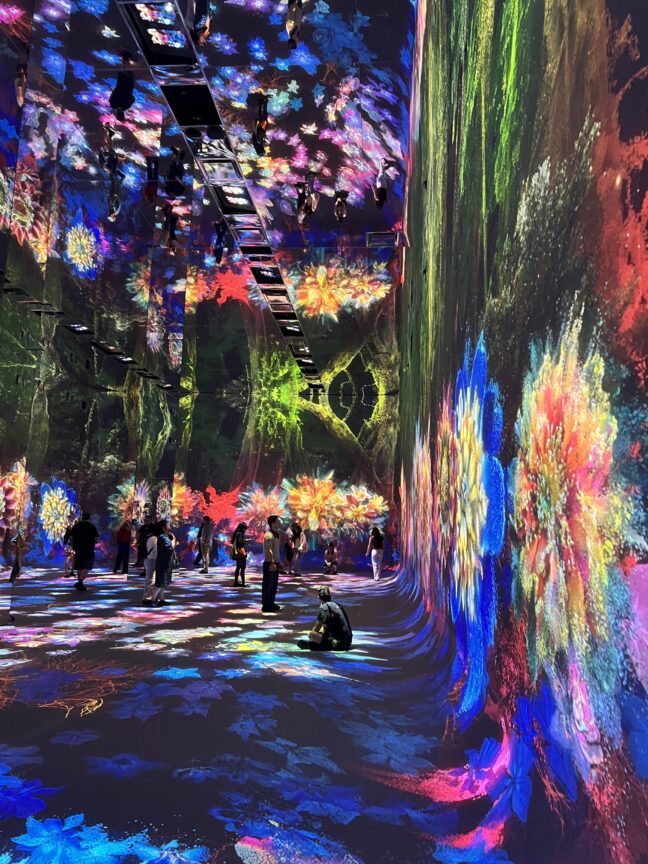
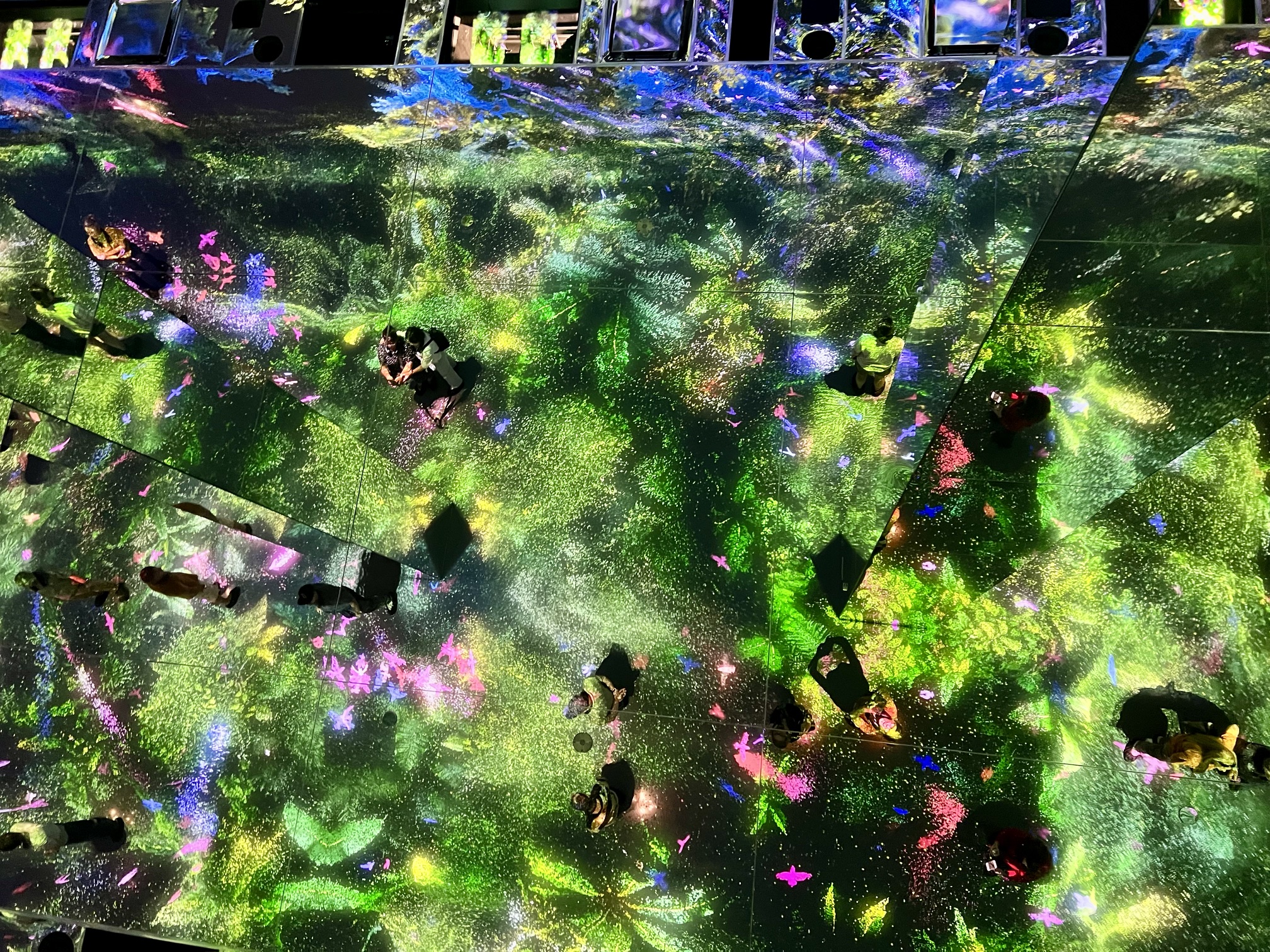
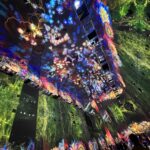
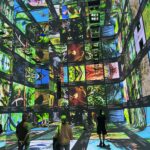
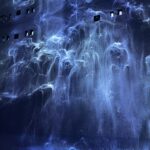
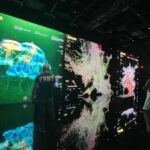
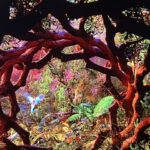
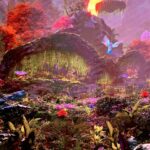
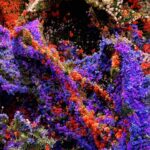
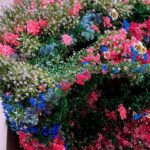
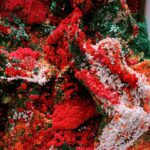
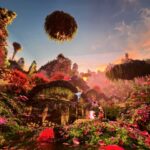
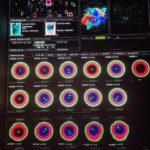
Descending a mirrored escalator to a cavernous room where shifting light projections cover the walls and floor, over the course of about 40 minutes, there are flowers and trees and what look like living, surging seas and colorful beads and swarming colors and even moments that illuminate one’s own metrics in blue and white circles on the floor. A soundtrack merges with the scents that support the scene from forest to flower to sea breeze. This gallery is the Latent Forest.

It’s galvanizing and absolutely embraces the vision by the installation’s cofounders Refik Anadol and Efsun Erkılıç with their inaugural Machine Dreams: Rainforest exhibition. The AI itself was trained on and based upon datasets about nature; culling information from diverse sources such as the Natural History Museum in London and the Smithsonian.

According to museum literature, the commitment to nature includes sustainability as to use, with the system operating on primarily carbon-free and renewable energy.

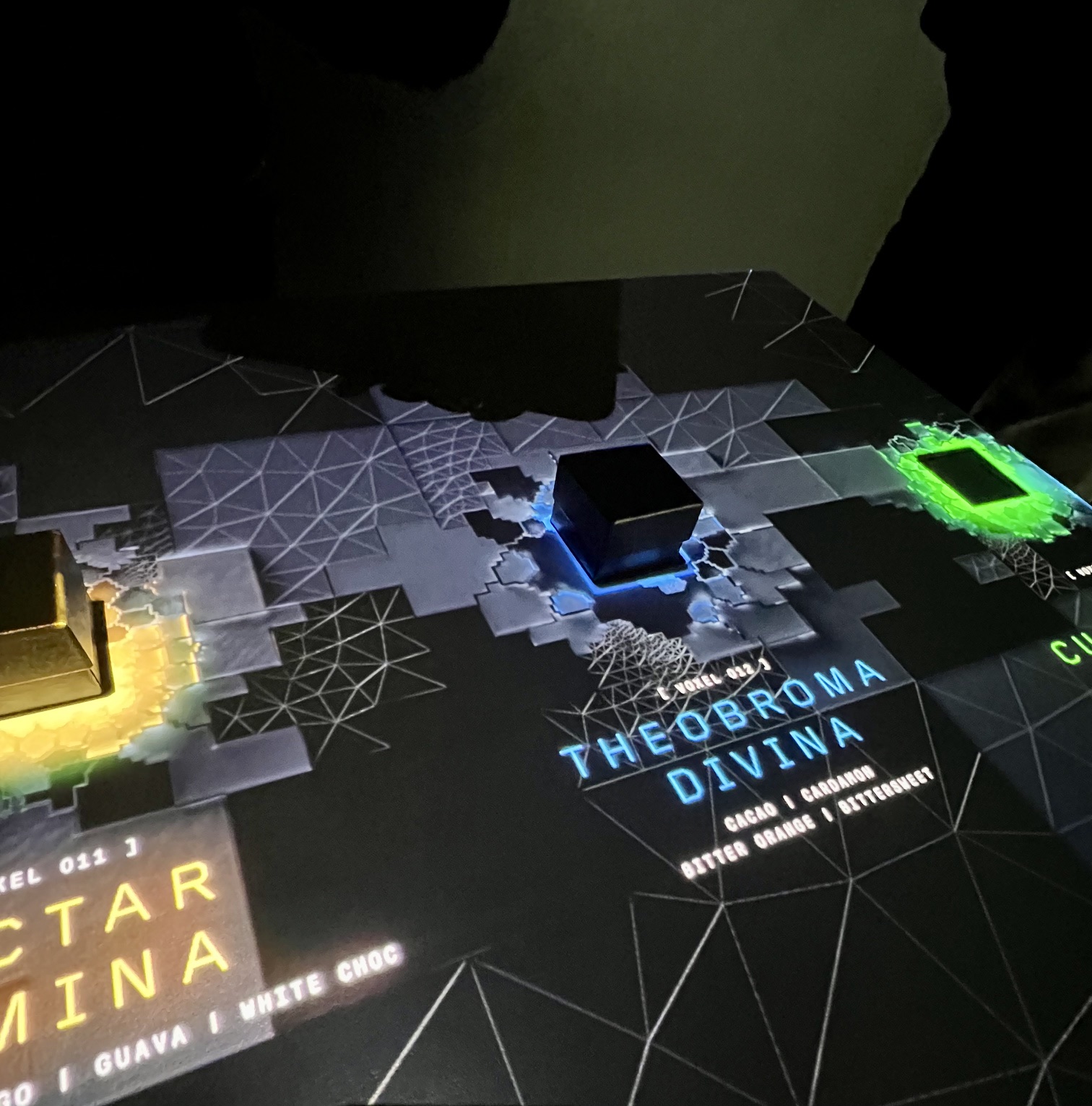
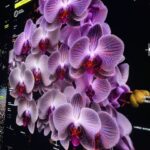
While that exhibition is the main, and longest experience at Dataland, it is not the only one. Upon exiting, Latent Forest, there is the interactive adventure of the Latent Gallery in which three separate kiosks allow hands on projections of various flowers,sea, and forest images that visitors can explore and learn about, such as orchids, mushrooms, specific trees.

In this area there was also a small stand where visitors could select, or have AI select based on its reading of ones’ personal metric, one of four flavors of chocolates. While my AI chose milk chocolate with mushrooms (and it is true, I do like Hershey bars to this day), I selected my own, the orange bitters and dark chocolate with cardamon.

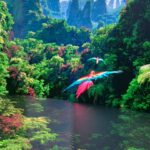
There were two, timed, separate limited admission gallery experiences, the quite lovely and haunting “The Dream of Ruwe Pinu,” a journey through the Amazon rainforest led by a translucent hummingbird, and “The Sanctuary.”

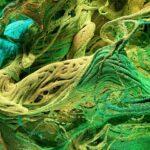
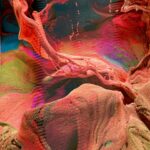
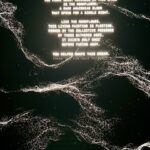
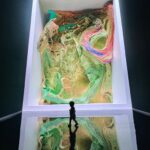
The latter makes use of visitors’ own biometric information collected via their wristbands, and is vaguer in intent, consisting of patterns of writhing colorful, sand-art-style beads, blooming and snaky florals, and mysterious near-landscapes that materialize on the dimensional screen. It ends however, with the lovely sound of a bird now extinct, issuing its call to a non-existent mate. One could feel deeply elegaic about that birdsong. The bird is gone, and here we are, sitting in an air conditioned sanctuary enjoying its last poignant hope.

However, hopefulness, rather than a last, forlorn lost hope is really the intent of these exhibitions. One of the visitors came with an 18-month-old, who vividly enjoyed crawling around these smaller galleries, interacting with the patterns cost reflectively on the shining floors, and clearly as immersed in experience as one could possibly be.

The child was feeling joy in the sound, colors, scents, and lights. That is the true crux of this experience: its joyful, playful, and also resolute in its depiction of AI as our artistic friend or at least our artistic spectacle creator. While shaping our own memories it is also preserving existing ones, or dreamscapes that involve memories of nature’s rainbow.

Dataland is more art experience than museum or gallery, so with that in mind, go and experience it and all its scents, sounds, and motions.

  • Genie Davis; photos by Genie Davis