
Sanctuary of the Aftermath – A Dazzling Exhibition of Land, Sea, and Spirit

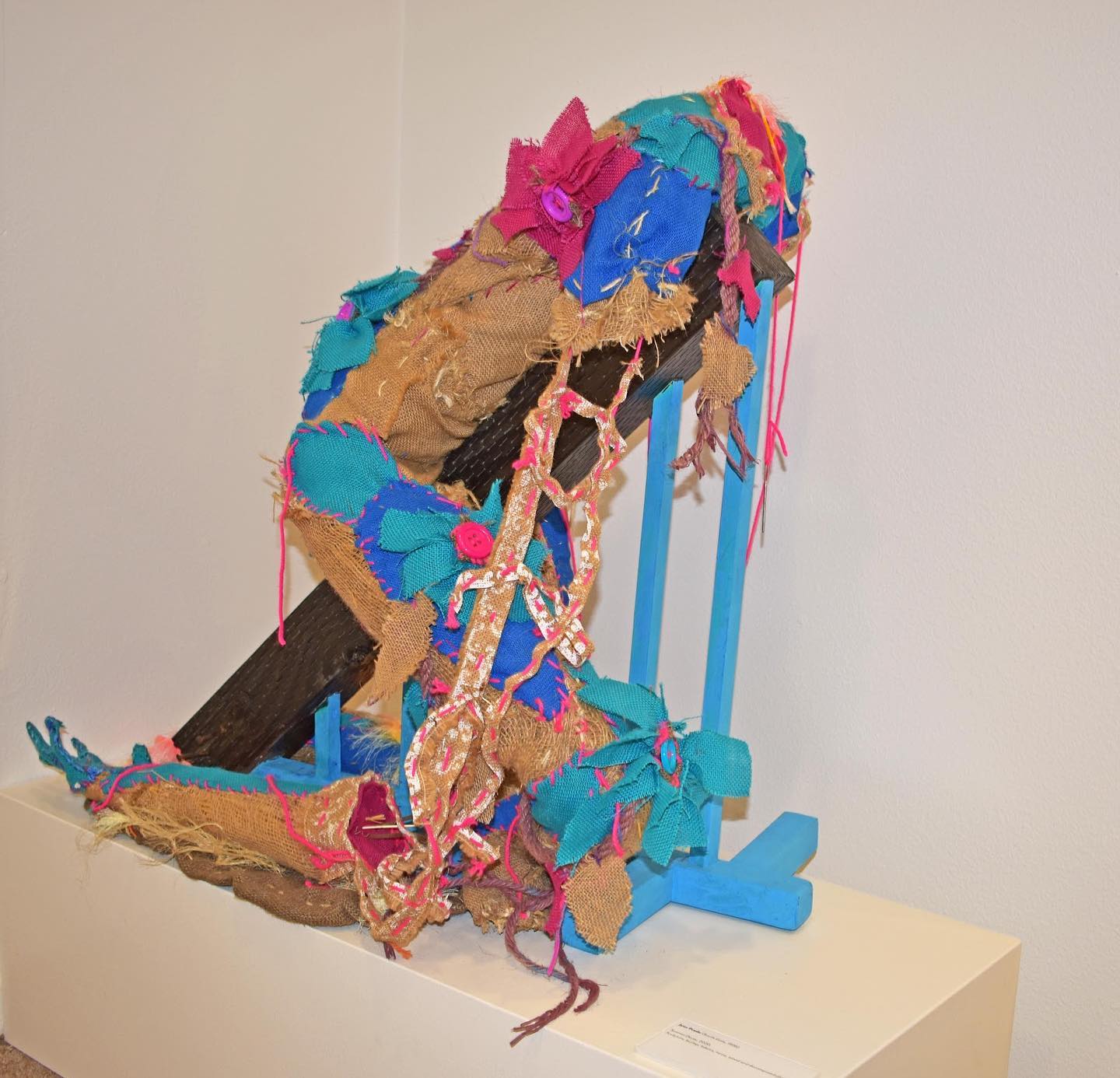
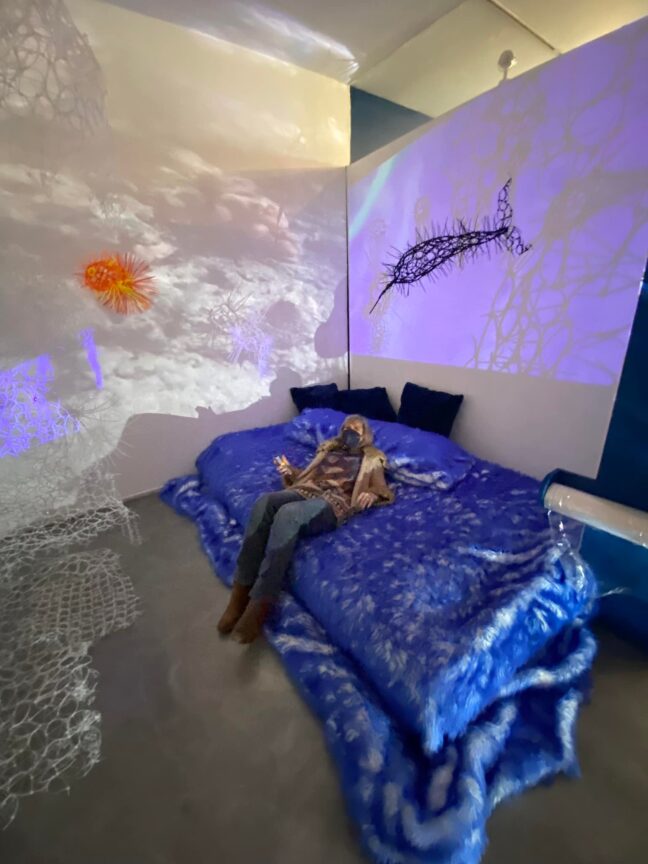
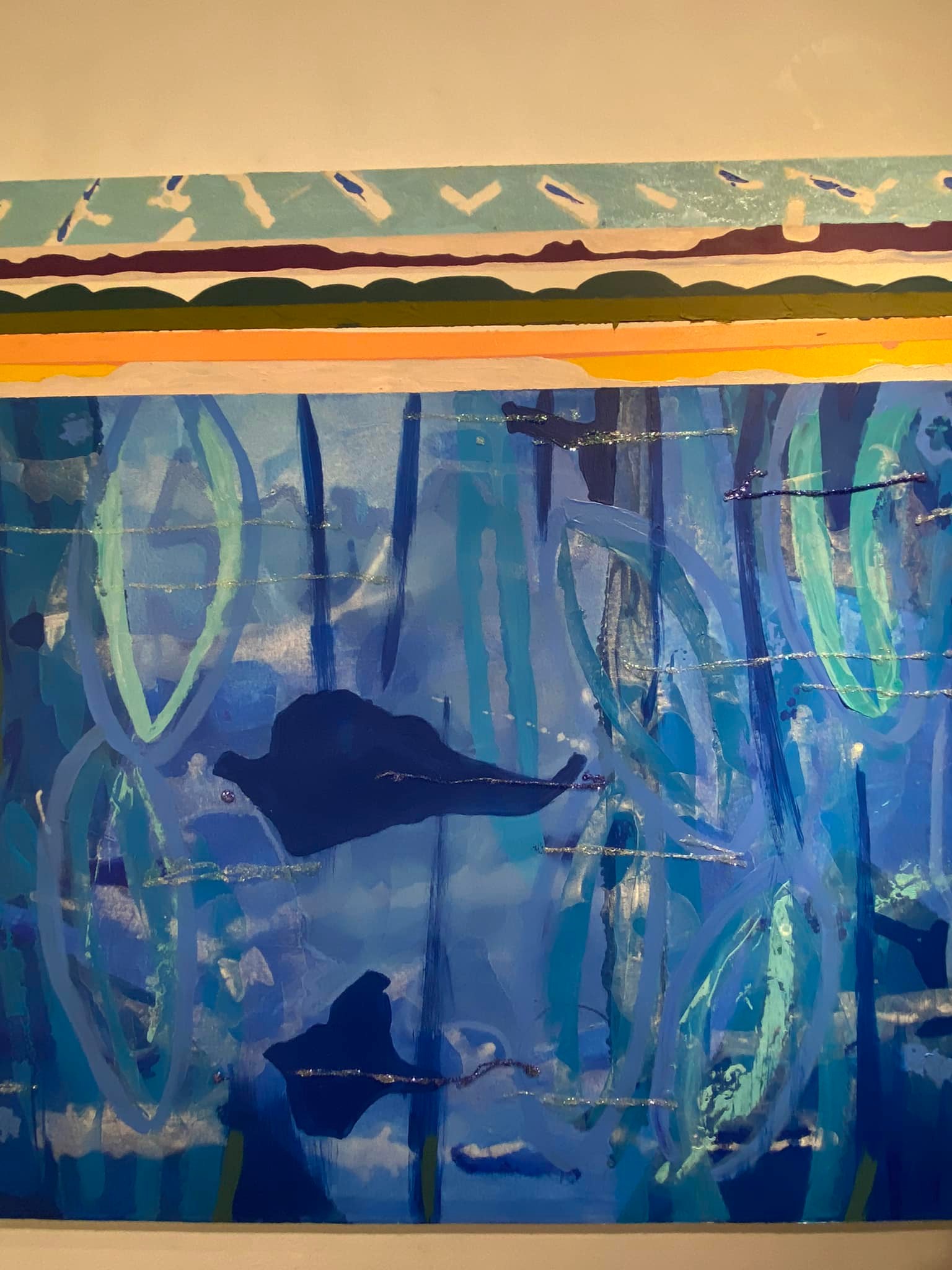
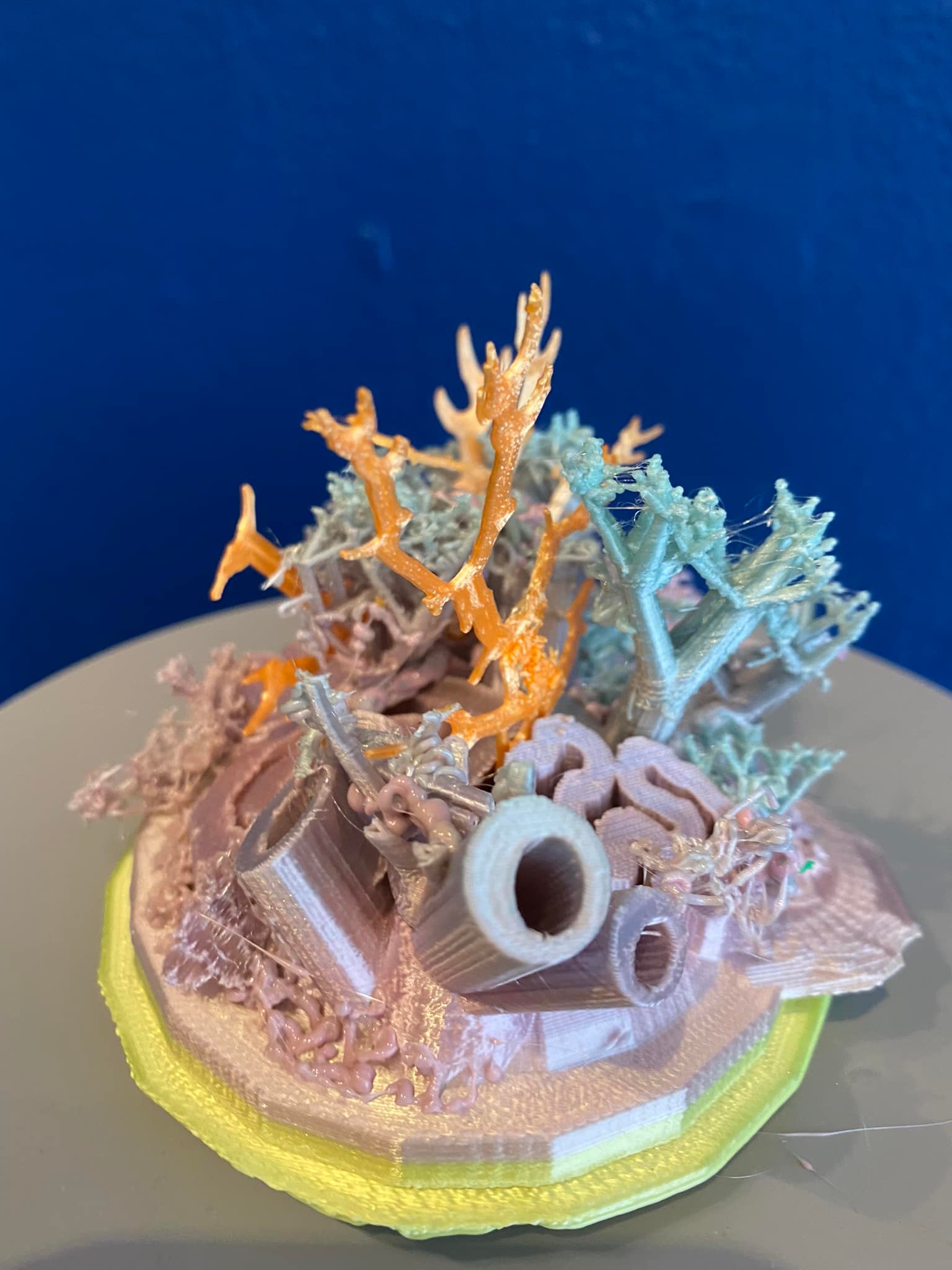
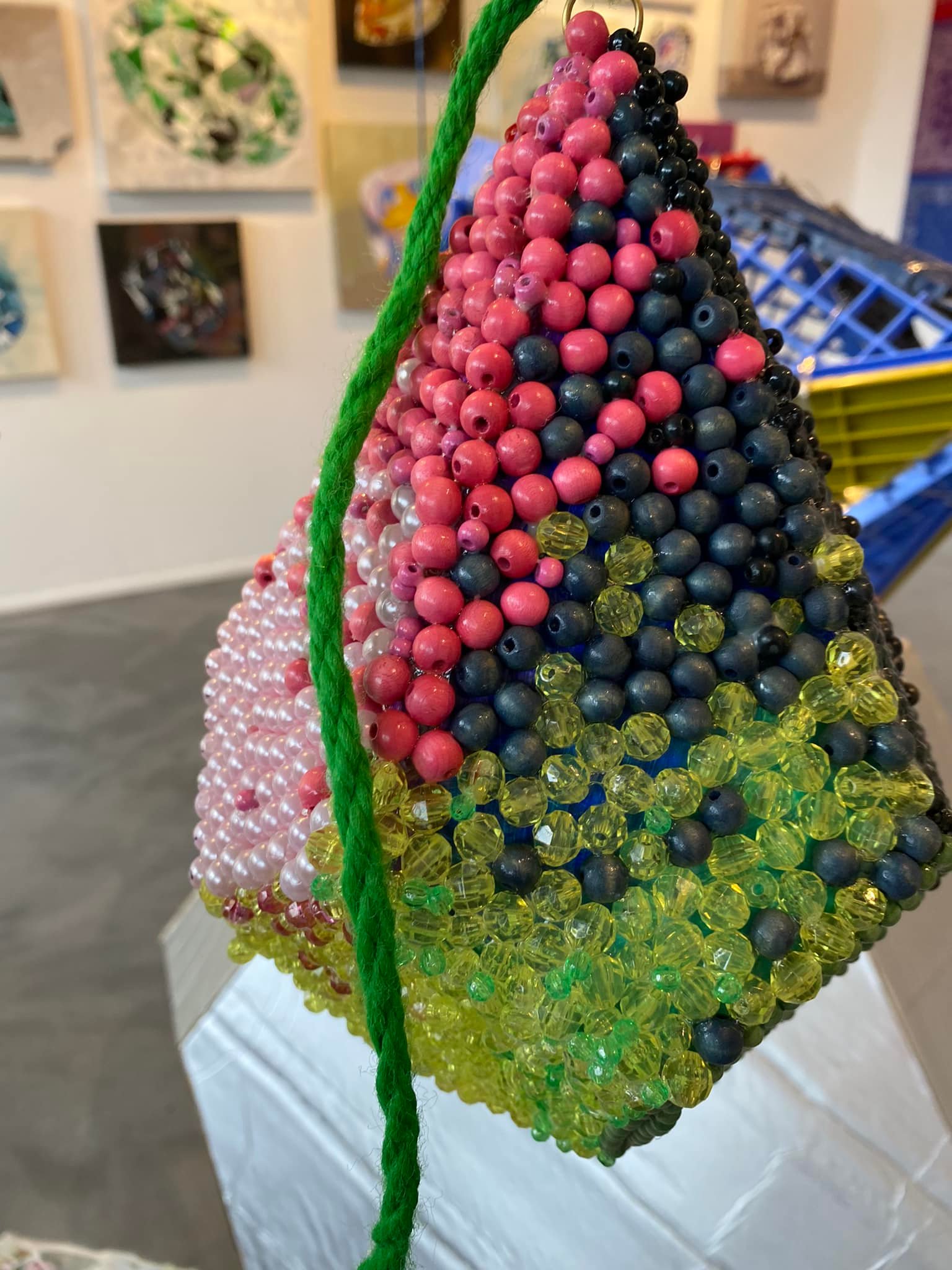
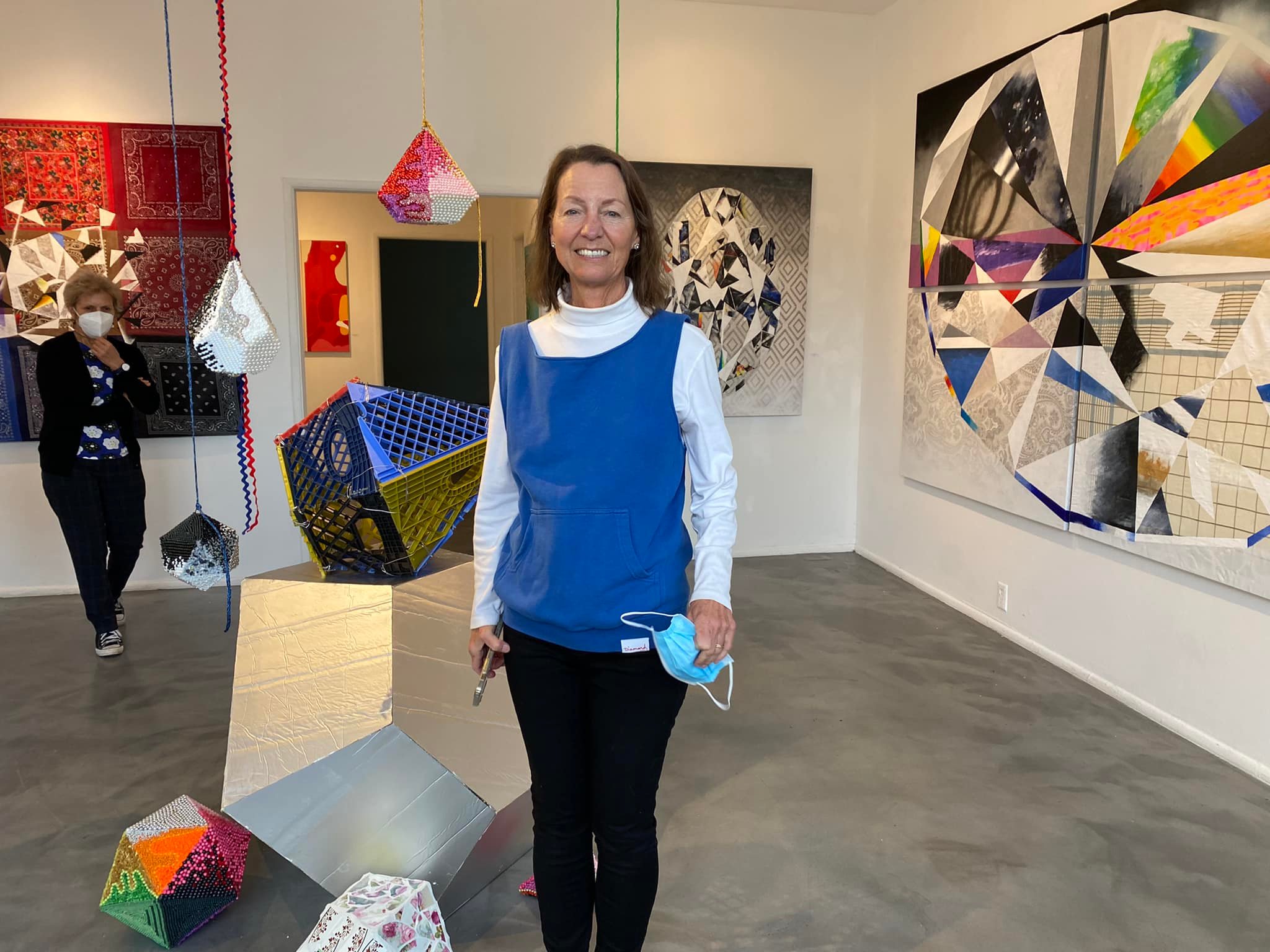
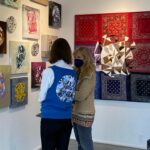
Now through June 12th, both virtually and in person by appointment, Sanctuary of the Aftermath at Angel’s Gate Cultural Center in San Pedro brings viewers to the ocean, the earth, and heavenward. It’s a beautiful exhibition featuring the work of ten visual and one audio artist: David Hollen, Ibuki Kuramochi, Jason Jenn, Rosalyn Myles, Vojislav Radovanovic, Allison Ragguette, Kayla Tange, Nica Aquino, Jeff Frost Anita Getzler, and an audio work by Joseph Carrillo.

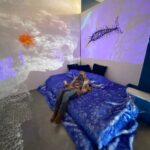
Color palettes are muted, natural materials are featured, and motion-filled images predominate – whether a mutable, participatory Zen garden, an astoundingly lovely video, or the dream-like sense of floating induced by audio soundscape. Within that motion is a sense of connection – between earth, ocean, heaven; between humans and the environment; between the living and the dead. It powerfully evokes the senes of connectedness long missing during the preceding year, and as the title implies, what sanctuary and relief we are now able to find. Art itself seems key to provide both.

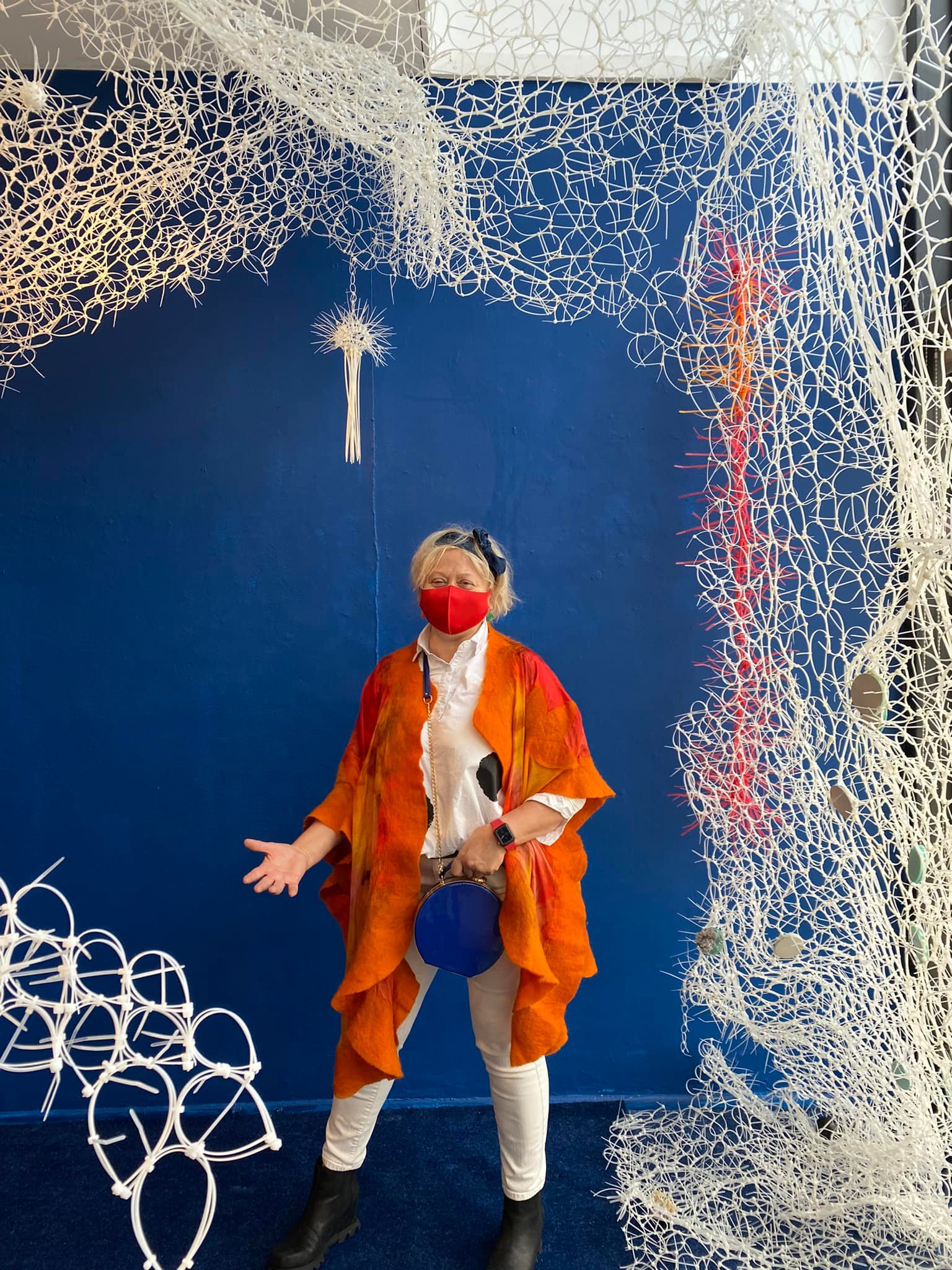
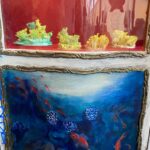
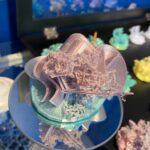
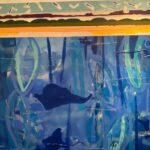
Raguette’s large scale sculptural wall art, “Cross Section Eclipse” is glorious and eerie, a magical view of an underwater kingdom, a fragile yet fierce connected ecosystem.

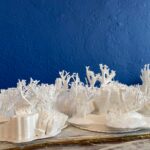
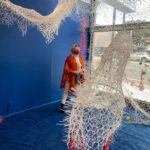
Tange’s interactive Zen garden and woven “The Rise and Fall of Decadence” have an equally sea-centric appearance, meditative and peaceful, with the woven work reminiscent of fishermen’s nets.

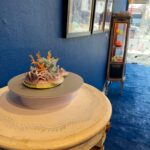
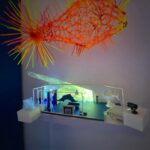
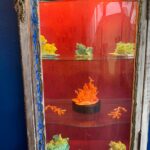
It is an island of family that forms Aquino’s “A 2020 Reflection,” shaped from a window of video, flickering LED candles, flowers, and fruit – all creating a personal altar of healing, but one that seems rooted in the culture of an island home.

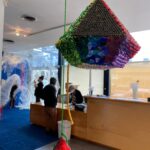
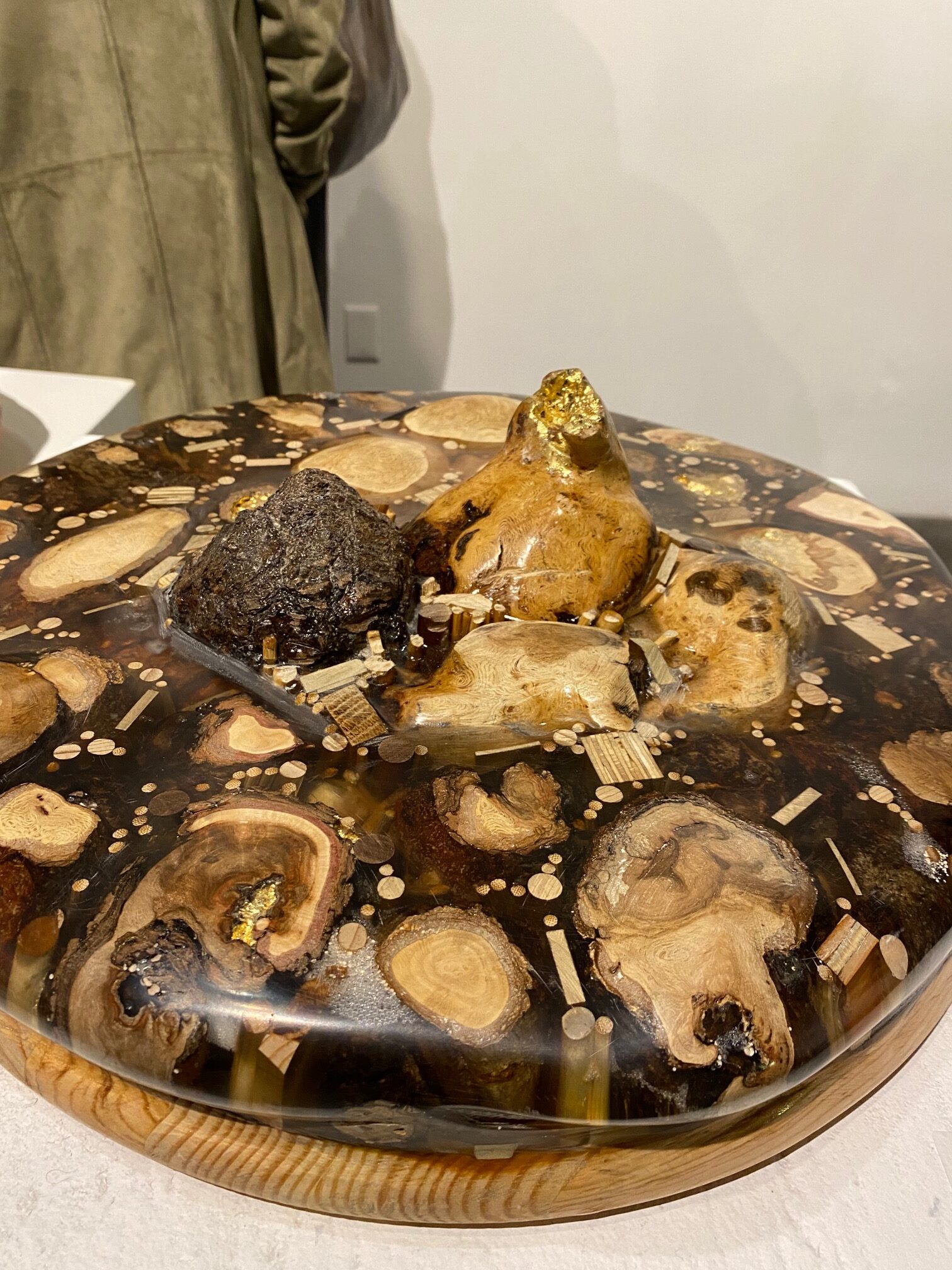
Hollen’s “Indra’s Net” reminds the viewer of sea-grass or driftwood, revealing the viewer examining the work, the reflective glass balls placed within the piece add to the sense of finding a cluster of objects washed up from the sea.

Partially hidden behind blackened branches from a recent wildfire, a speaker plays Carrillo’s hypnotic auditory composition. As the music trembles, rises, and falls, the listener is reminded of the tidal pulse of the sea and the rush of a flaring fire; it seems to speak of the transitory nature of time, change, and life itself.

Fully rooted in the earth but offering an almost hallucinogenic and soaring vision is the large screen video that pulls viewers into the gallery space behind it. Jeff Frost’s “Circle of Abstract Ritual,” takes viewers on a journey through 300,000 still photos which shift and spin through a 12-minute work that leads from the Slabs beyond the Salton Sea and desert ruins to the city and back again.

The works unfolding beyond the film include pieces by curators Radovanovic and Jenn. Radovanovic’s “Descent of the Holy Spirit,” takes us from our own temporal realm to heaven, with a ladder serving as a sense of passage from the heap of Angel’s Gate park soil in which it is rooted past glittering stars hung on the gallery wall, and up a ladder past rungs tied with jewel-like glass jars bearing flames on a transcendent journey.

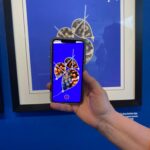
Likewise site-specific is Jenn’s “Angel’s Gate Leaf Mandala” which uses dried leaves plucked from the grounds of Angel’s Gate Park to form a meticulous, spiritual spiral transformed by the use of gold and copper leaf and a sparkling royal purple.

Myles’ “Pieces of Us,” rejoices in an abundance of harvest with careful compositional placement of collecting baskets and dried peas. But above these hang ghostly, lacy shapes that that recall the passing of those who gathered past harvests.

Getzler’s work ties land and sea, the living and the dead, with a series of works, “Evocation 1, 2, and 3.”

Dried rose petals are kept in bottles, stored in a drawer, and the central focus of a video elegy filmed by Radovanovic and Jenn.

In the video work, filmed with the glow of Magic Hour sunset around her, the artist honors the dead by tossing handfuls of petals into the ocean, as the Jewish prayer for the dead is performed on the soundtrack.

Kuramochi’s “The Memory of Physicality” (above) links viewers fully back to the vicissitudes and the tenuousness of life with a galvanizing video work essentially framed by rivulets and drifts of human hair that speak to loss and growth and an essential, soul-healing shearing.

Speaking to both the spirit and the strength of sea, earth, and human survival, of this life and the afterlife, Sanctuary of the Aftermath is an exceptional show, one that dances with passion while remarkably exuding a sense of welcoming peace. Don’t miss.

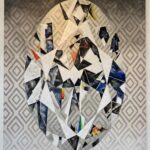
Ann Weber, above

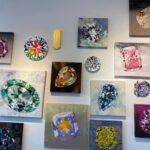
And while you’re at Angel’s Gate, definitely take in the exhibition of studio artists’ work, re-adaptations, which also explores connection, reinvention, and relationship. Exhibiting in this lovely show, in a variety of mediums, are Phoebe Barnum, Delora Bertsch, Lynn Doran, Beth Elliott, Henry Krusoe, Vanessa Madrid, Tim Maxeiner, W.S. Milner, Lowell Nickel, Michelle Seo, Nancy Voegeli-Curran, and Ann Weber.

The exhibition is located at Angels Gate Cultural Center,
3601 S Gaffey St, San Pedro.

  • Genie Davis; photos: Genie Davis

Brendan Lott Examines Beauty in Isolation

Stating the obvious, the pandemic changed many things for many people in the last year and a half. Los Angeles-based artist Brendan Lott is among them, with a photographic series that is both intimate and reserved, expressing the innate human condition: we are not solitary creatures by nature, even when circumstances keep us isolated. Beautiful, and edgily poised on voyeuristic moments, Lott’s series Safer at Home is instantly compelling to view.

I saw it for the first time on Instagram, and could not look away.

Lott explains his subjects and purpose. “My work for the past year has consisted of photographing people in their apartments from my window across the street…There’s a rigidly formal quality to the images too, which has often been a part of my work. In the past, I’ve used found images, so technically this is different, but there’s a certain ‘found’ quality to these.” He adds “They are completely candid, so I feel like I am finding these moments, rather than creating them. I think the narrative quality to these is quite different than much of my past work.”

The story Lott tells is poetic and poignant, and started, he says, almost without any planning.

According to the artist, “The series began organically. I spent a lot of time at home looking out my window at the start of the pandemic. I begin to notice all the activity happening just across the street. I had never paid attention before. The lives happening over there. I was always too busy. So I started to pay attention and shoot.”

Lott’s keen observational eye lent itself to a precise artistic approach. “Over time I worked out the technical and formal issues involved to get [the series] where it is now. I want there to be a kind of intimacy, but also something forbidden. We’re not supposed to look, even though we can’t help it.”

That sense of stepping into another’s world, and the potential to capture personal moments, together form a deep connection with those who view these works – even if we have no idea who these people are.

“I want these to be universal and not about the specific person or people in the image. That’s why the faces are cut off or blocked,” he says. 

The image above is one of his favorites, one which Lott believes “really defined the series. The body language. Its languid. Almost sensual. The figure is small and confined in this much larger, brutalist space. It’s technically in color, but it’s essentially black and white and gray.” 

Lott explains that he wants his all work to arise “directly out of who I am and what’s happening at the moment. This series in particular relates to my health issues, my desire to stay inside during the past year because of the pandemic, my desire to look but not be seen.”

The aesthetic behind the images seems to fit neatly with our necessary pandemic masking up – we are observing yet hidden, we are partially obscured, yet still vulnerable and emotionally exposed.

Lott works in a wide range of mediums, but photography is certainly an important one to him. “Photography was my first medium, going all the way back to my teens. It will always be a part of my practice in one way or another. I’m especially excited about the camera right now and what it can do. But I’m always painting and making other things.”

Lott is represented by Walter Maciel Gallery in Los Angeles, but coming up in September, he will have several of these pieces at the USC Fischer Museum in an exhibition tentatively titled Light At The End Of The Tunnel; Art In The Time Of Pandemic, curated by Edward Goldman.

The artist says these images “feel like a book.” With that in mind, he’s on the hunt for a good publisher. The involving nature of the works certainly lends itself to such a collection, and potentially even in other directions – one can easily see them as the instigating force for short works of fiction, and a whole new take on the idea of a graphic novel.

“There’s an organic narrative that happens when these images are sequential,” Lott asserts. “The series is ongoing and I have no intention of stopping.”

Additionally, he would like to show these works in other cities. “There isn’t anything iconically Los Angeles about them, so I’d be interested for them to be seen in another context.”

No matter where they are seen, their power is as universal as it is personal. We are shown Lott’s own view of confinement, as well as that of his subjects, and are rewarded with a full panoply of human emotion, as well as with an almost spiritual connection with his subjects. These are images that will strike any eye, and bring what we see and what we show the world in some of our most personal moments alone into a sharp and beautiful focus.

  • Genie Davis; photos provided by the artist

Gloriane Harris Colors Her – and Our – World

Working in primarily vibrant hues, Gloriane Harris has created a large repertoire over the last 50 years, working in both oil and watercolor. She’s created dizzying, vivid geometric abstracts, lush nature abstracts, and more figurative elements within the context of nature throughout the years, from feline to fossil.

No matter what the specific work, Harris dazzles with her palette, her form, and her powerful, dream-like vision. An exhibition of her work is now at BG Gallery in Santa Monica presented through the Venice Institute of Contemporary Art (VICA). 50 Years of Oil & Water – Gloriane Harris – 1969-2020 originally opened at ViCA in DTLA in 2020 but closed due to COVID-19.

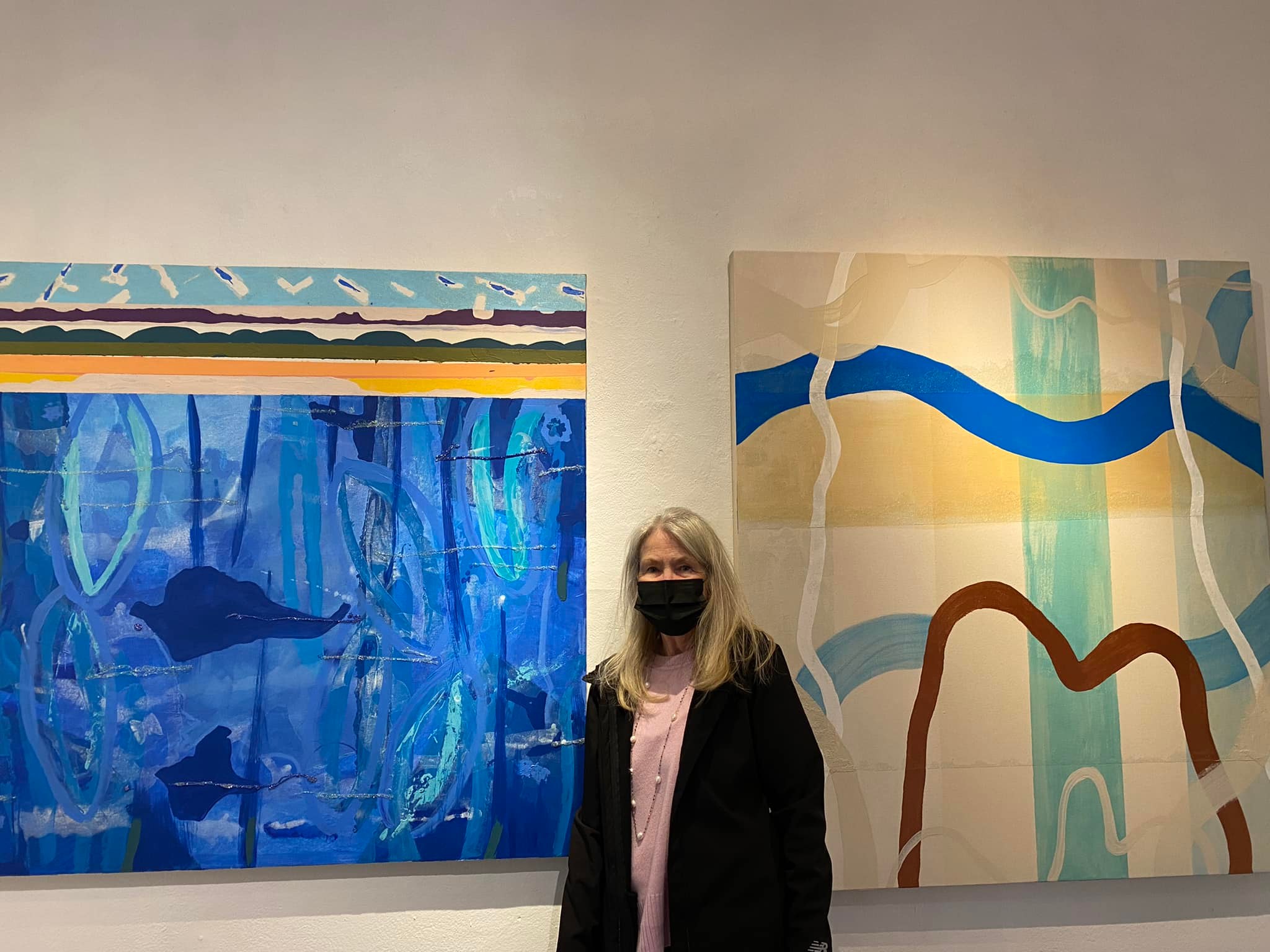
Whether she is depicting a volcano, as above in “Edge of Kilauea” (1994), a delicate lavender fossil, or the sheen of smooth sea water, she creates a mesmeric pull with color and motion-filled, compelling images. Her geometric abstracts are hard-edged, sharp and witty; her softer, more flowing images have the texture of silk garments, the shape of petals, waves, hazy landscapes, and summer dawns.

Harris is a quintessentially California artist, both in terms of subjects and her approach. Unlike other artists who began their work in the late 60s and early 1970s, Harris took no part in an exodus to New York, choosing to paint under the radar in West Los Angeles. Working long-term in a SoCal-infused palette, she shaped light-filled, layered color-intense work that ranges in from neon and shades hot as an LA winter sunset to those as cool as a misty morning rainbow over Catalina.
Born in 1947 in Santa Monica, Harris is highly influenced by the season, the light, and the environment around her, saying “the light of the ocean and the beach in Southern California is like nothing anywhere else,” and terming that light the greatest influence on her painting.

Hers is the dazzle of sunlight on sea water, a sunrise barely rimming over the Santa Monica Mountains, an afternoon awash in the golden fire of a summer garden, the blue, golden-hour shadows of a summer dusk. Whether working in highly specific blocks, lines and circles as precise as targets, or creating her flowing abstracts, she shapes the life-force and raw beauty of her west coast home and inspiration. Neither tropical nor desert dry, her art longs for and celebrates water and light.

“Early Season Island” is blue and green and all angular perspective, like paradise viewed from sea, at a horizon-defying distance (2019); the work is somewhat of a fusion between her more impressionistic abstracts and the sharply focused patterned work in the artists’ career.
“Next Eclipse of Green” (1974), is cat’s eye and off-center target in extreme close-up; “Mutchka” (1969) is figurative and bold, a distinctive cat face textured behind a screen or grid (below).
Below, “Earthquake” (1974) is a play on measurement of seismic activity, depicting a circular, moving vibration measured in green, gold, pink and lavender.

The motion of lavenders and reds in “Dusk Dusk” (1974), below, is an abstract of soft-focus lines that contains elements of both harder-edged work and her watercolor abstracts of more recent years. It is both reflection of twilight on water, sky, and fading light on land.

Even in her less-frequent use of black and white, the viewer senses the resonance of Harris’ color-filled images.

Harris studied at Otis Art Institute, and worked with Nam June Paik and Charlotte Moorman on the first artists’ worldwide satellite broadcast at Documenta 6 in Kassel, Germany in 1977. Her work has shown at a wide range of museums and galleries in the U.S. and abroad, from the Los Angeles County Museum of Art, to the Palais de Beaux Arts in Belgium, and the Fahle Gallery in Estonia.

While Harris continues to paint daily, and taught at schools such as Otis Art Institute, El Camino College, and Cerritos College, she withdrew from the “art scene” in the late 80s, remerging now with ViCA, in a swirl of rich work, jeweled in glowing colors and shimmering with light. Exemplifying and amplifying the natural world has always been what Harris revels in; through her body of work, viewers join the celebration, California-style.

Genie Davis; photos provided by ViCA

Lauren Kasmer’s Momenta is Truly of the Moment This Weekend Only

Momenta, multi-media artist Lauren Kasmer’s solo exhibition presented by El Camino College Art Gallery is a rich virtual delight that runs online through May 9th. This weekend, the experience becomes even more immersive – and is one well-worth staying home for, even as the world reopens. Performances, readings, and special announcements are part of the program, curated by Susanna Meirs.

The exhibition’s five main moments, which I have written about previously, are: the lush visual narrative of a poetic video exhibition, MountWardrobe, with its highly tactile photographically printed garments; Equipoise, a meditative photographic installation with personal collaborative and interactive elements; and the photography of Collaboration at a Distance, and Flourish from Fire, the latter of which is comprised from stills of the Blind Courier exhibition installation project that Kasmer presented at the Brand Library in 2019. 

Each of these unique elements of Momenta share the emphasis on social practice and viewer participation that Kasmer has epitomized throughout her artistic journey, and this weekend’s scheduled acts and spontaneous Moments is Alive interactions will bring virtual viewers into the artist’s viscerally realized world as she had intended it to do had the exhibition proceeded in a public IRL opening.

Kasmer will also unveil a new book based on the exhibition. Already available is a limited-edition Viewmaster which she says is “intended to evoke the feeling of being in the presence of the elements via the use of an art object that you can hold in your hands,  a contrast to this virtual exhibition.”

Between each scheduled act, there will be “Momenta is Alive” interludes. These interludes feature live spontaneous acts within the Equipoise installation including the musings, meditation, films, and performances.   

SATURDAY MAY 1

9:50 am: Space opening

10 am: teacher and practitioner of East/West Modalities Deirdre Woode leads T’ai Chi

11 am: MOMENTA is Alive Interlude*

12 pm: Rob Klonel gives us a Drumming experience

1 pm: MOMENTA is Alive Interlude*

2 pm: art critic and writer Shana Nys Dambrot reads from her book Zen Psychosis

3 pm: MOMENTA is Alive Interlude*

4 pm: Matthew Rich and Miriha Austin perform Mixed media

5 pm: Space closing & a Momenta limited edition View-Master giveaway

SUNDAY MAY 2

9:50 am: Space opening

10 am: Monthira Soonthorsarathool leads Zumba

11 am: MOMENTA is Alive Interlude*

12 pm: Clayton Bonura reads Ekphrastic poetry

1 pm: MOMENTA is Alive Interlude*

2 pm: Douglas Wilcox presents Table Manners 

3 pm: MOMENTA is Alive Interlude*

4 pm: Satoe Fukushima has Storytime with Misato & Chitose Iida.

5 pm: Space closing & Viewmaster giveaway

Exhibition viewable at https://www.laurenkasmersmomenta.com/

Momenta, Lauren Kasmer’s companion book for her exhibition, will be released in early June as a limited edition of 100 copies.

A small number of keepsake View-Masters will be available for sale on the Momenta website, each with a disk that includes  images from the exhibition.  A Momenta View-Master giveaway will be announced during this weekend’s livestream.

The link to the Momenta Livestream can be accessed at https://www.laurenkasmersmomenta.com/, the exhibition itself is viewable at the same location.

  • Genie Davis; photos provided by the artist