As a photographer, Scott Tansey’s art is moving from large scale, such as the vast and glorious view of Strike Valley above, to more personal views, seen in his pearl like close-up of the salt flats in the Badwater area of Death Valley, below.
From a personal standpoint, Tansey can trace his own history within his work – and reach viewers with the same kind of rewardingly connective images.
Above, the Panamint area of Death Valley gets the intimate treatment, while below, he’s more expansive in scope.
From that point on, he started to focus on intimate images. “I made close-up images of coastal rocks. Later, I went to the desert. One thing that has changed over the last few years is that I am trying to take the scene out of the image and put myself in,” he explains. “What I mean is that I have traced my psychological history in my images. When I was in Joshua Tree, I noticed that I took images of small lonely trees in subdued lighting. This reflected my being on the spectrum when I was a little boy where I felt alone.” He also experienced sensory overload. “Thank goodness that I am one of the 18% who was fortunate to come out of the severe spectrum.”
Tansey describes his original work as that of “large panoramic vistas,” which he began to create in 1977. In the early 90s he added more intimate images; and in the 2010s he made the switch from film to digital, adding post-processing skills to his artwork.
Landscapes, sacred places – whatever he photographs image inspiration varies, he relates. “It depends. If I go to a location, I want to gather the basic images. This is how I did images of Patagonia, Svalbard, Israel and Antarctica. In those trips, I started different projects as they came up. From Patagonia, I started my interest in glaciers. That was picked up in Svalbard and Antarctica.”
Even locally, Tansey finds new themes for his work. “I was walking in my neighborhood, and I saw some beautiful roses, so I started a rose project.” The images are often tender, and delicately close-up.
Going abroad, he took images of synagogues and churches. “I continued the project in Israel, where I included mosques, and in my home town,” he says.
Cavernas de Marmol, Catedral de Marmol, Marble Caves, Lago General Carrera, Aisen Region, Aysen Region, Patagonia, Chile
Then came coastal rock images which began in Maine after seeing an interesting rock pile, and continued everywhere from throughout California to Newfoundland, Ireland and Svalbard.”
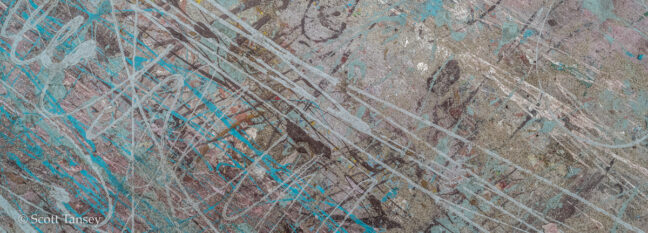
From Tansey’s Urban Surfaces project
And while in Israel, Tansey started a desert project that continued in Joshua Tree and Death Valley. “In Death Valley, I saw cracks in the parking lot that mimicked some of the patterns I saw in nature. That was the beginning of my Urban Surfaces project that I worked on for eighteen months. It seems that something grabs my attention and interest, and then I run with it.”
Chile, Glaciers, Grey Glacier, Lago Gray, Magellanes Region, Torres del Paine
Regardless of the project or the image, one thing is consistent throughout his work, which he describes as “the sense of wonder that I have when I make each image, whether it is a broad view of the scenery or close-up images.”
After dealing with some health issues for the past 18 months, Tansey is currently socially isolating, working on images he took in Death Valley, and Big Sur.
California, Central California, Monterrey County, Point Lobos, Point Lobos State Reserve, Rocks, Water
While he is passionate about both locations, his favorite spot to shoot, at least as far as the number of photographs he takes and the number of visits he’s taken, is Point Lobos Reserve, which he describes as “my favorite place in the world to take photographs. Point Lobos has been called the greatest place where land meets the sea,” he says, and obviously concurs. “I have been taking photos there since the 1980s. My most recent trip was last November series of images shot along the shore there for the past six years. “These images are all intimate images.”
As to what’s ahead – along with undoubtedly another trip to this favorite spot, “If I am able to travel to Alaska, I will continue my series of glacier images.”
More from the Urban Surfaces project
Perhaps, given his inclination to go with close-range subjects, he will make the large small, and the small universally grand, as he continues his series.
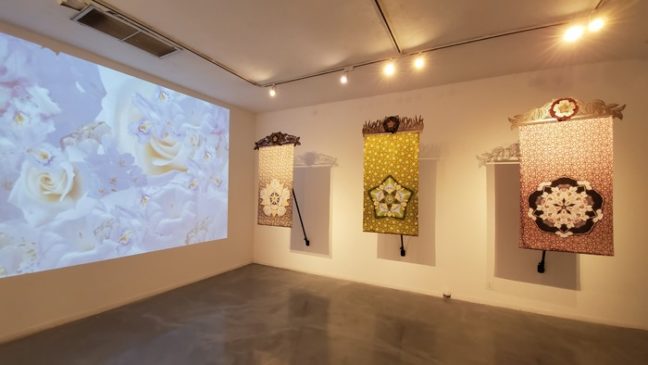
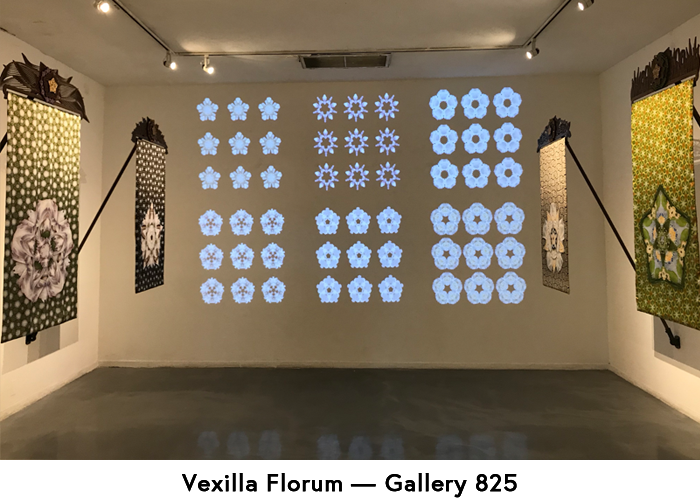
Flower are like stars to artist Karen Hochman Brown in her lush and literally blossoming installation Vexilla Florum, first shown at LAAA’s Gallery 825 in the early fall of 2019, and then in a smaller grouping through early March 2020 at TAG Gallery.
With this installation, Hochman Brown delves deeper into her signature kaleidoscopic floral mandala work in a dazzling tour de force of eye-popping images.
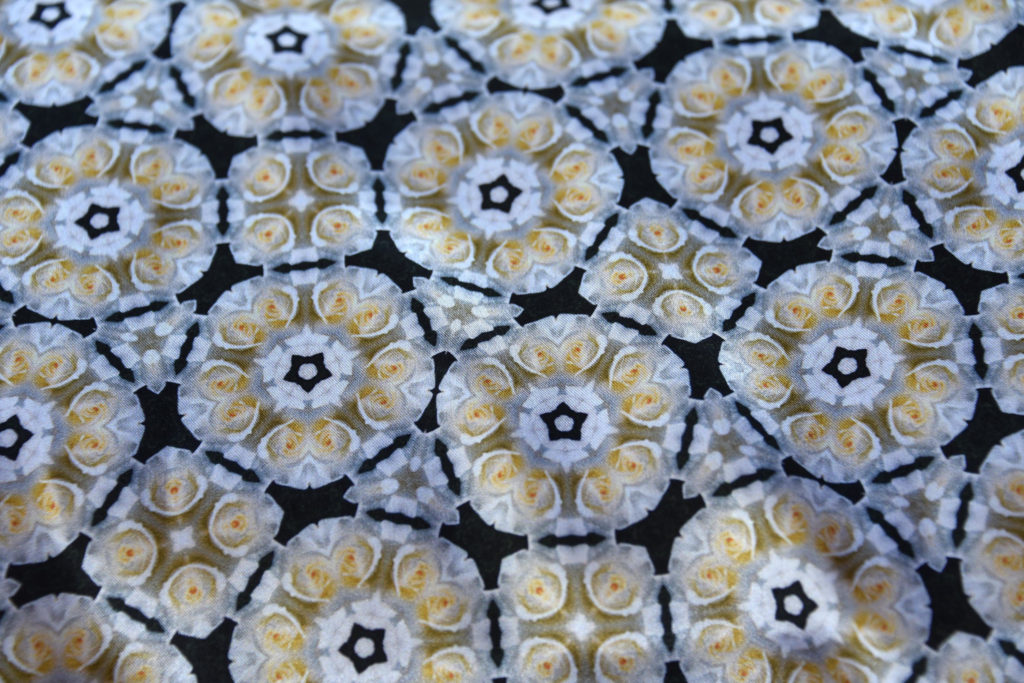
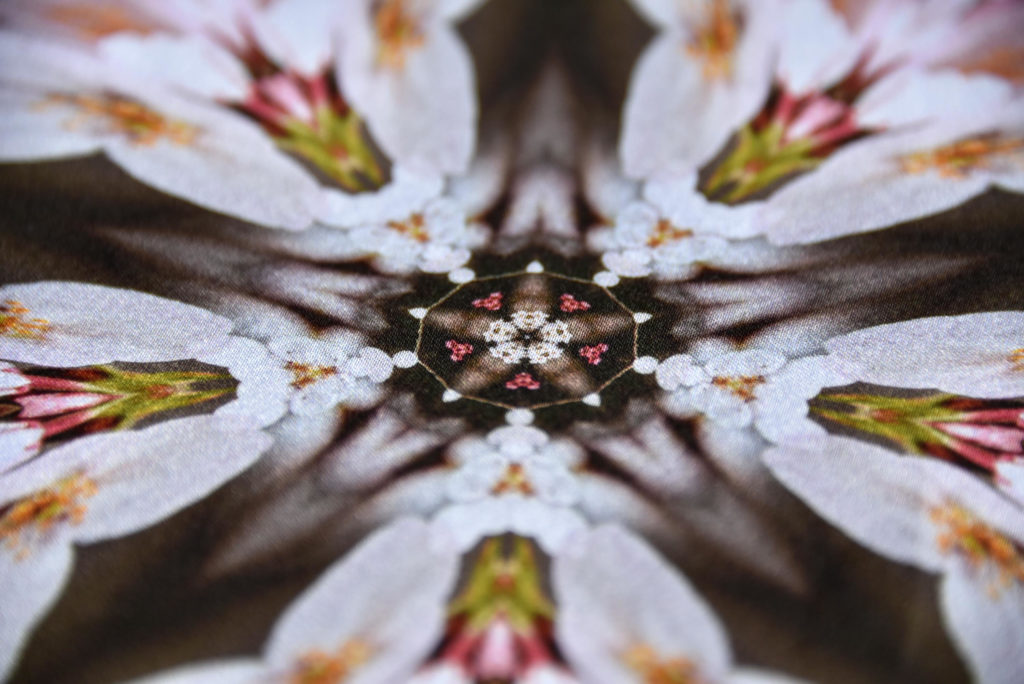
Based in photography and digitally manipulated, the artist’s riveting work sometimes reminds the viewer of a kind of dimensional, exotic stained-glass. She distorts and reflects her single-subject photographic images to highlight both color, shapes, and patterns, and has described her work as “rooted in nature and geometry.” Much like stained glass, the images also have an inward glow, an almost visible translucence.
If a flower serves as the “seed” of her work, it’s fruition is something richer and more compelling. She uses mixed media and multi-media to combine several different processes, all rooted in the fantastic, even magical, evocation of floral blooms. Using handcrafted and digital photo-manipulation, she pulls the viewer into a world that is both alchemic and amazing. Here, her digital practice is paired with precise and rather glorious laser-cut patterns.
The images begin with a photograph of a single-subject flower, chosen from one of many around the world. Distorted and reimaged in a kind of new realism, each piece becomes a precious jewel of nature transformed by specialized software.
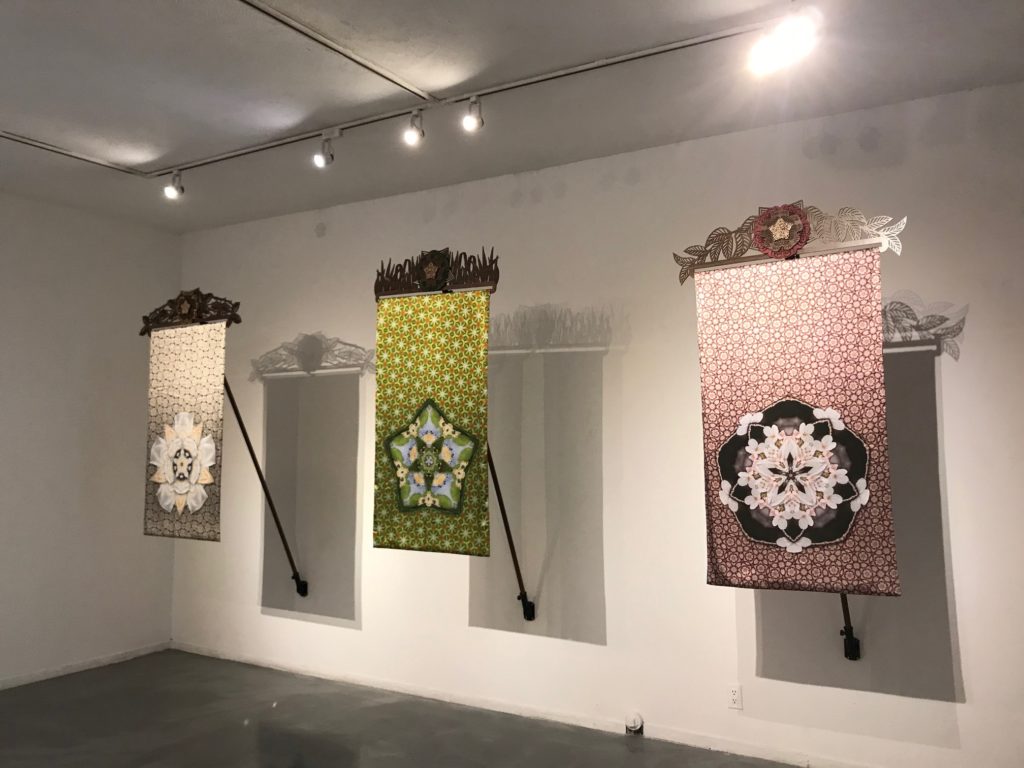
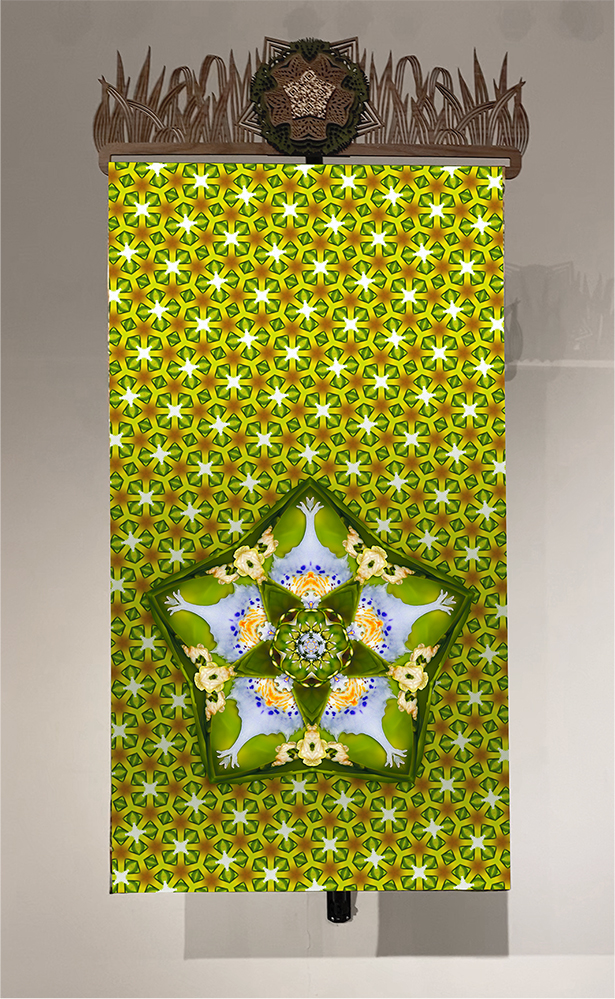
This exhibition also involves intricate laser cut headpieces. To create them, she used a Glowforge laser printer to make the wood cuts that top each of her suspended works: six at LAAA, two at TAG. Banners are hand-sewing and assembled, in a fascinating mix of traditional textile techniques and the hyper-modern computer software-based world.
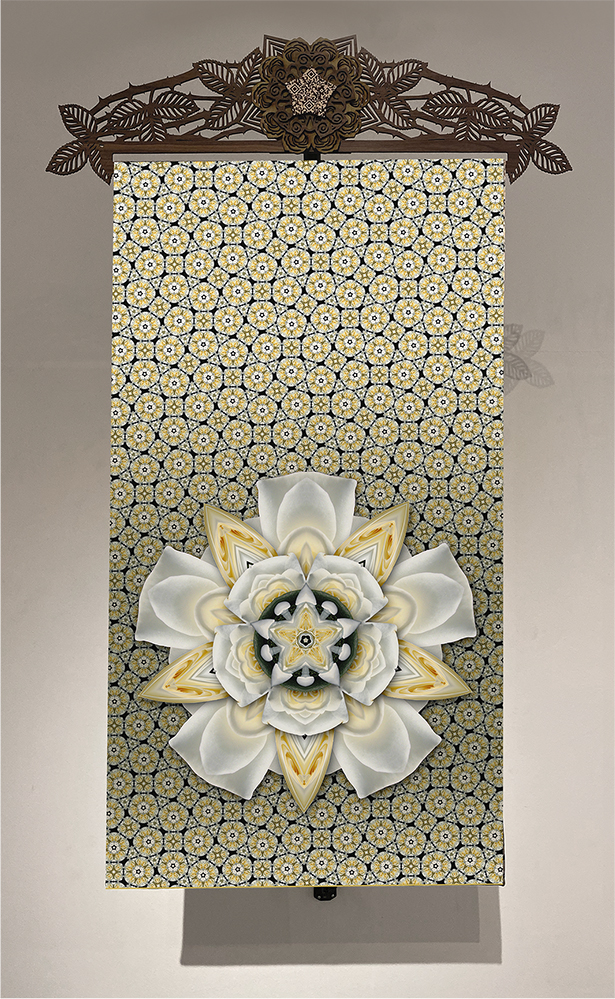
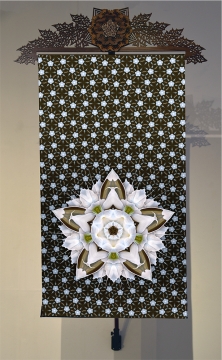
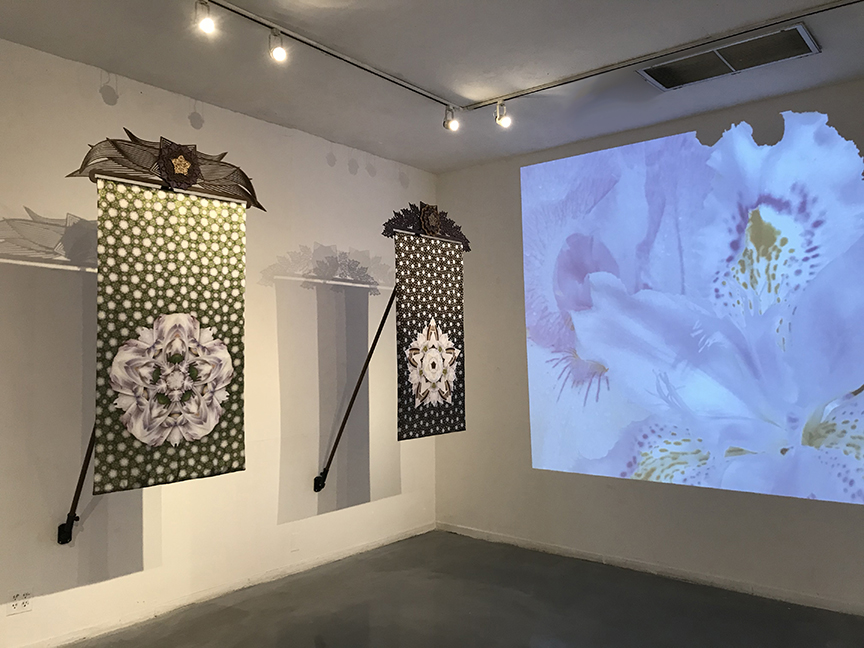
Mounted on slanted poles, each floral banner appears suspended in space. A shadow image spills behind each piece. The elaborate and graceful laser-cut “crown” from which the banner is hung features perfect leaves spreading out from and surrounding a central laser-cut version of the floral image centered on the banner itself.
The complex interwoven patterns of each banner’s background reflect the central image itself as well, and the color behind this pattern reflects that of the main floral element imprinted upon it.
Centered in the lower third of each mounted banner, the primary image is a full, mesmerizingly bisected kaleidoscopic flower. It is both a star, a snowflake, and an extraordinary blossom, or all three.
At LAAA, Hochman Brown’s banners, with backgrounds ranging from pink to brown to green to purple, were mounted in sets of three on either side of the galley, as if hung in a royal hall leading up to the ultimate throne. Here, replacing such a throne is a video installation in which realistic, intensely close images of actual flowers pop up, recede, and form a stunning, lush visual bouquet before dancing off again. These photographic images in turn evolve into stylized, star and snow flake-like digital blooms that spin and dance in a hypnotic and wonderful motion.
It is an immersive and deeply meditative experience that pulls the eye into the universe within a flower. One of the great skills in Hochman Brown’s work is that she introduces the viewer to the concept of the eternal and infinite contained in small but potent package.
Her use of photography as a medium heightens both the realism and the fantasy inherent in all her work; and she combines graphic art with her photo images in precise and revealing focus.
In short, she takes natural beauty and shapes of it an entire soothing and magnificent world.
Both at LAAA, and in a smaller grouping of two banners accompanying her digital animation at TAG Gallery, Vexilla Florum is like no other installation or exhibition. The viewer finds a rose is a rose that’s an entirely different and compelling hybrid in Hochman Brown’s hands.
Watch for future exhibitions of this installation.
Featured image: Ellen M. Friedlander; image directly above: Heather Lowe/Carole Silverstein
The online exhibition Call and Response might be one of the best exhibitions of the art decade, never mind that it happened now, was a direct call to our loneliness, our longing, and our collective creativity.
The project was organized through Shoebox PR and Art & Cake; the dedicated art leadership behind it included those organizations’ helmswoman, Kristine Schomaker, as well as Sheli Silverio, S. Vollie Osborn, Emily Wiseman and Susan T. Kurland.
Kristine Schomaker
In traditional terms, the exhibition uses the process of randomly chosen collaboration to explore ongoing partnered work reminiscent of both jazz riffs and Exquisite Corpse; as “a way for us to stay connected, to check in with each other and to support each other. This is collaboration at a distance.”
Shelli Silverio
But this show goes beyond that description: beautiful, interesting, expanding artworks created from collaborating; a riveting example of what happens in challenging and cheering each other’s abilities; and a way to truly tap into the zeitgeist of what may very well be not just this year, but this decade.
Robyn Alatorre
Creating entirely new works of art inspired by one’s partner’s work of art over a brief course of time is a pretty incredible effort and joy. So too are the formidable amounts of both that the organizers put into mounting the show, on exhibit here:
This was truly a formidable and moving project; not in the least because of the often isolation/corona virus related/ elegiac images, but more so in the vastness of the reaching out, the hope and hopefulness in participants voicing plans for future collaborations, feeling heartened by the experience, or confronting their own sense of loss.
Adrienne Cole
In short: in loss there is gain; in waiting there is growth; in stillness, there is a voice; in partnership, the soul is not alone.
This show is a moving, even wonderful, experience. I spent a lot of time enjoying the art works and attended the two hour zoom reception, and each moment spent was a pleasure.
Jackie Bell Johnson
There are too many fine pairings to cite or come close to showing them all, but I wish I could, and I will laundry list the 106 participants by pair at the end of this piece. Rather than reviewing the art – although it is uniformly exceptionally worthy, the amount is overwhelming – I’m offering a taste of the reception, and what the artists felt about the experience.
Go absorb the works online yourself: you will be glad you did.
Cindy Rinne, partnered with Jason Jenn, described their pairing as “exciting…to see that Jason also performed and writes. We did collages and poems every few days, creating with a new perspective. We plan to work together in the future.” Exciting also describes the glow and poetry of their work together, and Jenn adds “It was a great way to stretch.”
Dani Dodge and Stacie Birky Greene’s collaboration “turned out to be awesome… I got images from Stacie, who works in photo montages, and I took what she does and translated that into what I do. To have someone who was so giving and didn’t mind if I got my own image in late… it was a great process to work with her,” Dodge reports. The result was a pairing of haunting, insightful images.
Leora Wien
Ashton Phillips and Leora Wien were similarly inspired. Wien was moved to try different mediums with Phillips; likewise, Susan Kurland and Lina Kogan found their partnership to be “inspirational.”
Bibi Davidson stretched her oeuvre as well with a vibrant, moving image collaboration with Jen Snoeyink, whose photographic depictions of site-specific installations vibrate with color. Collaborative work above.
Photographic artists Diane Cockerill and Martin Cox agreed that their collaboration “was something to look forward to…it gave meaning to our day, and we were on the same wavelength with what we wanted to say, many times,” Cockerill reports. Cox agrees “I would rush out to find something, shooting close to home…this forced me to come up with something that made sense.” Cockerill adds “The [photographic] stories were a by-product of our exchange.”
L. Aviva Diamond had been in lockdown mode prior to the county-wide safer at home regulations, and found collaborating with Micke Tong – a process she has never done before, an entirely new experience. “It was hard at first,” she says, “I didn’t have any connection with the installations and thedigital art he was doing. But he taught me how to do masks, and connect to his emotions. I’m really proud of what we came up with.” Tong agrees: “It was a joy to communicate with Aviva. She would react to what I was doing and there was a deeper relationship toward our work at the end of the process.” Their work is a dance, as is that of curators Schomaker and Silverio, who also collaborated on art work as well as the exhibition.
Schomaker relates “The idea for Call and Response came as a way to help artists. Shelli convinced me to do this. We played off each other’s art and emotions, and it got me out of the anxious mind set I was in sometimes.” Silverio adds “A lot of the time we are giving advice to artists, but for myself, I didn’t take my own advice. This was a really good exercise.”
Dwora Fried, working with Jeremy Hight, adds “I was inspired by Jeremy. I had a lot of insecurity at the beginning but then I began to feel that things would more than work out.” Something to remember in general, today.
David Isaacson says of his pairing with Amy Kaps, above “Her art came fast and fun. I was sacred shitless, but I was born to do this. Working with a performing artist like Amy was exciting. We hope to make a future performance art piece together.”
And Kayla Cloonan relates of her work with Misty Mawn, “I typically work in abstraction, while Misty is primarily figurative. She got me out of myself, and it was really rejuvenating.”
Julia Montgomery said of working with Kristine Augustyn. “I didn’t want to stop, I couldn’t stop. This kept me going.” Augustyn adds “She gave me a place to focus, to see her working was so exciting. It was an organic experience, and we built something.”
Building something: the concept of Call and Response as a whole.
Given 24 hours per participant to answer each other’s “call,” these works, are especially profound given this constraint. Some artists built upon each other’s piece; others bounced ideas back and forth. All created work that was important to the spirit: their own, and that of the viewers.
Image above – Ellen M. Friedlander
Kimberly Morris, above
In all, those exhibiting include:
Nora Cohen/Emily Wiseman Jen Snoeyink/ Bibi Davidson Gini Mann-Deibert/Debbie Carlson Ashton S. Phillips/Leora Wien Ashley L. Gnar/Yvonne Jongeling Kenzie Dickens/Laura Henneforth Cia Foreman/Kat Nuñez Paula Goldman/Karen Fisher Chris Fontaine/Kimberlee Koym-Murteira Jacki Morie/Zarina Silverman Kayla Cloonan/ Misty Mawn Larissa Nickel/Ted Meyer Jesse Standlea/Dafna Steinberg Leticia Velasquez/Reneé Fox Isa Gordon/Robyn Alatorre Kristine Augustyn/Julia Montgomery Adrienne Cole/Gina Herrera Anne M Bray/Sina Evans Cathy Breslaw/Susan J. Osborn Dale Voelker/Samantha Fields Sally Baxter/Karen Hochman Brown Jason Jenn/Cindy Rinne Darren McManus/Xu Darocha S. Vollie Osborn/Alyssa Haley Moon Micke Tong/L. Aviva Diamond Laura London/Heather Arndt Conchi Sanford/Ellen Friedlander Bee Colman/Cassandra Takeshi Audrey Coates/Lissa Young Jeremy Hight/Dwora Fried Martin Cox/Diane Cockerill Kimberly Morris/Tom Lasley Lorraine Bubar/Jody Zellen Albert Valdez/John Park David Isakson/Amy Kaps Carole Silverstein/Heather Lowe Emily Silver/Angela Brooks Hillary Ramirez/Sadhana Bhetuwal Susan Kaufer Carey/Madeline Arnault Coleman Griffith/Lynn Azali Jacqueline Bell Johnson/Kris Hodson Moore Michelle Andrade/Sohani Holland William Hemmerdinger/Teresa Coates Lina Kogan/Susan Kurland Liliana Hueso/Andee Rudloff Jill D’Agnenica/Victor Wilde Allison Butcher/Leah Shane Dixon Kristine Schomaker/Sheli Silverio Kerrie Smith/Aazam Irilian Dani Dodge/Stacie Birky Greene Adeo Las/Diane Linquata Rebecca Bennett Duke/Leyna Lighman
There is a Round 2 of Call and Response, with an online reception scheduled for May 9th – and in which, I am participating with the written word and the occasional photo image in collaboration with my randomly chosen partner, Adrienne Cole.
Be sure to watch for the invitation to attend the virtual reception, and visit the work. There’s life out there in the void. You’ll want to experience it.
Genie Davis; photos provided by Shoebox Projects; featured image by Ellen M. Friedlander.
Artist Trine Churchill is using her art to defeat isolation. And what better way than to make YOU a part of that. Her participatory project Together Now began as a neighborly, local project and has now grown a global focus – and you can be a part of it, too.
“We are going through the very same human experience right now. I couldn’t shake it out of my head, the historic moment of sheltering – and who are we sheltering with? Families, roommates, your cat? Or are you by yourself? I wanted to document this future memory in a painting,” Churchill attests.
“And I wanted to engage with people anywhere and hopefully give them a sense of coming together despite what differences we might have culturally and socially.”
According to the artist, all of you reading this article can participate. “It is easy – and hopefully fun – to do. Take a picture. Send it to me. That’s it. If I end up creating a painting based on your picture, I mail off a really nice high-quality, archival print of the paintings. I sign it to you – and send it to you wherever you live.”
Churchill is currently at an early project stage, waiting to see how people are responding overall.
“I would love to see an exhibition of all these paintings. I see them covering the walls, lined up and giving a simultaneous window into how we lived the year 2020, separated but together. A book could be another way to go about it. And that would allow me to write more in words too, tell people’s verbal stories along with the paintings doing their own storytelling.”
She wants as many to participate as possible. “I’ll paint until we are no longer sheltering,” she says, but possibly for much longer than that. Her only criteria is that the photograph sent to her has to be taken during these sheltering times.
“Ideally, the picture would include a little bit of where you are sheltering, your surroundings, your room. Let me know where you live, and tell me how you are doing. And of course, I would love to get everyone’s help in spreading the word, and giving this project legs to walk on,” Churchill explains.
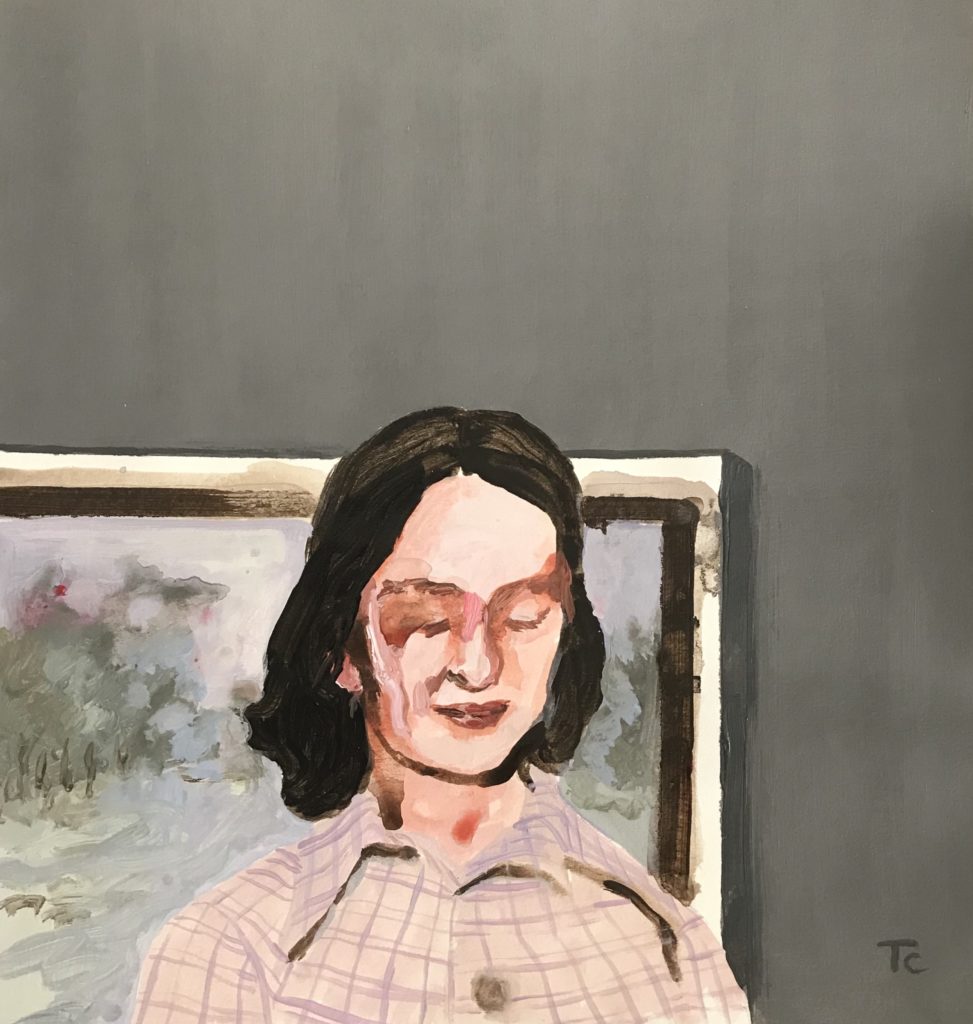
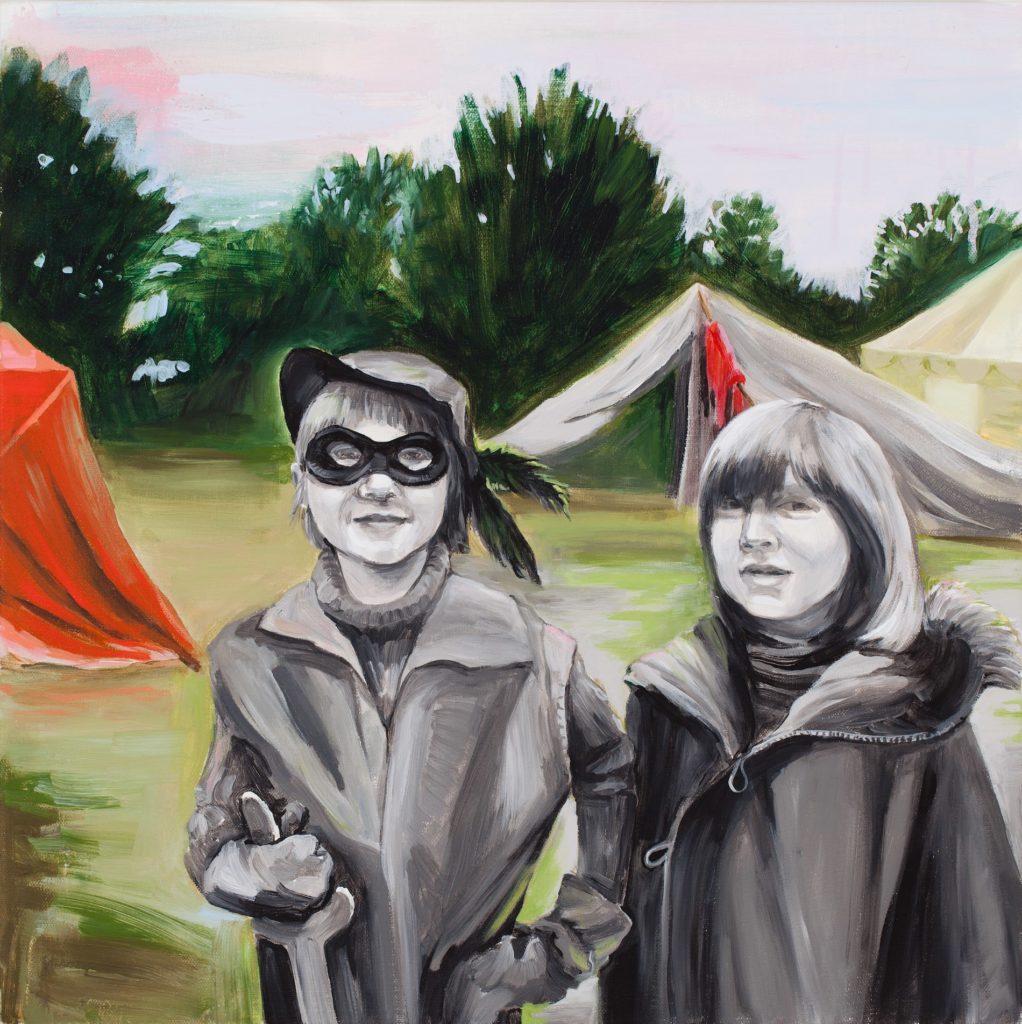
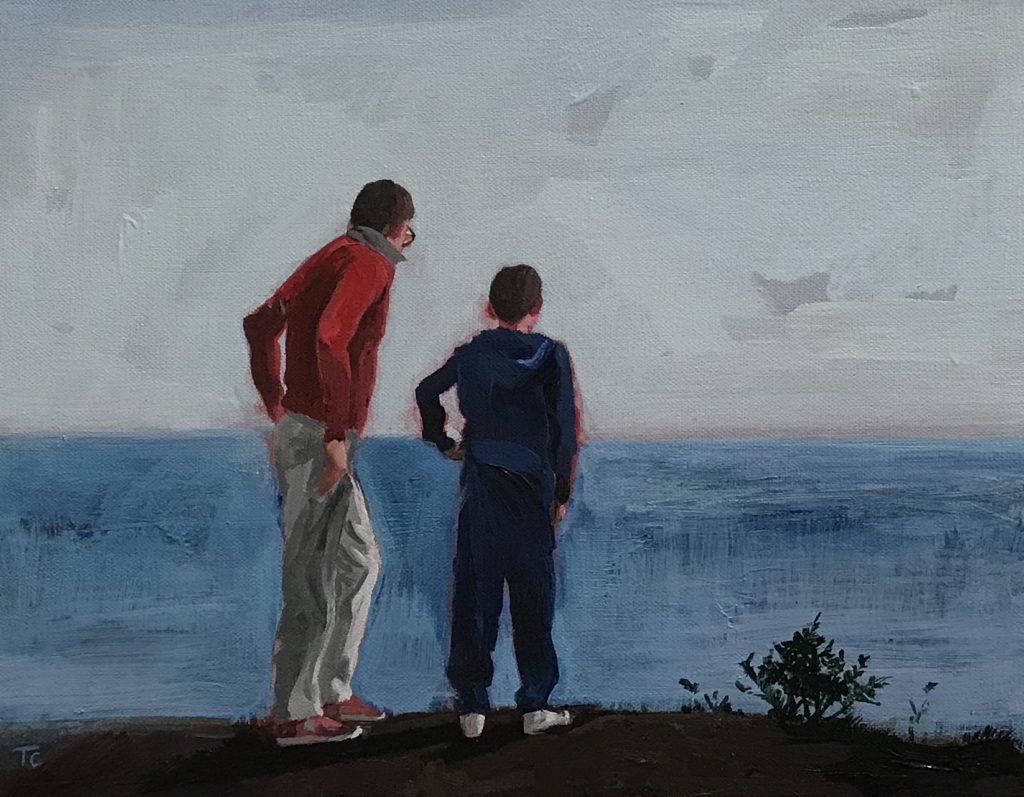
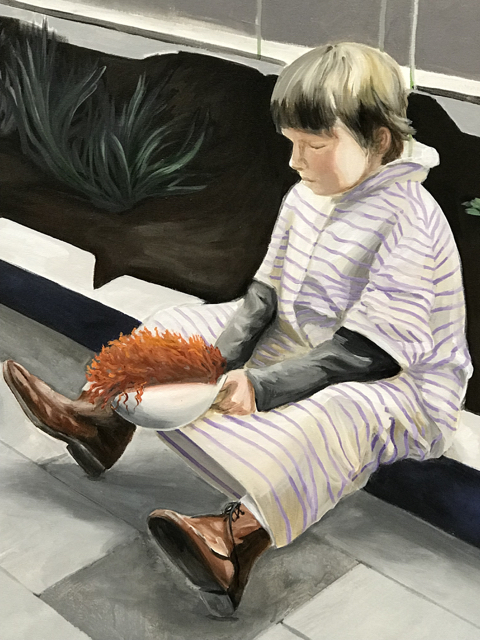
Like past work of Churchill’s, above, this new body of work is dreamy, delicate, and filled with a true sense of humanity.
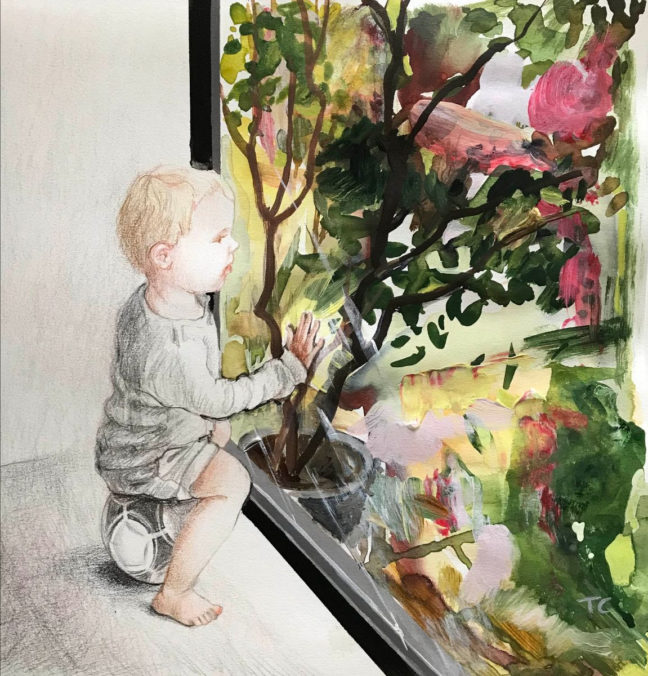
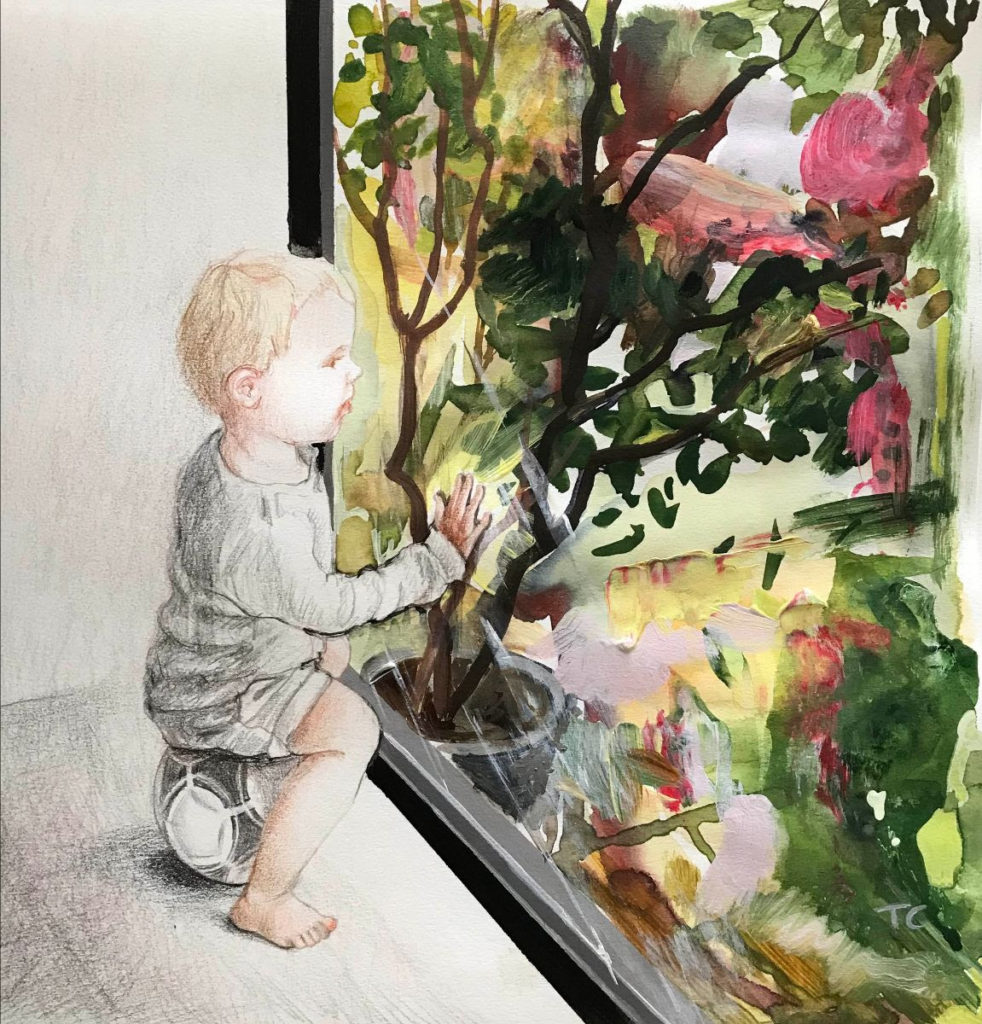
Jude – an image from Trine Churchill’s Together Now series
Works created thus far, including “Jude,” depicting a small child looking out at the bright world, safe and solitary, but awash in grey inside, are richly moving. Her works have always been lush and figurative, and are so here.
The artist is a story-teller, and as such, she describes her work as “often based on memories with a dream-like or fantasy twist.” In previous series, she describes her paintings as “based on my own family’s photos and history. With the Together Now project, that will change.”
Her images are now “based on somebody else’s photo and moment, and I will be creating their memory paintings. However, what I am finding already with the kind of paintings that I do, is that even the most personal moment finds it ways into a shared universal space of human existence.”
And isn’t that what being together, right now, when we are physically removed, all about?
Send your photos to Churchill at: tc@trinechurchill.com