Kevin Jacobs: Layered Collages Illustrate Life and Challenges

Kevin Jacobs: Layered Collages Illustrate Life and Challenges – Genie Davis

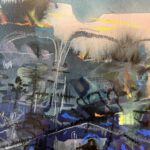
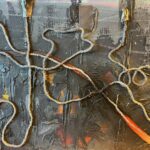
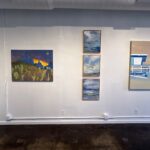
A self-taught graphic artist and fine artist, Kevin Jacobs is the owner of Firestarter Graphics, and a creator of layered, highly nuanced work that takes viewers on a deep dive into rich storytelling and passionate messaging.
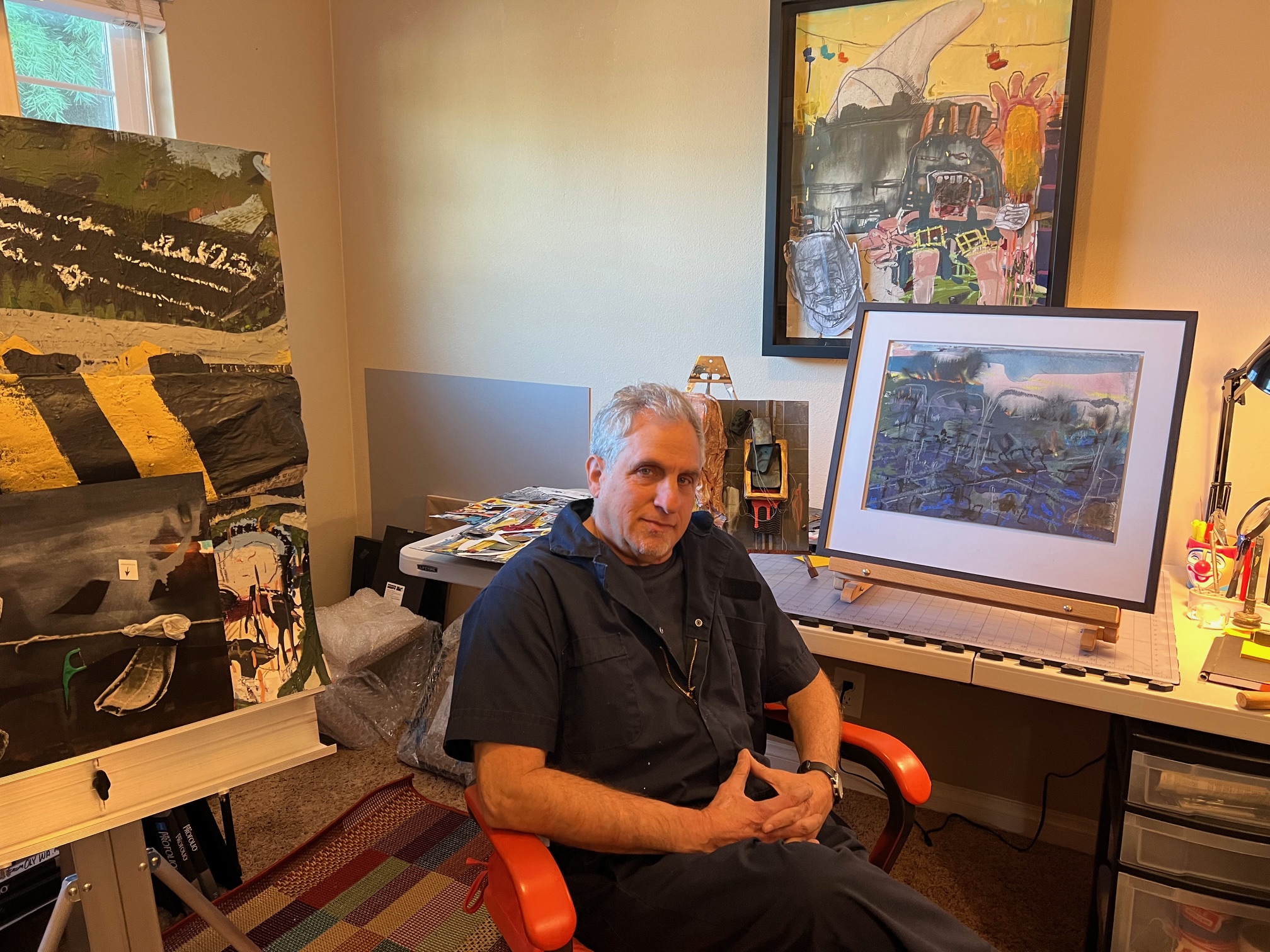
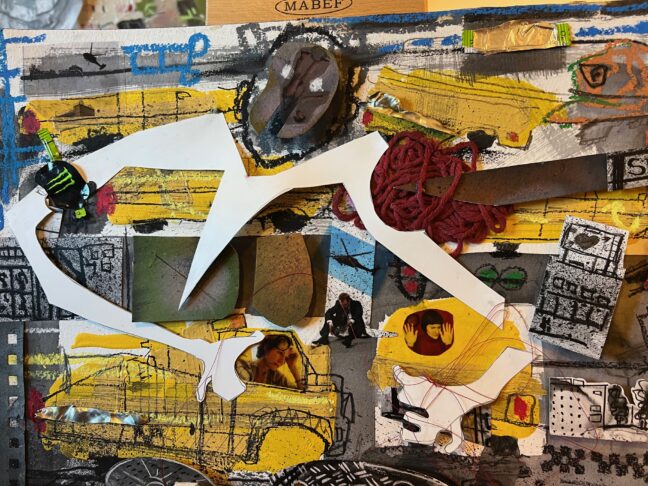
Jacobs uses a wide range of material that add to the visual interest and highly textured surfaces of his art. Working with found objects, paint, pencil, YUPO paper, collaged images, household paint, and both oil and watercolor pastels, he mixes humor and hope with a sense of impending dread in some works, and the yin and yang twists of fate that are a part of every life.

Using a variety of found objects and manipulatable substances gives his art a deliciously outside-the-box ingenuity that adds visual interest and a subtext of rebellion that resonates. The artist often chooses acrylic flat house paint mixed with watercolor paint to create his work, basing specific color choices on paint swatches he collects from home improvement stores. A graphic designer for over 30 years, Jacobs admits he is impatient to get on with his work, and often seeks an exact color using those types of paint without resorting to mixing it himself, which is where the house paint swatches come in handy.
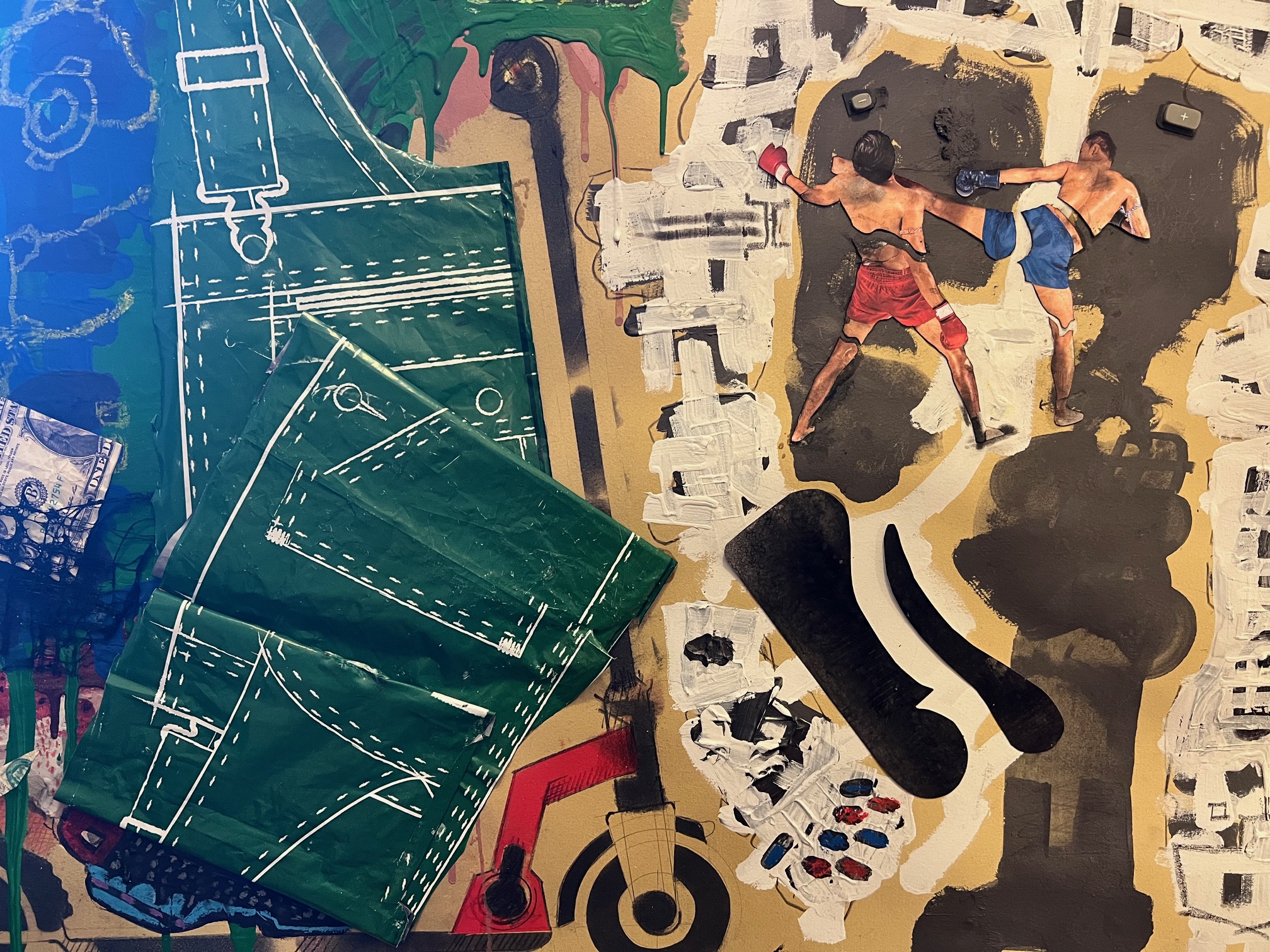
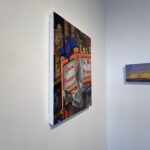
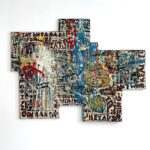
He describes his own work as having an “urban feel, with both the negative and the positive present in any situation.” In his collage “Bullies,” he truly exemplifies the good and the bad, the winner and the loser, the unexpected redemption in the face of fate. His vibrant splashes of painted color and found objects such as a folded green wrapper from men’s coverall packaging shape a work that is as much emotionally laden archeological dig as it is visceral art.

His technique often includes in a graphics design program as a kind of “trial image;” then using his signature mixture of drawing, painting, and found materials, he creates a finished piece, “straight from the heart and mind. I don’t want to spend too much time refining a piece; I want to complete it before my analytic brain ruins it.”

According to Jacobs, each piece “starts with an image in my head, and my poetry brain comes up with the title or there is something that I am thinking about subconsciously that forms a title, and then I work around that.”  One of his many techniques involves drawing with water soluble carbon cake on YUPO paper, creating individual small works that he collages into his larger pieces.
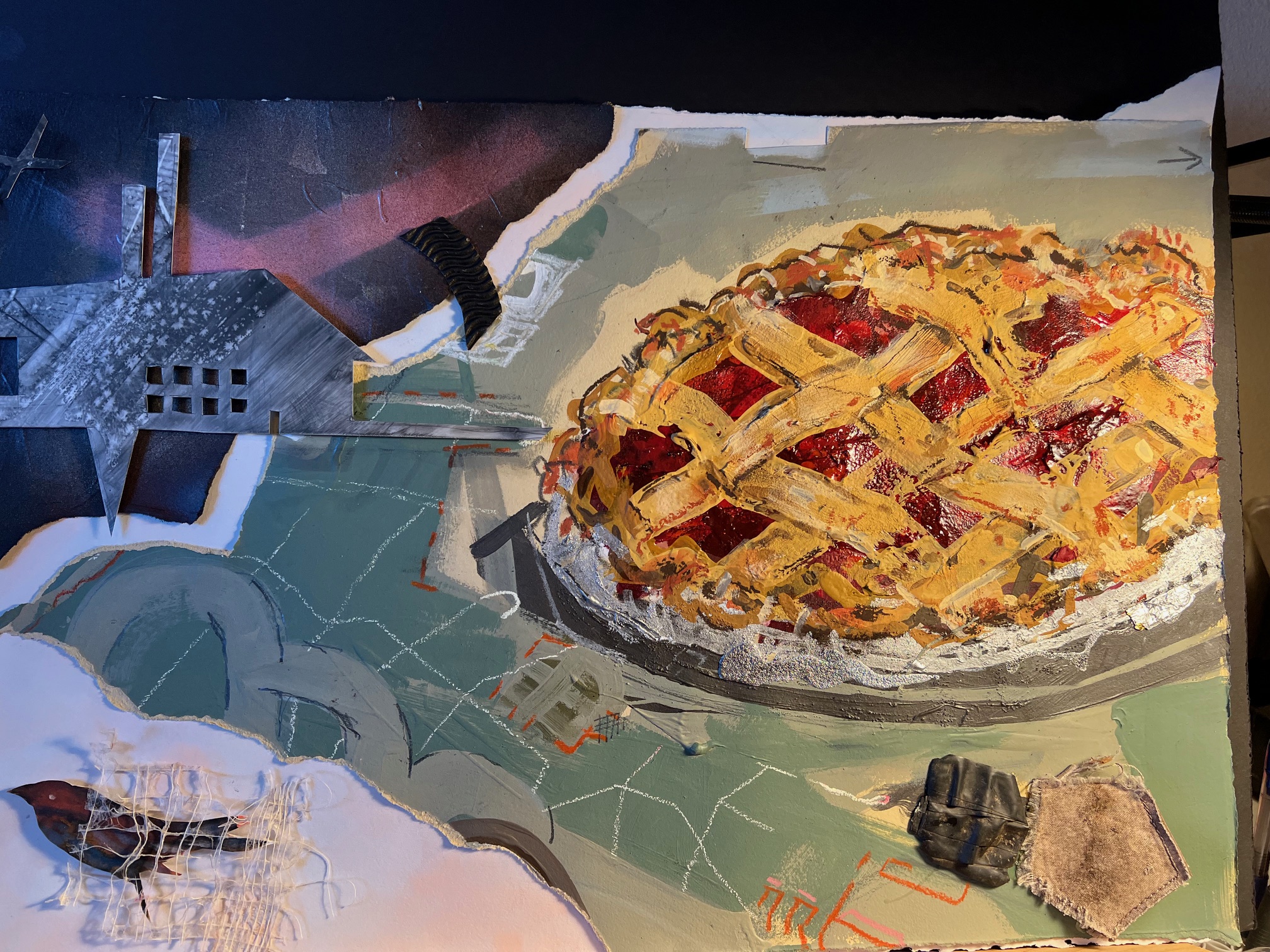
Once recent piece, “Room Temperature” includes a factory building created in this way, a dark, almost ominous structure positioned on one side of a large work that is dominated by a beautiful, luscious looking cherry pie that Jacobs painted traditionally. The idea behind the piece gestated from the artist watching a “documentary about pies made by sweet elderly ladies” and contrasting that with the fact that many pies today are baked in factories and sold commercially.

In the same painting is a perfectly painted bird trapped behind a piece of found netting, which appears to represent a sense of a fractured America, one in which freedom is not so free any more. Curiously the work also includes a small piece of electrical tape in the right corner, another dichotomy with the traditional craft of pie making versus the modern world.
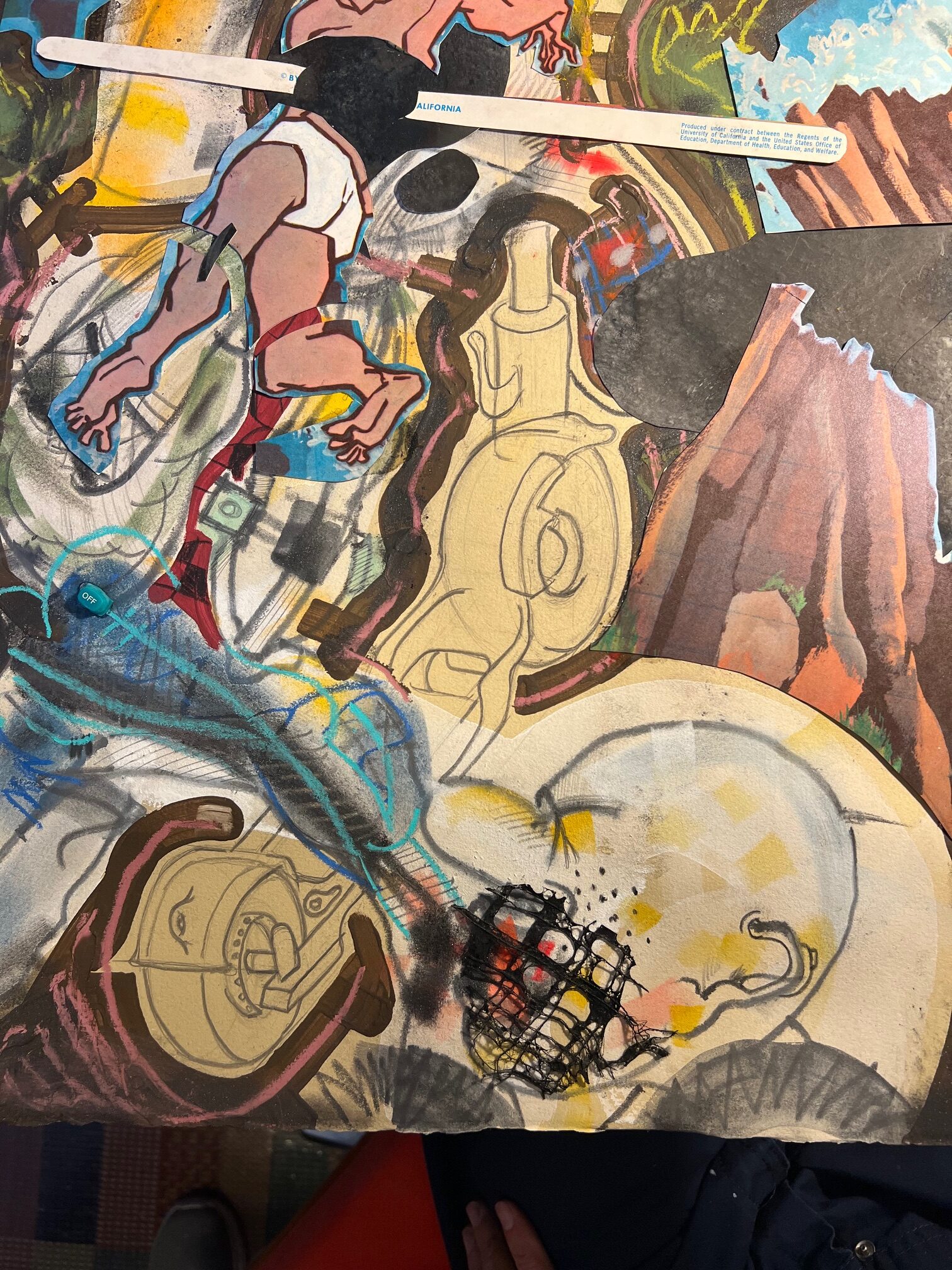
Many of Jacobs’ works involve dichotomy: In “Stolen Scooter,” a mixture of drawn images and collage tells the story of a “bad dude” stealing a scooter in a chaotic, involving work filled with overlapping images and mediums.

Jacobs says he has loved collage his entire life, and “finding random things unexpectedly. I like the sense of surprise and absurdity that can throw me off as well as the viewer.”
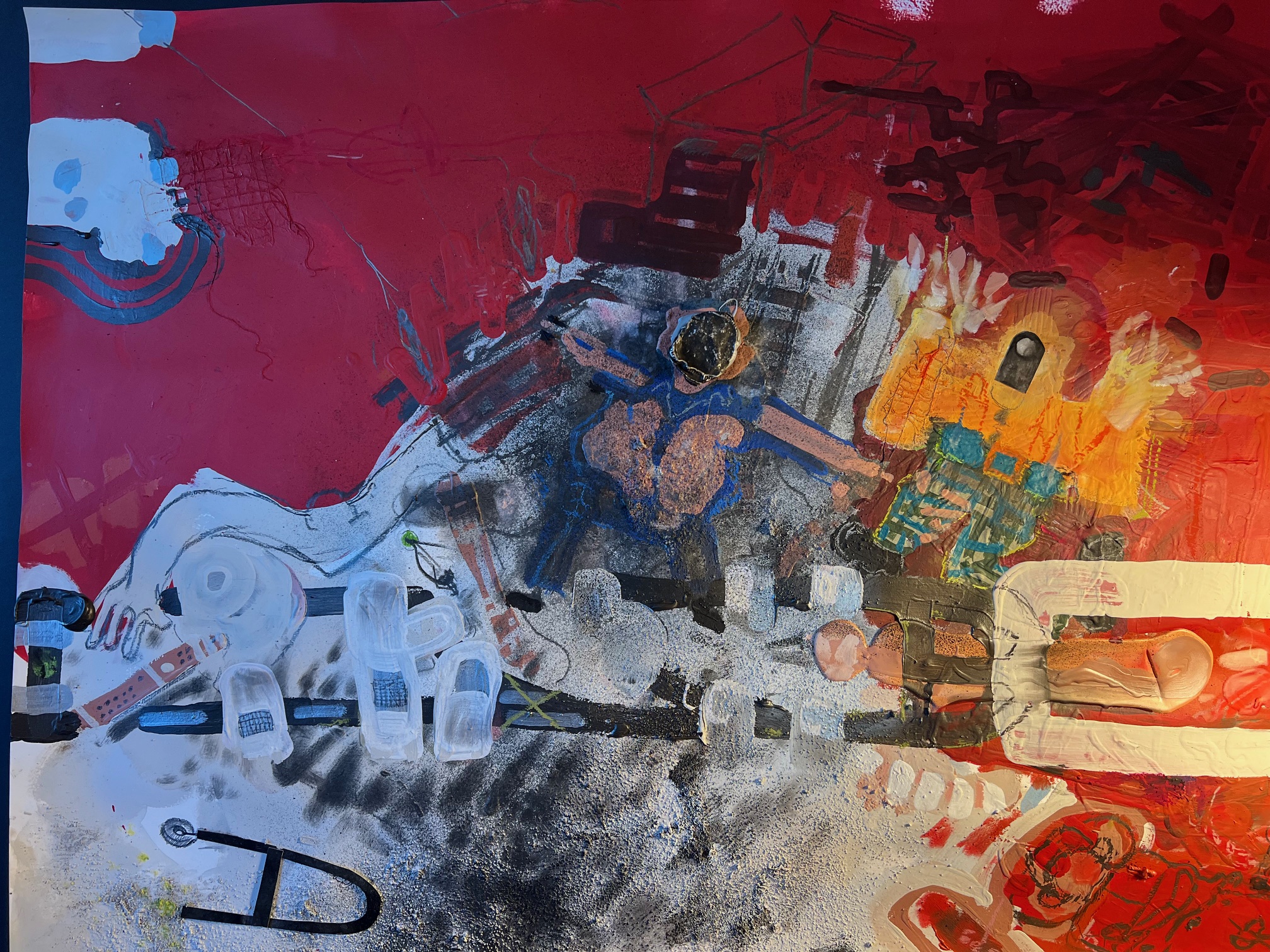
Personally speaking, the artist has had a harsh time in recent years, dealing with his own health problems and the passing of his wife. “Aging” explicitly reveals a sense of “shattered dignity” and a struggle with home health care, the hospital gadgets, the nurse “ghosts” who pass in and out of a haunted existence while recovering from physical ailments. The central figure, the patient, has a face made from a smashed bottle cap.

Yet another work, “Red Tape, Red Flags, and Loopholes” takes on invasive technology from drones observing us to other advancing surveillance technology we have no control over. The work has dimensional pull from raised collage elements, which speak to another love of the artist’s: along with collage he has a great fondness for pop-up books, and terms his art “a poor man’s pop-up book” as well as referring to his images as created by a “poor man’s Red Grooms.” While Jacobs may infer this about his work, there is nothing poor about his art excavations for the viewer experiencing his robust visual storytelling.
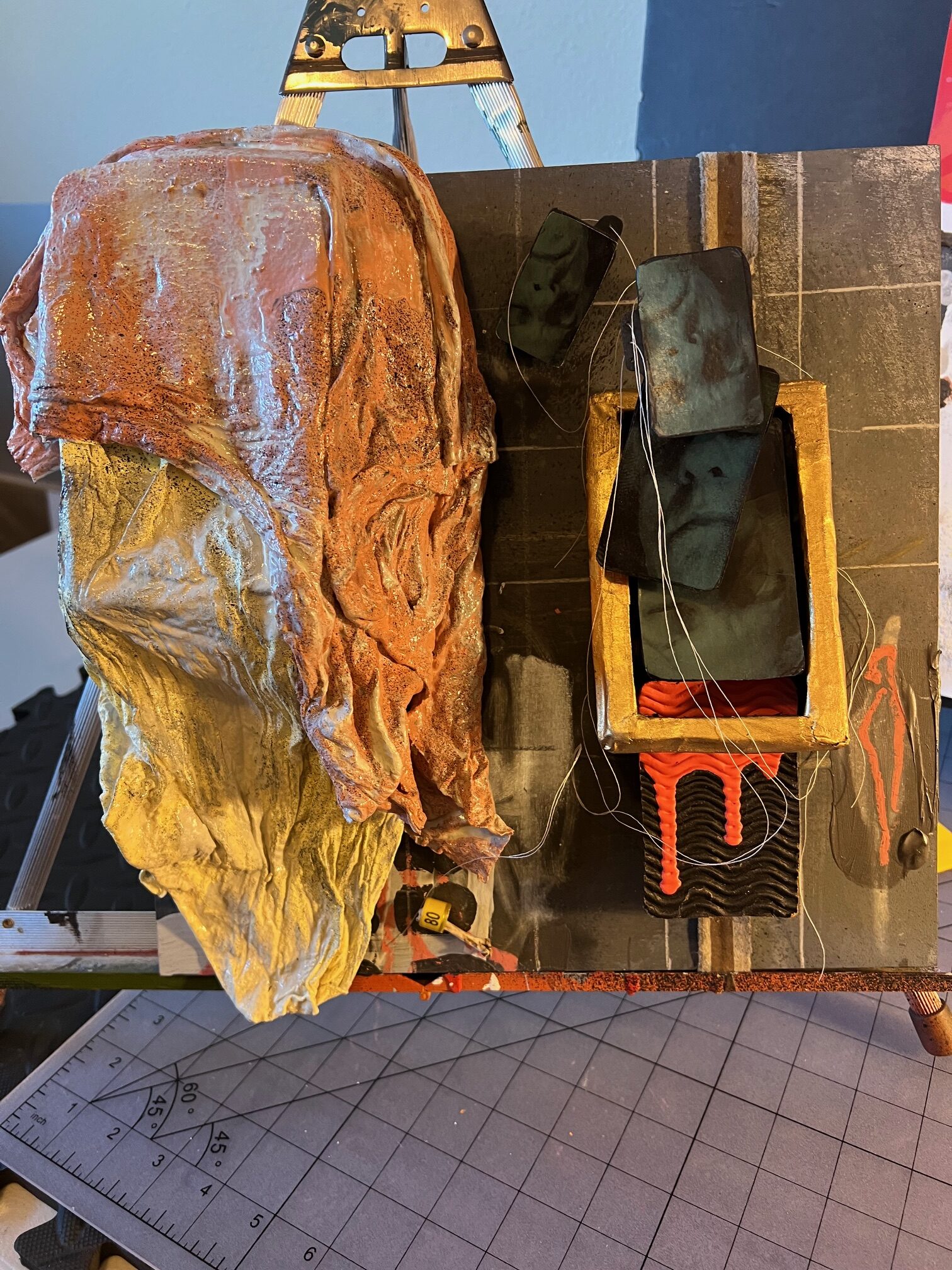
Jacobs’ art also touches on other passions in his life: science fiction and music. Once the guitarist in a traveling rock band that also featured his wife as lead singer, his collages also exude a kind of rhythmic pull. One of his works expressly recalls the “sleazy hotels we had to stay in when we were traveling with the band.” That collage, titled “Encrypted Love” contains a visceral anxiety based on a time when these hotels were “awful, sleazy, feeling unsafe and anxious. You stay where you can when it’s 2 a.m. and the band just finishes playing,” he explains.
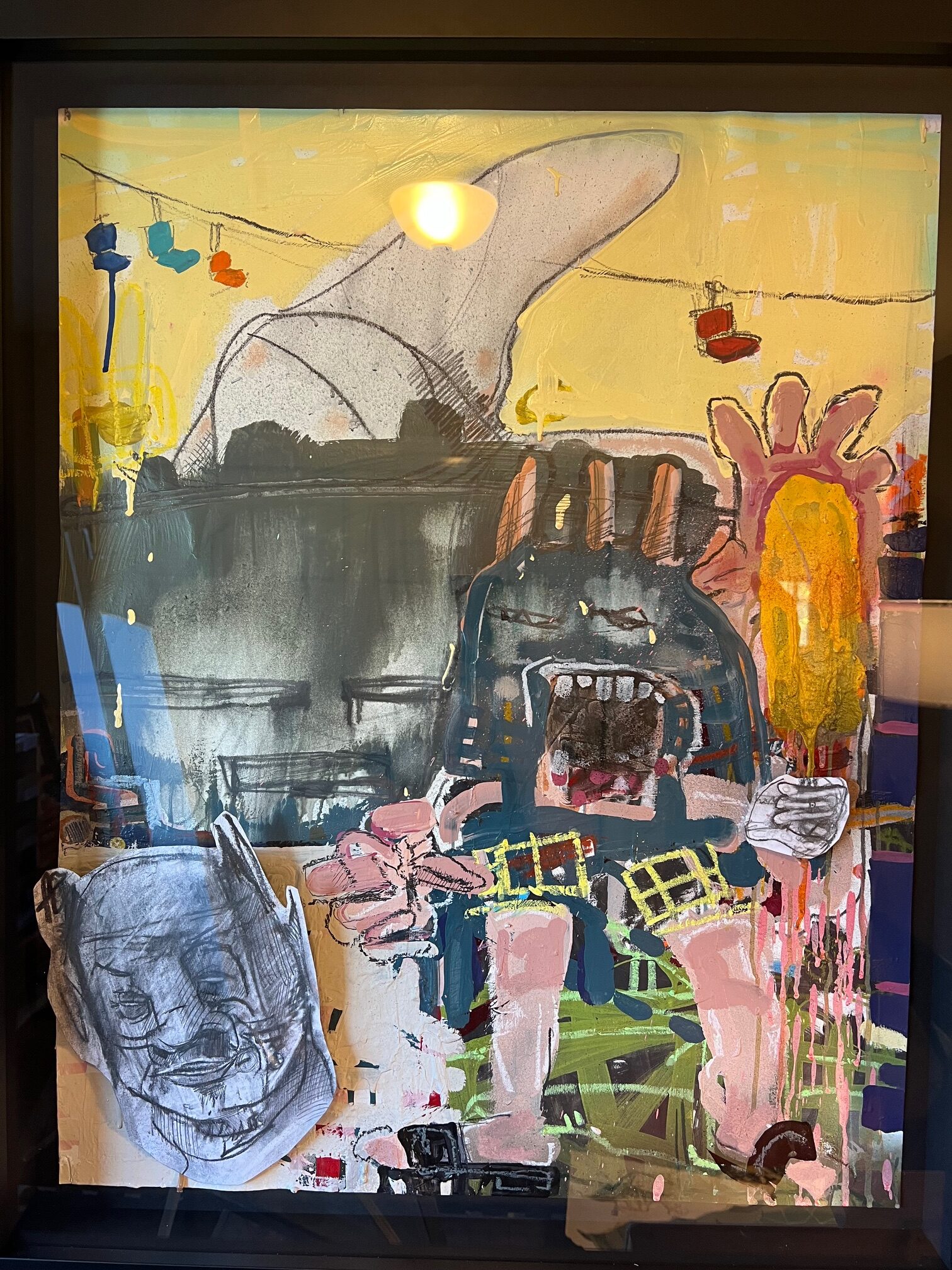
More lighthearted is “End of Summer,” a representation of the Orange County Fair, with fair food, wacky people, screaming faces, and an overhead skyride. “Drone Lost on a Trail” is a representation of a true story in which Jacobs lost his way on a mountain trail near Olympia, Washington, before drones existed. In this piece, drones drawn on semi-translucent vellum float dimensionally, lifted off the surface of the collage on clear beads.
From a poignant yet humor-laced collage story depicting a speed bump at a mortuary and ghostly footprints visiting a cemetery to a series of works based on building or not rebuilding decimated neighborhoods after the 2025 fires in Altadena and the Pacific Palisades, the artist takes weighty, of-the-moment emotions and shapes them as stories both personal and profound. His fire series includes works titled “Mr. Ash” and “Land Developer” as well as “Downed Wires,” each a meaningful gut punch.
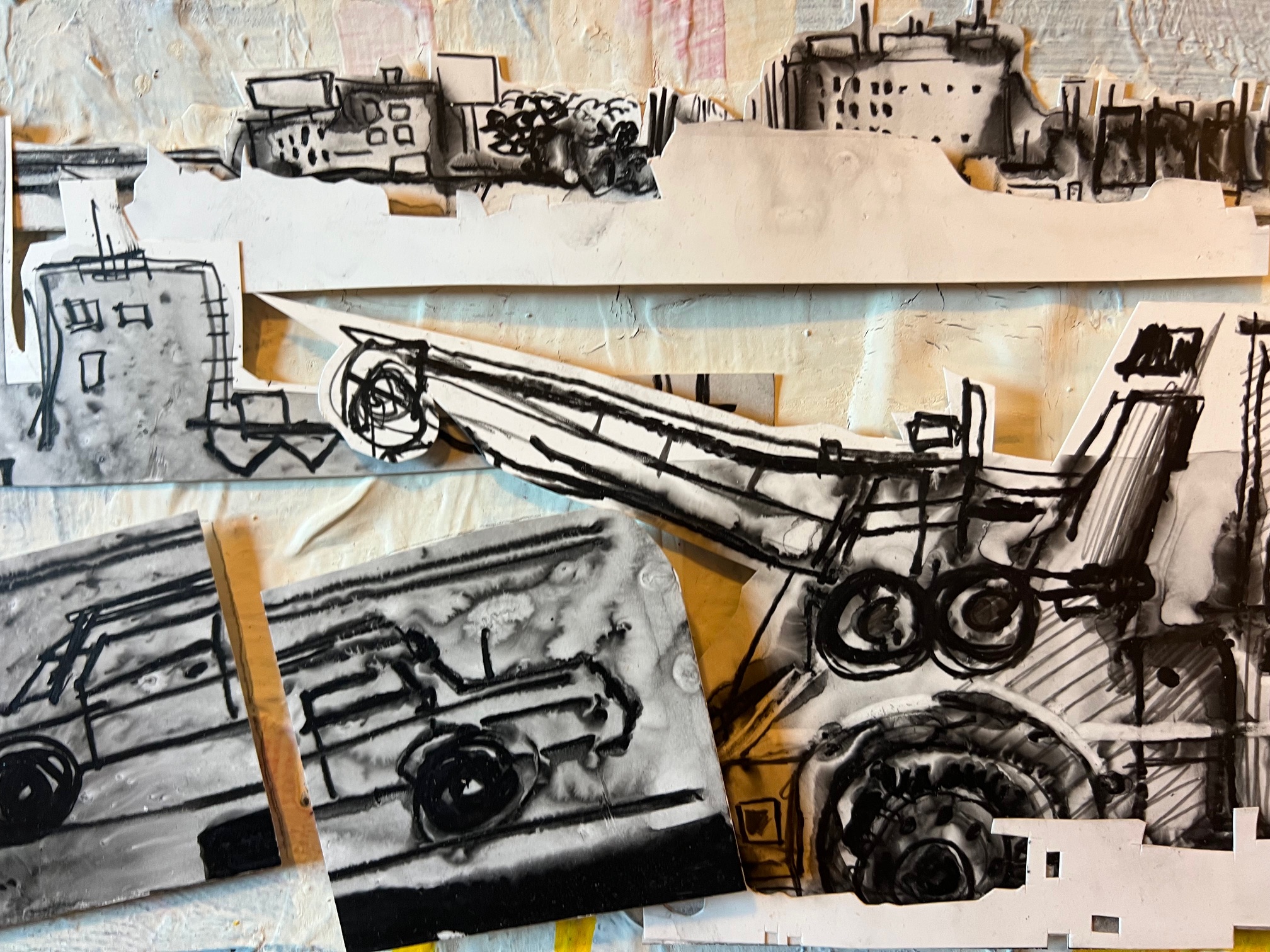
Jacobs, an LA native, even takes on New York City with the ghoulish figures and bright yellow taxis in “City Scarecrow” and its companion piece “New York City” that features an image of a tow truck fracturing a car being towed.

Regardless of medium, from printmaking and monotypes to graphic designer and fine artist, Jacobs visually tells stories laced with humor, heart, pain, and passion. Bold and inventive, this is an artist who encourages viewers to experience every aspect of human life. And maybe that of drones, androids, and ghosts, too.

  • Genie Davis; photos by Genie Davis
 

First Foot: Landscapes for a New Year

While this new year has certainly been fraught as far as the current national and global news goes, individually and collectively we still have the chance to put our “first foot forward.”
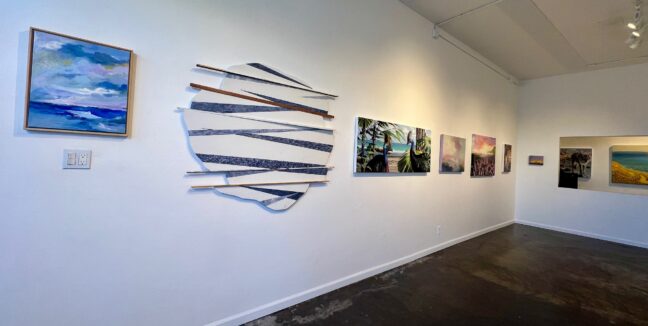
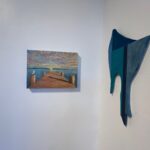
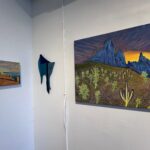
With First Foot: Landscapes for a New Year, opening this Saturday, January 17th from 4-7 p.m. at Garel Gallery in Manhattan Beach, five artists are doing exactly that with vivid and exciting looks forward at scenes both beautiful and edgy, ranging from the representative to the abstract.

In Scottish, Northern English, and Manx folklore, the first foot refers to the first person to enter a home on New Year’s Day, with that person thought to be a bringer of good fortune for the coming year.  Attending the exhibition might just bring good luck to all viewers, and it will certainly bring five unique visions to start the year right.

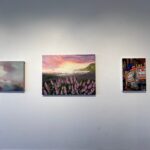
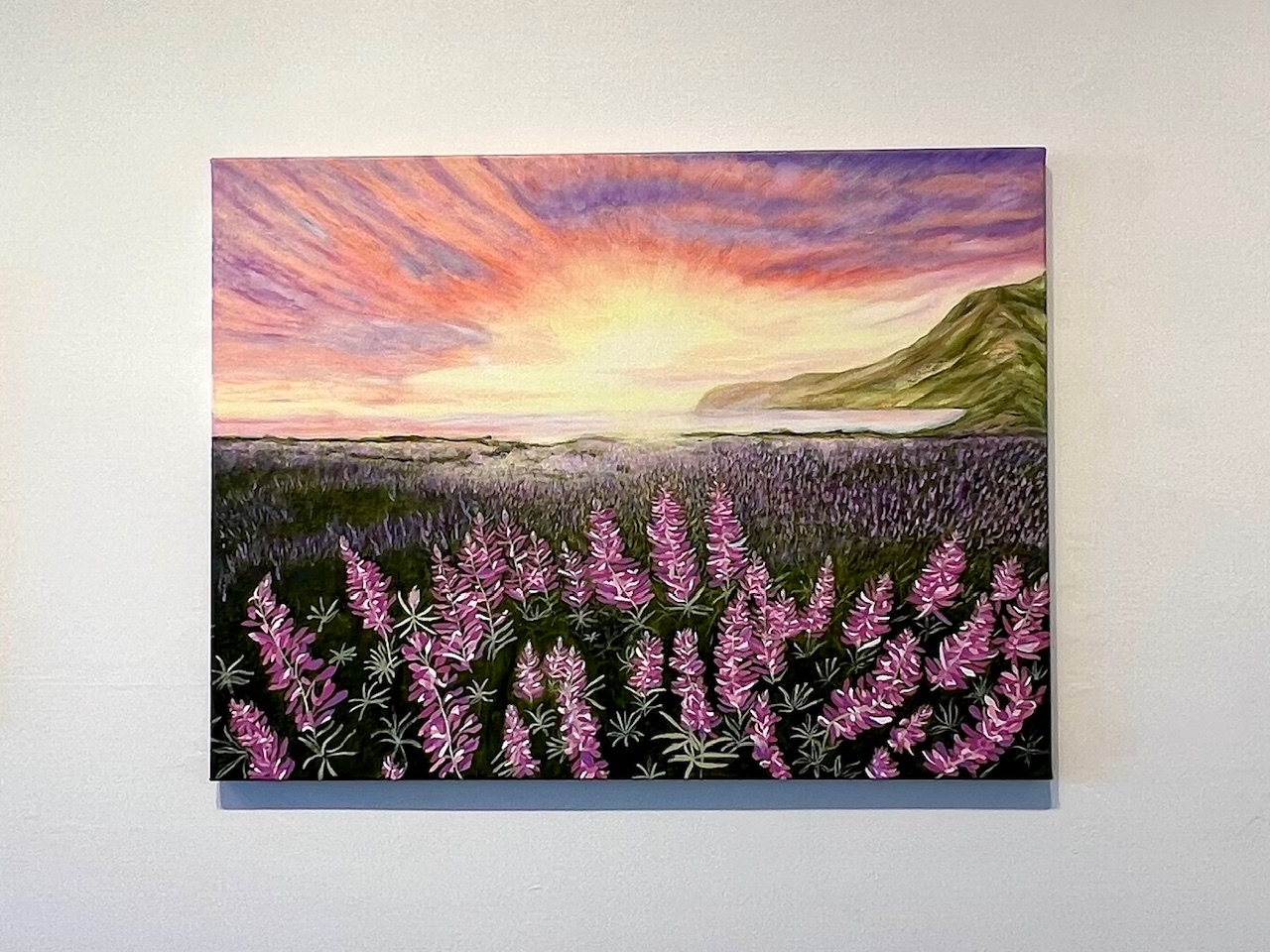
Working in oil, Eileen Oda brings lush and dreamy magical realism in her vividly colored, richly dimensional seascapes and desert vistas that sing with light. There are fields of pale purple flowers with a sky lucid and pink behind them, royal blue mountains, and dimensional, exsculpainted flowers blossoming on a sweeping coastal cliff.

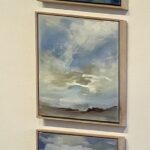
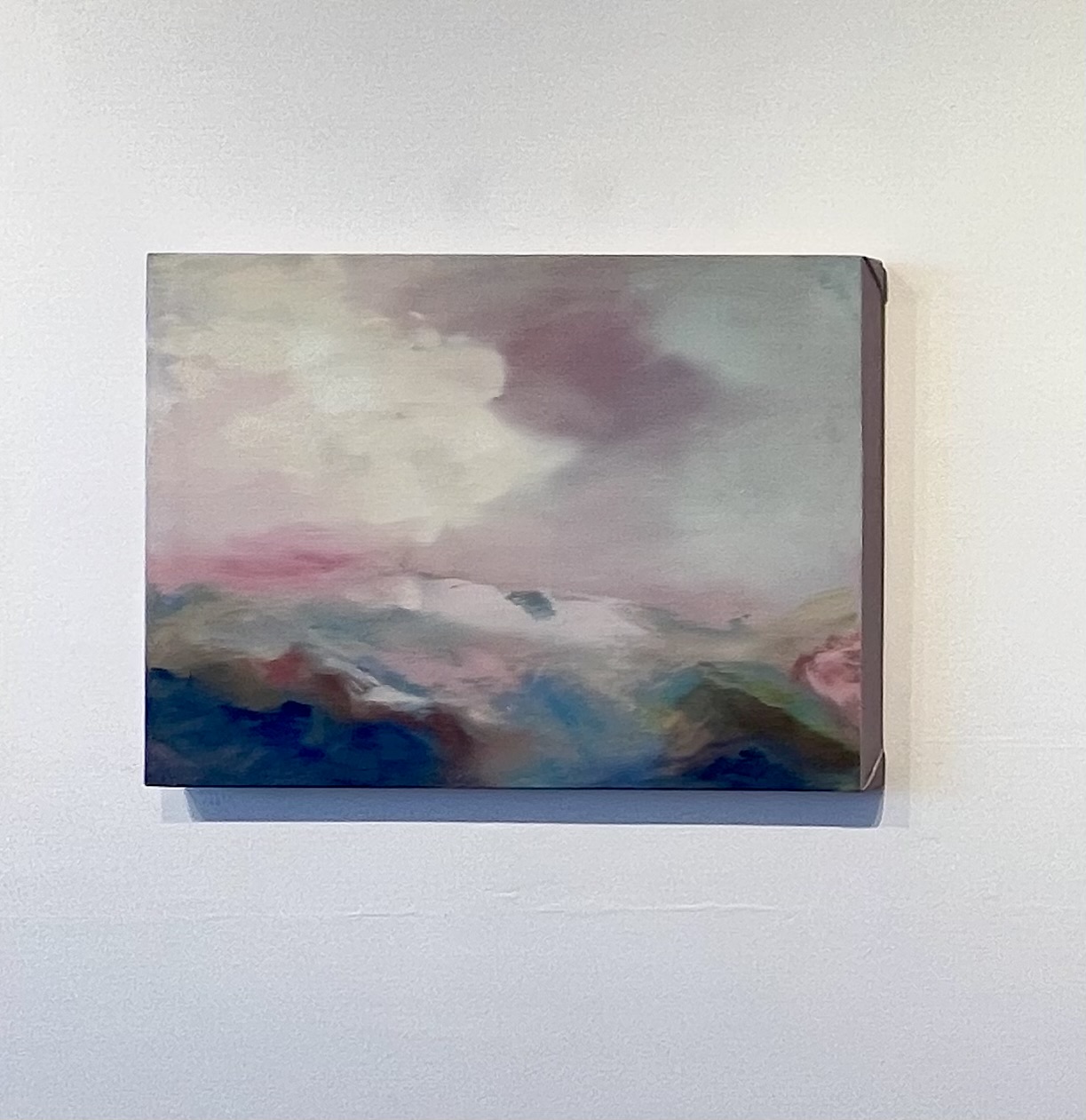
Linda Stelling’s hypnotically blissful, motion-filled images of nature’s beauty invest her mix of the impressionistic and the abstract with wonder. Here are opalescent ocean tides and delicate, moody sunset skies that shimmer dreamily.  Her acrylic on canvas works are immersive and wondrous.

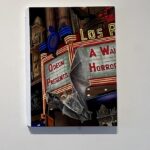
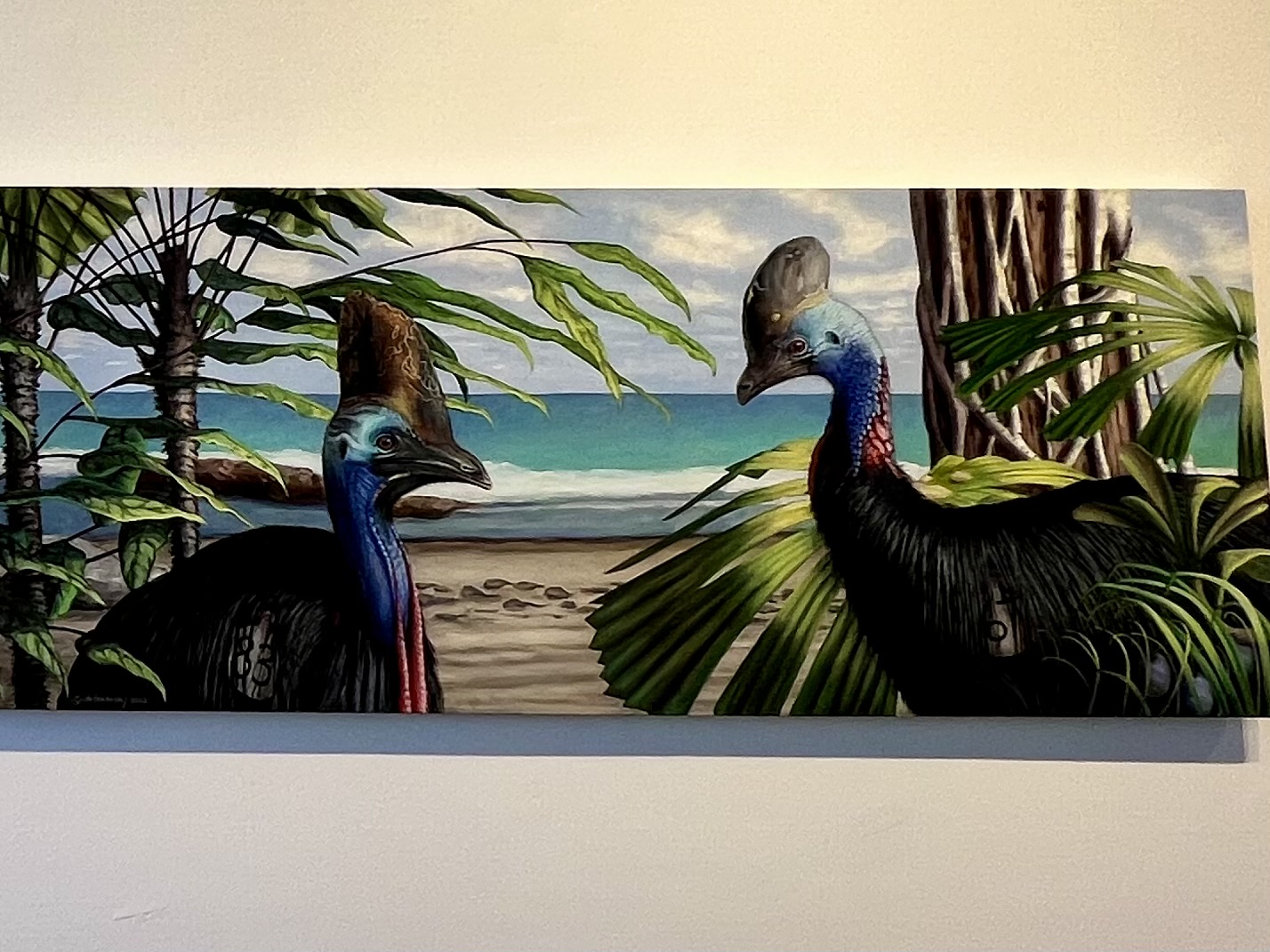
Lynette K. Henderson’s startling urban realism juxtaposes familiar Los Angeles landscapes with the hauntingly visceral animals whose habitats our lives have upended. From a startled bat outside the Odeon Theater marquee to a vigilant coyote by the Santa Monica pier,  and voluptuous flightless cassowaries luxuriating in island palms. these are stunning images pull the viewer

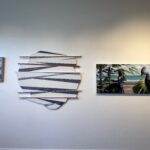
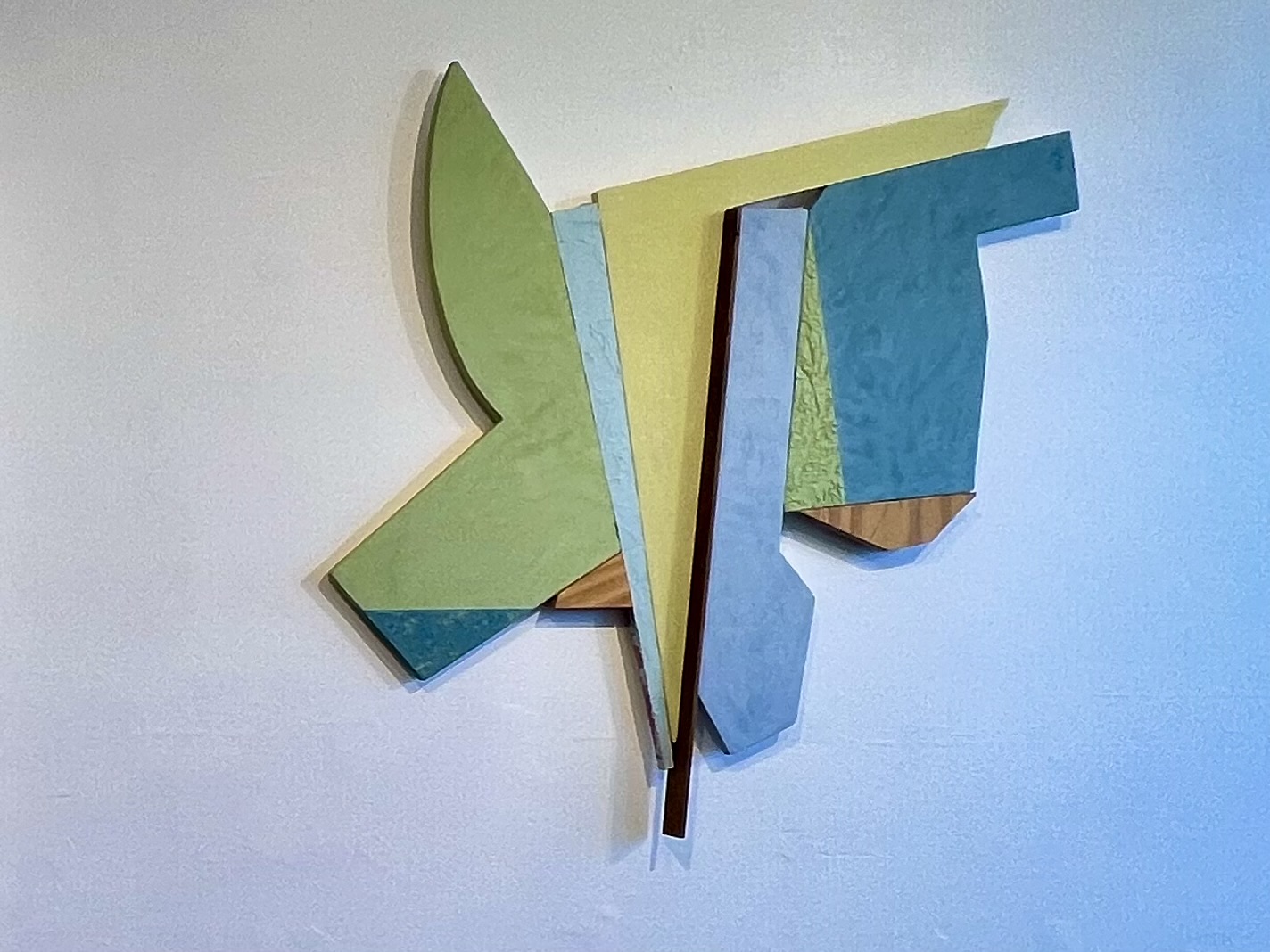
Valerie Wilcox focuses on the landscape of the architectural, reinventing the world around her with mixed media wall sculptures that lead the viewer into a bold, riveting new world. Abstract and utterly involving, these wall sculptures are as compelling as they are contemplative.

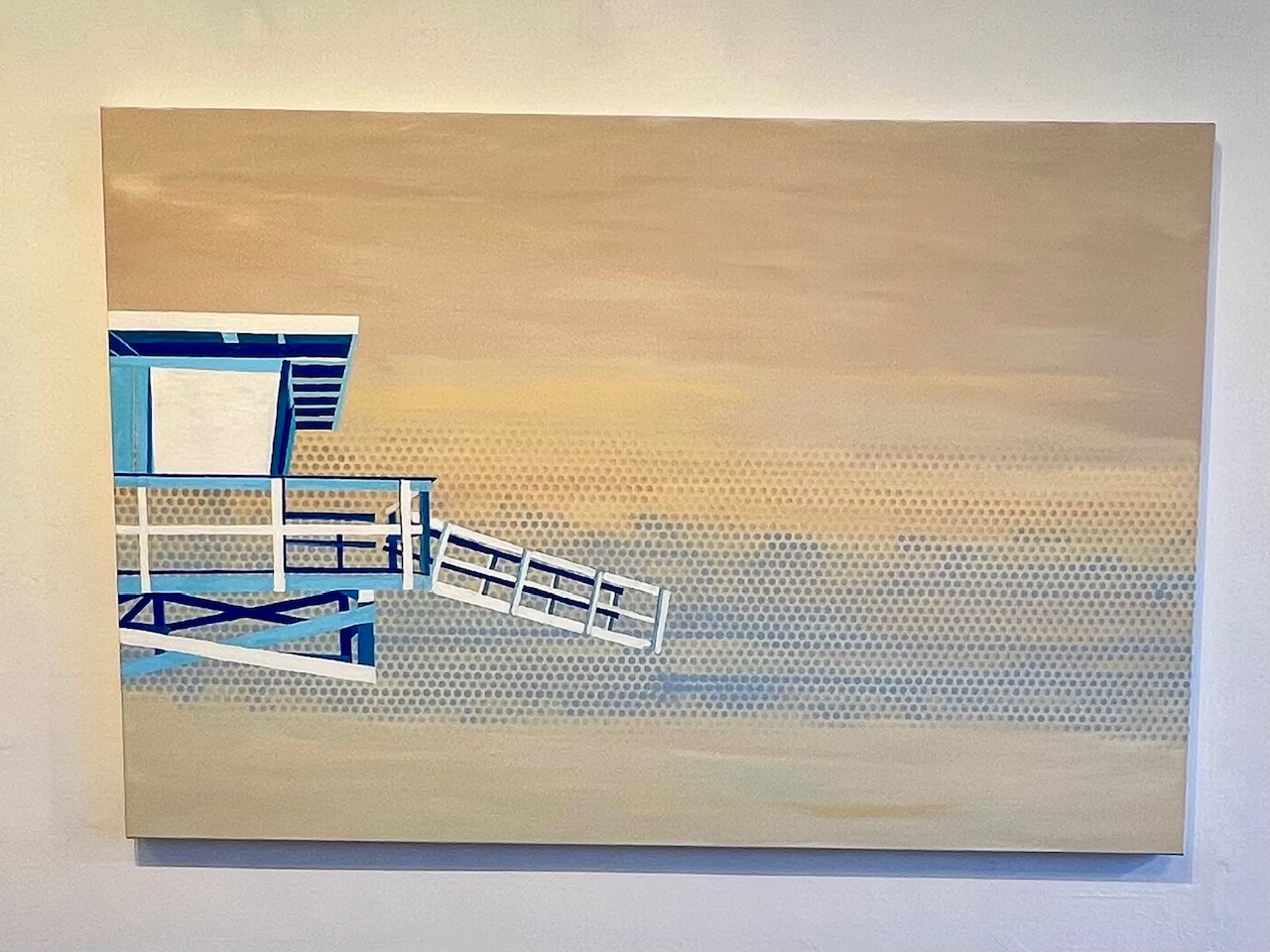
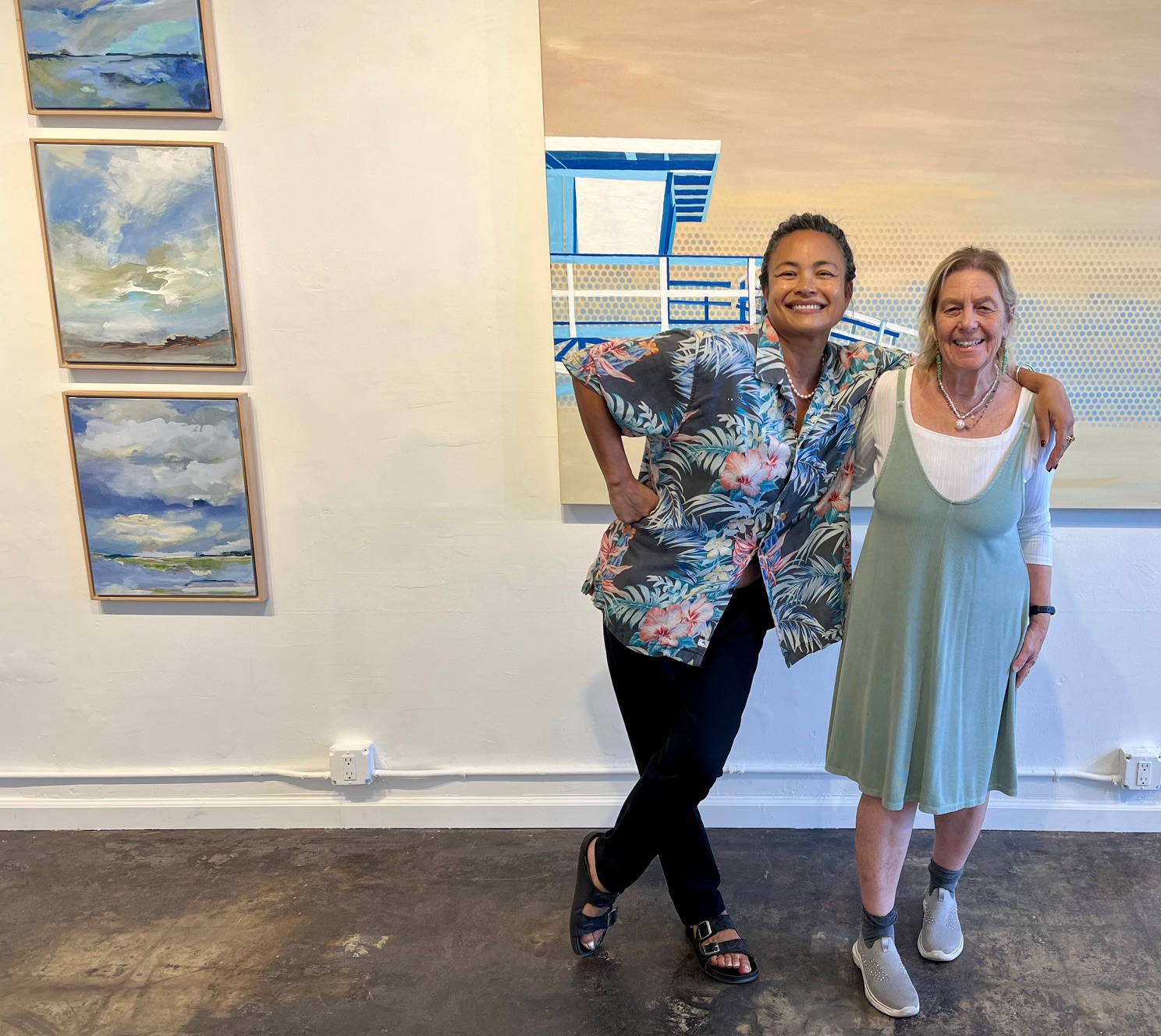
Also exhibiting is gallerist and artist Joanna Garel, whose cool, clean, beach-centric landscapes feature iconic images such as lifeguard towers and sky-brushing palms in a rainbow of colors.

Above: Gallerist and artist Joanna Garel, left; myself, right

Self-involvement noted: I had the pleasure of curating these beautiful works, and with a nod to the (near) future, I will soon be taking over this gallery space with a new name, Diversions Fine Arts Gallery, and many amazing artists. So come get a taste this weekend – after all, we have to step into this new year first foot and all!

Garel Fine Arts is located at 1069 N. Aviation in Manhattan Beach. Tons of free side street parking.

Opening reception: Saturday, January 17th 4-7 p.m.
Artist talk and closing: Saturday, February 7th 3-5 p.m.


LA Art Show’s 2026 Edition Includes New Latin American Pavilion

The LA Art Show returns to the Los Angeles Convention Center January 7–11, 2026, marking its 31st edition as the city’s largest and longest-running art fair. Privately owned and independently operated, the fair has long been a major part of Los Angeles’s cultural calendar, both due to its curatorially passion and its international scope, which is even more in play this year with the addition of the show’s new Latin American Pavilion.

The event is led once again by director and producer Kassandra Voyagis, and will present over 100 global exhibitors for this year’s event.  Tickets are available at www.laartshow.com, with 15 percent of all proceeds benefiting the American Heart Association’s Life is Why™ campaign.

Always an adventure in art, this year’s fair introduces a number of firsts.  Dublin’s Oliver Sears Gallery becomes the first gallery from Ireland to participate in the fair, while fresh fFrom London’s West End, Pontone Gallery will showcase works by self-taught Manchester artist and former professional rock drummer Chris Rivers, an artist whose vivid and surreal paintings and hand-gilded editions include elements of astronomy, mythology, and celestial mapping.

Also new on the exhibitor list are first-time participants including Gefen Gallery (San Francisco), Steidel Contemporary (Lake Worth), and Corridor Contemporary (Tel Aviv). Also present will be ten plus South Korean galleries, and longtime participant Rehs Galleries of New York, which has exhibited at the fair since 1994.

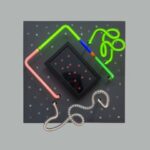
Other galleries include Switzerland’s LICHT FELD Gallery, presenting the first public showing in over four decades of Karl A. Meyer’s 1980s woodcut prints, and Corridor Contemporary, which is offering a major presentation of cinematic figurative works by Israeli artist Yigal Ozeri. Korean gallery J&J Art will feature Elegant Freedom, a presentation of Hanji-based works by Jinny Suh which reinterpret Korean tradition through a contemporary lens. Artifact NYC will be showing a wide range of art, including abstract neon by Los Angeles artist Linda Sue Price; at ALOV Gallery, work will include that of LA’s Gay Summer Rick.


And of course, this year’s fair has a must-see in the debut of an invitation-only Latin American Pavilion, curated by Marisa Caichiolo, long-time and continued curator of the LA Art Show’s signature non-commerical platform DIVERSEartLA. Recently selected to co-curate Chile’s pavilion at the 2026 Venice Biennale, Caichiolo brings her usual nuanced perspective here, focusing on themes of memory, migration, identity, and provenance. The the pavilion includes work by both emerging and established artists from across Latin America, exemplifying this extremely charged moment in time internationally and nationally. The pavilion focuses on the geography and resilience of the Latin American culture and art grounded within the discource of contemporary art.

“At a moment when immigration issues continue to disproportionately impact Latin American communities, it is especially important to provide a platform for these artists,” Caichiolo asserts.

The 2026 edition of the curator’s DIVERSEartLA is equally timely, titled The Biennials, Art Institutions and Museums in the Contemporary Art Ecosystem. Offering a living examination of how contemporary art circulates and evolves through global biennials and institutional frameworks, on exhibit will be work by the Gwangju Biennial (Korea), Cuenca Biennial (Ecuador), NYLAAT Triennial (New York), SACO Biennial (Chile), and NoMade Biennial, among others, all exploring the productive tensions of these events and institutions.

Biennials, with their experimental and time-sensitive nature, often act as laboratories for new ideas and social critique, while museums and institutions provide a focus on more long-term stewardship. Both help to sustain both public engagement with art, and artistic innovation – which are also both served well by the LA Art Show itself.

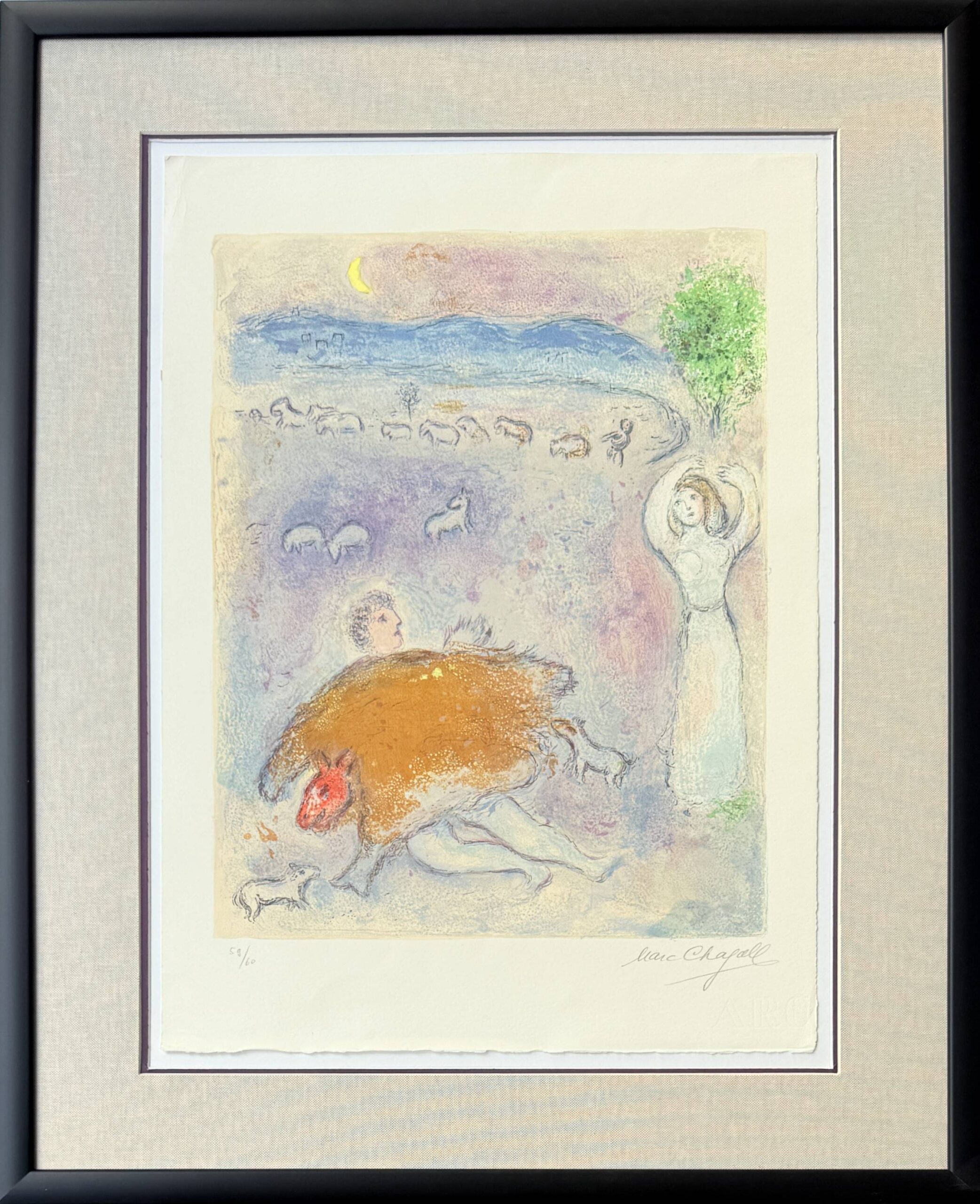
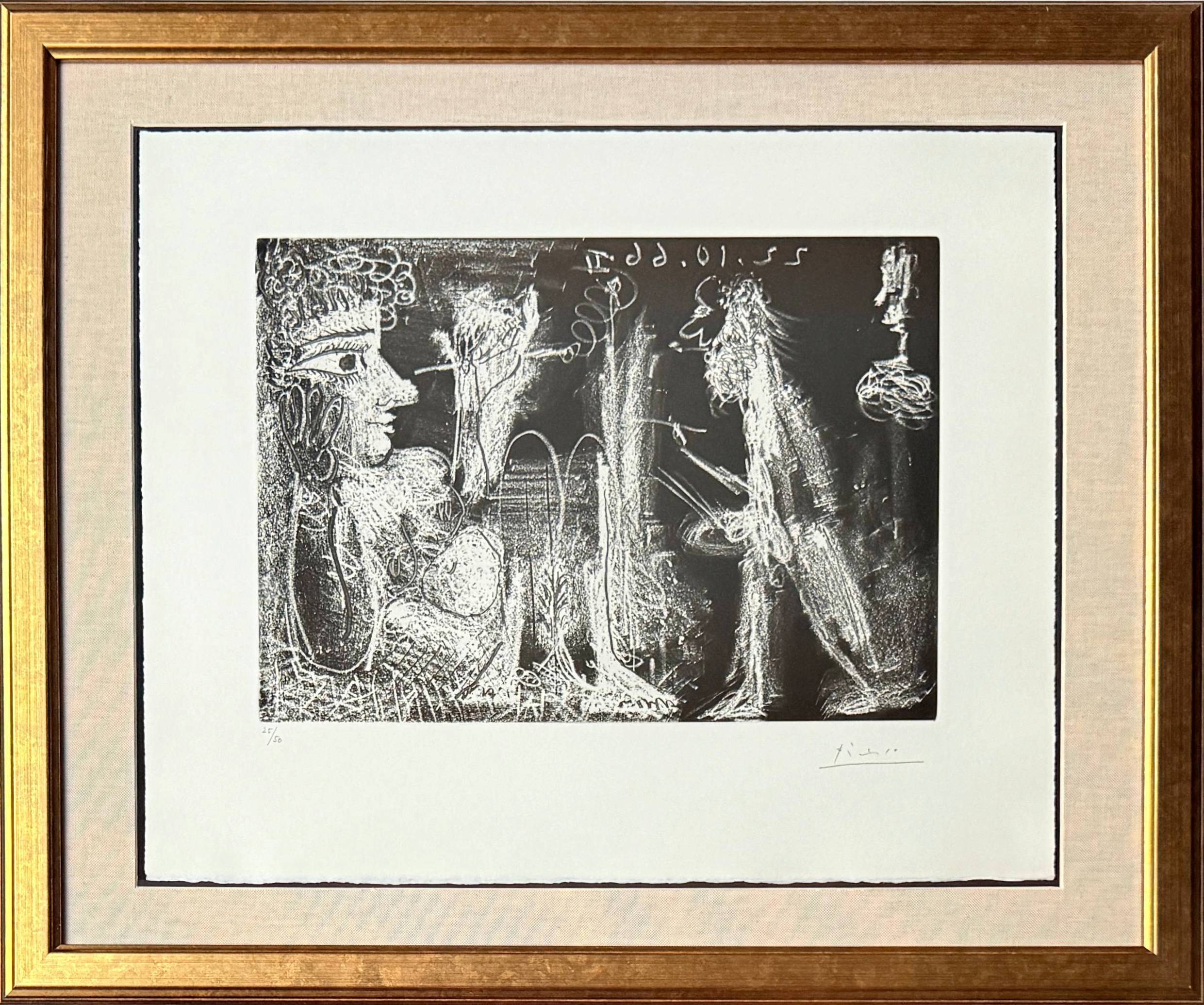
This year there is a special focus on the ways in which geography, local communities, and site-specific conditions shape artistic production and curatorial strategies. Along with exciting new art and the opportunity to view works by art masters such as Chagall and Picasso, visitors will experience unique projects that emphasize care and sustainable, collective action, and are tied directly to contemporary social and political realities.

In short, this is an important and vital exhibition, promising new visions and fresh, exciting art, as well as a great venue for art buying and browsing.

LA Art Show 2026 takes place at the Los Angeles Convention Center, 1201 S. Figueroa Street, Los Angeles. Tickets start at $40.

  • Genie Davis; photos provided by LA Art Show 2026


Monuments: A Monumental Exhibition

Monuments by Nancy Kay Turner

The most terrible thing about war, I am convinced, is its monuments – the awful  things we are compelled to build in order to remember the victims…

W.W.B.Du Bois, The Perfect Vacation, in The Crisis, 1931

Monuments, the startling, chilling, thought provoking exhibition now at MOCA Geffen and The Brick is a must- see show. This exhibition is co-curated by Hamza Walker, Director of The Brick; Bennett Simpson, Senior Curator at MOCA; and artist Kara Walker (along with Hannah Burstein and Paula Kroll). It brings together 10 decommissioned monuments which honored the Confederacy alongside 19 contemporary artworks commissioned to be in conversation with the enormous debased statues. These works examine a particular and fraught time in our nation’s past while illuminating our present as well. We now live in a “post-truth” world that is populated by “alternative facts” and filled with competing views on our shared history. This timely exhibition requires the viewer to consider who writes history (traditionally the victor) and what, after all, is remembrance? What should or could be erased, debunked or forgotten and what are the consequences of these decisions and omissions?

The museum wall text is incisive and extremely helpful in explaining the historical background of these epic-sized sculptures. Most of these monuments were commissioned almost 60 years after the end of the Civil War to foster the idea of the” lost cause.” The Lost Cause of the Confederacy theory is a post-Civil War concept that postulates that the war was essentially to protect states’ rights and that slavery was a helpful institution that benefited the enslaved people.

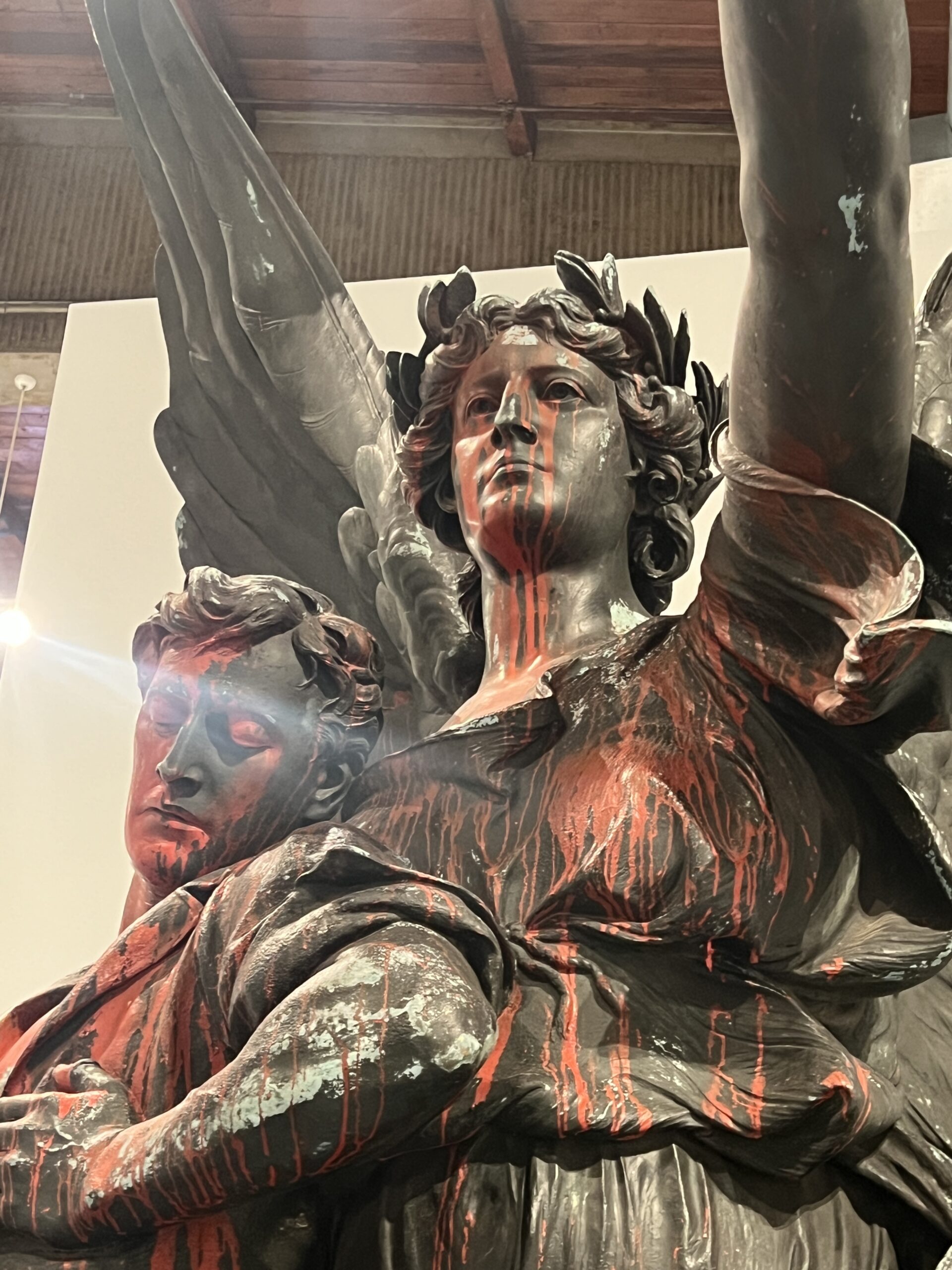
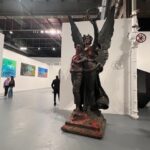
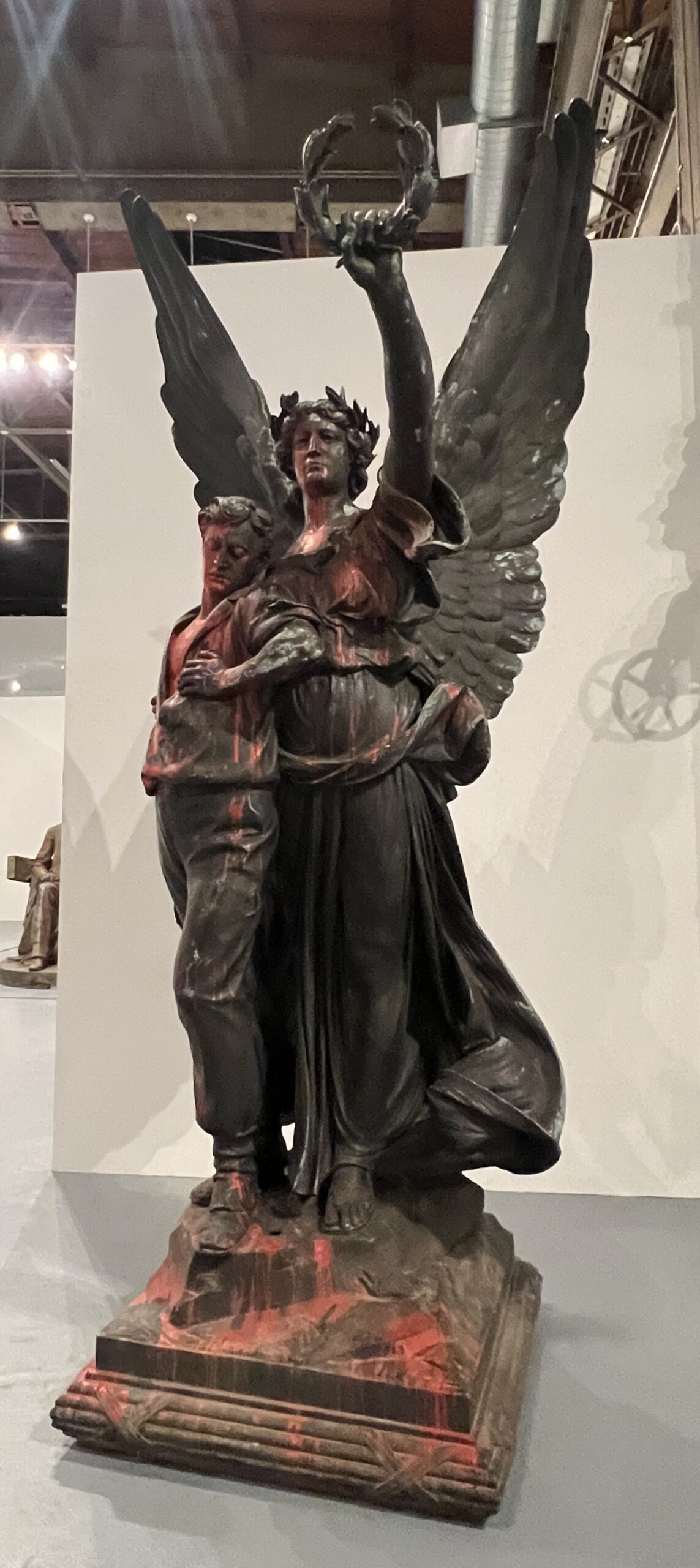
Confederate Soldiers and Sailors, 1903, by Frederick Wellington Ruckstuhl, sets the tone of the exhibition. A winged female figure, looking very mythic and somewhat Greco-Roman, is meant to personify glory. Arm aloft in a triumphant or defiant gesture, she is holding a wreath crown meant for the wounded youth she supports. Red paint was flung on this statue and other by those protesting the 2017 “Unite the Right” rallies In Charlottesville, Virgina.  Subsequently it was decommissioned along with about 200 other Confederate statues. The red paint splashed on the statue is reminiscent of dried blood and is quite disturbing. It’s instructive to remember that Richmond, Virginia was the capitol of the Confederacy from 1861-1865. The historical ramifications of the Confederacy still echo today.

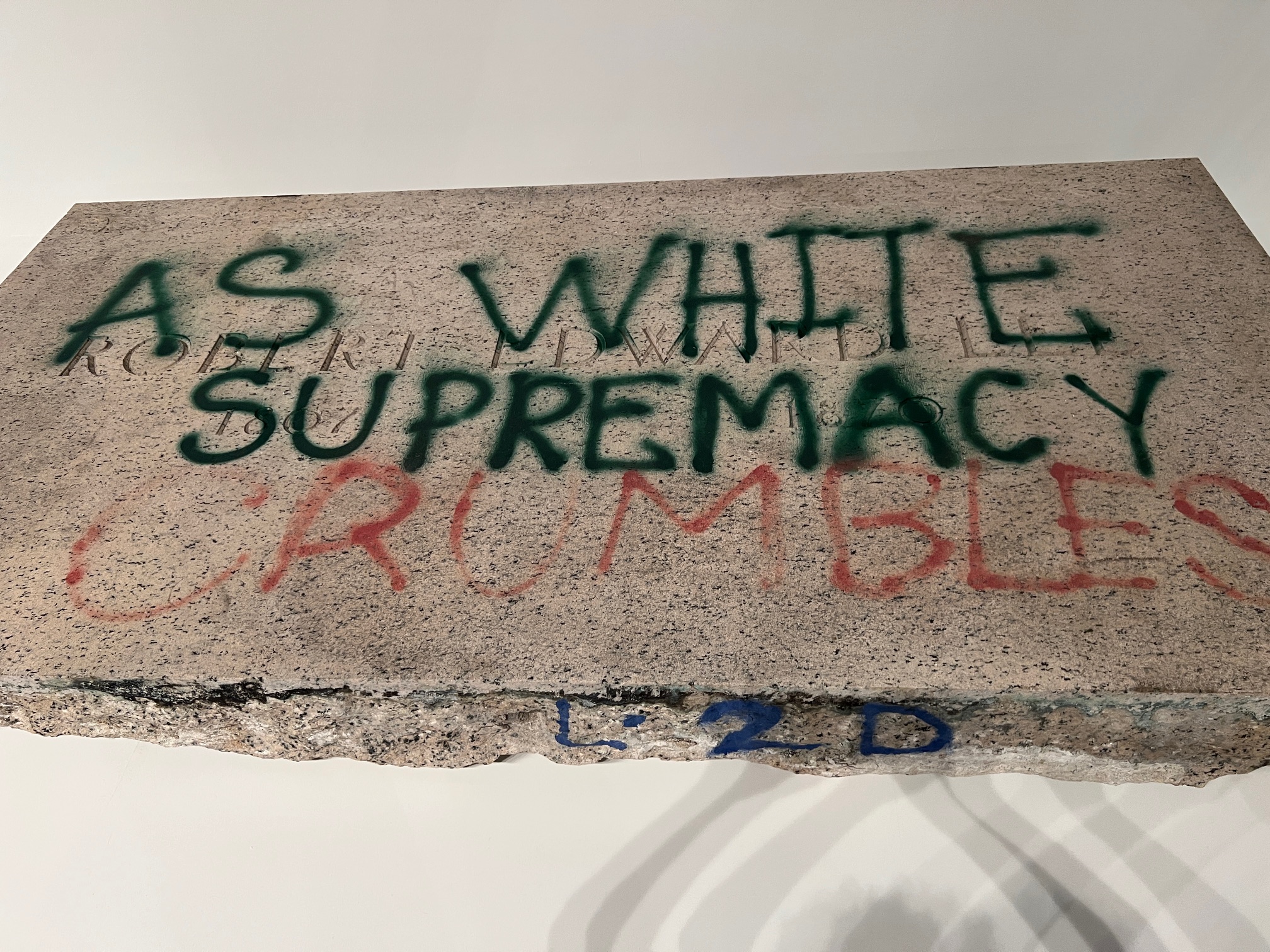
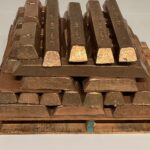
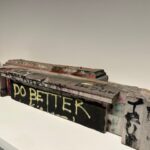
Just outside this gallery are many of the spray-painted bases that these monuments once stood on. One especially poignant one reads “AS WHITE SUPREMACY CRUMBLES….” In light of recent reversals by the current administration, this becomes a still unmet goal for those awaiting equality. Also in this first gallery are the remains of a Robert E. Lee Monument that has been melted down into bronze ingots. Stacked here like gold ingots, they are intended for a future new work of public art.

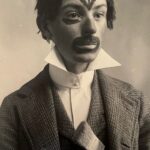
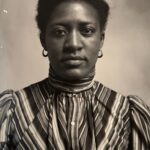
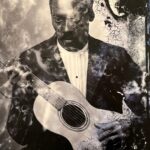
Many but not all of the contemporary works are videos and narrative photographs. My favorite of these is the work by the largely unknown white photographer Hugh Mangum, whose negatives were found in the family’s barn only in 1972.  Using the techniques of the time, he photographed black and white sitters equally, charging only pennies for their portraits. He reused the glass negative over time resulting in occasional and accidental superimpositions. Time and weather have further degraded some negatives and when printed digitally they are especially beautiful and haunting. That Mangum photographed both black and white people equally is what is remarkable about these images which look startlingly contemporary.

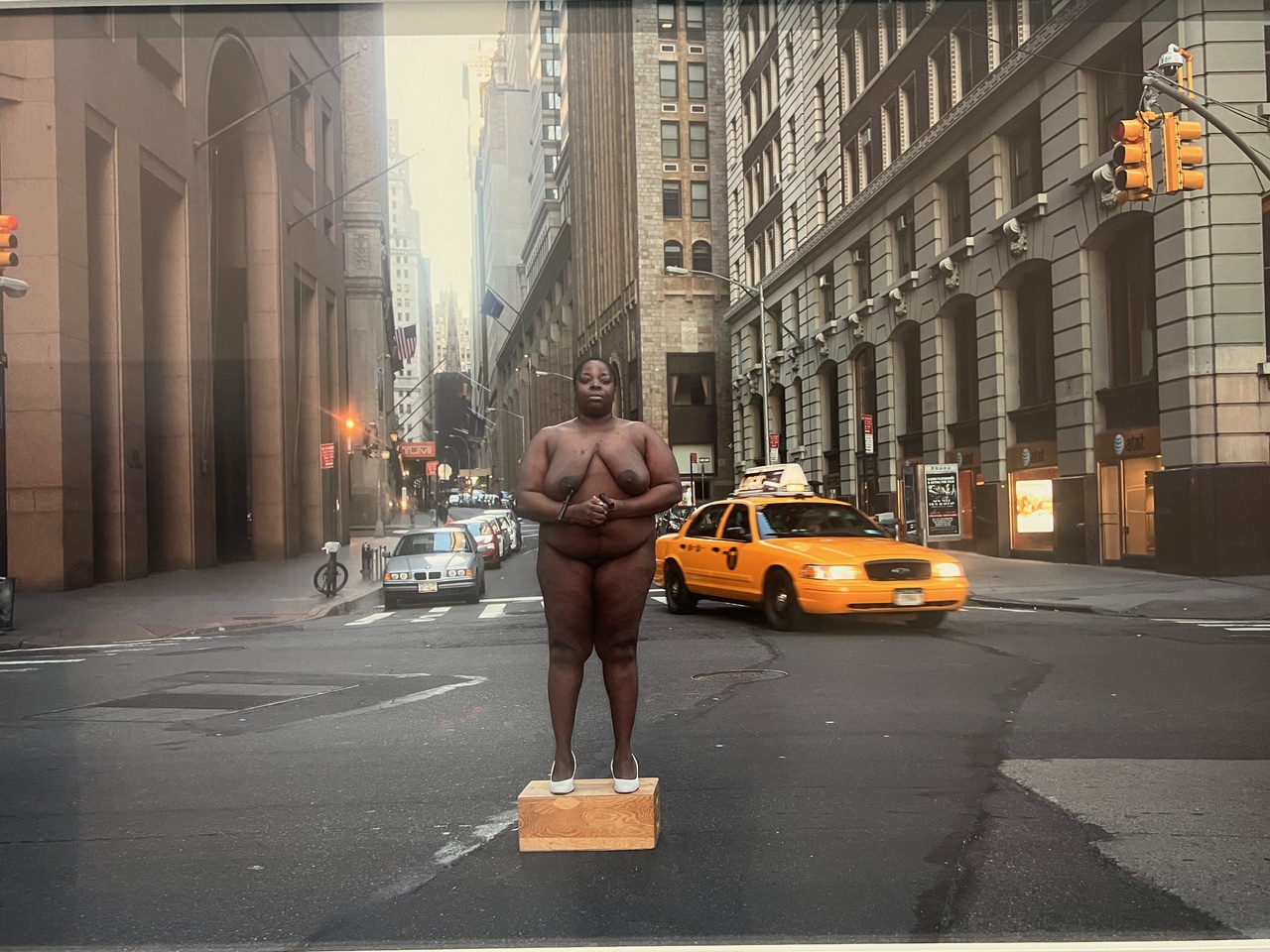
Nona Faustine’s powerful black and white self -portraits of herself naked and vulnerable clad only in white shoes or white skirt, standing alone on empty New York City streets are both brave and sad. Taken from 2013-2018, each location she picked has a particular meaning -one is where slaves were auctioned off or another is where a now unmarked burial ground for enslaved people was located.  With this series, she defiantly shines a light on the history of slavery in the North as New York’s harbor was a point of entry in the slave trade.

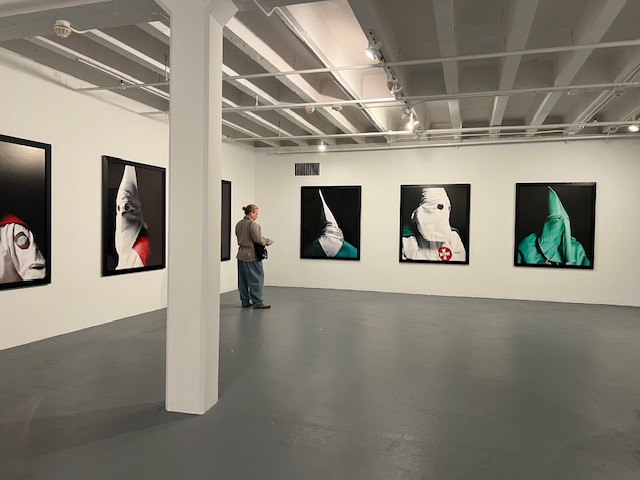
In 1990, Andres Serrano, known for picking particularly difficult subjects (such as blood, urine and other bodily secretions) photographed Ku Klux Klan members in Georgia. These images reminded me of Philip Guston’s satirical Klansman – silly in their white sheets, eyes peering out. They looked like defanged animals- all puffery, no bite. The Klan itself was founded right after the Civil War when the members suited up and ferociously attacked and killed newly freed slaves. The organization still exists but Serrano believes his photographs show that the Klan as a symbol is more potent and significant than these actual members in their white hoods.

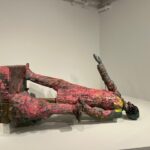
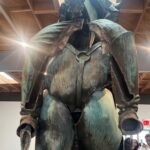
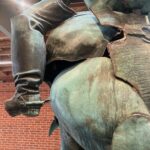
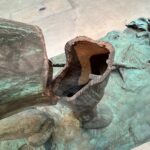
In 1921, Charlie Keck created a statue of “Stonewall” Jackson upon his trusty steed known as “Little Sorrel” heading into battle, sword raised. Exactly one hundred years later, the artist Kara Walker was deeded this decommissioned statue and was allowed to deconstruct and reconfigure it. Walker’s “Unmanned Drone” is displayed at The Brick alongside incisive text, her collages and drawing, and process pictures of the complicated dismembering of the original statue. The resulting sculpture, an amalgam of disjointed elements, is like a three-dimensional collage. Instead of being epic, though it is quite impressive in scale, Walker’s version uses the elements to tell a story of defeat, tiredness and destruction evident by the general’s arm and sword now dragging forlornly on the ground. Cut into these pieces, the viewer can see the hollow inner core of legs, arms, bodies which seems like a timely metaphor – hard metal outside but hollow inside like a rotten apple. Walker’s shockingly contemporary title instantly conjures up the current war in Ukraine that is fought by hundreds of unmanned drones daily, raining down destruction on largely civilian populations. Perhaps this is a nod to the drumbeat of endless wars, that while automated still results in ruin.

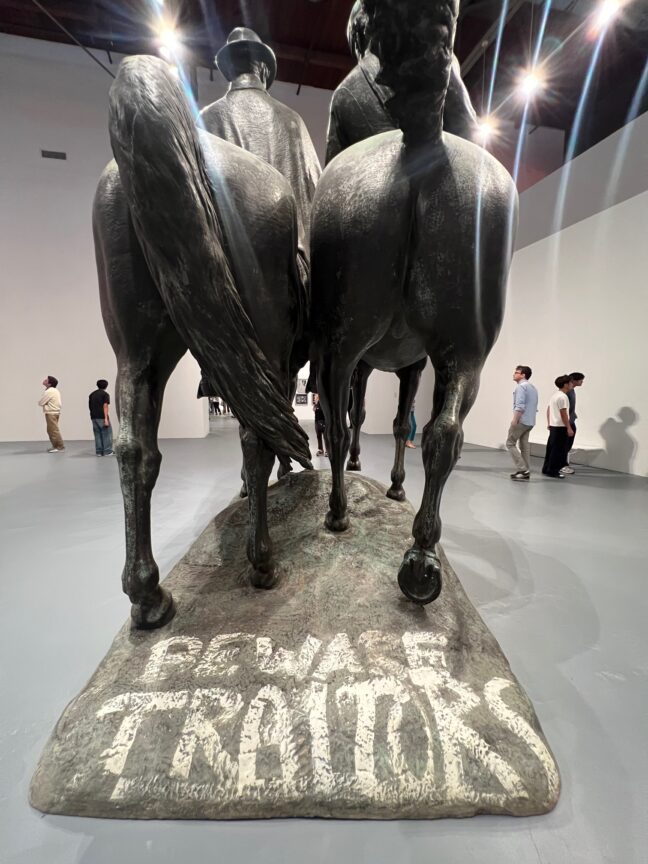
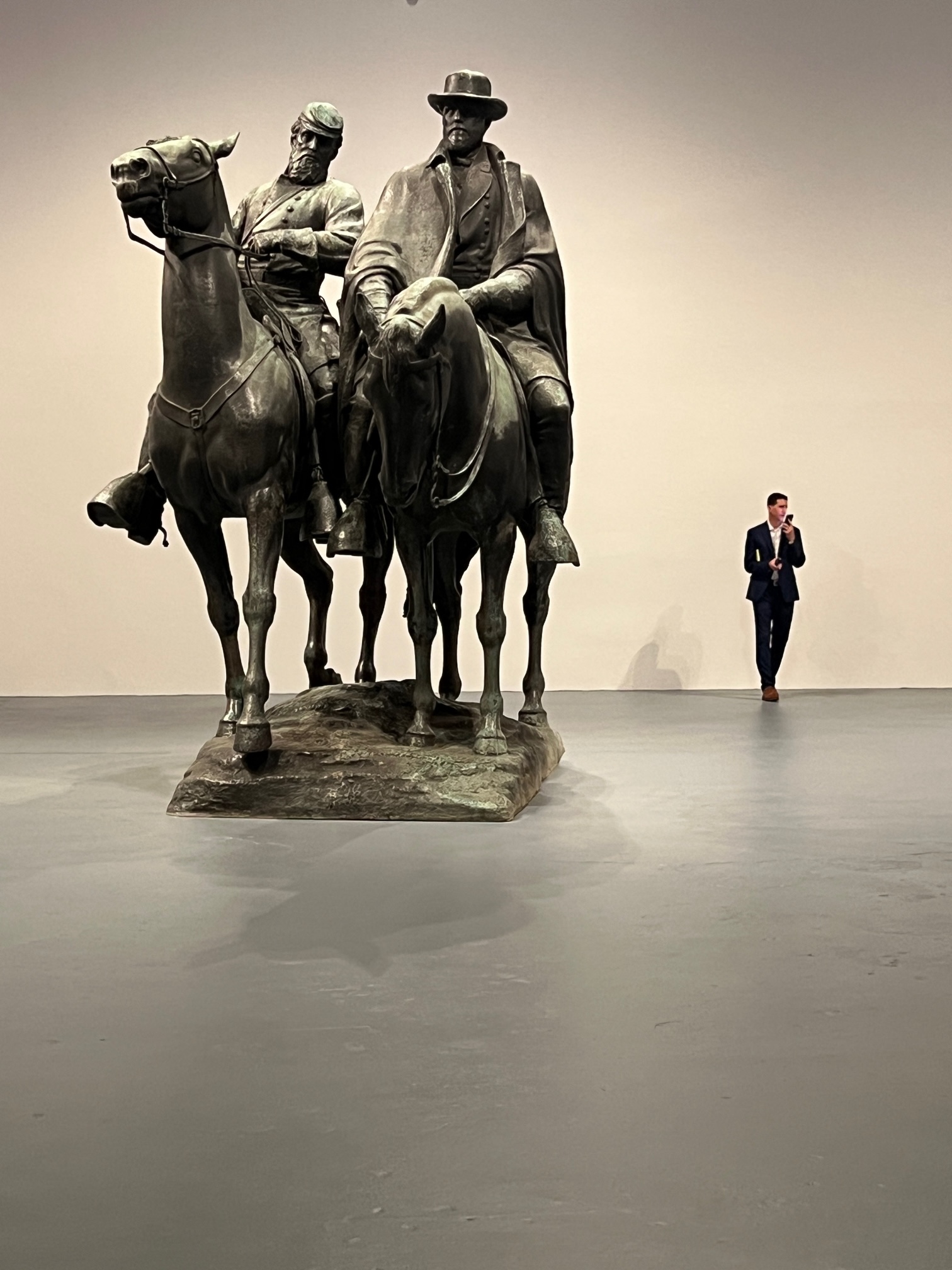
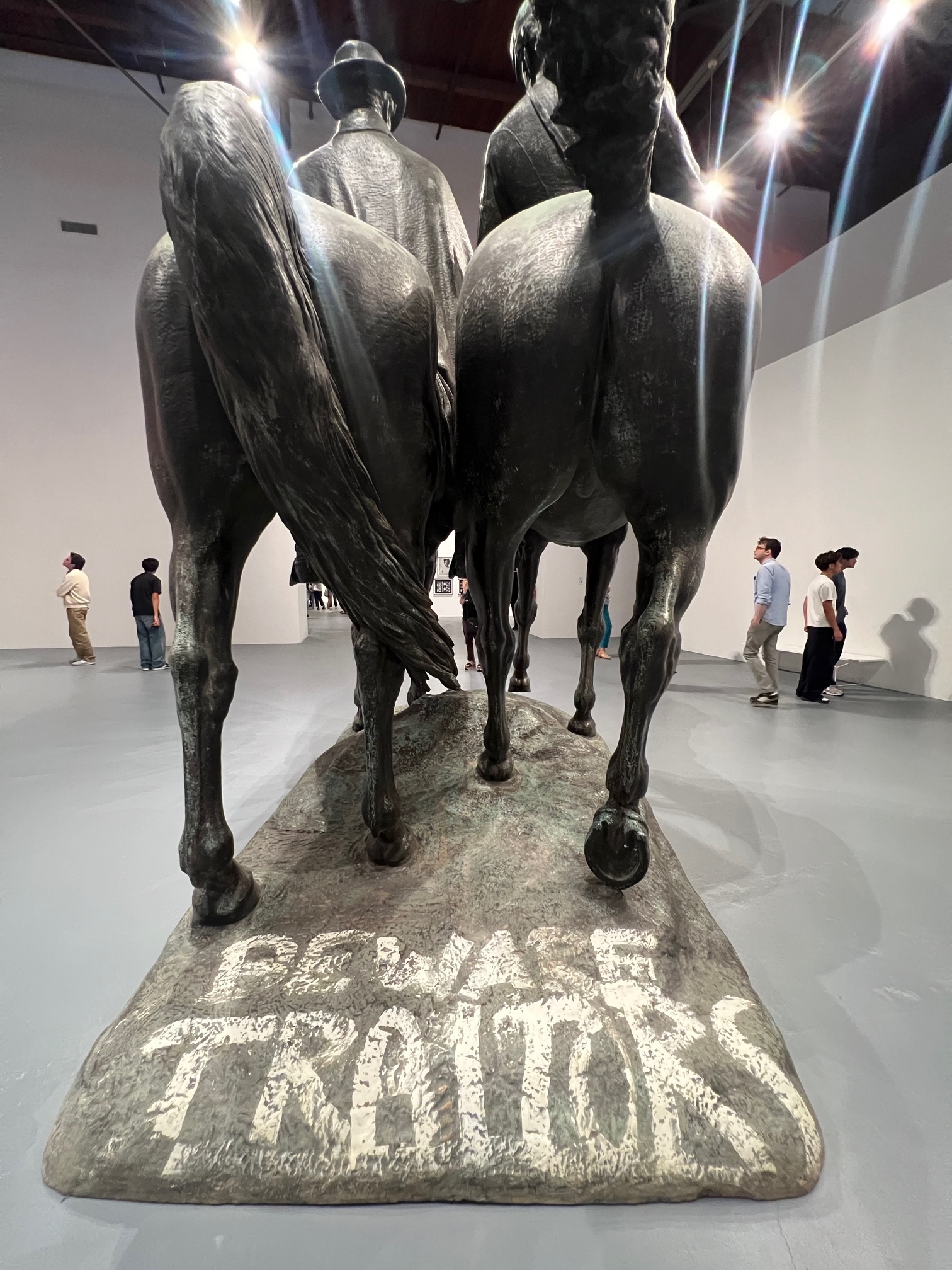
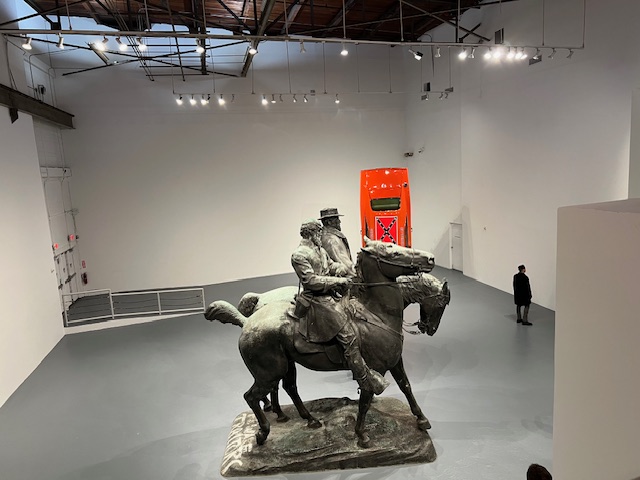
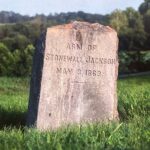
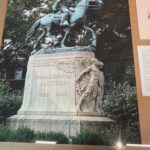
On May 1, 1948, in the city of Baltimore, an epic statue by Laura Gardin Fraser, depicting Robert E. Lee and “Stonewall” Jackson astride their horses was unveiled to commemorate their meeting before The Battle of Chancellorsville. Jackson was wounded there by friendly fire and died 8 days later after having his arm amputated. Weirdly, his arm was buried separately and has its own tombstone, demonstrating a deep hero worship.  Eighty-three years after the Civil War ended, the mayor of Baltimore hailed these two generals as “paragons of American strength,” according to the detailed wall text. Heroes who remind us to be “resolute and determined in preserving sacred institutions…” It is slavery that is the institution that they wanted preserved.

It is fitting that this striking monument which dwarfs the viewer commands the space that the curators have intentionally afforded it. Looking untouched from the front, it is only when the viewer moves behind the statues that the jarring words – ”BEWARE TRAITORS” becomes visible. This clearly encapsulates the warring ideologies presented here. Who are the traitors?

In Ken Burns’ amazing documentary on the Revolutionary War, the viewer comes to see that war as the first civil war – as the rebels or patriots fought their neighbors and family who were loyalists. The scars from that war have never healed and we are reminded by this excellent, but difficult exhibition that we must strive to fulfill the Declaration of Independence that all men are created equal. The American experiment is fragile and attention must be paid. Extensively researched, the curators here have fashioned an unusual exhibition that provokes, educates and enlightens the viewer as well as stirring up uncomfortable feelings and truths. It is not to be missed.

  • Nancy Kay Turner; photos by Nancy Kay Turner and by Genie Davis