
Harrison Love Shows Us the Way

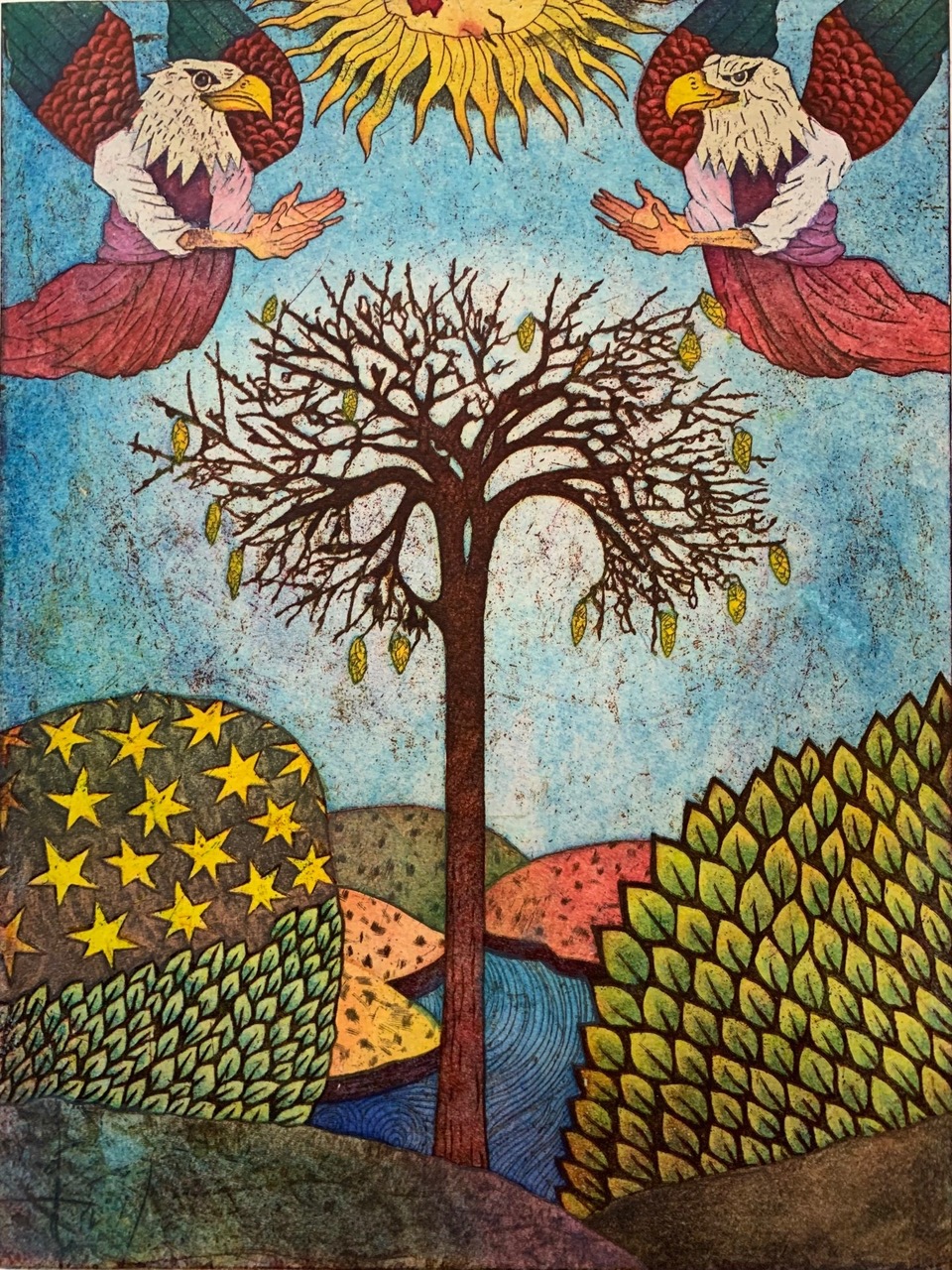
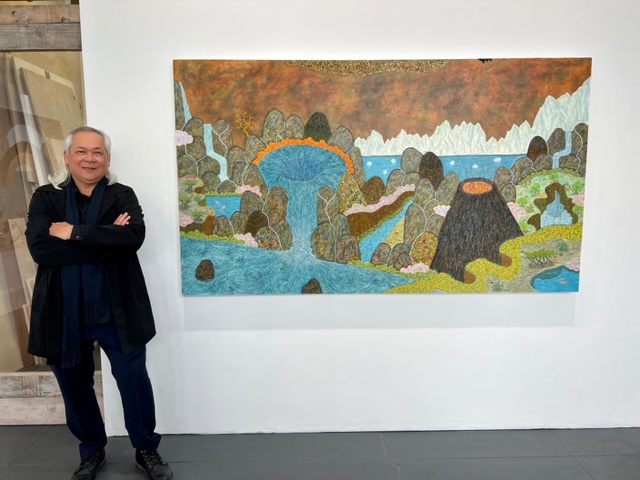
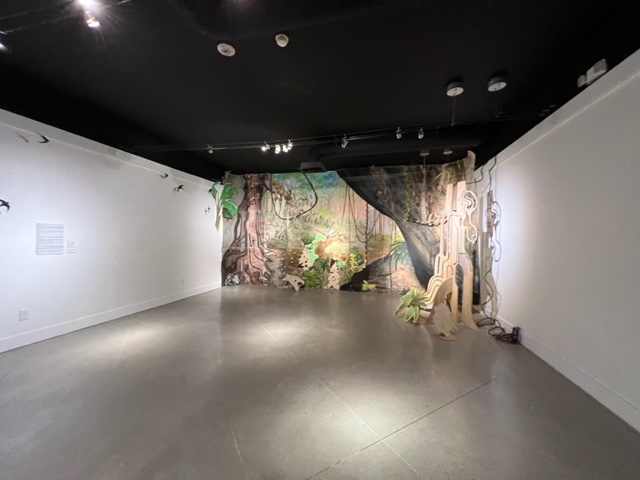
The Hidden Way is a a beautifully illustrated novel containing myths and legends culled from travels into the Amazon.  13 years in the making, Harrison Love’s book offers a rich understanding of indigenous cultures,  and a deep dive into the purpose of making art, which in his own words, “preserves a sense of the divine.”

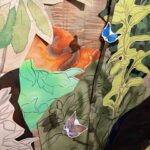
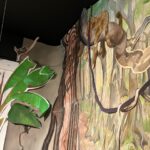
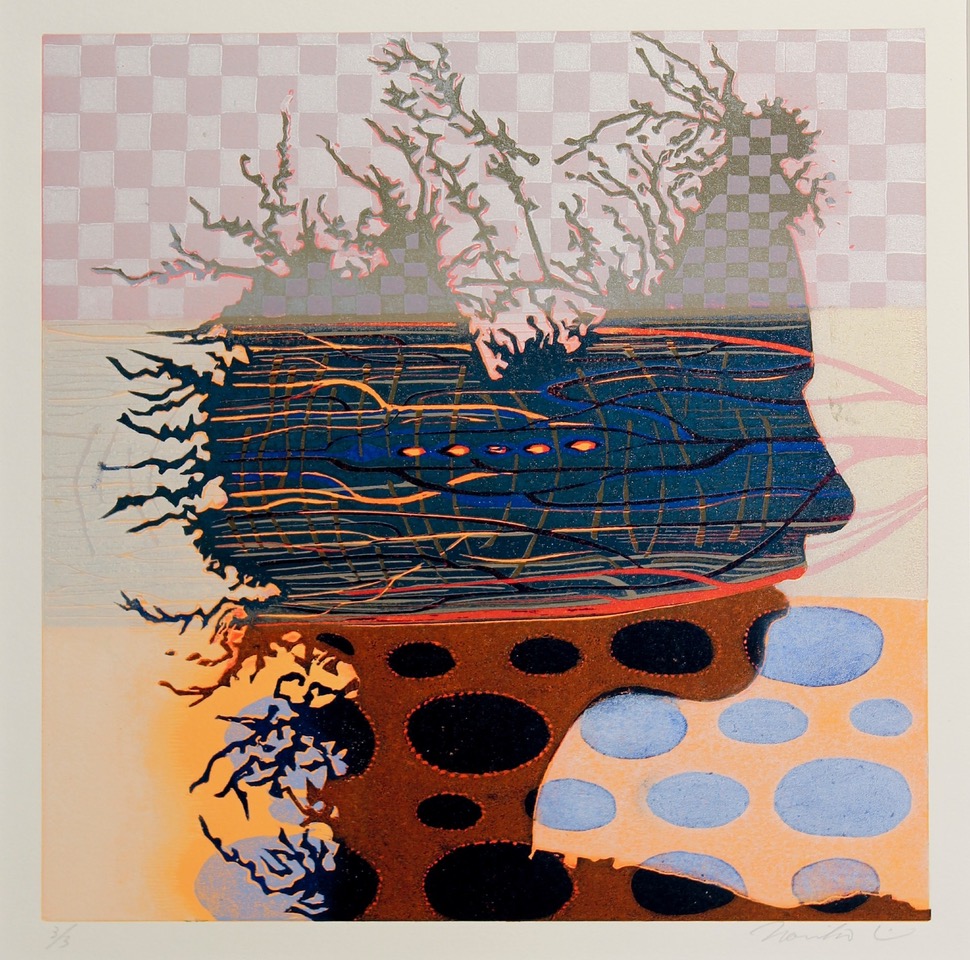
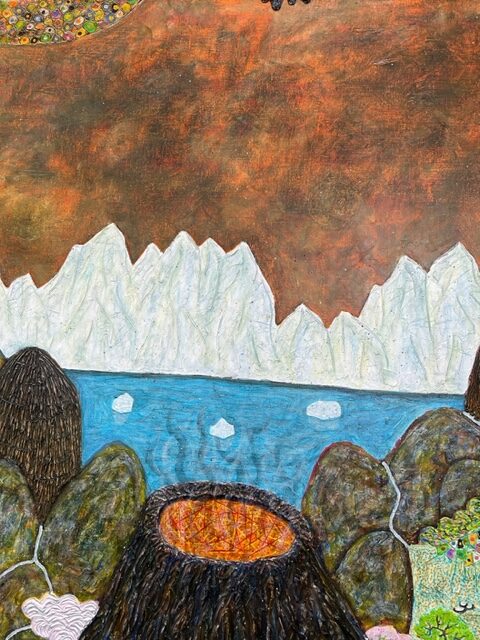
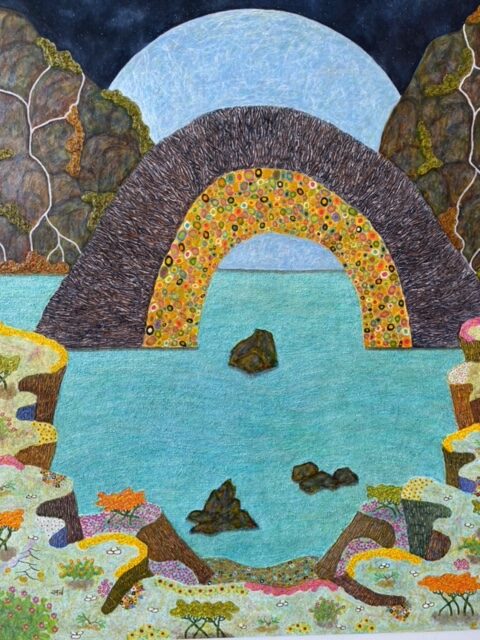
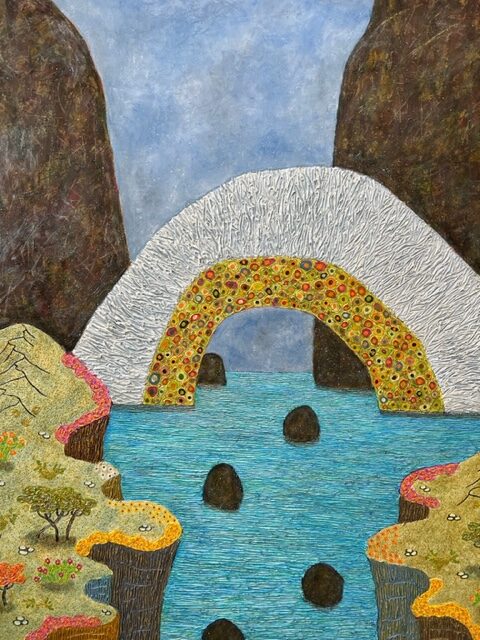
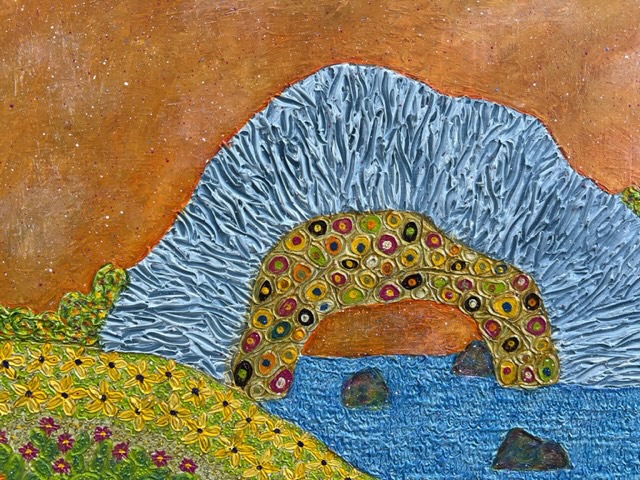
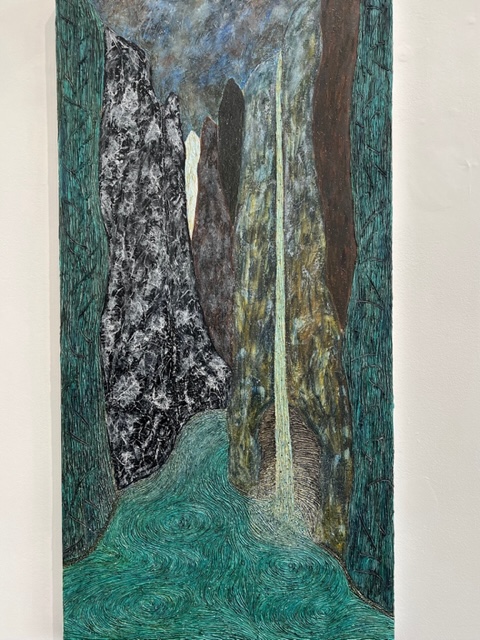
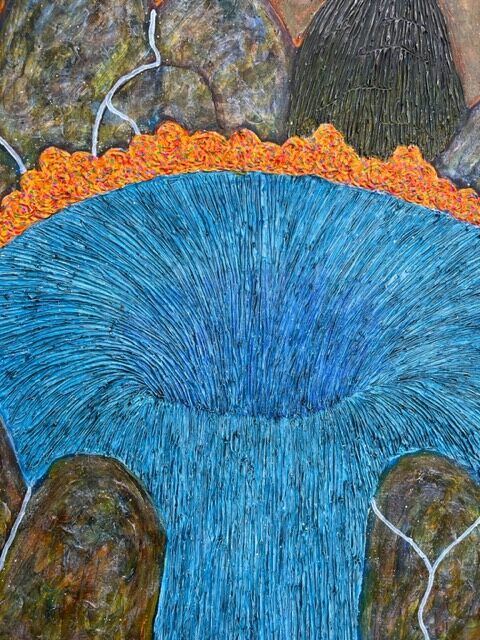
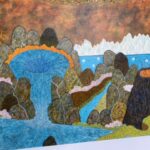
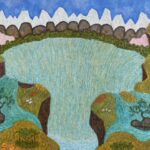
That spiritual journey is what infuses the book, through Illustrations as meaningful as words. It is in all ways a lovely and lovingly told journey. The illustrations were created using lineloeum and woodblock printing, with each print colored using techniques from watercolor to spray paint and stencils. There is a sense of myth making and creating in these images as well as woven throughout the text.

As poetic as it is compelling, the book not only follows a journey, it depicts and creates its own.  “The stars returned to their daytime hiding places. Each day upon realizing that they were still alone in the wilderness, relying upon something so fleeting as a dream to guide them, the absurdity of their circumstances gave way to panic,” Love writes.

To some extent serving as Love’s doppelgange, the character of Khay traverses many places and mystical spaces.  Toward the end of the book, she is told, “You were chosen because you are a good student of the old ways, and because you value the power of myth. You seek knowledge with a clear altruism…” This is appears to be what Love hopes for the reader as well.

Along with a spiritual quest, the book also serves as an environmental one, referencing more than once the destruction of the jungle. “We cannot feel the moments of time pass until we recognize the last of them, when we have little time left. We were told that every day our own people cut into the jungle and lay waste the soil that their ancestors had tended…”

In terrible concert with the loss of the natural world, another loss hovers over the book, equally as powerfully heartbreaking. “Without our stories, we too may have our way of life lost to the deserts of time.”

The Hidden Way seeks to illiuminate those stories, retelling them in an immersive, sometimes feverish unspooling.  It reconstructs the mysths told among the tribes of the Peruvian Amazon and other Shamanic peoples. According to Love, some specific shamanistic myths were included from cultures outside Peru in order to reveal the loss of some of these traditional practices.

Shamanism itself is considered to be a study of the self, conjoined with a belief in the spiritual realm that is hidden from the human eye, but according to the author it can also be sought “in the depths of meditation or introspection,” or in the pages of this book.

The work itself unfolds as if through a meditative trance; it is a dance of words that follows a rhythm unusual in its variance between action and dream-like description. This is not to say that the book is difficult or histrionic; and while Love says it was written to pay tribute to the heritage of Shamanic teaching, a heritage too often disregarded, it is also not a history tome.

Rather, it serves as tribute and eulogy, connection and hope, revealing a culture and its stories in an immediate and absorbing fashion. Within these stories, there are spirits and quests, silence and energetic action, portents and promises. It is a kaleidoscopic story, filled with both an urgent immediacy and a profound respect for the mysterious wisdom and the practices it describes within the story.

A travel book like no other and a poem to past and future, inner being and the adventurous heart, The Hidden Way definitively takes readers on quite a journey.

Love is a painter, author, illustrator, and skilled muralist. The book he has created here is a mural of words,  guiding the reader through a search for wisdom, power, and above all else, the redemption of a new beginning. Highly unique, the book can be favorably compared to the works of Carlos Castaneda. Those with a mystic heart and a taste for adventure, read on.

  • Genie Davis; images and advance copy provided by the book’s author


Ornitomancy – Omens Add Up to Beautiful Art

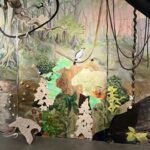
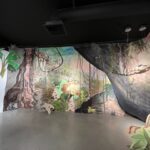
As always, infused with poetry, spirit, and magic, the works by Vojislav Radovanović in his new solo exhibition assuredly dazzle. Curated by Jason Jenn, Radovanovic’s ORNITHOMANCY, now at Diana Berger Gallery through the 29th, is a resonant and rather astonishing blend of despair and joy. 

Overwhelmingly, joy triumphs, but there is acknowledgement of the precariousness of the natural beauty the artist celebrates, a poignancy to the hope in his shining stars and soaring birds. 

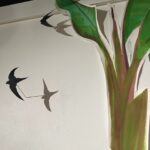
The title refers to these birds, as ornithomancy is the ancient practice found in numerous global cultures of reading omens from the actions of birds.  And the portents they present on the wing here are richly wrought, acknowledging both troubled times and the ways in which we, like Radovanovic’s avian messengers, have the chance to fly through them, and choose a new route through the world. But it’s our choice. We may accept and embrace this chance or discard it.

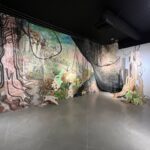
Unfolding in a beautifully laid-out series of gallery rooms, ORNITHOMANCY is a fully immersive exhibition offering a throughline of wonder despite the bleak urbanity that also surfaces in this show. But that bleakness is one which Radovanovic encourages the viewer to both acknowledge and transcend. 

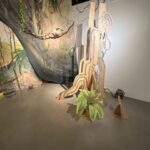
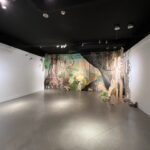
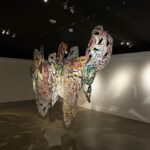
In “Wasteland,” a free-standing mixed media installation encompassing paint and ink, barren trees, paint cans, cement, broken glass, broken mirror, paper, and a collection of found wire, feathers, glass jars, and shells, as well as miscellaneous thrift store finds, the viewer is presented with a conundrum. These are desolate objects contained in this installation, but nonetheless they’re beautiful, graceful, and moving to observe. 

Curated in at an angle but still in juxtaposition, “Rising from the Ashes III” brings us the hope culled from our observation of that eloquent “Wasteland.” This is a flat out beautiful piece, combining acrylic paint with elements ranging form ink and feathers to silver thread and plastic beads, creating a rich tapestry both fanciful and alchemic. Wings spread wide, stars trailing across the wall like the discarded flowers of a celestial garden, there’s a struggle here, as well as an ultimate sense of rising victory.

Directly behind the mid-gallery “Wasteland, ” the fierce blue and lustrous silver of “Ancient Wanderers,” is also a mix of acrylic paint, silver leaf, and peaslescent push pins. The work also features beautiful paper stars created from old road maps, as if showing us the way through our struggle. These birds are leading us somewhere that the sky is still clear and the air is sweet, and the road ahead literally papered with stars.

Delicately painted, the ribbons crisscrossing the sky and trees of “Migrations” leads us to believe that we may have to move our nests to find succor. This is such a beautiful work, a hinged canvas surface that is reminsicent of an unfolded icon in a 13th century church. This may be meaningful: birds are also angelic here, highly spirtual in their visualization. As a side note, many of the rounded tops of canvases, backgrounds, or cut-out materials throughout the exhibition recall vestibules for saints in ancient churches.  This may be a factor in the reverential quality that the viewer can feel in these gallery spaces.
It’s hard to convey the strange and liquid loveliness of “Prophecy,” works contained in glass aquariums, with water, ink and acrylic on paper. They are literally and figuratively submerging. Behind these small, wet dioramas, rises a large scale projection of a beautiful video installation, “Parable (The Wanderers), ”  images by Radovanovic and music by Joseph Carrillo.  The two installations are located in the gallery’s projection room.
Moving out of the projection room, our feathered friends reveal a far darker cast in “Omen,” in which a red-eyed bird  – his eye splendidly beaded – carries a pen in his talons,  that pen dripping ink. What has been written, and what can still be erased?
The large-scale “Sublimination” is almost a resolution of the dark and light elements here. Working with materials including paint, plywod, abandonded tires, thorny branches, and even a deer antler,  here the road-map-stars seem to have led us as far as we can go. Still, the winged figure behind the tire appears haloed, perhaps offering a kind of harsh salvation.
And yet — is this really our pre-designed, foretold path?
There is so much luminosity here – the use of silver leaf, thread, and other shiny materials, the anguish of a reaching, doll-like child clutching a feather in “Oracle,” with a bird flying above the silver-leaf covered portal, feathers cast across it; aching with a sorrowful meaning. Equally glowing, and far brighter is the innocence of a visually dynamically colored child on a trike riding on a path through the stars in “Starry Ride.” Has the child, in his innocence, found the way out of the wasteland?
Ask yourself questions, trace the enigmatic and beautiful paths in the exhibition. Truly the best way to describe the experience – and it is that, an experience – of viewing this exhibition, is to return to the idea of wonder.
We may wonder dark thoughts, hope for good omens, rise like the birds, cast feathers to ritual, but the inherent wonder in simply being alive, the magic of foretelling, prophecy, and prayer – is embedded everywhere in these astonishing, utterly fresh works. Perhaps noone but Radovanovic could create so much of a passion play, a tour-de-force visual theater in which the viewer is waiting, waiting for something to uplift, to resonate. And the wait will not take long.

There is such an enormity to both the quality and quantity of the work here. It’s grand and gorgeous, at turns ominous and even doomed. But in the end there is a sense of glory, the possibility, at least, that by listening to the visual song of these beautiful birds, we too shall rise and head skyward, migrating to Radovanovic’s winged Heavens. A big bravo to both Radovanovic and to Jenn’s powerful curation that shapes the story of these works.

Go on, drive out (or fly) to Walnut and see for yourself. Diana Berger Gallery is located at 100 N. Grand Ave., Walnut, CA 91789 on the Mt. San Antonio College campus.

Gallery hours are limited: Tuesday & Wednesday: 11am-2pm, Thursday: 1-4pm.

Curator & Artist Walkthrough: Thursday, September 8, 1pm;  Special Hours: Saturday, September 24th: 1-4pm

Gallery contact: (909)274-4328 / (909) 367-4586; to schedule an exhibition tour, please email Phoebe Millerwhite, pmillerwhite@mtsac.edu

  • Genie Davis; exhibition photos provided by the artist and curator


Let There Be Light: Linda Sue Price and Michael Flechtner Glow the Fine Arts Building


Neon artists Linda Sue Price and Michael Flechtner presented new and glowing neon works at the Fine Arts Building, in a stellar summer show. While the exhibition just closed, Price and Flechtner will be back in mid-January at the venue, one perfectly suited to their medium and very different but brilliantly illuminated aesthetics.

Price makes abstract and figuratively abstract works that seem to grow as they shimmer, an appearance perfect for many of her current subjects, imagined plants with names like “Kapeeno” and “Critacy.”

Price’s use of neon beading is riveting. Another smart touch are neon plants springing from unique planters. Making the flora and fauna seem even more alive.

Some works on display are collaborative with artist Tracey Weiss, using Weiss’s found plastic elements to shape floral images woven with neon.


Flechtner uses more traditional components of neon work than Price. There’s signage styles turned wild as in his moving “x’s” in “Dos Equis,” and a life size figure of a robotic man in “Arms Akimbo.”

Cats wave their lucky arms in “Jan Ken Pon (rock-paper-scissor); rats pursue cheese in “Hickory Dickory (Who moved my cheese?).” Wit and fun merge with superior creativity in his work, which often moves from a homage to the age of kinetic neon signs to something insanely futuristic and shot through with the whimsical.

Together, the two artists’ highly accomplished works are extremely different in approach, but each astonishingly fresh and bold, tributes to imagination, joy, and lighting up their own respective messages.

Their commitment to craft – no spoiler here, neon bending is not a simple task, is beautiful and compelling.  Take a look at some of their work here, and be sure to look out for their next show together in the beautiful glass encloesd niches of the Fine Arts Building lobby come January, a just-past-the-holidays present to savor.

  • Genie Davis, photos by Genie Davis
 

Hagop Najarian Styles Up

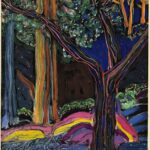
Styles change but art remains. For Hagop Najarian,  his move from figurative to abstract to a more hybrid body of work is all about vibrant color and a dancing morph of figurative form into geometric abstracts. While his current body of work on display in his Bendix Building studio is just such a choreography, the change really showed itself in a December 2021 exhibition at Launch gallery.
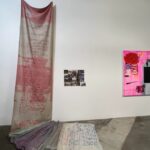
Home Turf at Launch LA was a great opportunity for me to synthesize a lot of the ideas that I have been working with for the past decade. Home Turf meant going back to my art making roots and expanding on the formal and conceptual aspects as they relate to the work. Incorporating my technical advancements with my art historical influences. A synthesis of my visual DNA,” Najarian says.

While he began his art career painting more realistic figurative narratives for decades, in 2014, he decided to “not paint imagery, but study color, light, composition and application of paint through the format of abstraction. I think that now the synthesis happens in my current work because of the mark making and gestural forms that happened in my abstract work would almost always relate to the formal things I do when painting the figure: the curve and overlap of forms, the division of space by light and color.” He adds “With the abstract work, I specifically focused on color and sound. I made direct connections to volume, speed, texture, flow and fracture using different musical genres of Classical, Jazz, Punk, Reggae and how they translated to the emotional impact of color.”

Najarian is also a musician, finding painting and music somewhat interchangeable influences. His work at the Launch exhibition was created during the quarantined portion of our ongoing pandemic, a dark time indeed, when he says he “hoped to bring some optimism to the viewer by having the figures supporting each other in a composition made of a fractured environment. The color in the painting actually started from a trip to Palm Springs where those mesmerizing sunsets happen that glow with blue violet/ orange symphonies. I loved the tranquility of that peaceful nature setting as a backdrop to the crumbling human interaction. As the painting progressed, I enjoyed watching the colors and images transform and purposefully using gray as my unifying element.”

Those colors, combined with his palpable joy in drawing and painting his figuartive naratives define a large portion of his work, but so does “allowing myself to use the lessons of abstraction and emotive color from previous abstract paintings as an environment for the figures.”

His loved for painters such as Giotto and Michelangelo is also embedded in his work, for which his process is to “make many drawings and gouache paintings to provide variations of the outcome. I will have a theme or idea on what I want to say, but the paintings are live activities for me. I allow the structural changes and developments to determine the final outcome. So, I may have the main composition in mind, but I will keep moving things around on the canvas with each painting session until it feels done.”

According to Najarian “The Home Turf series really opened new doors to my visual vocabulary and continues to fuel the work that I am making now.”

The artist is also currently an integral part of three art collectives: Durden and Ray, Museum Adjacent, and High Beams. From community and opportunity to inspiration for installation and performance based work, Najarian keeps busy. “I curated three shows in 2020 with Durden and Ray which were all amazing experiences through a time of pandemic. Cautious Optimism I co- curated with Brian Thomas Jones and Curtis Stage , which invited artists that were making work through the pandemic to keep art alive. During the summer when the gallery was at a dry spell, we were fortunate that the members of Durden and Ray allowed us to curate a fundraiser show for the artists that lost their studios and life’s work in fire that destroyed the Little Tokyo Arts Complex. With the invaluable help of Stephanie Sheerwood, Katie Shanks and Noel Madrid, we hosted a three day fundraiser in the Durden and Ray gallery, generating over $12,000 in sales that went directly to the artists from the Little Tokyo Arts Complex.”

And then there was High Beams #3 Laser Snake held in the Bendix parking lot, where he says “I collaborated on ‘Visual and Musical DNA’ with my daughter playing live music, while my two fellow artists Tom Dunn from Durden and Ray and Surge Witron from Museum Adjacent painted live on a clear vinyl canvas in front of us until it filled up with imagery during our performance.”

More recent was High Beams #5 Night Moves rooftop event at the Bendix building, for which Museum Adjacent participated with an 8 x 8 foot free-standing wall that was a ”ZOOM Meeting.” And for the Carl Baratta, Max Presneil, and David Wiesenfeld helmed B-LA Connect, just last month, Najarian co-curated an exhibition on the 6th floor as a pop-up.

He says he most wants people to know that he is, above all else, “a story teller, a communicator, a humanist. At best we all want our work to be a true reflection of who we are. I hope that viewers who see the work and don’t know me can get a sense of my interests in color, joy, my humor and celebrating life. I think that viewers who do know me would say that I am in the work.”

Balancing his visual art with his music is important to Najarian, who describes the two types of art in this way: “Painting in the studio is a private act that we share with the public when we hang it on a wall. As a musician, I love composing and recording music, but playing it live is the most validating confirmation, which is very hard to do in painting. So the live act of painting becomes the recorder for the performance that we share with the public. I think I am at a place where the work is at a good balance for me of my love of music making and art making.”

Using color to amplify the emotional impact of his narrative, he says that regardless of whether the work is figurative or abstract, “It is that element of surprise and live painting that I enjoy most…our sense of memory, our history and life experiences are always visible in our work. As an Armenian immigrant growing up in La Mirada, the colors, smells and sounds from my house made an impactful foundation on me that I still see every time I start a painting. We are who we are thanks to our youth.”

Above image courtesty of Leah Shane Dixon; Brand exhibition

Currently, you can view some of Najarian’s prolific works at the group exhibition Abstract Generations at the Brand Library in Glendale.

  • Genie Davis; photo images, Genie Davis, except as noted