
Metaphor for Magic: Stunning Work from Vojislav Radovanovic and Museum-Wide Exceptional Exhibitions at the Museum of Art and History  

Metaphor for Magic: Stunning Work from Vojislav Radovanovic and Museum-Wide Exceptional Exhibitions at the Museum of Art and History  – Genie Davis
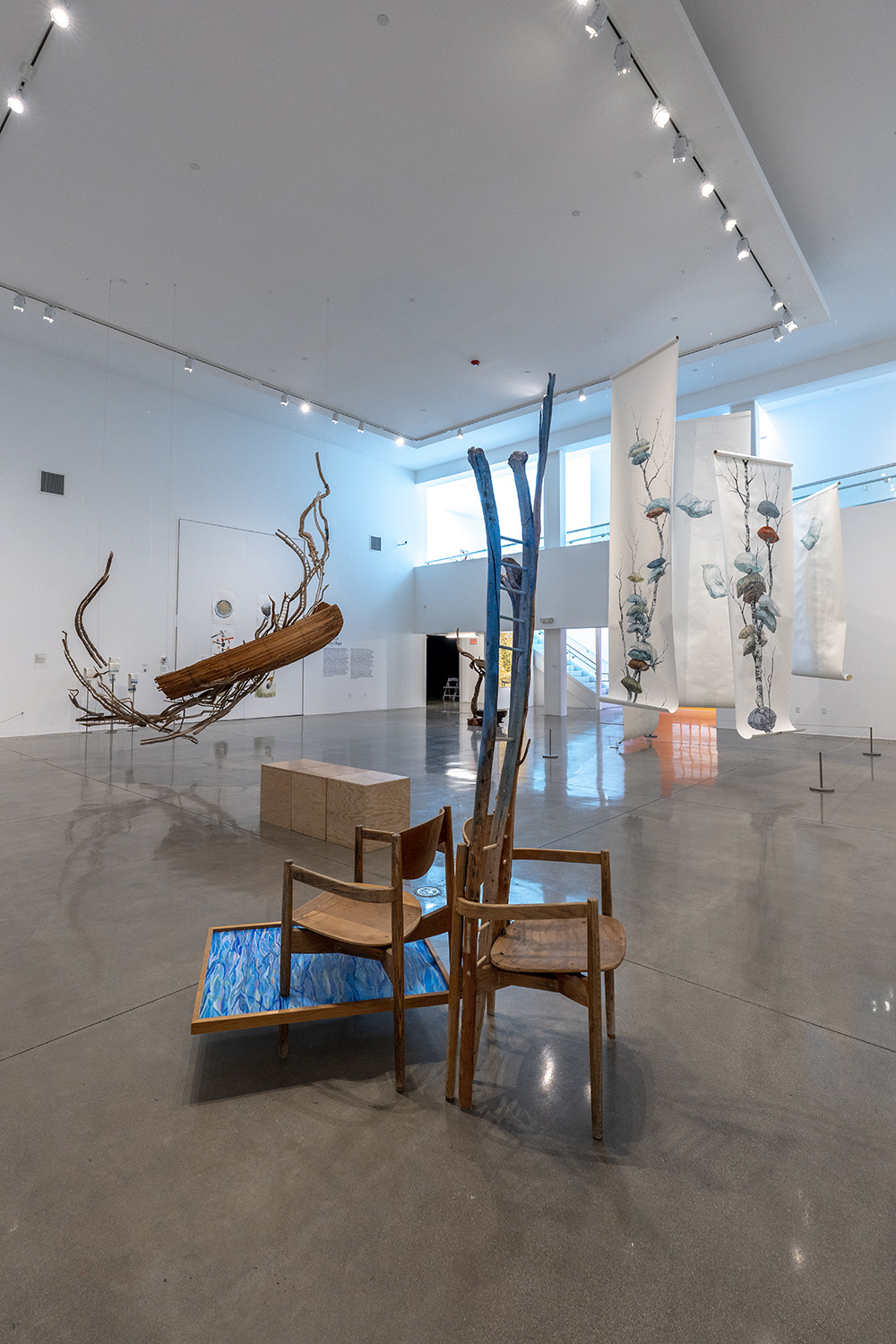
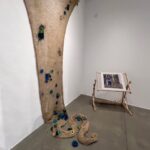
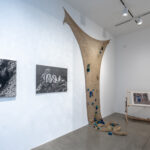
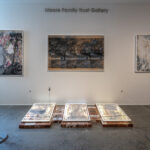
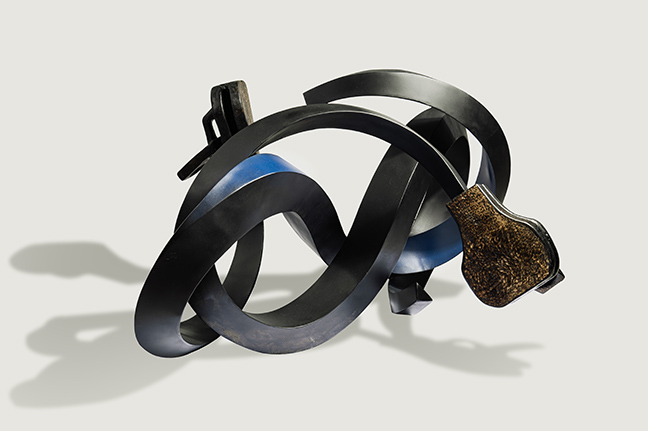
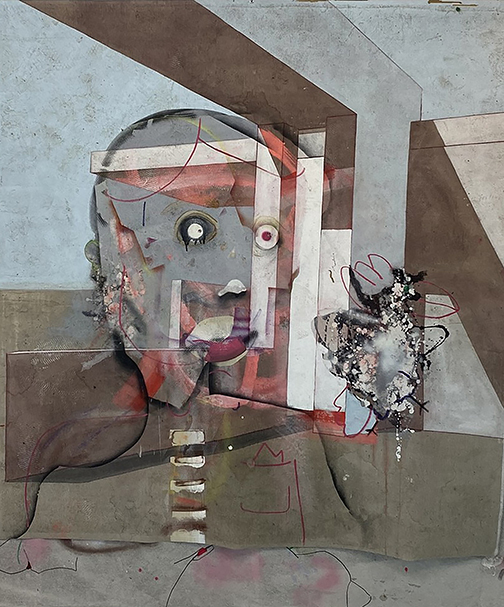
The Museum of Art and History’s Metaphor, which runs January 31st through April 19th is a dazzling series of exhibitions featuring solo shows and installations from Nathan Huff, Sharon Kagan, Diane Briones Williams, Frances C. Robateau Jr., Brian Singer, Bachrun LoMele, and Vojislav Radovanovic.

MOAH curator Robert Benitez, Heber Rodriguez, and curatorial assistants Clara Baxter and Jaushua Rombaoa have presented a rich cornucopia of works which each resonate with poignancy and visual poetry.
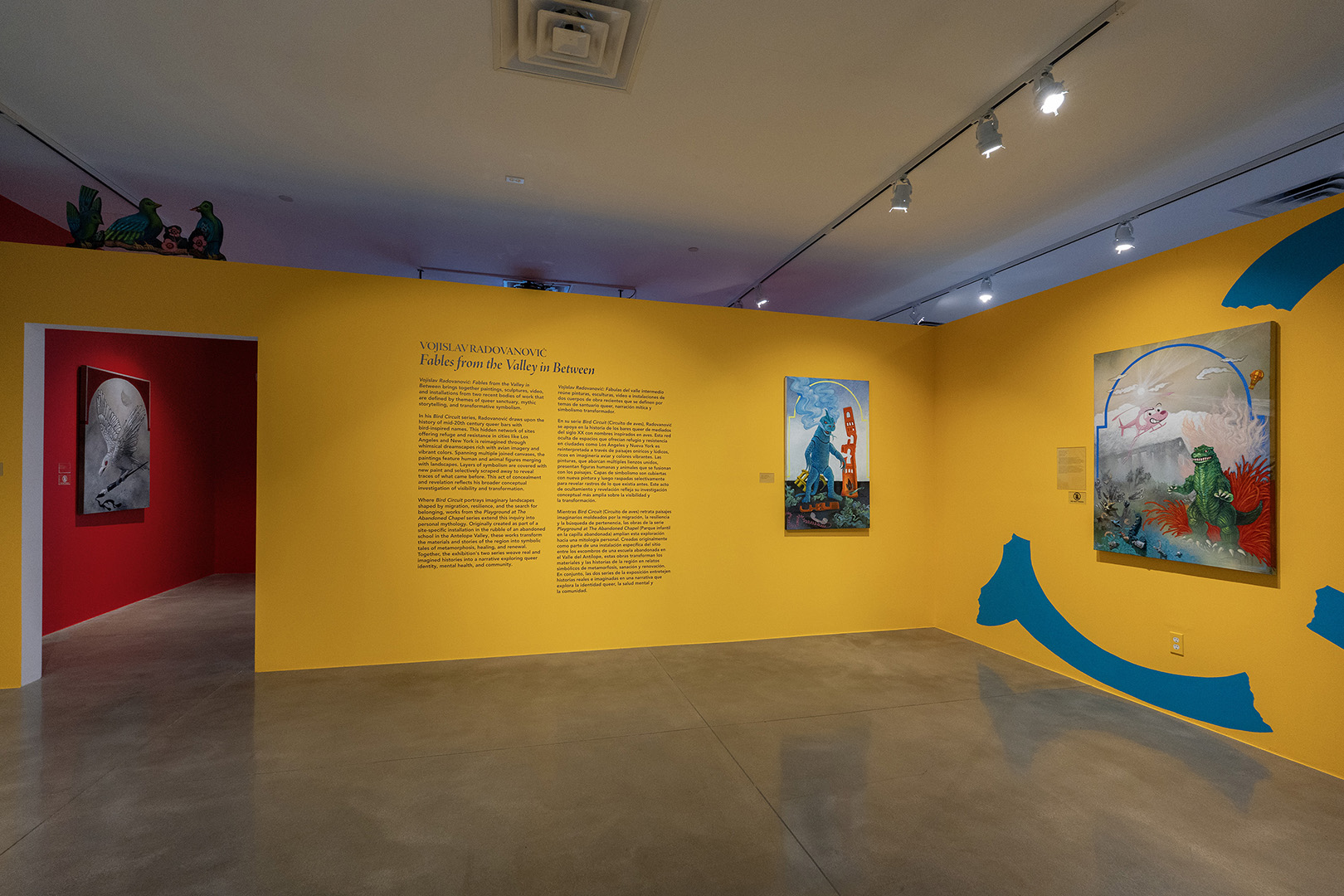
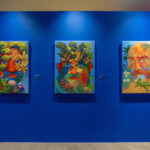
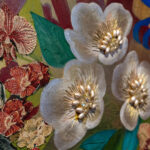
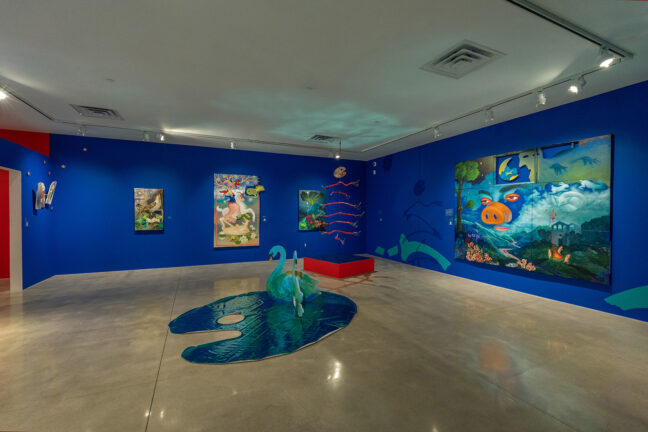
Each show is strong and beautiful, although my focus here is on the work of Vojislav Radovanovic, who always creates mystical, magical worlds in his exhibitions. Here, with gallery walls painted in electric hues that tie in with his work, his Fables from the Valley in Between is especially alchemic. Enriched with an exuberant palette, with intricate bead work and applique, and a sublime attention to detail, the artist entrances the viewer into experiences that are rapturous and transformational.
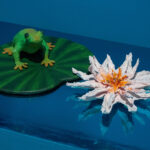
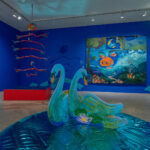
Three-dimensional swans float across a shimmering lake; a sculpted frog and lily pad perch nearby. Paintings of birds are perfectly rendered, representing multiple meanings in serendipitous settings. Childhood play-monsters come to life; a video installation ties together elements of play, nature, pain, and passion amid natural landscapes; fairy tale characters and delightful animal figures inhabit special places in large scale works. These works are dream-like fanciful, fabulous, and deeply moving.
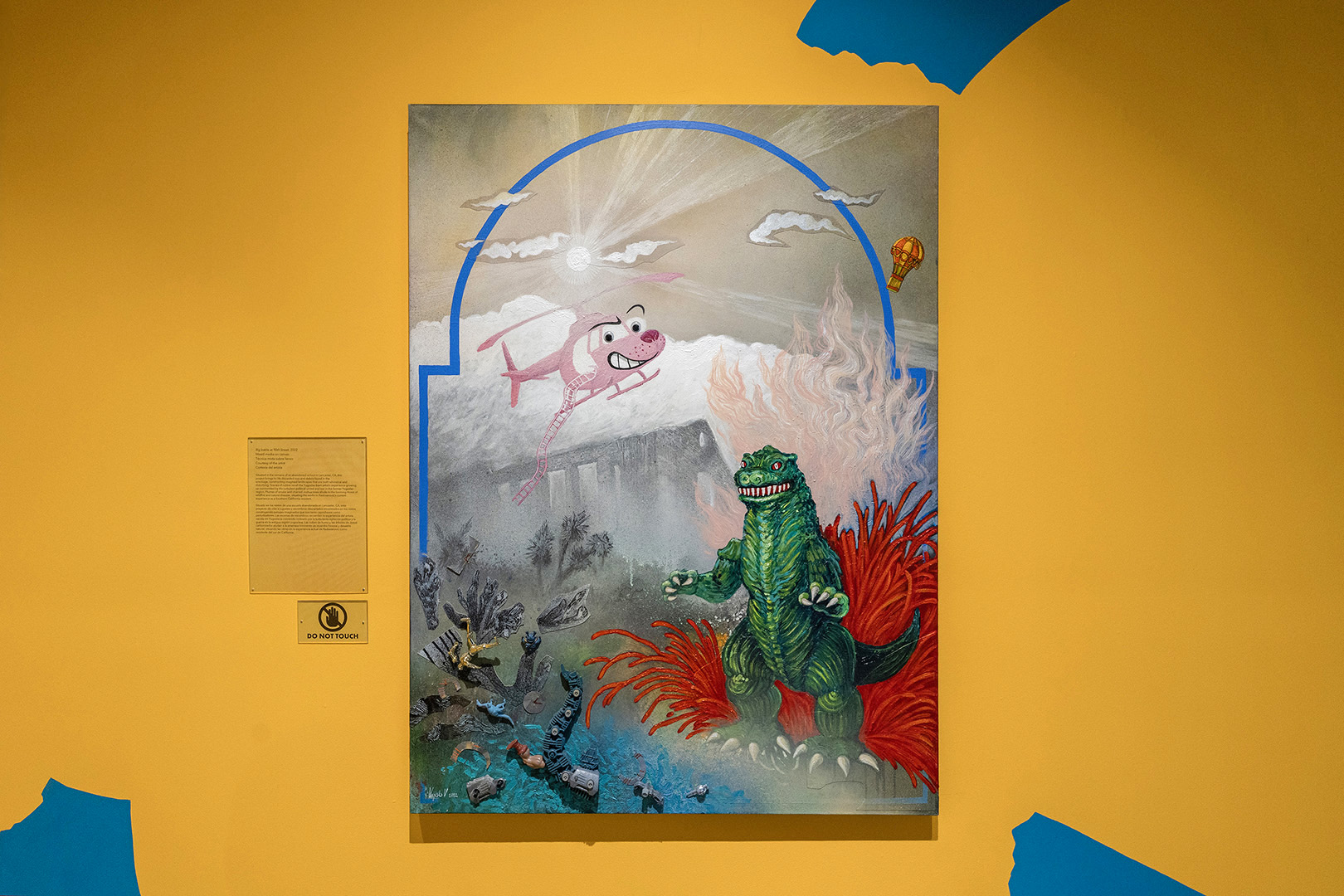
Integrating both human figures and animal life, weaving a tapestry of rich storytelling, Radovanovic creates a galvanizing and lovely exhibition that leads viewers through a land of connected gallery rooms. In the first, the room is populated by paintings of childhood toys and deserted Lancaster-area locales that tie into the artists own experience of turbulent unrest and warfare in eastern Europe.
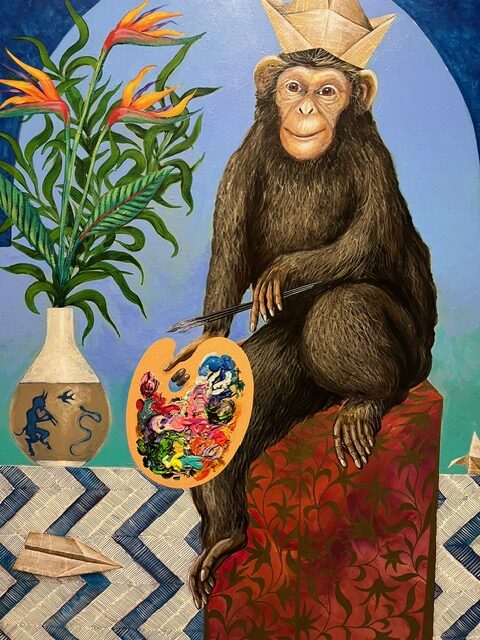
Segueing into other series, “Portrait of a Painter,” gives the viewer a look at an artist as chimpanzee, paint palette in hand, paper jester’s crown on his head. It serves as a transition point from the conjoined images of warfare and play to the freedom and sense of hope in richly nuanced paintings featuring the symbolism of birds.
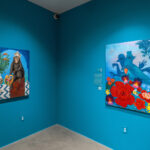
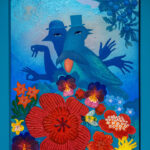
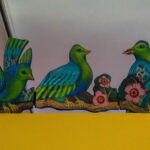
These paintings are a part of the artist’s Bird Circuit series, which refers to a network of mid-20th-century gay bars. The birds themselves are symbols of sanctuary and safety, indicating the location of gathering places for the gay community despite laws discouraging congregation. These images exude a powerful sense of energy, purpose, and resistance. Within the artist’s avian world there are anthropomorphic creatures, playful scenes, loving couples, and sculptural images that both charm and delight. A cut out of three “Small Birds” with beautiful green and lapis lazuli blue plumage stands above a doorway, leading into the next gallery rooms.
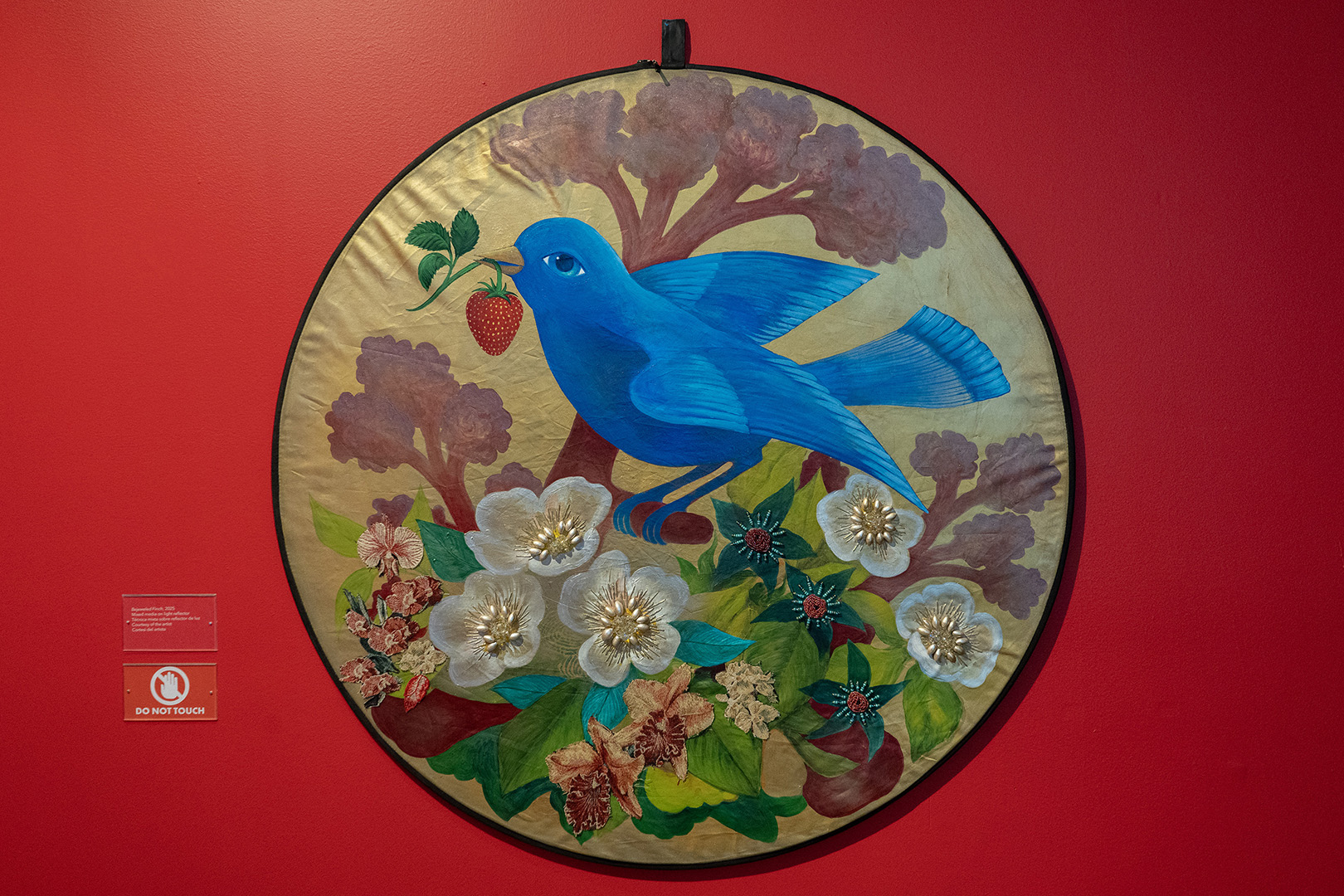
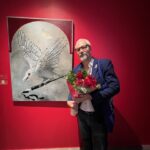
One of the most gorgeous images here is “Bejeweled Finch,” featuring a brilliant blue bird with a strawberry in his beak; lush, jeweled appliques sparkle in floral bursts, and the entire piece is set on a gold light reflector. It recalls both traditional religious icons and shields carried by medieval knights in battle. A very different avian image haunts the imagination in the mixed media “Omen,” featuring a silvery bird clutching a fountain pen between his teeth, ink trailing from its tip.
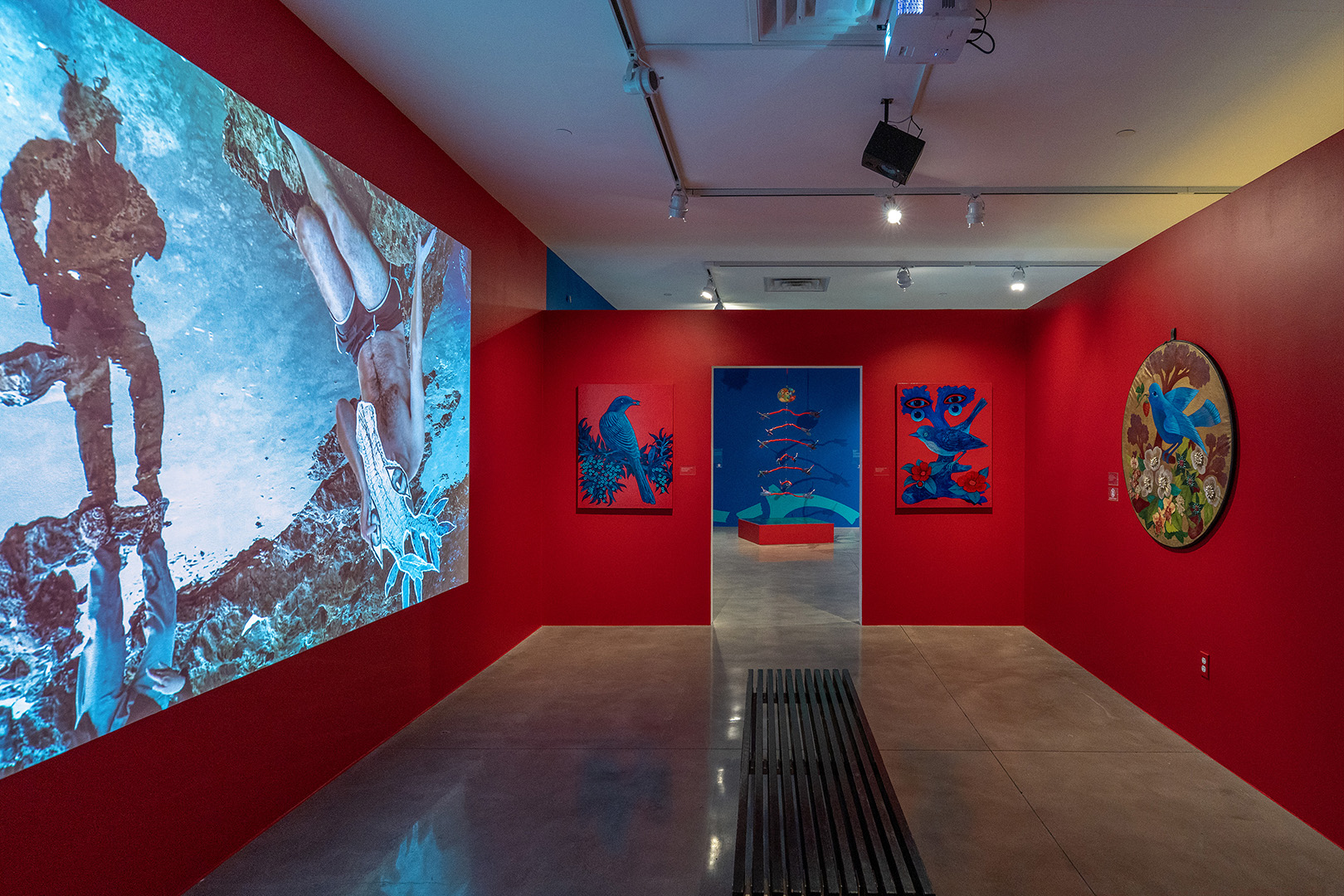
Across the gallery, a large video installation plays titled similarly to the exhibition itself as “The Valley in Between and Other Fables.” A variety of experimental film segments play created through poetic collaboration with the late Robert Patrick Playwright, Jason Jenn, Chuck Hohng, and Joseph Carrillo.
Having moved from childhood toys engaged in news media chaos and warfare to the fraught but free sanctuary of Radovanovic’s Bird Series, the final and largest room of the exhibition, moves into a series of works that speak to fairy tales, fantasy, and pure magic. Here viewers will meet the heavily floral image of a “Frog Prince” whose hair is landscaped into the fecund branches of a brilliant green tree. At the base of the painting, within the flora, an actual frog wearing a small gold crown, blows a kiss.
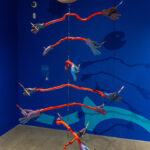
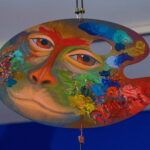
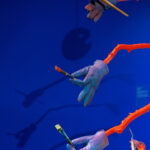
A suspended sculpture, reminiscent of Alexander Calder in shape is described by Radovanović as a “self-portrait.” The multi-armed figure has a head in the shape of a painter’s palette, while multiple arms and hands hold paint brushes. This piece also recalls the many-handed figures of Greek mythology, the Hekatonkheires.
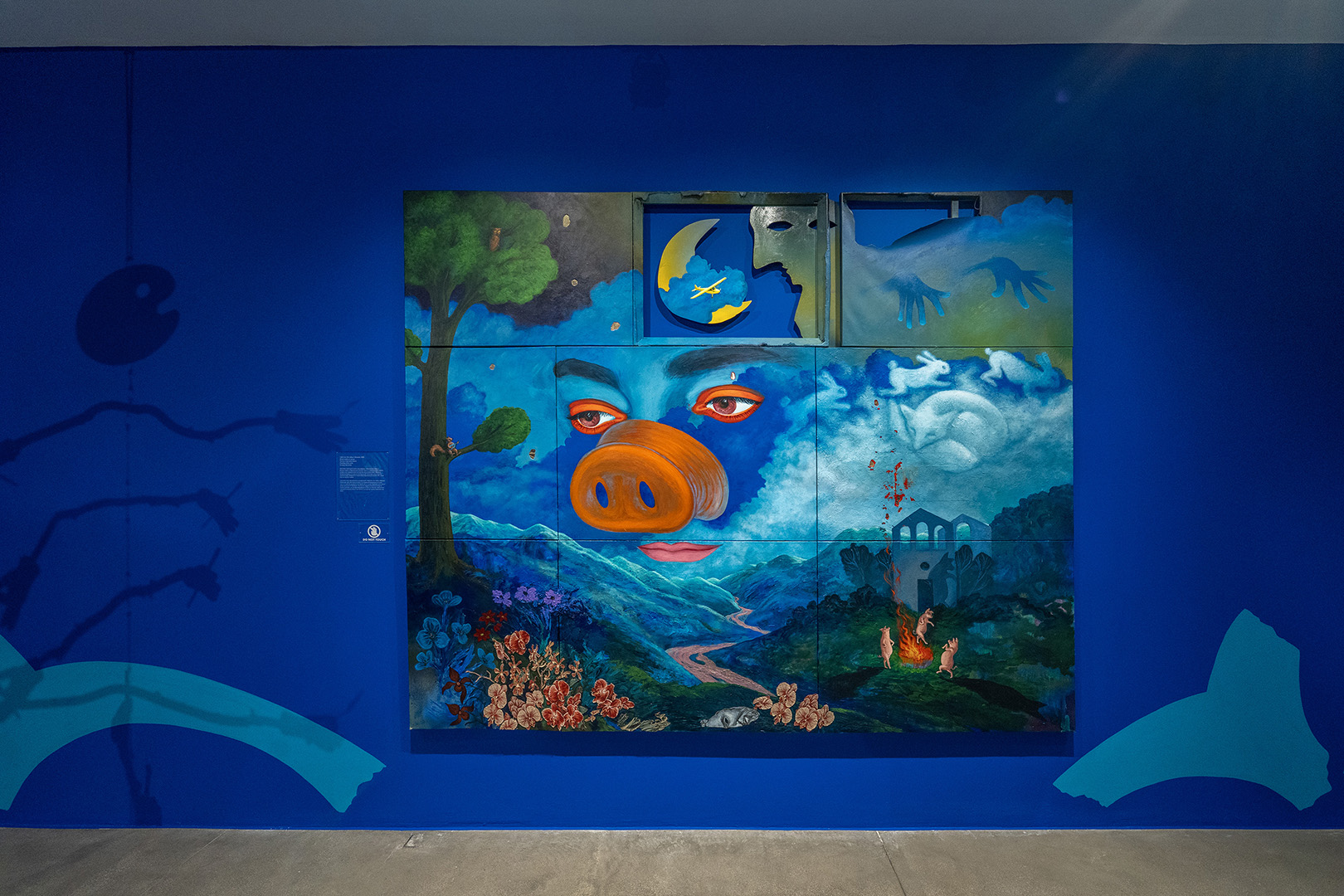
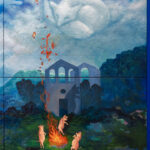
Moving deeper into fairy tale mythology is “Fable from the Valley in Between,” which includes the “Three Little Pigs” dancing by a roaring fire while a wolf’s shadow lurks, a charming owl, a musical squirrel in a tree, and a painter’s palette moon.
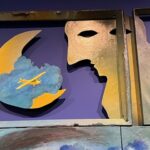
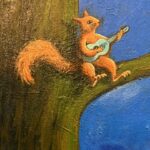
Dreamy and also lightly ominous, here the magical and the sublime eclipse the possibility of dread.
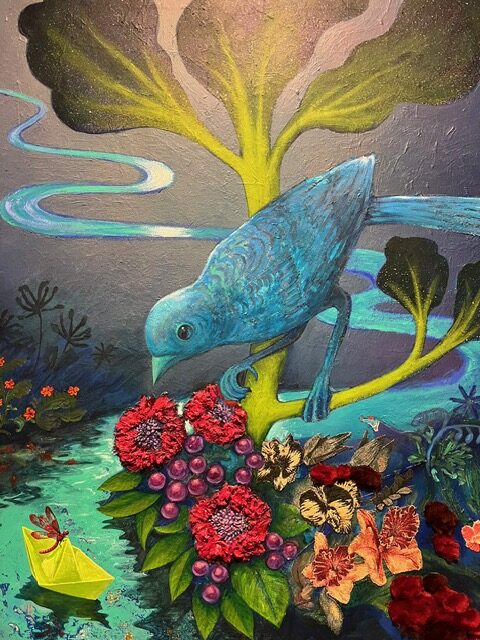
“Journey Down the Stream” in this same gallery is exquisitely wonderful, depicting a curious bird watching a small paper boat carrying a dragonfly as it sails down a small, moonlit stream. This piece speaks to hope and promise, including the promise of another world. Dragonflies, after all, represent many things, including change, transformation, self-realization, joy, light, and even a connection to the spirit world — all of which are a part of Radovanovic’s work.
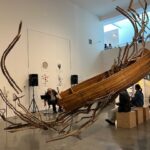
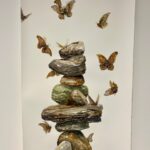
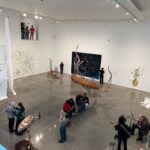
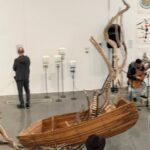
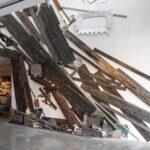
The other exhibitions in the museum are also potent and lovely. Nathan Huff’s Heavy Hope mixes natural beauty with elements of domesticity, creating a delicate and complete balance that includes installations and sculptures, paintings and drawings. Like Radovanovic, but completely different in style and tone, Huff deals with magic. Located in the expansive first floor gallery, the exhibit gives the viewer upended boats, chairs and flowers and stones, table tops with golden, hovering flowers.
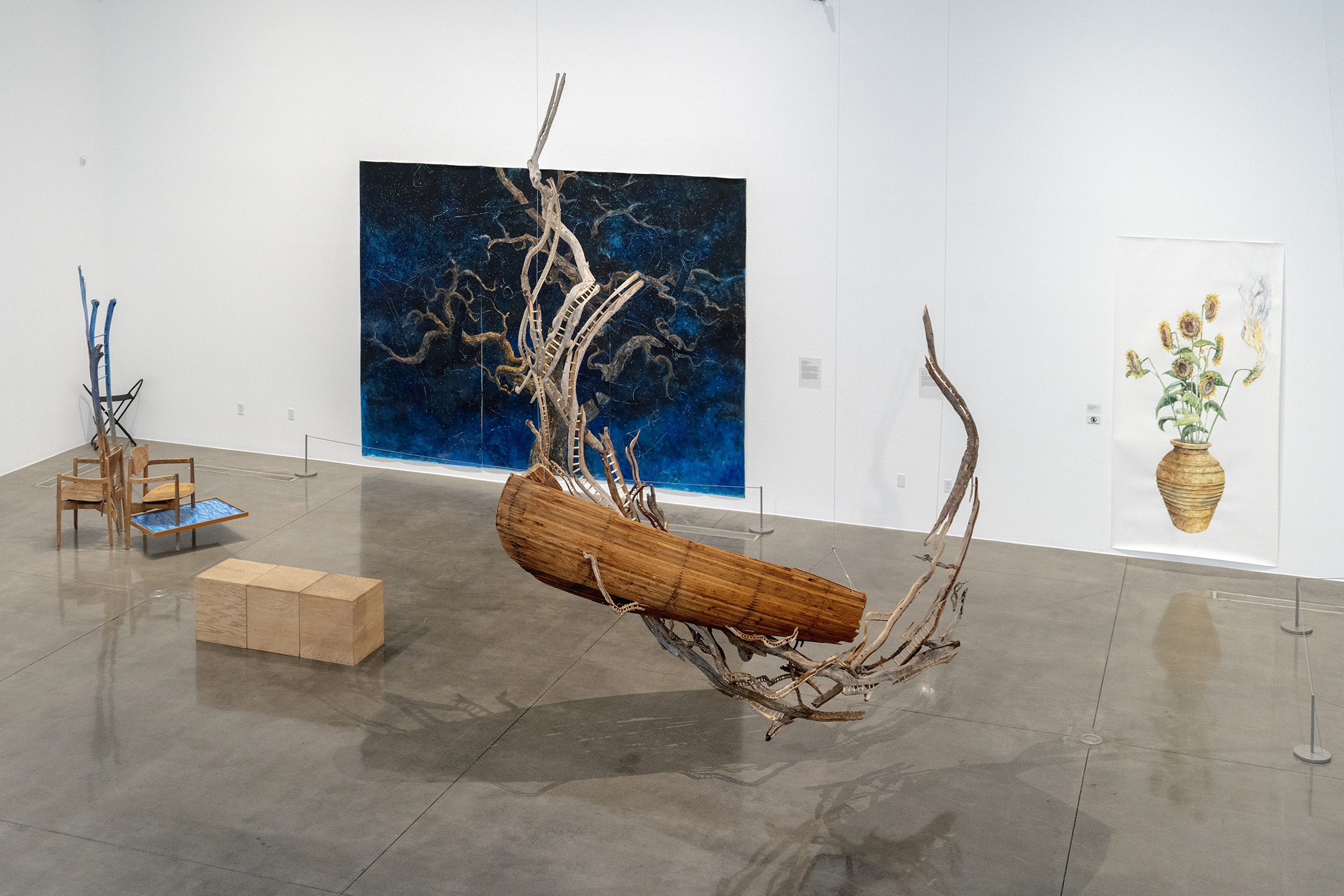
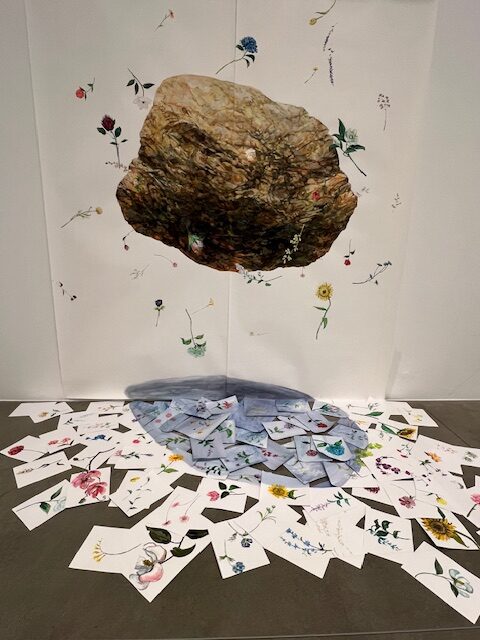
There are perfectly nuanced gouache and watercolor works that glow with inner and external light, installations that upend expectations and move toward delight. This, too, is a fairy tale, but one steeped in the alchemy of nature and the ache of the human heart.
Sharon Kagan’s Bearing Witness is also woven with deep meaning, both literally and figuratively. Working in both mixed media painting, drawing, and textile work, her exhibition is finely wrought. Her knitted, linked, conjoined, and wonderfully sinuous sculptures explore both pain and compassion along with a profound sense of strength.
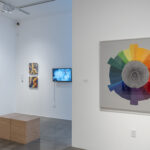
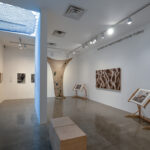
That strength and deep emotions is carried in both her use of seemingly fragile materials and through an indomitable subject. Her beautiful work explores both her own experience of human connectivity and her connection to the trauma of the Holocaust as a survivor’s daughter.
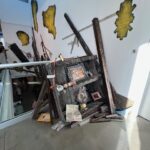
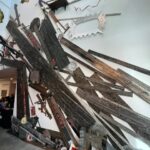
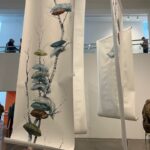
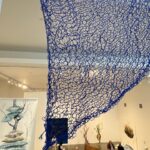
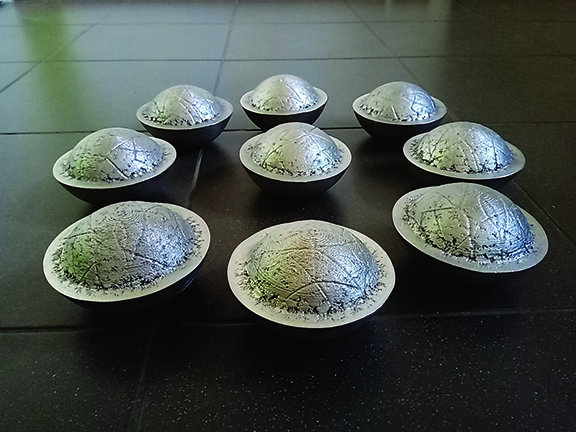
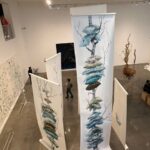
Other MOAH exhibitions include the expansive sculptural installation by Bachrun Lomele, Burn Pile/All Kinds of Murmuring Here and There which includes anonymous phrases and statements made by residents of the San Joaquin Valley, reconfigured to serve as symbols for the disjointed and ever mutable world we live in today. The installation towers between the two floors of the museum.
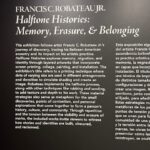
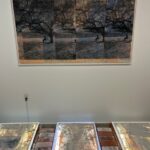
Francis C. Robateau Jr.’s Halftone Histories: Memory, Erasure, and Belonging is a hauntingly lovely mix of screen printing, collage, and painting. There are Mayan ruins and Lamanai sites in Belize as well as images from the LA area depicted here, each adding not only accumulated visual layers but a sense of the layers of history and ancestry, self-discovery, and communal heritage.
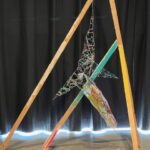
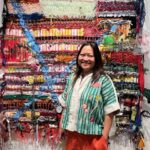
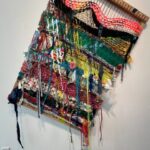
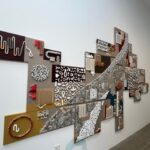
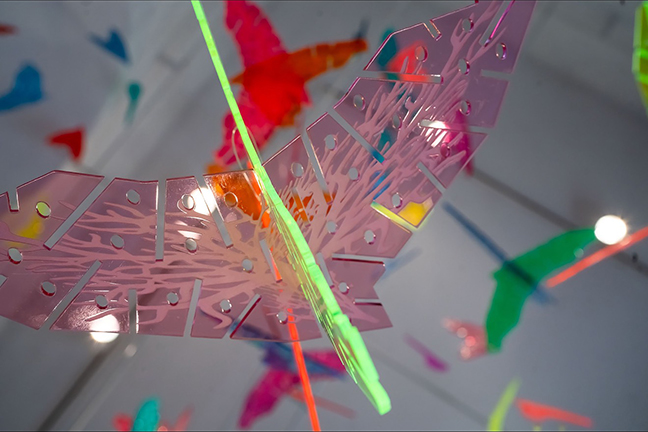
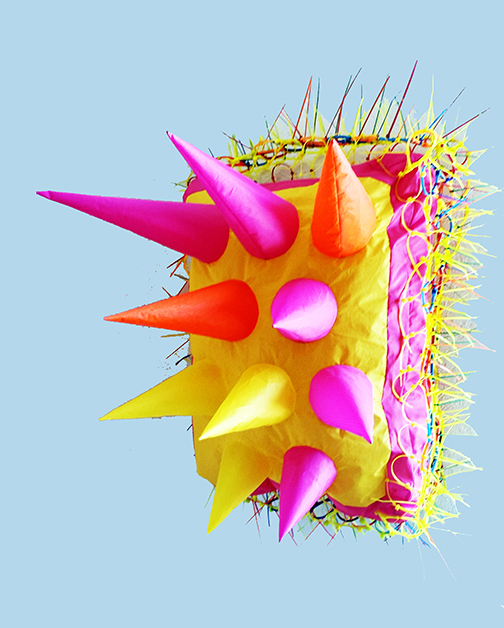
Also evoking a sense of heritage and cultural reimagining is artist Diane Briones Williams in her The Precarious Life of the Parol, where mixed media and textile works examine not just sculptural weavings but the memories and past history of her Filipinx identity.
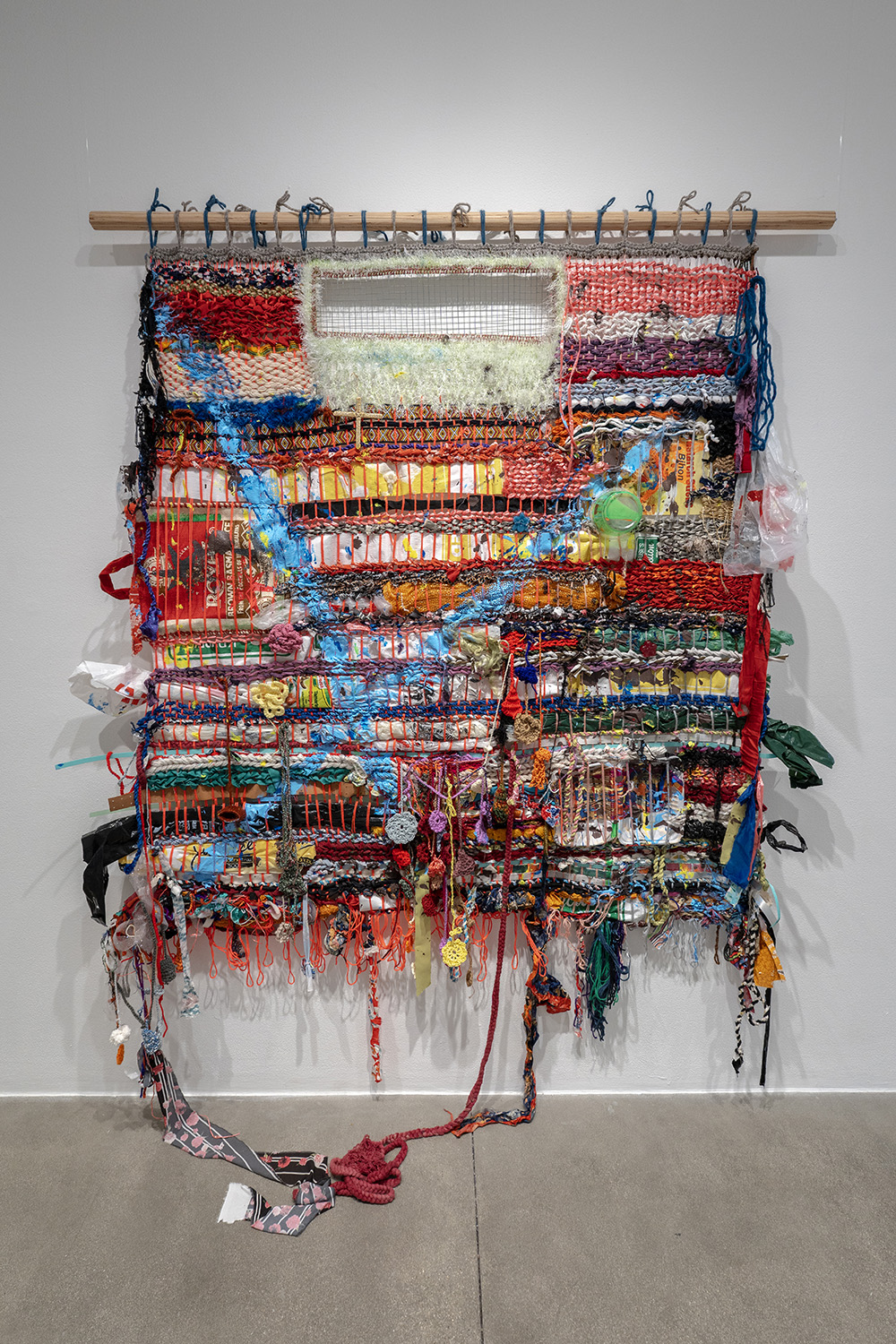
Jubilantly colorful and bearing the weight of collected detritus, each image is complex and carefully rendered.
In contrast, it is a loss of heritage that makes the focus of Brian Singer’s It was a pleasure to burn.
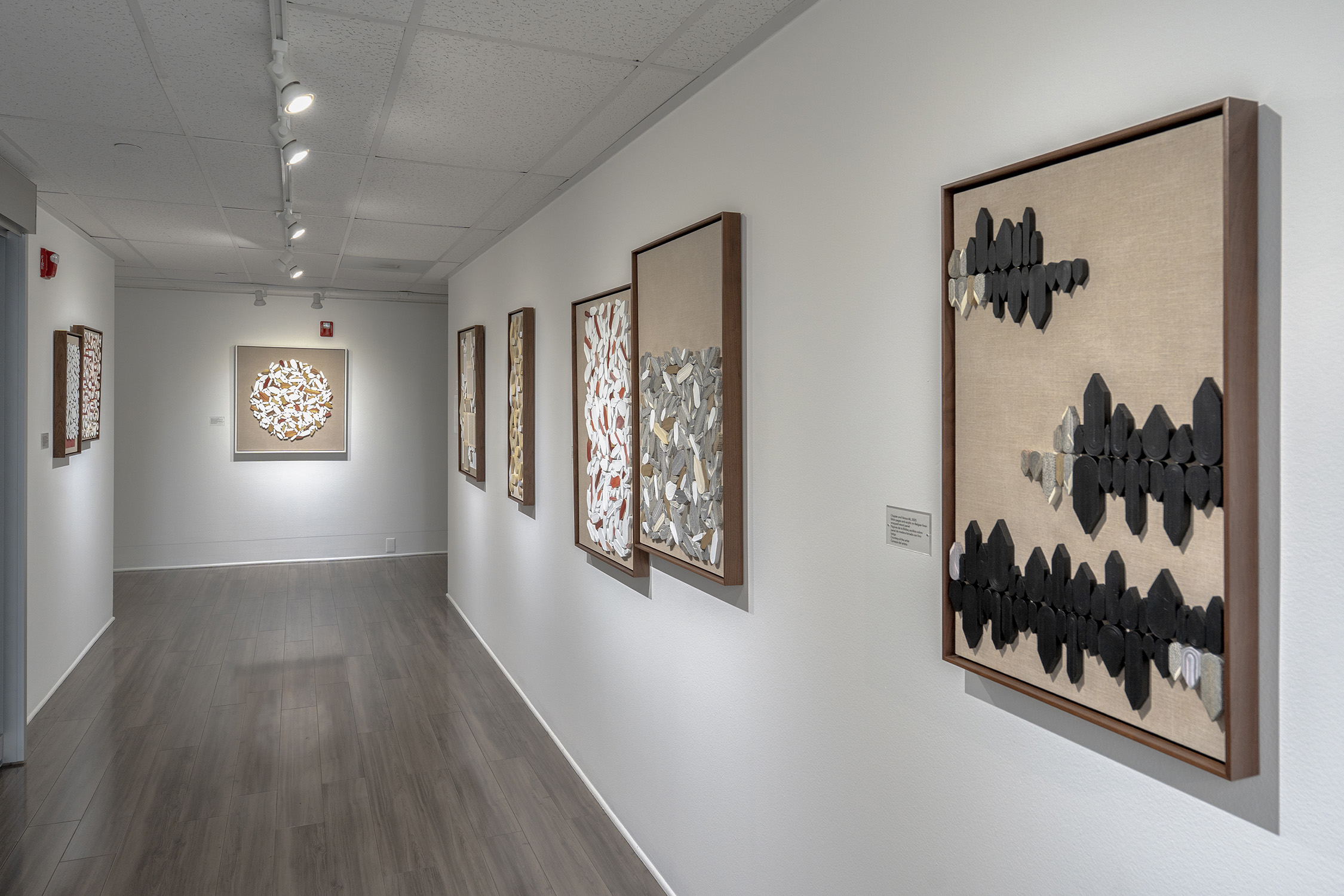
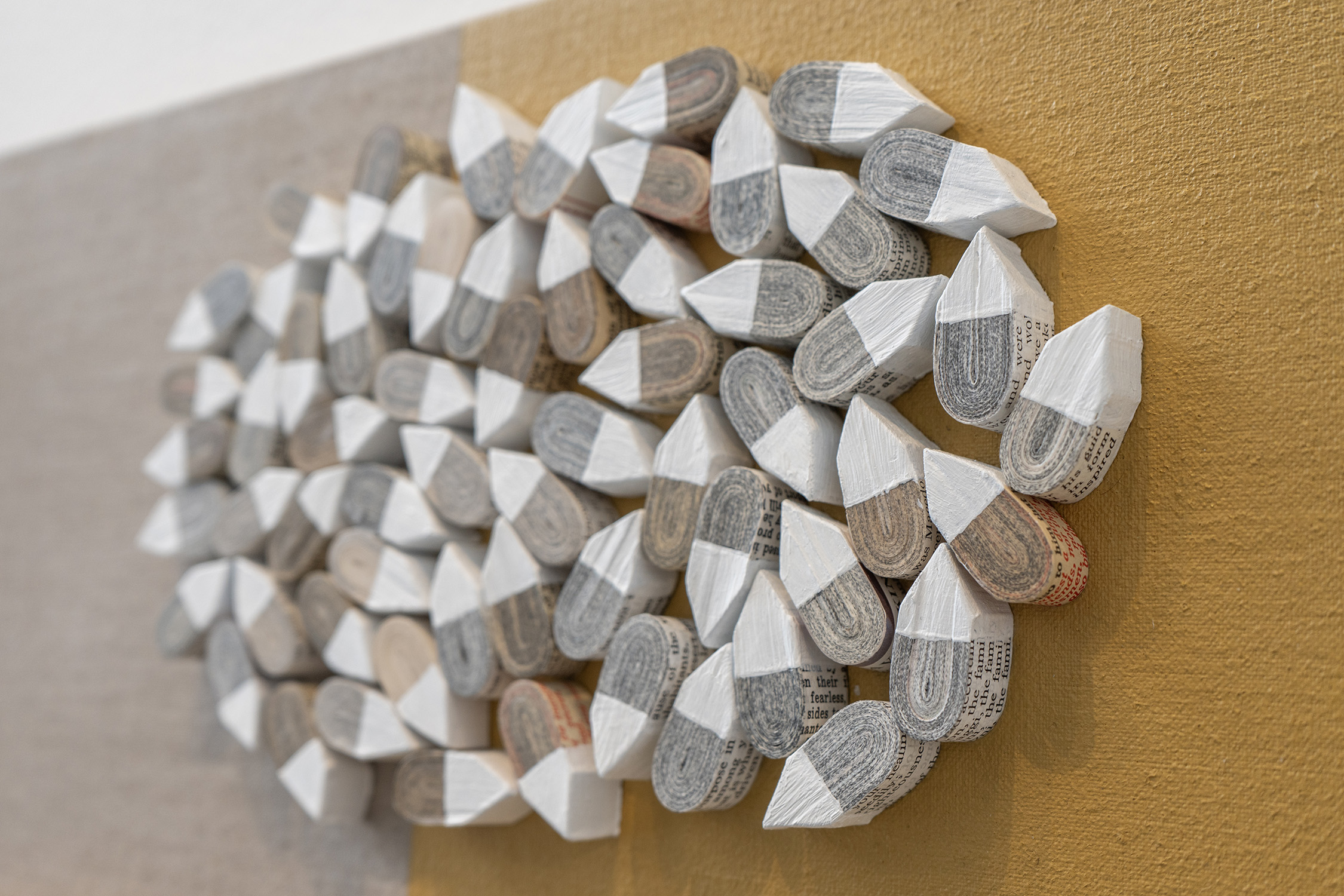
In this exhibition, the artist examines the power of words, utilizing the text of banned books and the Bible to create beautiful, muted mosaics made of compressed book pages.
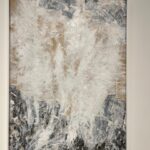
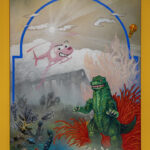
Taken together or individually, the museum’s Metaphor is a beautiful mix of the representational and abstract, of deep meaning arising from stories writ large and luminous. Experience the joy and absorb the stories: you will be wiser and happier for making the drive.

MOAH is located at 655 Lancaster Blvd. in Lancaster.

  • Genie Davis; photos by Genie Davis and provided courtesy of L.A. Art Documents 
An International Exhibition Pairs Work with Artists from Los Angeles and Belgrade

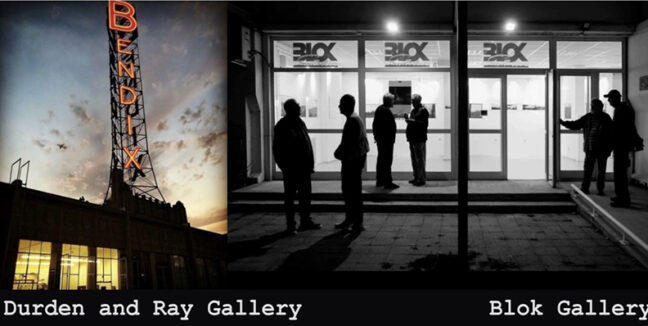
An international exchange of art may or may not work as anything more than an interesting premise, or a way to open dialog between two disparate locations.  But with Translocal Conclave Amid the Market, an exhibition pairing Los Angeles-based Durden and Ray with Blok Gallery, located in Belgrade, Serbia, both artist-run spaces have hit the collaborative mark and then some.

The group exhibition was presented in Belgrade, and viscerally examines both the connections and disparities between the two art collectives. Each is an innovative gallery space that offers provocative, unique work reflecting on the nature of social and political societies and the heart and soul of the very human artists who live within them.

Paired, there are immediate differenes in color palette and patterns between the Serbian and American artists. Durden and Ray artists dive into deep color and bold shapes; the Serbian artists rely more on a graceful minimalism in both palette and form.

The differences coalesce into a woven dialog of abundant beauty and precise tradition.  Exhibiting artists include artists:

Djordje Arnaut, Lore AKA Lortek , Željka Momirov, Miodrag Perić, Tanja Strugar, Carlos Beltran Arechiga, Snezana Saraswati Petrović, Joe Davidson, Alexandra Wiesenfeld, Max Presneill, Regina Herod, Ismael De Anda III & Eugene Ahn, and Arezoo Bharthania.

Petrovic straddles both Serbian and U.S. based artist groups. Originally from the Belgrade area, she is now a member of Durden and Ray, and was the catalyst in creating this exhibition.

The exhibition’s wide range includes work rooted in vibrant street art, sculptural forms that transcend the traditional, and transcendent work rooted in memory. There is also that soars beyond the typically temporal, as in the VR installation of Ahn and De Anda. Regardless of medium or the location of the originating artists, these images sing with humor as well as grace.

Smart, sophisticated, and using a wide range of materials, the exhibition not only spans art around the globe but within the heart and soul. So what happens when two art collectives collide and conjoin? Universal art magic.

May there be more such, which given Petrovic’s prediliction for engaging in international. boundry crossing wonder, it’s extremely likely there will be. Stay tuned.

  • Genie Davis; photos provided by the gallery and Snezana Saraswati Petrovic


Desert X Marks the Art Spot

Desert X Marks the Art Spot  – by Genie Davis

Through May 11th, don’t miss the 5th iteration of Desert X, in of course, the desert – Palm Springs, Palm Desert, Rancho Mirage, and Desert Hot Springs are among the locations this year.  This is one of the strongest and most successful editions of the exhibition, whose purpose is to create and present international contemporar art that fits the desert sites in which its located. We saw each of the works over a leisurely two day visit.

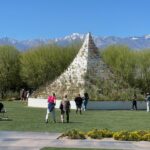
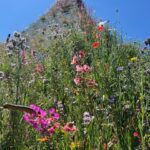
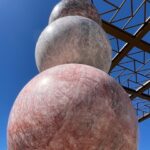
Let’s start where we did, with Agnes Denes jubilant, flower filled work at Sunnylands in Rancho Mirage. The Living Pyramid is both an artwork and an environmental intervention, per Desert X – under any category, it’s a deeply touching piece that reveals the fragility and promise of life in the desert.

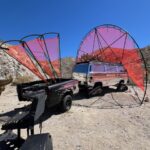
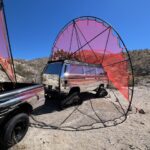
Completely different and located in the raw desert piece is Muhannad Shono’s viscerally haunting What Remains. The fabric works evoke windswept sails on long dried seas.

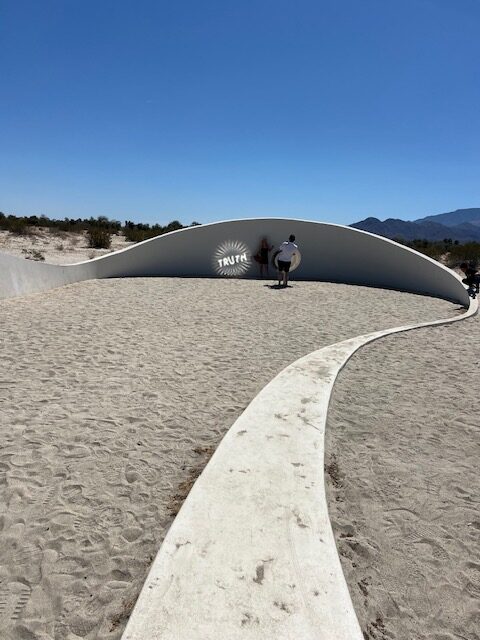
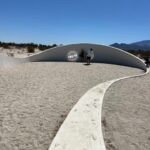
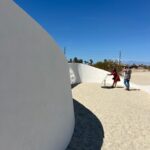
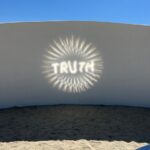
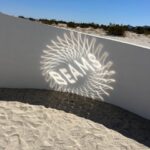
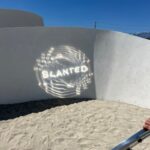
Sarah Meyohas’ Truth Arrives in Slanted Beams is a pristine vision that unfolds like a bright white ribbon. Her immersive installation creates significant word patterns using  “caustics,” light patterns formed by the refraction or reflection of light through curved surfaces. What a dynamite piece.

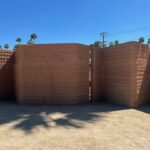
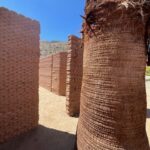
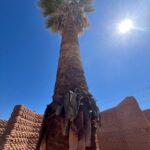
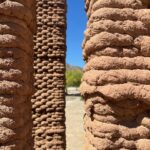
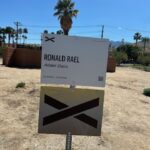
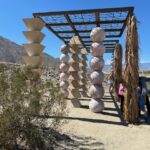
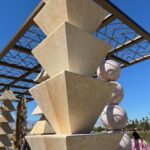
Ronald Rael’s Adobe Oasis in Palm Desert is just that, a maze that also serves as a place of rest and succor from the sun.

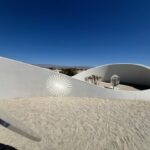
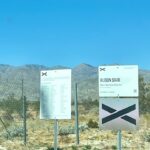
Out on Highway 111, off Tramway Road, in Palm Springs, Kapwani Kiwanga’s Plotting Rest is beautifully matched in setting and offers different encompassing views of art and scenery from every angle.

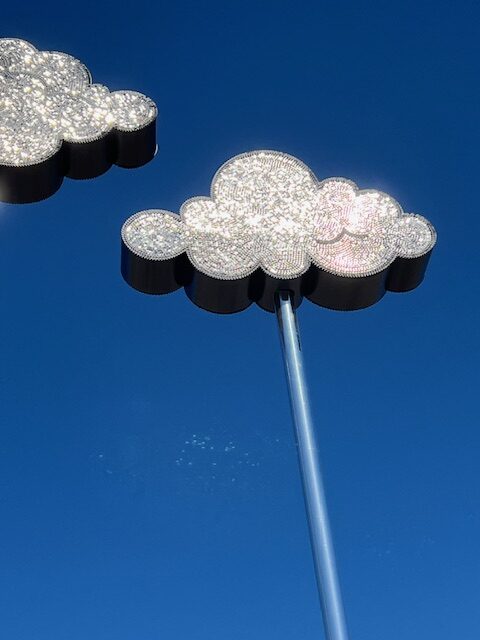
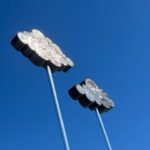
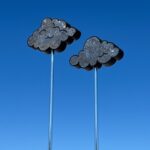
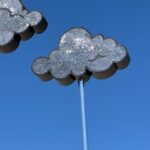
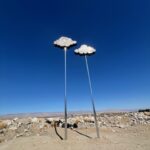
Sanford Biggers’ work sparkles as it brings the sky, or at least its clouds, closer to earth. Beautiful from all angles, Unsui (Mirror) shines.

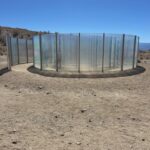
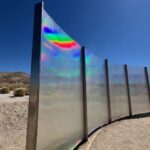
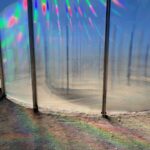
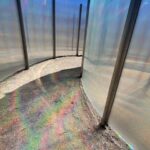
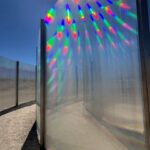
Possibly my favorite in a field of favorites this year (or a desert’s worth, perhaps) is Kimsooja’s To Breathe, a dancing, light-filled walk through prism that changes with the direction of the sun. We visited at noon, when the piece gave off rainbows.

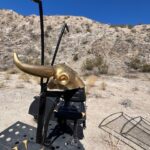
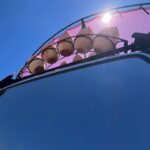
While G.H.O.S.T Ride moves about, when we saw it, the Mad-Max-like work by Cannupa Hanska Luger was just up the hill from Kimsooja’s piece. Delightful and imaginative with an audio component, the location was a tough climb on a hot day, let’s hope it’s easier to view in these warmer final weekends.

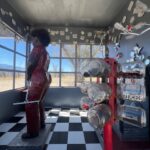
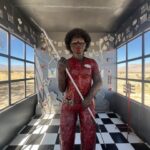
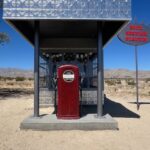
Alison Saar brings heart and soul to a terrific and interactive Soul Station in Desert Hot Springs. From a fully realized gas station interior, to signs with mantras for peaceful living, and a gas pump with a seashell silver handle that offers beautiful poetic messages to listeners, this art is fully alive.

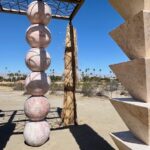
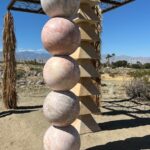
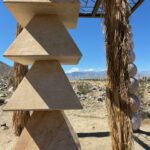
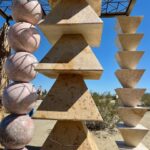
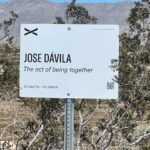
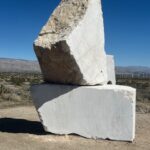
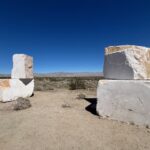
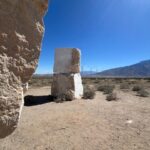
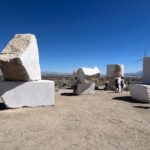
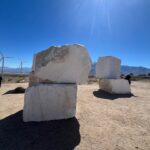
Also in Desert Hot Springs, Jose Davila offers monoliths reminscent of Stone Henge – if Stone Henge was made today and spoke to the movement of immigration as does The act of being together.


Catalina Dreamin’ – Part 2

Catalina Dreamin’ Part 2  – by Genie Davis

If you read about our first day’s adventures in Catalina, you can very likely already tell that any time is the right time to visit Catalina, Southern California’s own special island getaway. But while summer’s joys are now imminent, and it’s almost time to bring out the bathing suits, the quieter months that stretch between November and March are beautiful times to visit, too. Our visit took place at the end of February.

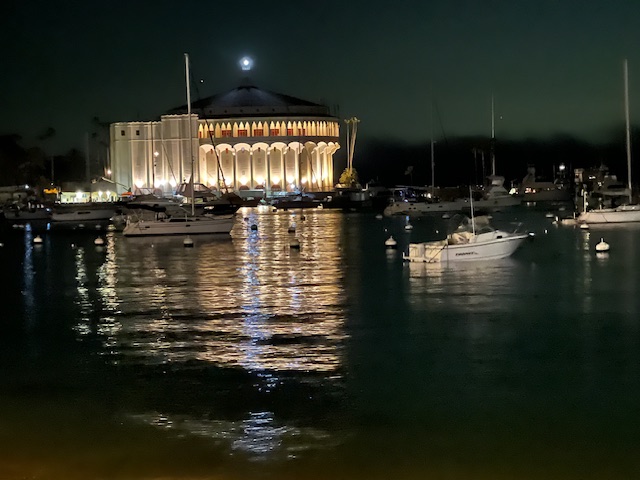
We enjoyed new and updated dining spots,  our first ever golf-cart-ride into the hills, just-beginning to bloom gardens, a terrific new kombucha and beer spot, and fine art exhibitions, still on-going at the Catalina Museum of Art and History.  We also enjoyed a spooky, EMF-enhanced ghost tour and took a VIP tour of the lovely Casino. For our first day adventures, click here. 

The next morning began with our first golf cart drive into the hills. While I’ve scooted around the Avalon streets with kids in tow years past, this was an inaugural trip into the hills, following a well-laid out map from our rental company, Catalina Island Golf Cart Rentals.

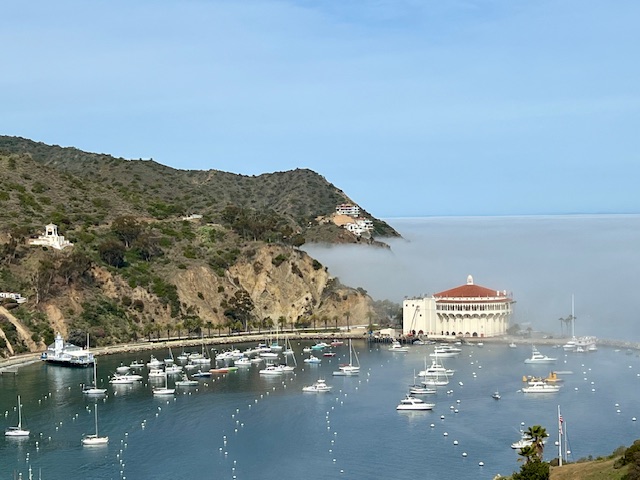
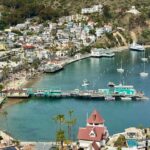
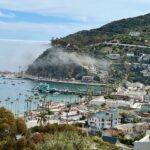
We first drove along the coast and up to Mt. Ada, stopping for sweeping viewpoints of the harbor, the casino, and the open sea, made more dramatic by a mix of low fog and brilliant sunshine. Next we headed into town and up to the Botanical Garden, promising ourselves a return trip later in the day when we could spend more time there. Heading to the opposite side of Avalon, we were able to watch and hear the Chimes Tower strike noon before heading down to the Descanso Beach Club, where we dined the previous day, and on through town to return the cart. The leisurely and lovely drive took two hours on the dot.
Afterwards, it was time for lunch at one of our favorites on the island, Bluewater Grill. Part of the Bluewater Grill group of
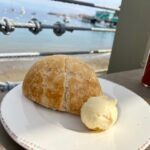
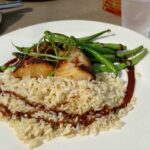
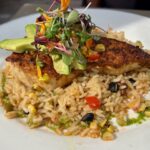
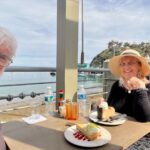
restaurants on the Mainland, there’s no location like this one: a huge deck sprawls ocean front, for a beautiful view of boats and birds and buoys. This owner-operated spot includes an oyster bar, sushi bar, and full bar selection. And of course, Bluewater’s renowned freshly made bread. We disappointed more than a few sparrows by keeping this warm deliciousness to ourselves. I had the melts-in-your-mouth umami flavors of Misoyaki Butterfish, or Pacific Black Cod, glazed with miso and served with green beans, white rice and eel sauce with green onion, cilantro and daikon sprouts, while my dining partner opted for the Togarashi Spiced Ahi Tuna.
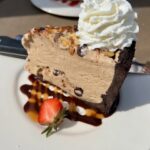
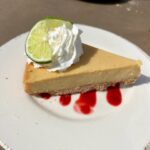
If that wasn’t feast enough, we shared two of the restaurant’s signature desserts – Key Lime Pie and Java Mud Pie. Hard to say which was the best – so you almost have to try both.

After lunch it was time for art and history, as both are beautifully displayed at the Catalina Museum for Art and History. 

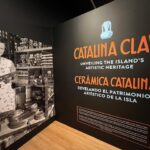
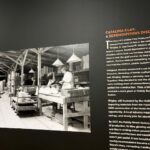
We enjoyed two compelling exhibitions: Catalina Clay is on display through January 6th, 2026. A carefully considered mix of historic information and stunning examples of Catalina-made clay works, the exhibition details the artistry of the Catalina Clay Products Company, taking viewers on a visual tour of the vibrant ceramics crafted between the 1920s and 1940s. From colorful tiles to elegant vases, the skilled craftsmanship and stunning creativity that shaped Catalina Island’s artistic identity and legacy is explored insightfully. This is an exciting and insightful exhibition. Don’t miss!

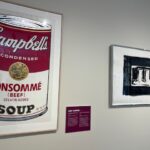
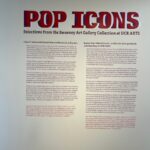
Also on exhibit at the time of our visit, and recently closed, was Pop Icons, a small but impactful collection of iconic works by Andy Warhol, Sister Corita Kent, Robert Rauschenberg, and others who shaped the Pop Art movement. Works on display included Warhol’s screen print of Queen Elizabeth II as well as abstract collage from Rauschenberg, both familiar works made fresh by their curation.

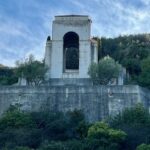
After our museum visit, we made good on our self-made promise to revisit the Wrigley Memorial and Botanic Garden.  

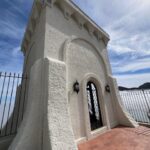
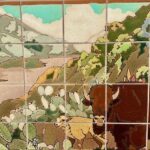
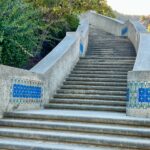
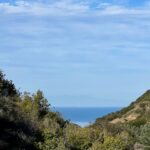
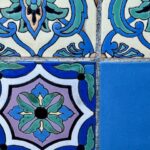
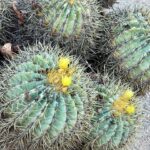
The late afternoon sun made the variety of plants in bloom, from cactus flowers to wildflowers, even more beautiful. The climb up the steep steps to the top of the Wrigley Memorial is more than worth making – along with lush tile work, crafted right there on Catalina Island, the views are sweeping and led down to the sea, where the sunlight dazzled the harbor. After the walk back to the center of Avalon, it was time for a short rest stop back at our relaxing hotel, the Catalina Island Inn. 
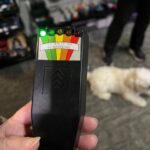
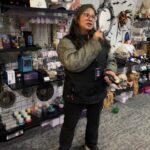
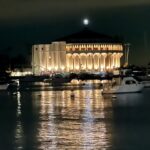
Our evening was devoted to ghosts: Jess was the fascinating host for our Haunted Catalina Ghost Tour, a walking tour that lasted a bit over two hours, and featured the use of EMF detectors, just like something out of Ghostbusters. Probably the best ghost tour I’ve ever been on, Jess told historically factual stories as she led us through the town, and out to the casino, where my EMF went off big time at a location I’d long had the sensation of believing haunted. Informative, fun, and adventurous, this is a must-do, and one that will “haunt” your memories for a long time: not kitsch, and all fun.

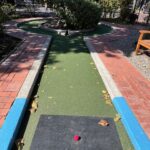
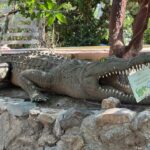
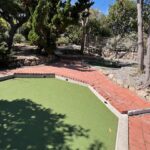
After another restful night to the sound of waves, we spent our last, partial day in Catalina on two activities: mini-golf and kombucha plus beer. Golf Gardens offers a 51-par course that includes an aligator statue and a water trap on an 18 hole course that has delighted generations. We had a lot of fun, and pars averaging around 70.

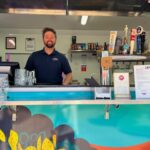
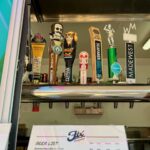
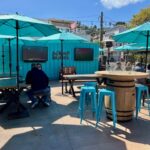
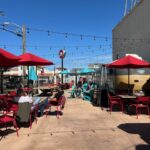
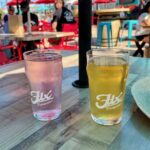
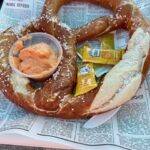
Last but not least, Flx Biergarten closed our trip. A bright outdoor spot with firepits, my partner chose a lavender kombucha while I stuck to Pilsner. We shared a large, fluffy, and freshly made soft pretzel that came with both queso and an excellent mustard.  The cheerful proprieters also offer hot links and hot dogs for those craving heartier fare. The biergarten would make a great spot to spend a long afternoon under its pleasant umbrellas or sparkling string lights. This brand new spot’s name recalls island history: Flx takes its name from ’50s-era Flxible buses that carried visitors on the streets of Avalon and along the island’s interior, a similar path to the other we traversed in our golf cart.
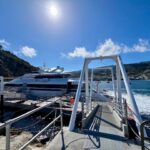
As for us, we boarded our return high-speed, smooth-sailing catamaran and headed to the Commodore Lounge for a cozy return trip to the mainland via Catalina Express.

Our sojurn Catalina dreamin’ passed all too fast, but we will be back – because summer, spring, winter or fall…the island will be there, my friends.

  • Genie Davis; photos by Genie Davis and Jack Burke