
It’s Always Tiki Time Somewhere at the Catalina Museum for Art and History

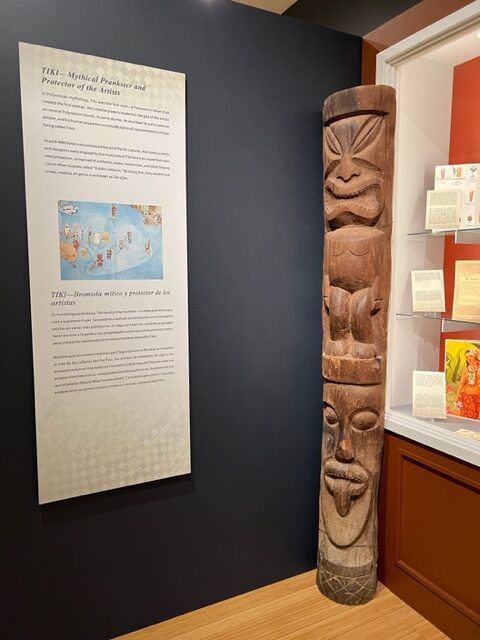
Serving as a truly beautiful adjunct to the Catalina Museum for Art and History’s permanent collection, now through September 3rd, visitors to Catalina Island can enjoy the transporting exhibition Tall Tiki Tales. Curated by author, tiki scholar, and cinematographer Sven Kirsten, the widely encompassing show includes artifacts from films shot on the island, dining spots, and resorts, as well as and original books and artwork that enhance the understanding of a cultural phenomenae that shaped tastes and traditions – as well as wildly fun beverages – both on and off Catalina.
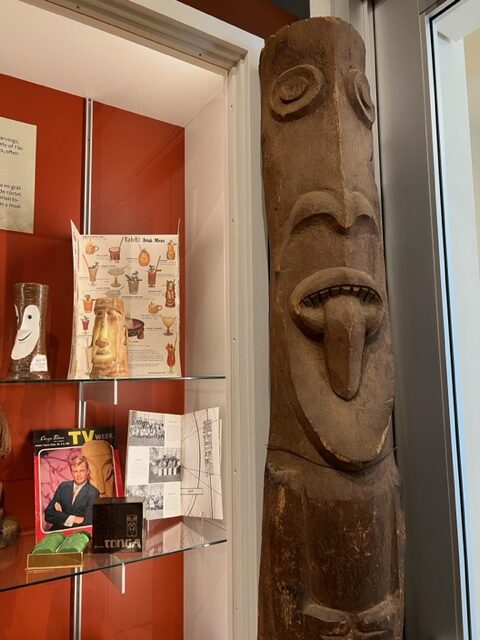
Frequently serving as a film set that helped to popularize tiki as an art form, Catalina has a rich history in the development of America’s happy obsession with all things tiki, including the bars and restaurants that grew nationwide during the 1930s.
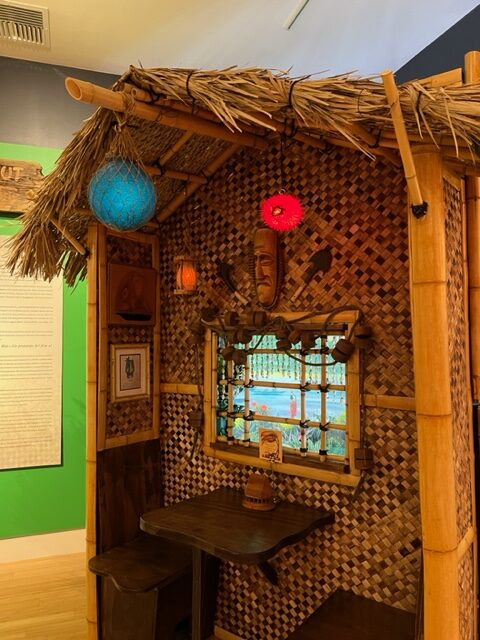
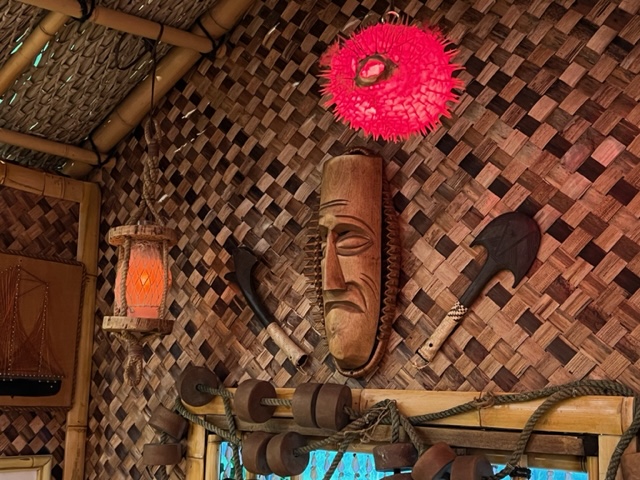
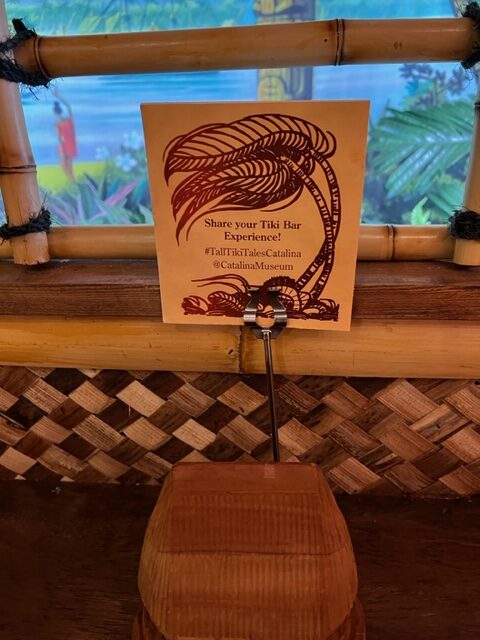
A highlight of the well-curated exhibition is an interactive one – visitors can sit down at a cozy table in a replica tiki bar to experience a unique design by master tiki bar designer Bamboo Ben. Viewers are transported to a blissful paradise with the sound of pattering rain upon sitting down. The only thing missing is a classic beverage.
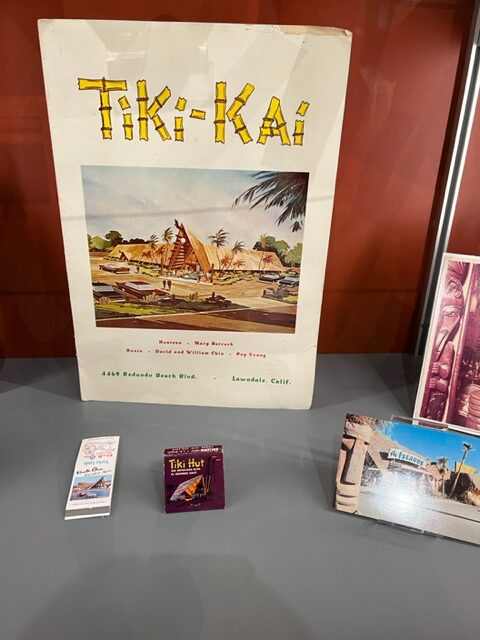
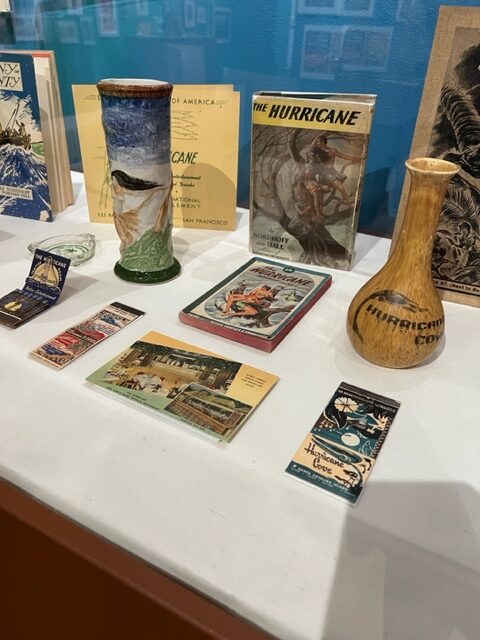
According to Johnny Sampson, the museum’s Deputy Director and Chief Curator, Catalina Island served as a major film set for movie adaptations of works such as Nordhoff and Hall’s Bounty Trilogy and The Hurricane, W. Somerset Maugham’s short story “Rain” and The Ebb Tide by Robert Louis Stephenson. “Hollywood quickly adapted these and other stories into movies, using Catalina Island as an accessible backlot for far away South Seas locales…we had Christian’s Hut from the set of Mutiny on the Bounty, the Chi Chi Club at the Isthmus and in Avalon, Hotel Waikiki, and Hurricane Cove—which even had lighting effects and fans to recreate the thrill of Hurricane for its patrons.”
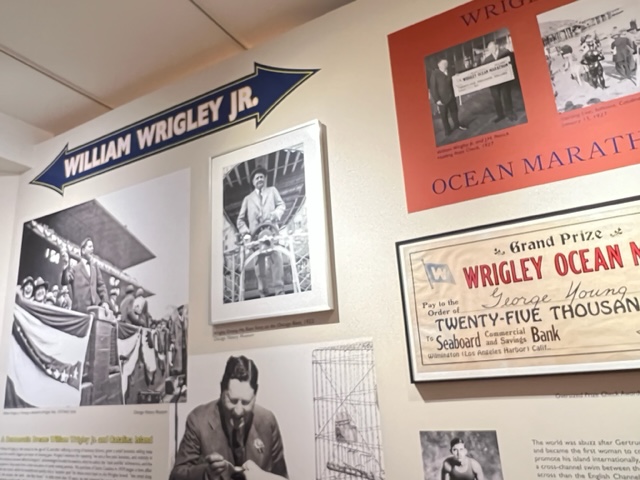
The fascinating mix of photographs, original art, and collector’s items – as well as the one-of-a-kind tiki hut immersive experience, beautifully support another look at the island’s past, a stellar permanent historical collection touching on other areas of Catalina life, including other film shoots, Chicago Cubs memorabilia, a wide ranging survey of Catalina pottery and tile, and a collection of photographs, negatives, and films documenting island life from the early 1880s to the present.
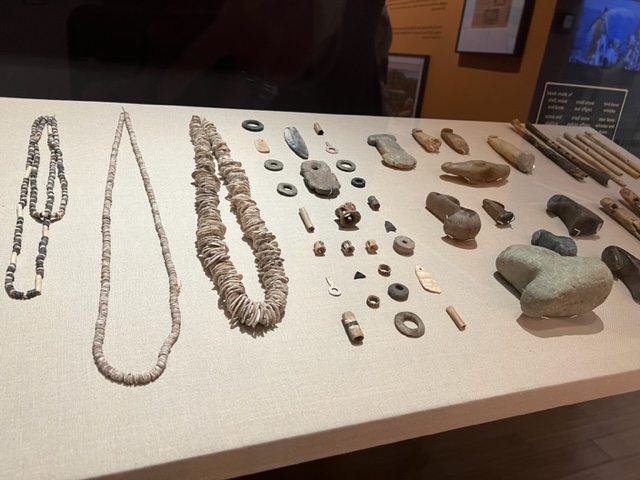
Viewers will also observe early phone switchboards, the evolution of transportation from the mainland, sport fishing items, and a wonderful collection of Tongva and Gabrielino artifacts. The fine art collection includes photography, plein air painting, contemporary sculpture, and examples of architectural and graphic design.
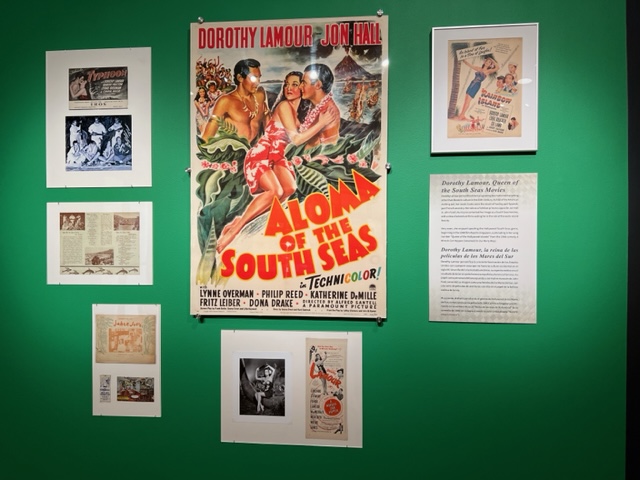
Combined with Tiki Tales, viewers will find an absolute treasure trove of art and history, as the museum continues to live up to its name with deep dives into island life and vibrant, intelligent art exhibitions.
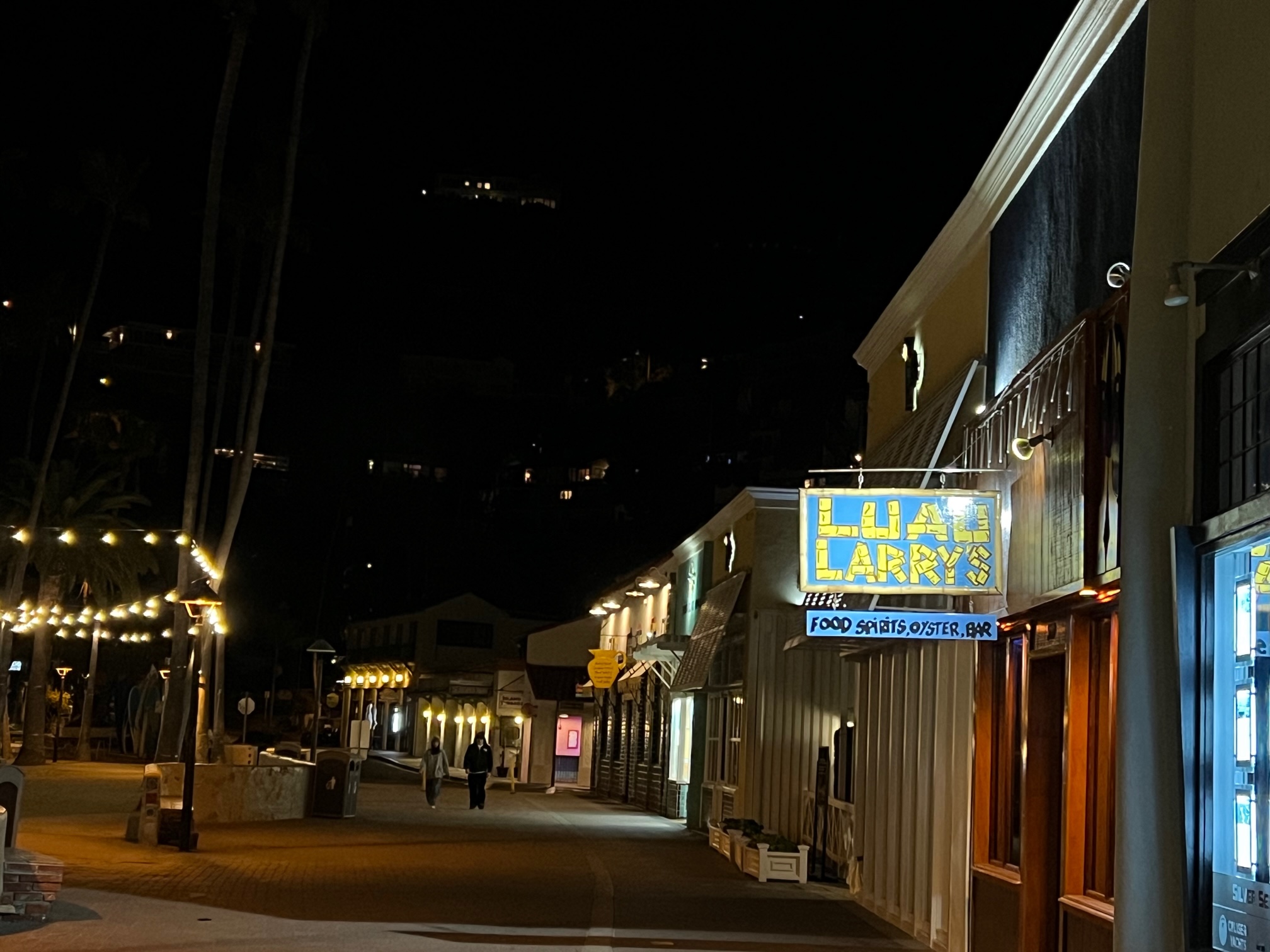
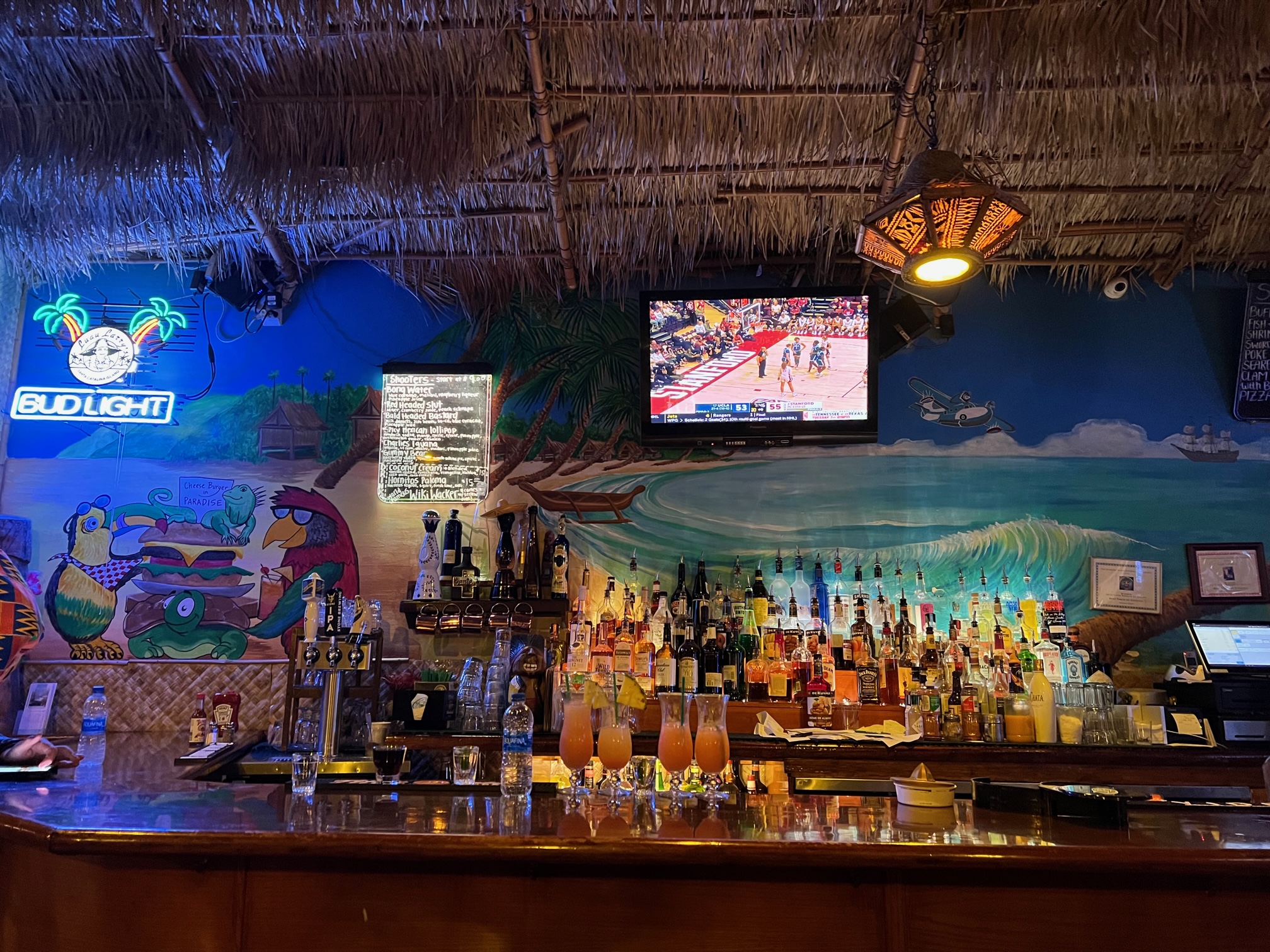
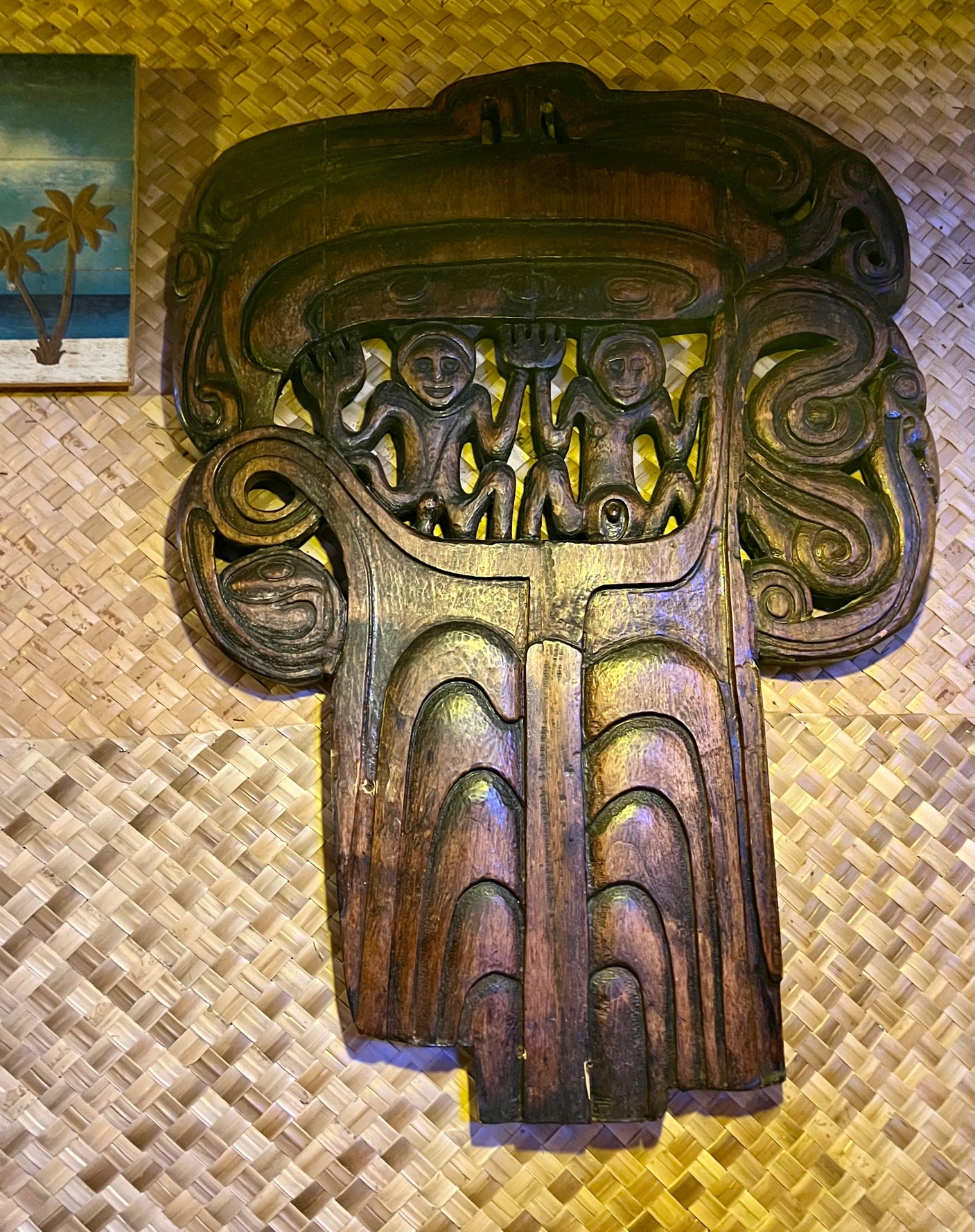
And, if Tiki Tales made you thirsty or hungry, there’s a quick solution for that. Walk on down Crescent street to Luau Larry’s. The indoor  thatched roof hut and bamboo walls and delightfully kitschy ocean-themed paintings and murals here are even joined by an historic tiki wood carving, hanging above the booth we choose to sit in, a happy coincidence.
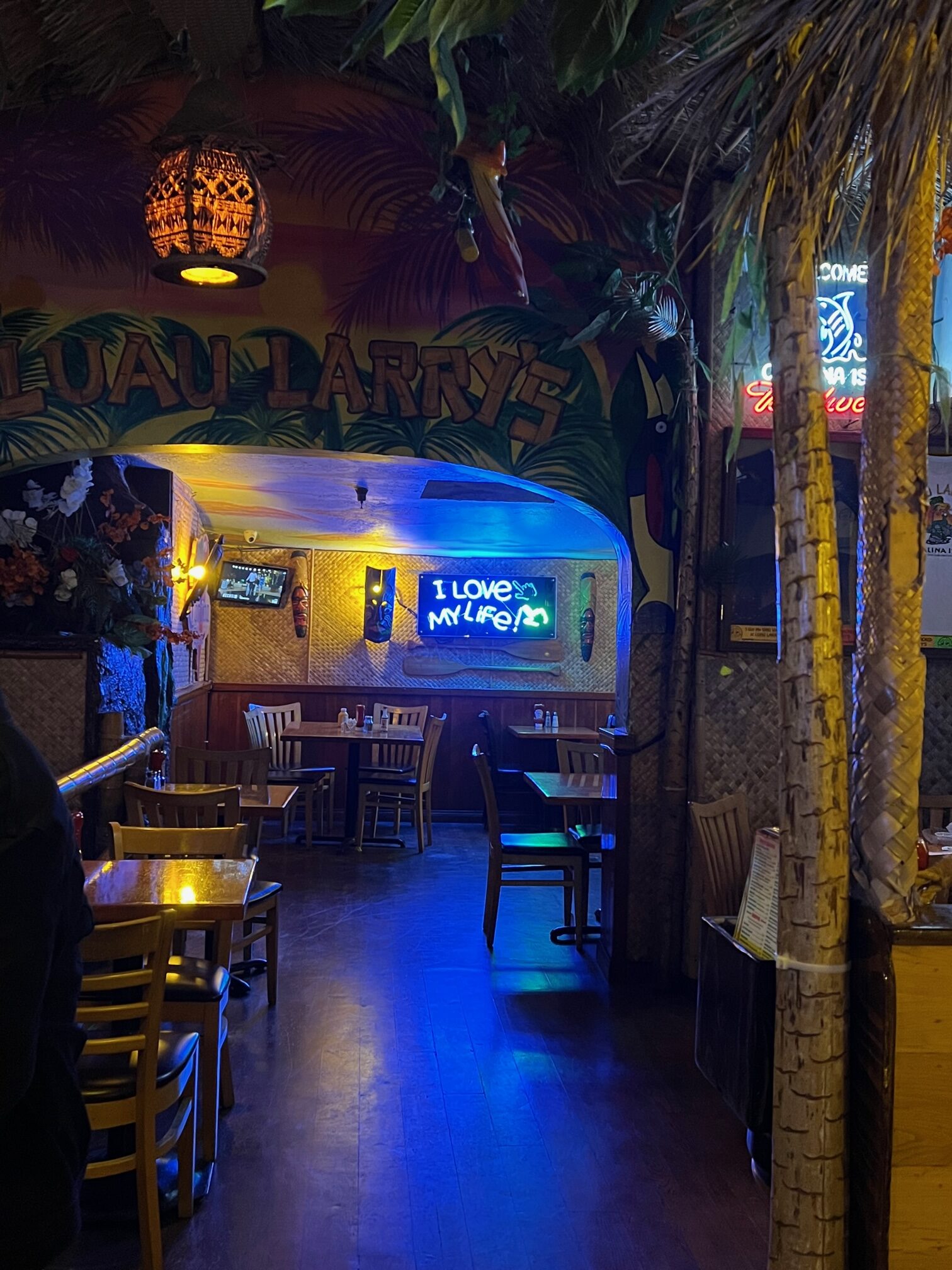
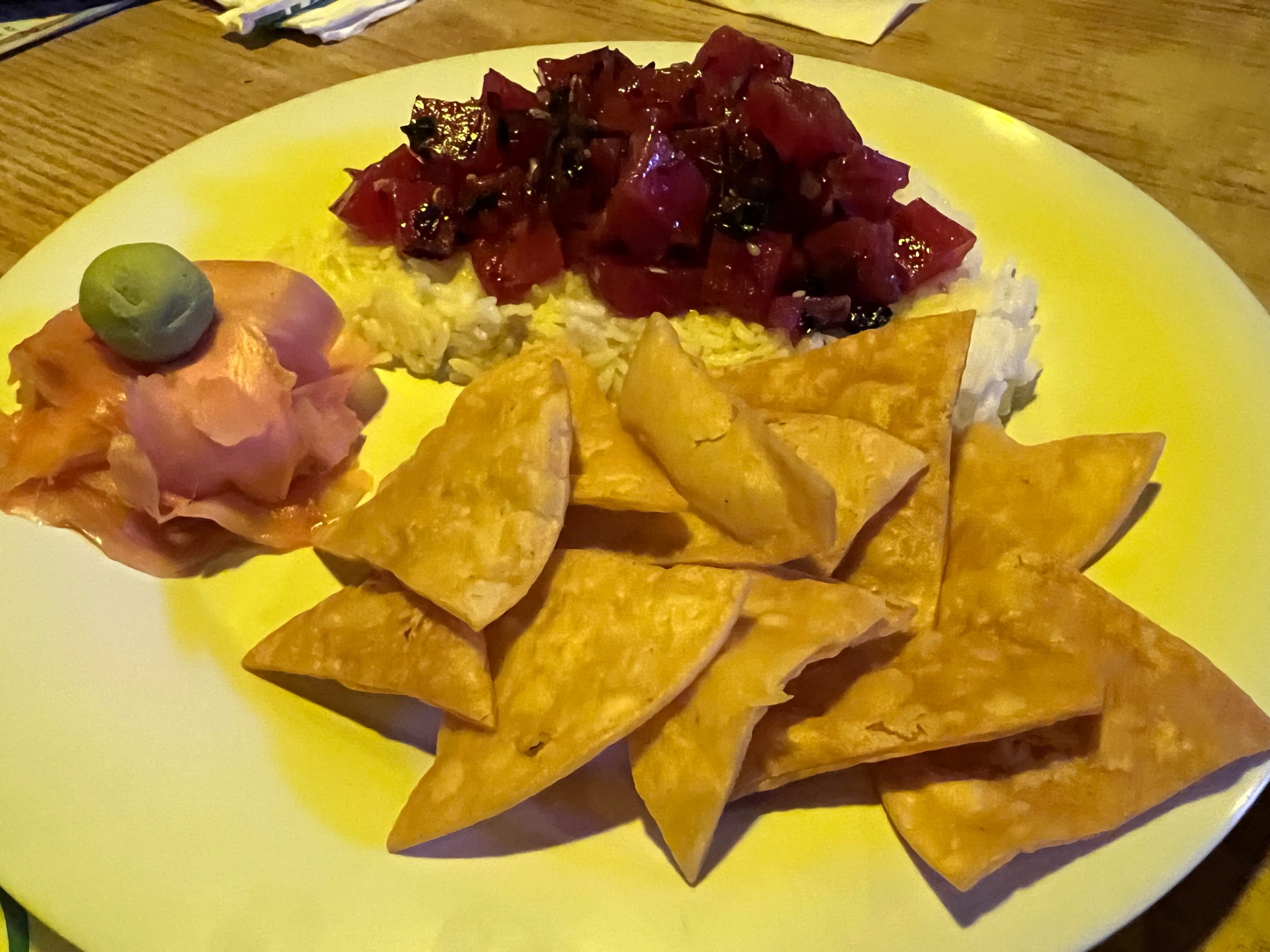
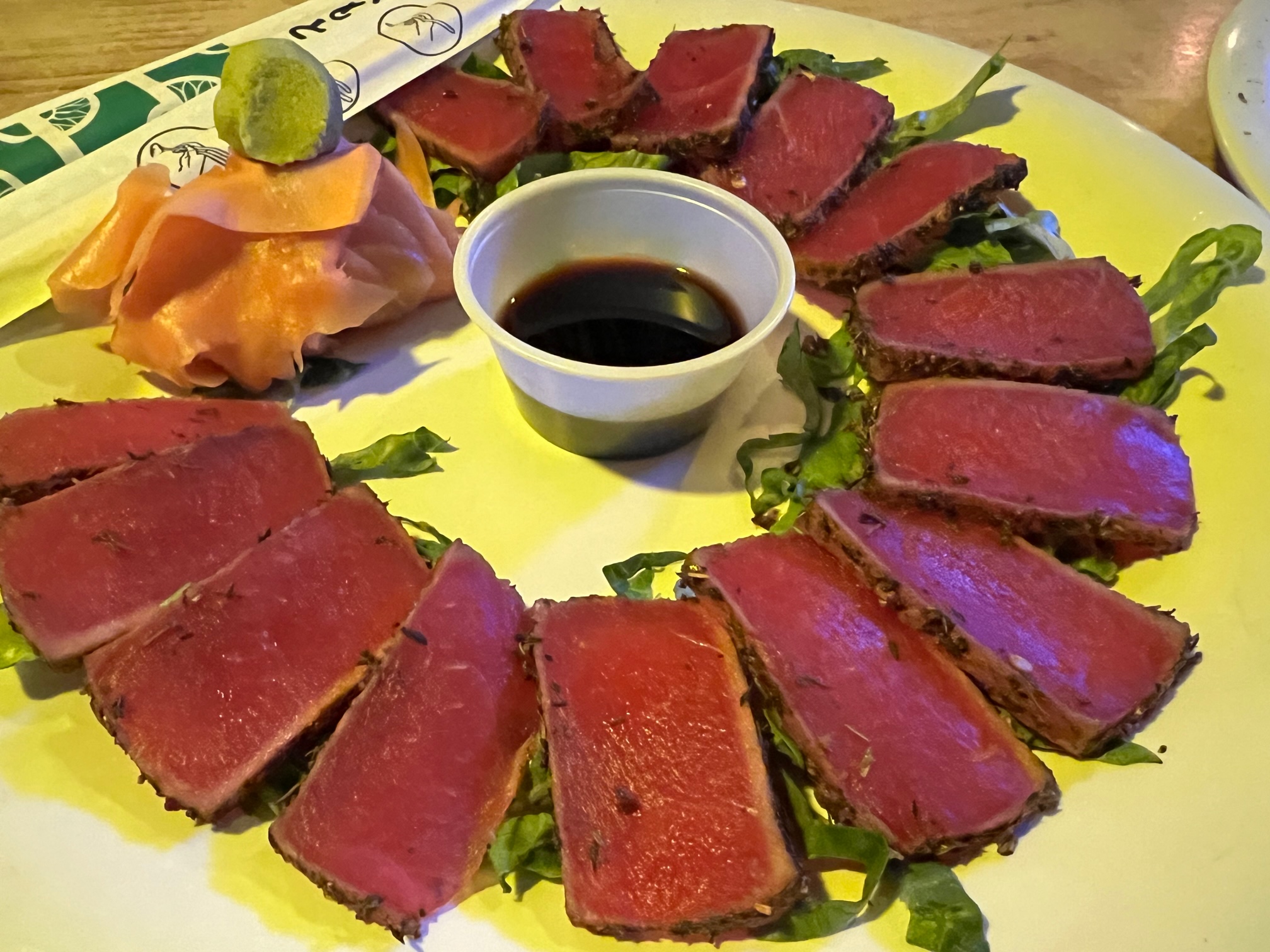
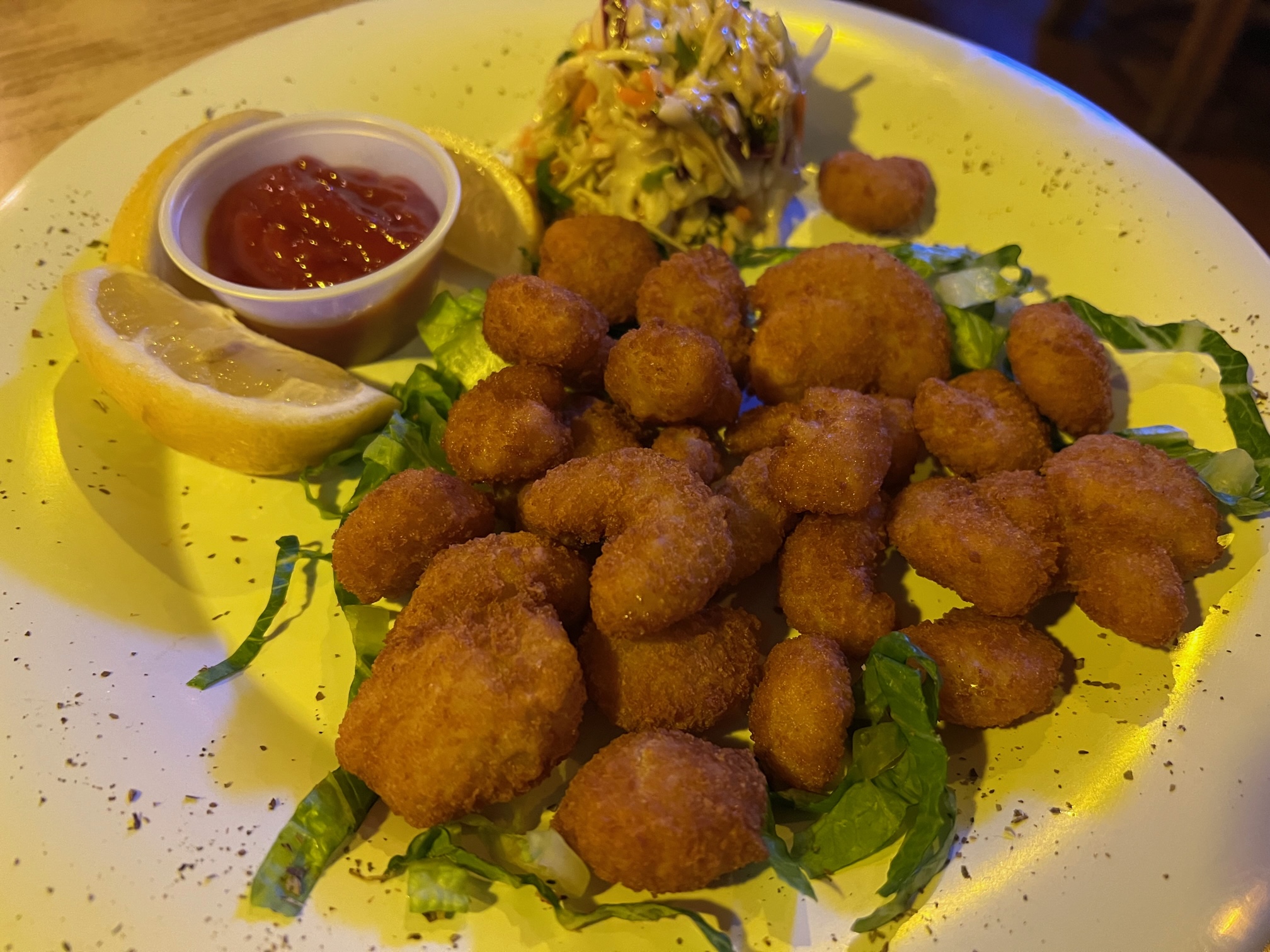
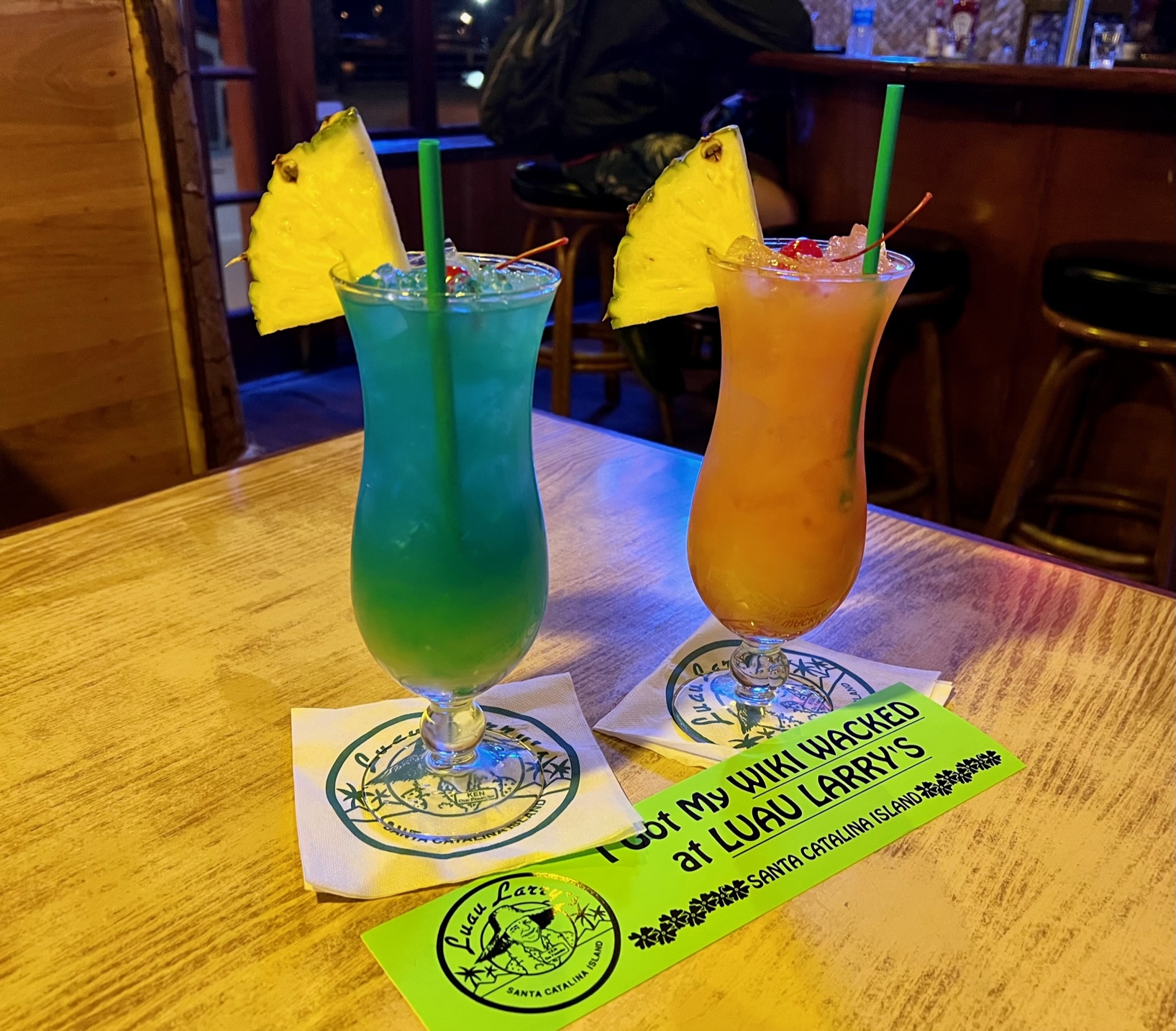
We enjoyed  vibrantly colored Polynesian- style cocktails – a bright Blue Hawaiian and the bar’s signature tiki drink, a Wiki Wacker with Cruzan aged light rum, Parrott brand, pineapple/orange juice and grenadine. The latter comes with imbibers’ choice of straw hat or bumper sticker. The food was fine too –  fresh, savory popcorn scallops and shrimp, a well-seasoned, fresh poke, and a first-rate seared ahi platter served with ginger, wasabi, soy sauce, and a nicely sweet, crisp cole slaw.
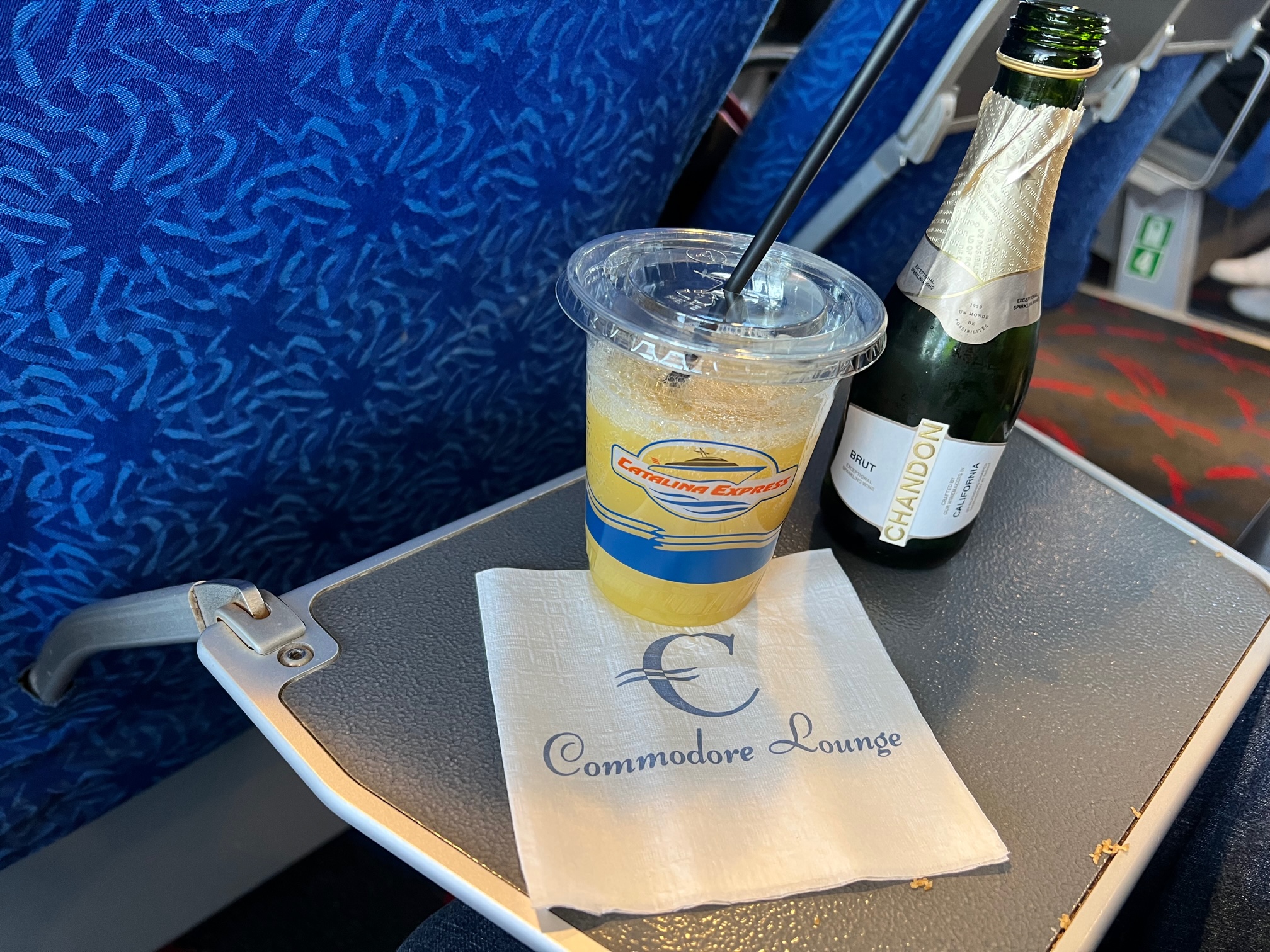
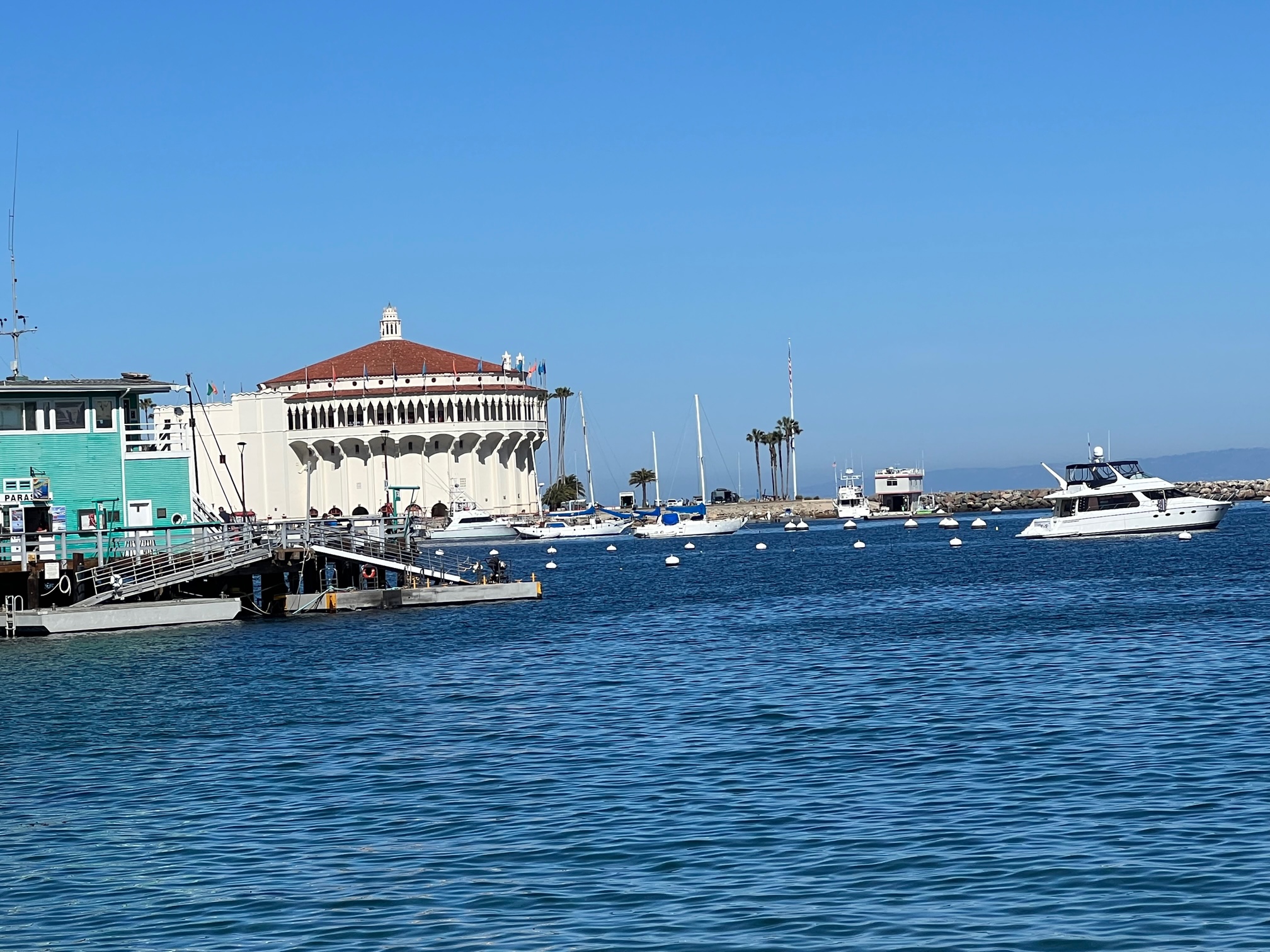
Currently, the Catalina Island Company is offering a terrific getaway – the Tall Tiki Tales package, that combines a hotel stay at the beautifully updated Hotel Atwater and a boat ride to Catalina – we had the pleasure of traveling from Long Beach via Catalina Express,  a safe, swift, and beautiful passage across the blue Pacific, arriving with a great view of the historic Casino building upon arrival in Avalon Harbor. We experienced the journey two ways – indoors in the comfortable Commodore Lounge, replete with a glass of Brut Chandon, and outdoors, with the wind whipping our hair and an eye trained on pelicans on a long flight.

In an upcoming article, our stay at the Hotel Atwater, a look at the in-depth Behind the Scenes casino tour, and additional dining experiences. For now, go experience a few Tiki Tales at the Catalina Museum for Art and History – and then raise a toast to the exhibition at Luau Larry’s.

  • Genie Davis; photos by Genie Davis and provided from the museum’s collection
 

Gina Herrera’s Sculptures Survive War with Art

Artist Gina Herrera has fought many battles in her life, having served a tour of duty in Iraq. But she transforms war into art, as she does with her three new sculptures on display in the exhibition Surviving the Long Wars.


While the triennial itself is just three days in March, the art exhibition will run March 4th to June 4th in the Chicago Cultural Center, Hyde Park Art Center, and the Newberry Library. Surviving the Long Wars focuses on the histories that shape our understanding of warfare as well as visions of peace, healing, and justice.

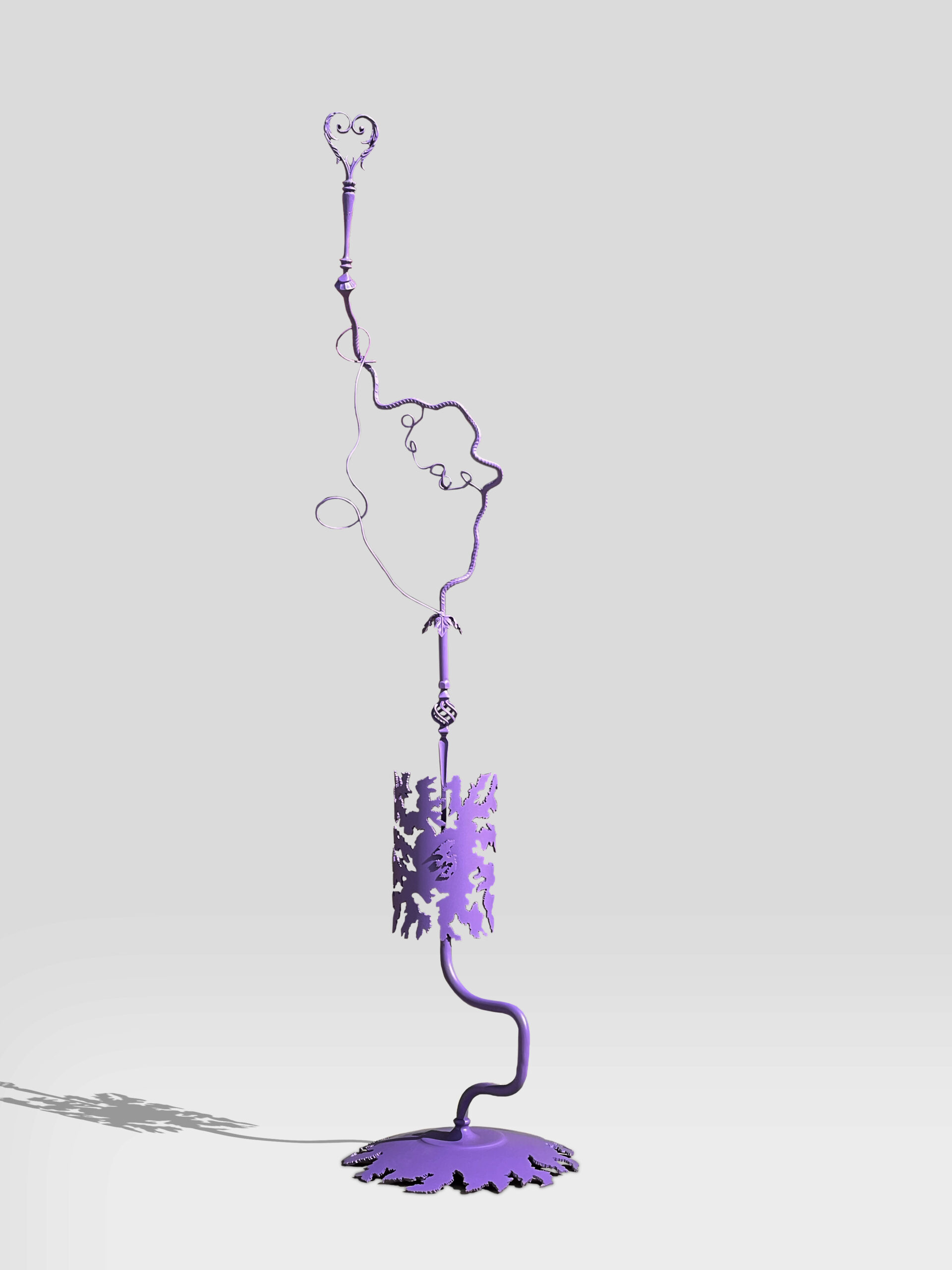
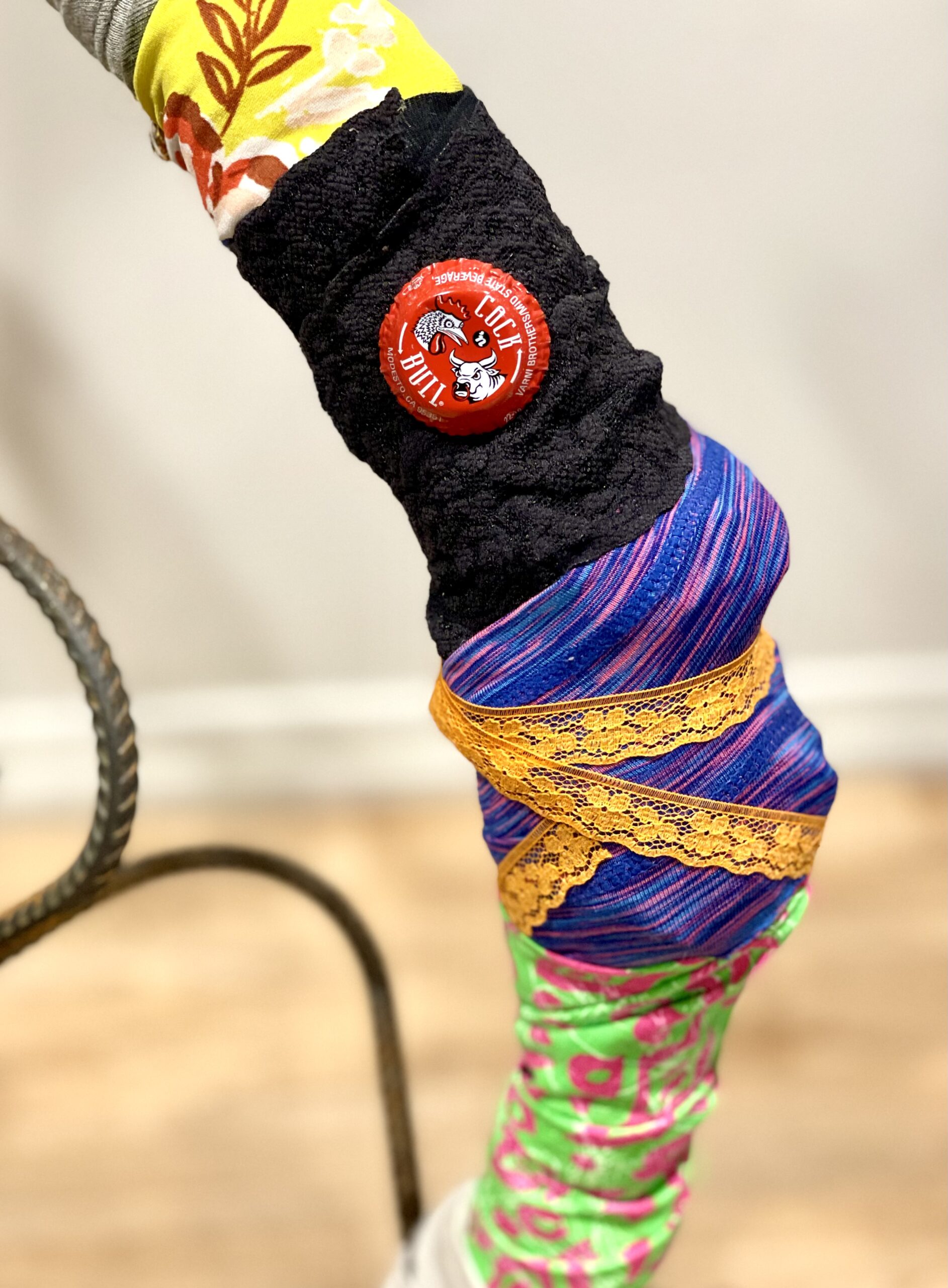
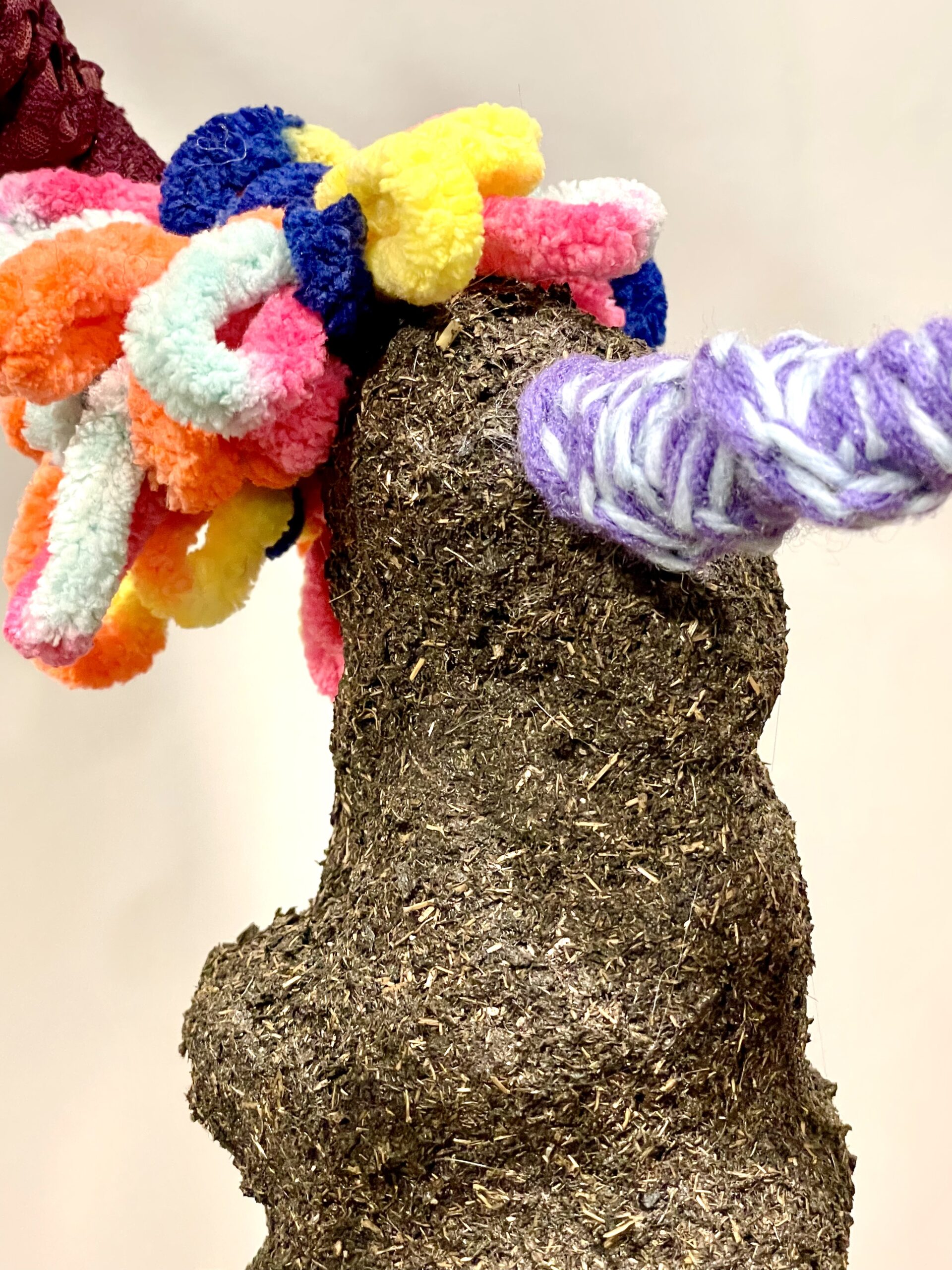
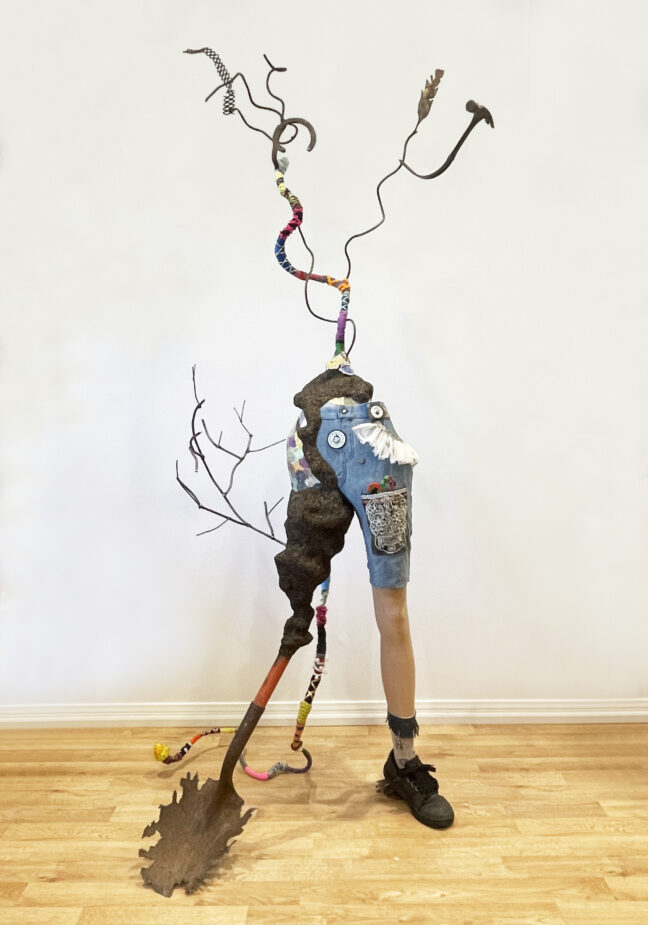
Herrera’s work here is a continuation of her signature sculptural line of metal and found materials. Drawn to using mixed media, she says “We have an abundance of discarded materials we throw away daily. I feel everything has some kind of history or message.” In her piece “The Liberty Master,” above, Herrera creates a beautiful metal work blossoming in vivid color, curling like a flower whose bud is shaped like a heart.

The message of the Chicago exhibition overall is to explore the alternatives to and repercussions from war, and Herrera’s work certainly fits that exploration. Kinetic energy fills every line of her metal work, as if the sculptures were captured and briefly frozen in mid-motion. They also express Herrera’s native ideology and beliefs, envisioned through her consistent art style and practice.


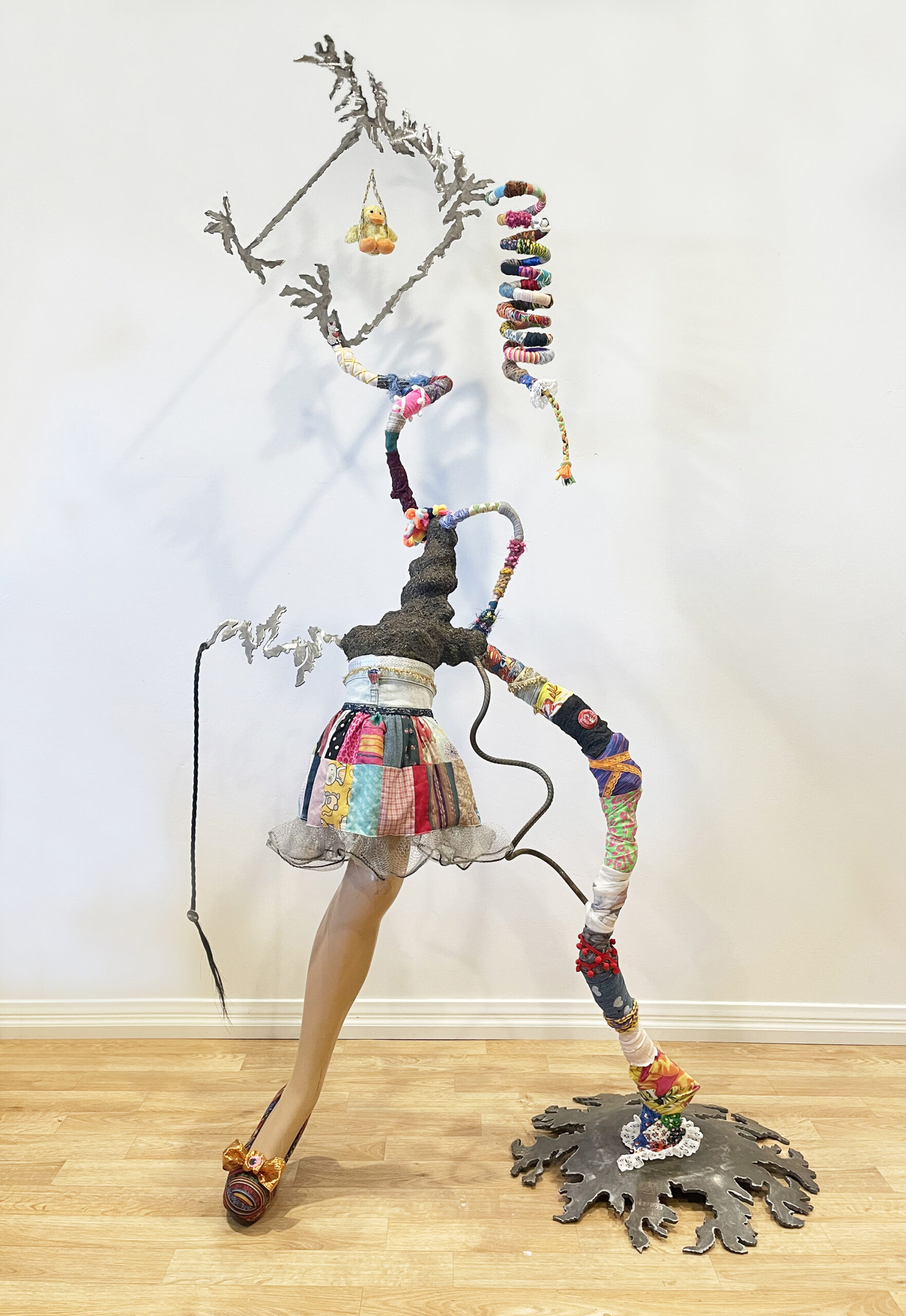
The Whimsical Diva, above

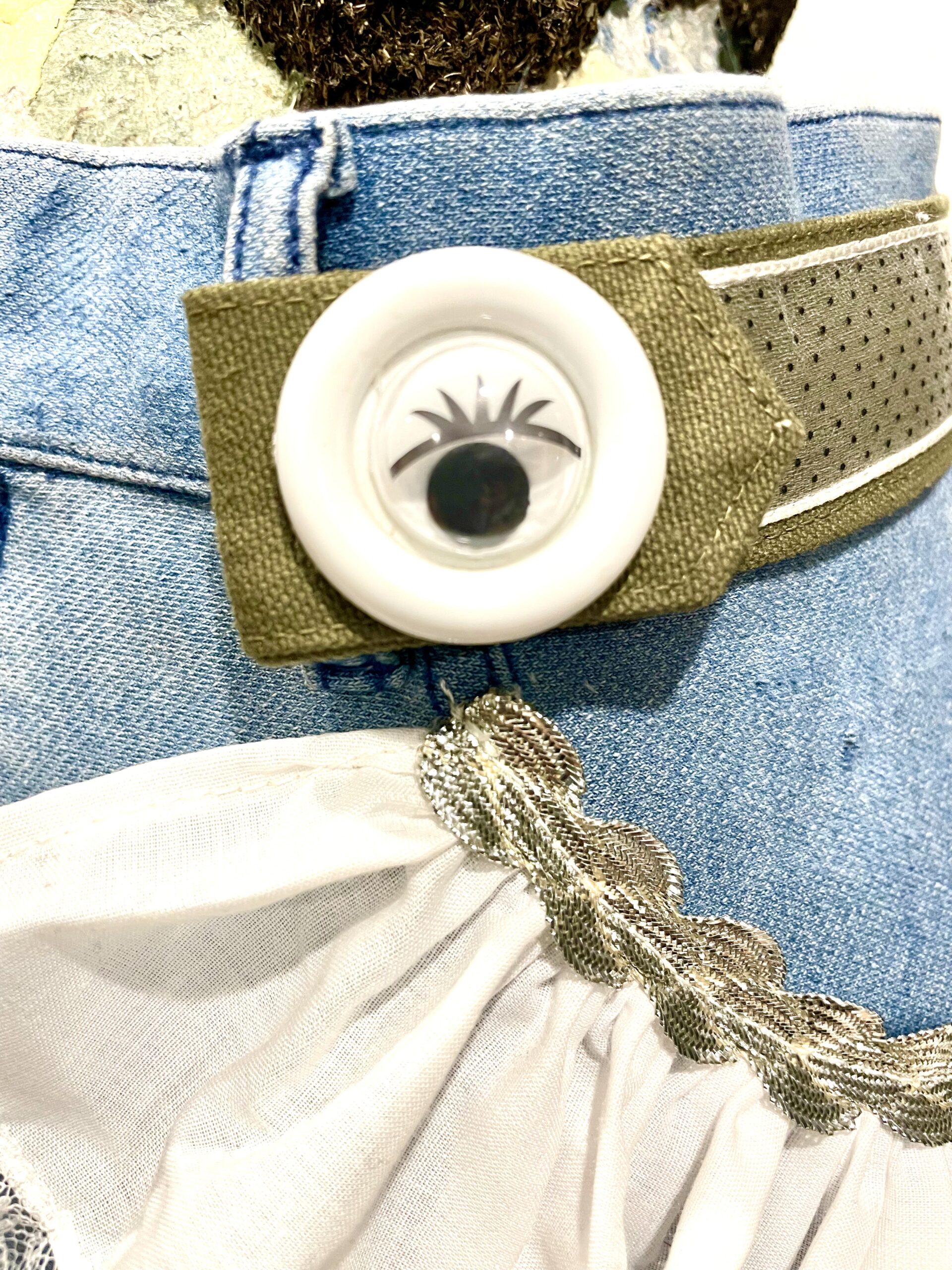
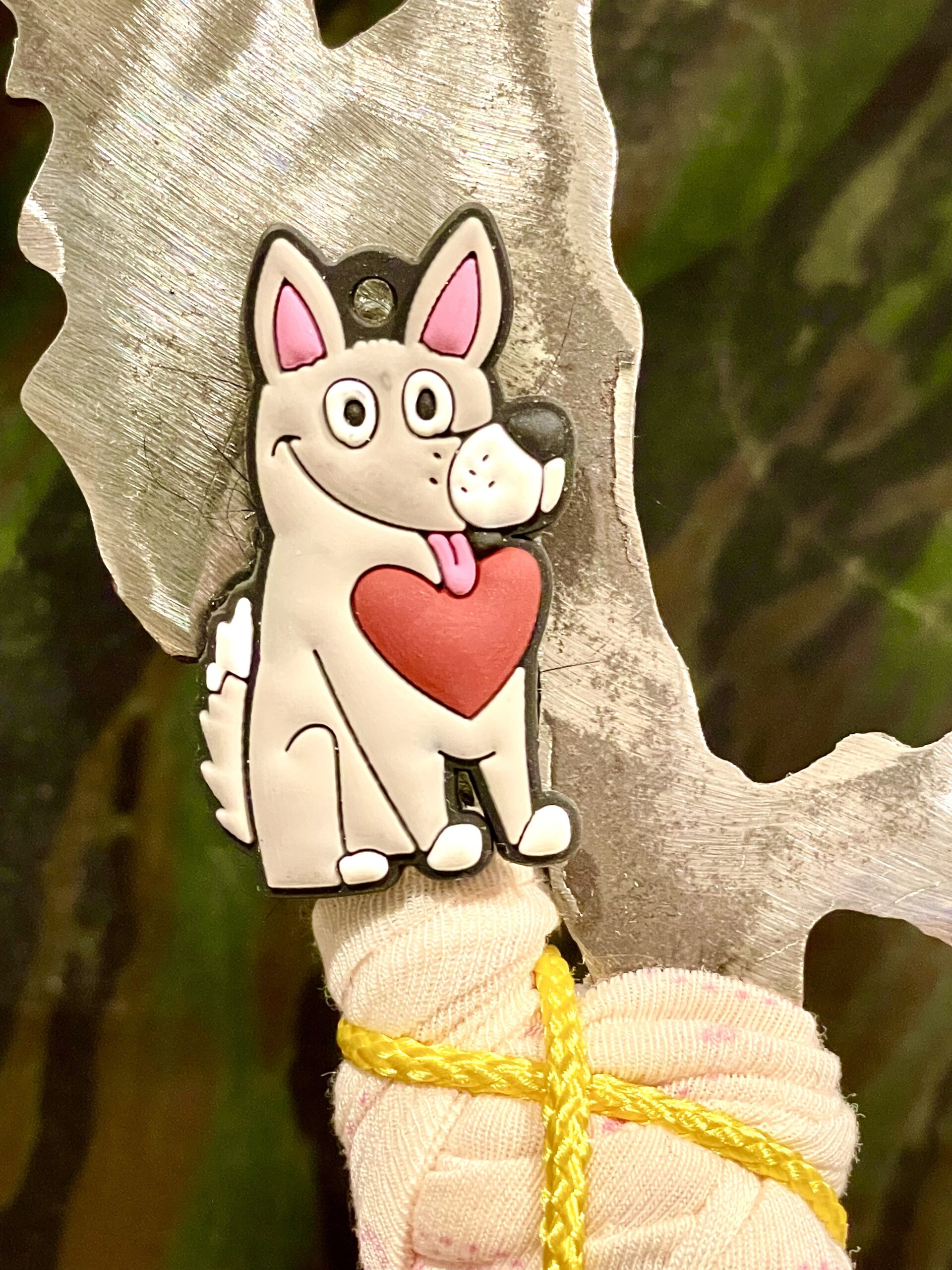
She welds her recycled materials into sinewy, almost hieroglyphic shapes, wrapping them fabric and discarded jewelry and buttons. She goes treasure hunting for society’s discards, transforming them into jubilant, lively creations that encompass a vast array of tossed-aside items, from lost property to plastic bubble wrap. “I look at everything as a possibility,” Herrera says. “We throw so much trash out, plastic stuff, which lands in the oceans, hurting the earth. It’s almost a sin to buy new things.”

Herrera describes found items as having character and energy, and adds that she is “partial to stuffed animals, [there’s a] living entity in them,” yet all the same they’re discarded. She gives used items the “opportunity to have a new life, continue the energy of the item.”

The artist feels that our discard of objects is like the way in which we discard people, and the lack of respect we have both for older, used items and our own elders. “Once you get to a certain age, you are useless, a burden to society.” This attitude discounts knowledge, including oracle language, and native culture, which is then forgotten, Herrera attests. “People don’t have a desire to look into their own history, [they] want to avoid history.”

As a Native American artist, she takes her current Native experience and uses that to make “commentary on the planet and future. We are still very contemporary, we are still fighting for the land, the soil, the earth.”  Thematically, Herrera work with time, the past, present, and future, and a connection to the earth.

 

A Virtuous Warrior, above

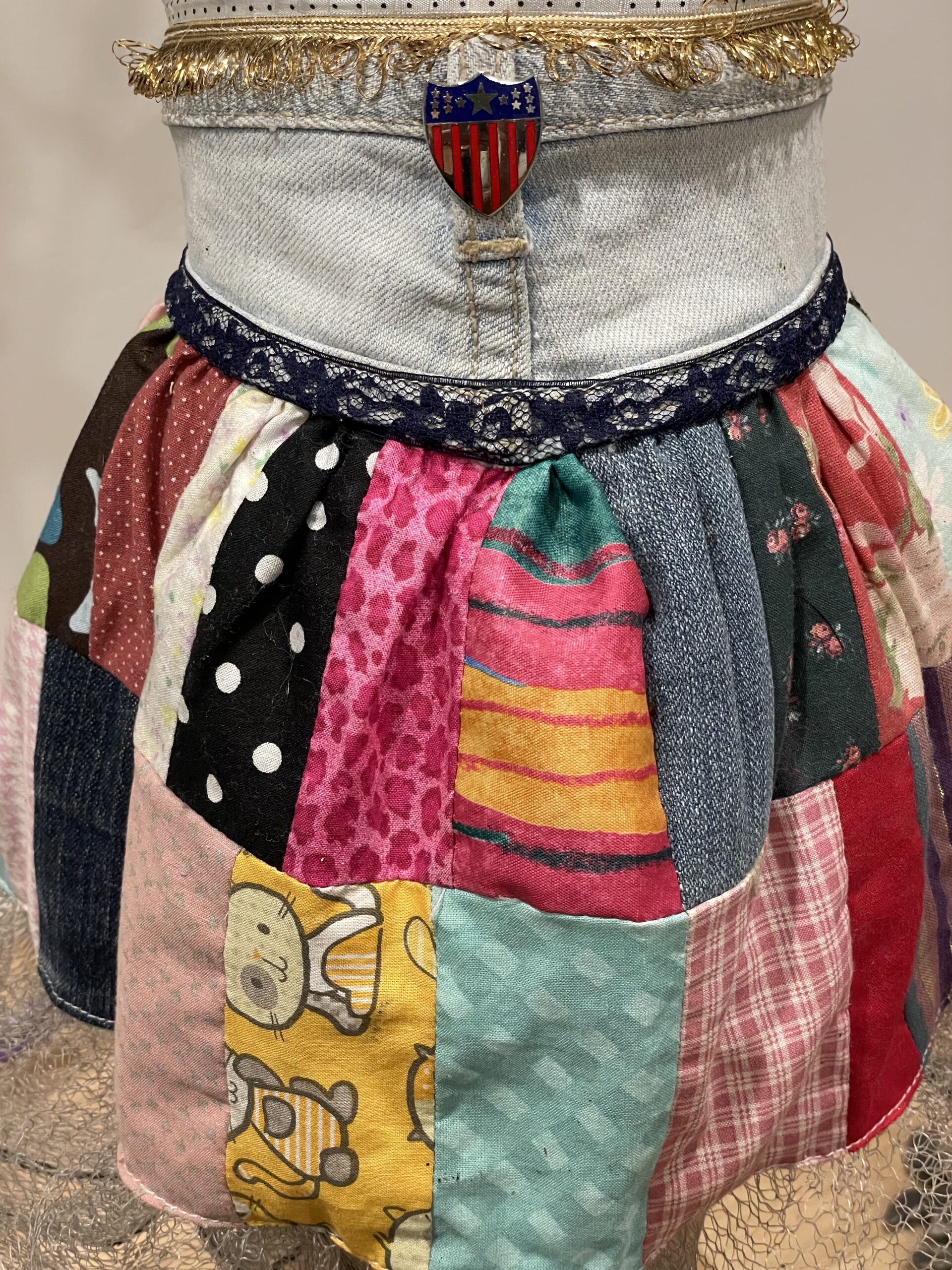
For the three sculptures the artist is displaying at the Chicago exhibition, she wanted to make sculptures with mannequin parts, and found a mannequin for use at a flea market.

“I want my viewers to think about the sacrifices that the U.S. armed forces have endured to uphold democracy. Maybe I subconsciously decided to use a mannequin [to] represent the masses of veterans who returned back home without limbs,” Herrera says. She also wants viewers to consider how fortunate they are to live in a country where they’re not afraid of losing their lives. “Many people in this country take for granted all the privileges we have…. How can anyone who served this country want to overthrow democracy?” She notes, “We…uphold the values and sacrifices of their brothers and sisters before them. This is the reason why we stand at attention when we are raising and lowering the flag.”

Along with a strong belief in upholding these freedoms, Herrera seeks to present, through her art, a focus on Native American history and its role in the present, for contemporary artists.  Her art presents the issue of discarding items, and infiltrating “our land, rivers, oceans, sea, forest, mountains, and air with our negligent behavior. We take and destroy our world but never give back with respect to all the gifts of Mother Earth.”

Herrera’s use of color and form is visceral, created through what she terms as a “very intuitive” process. “I do not pre-plan… I let the items or materials speak to me. As I am wrapping yarn, string, underwear, or fabric, I am conscious of my materials and do my best to use different patterns, textures, [and] materials so there is no repetition. I want each sculpture to look different from one another, to have their own identity and feeling,” she explains. “I go with the flow and make it a playtime – like when I was a child. I like to create voices, especially if I am using toys or stuffed animals, as I feel they still have a soul.”

Herrera’s sculptural approach is rooted in what she describes as “the aesthetics of the everyday.” Having served 25 years in the Armed Forces, she experienced, amid the devastation of combat, “the global impact of the systematic destruction of the planet…the long-term effects of conflict/war, including the exploitative, unsustainable, careless discarding of trash by the United States Military.”
These experiences led her to question her own artistic practices, and the desire to lessen her environmental impact. Beginning by photographing “the vastness of neglected detritus that could be seen for miles,” she soon extended her art practice to the creation of her 3- dimensional forms, using discarded objects and natural resources.
Serving both as a powerful response to the military industrial complex and the often-careless approach to the environment embedded in American life, Herrera infuses her work with the spiritual, the historic, and a uniquely bold vision. Her sculptures are both a call to action, to respect the past, and the gift of motion and mobility, while also offering a rich insight into the poignance and necessity of freedom and reinvention.
  • Genie Davis; photos provided by the artist

Crossing Waters Takes Viewers on a Luminous Journey
Crossing Waters: Contemporary Tongva Artists Carrying Pimugna, now at the Catalina Museum for Art and History in Avalon, is an exhibition filled with awe and wonder, exploring a rich cultural heritage too long unseen.

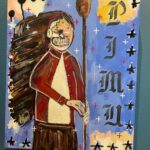
The art is a beautiful expression of the placement and interconnectedness of Pimugna, and its relationship to the greater world of Tovaangar and its people, the Tongva, as viewed through the alchemic lens of three contemporary Tongva artists.

First some background: Tovaangar is the Tongva name for whole or middle world – land, water, and the Original People. That world includes the Southern Channel Islands, including the island of Pimugna, often shortened to Pimu, or as you may commonly know it, Catalina Island. The islands, separated by the sea from each other and from the mainland are yet connected to both through paths on the water, with the underlying message being that the world and its people exist, and are still here.

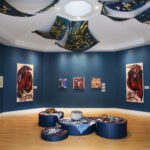
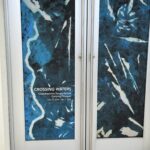
The art in this exhibition has a rich palette of blues, reds, blacks, and browns. The walls themselves are painted blue, allowing a sense of immersion to occur almost immediately. It is as if one has taken a dive into the deep blue sea of the Tovaangar. The exhibiting three artists, Weshoyot Alvitre, Mercedes Dorame, and River Garza have created a stellar beginning to a partnership between the Catalina Museum of Art and History and the Tongva Community, recognizing the Tongva people as the first islanders of Santa Catalina. Creating the exhibit, under the auspices of the museum’s deputy director and chief curator Johnny Sampson, the artists had not worked together previously, but have nonetheless formed a cohesive, and highly spiritual body of work that dances with light and magic.

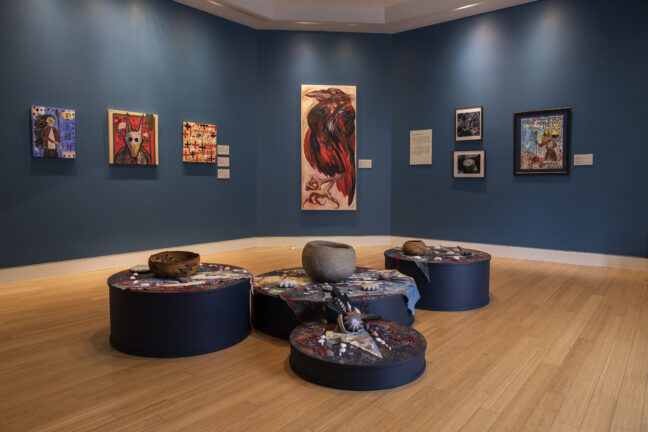
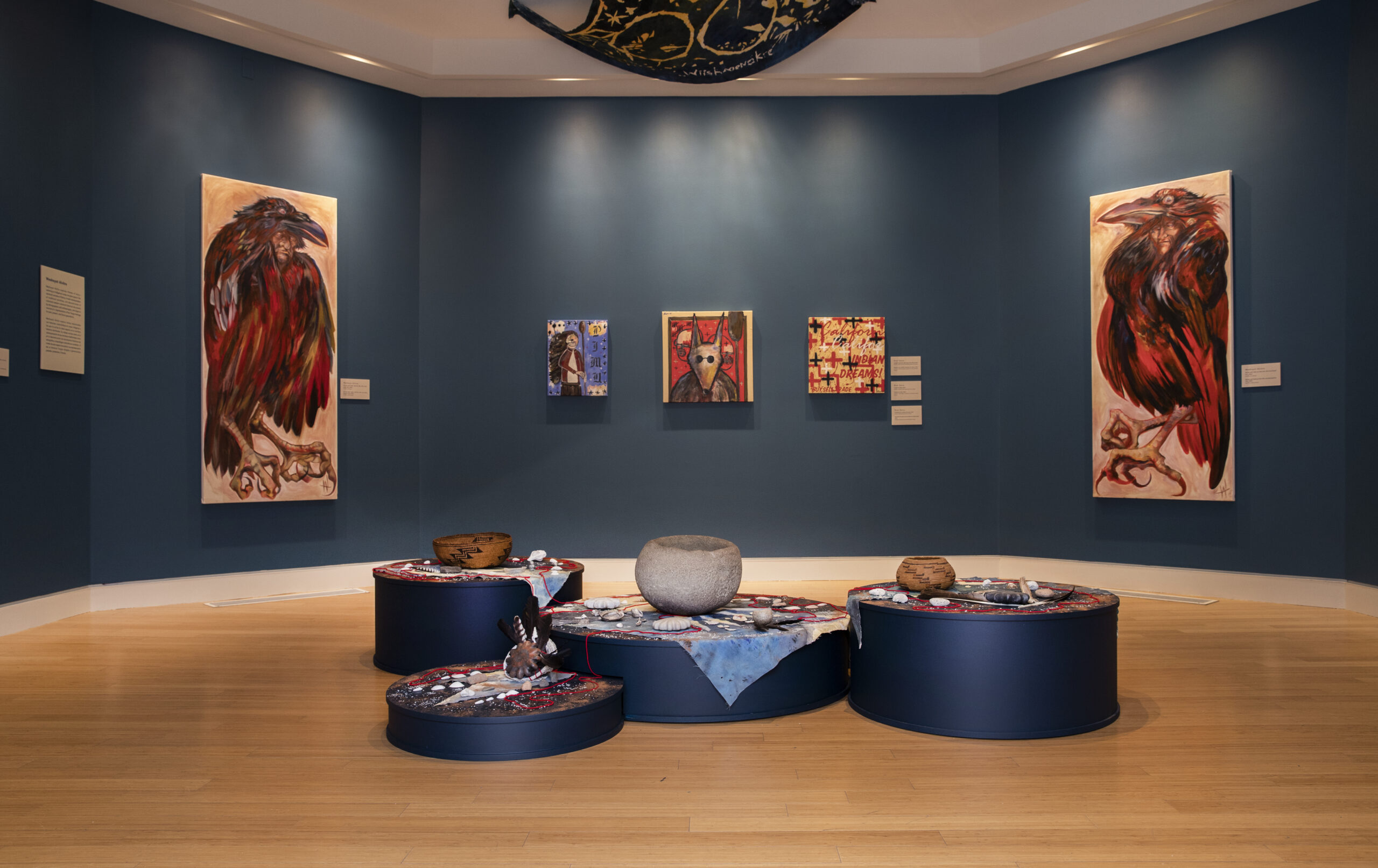
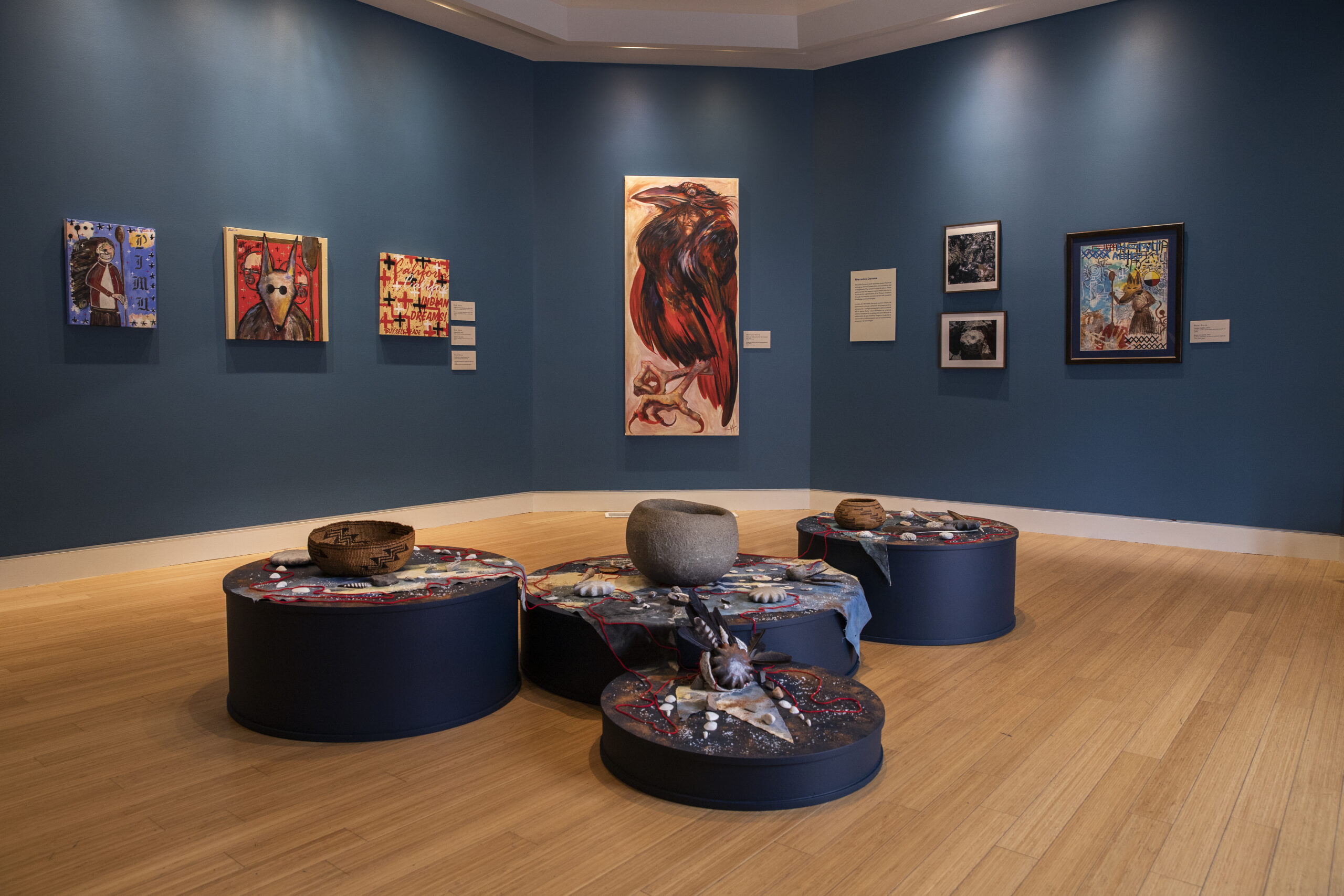
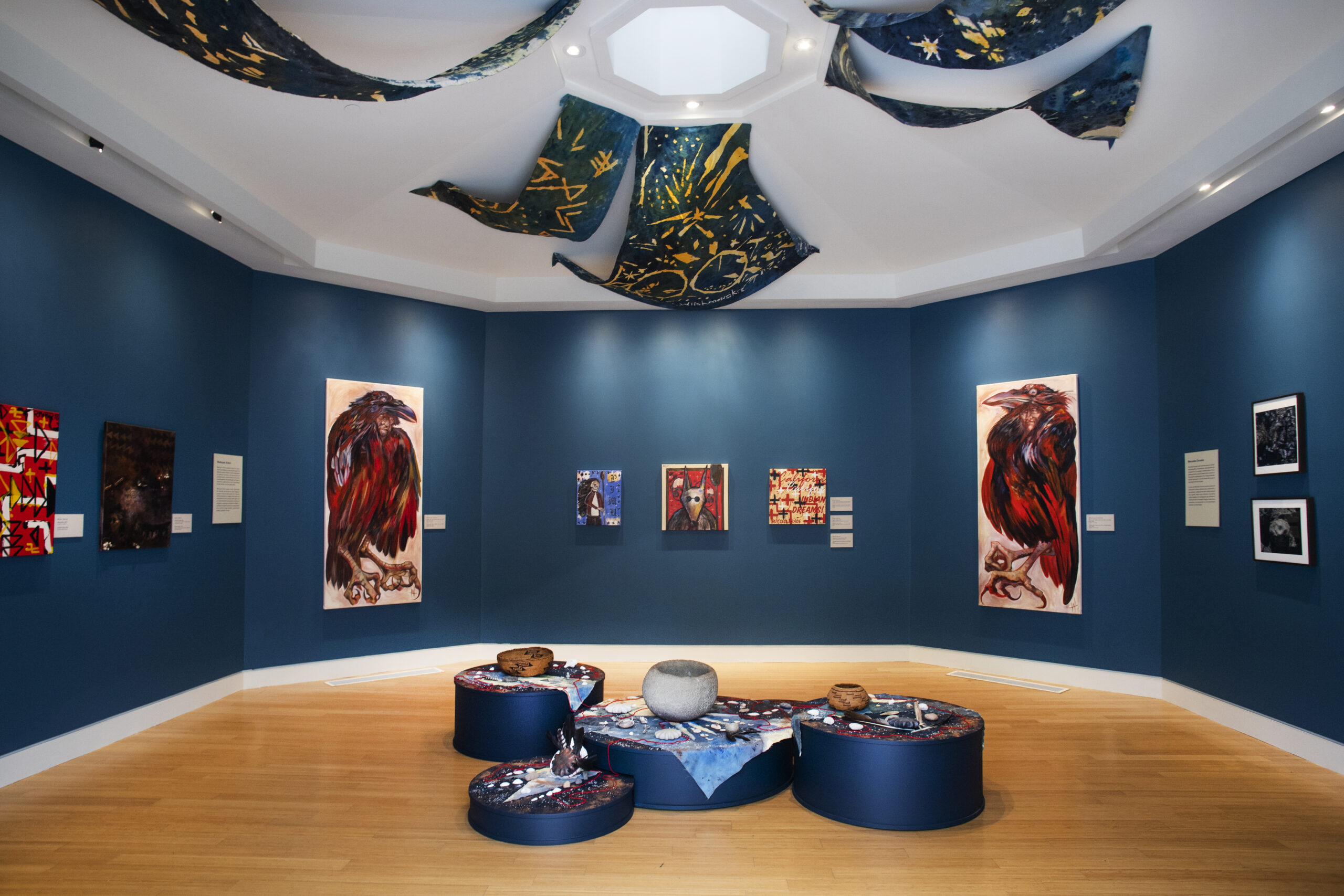
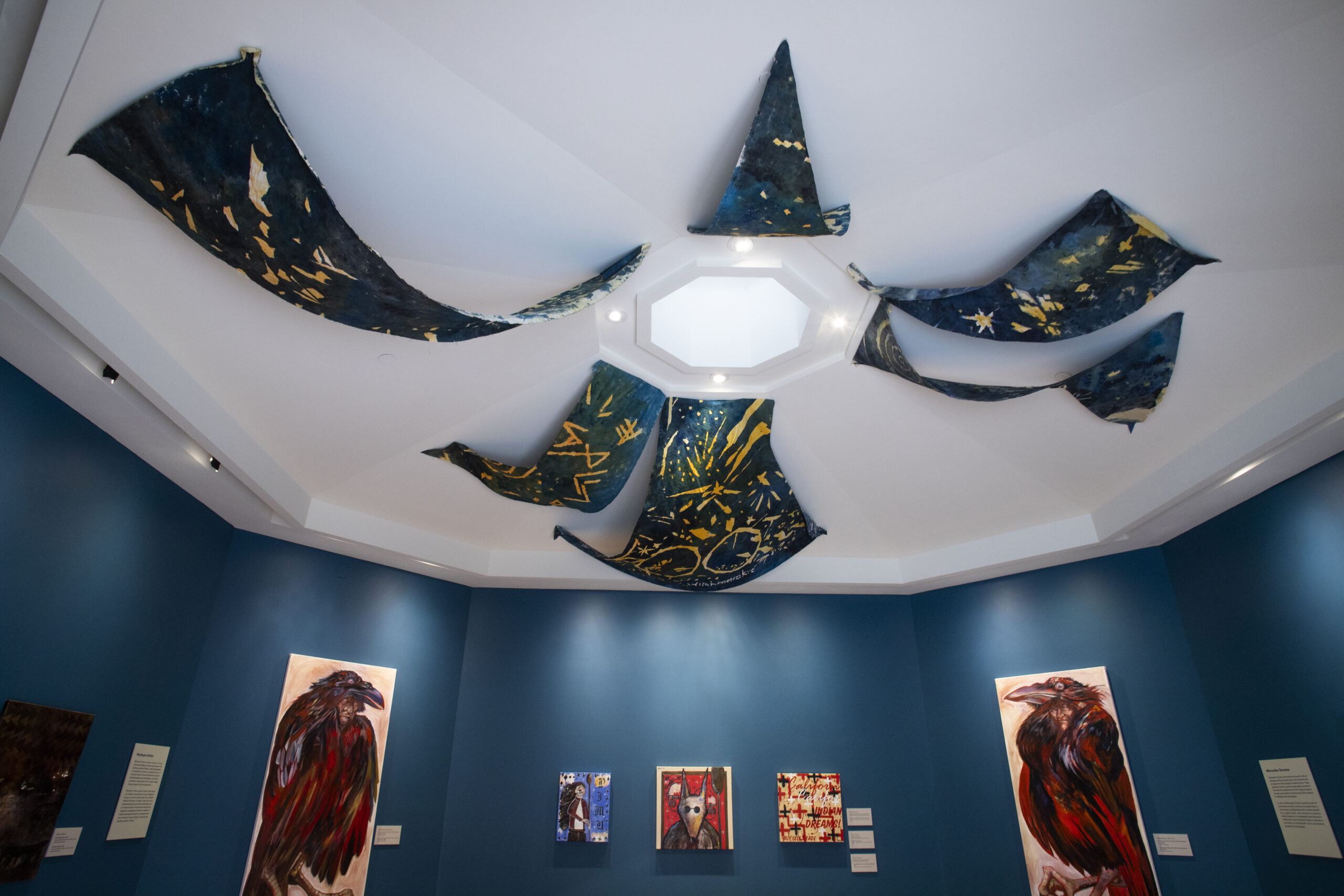
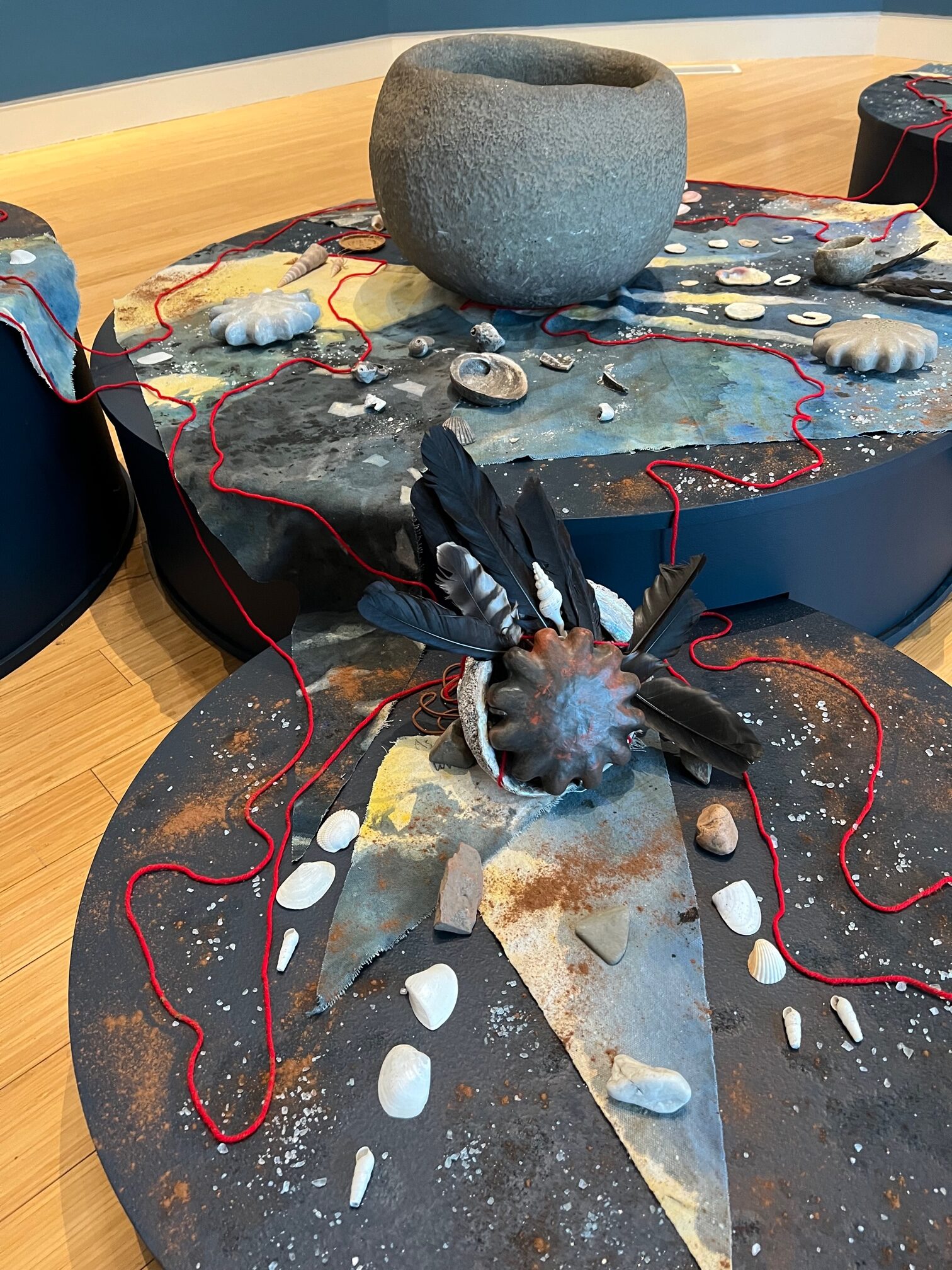
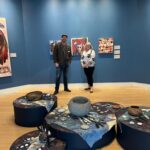
In the center of the semi-circular exhibition space, Dorame’s site specific installation “We Dance Across the Water – Yakeenaxre Naamkomokre Paar, 2022,” grabs the viewer’s attention upon entering the gallery space.

The installation rests on a series of six platforms that seem to hover above the floor. On the ceiling above it, surrounding a small skylight with a view of the clouds and sky, are a series of acrylic on canvas paintings that depict stars, islands, and other petroglyph-like patterns. They are suspended so that they billow outward, like sails on the ships carrying the Original People between the islands.

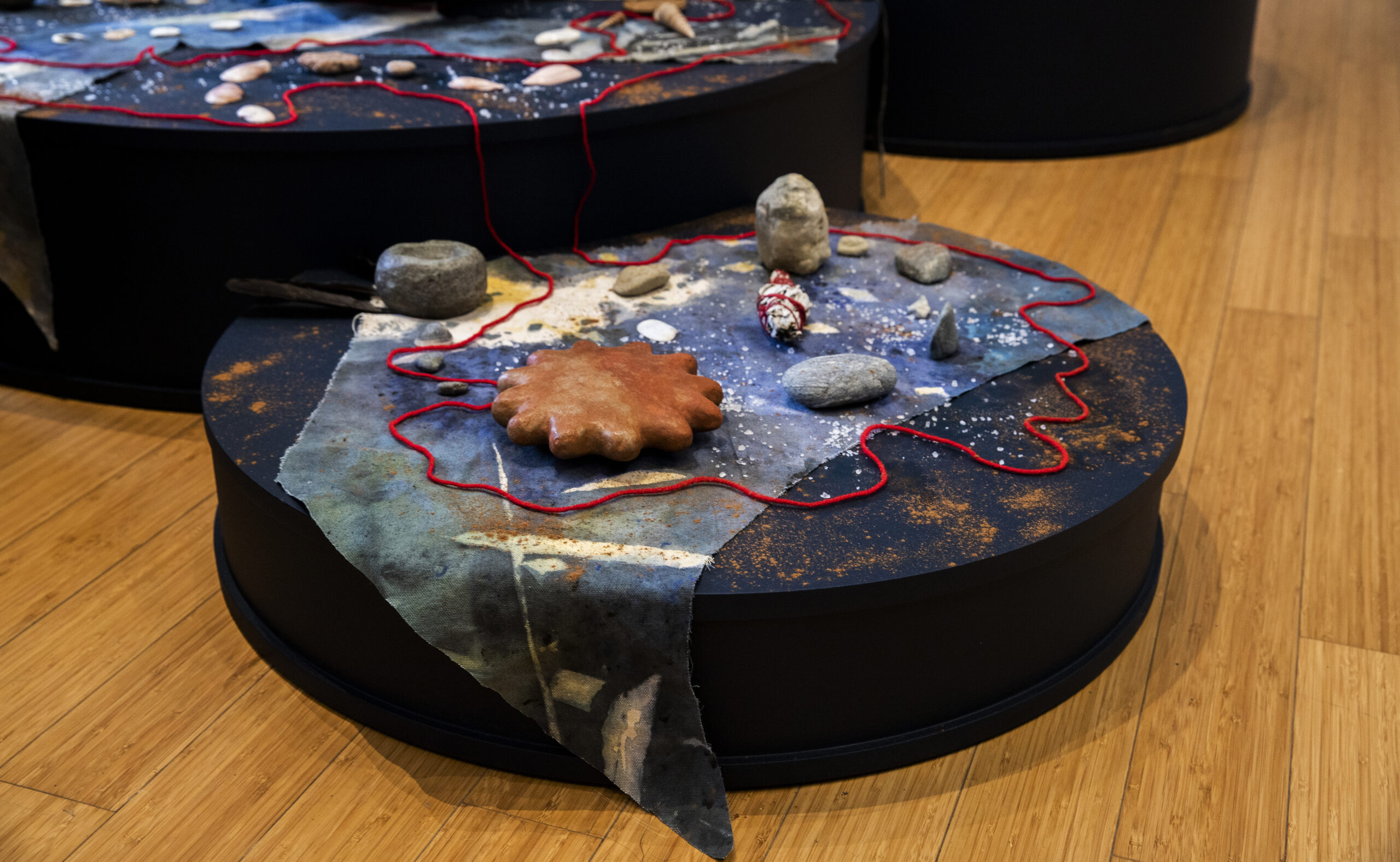
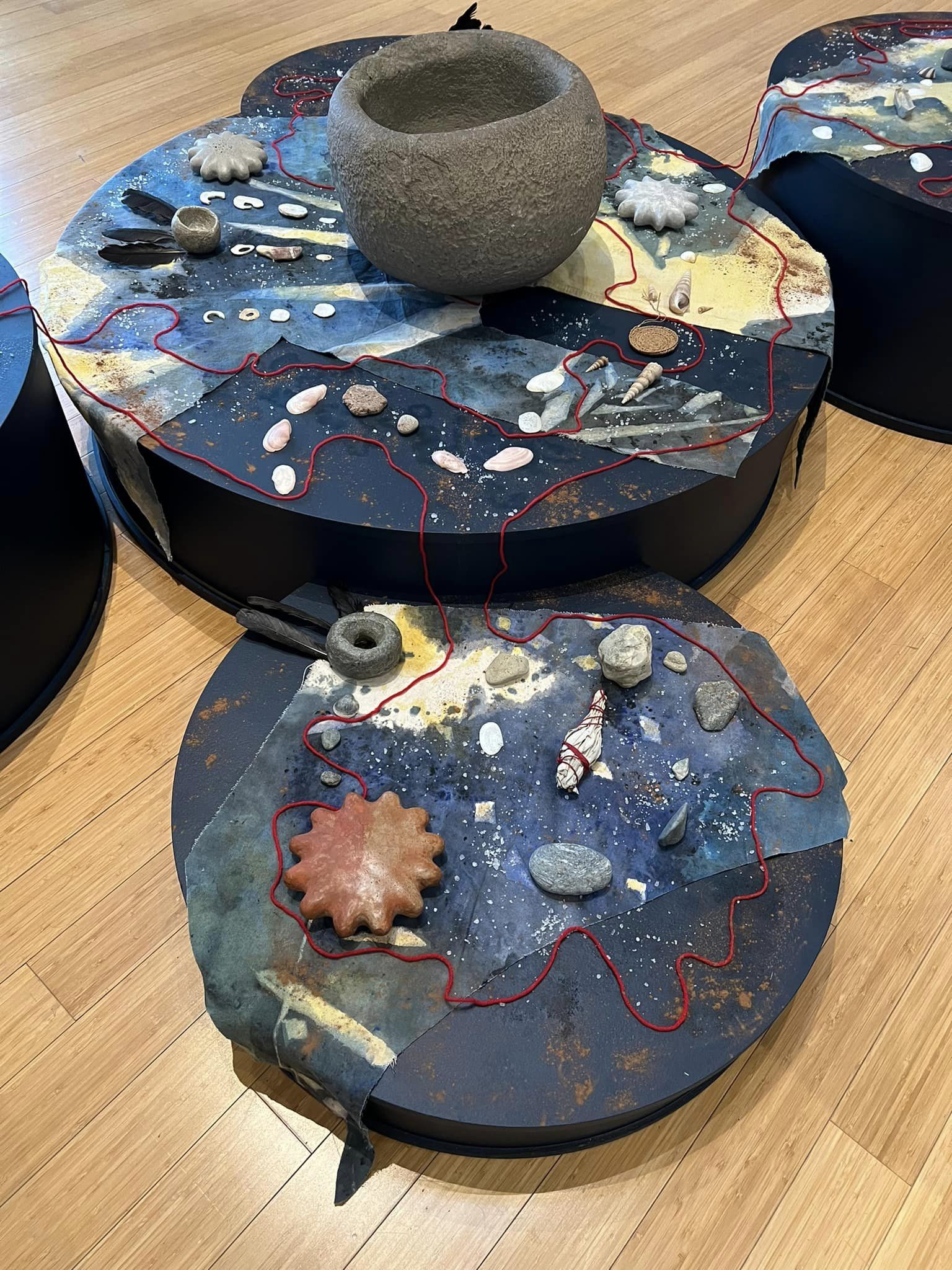
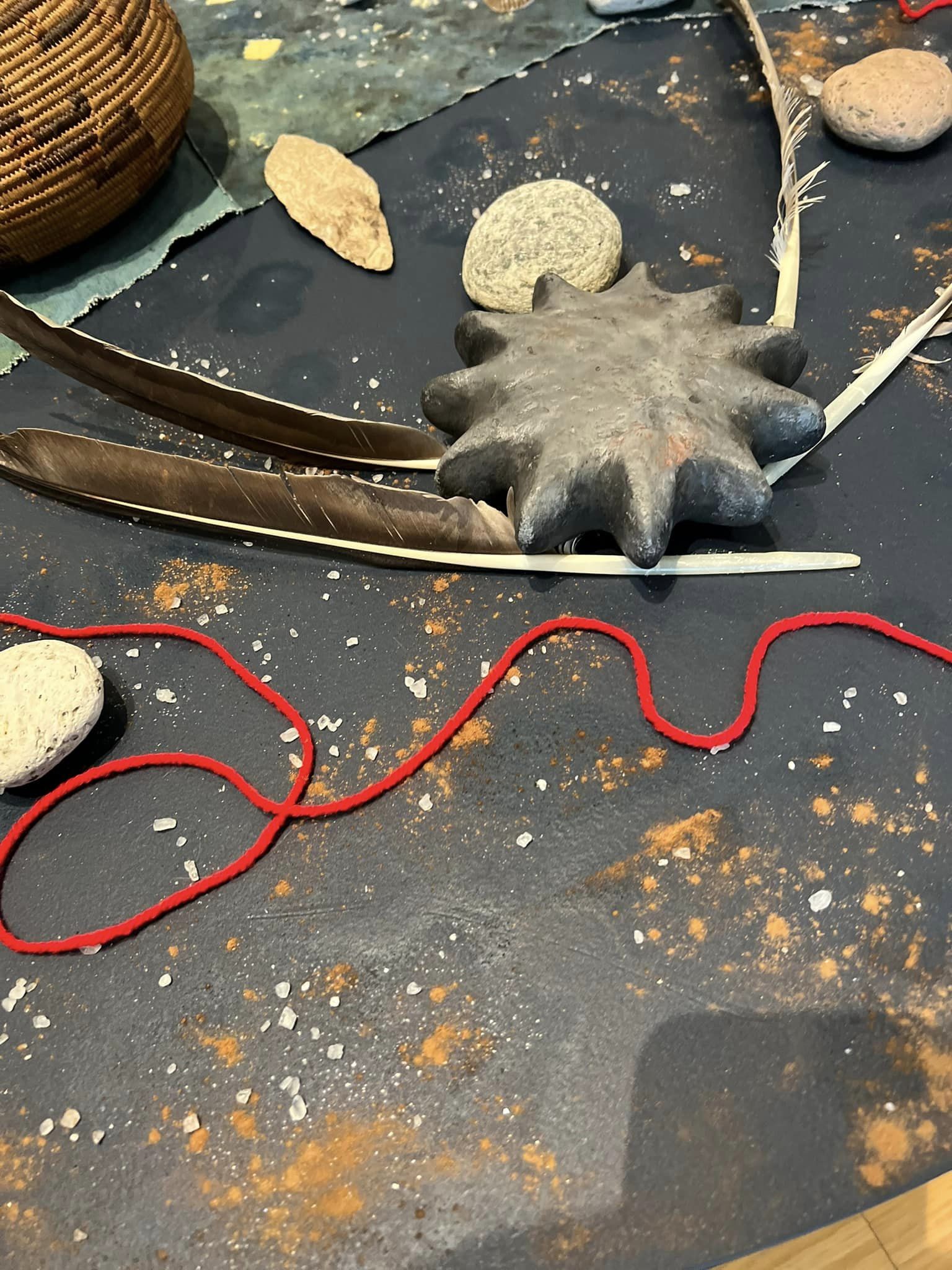
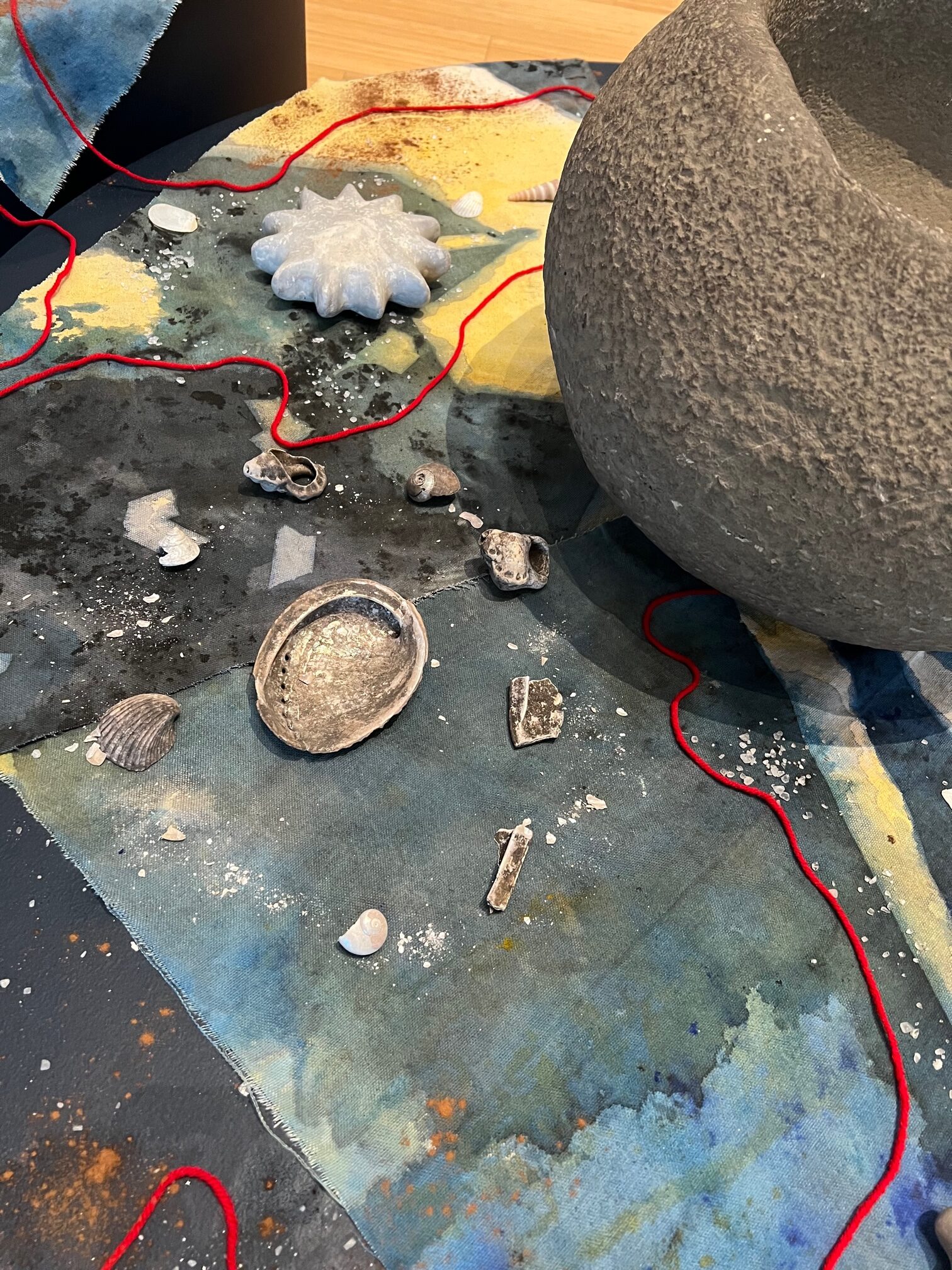
Sections of the same canvas materials, with less specific patterns, are spread across the low platforms aligned on the floor. On these platforms rest a variety of beautiful objects, as well as cinnamon – standing in as a substitute for the ochre with which the Tongva people created art works in earlier times; salt crystals – which are allowed to congeal and come apart again, forming new crystal patterns, and which here remind the viewer of fallen stars or snow flakes; and patterns created in red thread that serve as maps connecting the world of the past with today’s world.


There are also feathers, shells, stones, and a series of steatite carved objects from the museum’s collection, woven baskets from the museum’s collection, the artist’s cast- concrete star stones, abalone, and personal items from artists Weshoyot Alvitre and River Garza.

Dorame’s patterned pathways and billowing sails reveal the intricate pathways and knowledge of her Tongva ancestors, guided by the sky, the sea, and a knowledge of nature and spiritual life infinite and profound.

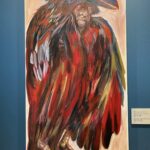
On the wall positioned to either side of Dorame’s installation, hang a galvanizing series of works by Weshoyot Alvitre, “Hi mo-yok’ mok: po-koo (No, He is not dead: #1 – #4).” The two acrylic on canvas works, #1 and #2, depict a man within a bird’s brilliantly red body. #3 and #4 are ink on board, black and white with an ochre-like circular halo of sorts behind the head of the birdman. The story behind these works refers to an incident that occurred in the 16th Century. Two large crows, alighted on rocks, having flown from a patio where sacred rituals were performed, were shot by soldiers for Spanish missionary Father Antonio de la Ascension. The birds were killed, and the people mourned them. These works are a response to that carnage and to the sacred nature of the birds that had rested on the patio. The artist focuses on a reinterpretation of this traditional western-culture narrative, successfully resurrecting and representing her heritage, and that heritage’s role in the present and future as well.


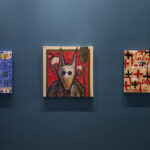
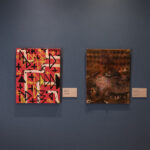
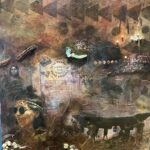
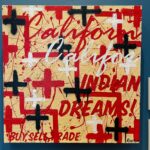
River Garza gives us the trickster and protector – Coyote, who fills both roles. His acrylic, marker, and spray paint  “Coyote in Red” wears dark glasses and carries one paddle; the mixed media color pencil, paint, and marker  drawing “Coyote Paddles” also explores the artist’s connection to Tongva seafaring culture, as does his human “Paddler with Hair Blowing the Wind,” and both his “Untitled (CA Indian Dreams), and “Red Basket” acrylic works, which evoke the patterns on heirloom woven baskets. The artist’s “Mo’omat (Ocean),” combines a thick and deep brown and black acrylic paint with elements of dentalium, abalone, mother of pearl, olivella shells. Here, the viewer also finds a woven pattern, as well as a face, as compelling as it is mysterious and fierce. Three smaller figures and a document regarding a voyage are a part of this stunning, layered piece. In each work, Garva uses his ancestral history and iconography, combining both with the contemporary in a recreation and preservation of the Tongva past.

Above, entrance to the exhibition; Deputy Director of External Affairs Gail Fornasiere and Deputy Director / Chief Curator Johnny Sampson

Together, artists and curator have shaped a beautiful, welcoming, and revitalizing series of images that speak to the epic past of the Tongva, respect for history of the native peoples, and the spiritual, cultural, and creative through line of Pimu. It is an exhibition of grace and wonder, of which the Catalina Museum for Art and History can be proud. Expect to see more exhibitions relating to Tongva culture and island history in the future.

Next Friday, March 3rd, the exhibition will be featured in the museum’s First Fridays presentation, Culture between Cocktails. From 5-7 pm the museum offers light bites and drinks while guests enjoy one of the last opportunities to view the Crossing Waters: Contemporary Tongva Artists Carrying Pimugna. The free event requires advance registration; a specialty cocktail, wine, beer and other beverages are available for purchase.

To visit the museum, you’ll want to catch one of the comfortable, fast Catalina Express Boats from Long Beach, San Pedro, or Newport Beach. For an even more relaxing experience, you can upgrade and enjoy a beverage and snack in the spacious Commodore Lounge. It takes approximately one pleasant hour to reach the island from the mainland; the museum is just a short and lovely stroll from the docks. Getting there to see this stellar exhibition isn’t just simple – it’s fun.

  • Genie Davis; Photos by Genie Davis and provided by the museum from James Kao Foto


Jewel of a Stay – Hassayampa Inn

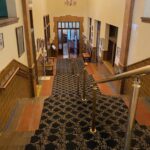
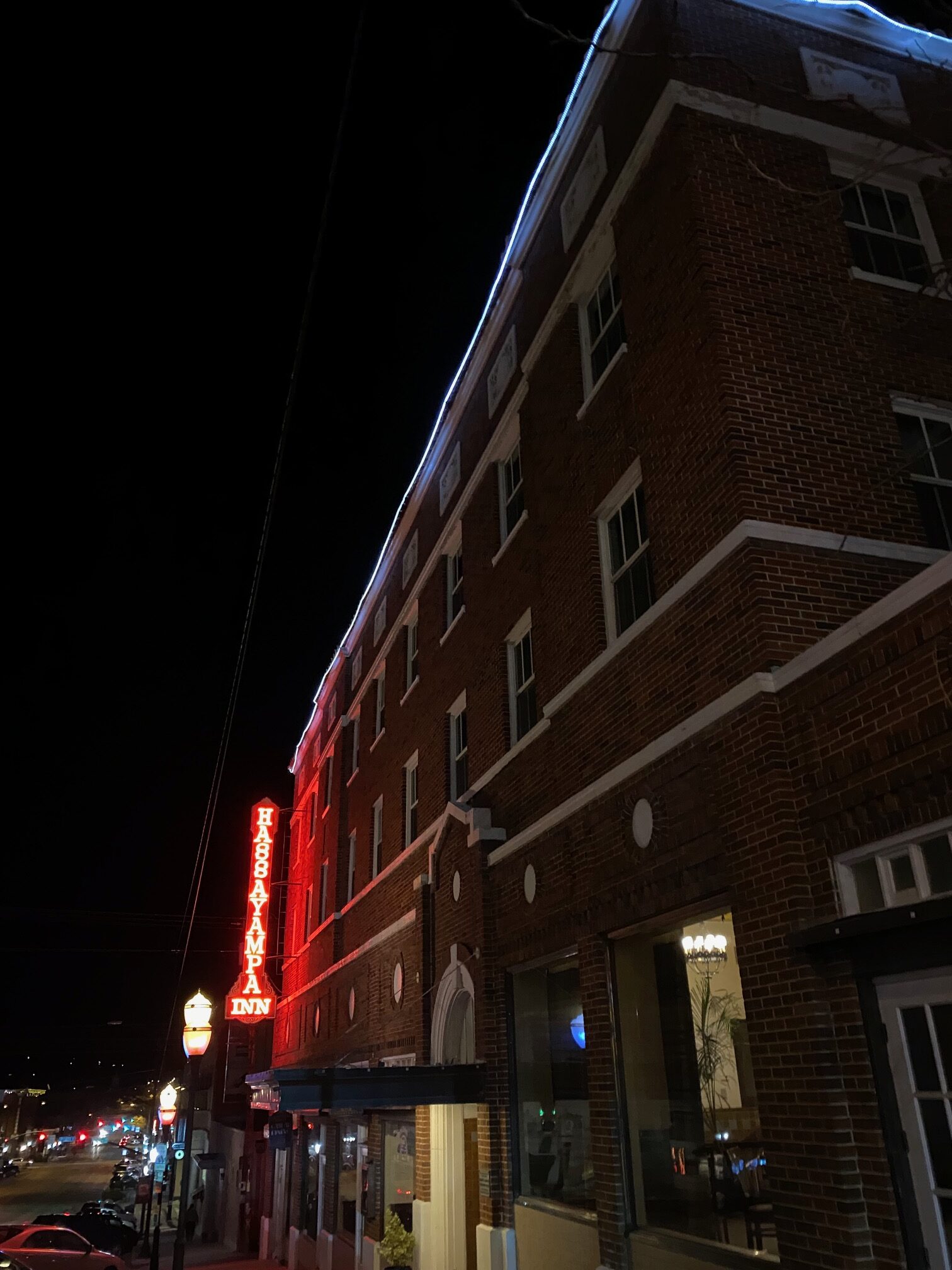
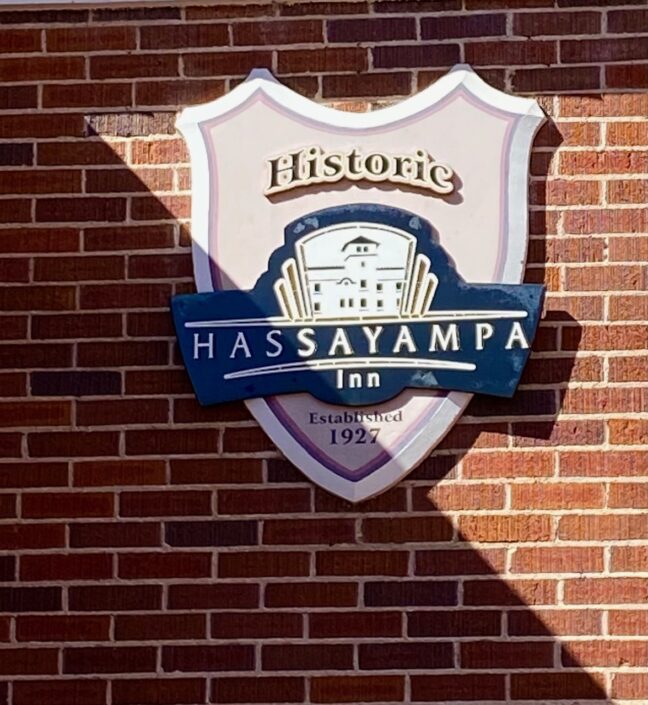
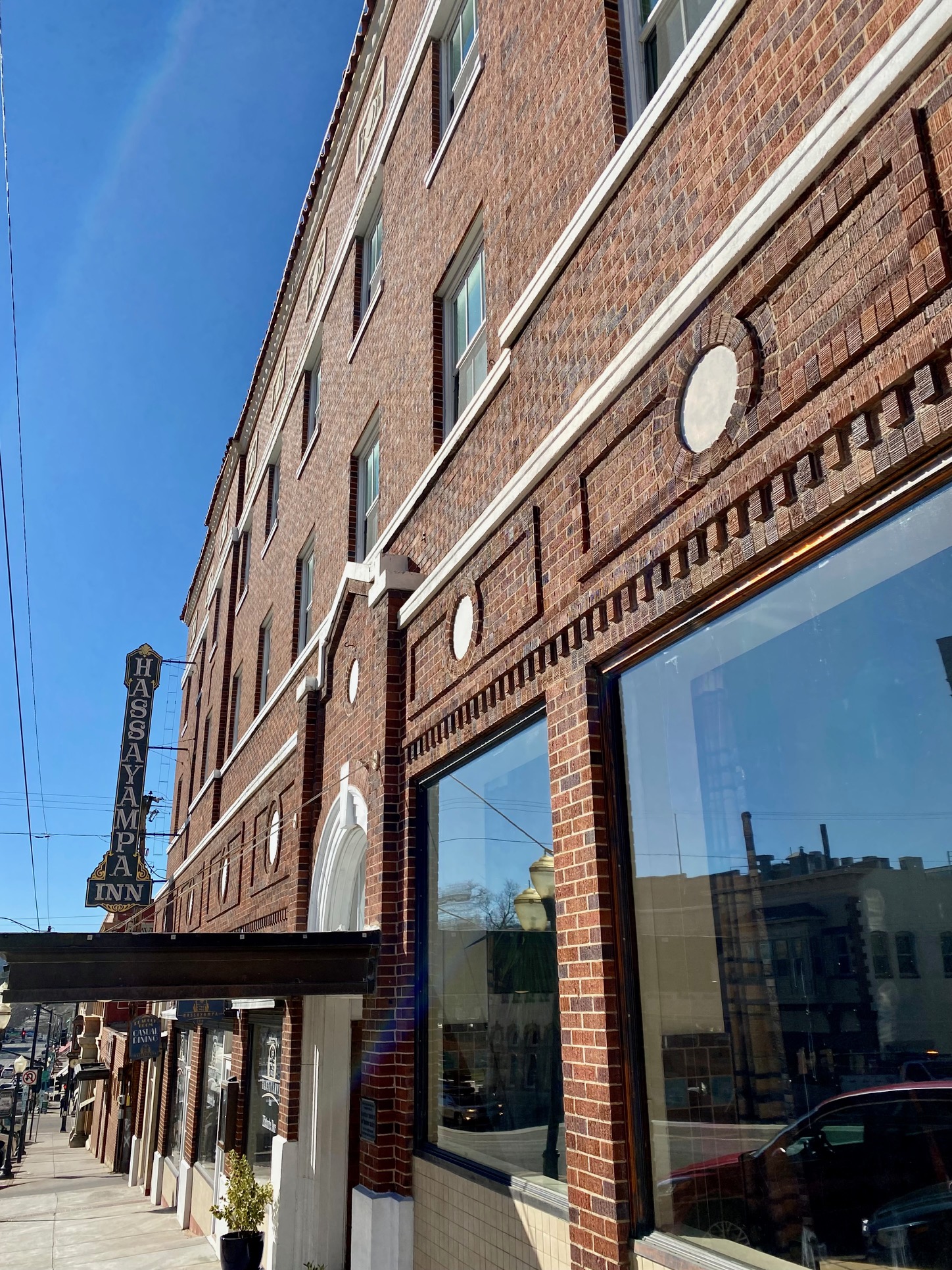
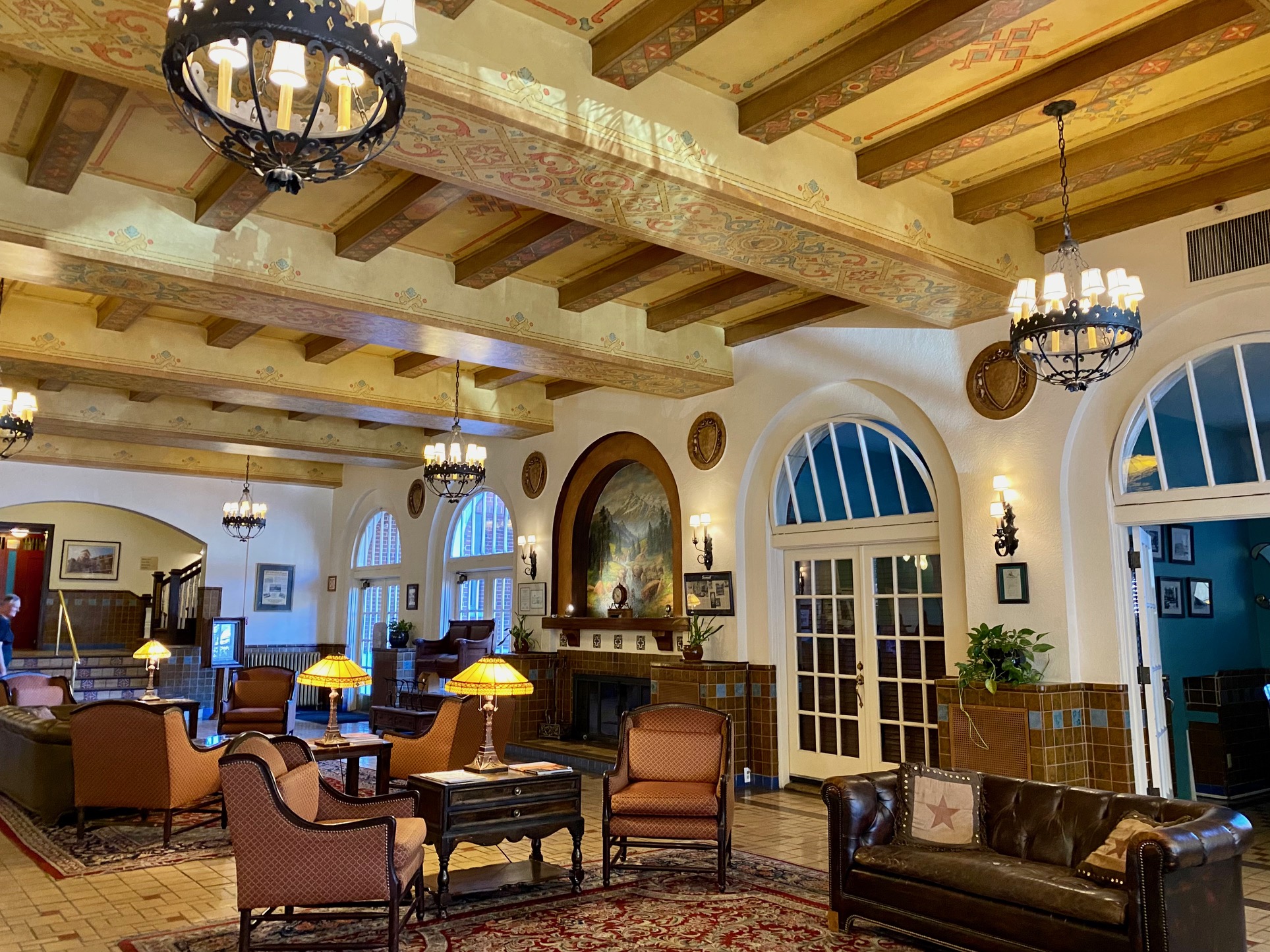
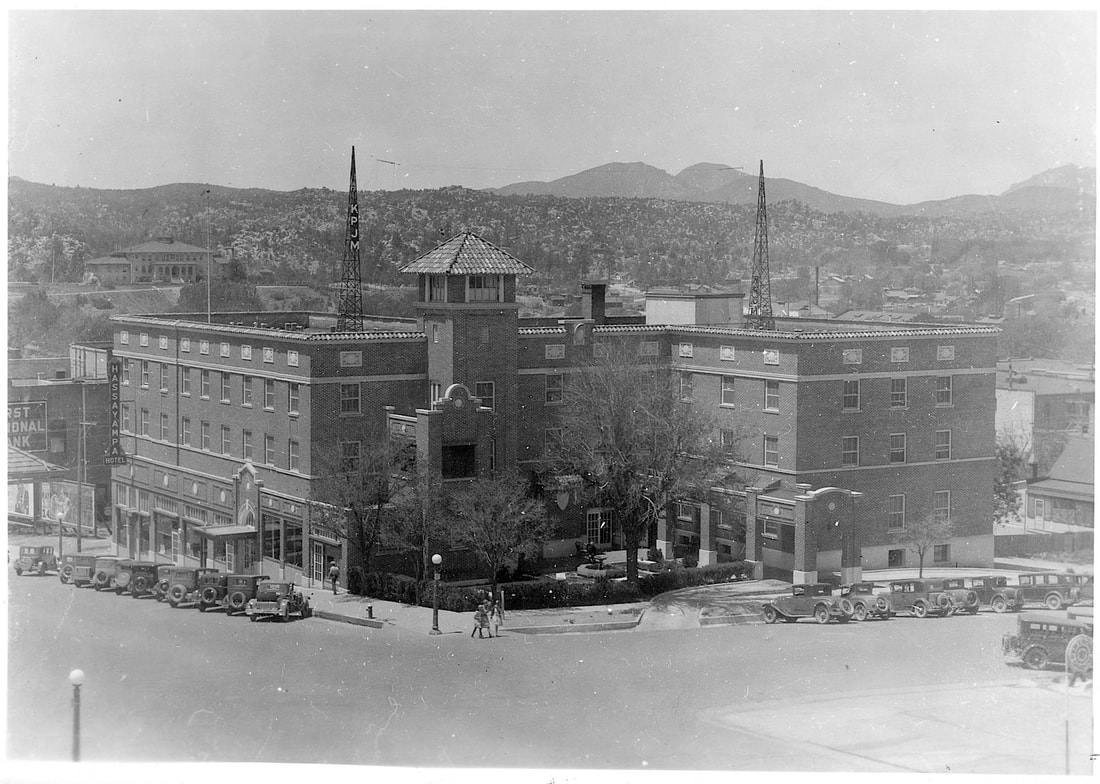
With its ruby red bricks and courtyard, a lobby with a perfectly preserved shining tile floor, and a carefully staff-operated elevator, the Hassayampa Inn in Prescott, Ariz. is an elegant, old-fashioned gem.

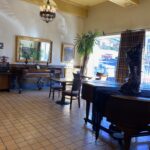
Lovingly cared for, the lobby features a beautiful mural painted over a burnished fireplace, comfortable reading chairs and warmly lit  lamps, and best of all, a convivial atmosphere that makes guests feel welcome and then less like guests and more like welcome visitors.

Located in the historic downtown area of Prescott, Arizona, a short stroll from the galleries, dining, and historic saloons of Whiskey Row, the Hassayampa maintains a lustrous dignity, formal without being fussy.

The hotel’s history glows as much as the hotel iteself. This is not a new, slap-dash construction chain motel, but a stately travel oasis for 95 years, exuding its history with grace. Designed in the 1920s by El Paso architect Henry Trost, Prescott townspeople bought shares in the project at $1 each, making the location a gathering spot for the community as well as for visitors even before it was completed in 1927.

Today, the building is listed in the National Register of Historic Places. A member of the Historic Hotels of America, the hotel was a  2022 finalist in The Historic Hotels of America Awards of Excellence, a standout among over 300 entries for the award.  The hotel was a finalist for Best Small Historic Inn/Hotel (Under 75 Guestrooms) as well as for best historic restaurant, hotelier of the year and ambassador of the year. The accolades are deserved.

The Apache name Hassayampa translates more or less as “the river loses itself,” just as the Hassayampa River north of Prescott does, sinking below the ground on its journey toward the sea. But the river’s namesake hotel is in no danger of being lost. With excellent service from the cheerful staff taking turns as elevator operators to the waitstaff at the hotel’s stained-glass-adorned Peacock Room restaurant, the Hassayampa seems destined to appeal to generations of travelers.

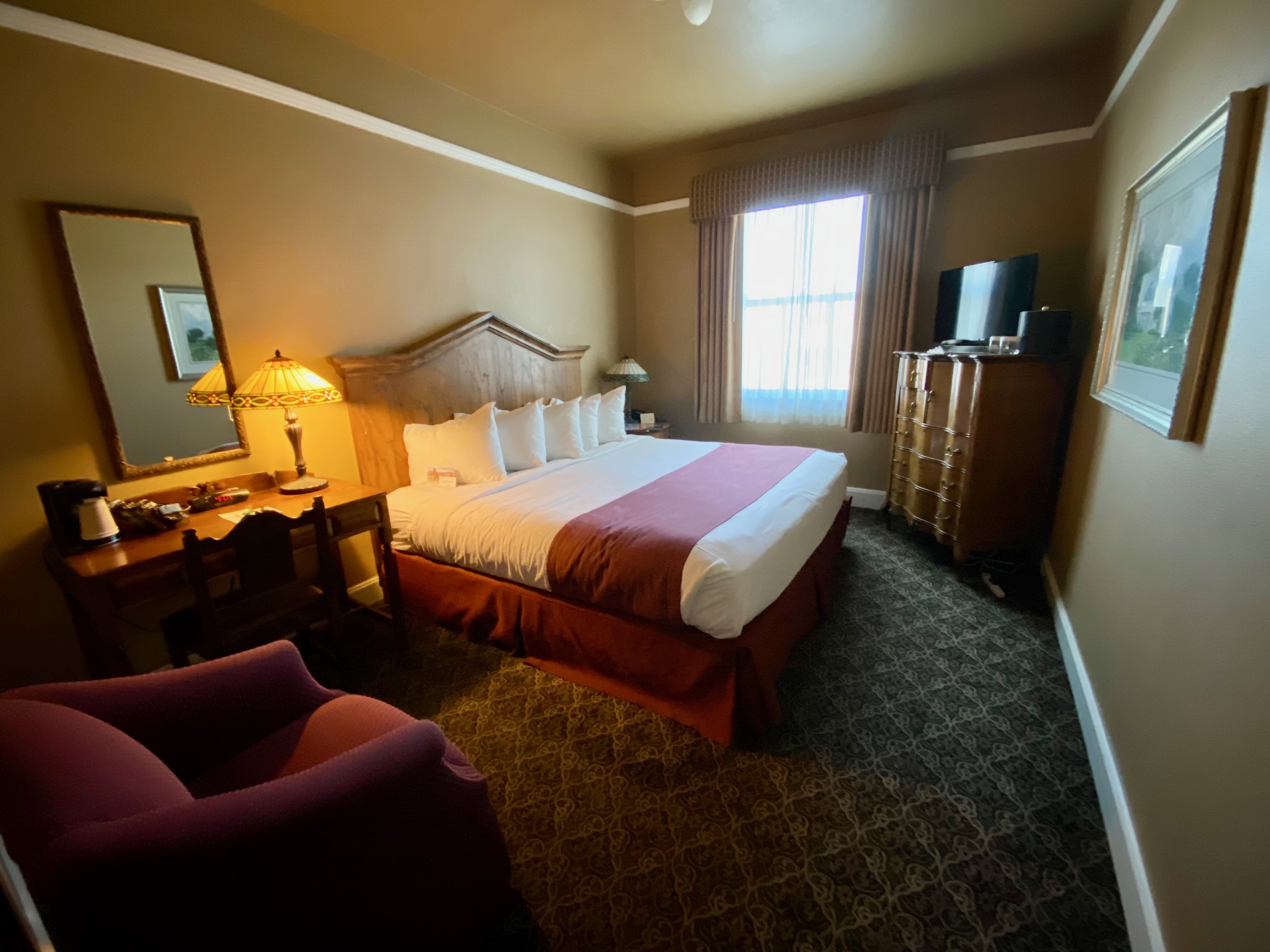
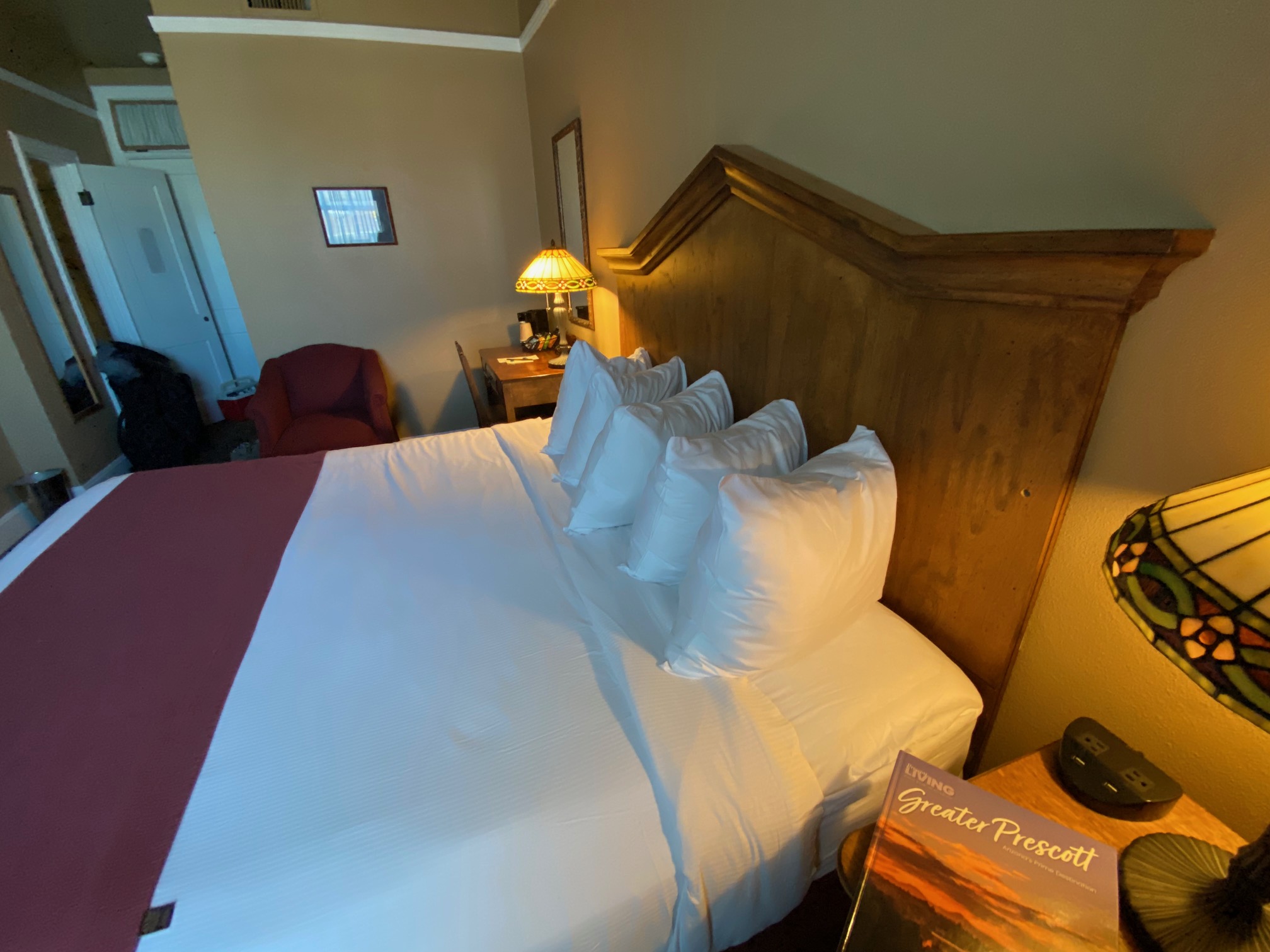
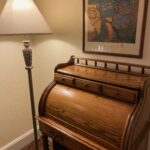
Just as it once drew luminaries such as Georgia O’Keefe and Will Rogers, it certainly drew us. The rooms are charming and offer modern comforts – a terrific mattress, flat screen TV, and good Internet, too. Cozy and well appointed, offering features such as a soft carpet with Native American patterning, burnished wood furnishings, deep maroon duvet and arm chairs, the rooms are also quiet – we did not hear our neighbors once.


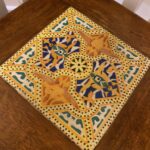
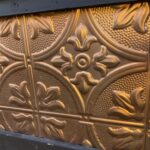
The architecture throughout the hotel is a delight, ranging from Spanish Colonial Revival to Italianate features. Ceilings are handpainted; glass is etched, mosaics line tables, embossed copper panels are polished to a sheen. The courtyard offers outdoor dining in warm weather, and there is live music on weekends.

We traveled in February, and although there was a chill in the air outside, the hotel has a way of making one feel warm and cossetted. A romance package for Valentine’s Day includes breakfast along with touches like chocolate covered strawberries and champagne or sparkling cider add to the ambiance, making February a particularly great time to visit. Sunny days and crisp nights are the typical weather forecast – and were what we experienced as well, with a few patches of snow still frosting the ground.

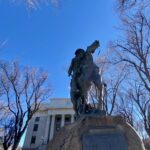
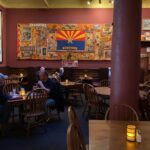
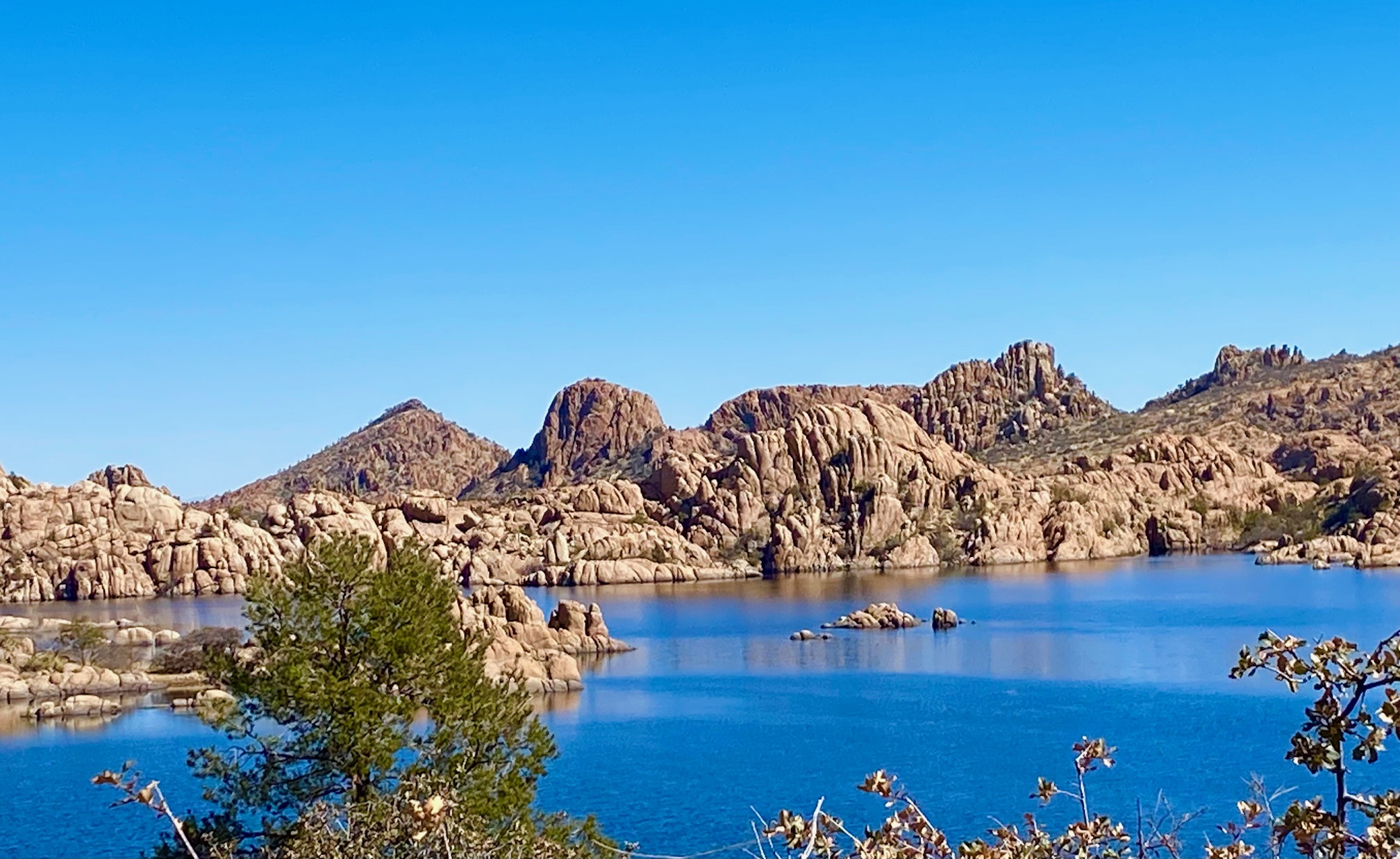
We loved walking from the hotel into the heart of Prescott’s historic downtown, exploring Courthouse Square and stopping in for a drink at The Palace Bar, which like the Hassayampa itself, is packed full of history. Wyatt Earp and his brothers as well as Doc Holliday once imbibed there. The Sharlot Hall Museum offered interesting insight into the area’s history; Watson Lake provided easy, attractive hiking on trails that weave among large granite boulders.

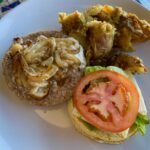
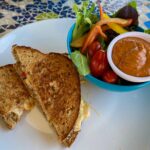
There are some excellent lunch spots in Prescott, such as The  Local, where we enjoyed a terrific Beyond burger, and the restaurant’s signature grilled cheese, crafted from Havarti and pimento cheeses.

It’s a sandwich worth stopping for. The Greek salad with Israeli couscous and feta is another standout. But the best part: fresh limeade. The Local is a convivial spot with tables inside and out, and fast, friendly service.

But don’t  miss dinner at the Hassyampa. The art deco-style setting is perfect, the understated elegance and warmth that permeate the hotel itself are just as prevalent here, drawing visitors and locals alike with a changing array of beautifully plated entrees. Dishes such as scallops, rainbow trout and a roasted chili poblano – filled with leaks, corn, spaghetti and squash, vie for attention with classically prepared steaks. The restaurant also serves a heady brunch with delightfully decadent treats such as lemon souffle pancakes.  And, one Sunday a month, there’s an afternoon tea, which we need to return to experience.

Although there are many reasons to call the Hassayampa Inn a jewel – it’s history, the friendly staff, the beautifully preserved historic features – it’s all these facets that will make you want to visit this gem in a perfect setting – a thriving small town with plenty of history of its own nestled in the Bradshaw Mountains, the distinctive Thumb Butte, luring us out and up through the pines on its trails.

With a setting like that for a treasured historic hotel, why wait? We loved our February visit, and I highly recommend booking a stay during the  post-holiday season, or come in the spring for the Smoki Museum’s indigenous art festival,  attend a free June bluegrass festival, or enjoy the thrills of the world’s oldest rodeo in July.  Just save a room for us!

  • Genie Davis; photos – Genie Davis