
Fascinating Film Art Upcoming at Wonzimer Gallery: A Rack of Banshees Makes Noise

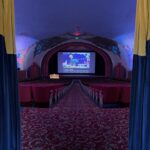
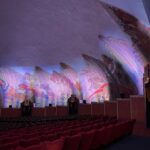
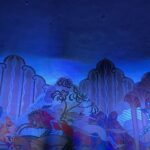
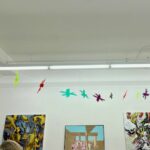
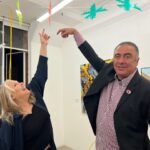
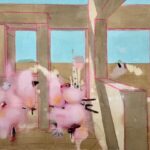
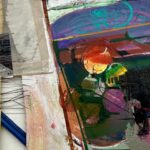
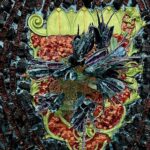
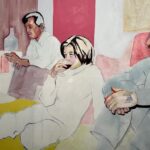
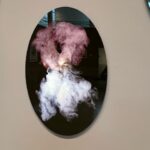
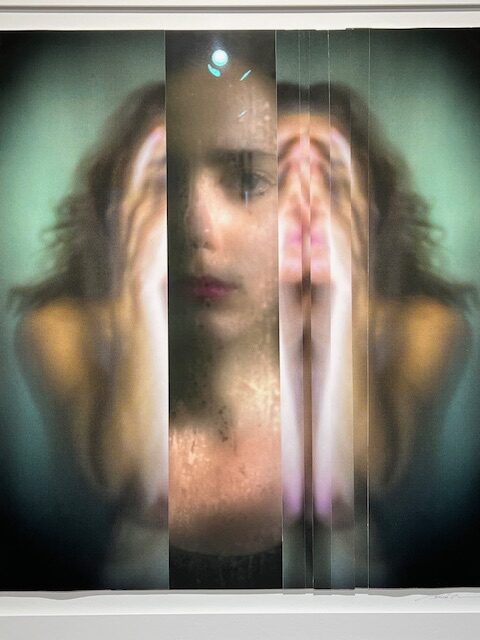
Coming up November 7th – that’s this week — The Association of Hysteric Curators (AHC)  presents an evening of feminist experimental films and video art,  “A Racket of Banshees.”

Comprised of a series of twenty-one short films, the program explores an array of feminist and women’s rights issues, many of which currently occupy the forefront of US national policy debates. Collectively, all of the films invite viewers to reflect upon what it means to be a woman in our contemporary society and to gain a deeper understanding of how women’s identities shape their everyday lives.  This is particularly pertinent in light of the historic election taking place as I write.

Participating Artists: Attic Portrait (Michelle Tift & Sea Zeda), Melanie Elyse Brewster, A. Laura Brody, Alessia Lupo Cecchet, Ching Ching Cheng  & Manyu Gao, dama (aka Amanda Maciel Antunes), Victoria Delgadillo, Diana-Sofia Estrada, Rachel Finkelstein, Malado Francine, Raghubir Kintisch, Ibuki Kuramochi, Leslie Lanxinger, Marne Lucas & Tyler Hubby, Maya Mackrandilal, Sarana Mehra, Alexandra Neuman , Snezana Saraswati Petrovic, Leah Piepgras, Mei Xian Qiu, Margie Schnibbe, Kayla Tange, Matt Odom & Caroline Yoo

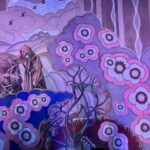
Each flmmaker takes viewers into a world which critically examines feminist issues such as aging, disability, reproduction, ecofeminism, violence, politics, and self-determination.  The works are presented in a range of styles from claymation and AI and utilize source material such as wildlife camera footage.

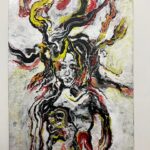
Even the title of the program is fascinating: Kiki Smith explored the concept of the banshee in her 1991 work, Banshee Pearls, in which she cast herself as a banshee in a series of 12 lithographs, surrounded by images of skulls, death masks, and other beast-like forms. As in Smith’s Banshee Pearls, each film in “A Racket of Banshees” may be viewed as a single banshee in celluloid form, who has come to us to declare all manner of deaths: that of women’s reproductive rights; the pandemic of global femicides; the death of our Mother Earth; and the ultimate demise of patriarchy.

The program was curated by the Association of Hysteric Curators collective, under the special organizational direction of member artists Margie Schnibbe, Snezana Saraswati Petrovic, and Mary Anna Pomonis. For more information about the Association of Hysteric Curators, please consult their website at: www.hystericcurators.com.

Catch the Glow at MOAH Cedar with Luminous Mysteries/Human Symmetries

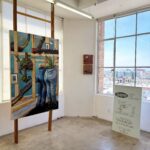
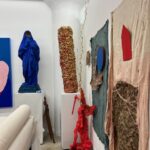
Making his debut solo museum exhibition at MOAH Cedar, Nikolas Soren Goodich weaves complex glowing stories that mix light, vivid color, and symbolic abstraction. Creating works that both literally and figuratively glow, the artist’s Luminous Mysteries/Human Symmetries combine a sense of both dream and reality.

The museum show offers an encompassing look at the artist’s work, and provides an immersive walk-through of images that seem to move with the viewer’s eye. The illuminated effects of Goodich’s art make many of his works feel wildly alive.
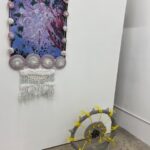
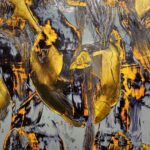
Particularly impressive are his large scale works “Luminous Mysteries/Human Symmetries Ground One and Ground Two”.  This  two-sided work is kiln-fired glass paint on tempered glass and acrylic on plexiglass in an aluminum frame.  Mysteriously embedded LED lights and a transformer make the pieces pop to neon shades; the sunshine of an amber and gold palette blazes to the eye.
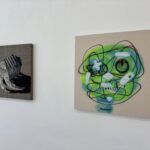
His work flows and spins, both captivating and startling the viewer in its vivid coloration and intricacy. Some works are only layers of plexiglass, others are plexiglass panels layered onto canvas.  Some are more figurative, such as the twinned red faces in “Untitled New Psychedelic Diptych” and “Humananimal 1.”  “Doppelganger” in another dazzler, an acrylic on plexiglass work with embedded LED lights.

Some works include both Goodich’s painting and printmaking techniques. His process takes the different surfaces of plexiglass and kiln-fired glass into account, making fine use of both the reflective surfaces and their transparency as well as how they fuse with light.

These are fierce, smart images that feature bold color. He applies colors directly onto the surface of one glass panel and hand monoprints onto the next, creating images that seem to be woven together, fluid yet geometric; layered not just in paint but in light. The experience of viewing many of these images, whether they contain embedded LEDs or they do not, is as if light was stitched in between the layers.

He has described his paintings as touching upon physics, biology, chemistry, geography, consciousness, and philosophy. It’s his wish to make his work healing, both in the visual and emotional sense. He himself has healed from a harsh past, but is still reflective of that journey.  As an artist, it’s the resilience and fragility of the human spirit, the wisdom of self-reflection, and his own emergence as if from a chrysallis of pain into his life as an artist. This metaphor is often present in works that feature a butterfly-like, twinned/winged image.

In fact, his personal path is entwined with his artwork,  and just as his own difficult personal trajectory has changed, the art itself can seem mutable, depending upon the environment in which they are located, as well as the time of day in which they are viewed, shifting one’s experience of them. He notes that his own layering of glass interacts with space and light – as well as with the mood of a space of the mood of the viewer.

While the inner glow of these works is manifest at MOAH Cedar, it is perhaps even more stunning outdoors in an installation at Palm Desert’s Melissa Morgan Fine Arts. Viewing his work at both locations fully explores Goodich’s own perception of art as mirroring the internal and external at work in all of us, with the figurative represented in the portraiture embedded in his work, and the abstract, also vitally present in his work, and perhaps more aligned with our own inchoate spirituality.

Goodich’s personal history, both culturally and racially as Black and Jewish,  his survival of the trauma of addiction and homelessness, and his personal resurrection as an artist is certainly one part of his art. But he extrapoloates forward into broader questions of justice, identity, toxicity, and healing — with the cure to all the world’s ills, as well as his own personal past darkness, being light.

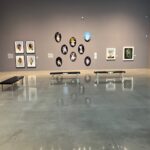
The 22 works at MOAH Cedar, all created within the last five years, are truly reflective: of light, the magic of simply being alive, and how we see ourselves and others. They are mirrors of the artist’s psyche, of our own, and of the environment. Presented at the museum as a collection of two series of work,  Double Inverted Portraits and Luminous Symmetries, both are transformative and alchemic.

As noted,  Goodich’s large scale two-sided edge-lit public artwork, “Luminous Mysteries Human Symmetries Ground Two,” is on permanent display in Palm Desert. Both high and low desert destinations are well worth a drive to feel the Goodrich glow.

The MOAH Cedar exhibition runs through November 24th with an artist’s talk with critic and curator Shana Nys Dambrot on November 16th at 2 p.m.

The installation at Melissa Morgan Fine Art is positioned permanently.

  • Genie Davis; photos provided by the artist and Laura Grover; additional images by Genie Davis

Visionary Delight: The Images of Carl Baratta – A World in Both Plein Air and Fantastical Landscapes

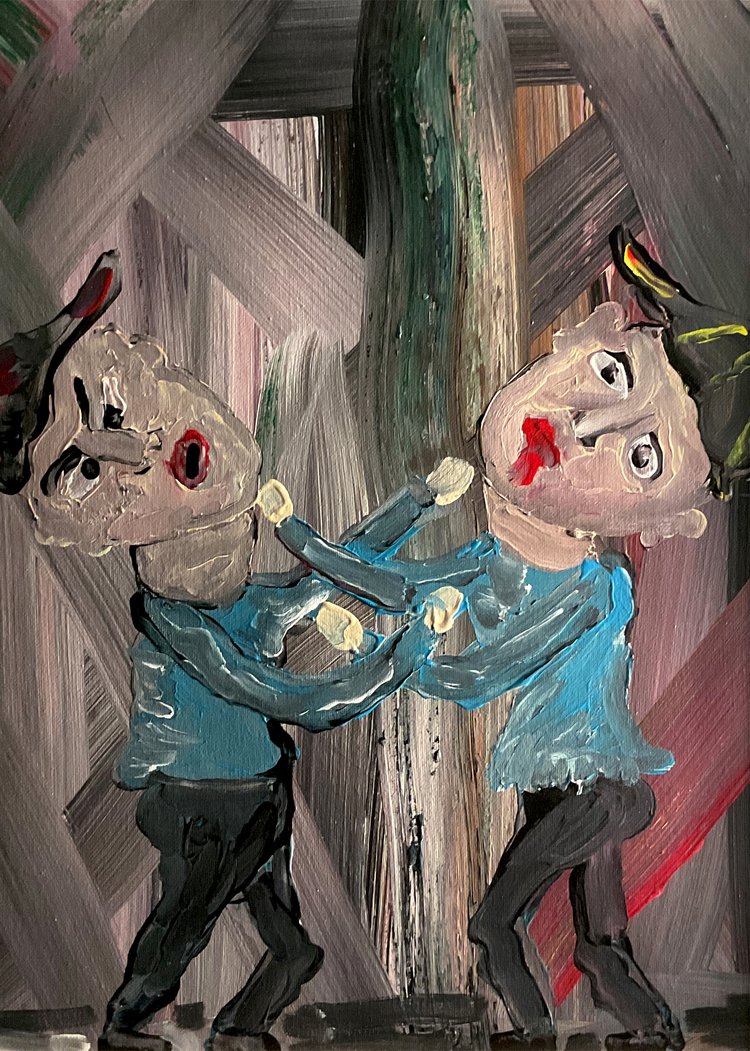
Carl Baratta is a brilliant contradiction as an artist: he creates hauntingly evocative black and white work as well as vibrantly colored paintings that recall the palette of Matisse. But regardless of palette or medium, he is above all else a storyteller, offering exciting, inventive, and immersive tales, wonderful visual puzzles for viewers to piece together through their own individual lens.

His vivid painted landscapes are both intensely alien and recognizable, like a jungle in the Amazon transplanted to Southern California.

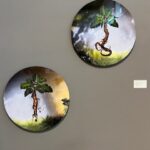
Some are whimsical, like the friendly creatures and spotted trees in work like “The Tuneless Song of the Ancient Machine.”

Others are more realistic, even in palette, as in the watery scape of “Wrecked 2,” in which an imploring hand adds a touch of the surreal as it rises to the side of a motion-filled scene of flowing aqua-blue water and tumbled brown rock.

He works in acrylic and resin on canvas, or watercolor on paper, or mixes acrylic with watercolor, or watercolor with tempura. His energetic use of color and line form a rhythm that pull the viewer into his world, dream-like and fecund, rich with image and imagination.

Water, forest, and flower are his main characters. In “The Evil Tree of the Naked Heart,” trees like yellow bananas emerge from a lush tropical green forest,  while a blanket of red with protruding golden plants floats above a tangle of roots or branches in another work, white waves flowing in the foreground.

The overall vibe of all Baratta’s color work is of a visionary landscape, a world imprinted just beneath that which most of us see, with the dullness of the everyday stripped away, leaving behind a fantastical dream state.

Of course, it would be a mistake to look at only the artist’s full color works. His monochrome drawings are equally pulsing with story, life, and a compelling inner reality. “La Pipe Creep,” a recent graphite on paper image, features a semi-circle of people surrounded by a sky dominated with massive curls of smoke exuding from one man’s pipe.

His wildly wooded landscape in “The Once Lovers” dominates the center of a beautifully shaded monochrome landscape, with a man hurrying off to the left, while a woman follows far to the right – a story of two people far apart in this tangled wood, yet still heading in the same direction.

Baratta also frequently draws and paints plein air impressions, as in the delicate pastel colors barely there in a black and white world, in the lovely “Berlin Forest, Hollywood Hills Heading North.”

He also creates a kind of instant folklore in black and white woodblock prints, such as in the “The Alphabet Found in Stones,” in which a bird perches on a branch, below it a nest with another bird on the edge.

The intricately detailed woodblock print “Awake, Awake, Deborah: Awake, Awake, Utter a Song!” has at its center a perfectly rendered arched brick bridge, but the soul of the piece is the floating visage of a woman against the sky.

His artistic storytelling knows no bounds, from references to Norse mythology to Sienese gothic style. And no matter the medium, so much heart fills this artist’s work that it seems to overflow, whether working in the most brilliant of acrylic hues on an other-worldly landscape, shaping evocative graphite sketches, or painting lightly colored plein air landscapes. In each image, Baratta exudes a deep joy in being alive, and in sharing his lovely, unique vision of the world.

If his work as an artist wasn’t enough, he spreads the same kind of exuberant, slightly surreal joy in his curations and through large-scale exhibitions that surround viewers with a sense of fun and mystery in the familiar. In High Beams, an on-going series of exhibitions held in parking lots and roof-tops, members of different art collectives and galleries offer inventive, themed work in robust, massive pop-up settings. As a member of Tiger Strikes Asteroid Los Angeles, he also organizes gallery exhibitions in multiple cities globally through the TSLA network, and B-LA Connect.

Watching Baratta’s visual stories unfold in any way at all, you’ll enter an entirely new realm vibrating with a passion of life and art. It’s a great deal of fun to be privileged to step inside.

  • Genie Davis; photos: Genie Davis; and as provided by Carl Baratta

Carved Slices Up Artistic Halloween Fun at Descanso Gardens

Carved at Descanso Gardens has created a gently haunted, transcendent Halloween-time experience this year, with a fresh route, hand-carved wooden spirit creatures created by Chainsaw Jenna, and more of the large, crazy-cool pumpkins visitors have come to know and love.

The garden setting is lovely and the lighting sets the mood for glowing, spooky fun.

The charming new Descanso Railroad is playfully aglow; Rhizome, an installation from Tom and Lien Dekyvere offers mesmerizing, futuristic beams of light.

And of course there are the ever changing – because they only last three days – carved pumpkins to delight young and old. The artists creating them are ready to chat about their unique designs from Beetlejuice to Pikachu.

Then there’s the delightfully haunting pumkin trail, where pumpkin sculptures offer a mix of toothy grins,  and fierce gazes.  There are pumpkin-headed scarecrows, and pumpkin families as well as a purple-lit, water based installation that depicts a storm tossed and tattered ghostly pirate ship, rainstorm periodically descending over it.

A pumpkin–filled mesh dragon shifts colors with cast light in another water spot; glowing red lanterns illuminate a tunnel in the Japanese Garden.

The garden’s tree forest features illuminated bases with touch pads that emanate spooky sounds when trod upon.


Wire figures of ghostly boys and girls are positioned eerily in the rose garden.

Even the parking lot attendant’s booth gets into the spirit of the event, with a jaunty skeleton ticket taker pointing the way to the entrance.

The whole event is original and delightful, and has grown exponentially in both size and charm since its first years. This is a don’t- miss for families and those who like their Halloween thrills compelling but not filled with jump-scares;  haunting in a mist-shrouded, purple-lit, leave-it-to-your imagination way.

There’s also a pumpkin house photos stop, a beer garden, snacks, coffee – and hot chocolate, and delicious cupcakes, cookies and pastries alluringly near the pumpkin carvers.

The event is open from now until October 30th. Ticket discounts for members. Non-members will pay a well-worth-it $35-45 for adults and $25-30 for kids.

Hours are 6-10 pm, with timed admissions at 6, 6:30 7, 7:30, 8, 8:30, and 9 p.m.

  • Genie Davis; photos: Genie Davis and Jack Burke