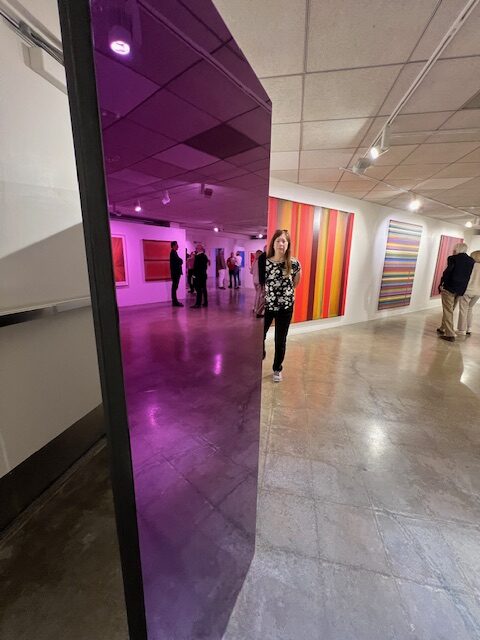
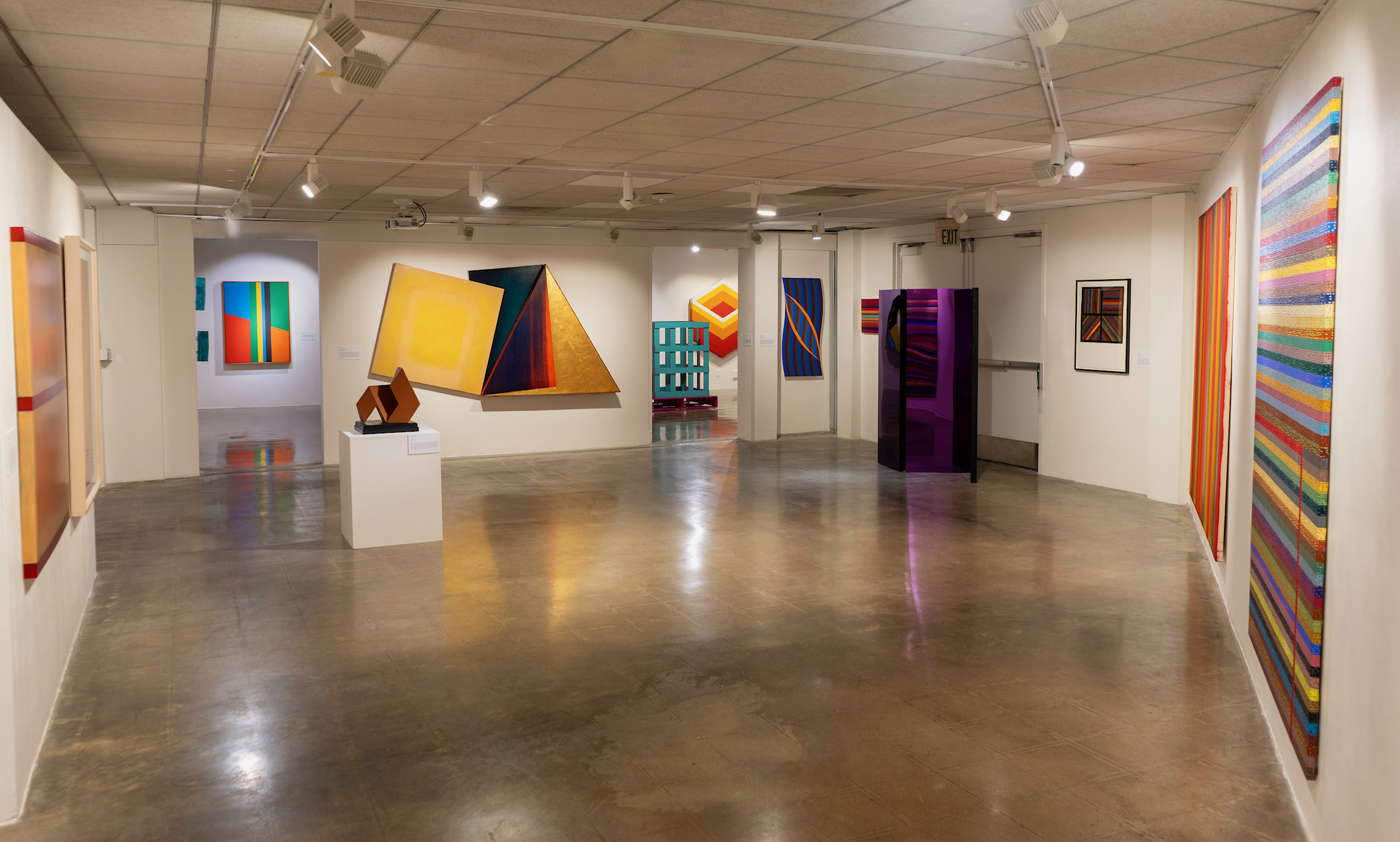
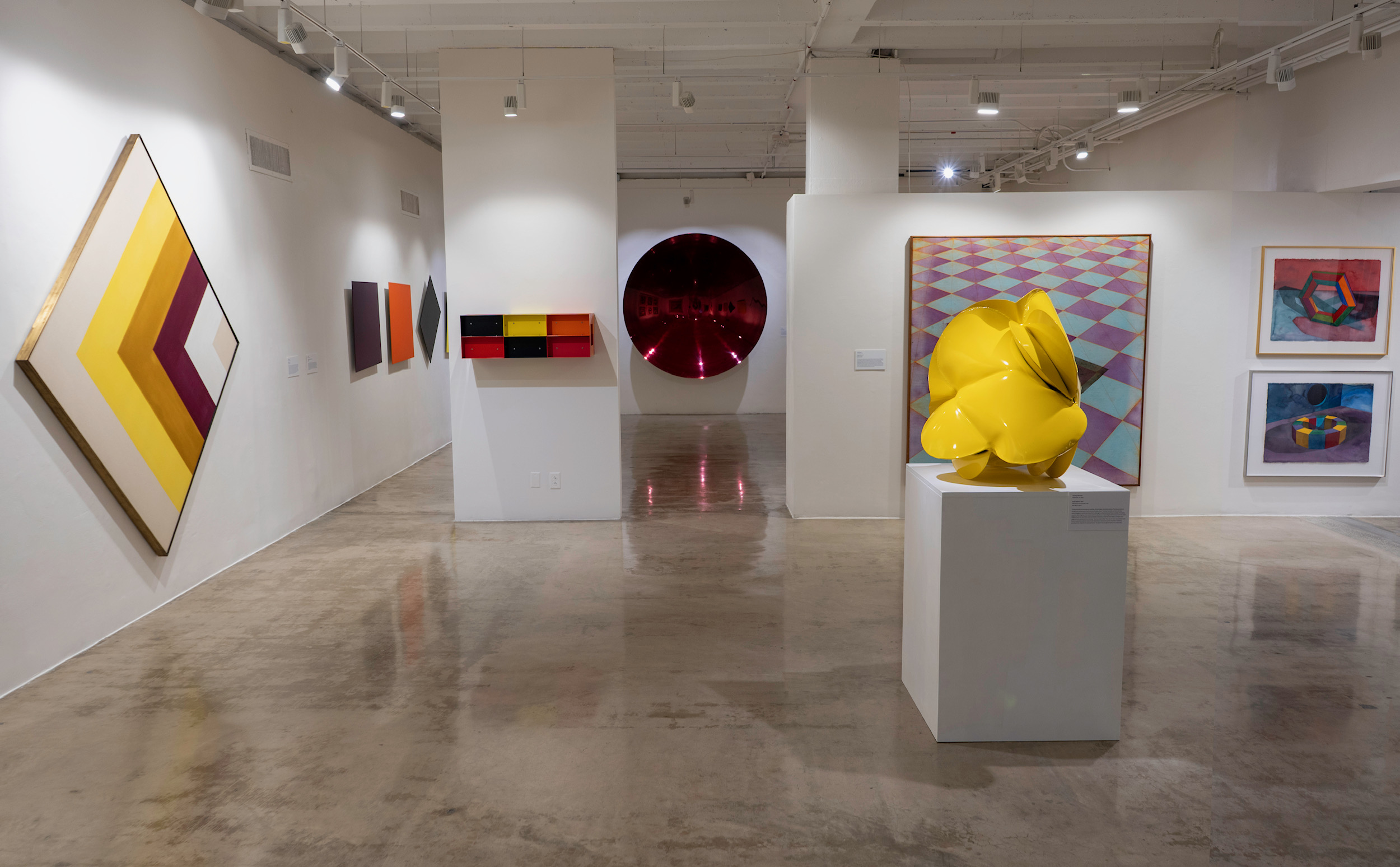
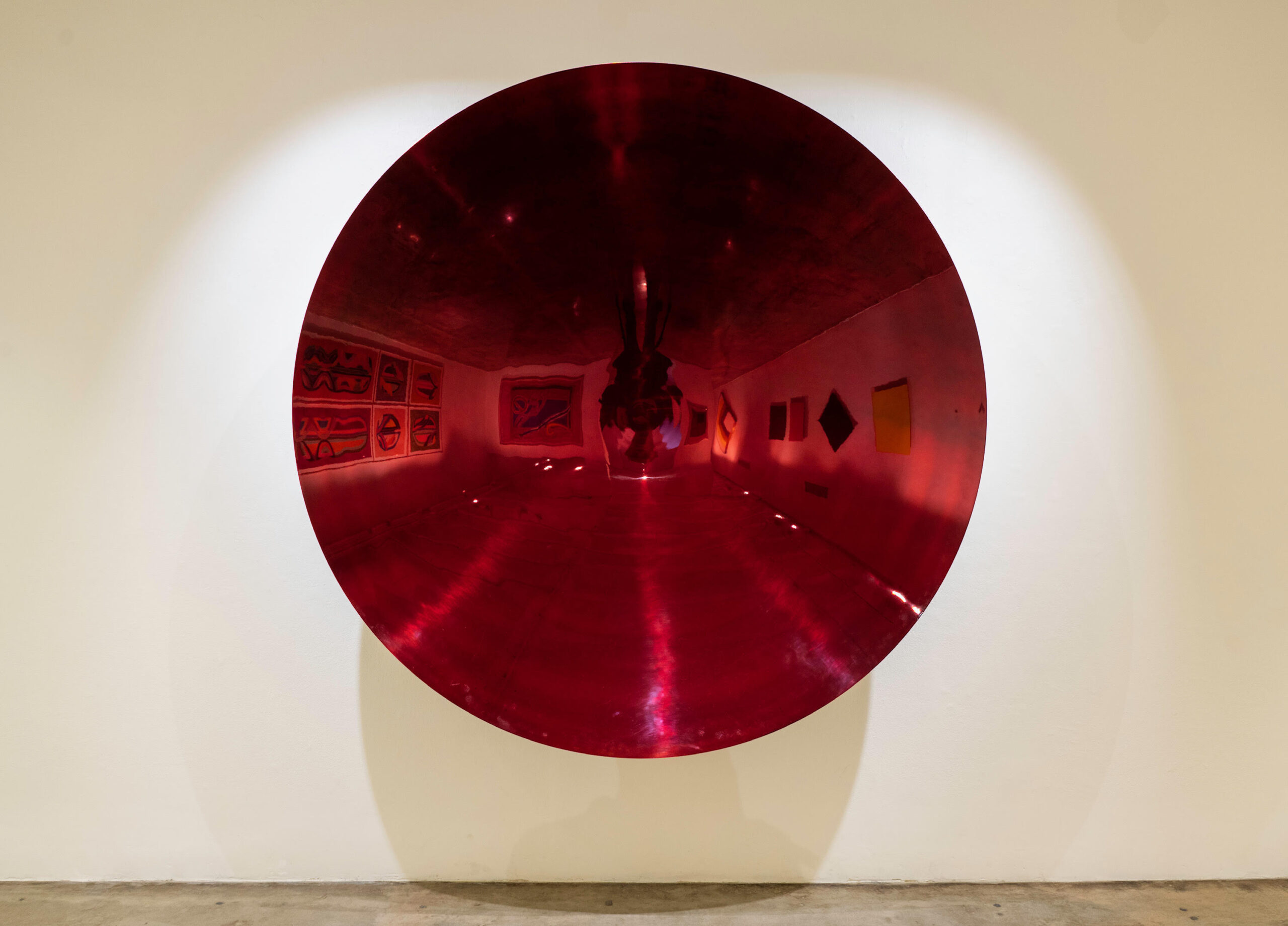
Earth & Ember – An Exciting Mini-Survey at CSULA

Southern California in the 1950s- 1960s was ground zero for what became a revolution in ceramics, moving clay away from a strictly functional or decorative medium towards experimental, abstracted sculptural forms that pushed clay from a craft designation to a fine art one. At the helm of this mainly macho movement was the energetic, charismatic Peter Voulkos, who came to ceramics accidentally, after being required to take a ceramic course for his painting degree. Reluctant at first, he immediately fell passionately in love with the versatile, malleable material that is clay. As a popular teacher at Otis, he treated his students as colleagues, threw out any curriculum and encouraged individuality from students John Mason, Ken Price and Ron Nagle – who got rejected from the program but was hired as an assistant anyway, and created a hotbed of artistic activity.

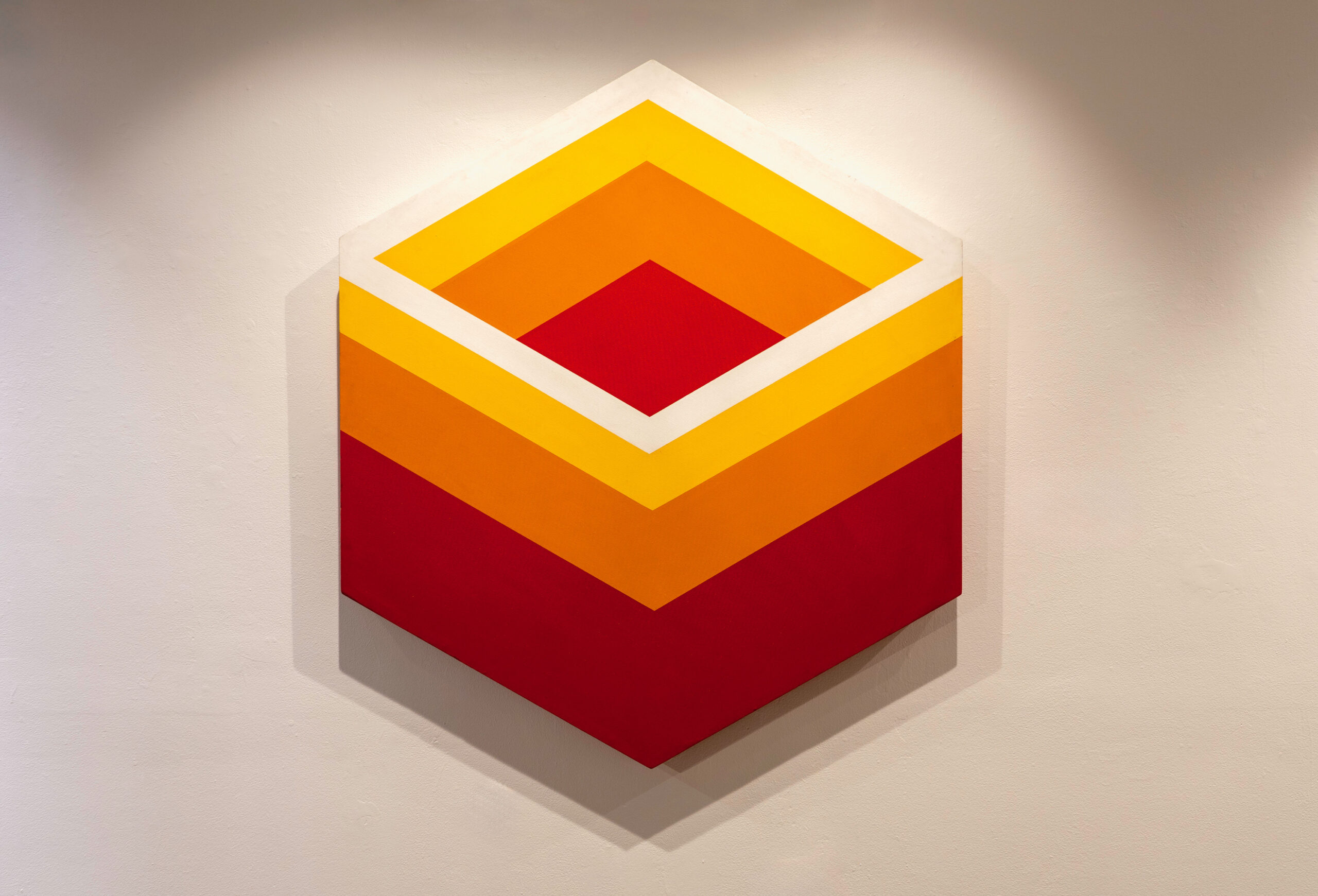
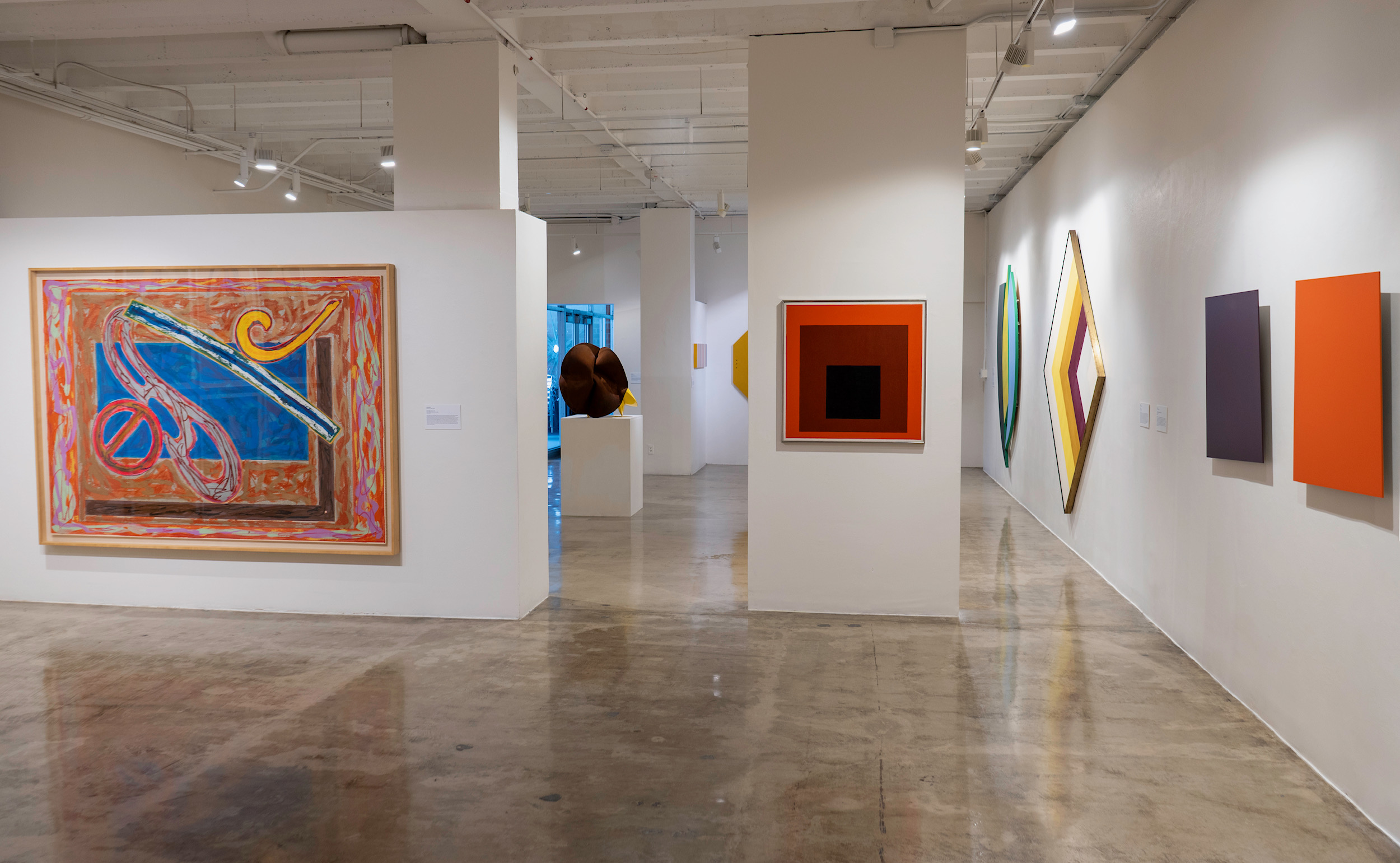
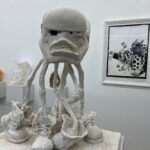
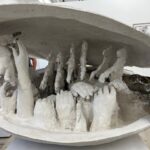
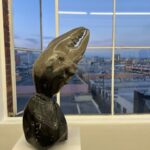
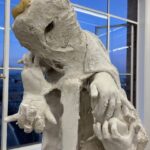
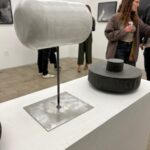
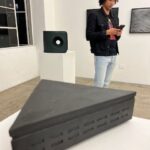
Earth & Ember brings together iconic work by many of the luminaries who contributed to this fertile time in ceramic history and whose work is in the canon. More importantly, this exhibition is really a paean to the teaching artists of the University of California at Berkeley and UCLA, University of Southern California, Otis College of Art and Design, and Chouinard Art Institute.

The show is also tribute to the homegrown ceramics program of California State University, Los Angeles whose alumni’s works are included in the exhibition. It’s a story of affinity and inspiration, starting with Pablo Picasso, who in 1947 began working in clay and created more than 3,500 painted ceramic objects profoundly influencing Peter Voulkos himself.

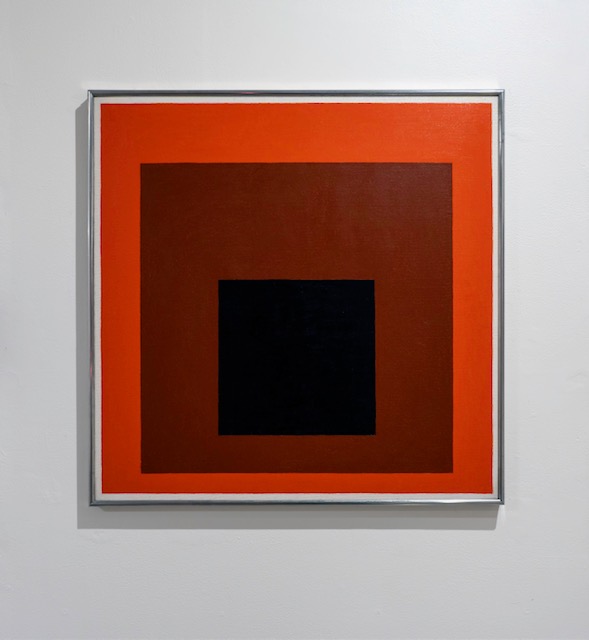
Picasso’s 1948 ceramic plate “Head Of Faun” (Courtesy of Frederick R. Weisman Art Foundation), which is the centerpiece of this exhibit, is a lovely oval platter with Picasso’s hallmark jaunty and expressive line. The plate is embedded in a frame as if it were a painting, playing once more with the blurring of two and three dimensions. Nearby is one of Voulkos’s glazed porcelain plates from 1973, where he characteristically pokes holes and leaves imprints on the wet clay, clearly announcing that this is not a functional plate. John Mason, who at one time designed dinnerware but who is primarily known for his large-scale ceramic sculptures, is represented by a gorgeous series of slab plates, each with a unique geometric edge. The series of “Untitled Relief Plates, #183-186” (2008), seems to reference color field painting and shaped canvases of the 1960s-70s.

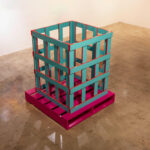
Beatrice Wood was one of the few women admitted into the all-boys club and her lusterware vessel “Dancing Ladies” (1982) is intentionally paired with Randall Bruce, who generously loaned the Wood piece from his private collection. Bruce’s “Double Bucket” from 2006 is a combination of wheel thrown and hand-built pieces, lovingly glazed with a metallic glaze. These two works are in conversation about form, function, and mystery. The pairing of Peter Shire’s meticulous whimsical, low-fire, hand- built sculptures alongside Roger Herman’s large scale, wobbly, abstract-expressionist vessels and table, are brilliant. Where Shire uses an underglaze pencil to carefully draw on the flat slab teapot piece entitled “Fallen Idol” (2005), Herman pours and brushes glazes on his vessels “Frog” (2023) and “Untitled” (2020), allowing the glazes to coagulate, run and even flake off. Shire is a multidisciplinary artist whose ceramics and furniture all incorporate the bright colors, jazzy patterns, and geometric shapes of the Italian design group Memphis. Herman, most well known as a neo-expressionist painter before turning to ceramics uses this technique to charming effect.

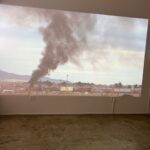
Thomas Muller’s “a smoke-filled room” from 2017 is a witty conceptual text- based piece, cracked and peeling, and alluding to power brokers who meet in back rooms. The phrase originated in 1920 to describe the process in the Republican National convention nominating Warren G. Harding for president. And of course, clay is also fired – though hopefully not in a smoke -filled room, though the process of Raku firing relies on smoke to create beautiful and accidental surface effects.

The variety and complexity of the techniques exhibited here is staggering, from wheel thrown to slab construction, slip cast assemblages and a combination of wheel thrown and hand-built: the clay and glazes range from secret formulas to commercial ready-made glazes to automotive paint and the clay bodies from low fire to high fire to locally harvested clay. There are too many outstanding pieces, too many compelling ideas explored here to discuss them all.

It’s a great chance to see a wide variety of approaches and works from the intimate to the grand in scale. This is a mini survey show and like a delightful appetizer leaves the viewer wanting more.

Earth and Ember: Ceramic Exhibition
January 22- February 22, 2024
Ronald H. Silverman Fine Arts Gallery
Cal State LA

  • Nancy Kay Turner; photos: Nancy Kay Turner and as provided by the gallery 


Exploring the Spiritual Realm at Wonzimer

Curated by Khang B. Nguyen, the just-closed exhibition at Wonzimer Gallery invited viewers to enter a new world of the mystical, spiritual and metaphysical with the exhibition.

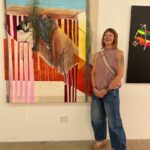
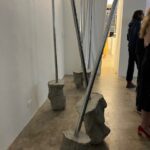
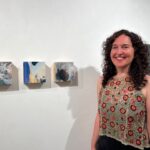
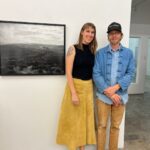
A wide range of work from the sculptural to painted images shape an exhibit that looks both ethereal and mysterious. The sculptural work above from Sandeep Mukherjee (pictured with gallerist Alaia Parhezi) serves as an entry portal into a new space and time. Using a retired dancer as his subject, Mukherjee molded his glowingly otherworldly, fossil-like images from light aluminum.

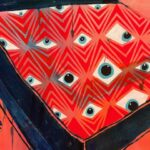
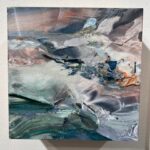
Curator Khang B. Nguyen offers meditative paintings that are layered and complex as in his dimensionally fascinating work below. His sharp use of dimension is at play throughout the curation as well.

Other exhibiting artists include Russell Crotty, Tomory Dodge, Sharon Ellis, Nancy Evans, Lia Halloran, Charles Long, Linn Meyers, Patti Oleon, Lisa Wedgeworth, and Marcus Zuniga.

Summoning the spirit of 13th century Zen master Eihei Dogen, the art is a transformative experience, one that questions and embodies notions of time, space, and spirit, adding in compelling ideas about time and self, consciousness and a realm beyond it. This is a thoughtful and compelling exhibition thematically, with unique and often trippy art works that defy category.

Lia Halloran’s oil on wood spirals evokes an expanding universe…

Marcus Zuniga’s “Chuparosa” is multi-dimentional wall art that fractures and multiplies vision using reflective glass, acrylic, and aluminum.

Charles Long’s surreal and wonderful aluminum sculpture “Endinglessness,” dazzles with shapes rooted in fantasy and dusted with holographic glitter.

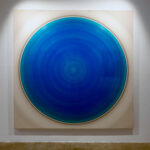
Linn Meyers’ large-scale acrylic on linen provides a blissful port of entry to a rift between rock and sky on the gallery’s back wall; while Russell Crotty’s suspended fiber glass sphere “Milky Way Over Hull Mountain,” below, shapes a hypnotic journey into the sky, one that is well-paired with Patti Oleon’s “Blue Circle Lobby.”

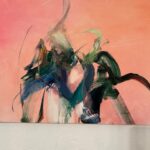
Melting with moonlight, Nancy Evans “untitled” acrylic on canvas, below, is a study in motion caught in stillness.


Each artist’s work gives out a meaningful vibration of art and spirit, in which the viewer’s “time being” can, at least for a moment, pause and refresh. If you missed entering this beautiful exhibition in person, the exhibition is available for viewing online in 3D on the Wonzimer website.

  • Genie Davis; photos by Genie Davis
Alice Esposito Focuses on Connection

As photographic artist Alice Esposito’s work evolves, she is focusing on evocative portraiture and scene. Noting that connection has always been an important element of her photography, she says that she rarely photographs her subjects without having a conversation with them first.
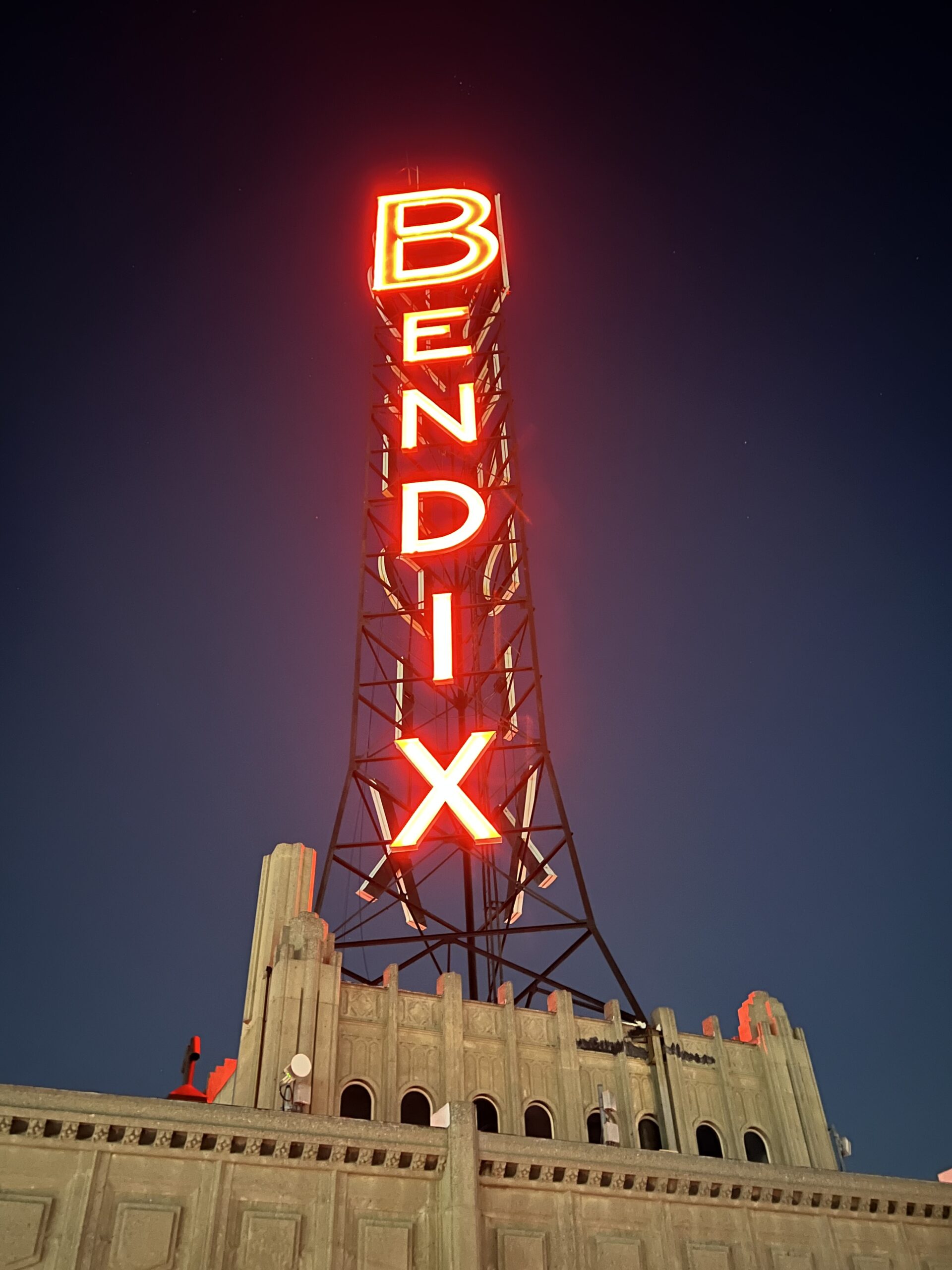

“I want to understand the person I’m about to photograph, their mannerisms, their posture, their passion, their happiness and their sadness,” she says.

As has been the case for many of us, the pandemic changed many of the ways in which she connected to people. “Being immune compromised, I had to isolate myself for almost two years, and my photography paid the price for this lack of connection.  Once I was able to pick up my camera again, I noticed that my photographic process changed with me… I decided to dig dipper into my fears and the sense of solitude, nostalgia and belonging, and the result were darker images.”

Esposito also decided to simplify her photographic techinque, now utilizing only a single light and less equipment, creating work that was more about ambience and mood.

“When you understand the soul, the essence of a person, it becomes easy to capture their attitude and presence with the camera, and the absence of light instead of the abundance gave me the perfect set up to do so,” she relates.

The artist is currently working on two different projects, one a research documentary concerning religious rituals and the other focusing on reflections.

Travel and experiencing a variety of cultures are both intrinsic parts of her research documentary projects. “I am only going to bring my Rolleiflex film camera with me. I intend to minimize my equipment as much as possible and try to remain anonymous. This camera gives me the perfect tool do to so.”

She eschews a current photographic approach that utilizes big cameras, lenses, and flashes, as well as social media hype.

“Shooting with the Rolleiflex forces me to look down as if I’m bowing or praying and therefore paying my respect to the people in front of me,” she says, something that should work well for her in regard to her religious subject. “People will always be the center of my work, but I’m trying to remain in the shadows and let the photograph speak for itself.”

Her second project, Reflections, will be realized in part through creating a small, dark, and private portrait studio. “The idea is always for me to disappear and let the subject feel relaxed enough to engage with atmosphere and create their comfort zone, instead of me trying to to do it as in the past. I give the person in front of me full freedom of expression, no forced pose, just the freedom to act.”

Esposito is simplifying her work overall, with one camera, one light, and one set up. Her goal is to let her subjects dictate and play in the studio or whatever location she and they choose. “They will be the actors and I’ll be the audience following their process, observing and experience their journey, and how they connect to the environment surrounding them.” She says she is looking forward to seeing how this new approach will change her photography and her world view.

She attests that she wants her photography to be “polite and respectful, not abraisive or forceful.  I want to be a silent observer, and let the world show me the beauty of it instead of forcing my view on others.”

While acknowledging her presence will always be a part of the images she creates she wants to “feel surprised and be there to catch the moment.”  Her artistic expression is focused on meeting and working with others who have experienced a journey similar to her own and reaching beyond her own comfort zones to use different media in new locations. She attests that she is not “trying to force myself to have ideas or create specific projects. I’m letting my emotion and my passions dictate the next step.”

Esposito herself, above

This is a new approach for Esposito. According to the artist, “Usually I need to be able to control every aspect of my work. I’m always extremely organized in every aspect of my work in every detail. Now,  I’m trying to let it go and be more spontaneous and let others and the world surprise me.”

  • Genie Davis; images provided by the artist

Design This For Some Holiday Cheer

If you’re looking for something a bit more mellow than spiked egg nog for the holidays – or to chill with on a bright New Year’s night, THC Design may have just what you’re looking for.  As a premium cannabis cultivator, THC Design offers estate grown, single-sourced flower for a wide variety of brands. Environmentally aware, the company utilizes advanced cultivation practices and techniques to achieve self-sustainable operation and renewable energy resources. Using integrated pest management, water reclamation techniques, LED lighting, and renewable energy, THC Design’s goal is to be the first company to be carbon-neutral and climate positive in the indoor cannabis industry.

Of course, the products themselves are just as carefully curated as the growing process and the company’s environmental awareness. Committed to the science behind cannabis, THC Design is working to identify the roles of not only THC and CBD but  the dozens of other therapeutic compounds in cannabis, developing plants that provide a premium product and can more accurately treat disease and ailments. Shifting away from THC percentages to a more balanced and intuitive view of the ways different cannabis chemotypes affect different people, the company is committed to helping people thrive – not just mellow out.

Among the company’s offered cannibis products are indica strains, recommended for relaxation, pain management, inflammation, and anxiety relief. The effects are relaxing and sedative, and include signature strains such as the Garlic Cocktail, a cross of GMO and Mimosa strains offering “earthy notes of clove, anise and orange-tangerine-citrus finish.”

The company cites this strain as “perfect…for pain relief and inflmmation without the typical sedative qualities of most indica-dominant strains” for a relaxing but not sleep-inducing chill experience. Another signature cultivator is Confidential OG, an Indica cross of LA Confidential x OG Bubba Kush. With δ-Limonene, β-Caryophyllene, and Linalool as its dominant terpenes. Citrus notes meet classic Kush dankess and a potency level of 30-36% THC, making it an excellent choice to alleviate symptoms of anxiety, depression, inflammation, and acute pain.

Our sampler tried both pre-roll and flower from the Sativa strains, considered excellent for symptoms of depression, stress, fatigue, loss of appetite, and pain relief and well as enhancing creativity. The strain sampled was Crescendo, smooth and mellow, mentally activating rather than intoxicating. Providing a bright lemony finish with an earthy, spicy pine taste befitting the holiday season, the strain offers a THC level of between 30-35%. Among the other Sativa strains availabe are Orange Creamsicle, Gelatti Cake, and Lime Slurps.

Prefer a mix of sativa and indica effects? Hybrid cannabis products include strains such as Purple Punch and Wedding Cake. Hybrids are often able to promote feelings of contentment and happiness for relaxation and contentment; and, one of the more beneficial hybrid strain effects is an increase in creativity.


With over 150 different strains in their genetic library, THC Design truly provides high quality flower available as pre-rolls, eighth jars, and buds. The company is the proud recipient of two High Times Cannabis Cups, and voted Best Pre Roll in California by Weedmaps and LA Weekly, also winning multiple Farmers Cup awards. They have a menu of five permanent strains, and regularly rotate through limited edition drops as well.

Overall assessment: THC Design offers beautifully packaged, carefully cultivated cannabis and provides recommendations for strains based on user needs. The company offers products locally through a range of distributors in the SoCal area, including Greenwolf in Los Feliz, New Age Care Center in South Los Angeles, Sweet Flower in the Arts District, and Dr. Greenthumb in Lincoln Heights among other locations. Their products are also available through many delivery services from Long Beach to West LA to Central California and Sacramento. Delivery was fast, efficient, and friendly to our location in the South Bay.

Happy Holidays – and mellow ones, too.

  • Genie Davis; images provided by THC Design