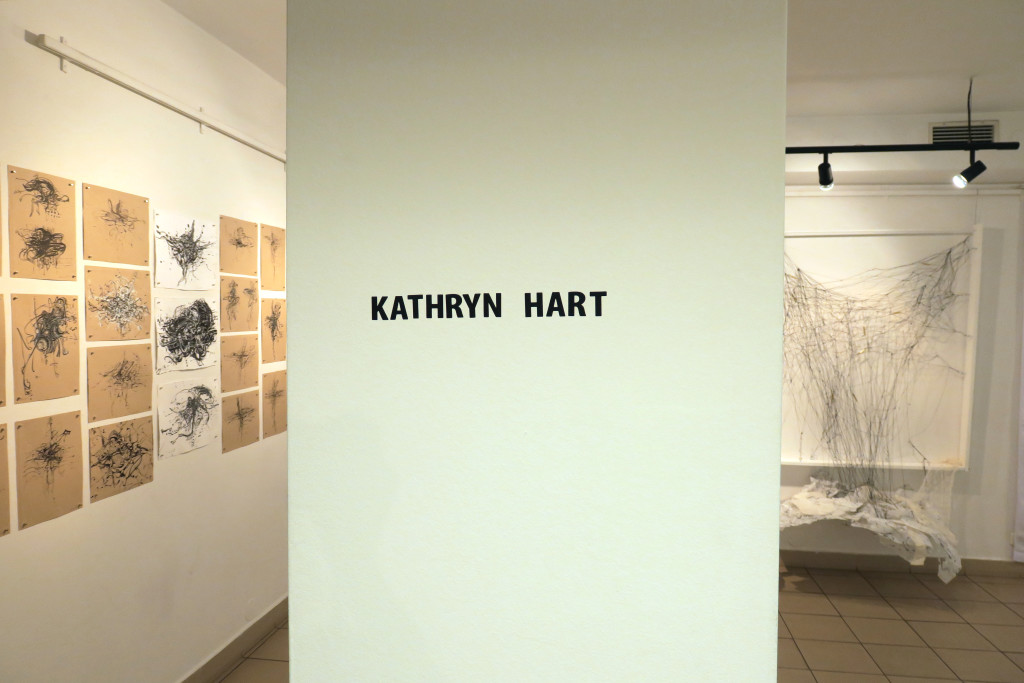
Daunting Transitions
Kathryn Hart’s Daunting Transitions takes on a series of daunting topics with grace and a haunting resonance. Looking at identity, burden, and at the fear of and burden and responsibility of choice, the work is all about change in one form or another. It is about gestation, and the poetry of life itself.
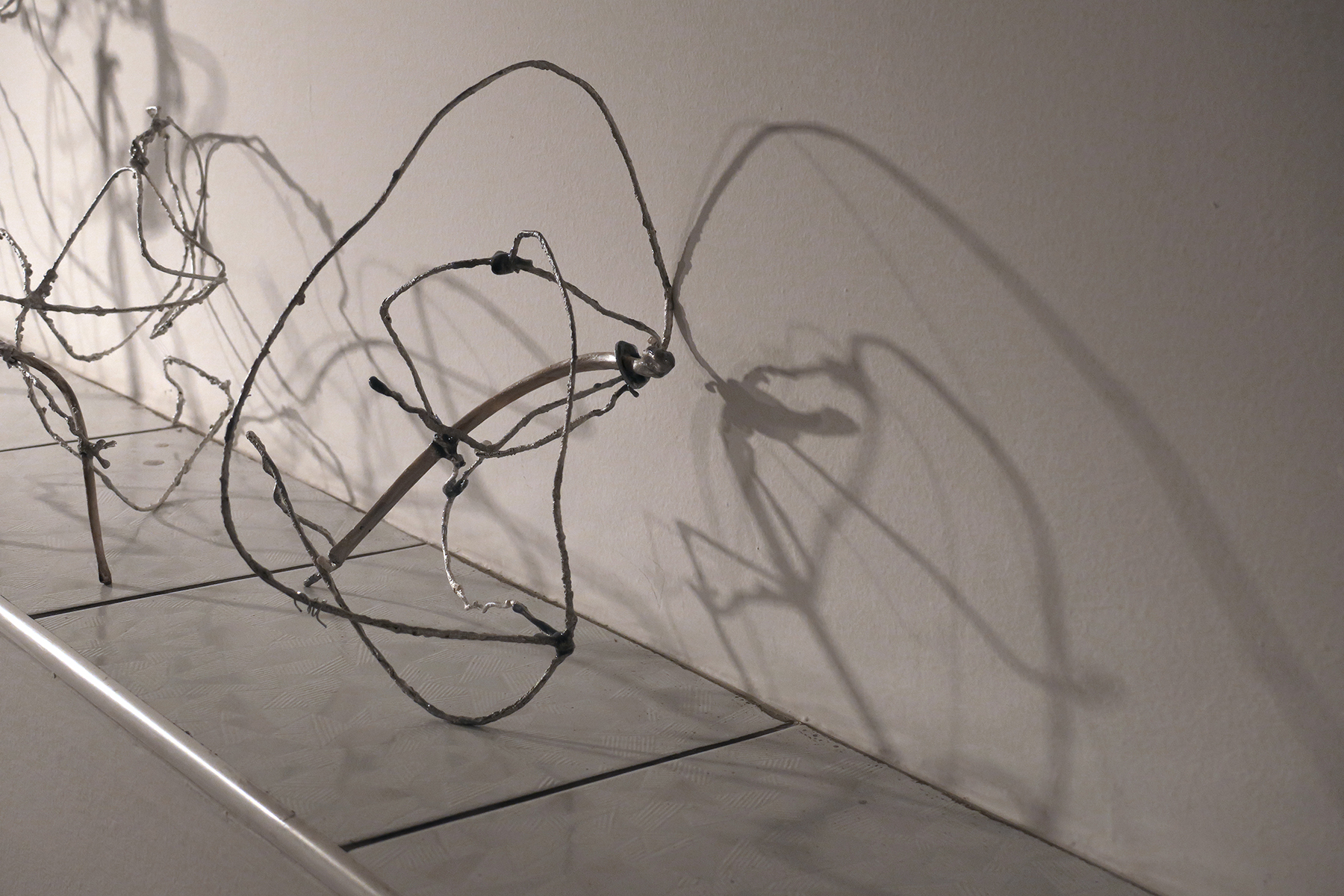
Hart’s work is often delicate here, lines and wires and bones and strands that remind the viewer of spider webs, of neurons and veins, of barbed wire, and the paths of stars.
Mysterious and magical, she explores a veritable cosmos of choice and interconnected moments; her works are sculptural weavings, metal curls and lines, fabric and fiber.
“Changing, morphing, redefining is part of being human,” Hart asserts. “The extent of my joy depends upon how much pain I’m willing to take. I do not live life in the middle. These artworks are about moving forward. I was a pioneer moving into new territory for me.”
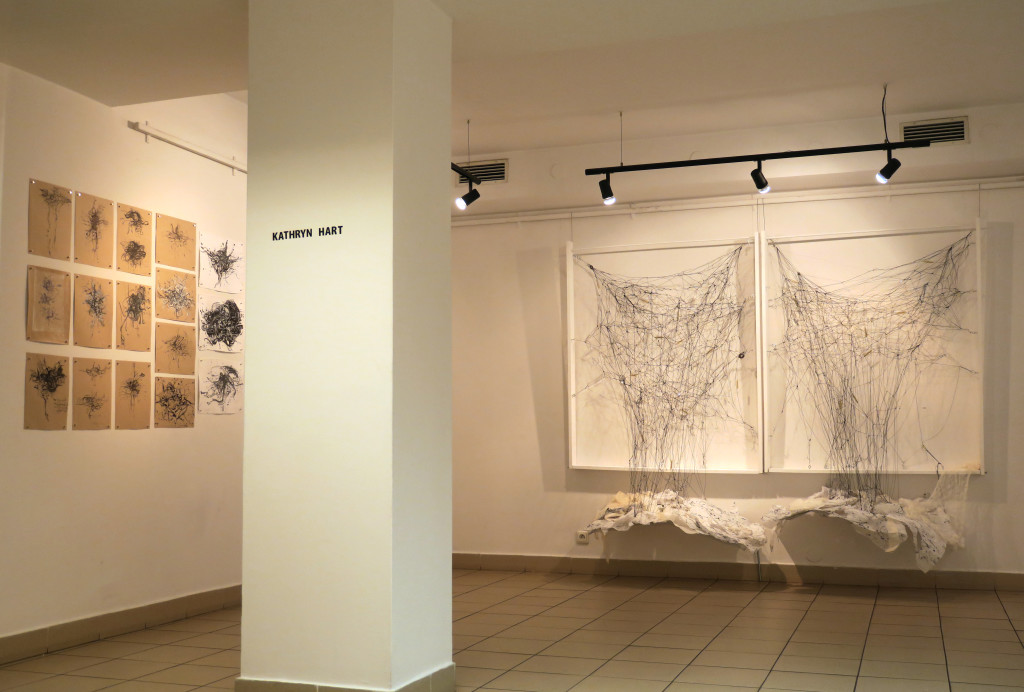
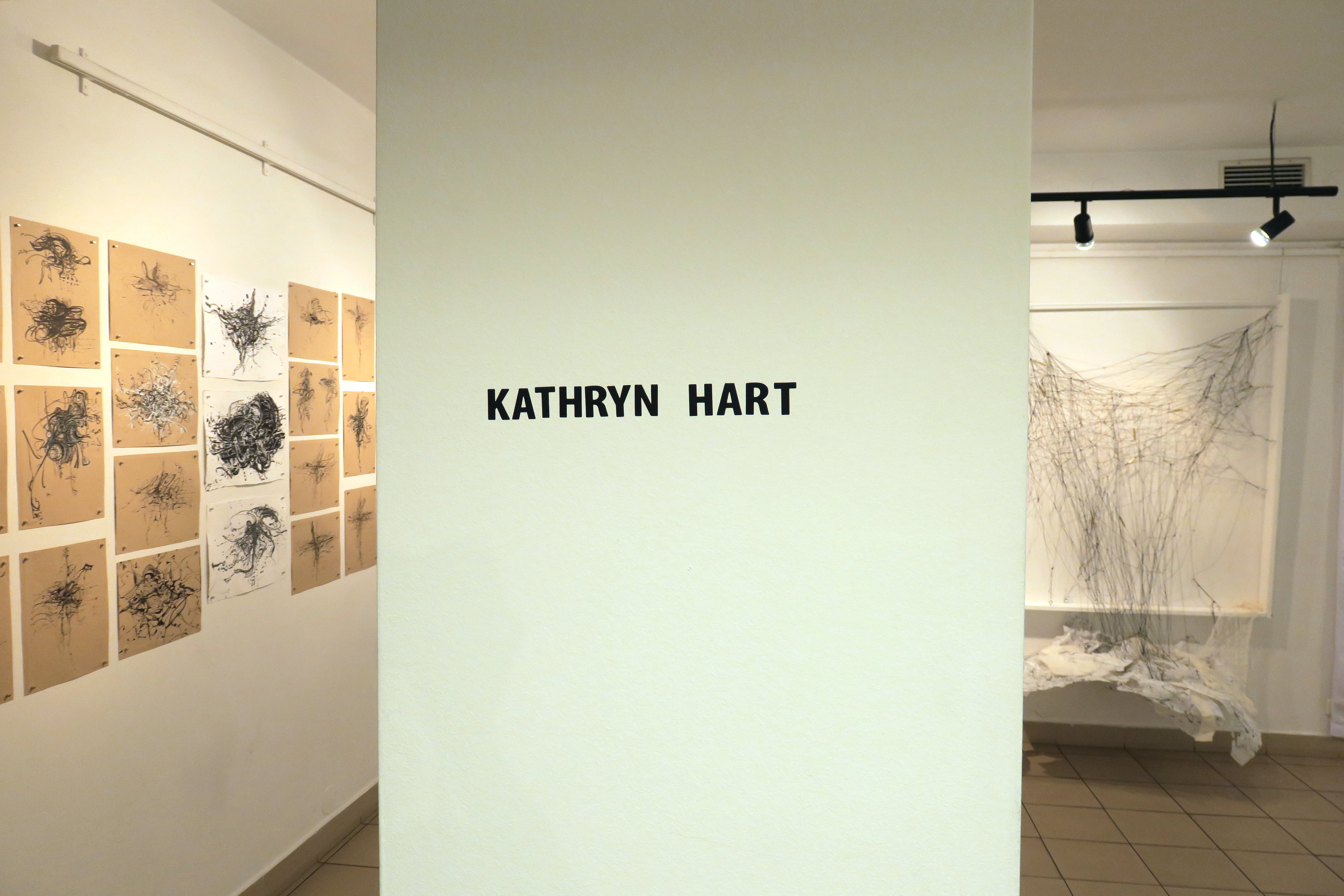
The solo show was shown at Kotlownia Galeria, Politechnika Krakowska, Krakow, Poland from September 17- October 17, 2018. Organized and curated by Dr. Krystyna Malinowska and Basha Maryanska (awarded the Golden Owl for Visual Art in 2018), the photos here offer a look at this absorbing body of work; work both contemplative and insightful.
The show was an outgrowth of what Hart describes as “An onslaught of happenings” that altered her life as she knew it at the time. “My husband’s cancer, the deaths of both of my parents, and my own struggle with an ongoing disease and trauma… I was completely derailed, turned inside out. The underpinnings of my identity were shaken. In the aftermath of such continued upheaval, what comes next?” she asks.
For Hart, what came was a search for personal truth, love, connections, and growth. “I wanted to feel comfortable in my own skin again,” she attests.
Finding the core of her identity when the certainty in her life had slipped away on many fronts, resulted in the show’s creation. It presents a tension, both in terms of its materials and its art, a searching, which the artist describes as a verb, an action, and infinite. “Decision and choice are nouns, finite. The first is open-ended and reveals opportunities; the latter is a responsibility and creates boundaries.”
Women’s roles and a feminist aesthetic are a part of the exhibition as well. “I continued my dialogue on the multitude of roles females play and are expected to play. We caretake, build and sustain a home life, clean up the mess of others – emotional and physical; we engineer our lives to dovetail with our loved ones, and explore and create vast opportunities for ourselves,” Hart explains.
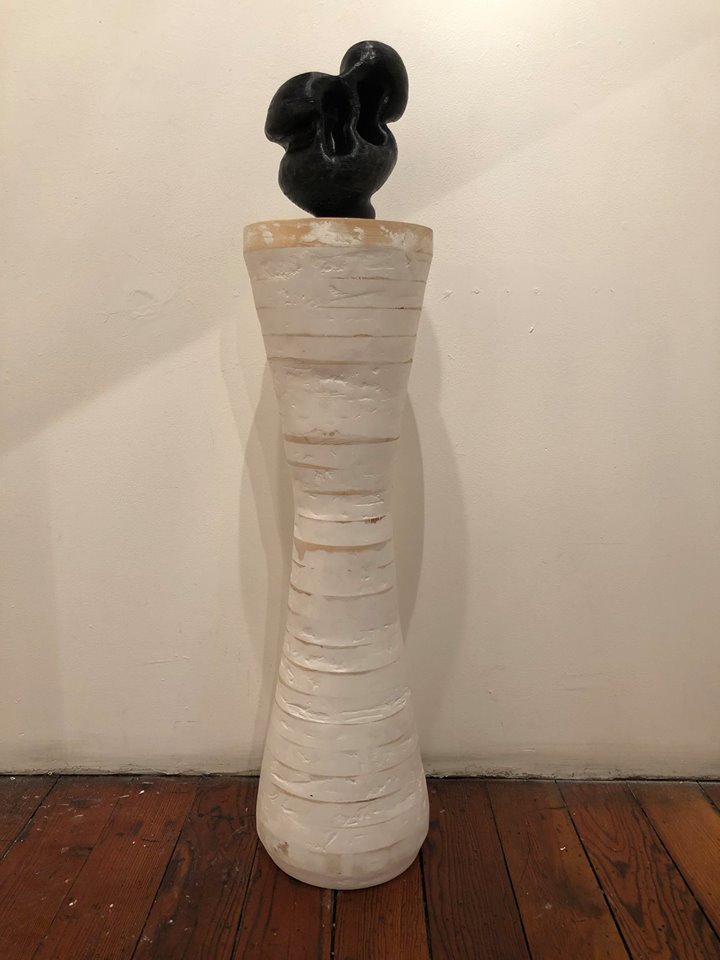
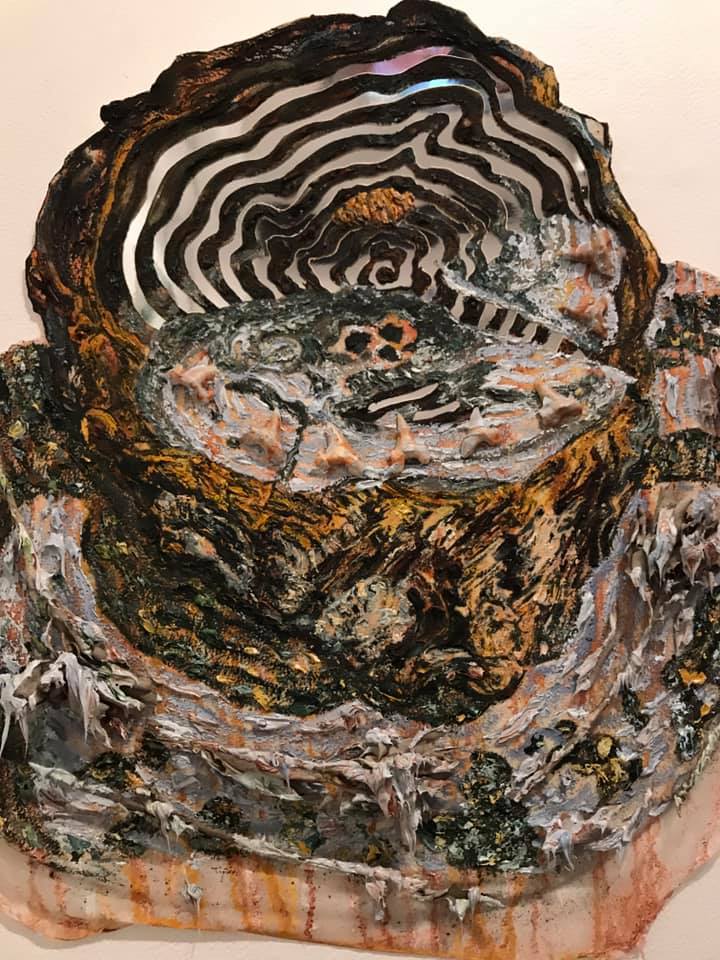
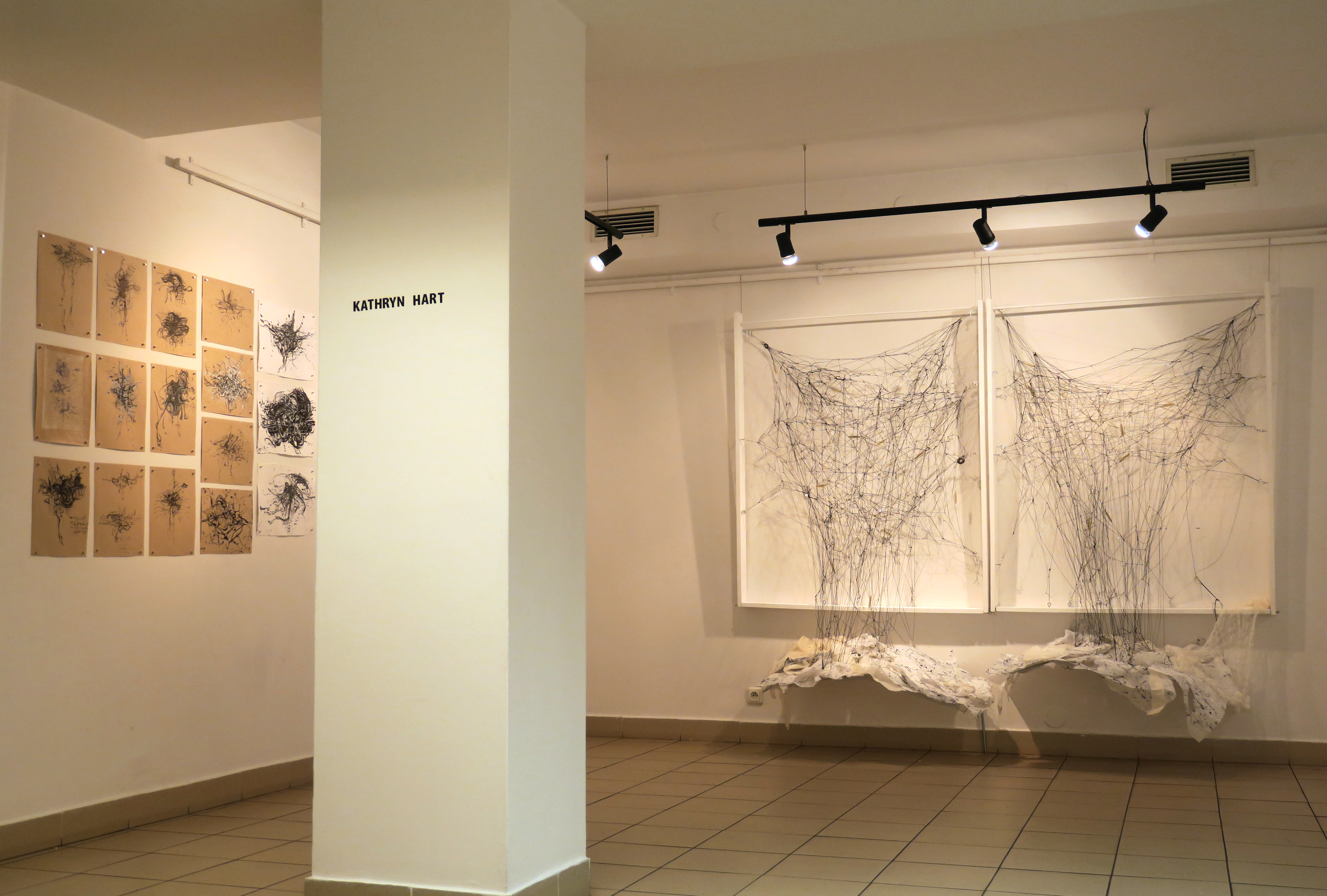
Thematically, her work was expressed through site-specific installations, ink drawings, wire sculptures, paper wall sculptures, mixed media paintings, and small assemblage sculptures, each unique. There were 78 artworks exhibited in all, created over a period of 4 years. All are abstract in nature, utilizing line, space, gesture, and the shadows they create as another element of form as well.
“I examine the dichotomies of movement and stillness, contemplation and decision, space and line, and search and decision,” she says.
The muted grey, white, black, beige, and metallic color palette in each of her works here allows viewers to contemplate each image as a piece of the whole; its subdued quality belies its graceful, evocative, even ghostly shapes.
In past works, Hart has created denser surfaces, involving multiple layers, mixed media and burlap, glass objects, and found bone.
Here, as with all her work, form follows content, she says. “These materials are airy, ethereal, and light…ripe for movement and growth. There is ‘entity’ energy in both the 3D and 2D works. The work is organic and intended to connote the inner energy of an organism expanding and moving from internal forces, like an amoeba which can alter its shape and propel itself forward by extending and retracting pseudopods, or ‘false feet.’”
Indeed, the light in which the works are exhibited forms an additional dimension to each piece. “The wire sculptures and their connecting shadows are the most direct and simple example. Found bones, usually deer, are incorporated into most of my work. In the wire sculptures, I only used rib bones. Ribs protect the heart and are elegant, graceful lines full of energy. Their shadows sweep along the wall almost of their own accord.”
As Hart recognizes, the shadows “continue to creep and move without the viewer present.” They add an element of something alive and shifting to the line and wire sculptures; and she postulates that the pieces may also add another dimension to her work.
The sense that these works represent something universal, the human body, space and time, is hardly random. Her work here follows an artistic language that Hart calls “influenced by my doctor/scientific family whether I want it to be or not. I learned suture knots from my plastic-surgeon-father. His knots would both join and conceal. I use this language in my work as knots can be entanglements, junctures, bindings, obstacles, hurdles, gates, coupling and memories. Some knots hold strong – heal – while others can slide -conceal and yield.
“Making the installation of primarily lines and knots is a bit like making lace. Each individual part is necessary or it all can fall apart. It is both delicate and strong. It is the sum of its parts, yet each line and knot are deliberately placed. Making it is a form of meditation. My mother was a microbiologist so my initial knowledge of and interest in microorganisms stem from her.”
She describes the spaces between the lines in the installation as places of rest and contemplation, aperatures, openings, portals. The lines themselves reveal potential paths ahead and scars of the ones just followed.”
“Line represents journey, connections, strength, simplicity, scars, tethers, choice, veins and channels. Lines are also tangled emotions, truths, a web of stories. Lines tied together both lead towards and away from each other.”
There is nothing static about the work here; light and shadows alter their construct.
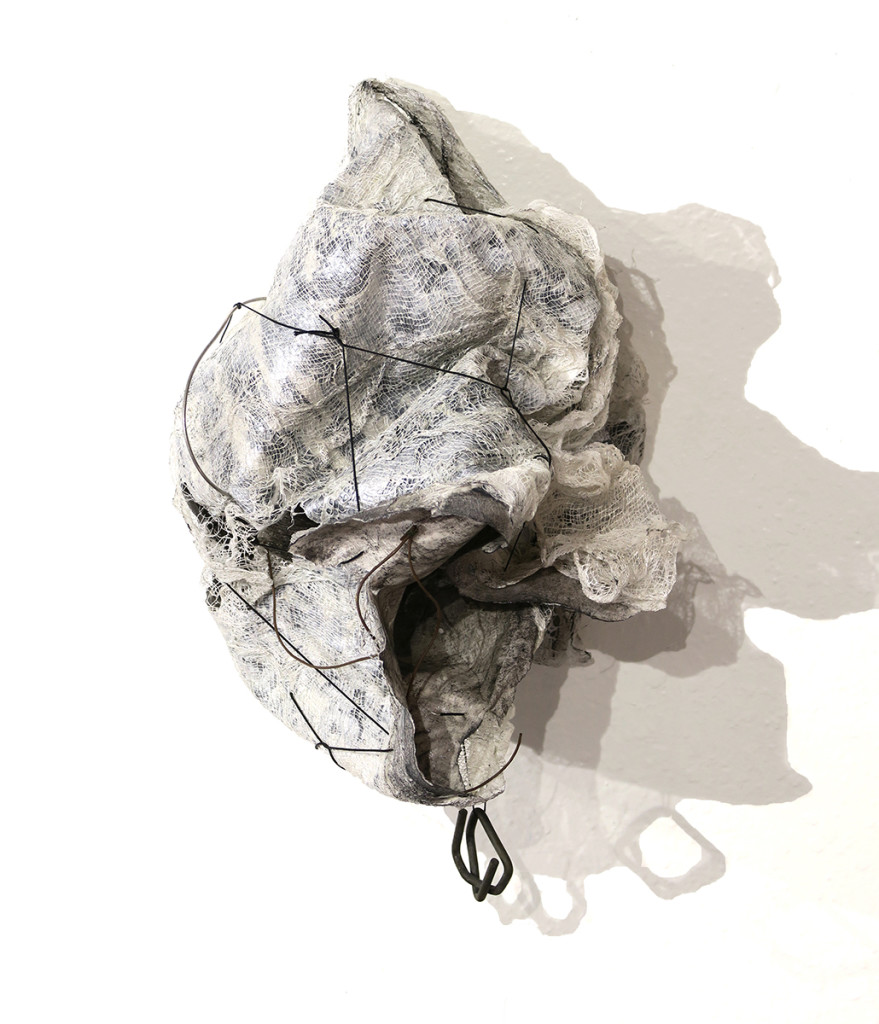
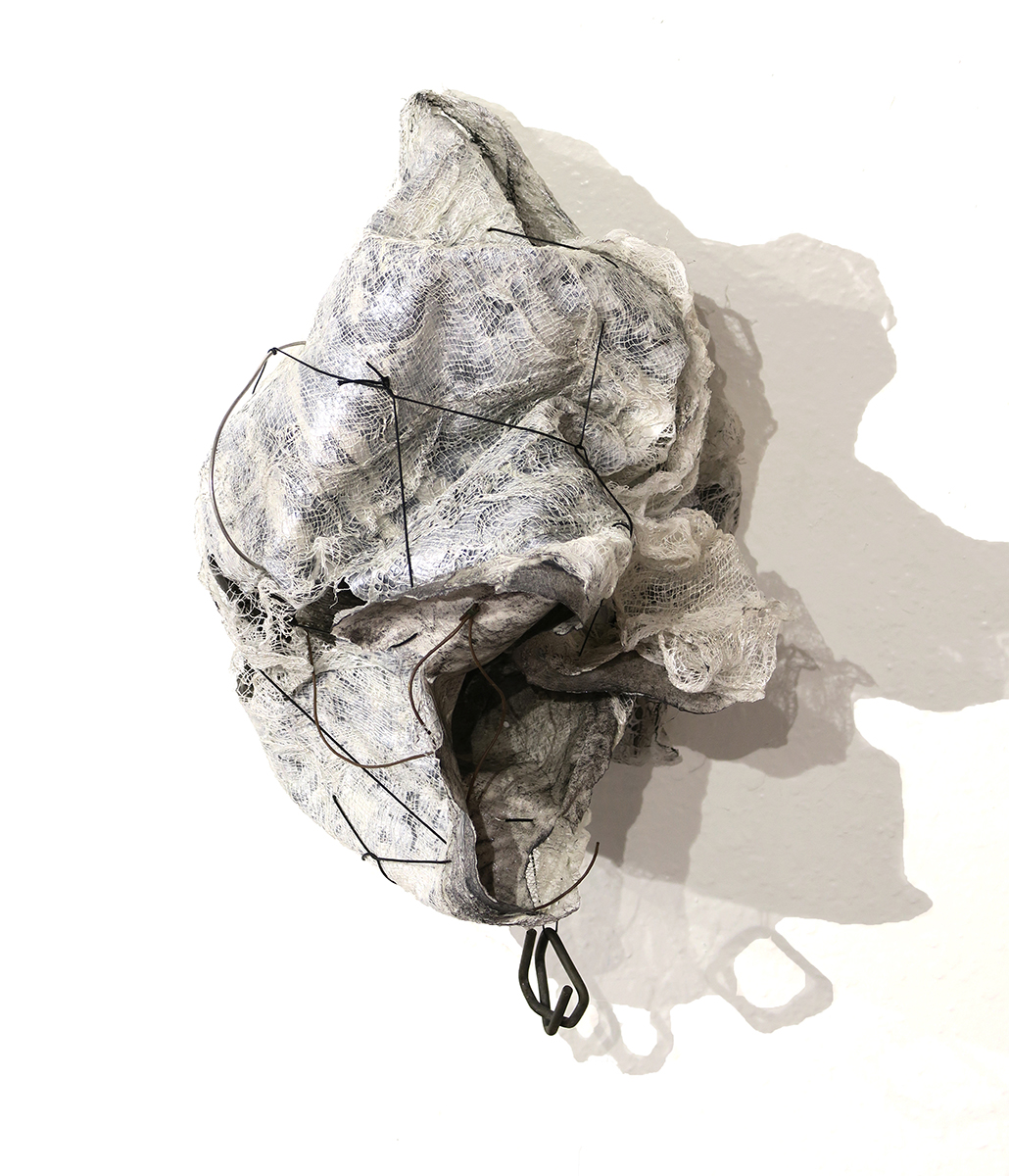
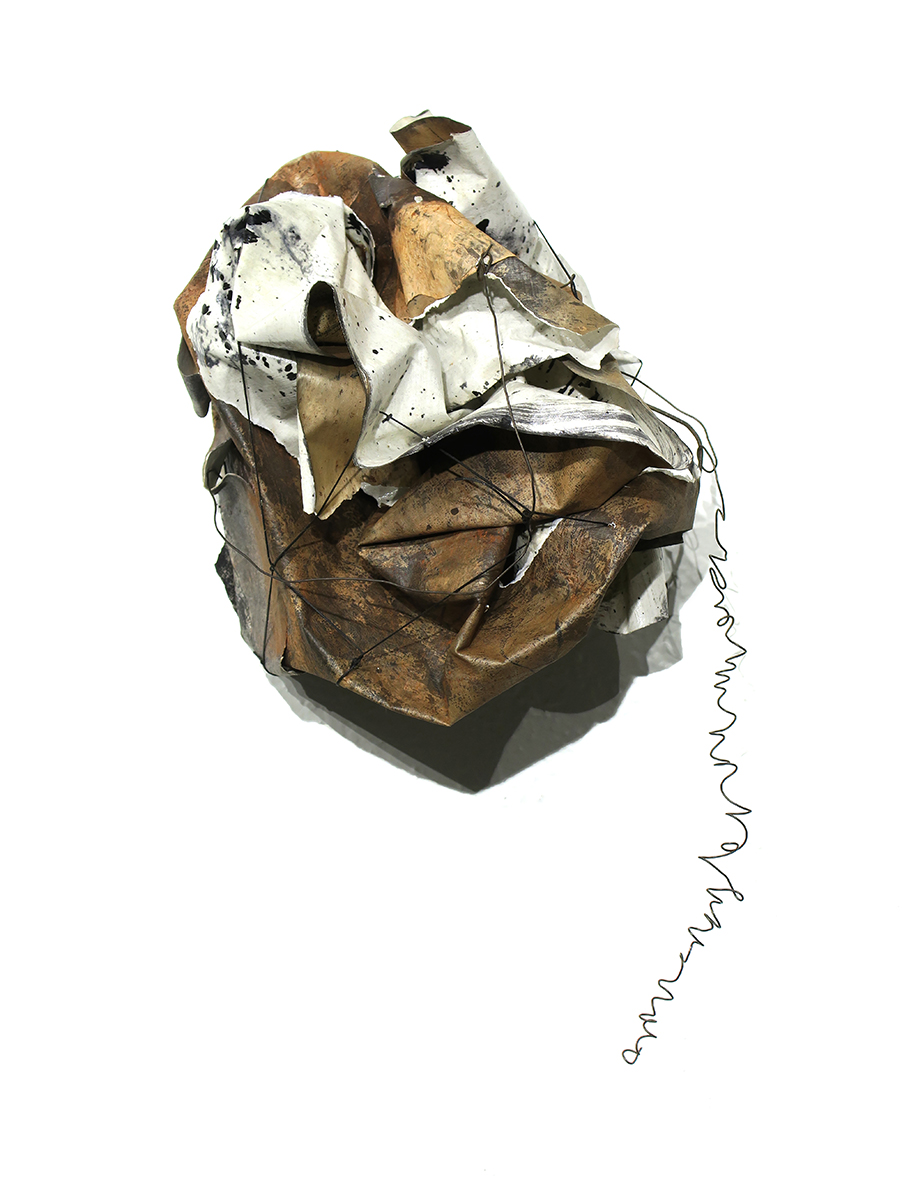
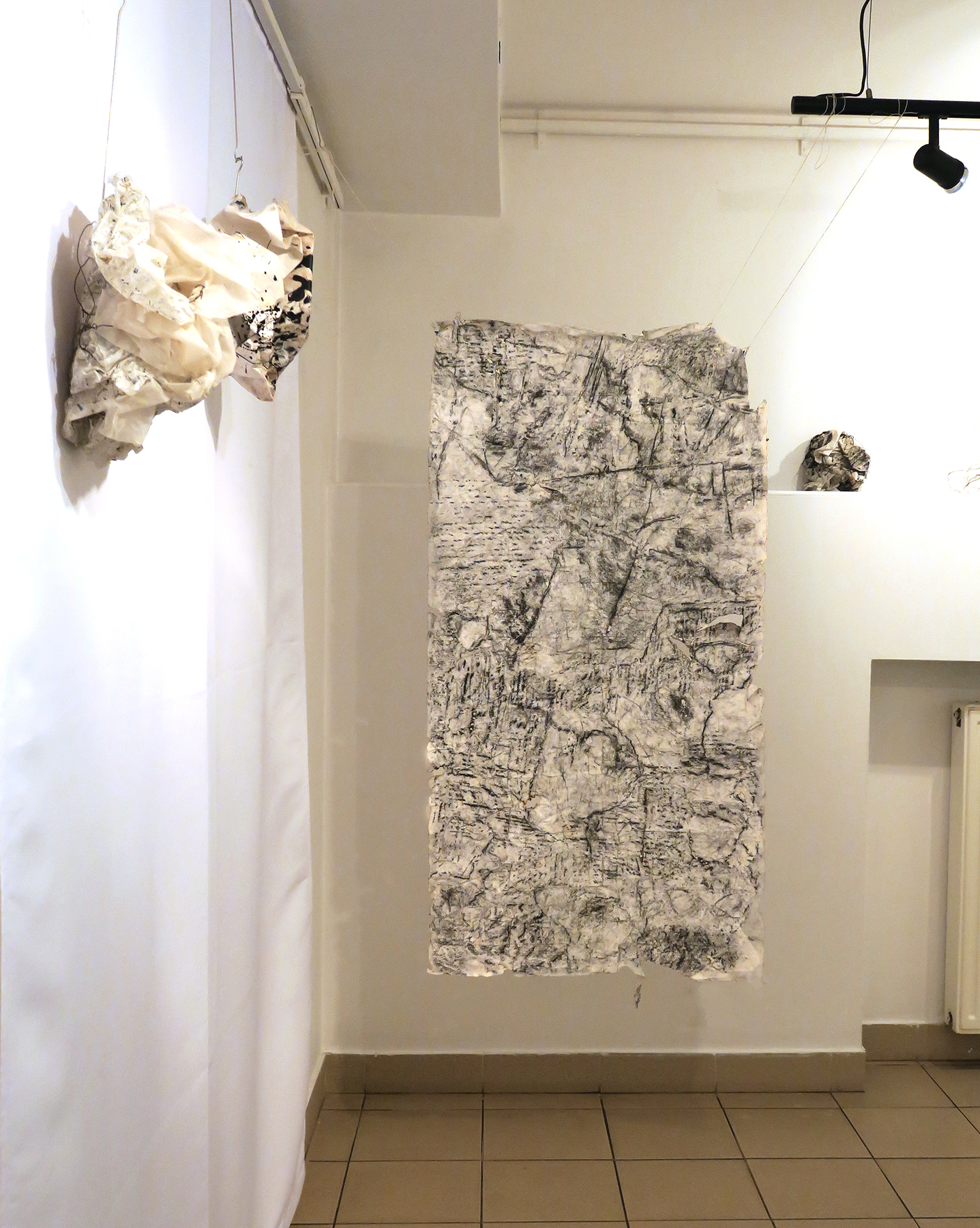
Her paper sculptures, part of her “Making Space” collection were the first pieces she made. Titled with eliptical phrases such as “Parse;” “Toss or Place #1” or # 2, the works are shaped from crumpled, torn, handmade paper, twisted and often turned inside out. The titles refer to decided which memories to keep and which to let to go; the works are as delicate as precious memories, but need to be “set aside to make space for new memories,” Hart relates.
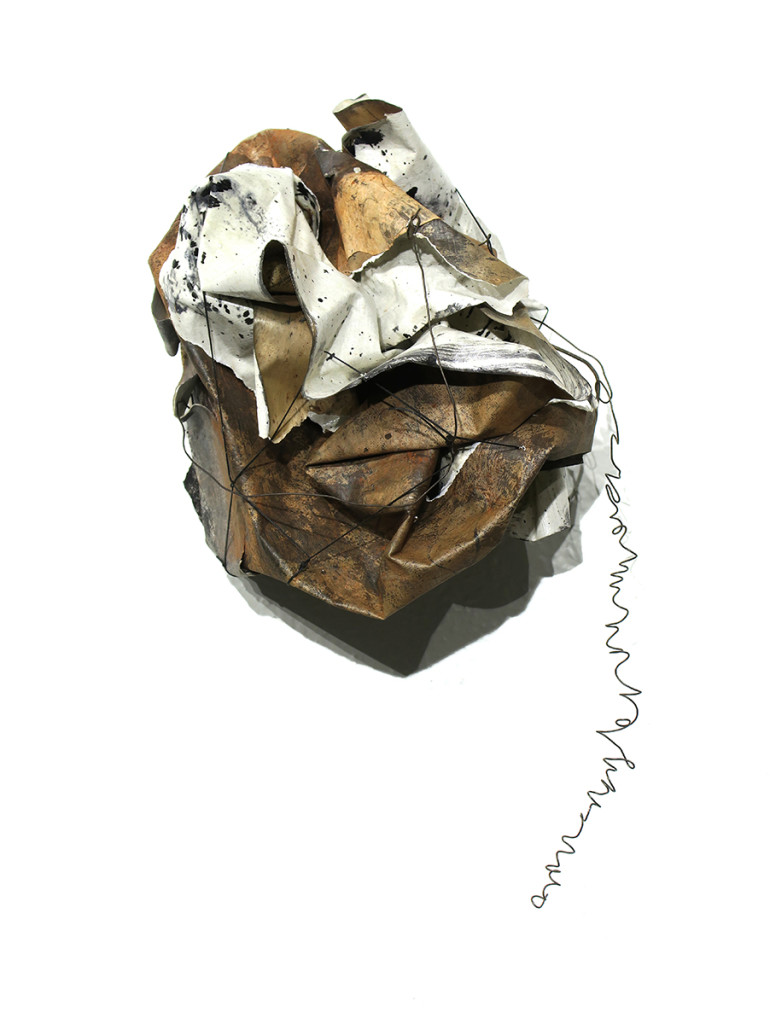
“They remind me of writing different drafts or poems…the writer with crumpled pieces of paper littered across the floor. Discerning which have nuggets to preserve, and which should be tossed is necessary.”
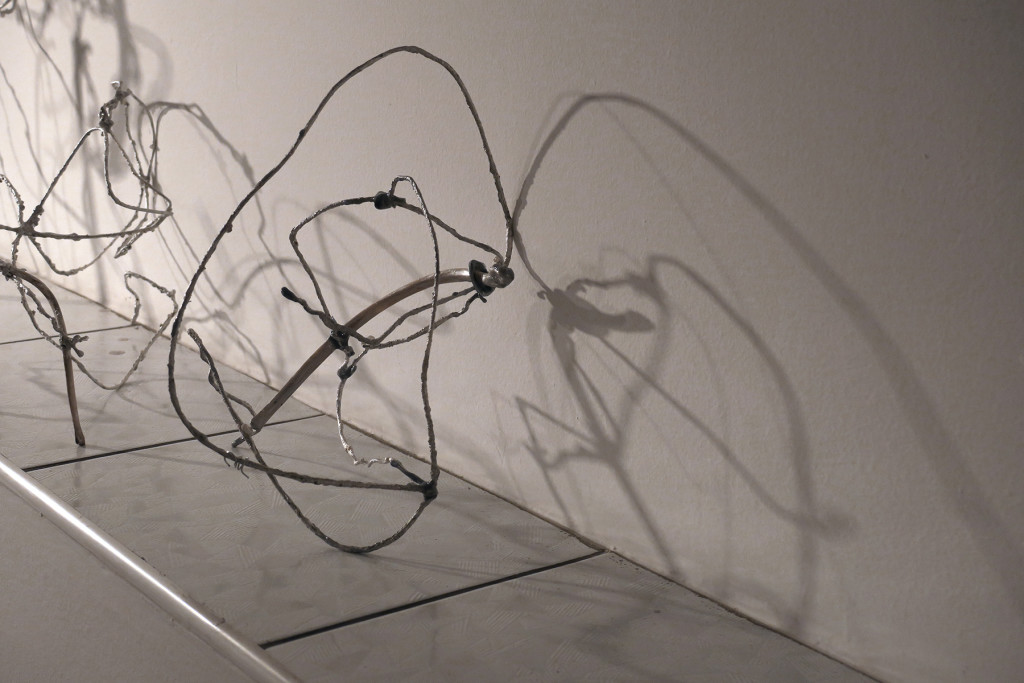
Her wire sculptures, the “Cellular Connection” works, represent for Hart a new beginning, starting with the most simple, single celled organisms. “The shadows they produce are gorgeous, elegant and full of energy.” Hart views these sculptures as “drawings in space,” single-celled beginnings, an exoskeleton; energetic and sweeping shadow is used as form.
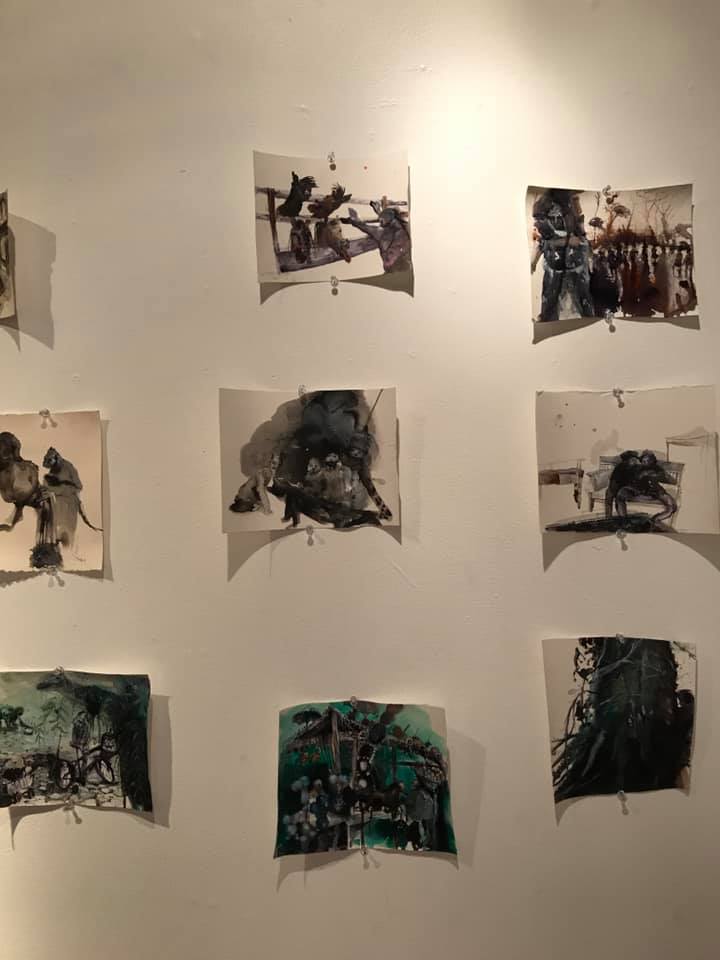
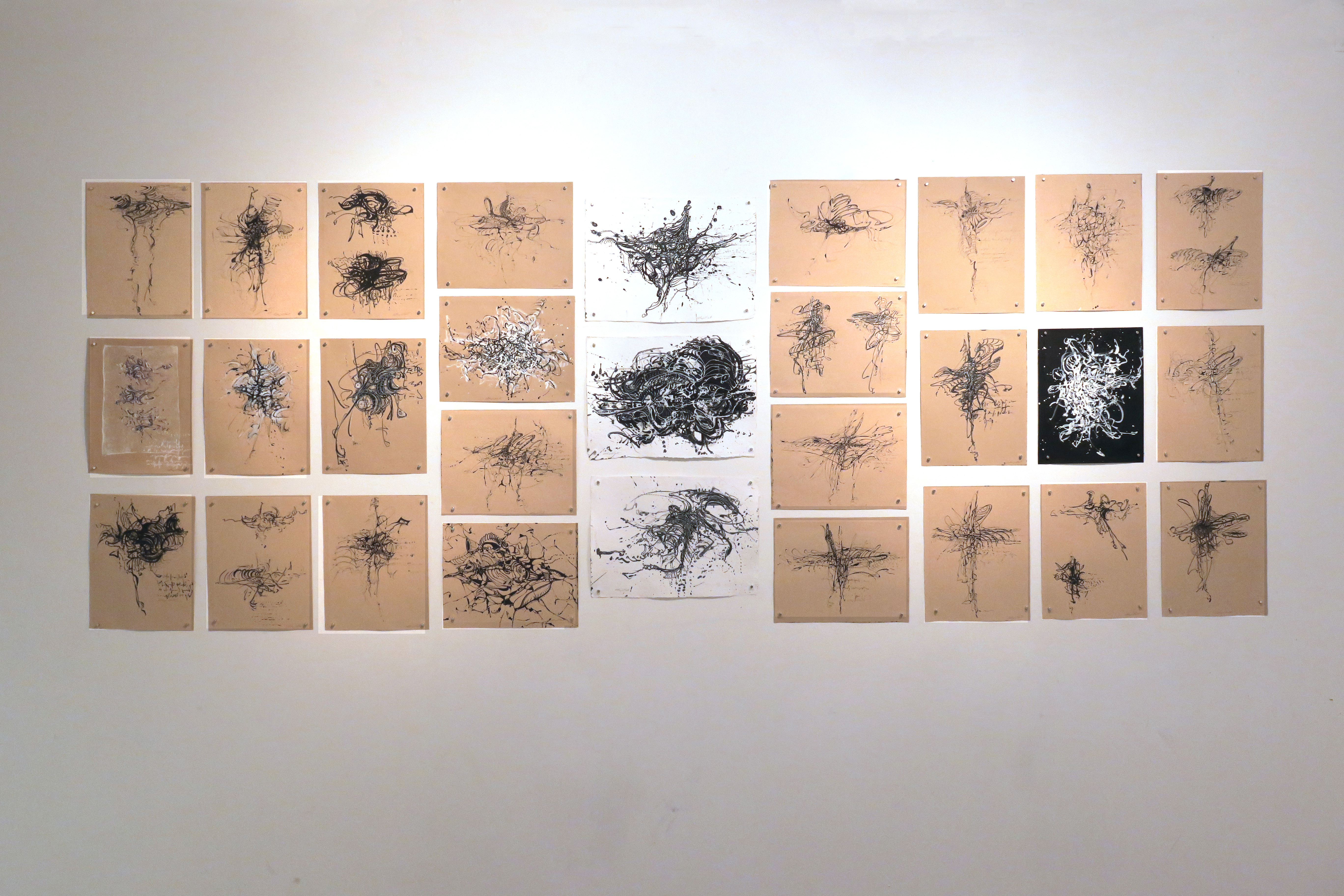
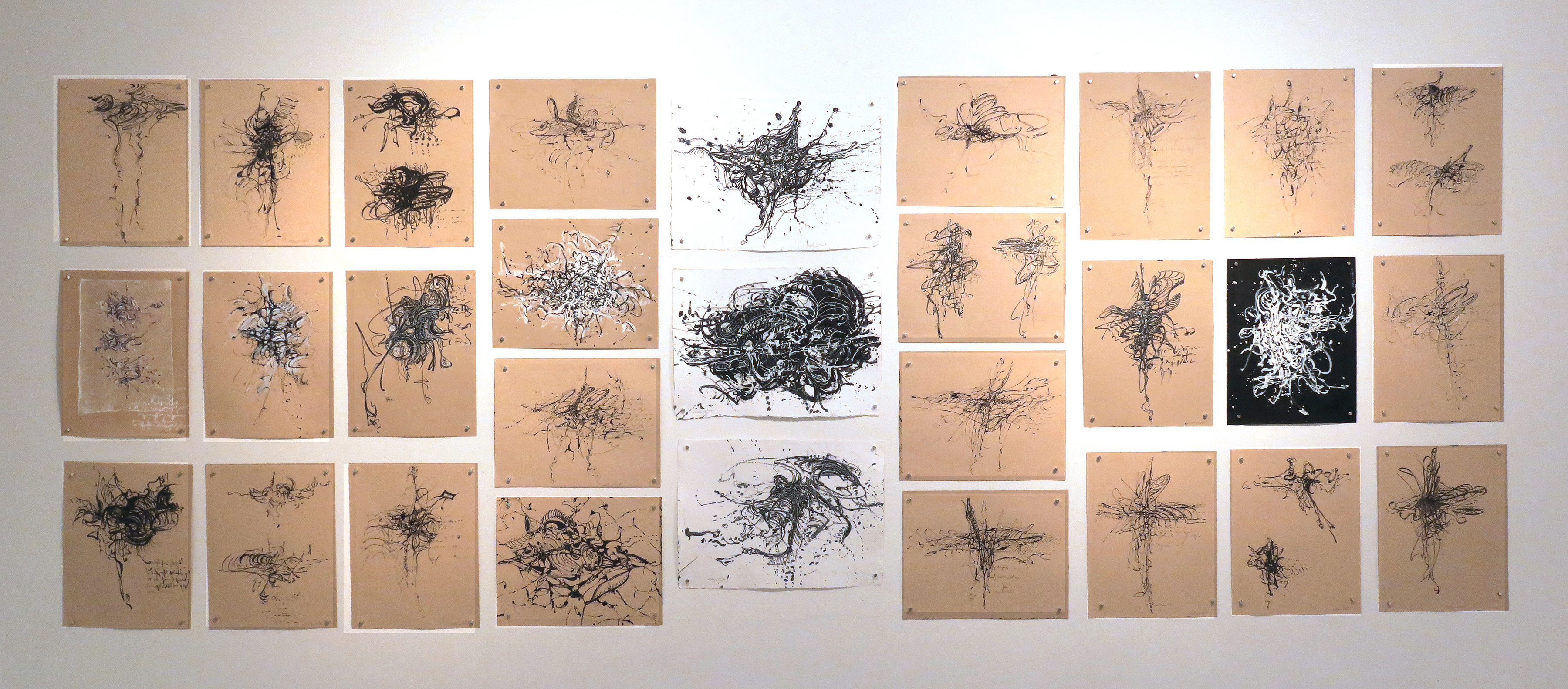
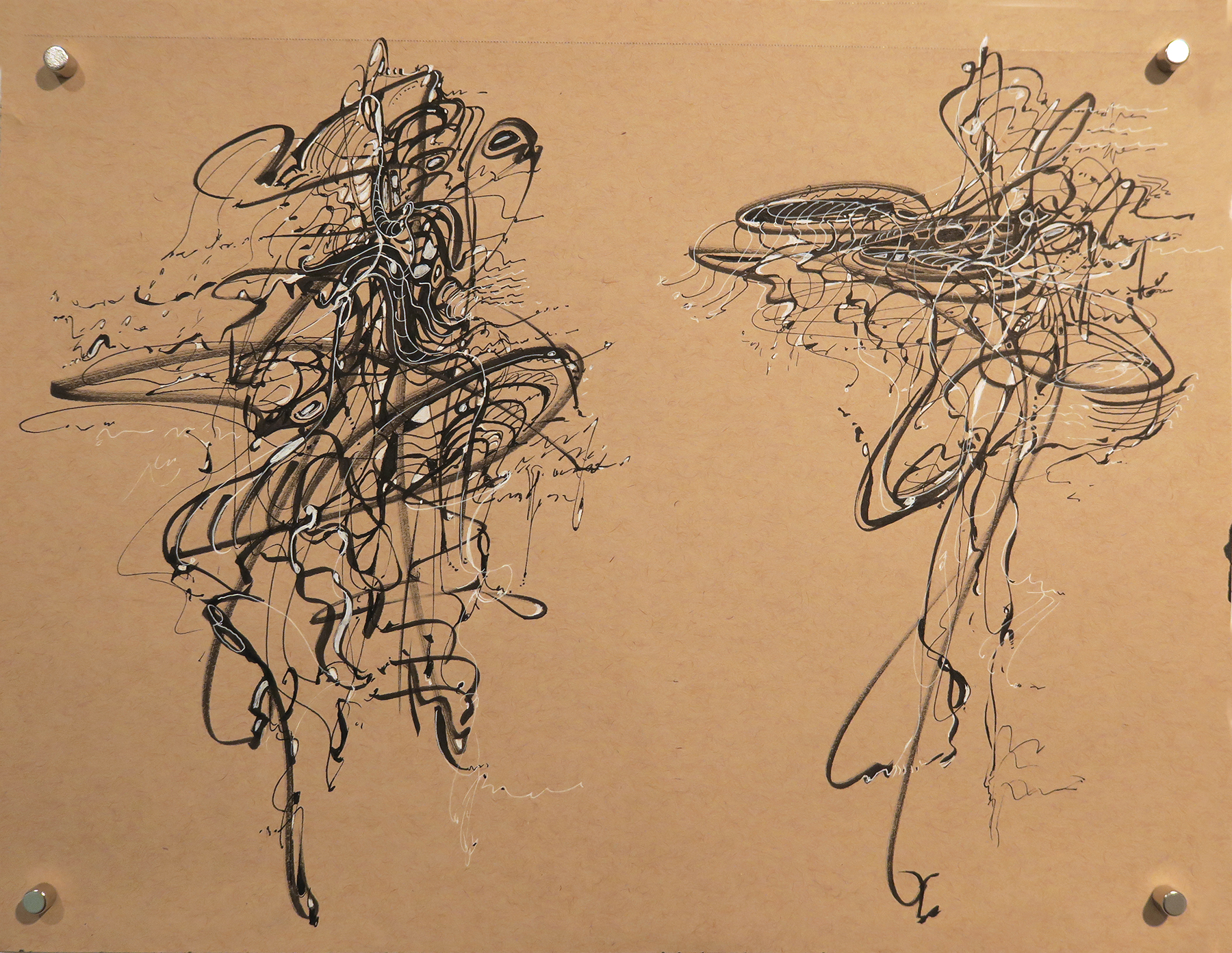
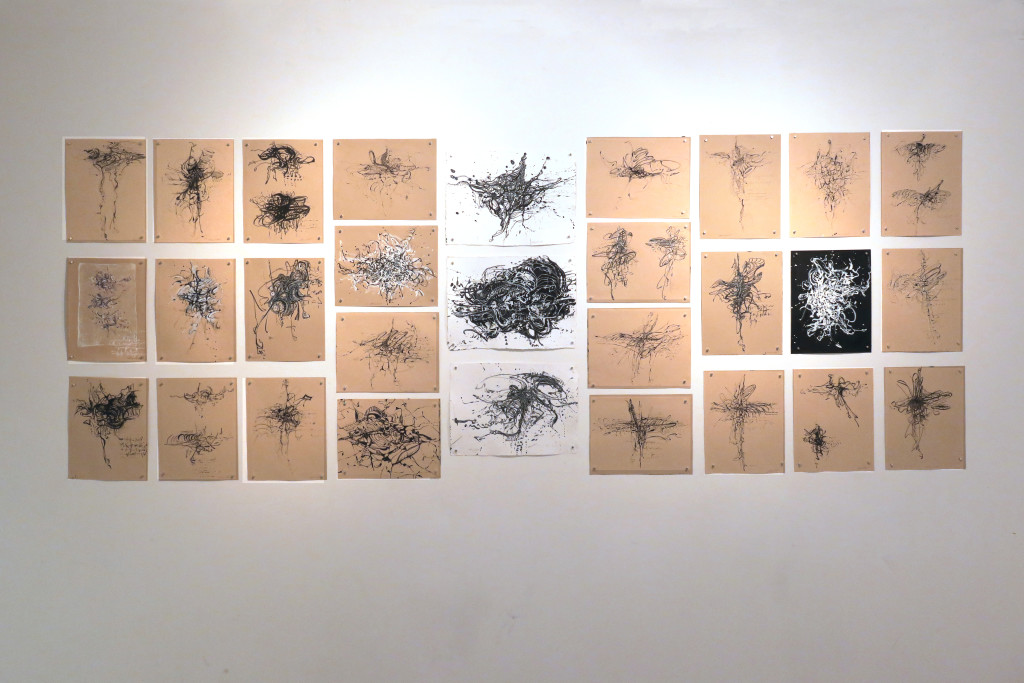
“Back and forth I would work on the installation and make the drawings, black and white ink on toned paper. I think one fed the other. Both of these media are the most complex,” Hart says.
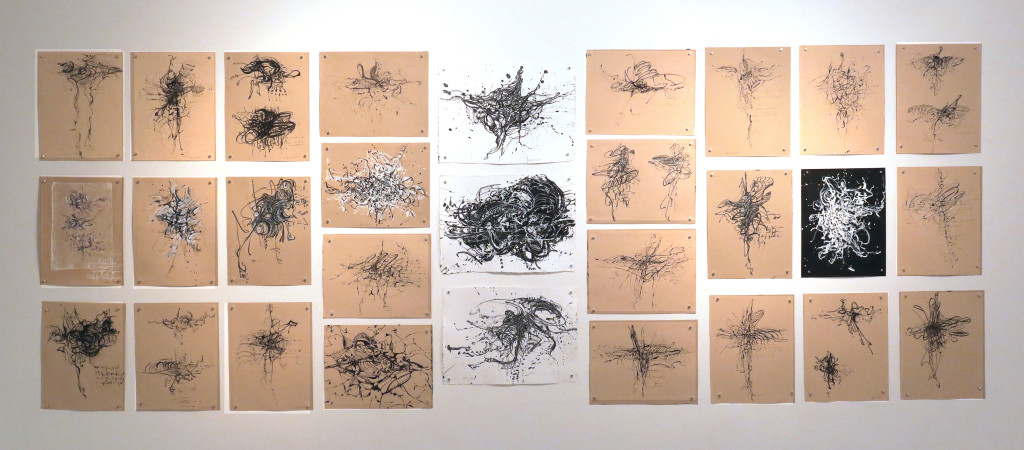
There are 29 black and white ink drawings on toned paper here, meant to be seen both as a whole, and as a complete artwork individually. She compares them to the symbols of the Periodic Table, each with unique properties. Their creation was time consuming, according to Hart. “Like a watercolor painting, there is no erasing.”
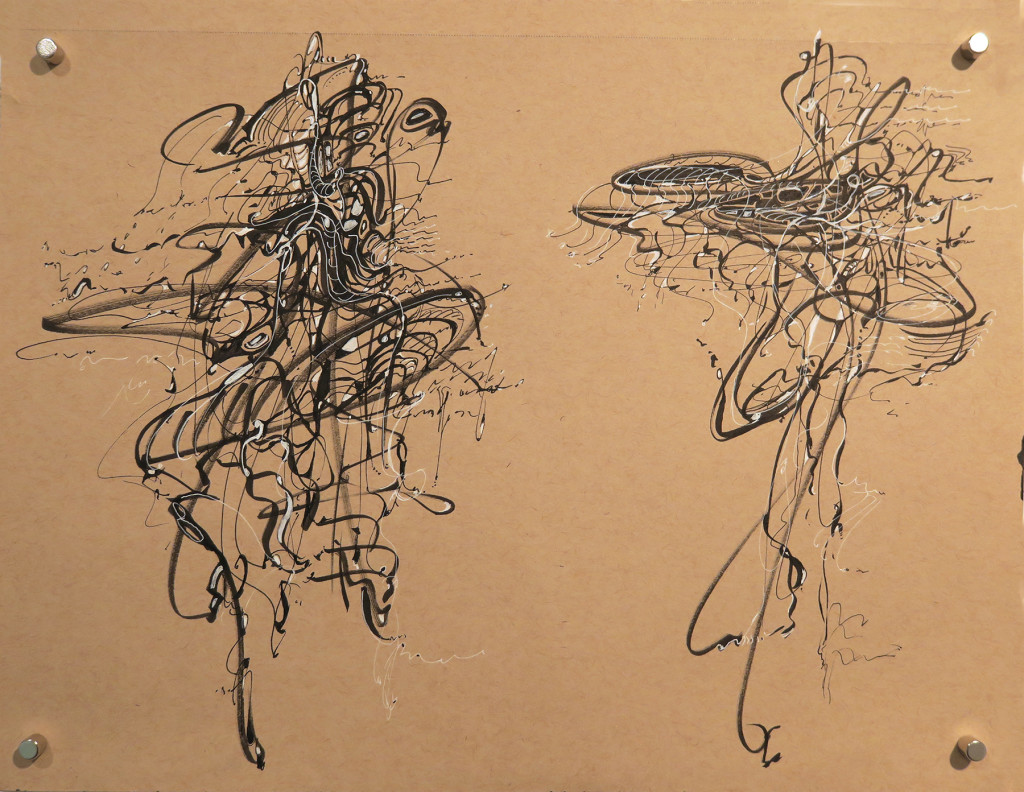
According to Hart, “Each line is a choice which cannot be undone, yet the drawings must be meditative and freely done, almost without thought or they look stilted and constrained. Each is lyrical and is intended to be a look inside an entity.”
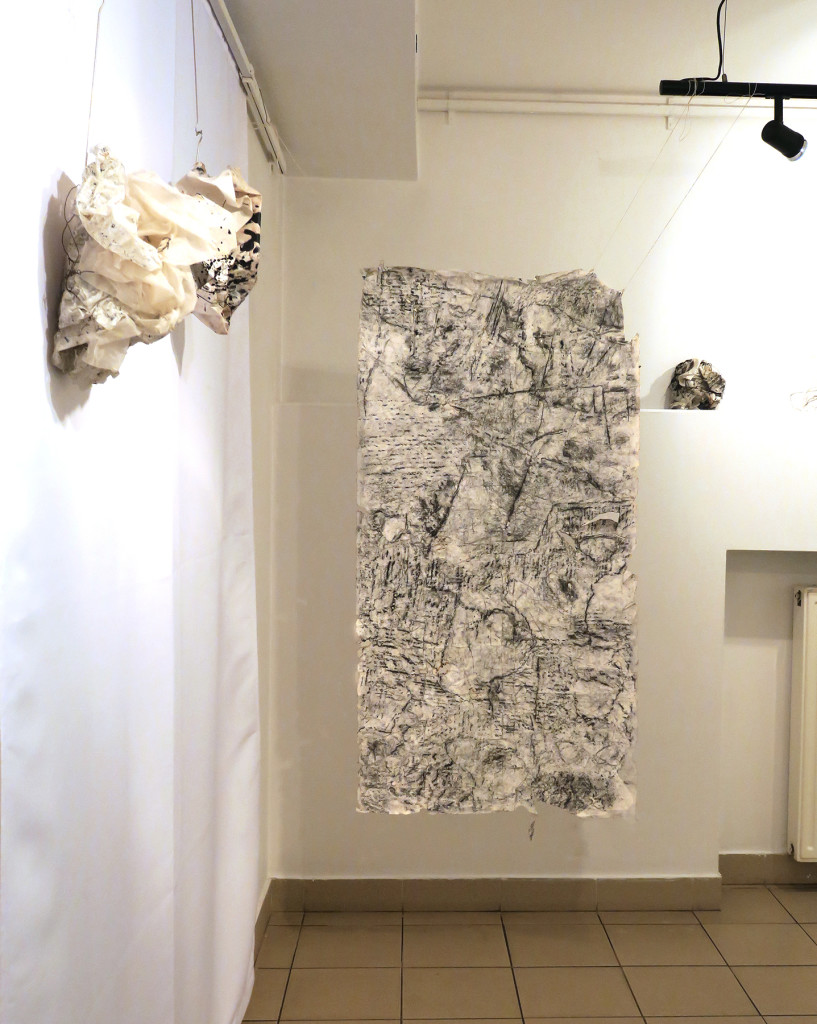
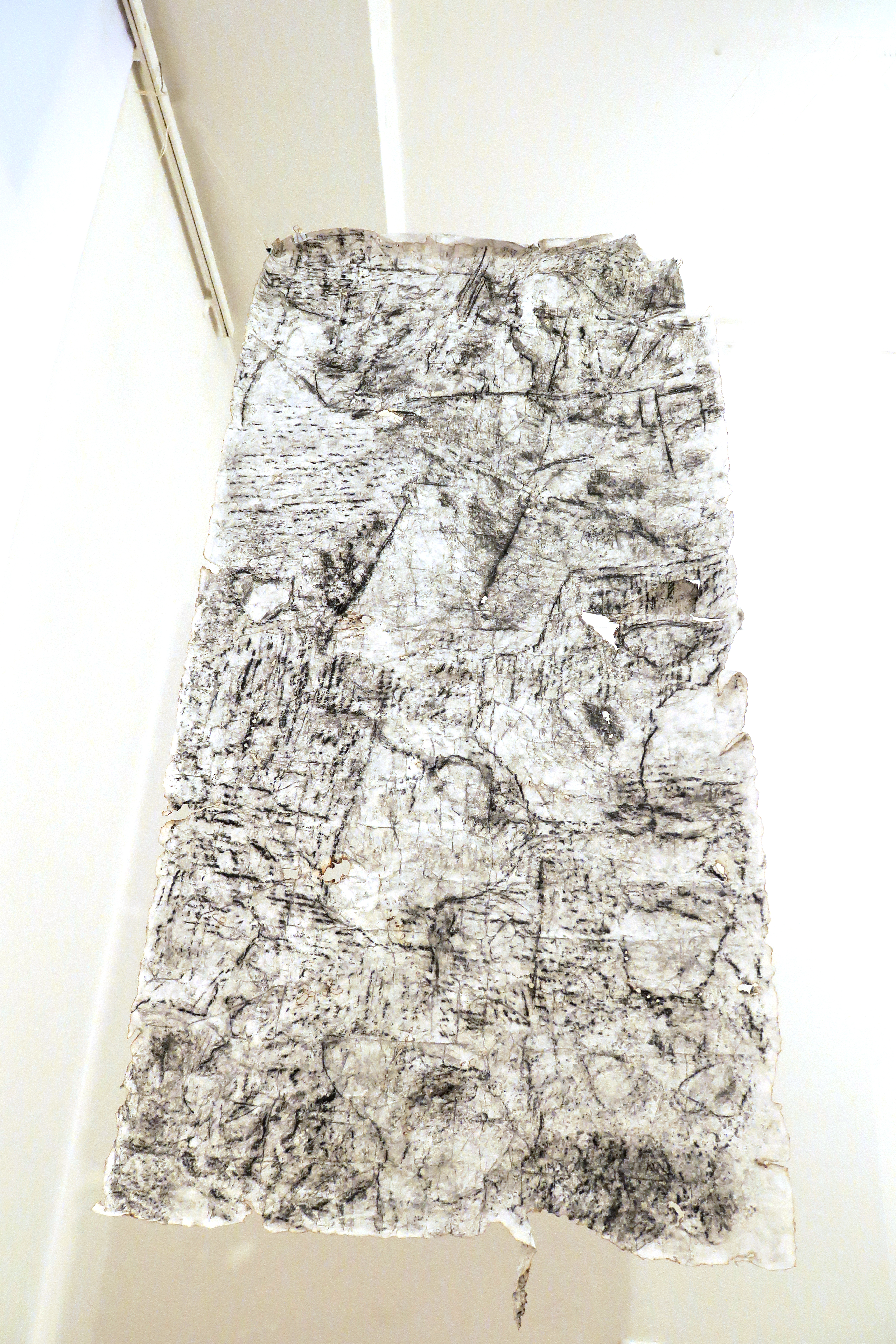
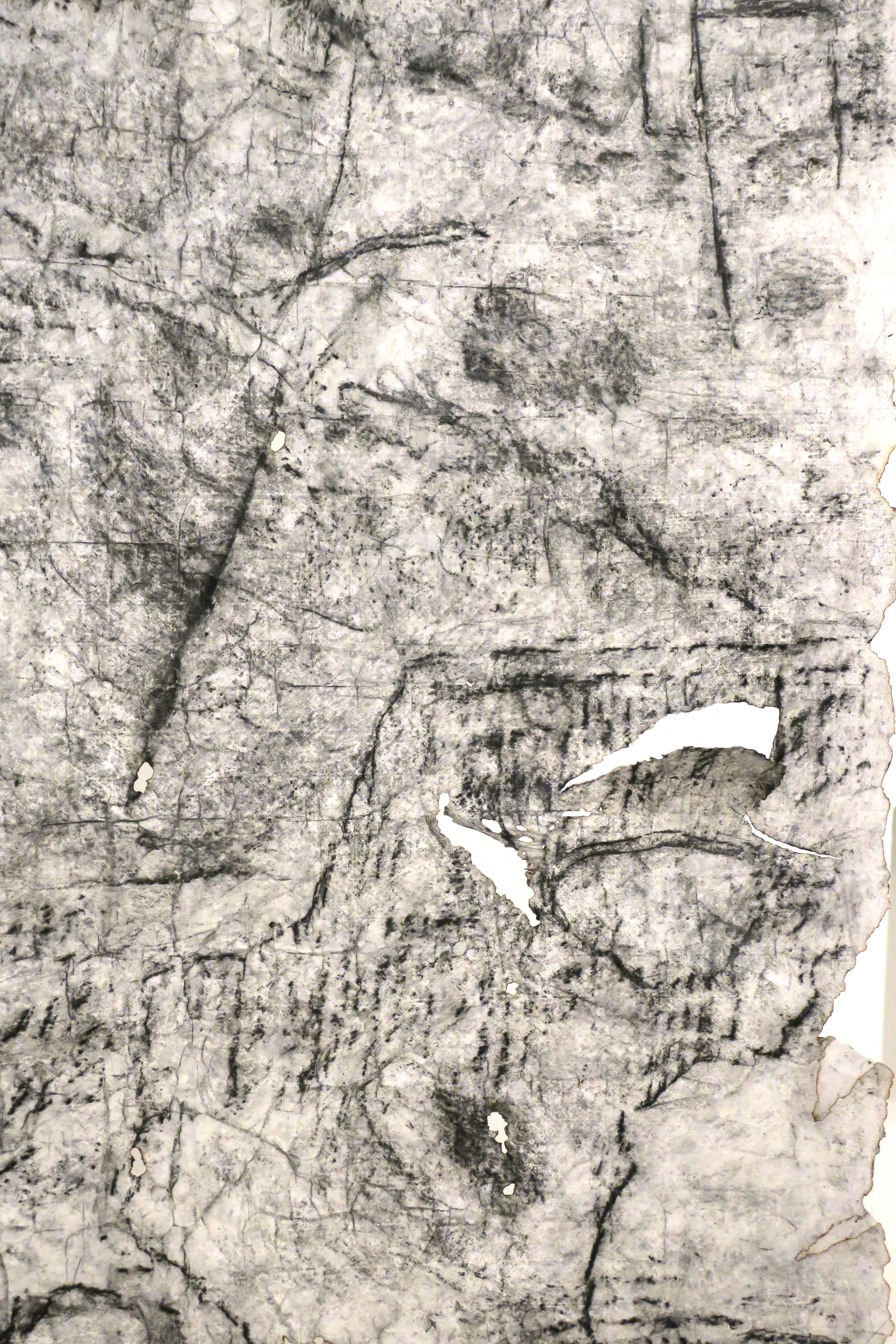
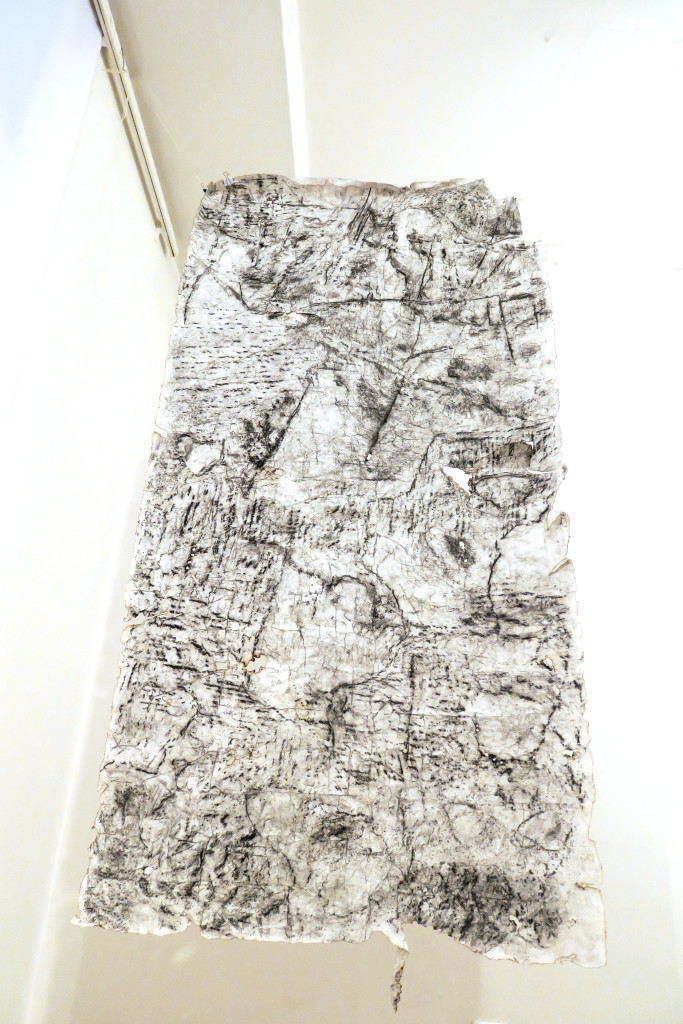
Created specially for this exhibition was “Aspire and Toil.” Consisting of an ephemeral charcoal rubbing, double sided, sumi paper, charcoal and wax, the large scale piece was created on site in Krakow and inspired by the city itself.
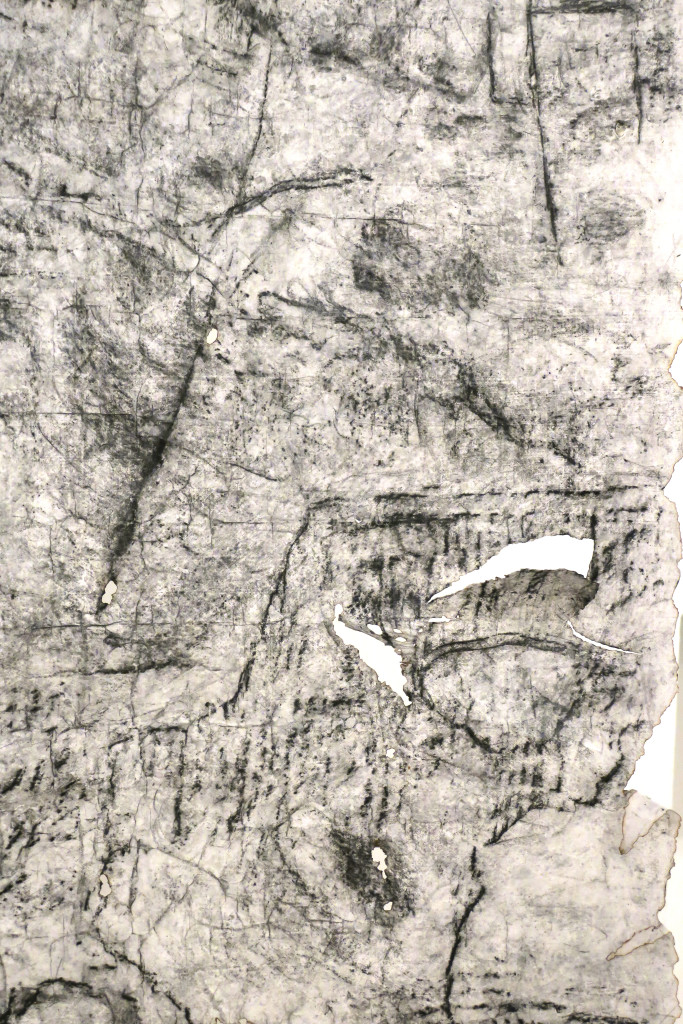
“Krakow has never been bombed and exudes history from before the 300s. One side of the rubbing was made from stones of both the oldest gothic and the oldest renaissance church which sit side by side. This side of the rubbing represents the hopefulness of and in humanity, the aspirations of the individual and hopefulness. The other side of the work, the ‘Toil’ side of the rubbing was made from the stones on the cobblestoned streets…the streets that citizens walked every day while they loved, protected and built their city and a society filled with artistic and scientific endeavors,” Hart states.
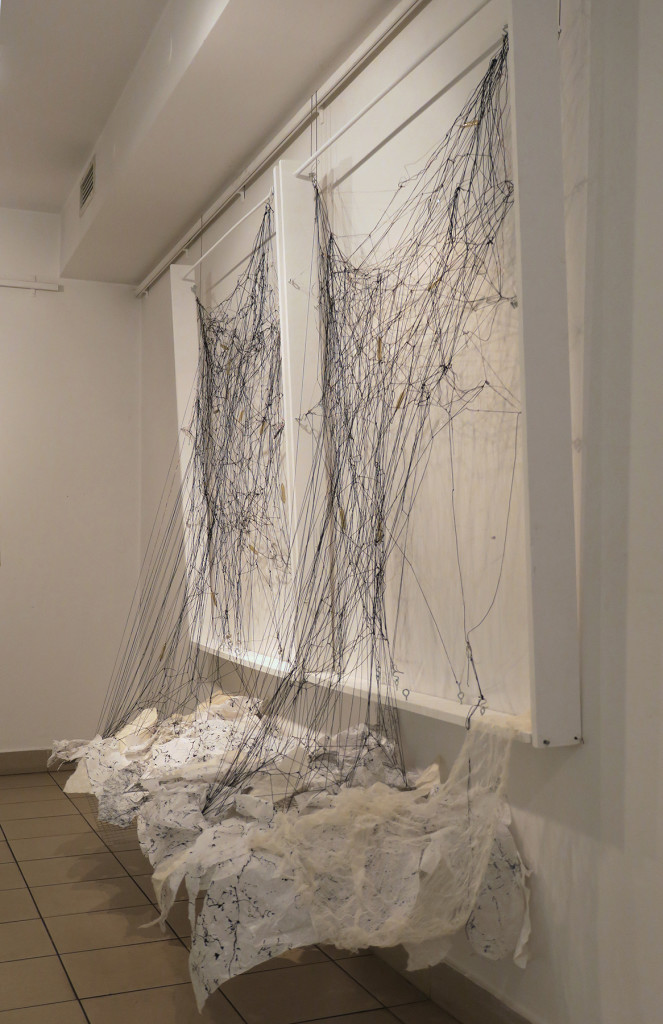
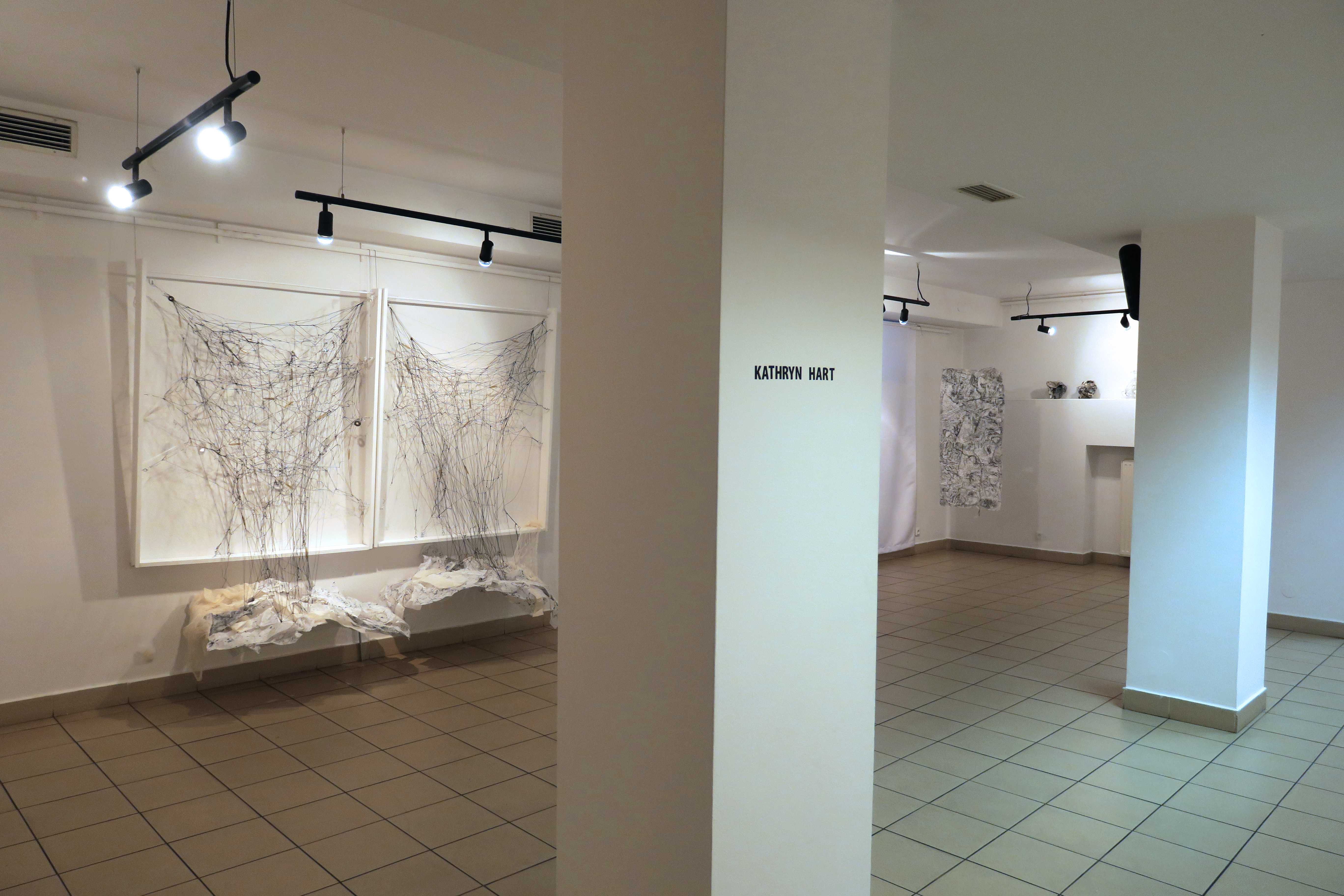
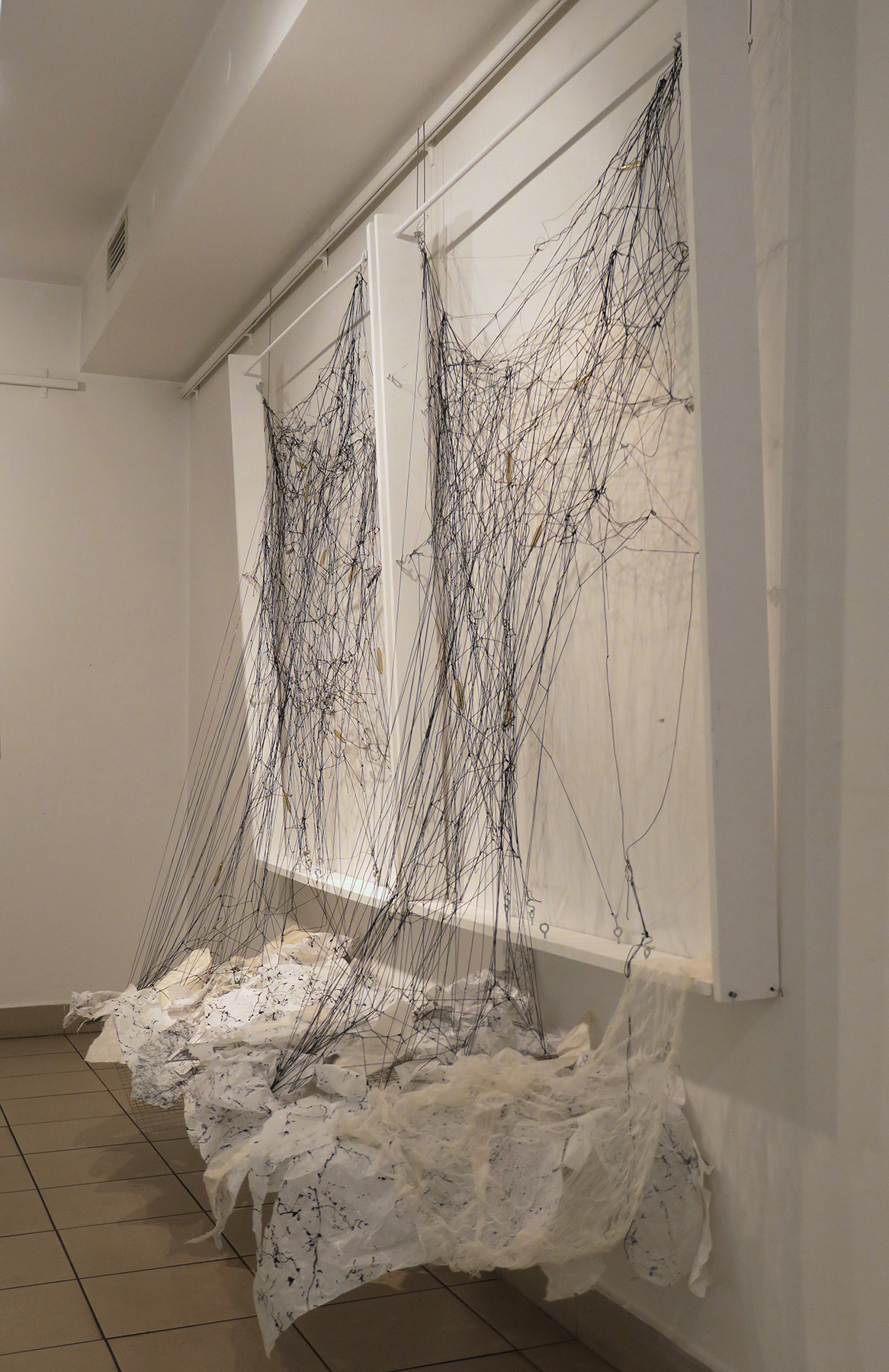
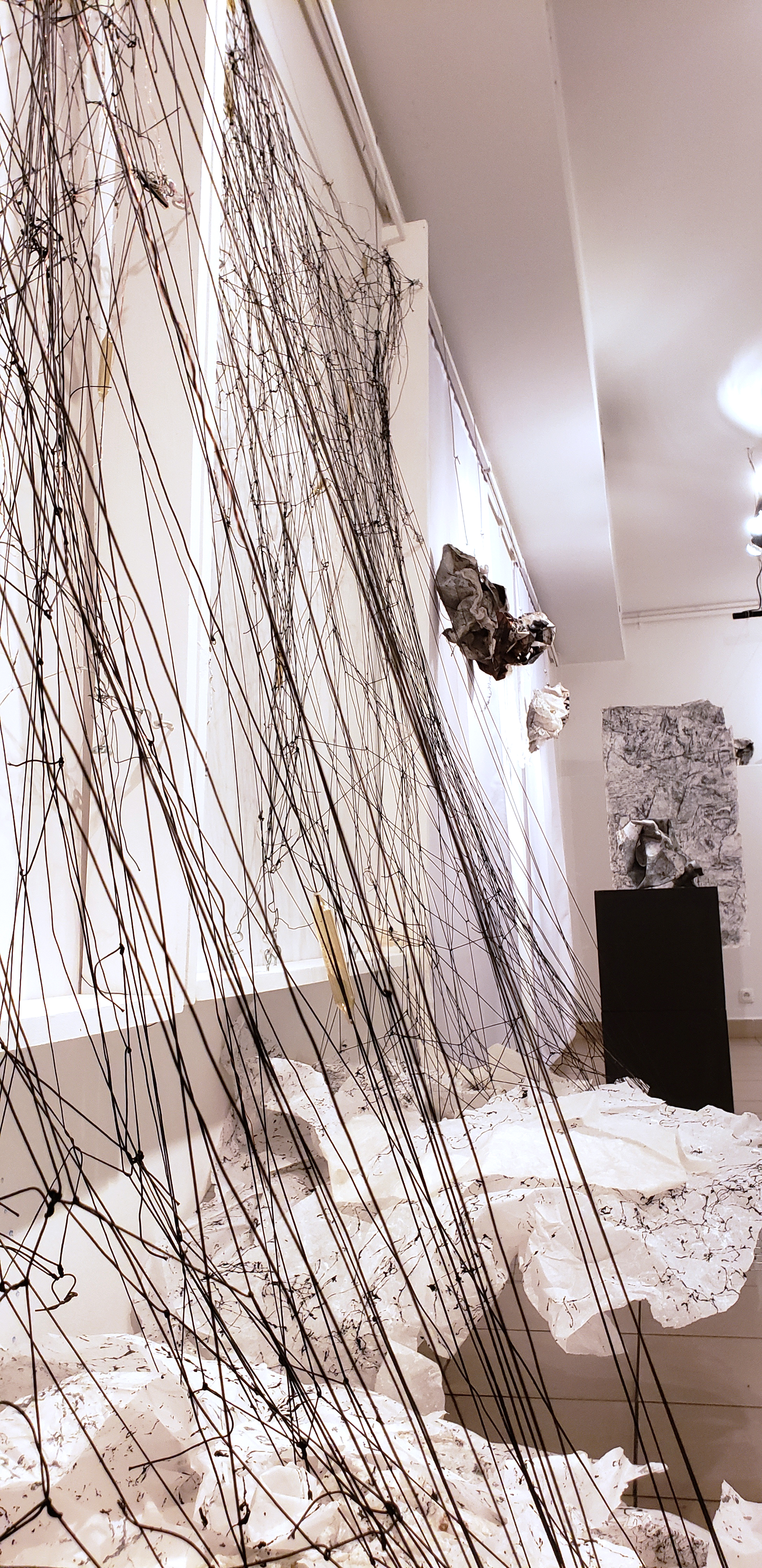
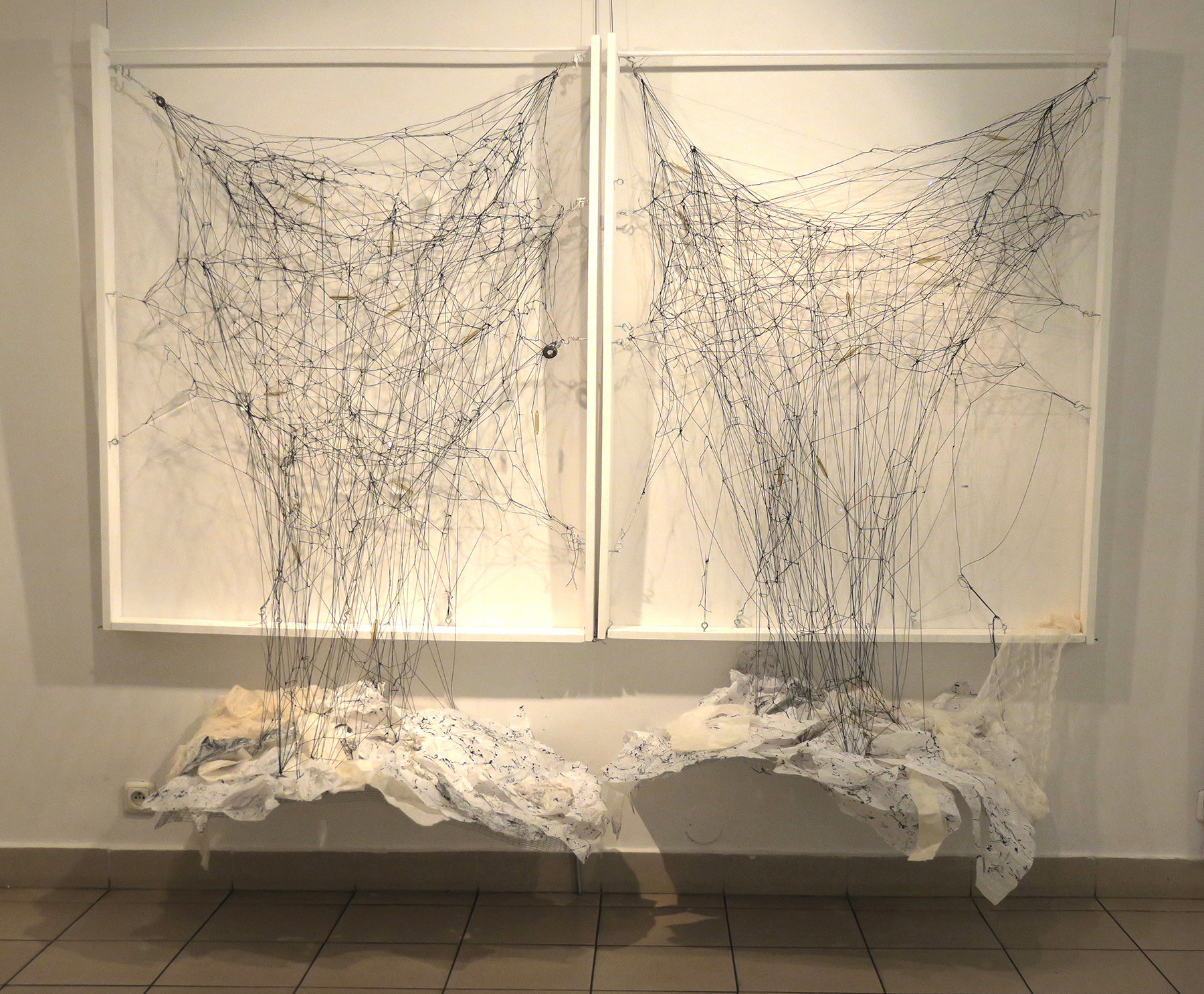
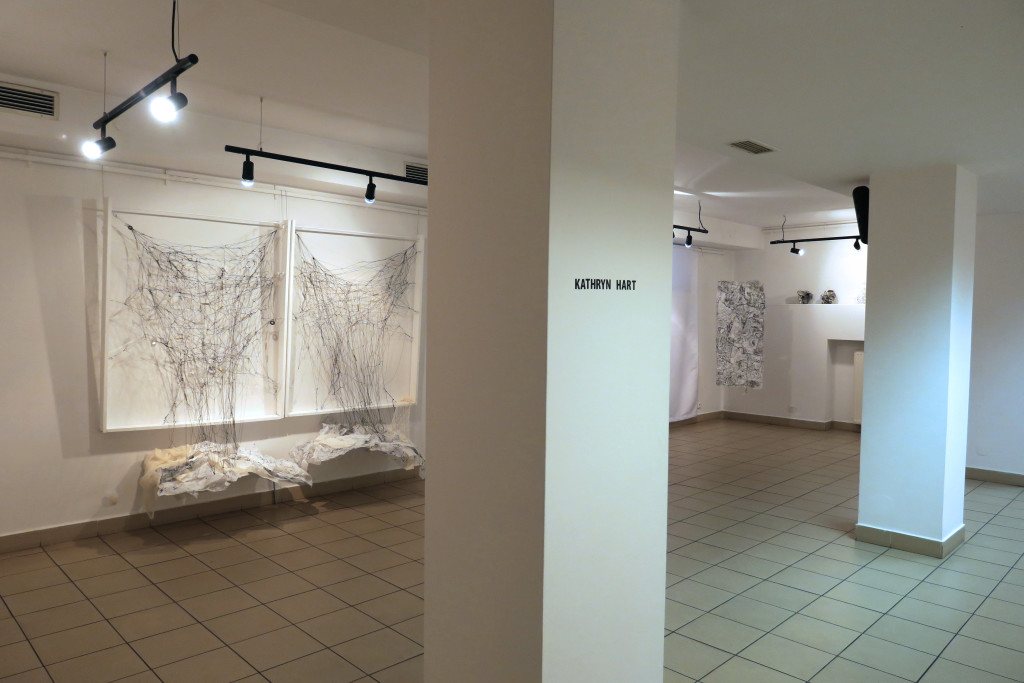
Also site specific, “Derailed,” is created of common place materials such as lines, wires, and embedded glass objects. Hart says it “Hints at the verve of figuration. The form is stretched taut and tattered by competing forces of the desire to move forward vs. indecision and the burden of choice. The entity is distended, pulled and propelled outward yet it is held constrained.”
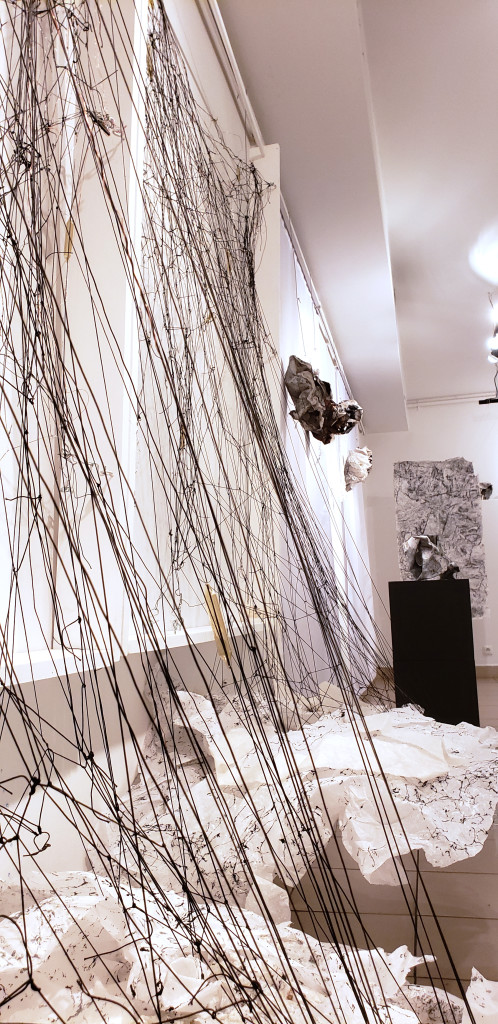
However Hart describes this work, it is deeply compelling, it is string theory and star path, ocean creature and harp strings. There is an electric energy to the piece. “The entity represents me. Indecision holds me static, while responsibilities and the need to move forward pull me in a multitude of directions.”
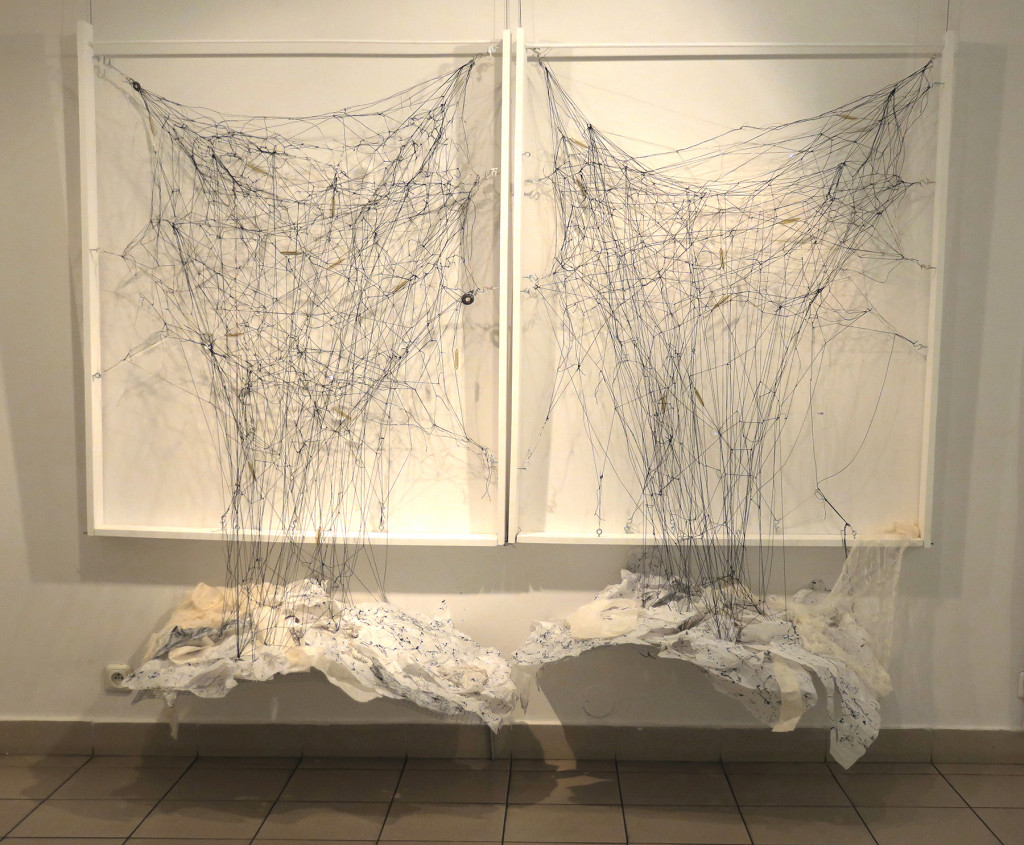
That energy is pushed and pulled outward in a 3D configuration that represents growth, movement, and decision. “There is a hint at a plumb line on each side of the diptych which both lifts up the false floor it has made and is rooted into it. This ‘floor’ is torn pieces of handmade paper randomly laid on a metal mesh scaffold. The lines/veins coming outward from the installation suspend these floor pieces off of the ground underneath,” Hart points out. The pieces appear to be floating; air movement from viewers passing the work can shift the positions of the papers, causing some to fall to the floor in an unsettling impermanance.” In this piece, too, shadows form an important role, tremulous veins that carry energy and nutrients. Hart’s embedded glass lenses and ampoules fracture light and produce internal light within the form.
Altogether riven with light, shadow, line, and space, these Daunting Transitions are spare in color and background, luminous and gorgeous, filled with emotion and contemplative energy; alive and shifting: their own organisms birthed by Hart.
- Genie Davis; photos provided by the artist