
The Fowler’s Fire Kinship Is Prescient and Important PST Art

The Fowler’s Fire Kinship Is Prescient and Important PST Art by Genie Davis

While conceptualized prior to our recent cataclysmic fires, Fire Kinship, now at UCLA Fowler is an incredibly pertinent exhibition that challenges the attitudes of fear and illegality around fire, presenting a cogent and quite honestly spiritual exhibition that proposes a return to lifesaving Native practices of fire.
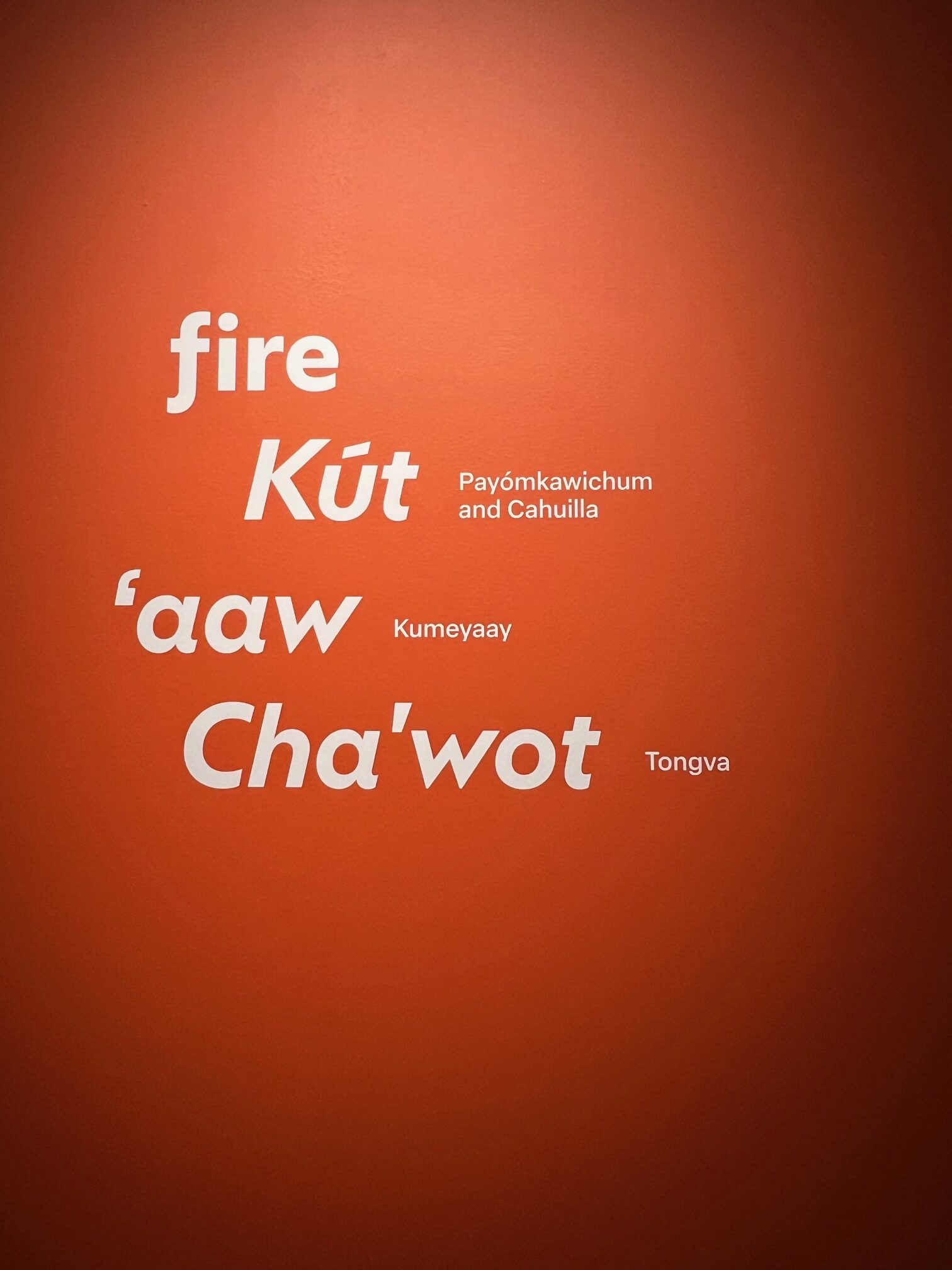
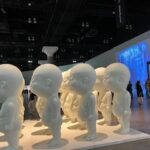
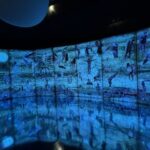
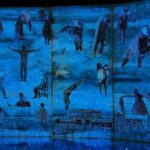
Hundreds of years of knowledge and expertise culled from the Tongva, Cahuilla, Luiseño, and Kumeyaay peoples, is presented in installations, poetry, craftwork, and paintings in the exhibitionn. Works highlight Native understanding of fire as a vital aspect of land stewardship, community well-being, and tribal sovereignty.

The exhibition presents a living history of communities from the past and present as told through a variety of mediums. It introduces the purpose of fire as a generative force and part of a sustainable future as an “elemental relative” creating a cycle of beginnings for all living things.
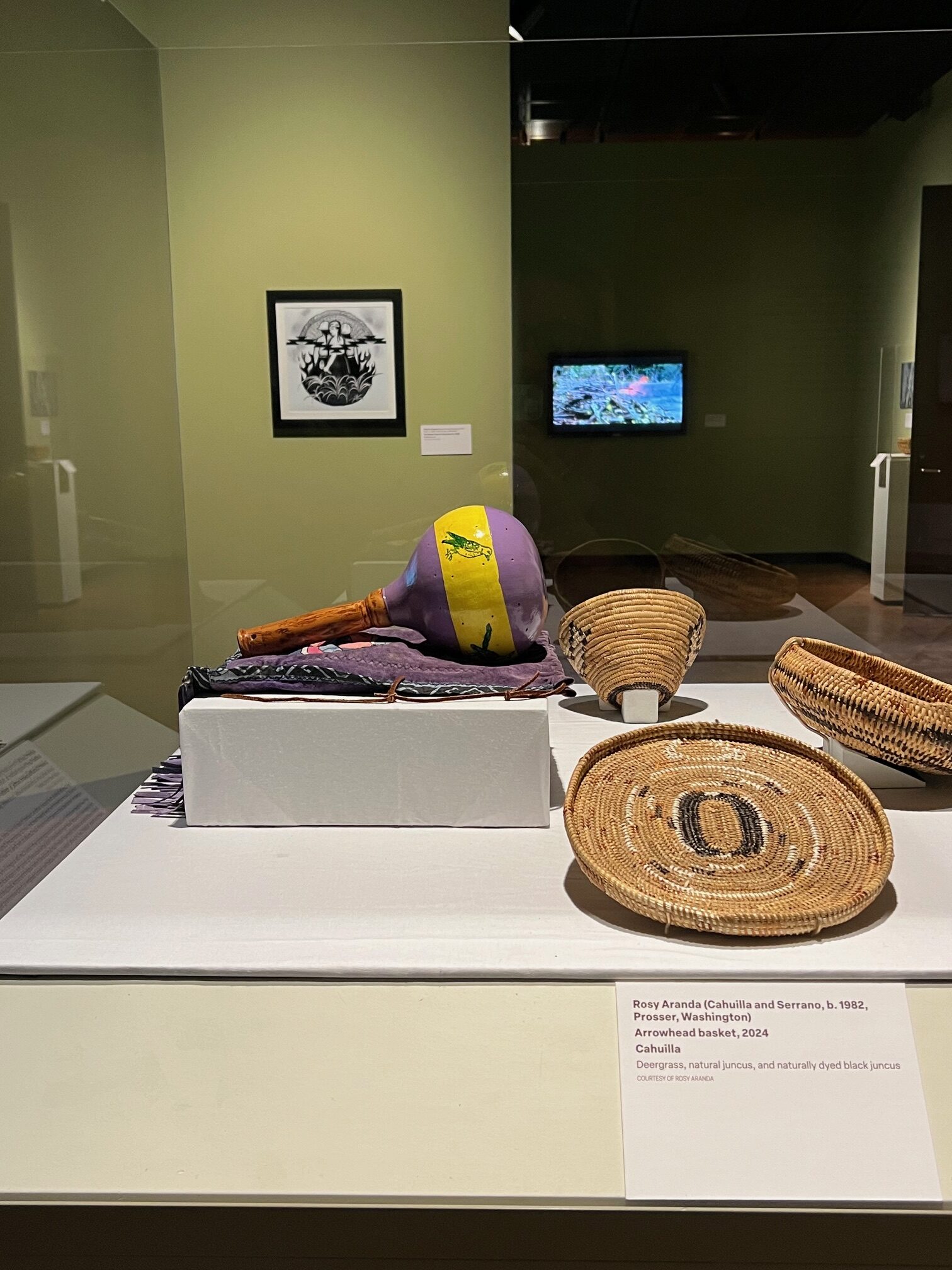
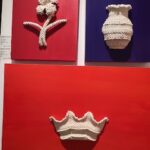
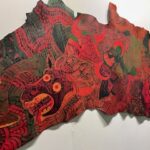
Among the works on display are beautiful items on loan from Native communities including baskets, ollas, rabbit sticks, bark skirts, and canoes. Each of these objects represents salient facts: fire tempers and hardens clay vessels used for cooking and storing food, helps to cultivate plant materials utilized to create baskets, blankets, capes, and skirts, thins out patches of juncus to allow new growth, softens tar used to make canoes seaworthy.Summer Paa’ila Herrera (Payómkawichum) has created two pieces for Fire Kinship. She displays a lovely ceramic vessel made from tó’xat (clay) sourced on traditional Luiseño lands, gathered with the help of her father, and processed at their home at Pechanga. Also on exhibit is a traditional skirt made from burned cottonwood bark that the artist herself has worn and will continue to wear in ceremonial settings.
Collaborating with key Native commuinty leaders, Fire Kinship explores a radical rethinking of our relationship with all the elements of the earth, our home: fire, water, land and air. Native ecological techniques hold vast and essential knowledge for our future survival. Co-curator Daisy Ocampo Diaz relates that “Southern California Native communities are bringing fire practices back from dormancy…Colonization, both past and present, disrupted a cycle that honored fire at the center and caused earth-wrenching ramifications. Native communities have been holding on to these gentle burns despite California’s ravaging by flames. We are all part of this story, and it is a time for listening and (un)learning.”

Along with the presentation of beautiful, hand-made objects for use and wear, the exhibition includes some vibrant and truly immersive installations, with several focusing on the vivid colors and growth of our California poppy.
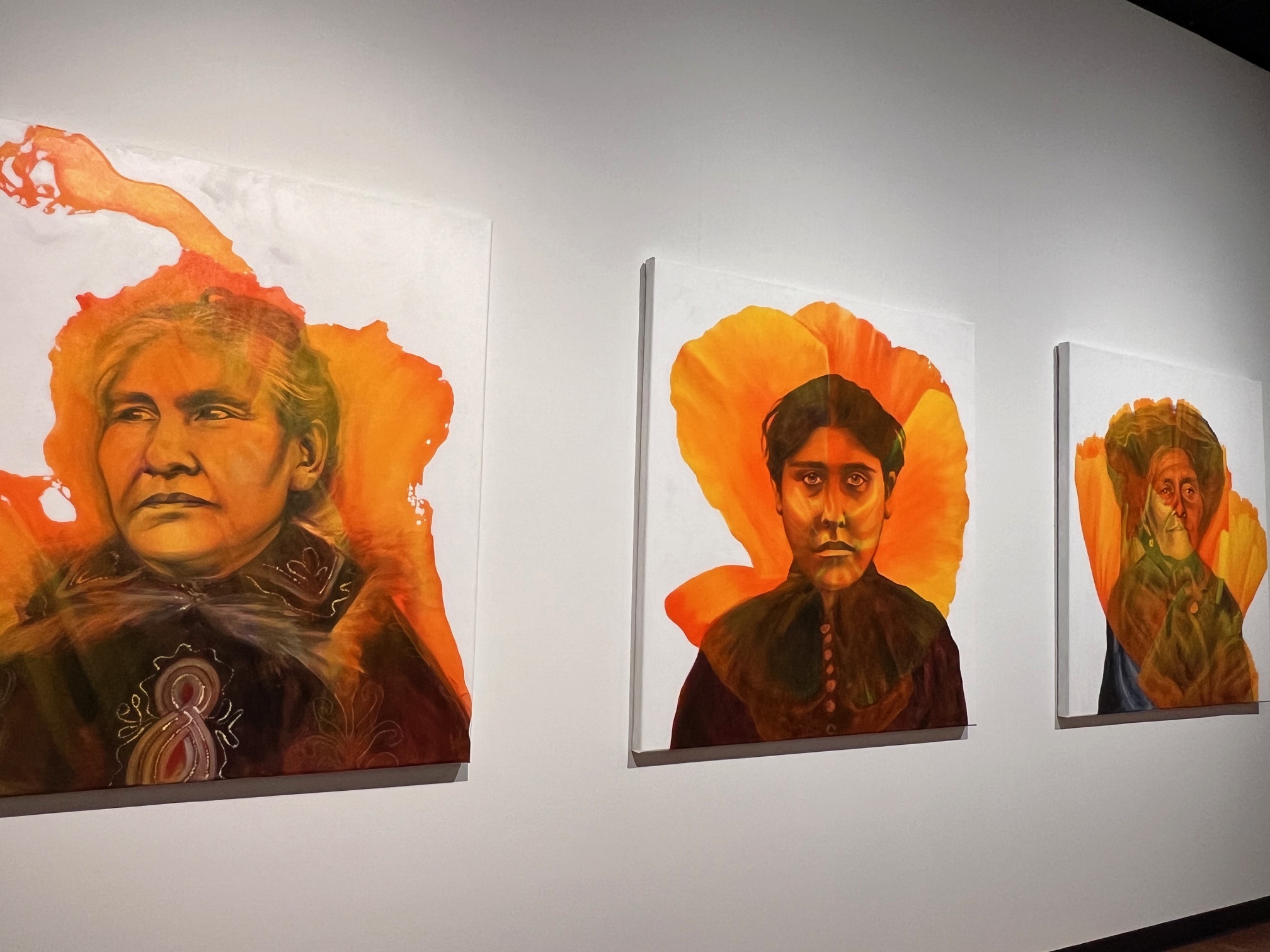
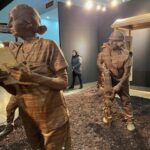
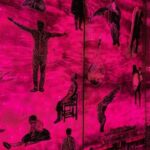
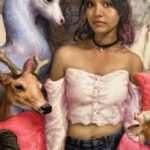
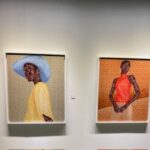
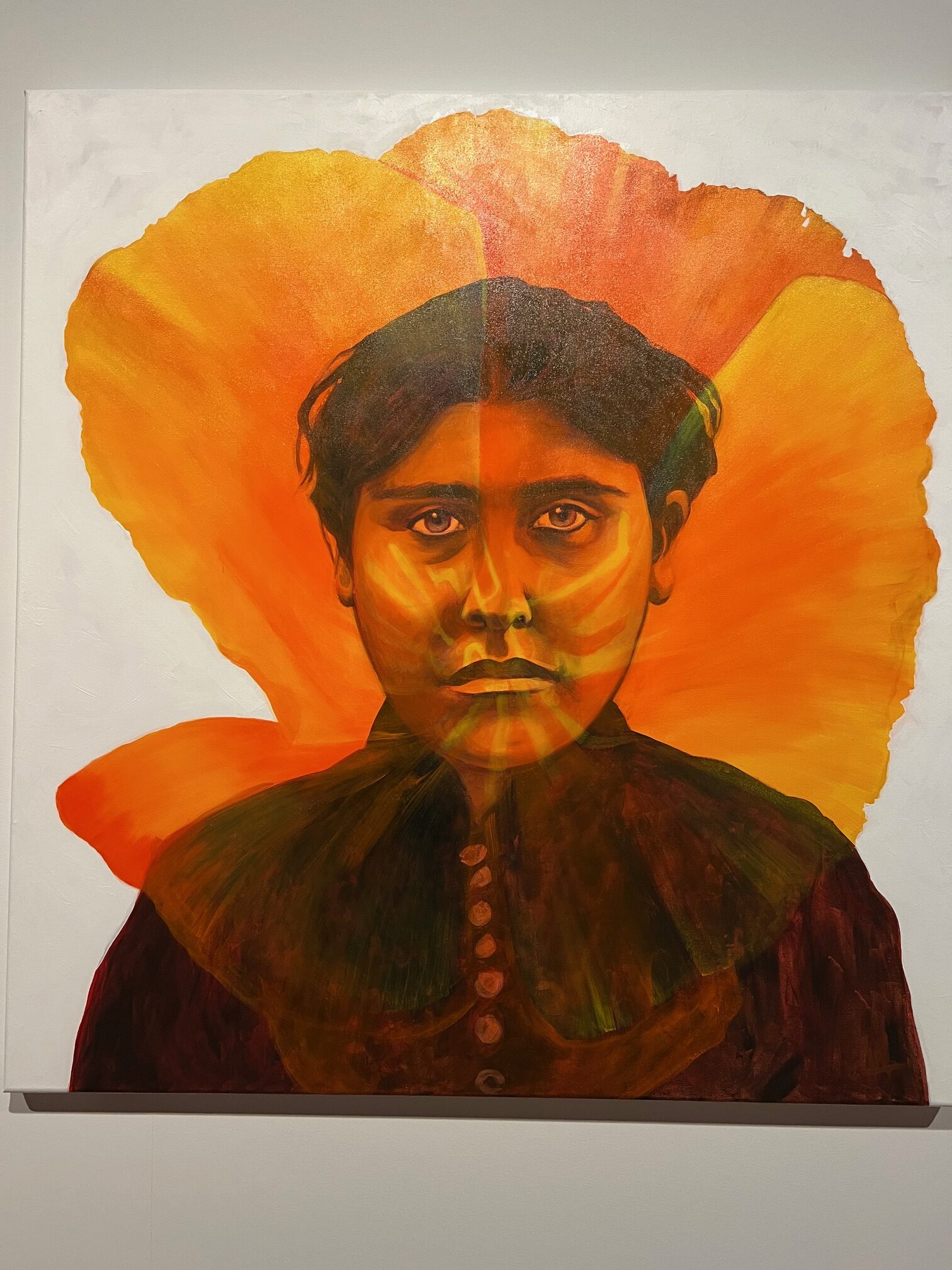
Weshoyot Alvitre creates a poppy-splashed portrait series exploring the multilayered histories of several women from her tribal community who fought for their people’s rights: Narcissa Rosemeye, a Tongva language keeper; Modesta Avila, who protested the development of the Santa Fe Railroad on her family’s land and became the first convicted felon in the state of California; Espiritu Leonis, who protected her ancestral homelands by using the United States legal system in a 15-year case. The portraits are powerful, evocative, and beautifully alive, apt tributes to brave and resourceful Native women.
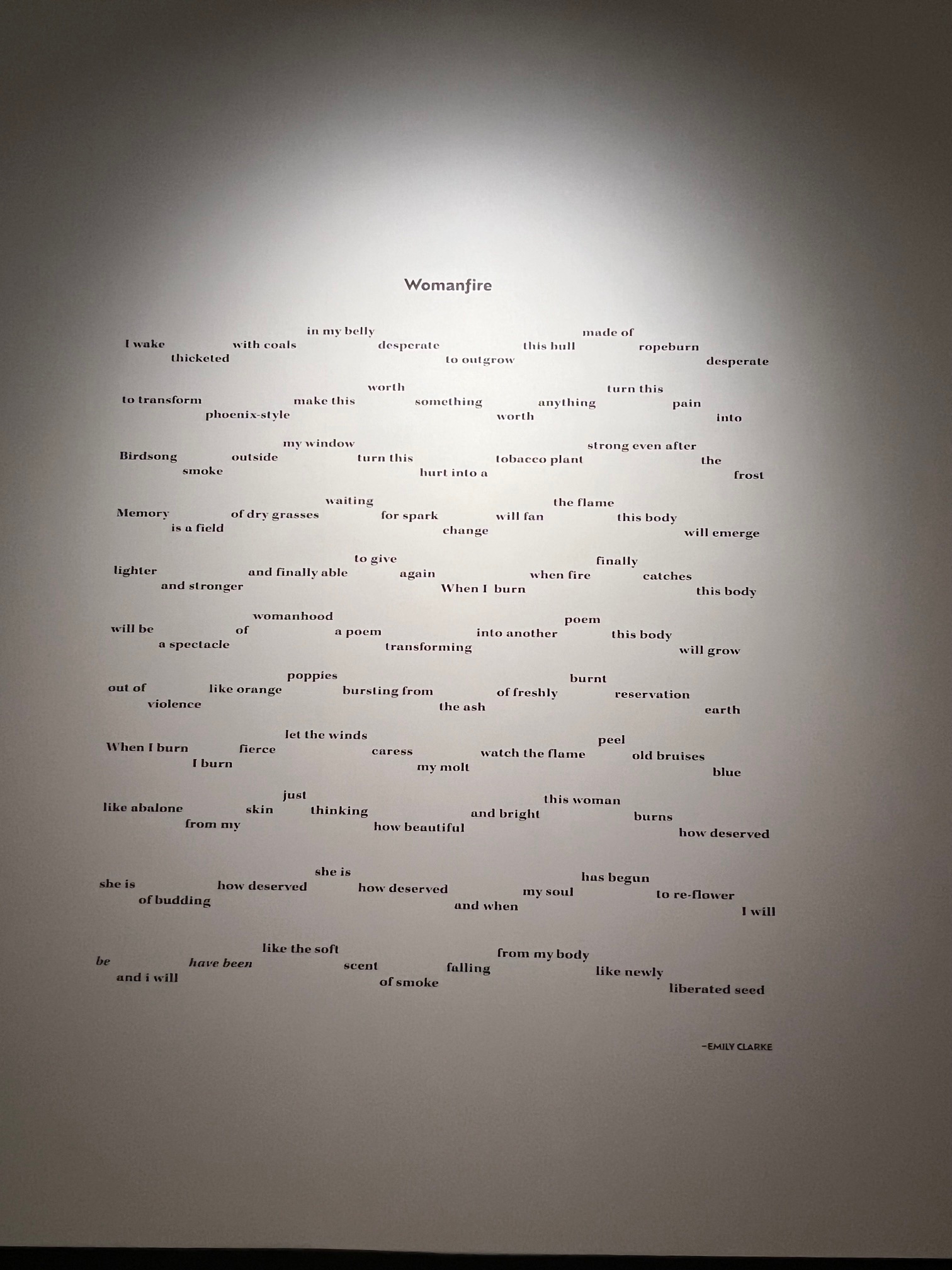
Alvitre’s portraits face a wall installation of a new work from poet Emily Clarke (Cahuilla Band of Indians), Womanfire. The poetry is moving and rich, written in electrocardiogram-esque lines that imitate a Cahuilla basket pattern believed to represent the mountains and valleys in Cahuilla homelands. The gloriously strong writing reflects on the fact that Native women are disproportionately at risk of experiencing violence. She intertwines this fact with another: their survival of abuse and trauma can be compared to a cultural burning, one which encourages renewal, regrowth, and abundance.
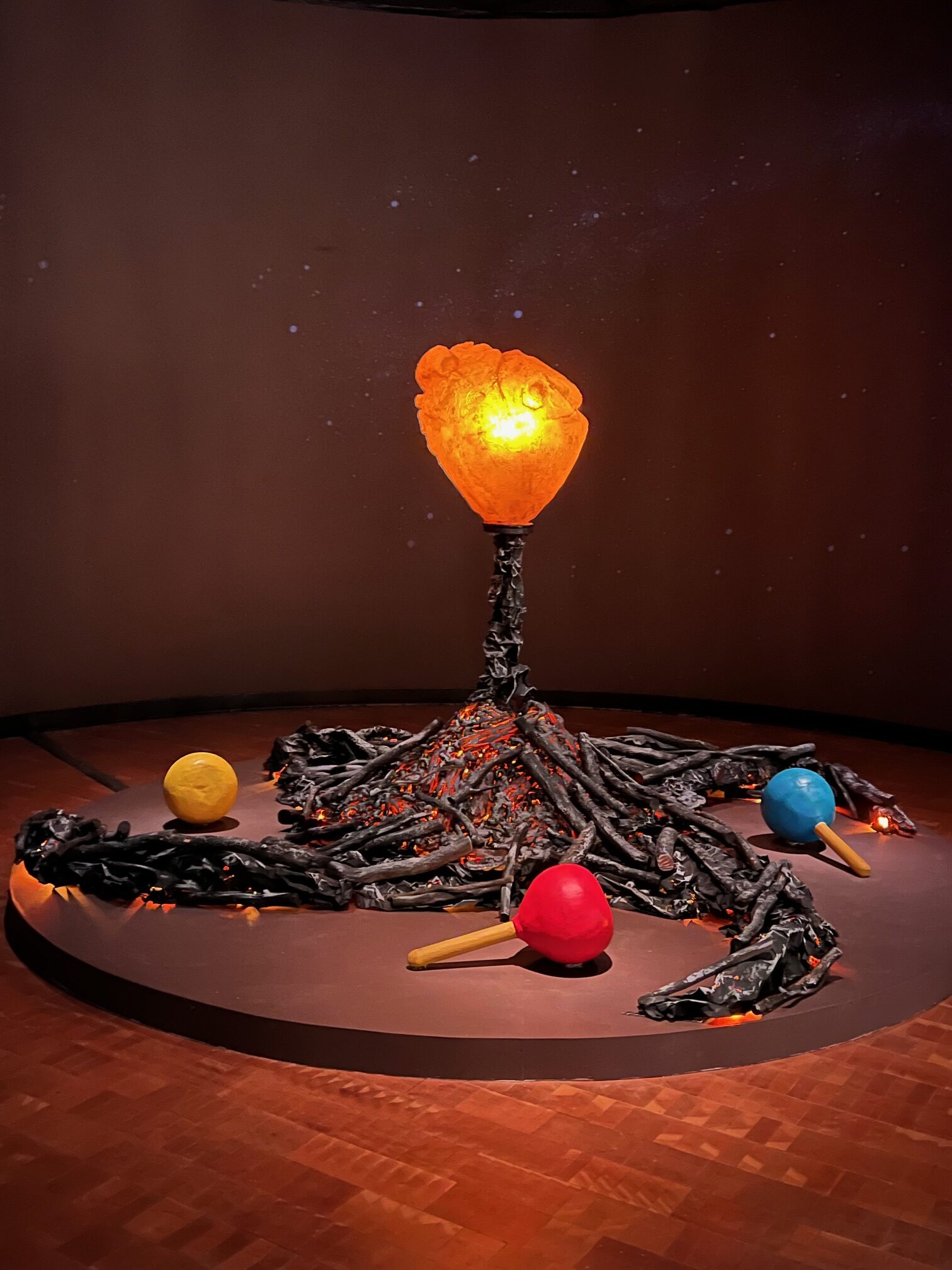
Also poetic is a multimedia installation, “The Heart is Fire.” The installation includes video, birdsong audio, and natural materials and was created by Gerald Clarke Jr. (Cahuilla Band of Indians). The piece is inspired by the Cahuilla creation story, a book about the Cahuilla by Deborarh Dozier, and traditional uses of fire. It also introduces and reflects upon the use of contemporary burns during all-night funerary ceremonies and bird-singing events within Cahuilla communities.
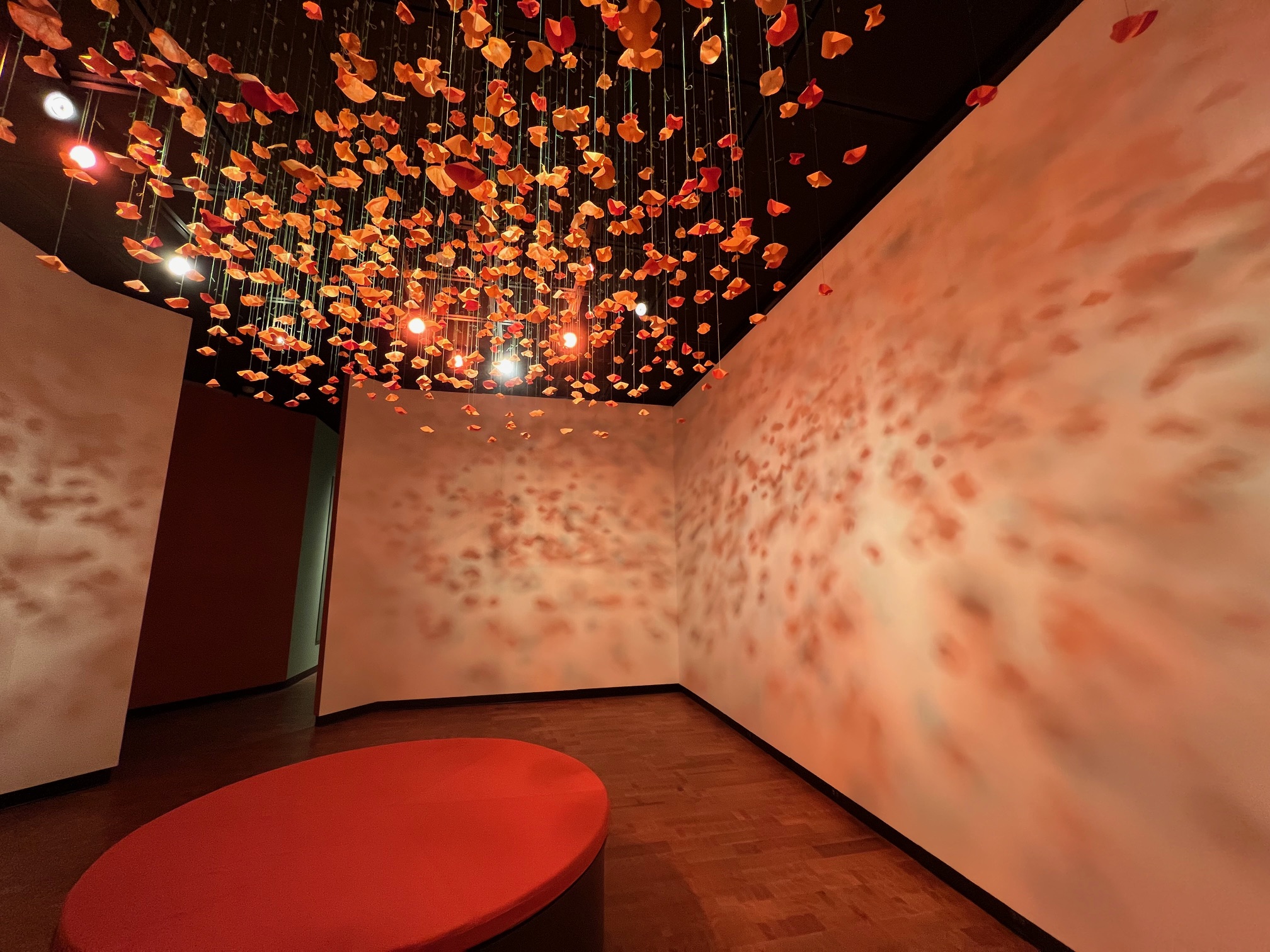
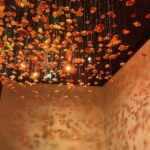
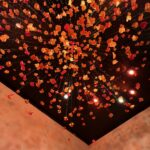
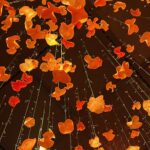
Admittedly my favorite installation is a room sized work by Leah Mata Fragua (yak titYu titYu yak tiłhini, Northern Chumash). The artist reclaims the narrative that the land and its people are intertwined through the use of a multitude of sculptural paper, dyed with poppies, and representing the flowers themselves. There is a small couch in the room on which one can lean back and look at the poppies everywhere in the room, their vast ability to thrive, to astonish, to regrow and regenerate. The installation looks to  land stewardship practices that have shaped the region’s landscapes, long before European colonizers arrived in this country. It is a delicate and honestly divine work, uplifting and yet tragic in its fragility, mirroring ,in a way, the fragility of humankind itself, and our ability to regrow and accept alterations to our landscape.
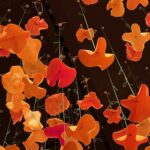
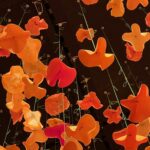
As astonishingly lovely as it is, the work is meant to be temporary. The artist will return its materials to the earth through fire, symbolizing the cyclical nature of yak yak titYu titYu yak tiłhini Northern Chumash knowledge. The fragile beauty and its ephemeral nature speaks not only to that of flowers and all natural things, but to the spirit, its preservation, its loss.
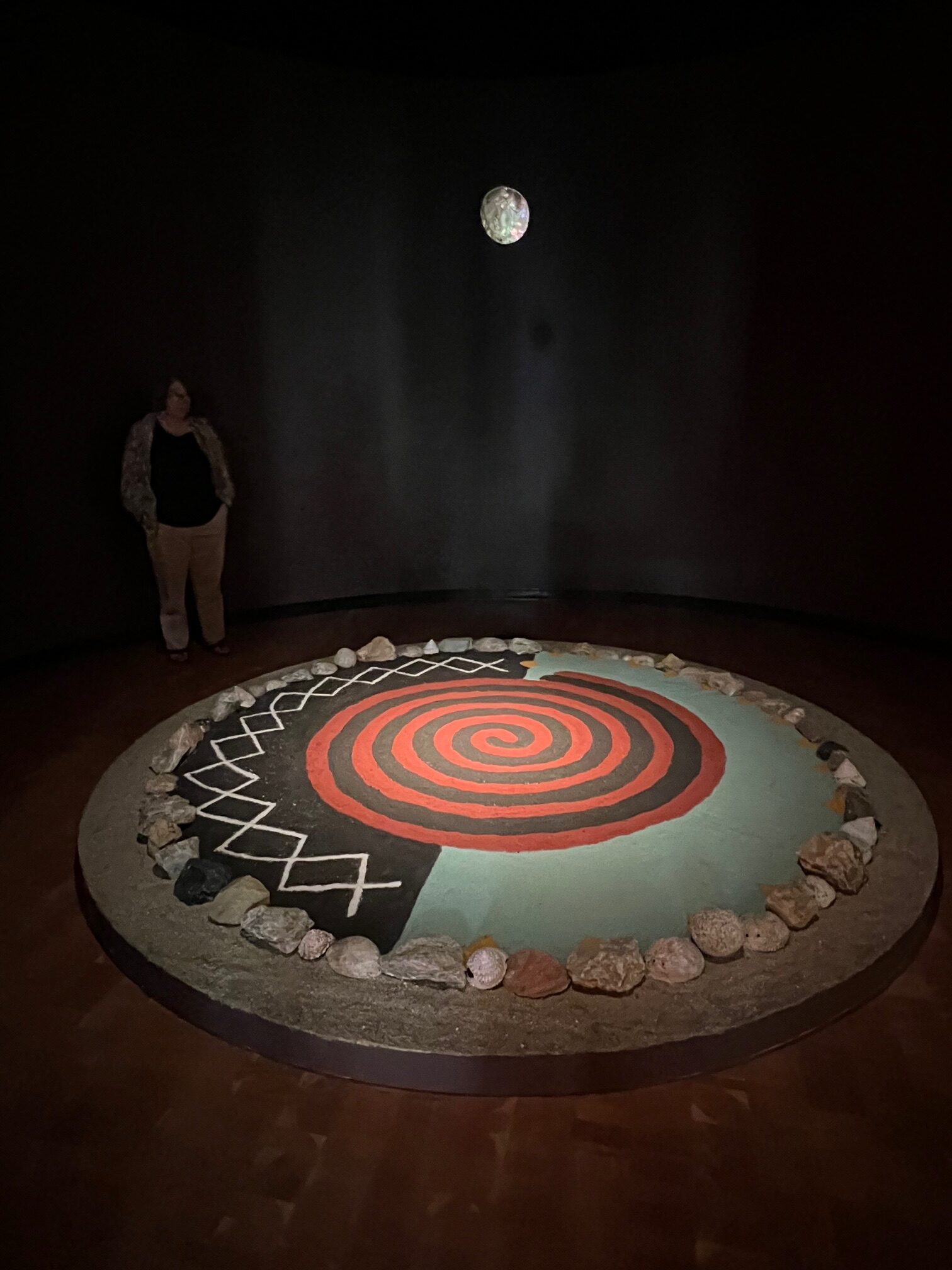
Another highlight is the instalaltion “Sand Acknowledgment” by Lazaro Arvizu (Gabrieleno/Nahua) that reflects traditional and ephemeral sand-painting practices. Arvizu illustrates the connections between the land, humans, the sun, the stars, and animals. Like the installaton of Fragua’s poppies, this work too will return to the earth at the end of the exhibition.
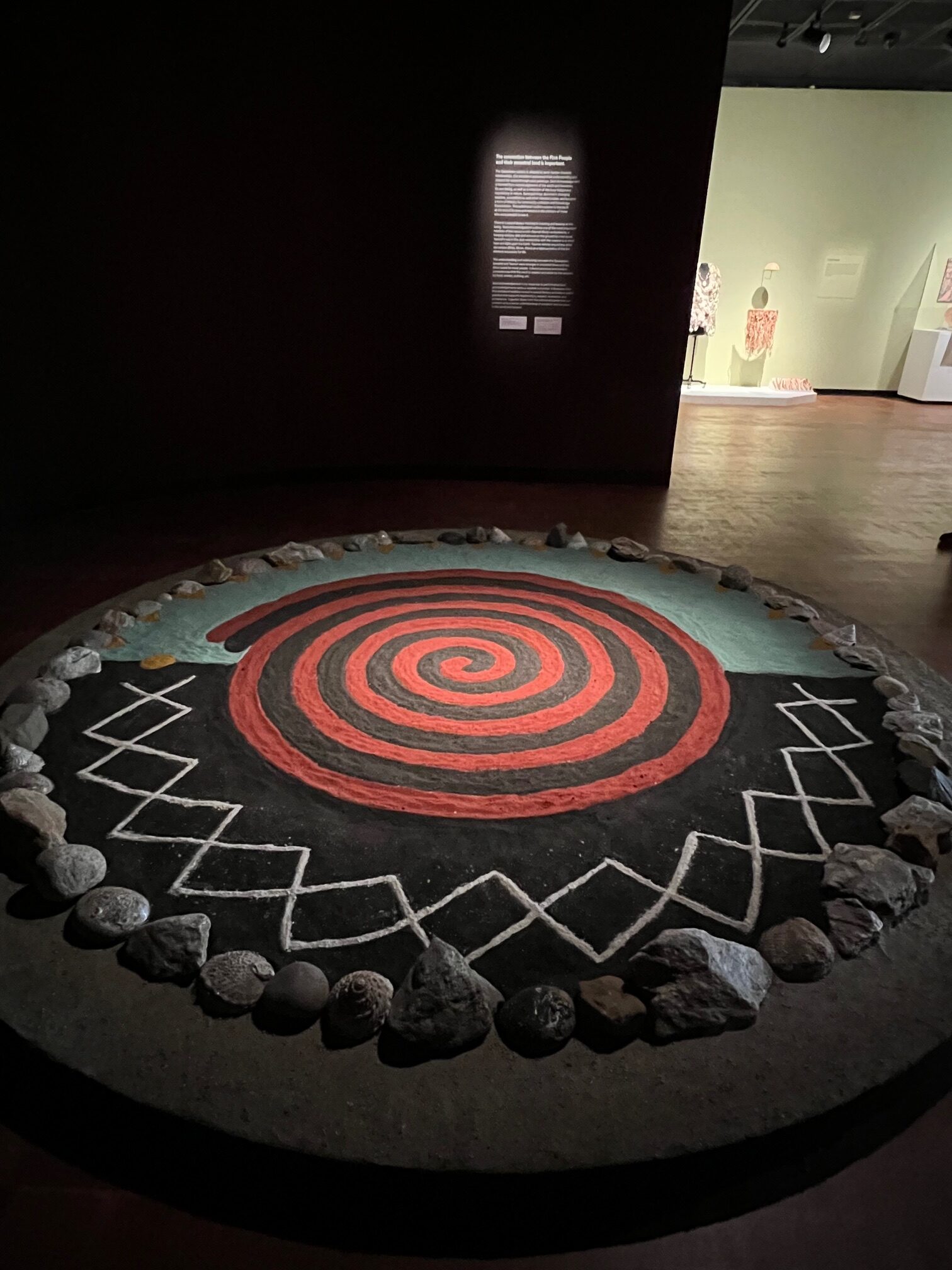
Arvizu will also be present in the gallery for conversations, facilitated meditations, and art-making activities related to her installation throughout the exhibition time period.

Fire Kinship also includes photographs and archival documents that tell the story of colonization, including journal entries from Juan Rodriguez Cabrillo, whose company of Spanish settlers was the first party of non-Indians to set foot in what is now Southern California in 1542.

I would like to note that even more powerful than this graceful and knowledge-filled exhibition itself is the acknowledgement of the fact that Native communities in Southern California continue to face institutional barriers to bringing life and land-saving fire back to the the land. Reintroducing and strengthening Native fire practices requires commitment and accountability from agencies with current jurisdiction over tribal territories.
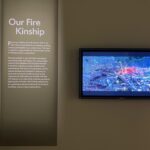
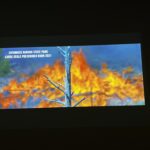
With this in mind, there is also a  section of the exhibition featuring videos and images of fire practitioners, such as Marlene’ Dusek and other members of the Indigenous Women-In-Fire Training Exchange (TREX), sharing knowledge and participating in controlled burns. The Fowler’s press materials explain that “They make a case for members of Native communities to become state-certified Burn Bosses, responsible for planning fires, obtaining permits, implementing burn plans, monitoring fire effects, and maintaining prescriptive requirements. This has been an option in California since 2018, but to date, only one Native person in Southern California is a certified Burn Boss—Fire Kinship collaborator Wesley Ruise Jr.”
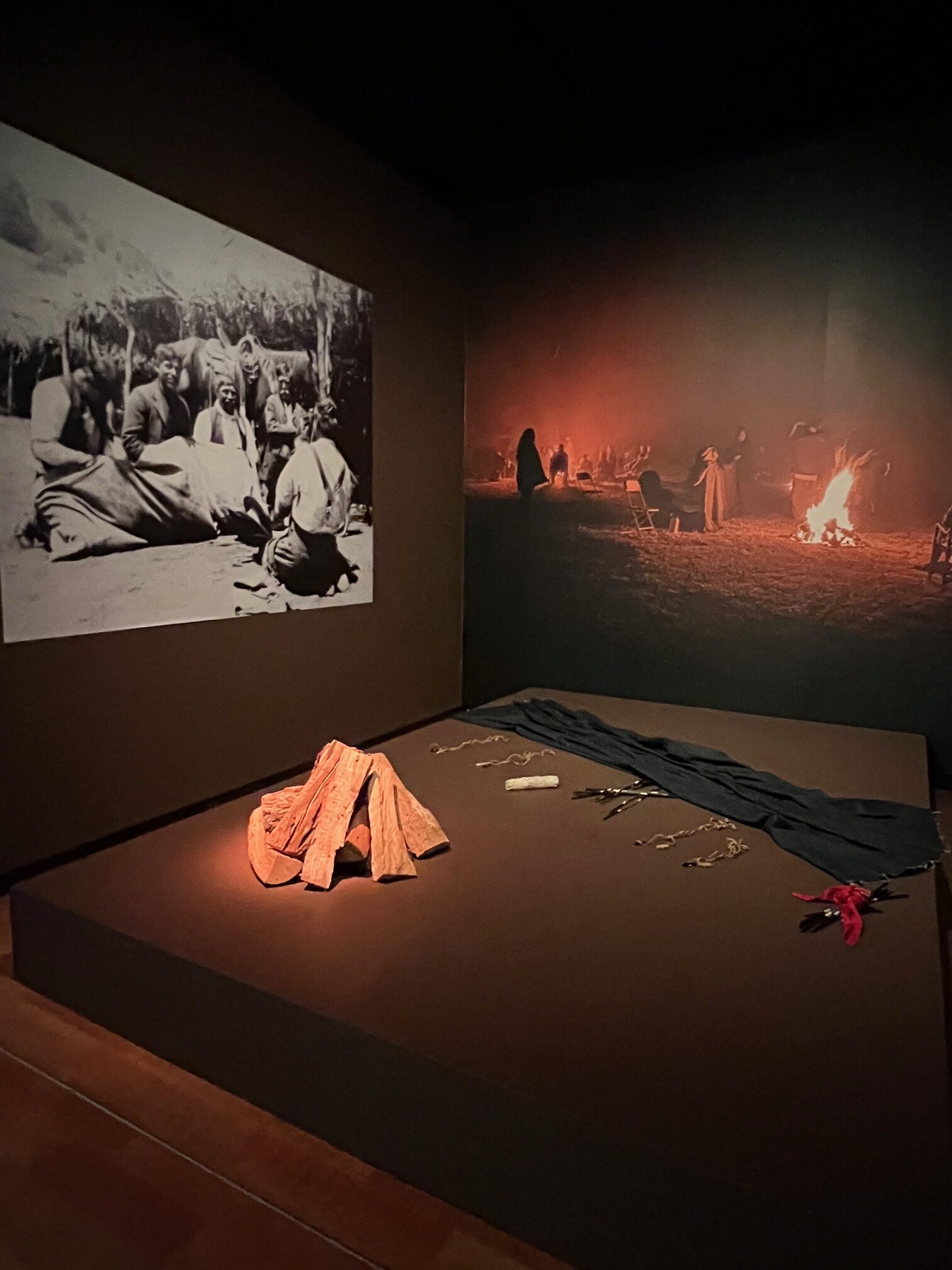
The exhibition is on view through July 13th – and especially given its real-life context as well as its wisdom and beauty, is a must-see. The Fowler Museum is located on the UCLA campus in Westwood, Calif.

It was organized by the Fowler Museum at UCLA and curated by Daisy Ocampo Diaz (Caxcan), assistant professor of history at California State University, San Bernardino (CSUSB); Michael Chavez (Tongva), former Fowler archaeological collections manager and NAGPRA project manager; and Lina Tejeda (Pomo) M.A. in history at CSUSB.

The exhibition is part of the nation’s largest art event, Getty’s PST ART: Art & Science Collide, and as such is one of the most meaningful and important in this iteration of PST ART.

  • Genie Davis; photos by Genie Davis 
John Weston Compels Viewers to Enter “My Temple”

John Weston Compels Viewers to Enter “My Temple”  by Genie Davis

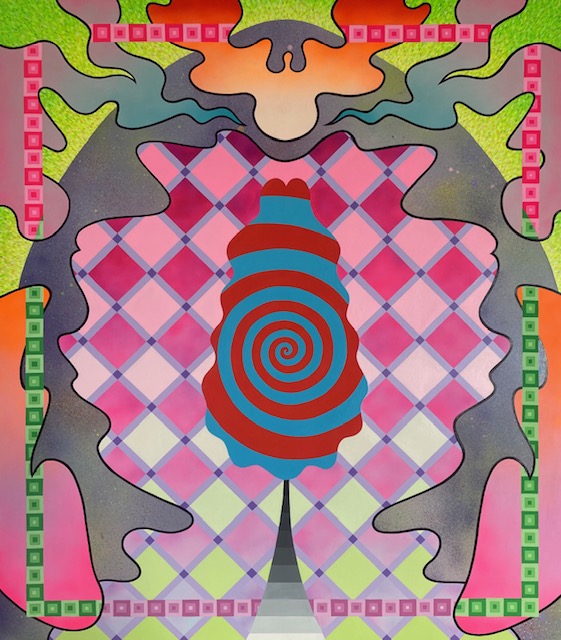
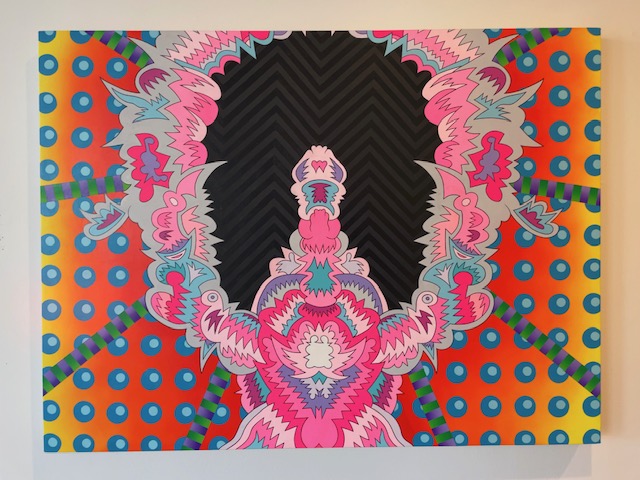
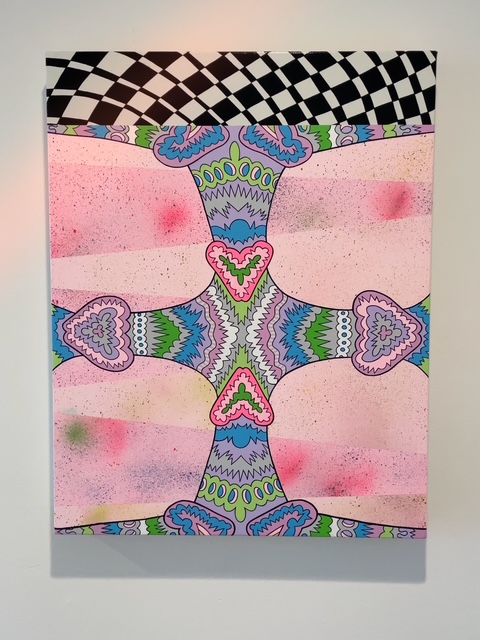
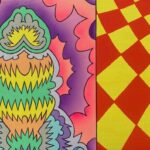
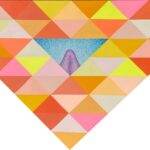
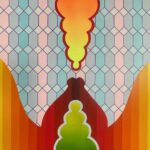
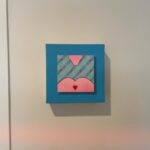
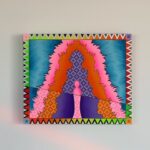
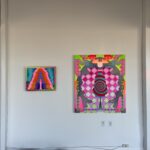
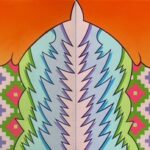
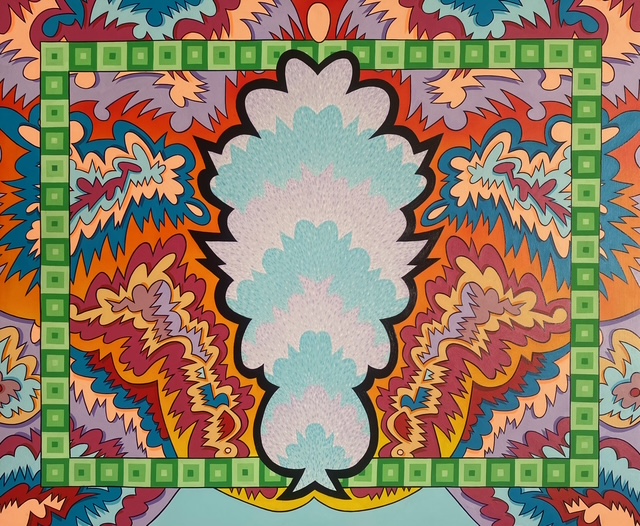
Artist John Weston’s solo exhibition My Temple, arriving at Ace Tiger Gallery March 1st,  offers a vibrant display of explosive color as the Los Angeles-based artist creates new work that is both hard edged and soft of curves, mixing geometric and abstract patterns. True to his pop art roots, Weston’s work here vibrates with intense and hypnotic colors.

From the kaleidoscopic to the clearly sensual, a visual aesthetic that Weston has engaged in much of his work, My Temple clearly refers to the body as the artist’s – and our – personal temples, a place to reverently and fervently enjoy the physical in all its joyful permutations. Using a palette that includes hot pink, paler pinks,  blues, greens, lavenders, and some orange, too, in a fresh, bright mix.

Weston frequently juxtaposes playful elements with an exploration of modern cultural norms, as in a 2019 show Pardon My French and Other Works at the Boston Court Theater in Pasadena, and in his transformation of everyday objects through the use of intense color and exaggerated form at his earlier Venice exhibition The Bedroom, which reimagined personal space.  In My Temple, Weston is reimagining the body and our relationship to it.

With his lush rainbow palette and halrequin patterns, the viewer can clearly experience images of physical sexuality as well as images that appear culled from cosmic worlds and magic mushrooms. Riveting visually, Weston’s art is joyful, emphasizing our physicality with an exuberance and delight that viewers can’t help but experience for themselves. It’s as much fun as it is a lush and visionary experience.

Never one to “Beat Around the Bush,” as Weston’s work, below, is titled, the artist’s work is cool, never cloying, and filled with motion, giving off an aura that pushes boundaries in the most delightful of ways.

If My Temple speaks to the idea of the body as a temple, it also speaks to the idea that Weston’s own personal temple is that of the spirit which inhabits us, integrating pop art with the current cultural zeitgeist. His conceptual approach asks viewers to consider, question, enjoy, and reimagine something we are all intimately familiar with, our bodies.

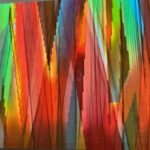
“Infinity,” above, truly takes on that kaleidscopic visual appeal while never letting go of Weston’s depiction of the body and it’s capability to be sexually playful. Using his signature bright palette and nearly psychedelic forms, Weston’s compositions are exciting not only as visual art, but as a commentary on contemporary life, and our view of ourselves and our bodies. The spiritual, the emotional, the physical are all intertwined, and the artist seems to posit that each aspect of our own bodies and lives is also intertwined with others in the world and the world itself.

The universality of Weston’s work is deeply appealing, as is his exploration of our physical and emotional presence in the world. The artist’s lighthearted and inclusive approach, along with his precise, bold, yet delicately lovely use of pattern and color in My Temple evokes the memory of that 1982 Marvin Gaye song “Sexual Healing,” the chorus of which goes “Makes me feel so fine/
Helps to relieve my mind/Sexual healing, baby, is good for me/Sexual healing is something that’s good for me.” Perhaps Weston was playing this tune when he was creating some of this work.

Weston’s new work isn’t all fun and frolic though. The images also reverberate with a touch of both the subversive and sublime. Mixing high art with pop culture aesthetics is no easy task, but the artist smoothly segues between the two, all the while challenging viewer boundaries both personal and visual, startling and jolting the eye away from the commonplace to create something the sparks and sparkles.

On view March 1st – April 7, 2025 at Ace Tiger Gallery at 24411 Hawthorne Blvd., Torrance. The opening reception is March 1,  4-6 p.m.

  • Genie Davis; photos provided by the gallery

Art Fair Week Commences with the LA Art Show Celebrating 30 Years

Art Fair Week Commences with the LA Art Show – by Genie Davis

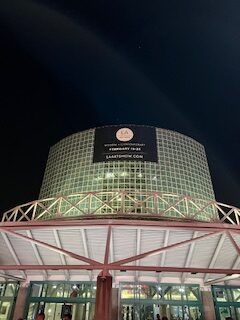
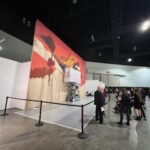
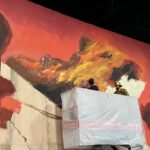
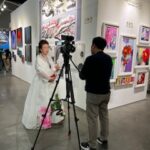
The LA Art Show celebrated its 30th anniversary with an Opening Night Premiere featuring actress and producer Jenna Dewan as celebrity host,  but for Los Angeles residents especially, the biggest start of the night was artist Robert Vargas, creating live a  24-foot mural  called “Heroes,” honoring first responders and LA firefighters, some of whom attended the premiere.

The mural will continue to be live-painted and completed during the art show’s run. The evening itself was a benefit for the American Heart Association’s Life is Why™ Campaign and the California Community Foundation’s Wildfire Recovery Fund.

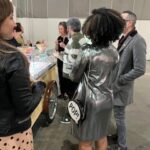
Guests enjoyed Pink’s Hot Dogs (including a vegan version), gelato, champagne, and mini cookies along with other selections from pasta to sandiwiches and cookies.

But how about the art? LA Art Show’s independent curatorial project, DIVERSEartLA, has run for many years at the event, curated by Marisa Caichiolo, and this year featured a retrospective that included a goregous video installation by artist Luciana Abait among so many other important works, in a collaboration with museums from around the world, including LACMA, the Broad and MoLAA.

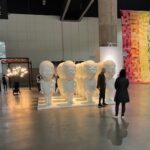
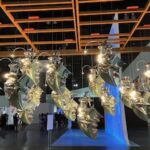
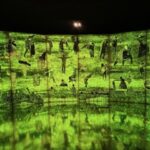
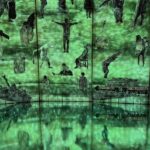
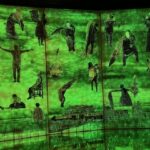
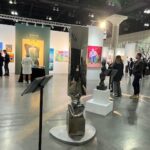
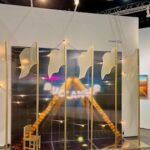
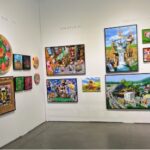
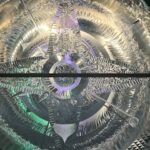
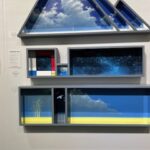
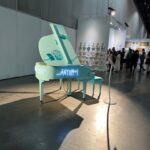
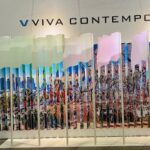
A separate installation created by Reflectspace Gallery, the Glendale Library Arts and Culture & Culture Nomad by artist Han Ho  represented a stunning achievement, above.

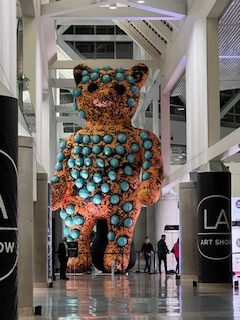
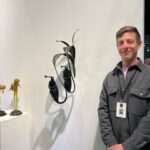
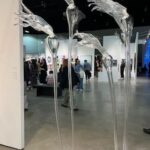
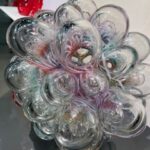
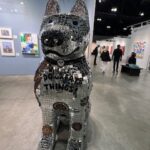
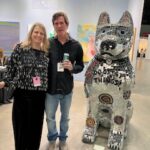
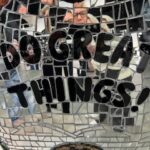
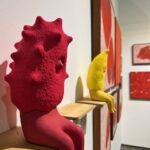
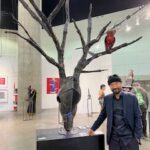
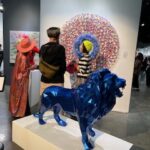
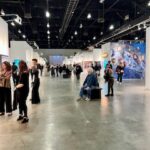
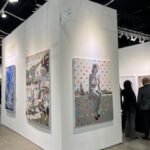
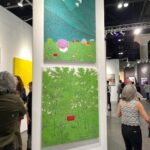
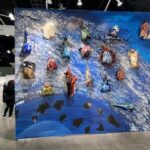
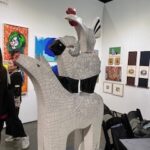
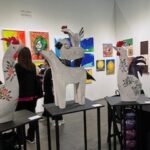
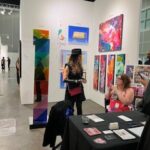
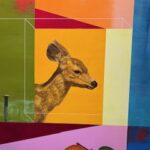
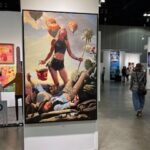
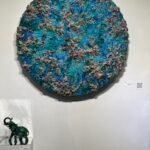
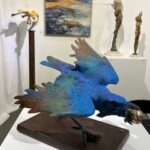
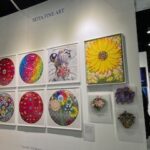
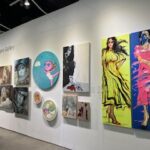
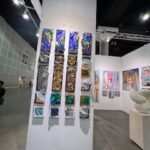
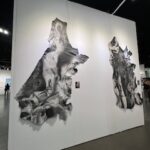
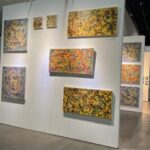
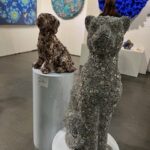
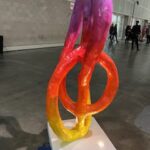
From a towering orange bear in the event entrance area to lustrous mirror and gemstone animals to Montague Gallery’s superb collection of glass art, Ryan Art’s impressive selection of sculptural, multi-media, and painted works, lush abstracts by Mark Acetelli, and the photographic work of Maureen Van Leeuwen Haldeman and others at the Fabrik booths, there was plenty to see inside the South Hall of the Los Angeles Convention Center.

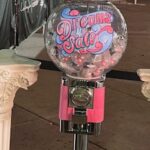
Outside, a terrific particpatory art gumball machine was manned by artist Iz Infine for some additonal fun and a commentary on the true egalitarian nature of art.

My extensive photo album follows – enjoy and please feel free to share. Frieze is coming up next, along with The Other Art Fair.


  • Genie Davis; photos by Genie Davis


The Seagull Takes Wing at The Odyssey

The Seagull Takes Wing at The Odyssey by Genie Davis
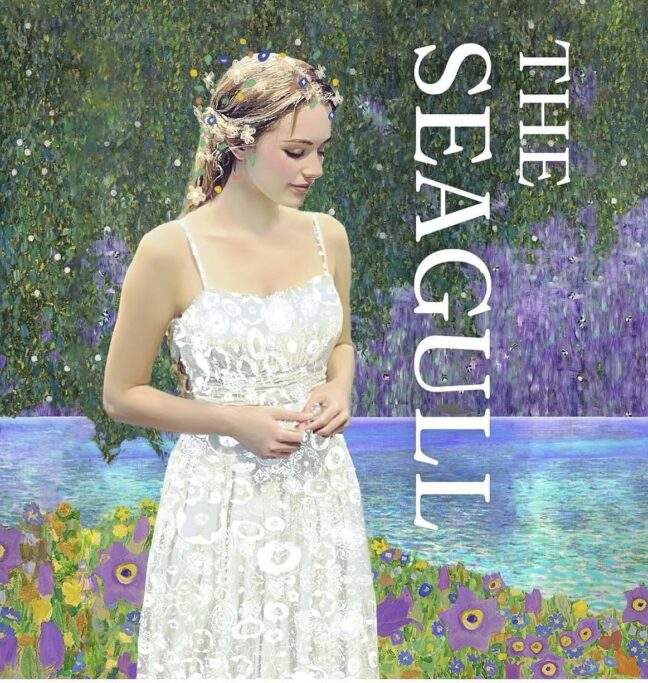
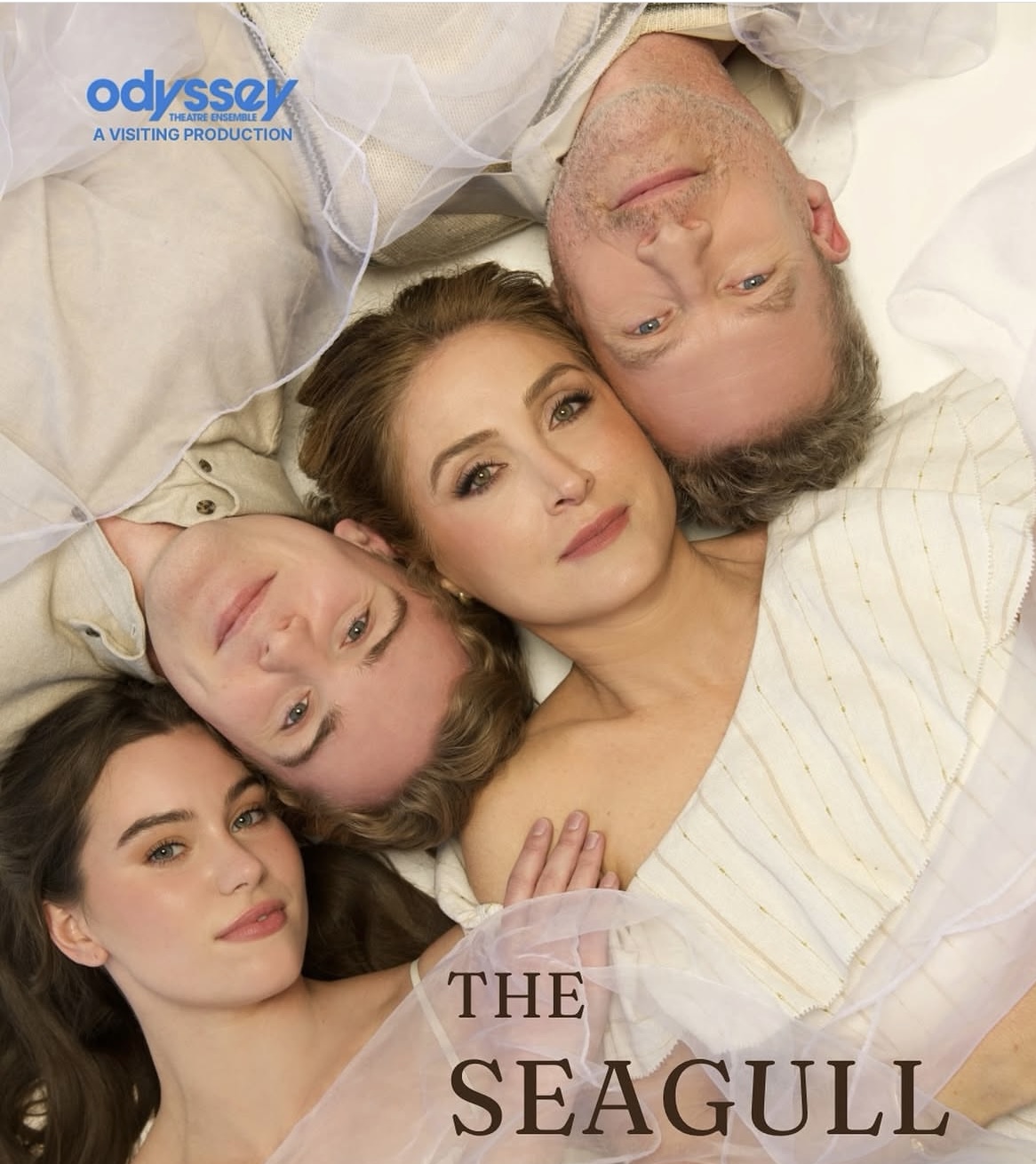
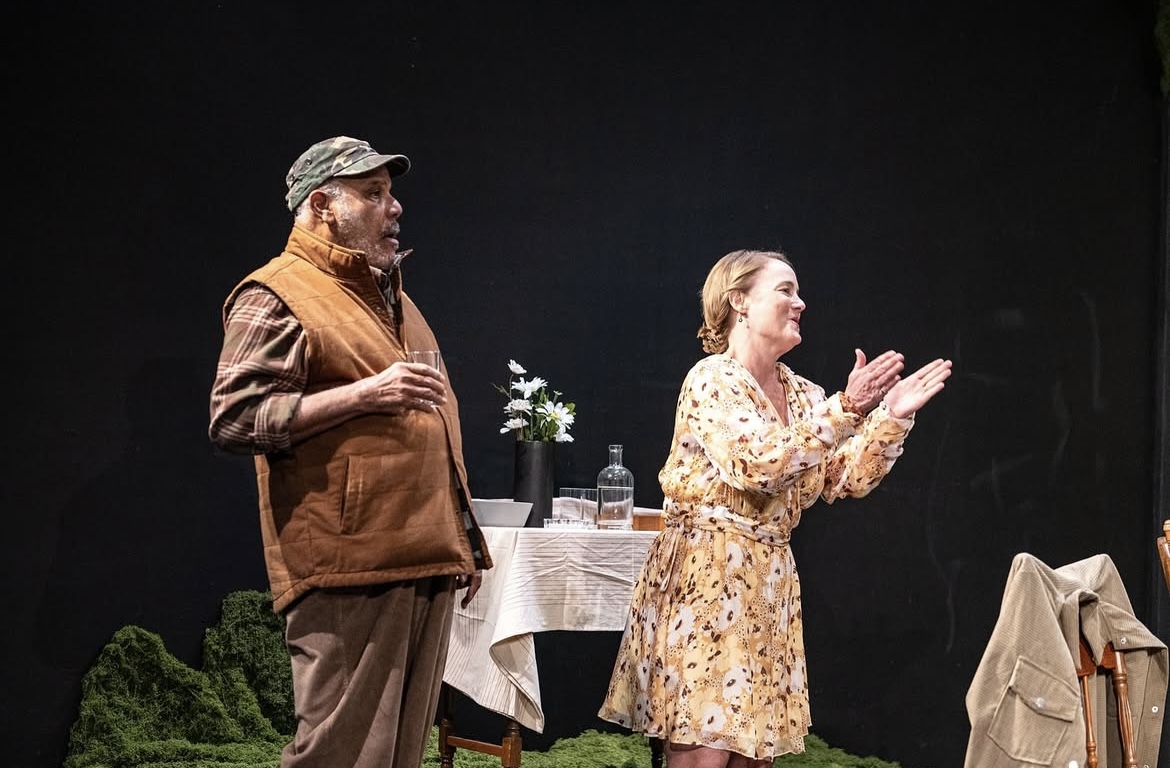
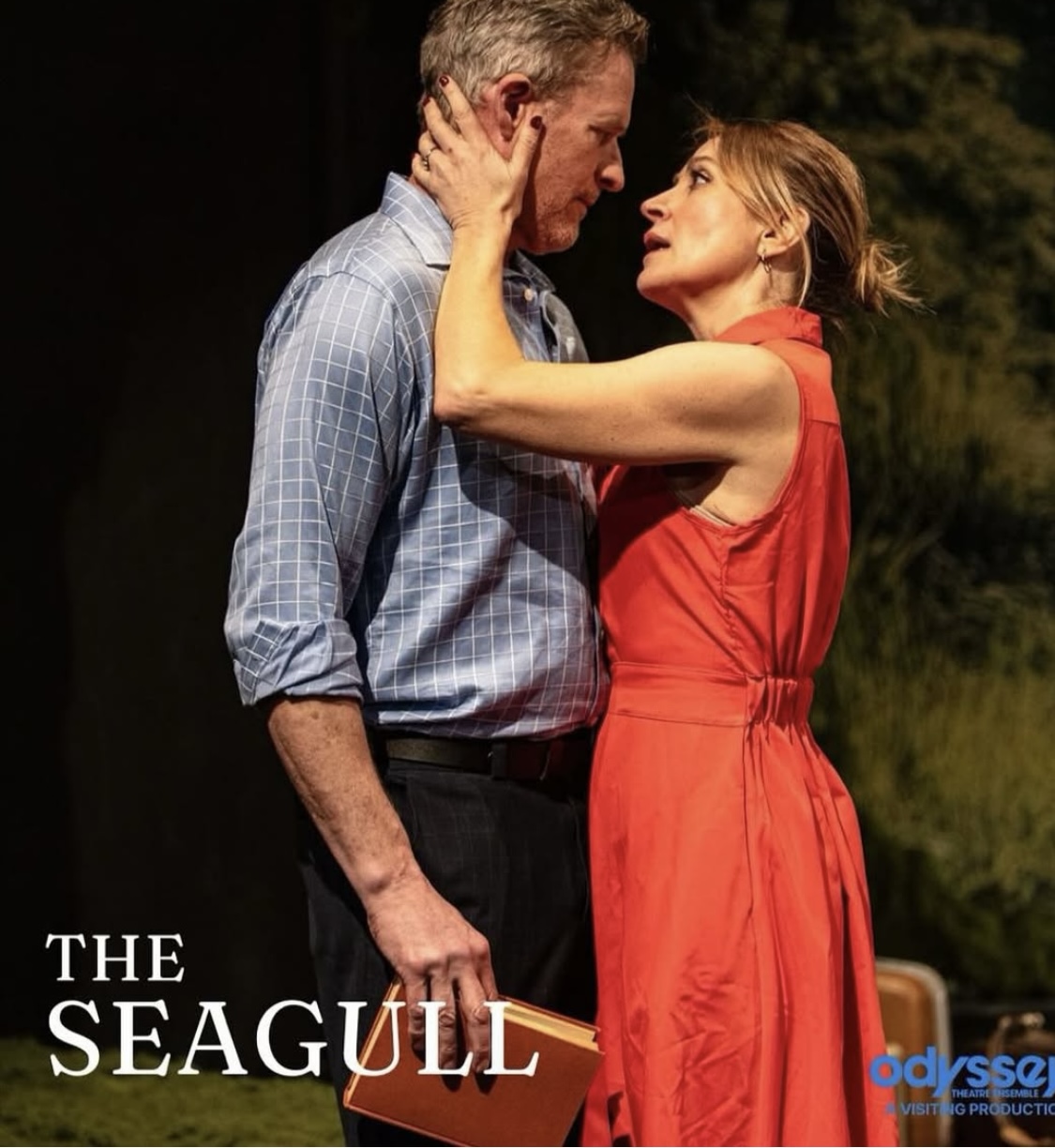
The Seagull, one of Chekhov’s most popular plays, is here in Los Angeles at The Odyssey Theatre in an extended run through February 23rd. The production is a don’t-miss directed by Chekhov expert and actor Bruce Katzman, author of Secrets of Chekhov, and stars Sasha Alexander of Rizzoli and Isles, NCIS, and Shameless as Arkadina, and James Tupper of Revenge, Big Little Lies, Grey’s Anatomy, Men in Trees,  FBI, and The Irrational, as Trigorin. The exciting production offers a timeless performance about chasing love and mourning its passing.

Stay tuned for a review of this production, but we were delighted to speak with the director and stars. Asked why The Seagull is such a special play, Katzman explained “The play is 126 years old yet it is unbelievably modern. Chekhov had his finger on the pulse of the human heart, and the characters in The Seagull might very well be people you read about in the gossip columns of today in New York or Los Angeles. The lure of celebrity, the dreams of a country girl who wants to be famous, the frustration of a son who can’t compete with his mother’s stardom and can’t find his own artistic path, the futile pursuit of love in all the wrong places! Audiences still laugh and cry with recognition. They see themselves, their neighbors and their family in this play.”

Katzman adds that he wants audiences to know the play and this production are “100% accessible. The name of Chekov, like the name of Shakespeare, sometimes intimidates modern theatre-goers and they’re afraid they won’t understand what’s going on, or that hte language will be difficult, or the story will go over their heads. But in our production you understand everything. And it’s a brisk two hours! We have not cut anything, but it is not a boring and tedious ‘period piece.’ It is fun!” he enthuses.

According to Katzman, he’s experienced “two great pleasures” in directing this production. “First, to assemble a cast of newcomers and oldtimers who have blended themselves into a beautiful ensemble; and having earned the trust of that ensemble, that they would help me realize my vision of the play. The great payoff has been to witness audiences night after night sit in utter silence to see the story unfold. You can hear a pin drop most of the time, except when they are howling with laughter! Perfect Chekhov.”

Lead actress Sasha Alexander says what inspires her most about the production and her role in it is the fact that she has always wanted to be a part of The Seagull. “I loved meeting Bruce and James initially, we got along well and I felt safe to go on this journey with them. I have enjoyed James’ work for years and with Bruce’s Chekhov expertise, I knew they would be the right team to dive into this with. They have assembled a wonderful cast, so many young talents, and Bruce’s interpretation of the play has made it contemporary and accessible to a wide range of audience.”

Co-star James Tupper concurs and adds “I’m inspired by the level of writing. The cast who are each super in their own way — and by the chocolate for sale at the Odyssey concession.  Salted Caramel Chocolate feels a lot like love,” he laughs.

Alexander attests that she loves her role as Arkadina. “She is a complicated woman who swings many ways throughout the play, emotionally. But she is tough and smart and a survivor. I like that. That’s what inspires me the most – the challenge of the role and just getting to perform this classic with so many beautiful artists.”

She finds that Arkadina is a challenging role on many levels. “The narcissism, trauma and performative parts of her character are swinging constantly, making it a truly diffcult experience every time we perform the play. But the relationship she has with her lover, Trigorin, her son, and her brother are complicated and rich. So many things to discover and play with. I love doing it and it is never the same, which is so inspiring and satisfying. It’s been one of the most wonderful acting experiencesof my life.”

Tupper describes his favorite part of the play as “The fight scene Sasha and I have in the middle of the play.  Don’t worry, it’s very funny and I think every married couple might relate. Also it’s fun to pretend to be a very famous person, even if it’s only for two hours, four times a week.”

Director Bruce Katzman’s full cast includes Sasha Alexander, James Tupper, Parker Sack, Cece Kelly, Carlos Carrasco, Carolyn Crotty, Joe Hulser, Will Dixon, Brianna Bryan, Matthew Hartley, Lukas Jann, and Hannah May Howard. The production is co-produced by Katzman, Tupper, and Crotty.

Extended through Feb. 23, the remaining performances are Thursdays Feb. 13; Feb. 20; Fridays Feb. 14; Feb. 21, Saturdays
Feb. 15; Feb. 22, and Sunday afternoons Feb. 16; Feb.23.  Those attending can stay for post-show Talkbacks on February 23rd.
The Odyssey Theatre is located at 2055 S. Sepulveda Blvd. in Los Angeles.

  • Genie Davis; photos provided by the production.