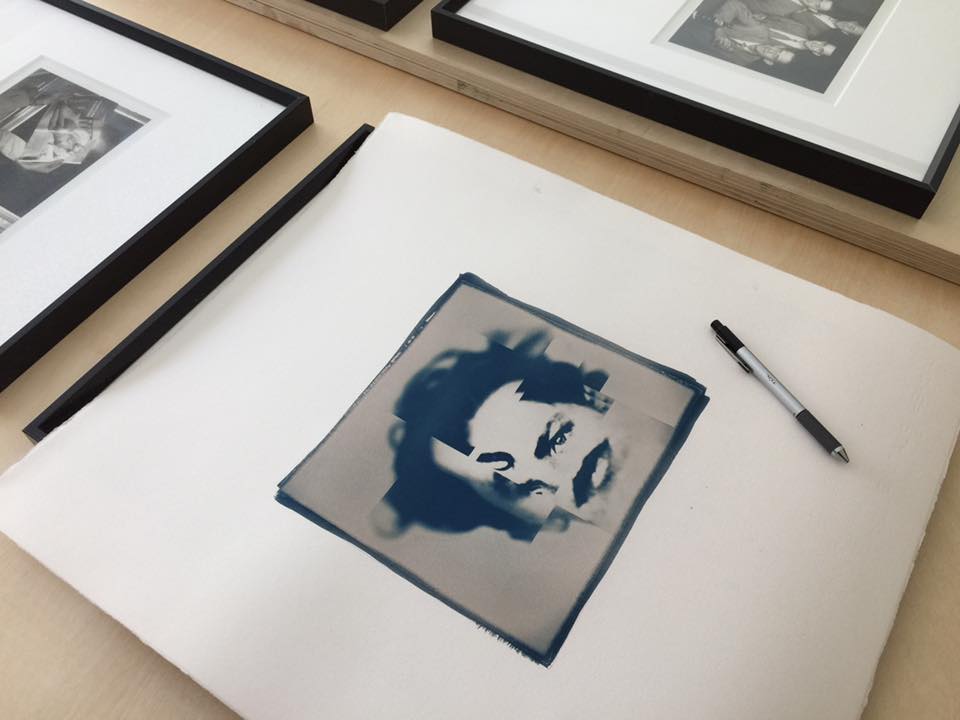
J.Fredric May: Seeing Things

May 1

Vision is a curious thing. What we see may be empirically there, in front of us, or it may be something more shadowy, an outgrowth of how we feel, what we think we see, what some might call an inner vision. Experimental artist and photographer J. Fredric May embraces that inner view. The former photojournalist, commercial photographer, and filmmaker is legally blind, having lost 46% of his vision after surviving a major stroke during open heart surgery in 2012. The stroke also subjected him to vivid visual hallucinations.

One could view this as a tragic set of circumstances, but that is not May’s way. Instead, he was challenged to alter his artistic expression, and find new ways to express visual images. He incorporated the hallucinatory episodes he was experiencing, and is shaping beautifully haunting works that challenge viewers to see the extraordinary in the ordinary.

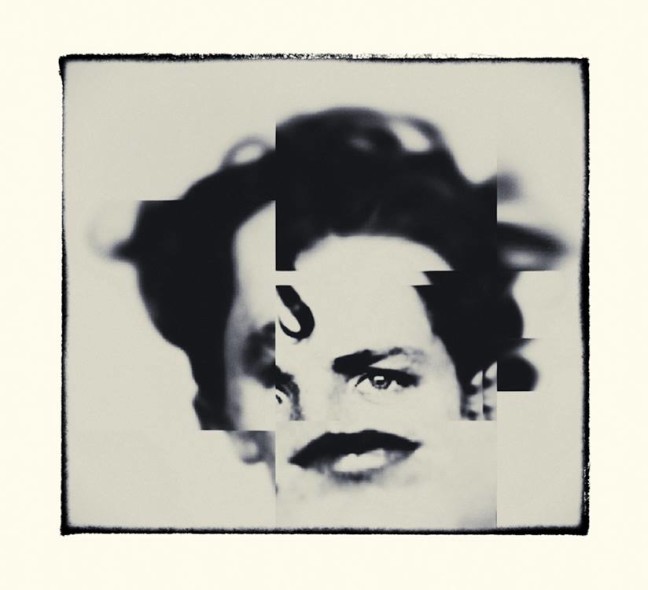
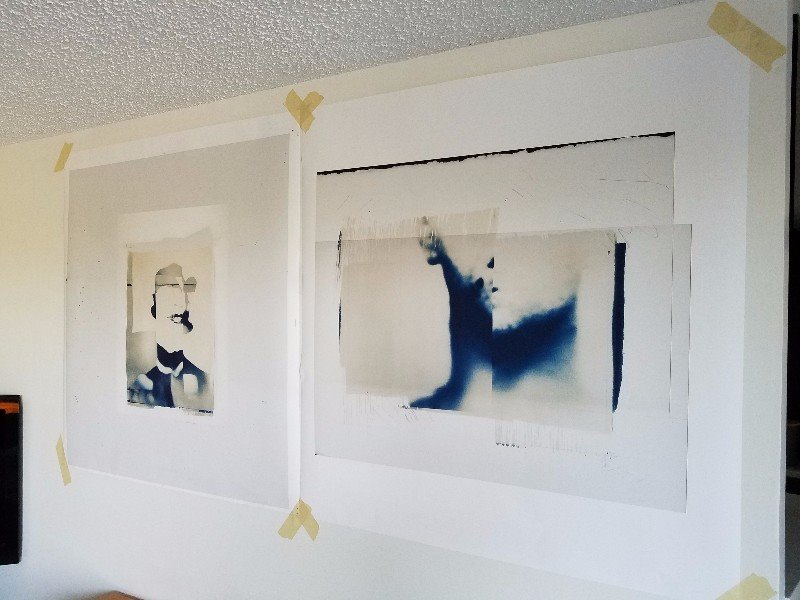
Using computer imaging software to corrupt and disrupt visual information, the artist essentially began to replicate what was occurring for him. Fragmentary, poetic, and ghostly, they are familiar images turned inside out, puzzle pieces that are mysterious yet recognizable, life through a strange prism.
May 3

With his series Apparition: Postcards From Eye See You, recently awarded Critical mass Top 50 for 2017, May invites viewers to see through his artistic “looking glass,” and view the world as he does.

May says “Seeing is not a solitary or isolated act. We create and store a ceaseless visual loop of information hat continuously feeds our perception.” And that perception feeds the way we look at what see, May notes “Sight involves rapid-fire motor activity; electrons are fired, synapses jumped…all within milliseconds.”

And during that immediate process, one not only takes in and records visual information, one also absorbs the meaning of that visual information, or creates one’s own meaning from it.
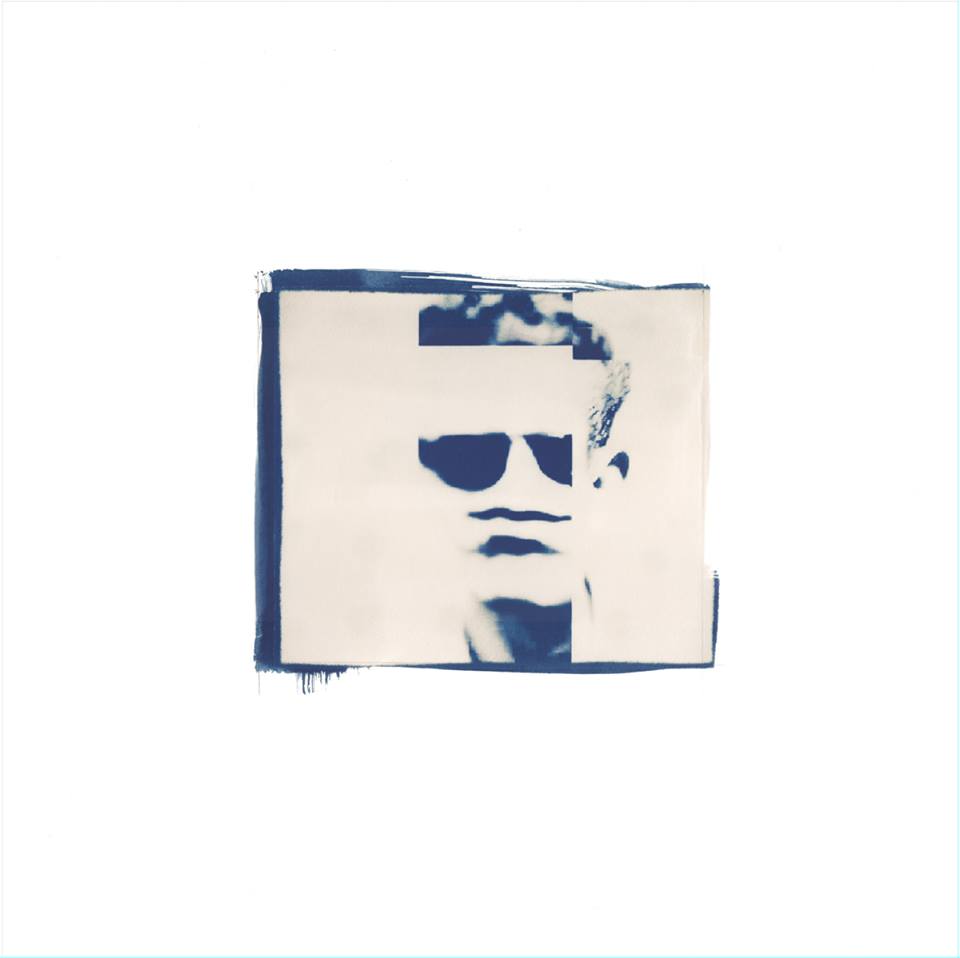
May 4 Authors Hallucination No. 31

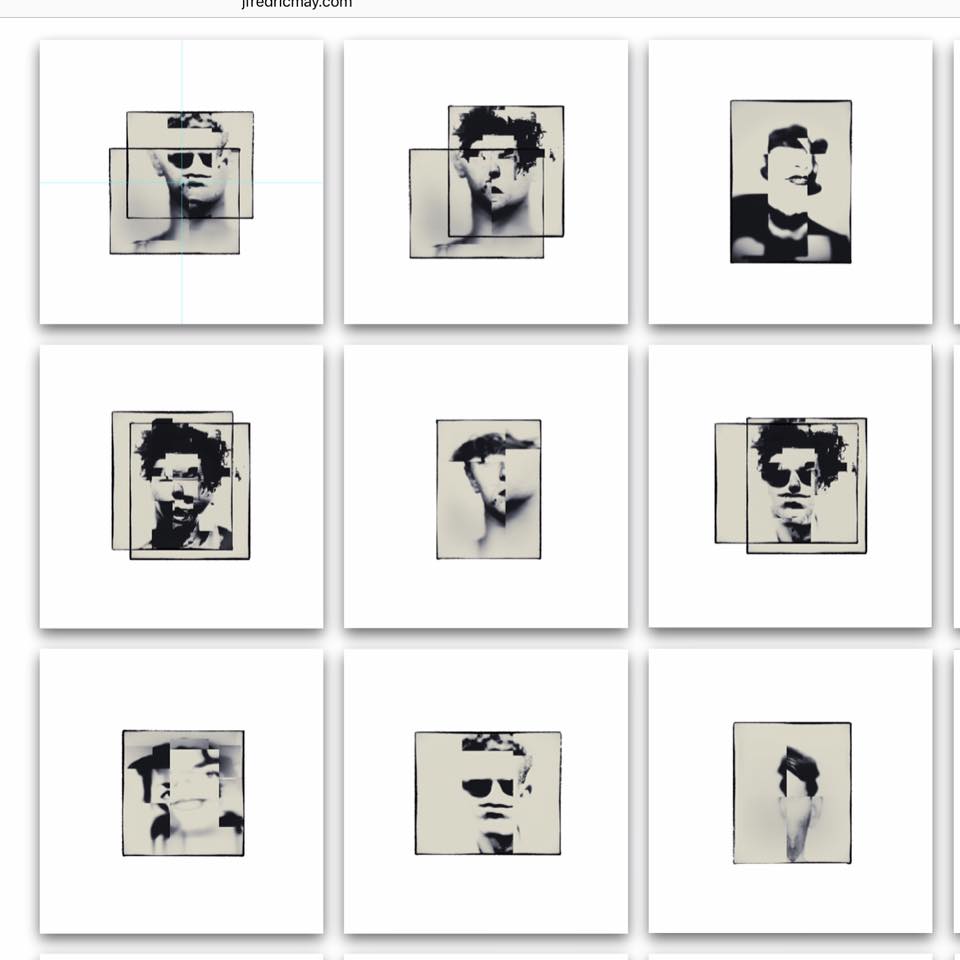
We are given a fresh take on the human form in May’s images. Take “Author’s Hallucination No. 31,” above, a portrait of a man, yes, likely wearing sunglasses, features rearranged into a recognizable yet alien form.
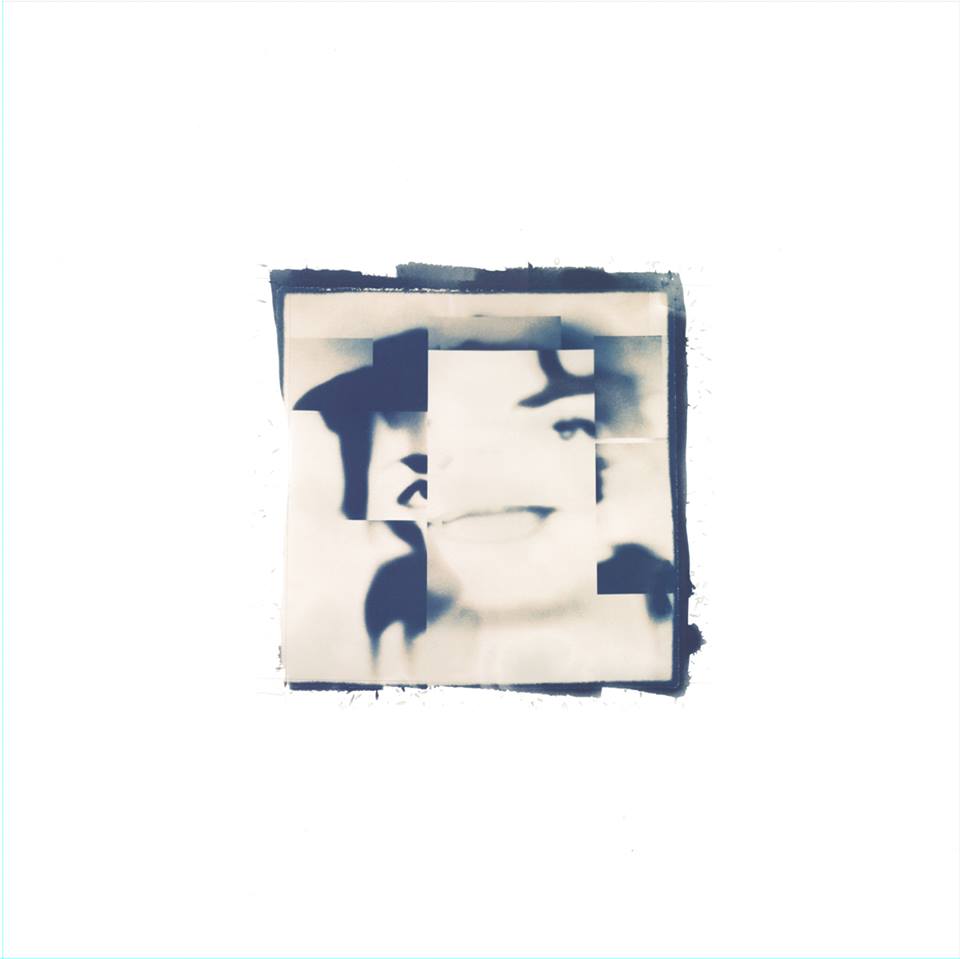
May Authors Hallucination No. 7

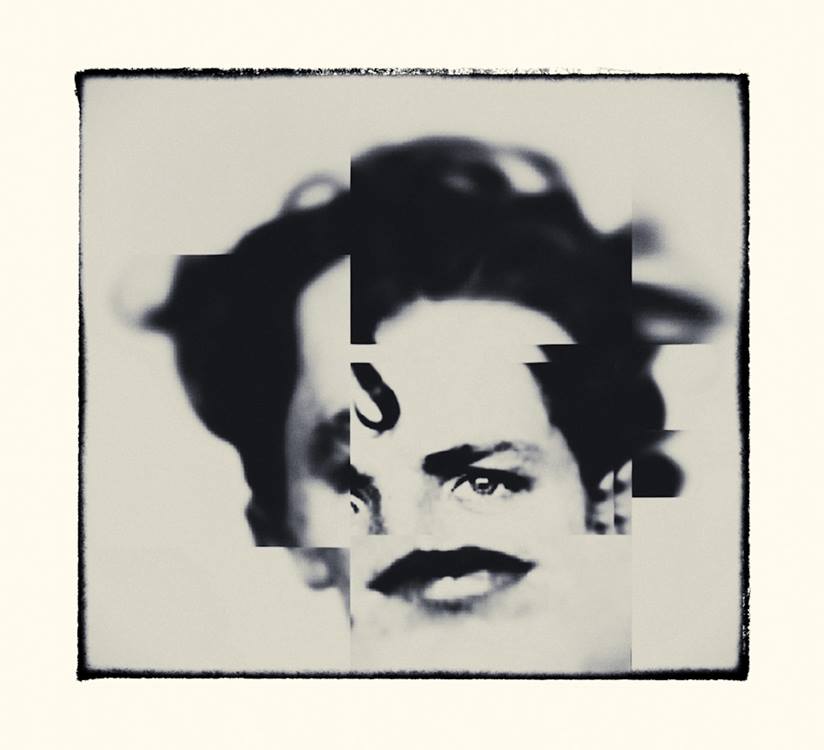
Or “Author’s Hallucination No. 7,” in which a female portrait is dominated by a centered, larger-than-scale mouth.
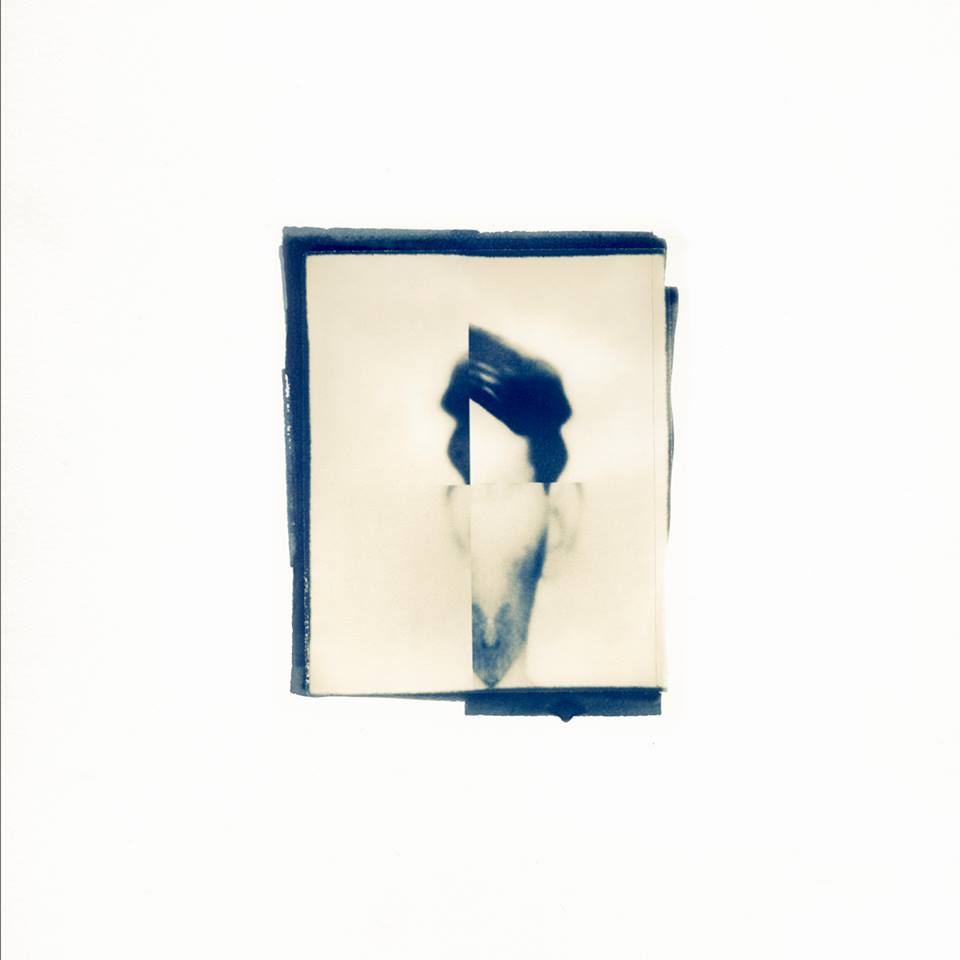
May The Griffin Fifteen No. 10In The Griffin Fifteen Series, “Griffin Fifteen No. 10” collapses a man’s face into a nearly-cylindrical shape, featureless, yet innately recognizable as a human image.

May, who grew up in a family that he describes as “collectors, inventors, and engineers” has always been an innovator, encouraged to “regenerate.” As a photojournalist and commercial photographer, he developed a reputation of capturing what a newspaper editor called the “A-one shot,” a standout image, a cover photo. His vivid, natural image style was forever altered with his stroke, but the artist continues to succeed – in a different form – at creating a resonant single image. May has viewed his stroke as a challenge, a condition to be explored with the assistance of his iPad and his inspirational desire to create images that depict what he himself sees. Along with limited sight, May’s hallucinatory episodes are a result of Charles Bonnet syndrome, in which the brain regenerates visual imagery, attempting to refine and fill in the blur of limited vision.
more may 2

Depicting these episodes, May creates archival pigment prints that combine both analog and digital photographic process, scanning vintage portraits, subjecting the images to data corruption software, creating layered image composites which he prints as cyanotypes. His next step is to bleach and alter the tone of these images with a mix of tea and photo chemicals, which contributes to an ethereal feel to this work. Then, he digitizes the altered cyanotypes to create a print. The result is a distorted yet oddly beautiful composite, ephemeral and fleeting, the glance you always remember, the nearly-dissolving face glimpsed through a rain drenched window you can’t help but forget.
more may 3

May’s capture of these “visionary” moments has also gone beyond his works themselves, with his art-making process accelerating his own recovery and inspiring researchers to study the use of his techniques as an alternative treatment for stroke patients.

Whether in a recent group exhibit at the Los Angeles Center of Photography or in a solo show, Gray Matters, at the Griffin Museum of Photography in Winchester, Mass., May proves that what you see may be just a part of what you “get.” In May’s process of comprehension, what we observe in the blink of an eye is rendered into a potent, depth-filled image that both questions and embraces the vision of life itself.

  • Genie Davis; photos courtesy of the artist
Approaching the New Year: A Thank You to Los Angeles Artists

3R1A0306

Creating art is in and of itself a generous act. Artists are sharing a vision of the world, something that moves viewers, enhances viewers’ lives, and shapes something beautiful out of chaos.

3R1A0310

What a collection of astonishing work: oil and acrylic paintings, sketches, digital prints, photography, sculptures.

3R1A0316

We’ve been proud, deeply touched, and beyond thrilled to see even more generous artistic moments this year, in not one, but two fundraisers held for my daughter and grandson Nicole Saari and baby Aaron Saari, below, suffering from late stage Lyme Disease, which is not covered by medical insurance or recognized by the CDC.

art 20

3R1A0292

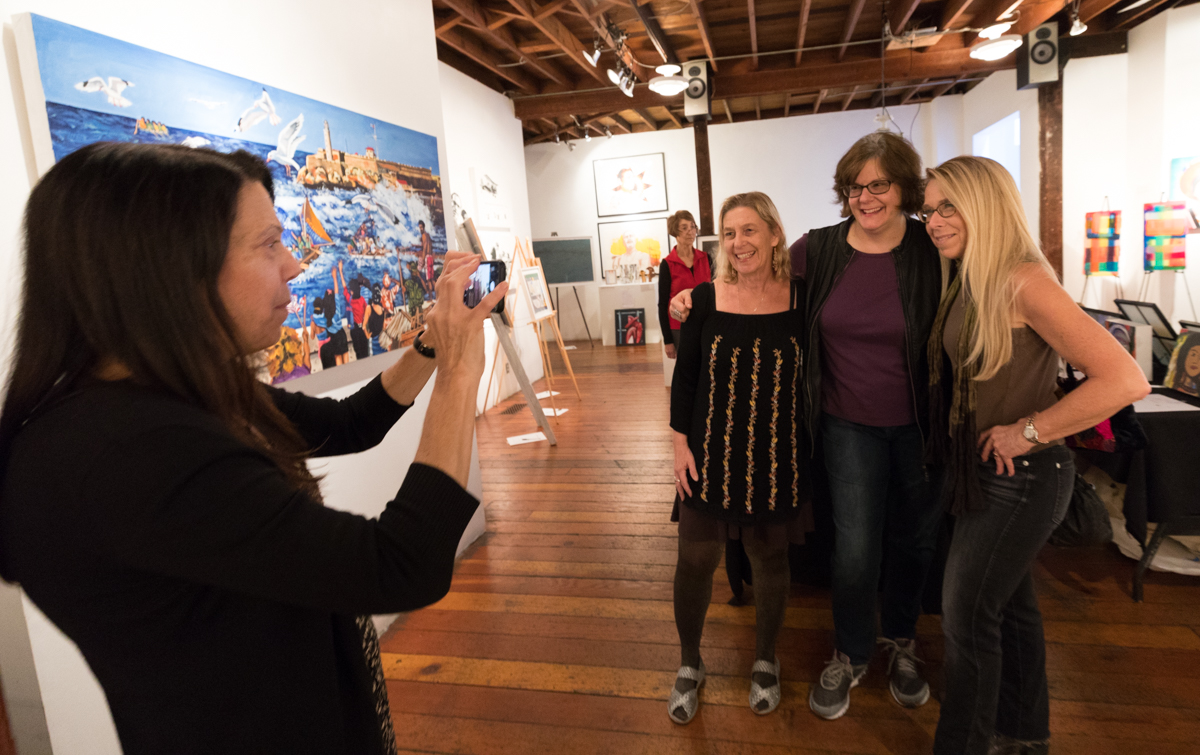
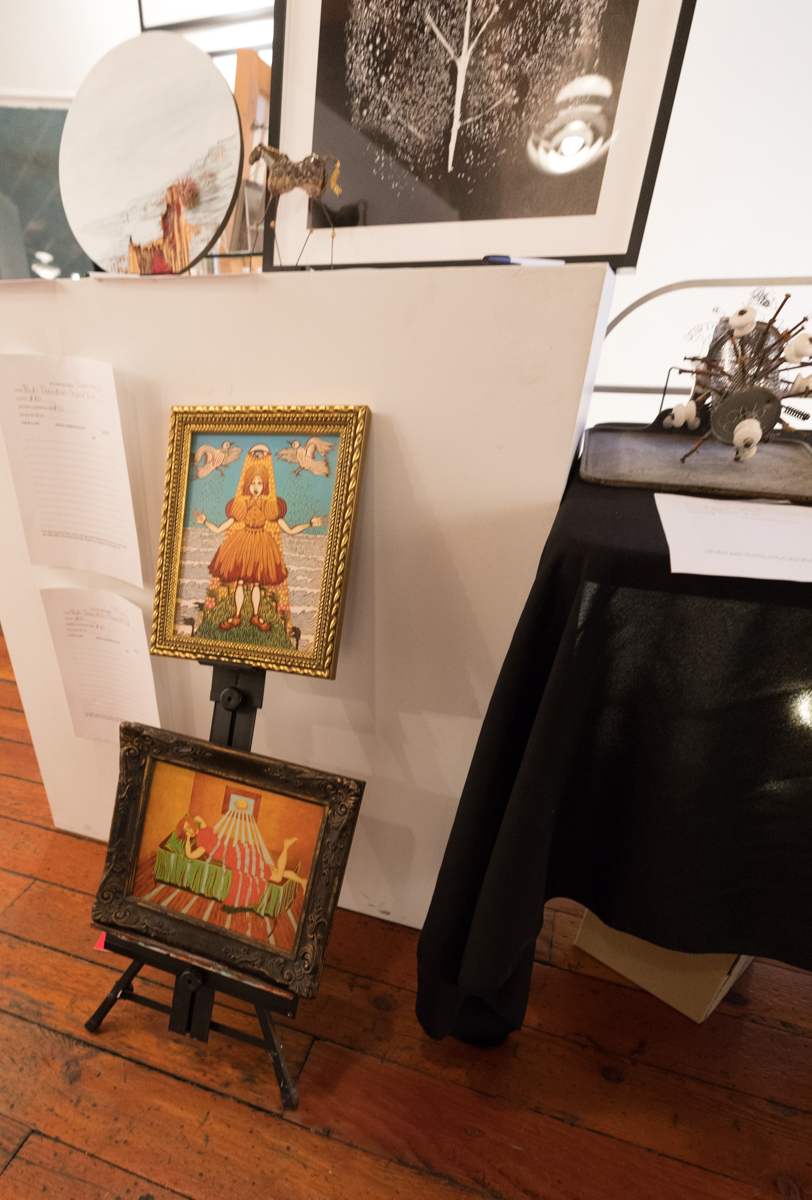
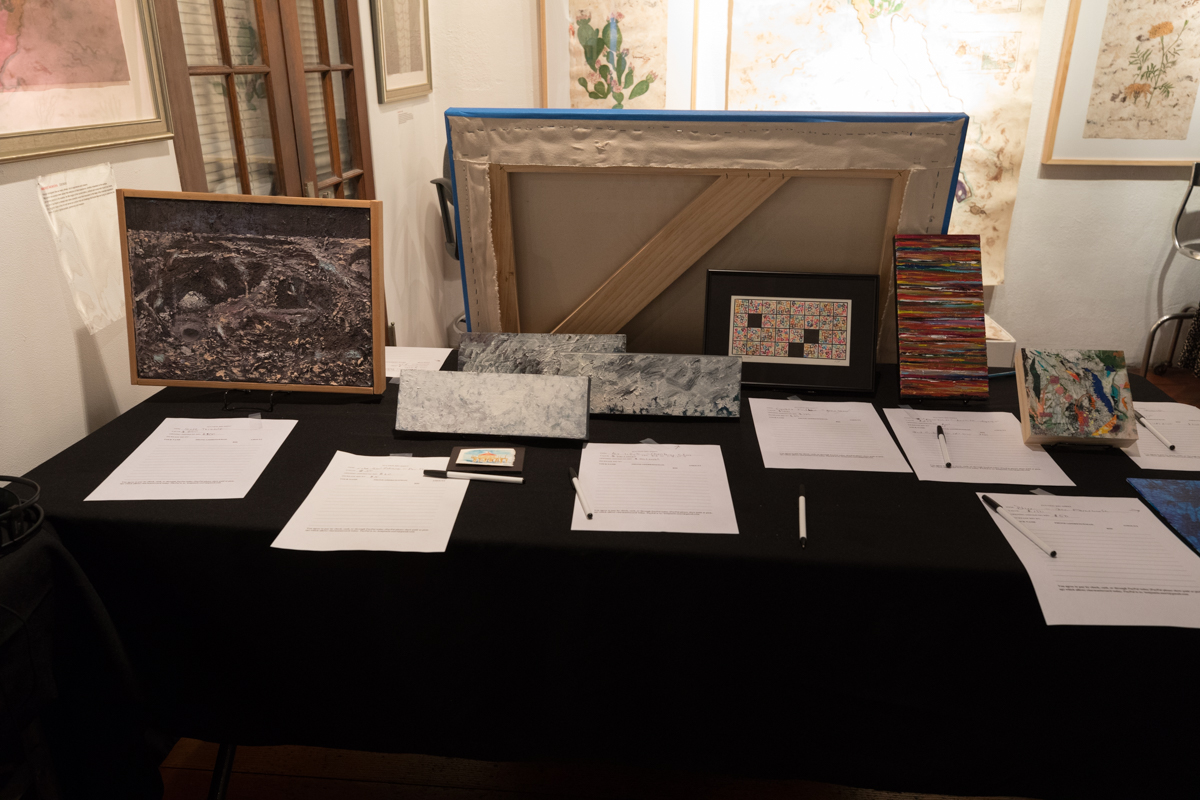
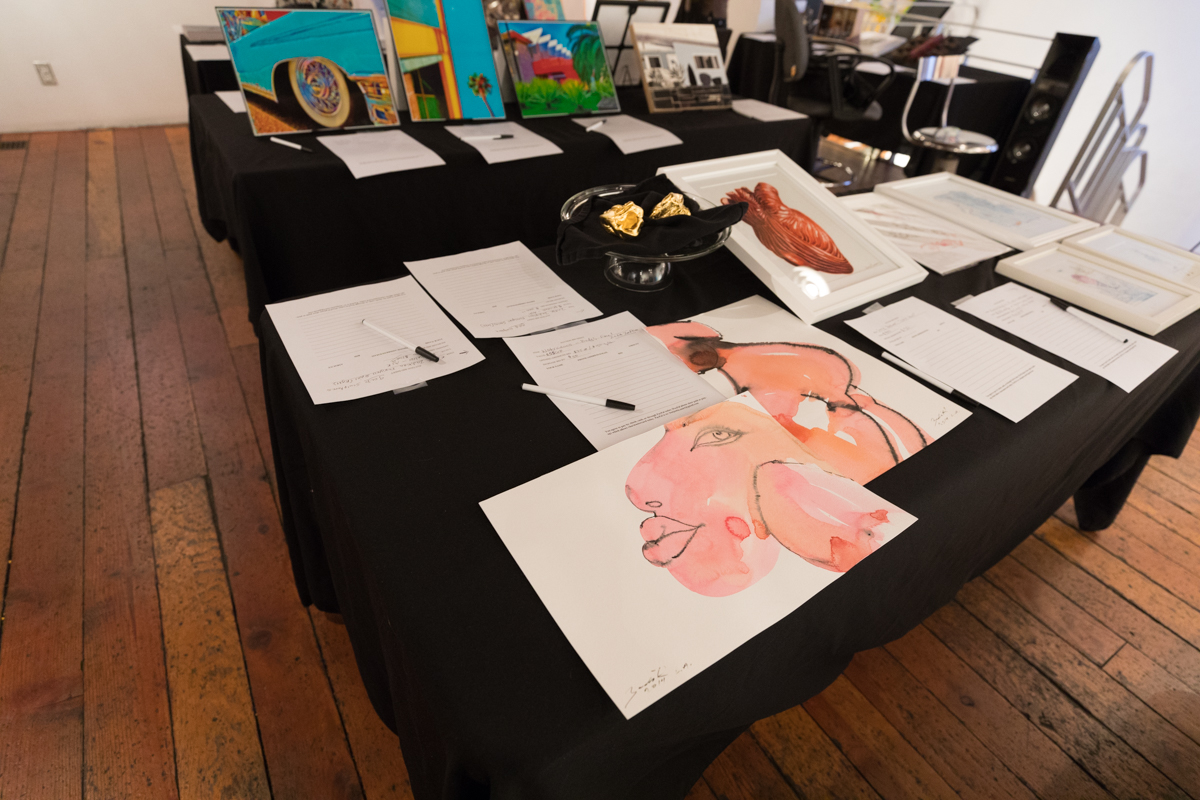
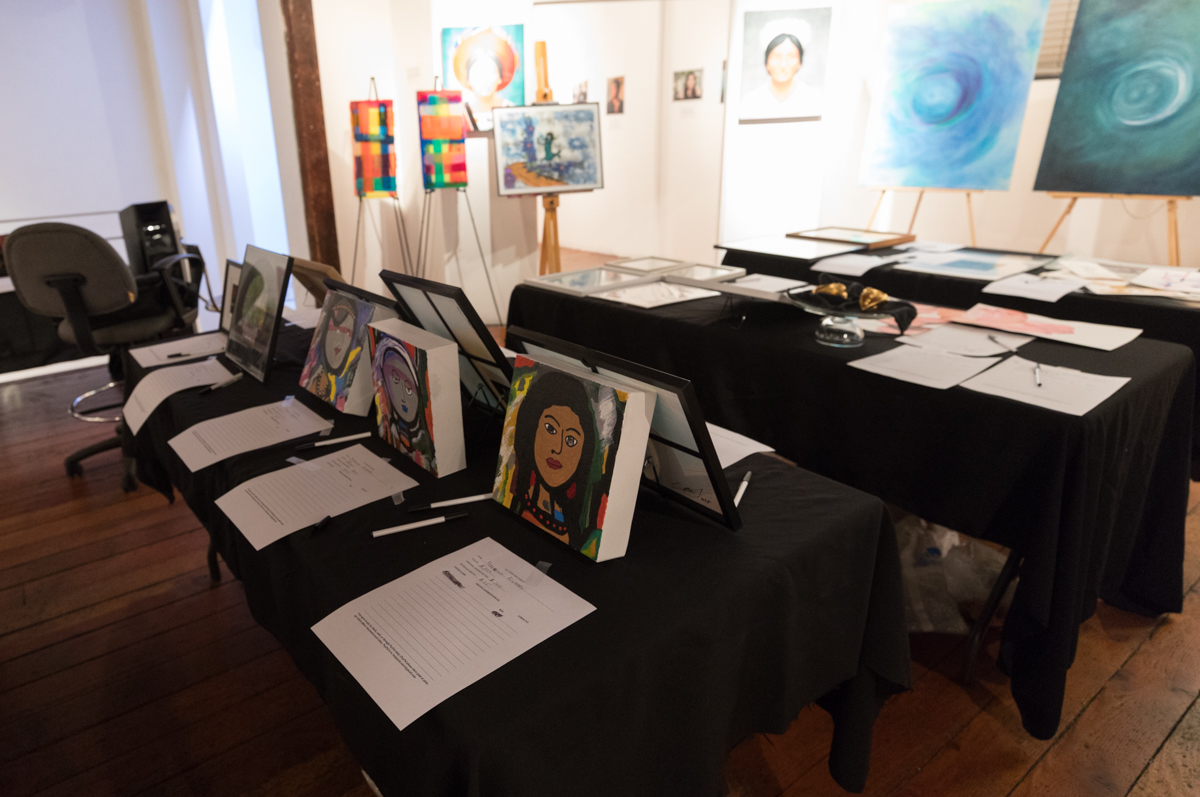
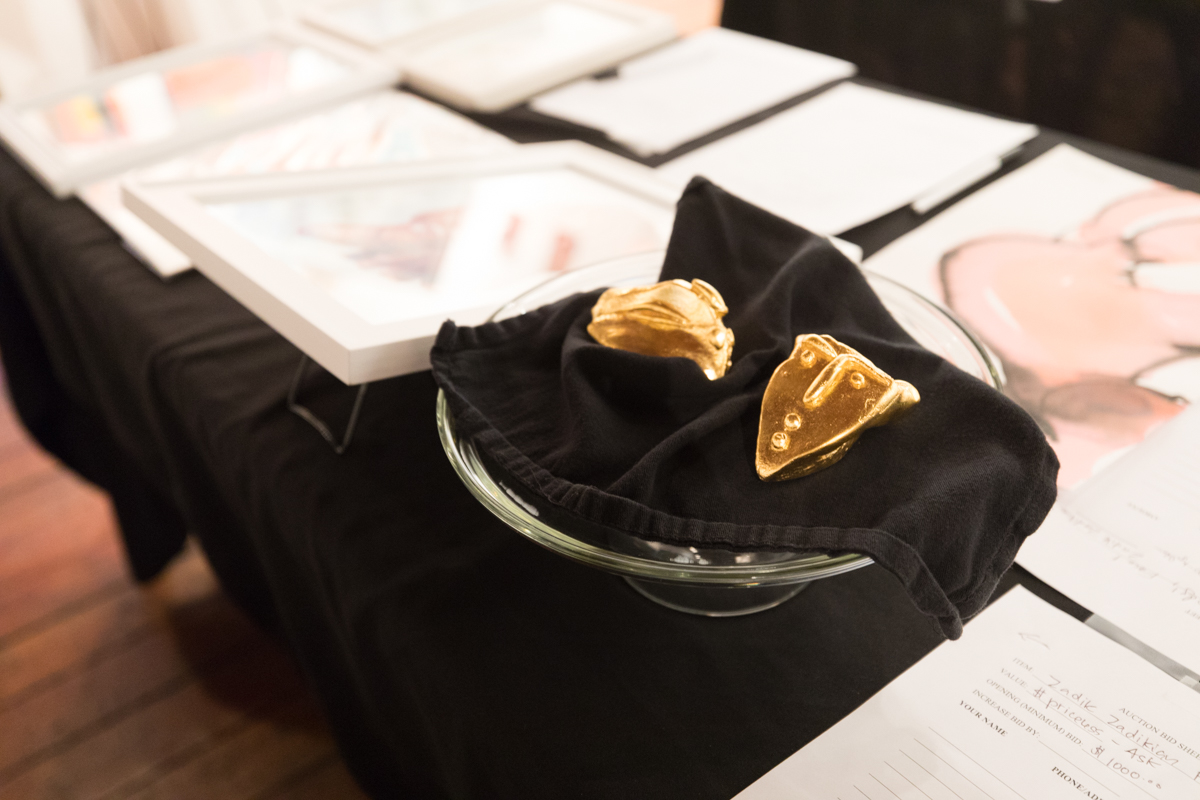
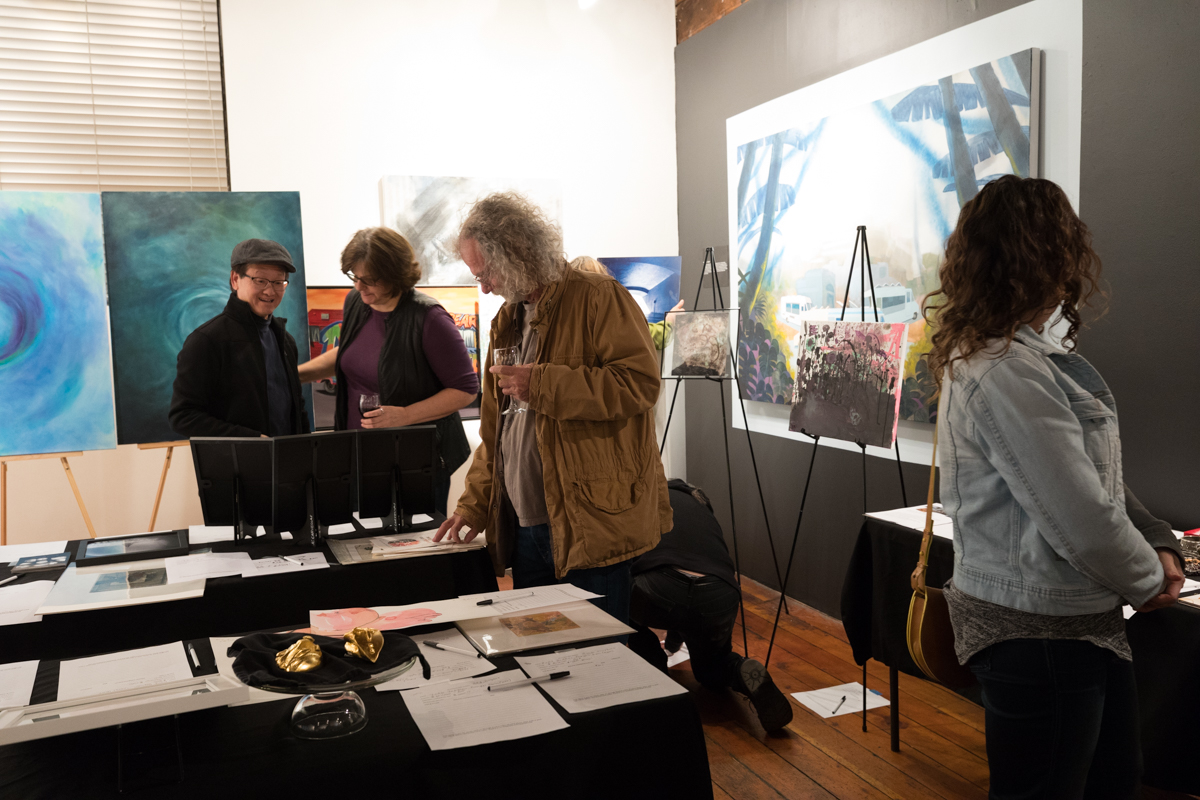
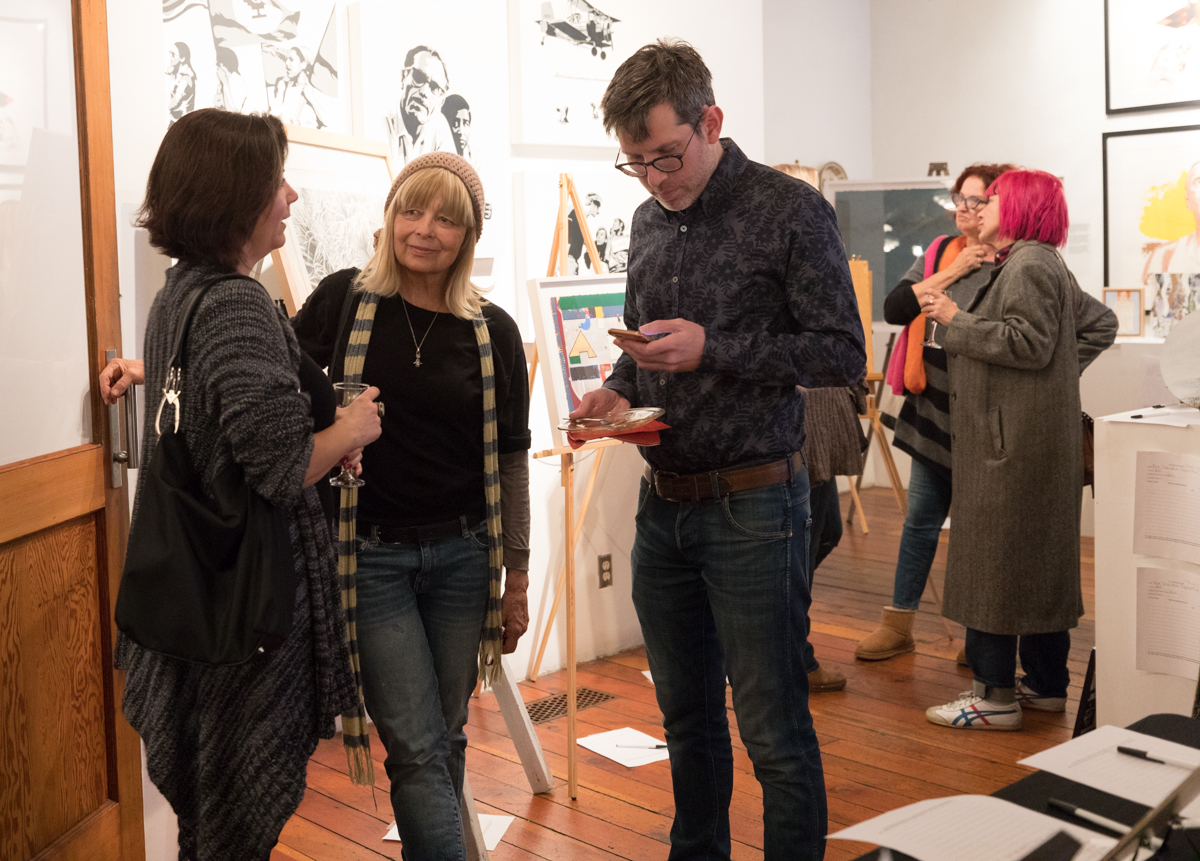
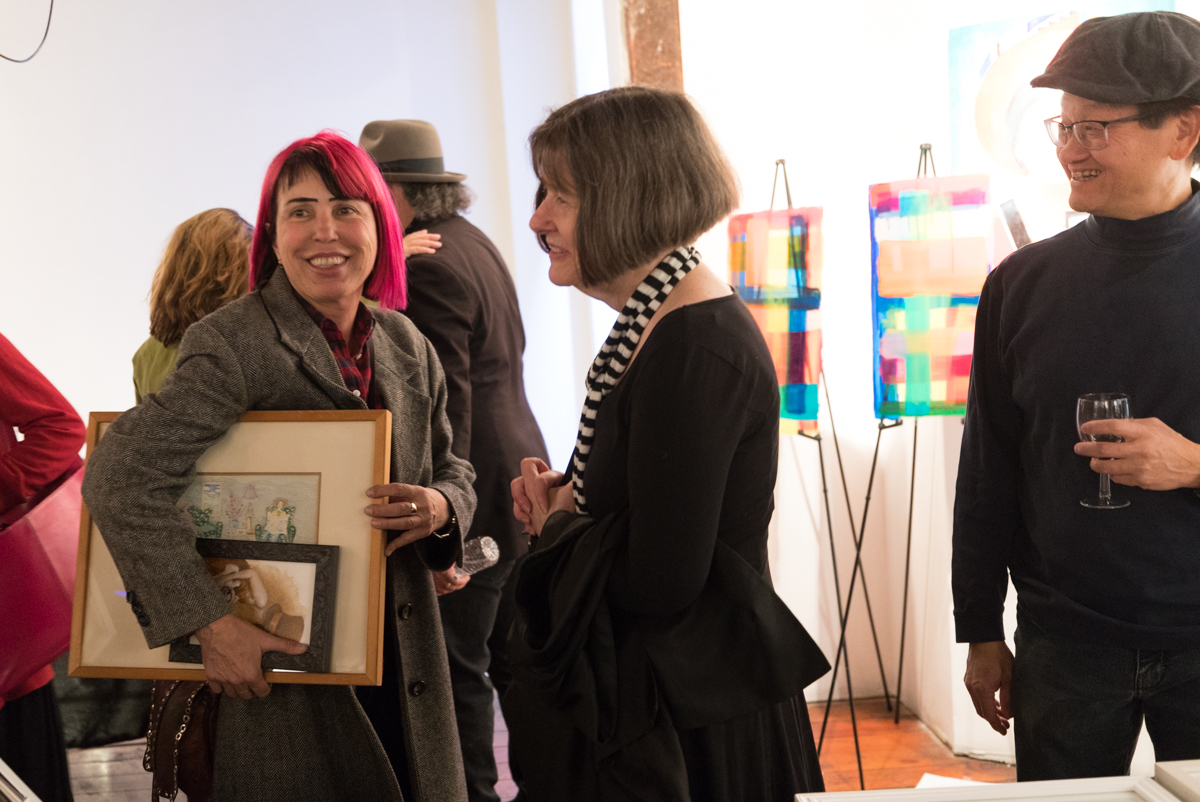
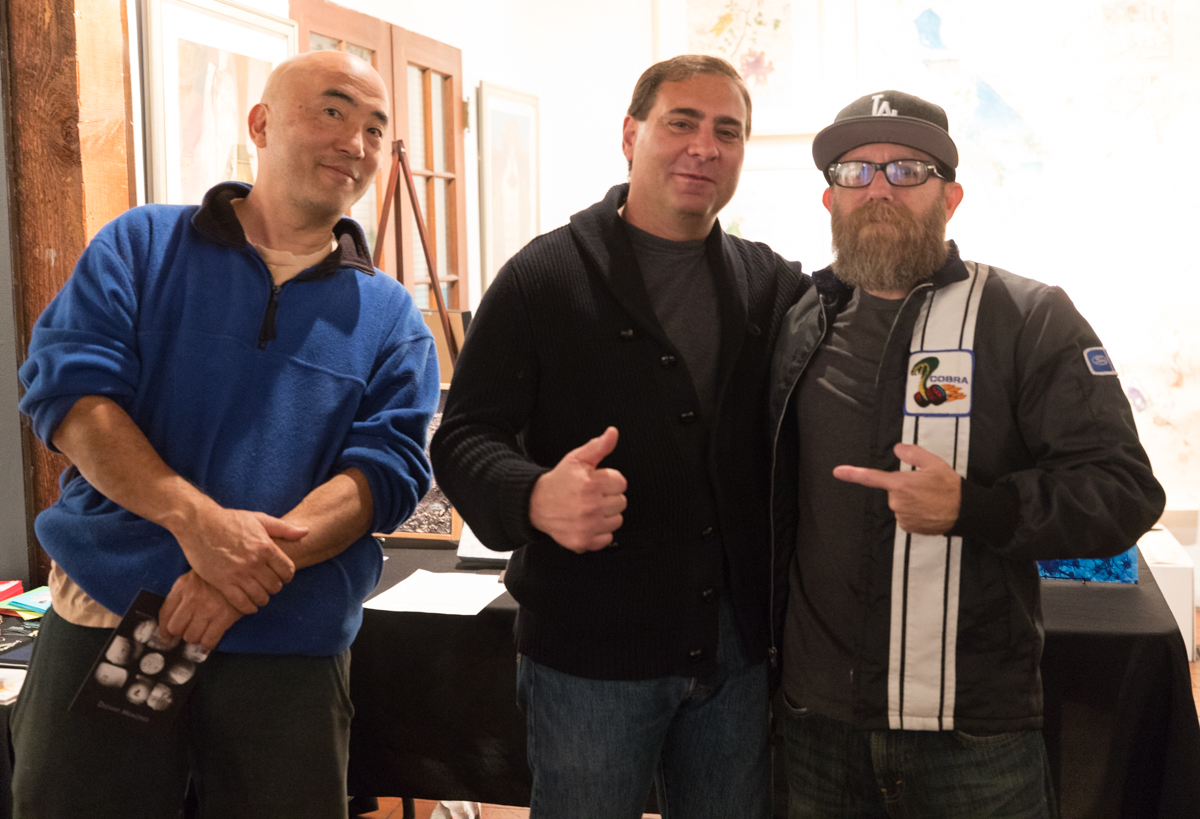
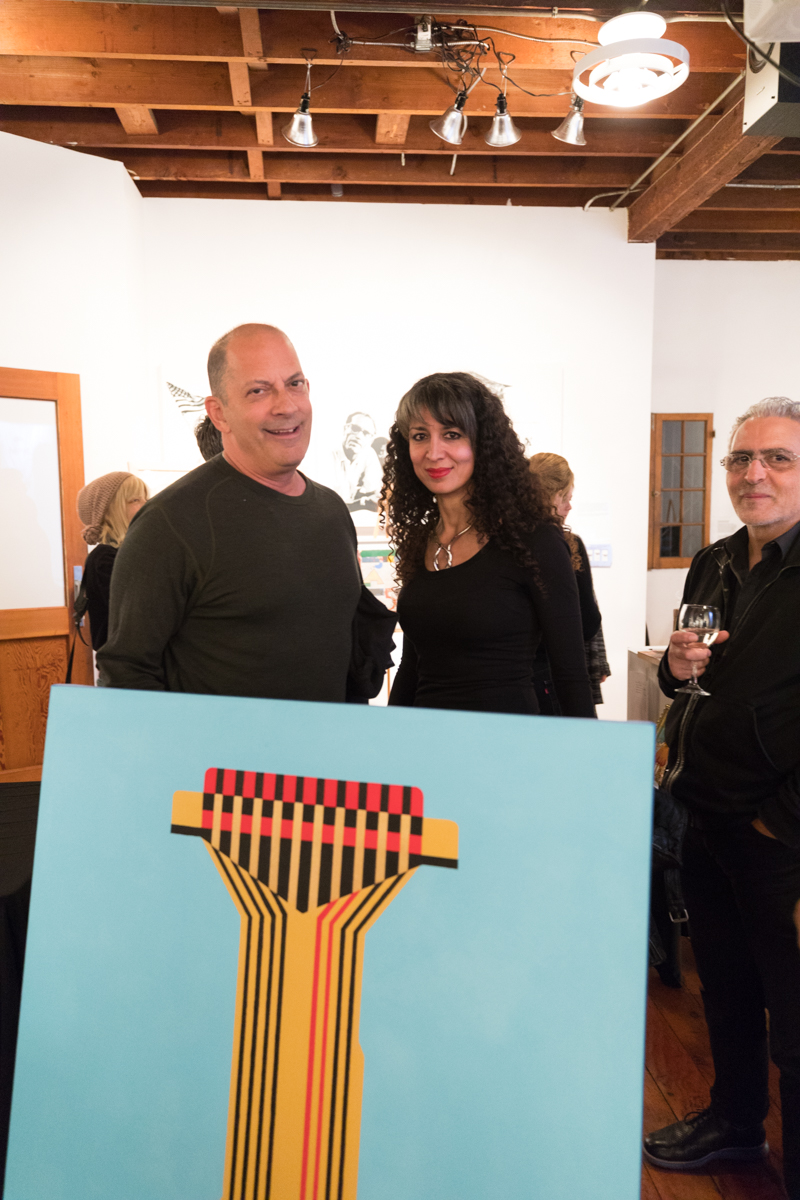
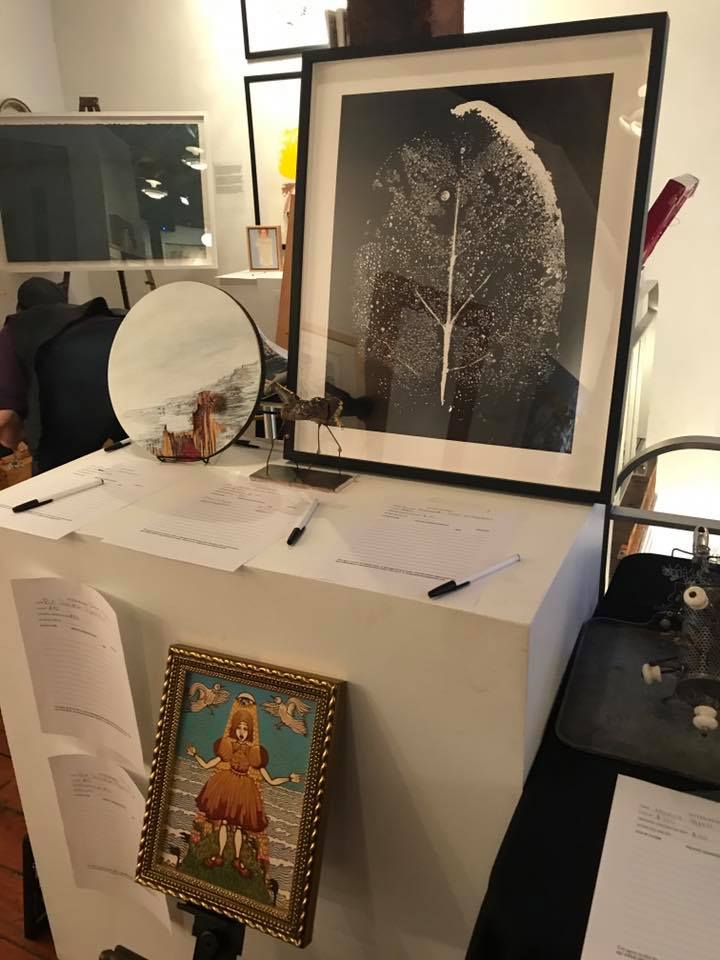
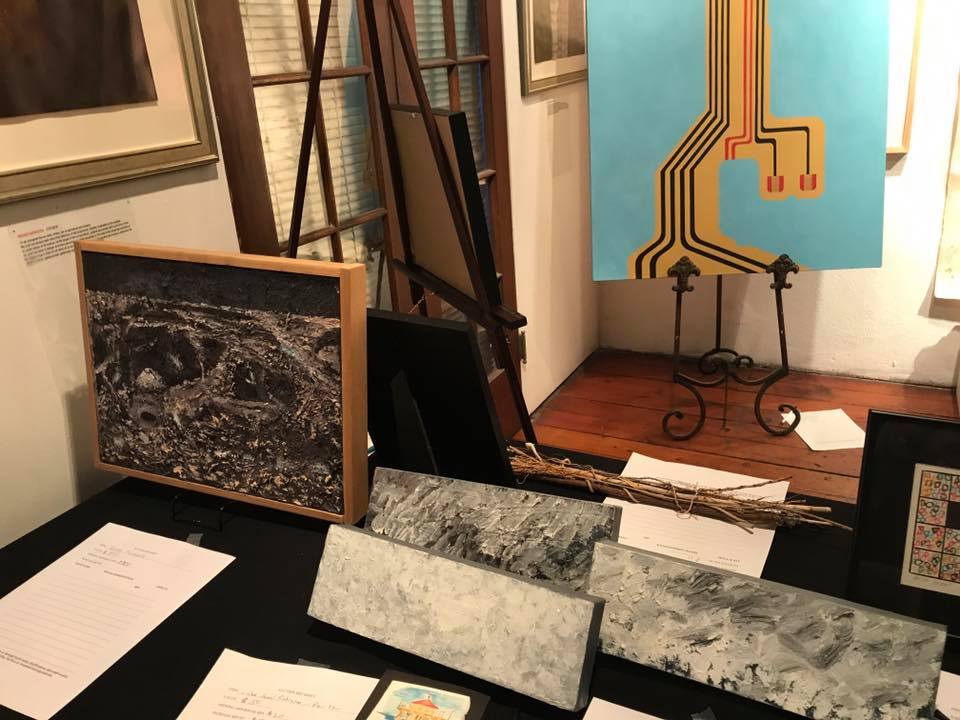
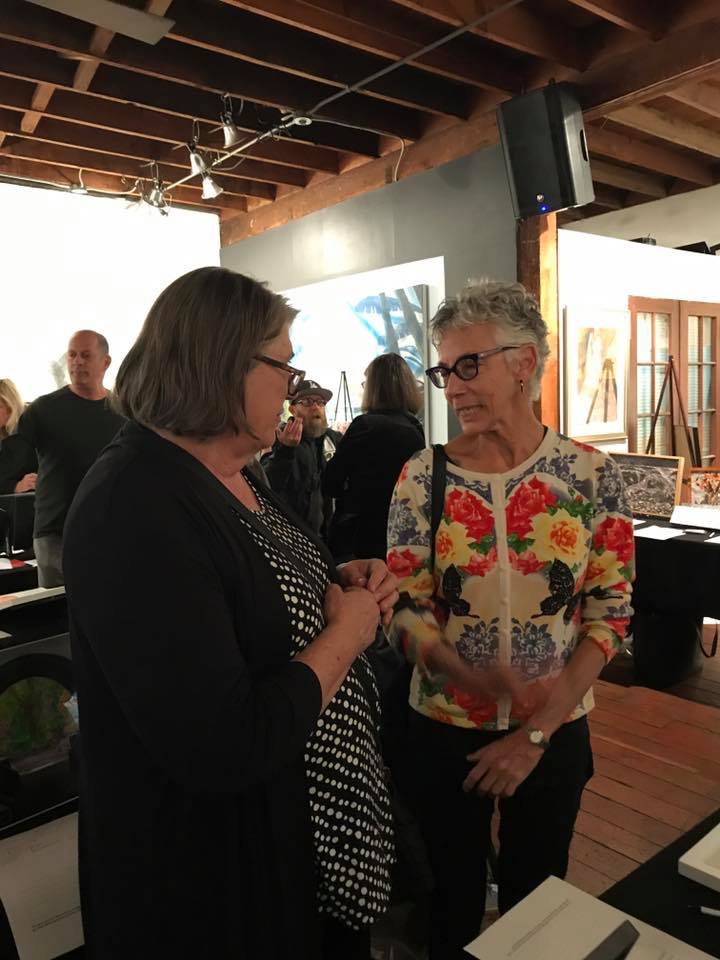
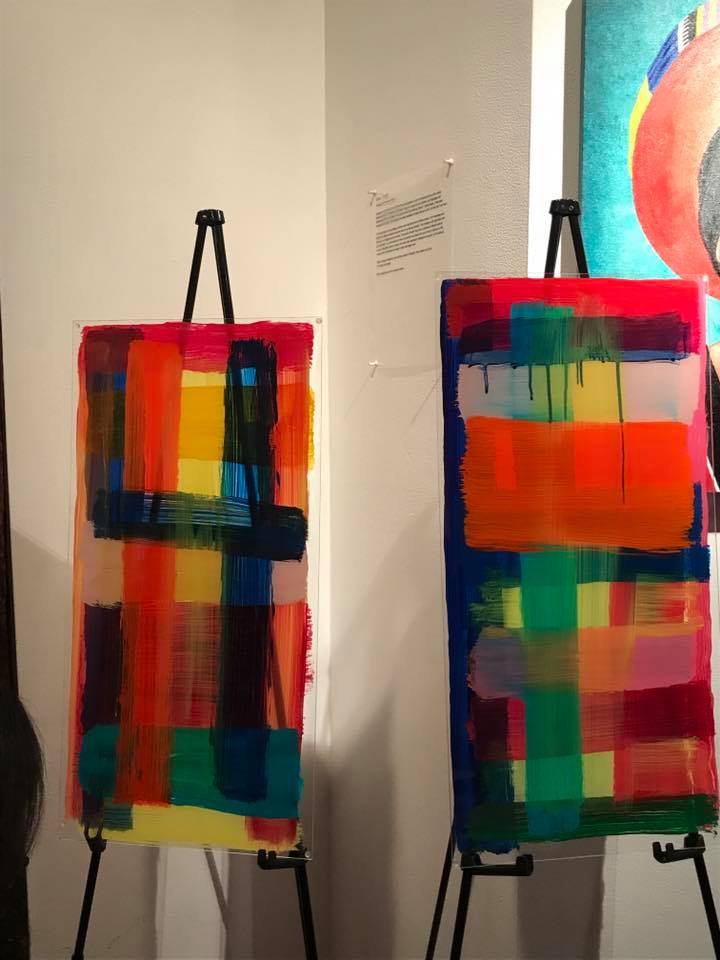
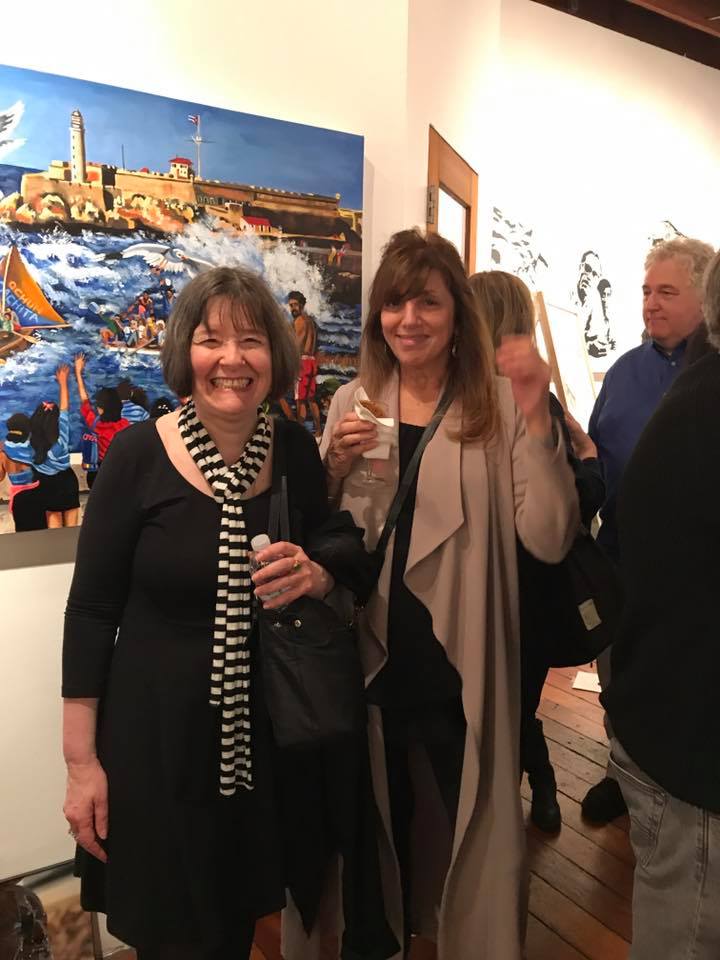
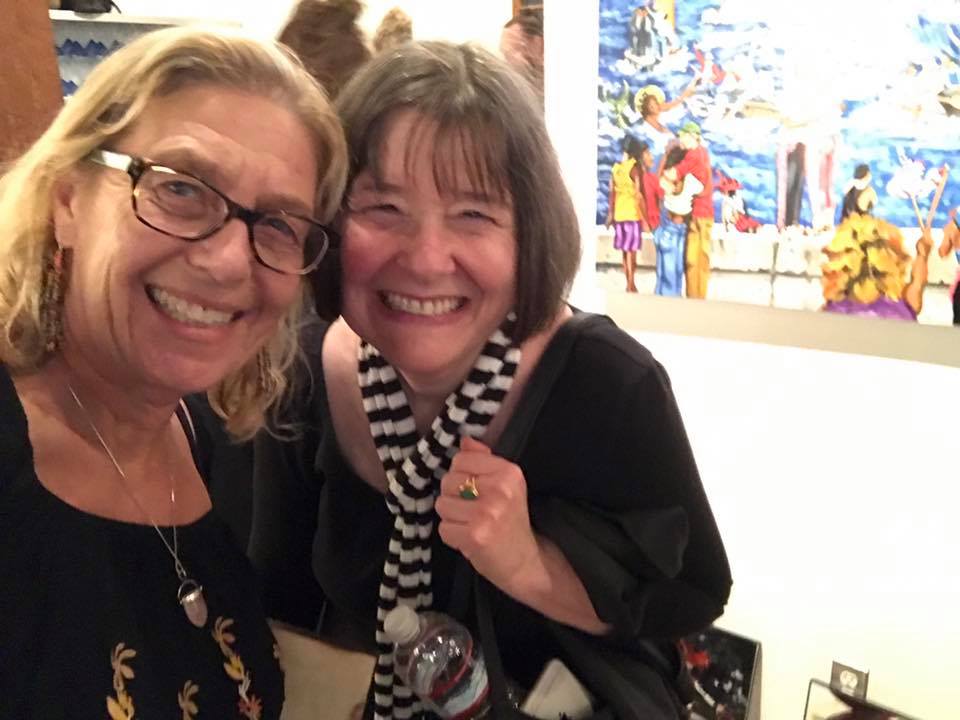
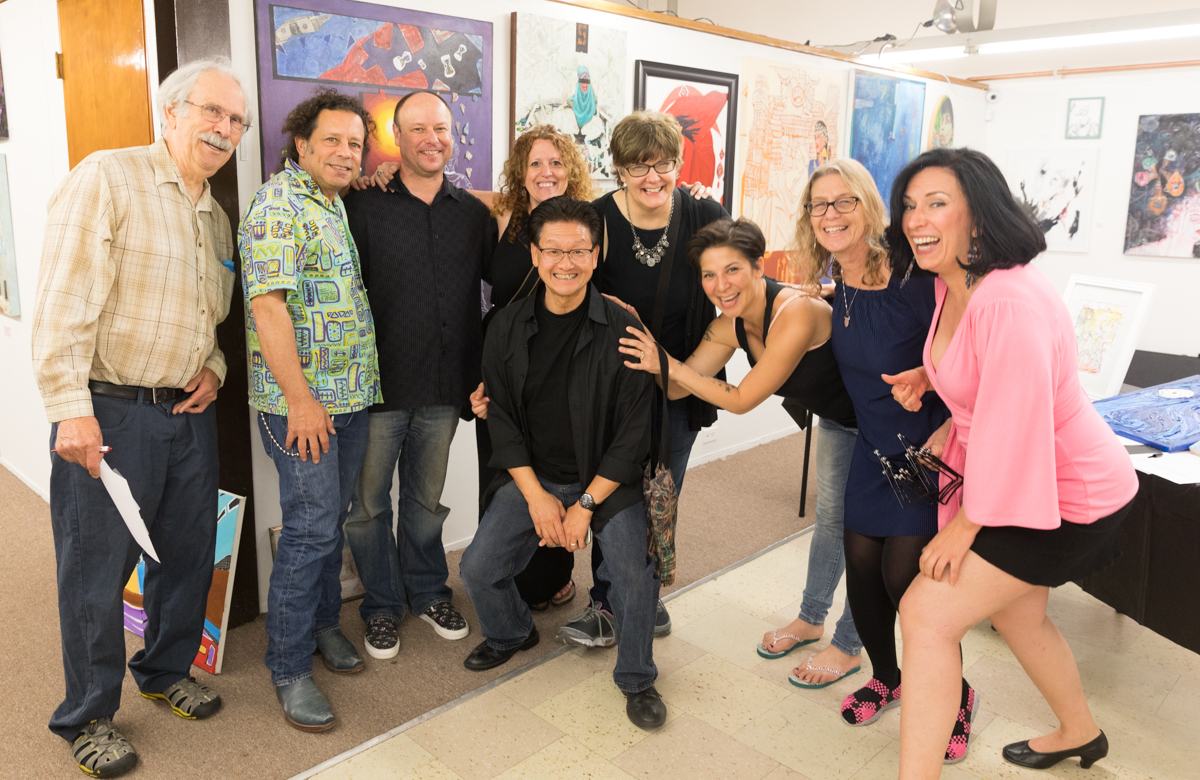
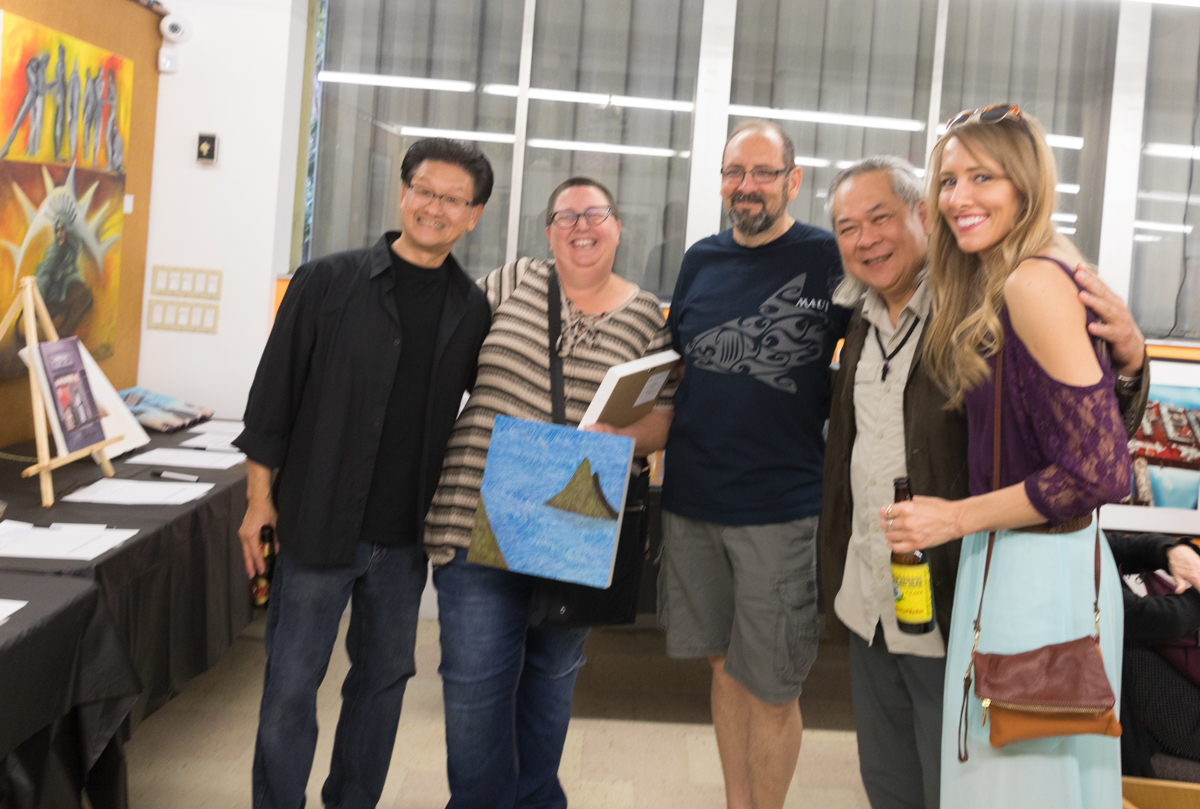
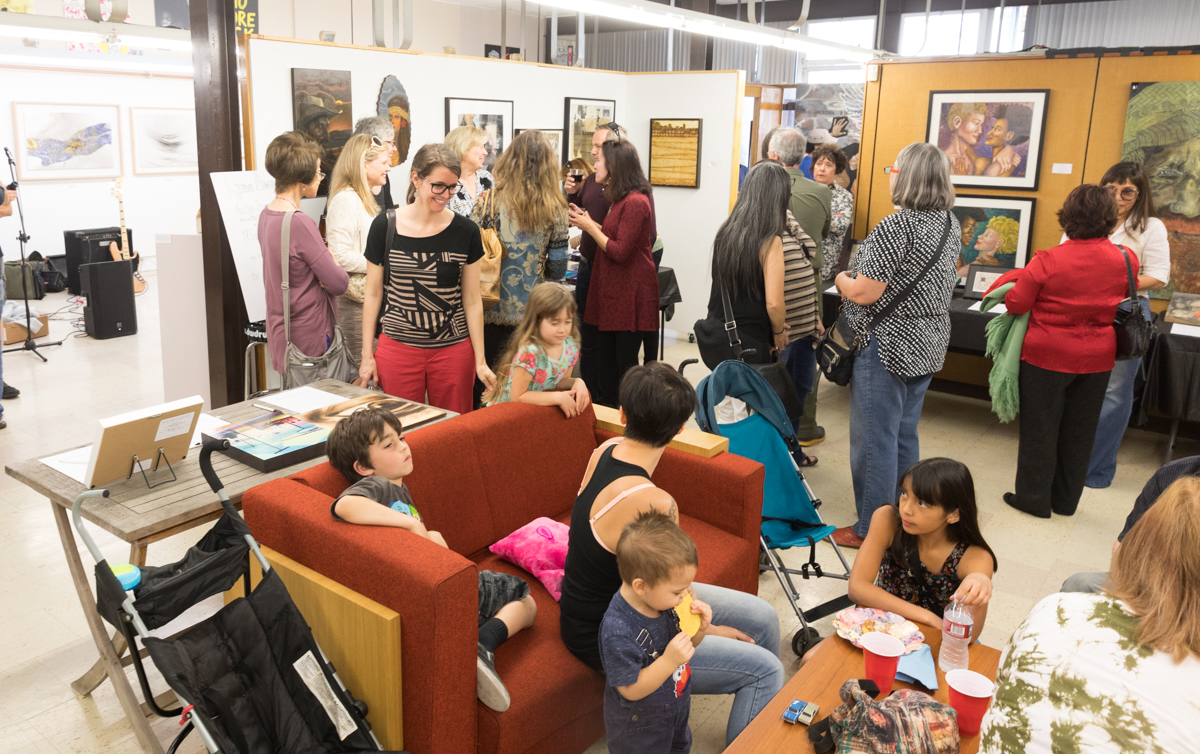
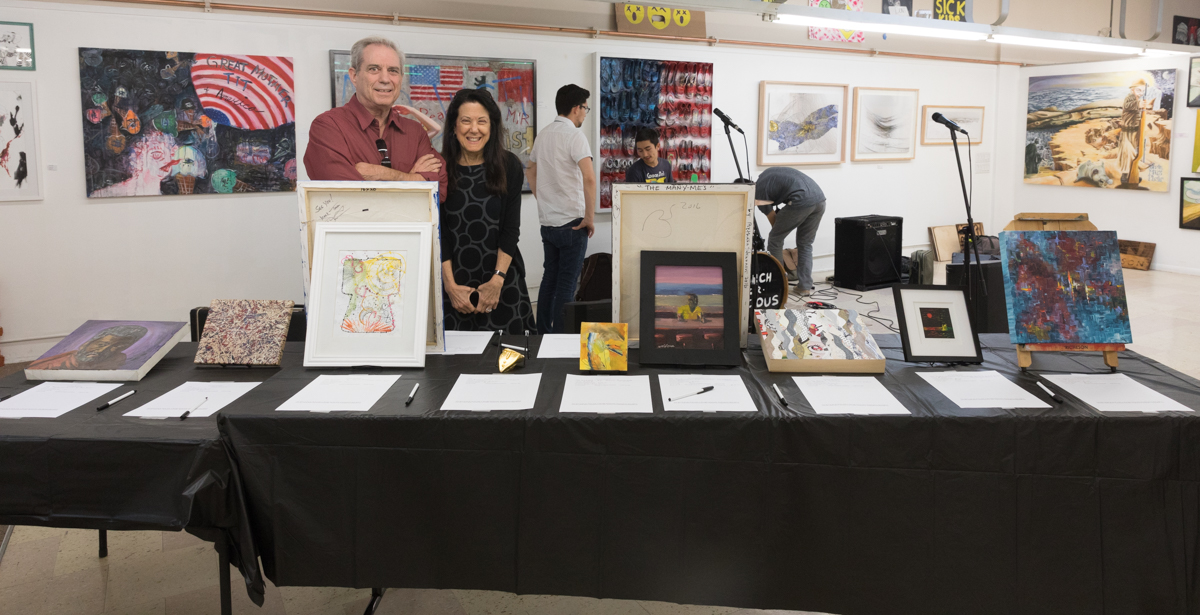
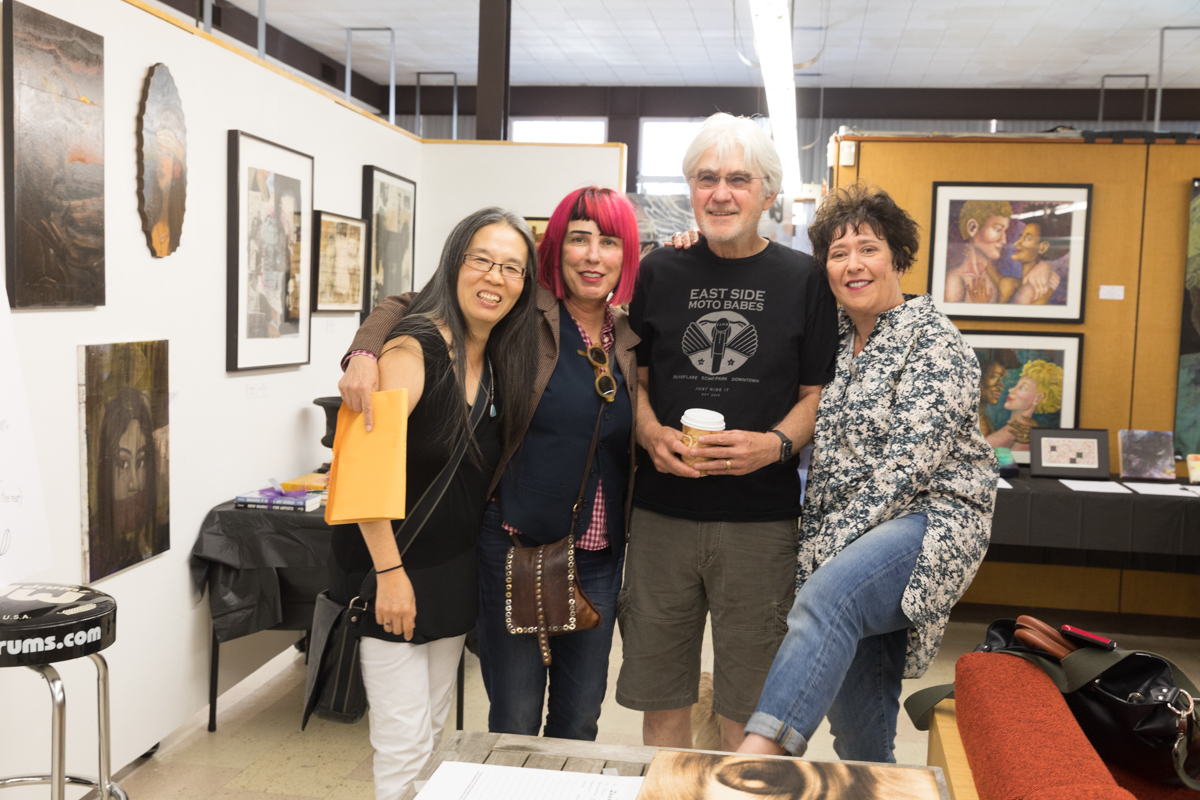
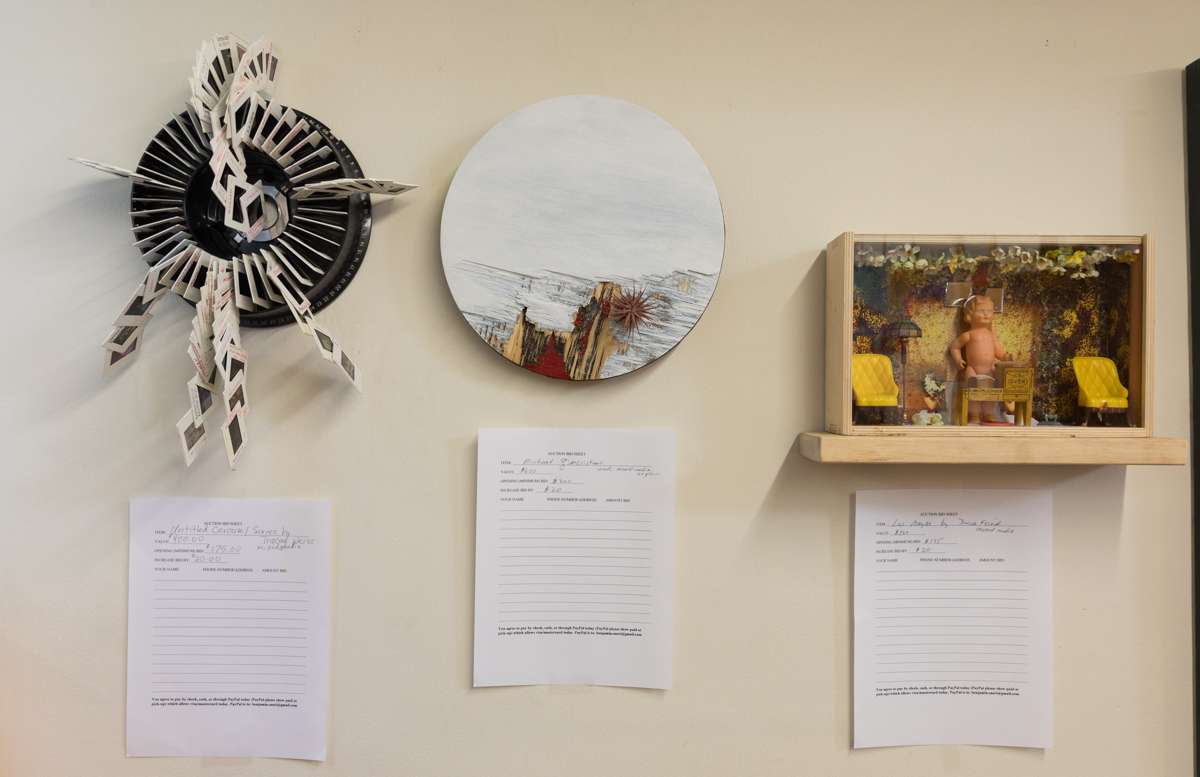
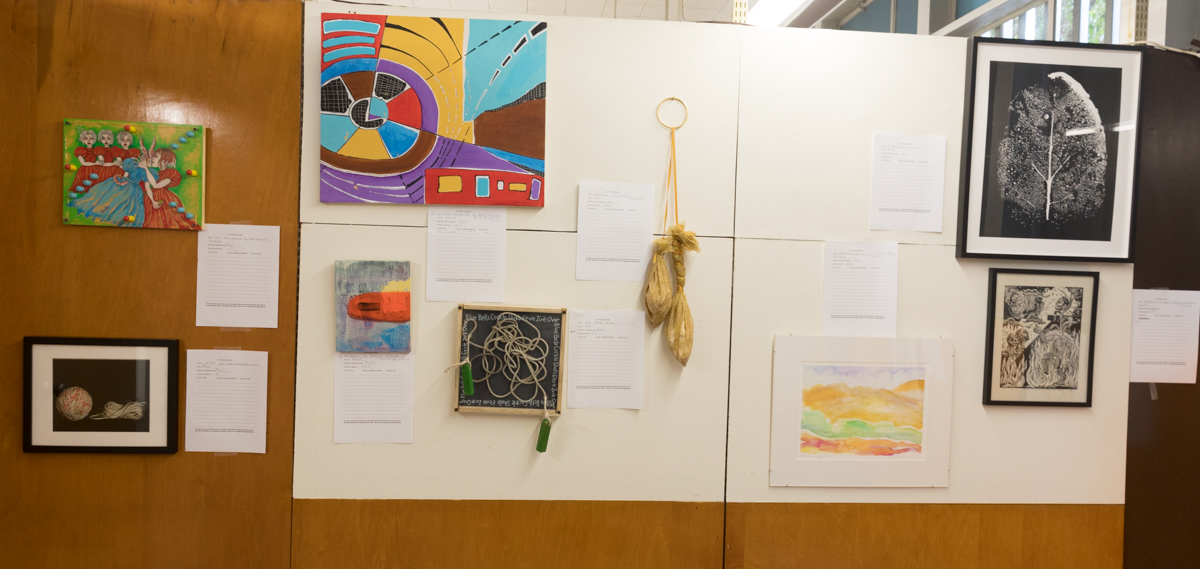
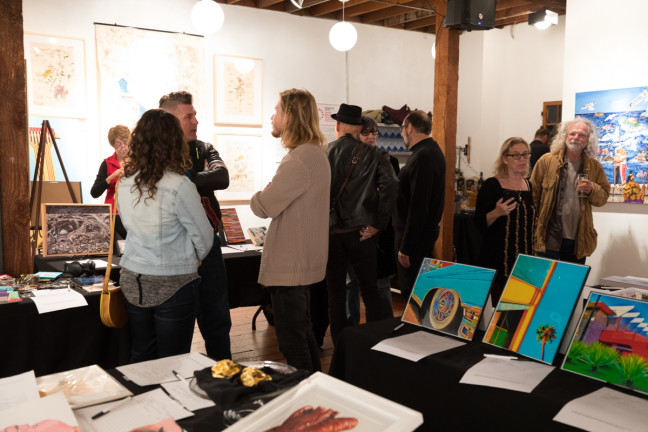
In March, we held a successful fundraiser at the Neutra Gallery in Silver Lake. Our most recent event, depicted here, held at the Loft at Liz’s in mid-city,  included some 90 pieces of profoundly wonderful art in one of the liveliest and most exciting settings in the LA art scene. The event was an evening of food, drink, and of course a bounty of silent-auction ART at “Lyme Away 2: Help Nicole Saari and Baby Aaron Saari Win The Fight Against Late Stage and Congenital Lyme Disease.”

3R1A0296

As the New Year approaches, we wanted to thank the art community for their amazing and joyous contributions,  and remind our readers to support artists and gallerists by spreading the word about their work, attending openings and artists’ talks, buying art when they can, reviewing and photographing art when they can, and simply opening their hearts and minds and eyes to the incredible work of so many artists here in Los Angeles. Below, are photos from our Loft at Liz’s event in December, and following those, from our Neutra Gallery event in March.

3R1A0284

3R1A0288

3R1A0293

3R1A0290

3R1A0303

3R1A0302

3R1A0318

3R1A0320

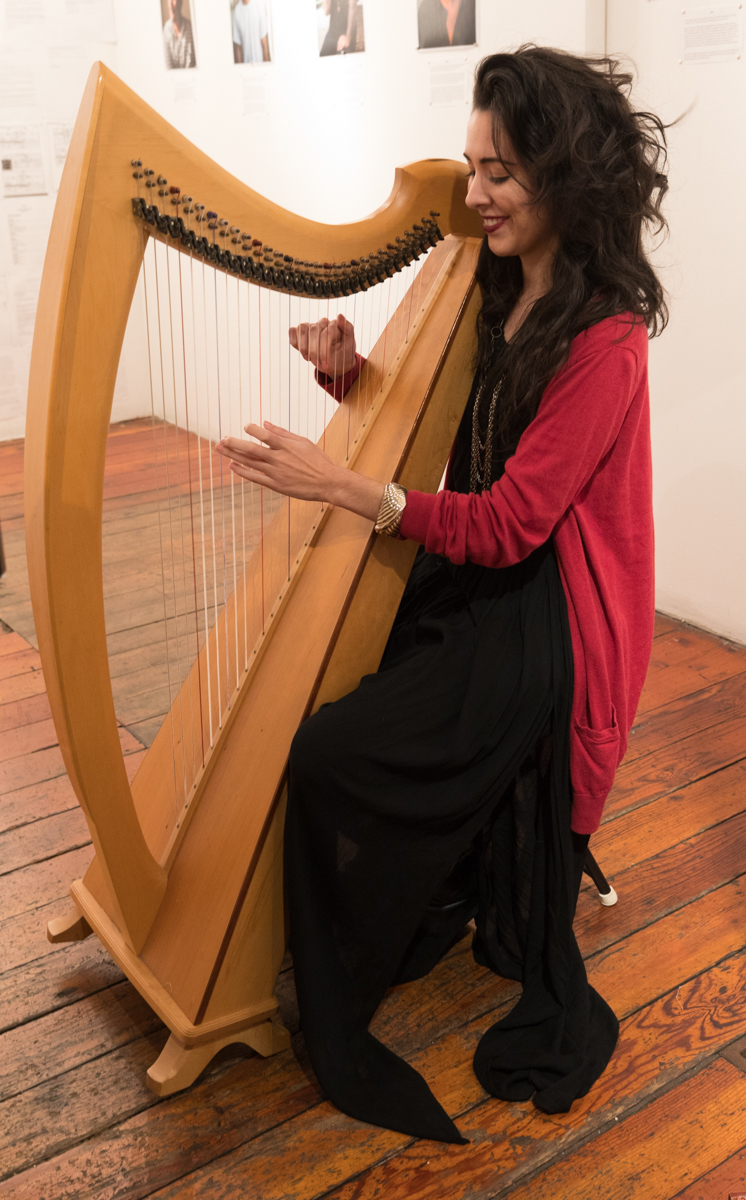
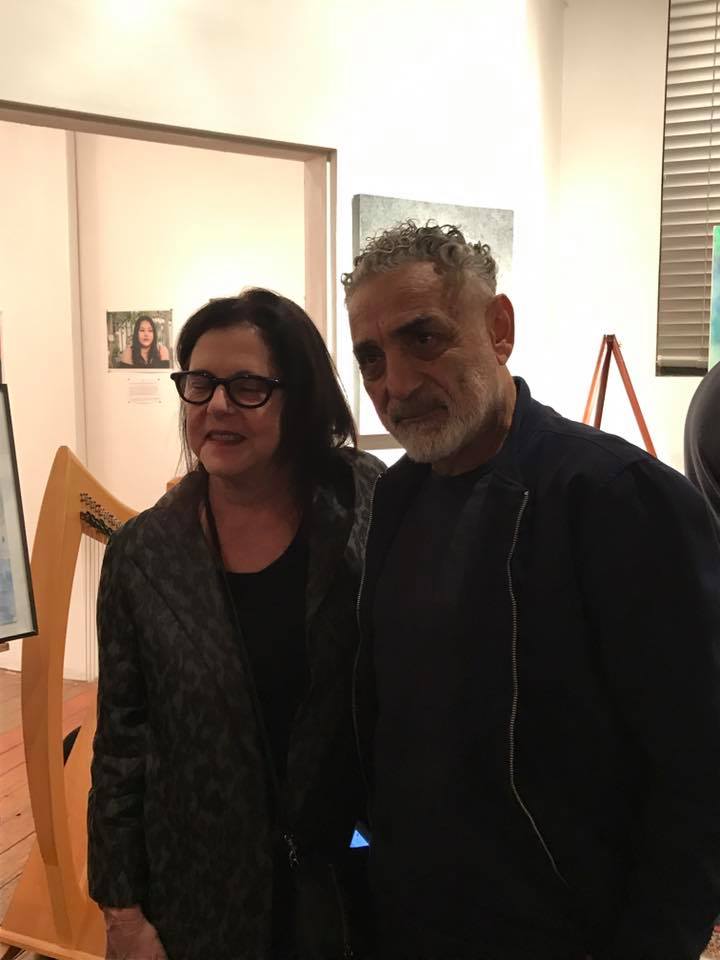
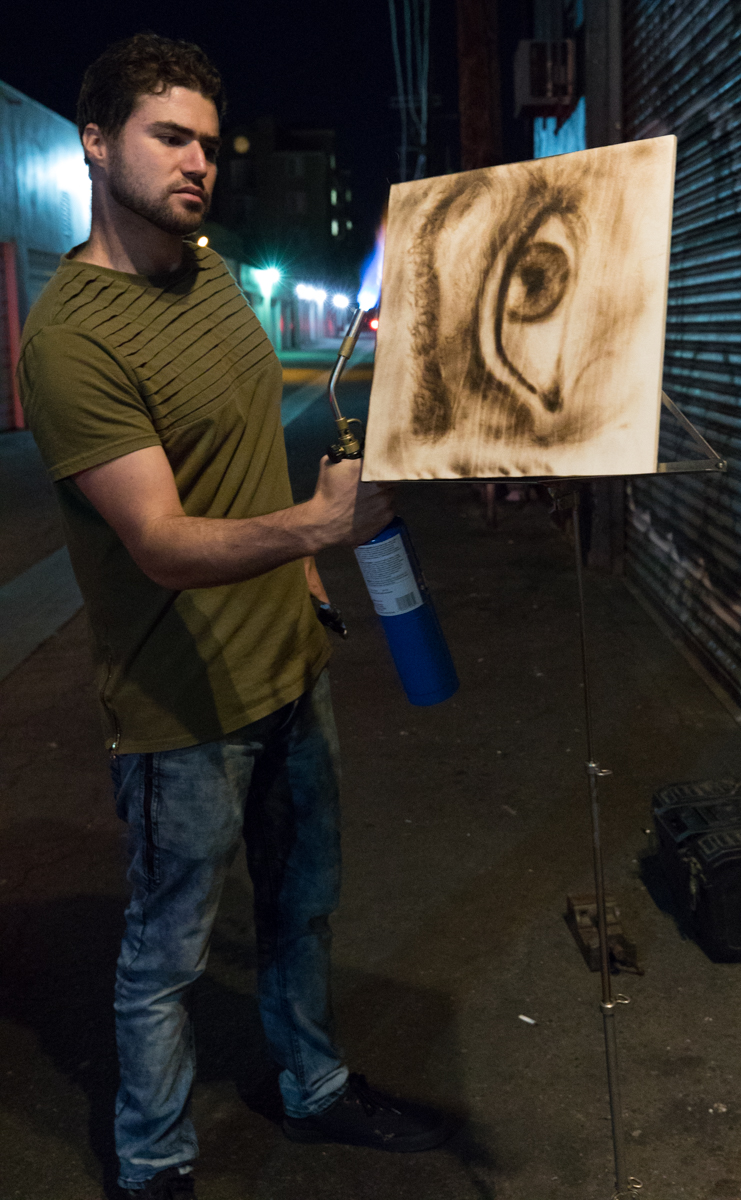
Above harpist Corrin Zug plays; below pyrographic artist Zachary Aronson worked live.

3R1A0328

3R1A0309

3R1A0343

3R1A0340

3R1A0334

3R1A0354

3R1A0351

3R1A0347

3R1A0377

3R1A0380

3R1A0384

3R1A0387

3R1A0393

art 32 art 30 art 29 art 28 art 27 art 26 art 25 art 23 art 21

art 19 art 18 art 17 art 16 art 15 art 14 art 13

Above, right, Loft at Liz’s own Liz Gordon with artist Stuart Kusher.

art 12 art 11 art 10 art 9 art 7 art 6 art 5 art 4 art3 art2 art 1

randi

Above, Randi Kristopher Kreeft, curator at Loft at Liz’s

From our March event:

3R1A2241

3R1A2217

3R1A2196

3R1A2176

3R1A2172

3R1A2169

3R1A2153

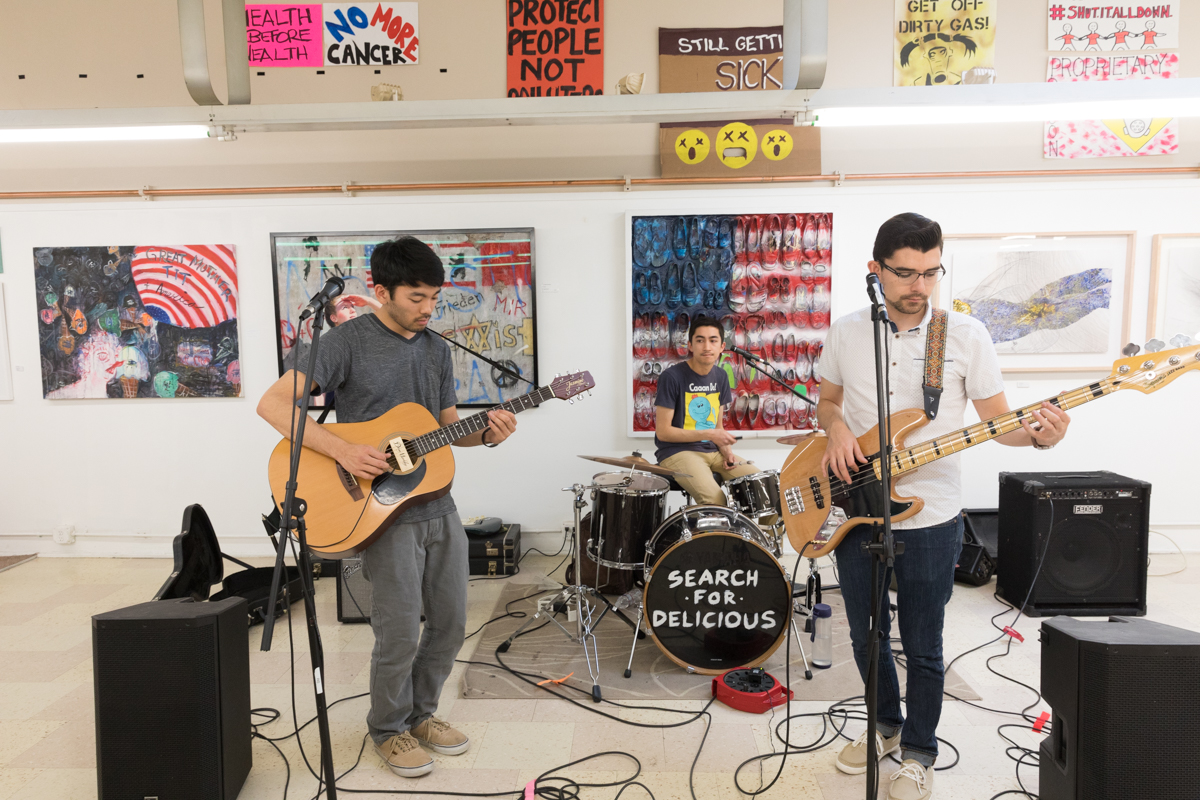
Above, the band Search for Delicious rocked out at the Neutra.

3R1A2124

Above, curator Dulce Stein.

3R1A2102

3R1A2113

3R1A2122

3R1A2097

3R1A2094

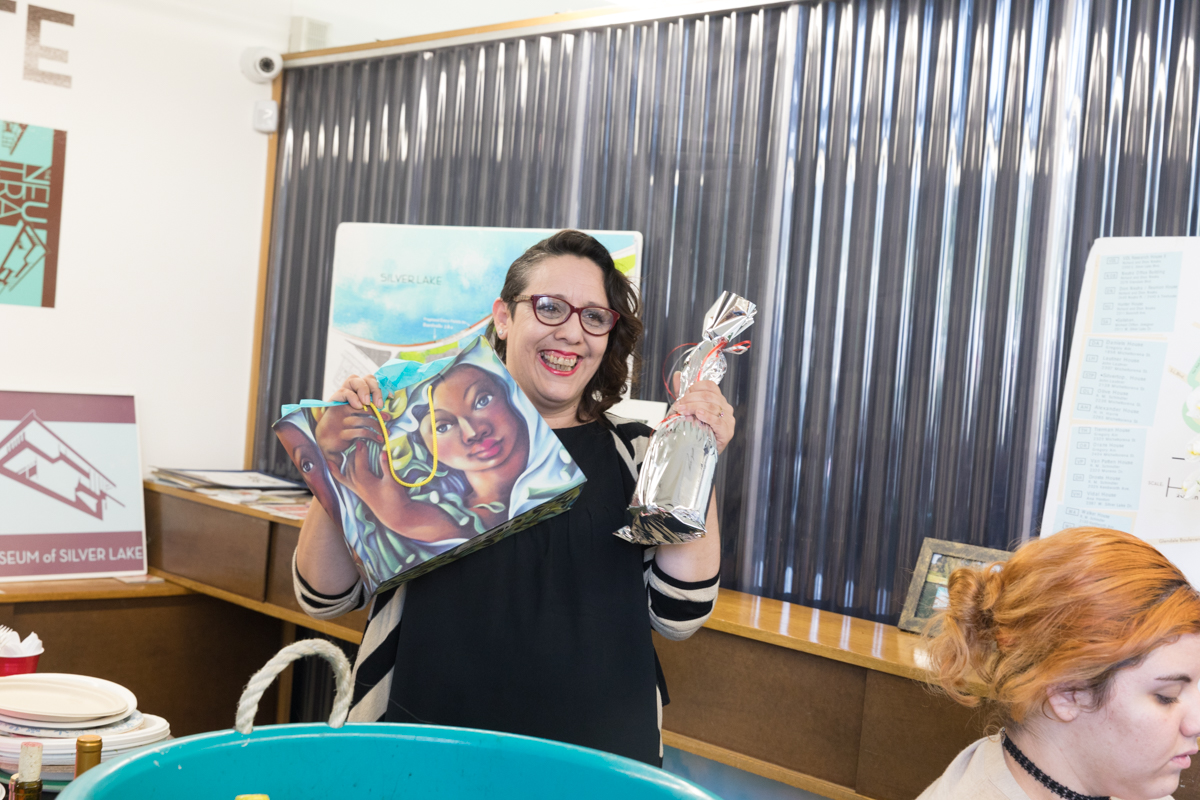
Below, an art raffle, conducted by Terry Holzman, helped raise funds, too.

3R1A2084

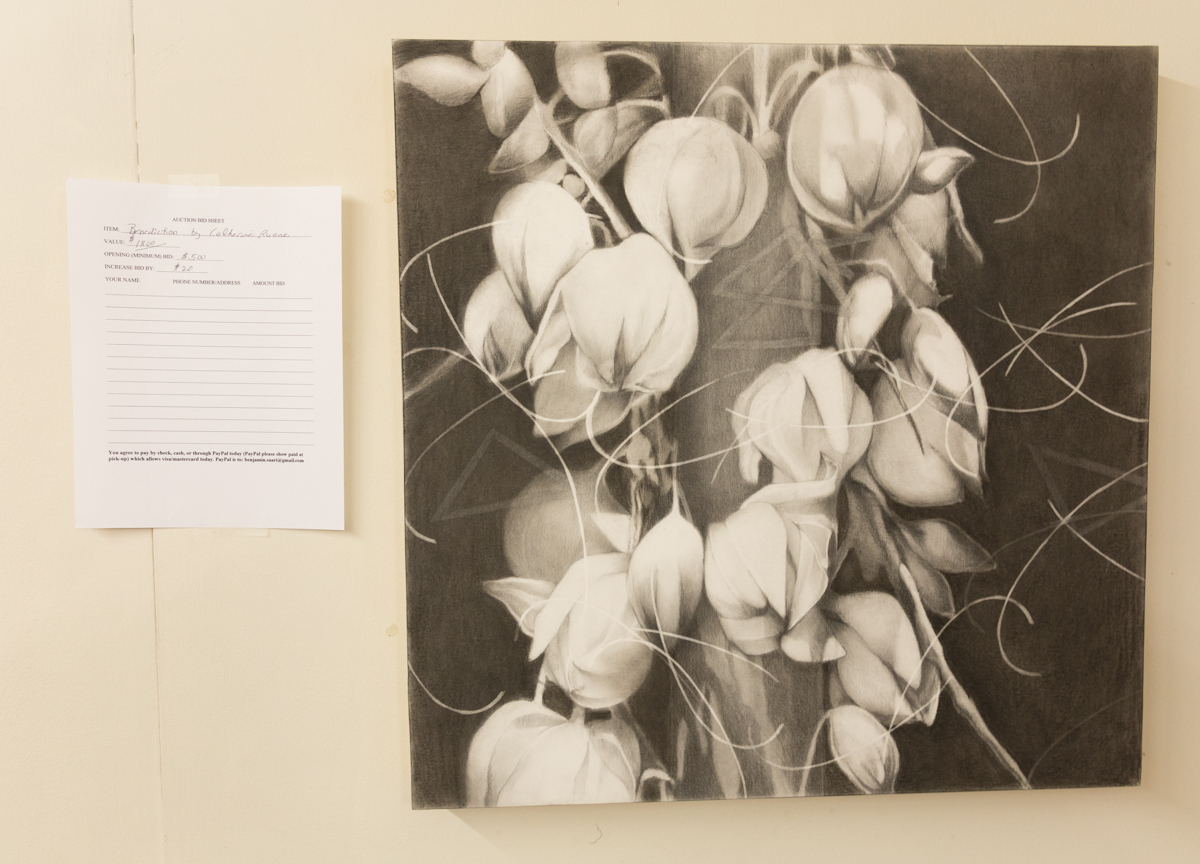
Participating artists included: Catherine Ruane, Zadik Zadikian, Francisco Alvarado, Hung Viet Nguyen, Monica Wyatt, Kaloust Guedel, Dwora Fried, Chenhung Chen, Dani Dodge, Bryan Ida, Monica Wyatt, Zachary Aronson, Susan T. Kurland, Lorraine Heitzman, Richard Chow, Mike Mollett, Sonja Schenk, Ted Meyer, Kate Carvellas, Samuelle Richardson, Scott Trimble, Cathy Immordino, Kristine Schomaker, Robert Costanza, L. Aviva Diamond, Tom Dunn, Peggy Sivert Zask, Ben Zask, Aline Mare, Johnny Naked, Cansu Bulgu, Bibi Davidson, Cynthia Friedlob, Leonard Greco, Stephen Levey,  Karrie Ross, Tracey Weiss, Phil Santos, Skye Amber Sweet, Robyn Alatorre, Michael Giancristiano, Rouzanna Berberian, Gary Brewer, Heather Lowe, Julian Hernandez, Gary Pawler, Bleep, Sydney Croskery, Lena Moross, Jodi Bonassi, Kristine Augustyn, Susan Lizotte, Lena Moross, Randi Matushevitz, Deirdre Sullivan-Beeman,  Kim Kimbro Taylor,  Erika Lizee,  Nadege Monchera Baer, Nurit Avesar, Rouzanna Berberian, Tom Dunn, Terry Holzman, Skye Amber Sweet, Gay Summer Rick, Jane Szabo, and many more — I hope I have not missed anyone, but there was such an outpouring of wonderful works, I may have.  (And please correct me!)

Happy New Year!

  • Genie Davis; photos: Jack Burke, Genie Davis

Inward and Outward: The Kaleidoscopic Art of Karen Hochman Brown

KHB1

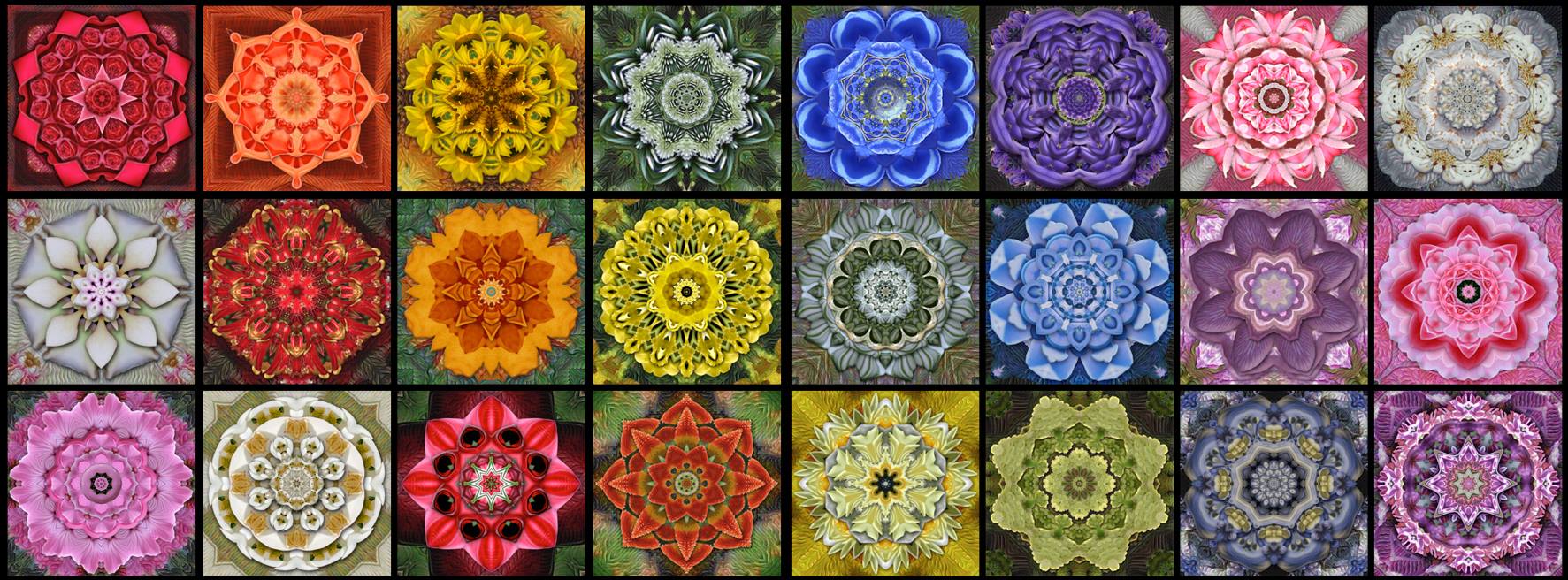
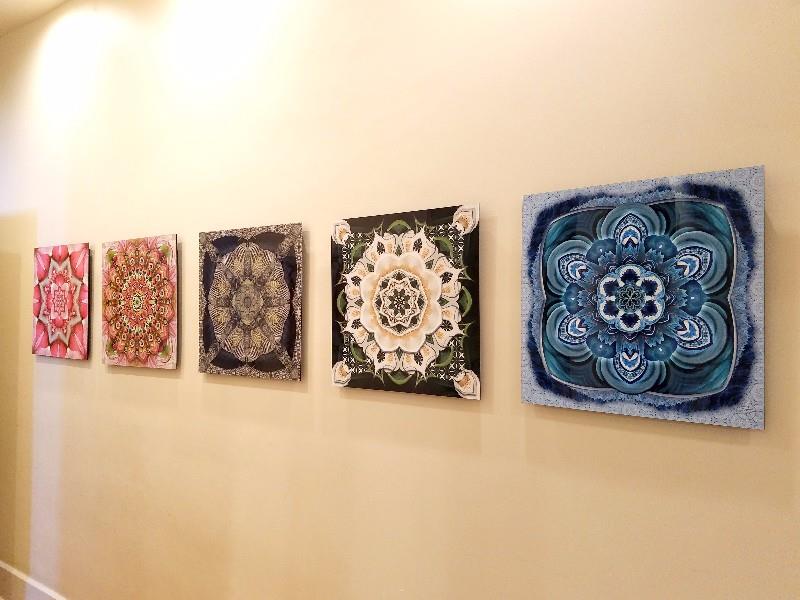
Subtly yet fundamentally kaleidoscopic, Karen Hochman Brown’s works are absorbing and beautiful, photographic and complex mandalas spun and mounted on aluminum as digital prints. Using multiple, layered, and detailed images, and by subtly, elegantly manipulating elements of light and shadow,  the artist shapes a single image into an enthralling dimensional work.

Evoking a somewhat psychedelic reference to the flowers of Georgia O’Keeffe, or a stunningly beautiful retelling of the inkblot images in the Rorschach Test, Hochman Brown’s compelling works pull the viewer into a lush and unique dimension, populated by images that are both delicate and rich, in a precise process that was inspired by the artist’s first kaleidoscope enjoyed in her mother’s garden.

“Imagine the world through a kaleidoscope. The colors swirl and dance, revealing patterns and shapes in a whole different focus,” Hochman Brown explains.

KHB 2

Having fallen in love with art as a young child – she calls art “as great a sustenance as food;” as a teen, her passion turned to mathematics, and “the logic of geometric proofs, where the marriage of precision and beauty struck a deep chord within me.”

Purchasing her first Mac computer was the next step in Hochman Brown’s development as an artist. She says that “the confluence of art and math created a tool that resonated to my core. As the technology grew, so did my skills.”

Working with precise fractal computer software, Hochman Brown creates images that move through infinite yet intimate dimensions, spinning, altering, and dancing colors, shapes, and layers. This is not random work, rather, the artist has morphed her art together with her delight and absorption in geometry, geometric shapes, and mathematics. She has even developed and taught curriculum in Construction Geometry Via Art.

Each of her dazzling and depth-filled works is in its own way a curriculum, taking the viewer on a ride that begins with a single photograph manipulated on Hochman Brown’s computer, transported into a modular graphics-synthesizer program, where imagery is extracted and altered in layers. Using functions like polar space, fractal space, assorted modulations, reflections, waves, distortions, and symmetry, the artist collects images as one would collect flower petals or as one’s mind holds distinct visual memories within larger events.

Hochman Brown refers to these distinct image bits as “foundlings.” Once these are identified and saved, she highlights what she sees as the most revealing and interesting parts, adjusts the colors, and stacks them as multiple layers. Returning to her modular graphic-synthesizer, she creates additional foundlings, in each case working to shift and manipulate shadows and light to create the wonderful illusion of depth that marks her work, and then adding emphasizing dots to it. “I find a symphonic union of math and art,” she says, noting that in her recent works, she explores hidden worlds inside manipulated reflections.

KHB 4 Hoya Luminosity

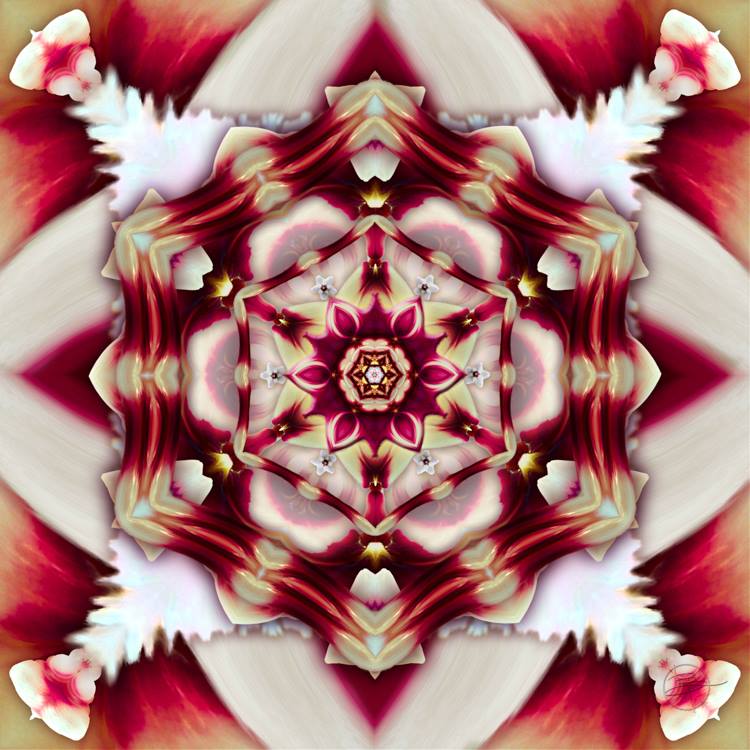
In her piece “Hoya Luminosity,” above, ruby red richness creates an image that reminds the viewer of a rose or an orchid, a gestating image, as if a floral heart were beating through the fluttering wings of an alien creature. Like so many of Hochman Brown’s works, the image seems to shift as it is being absorbed; it glows from within, like stained glass suspended in the sunshine.

KHB 3

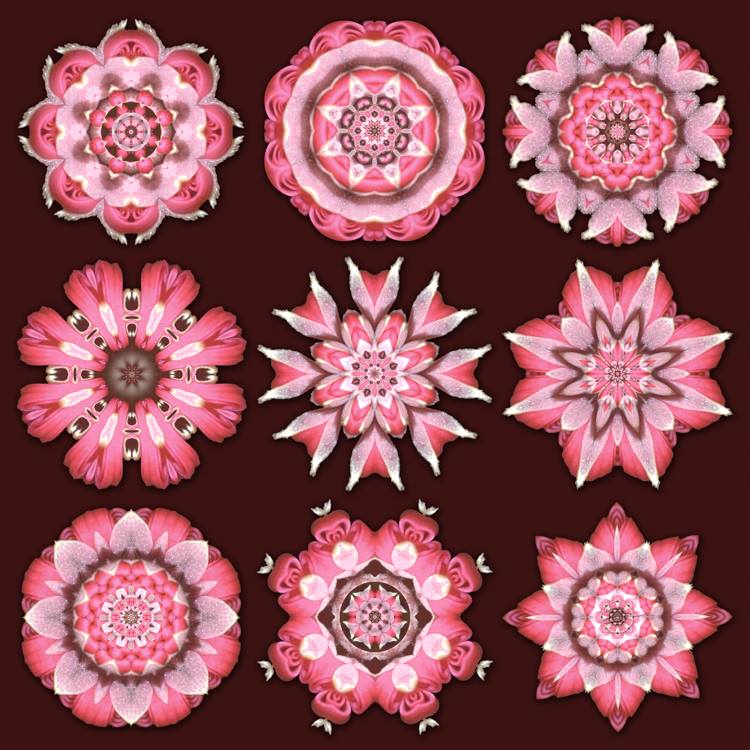
With “Love in the Fringes Medallions,” the artist has created a series of pink images, flowers, snowflakes, stars, each feminine and feather-like.

KHB 5 Gnarled yellow pepper

Her “Gnarled Yellow Pepper” is indeed the vivisection of a pepper, but so much more, the perfect homage to and refinement of nature. This work has a waxy, solid quality that feels tangible, visually fragrant; other images have the look of finely spun glass, as does the transcendent background and foreground in “Dombeya Perception.’

KHB 6

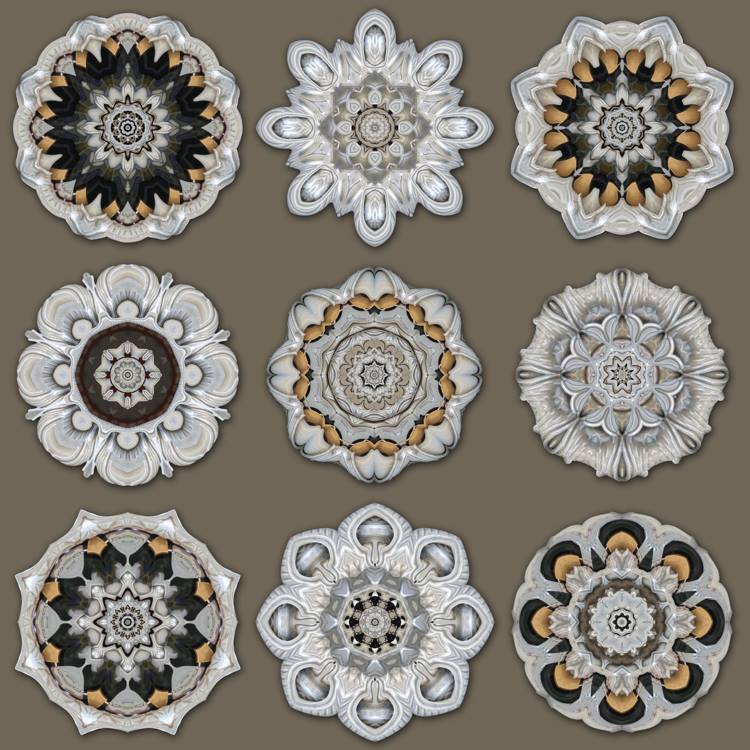
Other works resemble feather collages, thick oil paint, textured fabric, or ice sculptures, as in “Buenos Aires Medallions,” below.

KHB 7 Bueos Aires Medallions

Her newest works, “Artists Speak” present images that reflect physical images of the artists she quotes, pays homage to, and recreates in her work.

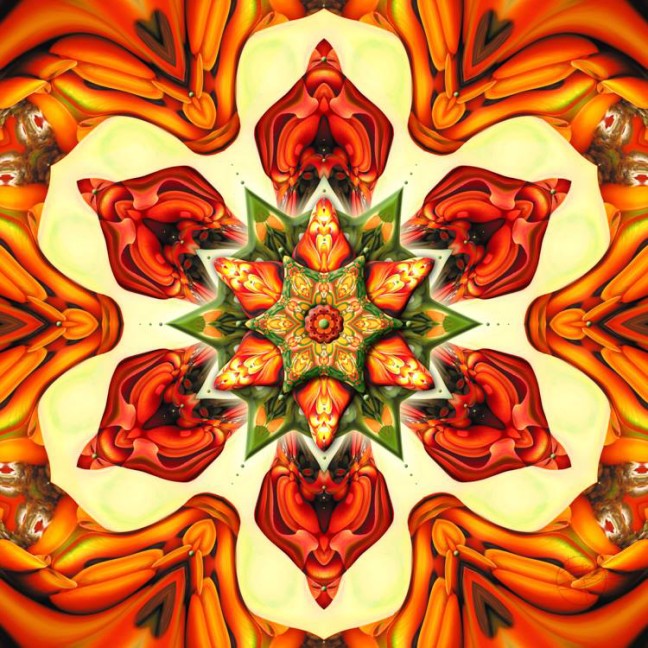
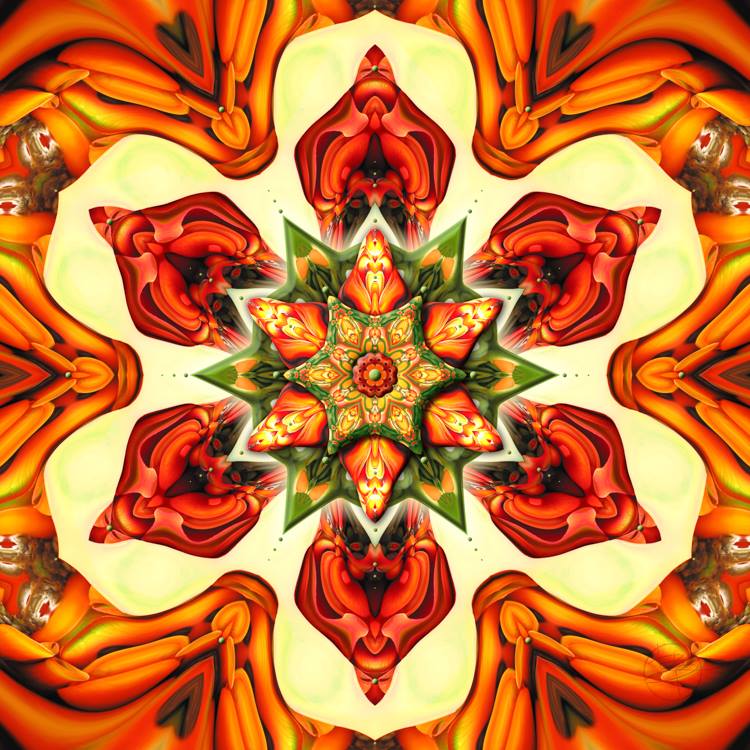
Other works have a seasonal bent, as with the magical poinsettia quality and holiday colors of “Grevillea Regalia,” a work described by the artist as celebrating the holiday season.

Grevillea-Regailia2_800wm

Just as kaleidoscopes, math, and Macs all play a role in Hochman Brown’s work and her evolution as an artist, so, too does a strong feeling of celebration and joy. Viewers able to fully absorb her sensuous, complex work will feel a startling, almost visceral pleasure in her light-filled, glowing images.

KHB 7

In short, set aside the treasured childhood kaleidoscope of memory, and look instead at the wondrous swirling worlds that Hochman Brown creates.

  • Genie Davis; photographs courtesy of the artist
Public Fiction: The Conscientious Objector

Objcetor 2 objector 1

Beginning in January, the city of West Hollywood and WeHo arts are excited to present the latest project from Public Fiction, The Conscientious Objector, a 3-part project curated by Francesca Bertolotti-Bailey and Lauren Mackler.

Los Angeles-based, Public Fiction was founded by curator Mackler in 2010, and is both rooted in the City of Angels and offers an encompassing global sensibility. Presenting experimental themed exhibitions, Public Fiction series last three months and culminate in a journal, as well as including talks, film screenings, secret restaurants, concerts, and performances held within installations.

Objector 3

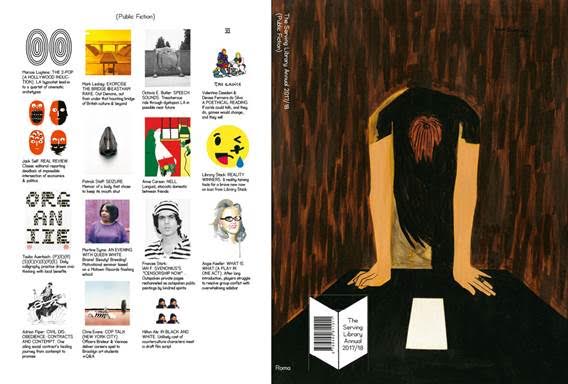
Starting off 2018 with cultural fireworks,The Conscientious Objector presents a series of “artists commercials” for both broadcast and theatrical presentation, and a publication created in collaboration with The Serving Library,  to be published by ROMA Publications. Throughout February, March, and April, there will also be an extensive exhibition and performance program at the MAK Center for Art and Architecture among other locations. The program looks at cultural citizenship, societal factions, and public address, and as such, serves as a potent commentary of today’s intensely fraught political and social landscape, where audience and accountability are in the forefront of interaction.

Curator Bertolotti-Bailey is head of production and international projects at the Liverpool Biennial of Contemporary Art; Mackler is the founder and director of Public Fiction. Together, they note that the project is set in West Hollywood, and contains local history with all its inherent glamor and flair. “The commissioned texts will allude to local studios, theatre, film and television via three native literary formats and modes: the script, the pitch, and the episodic – all of which typically reflect public values and the temper of the times,” the duo attests.

The texts will be first published in a journal available in LA with a special insert that includes bonus writing; works are authored by Hilton Als, Tauba Auerbach, Claire-Louise Bennett, Octavia Butler, Anne Carson, Valentina Desideri & Denise Ferreira da Silva, Chris Evans, Angie Keefer, Mark Leckey, Marcos Lutyens, Adrian Piper, Jack Self, Patrick Staff, Frances Stark & Ian Svenonius, Martine Syms, Ben Tiven & Erik Wysocan, and include images by Shannon Ebner and Wanda Pimentel.  The content concerns acts of civil disobedience and other forms of resistance, as well as the relationship between entertainment and power.

Artist commercials, conceived of as an alternative form of public address, include works by artists Mohamed Bourouissa, Ami Inoue, Rosalind Nashashibi, Mathias Poledna, and Martine Syms; the pieces will be shown on West Hollywood’s WeHoTV.

The exhibition and performance program will run from February 3 – April 15 at the Schindler House at the MAK Center for Art and Architecture from 11 a.m. to 6 p.m. With artworks by exhibiting artists Sam Gilliam, Anthea Hamilton, Suki Seokyeong Kang, Lucy McKenzie, and Dianna Molzan, performances, directed by artist Todd Gray, will pull from the published book.

In addition to the City of West Hollywood’s WeHo Arts program, partners include the MAK Center for Art and Architecture, British Council, Arts Council England, Korea Foundation, Consulate General of France to the United States of America.
Stay tuned for more specific program details.

  • Genie Davis; photos provided by The Conscientious Objector.