
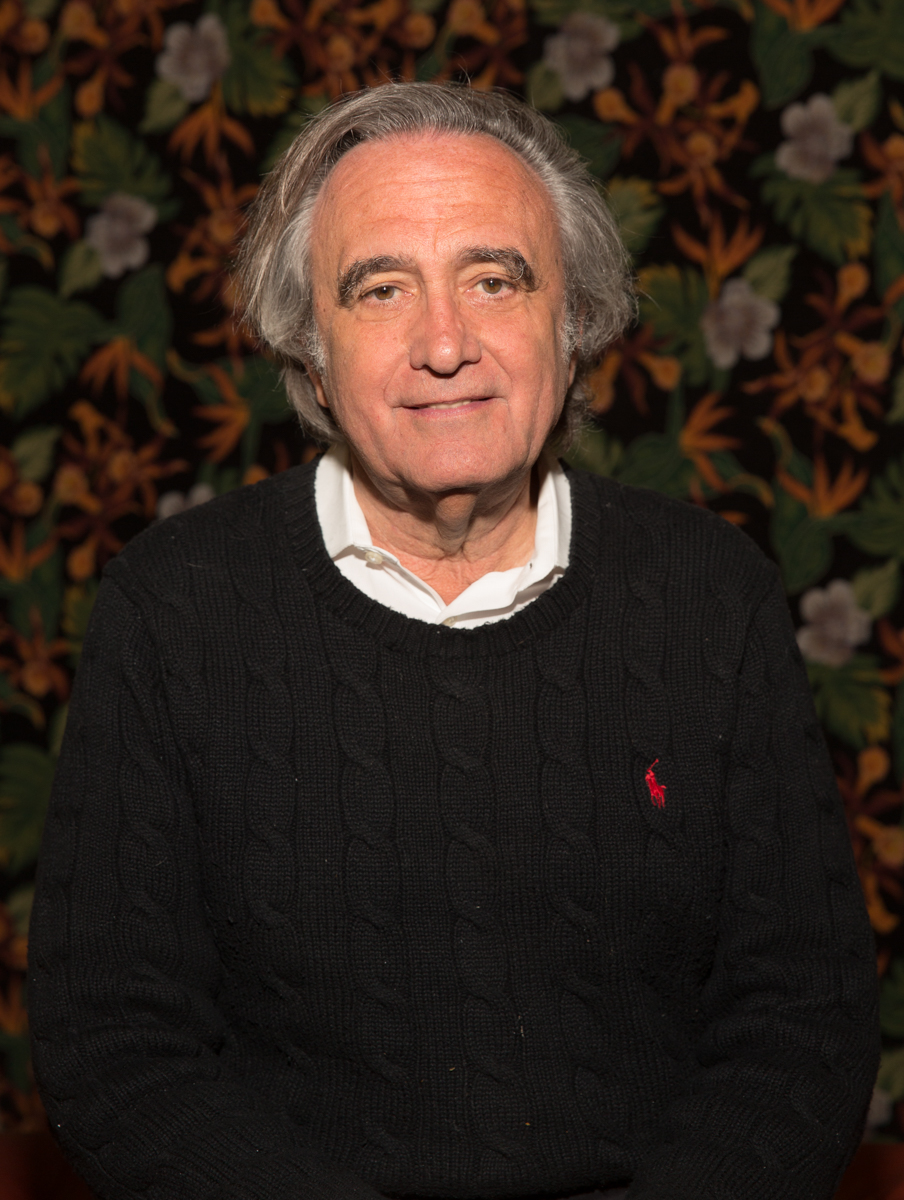
Director Joe Dante Shows Sierra Spirit

F23C3807

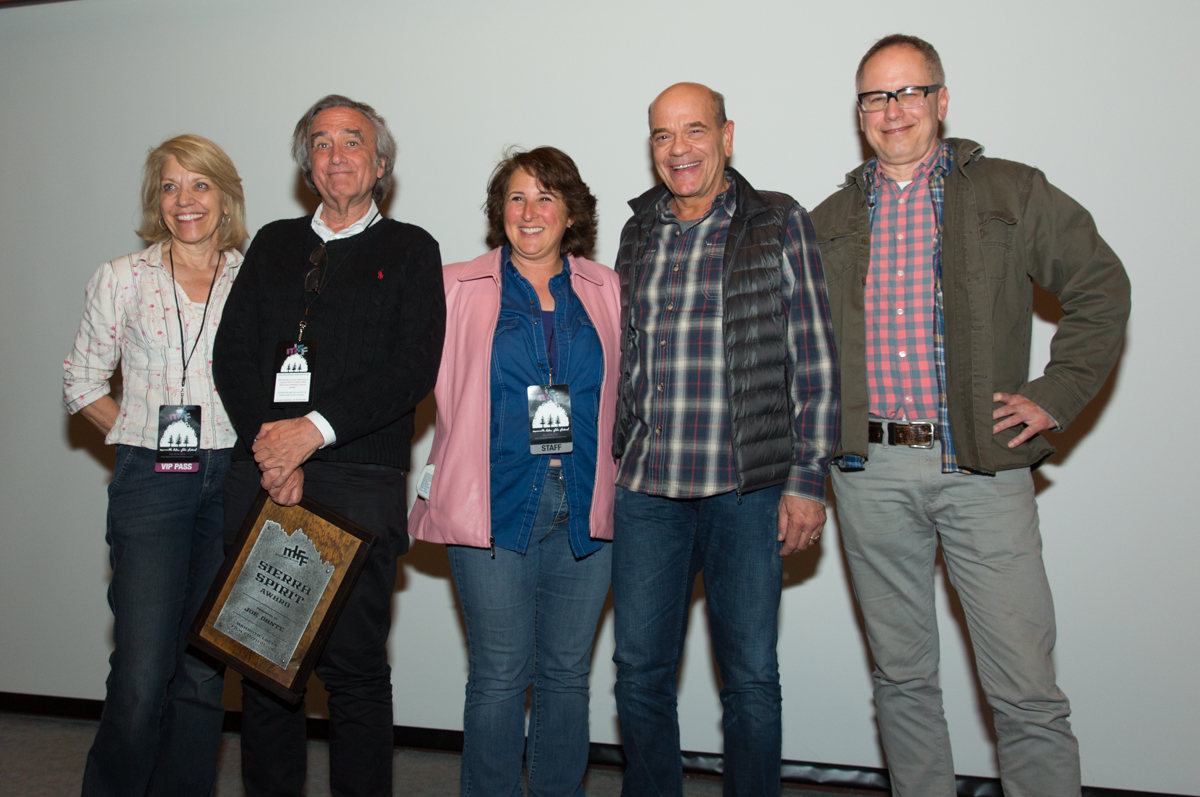
At the Mammoth Lakes Film Festival, held  May 25 through 29th, director Joe Dante (Gremlins, Innerspace) received the first annual Sierra Spirit Award. We interviewed Dante, learning about his past, his films, and his future plans.
F23C3886

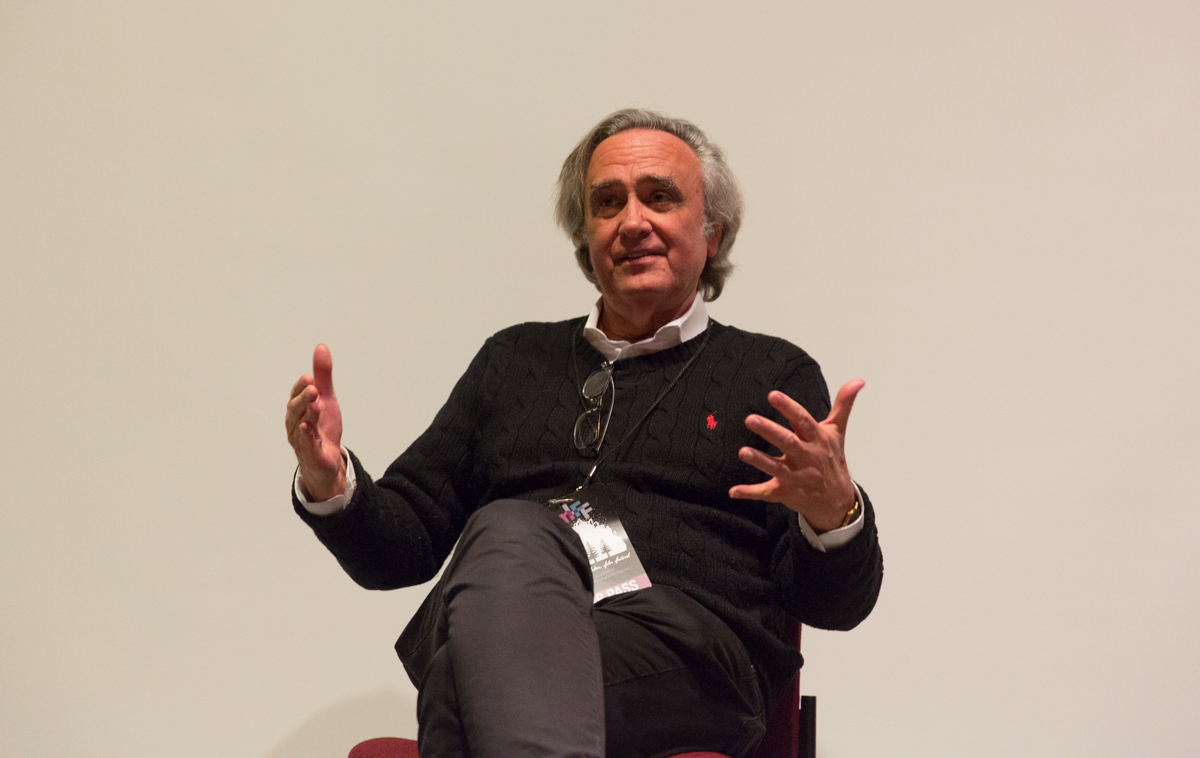
What inspired the director to get started in filmmaking? His love of cinema of course.

“I wrote about movies, I watched movies. I never really thought I would end up making movies – I thought the process would be too hard. I remember seeing Lord of the Flies in New York in 1963. I saw it many times. I went back, and I counted the shots, and I thought, I can’t do that, it’s too hard, I’ll just write about movies,” he laughs.

Dante enjoyed his first job as a trade reviewer, but when friends moved to Los Angeles to work with Roger Corman, they encouraged him to join them.

“They said come out, see what you might like to do. So I did, and I started editing trailers. You really have to cut to the essentials with trailers. Some films were good, some weren’t, but the other trailer editor, Allan Arkush, and I both learned a lot from working on them all.”
F23C3878

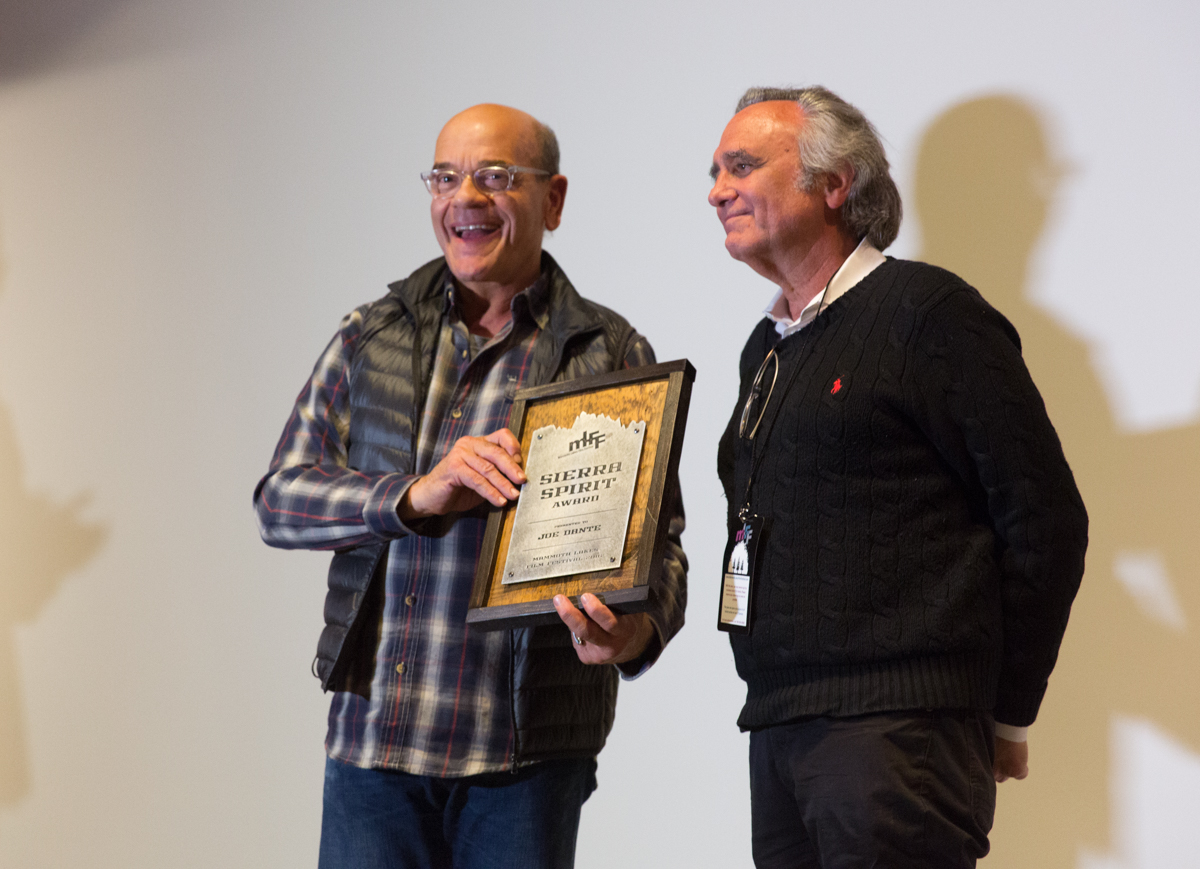
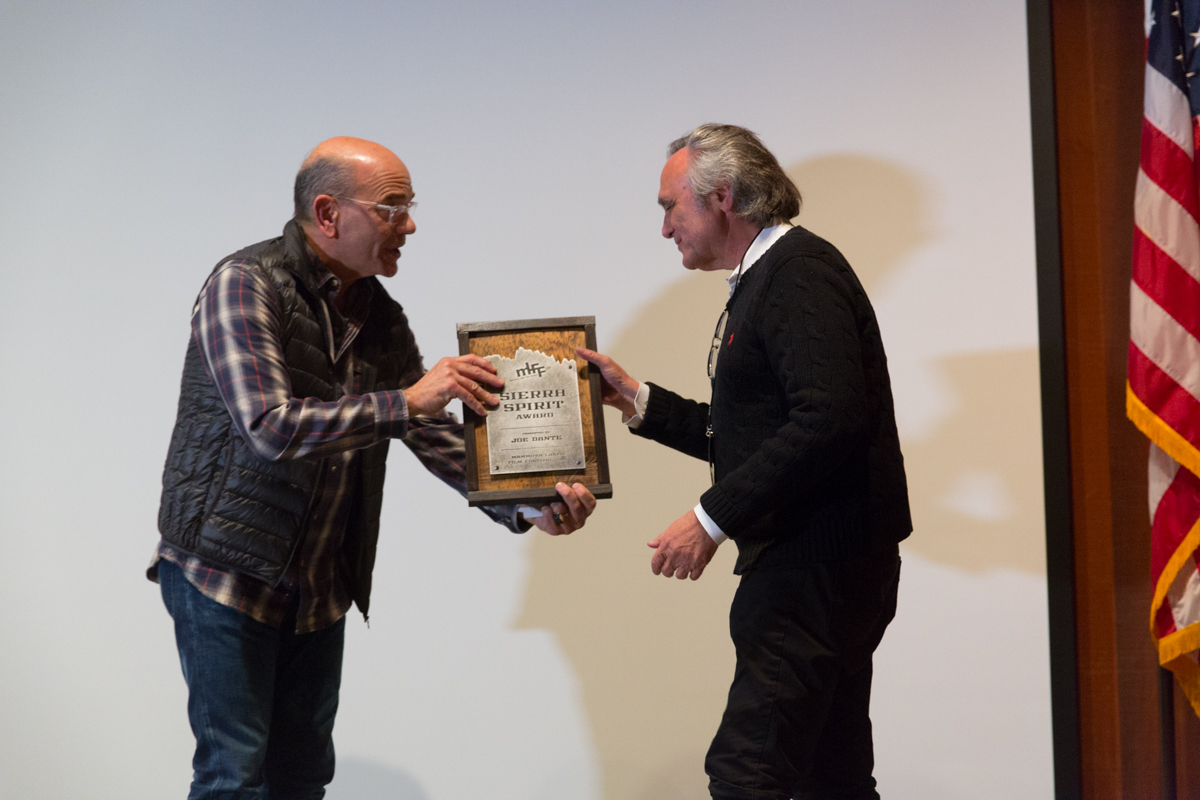
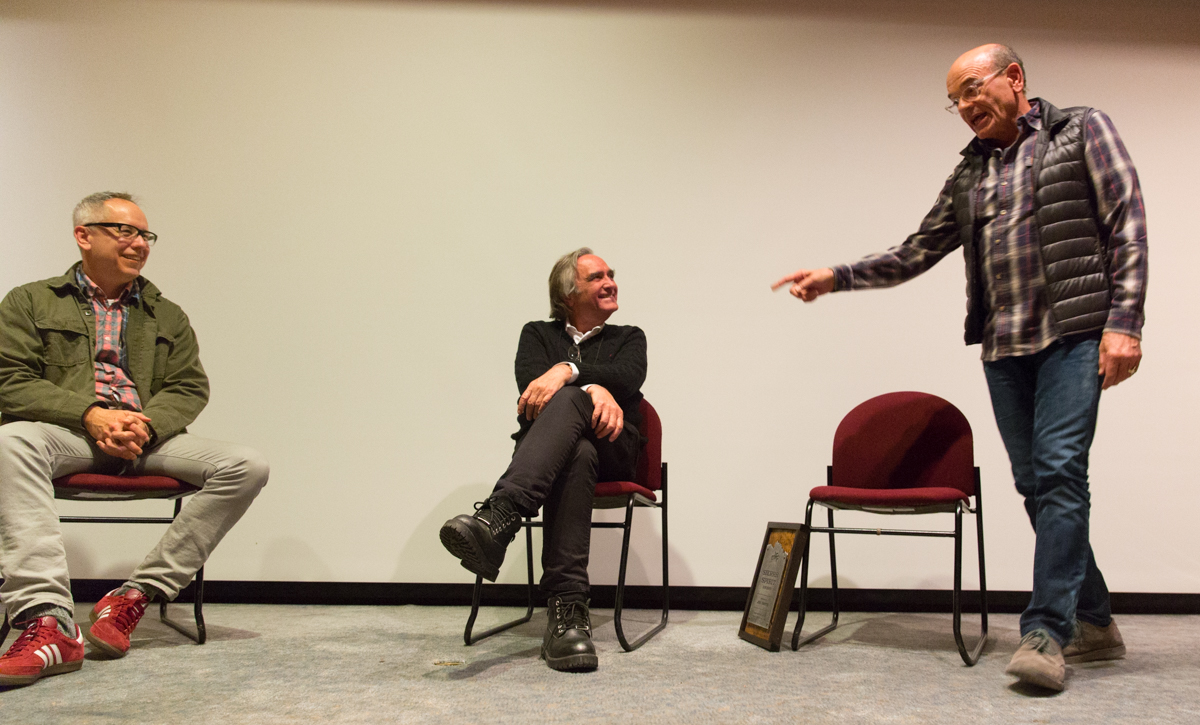
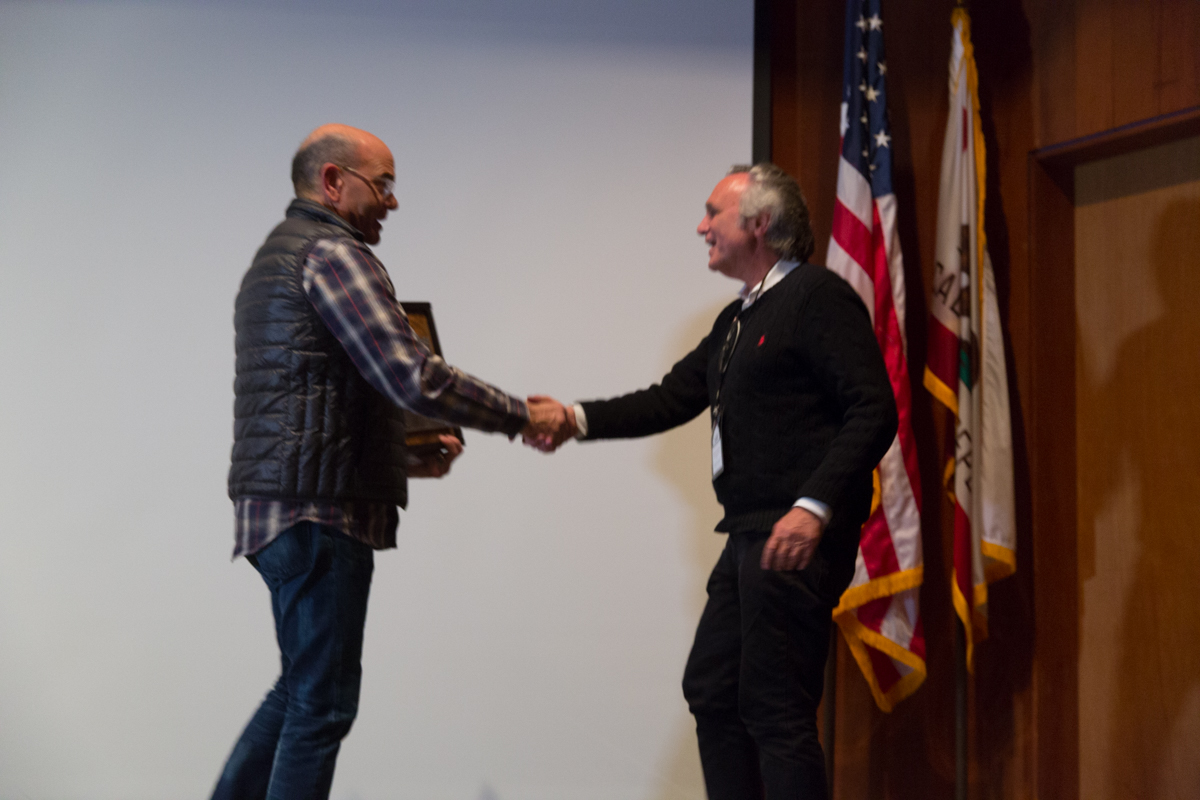
Above and below, Dante receives the Sierra Spirit Award from longtime friend and ensemble actor Robert Picardo, who hilarious played the role of “Cowboy” in Dante’s Innerspace.
F23C3873

Eventually, Dante and Arkush asked to make their own film. They decided on the title Hollywood Boulevard, and put together a film that followed the iconic formula of many of Corman’s genre pictures at the time. The script riffed on the “three girls” formula popular at the time.

“We made our three girls starlets as opposed to nurses and teachers. But all the films basically it was three girls having adventures and taking their clothes off. Making them starlets, we could use existing action footage from disparate trailers, jungle settings, Bonnie and Clyde type settings, sci fi, we had actions scenes for all of that. We wrote the story around the stock footage we had access too, and basically cast our three girls in each of these types of film. It ended up being a pretty accurate depiction of being a starlet and making movies in the 70s,” he recalls.
F23C3882

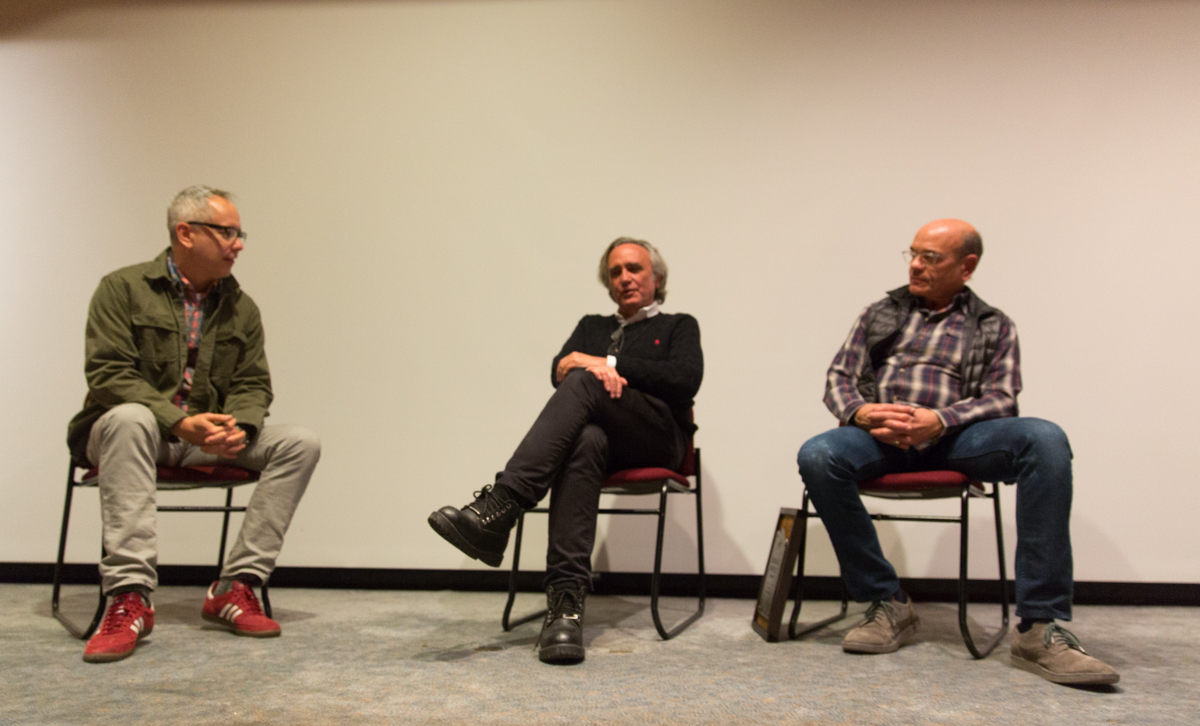
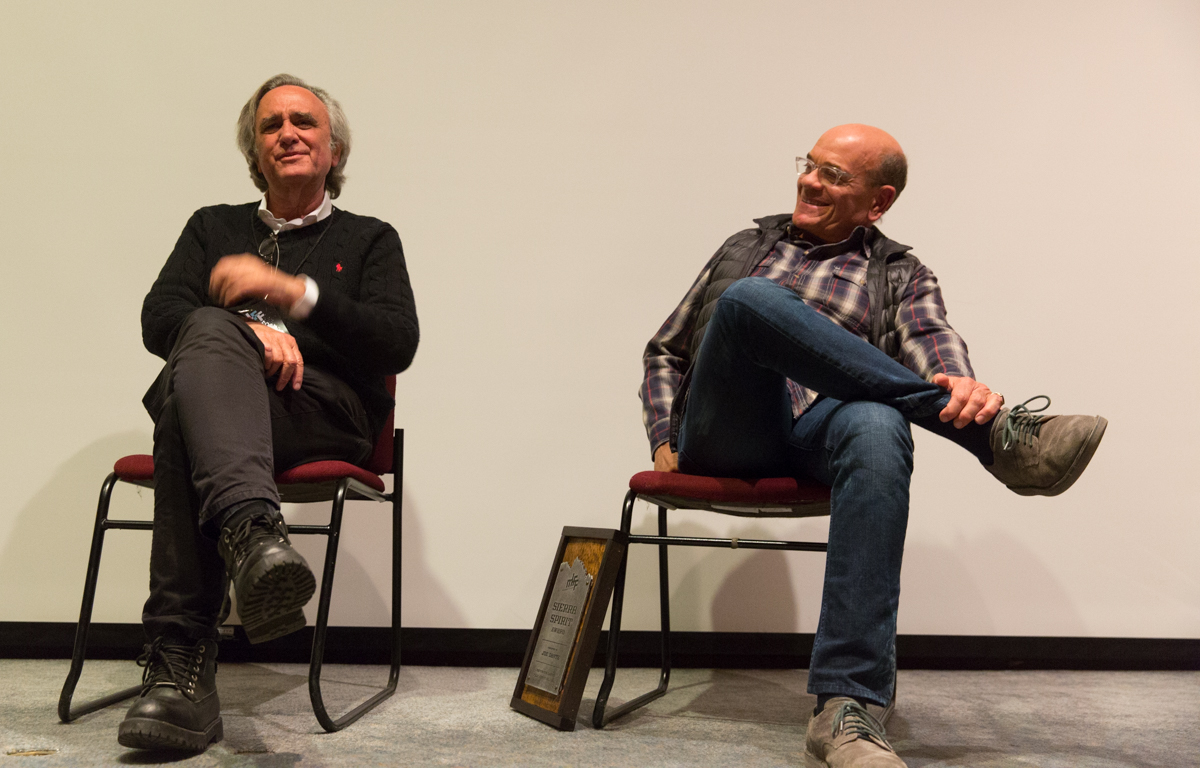
Above, Dante chats after receiving his award with Robert Picardo and festival programmer Paul Sbrizzi.

Although the film had a limited release – “just another movie thrown out into the drive-in world,” Dante says – later it was considered to have a “certain charm. But it’s so politically incorrect it’s embarrassing.”

But without having crafted the film, Dante says he wouldn’t be talking to us today.
F23C3895

“We went back to editing, but the trailers improved because Roger was distributing some quality films by directors like Fellini and François Truffaut,” Dante relates. “We wanted to make more films ourselves. Two projects came up: Piranha, and Rock n’ Roll High School. I preferred the latter, but Allan wanted that project, so I got Piranha.”

Piranha marked the real start of Dante’s career.
F23C3911

“It came to me as not very good script, but John Sayles was one of the talented young people on Corman’s short list. He was hired to rewrite it, and added a lot of satire to it and some political angles, both of which pleased me. We made a somewhat unexpected take on what would’ve been a drive-in movie exploitation film otherwise. It kind of got me noticed,” Dante says self-deprecatingly.

Dante has had a recent series, Splatter, produced for Netflix, and he says the film industry itself has changed; he prefers to come up with his own ideas and projects and work on his own funding. “Things are so different today. No one comes to you with a script and says let’s make this movie. They come up with a project, and if you’re interested you become attached to it while they try to raise money for it using your name. You spend more time begging for money than you do filmmaking.”
F23C3923

Regardless of how the process has changed, Dante lives, breathes, and loves movies, calling the movie-going experience itself a spiritual one.

His filmmaking sensibility is finely honed. “Writing reviews in the late sixties and 70s , I covered such a cross-section of films, even porno films. I had a really good handle on the business, I didn’t even realize I’d put away as much knowledge about the movies as I had, and it really helped me in Hollywood.”
F23C3869

His magazine writing also contributed to the respect Dante shows to his writers. He’s well known for providing remuneration in the form of a small on-screen part simply to get the writer on-set.

“It started with Piranha. I wanted John Sayles on the set to work things into the script that I’d found when we were scouting locations. I like to have the writer around, and the only way to get them on location is to give them a part.  It’s important to have the writer there to rework or add to a script. If it ain’t on the page, it ain’t on the stage,” Dante asserts. “With Piranha, we used a ‘resort’ called Aquarena Springs. There were dancing chickens, and Ralph the Swimming Swine as a part of the attraction. I wanted Sayles to add the location into the script, so I brought him down to our location.”

With many of Dante’s films depicting fantastical elements – such as the miniaturization premise of Innerspace, which screened at the festival as part of the tribute to Dante,  we asked what the director would do now when it comes to such elements.

“It’s difficult to do something like that now,” Dante ruminates. “Everything has been done really, including self-aware movies like Scream, that have highlighted all the cliches. It’s hard to come up with something new and still give the audience the kind of genre film they want to see. There’s a limit to how far you can go off the beaten track,” he notes.

He cites Cabin in the Woods as an example of a film in which “they turned audience expectations on their head, but that’s tricky to pull off, although the audience gets more for their money so to speak. Still, that script sat on the shelf for three years before it was produced.”

One aspect that affects filmmaking today most strongly, Dante believes, is the use of technology, from drone shots to CGI, which the director didn’t have when he crafted Innerspace. Instead, he relied on actors, a witty script, and techniques from well-crafted models to break-away clothing to handle the action. “Today, technology is the tail that’s now wagging the dog,” he says. “It’s the reason we get the movies we do, in order to utilize it.”
F23C3938

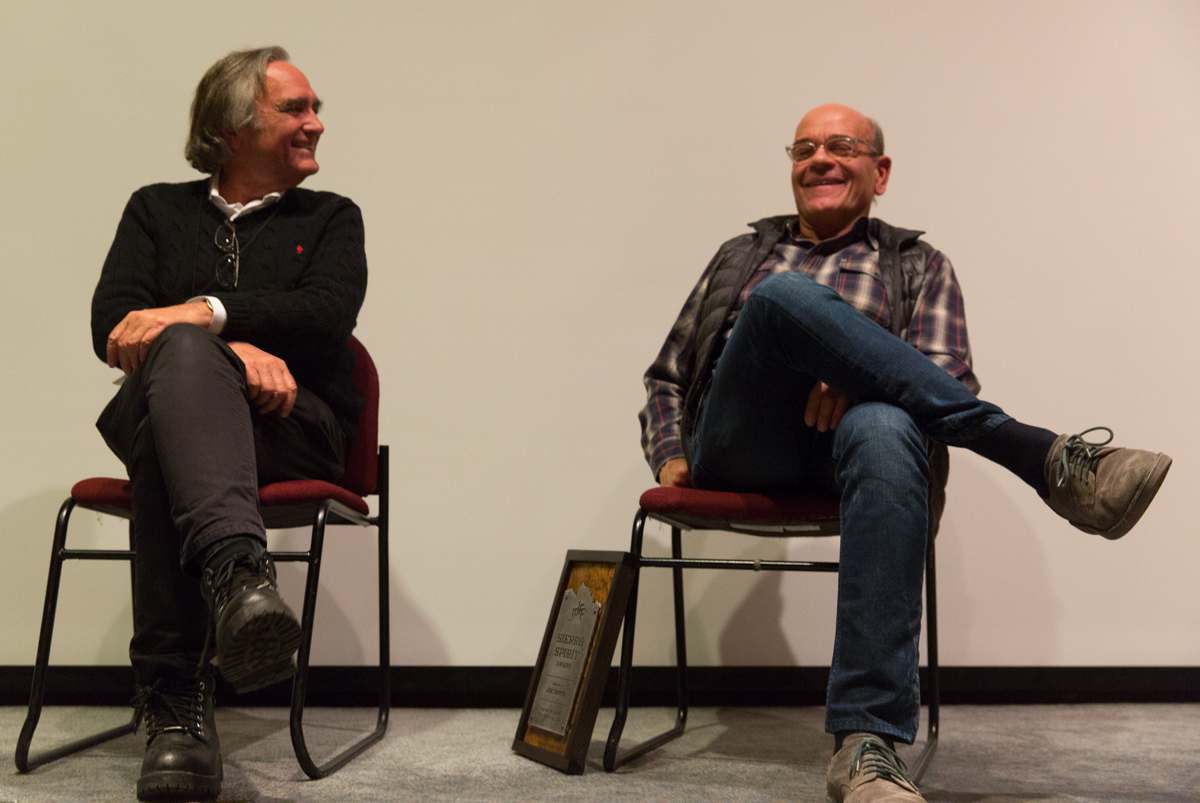
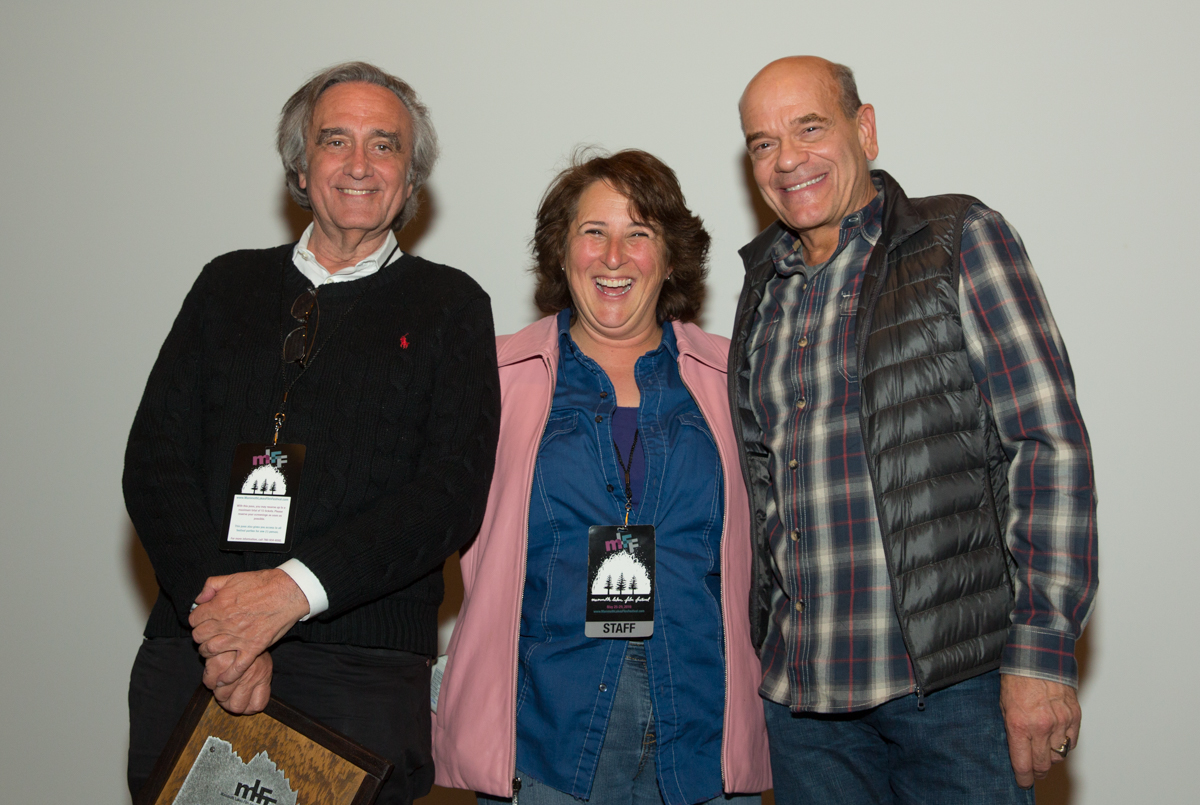
Above, Dante, Festival Director Shira Dubrovner, and actor Robert Picardo.

As to Innerspace, even without today’s technology, the story holds up, the script is bright and fast paced, and the limited effects used still play well without looking dated. “It works,” Dante attests. “The comedy holds up. Originally they wanted it to be a straight spy movie, but I thought it was too silly.  So it became a comedy.”
F23C3947

A comedy like much of Dante’s work, which has stood the tests of time and technology, reflecting the director’s intelligence and creativity and entertaining generations of film goers.

  • Genie Davis; All Photos: Jack Burke
 

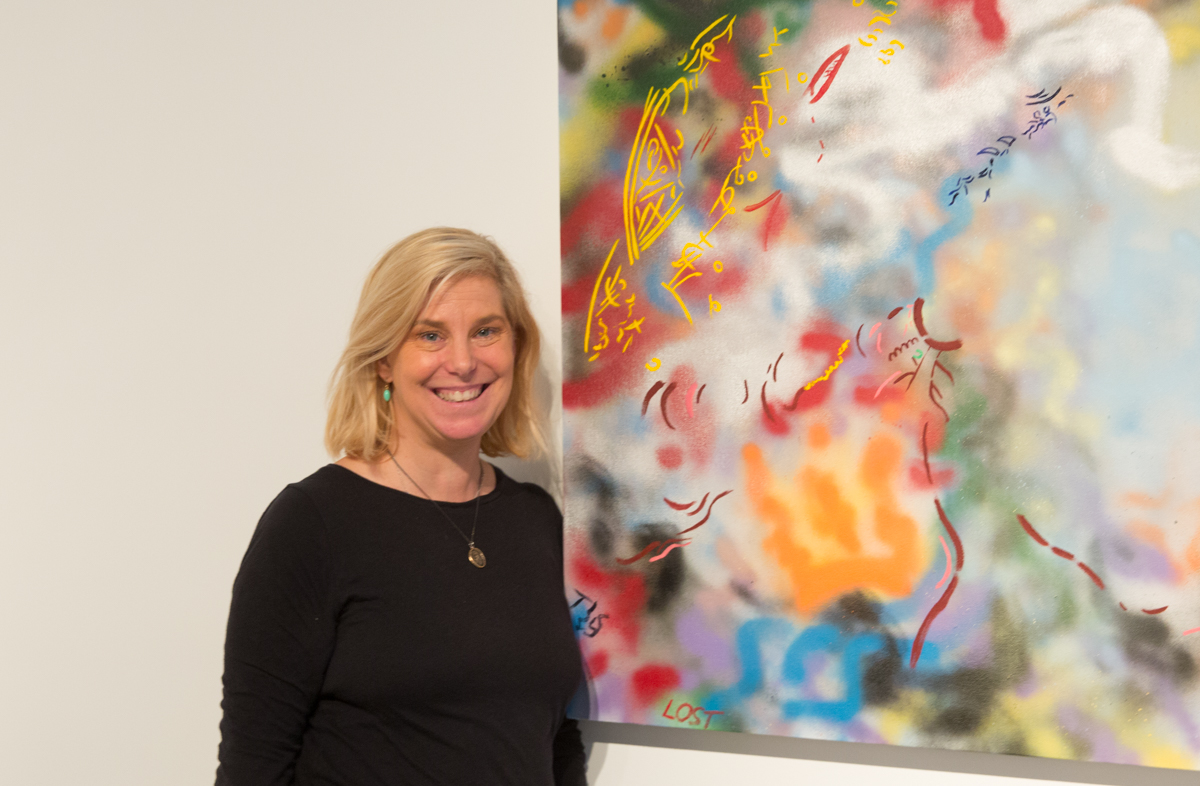
Artist Susan Lizotte

F23C2298

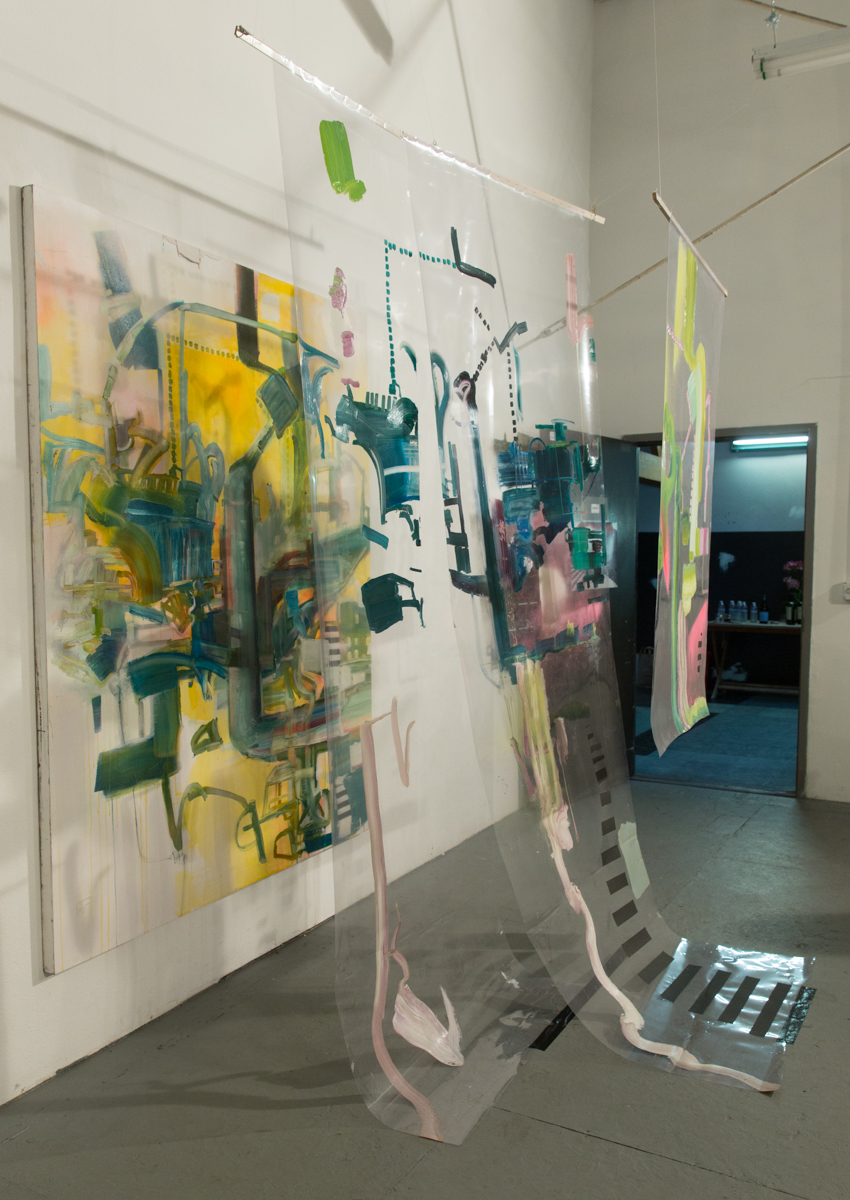
Susan Lizotte’s studio is a trip around the world, from history known and unknown, through the surface and into layers of meaning, venturing from the abstract to the literal. Each piece, regardless of the style or the series she’s created, resonates with urgency and tells a story that’s nuanced in technique and narrative.

F23C2299

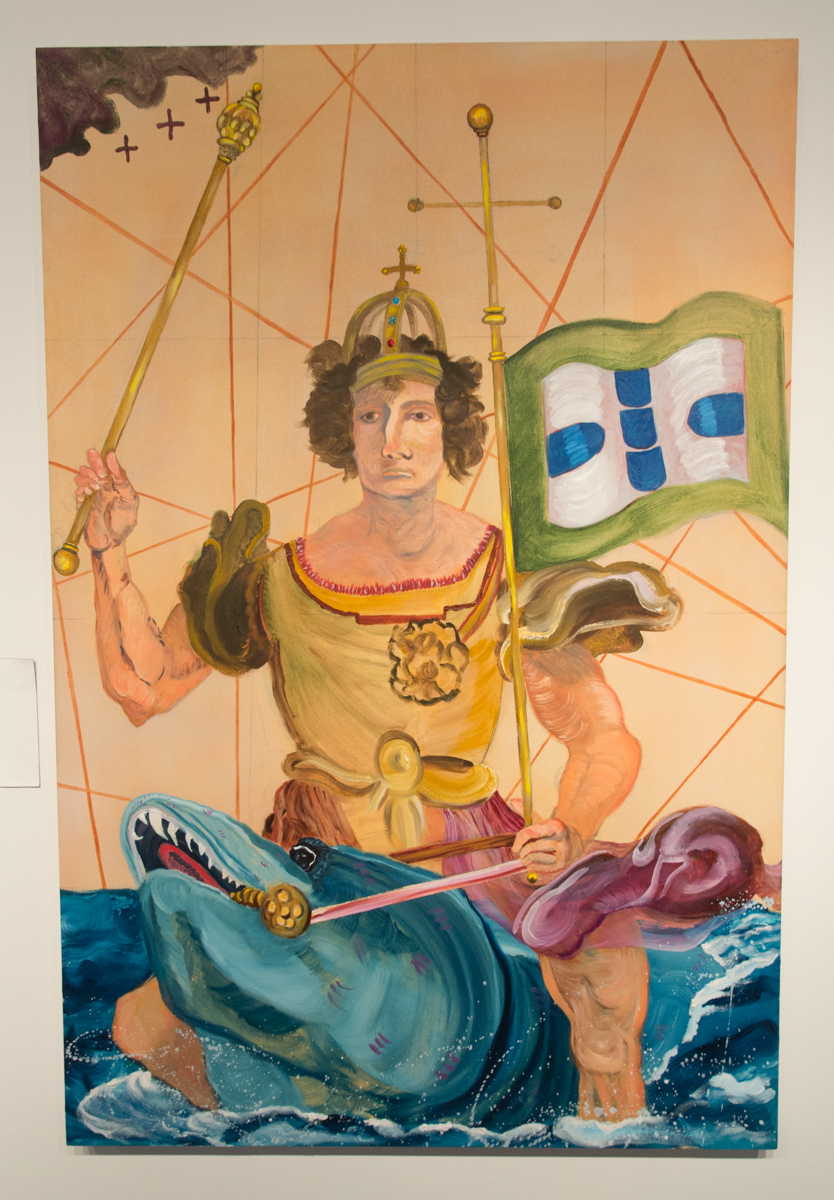
Her Mercury series is about power, a potent riff on the seen, unseen, and the discovered and undiscovered since Columbus discovered the new world. With the god Mercury known as messenger, this series uses that capability to send a message about what you can’t see in this world, from political events to the darkness of the human heart. Above, the artist’s large scale “He Thought It Would Last.”

F23C2300

Above: The Old Order

Her series, the artist says, “tackles misuse and abuse of power.” Starting from Columbus reaching the New World in 1492, touching on mercury as an element used by doctors of the time period to fight syphilis, and inspired by Mark F. Blaxill’s “The Age of Autism: Mercury, Medicine and a Manmade Epidemic,” Lizotte takes on poisoned subjects with grace and beauty.

F23C2302

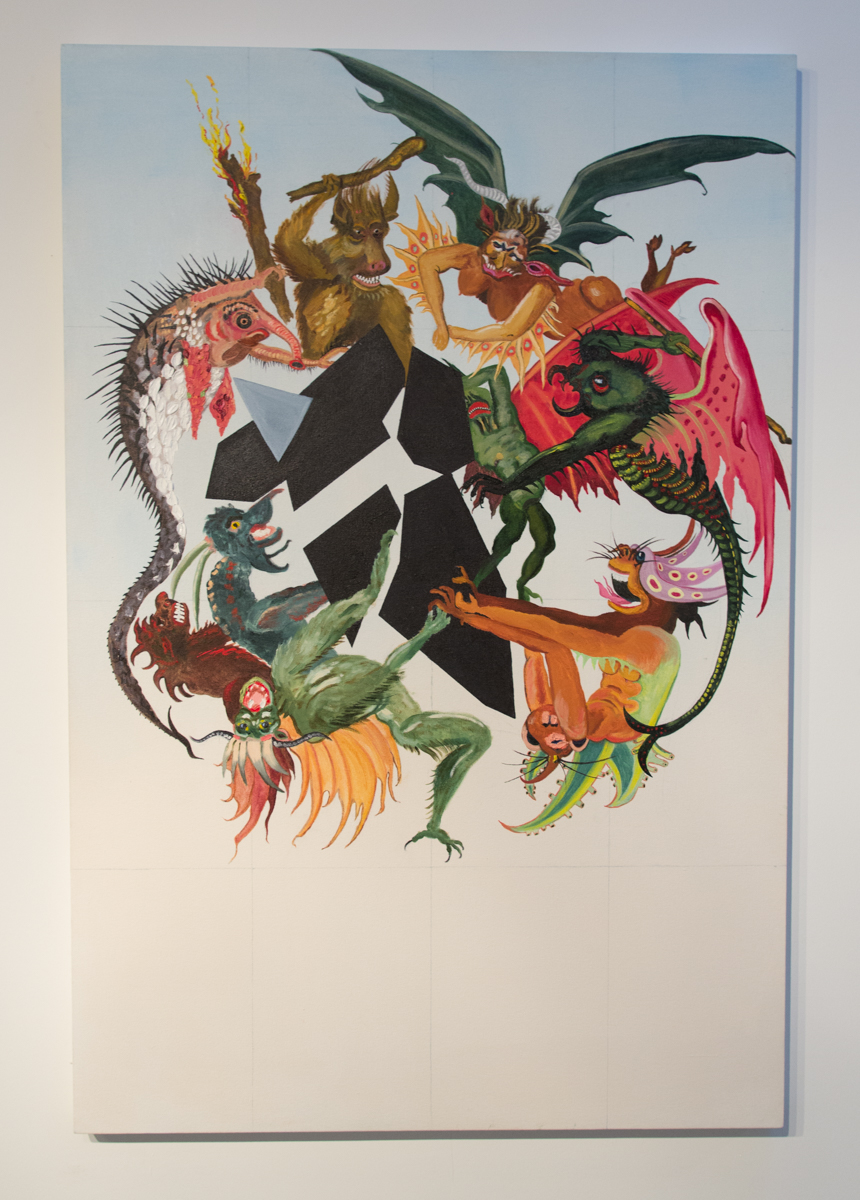
Above, “New Medievalism,” whose almost comical demons reveal what we fear and don’t fear in today’s global culture.

F23C2303

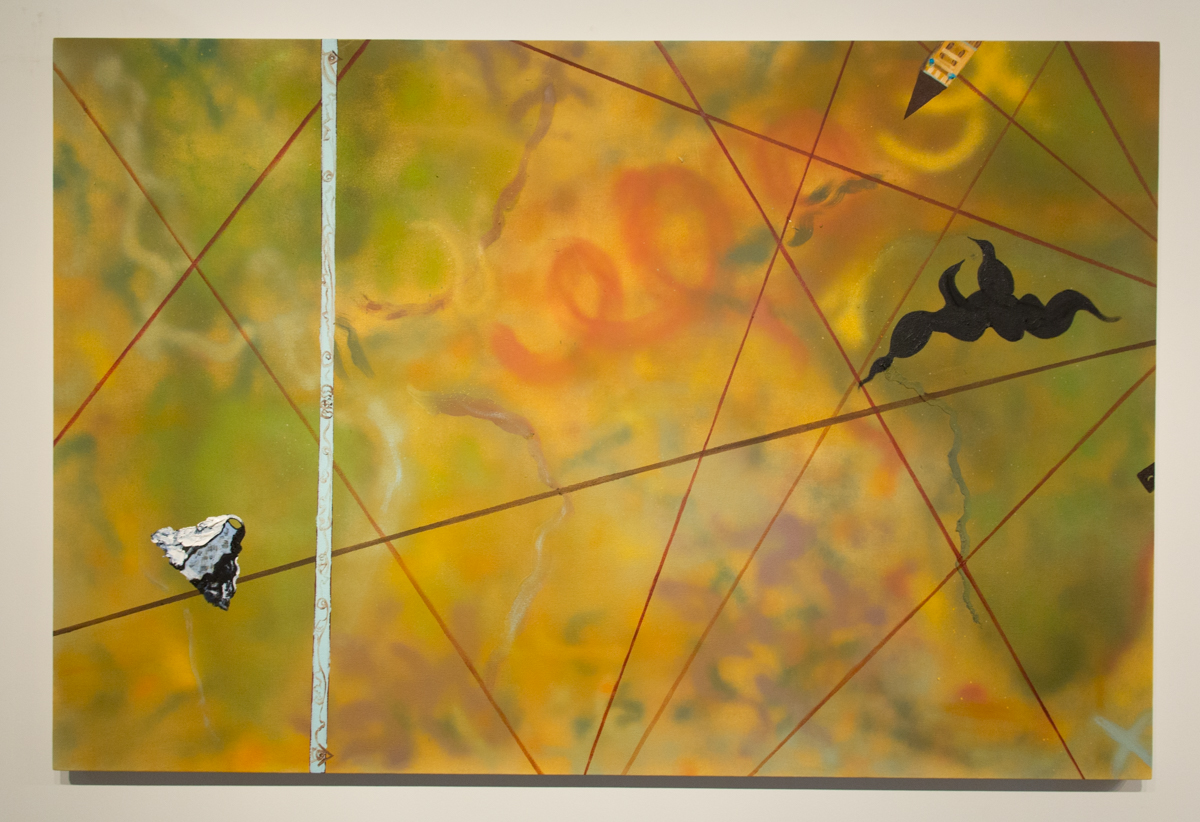
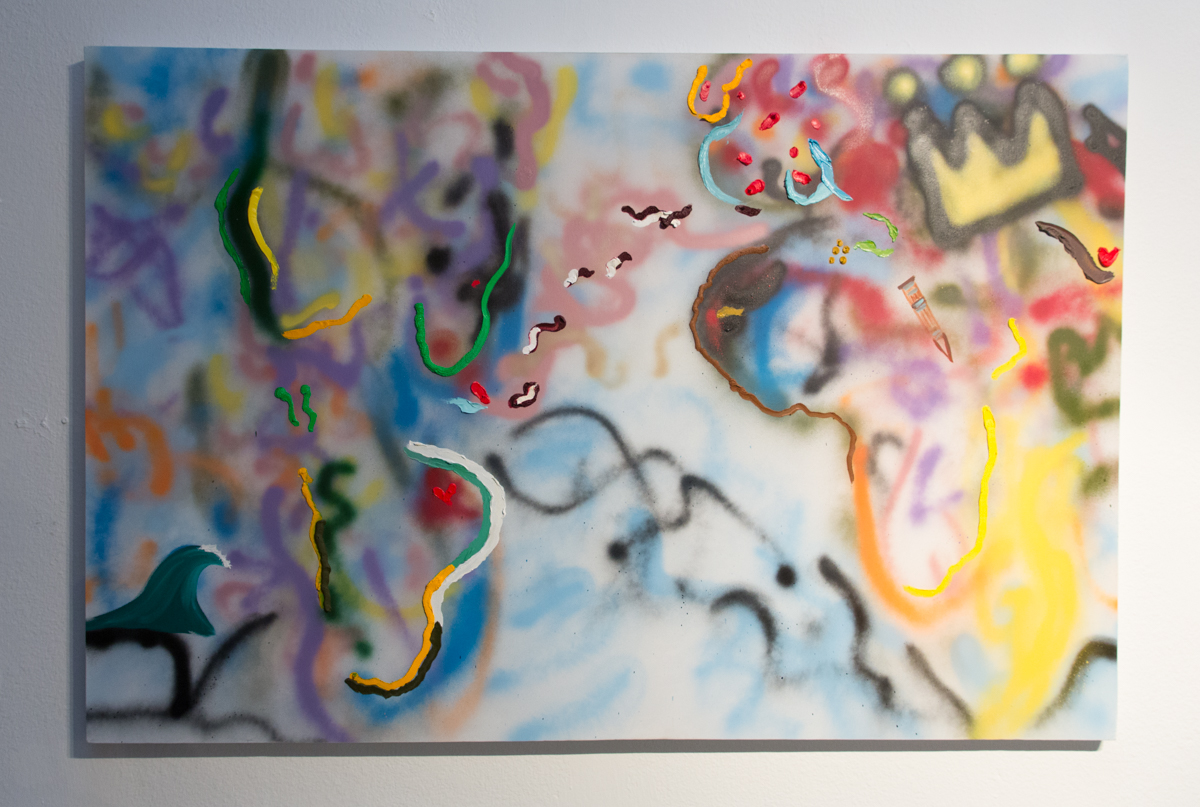
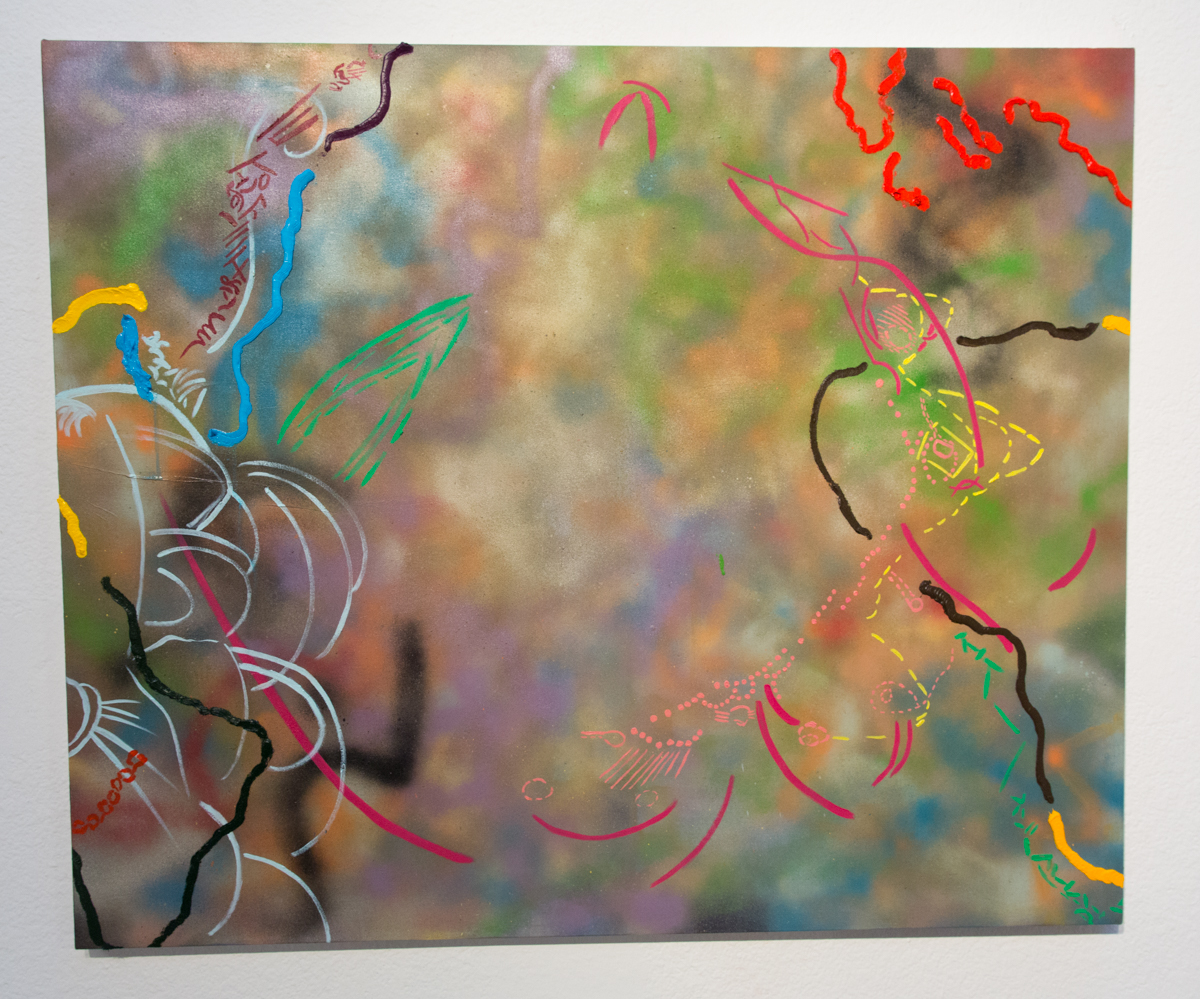
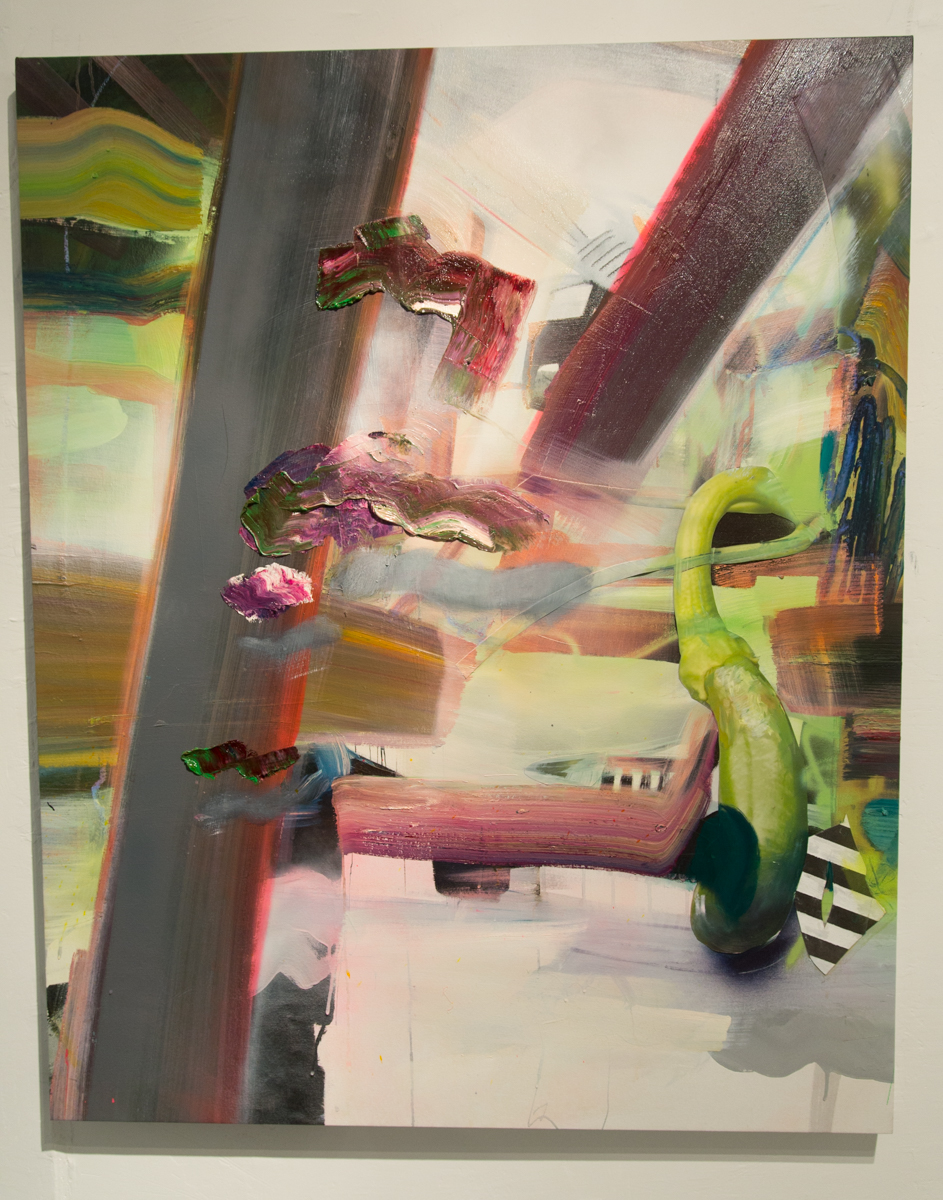
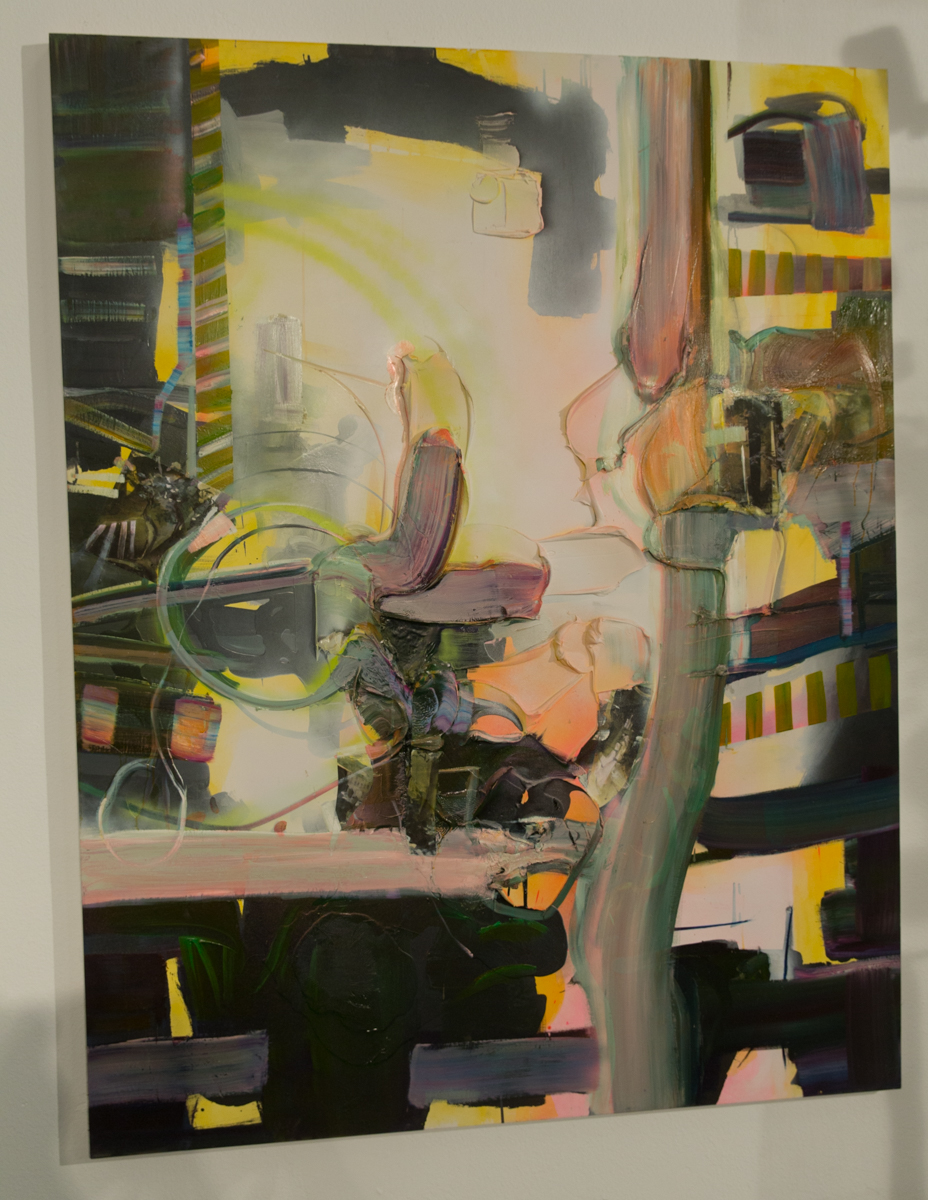
Her more abstract works captivate in form. Working in aerosol and oil on canvas, she creates space and movement that is both translucent and oblique. The oils make sharp images. “The layers are all about the idea of what we see and don’t see,” she says.
She was inspired by Pascal Cotte. “He runs Lumiere Technology in Paris,” Lizotte explains. “He  contributed to the knowledge of the Mona Lisa due to his multi-spectral digitization, pealing back layers to see what we don’t see in the ultra violet and infrared spectrum.”

F23C2306

We may see only a middle range of light wavelengths, but Lizotte seeks to lift up the rock on our cultural and emotional vision and expose and create a new inner dimension. Her spray paint creates a fuzzy but distinct feeling of depth. What do we see when we allow ourselves to fall inside her work?

Open your eyes and learn to see…Lizotte’s vision will pull you into history and the power for greater insight in one fell swoop.


Artists Rule at Durden and Ray: Reviews of Americanism and Yvette Gellis/Drea Cofield

crowd shot

Above: Americanism, from March 2016

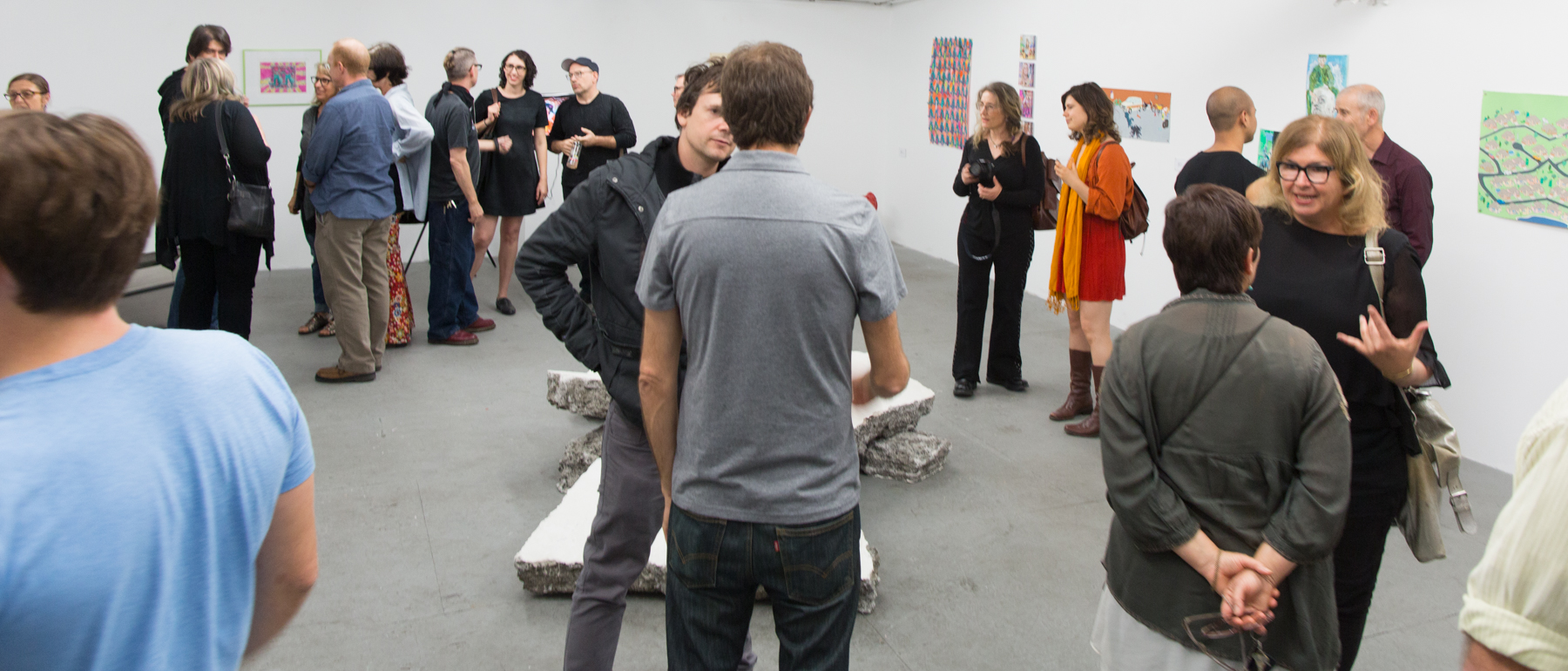
We’ve seen two fantastic shows at the Durden and Ray gallery space in DTLA recently – unfortunately, you may have missed them. Both shows ran for short periods of time, two weeks and one week respectively, making it essential to put this gallery on your radar and your must-see gallery list.

We’ll give you a look here and suggest that you check out the well-curated offerings presented and the artists who created them online.

F23C2277

Above, Yvette Gellis

The most recent stand-out exhibition was the paired solo exhibition of Yvette Gellis and Drea Cofield curated by Susan Lizotte.

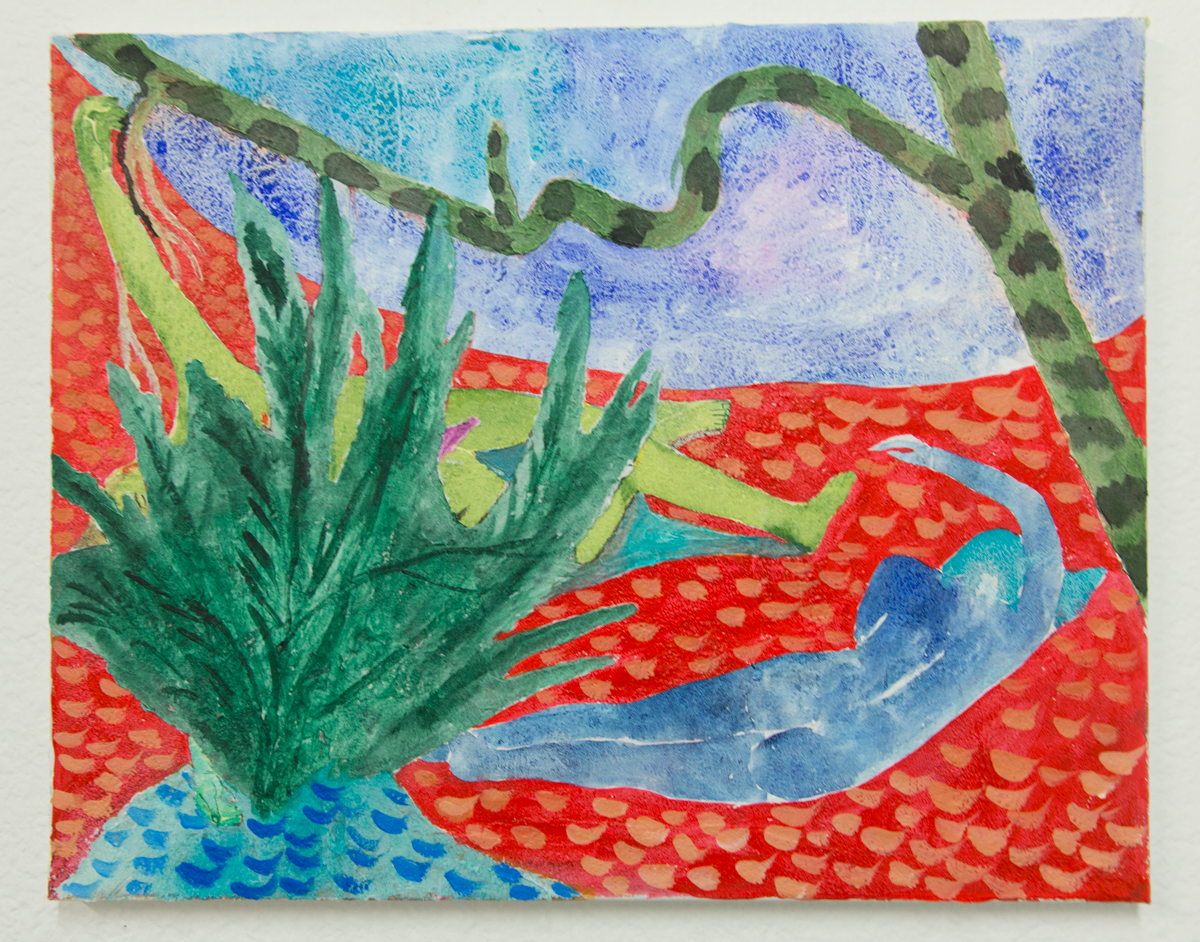
In the back room of the Durden and Ray space, Drea Cofield paints a post-impressionistic lush and magical world in warmly saturated colors. “It was observational work created in Long Island City,” Cofield relates. Created in water color and colored pencil, she calls her work here “American Summer paintings, the hot sun, the back yard with the bathing suit on, a lot of our culture comes out in that,” she says. These Edenic pieces are softly sensual

F23C2288 F23C2283 F23C2281 F23C2280 F23C2278

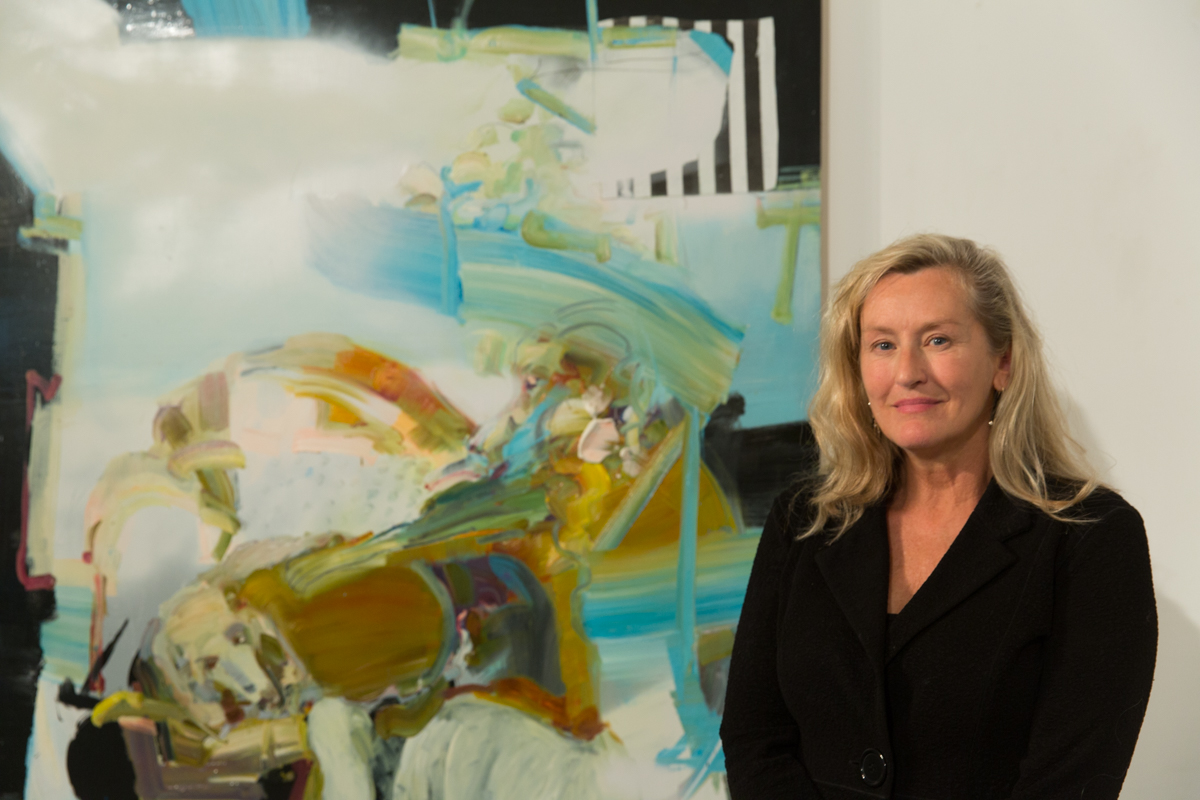
In the main exhibition room, the work of Yvette Gellis, whose paintings reconstruct and redefine her place in the world, through lyrical abstract impressionism. “Most of my pieces are oil on mylar, the panels combine acrylic and oil to break up the paintings and bring them into the space. The mylar tends to transform the entire space,” Gellis explains.

F23C2270 F23C2263

It’s a conversation in which you are always on guard, a metaphor for life and what’s happening geopolitically, where we are headed as people.” These recent works were inspired by the artist’s recent visit to Paris and her return right after the bombings there.

F23C2276 F23C2261 F23C2260 F23C2259 F23C2254

Further back, Americanism, a powerful group show curated by Steven Wolkoff, ran for far-too-short a time March 26th, and featured an absolutely killer collection of artists focused on what exactly it means to be an American – and what is an American “ism.”

sonya 1

Featuring images as interesting as they are fun “including cat memes, supersized sodas, bottomless military funding, and all the anti-establishment political candidates you can handle,” according to Wolkoff, exhibiting artists included:

Gavin Bunner
Don Edler
Raymie Ladavaia
Ben Jackel
Casey Kauffmann
Yoshie Sakai
Sonja Schenk
Ami Tallman
Drue Worrell

gavin bunner with steven

Curator Steven Wolkoff left, with artist Gavin Bunner, right

Wolkoff says “The project started with a few artists who wanted to show the Americanism spirit as something to explore. They had the idea of components of American spirit which are manifest in politics right now. The ideas coalesced around that,” he says.

The prescient and timely topic – given today’s political scene and the upcoming California primary election – offered a strong and bracing look at who we are as a culture in this point in time.

gavin bunner with art

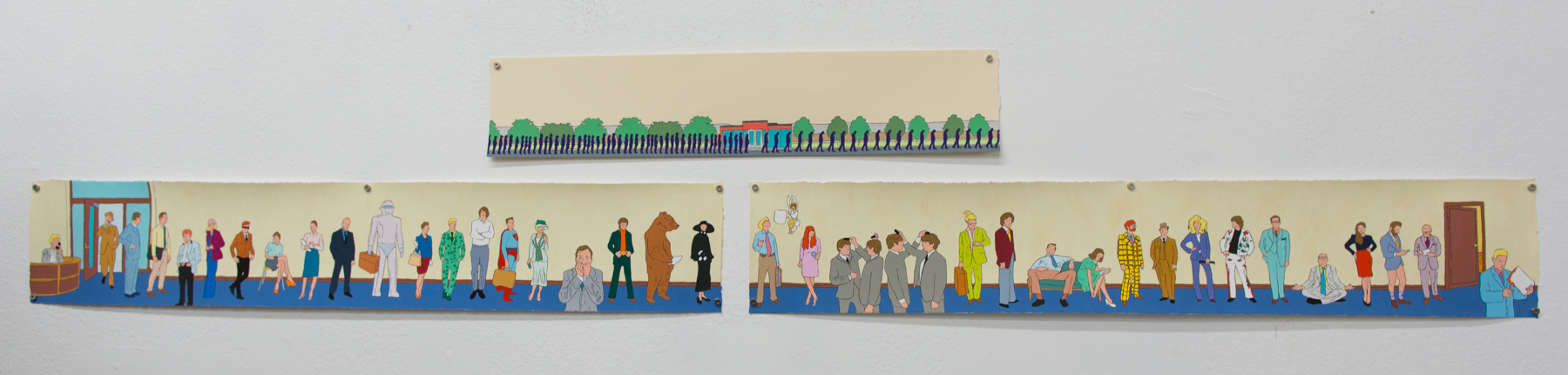
Gavin Bunner’s “Job Interview” features a delicately rendered job interview line, with hope and dejection both rampant in a piece that serves as a solemn yet amusing ode to the recession we have still not recovered from – unless one is part of a political or economic dynasty.

gavin 3

“Even Superman cannot get a job,” Bunner points out. “There’s hope going into the inteview, rejection and disappointment coming out.” The piece was created with gloss and sharpie ink.

gavin 2

rami with art

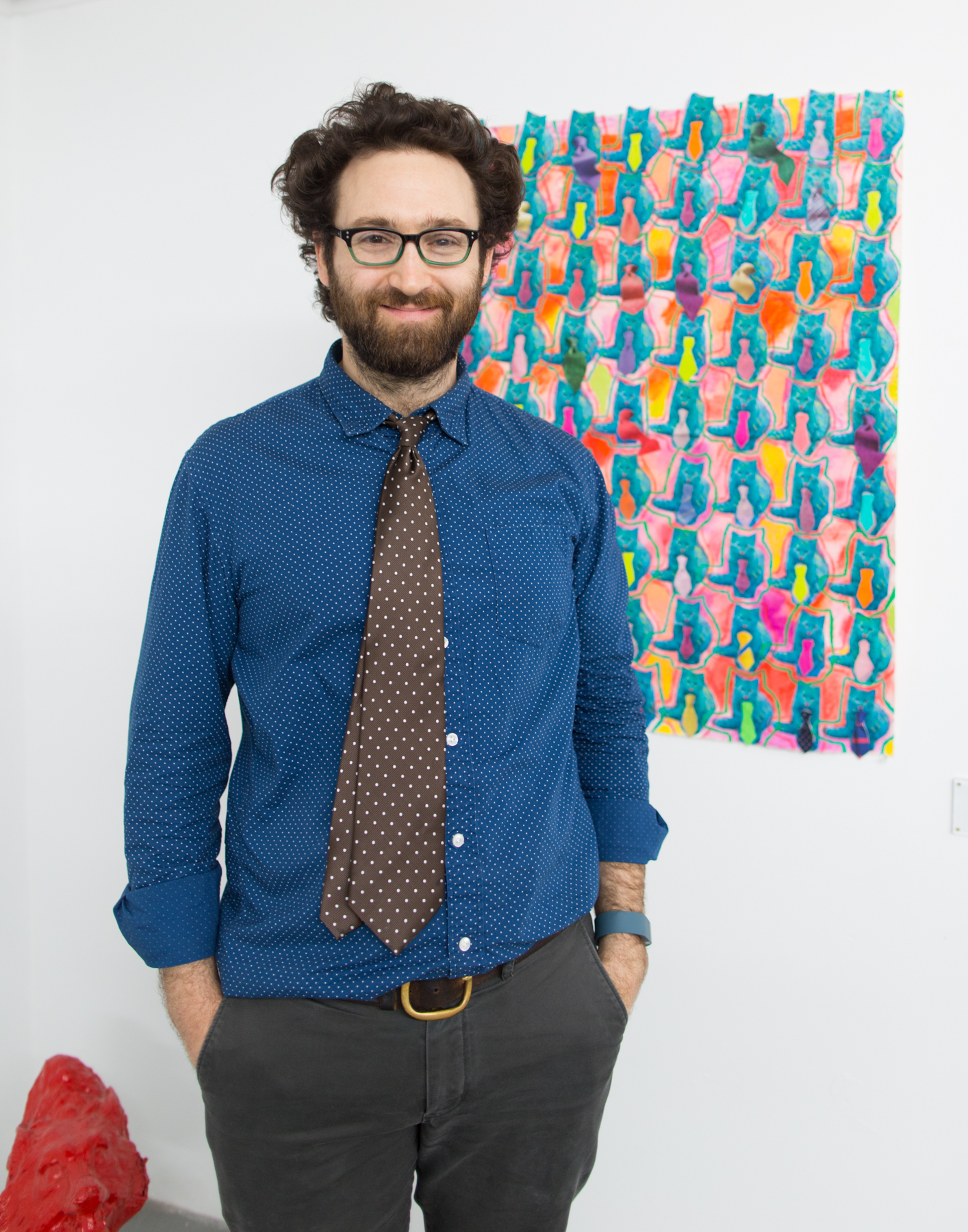
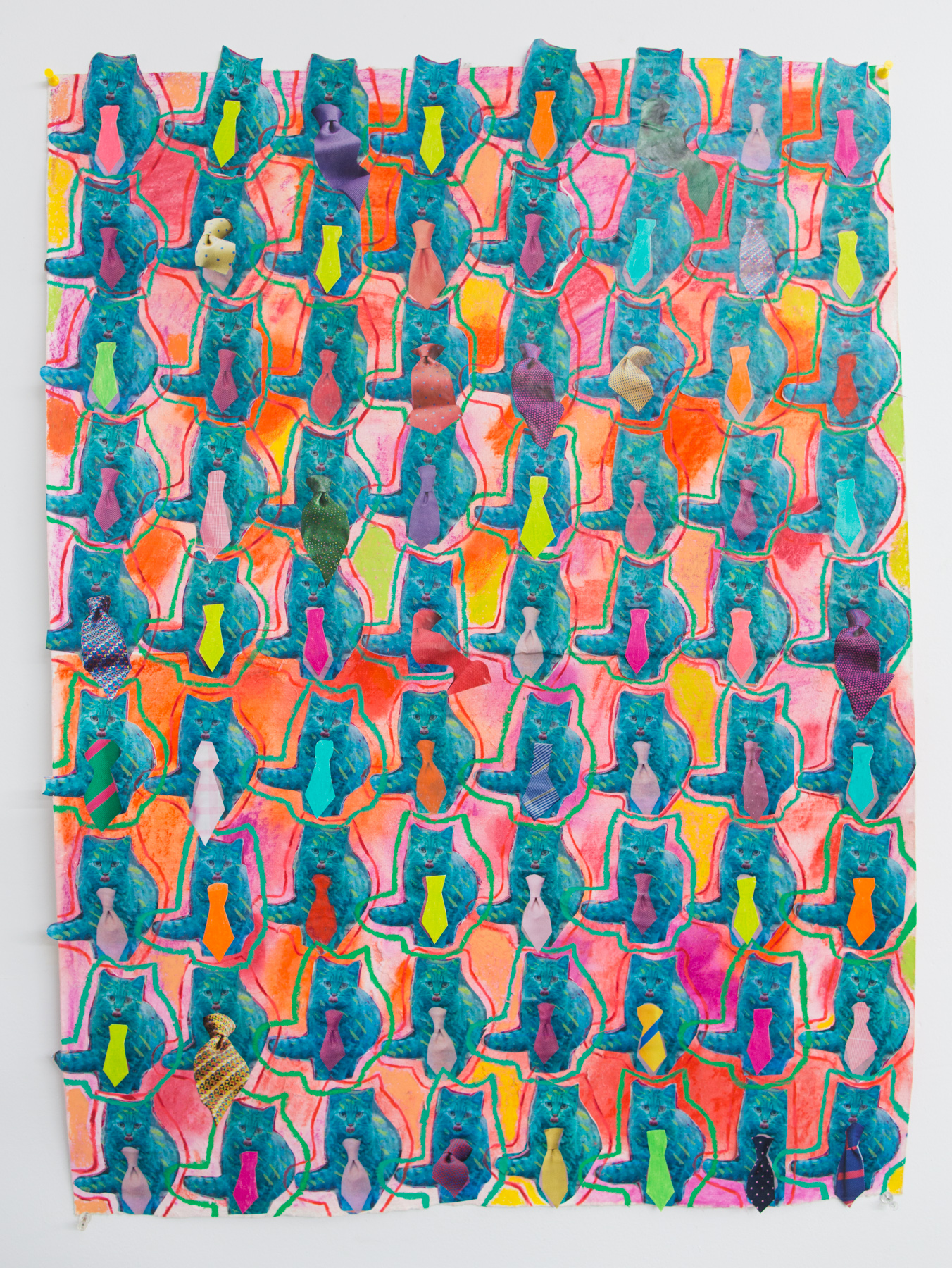
Raymie Ladevaia uses “the feline as a metaphor for the endurance and stamina, the power and energy of a cat’s bounce. It can start and stop, an action, a force of itself,” the artist relates.  His work was created using water color, crayon, and collage. “Lots of my work deals with feline energy and force. If you’re a cat person you understand.”

rami

Sonja Schenk’s “The End” is a plaster and styrofoam sculpture. “I considered what’s iconic about America, and I decided it was the car the road. It’s the end of that era, and our roads could be like the ruins of the Roman Empire or Native American Mounds. That was my inspiration.”

sonya with art sonya 2


yoshie

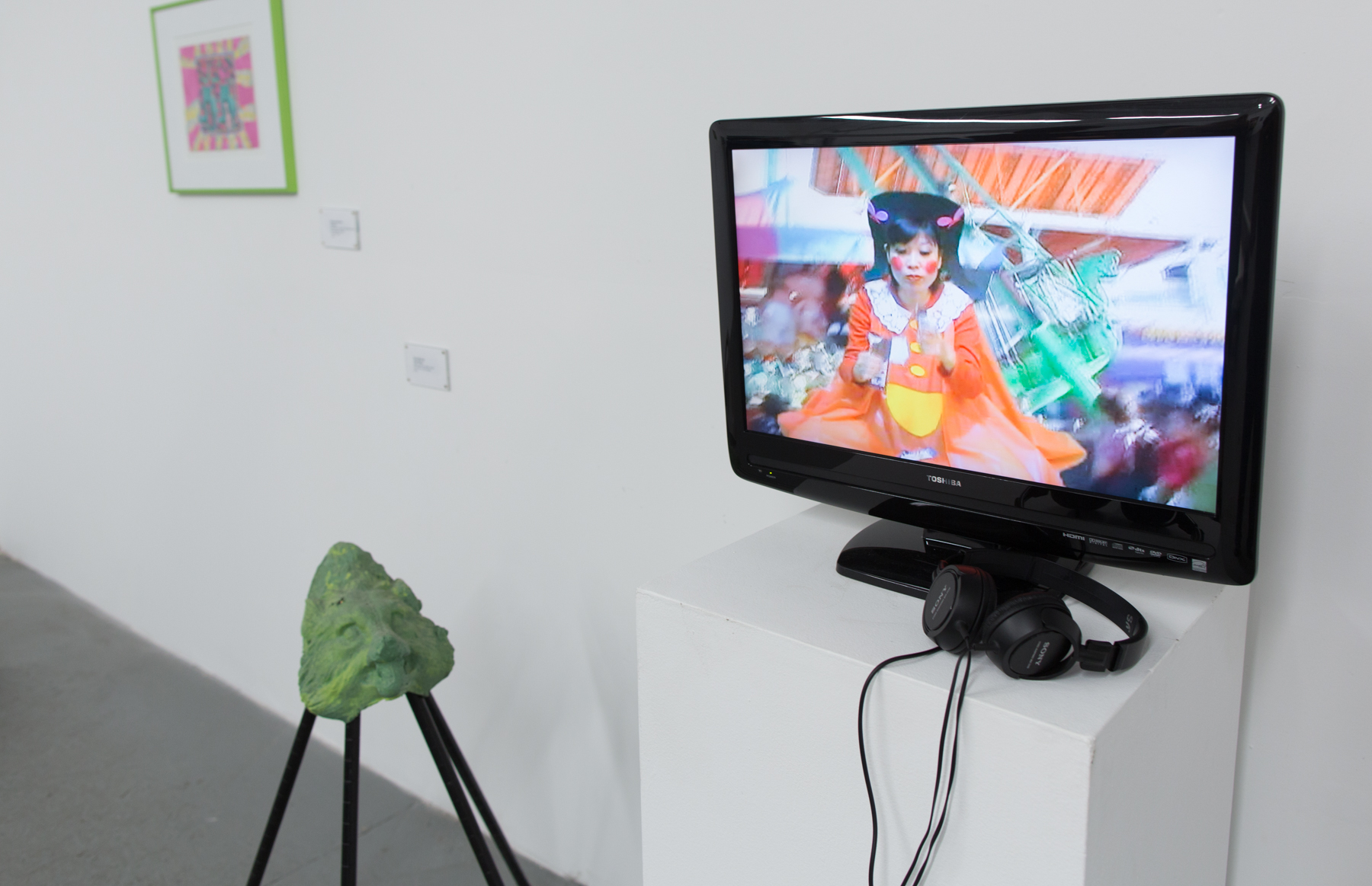
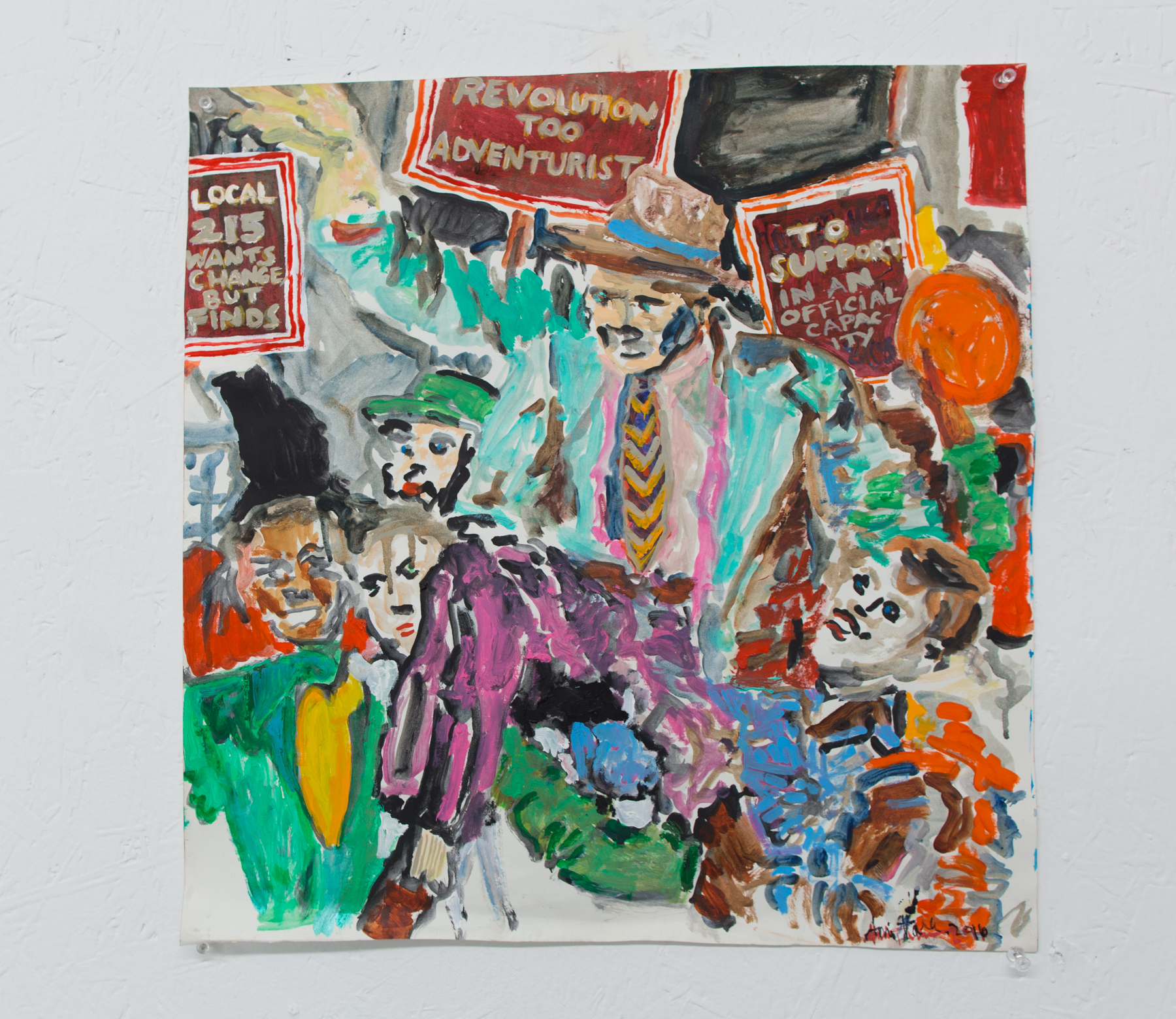
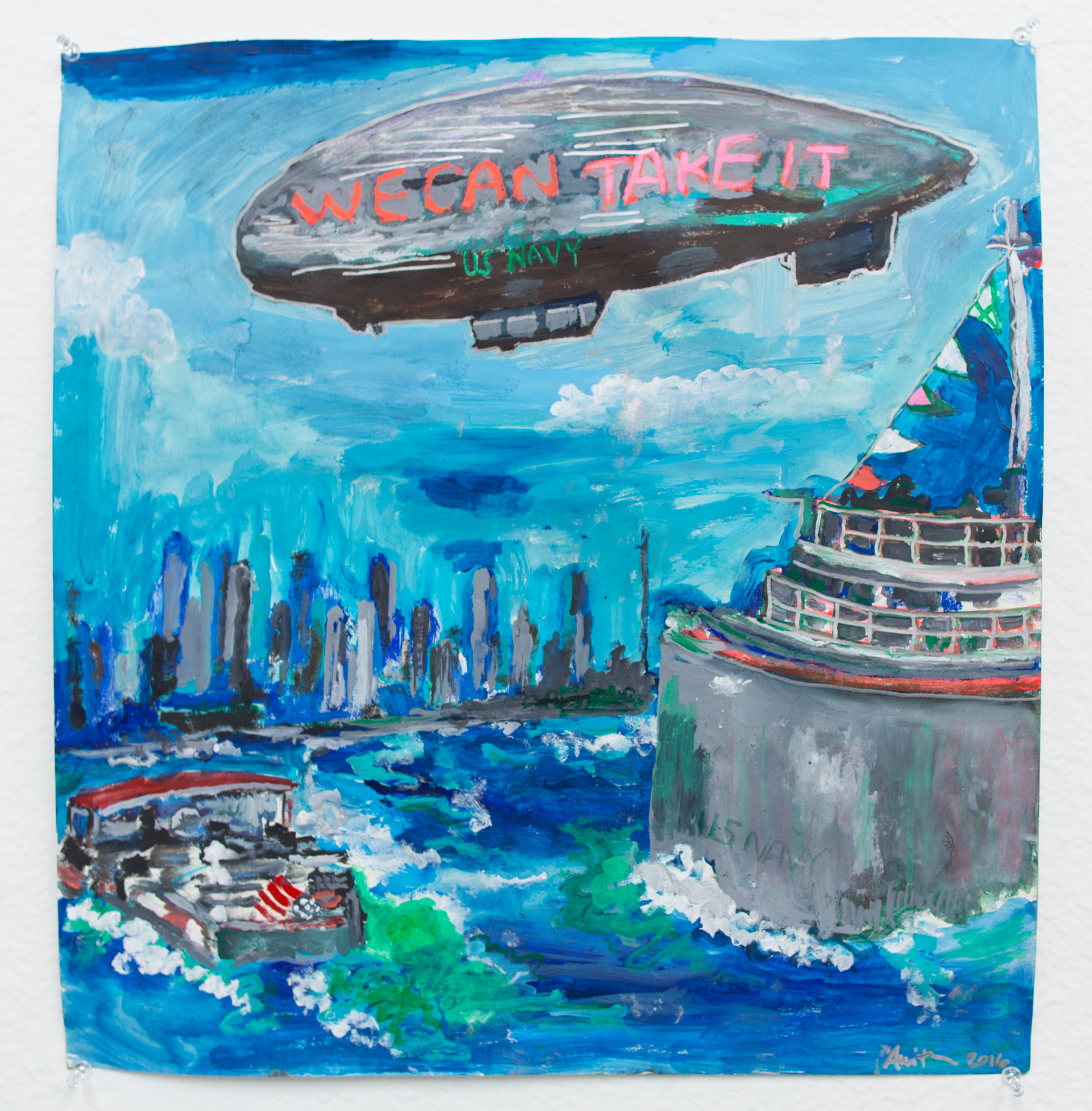
Yoshie Sakai’s video work above shows Americans mindlessly eating junk food “Come One, Eat All;” while Ami Tallman’s “Local 215,” and other images below, are all about the desire for change.

ami tallman 3

ami tallman ami tallman i think

Below, the sculpture of Ben Jackal

ben jackel

Below the work of Stacy Kaufman: smashed iPhones, hot dogs, Mickey Mouse, sex, and bombs.

casey kauffman

Find these artists! And keep an eye on Durden and Ray’s exhibition space, located at Durden and Ray 1950 S Santa Fe Ave Los Angeles, CA 90021

Lena Moross: For the Love of Carmine

028

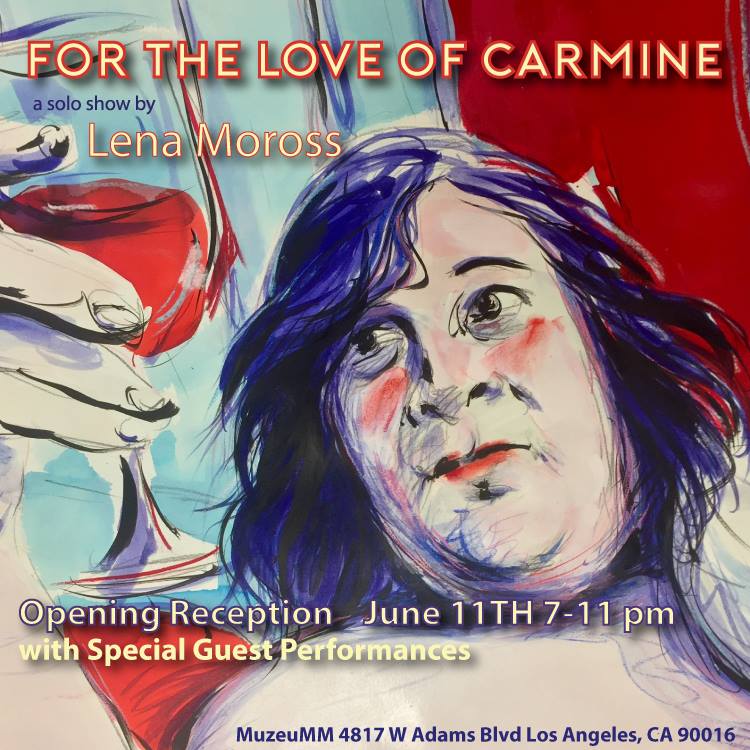
Born in St. Petersberg, Russia, artist Lena Moross is a true force in the Los Angeles art scene. With the characteristic vibrance she shows in so much of her lush work, she’s tackling a trenchant subject: what being transgender really means. In her upcoming solo exhibition, For the Love of Carmine, opening June 11th at MuzeuMM, Moross creates a social narrative.

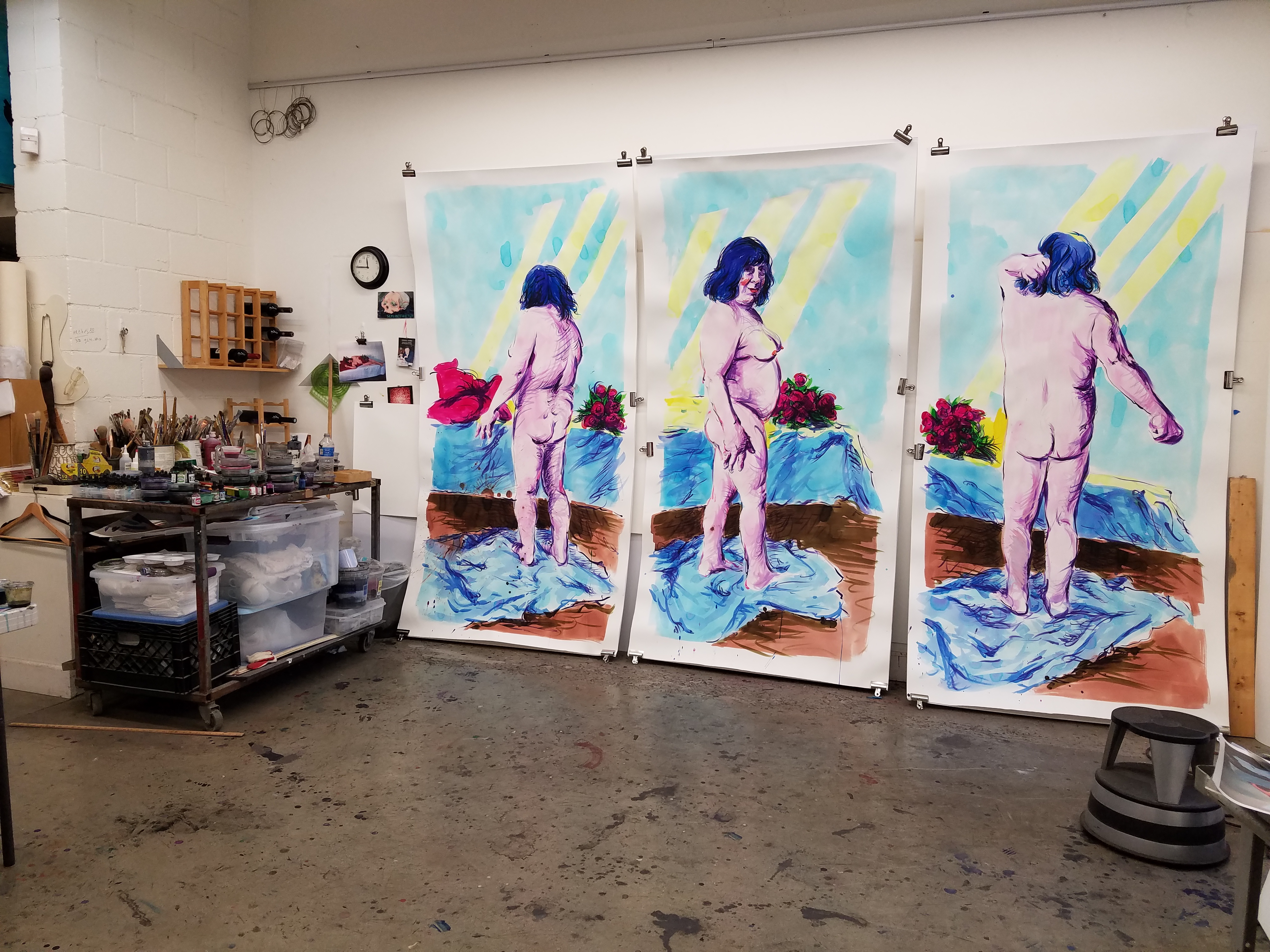
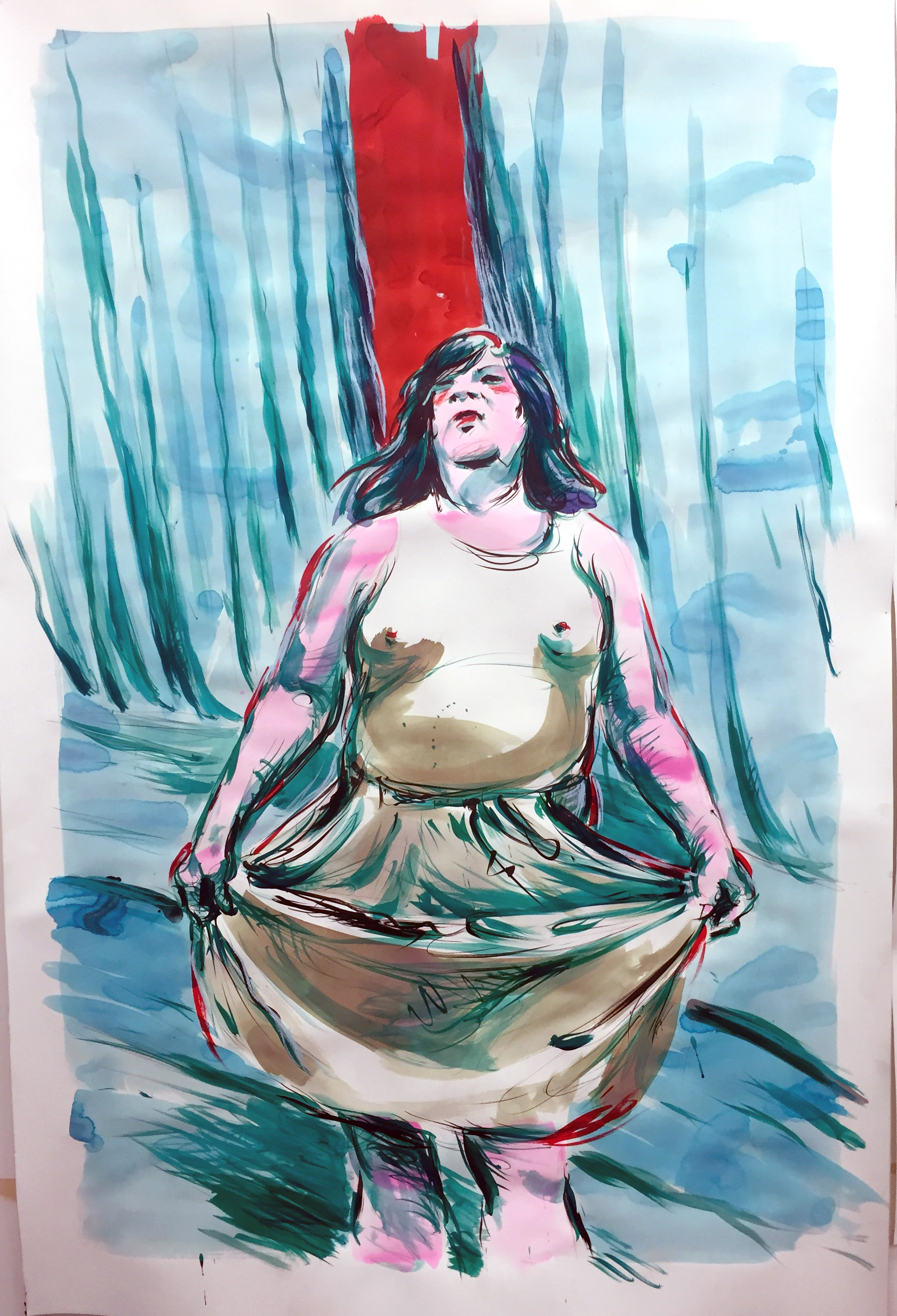
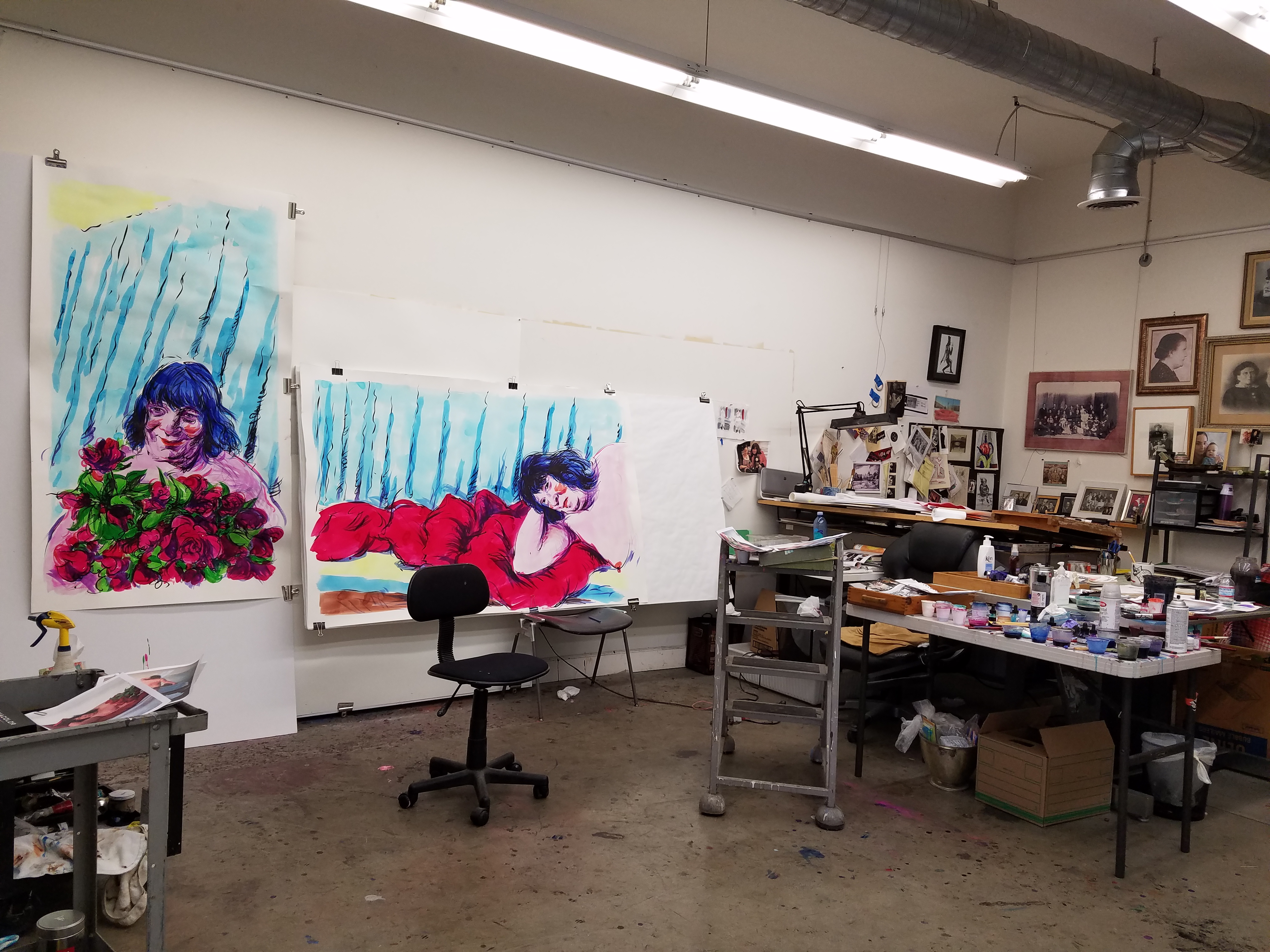
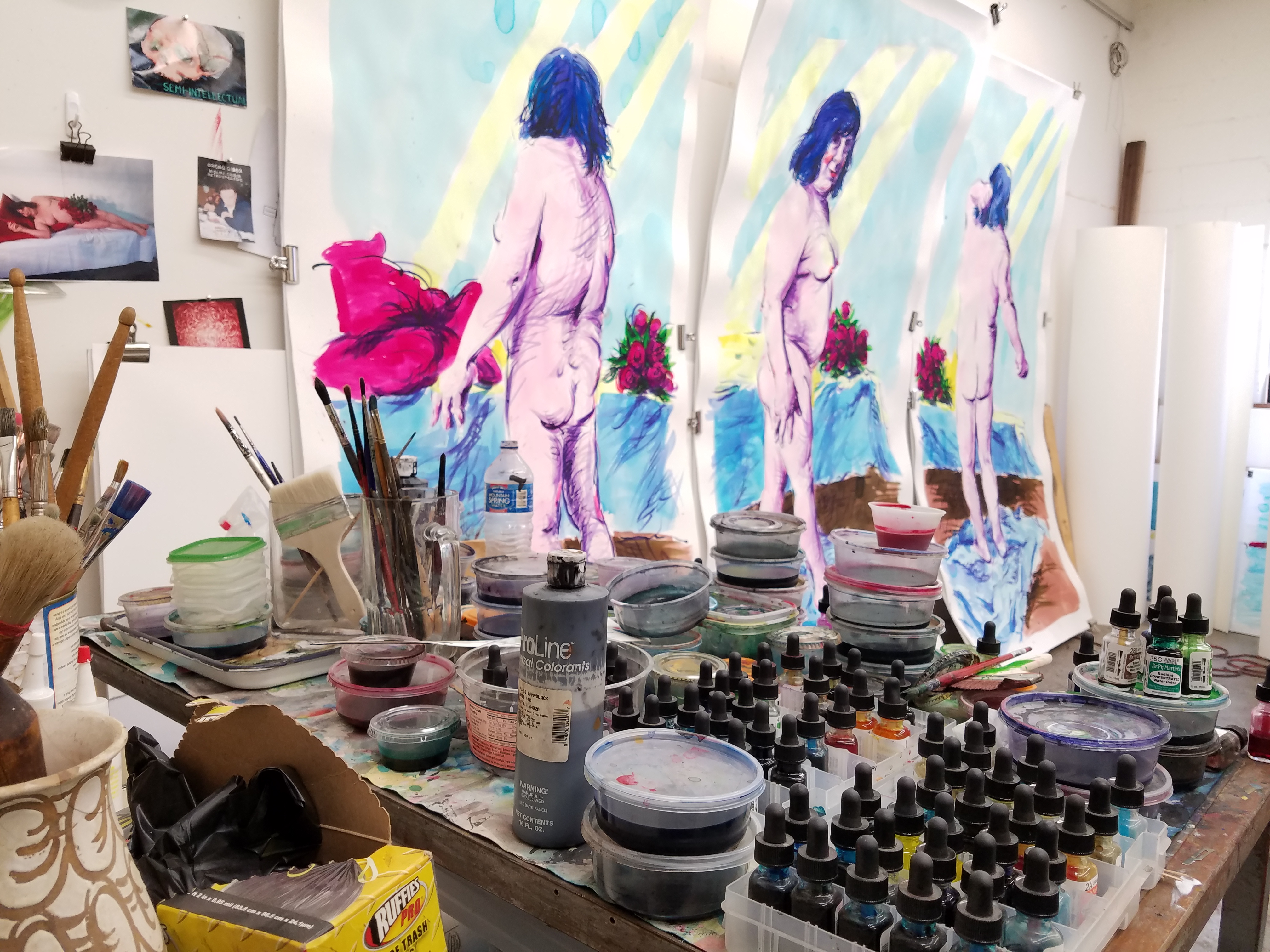
Her beautifully colorful, finely detailed, impressionistic watercolor work is used here to create an immersive experience of what it’s like to grow up as a transgender male in the early post-war years. Her large-scale paintings demand repeat viewings: the very feminine, voluptuous curves and her emphasis on fluid strokes and shapes create a richly fertile landscape to explore what it’s like to be a woman inside a man’s body. A staged video is also included in the exhibit, which creates a deep dialog between the subject of her works here, Carmine, and the artist herself, as an untold narrative spills forth.

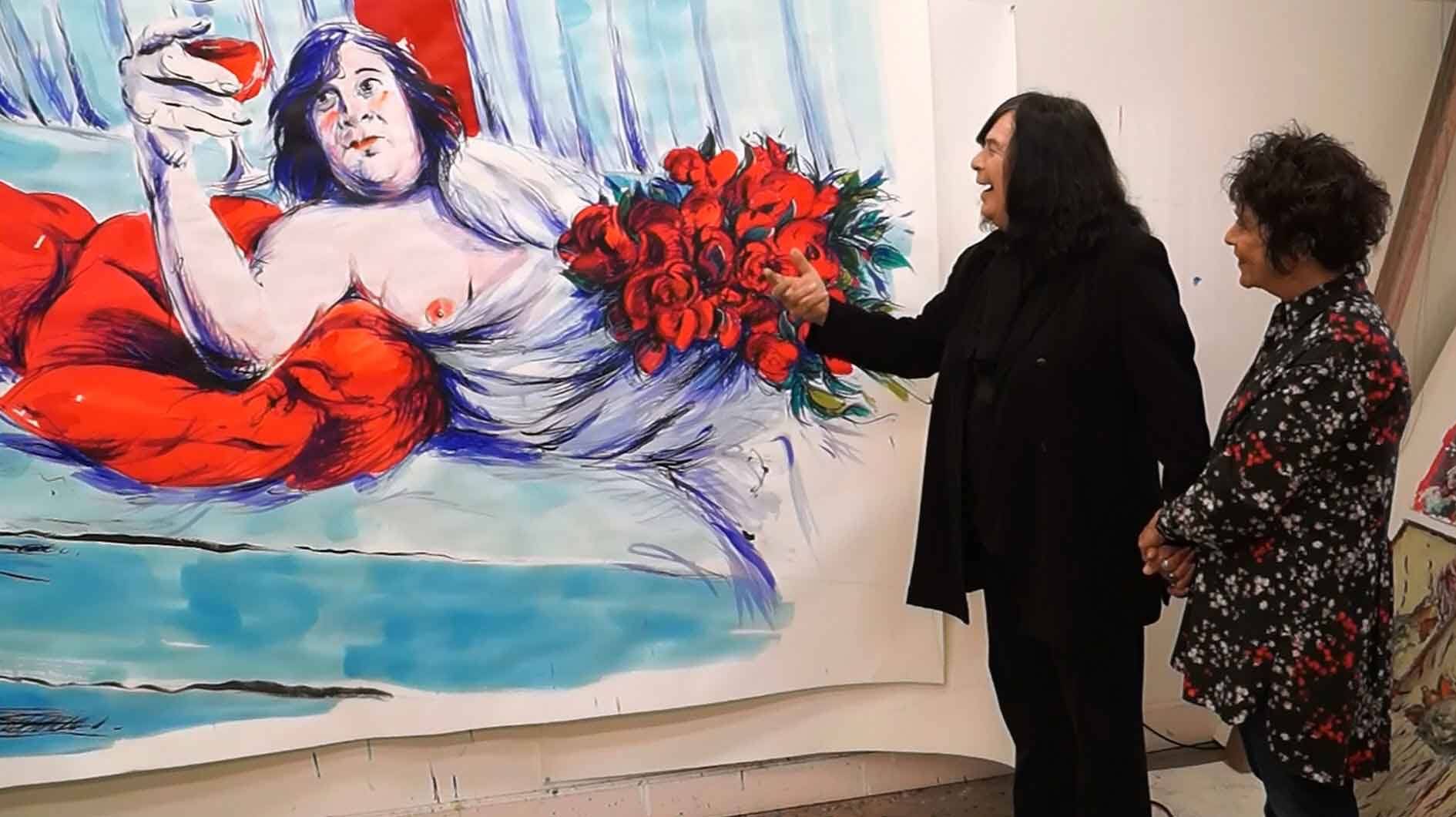
Lena Moross with Carmine, Carmine in Repose
Above, Carmine Messina with the artist, Lena Moross

The artist was captivated by the real Carmine Messina, whom she met on a Hollywood street corner three years ago. Tall, heavy-set, and middle-aged, Messina was heavily made up and dressed in a woman’s black coat, fishnet stockings, mid-calf boots and sporting a long, jet-black wig. Moross was struck by Carmine’s gentle demeanor and his obliviousness to the effect he was causing. The artist introduced herself and began a conversation that led to recorded conversations, videos, photographs, paintings, and sketches. Using these resources, she set about exploring, through her art, the ordeal of being transgender in the late 1940s, born into a middle class San Fernando Valley family.

033

Her revealing, sensual paintings tell a long hidden story, one that exposes and gently honors what had been concealed and riddled with shame. While social change is slowly creating a space for transgendered people, their long hidden stories can be difficult to reveal and depict. Moross tells Messina’s story with dignity, humor, and a translucent grace, qualities which are representative of all of Moross’ recent work.

Her pieces have a dream-like, almost floating quality, their fluid lines and the incorporation of floral images and colors making her work as intense as it is delicate.

Lena Moross, Carmine after Degas

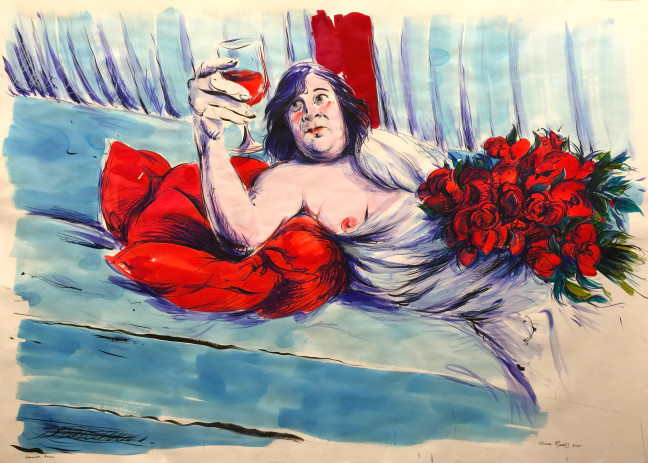
In this exhibition, Messina, clad in a simple aqua smock, poses in feminine grace, shy and almost transcending his girth; or Moross positions him nude, with a jubilant, blooming bouquet of red roses masking his genitalia.

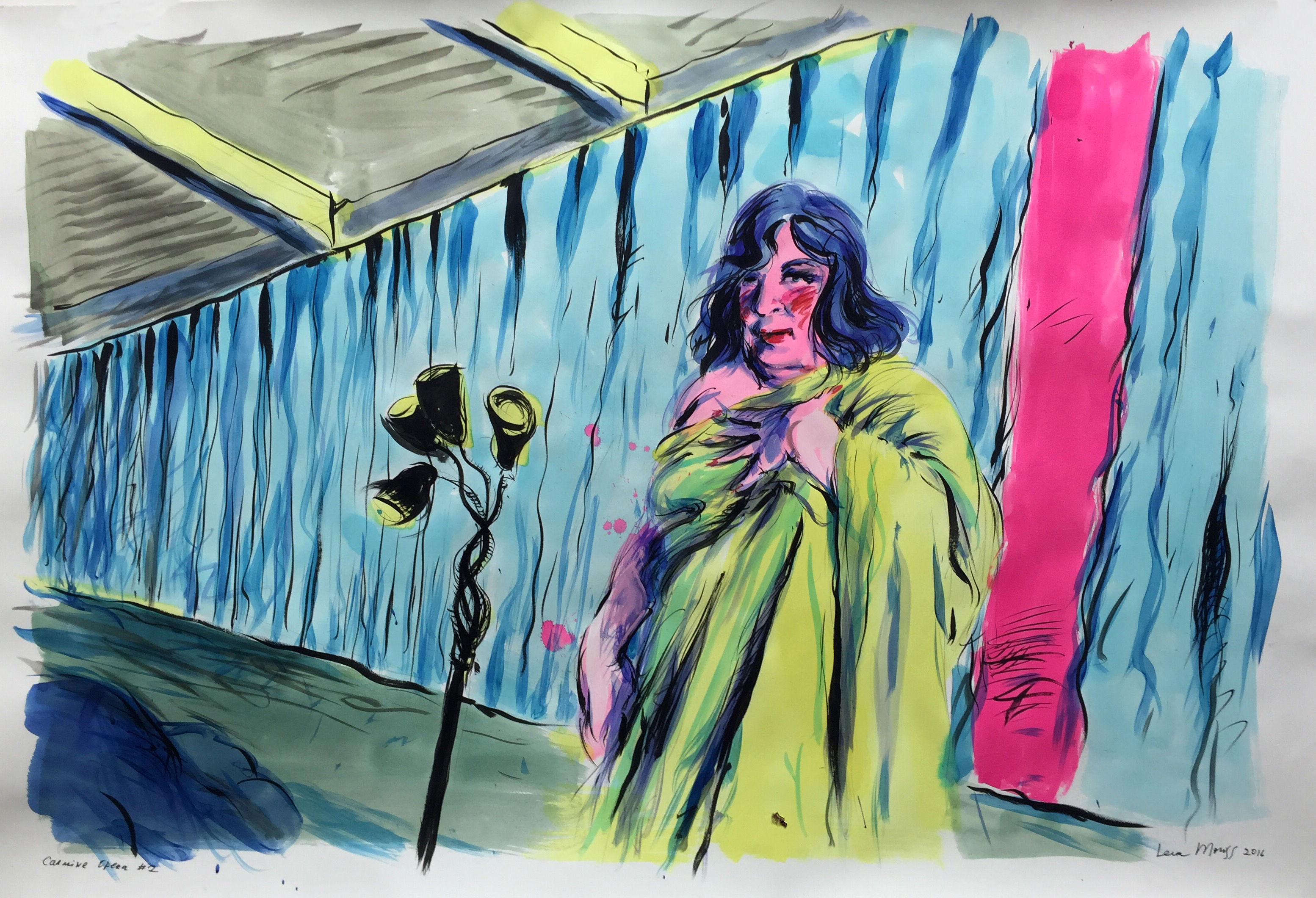
CarmineOpera2_48x72

Whether raising a glass of ruby wine, reclining against the coiled cocoon of a red quilt, or performing opera in a yellow tunic, the figure that Moross captures is at once bulky and beautiful, poised and awkward, always fluid and feminine. She casts what it means to be a woman – that particular state of grace, longing, and sensuous shape, in a fresh light.

032

Moross fuses male and female, form and the softest of function. You can almost feel the draped cloths, smell and touch the soft rose petals. It’s no surprise the Moross is skilled at this kind of fusion. Moving from Russia to the U.S., she studied classical art at the State Academy of Art in Russia. In America, she studied at the Pasadena Art Center College of Design as a student of Peter Lyashkov, earned her master’s at Cal-Arts, and was a student of John Baldessari and John Borofsky.

Her fine art skills and her wonderfully interpretive, fantastical bent have meshed just as surely and resiliently as her international heritage has fused with a strong, brash sense of American freedom.

Lena catalog

In For the Love of Carmine, Moross expresses freedom, repression, fantasy, joy, and a spirit that longs to break loose from its confines. A truly masterful solo show, by an artist who is taking flight with story and shape.

MuzeuMM
4817 W Adams Blvd, Los Angeles, CA
Opening reception June 11, 7-11pm

  • Genie Davis; Photos: Shoebox PR