What do you see? Rubik’s Cube, geometry class, chess boards, hundreds of cameras trained on hundreds of people, one person, no people at all – the observed and the observer, entwined and alone.
Geometric forms shape a world of immense order. Patterns create beauty, create conformity. All chaos is about to break loose in this Trapezoid life.
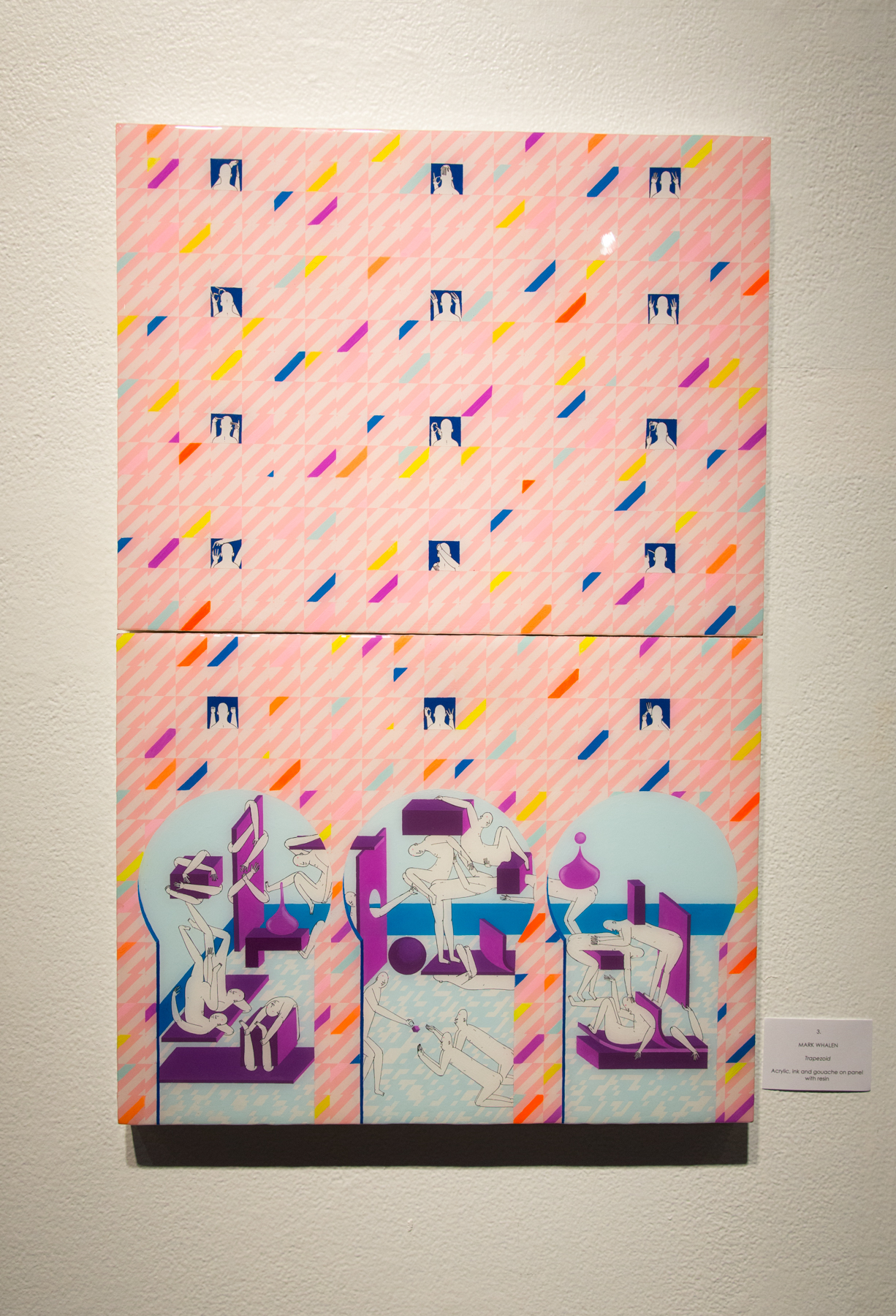
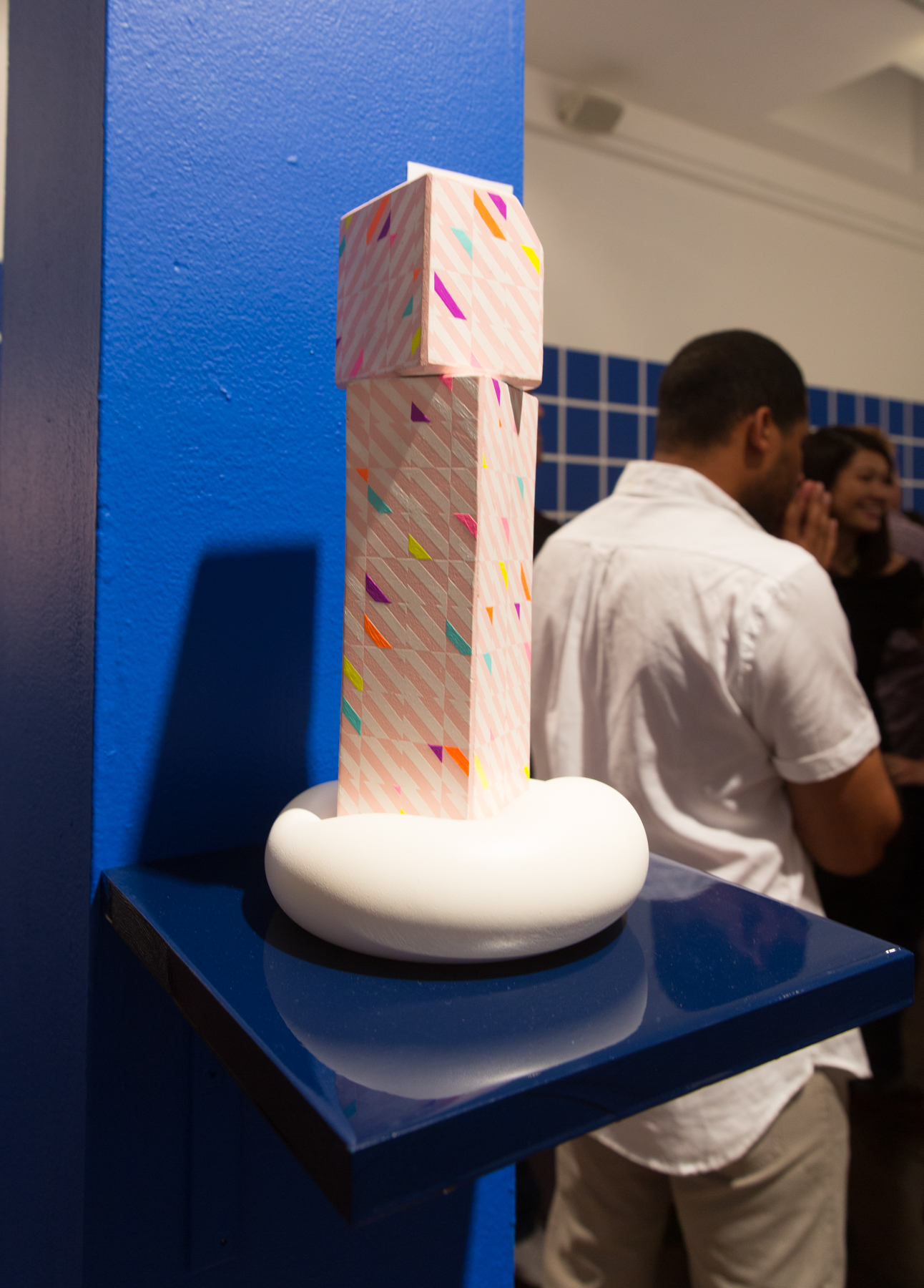
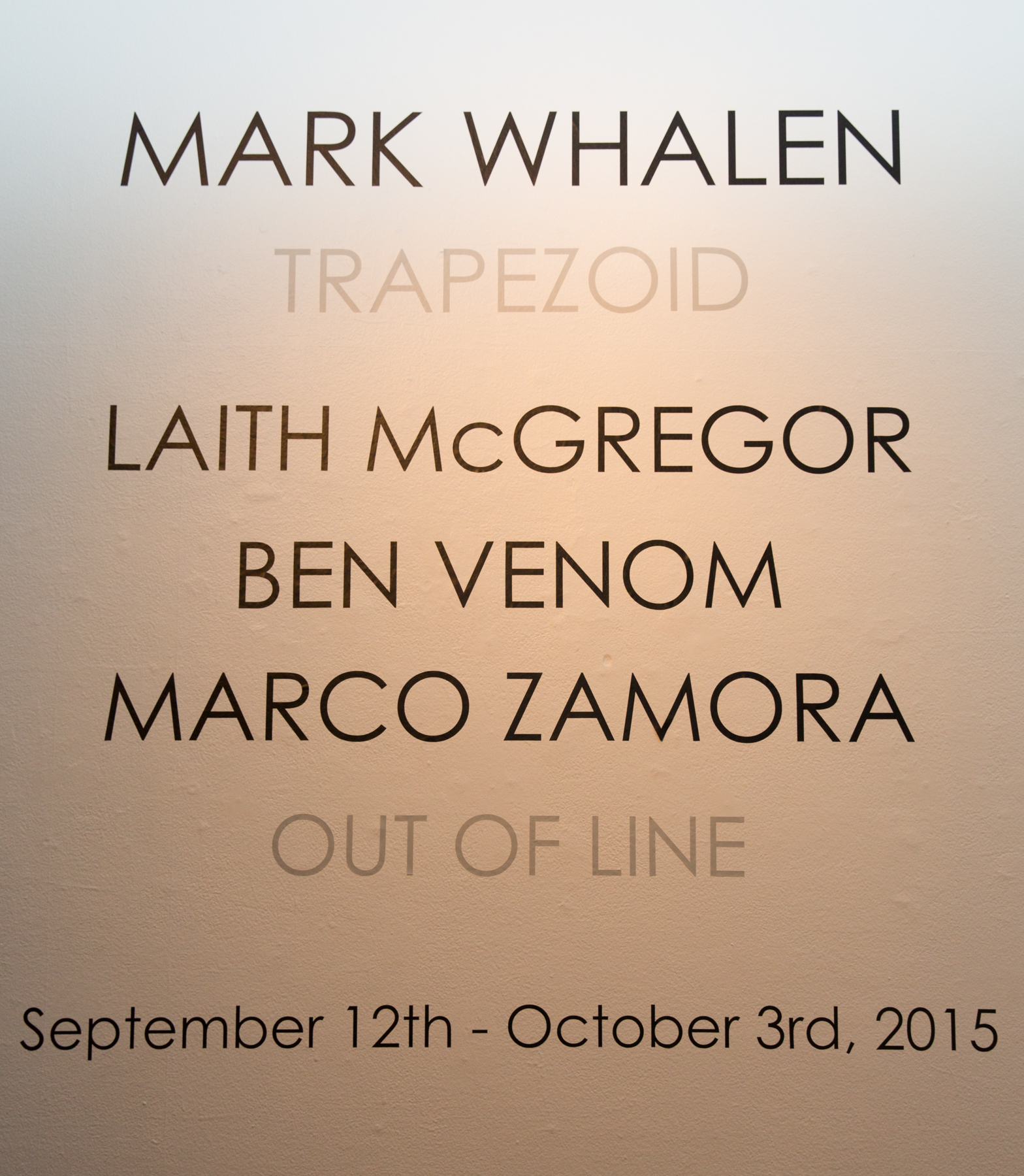
The Merry Karnowsky Gallery is often a hot-bed of emerging artists, and the exhibition of Mark Whalen’s latest works, “Trapezoid” is no exception. From hand-painted glazed ceramics to acrylic, ink, and gouache on panels, Whalen has constructed a series of personal, intricate worlds.
Meticulously detailed, his ceramics and paintings feel intense, pristine but pointed introductions to something other-worldly that Whalen is asking the viewer to explore.
E.T. – take a picture and text it home. The rest of us can explore this strange and stellar world through October 12th at 170 S. La Brea in Los Angeles.
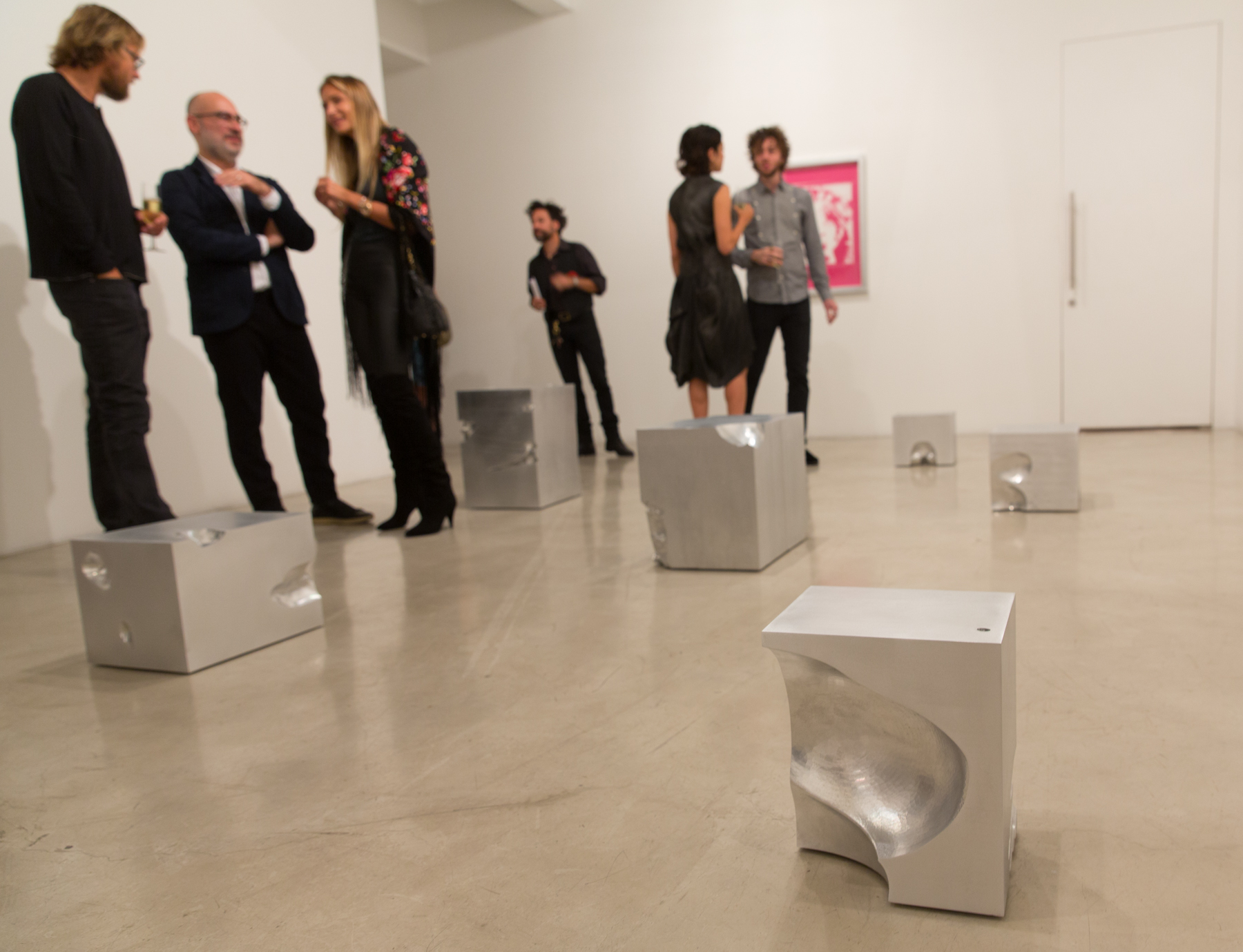
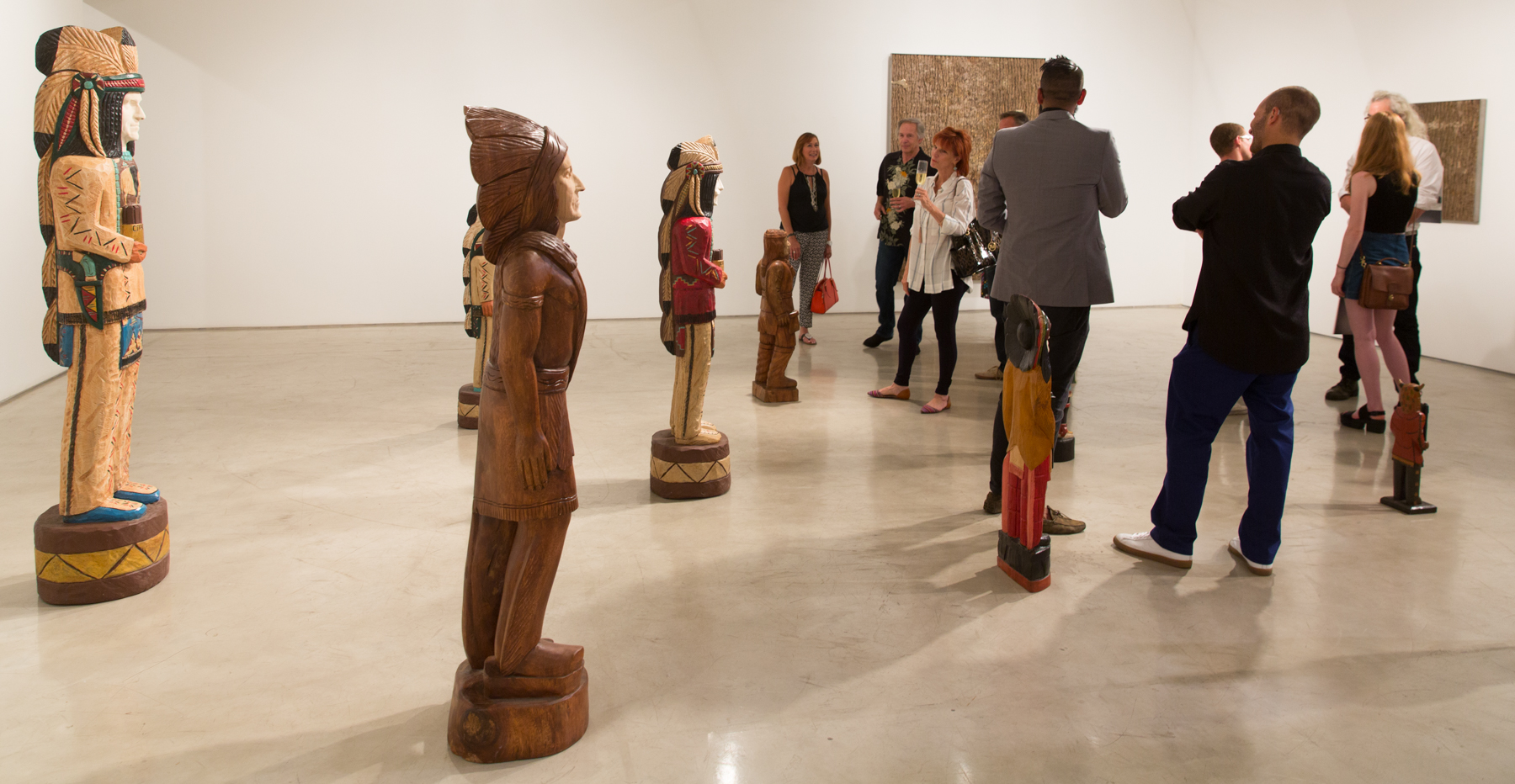
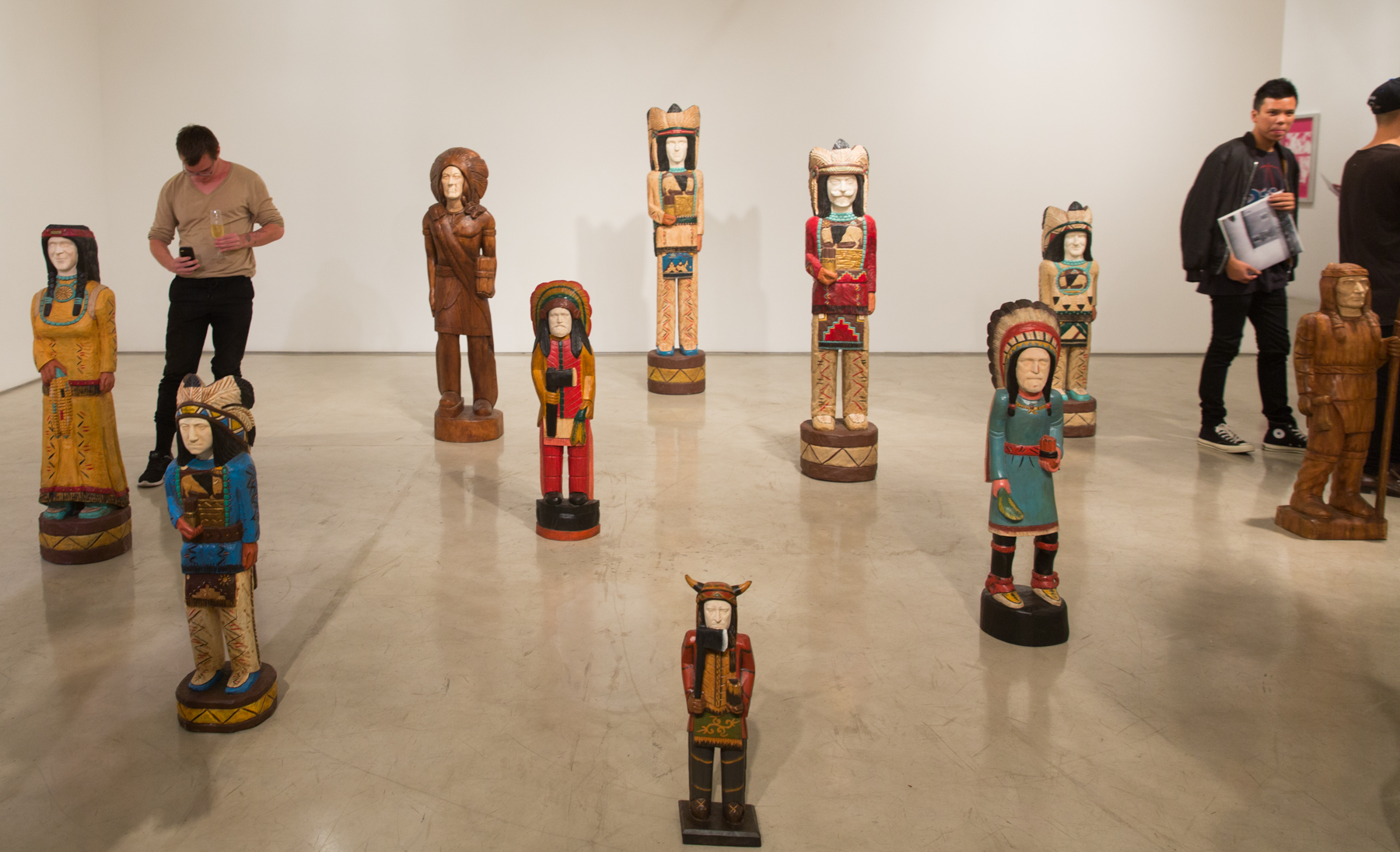
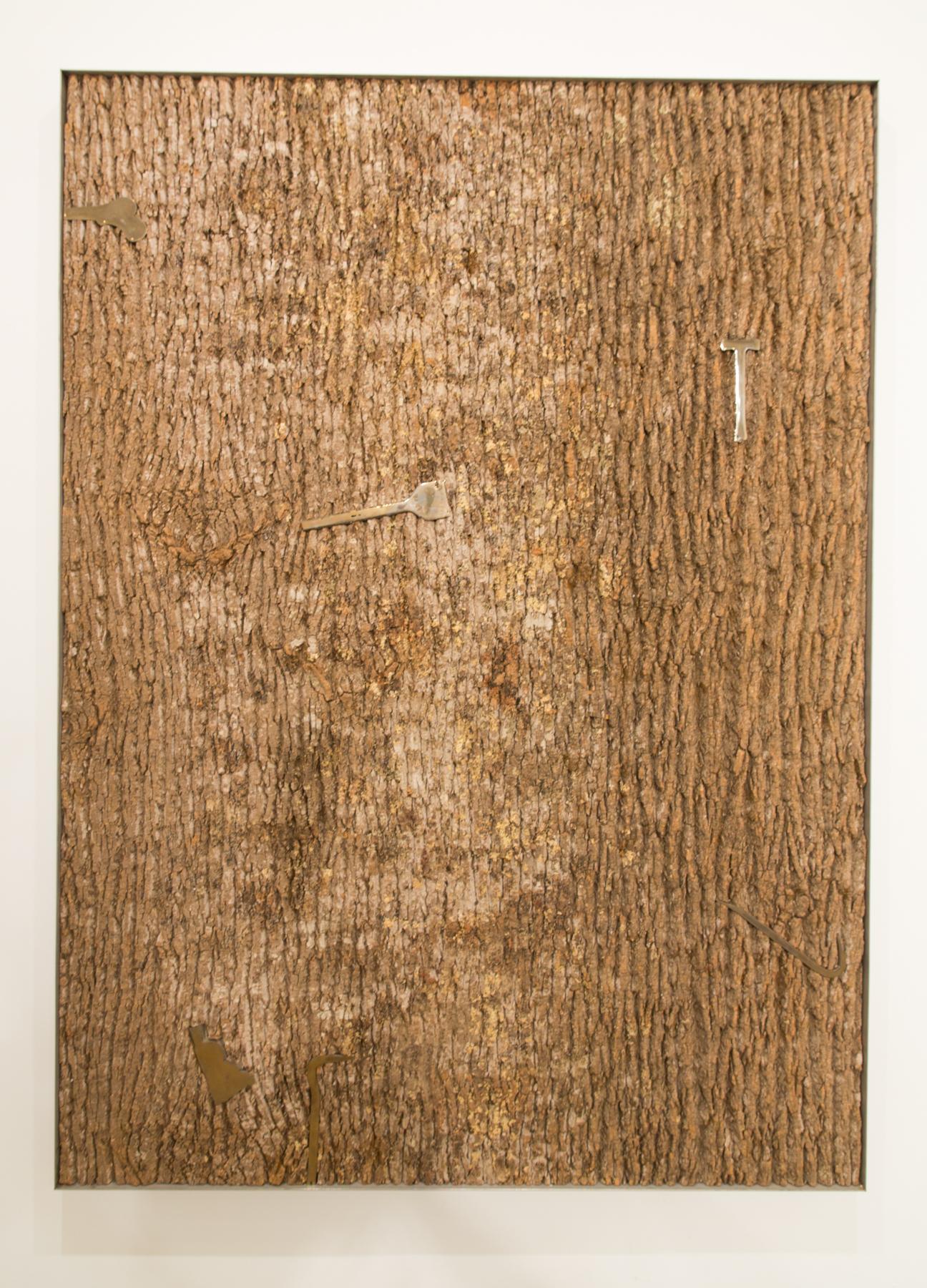
“Just Dropped in to See What Condition My Condition Was In,” Nick Van Woert’s solo exhibition at West Hollywood’s Moran Bonderoff gallery, plays on the Kenny Rogers song of the same title, referencing altered states, the human condition, and the repetitive dance of history. “Those who cannot remember the past are condemned to repeat it,” as philosopher George Santyana famously said.
Or, as Woert’s art viscerally points out, perhaps the past we remember isn’t really what it appeared to be after all.
Historic Caucasian faces carved on wooden cigar store Indian sculptures; the bombardment by police of a Philadelphia row house in 1985 meticulously miniaturized; a vinyl record – available as a take-home to opening night visitors – recreating the sounds and noises designed as musical torture in the Waco, Texas Branch Dividians stand-off.
All are a part of this wide ranging and well-curated exhibition which pulls viewers off the street and into a world of public events and private perceptions.
Recall, reinvent, and respect.
Van Woert is originally from Reno, works in Brooklyn, and professes a powerful interest in “the evolution of materials in architecture and art… these days we’re interested in preserving the past, but only visually. There is no material continuity. The materials are more or less insignificant.”
“Condition,” however, is quite significant. Significantly substantive political statements, significant design and art, significant emotions presented across the installation’s environment. How many gallery exhibits really make you think? It’s not just political landscape, it’s the landscape of people bearing the weight of their politics.
You can check out your condition – and conditioning – through October 10th. Moran Bonderoff is located at 937 N. La Cienega in West Hollywood.
The show was packed, and rightly so – artists Teale Hatheway, Echo Lew, Marilyn Lowey, and Sasha Raphael Vom Dorp each contributed brilliant, immersive elements to this exhibition. Each artist’s work creates a separate mini-world within the gallery. Running through October 9th, visitors will see four separate visions of light, shadow, and self.
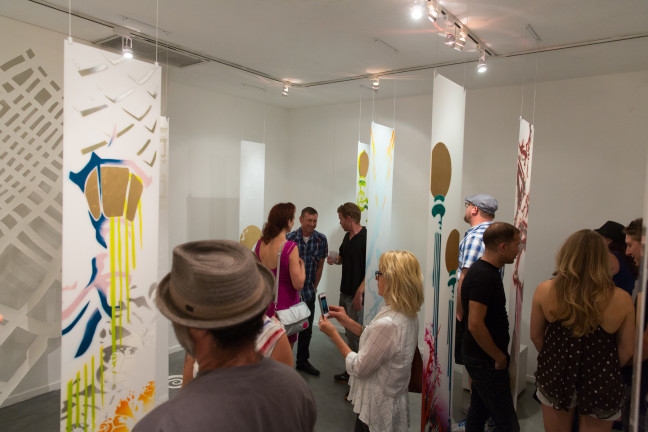
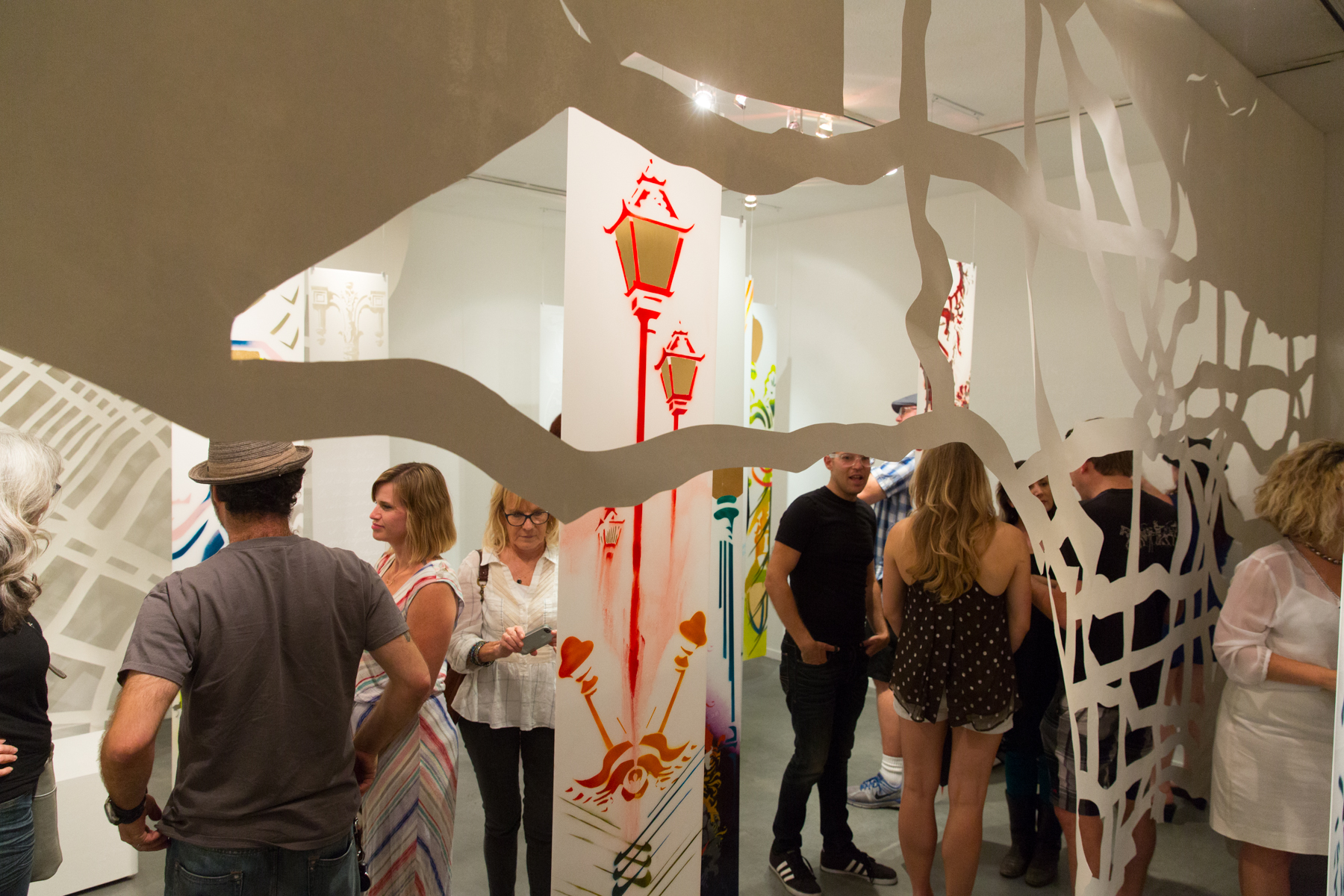
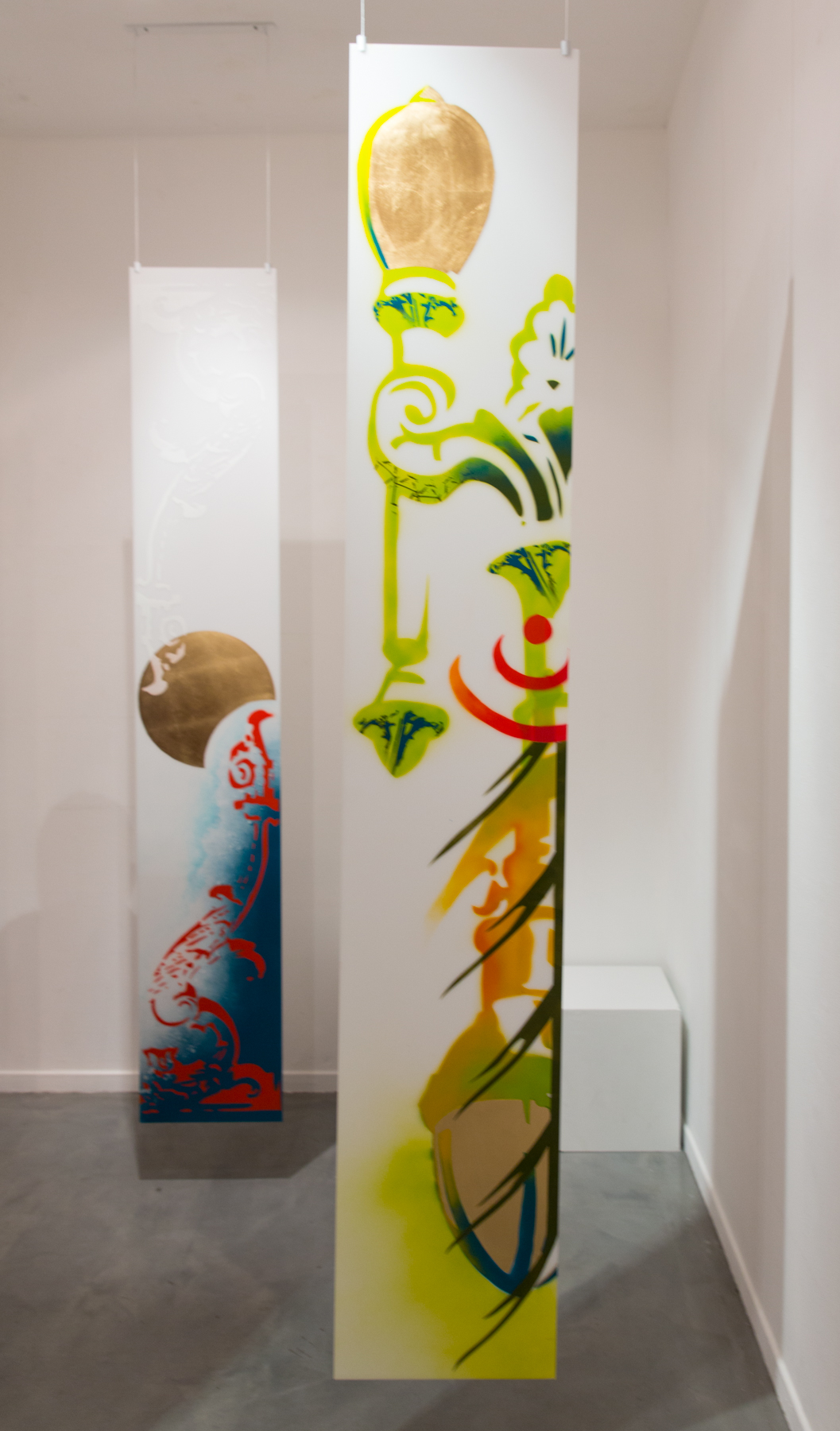
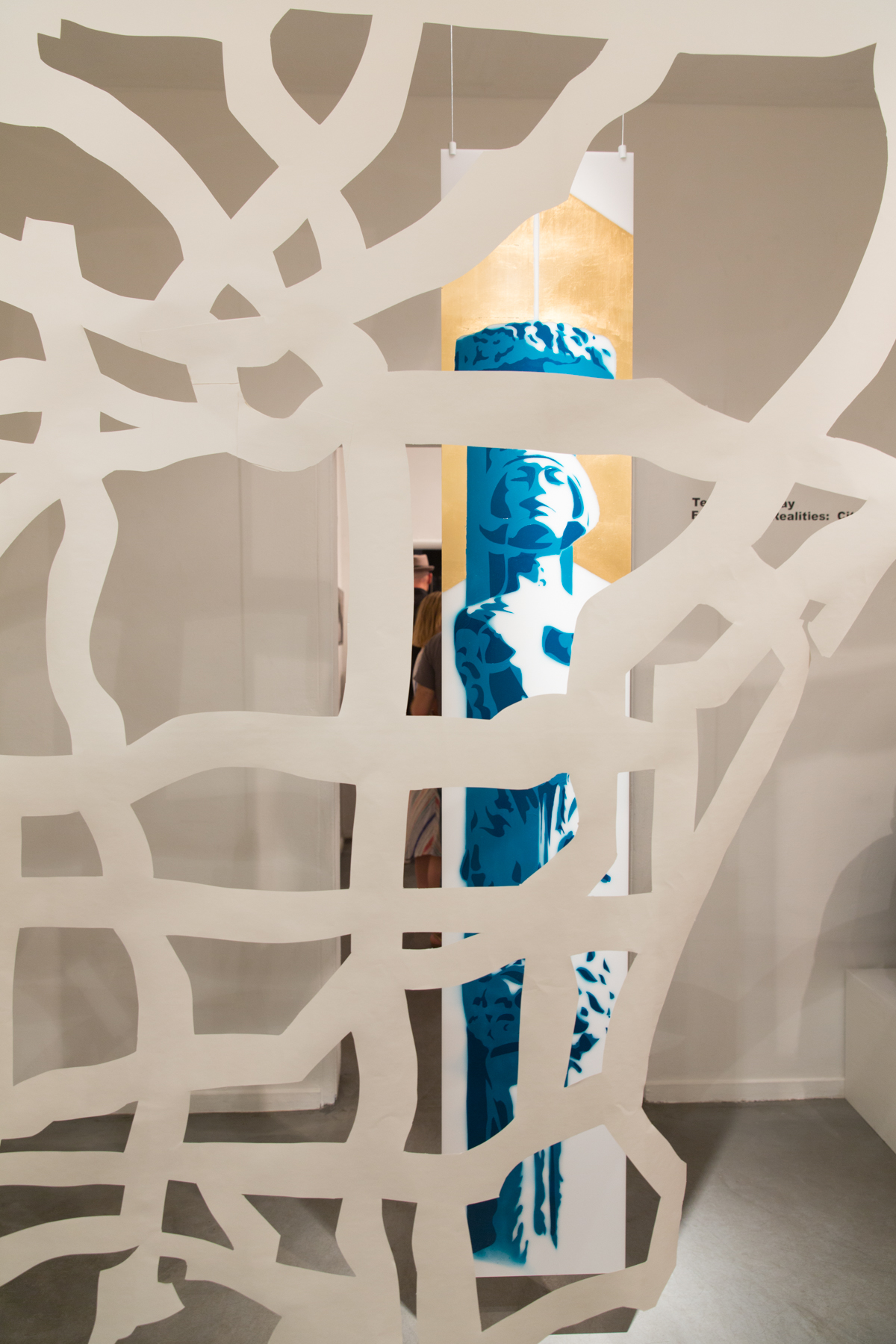
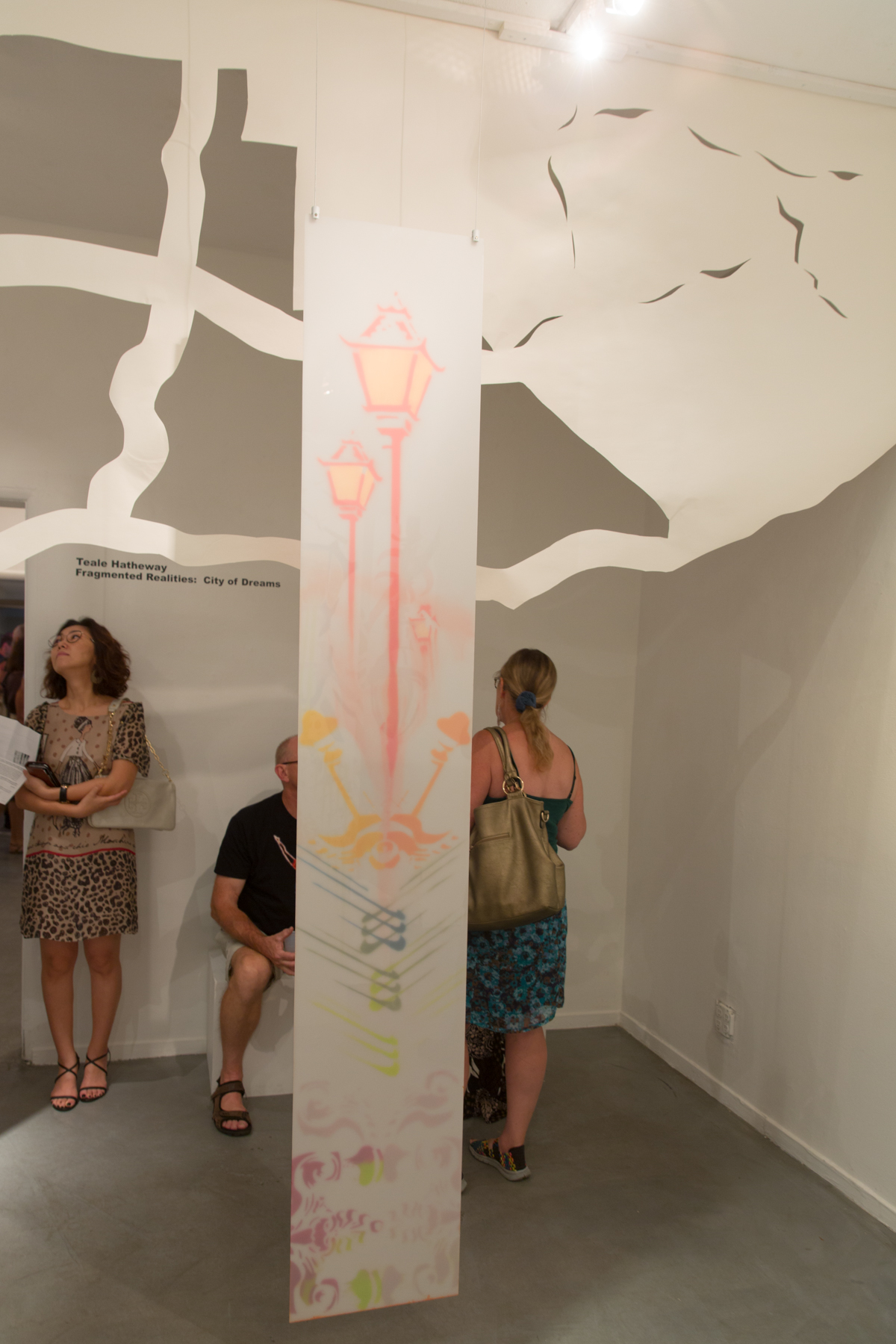
Teale Hathaway – Fragmented Realities: City of Dreams
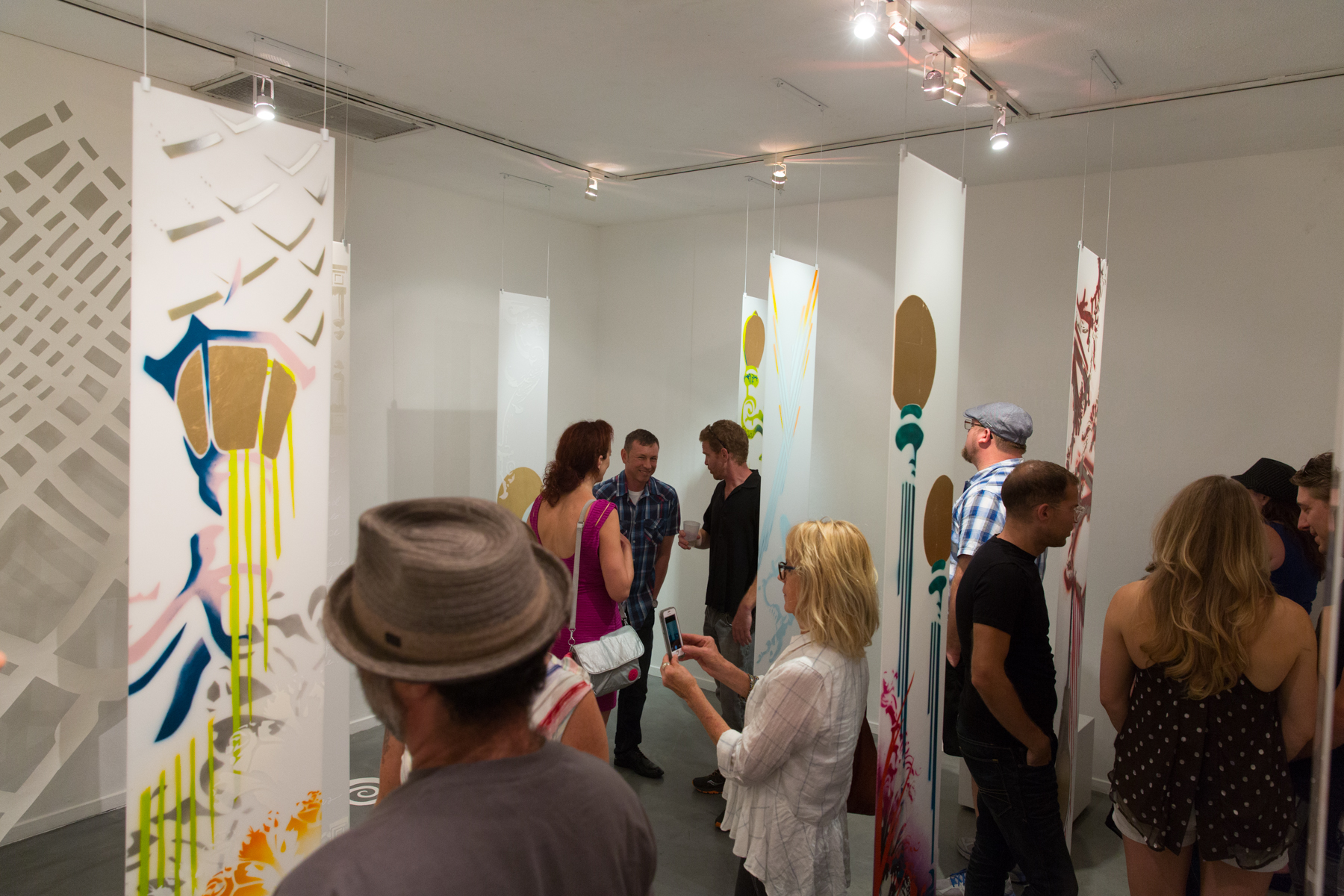
The artist’s work is about memory, grounding, understanding, and experience; with beautifully detailed yet fragmented images. Hatheway’s self-taught architectonic drawing and the ethereal nature she evokes of even the most common subjects combines the experimental with the investigative, using the often unsung history of Los Angeles architecture to enthrall viewers and advocate for the city’s preservation. The artist describes her subject matter as “a means to ground myself in a tangible environment in which an understanding of the whole is made up of an experience of the parts.” The LAAA exhibit is made up of free-hanging paintings with layered elements of street lights. It’s a whole glowing city.
Sasha Vom Dorp – Synesthesia – Inside Sound and Light
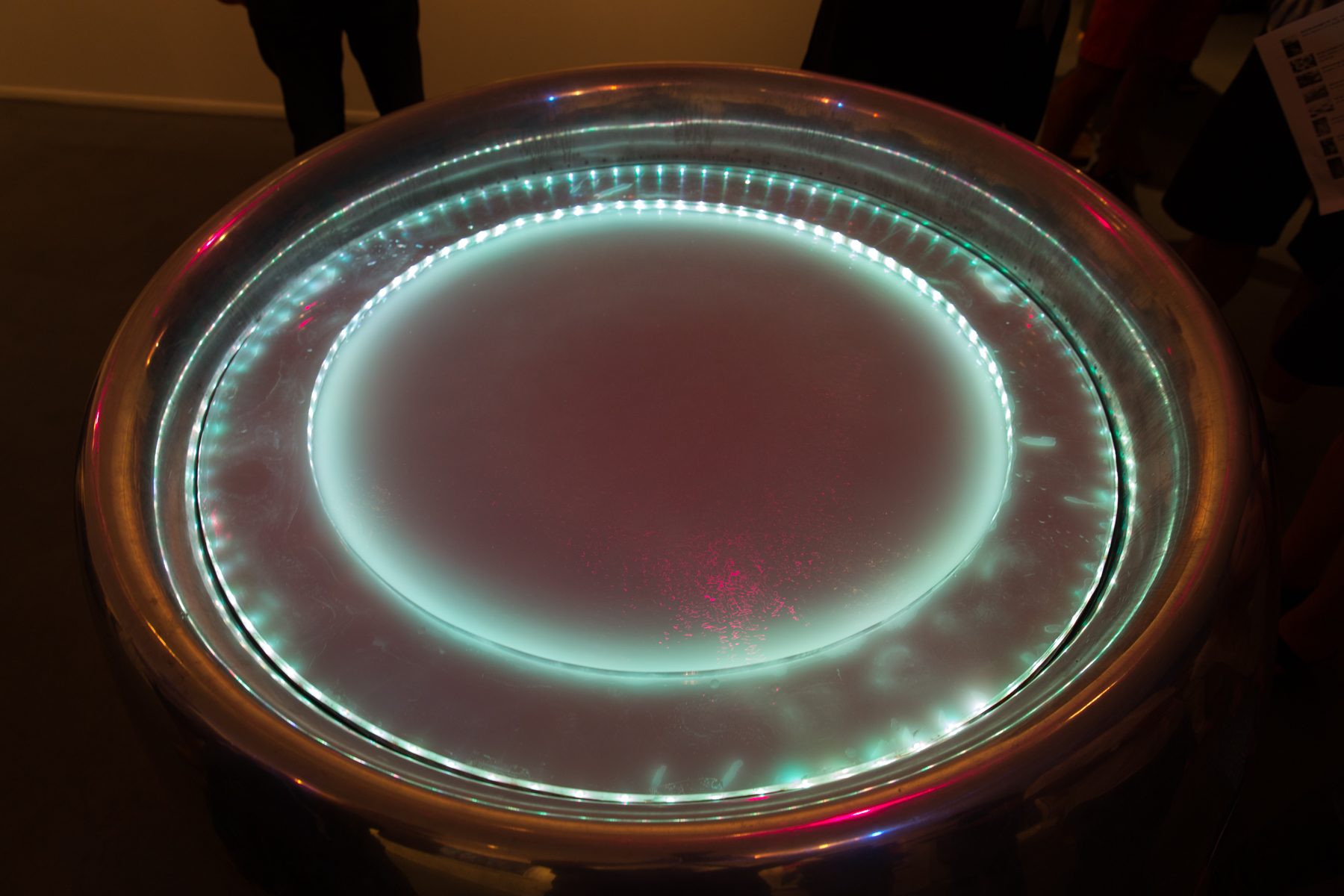
Do we hear color? See the sound of light? Vom Dorp suggests we do with her mechanical feedback loop Sound Illuminator which quite literally translates color into sound. Constructed from a salvaged 727-jet nose cowling, rippled patterns and waves let viewers see the sounds they are hearing. While Vom Dorp’s archival pigment prints continue to show, the haunting Sound Illuminator was a unique creation viewable only on opening night. Enter a portal of light and share an otherworldly experience with Vom Dorp.
Echo Lew – Light in Space
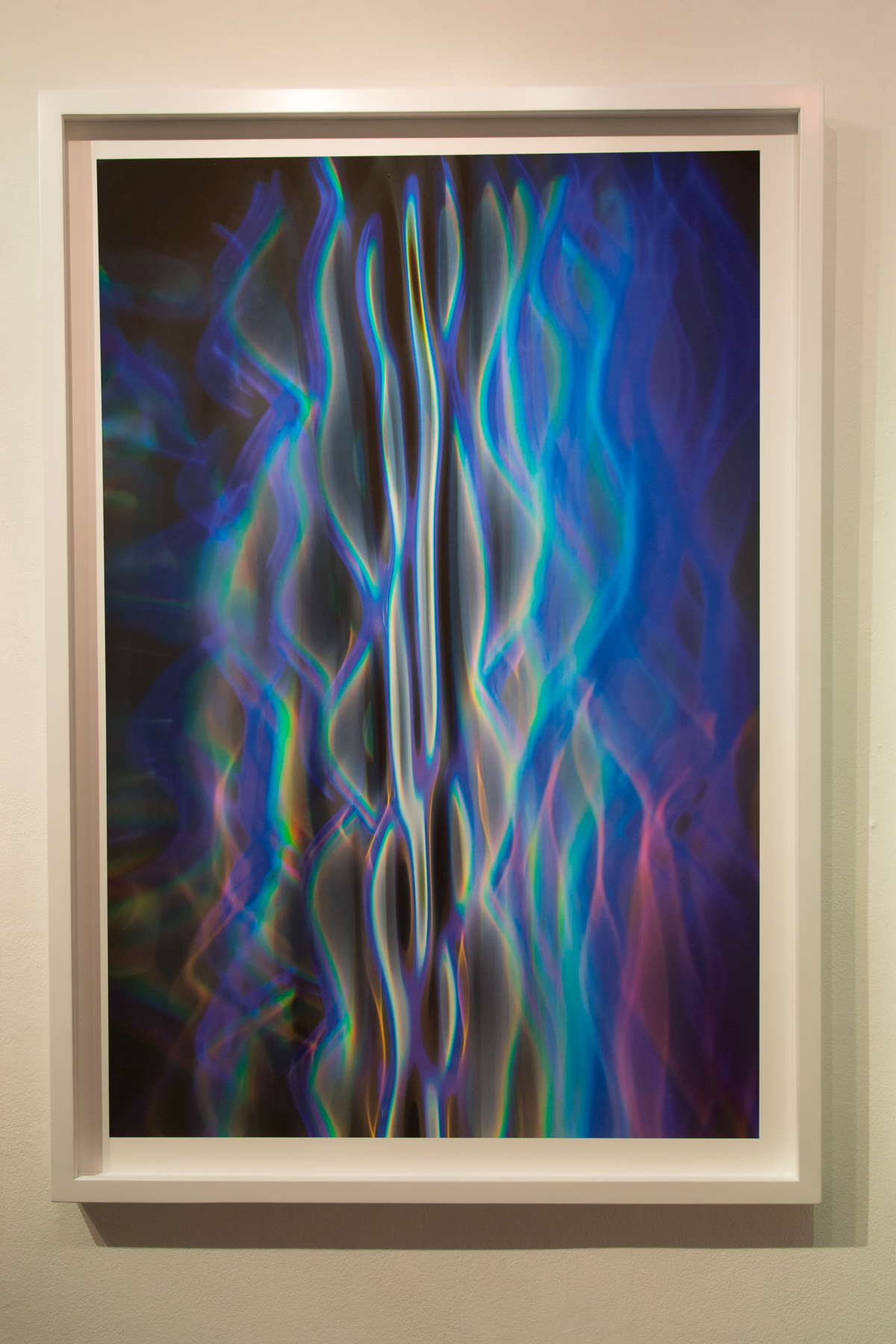
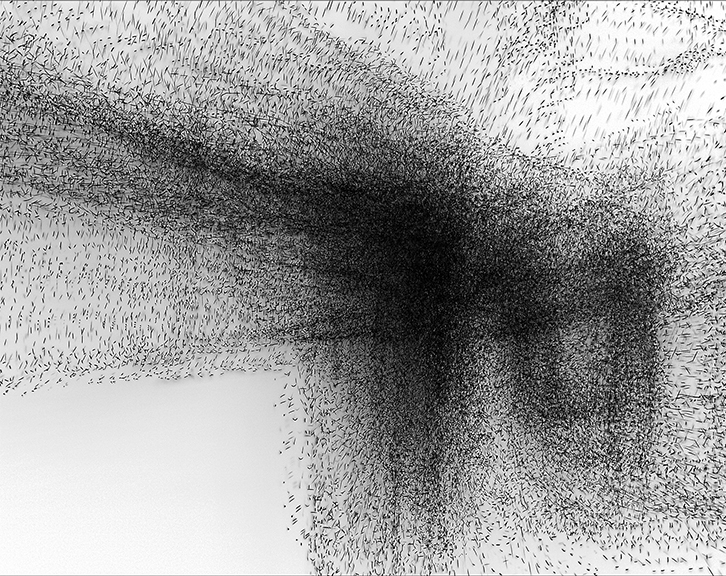
Light drawings etched into photographs. Twenty-eight years of traditional drawing led Lew to this powerful expression of small lights and an open shutter. Printed on canvas and water-color paper, motion is trapped in the realm of light creating an ethereal and delicate pattern that seems to visually buzz like a congregation of bees. The artist says “During an exposure time of approximately one minute, I manipulate lights in front of the camera. Sometimes I invert the positive image to a negative one on a computer but otherwise the Light Drawings are not manipulated.”
Marilyn Lowey – Dark Side of Her Broom
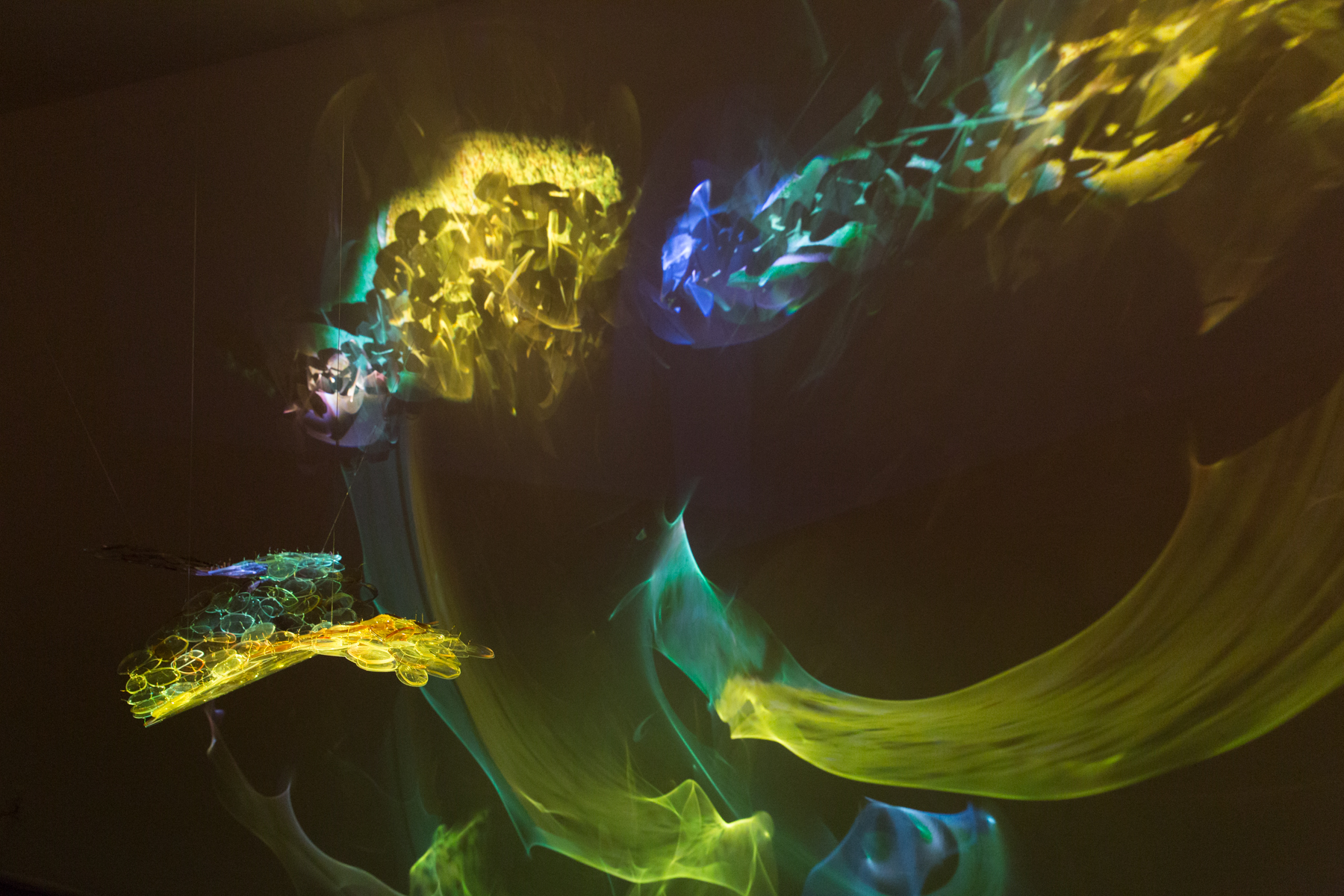
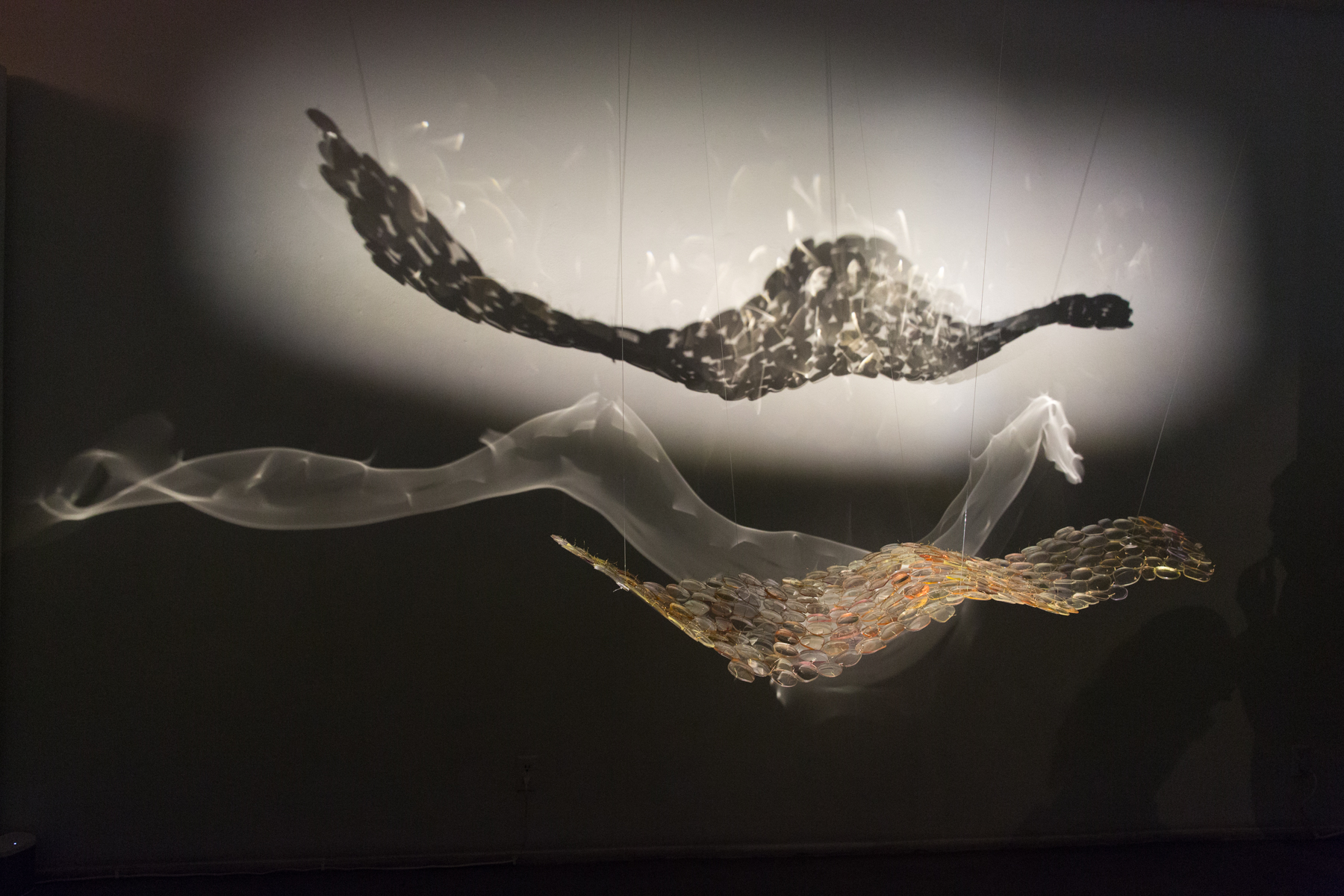
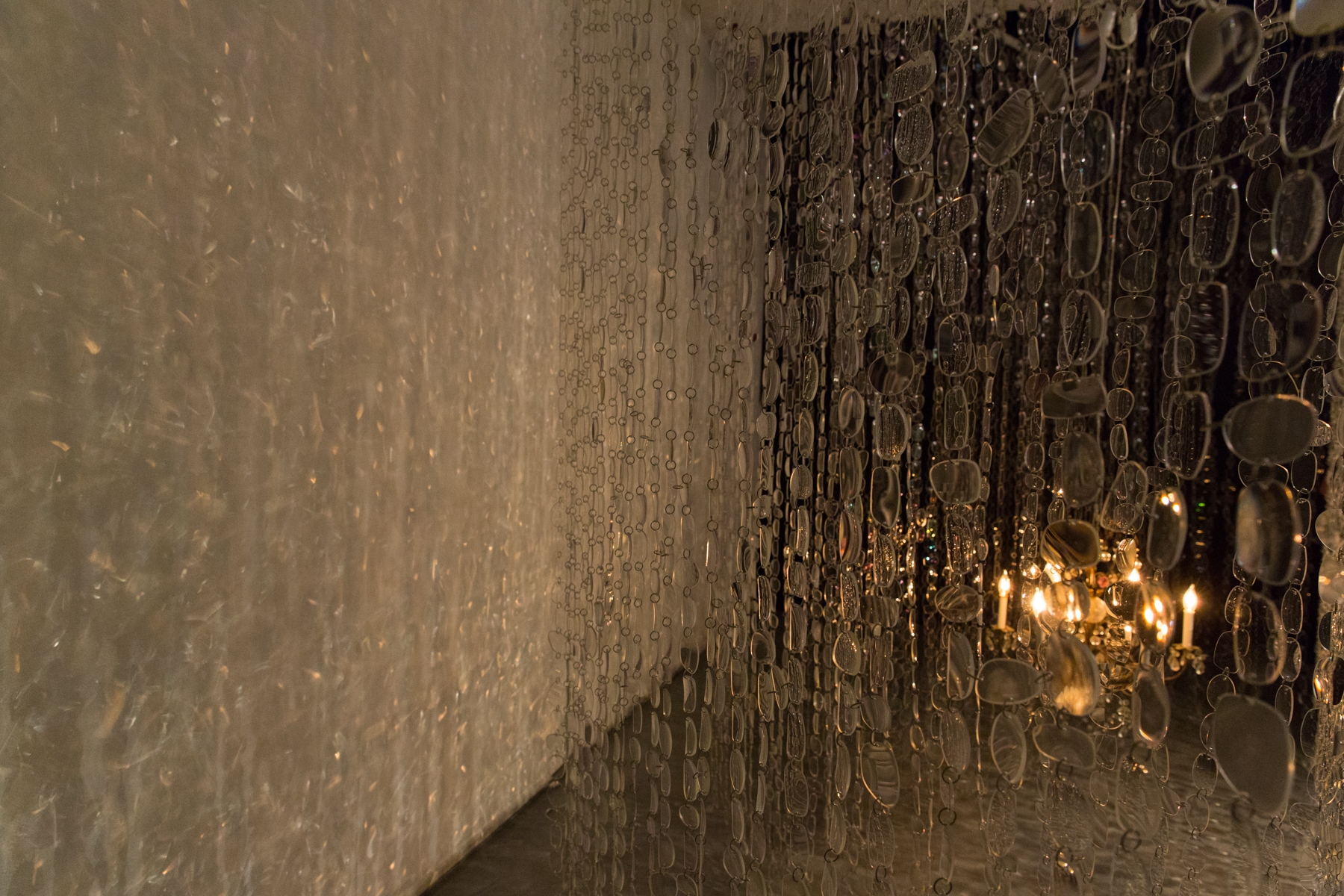
There’s something magical here. A chimera of light created from eye glass lenses, jewelry wire, and acrylic in Levitation Ashra #1 Mom’s Shadow; projected lights, video of a burial, and more glass lenses take on aspects of an interstellar dimension in Levitation Ashra #2 The Burial. Most striking perhaps are the light curtains, with a thousand eye glass lenses refracting their own vision attached by slip rings. What we see is not necessarily what we get. Moving light and shadow, the unseen mystery of illusion, the fine line between perception and vision.
Slip inside an enlightening experience before the show closes October 9th. Gallery 825 is located at 825 N. La Cienega just shy of Santa Monica Boulevard.
A couple of confessions here. 356 Mission is one of my favorite galleries in LA. It’s huge at around 12,000 square feet, the work is cutting edge without having the least little bit of attitude around it; last year at this time I got to see “Another Cats Show” there which featured 300 plus artists all depicting my favorite creatures: cats.
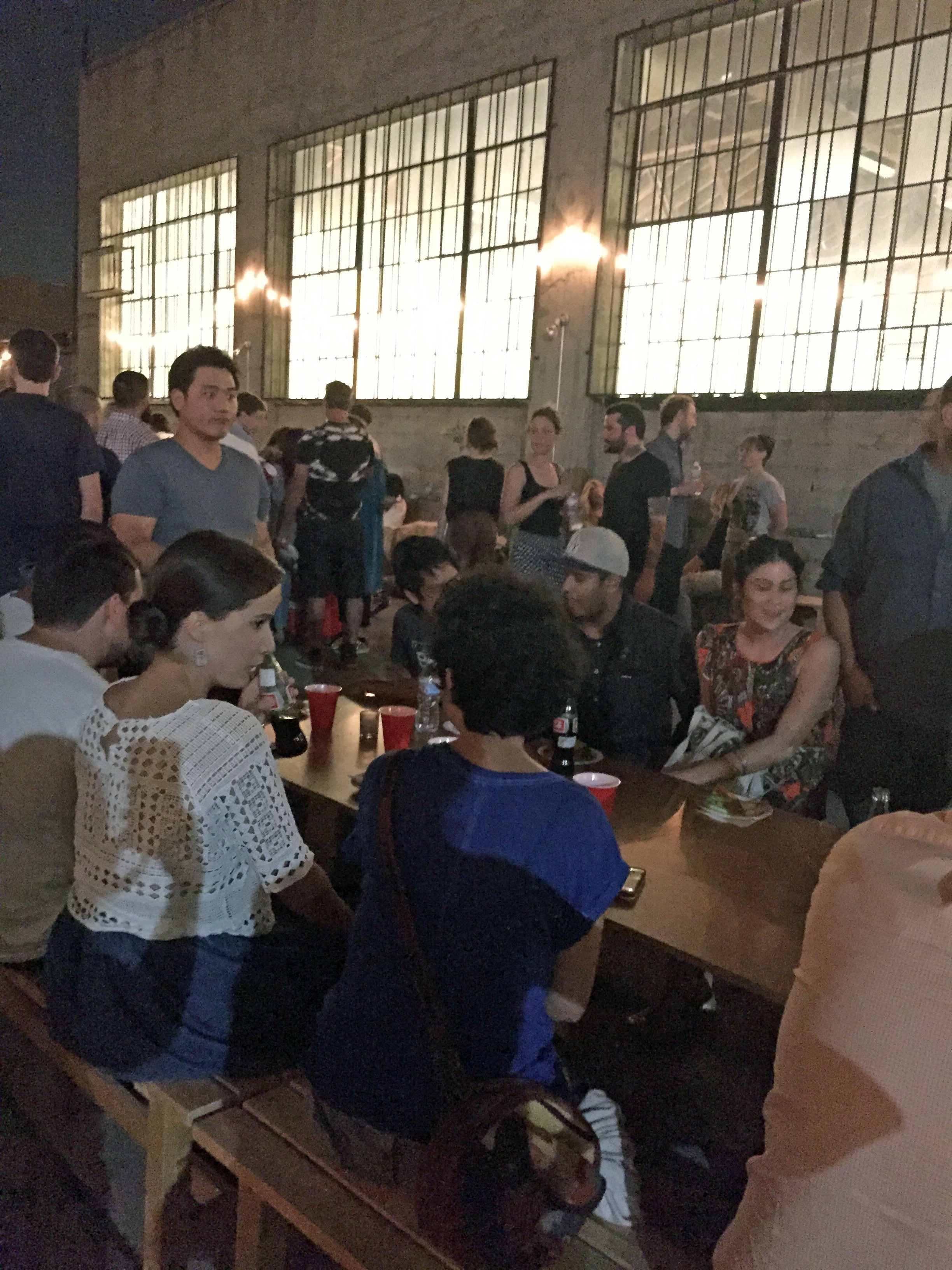
So I knew I would love the current exhibits, and I did. I also loved the buffet of vegan food, keg of craft beer, coca-cola, and d.j. tracks in the courtyard strung with white lights and filled with the happiest party you’ve seen in a long time – all art lovers.
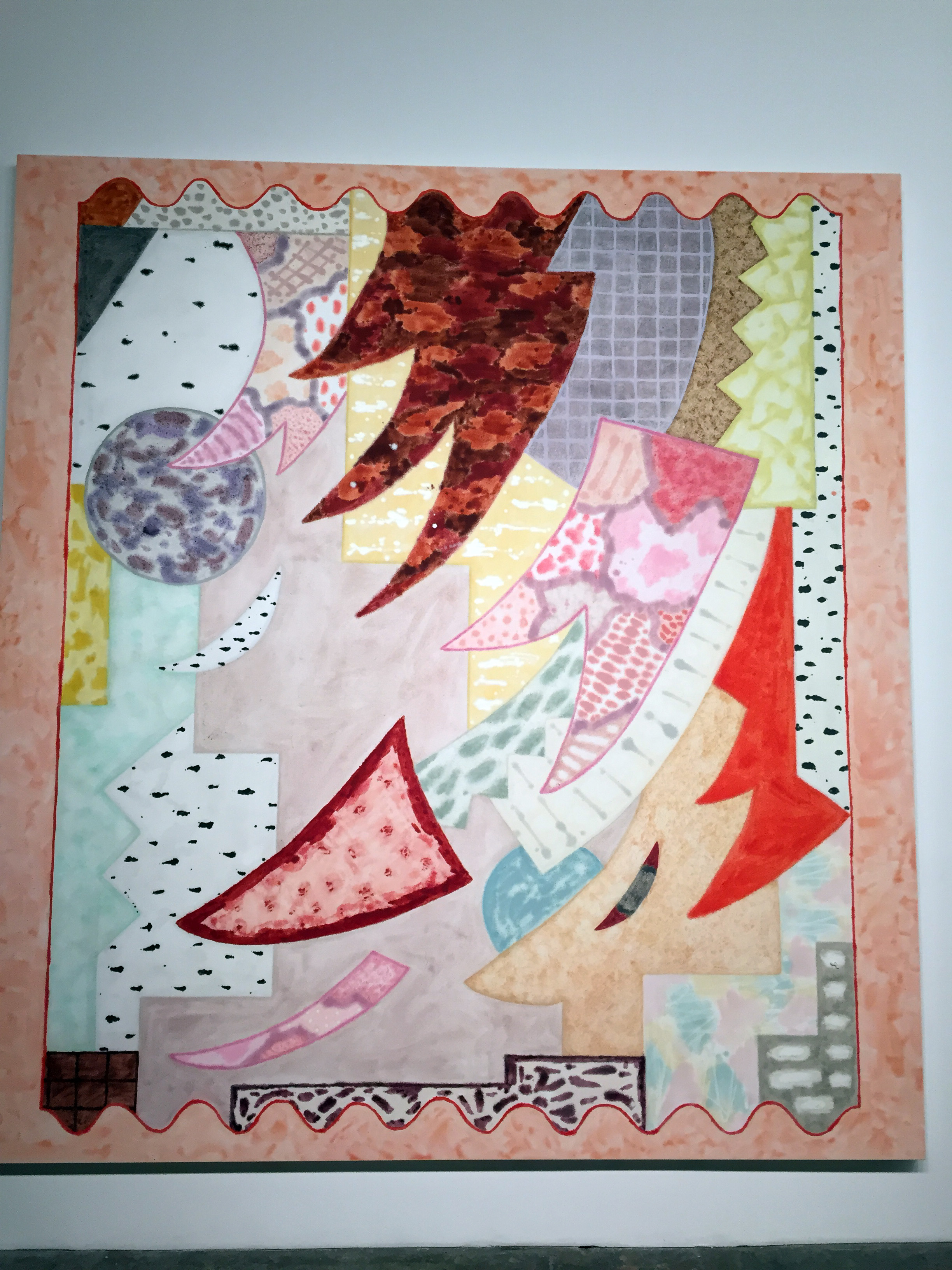
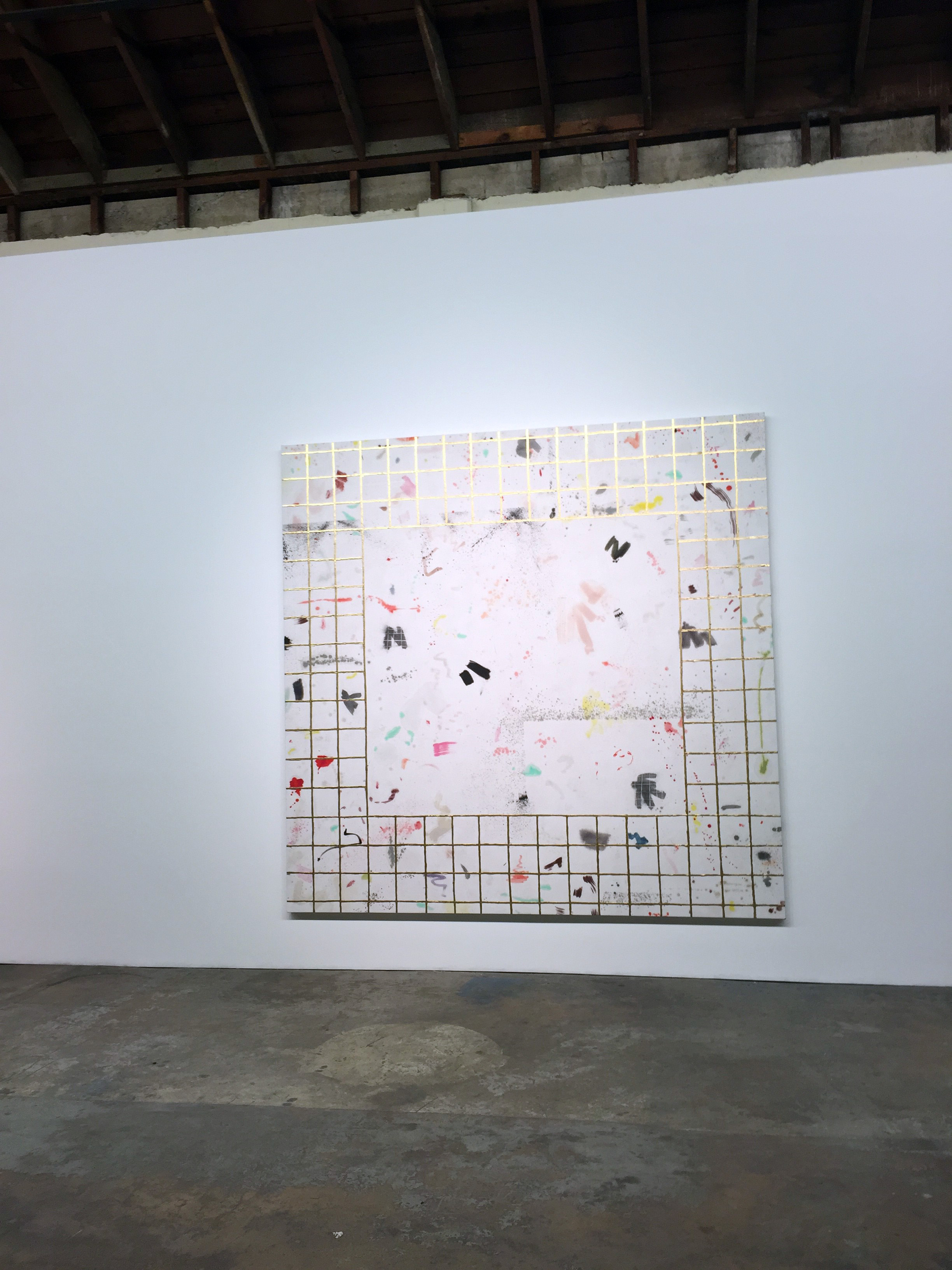
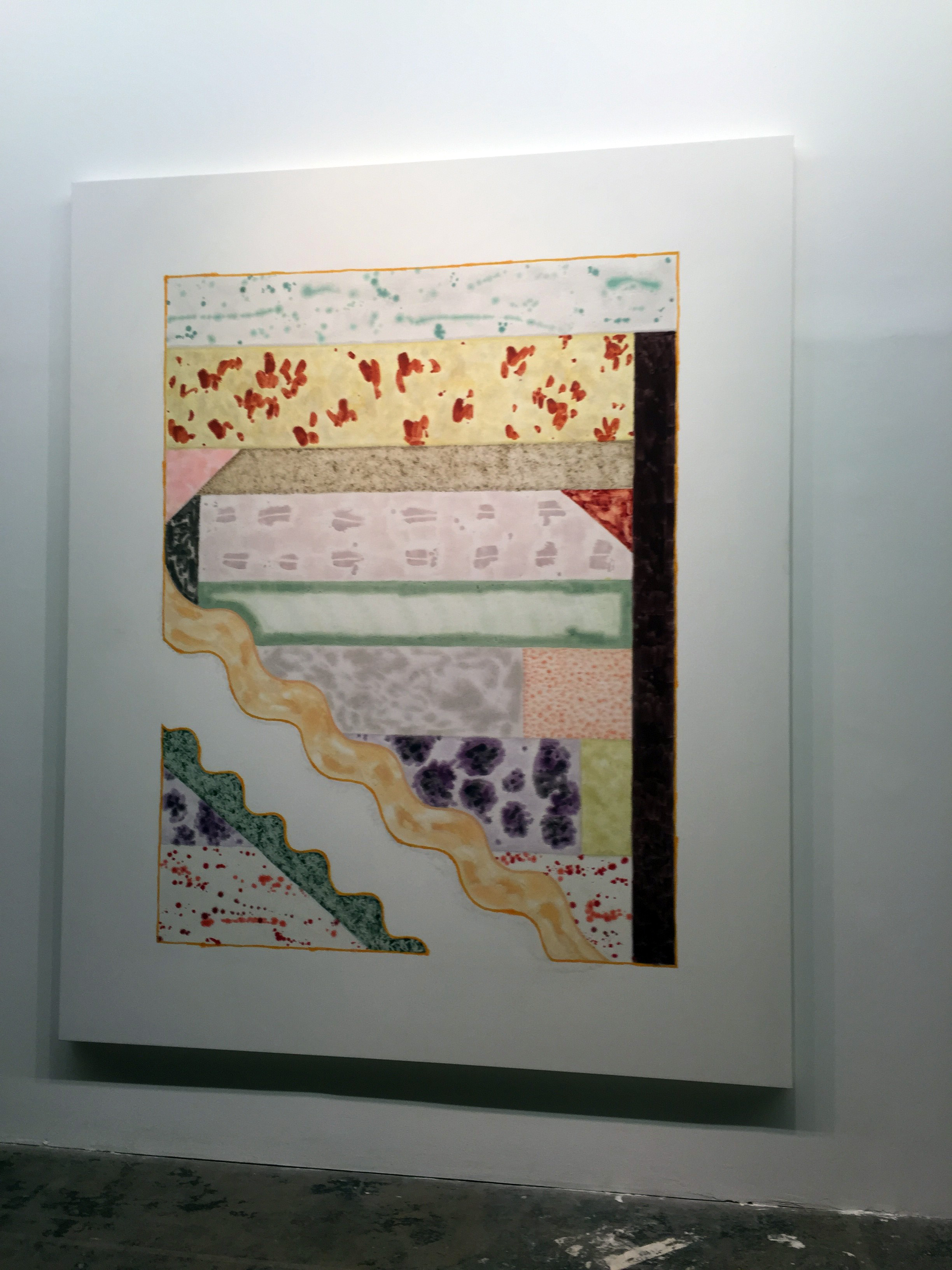
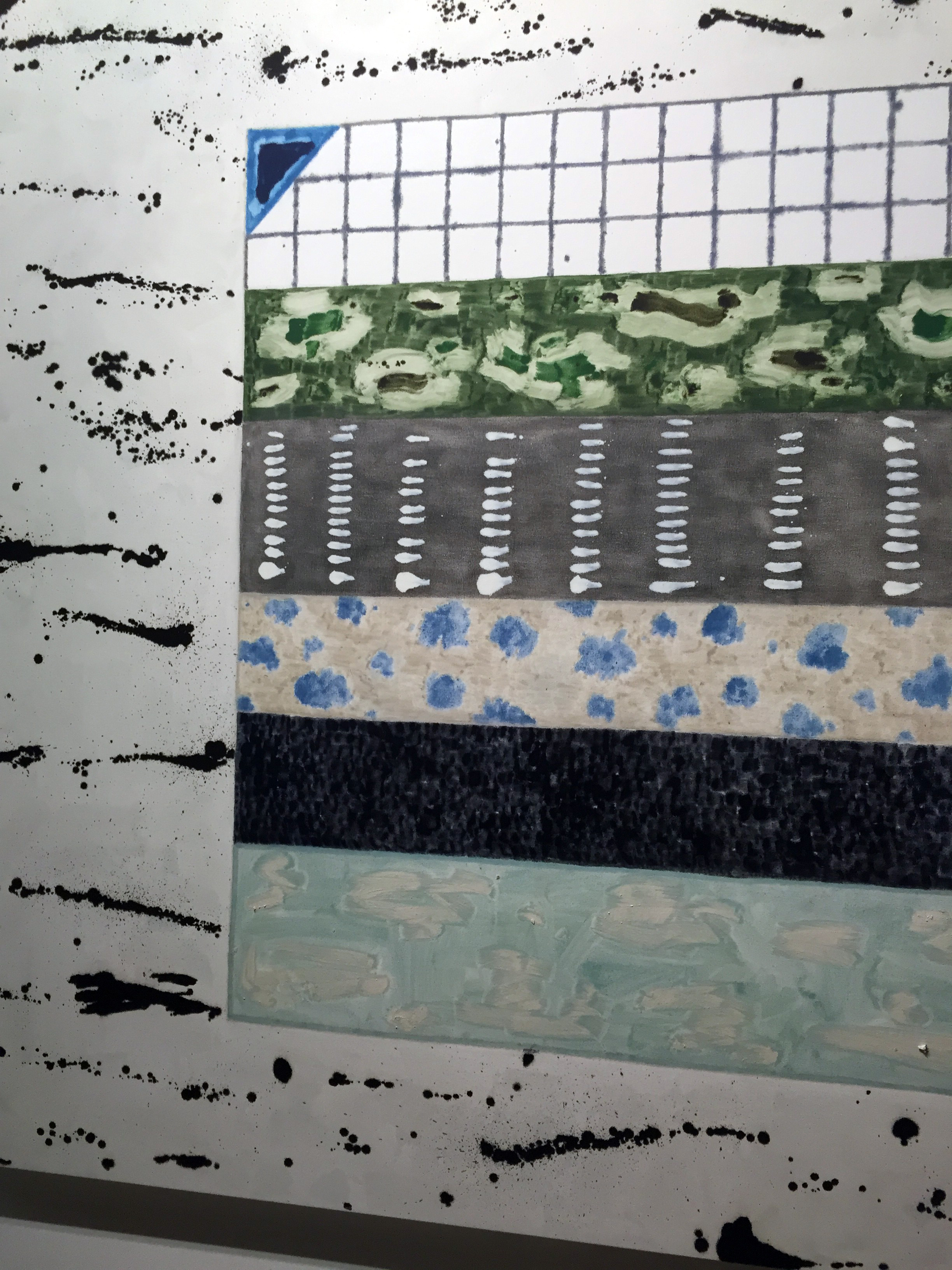
Well, you might’ve missed the great hummus, but you won’t miss the fantastic art. Last Friday’s opening was for Rebecca Morris: “Rose Cut.” Running through November 1 in the main gallery space, these are large, lovely, geometric paintings that rush at the viewer with images that feel like modern tapestries. Morris titled the show after “the big salmon-pink-red colored painting (Untitled #04-15) that is included and some of the paintings that led to it. A rose cut is a particular cut of diamond, a round half circle divided into equally shaped triangular facets.” Rose colors and rose scent also played a part in her choice of title, and in the delicate quality of these rich and wonderful patterns. “I also love the scent of a rose and am really drawn to perfumes that are rose based…perhaps the lightness/ thinness of the paint handling I use, could communicate an aspect of scent as much as the color relationships might create an attitude.”
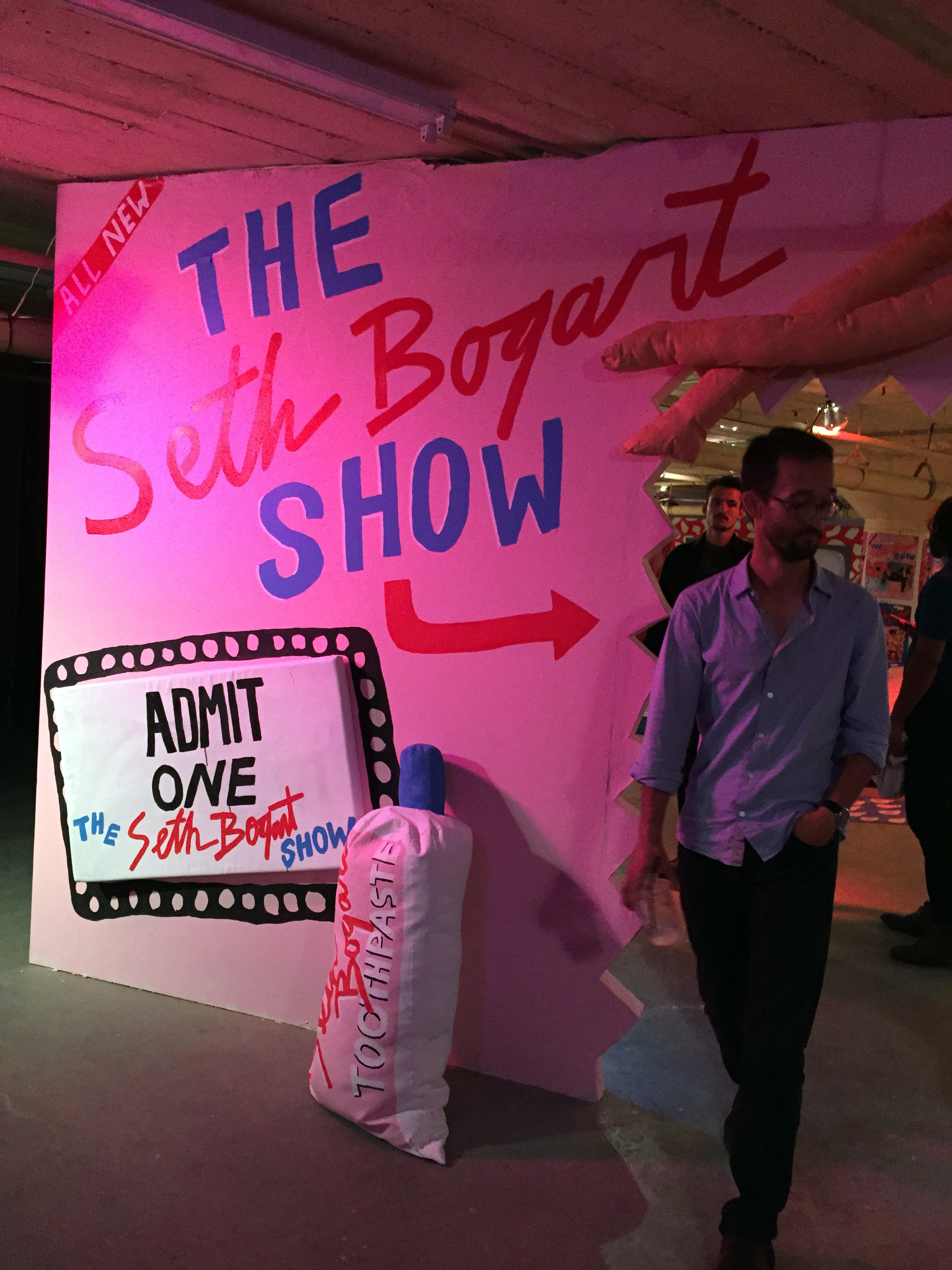
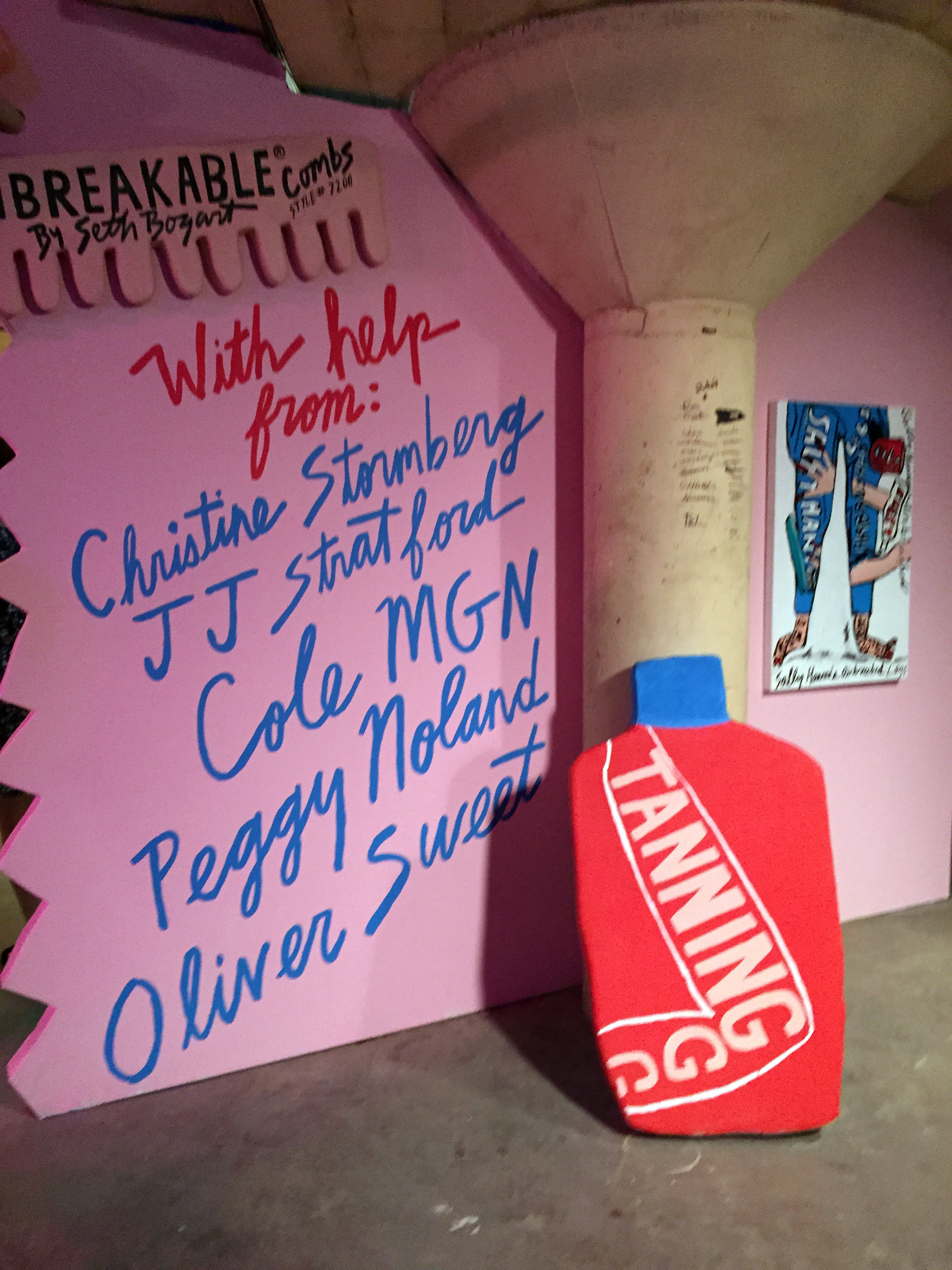
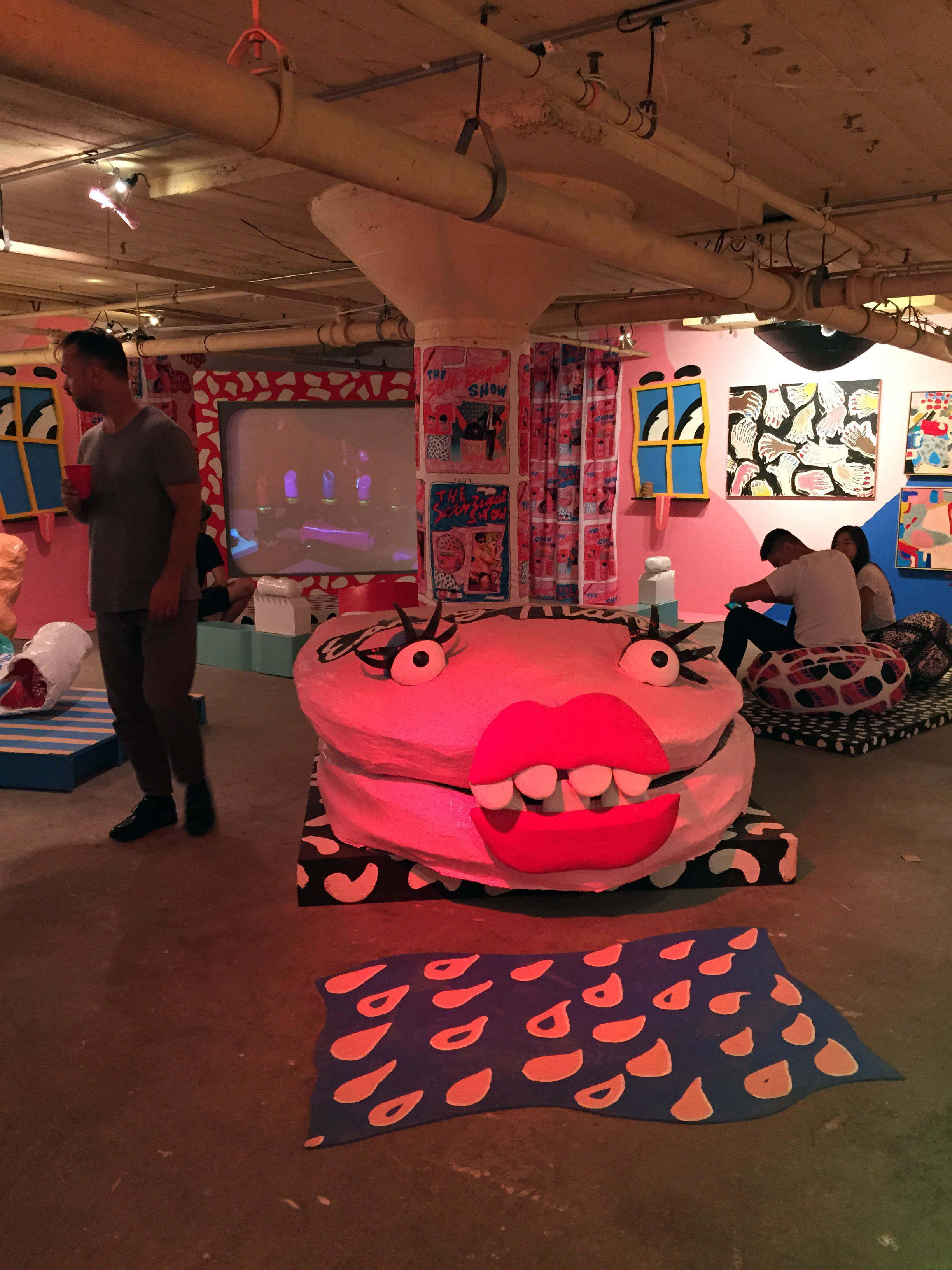
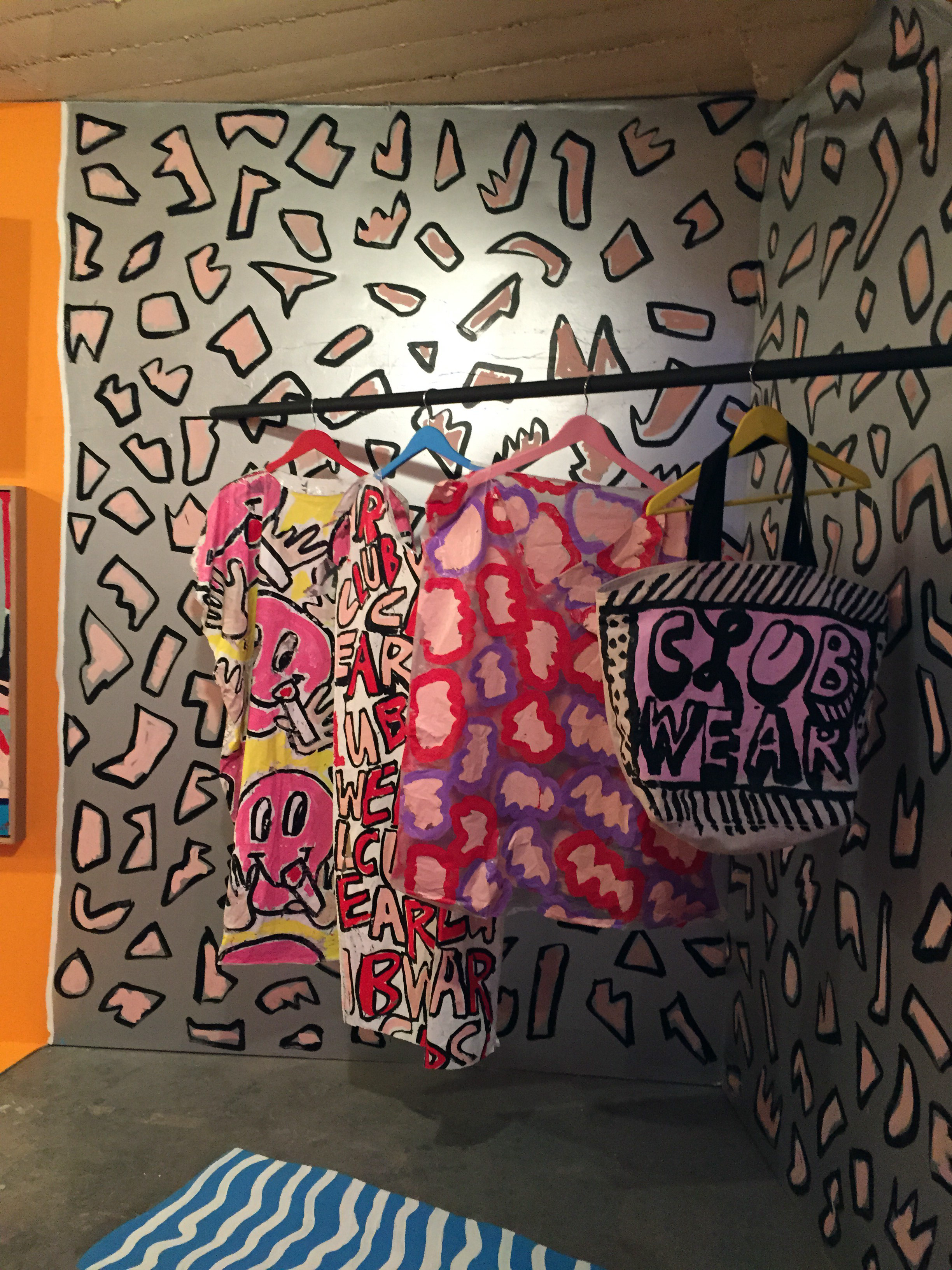
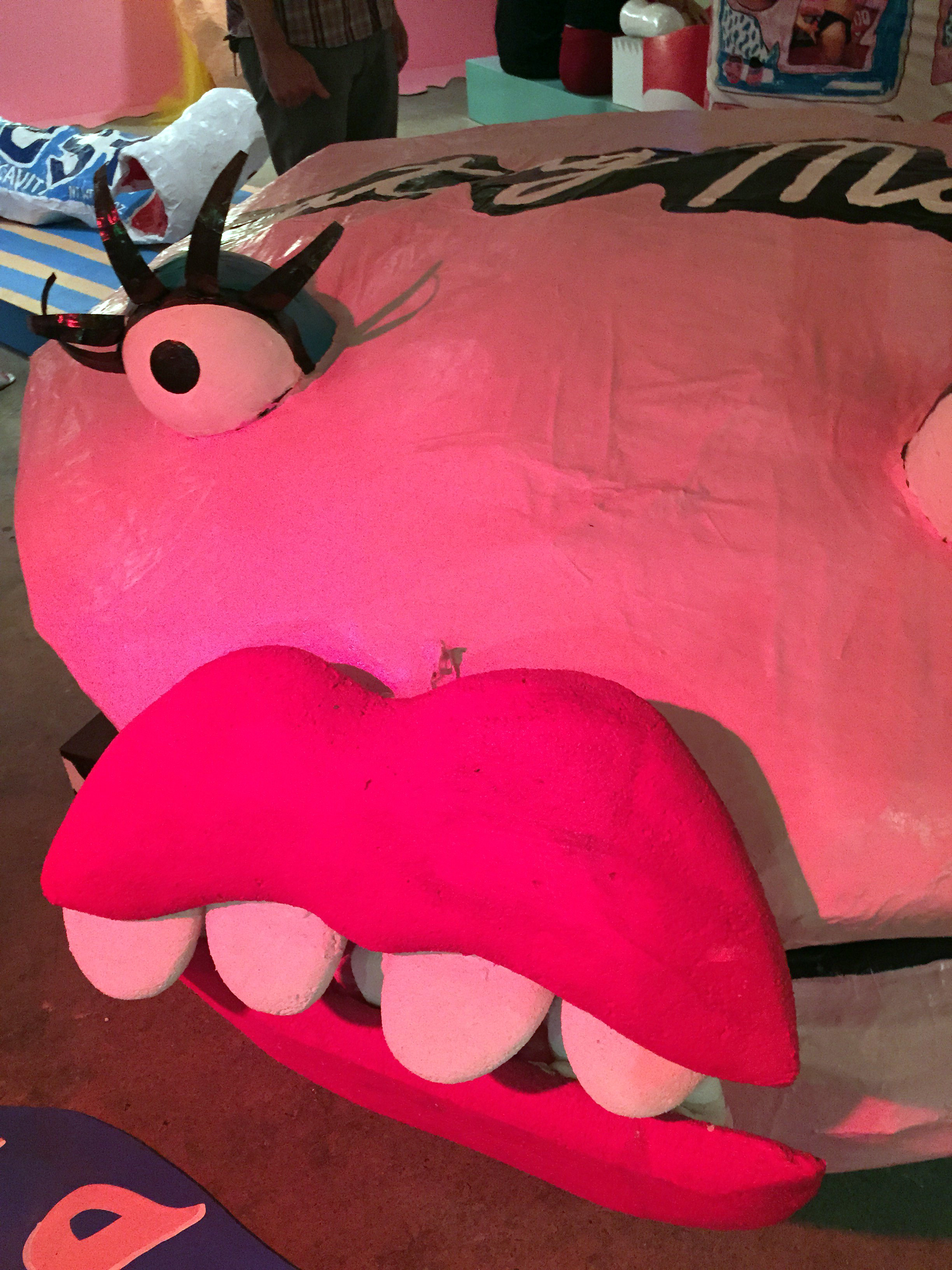
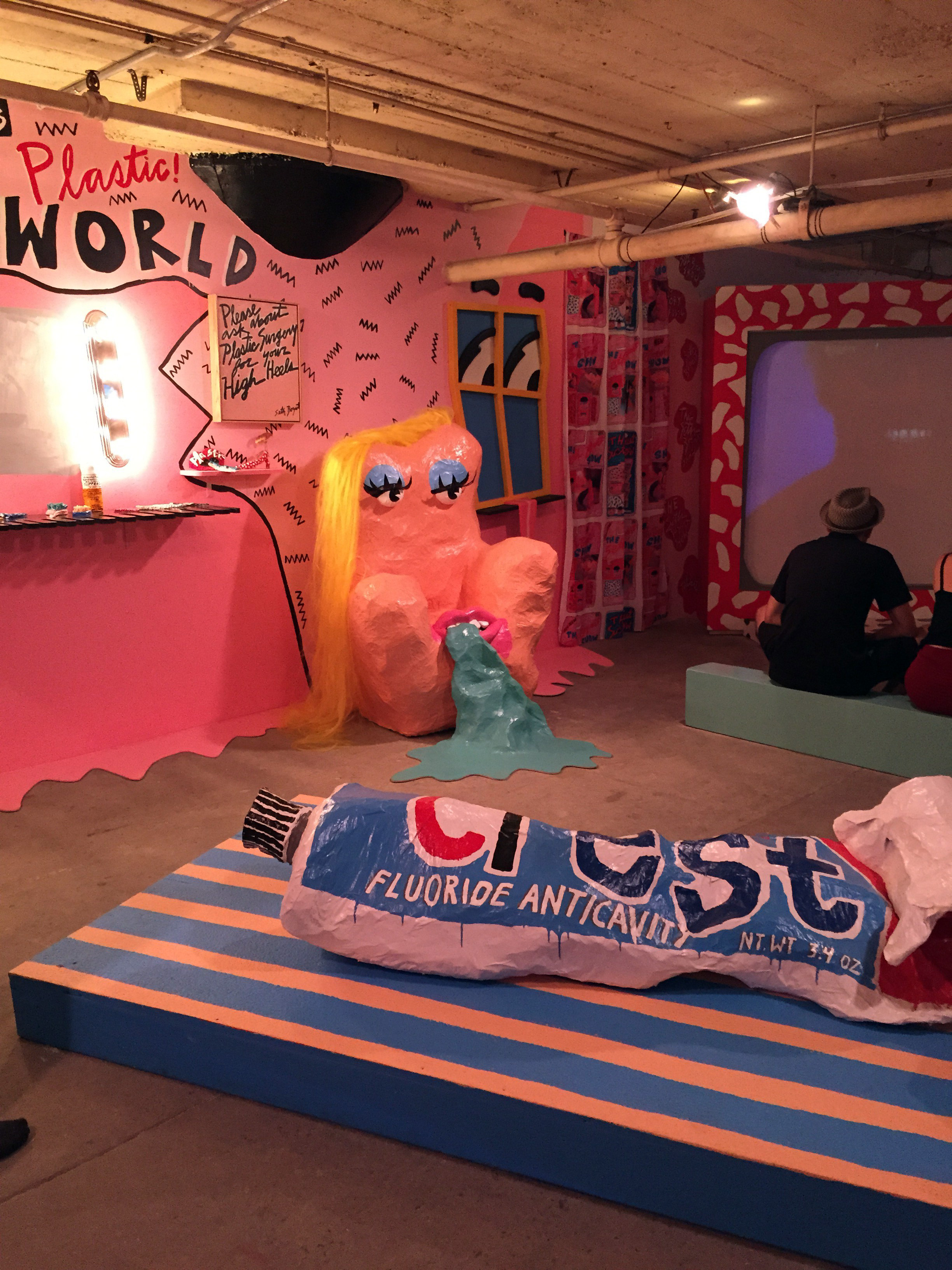
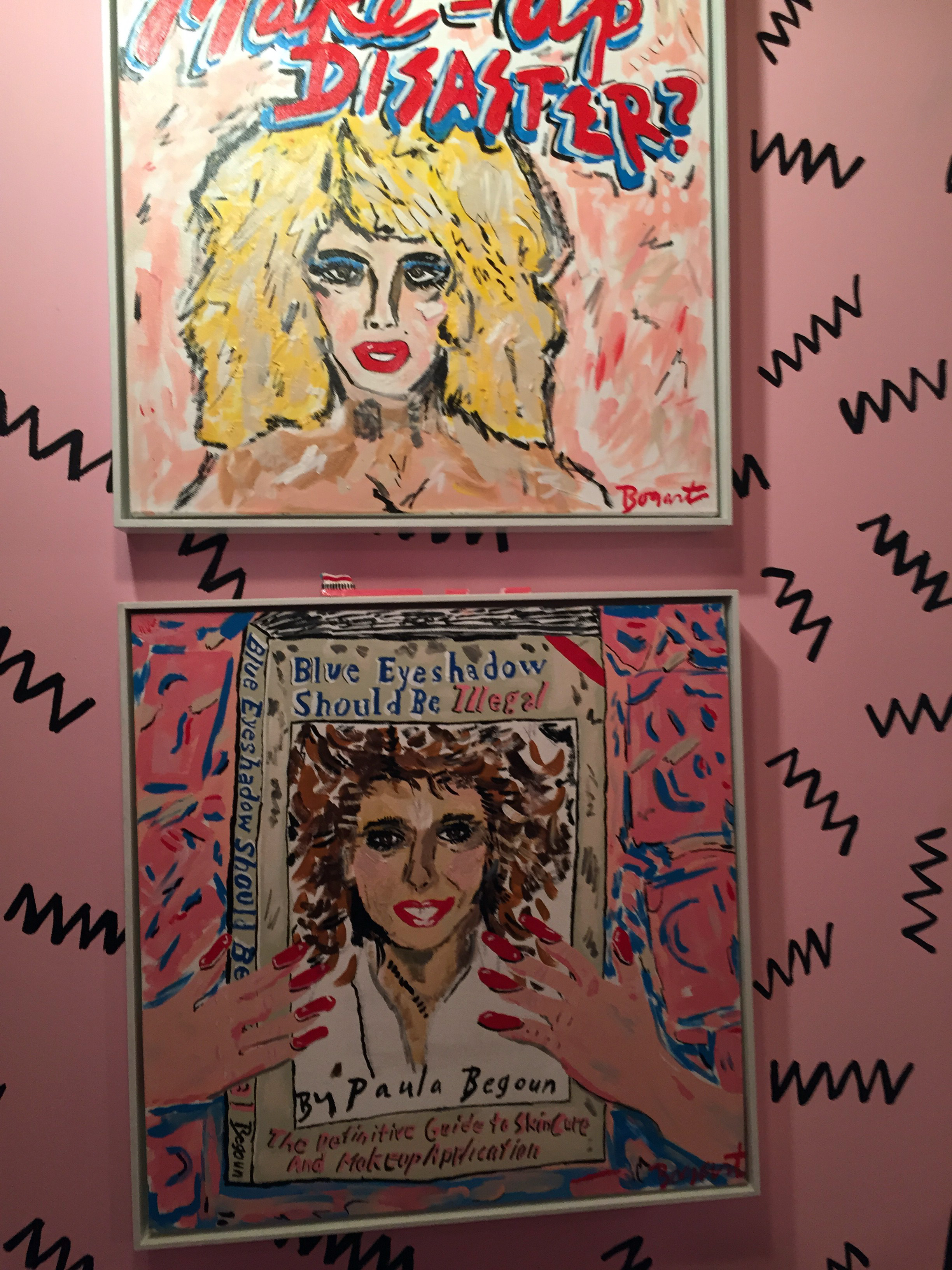
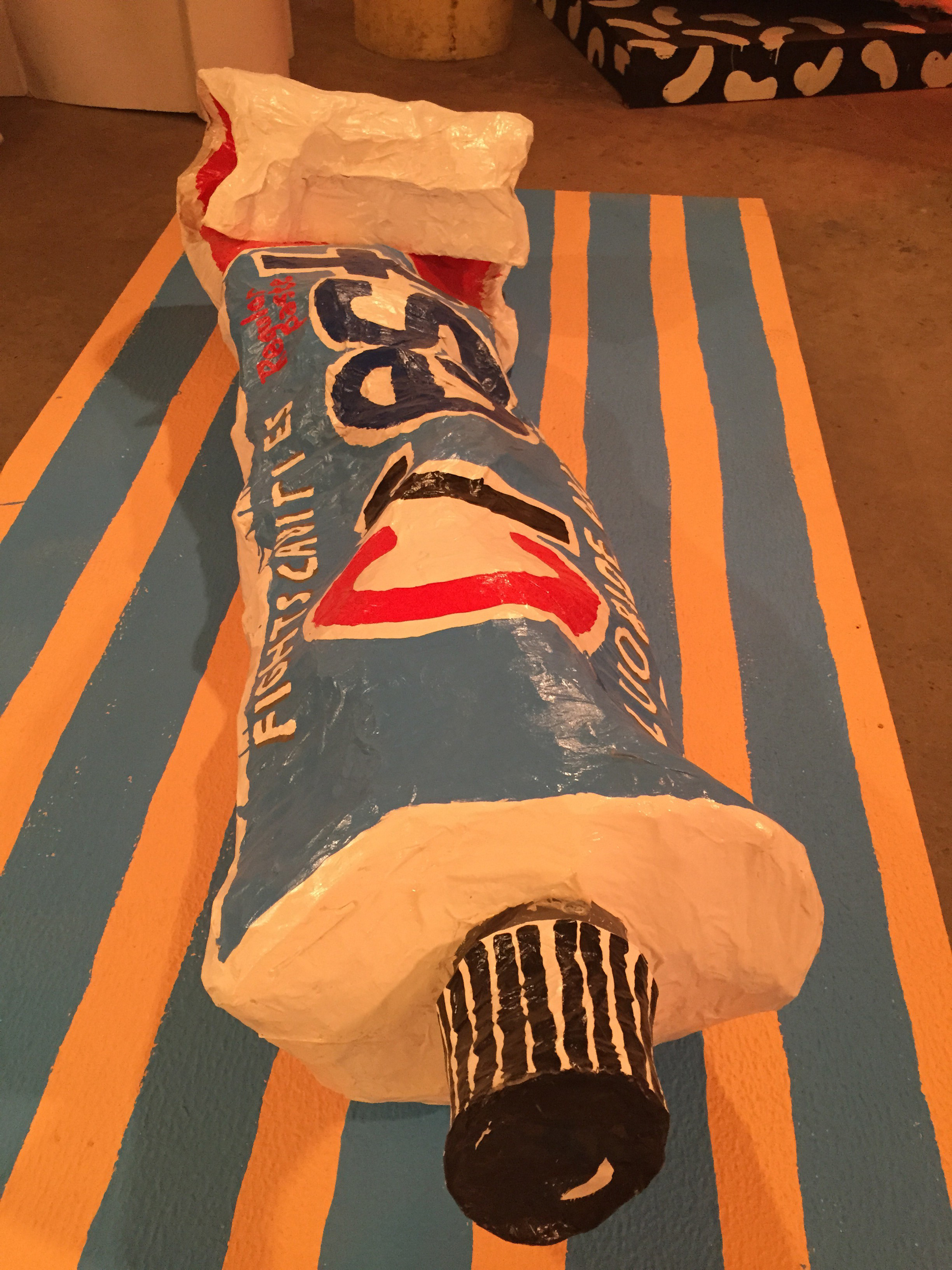
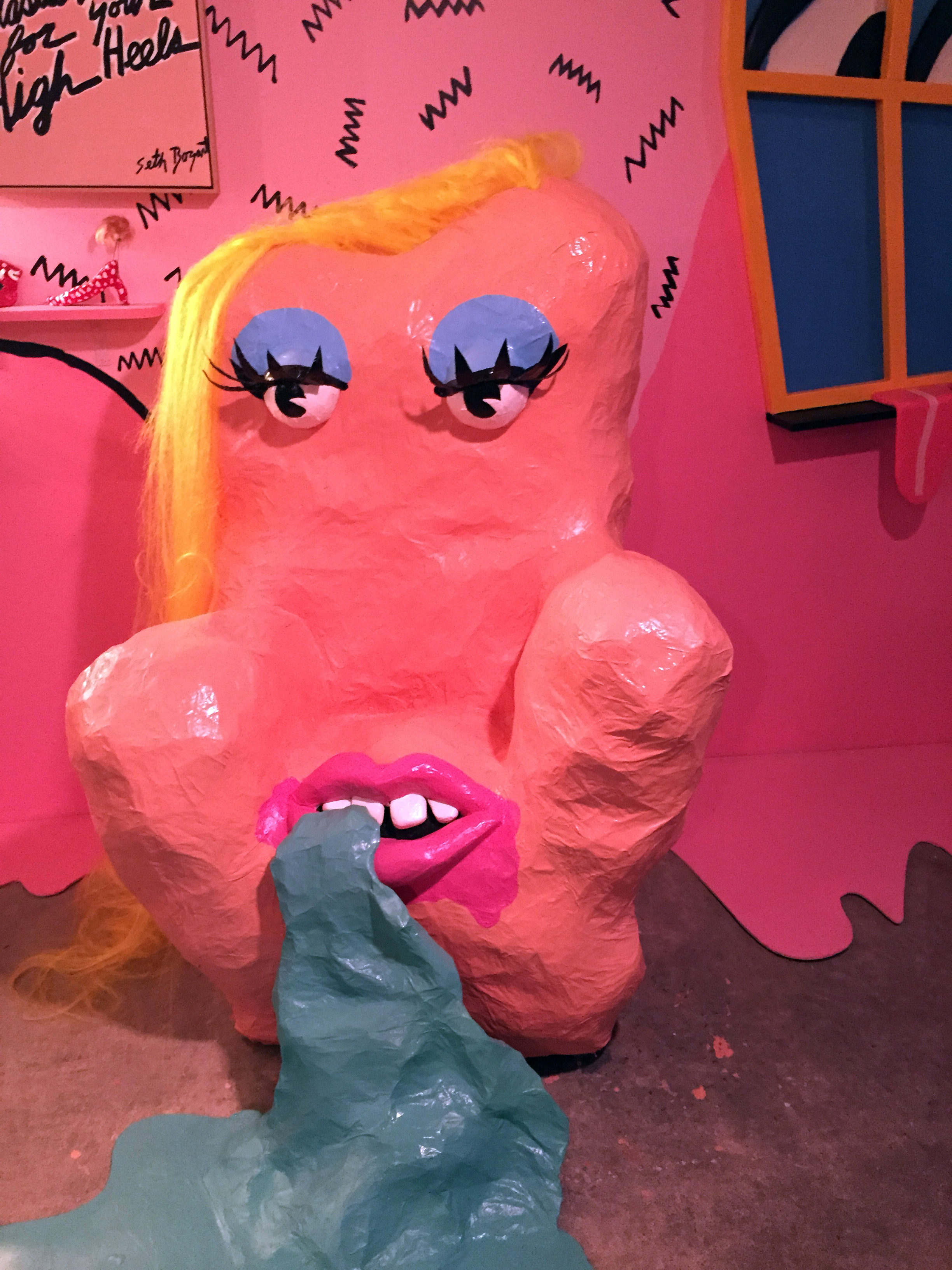
In the downstairs gallery, The Seth Bogart Show holds forth, a fantastic spread of color, sound, media – like an art amusement park gone wonderfully mad.
Musician and artist Bogart says “It’s based around this new album I’m recording, so I wanted to create a whole world to present it in. So there’s music videos projected with songs that I’m making, and I wanted it to be more special than seeing a touring band – I wanted to have someone step into a world I created… kind of like beauty school meets Pee-wee’s Playhouse and very plastic…I like the way it looks and feels, like a safe place to hang out.” The contained, magical, funky, fabulous world of Bogart runs through Oct. 2nd.
Head just east of DTLA’s arts district and check out both of these shows. Trust us. Go, go, go.