
Arpi Agdere at Haphazard Gallery

haphazard PUNCTUM PR image 2sm
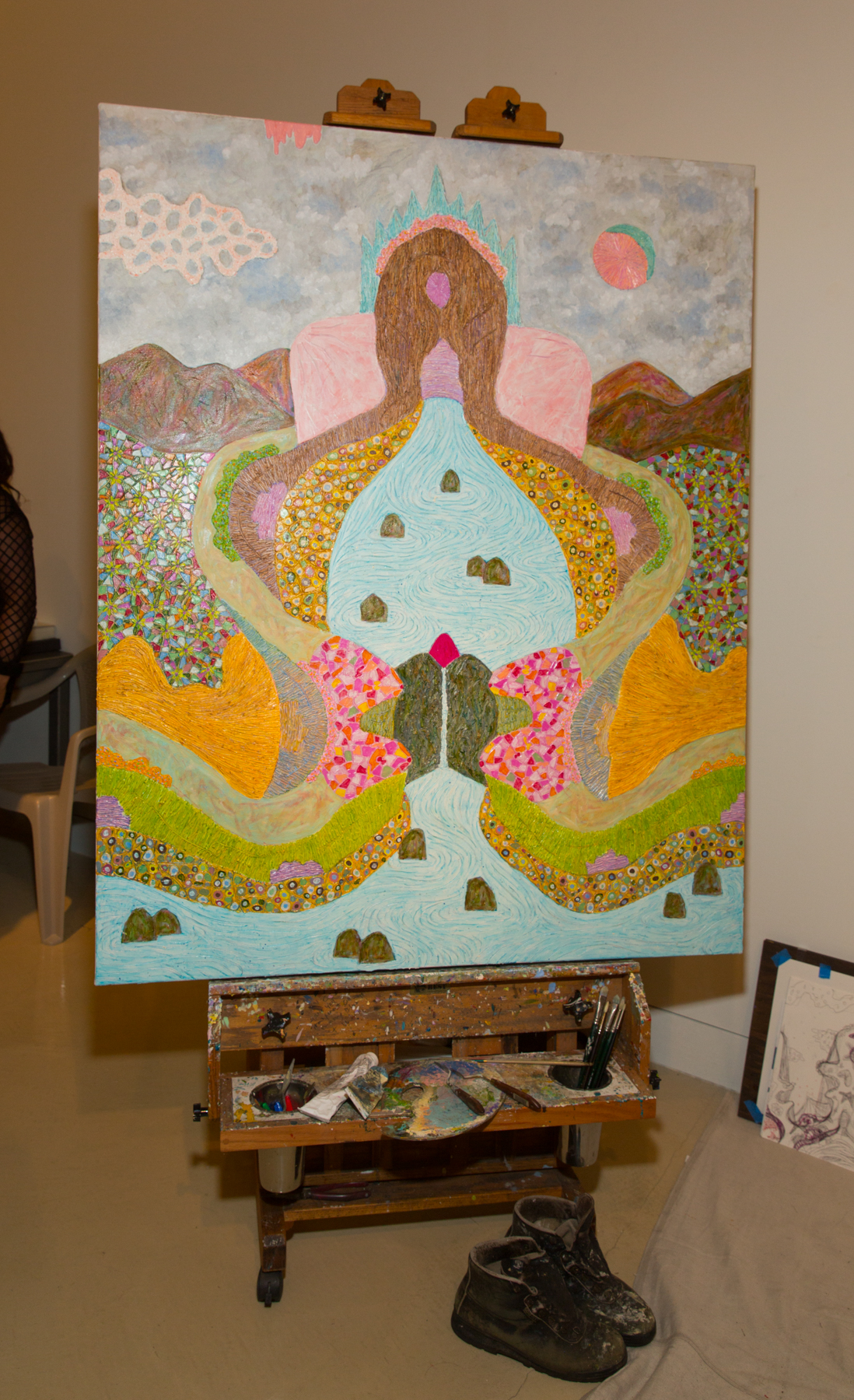
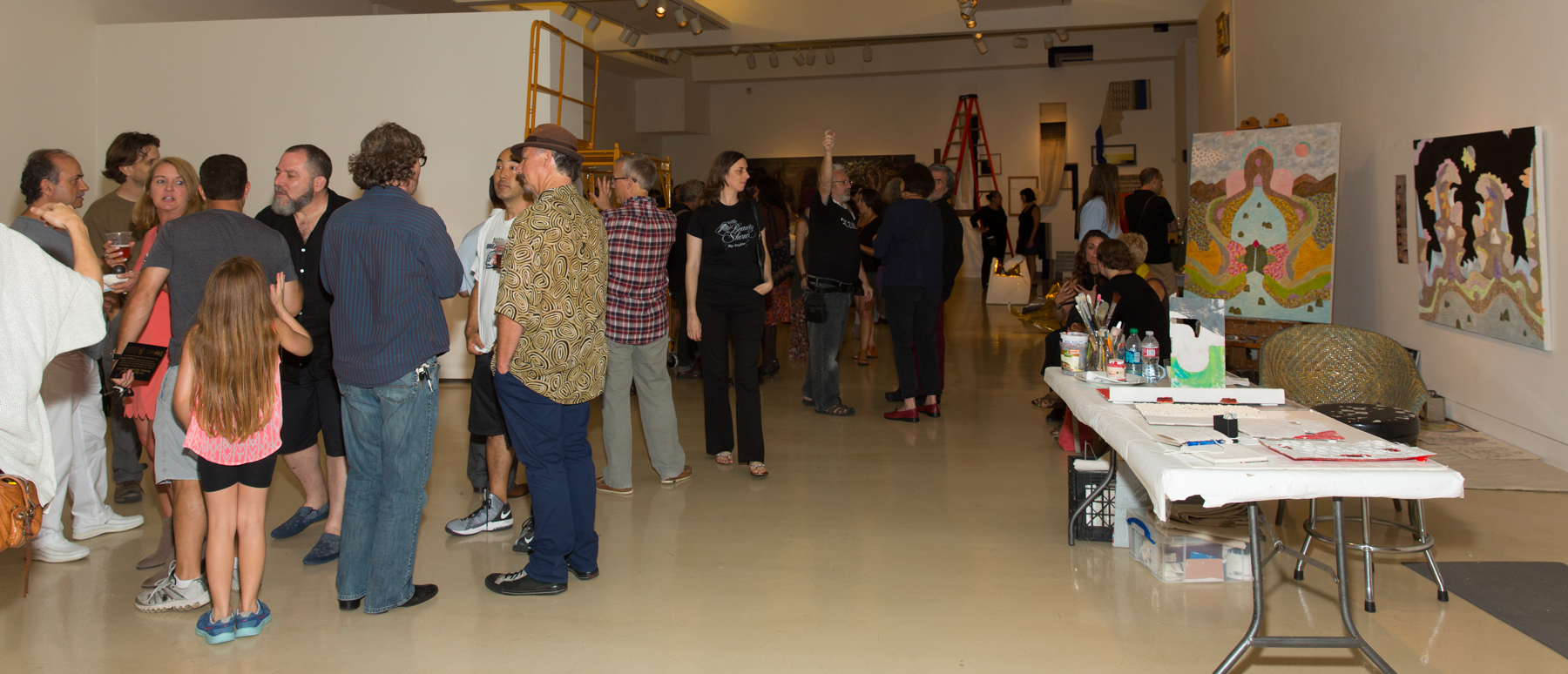
Opening Saturday, August 8th, Arpi Agdere’s “Punctum” is coming to West Los Angeles’ Haphazard Gallery.

The Los Angeles-based, Istanbul-born artist works in a wide variety of media, from photography to video, creating intensely vibrant images whose surreal color palettes leap from her pieces and embed themselves in the viewers’ eyes and minds. Her installations combine colors and textures that shimmer like multi-colored jewels. A world traveler and graduate from the Art Center College of Design in Pasadena, Agdere explains that her work, while verging on the abstract and surreal is created to “retain the essence” of her subject. The artist distorts her images but also transforms them “without being destroyed completely.” So her “Flowers” series decomposes the floral form, and yet the delicate blooms still seem to waver in a brilliantly colored wind. “I’m
interested in understanding how an image is made, what it means and the difference between making and destroying that image,” Agdere says.


haphazard PUNCTUM PR image 1sm

The artist’s immersive solo photography exhibit opening this weekend, is born from Agdere’s photographic work, but is not your standard photography exhibit. The artist works in-studio and develops her pieces in the photographic medium, but she is all about the patterns, colors, designs, and shapes the photos create, not photography itself. In “Punctum,” the artist takes us into a psychedelic universe of color vivid enough to pop into sound, of shapes that could be stars, galaxies, black holes, the fragments of crystals, the waves of an endless sea. Several pieces are more grounded in place: in one, a suburban neighborhood is cast with green and yellow patterns that could be leaves and an overlay of red that could be blood. All three colors appear to be washed over the mono-chromatic gold and black images of the homes and streets.

Whether depicting such a distorted suburban street, dancing multi-colored orbs of light, or a close-up, layered, granular surface, Agdere gathers astonishing insight into her subjects. In another piece, through a mix of intense color choices, photographic textures, and processing effects, what could be a static image of a hillside in the foreground with a green valley beyond, becomes a vision into a world submerged in greenness, its rich brown patches foreshadowing an eventual end to the fecundity depicted.

In short, Agdere is not a photographer so much as she is an artist who uses the medium to express a landscape both recognizable and beyond the recognizable. In each piece that comprises “Punctum,” the artist also makes use of the technique of “negation,” a black hole juxtaposed carefully among the images.

The hole looks like a portal to another dimension, or an ominous entrance to a less vibrant future. It draws the eye of the viewer away from the brilliant colors the artist uses and back to them again. While thematically the appearance of the black hole serves as a strange contrast to Agdere’s landscapes, as if alien beings were about the descend on whatever vestige of our planet remains, the origin of such an image is more prosaic. In the early 20th century, thousands of photographic negatives were destroyed by the Farm Security Administration in the U.S., by using a paper puncher to punch through them before archiving.

This bizarre practice was used on negatives whose images were considered either unfit or unusable by administrators of the Information Division such as Roy Stryker. This “negation” of images is used by Agdere as a stunning visual counterpoint to her almost giddy swirls and vividly surreal color washes; a sign of the darkness inside of, as well as opposite to, her other-wordly landscapes. The hole provides an almost magnetic pull, sucking us into each work, keeping our eyes and minds clinging to the sides of the hole lest we fall in as we look around the brilliant world Agdere creates. Will this hole pull us, as well as Agdere’s images, into the vast unknown?

haphazard 3

The exhibition’s title, “Punctum” means a small, distinct point. For Agdere, the point is indeed distinct but hardly small or insignificant. The word was used by philosopher Roland Barthes
to express the duality represented in certain photographs, of two very different and disconnected elements. He termed these two elements the studium, a self-contained whole with a clearly understood meaning, and the punctum, whose origin is the Greek word for trauma. To Barthes, in photographic terms, the punctum goes beyond language, inspiring a private and unexpected meaning, a part of a photograph that holds the viewers gaze even as it disturbs. To Agdere, it appears that the punctum is the expression of a visual dichotomy between luster and an empty void.

Agdere’s searing colors and vibrating landscapes, punctum included, will be on display at Haphazard until September 20th.

  • Genie Davis

“Island Girls” at bG Gallery: Make These Women a Nation

bg gallery 5

With a new exhibition set to open this Saturday, bG Gallery at Bergamont Station is always a hot spot for culturally as well as visually interesting exhibitions.

One of our favorites this year was  “Island Girls,” a collection of fascinating art by female artists exploring the idea of solitude as either – or both – paradise and isolation. “No man may be an island but in the art world, a woman often is,” according to the exhibition’s notes.

The exhibit included works curated by Shaye Nelson and Nancy Larrew. The awesomely diverse group of artists represented include: Wangechi Mutu, Sue Wong, Madam X, Cathy Weiss, Linda Vallejo, Megan Whitmarsh, Kristine Schomaker,  Sarah Stieber, Linda Smith, Erin Reiter, Courtney Reid, Gay Summer Rick, Allie Pohl, Trinity Martin, Nancy Larrew, Michelle Lilly, Mia Loucks, Kate Jackson, Brenda Jamrus, Simone Gad, Carol Friedman, MK Decca, Wini Brewer, Terri Berman, Nora Berman, Sofia Arreguin.

bg gallery 3

Thematically the exhibit addressed an important topic: the isolation women artists can feel, alone among male peers when emerging from studio, forced to choose between family and career. The works in this exhibit detailed a wide emotional range of reactions to this situation, from amusement to introspection, from anger to contentment, from defiance to self-reflection.

Club Jazz

Award winning Southern Californian Simone Gad creates stunning paintings and assemblages – and rescues cats. There’s a sinuous grace to her work that may be feline-induced. Note the fluid lines and dynamics of pieces such as “Club Jazz,” a mix of acrylic and glitter.

WiniArt14_0630

Mixed media artist and painter Wini Brewer creates delicate works that are poetic and poignant, colors a pastel fusion.

bg gallery 1

Artist Kristine Schomaker notes that the gallery owners selected her project “A Comfortable Skin” as her contribution to the show. “This project involves Avatars from the virtual world of “Second Life” who have my paintings as their skins. They have diverse body types ranging from my real life, overweight, curvy self to my thin ‘ideal’ body type I use within “Second Life.” I am showing ‘cut-out’ digital printed Avatars, video and a painting that represents the skin.”

bg gallery 4

Courtney Reid is a Southern California native whose lyrical paintings pay true homage to a statement made by her father that “what matters is the paint.” Her oil on canvas works convey an ethereal beauty, both impressionistic and abstract. Her triptych “Shepherdess” reveals women is a variety of guises, clothed and unclothed, against a background of wilderness beauty.

Gay Summer Rick hails from New York, but depicts California scenes that reveal what drew her west in the first place. Using only a palette knife, she paints a delicate, layered beauty filled with optimism and energy. From ocean views to highways, the light and colors that are Southern California compel viewers to step inside Rick’s vision, often inspired by drives along PCH.

Explore these “Island Girls”  – you’ll be seeing them move from an island to a full-on nation soon enough.

  • Genie Davis

Velvet Visions

Velveteria - Photo by Jack Burke

All Photos by Jack Burke

Los Angeles is home to a variety of one-of-a-kind museums and one of those is Velveteria, a kitschy, thrilling spot to take in all things velvet art. Previously located in Portland, Velveteria opened in Chinatown in 2013, the manifestation of a velvet art obsession and collection by Los Angeleno Carl Baldwin and his partner, Caren Anderson.

Velvet paintings may not be everyone’s cup of tea, but this all too easily disregarded art form includes some pretty powerful, richly dimensional stuff. The best pieces pull you into a plushy but realistic world. And it’s fun. How can anything painted on velvet not be fun?

F23C8969 F23C8968

Photos by Jack Burke

Yes, there are Velvet Elvises, Hugh Hefner in his red robe, the Three Stooges, and even LA’s iconic weatherman Dallas Raines. But there’s so much more. Some glow in the dark. Some are the stuff of small children’s nightmares. Some depict wildlife. Some are three dimensional in aspect. And some are significant artistically, such as velvet visions created by the “father of modern velvet painting,” Tahiti-based Edgar Leeteg. You’ll find found-art assemblages, the visage of Sgt. Joe Friday, and a Zen-poodle garden shrine to a very Blue Elvis.

F23C8970 F23C8967 F23C8975 F23C8977

Photos by Jack Burke

Chinatown is the perfect spot for this marvelous, strange, and captivating store-front museum – grab some dim sum before or after, or check out the vibrant gallery scene in Chung King Road. Just beware the demon monkey in Velveteria’s  restroom.

  • Genie Davis

Erika Lizée

Erika emanantions

The delicate beauty and underlying strength of the paintings, drawings, and installation pieces created by Erika Lizee take viewers into a detailed world of flora and fauna, of magical phenomena, of the journey between the stamen of a flower and the multitude of stars in the universe.

Lizee’s coupling of the minute and beautiful with the infinite and grand just won the artist 2nd place at a LA Municipal Art Gallery exhibition. Lizee explains that she’s “awed by the vast intricacies of world we live in.” Her awe is evident in the magical quality of her work that shifts from the detailed reality of a perfectly rendered flower to cellular vastness that may be the unfolding of life itself or of a single living organism. In the artist’s words “I seek to express the sense of wonder I experience contemplating the fluid nature of reality. I am interested in representing the relationship between the known and unknown, the visible and invisible, the tangible and intangible.”

Erika And yet things continue to unfold

The artist creates installations that work as journeys, drawing the viewer down mysterious paths on a pursuit of nature and rebirth. Her sculpted acrylics work to mesh shadow and light, recreating the magical feel of the Northern Wisconsin woods in which Lizee spent much of her childhood. “I have a particularly vivid memory of studying the unfurling coils of a fiddlehead fern, and finding the mystery and beauty of this event,” she relates.

It’s the coupling of mystery and beauty, of a vast wonder and precise detail, that the Chicago-born Lizee shapes for the viewer. With a BFA in Painting from the University of North Carolina at Asheville, and her MFA in Painting from California State University Northridge, Lizee is an Associate Professor of Art at Moorpark College and Director of the Moorpark College Art Gallery when she is not crafting her enigmatic, lush, and galvanizing works.

Erika Moving closer to solidity

Lizee’s drawings are perfectly nuanced graphite on paper, each more riveting and precise than the last. In “Moving Closer to Solidity,” two flowers, one light, one dark overlap. Sheer petals over solid, these flowers remind the viewer of lillies, orchids, the fecundity of spring. In “Clearly Visible,” three sprays of orchids are each wrapped inside cellophane. Are they isolated from each other and from us, or we from them? What do we see, in plain sight, but refuse to unwrap? What mysterious gifts await us that we package and contain, set aside and limit?

Lizee explains “Abstracted plant life emits ethereal and luminous forms that transcend our notions of natural phenomena. The viewer is often transported into a realm where pure essence radiates from bulbous pods and reaching petals, whispering a private invitation to the moment.”

erika breath

Her paintings continue such an invitation. In “Emanations,” a violet flower with grey and white circling ever outward from it, lights up this acrylic-on-canvas work. With “Connecting Breath,” white, purple, teal, and grey notes slip out with amorphous filaments born from a flower. Acrylic on linen, “Searching the Landscape of the Unknown” radiates an almost neon-quality brightness to white, blue, lavender, and brown filaments floating like smoke. It reads almost as if it were a detail taken and redefined from the artist’s larger, darker installation piece “…and yet, things continue to unfold.” This piece was a part of Lizee’s installation at the Los Angeles Municipal Art Gallery, created with acrylic on Duralar in shades of silvery blue , white, and light violet. The viewer wonders at what is unfolding here – the universe, a flower? Or perhaps both, all at once.

Like the lush flowers and filaments in Lizee’s work, the artist’s career is likewise unfolding, with exhibits scheduled for 2016 at the LAX, and at the 643 Project Space in Ventura. Lizee has recently exhibited at GALA Exhibits in Glendale, Calif., the JK Gallery in Los Angeles, and the FireHouse Gallery in Grants Pass, Ore., among may other locations. Lizee is currently exhibiting at Angels’ Ink Gallery in San Pedro, Calif. through September 25th, and at the BG Gallery in Santa Monica, opening on August 8th. She is also exhibiting at the LA Municipal Art Gallery Juried Exhibition through September 20th.

  • Genie Davis