Get Pulled By This Current

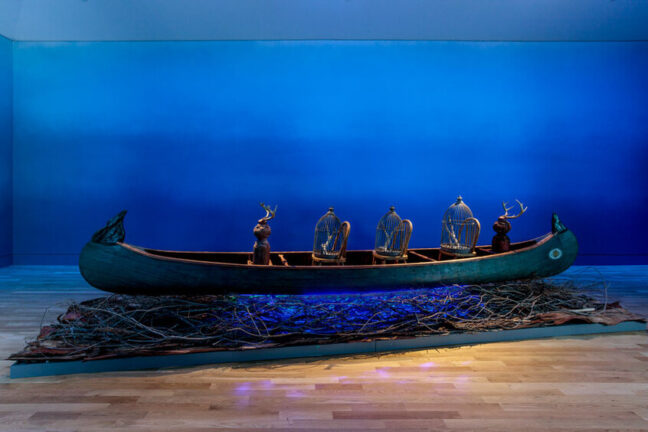
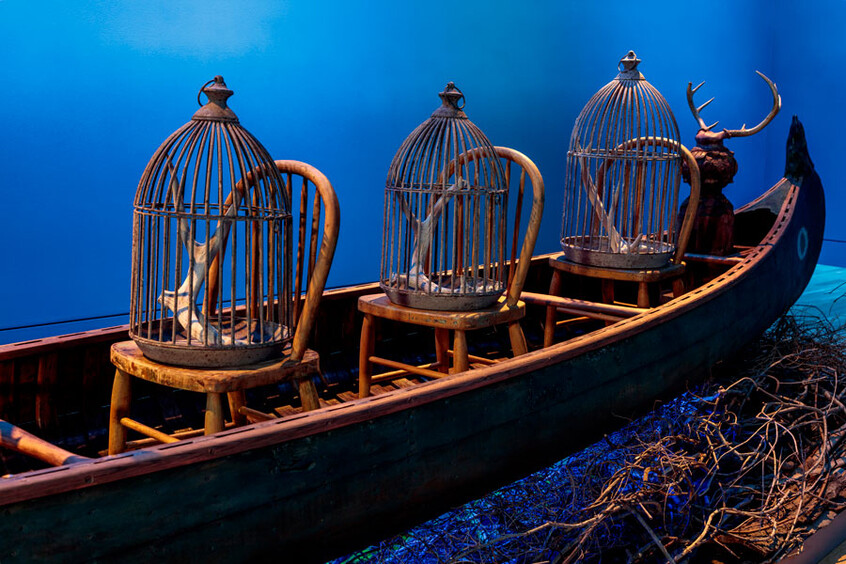
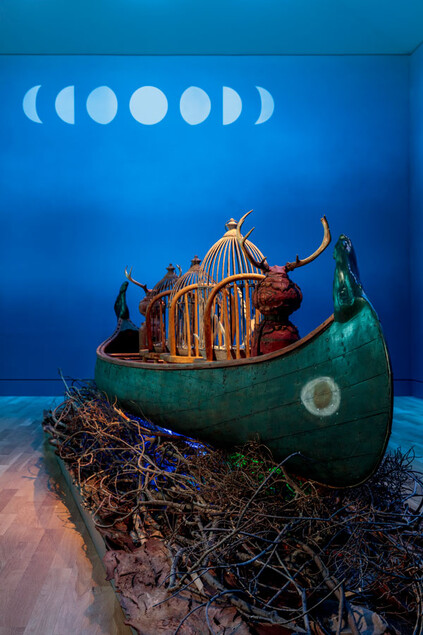
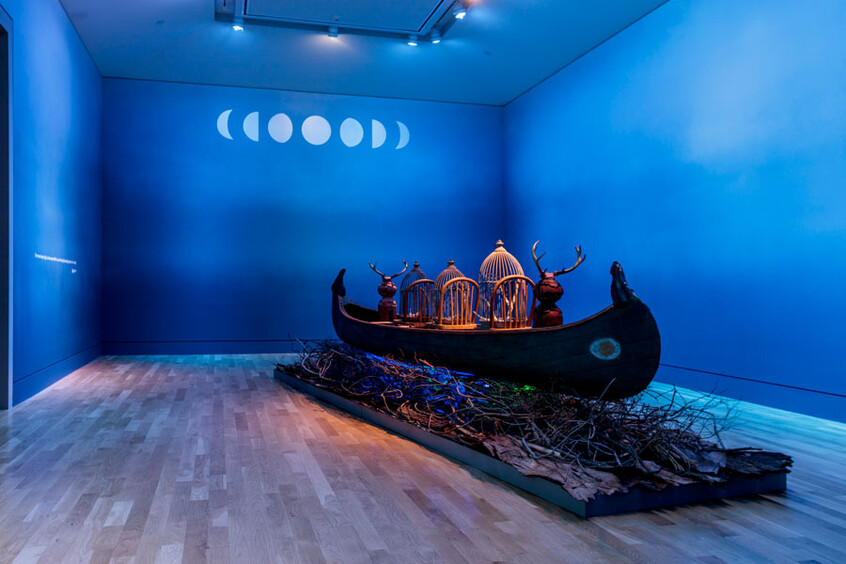
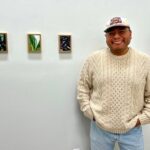
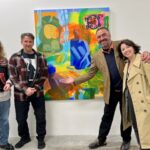
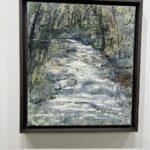
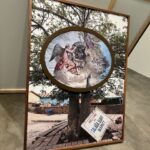
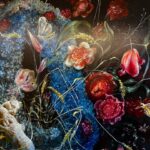
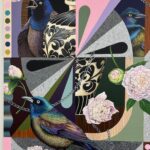
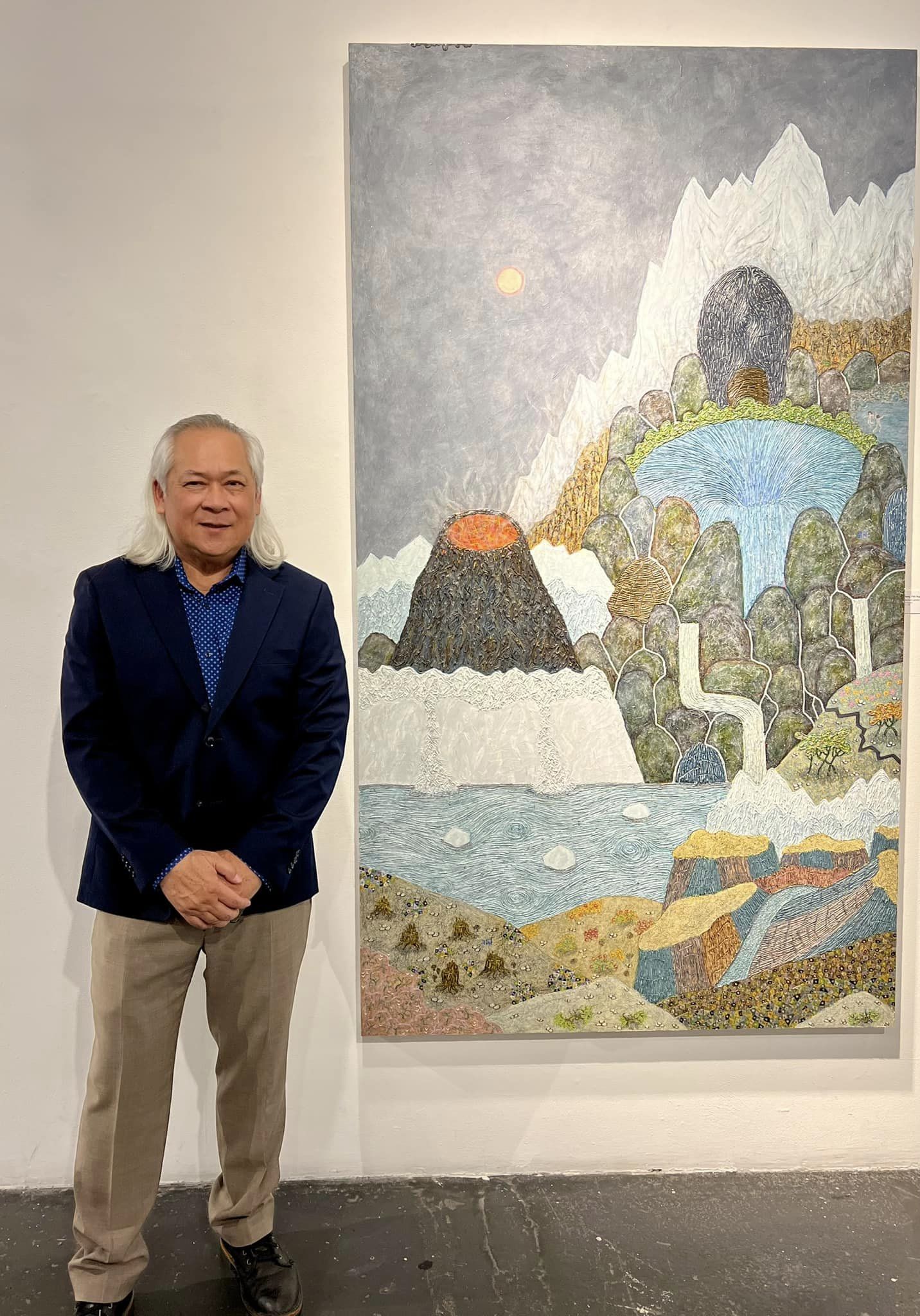
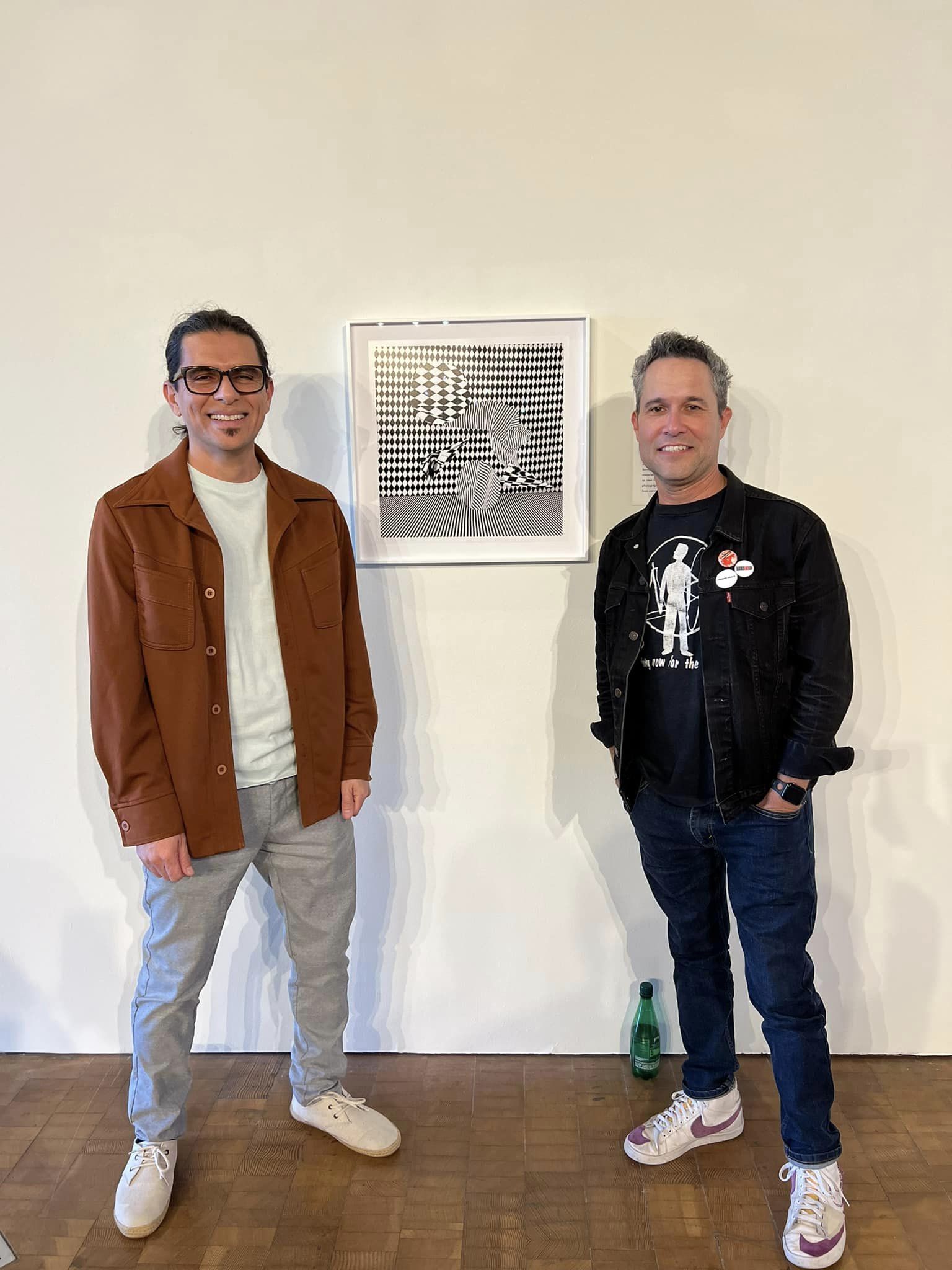
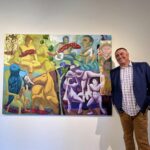
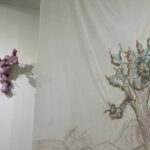
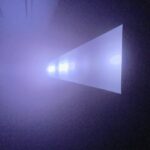
photo above, courtesy of Wonzimer Gallery

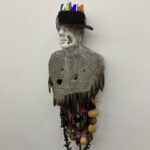
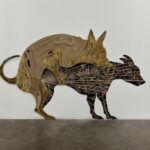
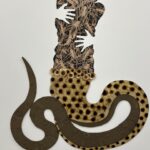
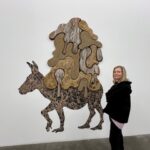
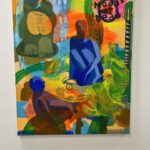
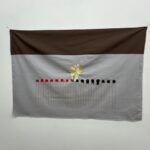
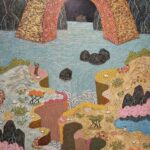
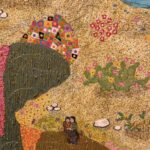
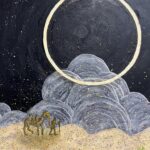
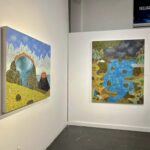
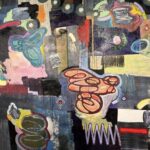
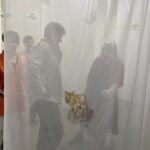
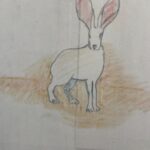
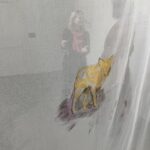
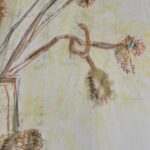
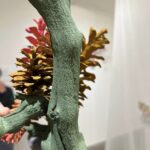
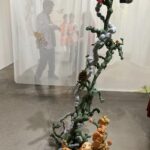
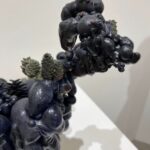
Curated by Lawrence Gipe, how swift, how far is a beautiful, cohesive group show with a pointedly ecological theme. Riveting, captivating works provide diverse perspectives on nature and humankind’s havoc upon it. The show includes work by Gipe, as well as from Luciana Abait, Johnnie Chatman, Lawrence Gipe, Alexander Kritselis, Aline Mare, Liz Miller-Kovacs, Ryan McIntosh, Beth Davila Waldman, and Daniel Tovar.

Thematically inspired by Risa Denenberg’s “Ice Would Suffice,” the nine artists reach beyond typical documentary-style depictions of ecology, climate change, and the like, creating instead rich metaphors for our ecologies, and adding other concepts into the mix, such as identity, class, and societal norms. The entire exhibition is poetic visually as well as in concept. Mysterious, magical, and momentous images converge in a heady mix of painting, photography, sculpture, and video.

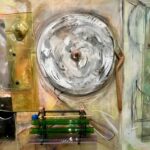
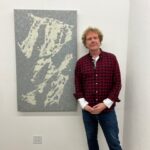
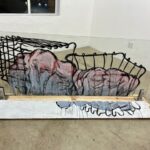
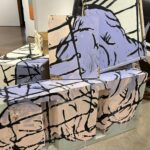
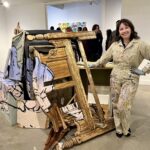
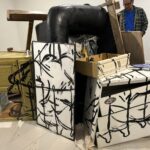
In the center of the room, Alexander Kritselis offers a large-scale mixed media work, acrylic on metal panels, along with a variety of other materials. “We’re Gonna Need A Bigger Boat” references the cultural zeitgeist of recent years past, the television series Lost, in its use of iconic figures from the show as well as in the title, and with words painted on the piece.

Angled and metallic, it evokes a grounded airplane wing (another Lost reference) and touches how past culture influences present and future action – or inaction. What have we all “lost?” What might we find if we were to build that bigger boat?

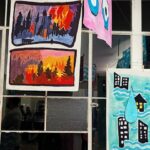
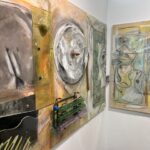
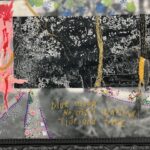
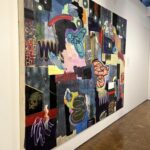
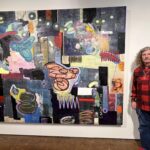
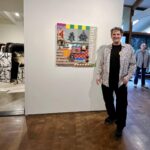
The large sculpture works impactfully with curator Lawrence Gipe’s massive two back-wall canvases, part of his Russian Drone Paintings Series. Based on footage taken from drones, Gipe’s luminous large-scale oil works shine with complexity, as with “Russian Drone Painting No. 7,” in which he leads us right to the edge of fiery cataclysm, the Darvaza Gas Crater, otherwise known as The Gates of Hell.

In shimmery contrast, “Russian Drone Painting No.5 (Hong Kong, 2019, Pro-democracy protesters on Lantau Peak)” presents the shadow of hope and sunrise. Eerie and heartbreaking, in Gipe’s hand, even disaster is beautiful to witness.

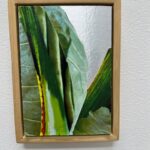
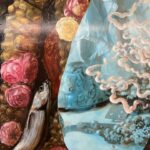
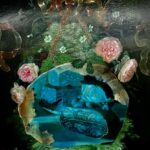
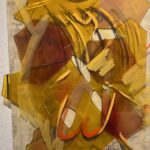
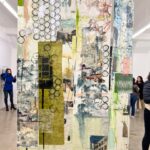
Aline Mare also offers work that shimmers with an interior glow. Taken from Her Dangerous Landscapes series, Mare gives us fecund, lush images the color of Earth and the crystals taken from her heart, emeralds and topaz and sapphires.

Working in both photographic and painted mediums on metallic paper, entering Mare’s verdant, magical space offers a sense of fragile succor, one that is fleeting in a riparian world deeply affected by drought.

Beth Davila Waldman layers her visceral work of acrylic paint and pigment on tarp mounted on panel in “La Ocupación No. 2.” The uneven bifurcated surface poignantly reveals what appears to be tent and shack houses lost in the wasteland of rough desert border land.

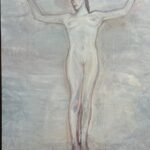
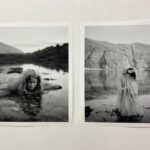
Liz Miller-Kovac’s multiple works are mysterious and catharctic. Whether in video projected in the gallery’s backroom, or in large photographic images that include parched earth, rare red algae blooms in the desert, and a supple, surreally fabric-covered model, her work speaks to longing, desire, death, and resurrection. These striking, entirely unique and surreal visions weave both landscape and human body in a hum of beautiful, if terrible, despair.

“Owens Venus” positions a bright aqua-swathed figure against that cracked Owens Dry Lake ground and ruby algae; “Caspian Siren” gives us a red cloaked goddess wading and adrift toward massive oil platform in the sea. It is beautifully paired with Miller-Kovac’s “Anthropocene Artifact,” a mixed media installation that includes a suspended black torso that appears to be dripping black oil into a metal pan, in which an iPad floats, playing images of water. It is the ultimate depiction of pollution – and the fossil fuel industry.

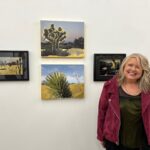
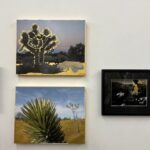
Luciana Abait’s images stun, involve, and evolve before the viewer’s gaze. A mix of photography and acrylic paint on raw canvas – the texture of which Abait says appeals to her for these works, and it truly does offer an additional layer of involvement, recalling the rough texture of the land she depicts.

Both “On the Verge #4” and “On the Verge #3” offer wildly beautiful, primarily melon and beige hued looks at the American West and are a poignant commentary on open land coopted from nature. Here are man’s encroaching houses, there is the rest stop on the highway, each skewing and stealing from the natural wonder. Abait’s classically precise detail and exquisite use of light shape a visual novel on each large canvas.

An entirely different look at the Western landscape emerges from Ryan McIntosh’s series of 8 x 10 silver chloride contact prints.

Oblique, haunting, and opalescent, images range from an eerily abandoned date farm in Indio, Calif. to oil rigs pumping in the desert around Taft. His Bakersfield gas station evokes a platinum version of an Edward Ruscha’s “Standard Station.”

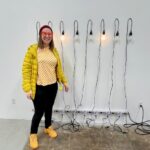
Daniel Tovar’s looped video is perched on a pole and weighted with hand-cast concrete cylinders.

His “untitled” offers a mix of lush images, urban skyscapes, and forgotten landscapes.

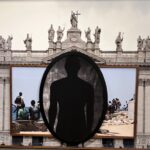
Johnnie Chatman gives viewers two archival inkjet images, self-portrait silhouettes taken in a vast, profound landscape that man’s image only fleetingly – but all too powerfully – can visit. “Self Portrait, Grand Canyon” features a solitary silhouette standing sentinel on the very edge of the canyon; the same hauntingly dark figure stands amid the otherworldly, sensually sculpted boulders of Page, Ariz. We are all aliens, just visiting. We would be wise to remember that.

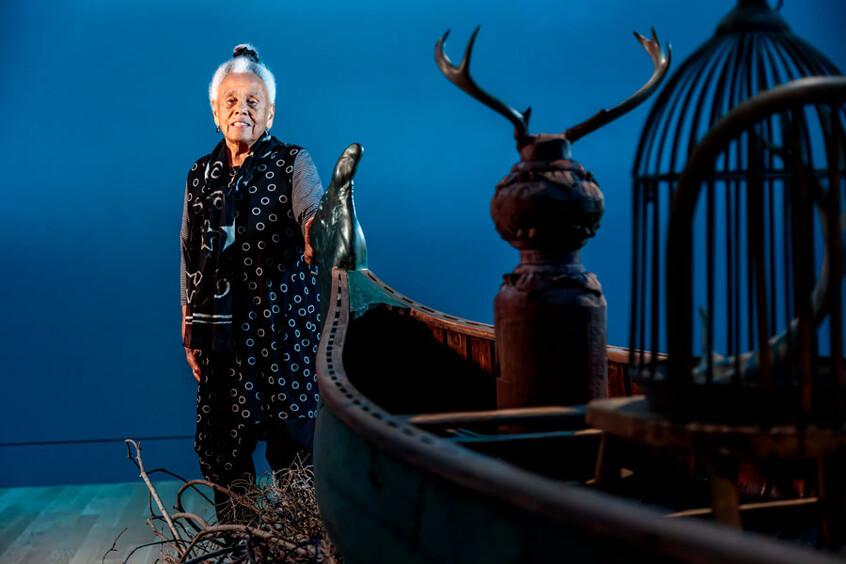
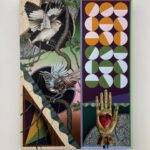
Above image courtesty of Wonzimer Gallery

The exhibition runs through September 20th, and its images will possess you. See for yourself. Wonzimer is located at 341-B S Avenue 17 Los Angeles, between Chinatown and Lincoln Heights.

  • Genie Davis, photos by Genie Davis; installation photos from Wonzimer Gallery


Three Solo Shows Shine at LAAA Gallery 825

Three fine solo exhibitions and one eclectic curated group show shine at LAAA’s Gallery 825 this month.

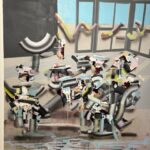
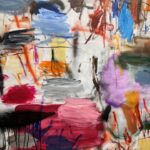
In Gallery One,  Alison Woods solo exhibit Metaclysmic abstraction in the virtual age, reveals the truth of how Woods’ describes her work as that of “an alchemist.” Layered, intricate, and sublimely interlocking shapes grace both of her large-scale works, one a mosaic green and serpentine, the other a sci-fi scene rooted on Mars (above).  A smaller work shines with gold, futuristic and evocative of both natural wealth and the accumulation of the unnatural variety, affecting life on earth.  A sculptural piece combines detritus from coffee shop bags to Kleenex in a floating, stalactite shape that also speaks to the human state.

While she delves into the Jungian and technological in all four of these fascinating works, the result in each and overall in the exhibition space is the rewarding creation of a kind of visionary landscape that layers past beliefs and visions with a strange and scintillating map of tomorrow.

Maya Kabat fills the middle gallery’s space in an immersive fashion, with some works positioned at eye level, while others reside close to the floor. Her geometric, sculptural abstract oils use supports and wood panels to shape Super Spatial, an exhibit that expands beyond the gallery’s own spatial constraints to create a body of floating, shifting architecture.

Vivid in palette and intriguingly faceted in line, this multi-surfaced exhibition seems to contain oceans and sunsets within its compelling box-like shapes.

Speaking of color…Seda Saar creates exceptional, glowing rainbows in the third gallery, with her show In Revelations: Seeing Light. Saar offers rainbow towers; vivid yellow and sienna prisms that replicate a rising or setting sun; and a sensual midnight blue in a half-raindrop shape, with a silvery mirror at its heart. There is a crescent moon that reflects a second planet, a series of color bright connected ovals, and a double reflective oval, opalescent in tone.

Spiritual and visceral, Saar’s delightful work lights up with mystic beauty.


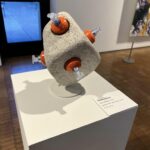
In the north gallery, curator Cynthia Penna presented a juried group show titled SUPERSENSE. A suspended, jeweled hexagon by Espe Harper is one of a variety of works exploring (either? both?) “tactile presentation or fetishism” as the exhibition describes its theme. There were colorful flowered bustiers and shadowy profiles, candy cool hyperrealism from Lauren Mendelsohn-Bass, and a bright melting lollipop from J’Attelier.

All exhibitions will be on view through September 15th. LAAA is located at 825 N. La Cienega in West Hollywood. Open 10 to 5 Monday-Saturday by appointment.

  • Genie Davis, photos by Genie Davis
 

California Art Here We Come

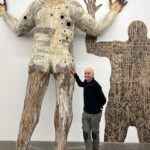
In California: Now & Then, on view at bG Gallery, curator Juri Koll takes viewers on a tour de force exhibition of California culture, environment, and of course, art. Moving from the early 20th century to 2023, among the exhibiting artists are Sam Francis, Bradford Salamon, Barbara Kolo, Catherine Ruane, Hung Viet Nguyen, Charles White, Sam Francis, Lilly Fenichel, Ulysses Jenkins, Betye Saar, May Sun, Peter Alexander, Gloriane Harris, Edmund Teske, Lyn Foulkes and more than 30 more, including work by Koll himself.

Much of the art was culled from Koll’s personal collection, while others were lent to the exhibition by the artists themselves, collectors owning the works, or museum collections. To see such a mix of stellar artworks all in one salon-style presentation at bG Gallery is a kaleidoscopic experience, a mix of abstract works with the figurative.

We see seascapes and city views, faces and geometric forms, the whimsical, the magical, and the inchoate voids. Traveling through generations of work, we see the evolution of form and color, the trends and traditions, the willingness to change, each of which characterizes California itself.

Through it all, we follow the light.  One of the most fascinating finds in the exhibition is from 1904, Lockwood De Forest’s “Santa Barbara Marsh.” Suffused in gold and peach radiance, it shines like a beacon of promise, a stillness, a quiet kind of gold rush as memorable today as it was when curated. Entirely different is the abstract landscape of curator Koll’s 2023 “Käepigistus Ukraine 60,” a startlingly bright petri dish of geometric shapes seemingly swimming under an art microscope.

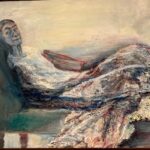
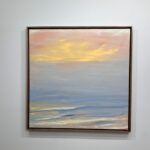
Gloriane Harris’ 1973 “Evening Shade” resembles a surreal moon hovering just above and just below dark periwinkle water. This is a different form of the geometric, both entirely of and transcending the period in which it was created. Evoking the same era – the quality of moving beyond the traditionally representational, reflecting the multitude of changes and restless emotion of the Vietnam years is David Alfaro Siqueiros 1972-73 color lithograph “Reclining Nude,” exuding pathos and perhaps a few bad dreams in its rhythmic brush strokes and discreet representation of body.

Beautifully current are the white lilies in Imogen Cunningham’s 1929 “Two Callas,” their fluidity and luster perfectly captured. Also cutting edge is Wynn Bullock’s 1951 gelatin silver print, “Child in the Forest,” a lush and surreal look at a child lying face down in a fecund fern-filled grove of trees. In aches with a sense of loss and wonder, a fairy tale and a cautionary tale both at once. There’s light here, too, shafting down between the trees, still and silvery. From the same year comes Hans Burkhardt’s “Untitled,” conjoins rectangles and squares dominated in golden yellows.

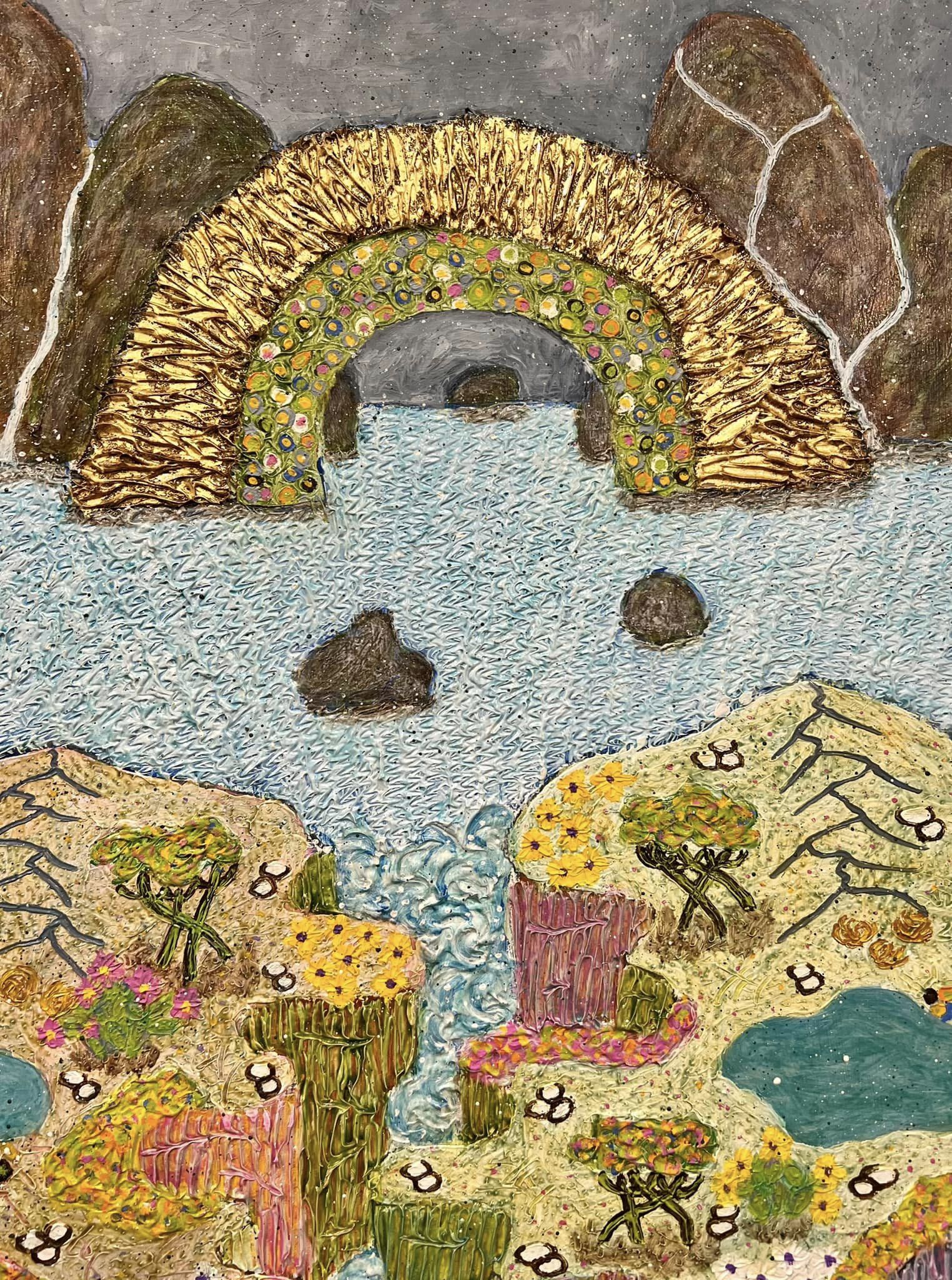
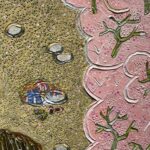
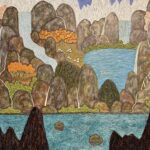
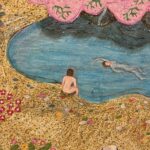
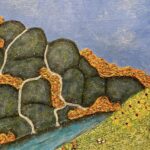
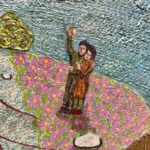
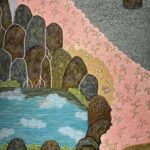
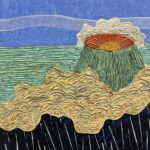
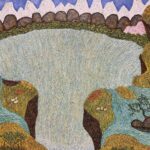
Sea views have always drawn me as a viewer, and there are plentiful examples here. Hank Pitcher’s 2005 “Solstice Swell at Government Point” offers lavenders and blues in a rising wave infused with a white, opalescent light. Osceola Refetoff’s radiant pink archival pigment print, created this year, is an alchemic look at “Tiny Island, Antarctica.” Hung Viet Ngyuen’s “Sacred Landscape III #18” is a fanta-sea if you will, a small 2017 oil on board work that is magical in its vibrating brush strokes, featuring both the edge of a sea or lake and a rushing river descending from dark mountains. Ruth Weisberg’s 2005 “Darkship,” a monochromatic monoprint gives viewers a ship loosed upon dark waves.

Also compelling are cityscapes such as Gay Summer Rich’s mix of headlights, lit high rise windows, and the iconic neon of the El Rey theater in her 2023 “Ready For a Night Out – El Rey.” Her carefully rendered oil on canvas, created entirely with palette knife is somehow both impressionistic and realistic at the same time, and again, the light. And, it’s also about the light – red swirling clouds above what could either be a sprawling city of dotted lights or a massive airport runway – in Peter Alexander’s 1992 “The Locus,” a surreal and absorbing mix of ink and acrylic on paper.

There could be nothing more bursting with light than May Sun’s 2023 “Datura (Yellow) Offering,” a diptych of acrylic on two wood panels featuring both a brilliant lily held high and the chartreuse like wave of land against with three farmworkers in yellow straw hats work, framed against a fierce orange sky. Diminutive but also exuding a burning orange is Ralph Allen Massey’s “Eight,” the letters casting deep shadows in the foreground against that sun on fire.

And what happens if you stand too long in the sun? The clean, stylized look of Barbara Carrasco’s sweet “Burnt Girl,” a child whose sunscreen application was sadly lacking.

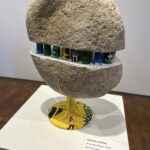
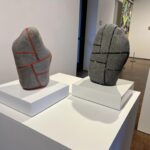
There are sculptural works as well, such as Stuart Rapeport’s 2015 “Minimal Brush,” a bronze artist’s proof that resembles a magician’s wand. The sculptural stand-out in the exhibition is Sonja Schenk’s 2023 “Light for the Sun,” a floor work that combines California sandstone with stripes of 24K gold, an homage to the rich veins struck in the Gold Rush, and again, the light, the light that draws so many California transplants and dreamers, artists and writers. Comprised of three separate pieces it is a glorious work, positioned as if calling to the vast array of wall art surrounding it. Very different is the mysterious, even ominous “Studio in Dorking,” Gordon Wagner’s 1974 mixed media box, that include legs clad in hoof-like shoes and no upper half to the body attached to them. Cosimo Cavallaro’s mysterious “Black Arrow,” a 2023 work in stainless steel, absorbs and reflects the light – the antithesis to Schenk’s piece. There is also Timothy Washington’s sparkly “Many Faces, One Race” from 2019.

Some included works were startling for being so far from the same artist’s current oeuvre. This includes Catherine Ruane’s 1974 “Untitled,” her delicacy and precision of line remains the same, but this muted and intimate abstract is quite different from her charcoal and graphite roses, oak and Joshua Trees created in more recent years. Speaking of abstracts, there are a wide range to view:  Larry Bell’s  1988 “Untitled,” a black orb depicted in profile against a white background, a bit reminiscent of a black hole or nuclear blast, or perhaps the emptiness of Reagan-era politics. Then there is the dancing, music-evoking 1957 “Color Sinfony,” from Oskar Fischinger; Emil Bisttram’s 1950 “Abstract,” of a plant and a beehive, everything a fluid supple motion of line; and Sam Francis’ 1976 monochrome “Untitled,” which resembles sail boats buffeted by sea spray. Max Presneil’s vibrant 2020 “MiT #149” radiates pink, red, and chartreuse persisting despite a black hole at the center left, indicative of how many felt during that year. The surreal is well represented, too, including a 2018 work by Robert Nelson, “Self-Fulfilling Prophecy.”

Bradford J. Salamon’s 2023 “Silver Spoon” gives the viewer a gold and white striped dessert confection one can almost taste, dancing in elegant light that glistens off the eponymous spoon. Its intimacy is placed comfortingly near another source of the intimate, the powerful and intimidating 2023 “Self Portrait,” from Don Bachardy,  streaks of white light representing facial lines and shadows.

And while there are many other worthy works in the exhibition, perhaps it’s best to close with Barbara Kolo’s 2023 “Escape Into Amber,” with both the title and the minute Pointillism of her approach drawing the viewer into a vibrating flower of gold, orange, purple and red, almost as if the corona of the California sun were waiting to pull both artist and viewer deep among these unfolding petals.

The exhibition is on display at bG Gallery through August 15th. bG is located in Bergamot Station at 2525 Michigan Ave. #A2 in Santa Monica. Don’t miss.

  • Genie Davis; photos: by Genie Davis and as provided by curator
The Cheech Celebrates Art and Starts a Second Year

Cheech Marin was there. But that’s not a surprise, given that the art celebration in mid-June was both to open three new exhibitions and commemorate a super successful first year at The Cheech Marin Center for Chicano Art & Culture of the Riverside Art Museum in downtown Riverside.

Last year’s opening show was stunning, and this year offered a new bevy of treasures to mark the anniversary. And what an anniversary it is: the museum far surprassed predicted attendance by 30%, and provided a much needed home for Chicano art in Southern California.
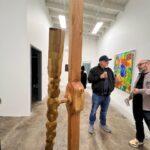
The museum was developed as a public-private partnership between the City of Riverside, Riverside Art Museum, and Marin. As such the museum also received Marin’s prolific collection of major artworks – over 500 stellar works in all.

In helping to establish The Cheech, the Riverside Art Museum received the 2023 National Medal for Museum and Library Service, the nation’s highest honor given to museums and libraries due to the significant contribution The Cheech made to the region. Marin is justifiably proud and pleased at both the response to the museum, and the exhibitions held there. The gloriously airy, modern space is equipped with comfortable, open galleries that showcase the work, and provide the room for large scale pieces and wall art alike.
Present at the celebration – which included make your own tacos, craft brews, ceviche, and Mexican pastries for desert – Marin stated his purpose. “Riverside Art Museum’s work in the community, its educational mission, and its broad support of Chicano art is why I decided to gift my collection and work with them to create a national center.” He cited the impact the museum has had on the community, and the ways in which the museum is providing the space to show Chicano art and educate viewers about it.

As honestly enormous of a cultural success as the museum is, it’s also a bastion of innovative, beautiful, and often profound art, revealing and passionately exploring political and social issues while presenting wall art and sculptural works that not only defy expectations but go beyond them.

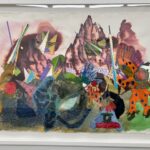
The anniverary introduced three new exhibitions. On the first floor, there’s a new grouping of Marin’s personally collected works in Cheech Collects, an exhibition that included a few beauties viewed last year, but a lot of new pieces as well. The art is steeped in images of Southern California and family life, as well as in the social struggles, work, community, and protest that are a part of the rich Chicano community. Curated by Maria Esther Fernandez, Marin’s collection sings with color and light, and features many works by the always impressive Frank Romero, among 40 other artists. Romero’s “City of Night” is a vision of emerald green freeways.

Throughout the collection we see images such as Carlos Almaraz’ splendid “Mystery in the Park” diptych, and Eloy Torrez’  appropriate and beautifuly rendered “It’s a Brown World After All.” These works will be on display through next May.

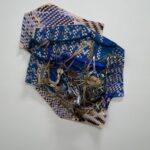
In the upstairs galleries, Xican-a.o.x. Body intimately explores and celebrates the ways in which Chicanx artists have placed their physical and emotional bodies within these works, establishing their presence and also indicating a necessary willingness for protest and resistance. This exhibition was created by The American Federation of Arts, and features over 125 works ranging from photography to to sculptures – the visual grabber perhaps being a hot pink low rider, Justin Favela’s “Gypsy Rose Pinata (II) is a visual confection, an enormous and vibrant sculpture.  

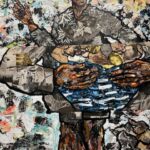
Narsiso Martinez’ truly stunning “Magic Harvest,” is a dimensional, sculptural painting of a migrant worker created on boxes of the produce gathered, and is wonderful from all angles, bringing the depicted worker both physically and emotionally present and fully realized.  Linda Vallejo’s heartbreaking colored pencil and photographic “23.9% of Sex Trafficking Vicimes in the US were Latino in 2010” is both sharp in color and message. These works will be on view through early January of 2024.

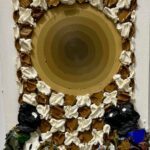
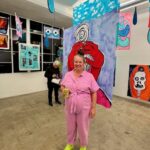
Last but definitely not least, there are works of emerging and local artists curated by Cosmé Cordova. Among them are Man One, Andrew J. Castillo, Carlos Beltran Arechiga, Richie Velazquez, Martin Sanchez, Denise Silva, and Jacqueline Valenzuela. This one requires you to use a bit of alacrity in visiting The Cheech – it will close October 1st. Among the many fresh and riveting works, a massive geometrically abstract work from Carlos Beltran Arechiga, “Border Field State Park,” is a particular favorite, as woven as a tapestry, as complex as memory. Arechiga also has a smaller “Self Portrait” in the mix.

Yes, the 91E is a slog from LA to Riverside, but you’ll find a true oasis of art, culture, and meaning at The Cheech, and all you Los Angelenos owe it to yourself to make a visit.

The Cheech is located at 3581 Mission Avenue in Riverside.

  • Genie Davis; photos by Genie Davis