
Steve Shriver and Candice Gawne at SoLA: Guest Post from Peter Frank


OBSERVATION(S): STEVE SHRIVER AND CANDICE GAWNE

Guest Post by Peter Frank

8C357034-9AC6-4DA8-A224-4B32C504CEA9

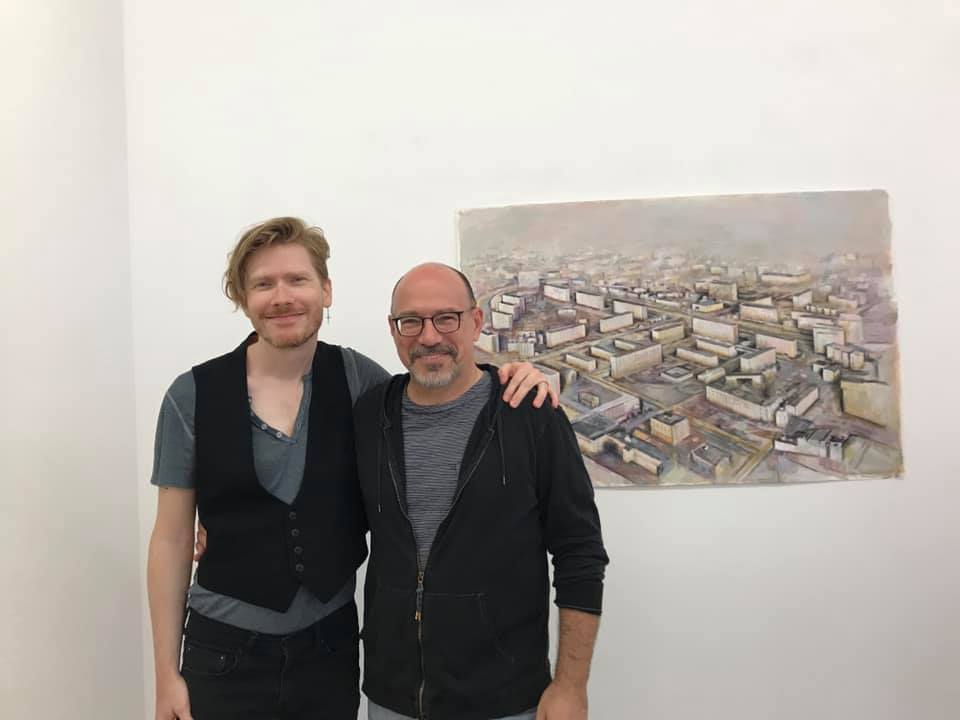
Above: Peter Frank with Steve Shriver

Art is not just about seeing, it is about observing. Whether the artist’s eye is turned outward towards the world or inward towards the self, the art arises from the phenomena, glorious and mundane, that present themselves to attentive vision. Even non-objective or conceptual art begins with a note of some kind, visual or not, that triggers passage down an experiential and expressive path. It may seem obvious that more traditionally pictorial art results from, even seeks to “capture,” observation. But the nature of that observation, allowed its subjectivity, can prove as elusive as it is rich.

That is to ask, is there mystery as well as revelation in the painting of Steve Shriver and Candice Gawne? What is left unseen but still sensed? The two painters are about as far apart stylistically and spiritually as two artists can get (at least within the context of two-dimensional representation). Their modes of observation are polar opposites, Gawne’s a register of the seen-world, a voyage through space and light, while Shriver’s is a fantastical rhapsody on the internal and the external — indeed, on the interplay of personhood and specific location with many stylizing, and culturally self-conscious, tropes.  

E8C090F9-1271-44A1-869D-88BEF61EADFA

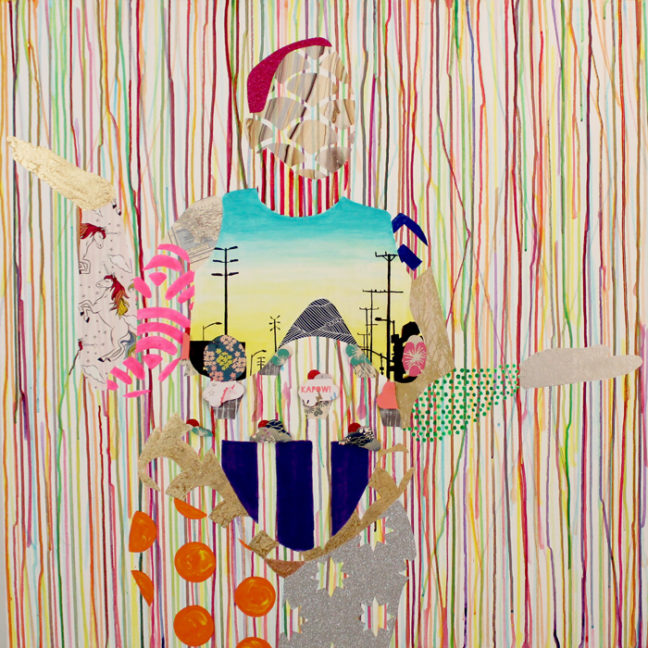
Shriver’s painting over the past two years all stems from a near-fatal accident he suffered while bicycling. On one level the elaborate, icon-like images — and the finely wrought frames and other accoutrements bedecking them — are a simple declaration of thanks to whatever force allowed Shriver not only to survive but to heal back into the artist he had been before. Except that, after such trauma, he couldn’t quite be the artist he was before. Pop irony was not appropriate for an extended (indeed ongoing) reflection on death, but the more exaggerated, yet more sincere, stylizations of lowbrow figuration were. In particular, the culture of the road, a motif central to the mythos of southern California as maintained by its inhabitants, figures in Shriver’s work as an imagined realm as well as a specific site (that site supposedly but not necessarily the location of the accident).

D35063AE-5012-49BB-8C43-C5E22D3245C2

These images are at once violent and elegant, poised and calamitous, mocking and marveling. Having been there, Shriver knows how elaborate the complexities of personal disaster can be, in its moment no less than in its aftermath. Shriver’s is the PTSD not of the long-term sufferer, but of the ambushed, of the man all of a sudden knocked out of his comfortable life trajectory. These pictures are not exercises in self-pity. (If anything, more than a few of them are self-parodying.) They are not gore tests or macho poses of fury or nonchalance. They are declarations of a lesson learned and they brim with the humility of someone given his body and his life back. With a grandiosity born of relief and amazement they pay homage to the traditions of heraldry as well as to car customizing, mural painting as well as portrait and still life painting, political art as well as religious art. But, florid and dramatic as they can get, their energy seems to come from within and gather what’s out there — and to react from within a once-broken body to the mystery of life. Having observed his own dying, Shriver now observes his own living.

486AB306-0AC0-4999-AEEC-0B09FC085689

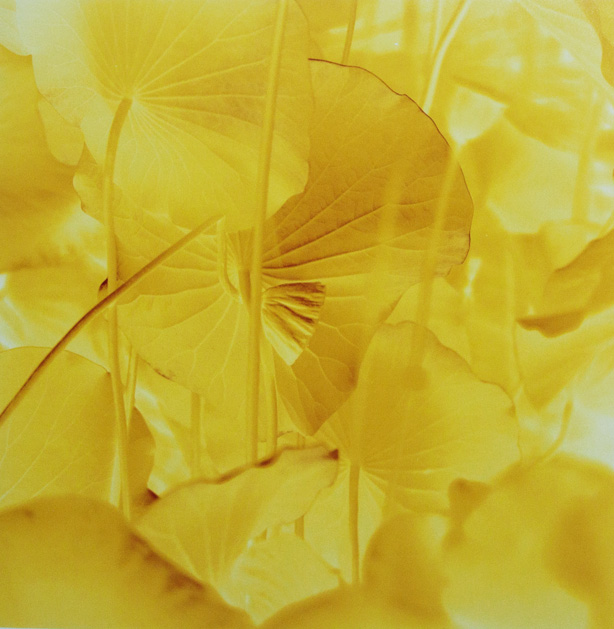
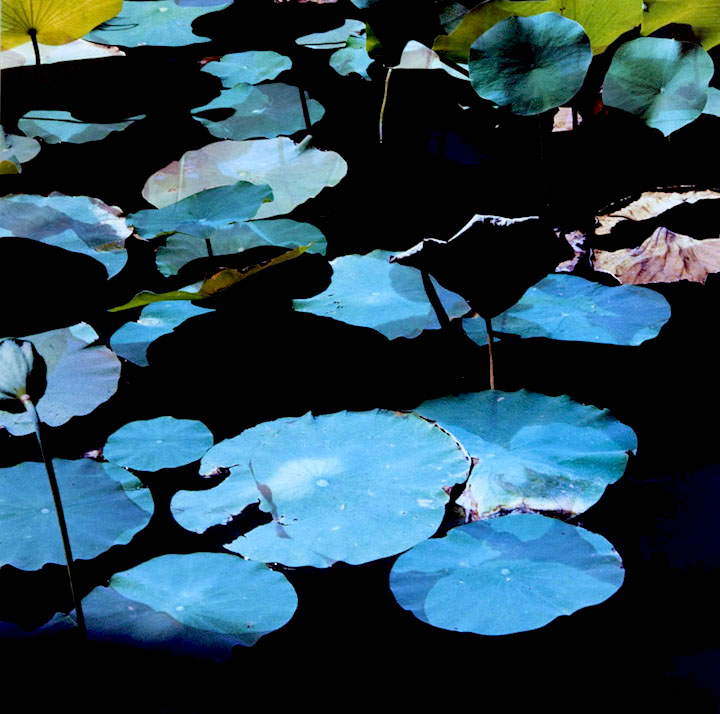
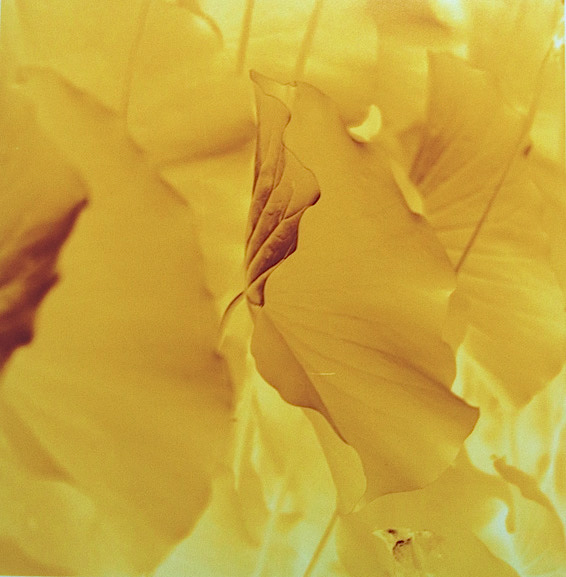
Gawne is awed less by such metaphysical apprehension than by its purely optical manifestation. She has become enthralled by light itself, its ability to hover seemingly in the eye, the contradictory conditions it sets up that at once shatter and build objects and surfaces, mass and movement. Gawne celebrates light — or, if you would, color — for its own sake the way Monet and Seurat and Balla did a century or more ago, as a radiant force that embraces, formulates, and pulverizes the observed world. Gawne regards the seen world not simply as the result of invisible sub-atomic particles in motion, in compliance with the concepts of quantum energy, but as the embodiment of that motion, a dynamic ongoing demonstration of the buzz at the heart of the universe, a buzz that is observable. Perhaps, her work posits, art’s purpose is to make the invisible visible — even as the eye admits its own myriad shortcomings.

910E7ECD-ECD5-4D0B-B740-B4CDA1B6D1BF

Gawne brings the sub-observable universe to observable levels by giving the eye, that most inefficient of human organs, the opportunity to indulge itself. Whatever it wants to see amidst the flood of light, Gawne allows, even encourages, it to see. Rich in detail as her intimately scaled paintings are, they allow the eye to rest on blank passages as well as articulated, open fields of color as well as intricate chiaroscuro, stretches of abstraction containing, commingling, or separating figures and objects and portals and spaces so that we read her pictures as human and, at the same time, painterly events. Refraction is the steady state here: Gawne suspends her moments at a crucial point of observation, that point where the eye passes rapidly from dark to light or vice versa and shifts temporarily into a state of sun-white blindness or “visual purple.”

19" x 15" framed encaustic
19″ x 15″ framed encaustic

What Candice Gawne does looks hardly at all like what Steve Shriver does. Both paint, both reference the human figure, both fundamentally rely on concentrated observation to derive the images they depict. But, as noted, each does so to an end entirely foreign to the other. Gawne looks outward, Shriver in. And, notably, Gawne addresses space with light while Shriver addresses time — a fateful moment and its lasting effect — with graphic symbology. Still, both artists rely on deep, abiding observation, manifesting what they see and know with deep conviction, and without resort to the literal. That avoidance of the merely seen, and that conviction about the subjectivity of vision, create a mystery where our eyes can see what they normally don’t — or can’t.

437C29D5-D1F4-4E59-B72E-9706C12877AC

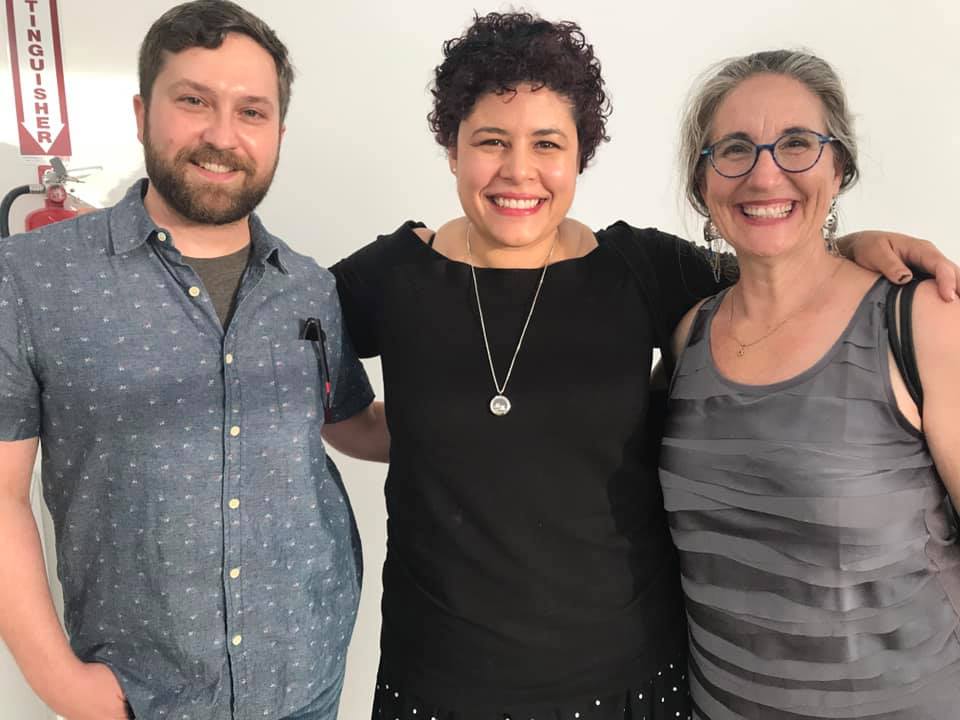
Steve Shriver, gallerist Peggy Silvert Zask, Candice Gawne

  • Peter Frank; images provided by SoLA


So Many Balls in the Air: Mike Mollett at MorYork


unnamed (31)

Mike Mollett took the world and made it into a ball…and tossed it into the giddy air of art.  Offering works spanning from 2014 to 2019, Mollett’s recent exhibition at MorYork offered many spheres of viewing pleasure.

Featuring both sculptures and archival digital prints from an on-going series, Mollett’s work at MorYork – and throughout his artistic practice – utilizes found materials either collected or donated. Many materials are locally compiled, or as the artist puts it, if his work was wine, it would feature the region’s “terroir.”

unnamed (32)


While many works are spherical, some, like a pyramid stack of mesh cubes, bring in additional shapes. Always, Mollett creates highly tactile, dimensional works that seem as if they held a universe filled with kinetic energy within their confines.

unnamed (29)

Each piece is a collection of generally common materials. They are grounded in our times, speaking possibly of what was, what is, and what could be next,” Mollett, who is a poet and performer (Mud People) as well as visual artist, explains.

unnamed (30)

He keeps his hand-made works green, rarely using paints, solvents, or power tools. He relies on “accident and discovery” to compile his images; and is inspired to create from the nature of the materials he works with, whether lint balls, wire, or wads of grass. He twists wires to form sensual shapes, lightly contains and binds materials, and always keeps a playful aspect to his work.

unnamed (26)

According to the artist, his works are both unpretentious and somewhat transitory, “easily crushed by almost anything… in this world of durable transience.” His use of “gathered stuff” is something like shaping a nest, he relates, driven in part by the all too-intractable fact that it’s difficult to financially support an artist’s life. There is no marble or bronze used in these almost ephermeral, light of heart as well as material, works.

unnamed (33)


“These small things are delicate,” he relates, but he refuses to keep them in a plexiglass box or glass case. Instead, he relishes the facts that much of his work is as delicate as a finely made bird’s nest “in a windstorm… it’s up to the weather to save them or blow them away.”

unnamed (28)

It is also up to the viewer to preserve them, their delicate beauty, their recyclable nature. Infused with a strong sense of motion, used in performance or hung like planetary tumbleweeds from the ceiling, these captivating works seem as if they are about to not just blow away in a metaphorical storm, but to transform themselves. Perhaps they will transform into something more permanent, fanciful imagination having taken root.

In times as heavy as these, creating something this drenched in lightness is not easy; his works are subtle but ecstatic, supple and mysterious.

IMG_3406

If you missed his exhibition at Highland Park’s MorYork, keep on the look out for another. As a part of LA’s vast art scene, Mollett’s work is always worth seeking out – eccentric, profound, magical, and of the moment.

He puts these balls into the air and lets them hover there, levitating the spirit.

  • Genie Davis; photos courtesy of the artist: reading at MorYork – Jeff Rogers. LA MUDPEOPLE MorYork – Elise Rodriguez.  Ball art – Weldon Brewster

About Men at Castelli Art Space

About Men, closing July 13th at Castelli Art Space, offers the perfect balance to the #metoo era. Evocative, beautifully wrought works created about and by men offer a perceptive look at the masculine half of the species.

Curator Dale Youngman stresses that the group exhibit was created in honor of Fathers Day. “There is no deep intellectual backstory, but rather a look at how today’s society impacts the modern man.  What it is like to be a man today?  What do men think about, what drives them, interests them, worries them? What inspires them to select a particular subject, or is important enough to form the basis for their body of work? On a personal level – as a woman –  I often scratch my head and ask myself ‘What was he THINKING??'”
The exhibition includes works by 7 artists creating in a wide range of mediums.
Tom Garner Muscle Car oil on denim
Above and below, incredibly rich work from Tom Garner. Both hyper-realistic and dream-like, a reflection of California culture and a slice of life, the oil on denim “Muscle Car” is visceral and immersive, a literal and figurative window into a world.
IMG_1512
Luis Sanchez
Above and below, Luis Sanchez offers mixed media sculptures that dazzle with detail; a boy’s toybox of imagination that shapes creatures filled with motion and infused with a playful sense of fun. Cat imagry: major bonus. To Forte’s right: a collection of his paintings, which like the sculptures are powerfully frought with motion, and evoke mythological figures, Greek gods.
Luis Sanchez The Judge, The Spy, and the Buck Take a Tea
Above, “The Judge, The Spy, and The Buck Take A Tea.” Perfectly, minutely crafted, the calculated golden paint drips are indicative of a melting mask. Each of these elements, each personality perhaps, makes up a man. Strip off the artifice and you have disparate, even conflicting, sometimes merging, aspects that shape one soul.
IMG_1523
IMG_1506
Above and below, Joe Forte. His mixed media works are vibrant with bright colors, and offer a poignant collage of insight into what makes a man tick – a passion for sports and beautiful women, sure, but also the fairytale they represent.
Joe Forte Old School (OG$)
Stuart Kusher Sketch Book mixed media
Above and below, Stuart Kusher’s mixed media “Sketch Book” is just that: a sketch of what’s in the artist’s mind and soul. From woman and dog to money and a dark and shadowy, dimensional masked figure, it’s a rich conglomeration of images that depict the jumble and profundity of an artist’s craft. Below, Kusher stands beside this piece and a lustrous gold sculptural work, revealing some of the depths and differences in his artwork.
IMG_1517
Patrick Donovan
Above and below, Patrick Donovan with his touching portraits of men. Infused with surrealist elements, these graceful works also riff on Renaissance style. The works are created using classical images that are beautifully detailed. Each image has a haunted quality, filled with an intrinsic sense of loss. Is any one man enough?
IMG_1520
IMG_1508
Above and below , Bert-Esenherz’ with his large scale, monochrome “Len’s Men’s Club” is awash in noir mystery. His shadowy, faceless figures are both every man, and man in transition. What face do men – and does mankind – embrace?
Bert Esenherz Len's Mens Club acrylic on canvas
Below, Jack Avetisyan, “The Go Getter.” A wonderful mix of the surreal and representatitive, this painting gives us the working world, the chaotic mind, the white collar job, all skewered and revealed as one big cartoon. Avetisyan’s use of line is terrific, filled with power, humor, and the opposite: inaction, hidden fears. Only the cheerful white dog seems immune.

Jack Avetisyan The Go Getter

Fresh, insightful, and lovely, About Men is also about people, what it means to be human, and what it means to dream.

The gallery will host a closing event July 13th from 6 to 9 p.m. Castelli Art Space is located at 5428 Washington Blvd. in mid-city.

  • Genie Davis; photos: Dale Youngman

Jeffrey Sklan: His ELEGY Rocked Kopeikin Gallery and Rocks On

64996366_2308635859244429_1461606958858502144_n

Photographic artist Jeffrey Sklan presented a stellar exhibition at Kopeikin Gallery in the Culver City arts district last week. ELEGY offered beautiful and poignant images as a call to action against violence and mass shootings, and offered that call with grace and resonant, delicate botanical imagery. At his June 22nd opening, the gallery was packed with supporters for a lively opening.

Filled with a glowing light and using a deep, rich color palette that reflects the artist’s love for Baroque-era artists such as Rembrandt and Caravaggio, Sklan pays tribute to lives lost in mass killings and murders. The works are both radiant and lovely, solemn yet ethereal.

60979933_1001285550067162_1314540565609578496_n

The artist first exhibited this series at Photo LA in January; at Kopeikin, he added new images including those dedicated to Parkland student Sydney Aiello, Nipsey Hussle, (above) and celebrants of both Easter in Sri Lanka and Passover in Poway, California. They are glorious images, quietly lush.

65196431_10217451915396998_4285704168234024960_n

Sklan’s inspiring works are now moving on,  he says. “I’m starting to design a book of the images,” he relates. “And we are going to hang the show after July 12th at Finishing Concepts in Monterey Park.” While the exhibition is on display at that location, a documentary short film will be made about the work.

64723804_10217451912836934_5734934053547671552_n

Designed as a traveling show, Sklan relates that ELEGY will “most likely be exhibited at a university on the East Coast in the fall, and in North Dakota in the spring or summer of 2020.” As plans solidify, Sklan hopes ELEGY will continue to find new venues for future exhibitions. To defray  shipping and installation costs, limited edition fine art prints are for sale so that “even more people can view it, and, ideally, be inspired to remedy the wrongs they perceive in the communities where they live.” He adds “The message is simple: we are each, in our own way and according to our capacity, capable of affecting change.” 

The project began with a single image created after the Pulse nightclub shootings in Orlando, Fla. in June 2016, it truly took form for the artist following the July 2016 Bastille Day celebration in Nice during which 87 people were killed. He continues to add images as an homage that serve as both evocative rumination on the fragility of life, and an affirmation of the beauty of life itself. Filled with solace and beauty, Sklan’s photographs are filled with his passion for life as well as his awareness of how brief life can be.
65514507_10104346365076645_2249083792331374592_n

The artist explains “This project is no longer mine. It belongs to every community memorialized. It belongs to the families whose loved ones are honored. It belongs to those who want to change their world. There has never been any other motive for me in this. The edition of prints is intentionally small: my net proceeds will always go back to defray transportation, insurance, and exhibition costs.” He suggests viewers reach out “if your school, entity, or gallery would be a good fit to exhibit this.”

Finishing Concepts, where the show will next be viewable in the Southland, is located at 1230 Monterey Pass Rd.; stay tuned for updates as to hours and dates. For more information on purchasing prints and supporting the exhibition, visit the artist’s website store, here. Or contact the artist direction at jeffreysklan@aol.com

– Genie Davis; photos Genie Davis, and provided by the artist.