
Metaphor for Magic: Stunning Work from Vojislav Radovanovic and Museum-Wide Exceptional Exhibitions at the Museum of Art and History – Genie Davis
The Museum of Art and History’s Metaphor, which runs January 31st through April 19th is a dazzling series of exhibitions featuring solo shows and installations from Nathan Huff, Sharon Kagan, Diane Briones Williams, Frances C. Robateau Jr., Brian Singer, Bachrun LoMele, and Vojislav Radovanovic.
MOAH curator Robert Benitez, Heber Rodriguez, and curatorial assistants Clara Baxter and Jaushua Rombaoa have presented a rich cornucopia of works which each resonate with poignancy and visual poetry.
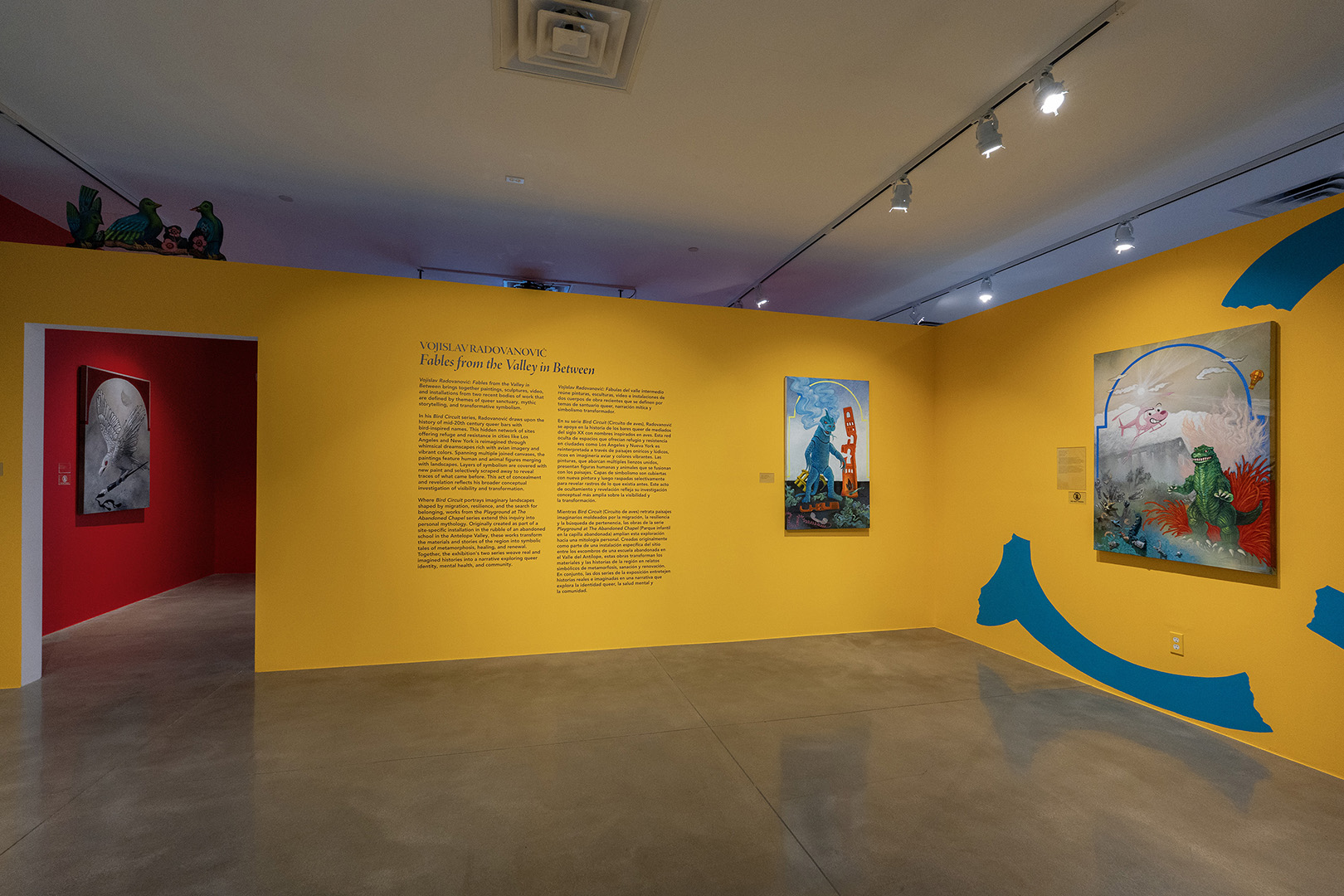
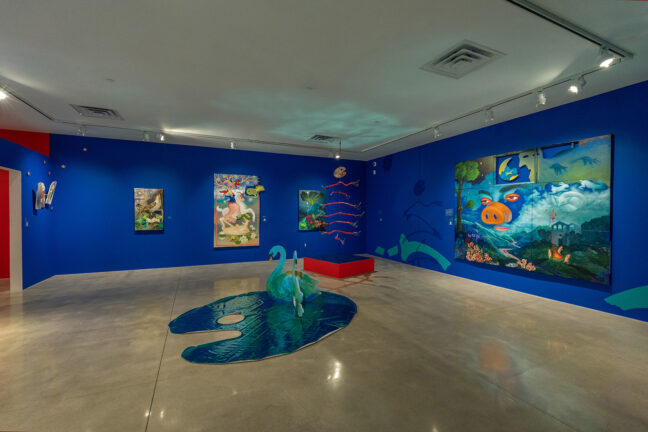
Each show is strong and beautiful, although my focus here is on the work of Vojislav Radovanovic, who always creates mystical, magical worlds in his exhibitions. Here, with gallery walls painted in electric hues that tie in with his work, his Fables from the Valley in Between is especially alchemic. Enriched with an exuberant palette, with intricate bead work and applique, and a sublime attention to detail, the artist entrances the viewer into experiences that are rapturous and transformational.
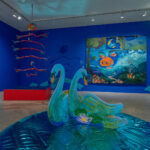
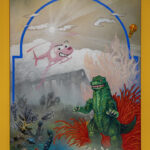
Three-dimensional swans float across a shimmering lake; a sculpted frog and lily pad perch nearby. Paintings of birds are perfectly rendered, representing multiple meanings in serendipitous settings. Childhood play-monsters come to life; a video installation ties together elements of play, nature, pain, and passion amid natural landscapes; fairy tale characters and delightful animal figures inhabit special places in large scale works. These works are dream-like fanciful, fabulous, and deeply moving.
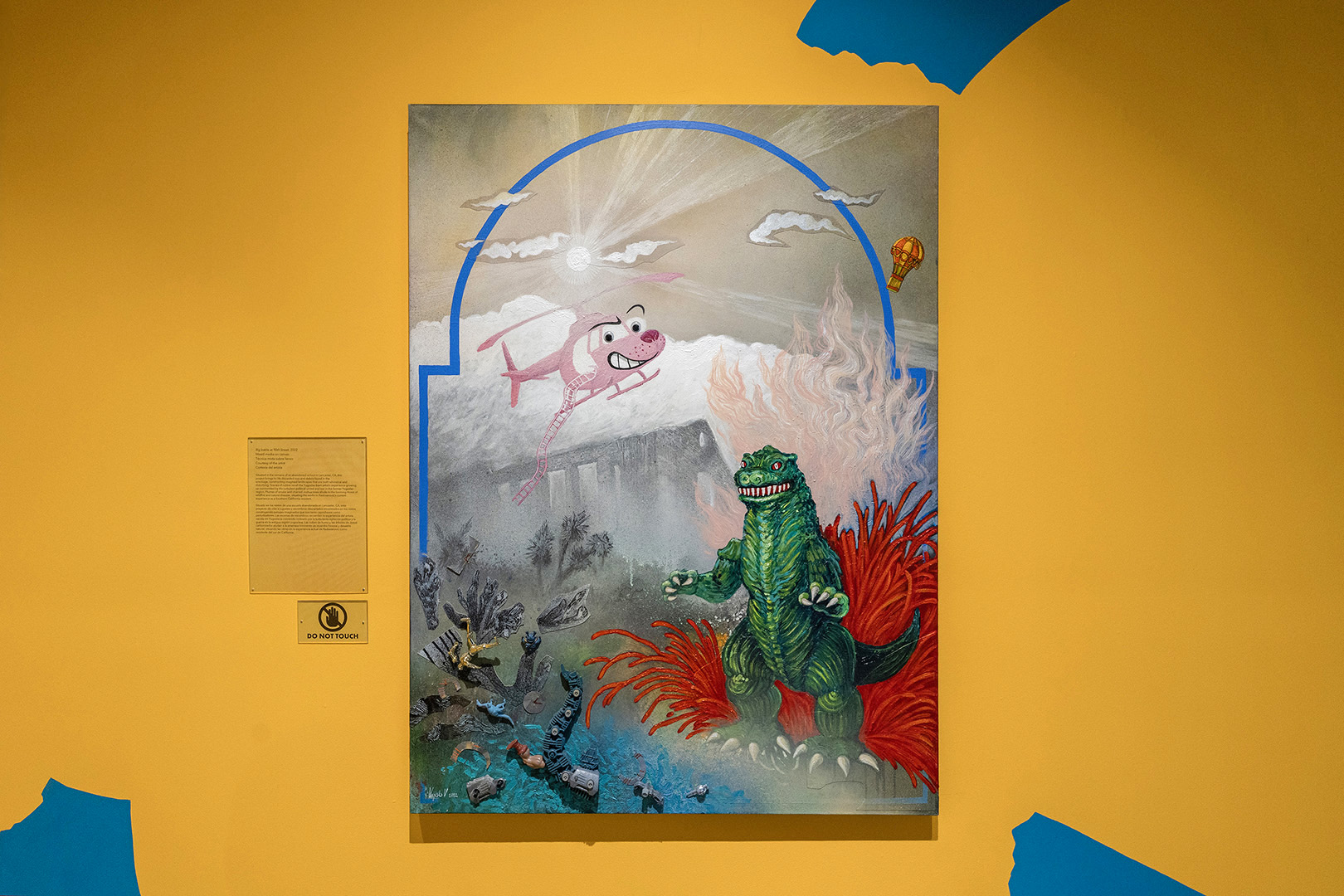
Integrating both human figures and animal life, weaving a tapestry of rich storytelling, Radovanovic creates a galvanizing and lovely exhibition that leads viewers through a land of connected gallery rooms. In the first, the room is populated by paintings of childhood toys and deserted Lancaster-area locales that tie into the artists own experience of turbulent unrest and warfare in eastern Europe.
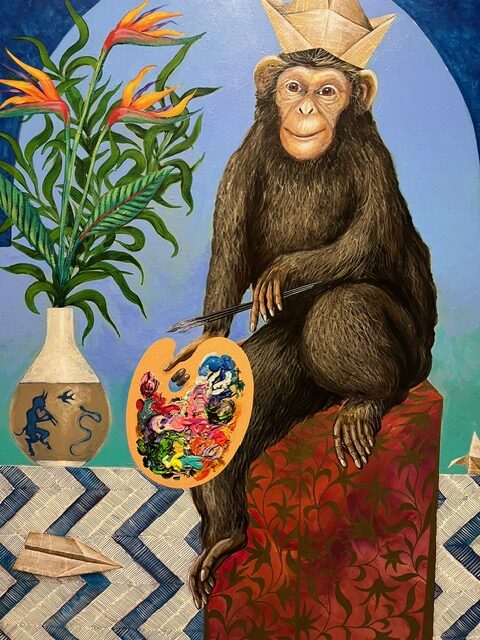
Segueing into other series, “Portrait of a Painter,” gives the viewer a look at an artist as chimpanzee, paint palette in hand, paper jester’s crown on his head. It serves as a transition point from the conjoined images of warfare and play to the freedom and sense of hope in richly nuanced paintings featuring the symbolism of birds.
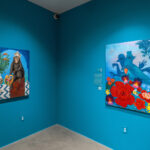
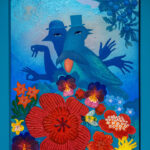
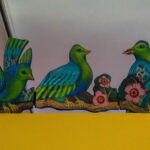
These paintings are a part of the artist’s Bird Circuit series, which refers to a network of mid-20th-century gay bars. The birds themselves are symbols of sanctuary and safety, indicating the location of gathering places for the gay community despite laws discouraging congregation. These images exude a powerful sense of energy, purpose, and resistance. Within the artist’s avian world there are anthropomorphic creatures, playful scenes, loving couples, and sculptural images that both charm and delight. A cut out of three “Small Birds” with beautiful green and lapis lazuli blue plumage stands above a doorway, leading into the next gallery rooms.
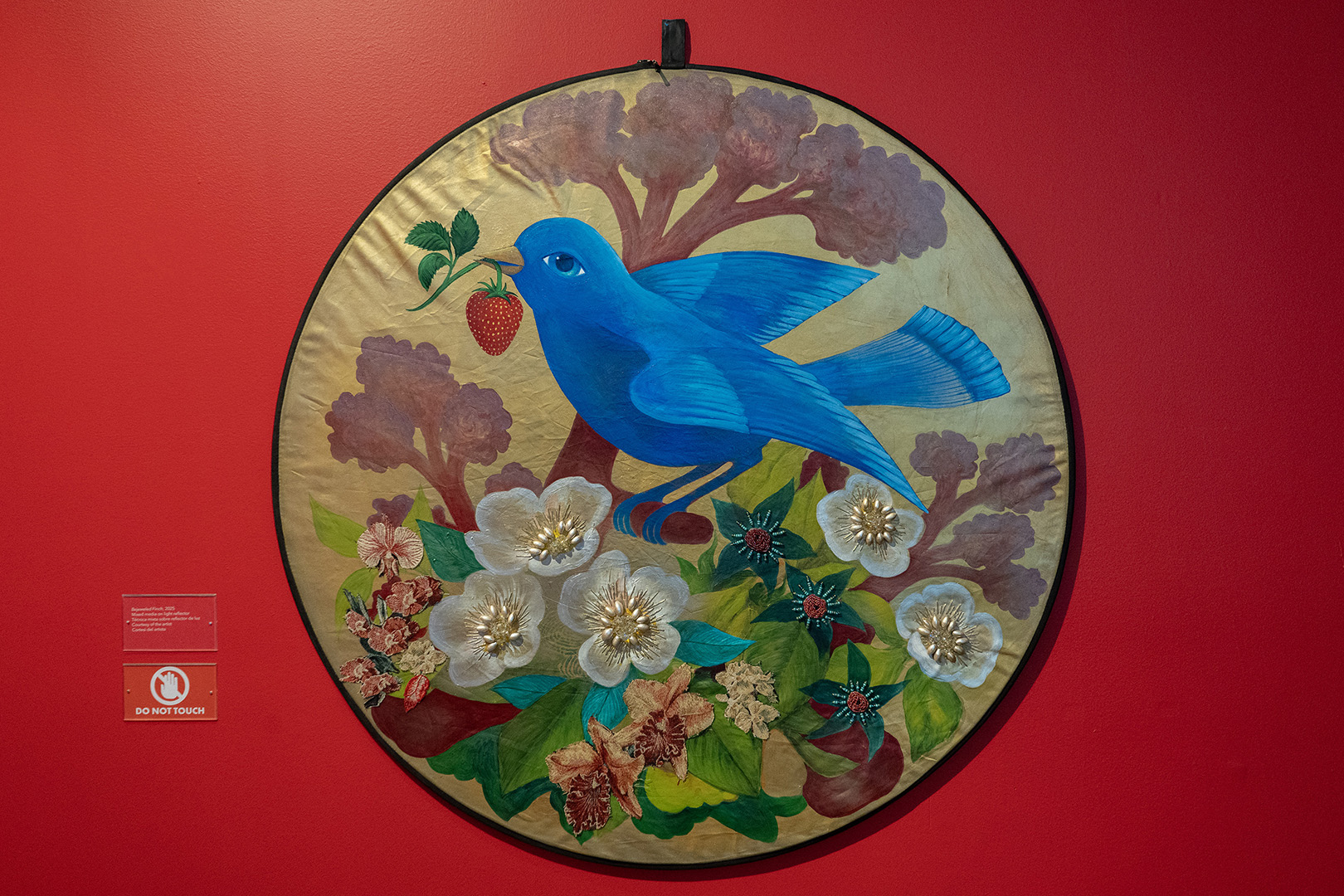
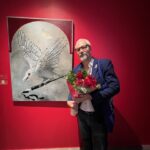
One of the most gorgeous images here is “Bejeweled Finch,” featuring a brilliant blue bird with a strawberry in his beak; lush, jeweled appliques sparkle in floral bursts, and the entire piece is set on a gold light reflector. It recalls both traditional religious icons and shields carried by medieval knights in battle. A very different avian image haunts the imagination in the mixed media “Omen,” featuring a silvery bird clutching a fountain pen between his teeth, ink trailing from its tip.
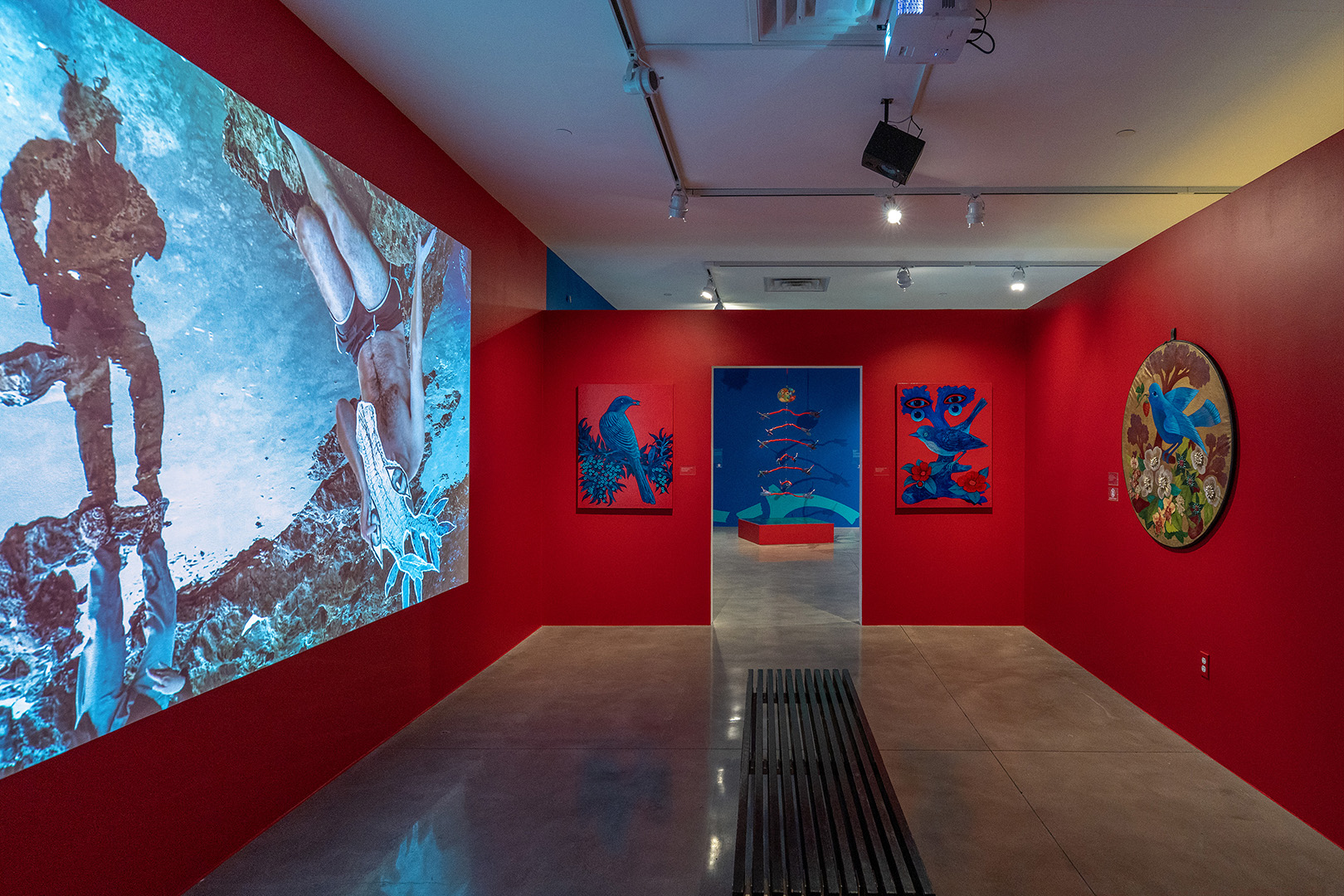
Across the gallery, a large video installation plays titled similarly to the exhibition itself as “The Valley in Between and Other Fables.” A variety of experimental film segments play created through poetic collaboration with the late Robert Patrick Playwright, Jason Jenn, Chuck Hohng, and Joseph Carrillo.
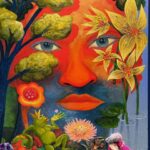
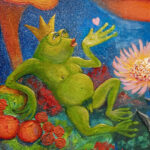
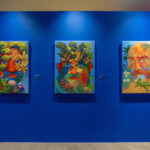
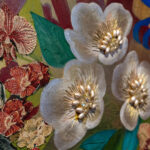
Having moved from childhood toys engaged in news media chaos and warfare to the fraught but free sanctuary of Radovanovic’s Bird Series, the final and largest room of the exhibition, moves into a series of works that speak to fairy tales, fantasy, and pure magic. Here viewers will meet the heavily floral image of a “Frog Prince” whose hair is landscaped into the fecund branches of a brilliant green tree. At the base of the painting, within the flora, an actual frog wearing a small gold crown, blows a kiss.
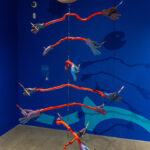
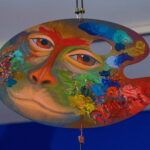
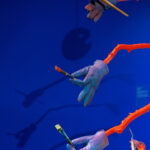
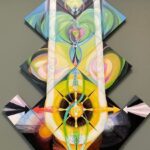
A suspended sculpture, reminiscent of Alexander Calder in shape is described by Radovanović as a “self-portrait.” The multi-armed figure has a head in the shape of a painter’s palette, while multiple arms and hands hold paint brushes. This piece also recalls the many-handed figures of Greek mythology, the Hekatonkheires.
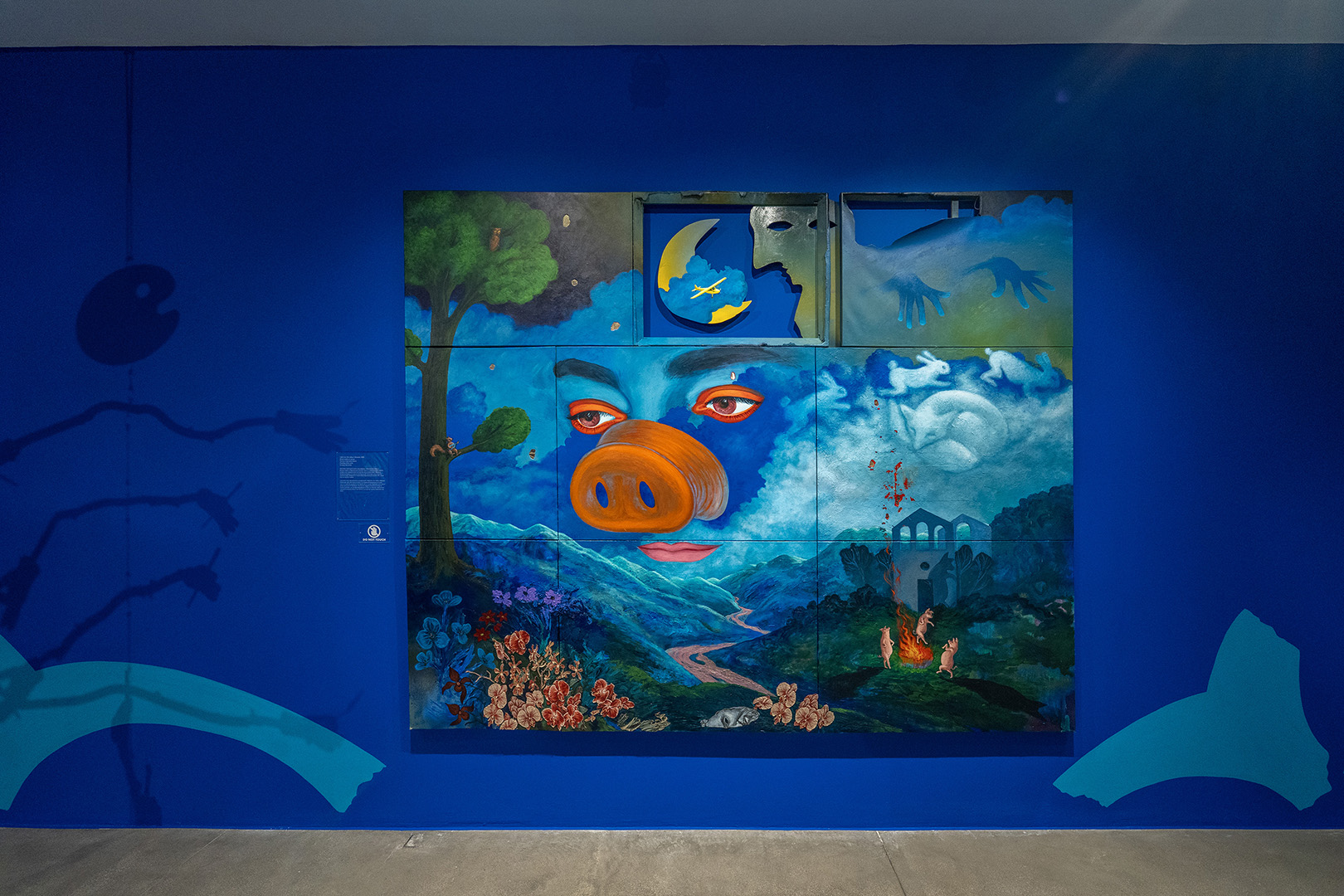
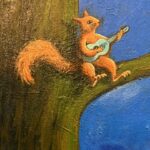
Moving deeper into fairy tale mythology is “Fable from the Valley in Between,” which includes the “Three Little Pigs” dancing by a roaring fire while a wolf’s shadow lurks, a charming owl, a musical squirrel in a tree, and a painter’s palette moon.
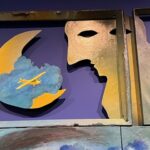
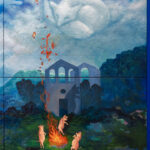
Dreamy and also lightly ominous, here the magical and the sublime eclipse the possibility of dread.
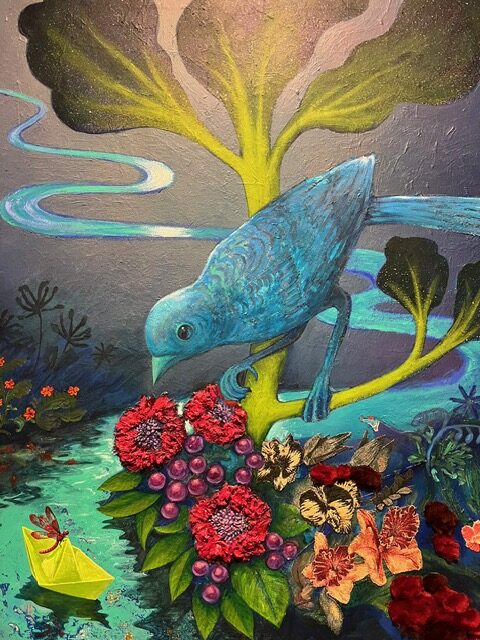
“Journey Down the Stream” in this same gallery is exquisitely wonderful, depicting a curious bird watching a small paper boat carrying a dragonfly as it sails down a small, moonlit stream. This piece speaks to hope and promise, including the promise of another world. Dragonflies, after all, represent many things, including change, transformation, self-realization, joy, light, and even a connection to the spirit world — all of which are a part of Radovanovic’s work.
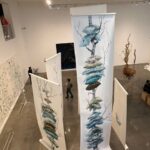
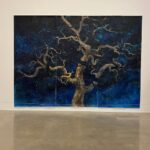
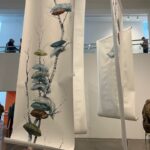
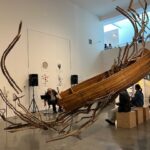
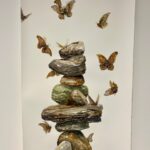
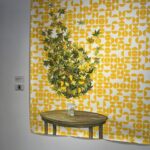
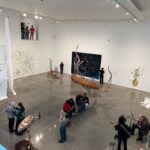
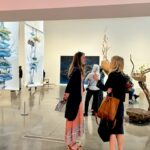
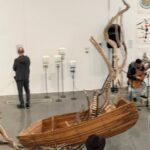
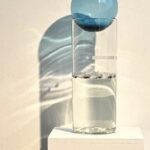
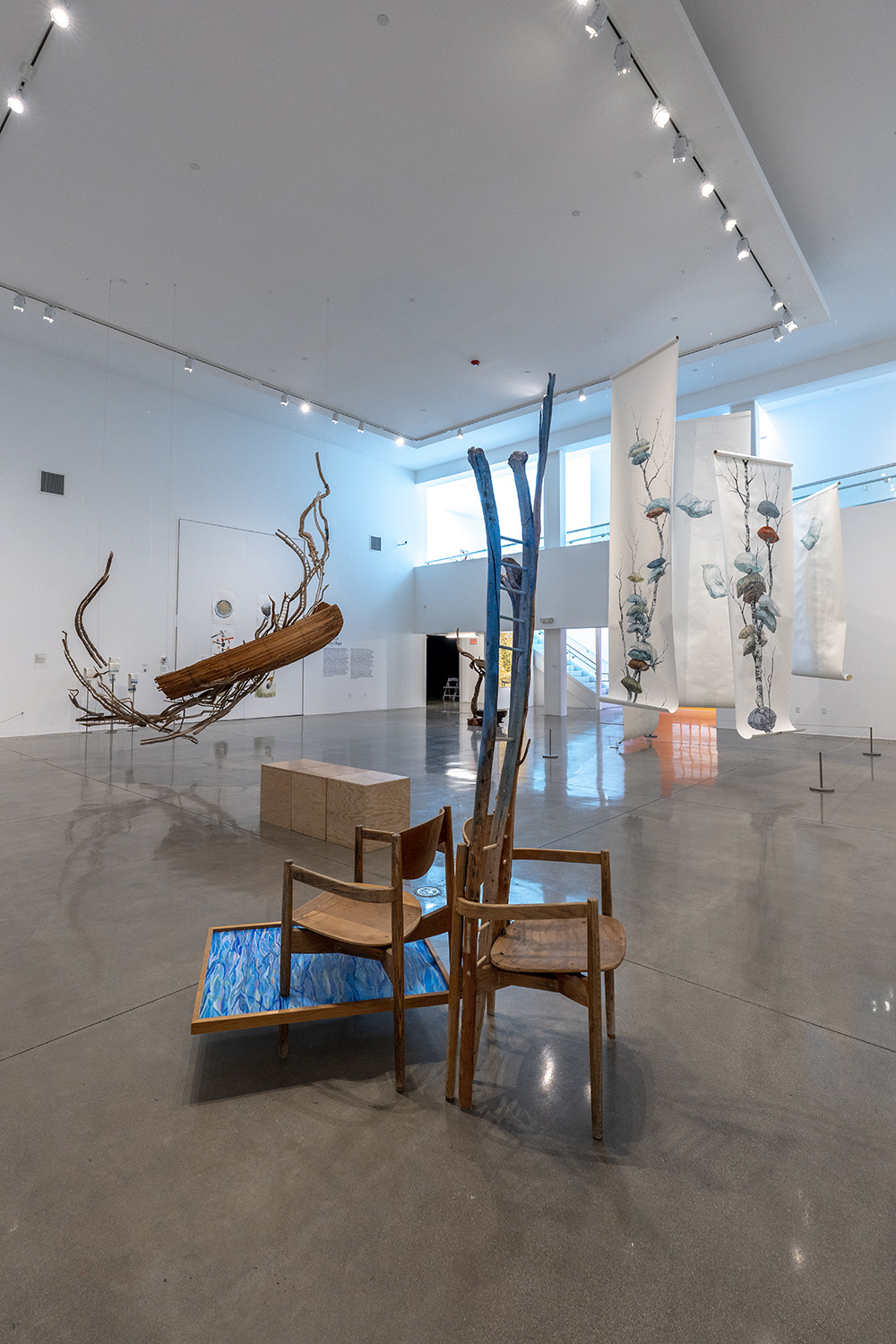
The other exhibitions in the museum are also potent and lovely. Nathan Huff’s Heavy Hope mixes natural beauty with elements of domesticity, creating a delicate and complete balance that includes installations and sculptures, paintings and drawings. Like Radovanovic, but completely different in style and tone, Huff deals with magic. Located in the expansive first floor gallery, the exhibit gives the viewer upended boats, chairs and flowers and stones, table tops with golden, hovering flowers.
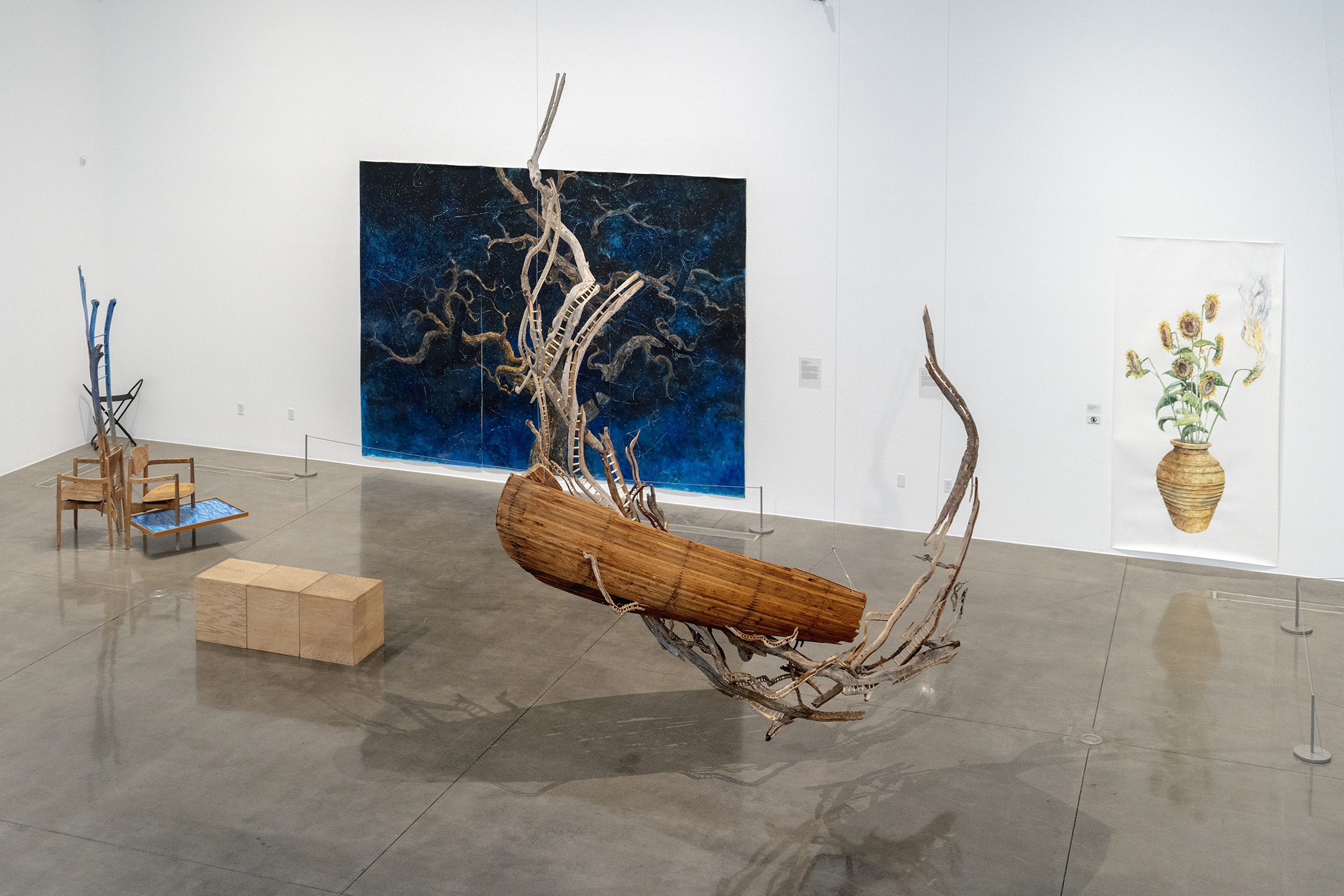
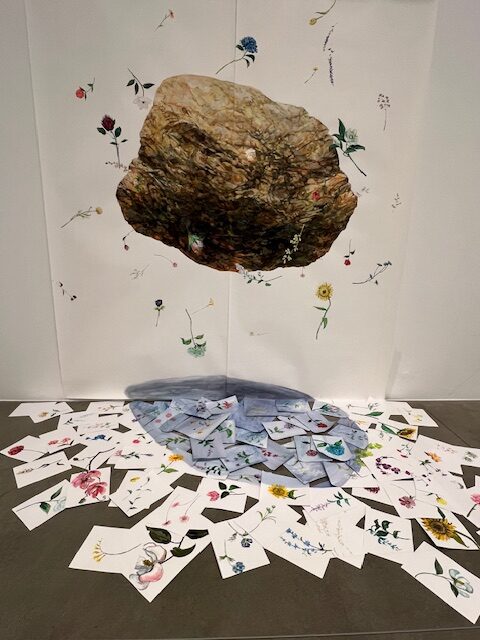
There are perfectly nuanced gouache and watercolor works that glow with inner and external light, installations that upend expectations and move toward delight. This, too, is a fairy tale, but one steeped in the alchemy of nature and the ache of the human heart.
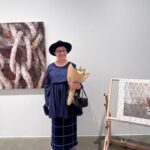
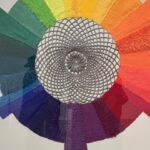
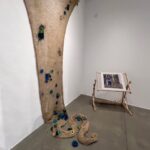
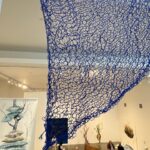
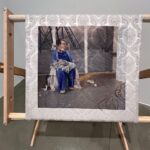
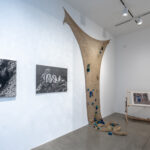
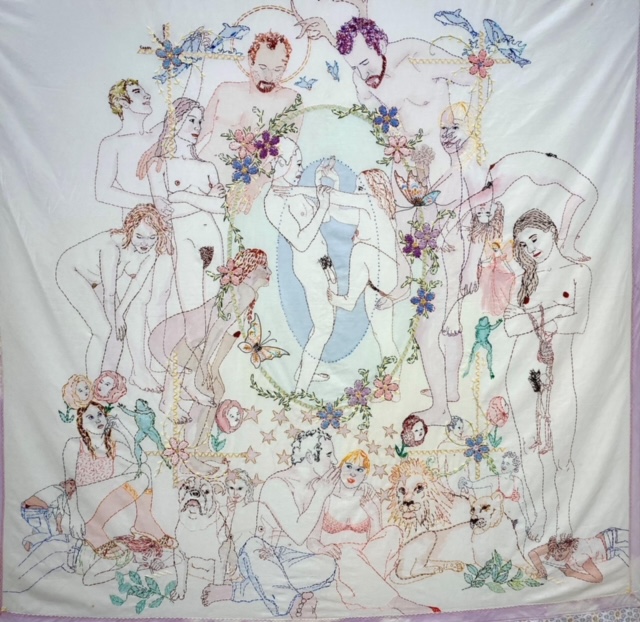
Sharon Kagan’s Bearing Witness is also woven with deep meaning, both literally and figuratively. Working in both mixed media painting, drawing, and textile work, her exhibition is finely wrought. Her knitted, linked, conjoined, and wonderfully sinuous sculptures explore both pain and compassion along with a profound sense of strength.
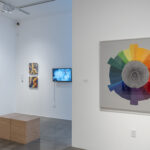
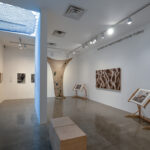
That strength and deep emotions is carried in both her use of seemingly fragile materials and through an indomitable subject. Her beautiful work explores both her own experience of human connectivity and her connection to the trauma of the Holocaust as a survivor’s daughter.
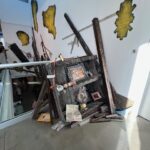
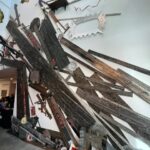
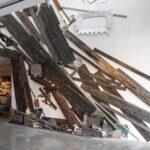
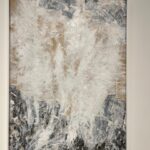
Other MOAH exhibitions include the expansive sculptural installation by Bachrun Lomele, Burn Pile/All Kinds of Murmuring Here and There which includes anonymous phrases and statements made by residents of the San Joaquin Valley, reconfigured to serve as symbols for the disjointed and ever mutable world we live in today. The installation towers between the two floors of the museum.
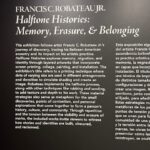
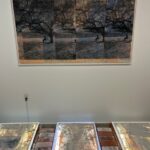
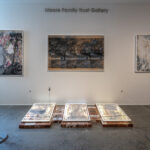
Francis C. Robateau Jr.’s Halftone Histories: Memory, Erasure, and Belonging is a hauntingly lovely mix of screen printing, collage, and painting. There are Mayan ruins and Lamanai sites in Belize as well as images from the LA area depicted here, each adding not only accumulated visual layers but a sense of the layers of history and ancestry, self-discovery, and communal heritage.
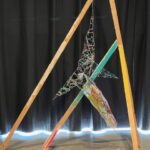
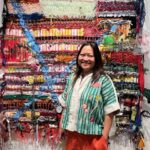
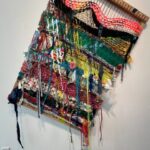
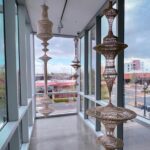
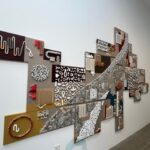
Also evoking a sense of heritage and cultural reimagining is artist Diane Briones Williams in her The Precarious Life of the Parol, where mixed media and textile works examine not just sculptural weavings but the memories and past history of her Filipinx identity.
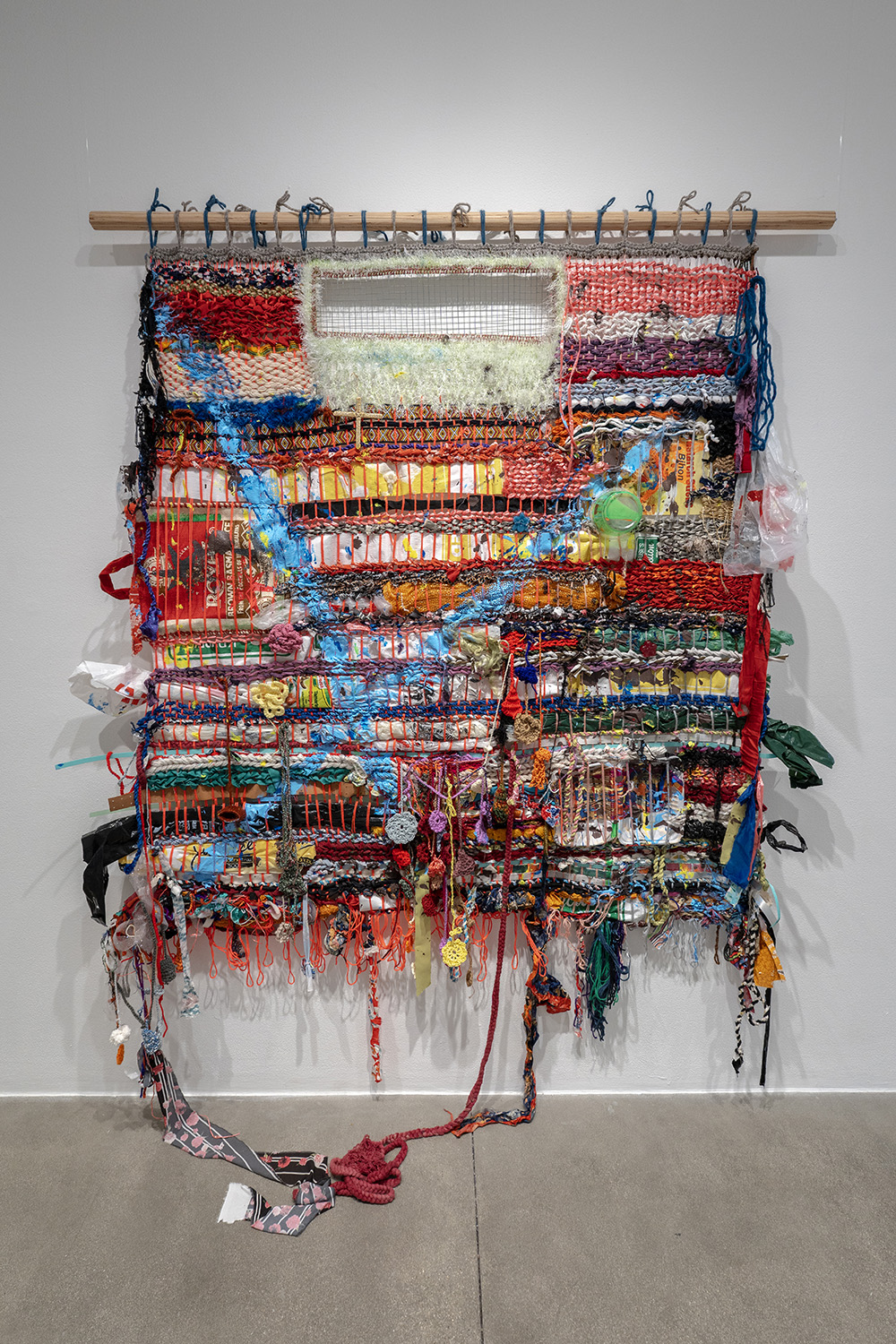
Jubilantly colorful and bearing the weight of collected detritus, each image is complex and carefully rendered.
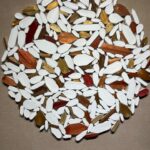
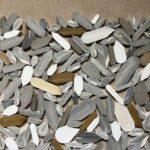
In contrast, it is a loss of heritage that makes the focus of Brian Singer’s It was a pleasure to burn.
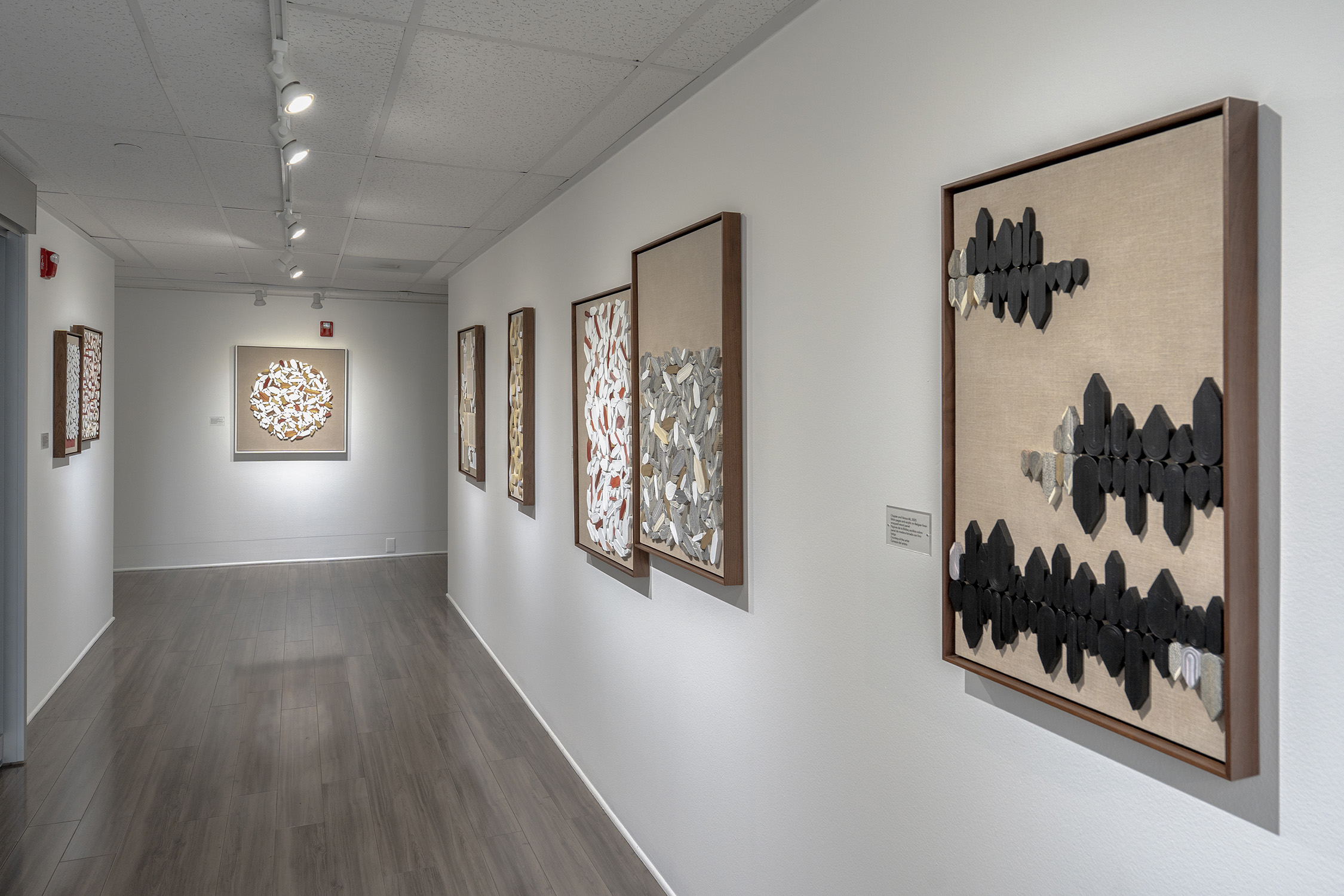
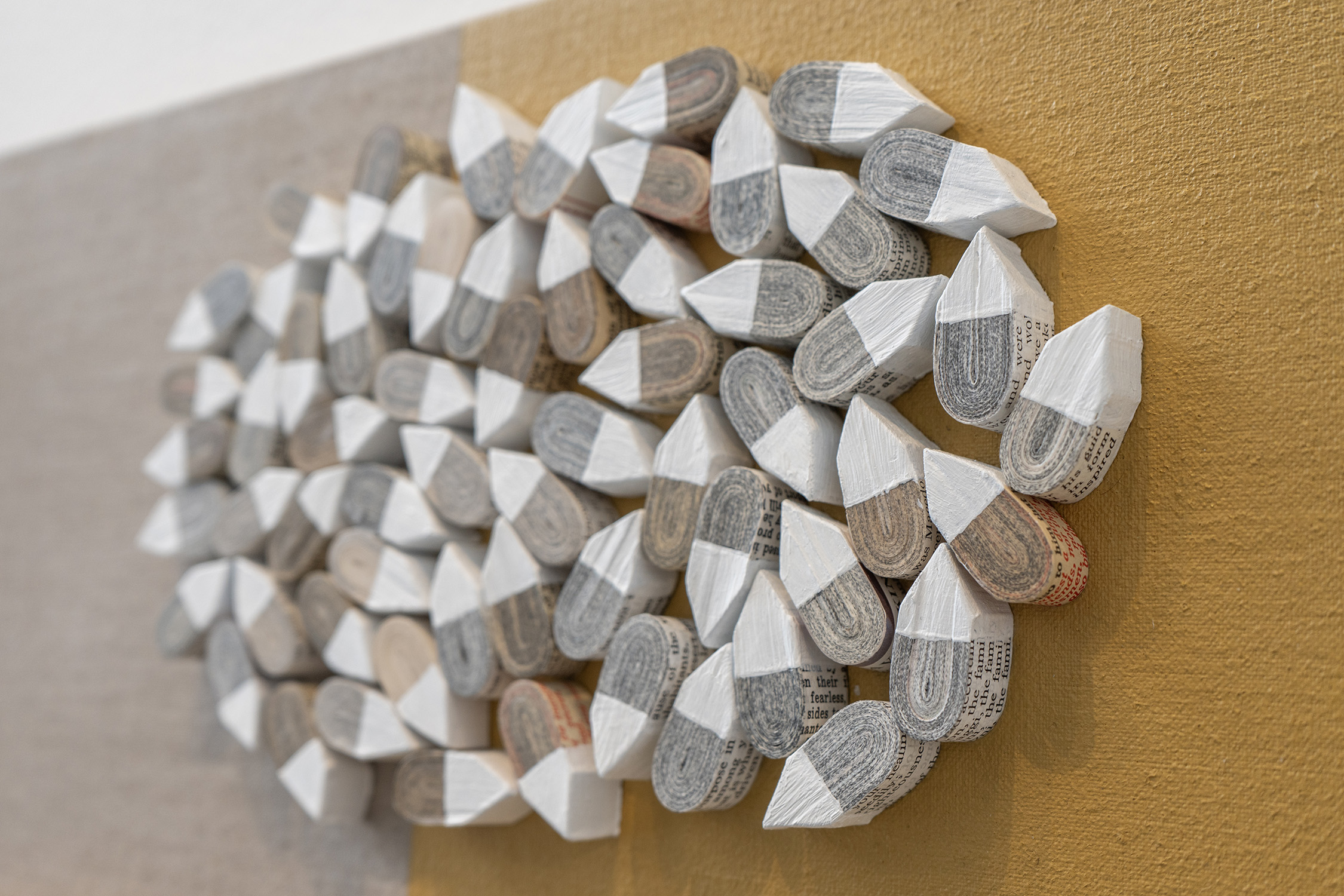
In this exhibition, the artist examines the power of words, utilizing the text of banned books and the Bible to create beautiful, muted mosaics made of compressed book pages.
Taken together or individually, the museum’s Metaphor is a beautiful mix of the representational and abstract, of deep meaning arising from stories writ large and luminous. Experience the joy and absorb the stories: you will be wiser and happier for making the drive.
MOAH is located at 655 Lancaster Blvd. in Lancaster.
- Genie Davis; photos by Genie Davis and provided courtesy of L.A. Art Documents