
The Collectivists: The Brand Library & Art Center


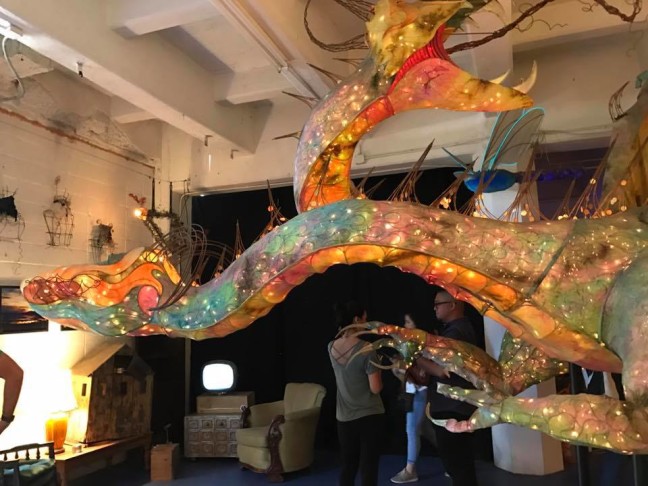
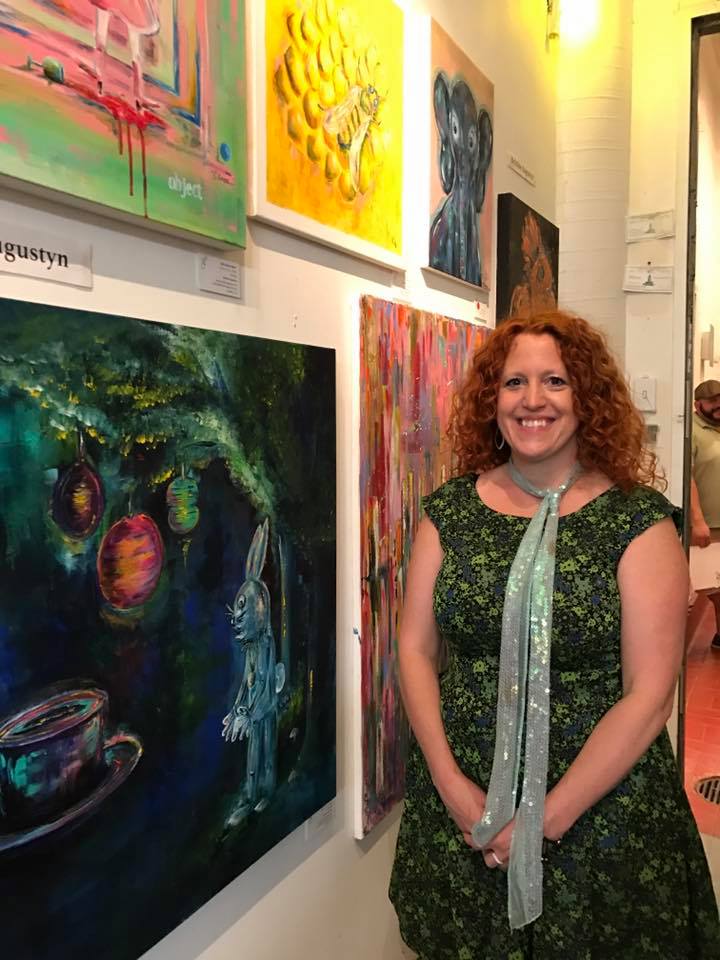
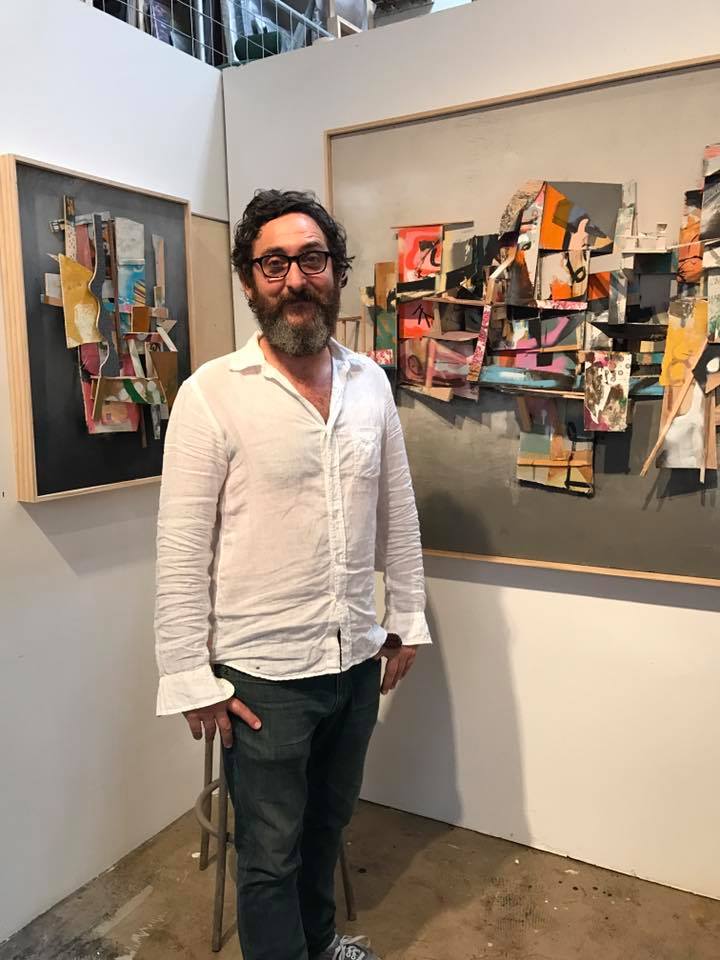
The Collectivists with Manual History Machines, Tiger Strikes Asteroid Los AngelesAssociation of Hysteric Curators, Monte Vista, Durden and Ray, and Eastside International / ESXLA is a wildly creative exhibition that highlights some of the most innovative art collectives exhibition curator Kara Tomé (below) could find.

collect 1

The show is as magical as it is meta. This is an exhibition that’s not only about art for arts sake but about the collectives that are creating an environment that supports and sustains art for art’s sake.

Being a part of a collective leads to an atmosphere in which a group can promote individual art for the greater good of all. It’s a very progressive idea, in other words, the type of idea we could use more of in politics today as well as in art.  The influence of the group offers new success for both its members and the group. Pretty cool, right?

collect 9

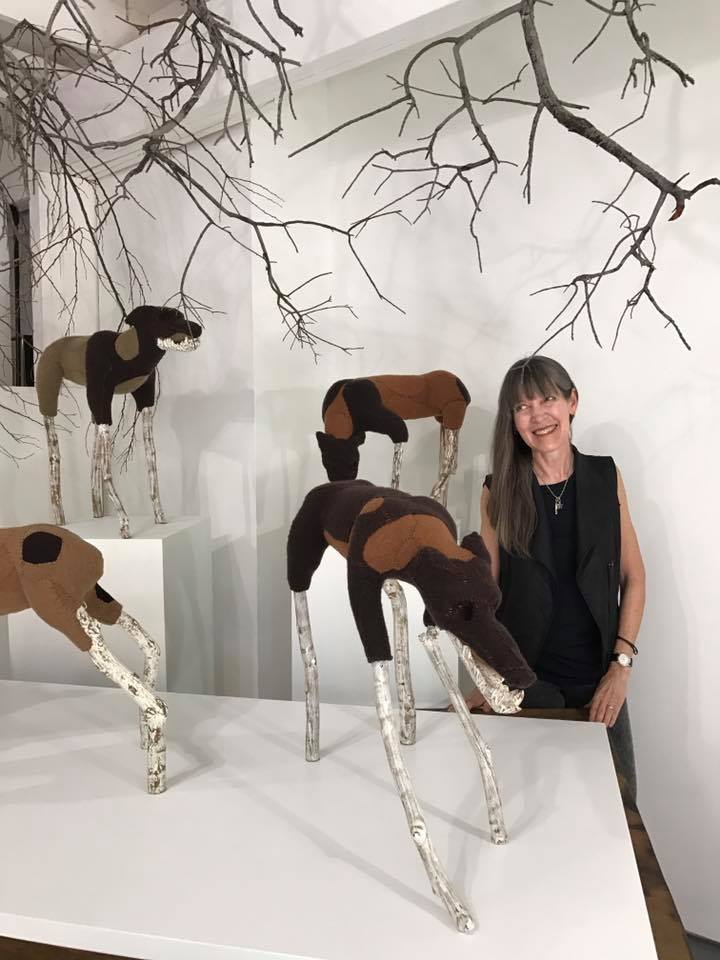
Featuring the works of more than 60 artists from six LA-based art collectives, Tome, along with Brand Art Center curator Shannon Currie Holmes (above) are offering a stellar show of cutting edge art.

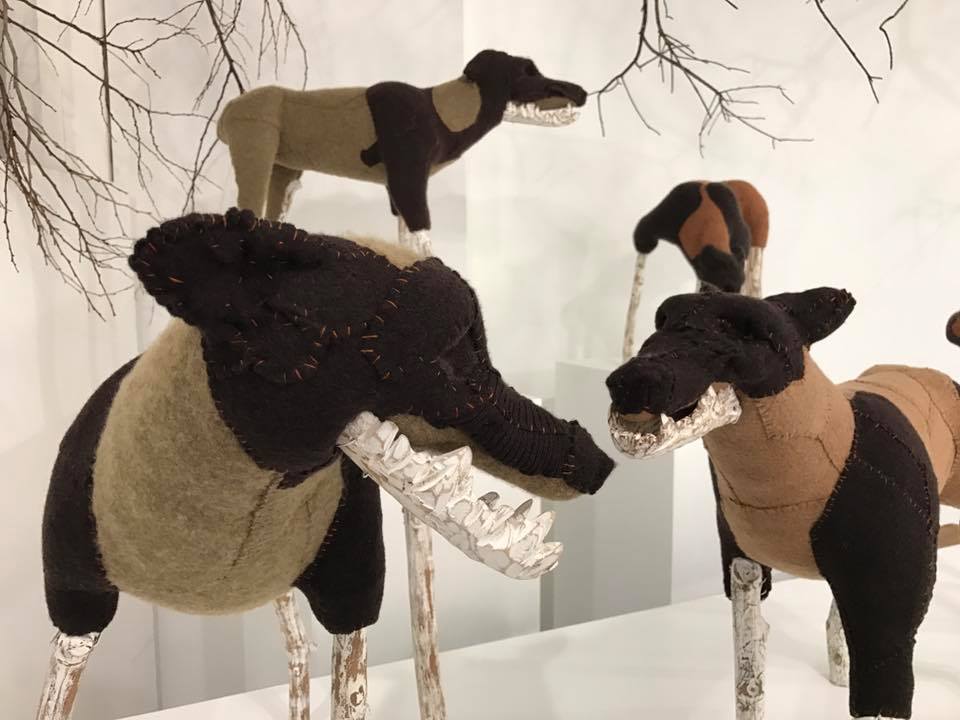
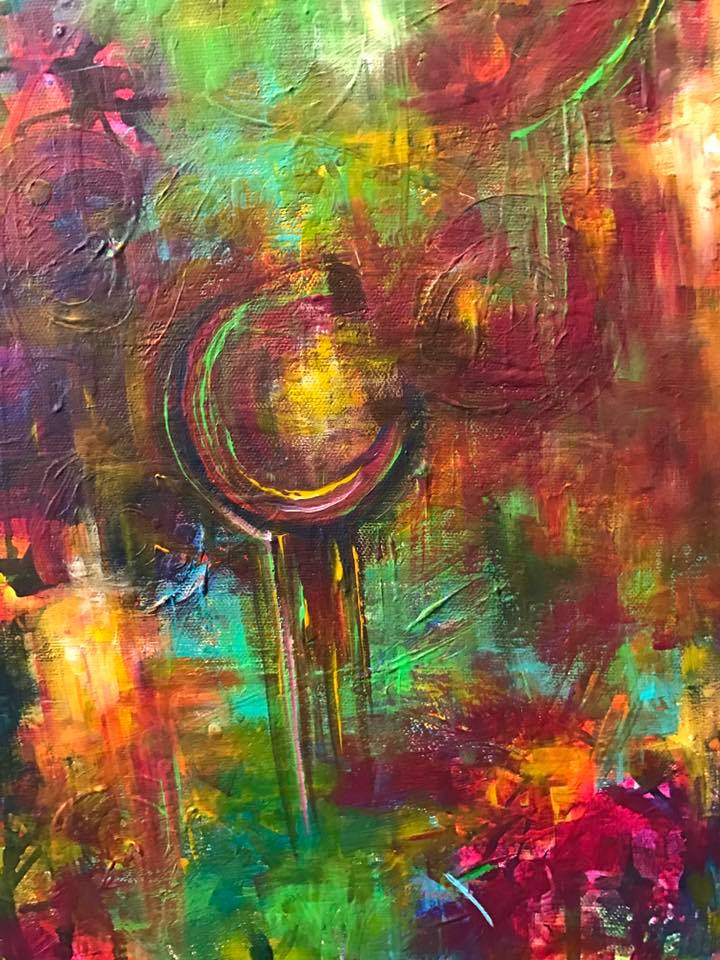
Paintings, mixed media, and sculpture are each represented in a vibrant and compelling setting.

3R1A1509

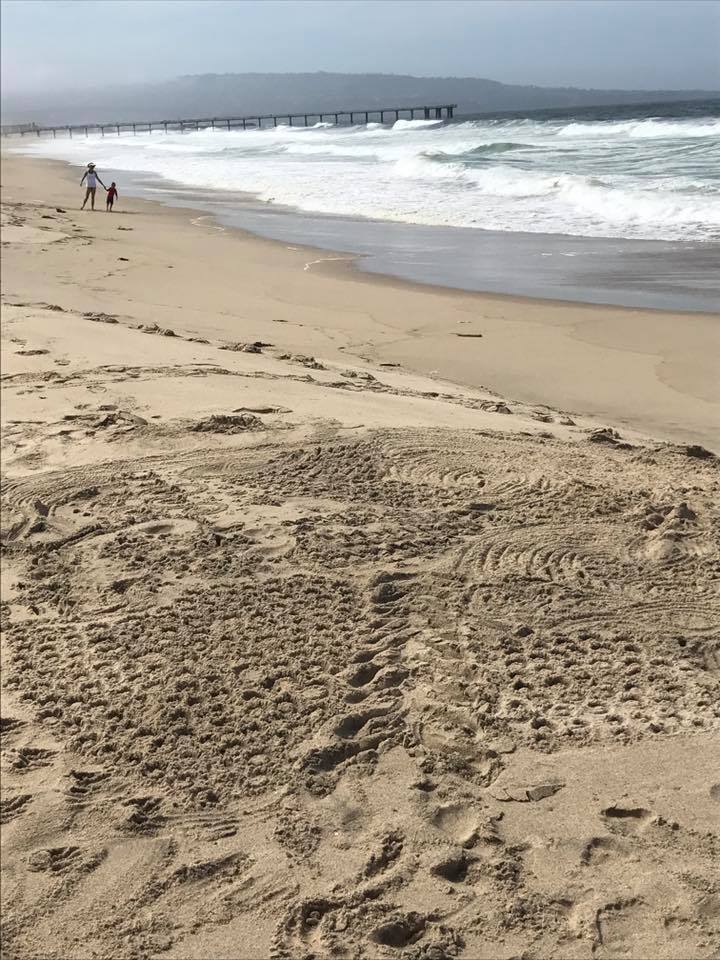
Above, installation artist Dani Dodge with her piece “365.”  Dodge notes “LA is a hard town to live in if you’re not a model. I wanted to do something that would give affirmation to people, even if it was only temporary.” To do so she left affirmations everywhere – in the sand, on a straw wrapper, some locations where her “just the way you are” encouragement would be visible for 6 months, other places where it would disappear almost instantly. She posted some affirmations in New York, but primarily Los Angeles was her palette for 365 days worth of documented personal positivity, presented on video here.

3R1A1514

Above, Alison Woods with a glowing work that evokes a mosaic.

3R1A1518

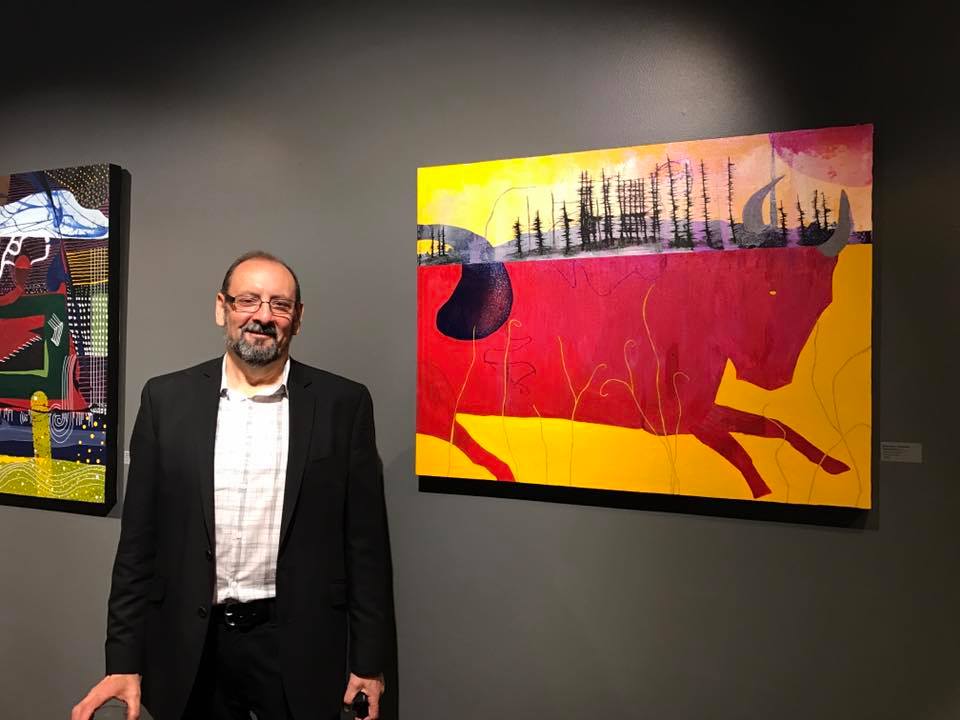
Above, David Leapman with “Individual Scent.” He notes “I’ve changed around a precise method of mine using a roller to now use brush work for a whole different feel. I mask to cut out the shapes. It’s a change from the normal way I’m working. ”

3R1A1519

Above and below,  Rebecca Bennett Duke with “Over the Rainbow.”  Of her work she says “When I was a kid, my dad sold firewood in Vermont, and when my husband and I bought property in Eagle Rock, there was a wood pile.  Those were in part the inspiration.” The lightweight cast sculptures are whimsical and wonderful.

3R1A1521

3R1A1526

Above, Steven Wolkoff with another lighthearted work, a sculpture created entirely of Behr paint gummy bears. The mirror heightens the effect of a kind of endless, kinetic sorcery.

3R1A1522

As we explored the exhibition space, we saw both vivid palettes and sculptures that use white the way Midas used gold…

Colllect 6

collect 2

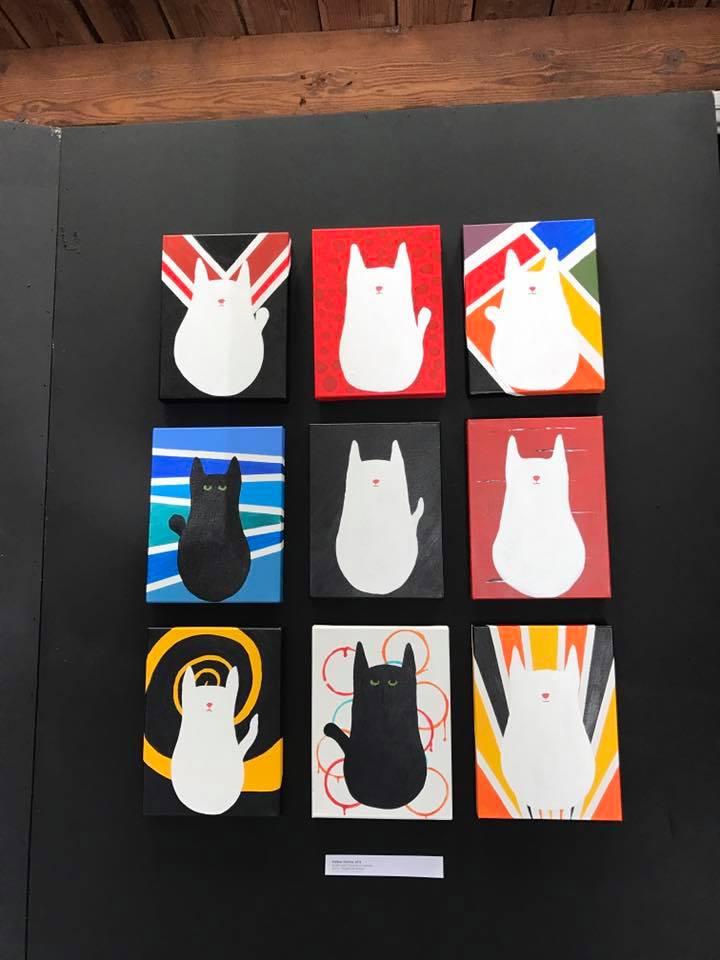
Bold and bright, or dark and mysterious as night…

collect 3 collect 4

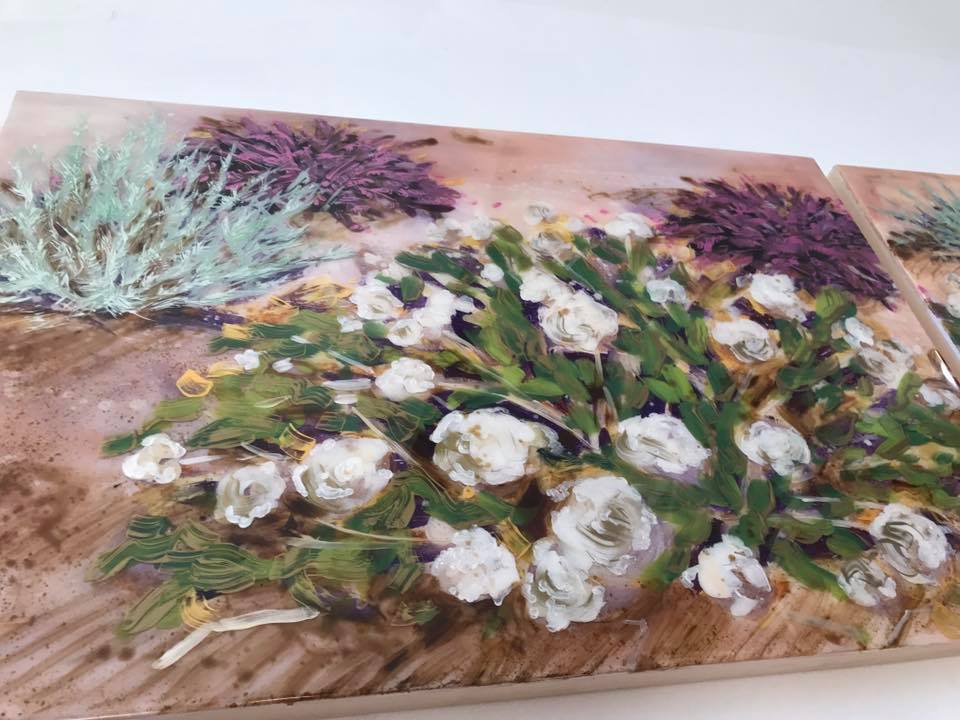
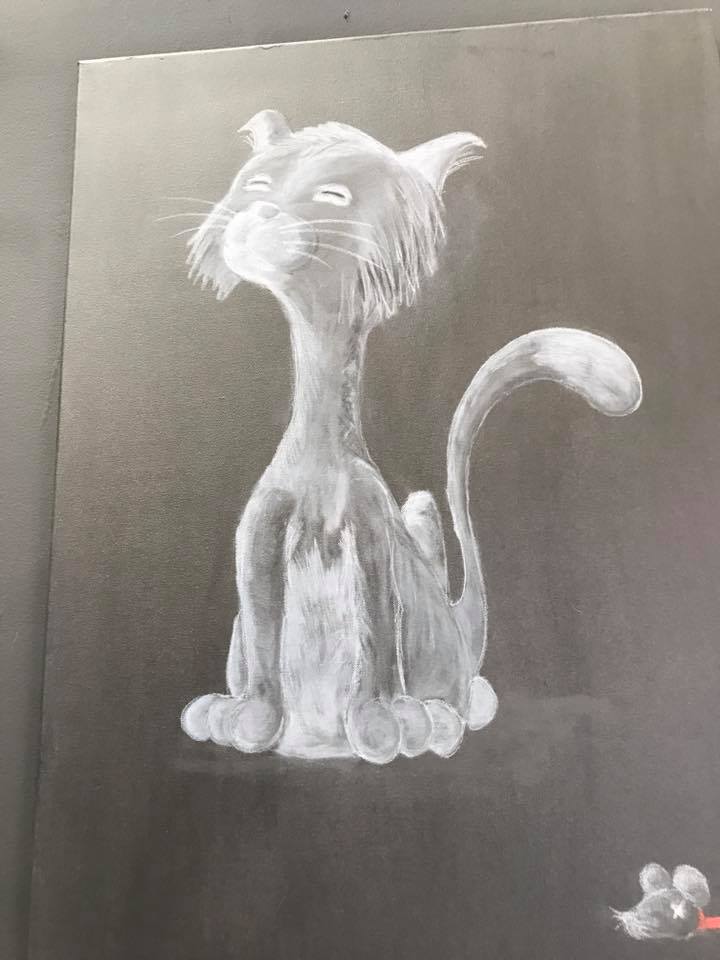
Both playful and edgy…there’s a dream-like quality to many of the works, a light but potent touch of the surreal.

collect 7

collect 8

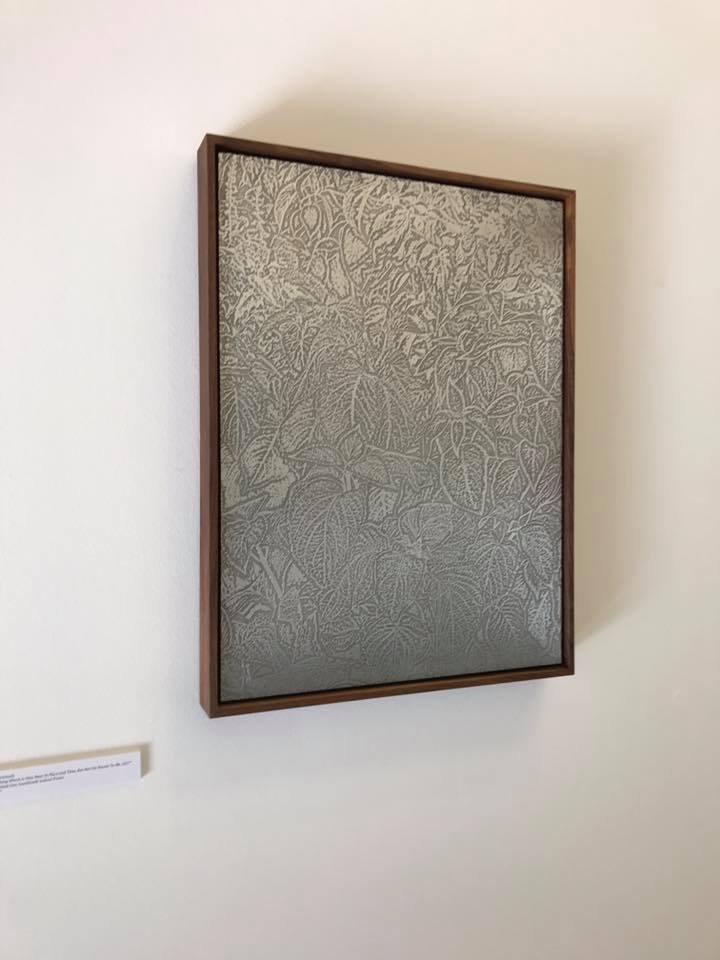
Above, Valerie Wilcox with her “Untitled.” She describes the medium as “Graphite, acrylic, plaster, and foam core on wood. It’s emblematic of lots of my sculptural mixed-media work.” Below, different takes on 3-D art.

Collect 10

Sculptural and mixed media pieces are fluid and thoughtful…

Collect 11

collect 12

collect 13

collect 14

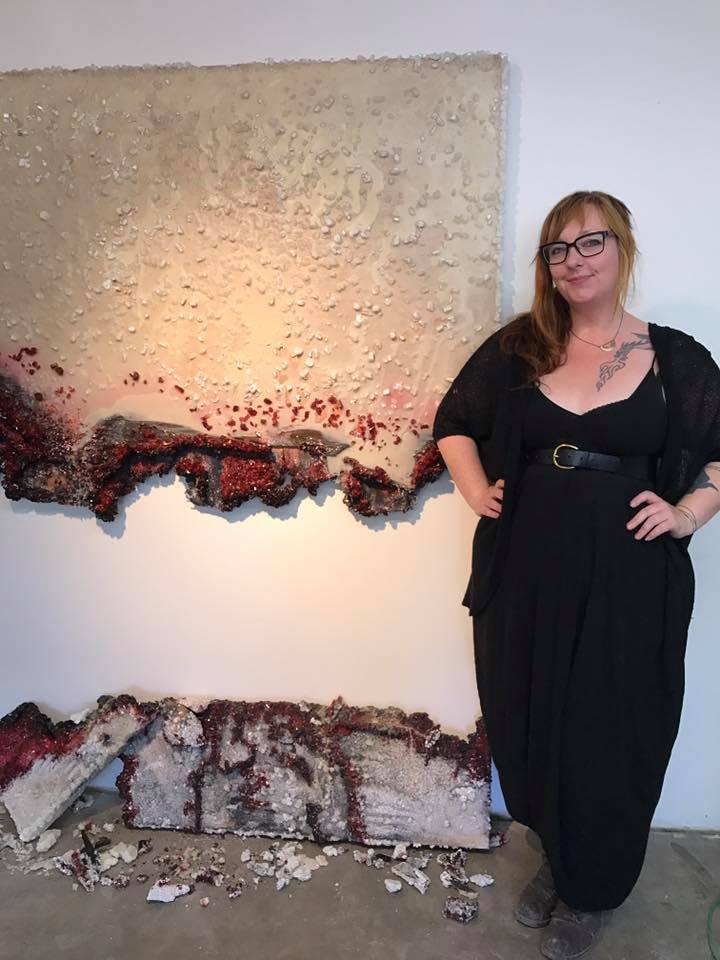
Above, David Spanbock’s work resembles crystals, translucent and exuding light.

collect 16

The personal and social merge…

collect 17

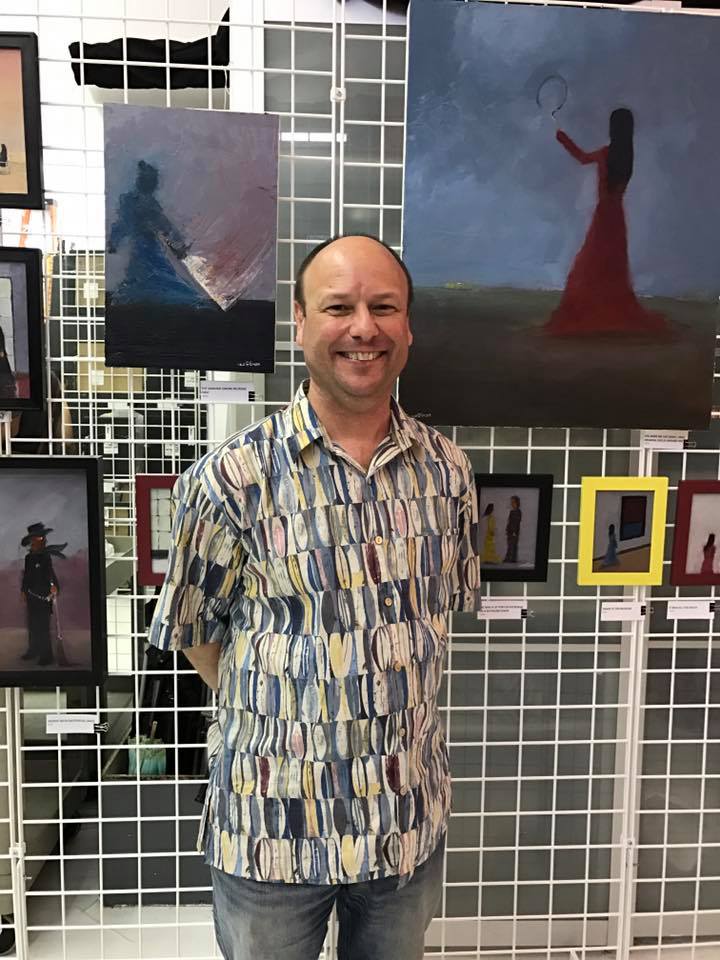
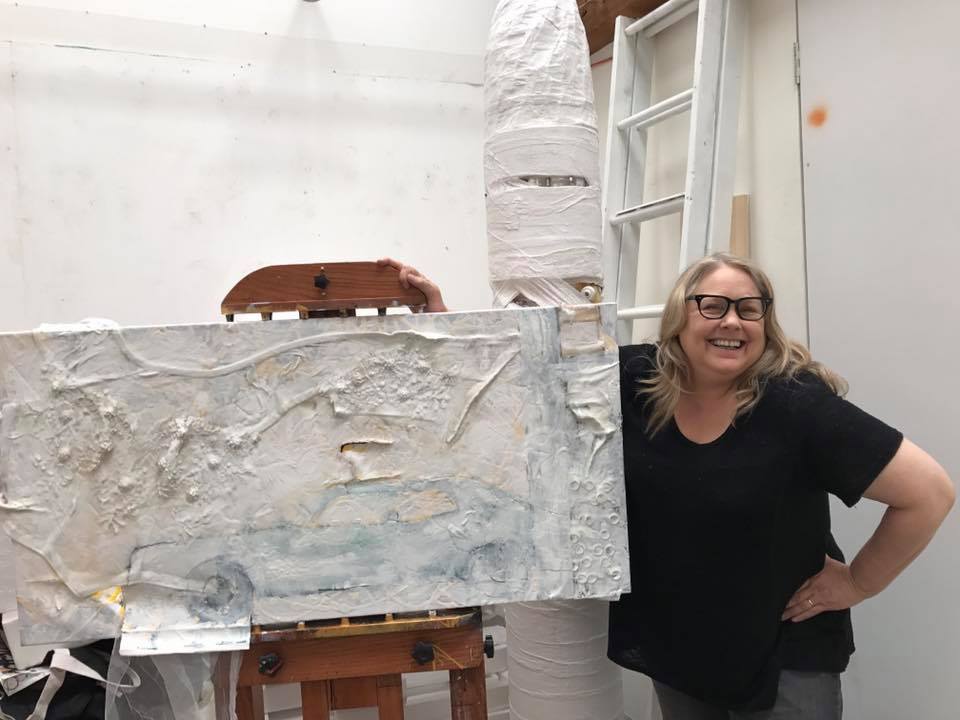
Above, the author with artist Dani Dodge

collect 18

Above and below, an homage to Prince, “Violet Ghost,” by Rema Ghuloum. “I sand between layers of dry and glazed paint, it builds up very slowly, dense, yet thin.”  The effect is that of a stained glass collage.

collect 19

There’s a lot of glow in this show.

collect 20

Collectivists 21 dani

Above, the force behind The Collectivists, Kara Tome and Shannon Currie Holmes.

In short:  art is both an individual activity and a collaborative one. It is the support of a community and the power of personal passion. It is innovative, fragile, and always seeking a space in the world. The Collectivists offers that space to present art culled from groups who also offer the support and strength artists need to survive and thrive.

A shout-out to all the artists and collectives participating:

Durden & Ray exhibiting artists: Shiva Aliabadi, Jorin Bossen, Gul Cagin, Sijia Chen, Dani Dodge, Tom Dunn, Lana Duong, Roni Feldman, Jon Flack, Sean Michael Gallagher, Ed Gomez, Jenny Hager, Ben Jackel, Brian Thomas Jones, David Leapman, Alanna Marcelletti, Chris Mercier, Ty Powell, Max Presneill, Nano Rubio, David Spanbock, Curtis Stage, Jesse Standlea, Steven Wolkoff and Alison Woods.

Eastside International (ESXLA) exhibiting artists: Sarah Burwash, Bruce Ingram, Robin Tarbet, Stacy Wendt, Min Wong.

Manual History Machines exhibiting artists: Andrea Marie Breiling, Daniela Campins, Rema Ghuloum, Michelle Carla Handel, Bessie Kunath, Jill Spector, Tessie Salcido Whitmore and Suné Woods.

Monte Vista Projects exhibiting artists: Rebecca Bennett Duke, Michael Lewis Dodge, Danny Escalante, Roberta Gentry, Melissa Huddleston, Jay Lizo and Chris Miller.

Tiger Strikes Asteroid exhibiting artists: (from TSA Los Angeles) Carl Baratta, Vanessa Chow, Erin Harmon, Brittany Mojo, Liz Nurenberg, Brian Porray, Jonathan Matthew Ryan, Laurel Shear, Christopher Ulivo, (from TSA New York) Alex Paik and Andrew Prayzner, (from TSA Philadelphia) Mark Brosseau, Megan Biddle, (from TSA Chicago) Zachary Cahill, Michelle Wasson.

Association of Hysteric Curators exhibiting artists: Mary Anna Pomonis and Allison Stewart.

The Collectivists will runs  through March 12 at the Brand Library & Art Center, 1601 W. Mountain St, Glendale.

  • Genie Davis; Photos: Jack Burke, Genie Davis


Excessivism: Creating Beyond Boundaries


As human beings, we grow by testing boundaries. By pushing limits. By finding out just far we can go. As an international art movement, Excessivism does much the same.

Frank Auerbach4

Above, artist Frank Auerbach

While excessivism has been around since the 1950s, with artists Frank Auerbach and Bram Bogart leading the charge, the movement has only recently fully come into its own. Devoted to going beyond what is required to create a work of art, the movement’s  name bears reference to the contemporary consumer’s urge to go beyond what is needed and beyond one’s means when acquiring material goods. The works are a commentary in and of themselves on materialism.

Bram_Bogart2

Above, Bram Bogart

It would be entirely possible to get lost within this commentary, looking for the editorializing of excess through this art work. However, the visual aesthetic of excessivism is so potent that it even transcends its own political and social roots. From multi-media collages to installations and thickly layered paintings, from conceptual works that use lush, ripe gold and bronze, the movement is as inherently visual and exciting as it is a fascinating political, economic, and yes, spiritual statement on materialism and capitalism.

excesssivist initiative

In 2015, artist and curator Kaloust Guedel brought twenty excessivist artists’ work to LA Art Core in the Excessivist Initiative exhibition. With this powerful show, viewers were drawn to consider the dichotomy between the wealthy who squander natural resources and those just barely surviving, as well as confronting the planned obsolescence of resources for private profit, which impacts humanity itself.


According to Guedel, “Society (is) in a state of ever-increasing excess and the waste of resources is reflected in the arts, particularly of visual artists…As a reflection, examination, or investigation of every aspect of life in excessive state…subject areas are, but not limited to economics, politics and psychology. In politics the leaders become mis-leaders only to serve the interests of their contributors, whose interests are more often than not opposed to the interests of their electors.”

Alexis Harding4

Above, Alexis Harding

The art of the Excessivist movement reflects and examines the desire to acquire material goods out of simply wanting them rather than out of need.

Excessivism as an art movement expresses itself primarily through abstraction and installations. 

Movement artists rely on portraiture, precious and semi-precious materials such as gold and bronze, or thick layers of paint to illuminate contemporary political topics. Excessivism is the very epitome of the catch phrase “The medium is the message,” as Canadian professor and philosopher Marshall McLuhan once memorably said. In short: the form of a medium is inevitably embedded in any message it issues.

Frank Auerbach6

Frank Auerbach works with thick paint, layering and removing it, creating distorted, layered images, both figurative and abstract. The works, many created in the 1950s, use so many different colors that there is no clearly defined palette.

Roxy Paine

Roxy Paine shapes works in which paint is so thick that it drips like icing, hangs suspended like icicles. Paine created paintings using a mechanical method that he invented, called the “paint dipper.”

Bram Bogart

Bram Bogart employed paint sculpturally to create three-dimensional wedges of color.

OLYMPUS DIGITAL CAMERA

Scott Richter’s work is more two-dimensional, but it, too, features thick ribbons of color that make a viewer want to peel away the cross-hatched stripes of paint.

Alexis Harding

Alexis Harding paints receding waves of color, in which shades mix, shift, and ebb. This paint is rich and deep, brush strokes visible, thick globs peeling from the edge of the frame or running onto the floor in streams.

marco lamoyi4

Marco Lamoyi’s work varies smooth surfaces with a 3-D taffy-like spillage. As if paint were indeed melted candy oozing from a shiny wrapper, his rainbows of color look wet and supple, as if they could melt in the viewers hand as well as in the mind. And Guedel uses a wide range of materials such as plexiglass, metal, vinyl, and acrylic as he morphs paintings into sculptures and architecture


It’s fair to say that excessivism exceeds its own message: social and economic commentary on wealth and waste aside, these are fascinating, raw, immersive works.

  • Genie Davis; photos: courtesy of artists

Emily Wiseman Has the Power


wiseman

Above, from Powerful

The culmination of a month-long Shoebox Projects residency, a reception for Emily Wiseman’s Powerful will be held February 12th from 3-5 p.m.


Wiseman’s installation here is a continuation of her “Occupy Series,” exploring fabric and pattern. These lush, textural works consider the symbolism of their material and how it is used in the design of men’s business suits, long seen as symbolizing power and wealth.

wiseman-If-Wishes-Were-Horses-detail

Above, detail from “If Wishes Were Horses”

Wiseman has made the very cloth these suits are cut from into gorgeous yet subversive political art. The artist deconstructs and redesigns the suits, making them into decorative, beautiful objects that exude a feminine sense of comfort, using them to reflect the opposite of their original design and function.

wiseman-If-Wishes-Were-Horses-60x72

Above, “If Wishes Were Horses”

The “occupy” refers to the idea of determining just who is being occupied by the simple act of wearing the original clothing. Her almost ethereal floral works, such as “I’ve Been Waiting for You Obi Wan” and “If Wishes Were Horses” flawlessly convey the way these garments and their meaning is perceived. According to Wiseman, they reflect themes of gender bias, corporate influence, and income inequality. But even without this knowledge, the lush and lovely fabric works subtly suggest how something that is essentially worn as armor – at least in the corporate and political world – can be turned inside out, restructured to become something that opens the heart rather than constricts it.

wiseman-Ive-Been-Waiting-For-You-Obi-Wan

Above, “I’ve Been Waiting Obi Wan”

Flowers are symbolic of, and often used to represent, peace, tranquility, love, and caring. They are natural. They are fragile but resilient, they are created not by man but by nature. In short, Wiseman is replacing that corporate armature, or rather turning it into, something purer, and ultimately more enduring. These artworks and what they symbolize may not look tough at first glance, but they are. They have survived deconstruction. They have survived being trapped within another form far less harmonious. And here they are.

wiseman-CFO

Above, “CFO”

Wiseman’s “CFO” continues a floral theme while retaining a construction analogous to – including a zippered fly – a feminized version of a suit.

wiseman shoebox

“Powerful” takes Wiseman’s work in a new direction. “The business suits are reduced to the crotch area: the fly. The suit sections are framed like portraits,” the artist relates. “They are isolated to the opening that accesses the genitals. The pieces vary in depth from flat to 4″.” She has also made these works interactive: viewers are invited to leave objects, including text or anything that seems appropriate in the opening, then zip the fly. “The closing event will include unzipping the flies, exposing the content,” Wiseman explains.

The inspiration for this work came from a government website, https://oversight.house.gov/subcommittee/full-committee/.

“I’ve been thinking about this work for quite a while…experimenting with how it takes shape, coming to understand it’s meaning and absorbing current events,” Wiseman says. Viewing photographs of the U.S. House of Representatives Oversight Committee, grouped together by political party inspired this step in her artistic process.

“The Republican section is 25 men, 24 white, and 1 woman. The Democratic section is much more reflective of the gender and racial diversity of the population,” she asserts. And all are clad in business suits.

Each aspect of the “Occupy Series,” including Powerful, began with a different sort of inspiration, a love of things handcrafted and decorative, and an attraction to fabric and pattern. This was the artistic fuel for her fire: “Coming of age in the counterculture of the 60s and 70s when social activism, feminism/gender politics and anti-consumerism were core values has been a major influence. I often combine my personal experience with domestic sensibilities and larger, current social issues,” she notes.

wiseman at launch occupy rug

Above, Wiseman’s rug 

The California-based artist has exhibited locally at Launch and LA Art Core among other galleries, and along with her work in fabric, has created evocative paintings, installations, murals, and glass paintings.

wiseman Redacted security measurs series

Above, “Redacted,” from the artist’s Security Measures series.

wiseman window painting in petaluma

Above, Wiseman’s window painting in Petaluma, Calif.

With the “Occupy Series,” she has created something original, wonderful, and highly political – fabric-art that the mind and spirit can wear.

Don’t miss trying this one on!

wiseman studio

Above, the artist at work.

Shoebox Projects is located at 660 South Avenue 21 #3 in Los Angeles. For more information, visit https://shoeboxprojects.com/

  • Genie Davis; photos: courtesy of artist

Fertile Infertility: Eva Perez at the Neutra

3R1A1573

Eva Perez has created a profoundly beautiful show about a hot-button topic: fertility. The end result of six years of work, the 50 pieces that fill the Neutra Gallery in Fertile Infertility through February 12th exude wonder and loss, and give birth to an intimate self-portrait of the artist.
Her mixed media works give viewers a look at an unusually personal and taboo subject with delicacy, grace, and hard-won wisdom.

3R1A1576

The show, Perez says, is “informed by images of my own blastocyst embryos, photographed while undergoing fertility treatments.” The intrinsic beauty of the images afforded Perez the realization that “this work in spite of such personal content, needed to be shared to a larger audience.” She says that “Because art can only ask questions, my goal is to establish conversations with both women and men about issues that are relevant to the times we live in.”

Fertile Infertility does so with wit and grace; creating abstract and representational art that arrests the eye and inspires the spirit. While she was not able to establish a positive pregnancy, she did indeed establish that “in spite of my biological limitations as a creator of life, I am still a creator of ideas.”

3R1A1585

Perez works here as a sculptor, a painter, and a video artist. “Throughout my career I’ve explored multiple mediums. I love the plasticity of clay and the application of wax over canvas, but one of my favorite mediums is working with ink. Every single one of these mediums has been successful according to the piece and its intention,” she says, adding that she “will always be open to explore new mediums.”

3R1A1606

Her deeply moving video installation, “Do You Have Kids?” is told in dialog, taking on the shockingly personal question that seems to crop up in virtually any social interaction. Both humorous and painful, the film is all about getting pregnant – or not getting pregnant. Why the question is allowed but the subject considered unpalatable is one of the most poignant elements of the show, which deals with Perez’ own attempt to have a child, fertility and age, and what became for the artist an “obsession with biology.”

3R1A1588

A large number of works, whether 2-D or 3-D, are sculptural, such as “Silver Lining,” a rich, voluptuous and textured work created with aluminum leaf. The shiny silver that creates a jagged line down the center of the piece is like an electric shock – it defines the context of the work, which features a repeated pattern of multiple human eggs. Perez describes the work as a “part of the journey. There is always something beyond the suffering of the moment,” she relates. “Frozen Eggs 2″ turns to gold leaf over acrylic paint on paper. With this piece, and the others in the “Frozen Eggs” series, the artist offers a whimsical prize, a golden egg, a stand-in for a fertile egg, a roulette wheel for the gestation of life.

3R1A1568

Working in wax and resin, Perez’s “Petri Dish” series and her “Eggs with Babies” series both feature glowingly alien attempts to create a new life. “Material literally informs a piece for me,” Perez explains. “I’m a sculptor and I love these materials. I was working in a different way with resin.”

3R1A1577

Working simply with ink on paper, the artist’s “Ovum #4″ resembles a mandala of sorts, hypnotic and kaleidoscopic.

From plastic babies to cloth eggs, the works on exhibit are otherworldly and magical. Perez has created a mysterious and fascinating journey of gestation as if it were a universe frequently observed but rarely explored.

3R1A1596

According to Perez, “This project proposes to function as a vehicle for dialogue with viewers and among viewers…expanding awareness of the complexities surrounding this topic, which even in this day and age is still considered a taboo.” The artist feels that the most salient and important aspect of her work is the conversation generated by it.

3R1A1597

Certainly at last Saturday’s opening, Perez’ work created a buzz as to its beauty and its topic.

3R1A1563

Guests listened to live musical performances and noshed on ceviche and chips, but the art itself provoked a thoughtful contemplation. What we create, what we bear is our legacy, whether it is great art or the beauty of a newborn child.

Perez got started as an artist from an early age, when she was exposed to drawing, painting, dance, and music. “Ever since I can remember I have always been engaged in the art making process. My mom encouraged us to be creative and use our imagination. As I was growing up, I studied ballet.” With movement and flow such a strong element of Fertile Infertility, Perez’ dance background makes perfect sense.

Later, she studied sculpture with Mexican artist Francisco de Leon. She became de Leon’s apprentice, and studied at The National School of Painting, Sculpting and Printmaking of The Institute of Fine Arts in Mexico City.

From her early work until now, the artist’s work has changed dramatically, she attests. “I was trained as a sculptor, my work used to be mainly three-dimensional figurative abstract sculptures. As I grew in my practice, I’ve learned that art does not have to be linear but materials follow the form and function in support of ideas.”

3R1A1599

Perez’ current works incorporate all previous aspects of her art from drawing, sculpture, and painting, and both the figurative and abstract approaches. “My latest artwork is not bound by past uses of materials but it’s taking a multi-disciplinary approach in support of one cohesive and central idea.”

3R1A1581

Explore Perez’ unique world and provocative vision at The Neutra Gallery through February 12th. An artist’s talk will be presented at 5 p.m. The Neutra is located at 2379 Glendale Blvd. in Silver Lake.
  • Genie Davis; All Photos: Jack Burke