Leonard Greco: Out of the Boondocks

013

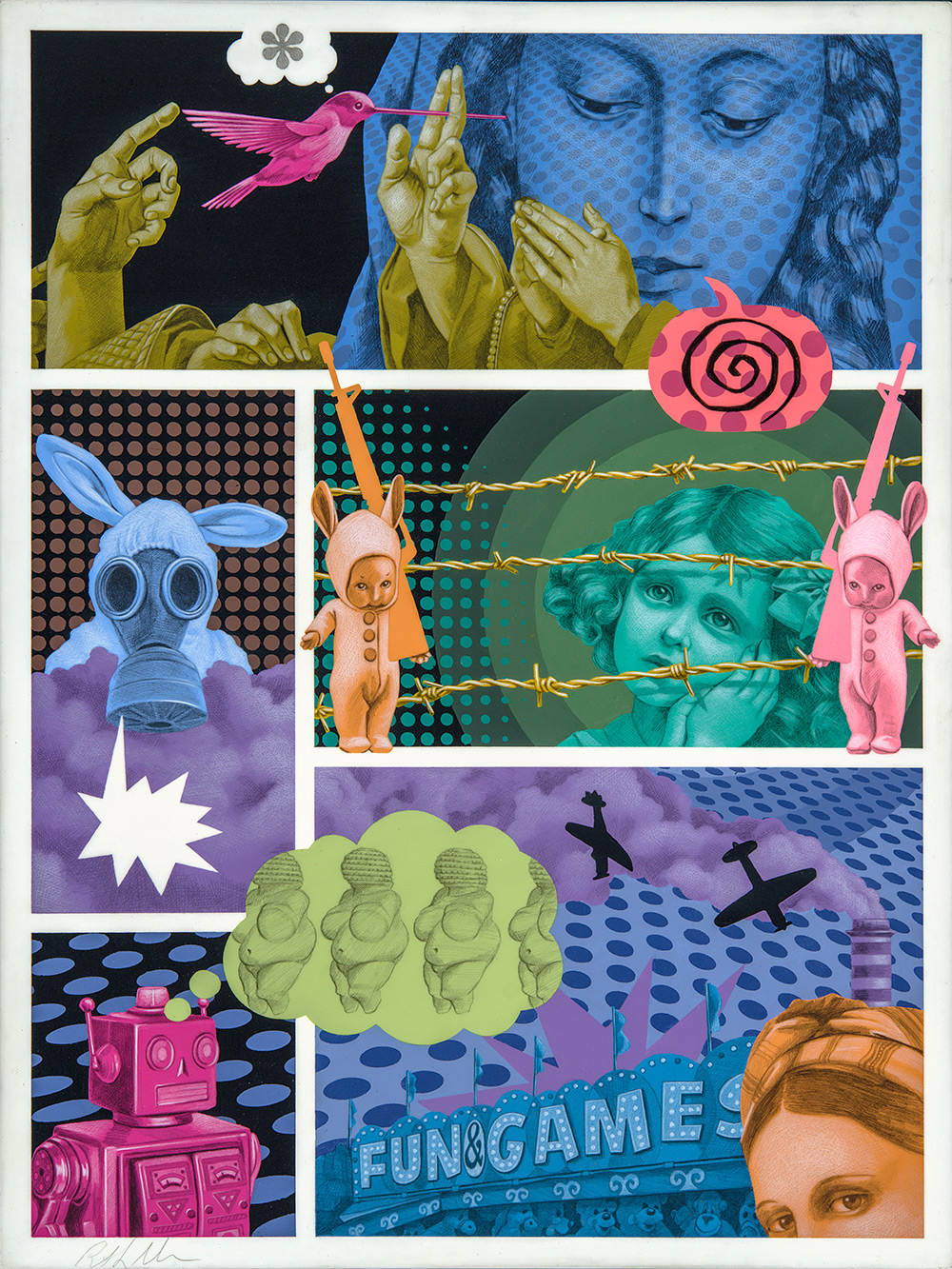
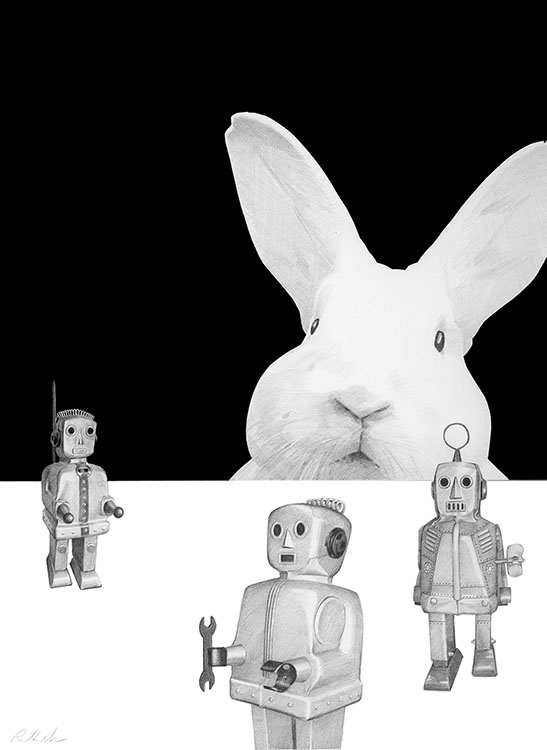
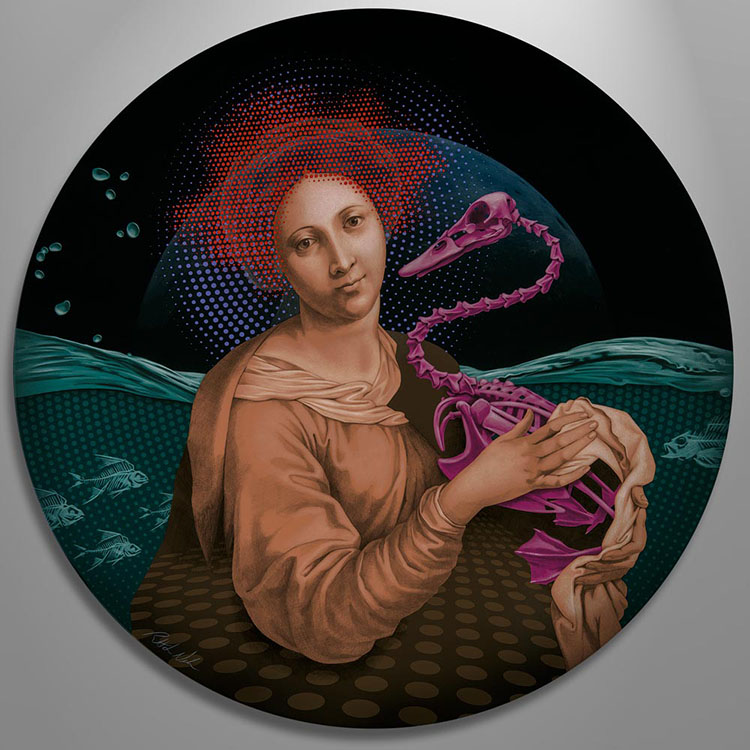
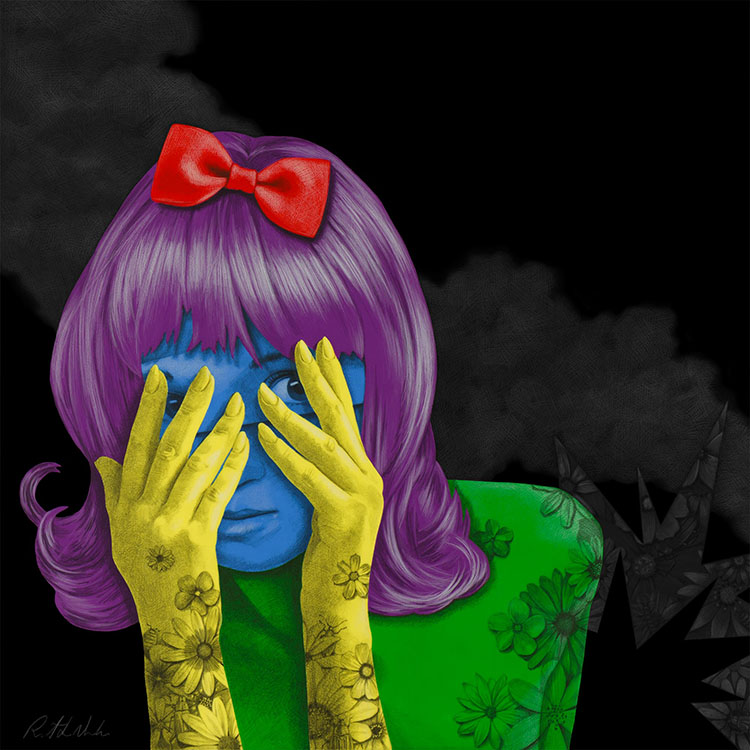
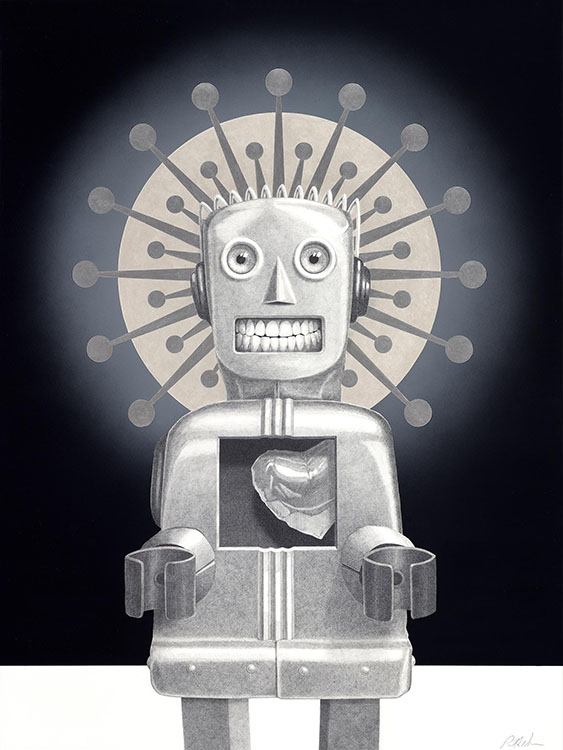
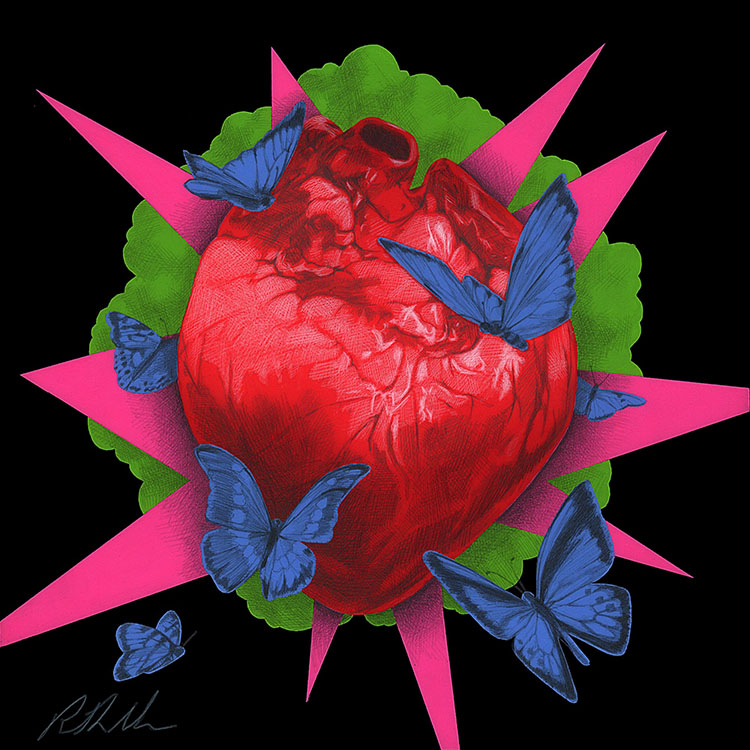
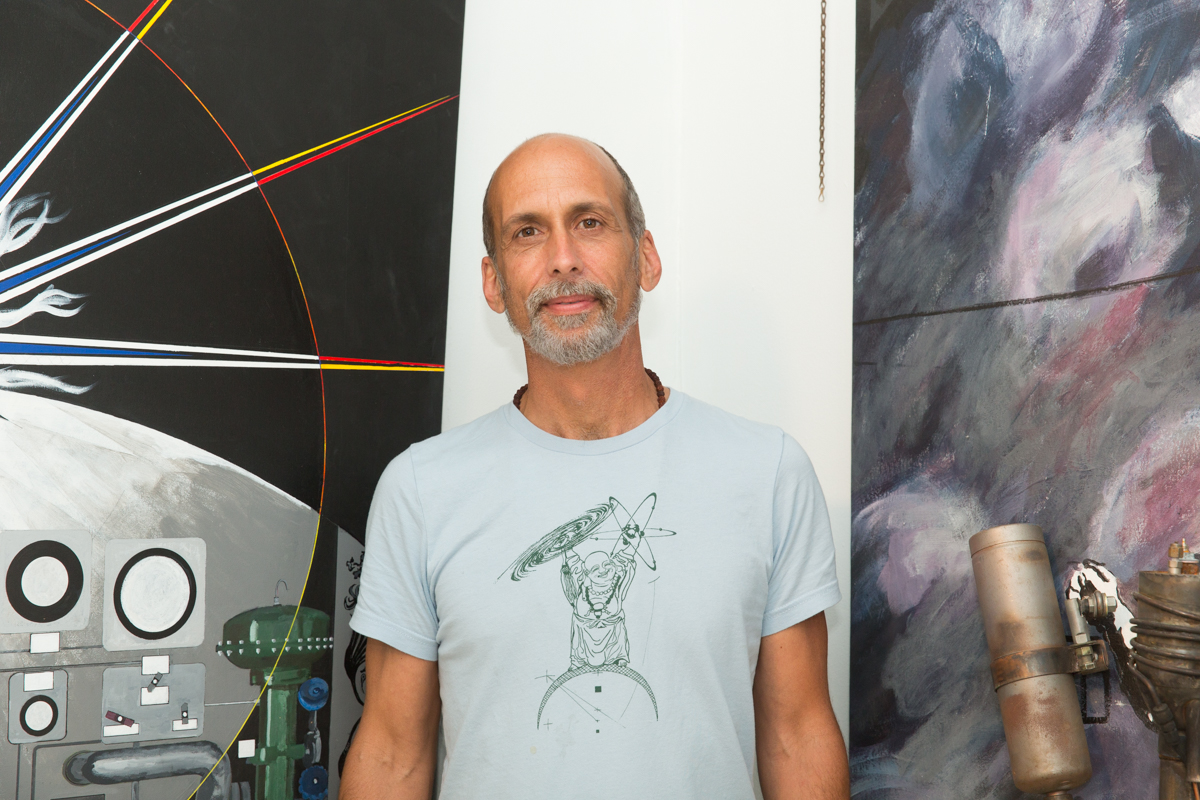
Artist Leonard Greco is something special. A decorative muralist and painter for over 25 years, Greco also have his own blog, https://boondocksbabylon.com, which tells the story behind his works and inspiration for same. His paintings are powerful, haunting, often including religious or mythic imagery in settings that evoke surreal icons. In short, his work is like nothing you’ve ever seen before, fusing generations of disparate cultures and art. Along with his paintings, drawings, prints, and puppet figures make up Greco’s full oeuvre.

The work is startling and compelling, both in its use of color and its story telling style. Greco says he is exploring narrative figurative painting, frequently using archetypal figures. He also has a secondary objective: “to explore the extremes of human existence, most notably birth and death.”

studio visit 5-27 (2)

He has other themes that appear throughout his works as well, of transformation, salvation, and re-birth. Drawn to the narratives of early peoples, he’s inspired by the Mayan creation myth and Popol Vuh’s tales of the Hero Twins Hunahpú and Xbalanqué. This Meso-American mythos is restructured and reflected through the artist’s own experiences and interests in the Italian Renaissance and Roman Catholic saints, the surrealism of English-born Mexican artist Leonora Carrington, and Ghosticism, among others. Greco’s own dreams prove an equally compelling landscape from which the artist draws.

His love of narrative depictions in the midst of these varied influences takes on universal themes, and a universal visual vocabulary, which the self-taught artist describes as “Life and death, mortality, morality, and most importantly, inner knowledge, gnosis.”

The artist’s narrative is also intensely personal, so that the refined surrealist images also take on an aspect of reality – real life as observed through the prism of a dream.

Greco Jonah

Greco’s “Jonah,” oil on panel, is a dark, surging, seething painting, with the green whale against whom Jonah triumphs floating in a turbulent grey sea. The whale has a head disproportionately huge – and human. A God-like head parallels the whale’s, looking down from the sky. A turreted bridge is in the background; a strange monument on which Jonah stands, a pedestal with the name Jonah upon it, in the foreground. Dark but translucent beams of light spill down from the sky. Jonah, his body blue, his face masked, looks up toward God, his hand pointing to the whale. This Jonah, unlike earlier painted incarnations such as those by Pieter Lastman, or Frederik van Valkenborch, is no pale creature fleeing the monsters jaws. He is no circumspectly robed elderly prophet, praying as he emerges in Jan Brueghel’s stormy sea.

No, this Jonah has emerged with his own strength. Jonah may have spent three days and nights in the belly of the beast, swallowed by both the whale and his futile attempt to avoid a mission from above, but the experience has not broken him. The Jonah Greco depicts may not have seen the error of his ways, may have fought his own way from the beast rather than being saved by an act of God. Is Jonah’s mask an attempt to still flee God’s will? In this raw and tumultuous world, Jonah’s figure is powerful, even if his face and motives remain hidden.

flea-w-fig
Deeply visceral is “Self Portrait of the Artist as a Flea,” a recent pencil and watercolor on paper, a paper doll of sorts that can be made to move through the judicious use of brads and string. Drawn in lavender, yellow, and white, it is the artist’s head on the body of a flea, but one which features abundant frontal nudity – except when covered by the artist with a ripe green fig leaf to render the work acceptable to social media. There is so much to be said about this piece, which in Greco’s words uses nudity and the body of a flea both unabashedly against “the bigots and the nasty folks who hate us, particularly important after the Orlando massacre. Queers have been treated like vermin for so very long, by fashioning myself as a flea I embrace what they find so vile.” The work has the quality of a fairy tale image, in part due to the colors chosen, in part due to the anthropomorphic flea, whose head shape resembles a jester’s hat. The fast, tiny, hard to destroy flea, a creature which though reviled, remains hardy, one who has been made to dance, to leap, to claim it’s own “flea-ness,” seems a triumphant image, as well as a humorous one. It’s a recognition of self, an acceptance, a dare to the world to accept, too. There is both anger and joy in that flea, and pride, in its careful, detailed rendering.

Greco Uranus

The artist’s 2015 watercolor on paper, “The Castration of Uranus” depicts the rather brutal outcome of son Titan Cronus’ attack with a stone sickle on his brute of a father. Greco uses this image to translate his own rage and inability to perform such an act on his own cruel father. In the painting, the green, monstrous beast-man, complete with images of the siblings he devoured in his distended belly, is castrated by his pale and sinewy son, blood pouring in a muscular wound from the gaping hole in Uranus’ genitalia. A pale woman, the moon behind her head, stands in blank observation. The twinning of the myth and Greco’s own experience creates a painting that is as alive as it is apocryphal. Particularly compelling is the vitality in Titan Cronus’ muscles, his life gained, his body about to spring forward into a future with fear vanquished.

Each of these works is a reimagining – of a Biblical story, a Greek myth, family violence, societal roles and values. Seamlessly blending the surreal here, the underlying narrative story there, adding brush strokes of irony and wisdom to his perfectly detailed images, Greco writes a new kind of artistic story, which like that self-portrait as a flea, itself contains joy and anger, pathos and triumph. The stakes are high, the world is strange. And art and artist go on.

greco_genesis

Greco recently exhibited at the 2016 Second Annual Mask Art Show in Venice, but has shown throughout the Southland. Until a new show is announced, follow the artist’s blog for a look into his art and his mind.

Taking Another Waltz: Dances with Films 19

F23C5949

Dances with Films 19 finished a week ago, and the festival continued to amaze even as it drew to a close. Missed the fest this year? Then put it on your calendars for next year, and do watch for the stellar films shown at the festival. While these reviews bring those screened at the event to a close, there are several we missed seeing in the theater that we’ll be catching up on shortly.

F23C5926

Above, cast, crew, and advisors on The Track; with microphone, star Mariah Kirstie

The Track started as a short film by director Brett Caroline Levner, and was expanded into a feature by Levner and writer Matthew McCue. “I looked out my window one day,” Levner relates, “and I saw a 15 year old girl going in and out of cars, working as a prostitute.” Drawn to tell the story of underage, exploited children, Levner, who teaches film at University of Nevada Las Vegas, tackled the tough and moving story of Barbie.

F23C5940

Played brilliantly by Mariah Kirstie, the girl comes into contact with a suburban woman who has just lost her daughter, played by Missy Yager.  “I come from a theater background,” Kirstie reports, “but for this character I didn’t do anything formal. I was so connected to her, I just wanted to stay in the moment with my performance.” Yager says “This is a woman’s issue, these little girls get arrested. My character had a calling to help.”

F23C5920

The performances make the film, a true vehicle for social justice, into a compelling drama.

F23C6016

F23C5974

Above, star Joe Burke in Dependents Day

Dependents Day, a very different film, also began as a short. Director David Lynch (below) found star Joe Burke and a ribald romantic comedy was born. “I love nuance,” Lynch says,  “I thought he was a firecracker and all I had to do was set him off.” The versatile Lynch was also director of a dramatic documentary screening at the festival, Victor Walk, which won the audience award in the docs category; but Dependents is pure levity.

F23C5984

The story of a struggling actor claimed as ‘dependent” by his more successful girlfriend,  the film tackles love, LA lifestyle, and sexual mores with a witty vengence.

F23C6032

F23C6045

Star Burke says “We put so much into this, I’m so emotional to have so many people I love in one room. I feel so blessed.” Shot in just 17 days, the comedy is zany, the performances from Burke and co-star Benita Robledo pitch perfect.

F23C6120

Above with microphone, Kristin Wallace, co-writer/producer/star of Moments of Clarity

Moments of Clarity is a film that defies categorization. Sweet comedy, female buddy picture, road movie, witty take on independence, feminism, mental health issues – yes, all of those. A film that keeps you guessing, we loved it’s wild moments of comedy, touching sweetness, and screwball plot. Writer/producer Kristin Wallace plays lead Claire. Co-written by Wallace and Christian Lloyd, the film was directed by Stev Elam.

F23C6107

Claire is the daughter of a repressed agoraphobic, who teams up with a pastor’s daughter to escape their home town, fix a broken camera, and come into their own. “I wanted to create more roles for women,” says Candian-born Wallace. “I’d just moved from Toronto to LA and felt very out of place, so I kind of connected with my inner child to create this character. I just wanted to follow this character who was unabashedly herself.” Shot in 15 days, the film has the look of a much larger-budgeted feature, with bright colors, hilarious set pieces, and the edge of dark-comedy ever sharpened.

F23C6098

Wallace and Lloyd wrote only via email and didn’t meat Wallace and the rest of the production team until he came to the set for the last four days of shooting. “I Just sat there smiling like an idiot. It didn’t make sense that so many people came together to make such a wonderful film and have such a strong connection.”

F23C6087

Director Elam says “I loved that the script had so much positivity and no violence. When I read the script I thought this is like a foreign film, but they have American names. Then they said they were Canadian,” he laughs.

F23C6162

Whatever the origin, this is a don’t-miss. It releases in the fall of 2016, watch for it.

F23C6249

Rounding up the fest’s final day at the TCL Chinese was Those Left Behind, a drama that grew from the director’s involvement in a documentary about suicide.

F23C6217

The drama recounts a family’s struggle to come to terms with the grief over their son’s suicide 25 years earlier.

“You can live a joyous life and still struggle with depression,” says Grant Jordan, who plays the pivotal character of Jamie.

F23C6230

“I think a lot about loss in my own life, and how unresolved grief comes back to people, so I wanted to use that. I had an amazing cast, I asked people to be very quiet, to let the performances and the story build slowly. It was like unpeeling an onion,” director Maria Finitzo says.

F23C6213

Also viewed: Killing the Apologetic Girl, the fest’s audience award winner in the TV pilot category.  Writers Stephanie Little, Kimberly Aboltin – the latter also directed – have created a sweet and funny  story about the overly-apologetic Steph and her returned-from-Morocco decidedly unapologietic friend, Kim. Fresh and delightfully sarcastic, there’s a lot to like and much to want to see more of with these characters. Well-paced and exceptionally well-cast.

Don’t worry: Josephine Doe, Pop-Up, and fest top narrative award winner Virtual Revolution reviews are still coming up.

  • Genie Davis; All photos: Jack Burke


West Hollywood Arts Plan

WeHo Arts The Plan Rack Card 2c_Page_1
West Hollywood has always had a strong commitment to and interest in the arts. And now, as the city enters its 30th year, West Hollywood has now announced the next step in that commitment – establishing a formal arts plan. This extensive planning process bears the name “WEHO Arts: The Plan.”

Designed to explore the future of the arts, culture, and creativity in West Hollywood, the program is a community-focused cultural planning process. This inclusive program will be led by social practice artists Alyse Emdur and Rosten Woo, who are developing what the city terms “imaginative pathways for engagement.”

WeHo Arts The Plan Rack Card 2c_Page_2

It’s hardly a surprise that the city would want to create such a plan. Although WeHo is a diminutive 1.9 square miles in size, the city packs a mighty punch, conceivably providing more art per square mile than any other city in the U.S.

The plan to be developed will guide the work of the city’s Arts and Cultural Affairs Commission (ACAC) and Arts and Economic Development Division (AEDD) over the course of the next five to ten years. The goal? To celebrate the city’s artistic and cultural identity, acknowledge the city’s support of the arts, and present a shared future vision that firmly secures the position of arts and culture in the city.

auto garage plaza

It’s fitting that West Hollywood should come up with such a plan, as the city’s support of the arts has long been a vital force in the community. This year alone, the city has supported the massive, 40-day arts program One City One Pride, held live dance and music performances, poetry readings, art exhibits, and established poetry installations. And the city is now fielding applications for the position of its second poet laureate.

So just what is the city’s new art plan? Throughout the year, interested individuals – including both residents and visitors – are invited to participate in an interactive series of formal and informal conversations, surveys, and artist-led activities, all designed to gain insight into the city’s continuing arts programs, and formulate a vision for the future.

West Hollywood’s government, the ACAC and AEDD are after something special: an arts plan that nurtures the energy and creative vitality of the city. Artists Emdur and Woo will join the ACAC commissioners, AEDD staff, and a cultural planning consultant through December, to create and define activities and experiences throughout the community that encourage contributions to the arts plan.

image001

Emdur and Woo are uniquely qualified to interact with the topics of artistic and cultural practice in West Hollywood. Emdur is an LA-based photographer who has created works of large format photography, video, and drawings. Her personal aesthetic is to search for deeper connections within her subjects. Exhibited nationally and internationally, Emdur’s 2013 book, Prison Landscapes, is all about connection.

001_prison

In it, there are photographs of prison inmates positioned before painted visiting room backdrops depicting ideal landscapes – in front of which they can pretend, however briefly, to be elsewhere.

97

A designer, artist, and educator, Woo is co-founder of the Center for Urban Pedagogy, a New York-based non-profit that uses art and design to foster civic participation. He also teaches art and design at the California Institute of the Arts, Pomona College, and Art Center College of Design. Woo creates artistic engagements that help people understand complex systems, re-orient themselves to places, and participate in group decision-making.

The participatory projects Emdur and Woo will be presenting throughout the next six months are just one aspect of West Hollywood’s arts planning. Residents can also be involved online at www.weho.org/theplan and take The Plan’s quick online survey.

Auto garage exterior


In-person participation opportunities will be announced in the next few weeks, and will include arts and culture pop-ups, discussion series, and the WeHo Talks series. Just as the arts plan to be established will take into consideration the entire community, the planning process is meant to involve residents and visitors alike. Join in, as the city formulates its plan to remain a bastion of cultural support and programs.

John Mills at Rosamund Felsen – Not Just “For Your Eyes Only”

F23C4604

John Mills’ solo show at Rosamund Felsen Gallery, For Your Eyes Only, is all about what you observe.  Above, the artist invites you to take a look.

F23C4600

Above, Mills’ Nature Crush – are we loving nature to death?

F23C4599

Evoking tribal art, Matisse, and the art of post-minimalist Richard Tuttle, Mills’ large scale oil, pencil, and graphite works are uniquely his own.  There’s humor and insight in these often symbolic and whimsical works.

F23C4607

“For me, in the end, what I like to work on is visual signs, what makes an image, the lines, the shape, the form. I question the idea of consciousness. As an artist, the image ends up being a stand in for you, a mirror, a way to contemplate your existence,” Mills says.

F23C4601

“I find pleasure in making pictures that can be light but that also bring in conceptual ideas,” the artist relates.

F23C4606

Scoring his paint when wet, using pencil on top of dry paint, his work is all about “the process of making a picture.”

Whether you connect with his symbols or engage with the delicate yet edgy design, Mills work is about seeing, and his vision is one to behold.

The gallery is located at: 1923 S Santa Fe Ave #100
Los Angeles, CA 90021

  • Genie Davis; all photos: Jack Burke