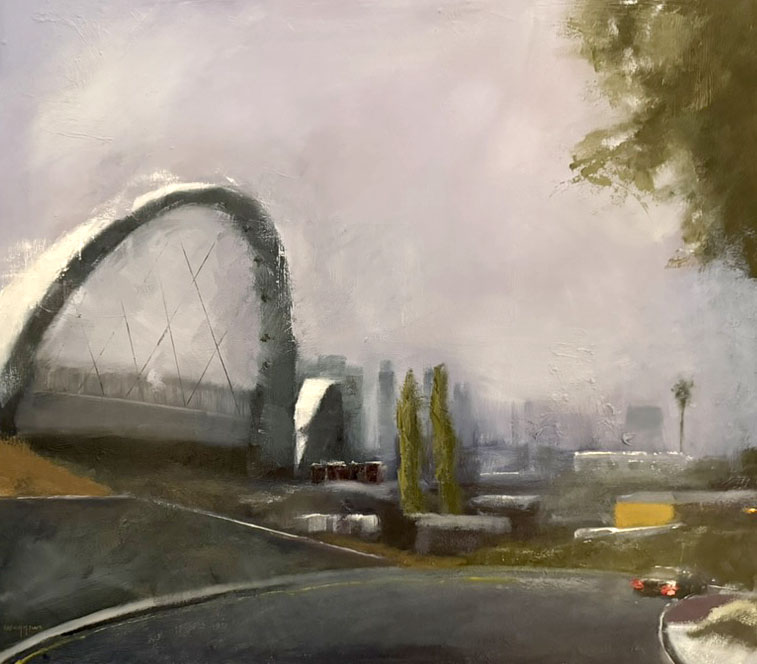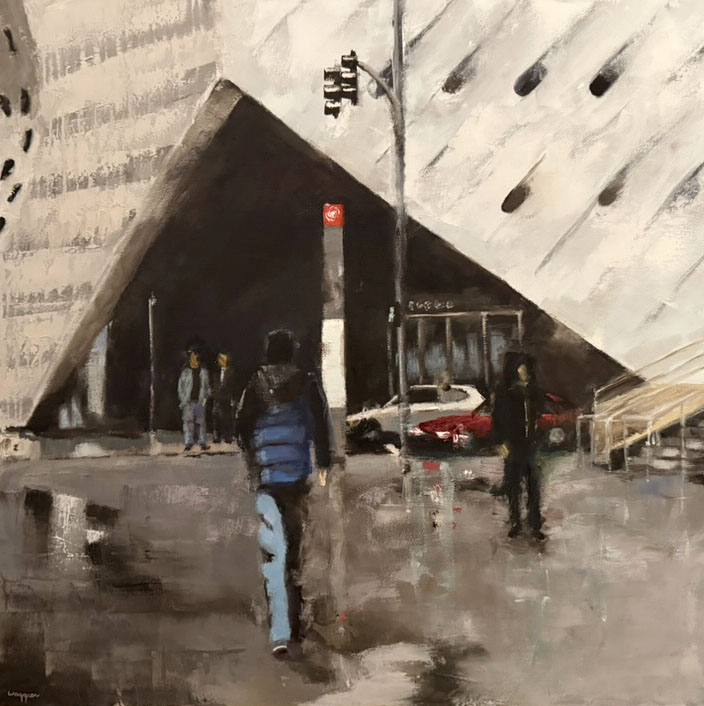

The Lucas Museum of Narrative Art floats low on the Los Angeles skyline, hovering close to the ground, both cloud-like, as its architect Ma Yansong has described the 300,000-square-foot building, and not-dissimilar to a spaceship. The latter of course is most appropriate to the museum’s founder, George Lucas, who has brought joy and fun to all the Star Wars fans out there for decades. The museum is equally guided by Lucas’ wife, Mellody Hobson.
Now he has turned his attention from movie making to museum making. The result may not please everyone: his sole purpose is to portray narrative art, in other words, storytelling as visual art. He does not mind mixing genres, and he has very singular taste in which a Frida Kahlo is not that far from a Shepard Fairey or an R. Crumb or a Norman Rockwell.
The building, or rather two interconnected buildings with an oculus in the center and a massive greenspace spread behind it, is stunningly beautiful, and not entirely dissimilar from the higher physical profile of the new Geffen Gallery at LACMA. Both offer a circular navigation through galleries that curve rotationally in and out.
The elevators are glass capsules infused with light; the oculus offers a shiny beam at the center. There are long windows along the 4th floor main gallery space that offer city views and garden views, some more spectacular than others, with the east-facing windows showing the back of the Coliseum being the least appealing, and the garden view with its sculptures and varied levels of green, as well as rows of palms to the south, the best.
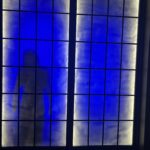
The museum’s focus is on making art of all kinds accessible and inspiring, and that idea is fully realized throughout the museum, including the first-floor gallery that adjoins the two large theater spaces. Titled The History of Narrative Art: Heroes • Myths • The Sacred, this gallery leads visitors through a wide world of visual storytelling. Visitors enter through a vibrantly illuminated photographic image of the Cave of Altamira in Spain, moving through other photographic recreations, some in 3-D rotation (as with The Goddess of Willendorf) to meticulously rendered physical recreations of famous works. Many of the reproductions were created by the museum in collaboration with institutions, sites and governments around the world, including Mexico’s Instituto Nacional de Antropología e Historia for the Aztec Sun Stone.
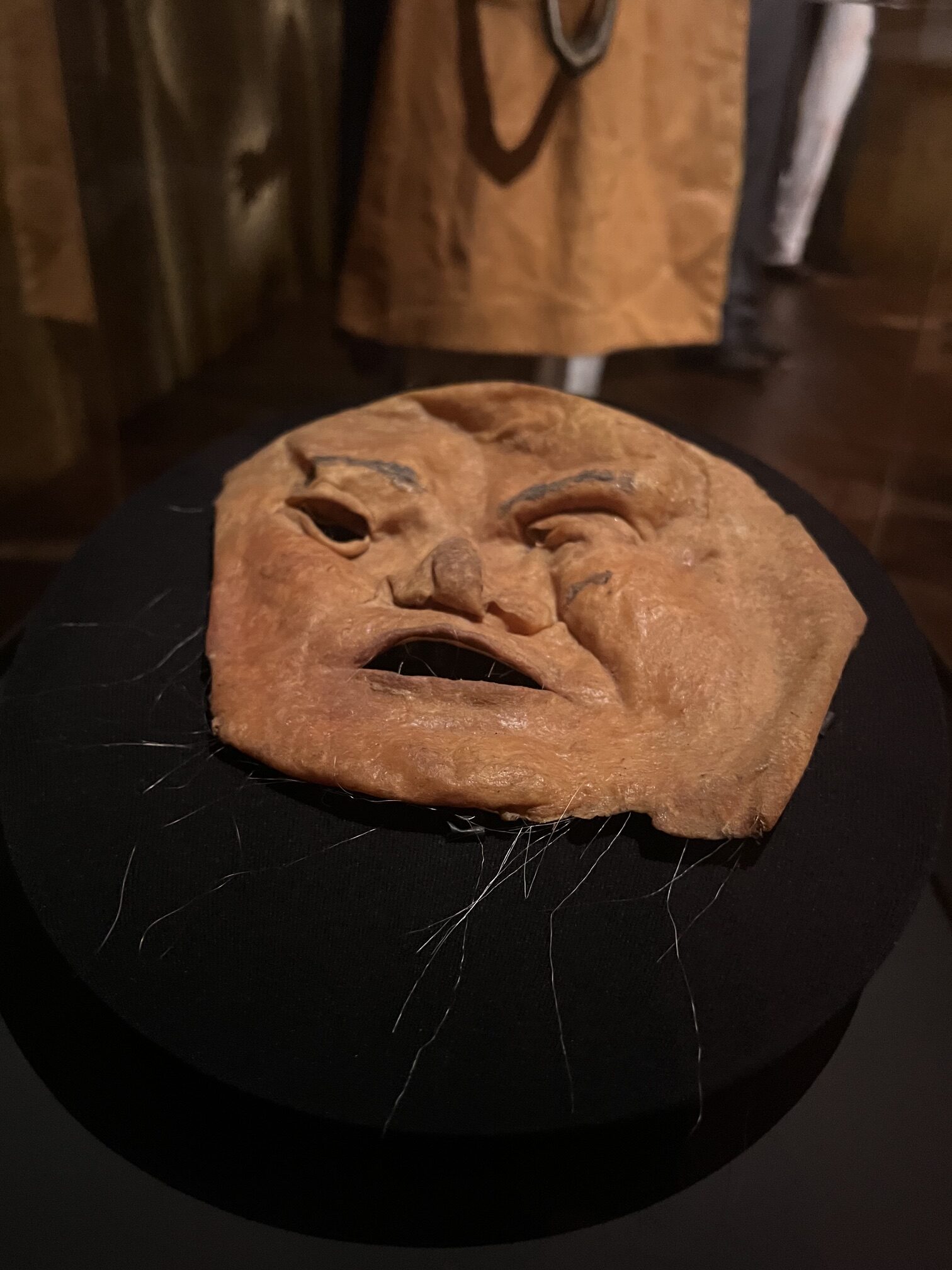
Among the photographic images and detailed recreations are some incredible original works, such as the predella panel from Tommaso Bernabei’s “Scenes from the Life of the Virgin,” and Pieter Brueghel the Younger’s “The Alchemist. ”
While some will take umbrage at the fact that there are genuine-article artworks intermixed with glowing photographic reproductions and recreations of originals, that is really the point. It is especially resonant for those of us who have ever worked in or been full fans of filmmaking: there are props that recreate an object; there are faux backgrounds that could be real but are not; there are real locations, and there are stage sets. And it is all storytelling. It all creates a masterful whole that draws the eye and stimulates the senses. This is the same basic approach that Lucas is taking here with high-resolution images and 3-D scans of original objects intermixed with original works.

As to the jewel-box-perfect 299-seat Robert Flaherty Theater and Slavko Vorkapich Theater, these are designed to be continuous, gallery experiences in their own right, showing films ranging from a few minutes to 90 minutes, running a variety of film programming during the museum’s open hours. According to Lucas, visitors can drop in to screen as much or as little as they want, viewing old favorites or exploring cinematic images previously unknown.
The museum has five floors: on the second is a gorgeous, curving educational library with appealing reading tables and a view straight out to the 13 acres of public garden designed by landscape architect Mia Lehrer.
That garden includes a collection of varied sculptures, including the commissioned Princess Leia Frees Herself from Jabba the Hutt by Mark Newman & Giovanni Nakpil which is the centerpiece of the upper garden level closest to the museum.
The third floor is administrative offices.
The fourth houses the main gallery space, along with a major section of the 5th floor which contains large-scale murals, with a specific emphasis on works by Banksy which were recreated by the artist himself for and at the museum. Also on the rooftop floor of the Lucas is the Skywalker Grill, which was not open at press time; the bottom floor houses a cafeteria-style café with an array of choices including a range of pizzas, noodle dishes, and even soft serve ice cream and churros. There is also a Starbucks.
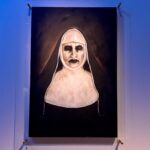
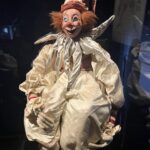
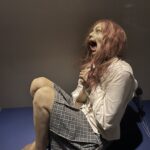
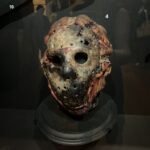
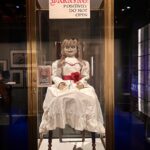
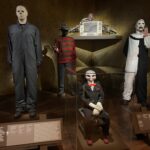
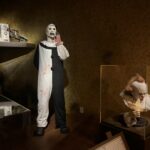
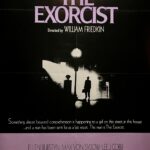
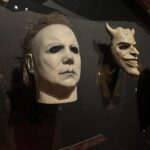
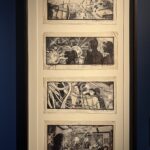
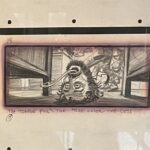
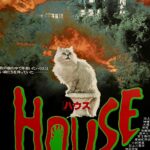
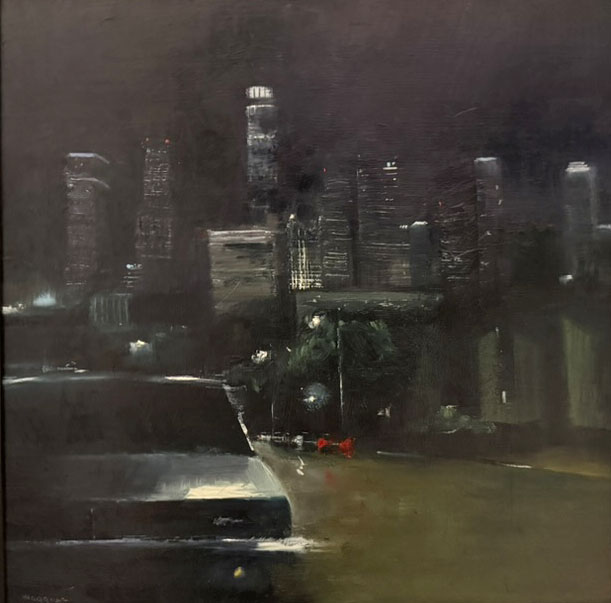
If the café offers a wide variety of tastes, then the main galleries on the 4th level provides a great many more flavors of art. There are illustrations of The Lord of the Rings trilogy, luridly lovely pulp fiction and horror, political poster art, and the works of Maurice Sendak. There are original ink renderings of Garfield and Far Side cartoons, photography, and sculpture.
The latter category alone is varied and crowd-pleasing, including commissioned bronze pieces such as one of Indiana Jones, as well as brightly colored manga characters, Yinka Shonibare’s dazzling “Boy on Globe,” and Banksy’s ornamental lions “with added parts” indicating the demise of a trainer whose legacy is his discarded whip and top hat.
Of course there are a plethora of paintings, including galleries specifically devoted to Maxwell Parrish, Norman Rockwell, N.C. Wyeth, and Jessie Wilcox Smith.
Other fabulous and famous works are intermixed by theme with close-to-complete-unknowns, a Renoir there, and the somewhat infamous painting of dogs playing poker there. Fernand Léger’s “Woman with a Cat” surprises as does a brilliant work by LA artist Narciso Martínez of Latino field workers.
Kadir Nelson’s sprawling, hyper-realistic canvases are on view as are works by Thomas Hart Benton and Diego Rivera, along with Warhol’s “Howdy Doody” and Robert Colescott’s trenchant “George Washington Carver Crossing the Delaware: Page from an American History Textbook.”
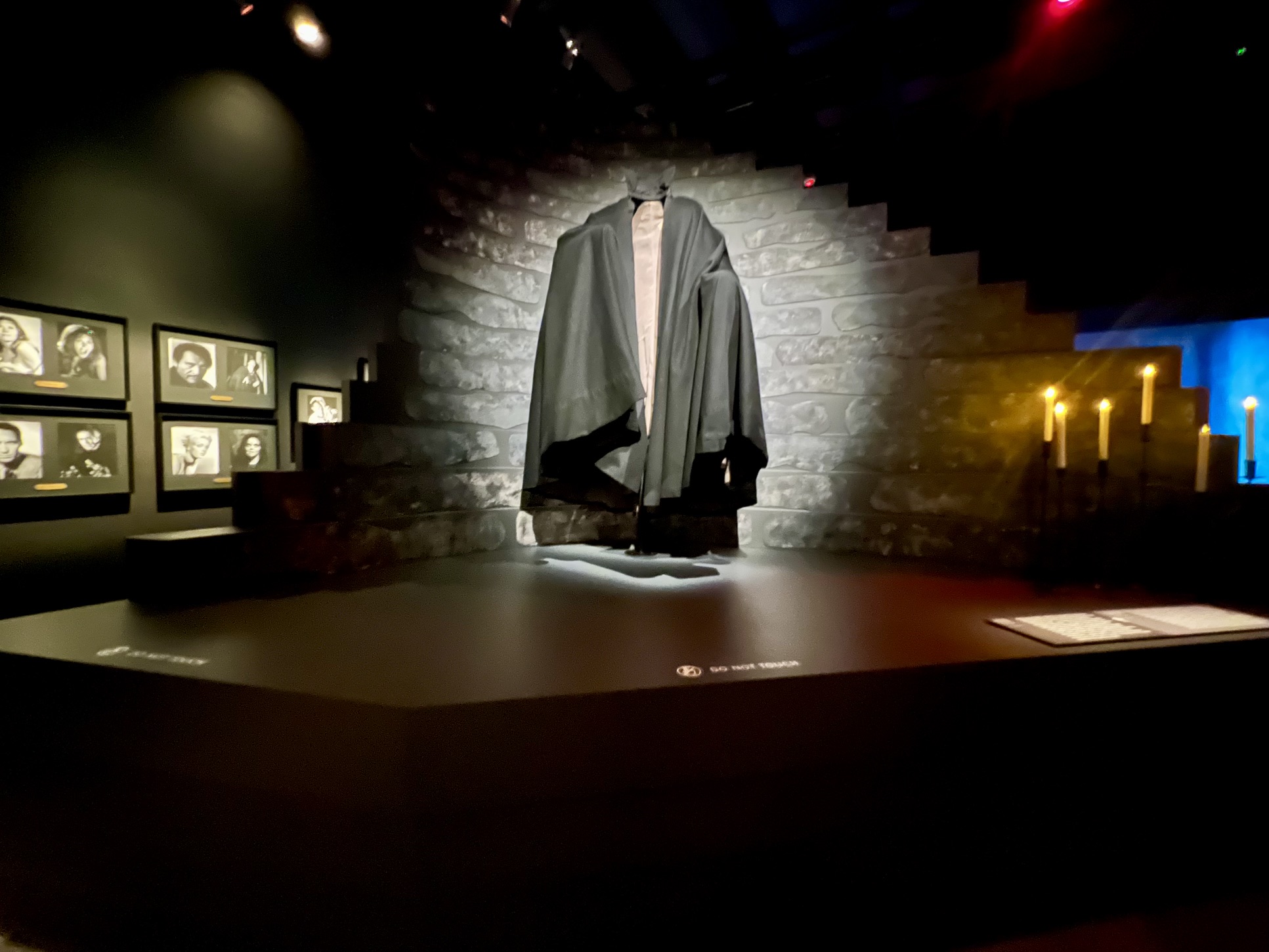
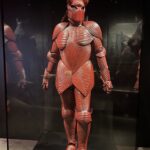
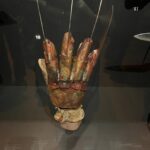
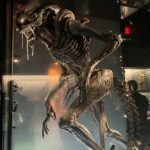
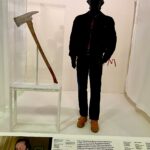
Then there are costumes (the Cowardly Lion from The Wizard of Oz steals this category from Batman), and whetting the appetite of millions of Lucas fans, a gallery devoted to Star Wars props, costumes, vehicles, miniatures, and beloved characters including figures of Princess Leia, Luke Skywalker, Darth Maul, and of course R2D2 and CP30. There is even General Grevious’s life-size Wheel Bike from 2005’s Revenge of the Sith.
This gallery will undoubtedly be a magnet to the public; many press attendees were gathered there, eager for the eye candy, while my associate and I were often alone in many of the other galleries.
There are 30 in all, broken primarily into themes, while others are devoted to specific artists. The themed galleries include those devoted to fantasy, romance, adventure, manga, history, cinema, family, work, motherhood, comics, graphic stories, love, community, school, play, sports, and photography.
On the 5th floor, the category is murals—from Banksy, JR, Diego Rivera, and Judith F. Baca’s “The History of California,” the latter presented as a riveting video installation that flows, appropriately enough, over an installation whose base is water.
The museum is inclusive and egalitarian in nature. Lucas and Hobson have made access free to those in the local zip code, making this a special place for lower income families in the neighborhood. The library, like the garden, is free to enter. Any child over the age of 12, with or without a museum ticket, is welcome in the library.

In opening remarks, both Lucas and Hobson noted that the museum was initially conceptualized in Chicago and in San Francisco prior to its incarnation in Los Angeles, and Lucas acknowledged some controversy over his vision, calling himself a “contrarian.” Be that as it may, and regardless of how others may critique the mix of genres and the predominance of several artists in the couples’ voluminous collection, like Lucas’s movies before it, the museum is designed to bring pleasure to everyone. The storytelling focus is truly the basis of Lucas’s own auteur/collector’s vision: he is a storyteller, so naturally he is drawn to art that tells narrative stories, stories that are accessible and personally meaningful.
“The artists in this collection didn’t just create images, they connected our modern imaginations with our ancient emotions, with common beliefs creating community. Their work spans genres, media, and time,” Lucas says. “They deserve to be in a museum.”
Hobson adds that “We wanted a museum unlike any other — one that brings people from every walk of life through the same doors. That’s why this collection holds so many different kinds of stories: so that more people can walk in and, somewhere in these galleries, see themselves…”

They will also enjoy themselves, learn to recognize art in many forms, and smile at many of the juxtapositions, at the cultural icons from Mad Magazine’s Alfred E. Newman to the sweet watercolor animals of Beatrix Potter, a winter scene by Grandma Moses, or a photograph of The Beatles crossing Abbey Road or the stunning, renowned image of a young Arab girl.
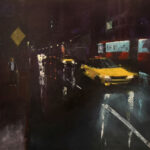
Museum goers will see a poignant 1960s drive-in in the rain, a charming ‘”first day of school” farewell, as well as a resonant pairing of Rockwell’s bucolic 1958 “The Runaway” with its friendly policeman speaking to a small runaway white boy, with Richard Williams’ 2014 update of the painting’s theme, “The Militarization of the Police Department” in which a cop clad in riot gear leans over a young black child.
As author and journalist Mitch Albom said, “There’s a story behind everything. How a picture got on a wall. How a scar got on your face.” Or as Rod Stewart once sang, “Every picture tells a story, don’t it?”
And when we share those stories, we share our humanity, our hopes, and create emotional connection, building and sharing understanding, empathy, and—enjoyment.
And isn’t enjoyment what art is really all about? Even Michelangelo created the Sistine Chapel for his joy and that of the viewer, not for analysis as to whether each of its parts made a critically reviewed perfect whole.
- Genie Davis; photos by Genie Davis, except as credited to the Lucas Museum