
SxSW 2021 Continues From Documentary to Midnighters

SXSW 2021 online continued to offer a rich and varied platform as the week unspooled. While some films didn’t work for me, uniformly all of them were well-worth viewing.

Case in point was Mei Markino’s Inbetween Girl. The bittersweet coming-of-age-the-hard-way story crammed a lot into its run time, with teen Angie Chen indulging in secret hooking-up with an unfaithful boyfriend. Her burgeoning friendship with the boy’s main squeeze was the most interesting part of the well-acted, angsty film; the boy/girl fling just didn’t compel. Touching on racial topics and stereotypes enriched the story, Markino will do much more.

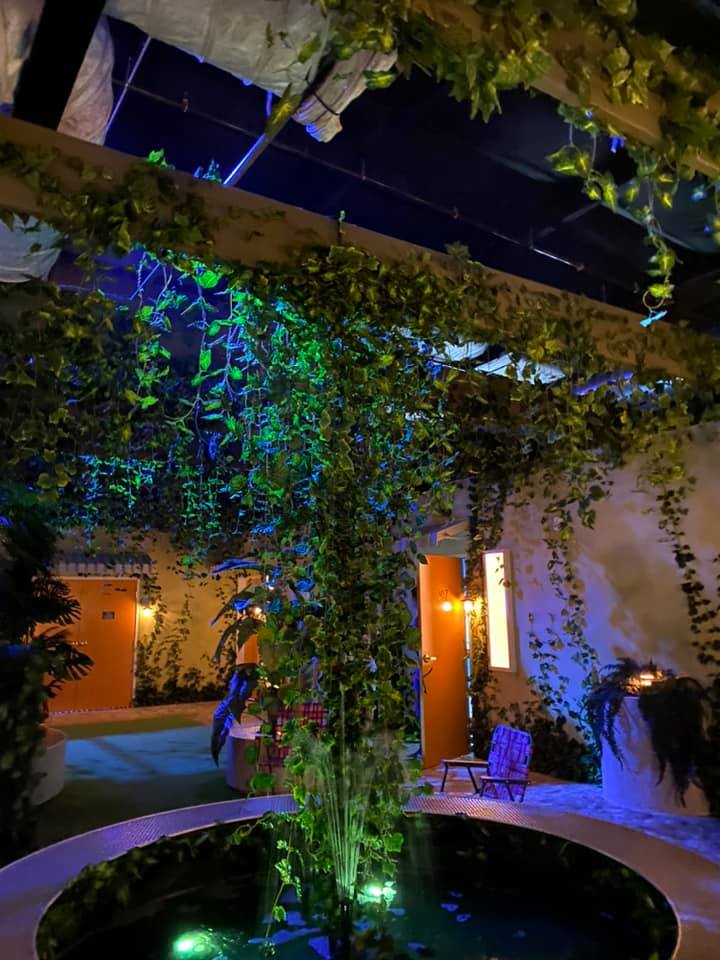
The conflicts of gentrification and the lives of real, gritty, down-on-their-luck residents resonates in director Liz Lambert’s Through the Plexi-Glass: The Last Days of the San Jose. Both as a character study and the history of a neighborhood, the story took turns and twists. Fascinating and raw.

While Disintegration Loops bore marks of a low-budget production (cue the grainy zoom images), it was nonetheless quite wonderful in revealing the composer behind a haunting and beautiful piece of “found” looped music. Director David Wexler merges interviews and 9/11 footage with filming of New York City under early pandemic lockdown, introducing viewers to composer William Basinski in the process. Basinski’s work received widespread recognition when the music was presented as an elegy to 9/11. I wanted it to last longer.

Violet, from director/screenwriter Justine Bateman, was literally the only film viewed in the festival that did not grab me in one way or another. Boasting a full cast of well known’s, including lead Olivia Munn, the thin story centered on a film-development executive trying to overcome an abusive childhood that resulted in her own negative guiding voice. Perhaps in another, less reverentially meta work setting, I might’ve cared. Some.

Witch Hunt, on the other hand, was an extremely smart use of the horror genre to confront racism.

Director and screenwriter Elle Callahan crafted a nail-biting horror thriller in an America where witches are not only real, they’re outlawed, and the witch-hunting version of ICE persecutes them. Safe territory is Mexico, but can a sheltered teen make it there? And will America ever change? Definitely could not look away at the hope we can burn racism at the stake.
Oh no, not a pandemic comedy! Too soon? Apparently not. Recovery is nothing if not zany fun, with a number of genuine laugh-out-loud moments. Directors Mallory Everton and Stephen Meek, along with screenwriters Whitney Call and Mallory Everton, lead viewers on two sisters’ wild journey to “recover” their grandmother from a nursing home experiencing a COVID outbreak. We could all use a dose of smart n’ silly about now.

The Fallout is an absolute wow. Justifiably the jury pick for a Narrative Feature win, the film had me dissolved in tears and hurting with anger.

Perfectly acted high school drama about the aftermath of a school shooting, writer/director and co-star Megan Park focuses on high schooler Vada and her relationships with her family, friends and future. A film that ached to be made, its powerful and resonant. Park scores high on all counts.

The documentary Lily Topples the World introduces us to the cool and successful world of a domino artist. Director Jeremy Workman tackles another jury award winner with the insightful story of 20-year-old Lily Hevesh, the only woman in her field. While this was an excellent character study, the documentary that blew me away – was the story of 25-year-old Reality Winner.

Director Sonia Kennebeck does a riveting job of exposing the perfidy of the FBI and truth about the young woman who disclosed one document about Russian election interference to the media in the United States vs. Reality Winner. Persecuted by the Trump administration, this armed service veteran and down-home Texas girl has received one bum rap. Here’s hoping President Biden pardons her, and the film is widely viewed; Kennebeck does stellar work on a do-not-miss story.

I’m Fine (Thanks for Asking) a strong concept and well-performed lead can’t save Kelley Kali and Angelique Molina’s film about a beleaguered single mom and young widow forced to live in a tent with her young daughter. I was rooting for them, but amateurish supporting performances and a repetitive, rather sluggish storyline derailed the power of what could’ve been a truly moving film about being houseless in Los Angeles.

Shorts

Above, Joanne is Dead

Sisters – Director and writer Jess Brunetto expertly explores a tense relationship between two estranged sisters with wit and a perfect third-act twist. Lots of story packed in a small package, the film expertly strides the line between funny and poignant.

Joanne is Dead – I loved the black comedy of this film about one wicked old spy in a nursing home. Director, writer and co-star Brian Sacca does not fail to surprise.

O Black Hole – Animated and adventurous, this didn’t grab me, but it is visually lovely and uniquely spiritual. Renee Zhan’s Jury prize winner touches on deep subjects such as the passage of time, singularity, and loneliness.

Puss – Okay, so it’s odd, to say the least, but ultimately fun; the story of a pandemic-cloistered woman seeking a booty call with a kitty at home definitely made me laugh. Writer/director Leigh Shore has shaped an edgy, clever, and enjoyable Midnight Short.

Significant Other – taut and well-done, this super-short horror tale gives us a red orb throbbing away in the madness of late night. Wonderfully creepy, writer/director Quinn George knows how fashion one weird glow.

A Really Dark Comedy – Absolutely loved this funny and quirky tale crafted by Texas High School filmmakers about a lovelorn boy, a potential prom date, and a dog in the wrong place at the wrong time. Director Manasi Ughadmathe and writer Jackson Coates have done an awesome job, one which should predict a bright film future.

Overall verdict on SXSW 2021? Not only was it an often outstanding film festival, I just wish I had more time to explore other programming sections. A festival I will not miss, pandemic or no pandemic, this was a deep breath of fresh and intelligent filmmaking.

  • Genie Davis; photos courtesy SXSW

South by Southwest 2021: SXSW is Innovative as Ever

SXSW2021 is my fourth virtual film festival within the last year, but the platform has many offerings beyond film, although that is the section of the festival we’ll be focusing on here. VR, comedy, music, education are all major elements of South by Southwest online, but with a short run of 5 days, film comes first.

Here are the first capsule reviews of films I’ve viewed so far, and which for the most part receive a consistent thumbs-up here. Some of my favorites were in the Documentary and Midnighters sections, but there were exceptional exceptions to that rule as well.

Here Before, from director and screenwriter Stacey Gregg fooled me. I was expecting a straight up horror premise, and instead received a really riveting psychological thriller touching on grief, motherhood, and marital fidelity. Shot in Belfast, the U.K. production stars a compelling Andrea Riseborough, and is filled with a compelling, harrowing tension. Possibilities from possession to madness swirl, and if the conclusion is slightly more prosaic than that, it does little to discredit the powerful and absorbing film that comes before. With riveting and pitch perfect performances, the film remains one of my favorites.


Our Father is quintessentially American, in both its sense of aimlessness, pressing money matters, and family strife. The turbulent relationship of two estranged sisters, Beta and Zelda is temporarily rebonded as the pair defy the certainty of their more estranged stepmother and her three sons, and go in search of their missing uncle, mentioned in their late father’s will. The story is elusive at times, but director/writer Bradley Grant Smith sets an absorbing and poignant mood that hurts, haunts, and often amuses. Strong cast, too.

The End of Us is another of those “my relationship in pandemic lockdown” movies that keep cropping up, and that I inexplicably keep watching, hoping one will offer profound insight. That said, while this one does not, director/writers Henry Loevner and Steven Kanter manage to create a film this is often charming, and often sweet, in which a broken-up couple must remain together yet negotiate their own way through the uncharted territory of a pandemic lockdown, both together and apart. A much better film than the bigger star-powered WB-film Lockdown that came before it, here, there were strong moments and waves of good humor popping up that kept me watching.

Kid Candidate is a quite wonderful documentary about a 24 year old musician and his run for city council in Amarillo, Texas. As smart and winning as its upstart subject, director Jasmine Stodel creates a surprisingly intimate portrait of an honest and passionate young man. The corruptness of our money-driven political process is the B-story, and that resonates too. Having once run for local school board and finding even that supposedly not-so-partisan office overrun with moneyed candidates, this one was a no-brainer for me to watch, and a wonderful and heartfelt character study, too.

If Kid Candidate was winningly sweet, The Oxy Kingpins is anything but. A harrowing expose, this documentary feature from skilled director Brendan FitzGerald is an astonishing and horrifying story of the ways in which a network of pharmaceutical “leaders” engaged in criminal behavior. And doubtlessly they still do, as they remain out of jail despite their operation and perpetration of the opioid crisis in America. Drug dealers: jailed. Addicts: jailed. Corporate criminals: free to continue wreaking havoc – isn’t that the American way? Devastating and important, this is simply a must-see.

I really was rooting for the narrative feature Ludi, which was a sweet story of a hard-working nurse as she struggles to survive her American Dream/Nightmare of money needs and long hours. The problem for me was that the set-up and twist to the bonding between Ludi and her elderly overnight client was easily predicted; and the curmudgeon she wins over a frustrating mess. Touching moments and a winning lead performance do work, unfortunately for me the film as a whole did not. Director Edson Jean and screenwriters Edson Jean and Joshua Jean-Baptiste doubtlessly have more powerful projects ahead.

Alien on Stage is a documentary that puts a smile on your face and keeps it spreading. I loved this U.K. film from director/producers Danielle Kummer and Lucy Harvey. Sweet, fresh, surprising, the film documents an amateur theatrical production of Ridley Scott’s film Alien. While not a hit in the small community its initially staged, the bus drivers and their friends involved in the production nonetheless hit the big time with an offer to perform the saga in London’s West End. It’s a pure delight, and I defy you to find one better.


Broadcast Signal Intrusion is a fascinating, narrative dark horror, one ultimately as mysterious when it concludes as when it began. Eerie pirate broadcasts interrupt programming and women – including the video editor/protagonist’s girl friend – disappear. We follow a maze of breadcrumb trails into the heart of darkness and emerge somewhat dazed. I couldn’t stop watching, and if the sum isn’t quite as great as its parts, this was still a terrific, taut film from director Jacob Gentry and screenwriters Phil Drinkwater and Tim Woodall.

Director/Screenwriter: Mickey Keating weaves a richly creepy spell with Offseason, in which a daughter must visit a shuttered town, ostensibly in the Florida Keys, to deal with vandalism to her mother’s grave. But the desecration is merely a lure, as the devil has cast his own bargain with the town’s inhabitants and descendants, and a night of terror begins. Despite a conclusion that veers toward horror convention, it’s a grand nail-biter, with shades of The Shining, Preacher and Cape Fear mixed together. An atmospheric and fun horror ride.

Shorts

Still from The Moogai

Marvin’s Never Had Coffee Before is a witty take on trying to fit in and find friendship during the pandemic. Brief and sharp, can a cup of coffee really create a bonding experience among co-workers? Director Andrew Carter and screenwriters Carter and Kahlil Maskati think it can indeed. A fun little brew.

The Mohel is somber and sweet, as director and screenwriter Charles Wahl explores the tension from family convention and financial stress after the birth of their first born son. Celebrating a traditional circumcision ceremony with the help of a renowned Mohel, questions of faith and reverence arise. Artful and moving.

The Other Morgan invites us to meet two sisters, one whom knew nothing about the other, but who both share the same name. Add in one beloved and deceased father, life choices and the search for happiness. Mix these elements together and director/writer Alison Rich makes some delightful and laugh-out-loud funny.

Sophie and the Baron is a lovely documentary short about art and collaboration. Director Alexandria Jackson depicts the friendship and sharing between photographer Baron Wolman and contemporary artist Sophie Kipner, whose freehand drawing style is as unique as Wolman’s iconic Woodstock-era images. Gentle and touching, the story is as much about the renewing spirit of friendship as art.

From Australia, director/screenwriter Jon Bell crafts a terrifying tale of Aboriginal horror in The Moogai, which is a perfect little bundle of terror for the parents of a newborn child. Can’t wait for Bell’s first feature. A deserved winner in the jury’s short horror narrative category.

Special Screening

Filmmakers answer questions at the SXSW Film Festival Premiere of “Tom Petty Somewhere You Feel Free” during SXSW Online on March 17, 2021.

Director Mary Wharton crafts an engaging archive of Tom Petty at work on his 1994 release, Wildflowers, in the archival documentary Somewhere You Feel Free. The newly found footage and interviews from the making of this album is moving and deeply personal; I wanted to hear more of the music, but that’s me. If you’re a Petty fan it’s a loving must-see.

Guess what? More reviews coming up including other stellar docs and spine-chilling horror plus a devastating narrative feature, too.

  • Genie Davis; photos courtesy SXSW Online 2021

Lilly Fenichel: Going Against the Grain

In the eponymously titled Lilly Fenichel: Against the Grain, artists, curators and critics Juri Koll and Peter Frank have composed a graceful book that traces a passionately committed and curious artist from 1949 until she passed in 2016, compiling her astonishing body of work in a fine retrospective.

To describe Fenichel as ahead of her time – in every decade – seems far too weak a phrase. In a wide-ranging artistic career that spanned seven decades, she worked in fresh forms and compelling shapes, always calling her work “non-objective” as opposed to abstract expressionism, geometric abstraction, or architectural.

She resisted limiting definiations and defied categorization, and in doing so, richly revealed just how far an artist can go without limits, whether self or societally imposed.

Trained in Vienna, an uncle brought her to Los Angeles to escape the Nazi regime prior to World War II. Studying and working in San Francisco, New York City, returning to LA, and moving to New Mexico, where she truly lived was in her art. Her shapes followed the decades, evolving with diverse palettes, moving through abstract rhythms and textures that slipped beyond the easily defined.

Dealing in abstracts of one sort or another, her powerful brush strokes and visceral approach were always astute. There is always a driving force seeming to race through her images, pulling the viewer within her aesthetic view of the world.

Ochre, Red, and Blue

1950’s “Ochre, Red, and Blue” is an explosion of fire and shadow, a revolution of paint and purpose, both firework and campfire, filled with an inchoate sense of desire. Similar in style but electrically bright in lemon yellow, her “Untitled,” (1950) grabs the eye and doesn’t let go.

Other images from this period, such as “Circus” (1951) seem to evoke mysterious faces and shadowed forms within the main image. In this particular work, faces, flowers, and animals seem to lurk, ready to be born into the recognizable.

In 1960, created on yellowing newsprint, her “Nude Study (4)” is one of her few fully recognizable shapes – classic, faceless, and fine. Resting on her elbows, knees bent, the figure is a coil of unspent energy waiting to unfurl.

In so many of Fenichel’s work from this period, there is that same sense of energy, of a temporary entropy about to reformulate itself into immediate action. The sense of impending immediacy is one of the most unique aspects not just to this period, but throughout her entire body of work.

Moving into the gold, red, and blue of her 1962 “Geometric Color Study (6),” that same energy seethes below the surface of this mannered, careful unfurling of what could be flag-like bunting and podiums, or the surfaces of circus tents.

Civil War

The cool, anvil-like patterns of her acrylic on canvas “Civil War” (1968) uses a unique combination of almost ethereal pastel coloring and a warrior like fierceness in its pattern. Fenichel seems to ask viewers if they see the hammers of change and rebuilding or weapons accumulated for wielding.

As this section ends, and elsewhere throughout the book, Koll and Frank offer quotes about Fenichel as an artist, and wonderfully evocative photographs of her. These serve to tie the book together as more than just a record of her artwork itself, but rather as a communication with the artist, a dialog in which her art speaks for her and to us.

Dark Blue, Black Sky

Moving into the 70s, Fenichel’s approach altered and her command became bolder. Here we see the vivid primary rainbow of “Blue Disc,” and the voluptuous ocean-like “Dark Blue/Black Sky,” acrylic on metal sheeting. The latter work is so deep and sensual that it encompasses the viewer, rippling in a dimensional outreach that feels as if its clouds brush the cheek.

Very different is the delicate, golden field of “Reeds/Bridge Hampton” and the layered, floral-like tangle “LA #10,” which subtly assimilates the flora and fauna and sunsets of the Southland in one image.

One of the most interesting elements of Fenichel’s work throughout her life was her very differentness. She did not hew to one medium or one “look,” beyond the non-objective. The other consistent feature of her vast body of work is a certain quality of the tactile, an almost physical emersion in which the artist commands the viewer to taste, touch, and experience what she depicts. And there is her sense of movement, a caught moment, that seems present in most of her images.

Taos Moon

In the 80s, the artist moved into new mediums, including a deceptively clean, haunting work of oil on wood and fiberglass, “Taos Moon.” Invoking a sense of place – the plateaus of New Mexico – she also calls up the timeless, the eternal. Working in the same medium, her vivid yellow “Trikona” is both kite and bird.

From the same period, however, her graphite and colored pencil “Talpa Study 2” is another style altogether but shares an exuberance of line in its freeform monochromatic pattern.

Both visionary and symbolic – and prescient of today’s American political divide, something that’s rapidly becoming as iconic to this nation as apple pie – her oil on wood “Two Parts = A Whole” (1988) is a fiercely vibrant red and blue, both broken and perfect.

Take

Moving forward in time, her work in the 90s, regardless of mediums, took on the quality of gemstones. Smoky quartz crystals come to mind with “Petroglyphs” (1992). Acrylic on processed paper, the painting appears to be a tumultuous but glowing collection of amber and black boulders. Also crystal-like are the bouquet jumble of “1991,” acrylic on Tyvek; and the shard-like image in oil and wax of “Emergence.” Also oil and wax, are the more defined but still quite crystalline shapes of “Take,” created in lapis lazuli blue.

Untitled (2007)

Fenichel moved into an era of more sinuous abstract shapes in the 2000s, with some works that resemble dripping Japanese letters, such as “Untitled” (2007), evocative brush strokes of black and violet. Others, such as “Homage to Pei” are more dimensional, a deep dive into electric splashes of color and crisp form. There is a lushness of color that glows in many of her works from this period.

Work in Progress 10

And in the 2010s, the artist went deeper, darker with images that resemble futuristic shapes, even planets, as in the oil on polypropylene “Work in Progress 10,” with its liquid-like texture. In the same period, “24C” also resembles a water form, a kind of soft grey shoreline against which a glowing near-tangerine landmass rests, while black streaks, curving and twining like serpents, seaweed, or oil spills move through both.

The book serves as a beautiful and thoughtful retrospective of Fenichel’s 65 years of art-making. Whether creating otherworldly sculptures in wood and fiberglass, painting on canvas, paper, or polypropylene, Fenichel made art as a personal statement, as a connection, as a creative lifeforce. Art was her nature, and she created it with as a wide and brilliant a scope as nature itself.

In a video interview with co-author Frank, Fenichel expressed her passion for her life’s work, without losing her sense of humor about it. She took her work quite seriously, but not herself. Art was pure to her, not to be sullied by commercialization, or the constraints of labeling her work as to specific genres or styles.

Always her own person, Fenichel’s art was uniquely fierce. Just as her work was filled with fluidity and motion, she moved through the world and her life as an artist, not categorized as a “female artist,” not allowing herself to be fit in any specific category. Rather, Fenichel was an explorer, whether of form or subject, a flame of joy that burned brightly through the world of art, and through the world itself. Koll and Frank have done a fine job of presenting her glow. The book is available at https://www.amazon.com/Lilly-Fenichel-Against-Juri-Koll/dp/B08WV2W7F1

  • Genie Davis; photos courtesy of the book’s authors

Buena Johnson – A Passionate Soul’s Cry

Wade in the Water

Buena Johnson creates powerful art that is rich in story; intimate, vital work that has the quality of a resonant dream. Johnson says of her trajectory as an artist, “Art became my best friend, my peace, my consolation, escape, and safety net.  It’s always been my purpose and search for my art to have a meaningful message…art is only a burden and untapped treasure if it has nothing to say.”

I’ll Fly Away

Johnson has plenty to say. Her work, which has a transformative quality with an edge of the surreal in many of her current pieces, fully expresses her purpose. “I have an inner need for a deeper message based on my life’s experiences as a woman, visual artist, and artist of color. From birth to now, I’ve faced too many obstacles because of the color of my skin, whereas with the power of art as a tool, I felt I could address and voice these issues. ” 

Address them she has. For her current exhibition Soul’s Cry, now at TAG in mid-city, she created almost entirely new works and updated a few others “because life and history is constantly happening.” Her current work departs from past series honoring jazz, blues, and entertainment icons, as well as being quite different from her Angel series, which is based on Bible verses and scriptures meaningful to her. Johnson notes that she plans to always continue her angels and spiritual imagery, however.

Sweet Revenge

But Soul’s Cry is an aching and glorious response to racism. “From early childhood [I had] experiences of racism, [including] being told as if it was a compliment, that I am an ‘exception to my race,’” she says, also describing the pain of racism that she saw reflected in her parents’ experiences. “I couldn’t keep silent any longer. I needed to express our history from 400 years of oppression and inequality to now.” From the first enslaved people brought to Point Comfort, Va. in 1619, to the horrific recent rise of emboldened white supremacy groups, Johnson sought to recognize that  “America was built with the blood, sweat, tears, deaths and lives of black people.”

Land of the Free

Soul’s Cry is just the beginning for Johnson, who plans to continue this series. “My work is to educate, so we can stop having ‘Karens,’ racial and financial inequities, police killings of minorities without accountability. [It is] to inform, heal, and uplift by the sheer power of recalling our history…to act as a recorder, a visual storyteller of our truths past and present, advocating for positive change.”

In short, this is an important body of work, both artistically and thematically. Johnson works primarily in pencil, and calls her astonishingly detailed work “pencil painting.”  While well-versed in other mediums, she says she loves the “challenge of using one’s natural ability to draw or paint with pencils. I do not like lengthy prepping of a media before I can get started; with pencils I can mix right on the surface I’m working on, and when I take a break or finish, there’s no lengthy cleanup necessary or potentially harmful chemicals.”

Madam, a Crown Deserved – You Nurtured a Nation

That Johnson’s work is inspirational is a given; she says she self-identifies her work as “inspired” because she feels guided as she creates by her “higher power or knowledgeable being revealing and speaking calmly to my spirit and into my life. If at times it doesn’t work out or flow well, it means that there is too much of me in the way, and I need  to reconnect to my power source for guidance and help,” she attests.

Johnson began as an artist before she even reached school age, mesmerized, as she puts it, by art and the fact that a human being could create art images. From her teaching degree to advanced studies at the Cleveland Institute of Art, the Philadelphia College of Art, and the Pratt Institute of Art in New York, Johnson never stopped producing and perfecting her illuminative and passionate work.

Moving from Chicago to Los Angeles, she’s been showcased in the Smithsonian, The Getty Collection, MOCA Los Angeles, and more, as well as producing commissioned works for members of the Hollywood elite from Halle Berry to Queen Latifah, as well as creating for companies such as the Los Angeles Dodgers to United Airlines. But through it all, her ultimate plan is to reach a vast audience and truly elicit transformation through her work.

Songs of the Soul

Today, she plans for expand on a series of works concerning Slave Songs/African American Spirituals, as well as expanding Soul’s Cry as a series. Her purpose is to both expose America’s history of racial injustice and to “motivate positive change.”

Always expansive, she plans to create a new series highlighting and honoring women as well, primarily women of color.

Steal Away

She wants viewers to “hear the cry of the ancestors, to feel uncomfortable with the knowledge of America’s history, the pain, struggle, and injustices I’ve visually recorded.” She hopes that everyone witnessing her works will “let the message speak to your spirit and conscience and move you to see that we all are of the human race and we can make a change for the better together.” Her hope is to evoke the vital necessity of change, so that others will not experience what she did in researching and creating the images in Soul’s Cry, during which process, she says “Many times I’ve felt like ‘I can’t breathe!’”

Johnson’s work, on the other hand is a welcome, expansive, cleansing breath of fresh air, carrying substantial vision. TAG is open for in-person viewing of Johnson’s work, or virtually at http://taggallery.net/buena-johnson-souls-cry

There will be a virtual artist talk and walk-through of the exhibition on Thursday, March 18th at 7 p.m. To join, visit: https://www.taggallery.net/shop/buena-johnson-soulscry-virtual-walkthrough 

Soul’s Cry will be on view March 16th through April 10th; TAG is located at 5458 Wilshire Blvd. in mid-city. On March 25th, a virtual reception for Johnson and other exhibiting solo shows will also be presented online at https://www.taggallery.net/shop/lightner-soetebier-johnson-huffman-virtual reception-tickets.

  • Genie Davis; photos provided by the artist