
Beautiful Parts

CSUN Nurit Avesar_Pre Existing condition_beautiful parts_preview

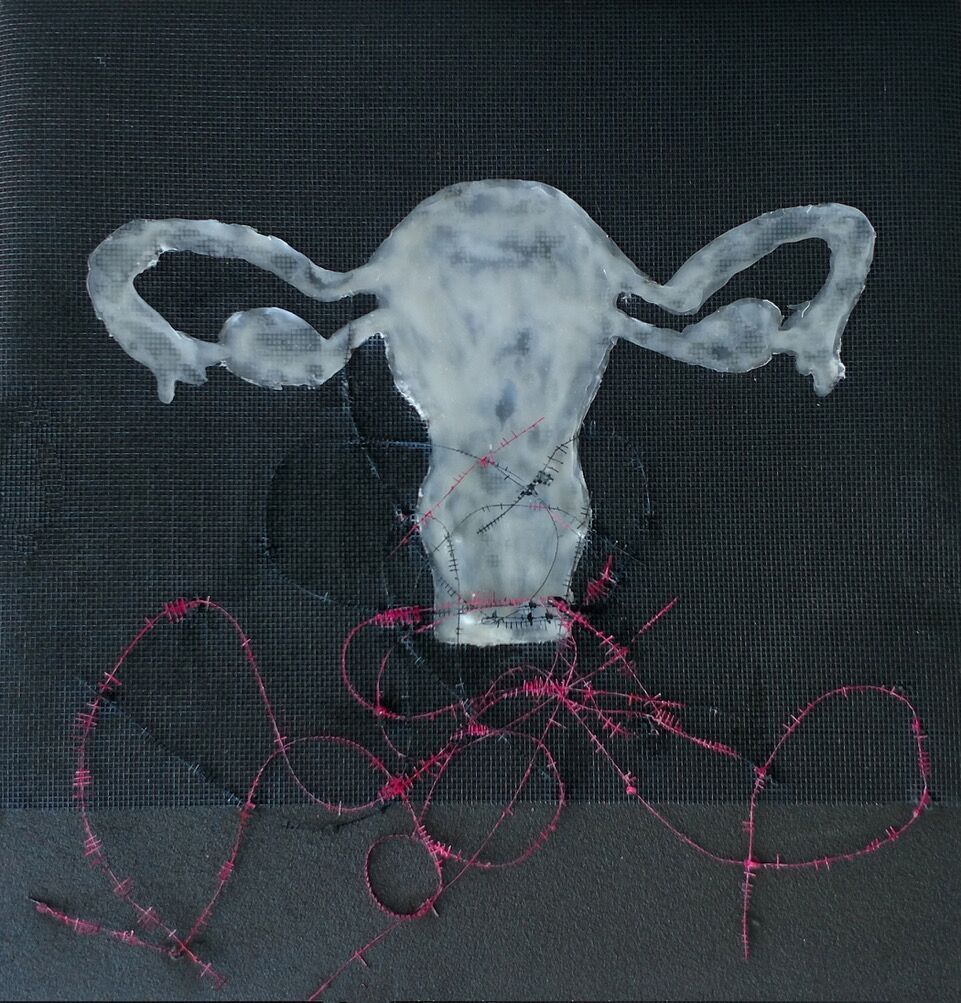
Above, Nurit Avesar’s “Pre-Existing Condition,” an elegiac look inside the body and into the spirit.

Beautiful Parts, closing tomorrow at the CSUN gallery in Northridge, is an incisive sum of those parts, featuring works from Marlena Guzman, Catherine Bennation, Jessika Edgar, Zeina Baltagi, David Estrada, Kristine Schomaker, Rain Lucien Matheke, Nurit Avesar, Alexsandra Papoban, Kimberly Morris, Michelle Nunes, John Zarcone, Monica Sandoval,  Mona Karsa, and Kellan Barneby King. Juried by artist Kim Abeles, and organized by the curatorial collective, Rough Play, the exhibition is also the first annual exhibition hosted by the CSUN Alumni Association Art Chapter and CSUN Art Galleries.
CSUN David Estrada_preview

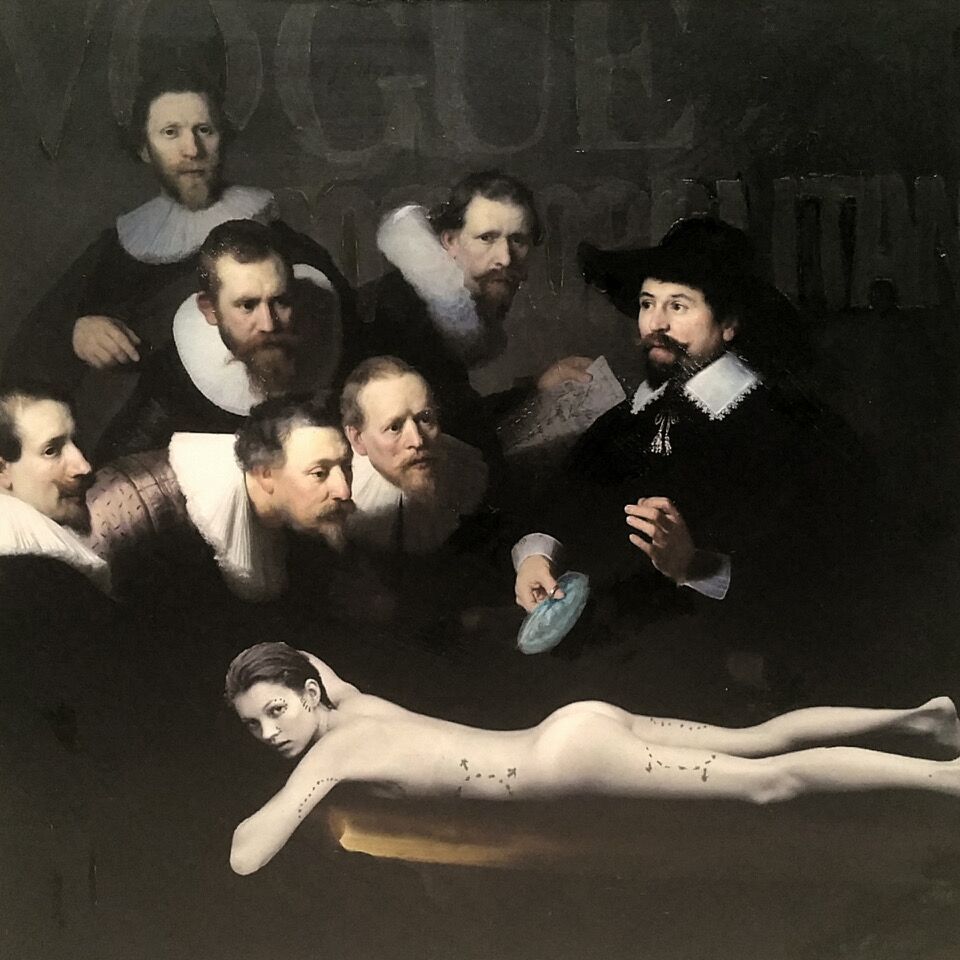
Above, David Estrada crosses two time periods – what these Renaissance men conceive of as beautiful appears different than ours.

The exhibition takes a look at the malleable concept of beauty that changes with time, trends, and cultures; the artists were asked to consider society’s messages about what beauty is today, and how they personally absorb those messages. It’s a provocative question and a prescient one today. With social media creating a global forum in which to connect and to criticize – body shaming trolls, anyone? – what does beauty have to do with it? 

The exhibition features works that deal with body image, and with an artist’s portrayal of the body. Abeles has chosen works that in an exhilarating way often present the body – and beauty – as distinct elements. 

If beauty is in the eye of the beholder, then there is much here that is beautiful, some of it abstract or distorted, some mysterious, as if an artist as alchemist had created an installation.
 

CSUN Zeina Baltagi 27BecomingZeinaB_preview

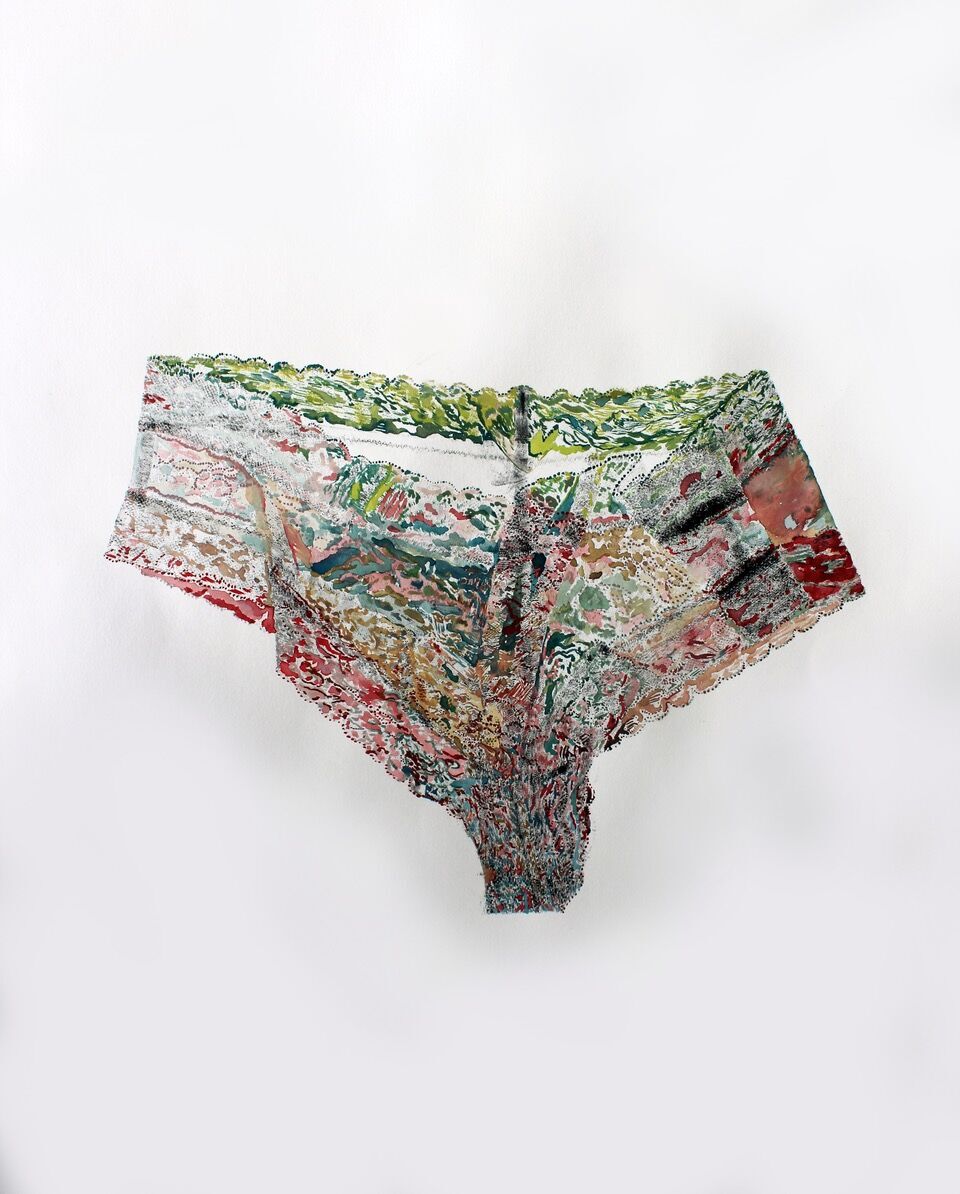
Viewers can take in the detailed watercolor by Zeina Baltagi, “Becoming,” which presents the artist’s underwear as if it were a delicate mosaic. A beautiful garment used for a prosaic purpose is presented on a visual pedestal as it were, the fine covering of a part of the body that may or may not be considered a beautiful one.
CSUN Alexsandra Papban Do you see me now_ 2_preview

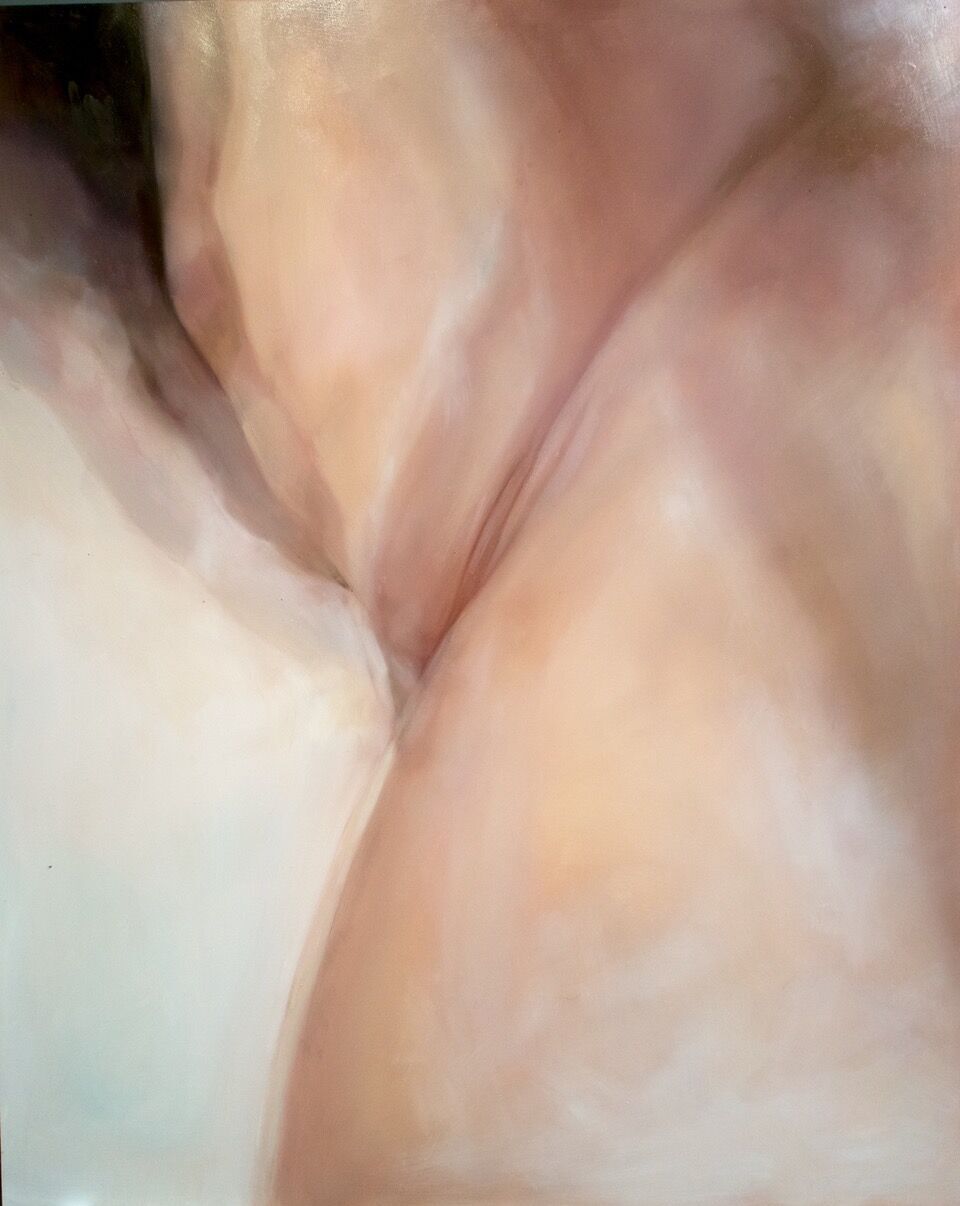
A more alien image is presented in Alexandra Papoban’s work, above,  a serenely intimate image of a human torso.
CSUN Kristine Schomaker An Uncomfortable Skin_preview

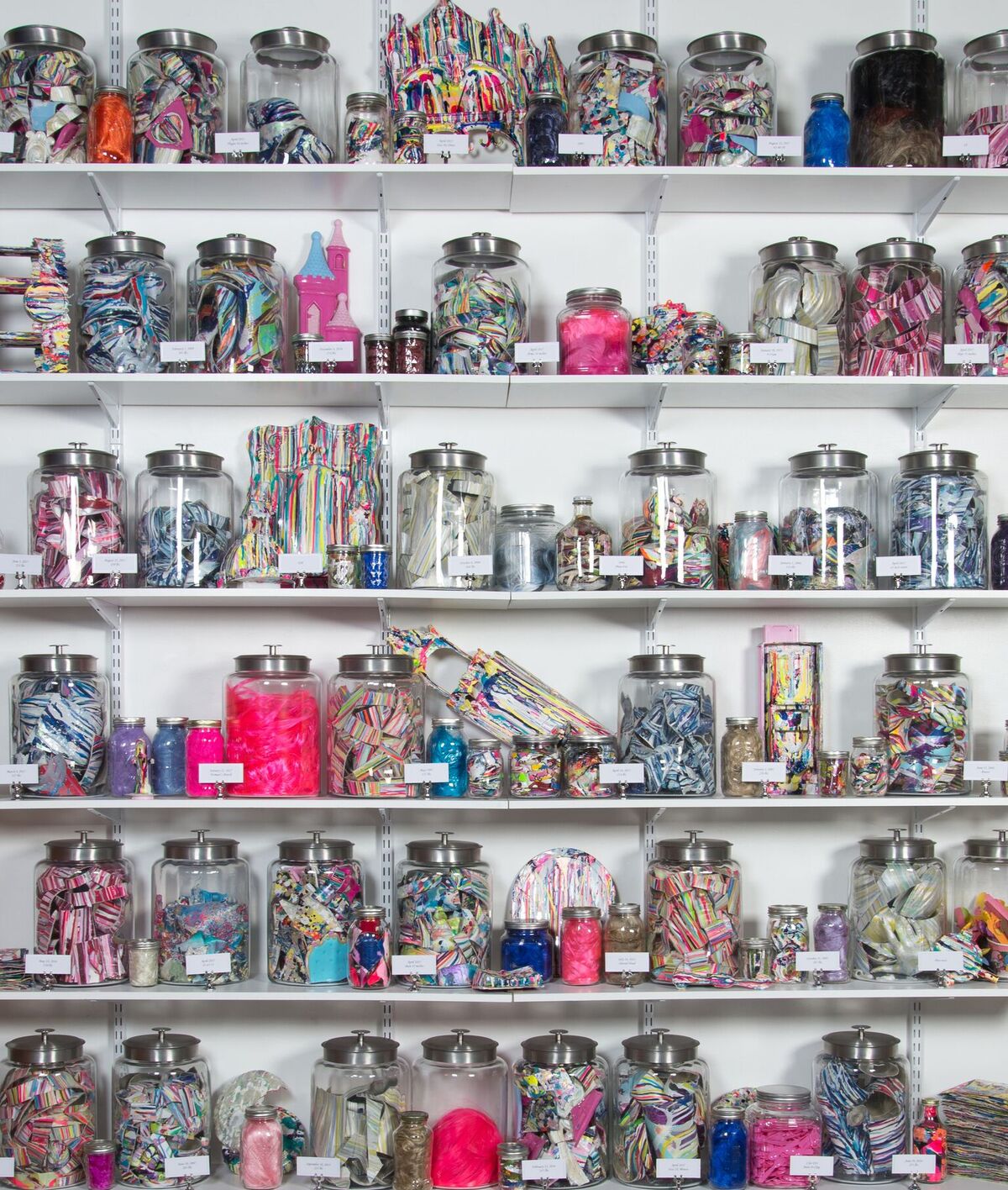
Kristine Schomaker’s “An Uncomfortable Skin” is one piece that evokes a mysterious lab, the aforementioned alchemist’s work, or a candy-maker’s workplace. The analogy isn’t entirely out of place. Always a bravely revealing artist, Schomaker allows viewers a look at her own personal navigation of an eating disorder, as well as a magical accumulation of reconfigured past works, fragments of wigs, plastic spoons. The large scale piece seems to posit the idea that we are who we are, whether we are in bits and pieces, whether we are “whole,” whether we feel as beautiful as we “should” look. 
CSUN John Zarcone_preview


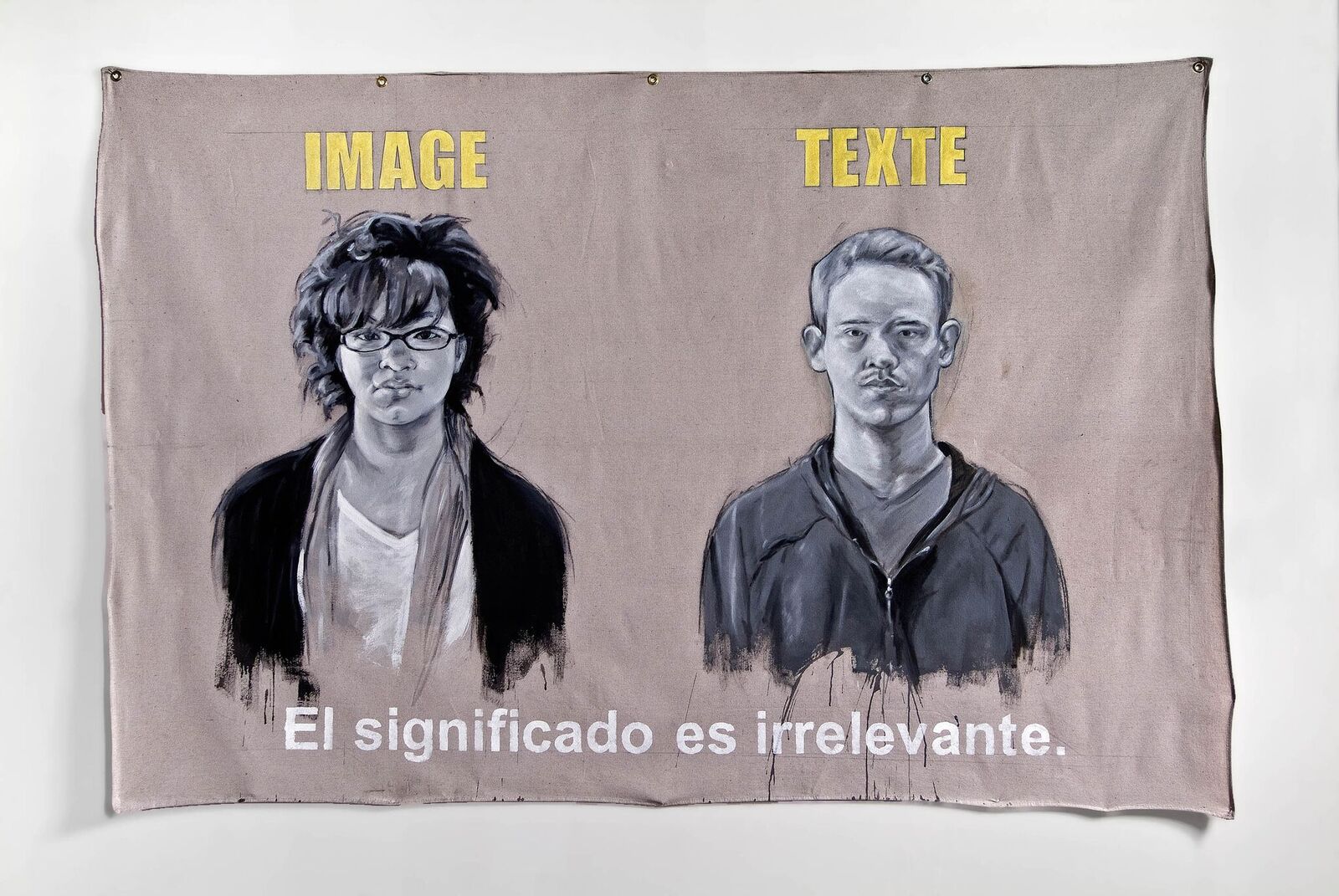
John Zarcone’s “Information Theory” presents realistic, intense images of a young man and woman, created on loose canvas. Below them are the words “El Significado es irrelevante,” translated as “the meaning is irrelevant.” The image is emblematic of the exhibition: here we are, love us or leave us.

Beauty, like life itself, is fluid. We are here, time passes, and we are gone in a heartbeat. The beauty of a smile, a face, a gesture, a touch – what we see and what we remember are highly subjective.

Take a look at the all-too-fleeting exhibition that reminds us of just that, before it closes.

CSUN Art Gallery is located at 18111 Nordhoff Street in Northridge.

  • Genie Davis; Photos courtesy of the gallery
 

Artmonious: Synergy Between Apps and Art

artmonious 3
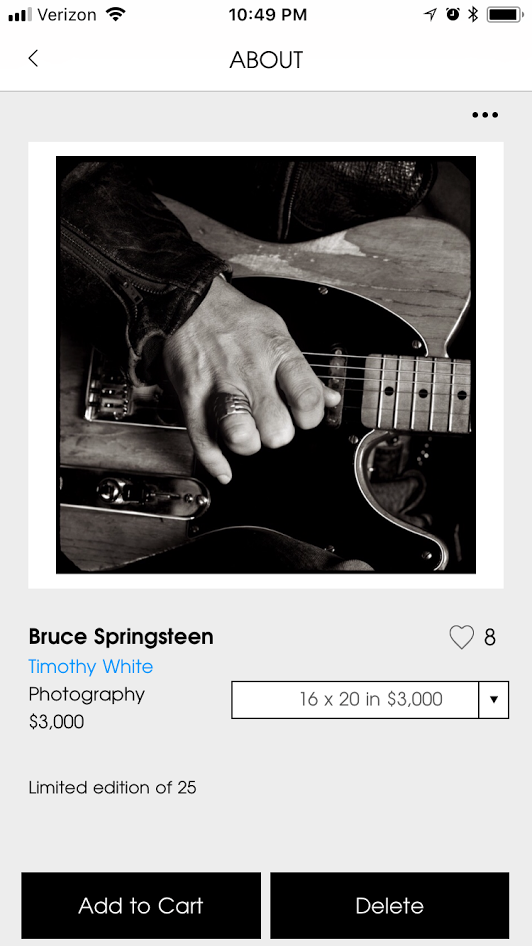
There’s a new way to find art in town, and that’s Artmonious, a mobile art app that launched in a very meta way last week – with a live Venice pop-up displaying some of the art available through the company’s technology.  The Abbot Kinney event drew a crowd to see works by LA-based artists such as Alex Gross, Timothy White, and Jean-Christophe Dick.
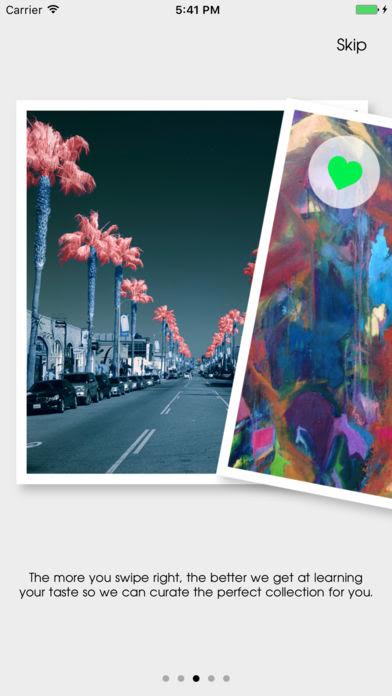
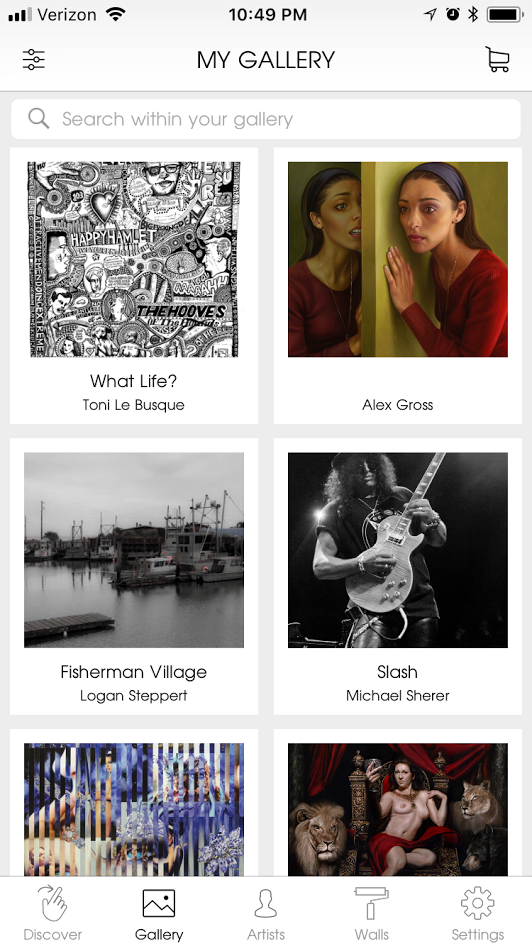
With an ambition to create the worlds biggest social media art network, this mobile app has an algorithm for art taste, as Pandora does for music. One piece is shown to a collector at a time, with the collector having the option swipe left if they don’t find it appealing and right if they do. The more a user swipes right, the more the system will learn the collector’s taste in art.
Artmonious co-creator Casey Fannin discusses how the app came about. “My fiancee Alex and I saw there was something missing from the online art world. A few things stood out to us. First, there wasn’t any mobile art app that everyone was using. Second, we felt every online art gallery website looked the same. There was a lack of personalization when you looked to find art.  And also the experience felt overwhelming because of how many choices you are presented with.”
Seeking to create a different experience for people, one that was simpler and more personalized, they focused on a mobile experience because they felt that was the direction the art world is heading.
artmonious 2
“So we thought of swiping left or right to one artwork at a time as an easy way for someone to discover art, but also if we build an algorithm that could learn peoples taste as they swiped, that would personalize it more because we would know what artworks we should present as each person continued to use the app.”
Fannin is excited by the idea of giving artists a new and innovative outlet to reach the right collectors for their work.
Armonious 1
 
“Our technology and the data our app can learn through swiping is very exciting and will be extremely useful. We want our app to not only be a marketplace to buy art, but a fun app you can use to discover new artists and artwork,” she attests.
artmonious 5
Fannin has a degree in printmaking and graphic design, and after school she was hired  Park West Gallery, one of the largest auction houses in the world. “I lived aboard cruise ships for 2 years conducting live art auctions. I really learned a lot about the sales side in the art world working for this company,” she reports. After she left the high seas, she packed up and moved west, and is currently gallery director at the Morrison Hotel Gallery which specializes in music photography.
Fannin’s partner and fiancee, Alex Kaplan, moved from New York to Los Angeles to write screenplays, but was drawn into the tech world, becoming a senior account executive for two technology startups, Main Street Hub and ZipRecruiter.
“After watching ZipRecruiter grow from startup to receive a $63 million dollar investment, Alex was inspired to start his own company,” Fannin says.
Asked what artists she finds most inspiring, Fannin demurs from picking favorites.
“I particularly like discovering emerging artists. There are so many incredible artists in each city, especially right here in Los Angeles! Most people looking to buy art have no idea that they can find an original piece of art by an artist right in their city that is extremely affordable,” she relates. “And even better, they can find something unique that speaks to them that isn’t the same print your neighbor bought from Ikea.”
Take a look at how Artmonious works right here.
artmonious 4
– Genie Davis; photos: provided by Artmonious

Gimme 5 Closes at MuzeuMM

muz10

Closing this Sunday, October 15th at MuzeuMM in mid-city,  don’t miss Gimme 5, juried by gallery director Mishelle Moross, and Juri Koll, director of ViCA, the Venice Institute of Contemporary Art which partnered with MuzeuMM on this project.  The international juried show is an exciting mix of mediums and artists, from the photographic to the sculptural, from paintings to drawings.

The extremely well curated, tight show features a wide range of incredible, museum quality pieces – so in short, go to the closing, this Sunday at 3, and prepare to be dazzled.

The longer version? See work such as a stunning slide triptych by Tracey Weiss;  archival pigment prints such as Sacred Steel by Diane Cockerill, and Boy on Trike – Niland, CA by Osceola Refetoff. While Weiss is working in sculptural form, all three artists are using photographic materials to create works that are astonishingly fresh, vivid, and meaningful.

Muz 9

Catherine Ruane’s astonishing graphite and charcoal work depicting the flora and fauna of the natural world as always amazes with detail and passion, here with Gargoyle. Working in mixed media, Steve Seleska’s Landescapism #2,  above, makes viewers want to literally and figuratively dive into his work.  Frederika Roeder’s mixed media  Power of Sun, dazzles with depth and color, below.

Muz 7

Muz 6

On the wall, above, Hung Viet Nguyen’s Sacred Landscape #8, is an oil on canvas work, one in a series of spiritually nuanced, brilliantly textured works that evoke something otherwordly as well as a state of grace. Here, the rich aqua of the water contrasts with a dark sky and dark trees. Randi Matushevitz’ Dive In, is a mixed media work that also evokes both darkness and light, with floating faces a potent metaphor for life itself.

Muz 1

We continue to be impressed with Scott A. Trimble, above, here with a somewhat ghostly, almost ethereal figure in The wants of true #empathy. Glenn Waggner’s oil on panel Pigs in Bumper Cars, charms with a surreal edge; while Steven Fujimoto’s mixed media Scratch Built is an impressive large sculptural work that defies easy categorization. Bryan Ida’s vibrant acrylic enamel and urethane abstract, China Basin (below) and Campbell Laird’s shimmery Rain dream gray no.1, 016, a resin film print are also stand outs. The large scale cast aluminum of Thaddeus Gesek’s Hello & El Jefe, is a terrific piece, full of motion, instantly iconic images, figures that look ready to spring into life.

Muz 5

Muz 2

With so many other fine pieces too numerous to mention, an encompassing layout throughout the gallery and onto the patio space, and a mix of mediums as varied as the subjects portrayed, this is an exhibit that will resonate long after viewing.

Go on, get out, go see. Gimme 5 will get you at least a million’s worth of artistic pleasure and passion.

Muz 4

Muzeumm is located at 4811 W Adams Blvd., Los Angeles

  • Genie Davis; Photos: Genie Davis

Trees in Wolves’ Clothing: Powerful, Personal, Provoking

Garb 1

With Trees in Wolves’ Clothing, now through October 13th at the Garboushian Gallery in Beverly Hills, Curtis Weaver offers a whimsical yet thought-provoking look at nature. Call them tree portraits, Weaver’s sculptures compare and contrast nature, man-made objects, and the power of humans to alter our natural world.  His view of evolutionary biology is fascinating, but even more so is purely alive quality of his mysterious, strange, absorbing work.

Garb 12

Weaver says “The accentuation of the connection we have to other living things has been a constant in my work for quite some time, and my overall interest in evolutionary biology.  I became fascinated by the similarities between trees and human circulatory and respiratory systems after seeing the Bodies exhibition at a science museum in Tampa, Florida back in 2005.  There were these amazing pieces where they had injected different groups and in some cases entire human bodies of blood vessels with a very luminous resin.  They washed away the rest of the body mass with acid, leaving only the vessels displayed in bright red resin.  I was completely amazed by this- being able to see the complete contours of the body represented only by tiny, stringy and frail blood vessels.  I was reading a lot of big-history, geological timeline type literature, and Darwin’s Origin of Species at the time.  I soon began focusing on trees and their function on the Earth–  thinking of the Earth as an entity much like an individual organism with many moving parts, made up of millions of smaller organisms.  Like a giant spherical animal, I suppose.  That was the first time it really hit me how much the structural similarities of all these things were also echoed in their physiological functions.”


Garb 5

Weaver began creating work by building fictional and absurd but slightly plausible ecosystems comprised of biological relationships between the characters which operated in a co-dependence web, similar to in the real world.  “These installations were like still-captured moments depicted by three-dimensional figures- much like a museum diorama you could walk through. The scenarios were meant to be informative and educational, but at the same time completely preposterous and goofy.”
Garb 2
When he began working on Trees in Wolves’ Clothing he wanted to be direct, and employ a narrative that resonates with viewers, drawing them into the gallery with
“something cute in the gallery windows” which upon entering the main space “turns into something similar, but larger and more grotesque.”
garb 9
Garb 18
Weaver says “I think much of it was fueled by our current political climate, or maybe it was always there within me, but as of recent I had been feeling a bit more angsty and stirred up. The blatant negligence I see from our current presidential administration on environmental issues fueled a lot of my recent inspiration. Social issues hit hard, and even though I have my opinions on them, I accept that for numerous reasons, whether through ignorance, or just flat out bigotry, people get caught up in their own bubbles. I don’t agree with it, but I understand it. It doesn’t perplex me. With that being said, nothing heats me up and baffles me more than seeing someone in a position of such high authority – with ample support from the public –  making astronomical decisions that catastrophically affect not just our nation, but the physical well-being of the entire planet.”
Garb 17
The artist adds “This is where I decided, if I’m going to make sculpture about the mentality that humans reign supreme over the earth through exploiting similarities between humans and other organisms, why not use the actual organisms? Why not use the actual trees? …it is meant to strike a nerve.  It is meant to trigger thoughts and awareness of the biological connections between us humans and the rest of nature.”
Garb 4
And so Weaver set to work using natural materials.  “A big part of these sculptures was the method of sculpting, being more of a reassembling of objects rather than a carving or shaping of a material. It was very important to me to only render the color and sheen with transparent finishes, letting the natural shape, texture and contrast sing through the surface and provide the visual relationship I was looking for.
I needed to get these things into pieces, so they needed to be broken or cut.”
Garb 6
“You will notice everywhere something is cleanly cut there is a blood-vessel looking branch growing out.  The cross-cuts I felt also paired nicely with the pieces resembling hanging meat- accentuating the connection between not only the physicality of the wood to animal flesh, but processes we see as familiar with both, especially from a commodification perspective.  Harvested cut logs and harvested cut animal parts.”
Garb 15
 The character in each individual piece is one of the most unique aspects of this work. Weaver says he was able to “establish an overall aesthetic with a blurred finish line that I could decide upon spontaneously.  And even more so, with quite a few of these pieces, the shape, form and detail of the found branch would have very much to say about how and why I would transform it.  For instance, Trunkated was one of the earliest pieces.  The splitting sections of bark repelling away from each other like the Pangea into the continents as we know them today caught my attention…and the fact that it pretty much looks like an elephant’s trunk!  I experimented with getting bright visceral looking pigments into the cracks without disrupting the surface of the bark, wanting it to look like some kind of metamorphosis happening under the surface that you can see, but not completely see.”
Garb 8
For Weaver, one of his favorite parts about creating these works was the fact that he used natural substances to shape them. “I love the fact that instead of using gallons and gallons of toxic resins and hazardous processes I was able to pull these tree parts that were otherwise headed for a dumpster or burn pile, or maybe just left on location to rot or burn, and with 99% water-based surface treatments transform them into my favorite body of work to date.”
See for yourselves! Garboushian Gallery is located at 427 N. Camden in Beverly Hills.
– Genie Davis; photos: courtesy of the artist, and Genie Davis