
Teale Hatheway’s “Fragmented Realities”

taele 6

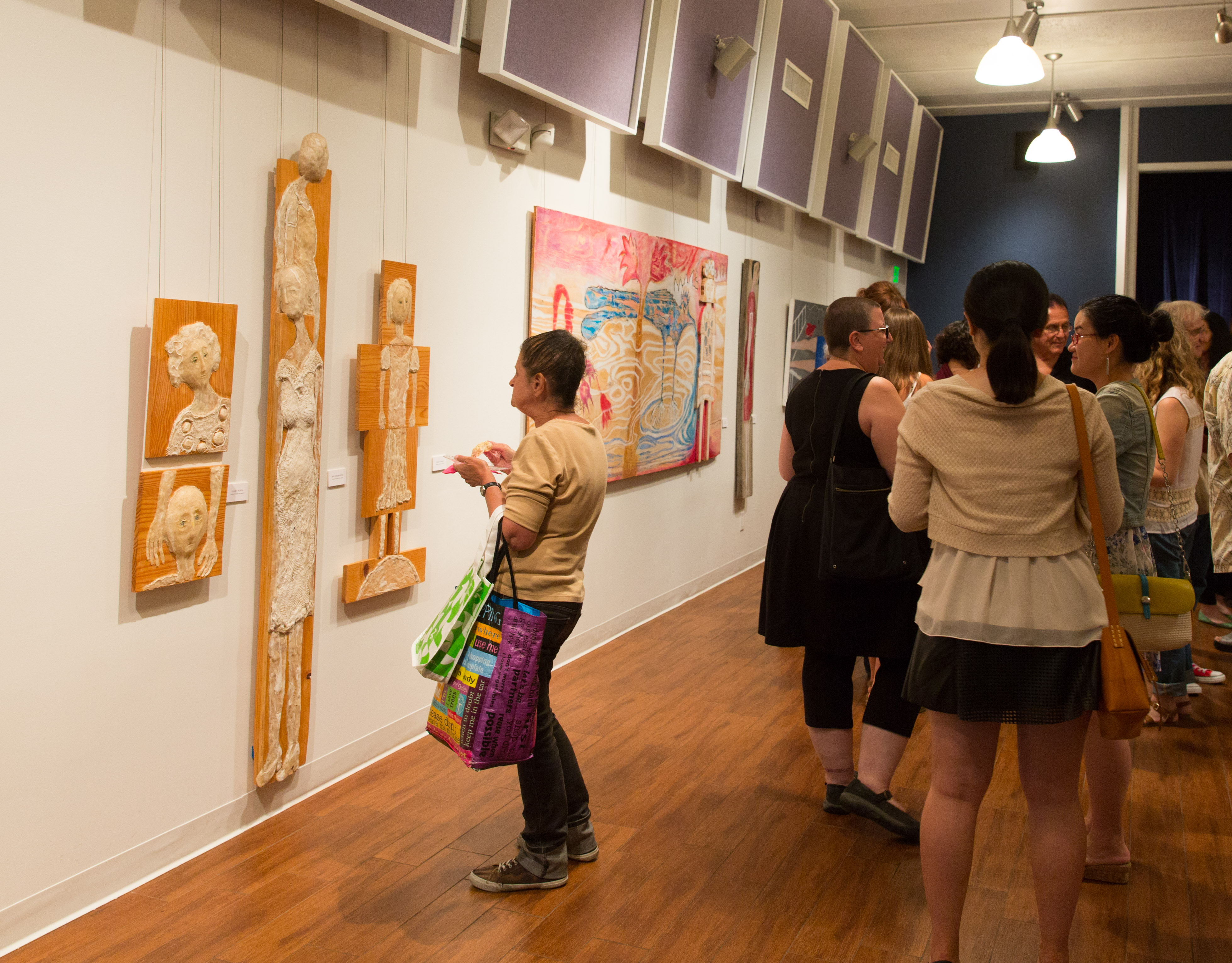
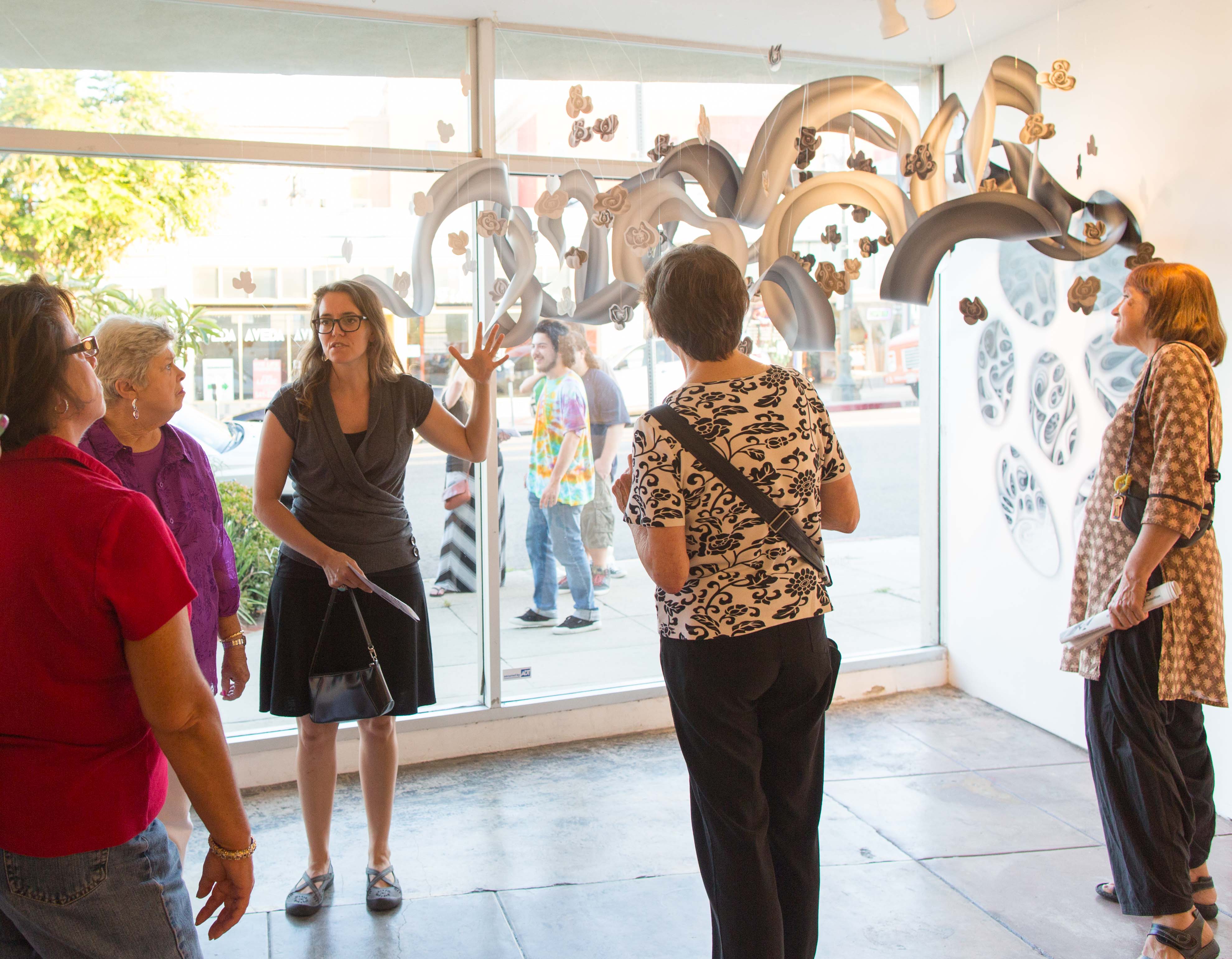
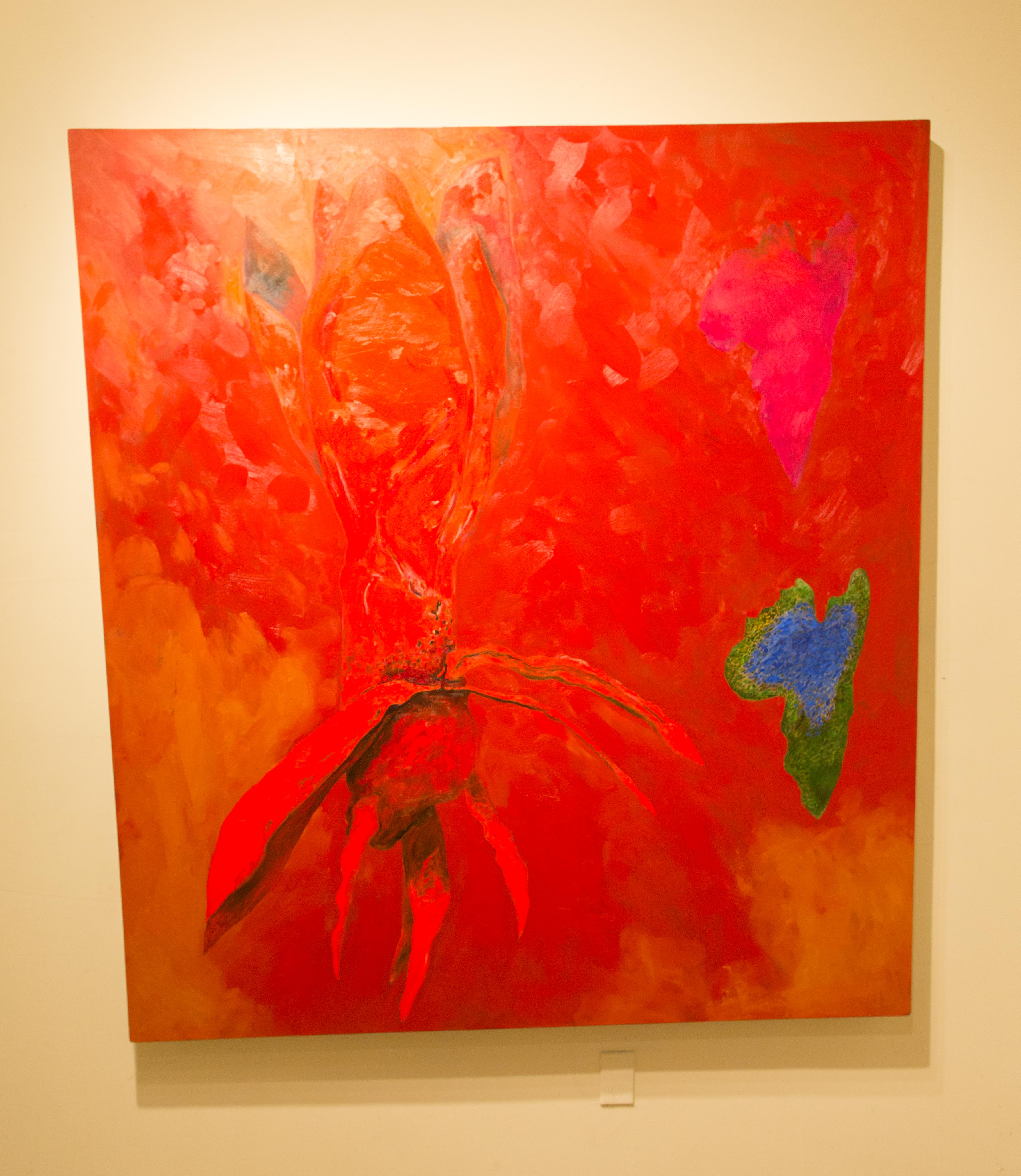
Artist Teale Hatheway is the creator of layered mixed media art and site-specific installations that express evocative emotional connections. Working with acrylic, ink, bleach, metal leaf, burning, and charcoal on linen, her complex work is designed to “explore the theory that we remember environments as compilations of elements with which we develop emotional connections.” Hatheway takes details of pattern, form, color, and texture from urban environments, using them to implicitly and explicitly “trigger recognition of place.”

Hatheway’s work is about memory, grounding, understanding, and experience; with beautifully detailed yet fragmented images compiling pieces on Chinatown, historic bridges over the Los Angeles River, DTLA’s Broadway, and more. With a solo show, “Fragmented Realities: City of Dreams” opening Sept 12th at the Los Angeles Art Association, Hatheway’s self-taught architectonic drawing and the ethereal nature she evokes of even the most common subjects will both be on full display. Her approach is experimental yet investigative, using the often unsung history of Los Angeles architecture to enthrall viewers and advocate for the city’s preservation.
teale

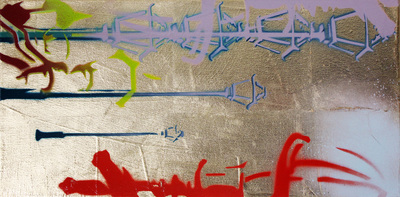
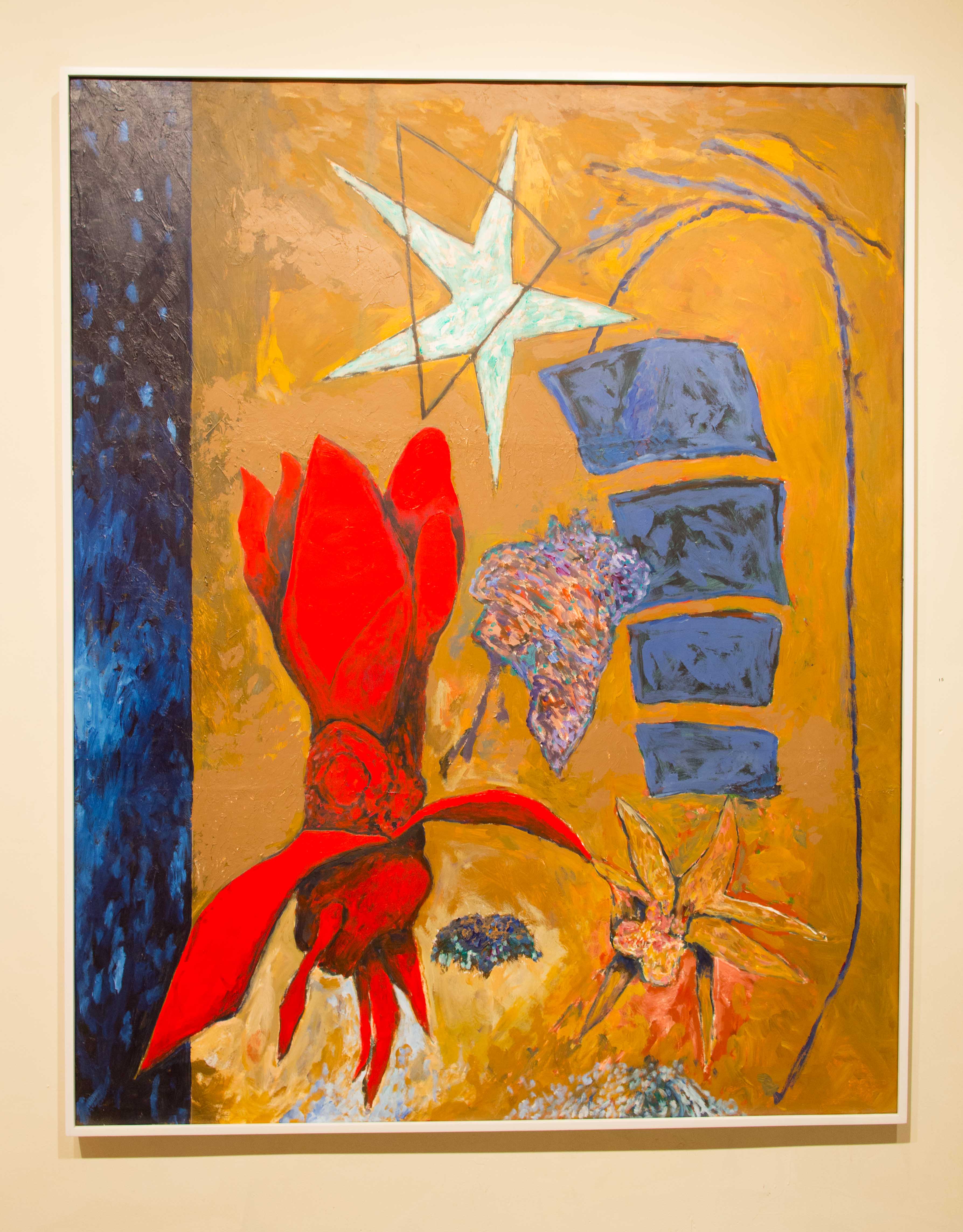
The artist describes her subject matter as “a means to ground myself in a tangible environment in which an understanding of the whole is made up of an experience of the parts.” These parts are special indeed. As a part of her “Street Lights Abstracted” series, delicately colored outlines and sections of street lights are positioned to form abstract and impressionistic depictions of what could be the ghosts, memories, or filaments of the lights themselves. Her “Detour” combines spray painted images of these lights over a background of gold leaf on canvas. Like the lights themselves, the painting illuminates, both literally glowing from the gold leaf and figuratively from the impression of streetlights. In “Self Reflection” from the same series, a mirror image of an upside down red street lamp,casts beams, also reflectively upside down, against another gold leaf background. The street light here looks almost like a character from the Chinese alphabet, or an ancient rune.
teale2

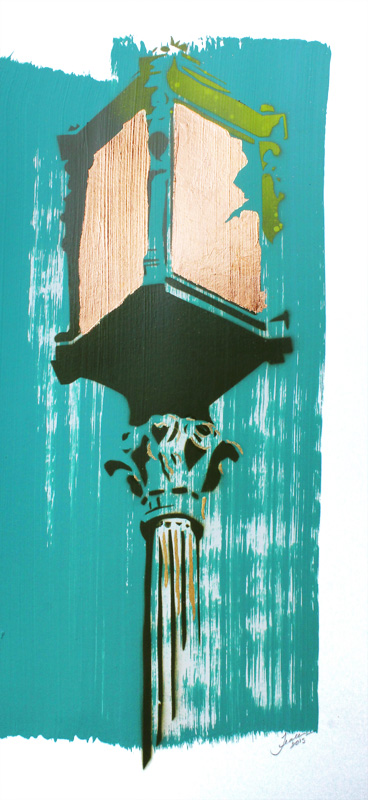
In her “Street Lights” series, gone are the abstract and symbolic shapes. Here the lights are clearly lights, some with vivid matte aqua, red, and mustard yellow colors washing over, through, and around them. The viewer sees the colors as a spectrum that the lights themselves must be illuminating.
teale 3

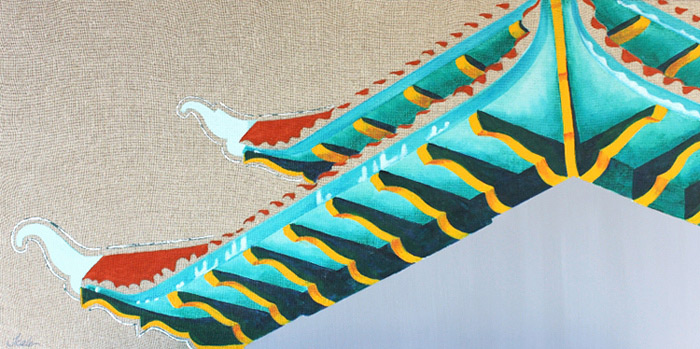
Hatheway’s “Chinatown” series offers a moody evocation of this exotic neighborhood that is nonetheless intrinsically a part of Los Angeles. East-meets-west architecture plunges viewers into another near-magical world. No prosaic impressions here. In “Success,” Hatheway employs acrylic paints and metal leaf on linen to vividly offer the winged edge of a Chinatown building in red, aqua, and gold tipped with white. These could be architectural angel’s wings, could be dragon tails, could be a temple in China – and yet with the California-bright colors, the sense of place blurs between the new West and the old East. Where do the winged edges want to fly?

taele 6

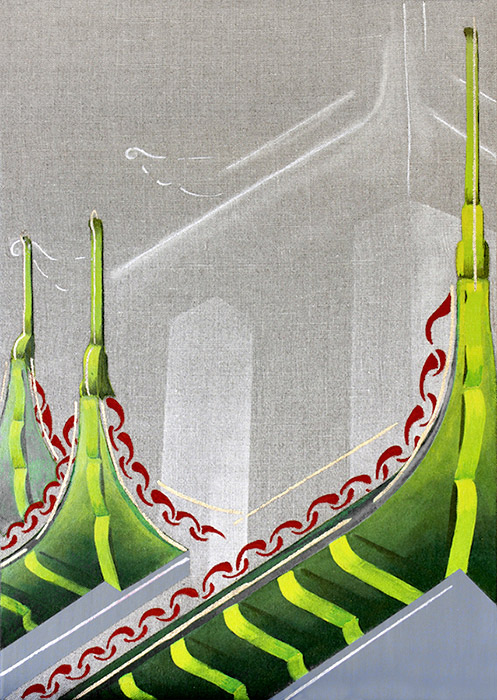
Equally vibrant color marks the clearly grounded depiction of double metal gates over the facade of a building in “Secure,” painted using ink, acrylic, bleach, and metal leaf on linen. It’s flight again, or the illusion of it that grabs the viewer in the lime and chartreuse green dominated “Vision,” which shows another curved, wing-like Chinatown roof with the looming white ghost shadow of a larger building behind it, and tiny kite-like flags billowing from the ramparts.
teale 4
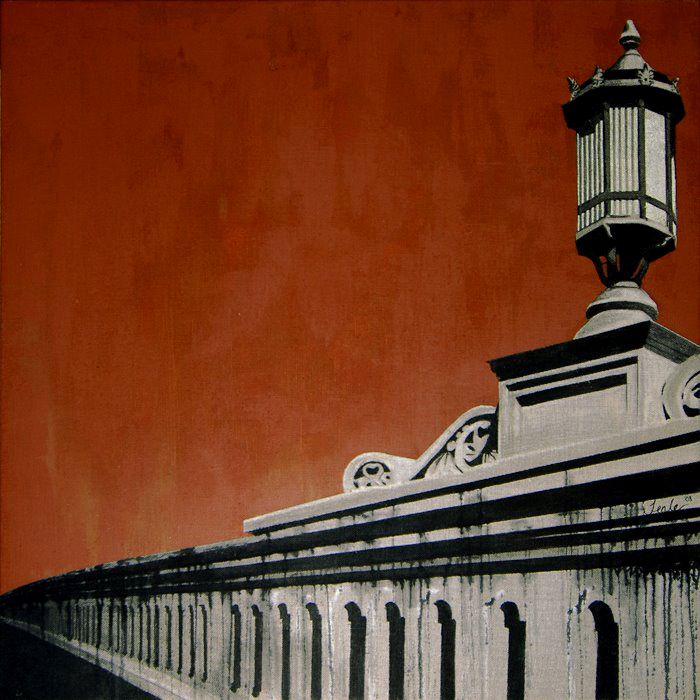
With a burnt orange sky and a carefully detailed grey and white bridge, the long perspective of “Washington Boulevard Bridge” combines ink and acrylic with bleach on gold leaf in Hatheway’s “Victory – The Historic Bridges Over The Los Angeles.” Bridges from Downtown L.A. to Griffith Park are pristinely stylized, with their location just hinted at, their appeal speaks to a universal desire to cross a bridge to other, more golden banks. These bridges are highly realistic yet as romantic and surreal in design as a fairy tale bridge. These pieces are linked through Hatheway’s exploration of the city, through a connected map of bridges stretching across the SoCal region, which allows viewers to cross into a vivid engagement with the city itself.
teale5

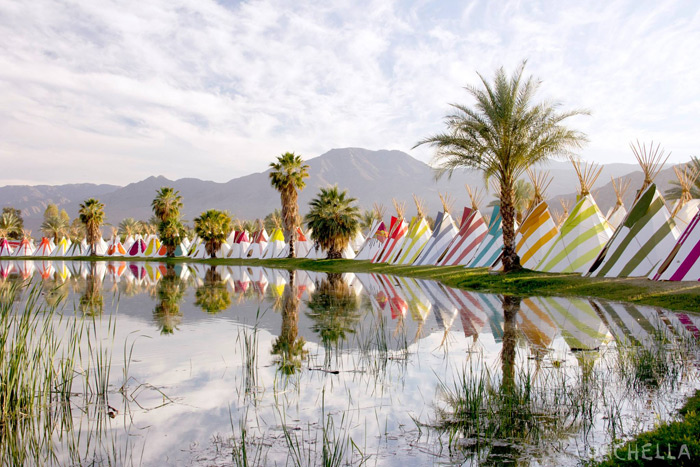
“InTentCity,” Hatheway’s installation commission for the Coachella Valley Music and Arts Festival, is a collection of 53 hand painted tipis, painted specifically for the Lake Eldorado camp ground, and reflecting in the mirrored prism of the lake itself. Hatheway created a fully immersive environment in a delicately painted three-dimensional experience. As with so many other works by the artist, there is a magical quality to the environment. We could be in the California desert or in a mysterious other-wordly land that has transformed itself here on our planet, in our state. It’s this magical and mysterious quality that transcends and enhances the images themselves throughout all of Hatheway’s work.

Internationally exhibited, Hatheway received her BA from Scripps College in Claremont, Calif., studying figurative painting at the Slade School of Fine Arts, University College London, and studying photography and architecture at Art Center College of Design, Pasadena. Upcoming exhibitions include “Fragmented Realities: City of Dreams” opening Sept 12th at the Los Angeles Art Association, and “Some of the Parts” at West Hollywood’s Gallery 825 in October. Recent shows include “InTentCity” at the Coachella Valley Music and Arts Festival in Indio, Calif., a collection of 53 hand painted tipis; group exhibitions at Red Pipe Gallery in Chinatown, the Pasadena Showcase House for the Arts, Los Angeles Contemporary Exhibitions, and the Riverside Art Museum, among many others.

  • Genie Davis
Malka Nedivi at the National Council of Jewish Women

Maka Nedivi
Malka Nedivi “Mother and Daughter” – all photos by Jack Burke

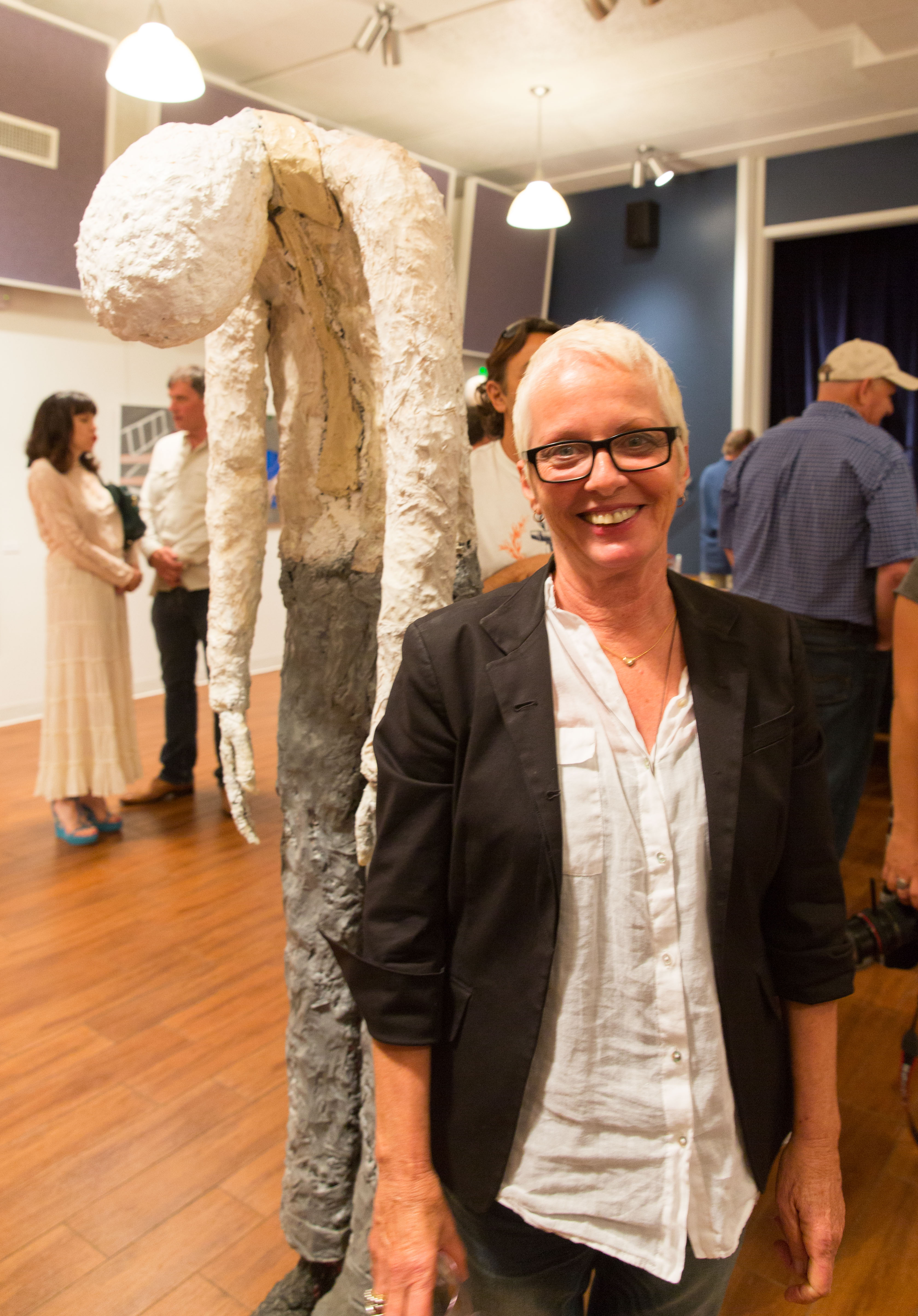
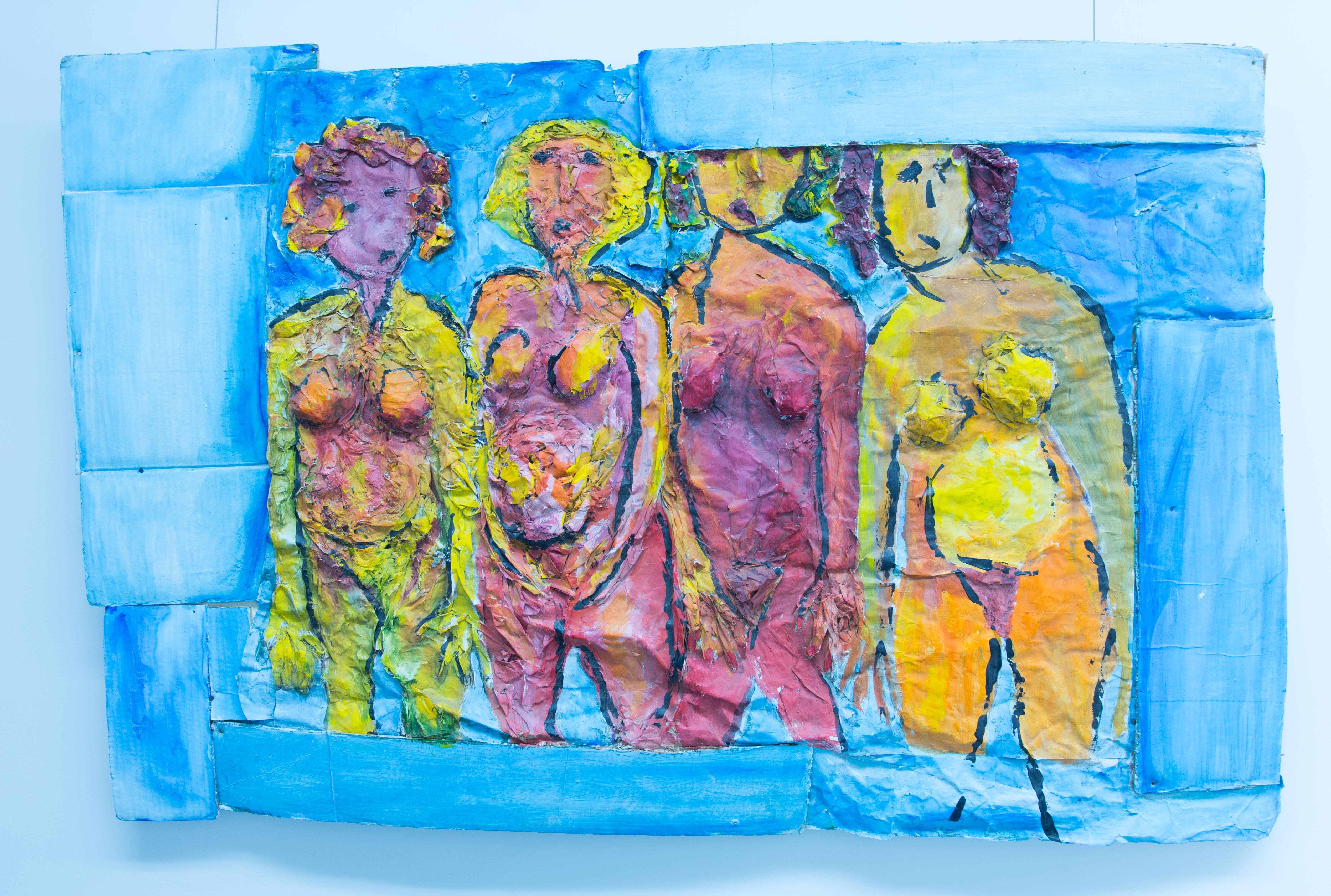
At the August 9th reception for artist Malka Nedivi’s solo show “Mother and Daughter,” Nedivi remarked “I’m overwhelmed at how big a reaction people have to this show, and what it does to people in an emotional way. I’m so moved.” Overwhelmingly beautiful and moving are definitely a part of the descriptive vernacular when it comes to Nedivi’s work. Inspired both in subject and material by the artist’s seamstress mother, this don’t-miss-show runs through September 16th at the National Council of Jewish Women in Los Angeles.
Malka Nedivi - Photo by Jack Burke
Malka Nedivi – Photo by Jack Burke

A painter, sculptor, and collage artist, Nedivi says that all of her work is inspired by her mother, and both her parents’ previously unknown past as Holocaust survivors. Nedivi’s work uses a great deal of wood and fabric. “My mom loved wood and boxes, so I chose materials that she loved,” the artist explains. The tactile nature of Nedivi’s work contributes to the feeling that each carefully layered piece is alive with emotion, visually leaping off the floor of the gallery.

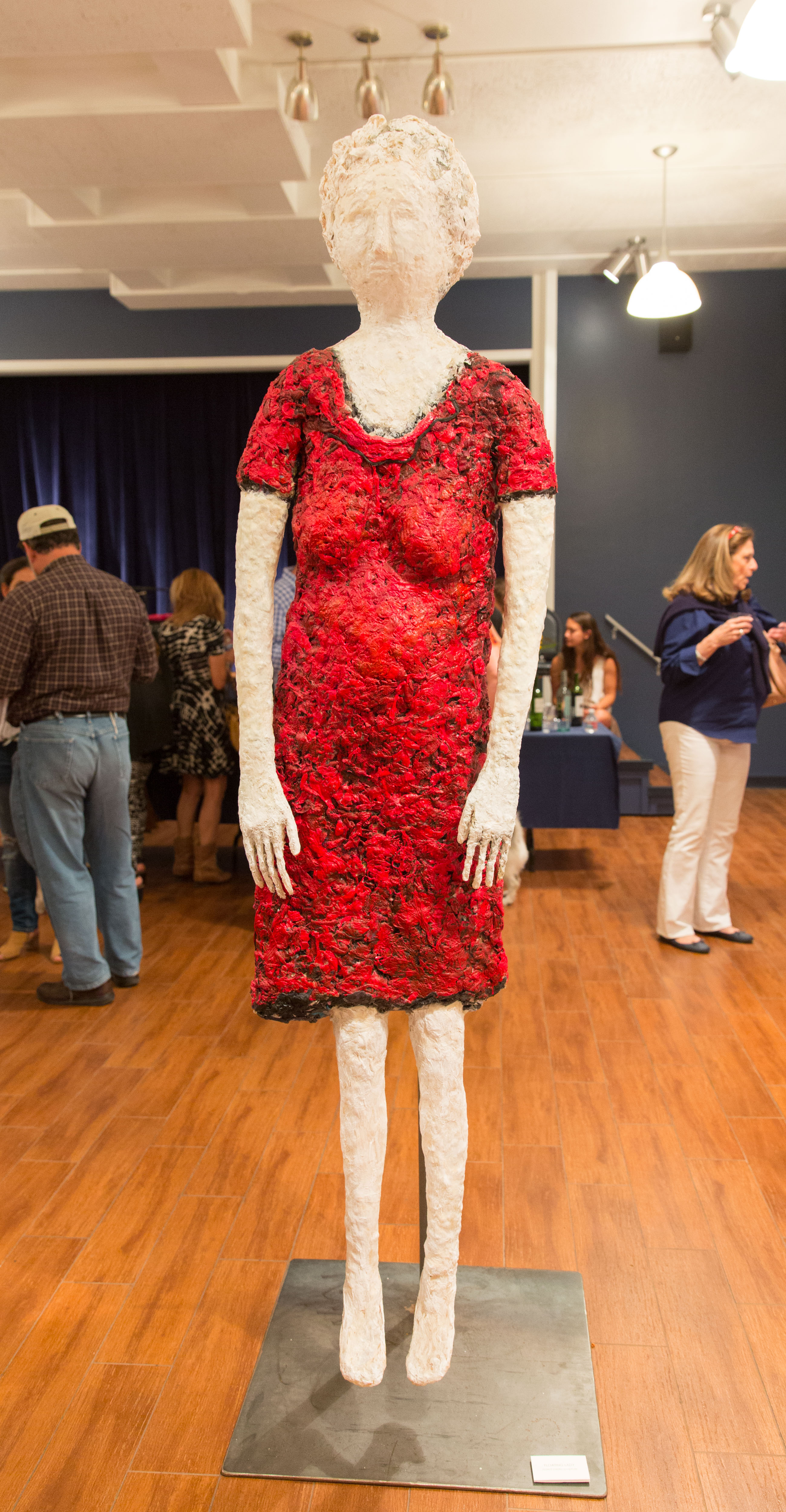
Floating Woman

Her “Floating Woman” mixed media sculpture shows a white-bodied, ghostly woman in a vibrant red dress. The vibrancy of the dress beats like a visual heart, and expresses life, no matter how the woman, with her pale facial features, may fade. Emblematic of the artist’s bond with her mother, the piece seems to express the idea that love lives on after the body may have faded away.

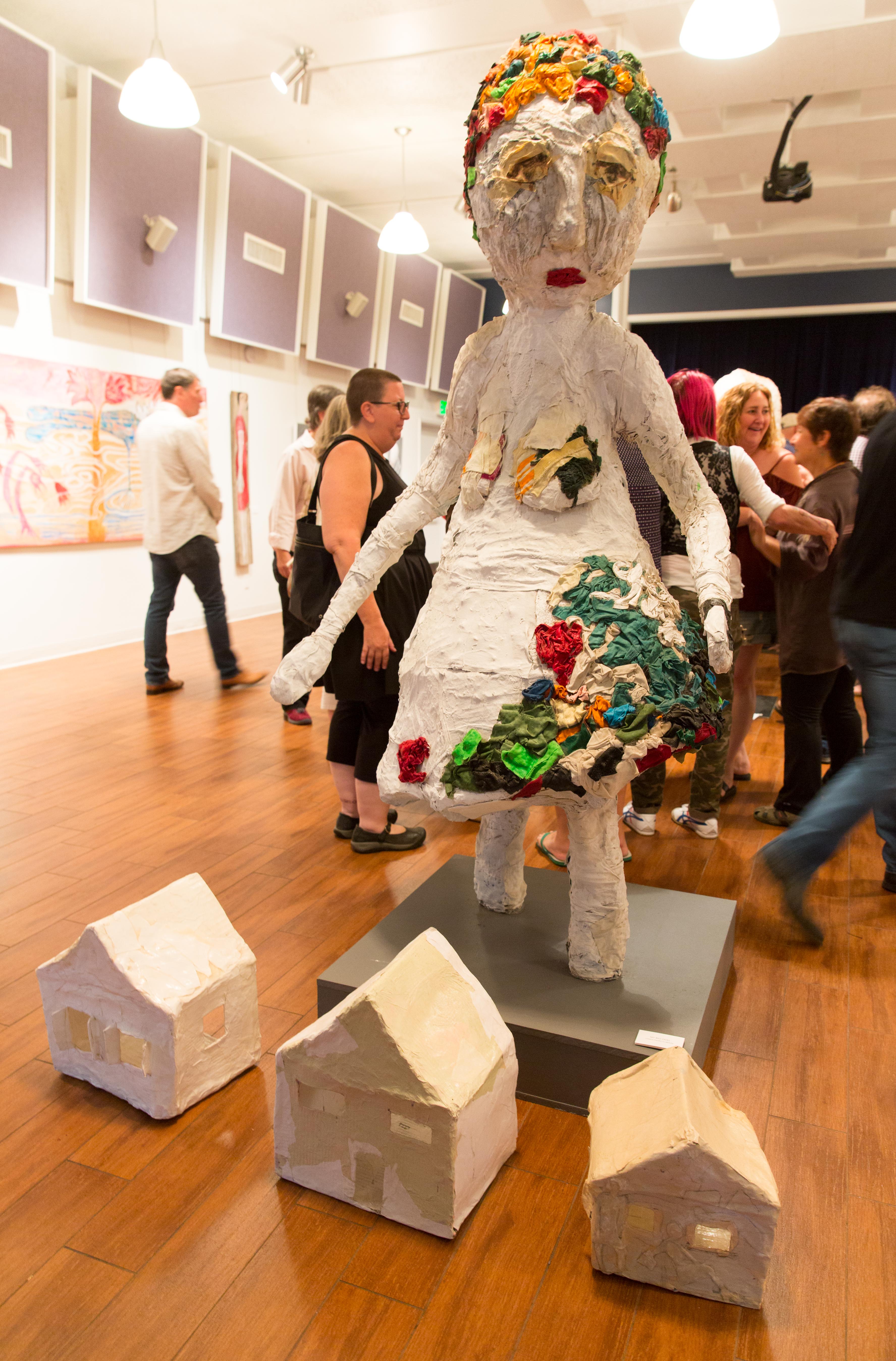
Floating Doll

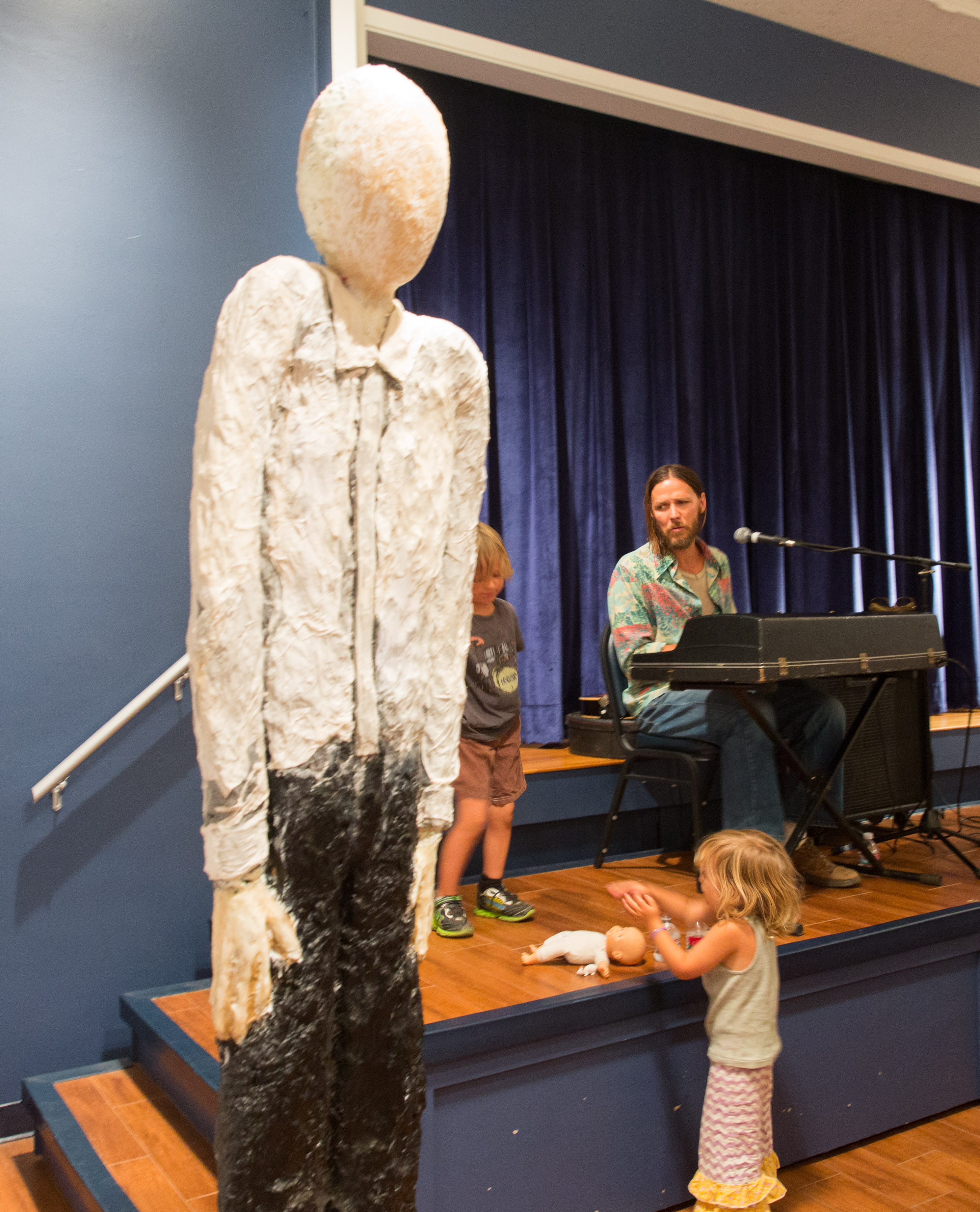
“My Big Doll” is the large scale six-and-a-half-foot mixed media sculpture that greets viewers entering Nedivi’s exhibit at the NCJW. The doll figure’s fabric hair and patterned skirt and top look like flowers. She seems to be blooming with both life and sadness, her eyes downcast, her cheerful colors ignored. With most of the sculpture white, there is the feeling of an otherworldly presence animating her figure.

Nedivi

Mixed media on wood, Nedivi’s “Memory” features a variety of figures, children, and adults, and a tree that may be the tree of knowledge, with ripe fruit upon it. A man and a woman stand at either ends of the piece, with two smaller girls, and a smaller boy and girl, backs turned to us, in the middle. Behind these smaller figures is a woman with Rapunzel-like long hair, holding her face in her hands. This figure is two-dimensional, the others are three. Viewers may take the figures on both ends of the canvas to be Nedivi’s parents, the woman with the long hair sitting beside the tree of knowledge is perhaps the artist herself, endowed with the previously unknowable about her parents, knowledge that children, perhaps her own, perhaps the child she once was, are turning toward.

Nedivi

Created on wood with paper, fabric, acrylic, and glue, the artist’s “Single Woman” is a riveting figure, her expression wise, withdrawn, palpably sad; her skin pale, her hair grey. Within this face is so much poignant life, and so much intricacy that comes with age. The wood itself that holds her visage is knotted and rough, the background to life in an imperfect world.

In each of Nedivi’s works, there is an intertwined immediacy: beauty and sorrow, cast down eyes and triumphant splashes of color, mother and daughter, past and future. The bared-soul intimacy of these pieces make them almost impossible to look away from, nor would viewers wish to do so. Rather, the pieces are made to pull viewers into a hidden world, a magical world, a world of mighty sorrows, hoarded secrets and pieces of fabric and scrap, and a world in which resilience and joy trump even the darkest past.

F23C0438 F23C0434 F23C0402

“Mother and Daughter” at the JCJW – Photos by Jack Burke

Born in Israel, Nedivi studied theater and literature at the Hebrew University in Jerusalem, and film at UCLA. She is also an accomplished film-maker. Her art is self-taught, beginning with ceramics in the 1990s. A move back to Israel inspired her current works, these large scale sculptures and collage paintings on both wood and canvas. Many of the pieces in “Mother and Daughter” use fabric and other materials found in her childhood home.

The artist has previously exhibited at the Santa Monica Fine Art Studios in Santa Monica, Calif., and was recently selected as one of ten Southern California Contemporary Artists from Israel exhibited at the Los Angeles Municipal Gallery in Los Angeles.

  • Genie Davis, All Photos: Jack Burke

San Pedro Art Walk – First Thursdays

San Pedro Art Walk - Photos by Jack Burke
San Pedro Art Walk – Photos by Jack Burke

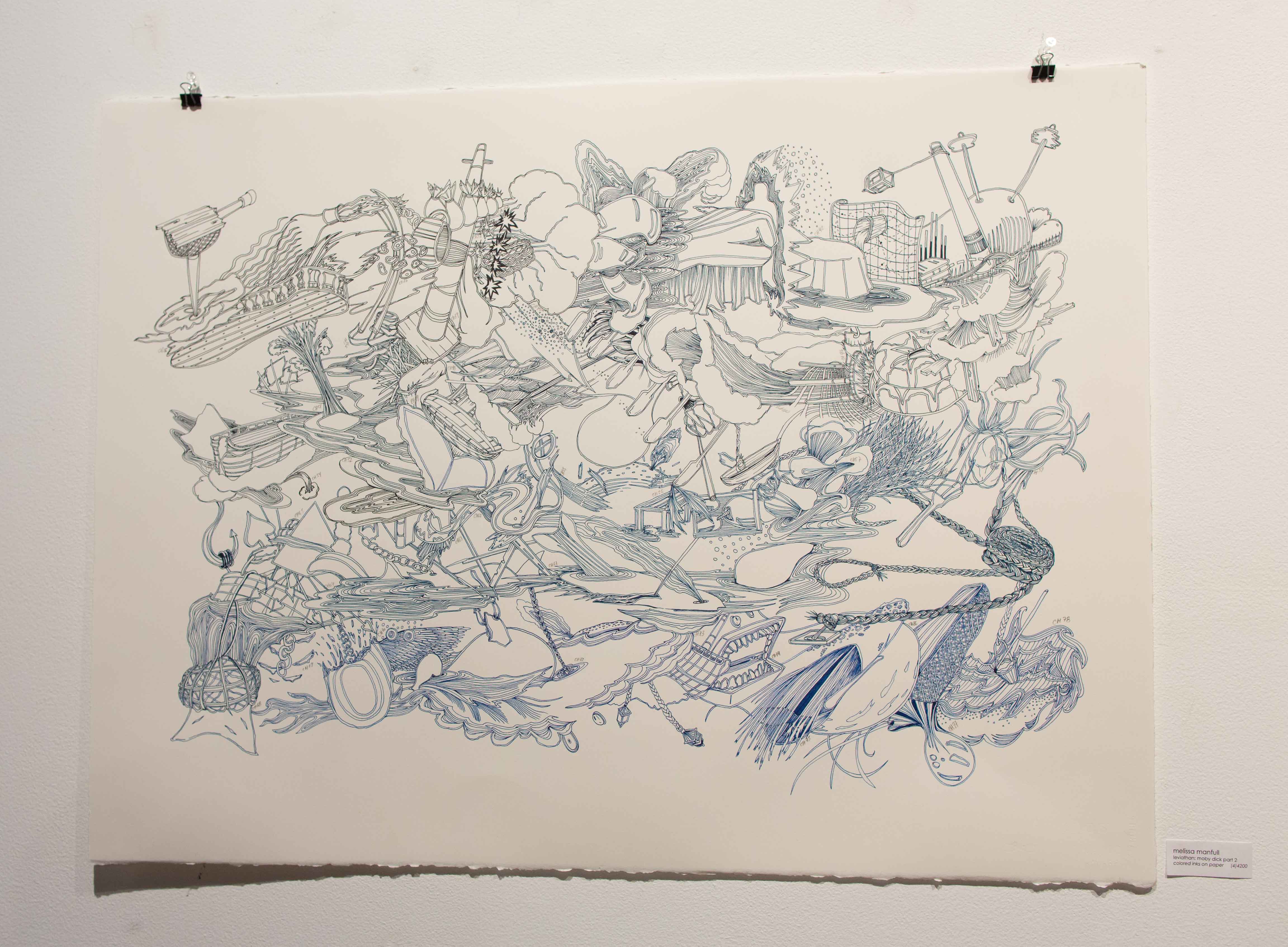
San Pedro is a treasure-trove of artist-owned galleries and dynamic exhibitions. Every first Thursday the area around the iconic Warner Grand theater from 6th to 8th Street manifests a bountiful art scene in an evening art walk from 6-9 p.m.

Erika Lizee
Erika Lizee

F23C0306

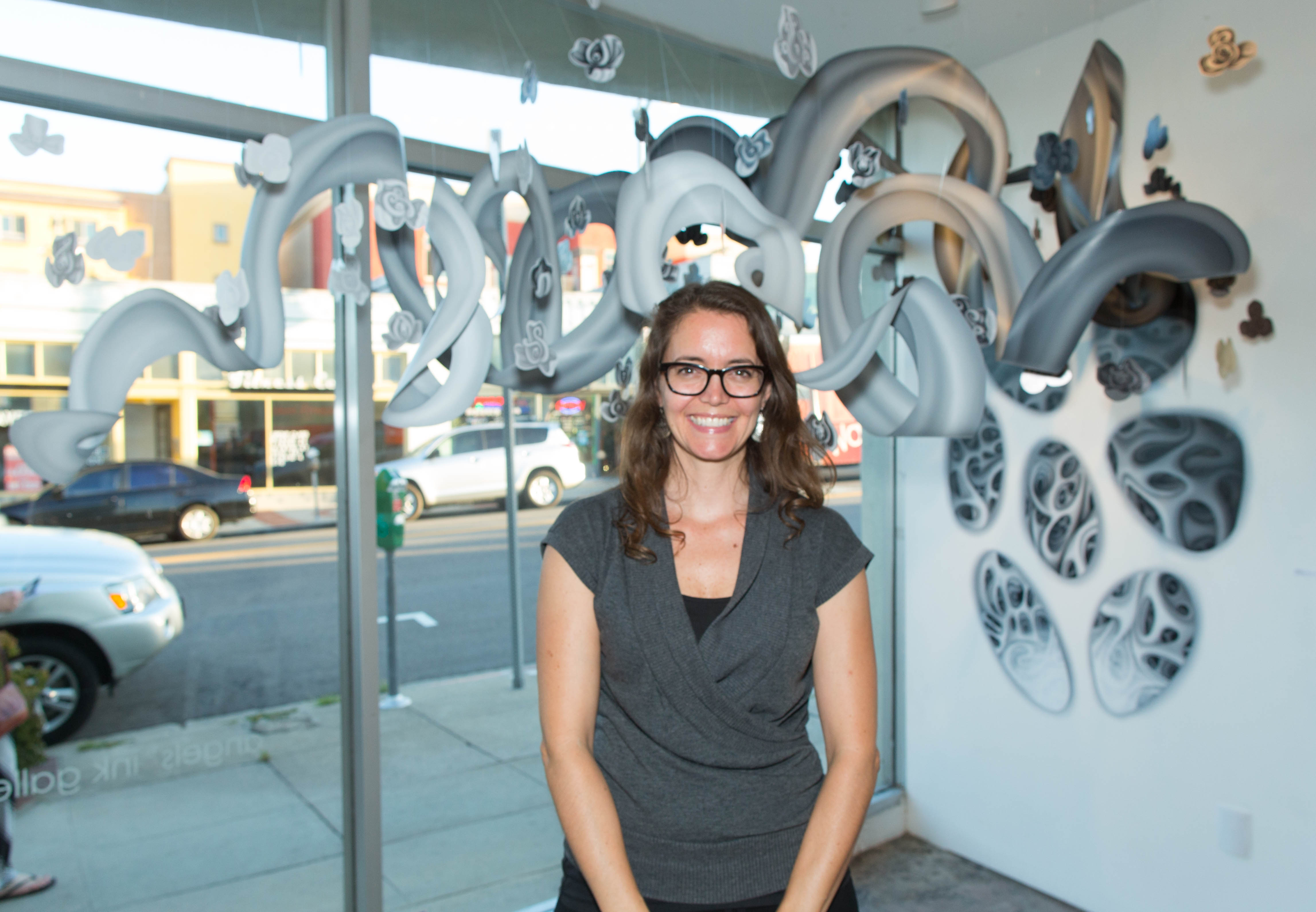
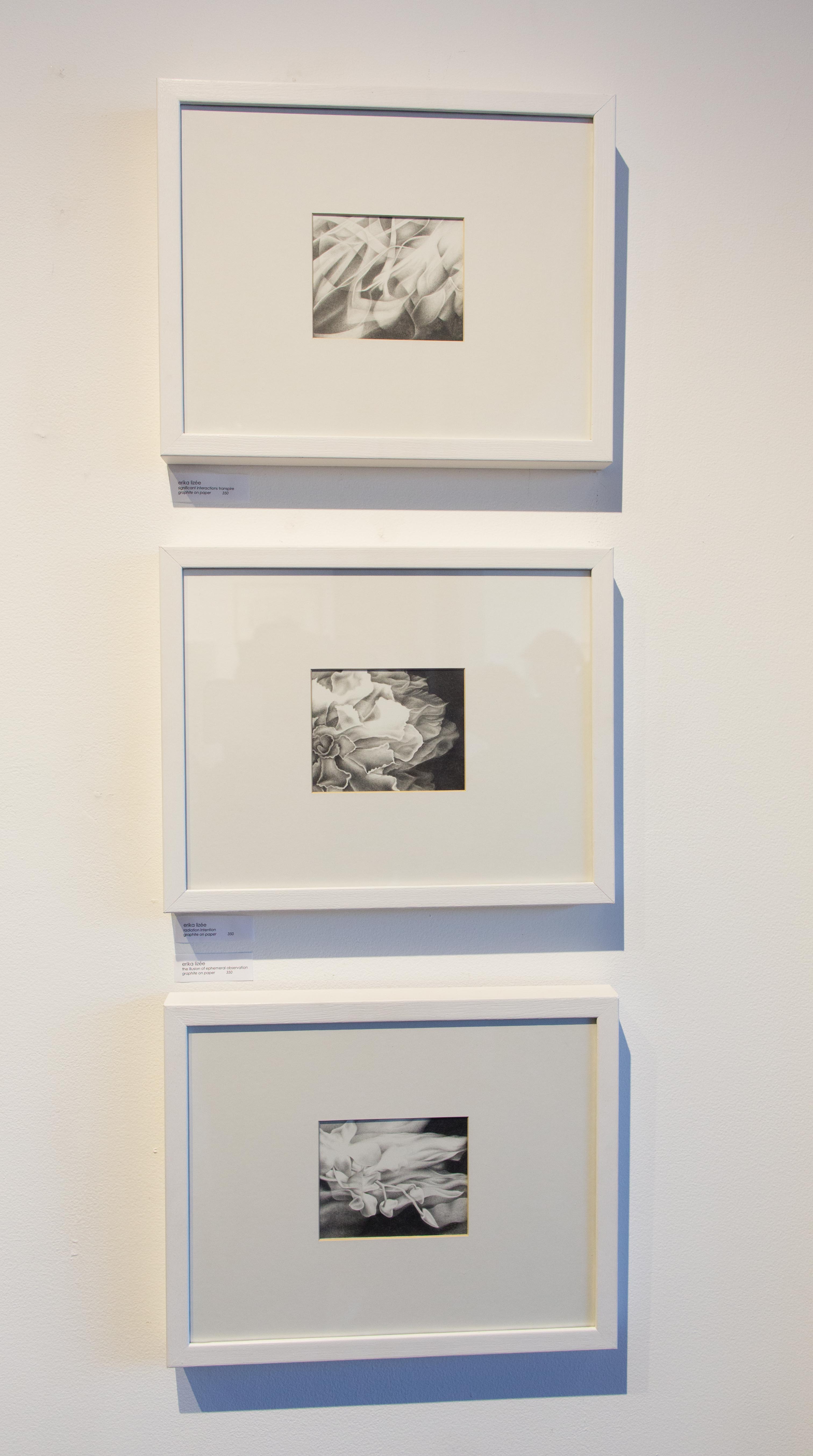
Works by Erika Lizee, Echo Lew - Angels' Ink Gallery
Works by Erika Lizee, Echo Lew – Angels’ Ink Gallery

Yesterday, Erika Lizee and Echo Lew were among those featured at the opening of “Exuberance,” at Angels’ Ink Gallery, whose monochromatic theme was devoid of bright color, but nonetheless compelling.

F23C0324 F23C0322 F23C0318 F23C0319

Huz Galleries
Huz Galleries

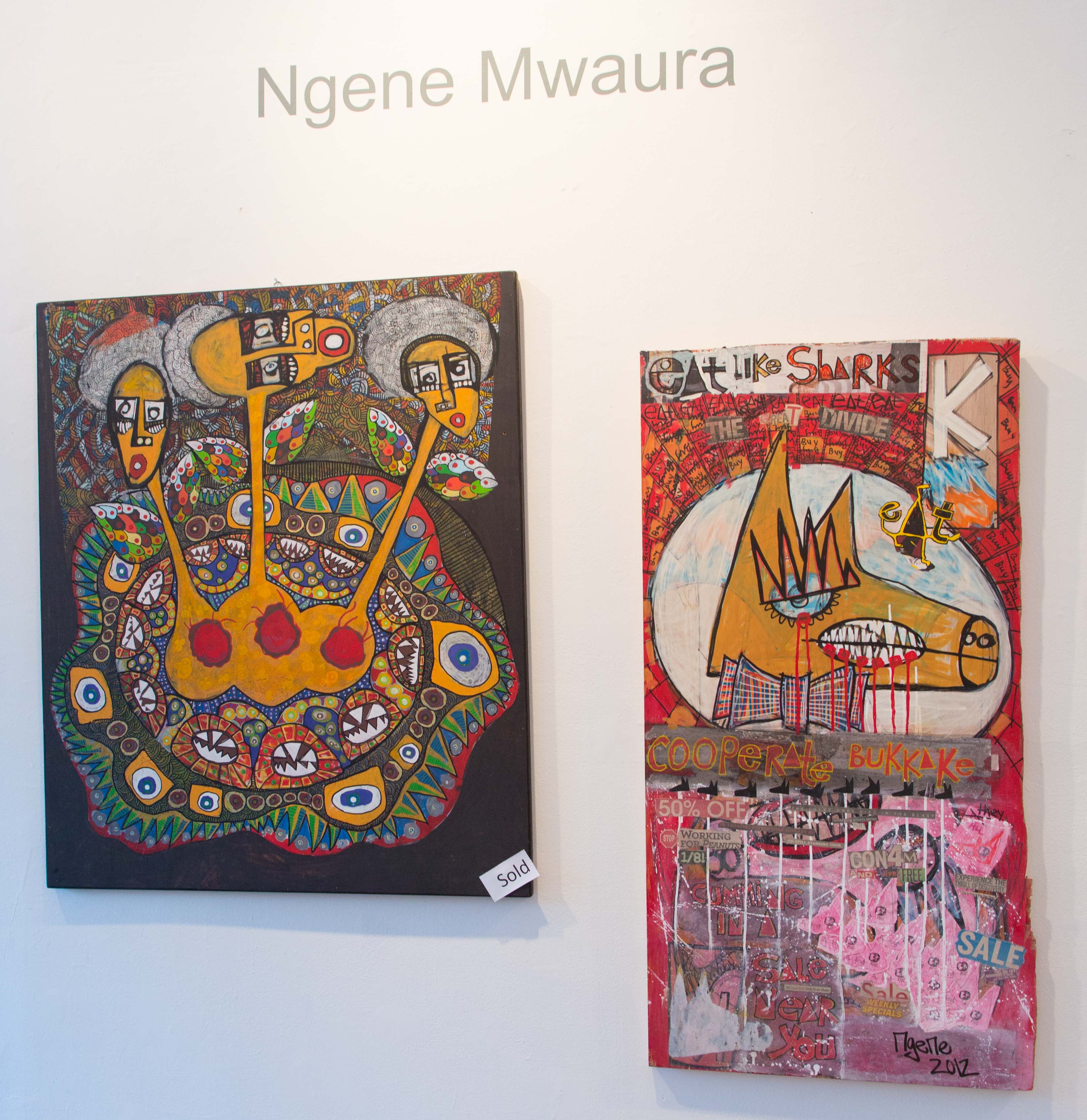
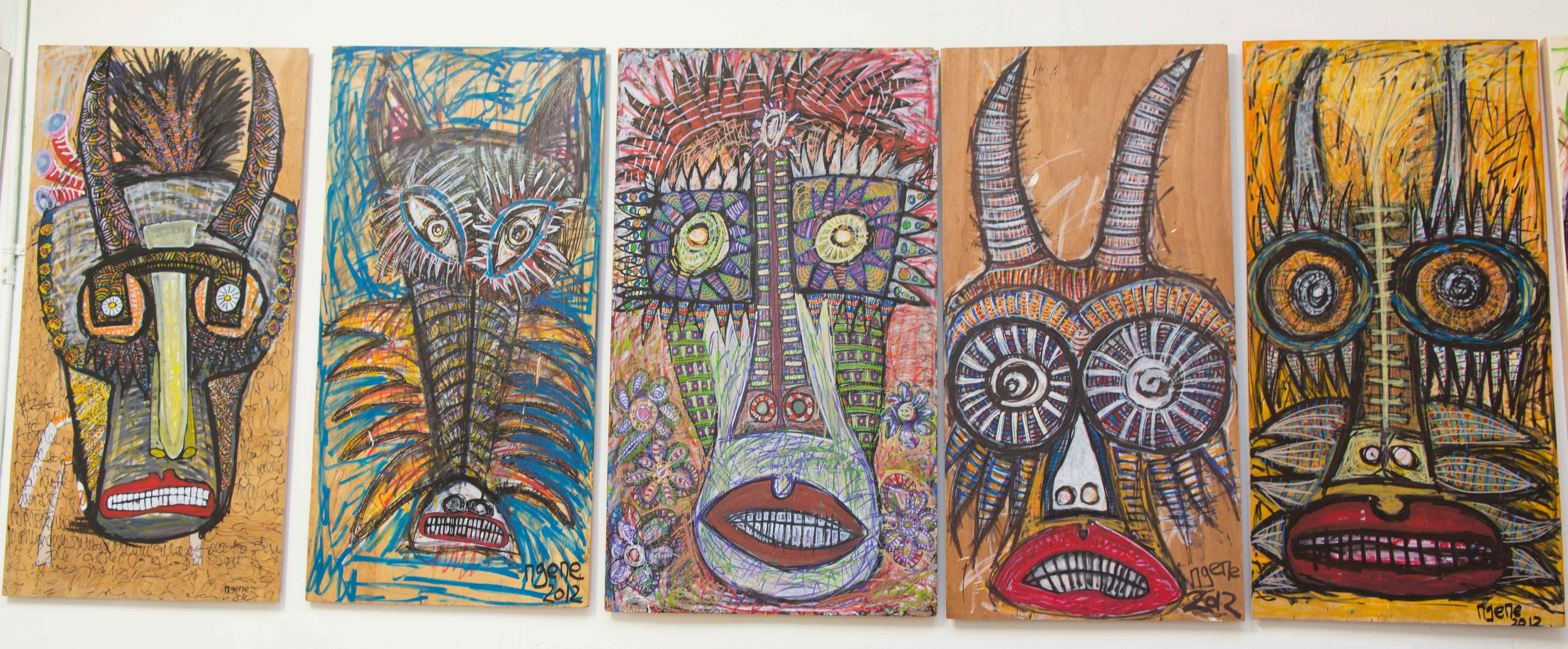
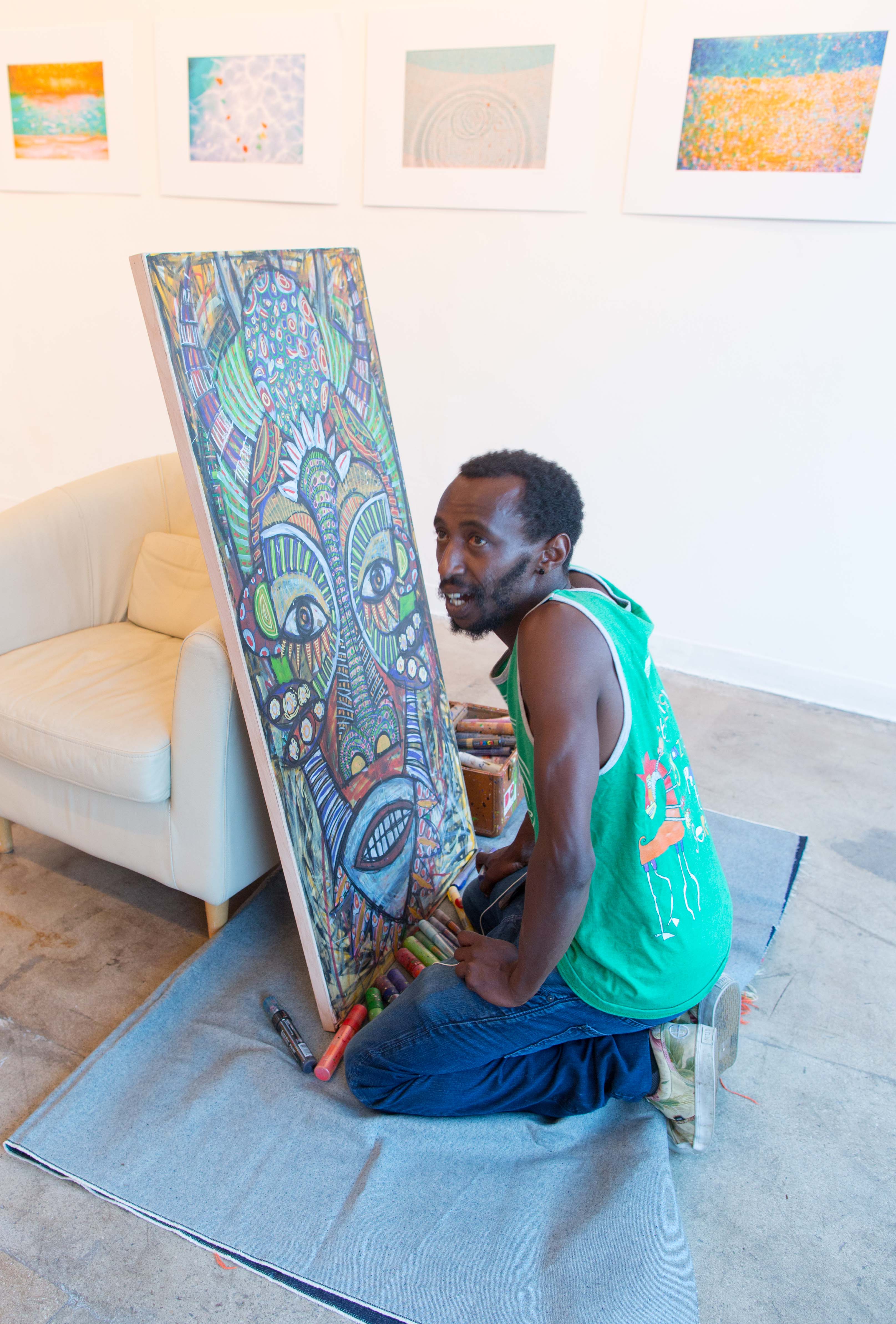
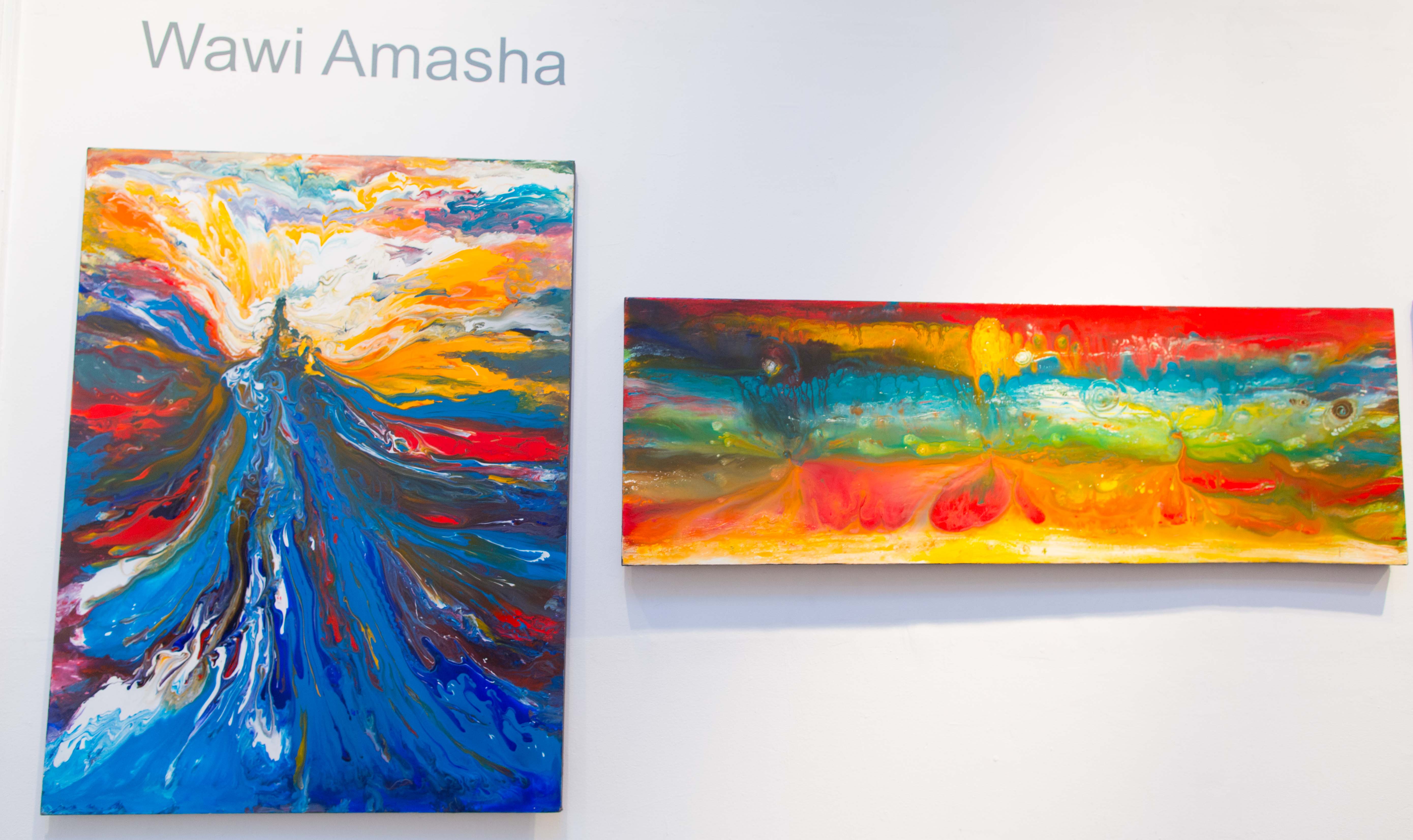
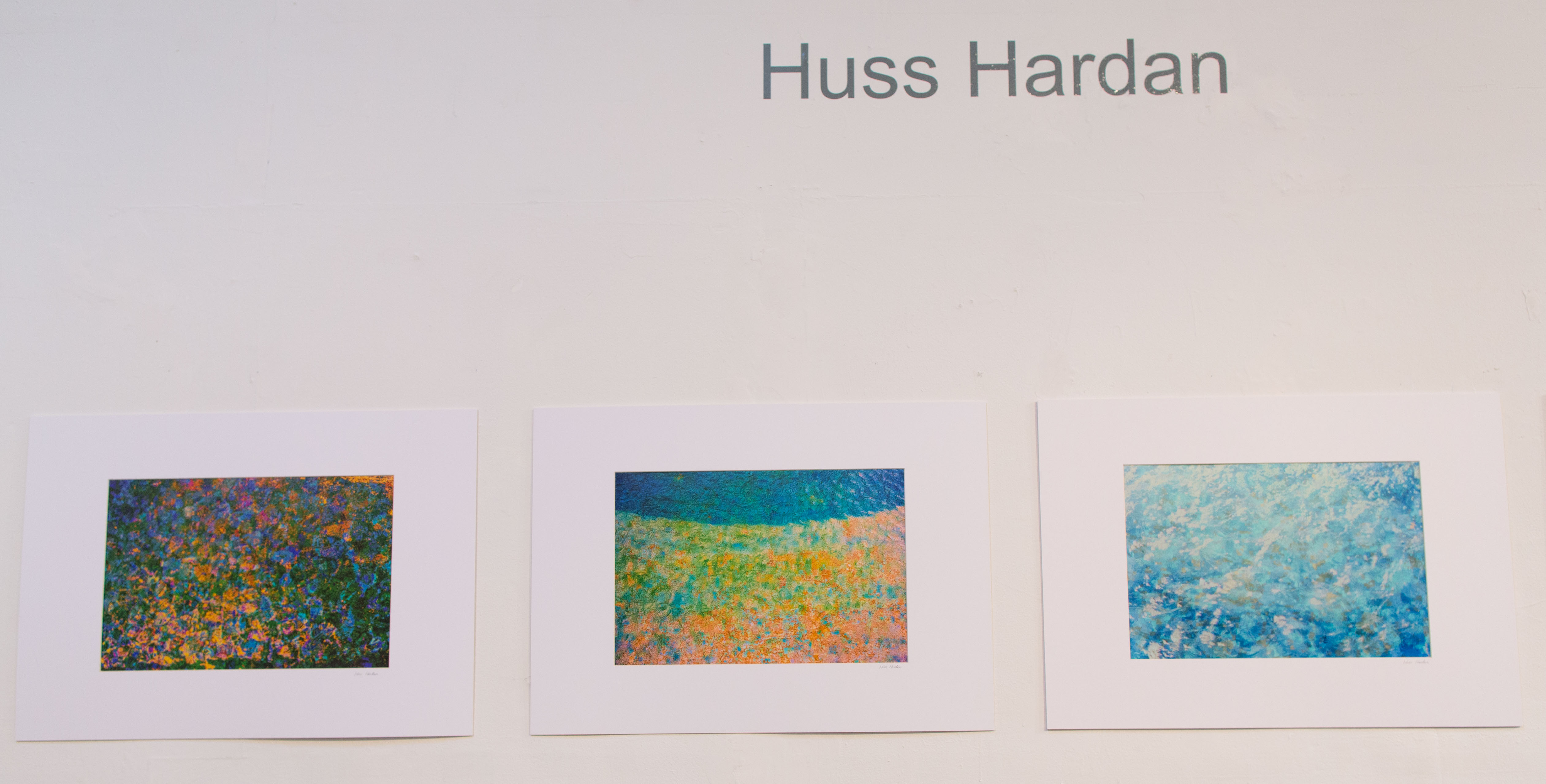
At Huz Galleries, Ngene Mwaura was putting the finishing touches on a piece that offered a beautiful contemporary spin on traditional African effigies; the water images of Huss Hardan’s blissfully surreal photographs, and the stunning colors of Wawi Amasha’s “Peacock Manifest” vividly drew viewers into this new gallery.

F23C0333

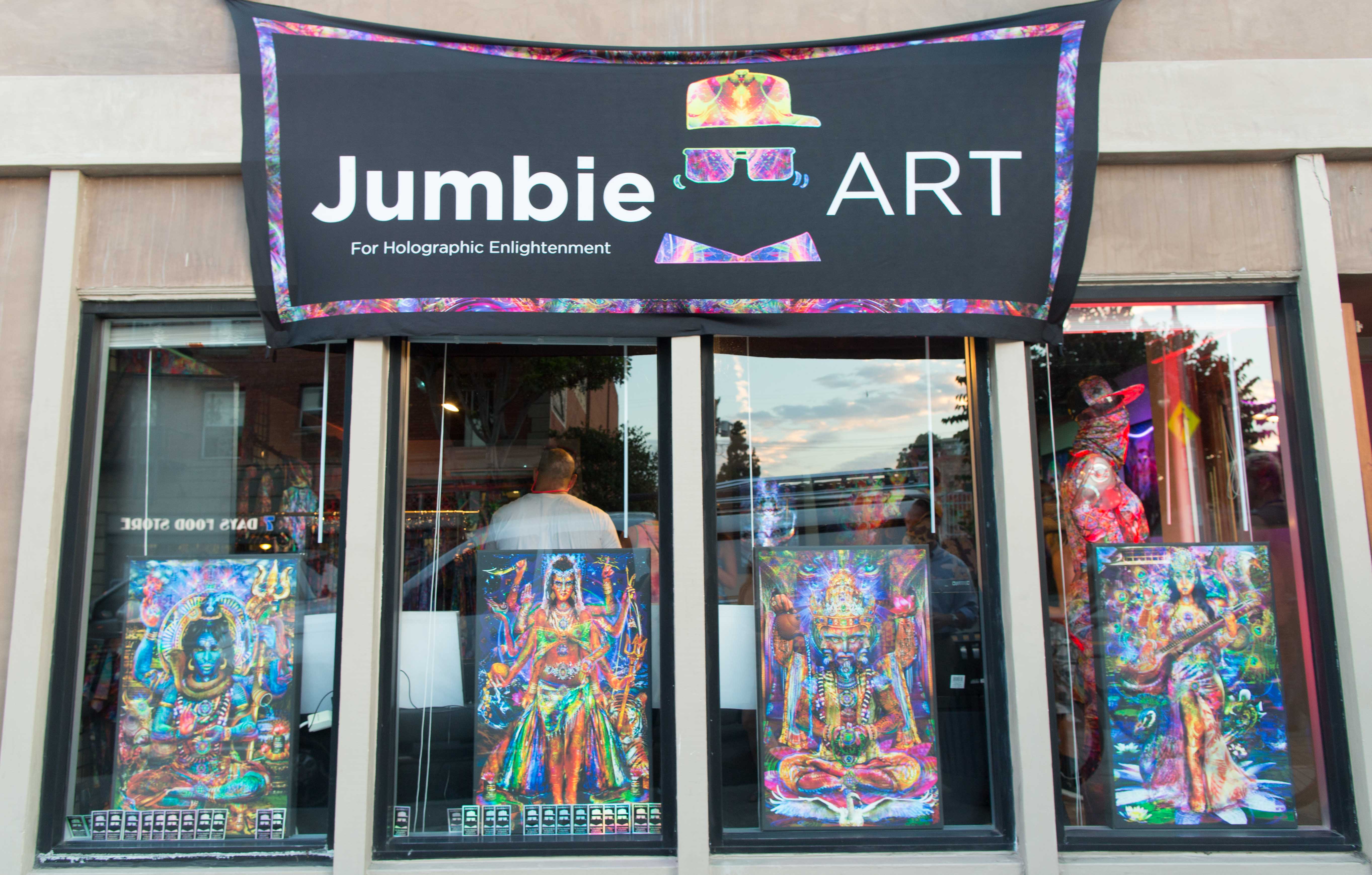
Jumbie Art
Jumbie Art

F23C0330

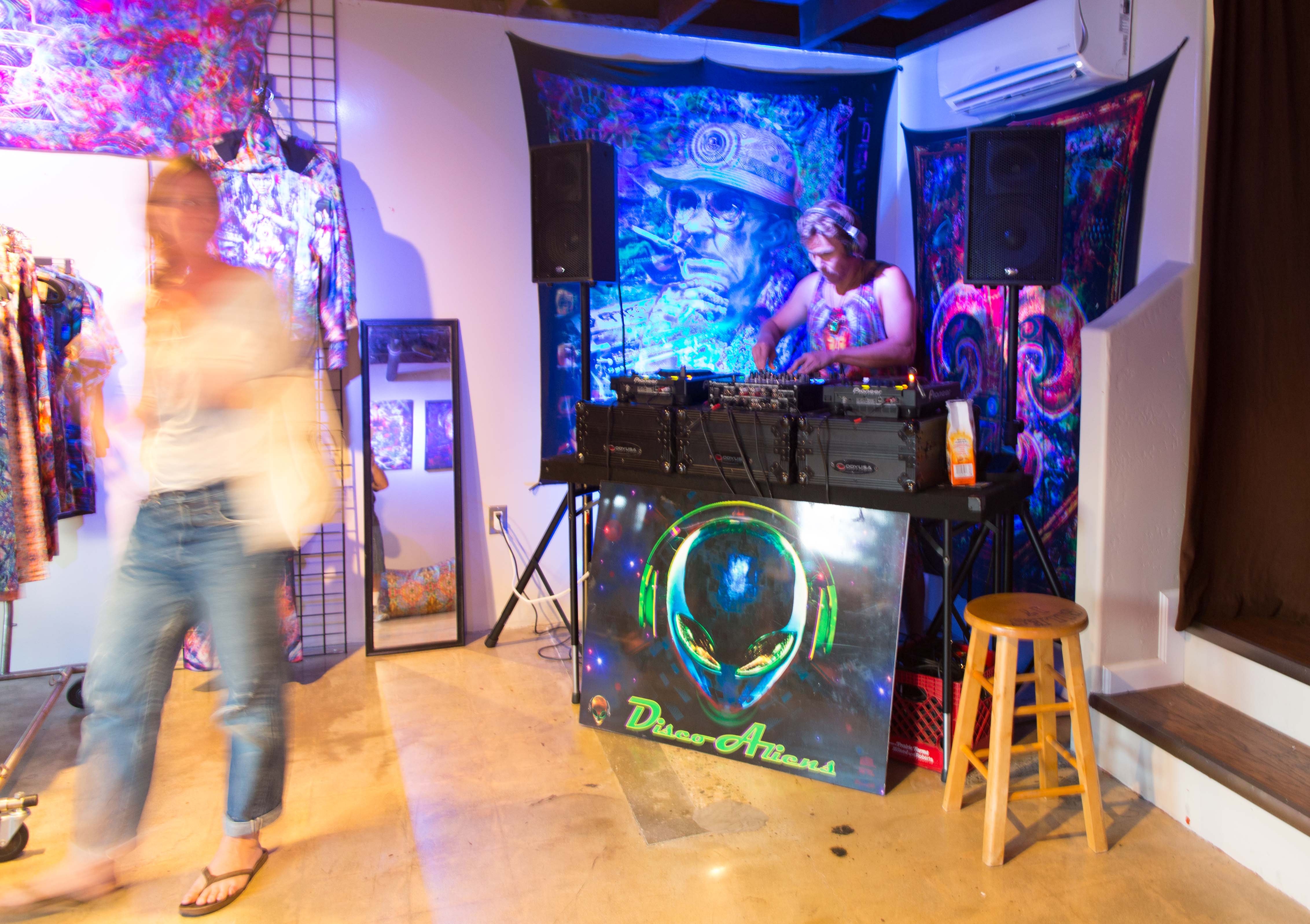
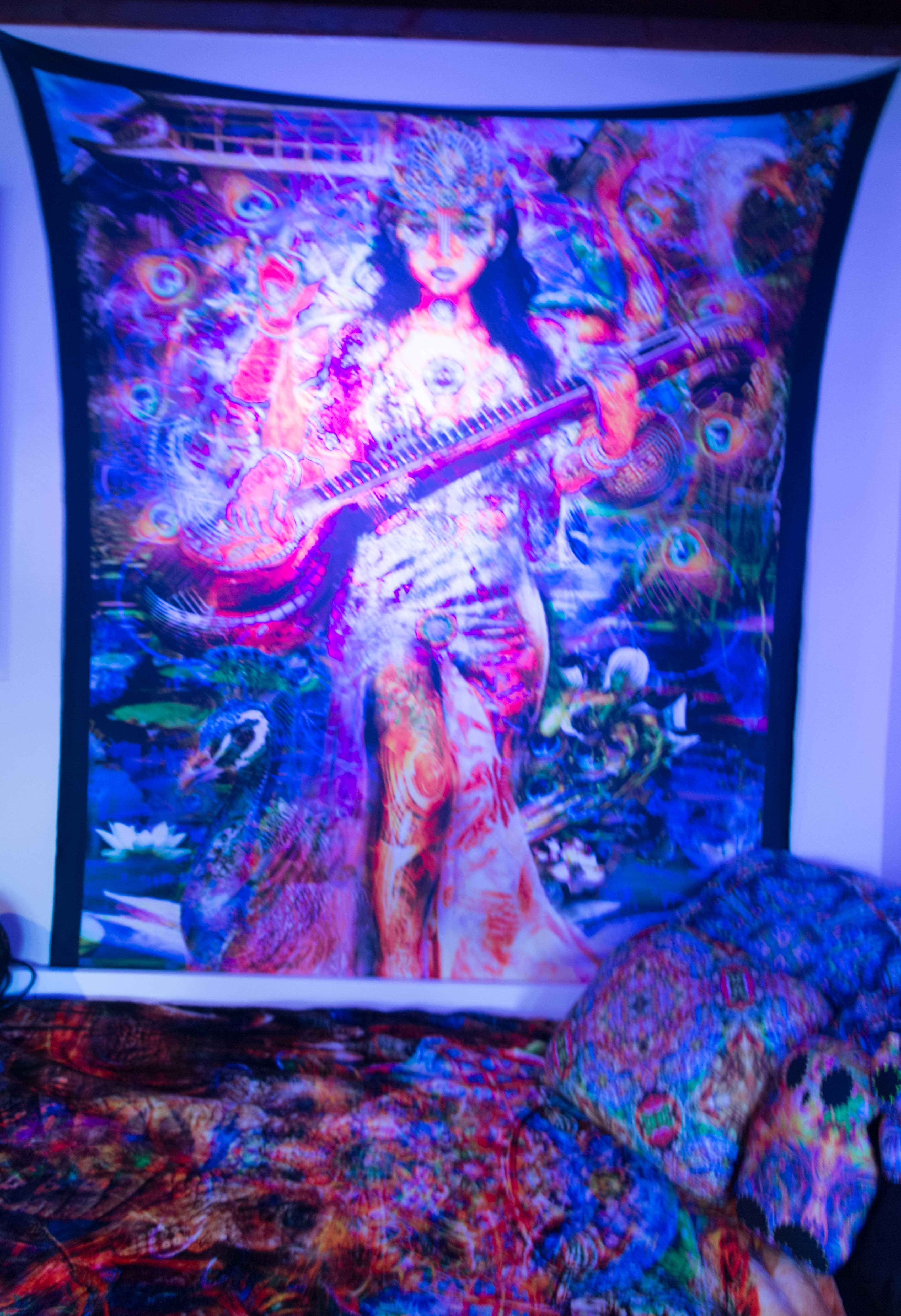
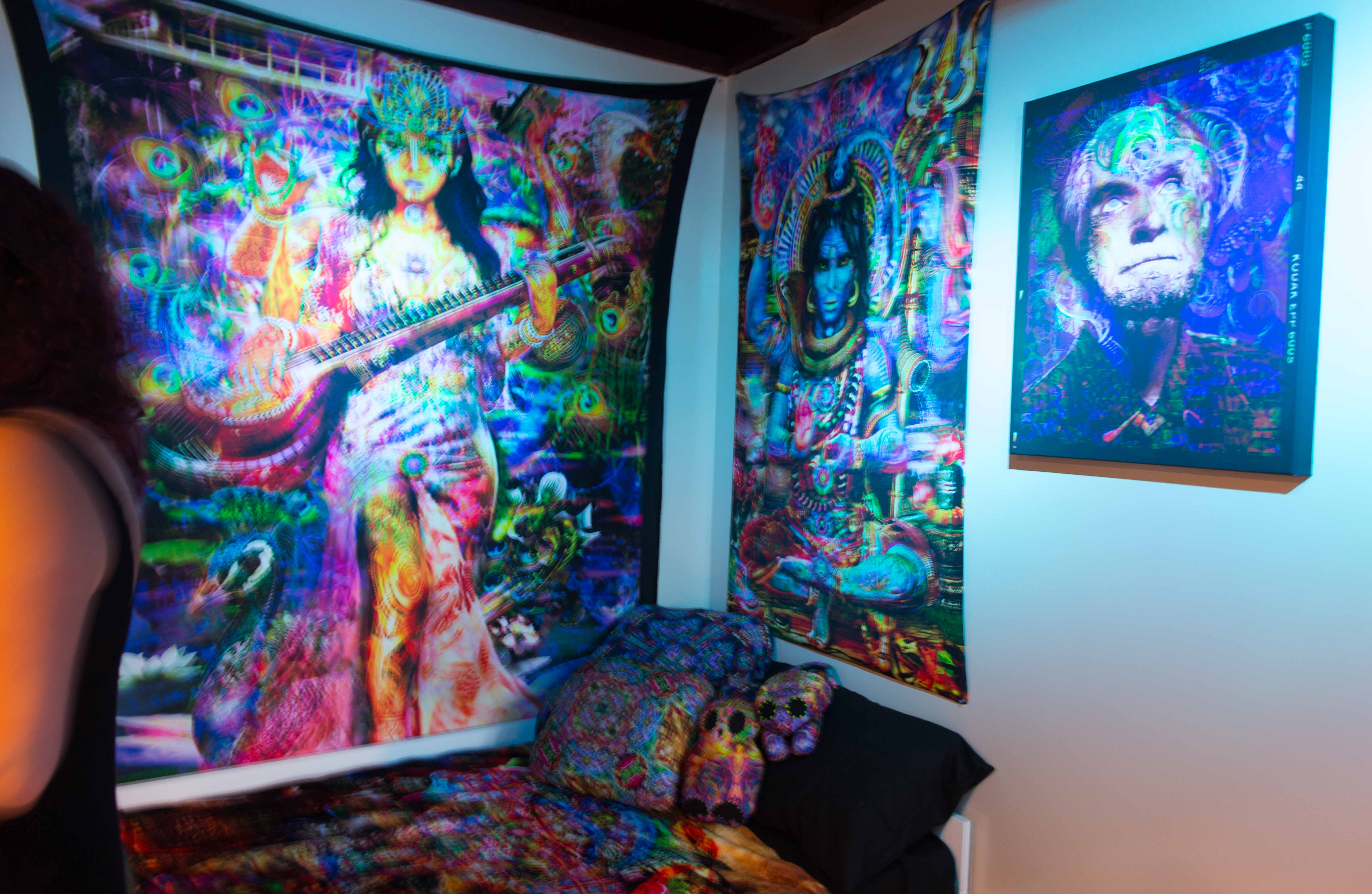
“Holographic Enlightenment” is the artistic message spread at Jumbie Art, where the owners provided 3-D glasses to enhance the enjoyment. The eye-popping wow needs to be seen in person to fully appreciate.

Gallery 478
Gallery 478

At Studio/Gallery 478, Ray and Arnee Carofano respectively showed evocative photographic art, many of Ray’s depicting LA River scenes, Arnee’s pieces including travel shots illuminating ocean shores and windshield views.

F23C0315 F23C0313 F23C0316

Michael Stearns Gallery

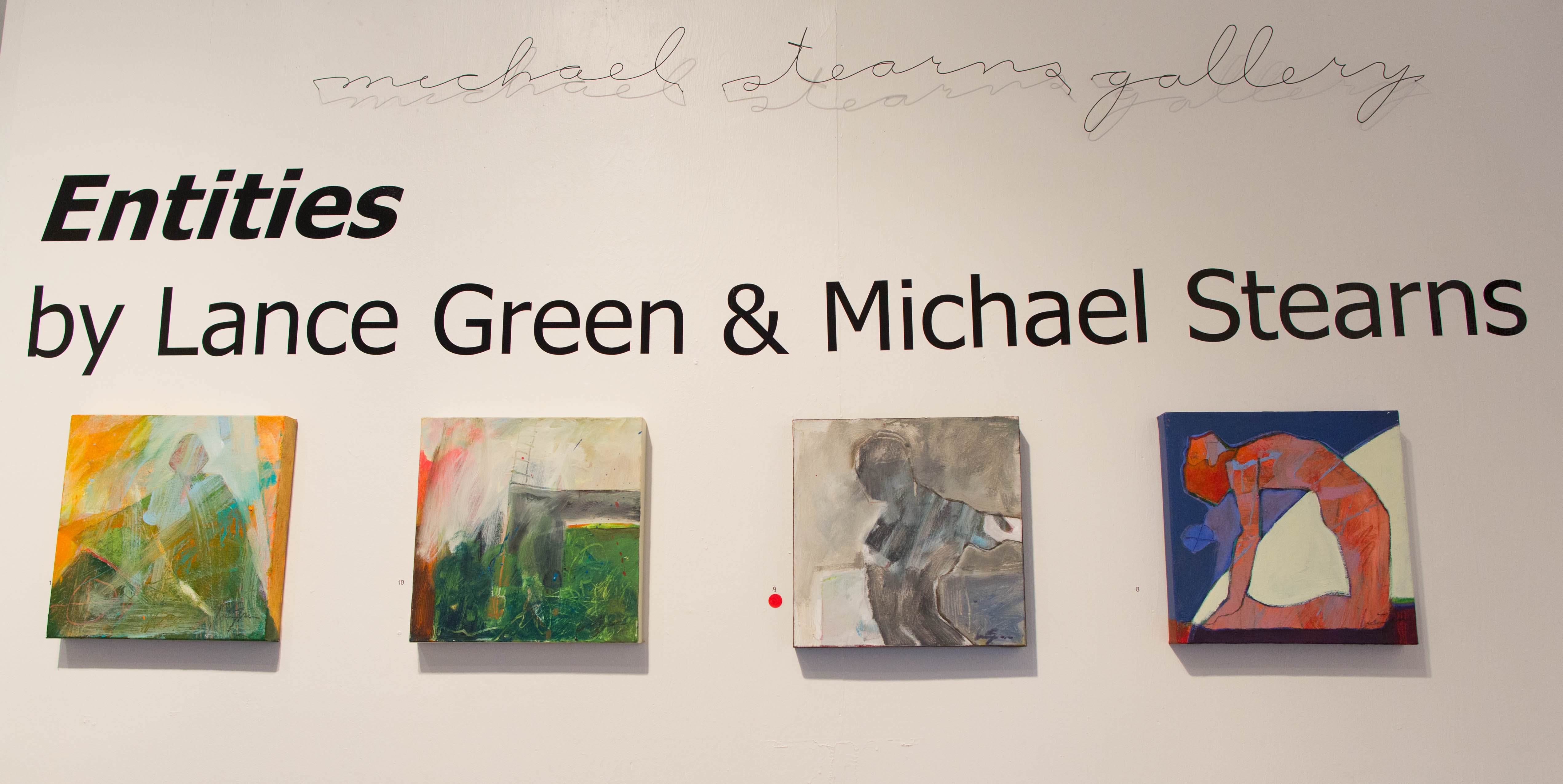
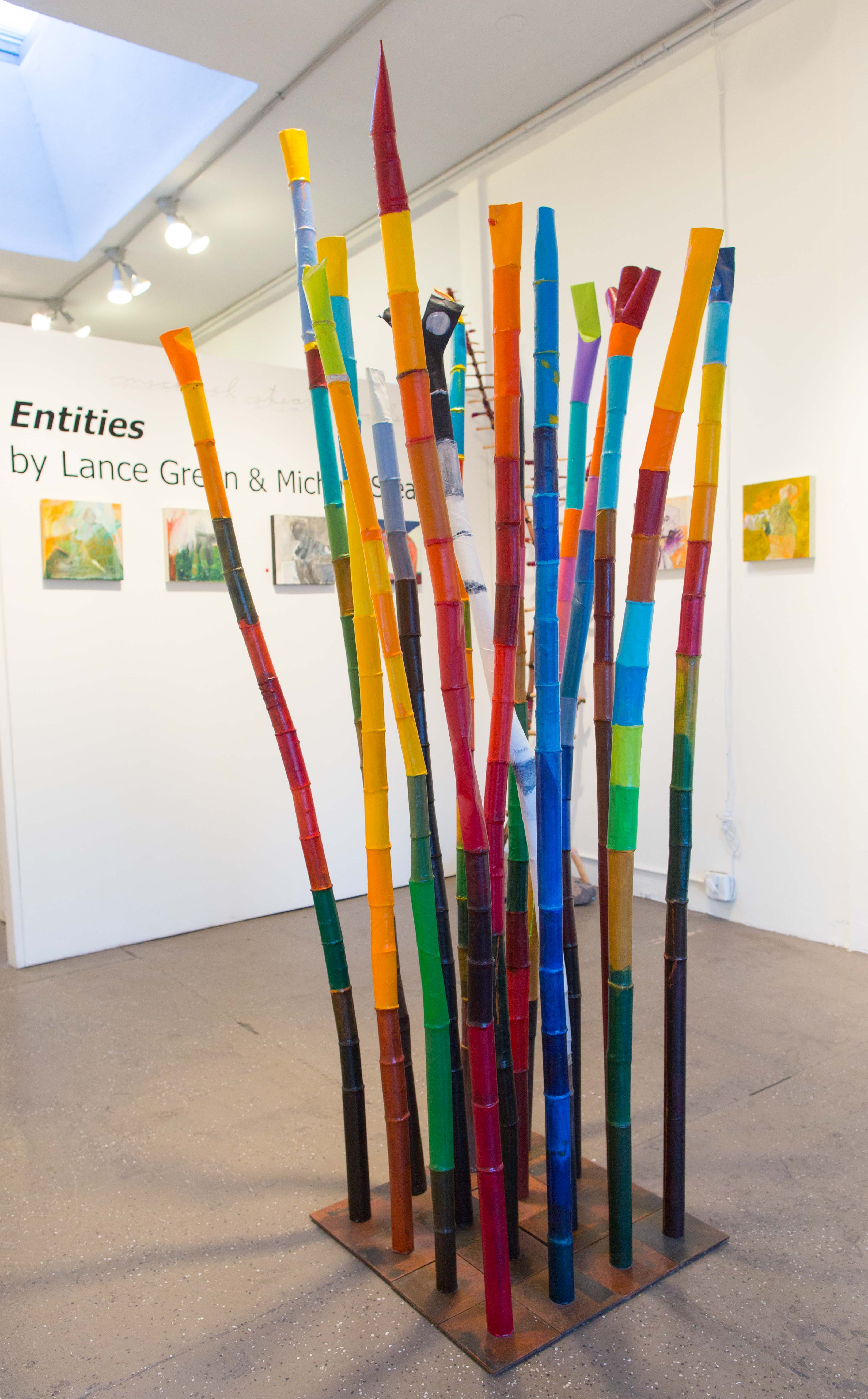
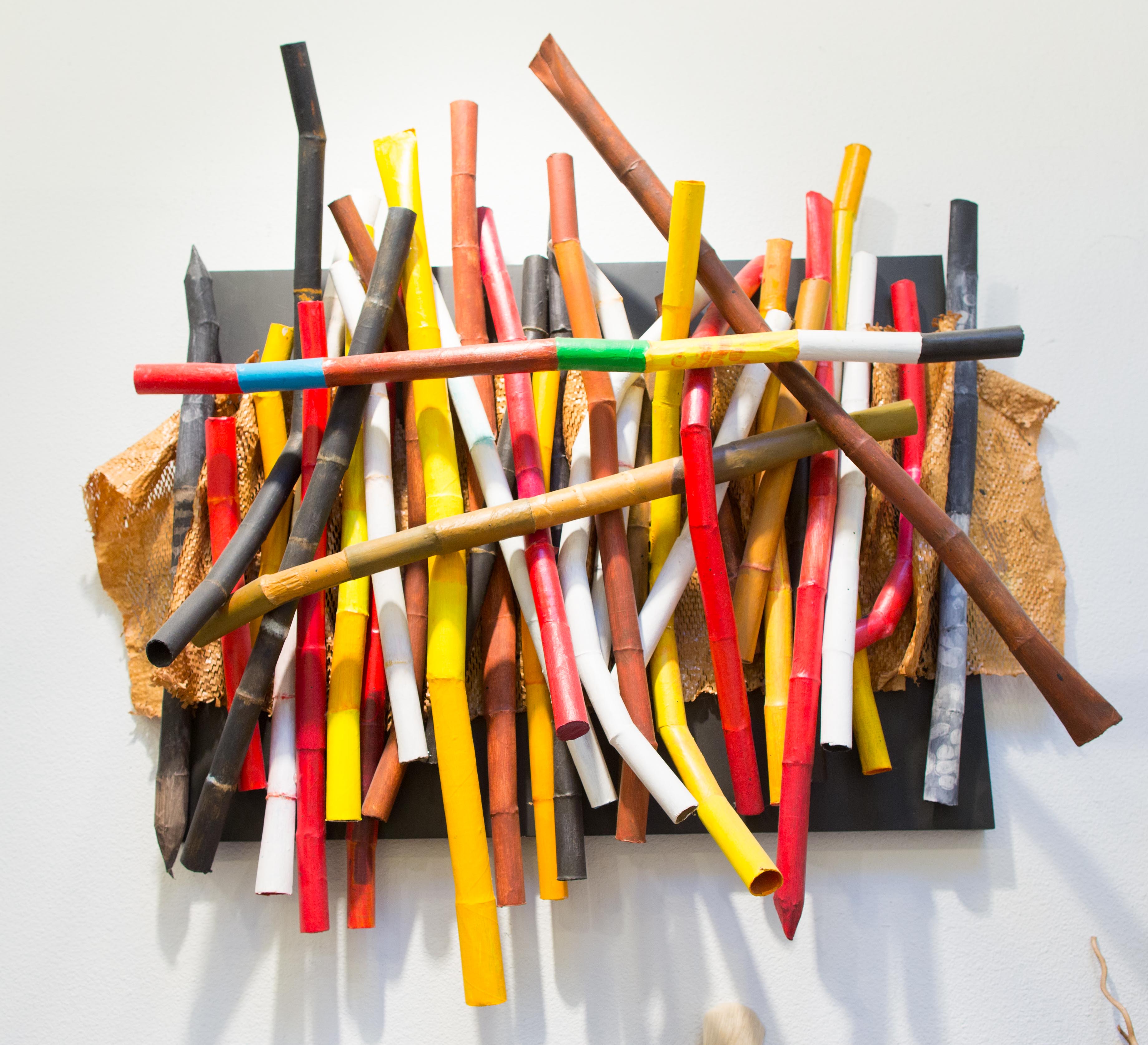
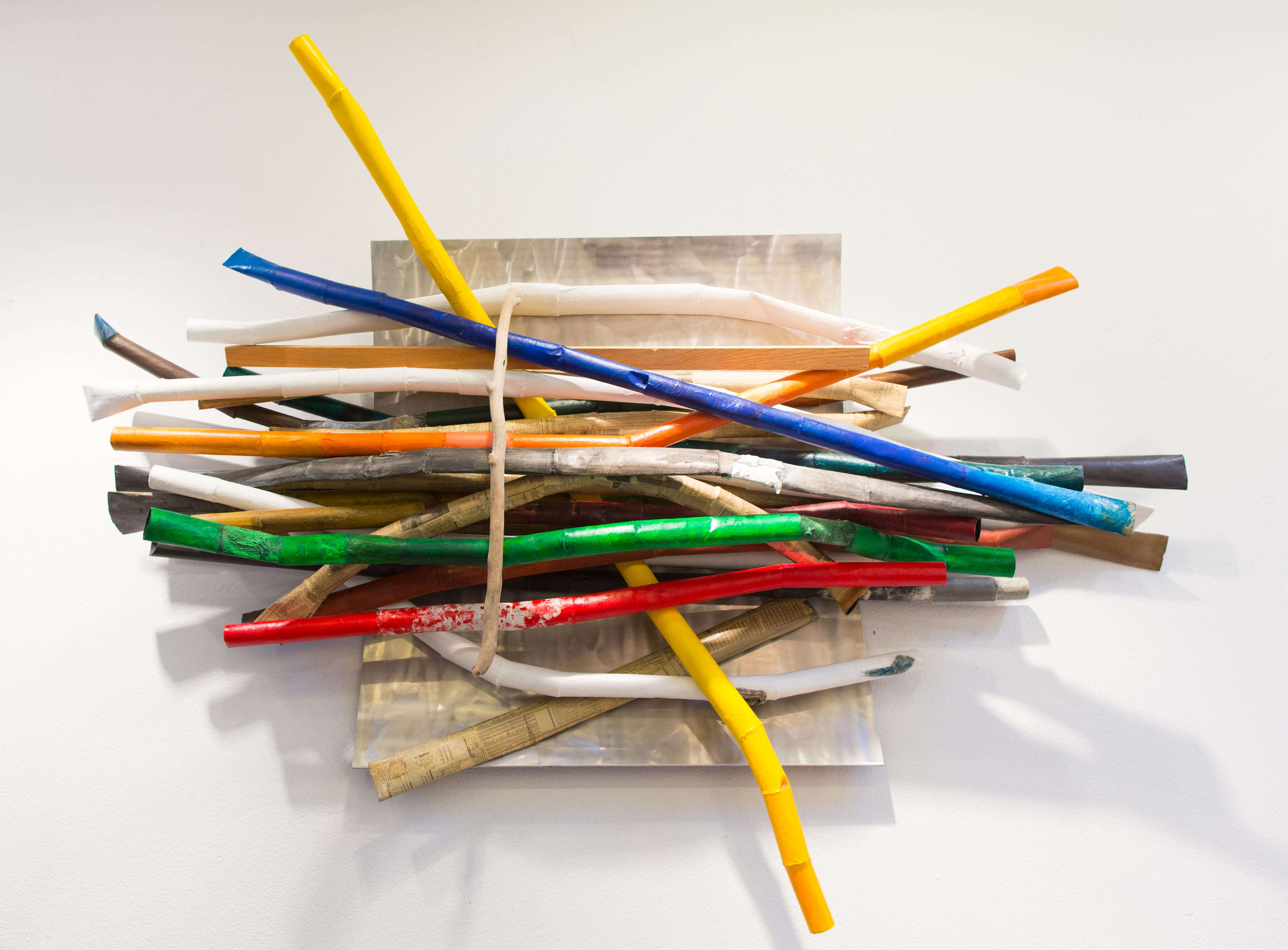
And at Michael Stearns’ Studio 347, Stearns included pieces such as “Totem Forest” made whimsically from bathroom bamboo, in  a vibrant exhibit that also included the work of Lance Green.

F23C0293

Studio Hiroko
Studio Hiroko

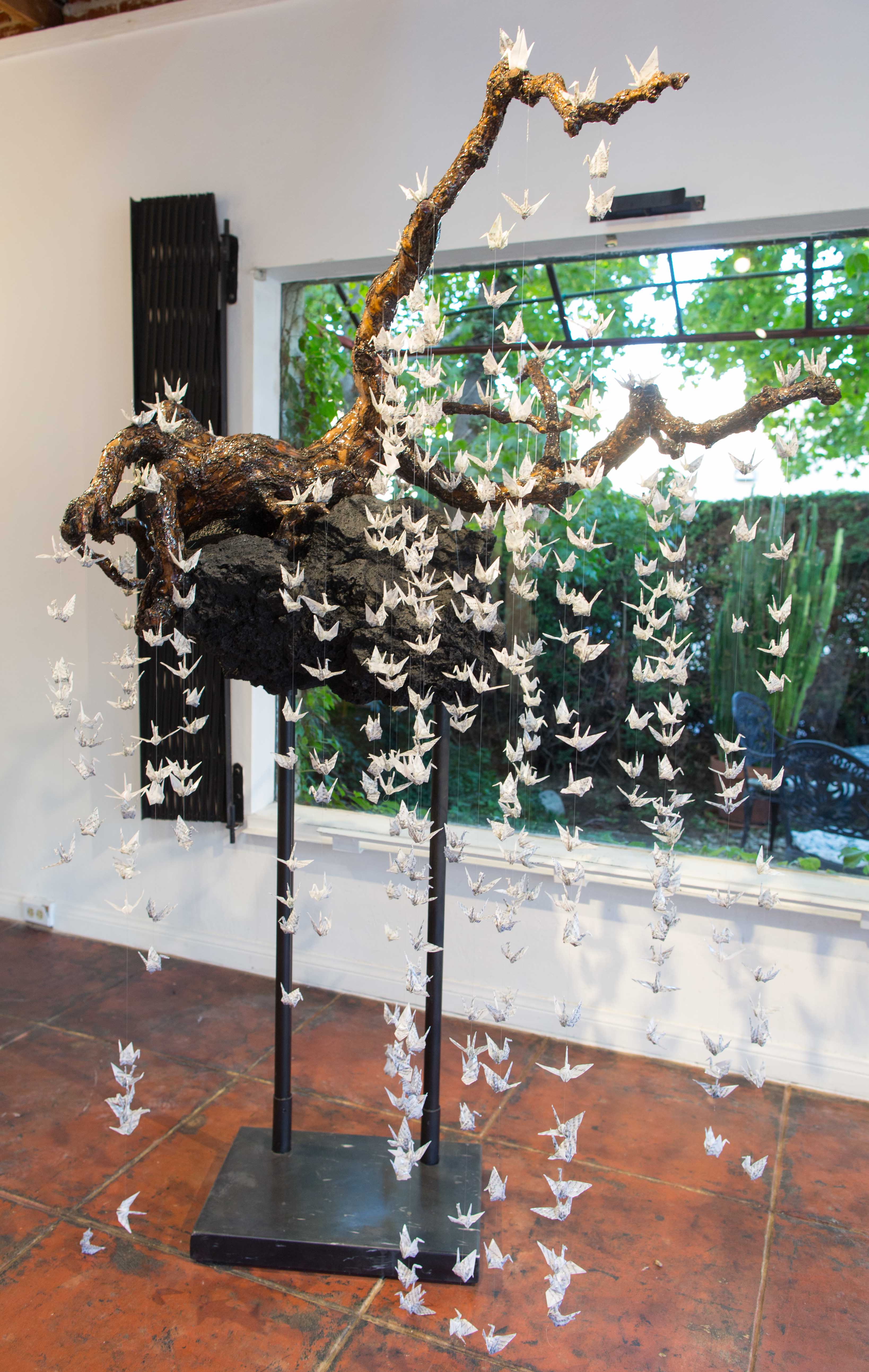
Beautiful origami cranes representing the prayers of all religions, and utilizing the wood from a toppled bonsai tree, formed one of many untitled creations in the poetic studio and gallery space of artist Hiroko at her Studio Hiroko at 382 7th Street.

F23C0347

Rapping Sailors
Rapping Sailors

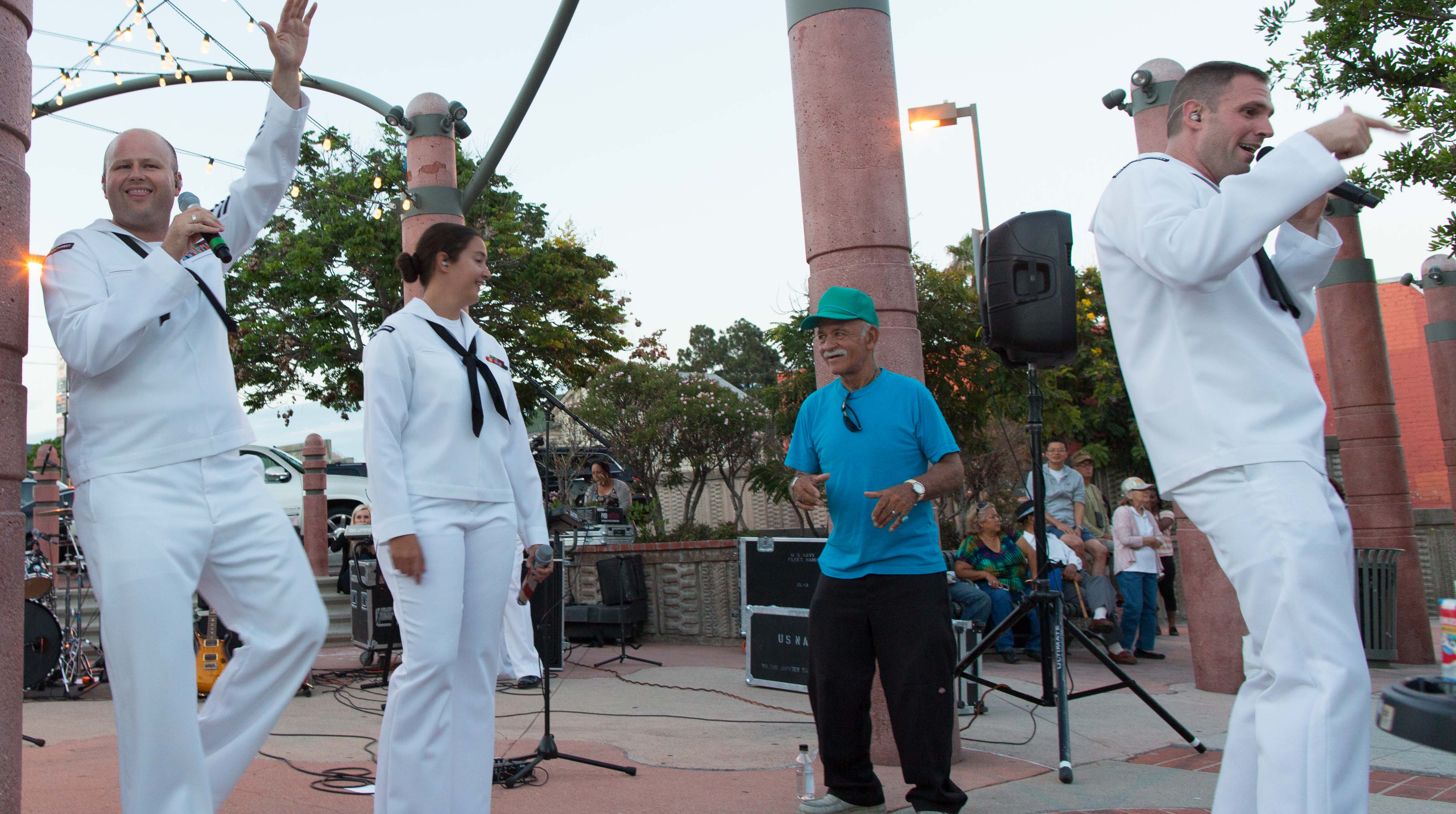
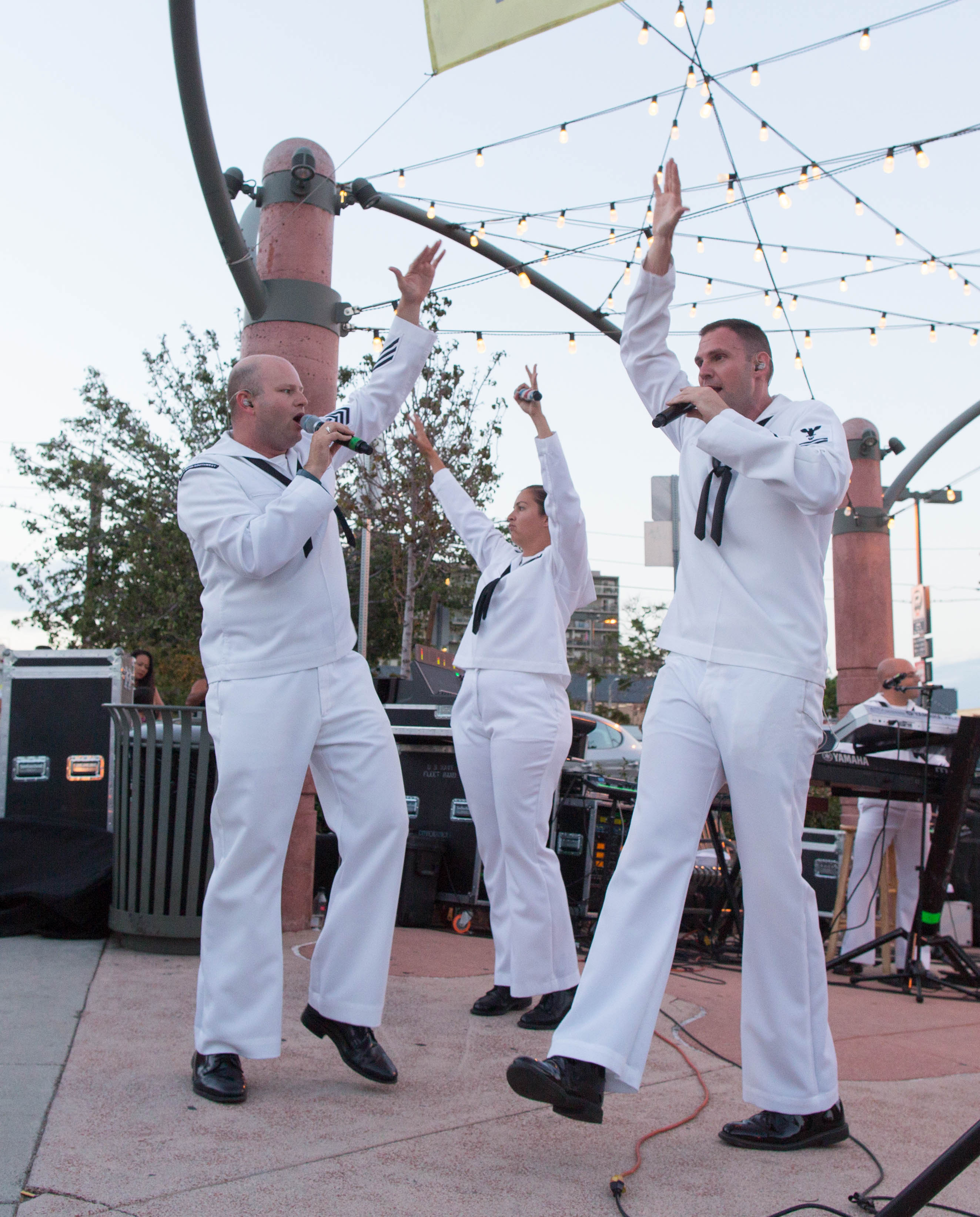
If art isn’t enough, check out street performers – including a group of excellent rapping sailors; food trucks, happy hours at local watering holes, and sidewalk sales by local boutique shops.

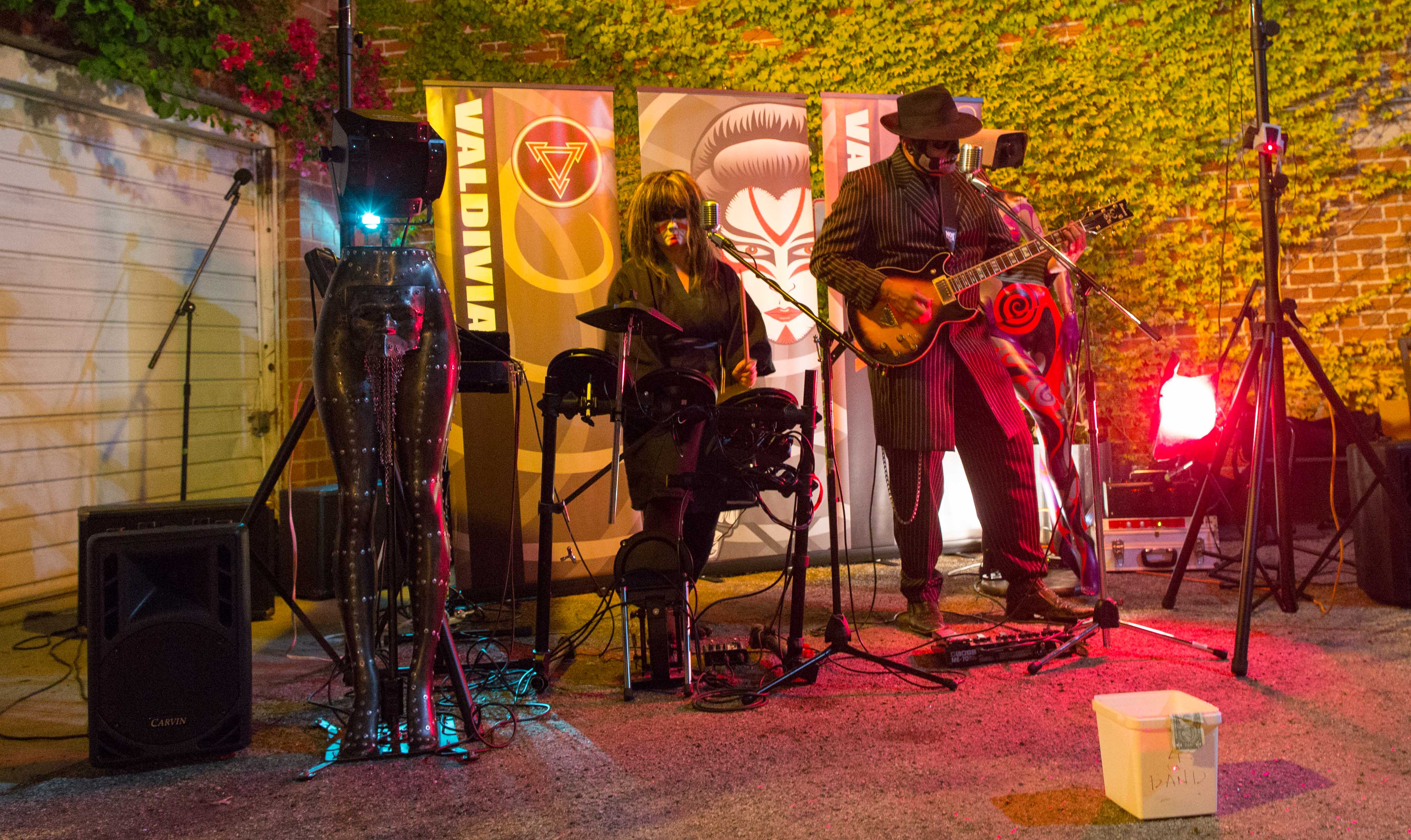
Rockin' in the alley
Rockin’ in the alley

F23C0369

F23C0365

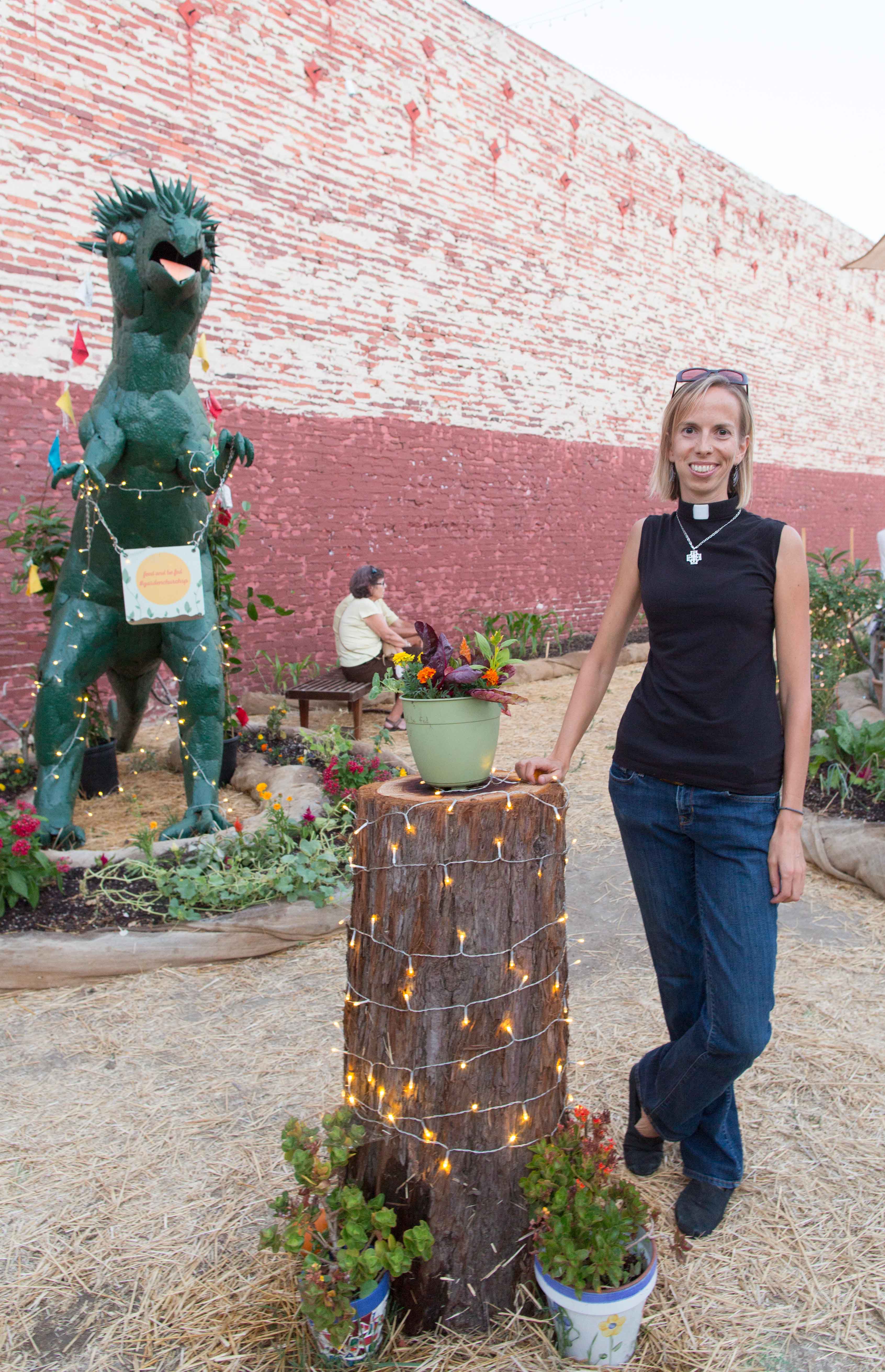
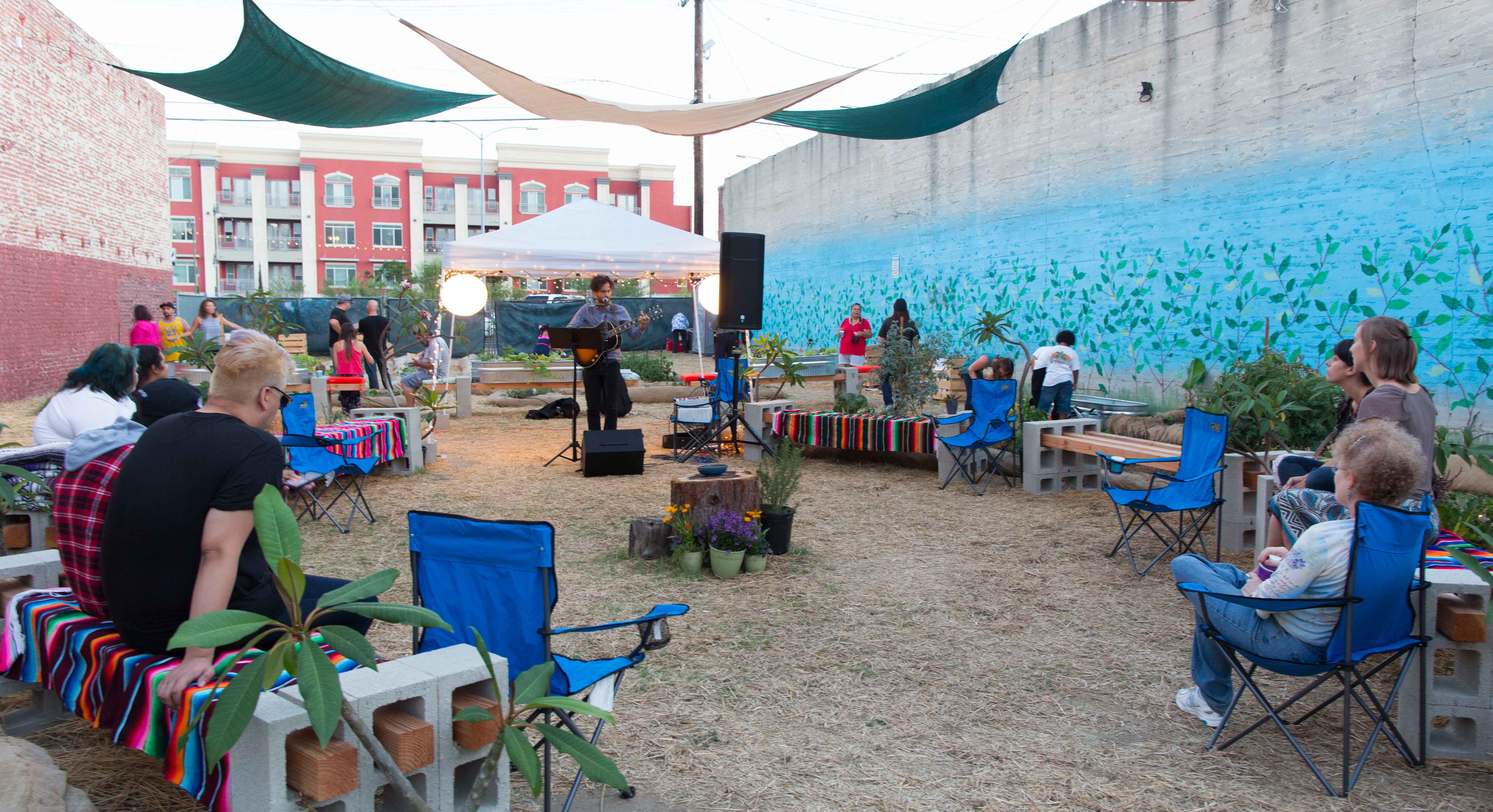
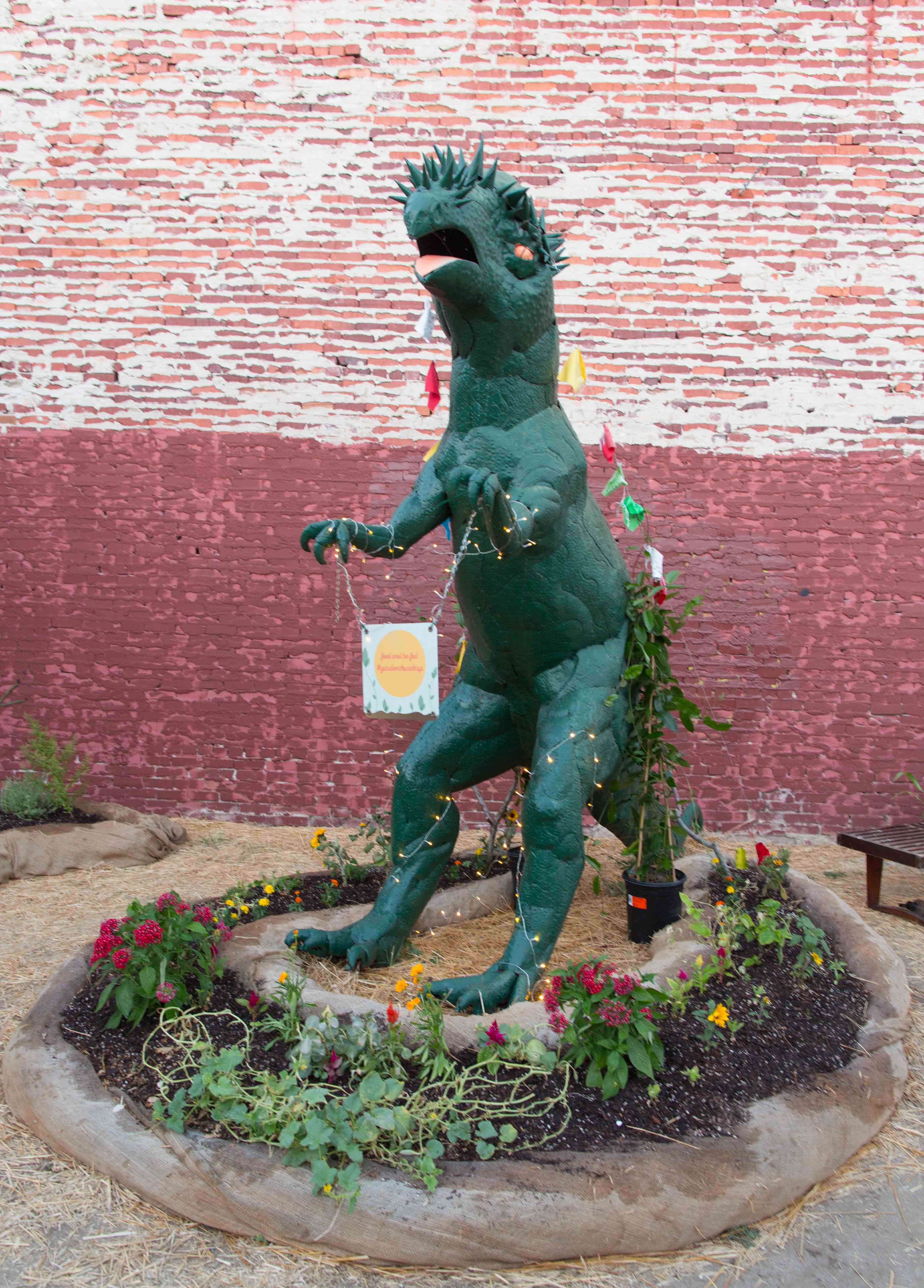
The Garden Church: Rev. Anna Woofenden, resident park dinosaur, live music

There’s live music, delicious food, and a “feed and be fed” message at the welcoming Garden Church, too.

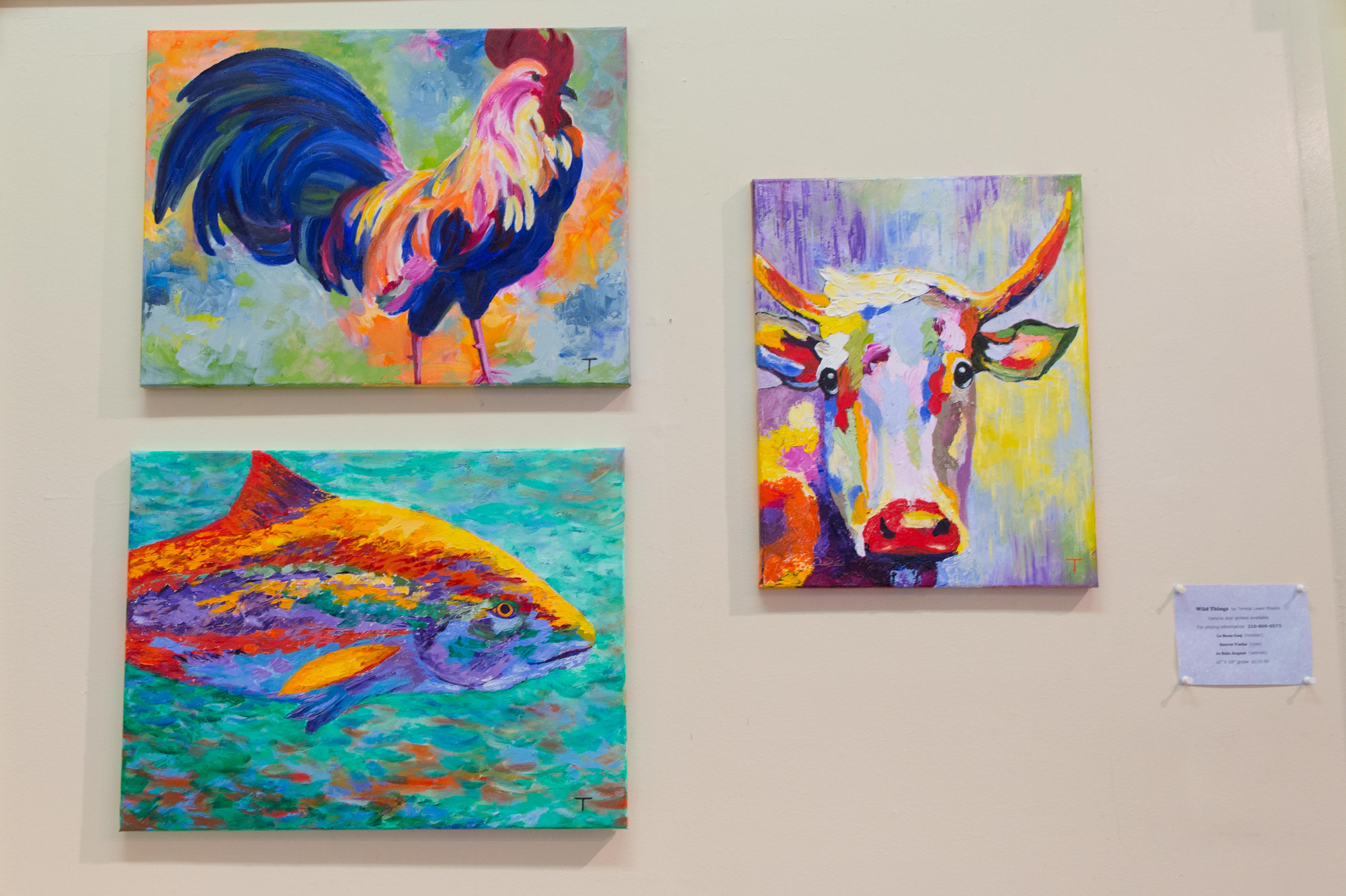
Other fine exhibits included the offerings at Warschaw Gallery. Artist Teresa Lewis Pisano exhibited in a converted-for-the-evening hair salon.

F23C0375

Warschaw Gallery
Warschaw Gallery
Wild Things by artist Teresa Lewis Pisano

We’ll be profiling some of the individual San Pedro artists here in coming weeks, so stay tuned, and mark your calendar for September’s First Thursday art walk.

  • Genie Davis, all photos by Jack Burke

Arpi Agdere at Haphazard Gallery

haphazard PUNCTUM PR image 2sm
Opening Saturday, August 8th, Arpi Agdere’s “Punctum” is coming to West Los Angeles’ Haphazard Gallery.

The Los Angeles-based, Istanbul-born artist works in a wide variety of media, from photography to video, creating intensely vibrant images whose surreal color palettes leap from her pieces and embed themselves in the viewers’ eyes and minds. Her installations combine colors and textures that shimmer like multi-colored jewels. A world traveler and graduate from the Art Center College of Design in Pasadena, Agdere explains that her work, while verging on the abstract and surreal is created to “retain the essence” of her subject. The artist distorts her images but also transforms them “without being destroyed completely.” So her “Flowers” series decomposes the floral form, and yet the delicate blooms still seem to waver in a brilliantly colored wind. “I’m
interested in understanding how an image is made, what it means and the difference between making and destroying that image,” Agdere says.


haphazard PUNCTUM PR image 1sm

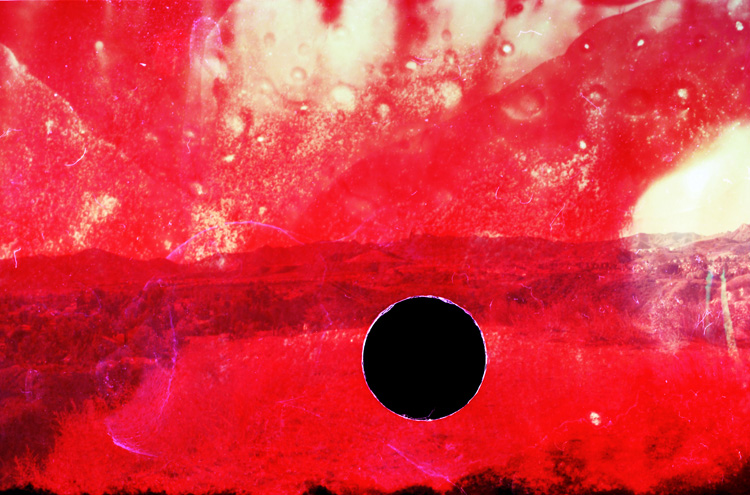
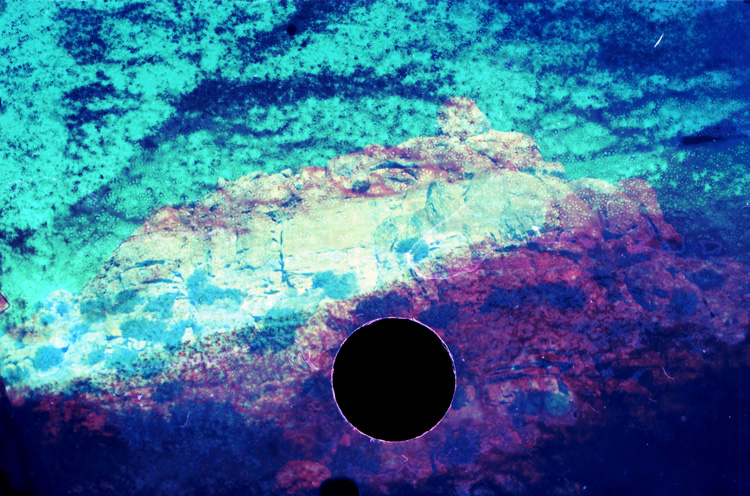
The artist’s immersive solo photography exhibit opening this weekend, is born from Agdere’s photographic work, but is not your standard photography exhibit. The artist works in-studio and develops her pieces in the photographic medium, but she is all about the patterns, colors, designs, and shapes the photos create, not photography itself. In “Punctum,” the artist takes us into a psychedelic universe of color vivid enough to pop into sound, of shapes that could be stars, galaxies, black holes, the fragments of crystals, the waves of an endless sea. Several pieces are more grounded in place: in one, a suburban neighborhood is cast with green and yellow patterns that could be leaves and an overlay of red that could be blood. All three colors appear to be washed over the mono-chromatic gold and black images of the homes and streets.

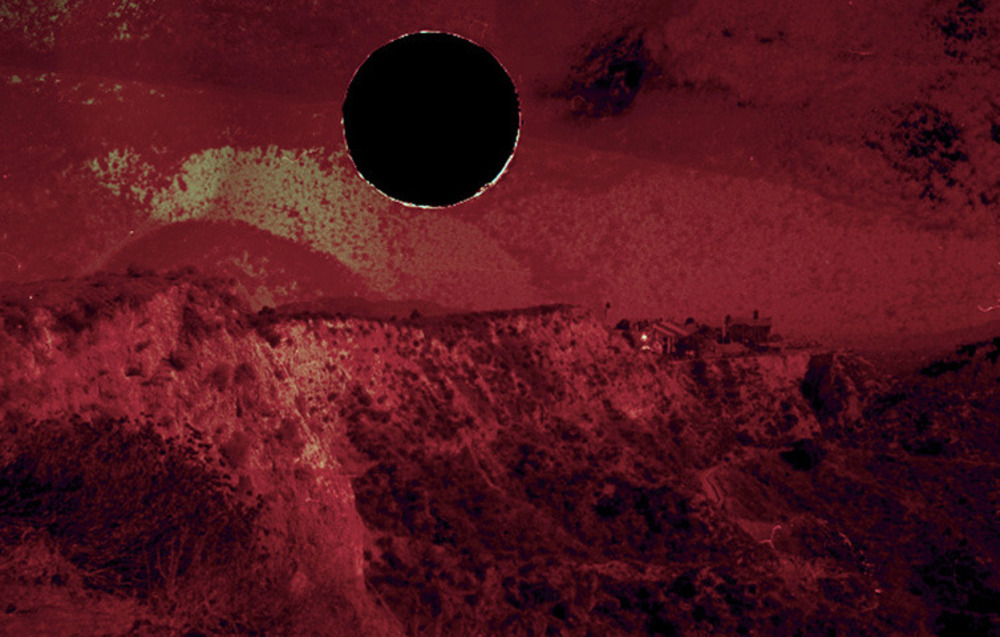
Whether depicting such a distorted suburban street, dancing multi-colored orbs of light, or a close-up, layered, granular surface, Agdere gathers astonishing insight into her subjects. In another piece, through a mix of intense color choices, photographic textures, and processing effects, what could be a static image of a hillside in the foreground with a green valley beyond, becomes a vision into a world submerged in greenness, its rich brown patches foreshadowing an eventual end to the fecundity depicted.

In short, Agdere is not a photographer so much as she is an artist who uses the medium to express a landscape both recognizable and beyond the recognizable. In each piece that comprises “Punctum,” the artist also makes use of the technique of “negation,” a black hole juxtaposed carefully among the images.

The hole looks like a portal to another dimension, or an ominous entrance to a less vibrant future. It draws the eye of the viewer away from the brilliant colors the artist uses and back to them again. While thematically the appearance of the black hole serves as a strange contrast to Agdere’s landscapes, as if alien beings were about the descend on whatever vestige of our planet remains, the origin of such an image is more prosaic. In the early 20th century, thousands of photographic negatives were destroyed by the Farm Security Administration in the U.S., by using a paper puncher to punch through them before archiving.

This bizarre practice was used on negatives whose images were considered either unfit or unusable by administrators of the Information Division such as Roy Stryker. This “negation” of images is used by Agdere as a stunning visual counterpoint to her almost giddy swirls and vividly surreal color washes; a sign of the darkness inside of, as well as opposite to, her other-wordly landscapes. The hole provides an almost magnetic pull, sucking us into each work, keeping our eyes and minds clinging to the sides of the hole lest we fall in as we look around the brilliant world Agdere creates. Will this hole pull us, as well as Agdere’s images, into the vast unknown?

haphazard 3

The exhibition’s title, “Punctum” means a small, distinct point. For Agdere, the point is indeed distinct but hardly small or insignificant. The word was used by philosopher Roland Barthes
to express the duality represented in certain photographs, of two very different and disconnected elements. He termed these two elements the studium, a self-contained whole with a clearly understood meaning, and the punctum, whose origin is the Greek word for trauma. To Barthes, in photographic terms, the punctum goes beyond language, inspiring a private and unexpected meaning, a part of a photograph that holds the viewers gaze even as it disturbs. To Agdere, it appears that the punctum is the expression of a visual dichotomy between luster and an empty void.

Agdere’s searing colors and vibrating landscapes, punctum included, will be on display at Haphazard until September 20th.

  • Genie Davis