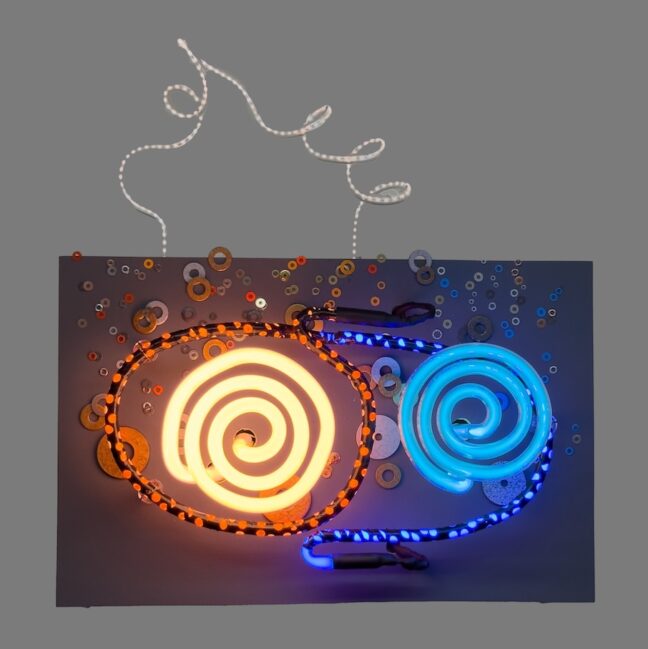
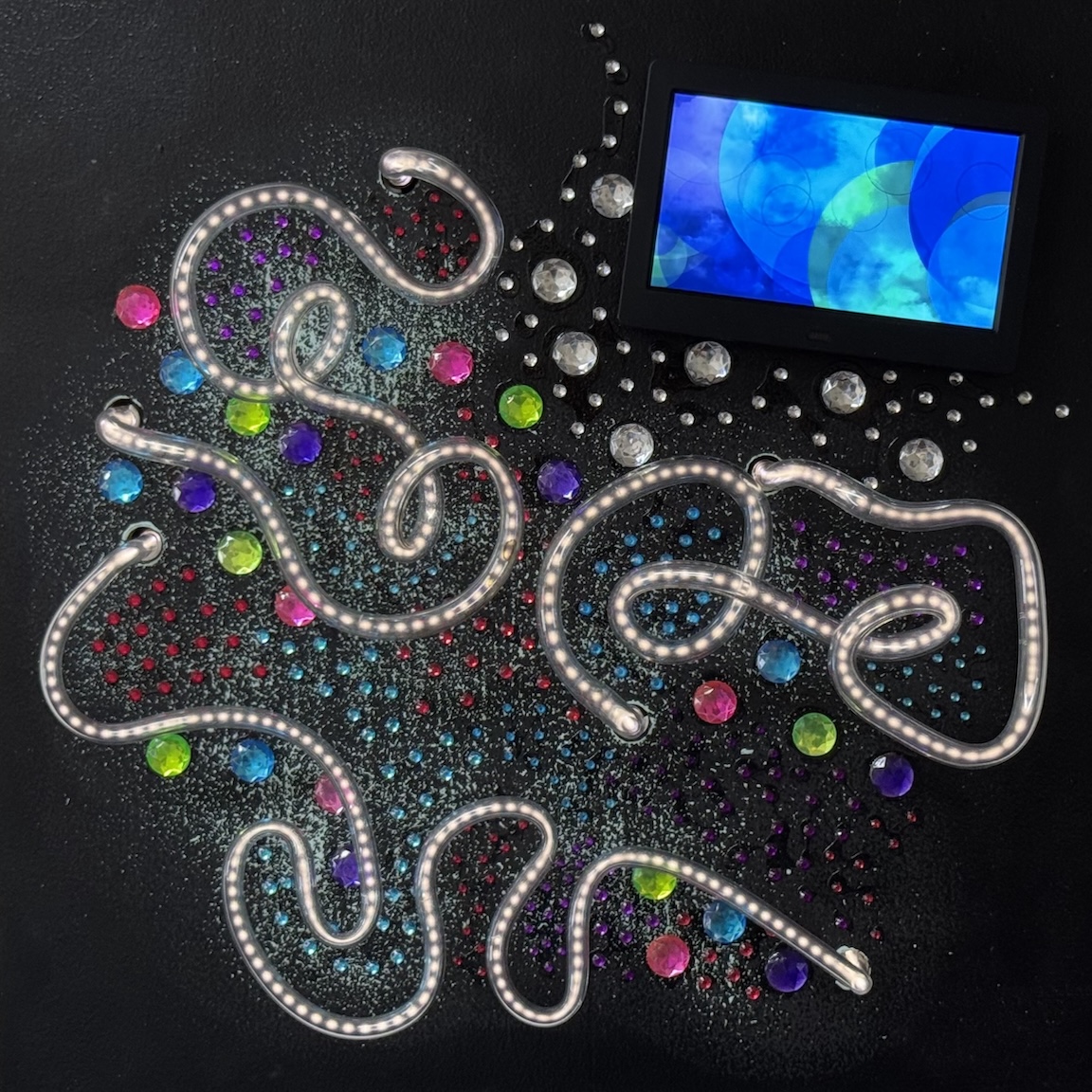
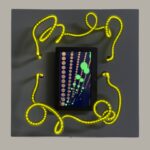
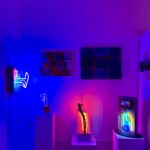
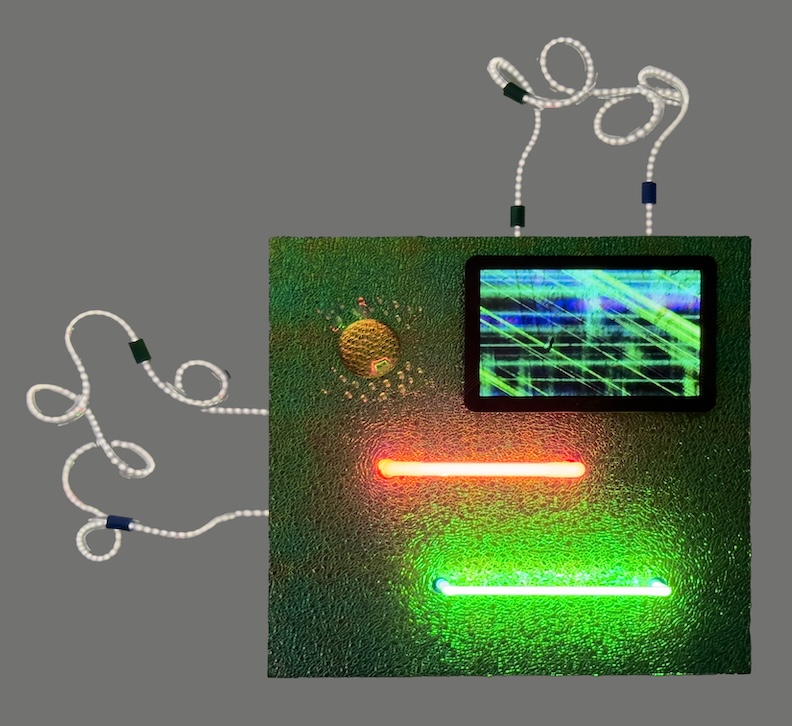
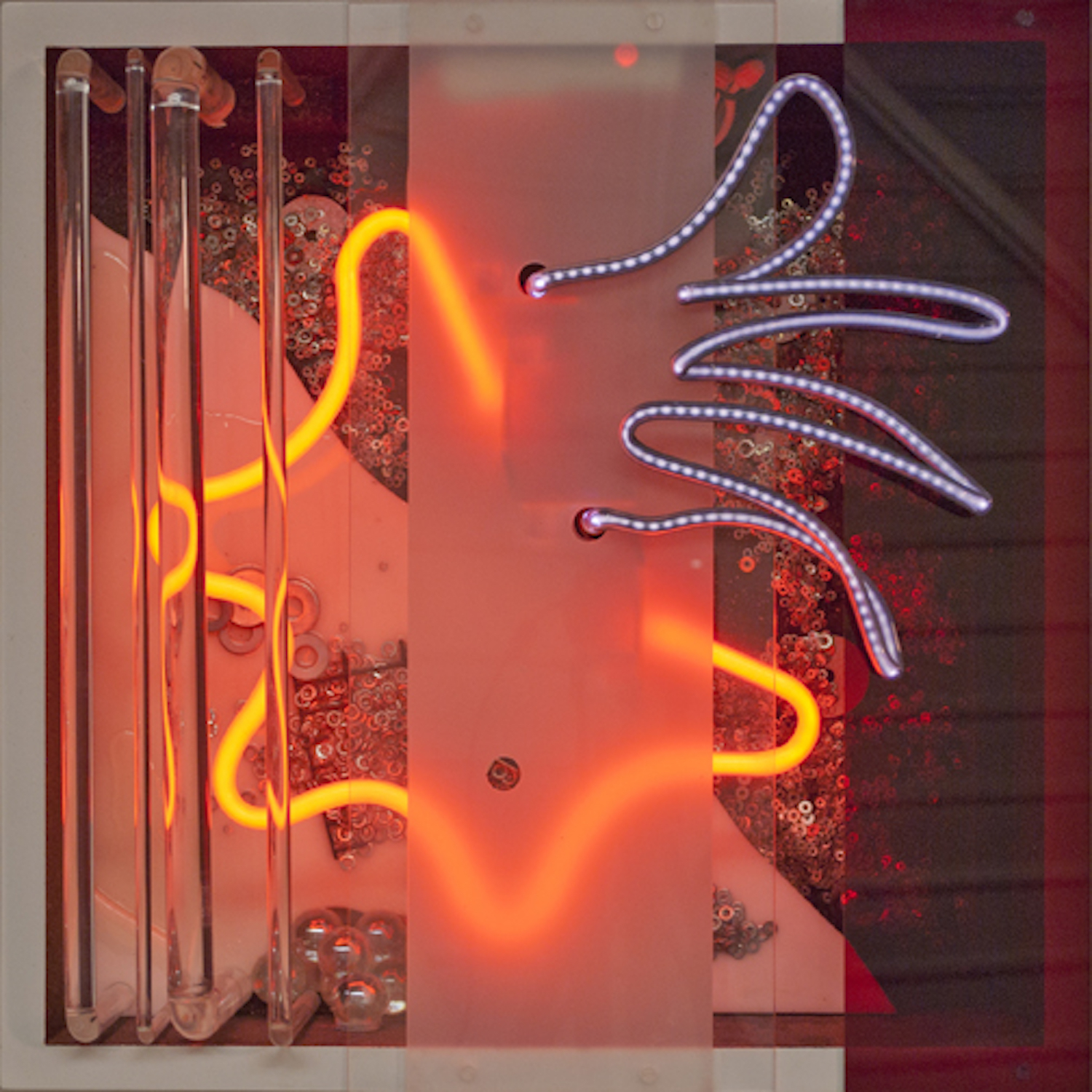
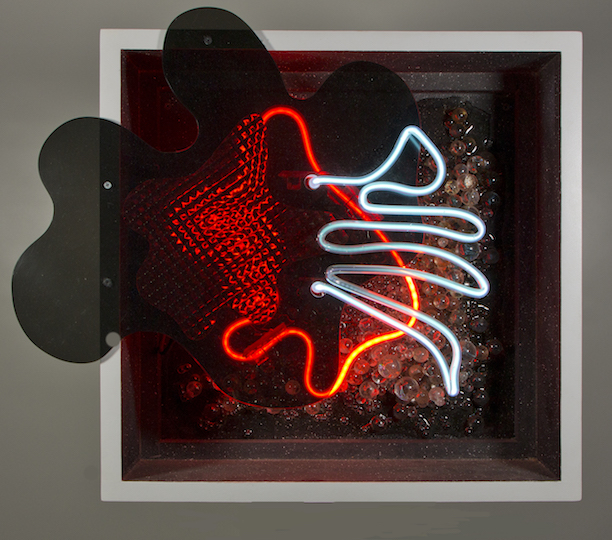
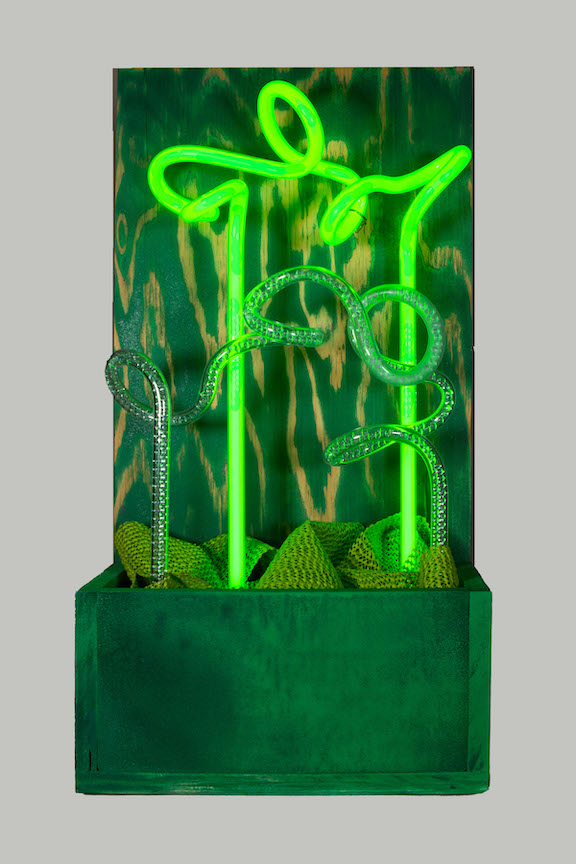
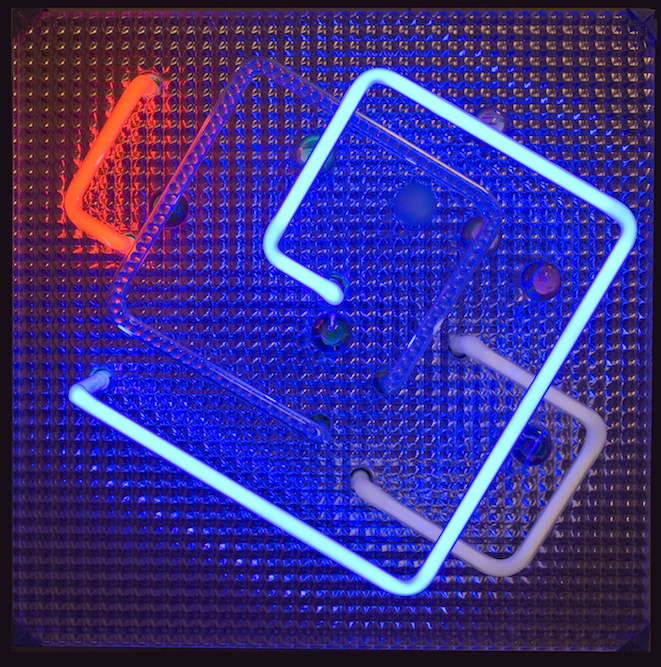
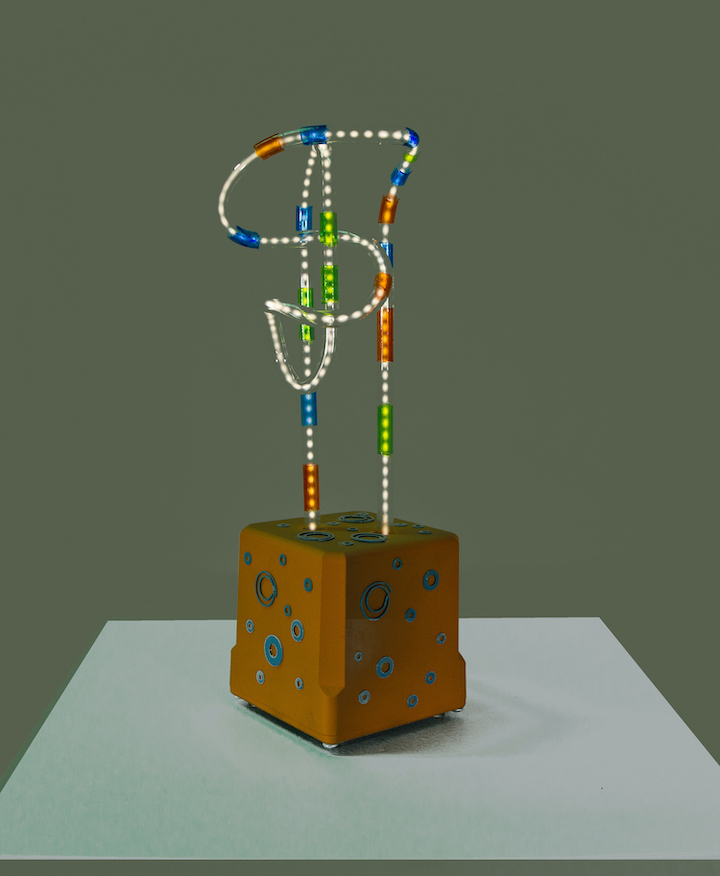
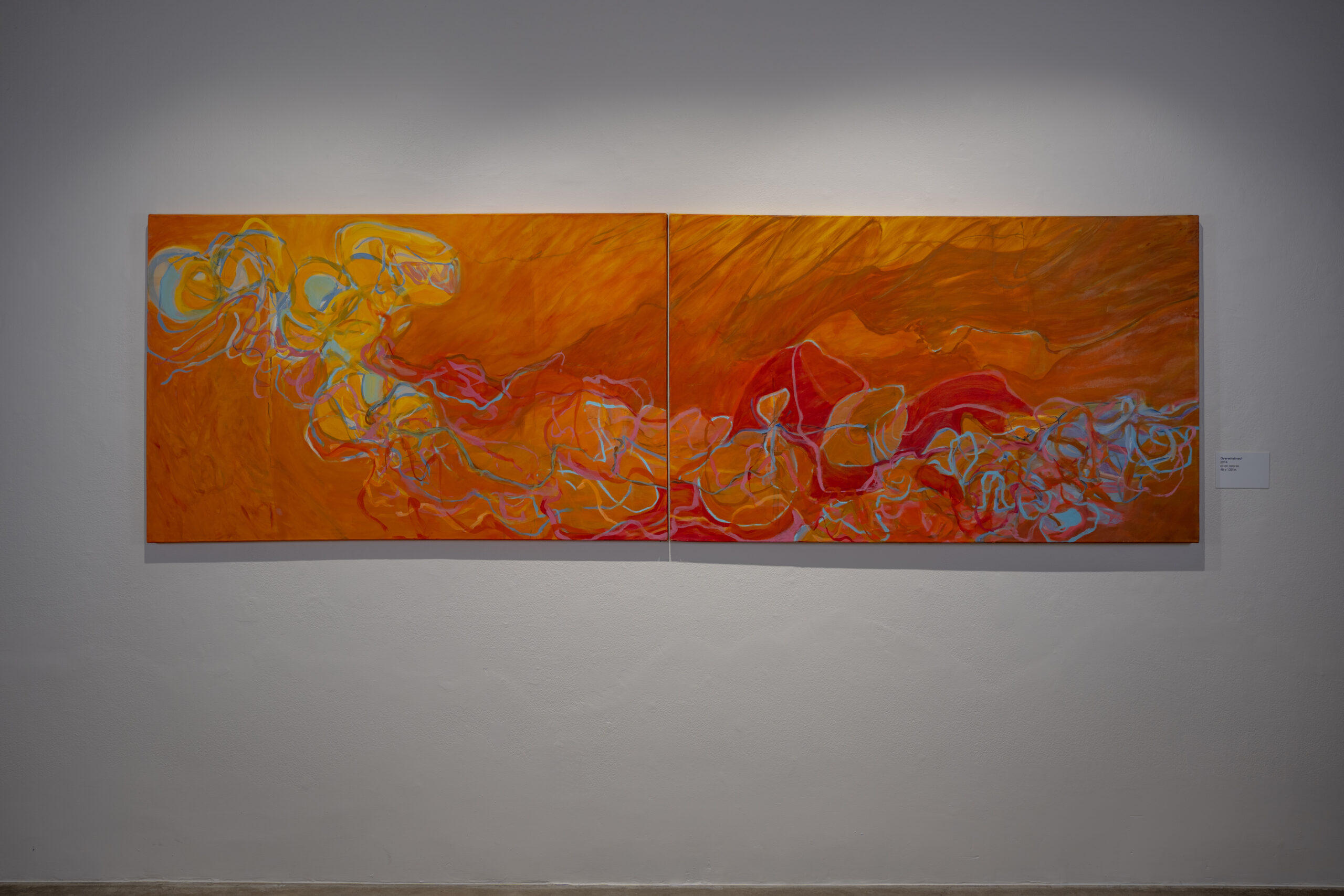
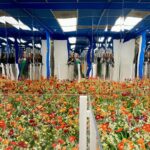
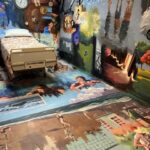
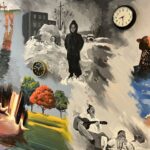
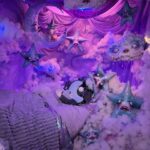
The immersive art exhibition Hospital of Emotions, located at the former St. Vincent Hospital Behavioral Health Campus, offers four floors of hospital rooms, hallways, a florist shop and gift shop that have become installation art spaces.
There are 70 artists in all who have taken over these spaces, working to turn operating rooms, patient rooms, and nurses stations into individual experiences of human emotions.Healing is not a linear process; healing is not often easy or uncomplicated. Some of us make it through a surgery, a mental health crisis, a birth, a death of a loved one all relatively unscathed, while others of us carry the mark of that procedure, time, or outcome writ large on the soul.
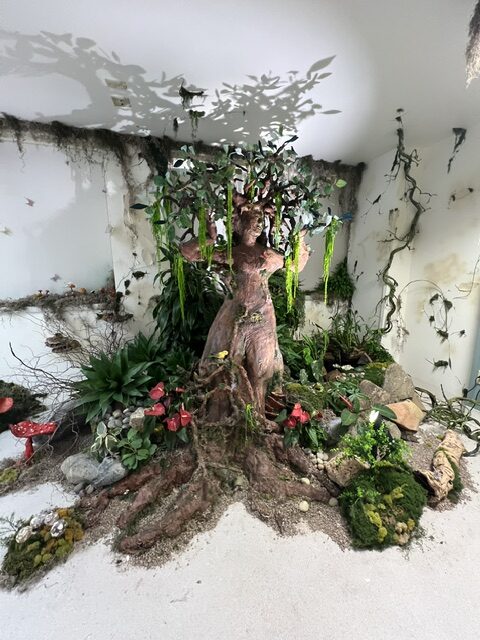
The artists in this exhibition roll with that idea, transforming rooms into evocations of soul and spirit; offering catharctic takes on emotions both dark and light. There are rooms that depict love and joy, hope and resilience, fear, anger, sadness, and even gratitude.
Exhibiting artists include:
Mônica Lóss | Lenny Gerard | David Otis Johnson | Anna Matsumoto | Bhumikorn Kongtaveelert | Javiera Estrada | Heather Bellino | Evan Wood | lisa waud | Jonathan Elkies | Kunna Haan | Rebecca Ann Carver | Olivia Barrionuevo- Minkin | Allison Reber | Yaara Sachs | Nathalie Auzepy | Dioz | Margüi | Madeline Verbica | DAK (David A Knudsen) | Caratoes | Dr. Maryam Trebeau | Kim Farbota | Pablo Thomas | Heriberto Gomes | Tommii Lim | Tara Rey | Michael Keppler | Alex Kemp | Alon Cohen Raz | Miran Nudell| Amit Greenberg | NYCHOS | Gil Hayun | Oshri Elmorich | Krisia kiki Powell | Mariell Guzman | John F. Malta | Jeremy Wojchihosky | Nellie Xie | Moran Sanderovich | Natalia Pavlova | Napo | KASEMONSTER | Corrie Sullivan | It’s A Living | Greg Corbino | Dmitry Kemell | Michelle Lougee | Christoph Florin | Tyler Goldfarb | Mark Girgis | Ginger Pearson | Scene Shift Collective | Adam Kyron Murillo | Leslie K Monroy | Ray Karam | Sayoko Osada | Santa Gross | Elif Sezgin | Kara Greenwell | Sandra Monty | Tim Schwartz | grisha stepanian | cosmodernism | Rose Zhang | Paal Anand | Dongpu Ling | Mads Christensen | Emily Strange | Almog Sachs
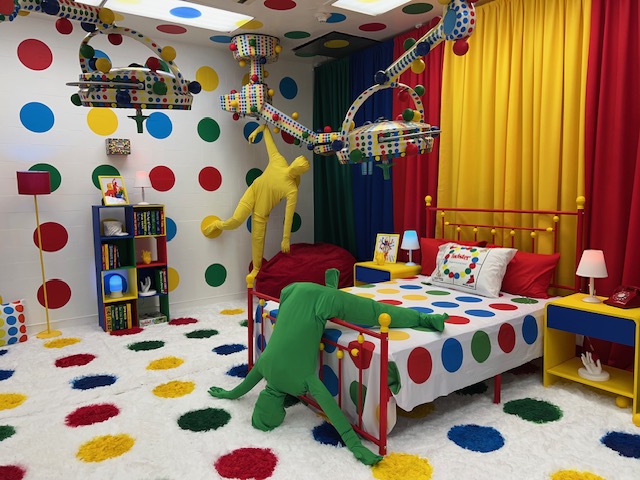
Many of the room installations allow viewers to step in only to a certain point, prevented from interacting directly with the art by a low plexiglass barrier. Others invite you directly inside, to view, sit, or participate with video footage or auditory experiences. While some installations are stronger and more resonant than others, everyone will have their favorites, and overall, the works are involving, richly constructed, and wonderfully surreal.
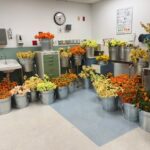
Exhibition attendees enter the hospital, are issued patient wristbands and general floor-by-floor guides which include spaces on the back for collecting ink stamps available at tables throughout the exhibition indicating “treatment” is complete for each depicted emotion. Viewers take an elevator to the sixth floor and then make their way down, eventually ending on the first floor, where a beautiful and charming collection of perfect pipecleaner flowers (available for purchase) are displayed in the flower shop, and other exhibition souveniers are sold in the hospital gift shop. On each floor, visitors can purchase bottled, electrolyte enhanced water from vending machines, the bottles indicate a variety of emotions being consumed along with this refreshment– mine was joy.
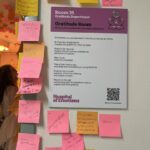
Well-written descriptive signage outside each room offers insight into the creating artists and their works, as well as indicating which emotion is being depicted.
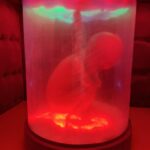
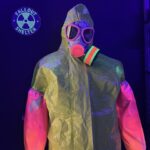
Beginning on the 6th floor in the Resilience section as our white-coated installation guides indicated we should, we first viewed an enormous ruby red fetus resides inside a watery aquarium surrounded by red padded walls – a loving and mysterious depiction of life inside the womb. Situated across the hall, a storage room remade into a glow-in-the-dark “preppers paradise” includes comically named emergency rations and colorful HAZMAT suits.
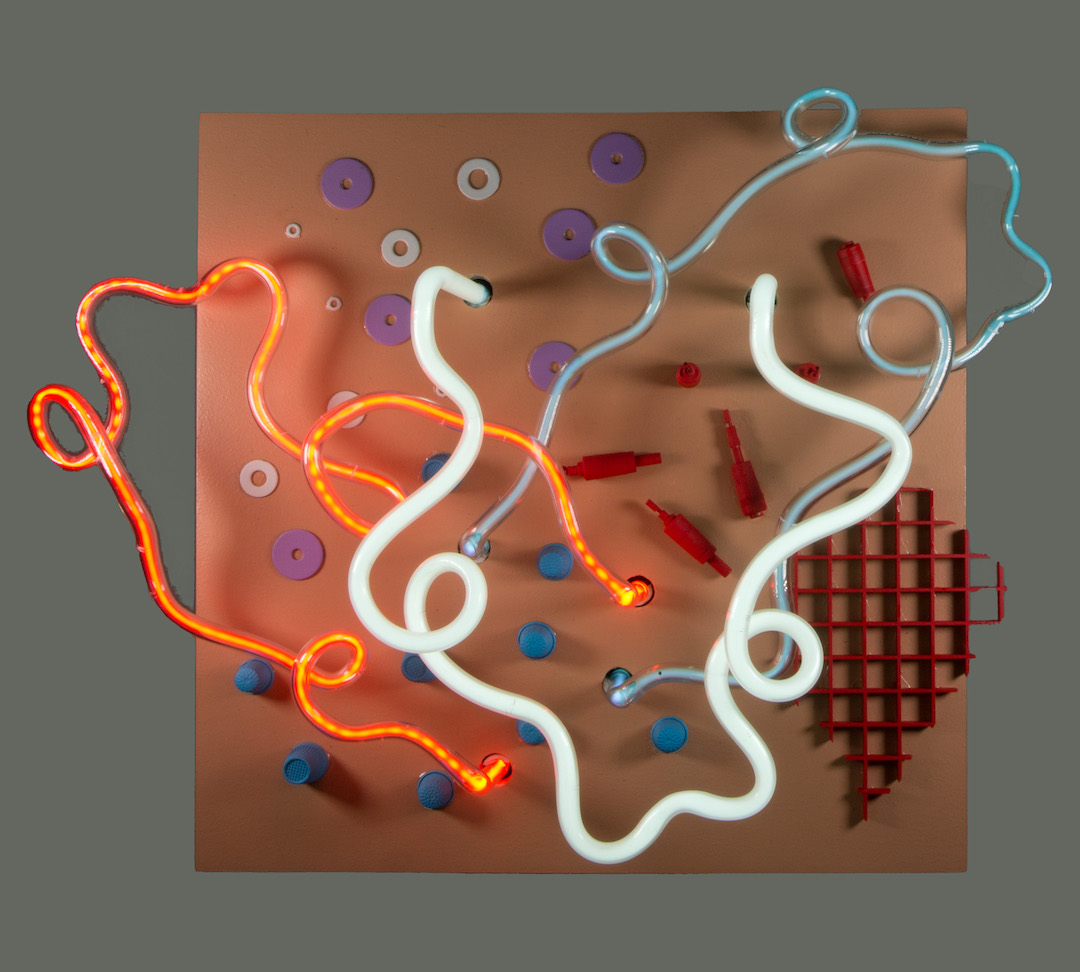
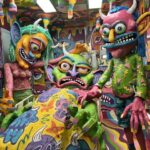
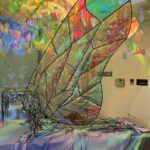
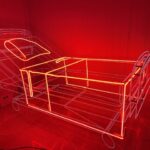
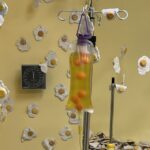
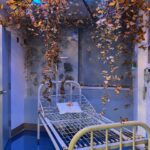
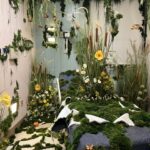
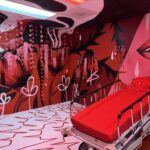
David Otis Johnson creates a thin, linear neon outline of a hospital bed that is simple and compelling; artist Margui offers an auditory and light experience of surviving an actual epileptic seizure. Cheerful and strange looking monsters crowd a surreal instllation by Guy Dioz Bloom; Melan Allen’s “The Eggsibition” humorously and viscerally depicts the artist’s life-long hate of eggs, featuring eggs in IV bags, dripping off a hospital bed, and lying fried-yolk up en masse along the floor. Allison Reber brings us a room overgrown with lush flora while artist Olivia Barrionuevo-Minkin brings lustrous monarchs to life.
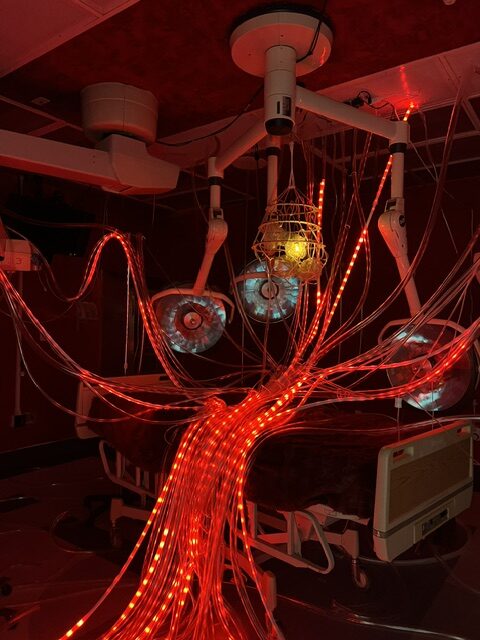
Transforming an operating room into a glowing red, octopus-like operating room, Anna Matsumoto and Bhumikorn Kongtaveelert create one of the most galvanizing entrees in resilience, “Breathworks.”
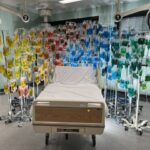
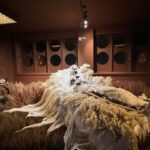
Elsewhere we see a multi-colored spectrum of dye-filled IV bags; an infinity room of reflecting orange poppies; a silvery alien figure positioned on a white bed formed from dried reeds set in the center of a wavering field of brown grasses.
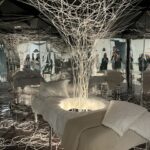
A brilliant white fountain of cables springs from a glowing hole in the center of a hospital bed in Kim Farbota’s forray into the Sadness Department, a web of connection that evokes coccoons and the patterns of spiders as well as the human body’s own synapses and interwoven emotions. Another powerful depiction of sadness is found in Pablo Thomas’s “(cronos) Time Eats It All,” in which painted images of memories start to fade, dissolving with time.
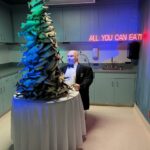
There is a hospital bed constructed of Amazon boxes; another filled with textile stars and puffy pillow filling; artist Michael Keppler gives us a figurative sculpure of a man poised to devour a gluttonness mountain of fish with a neon-lettered admonission behind him that announces “All You Can Eat!” Talk about eating your feelings…
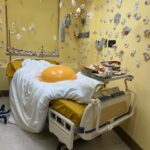
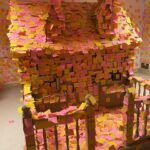
Focusing on gratitude, exhibit attendees were asked to write down what they themselves are grateful for using colorful post-it notes which cover the walls and a cardboard house in the center of the gratitude room.
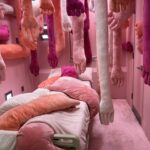
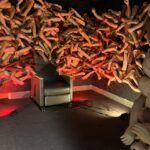
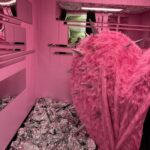
Exploring the emotion of anger, Leslie K Monroy and Adam Kyron Murillo provide a surreal room of body parts surrounding an easy chair. Another room gives us a monstrous figure created from a mass of pink hair, crutches, and walkers.
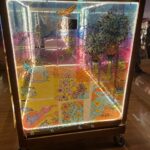
Elsewhere, illuminated plexi figures are filled with colored orbs and white light where brian and heart would reside. Eerie, life-size figures with bird heards step toward a forest clearing that holds a small bird house.
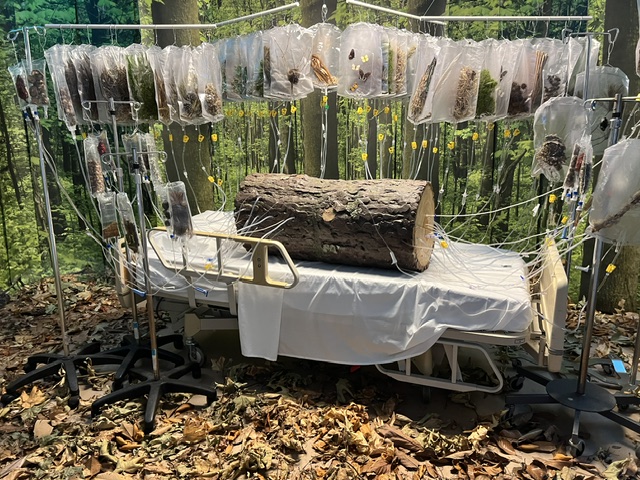
Michelle Lougee creates the emotion of hope having positioned a tree trunk on a hopsital bed, conencting it to a suspended orchard of rehabilitating IV bags each containing a single aspect of the natural world.
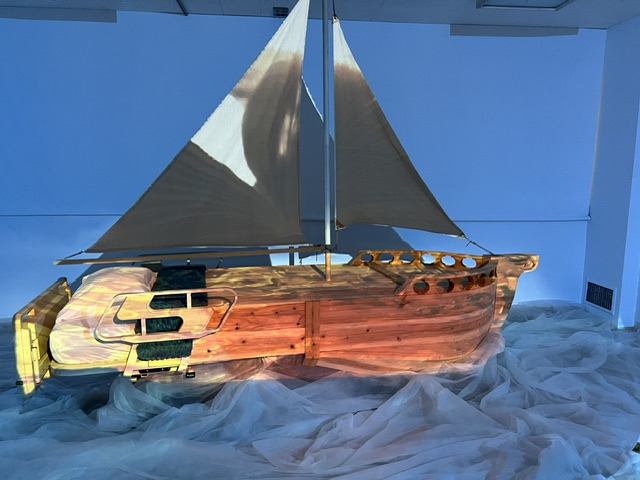
Quietly wonderful, Dmitry Kemell’s “Toward the North Star” gives viewers a dreamy look at a hospital bed reimagined as a boat who sails flash with video projetctions.
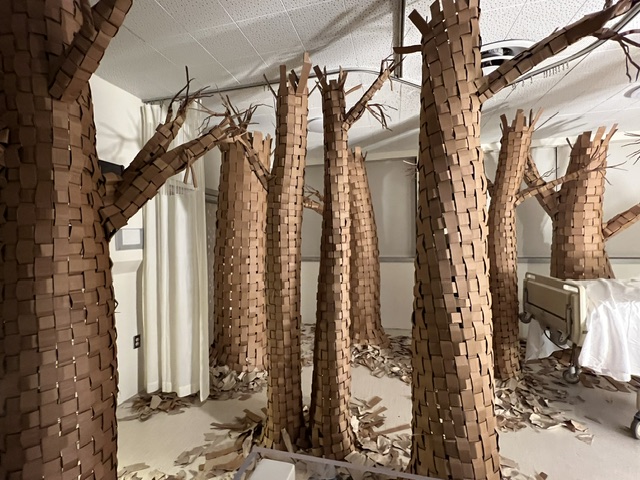
Artist Gre Corbino gives us a forest of woven cardboard trees in his depiction of hope and the transformation of waste into renewal.
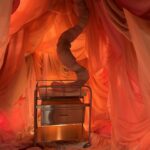
On another floor, red hearts; a spiky pink heart positioned on a river of shiny silver; and a draped orange fabric coccoon all indicate unique depictions of the emotion of love.
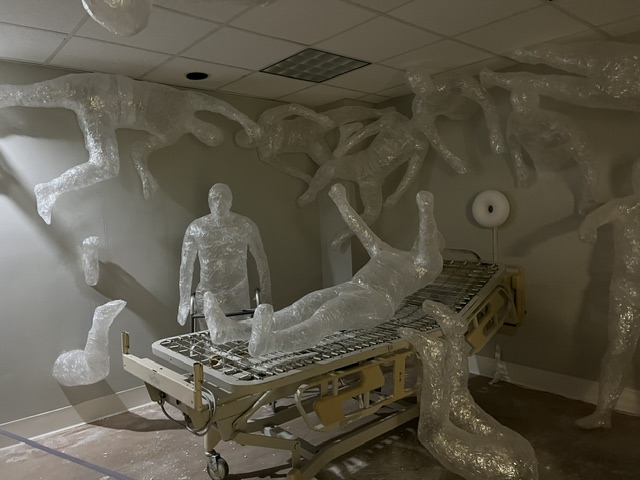
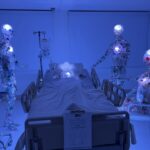
Installations about Fear include three stories told in video over the course of 14 minutes that are intense and even shocking, including a section about soldiers during the Iraqi war taking out the wrong car with a missile. Mysterious transparent figures inhabits another, dimly lit, room, some floating to the ceiling like lost souls, another in a walker, yet another with arms raised lying on a mattress-less hospital bed. in an installation by Mads Christensen (above).
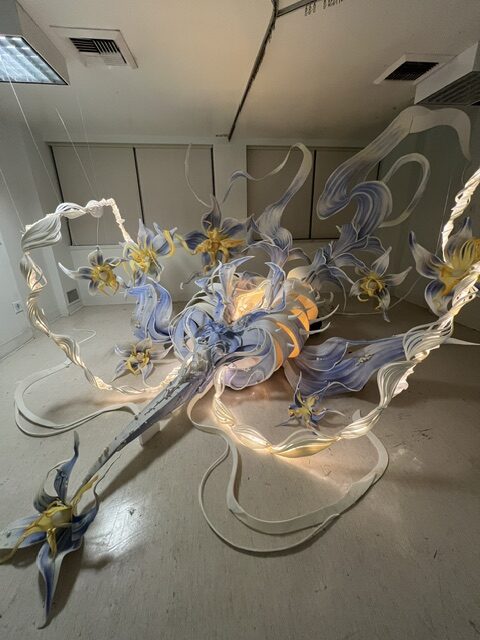
What worked best were rooms that engaged the senses, taking the viewer on a journey into a world beyond hospital walls, or engaging hospital iconography in a new and fresh way. While not every room did this, and some emotions seemed to get shorter shrift than others, the installations that fully registered were fascinating, involving, startling, and in some cases completely unexpected and lovely, creating a valuable and meaningful exhibition overall.
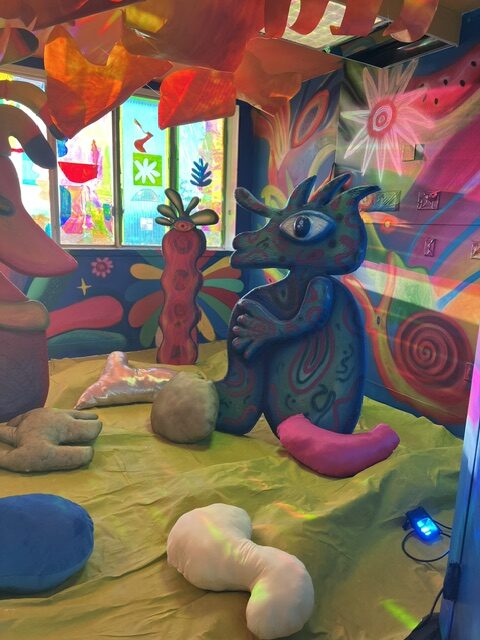
The exhibit was organized by House of Art and Dreams, which frequently creates pop-up exhibitions, and ROYVA, a design studio specializing in immersive installations. As an exhibition space, St. Vincent’s was suitably a bit creepy as it exists in this liminal and transitional time before the building moves from abandoned hospital to a reimagined space focusing on behaviorial health and homelessness in the near future.
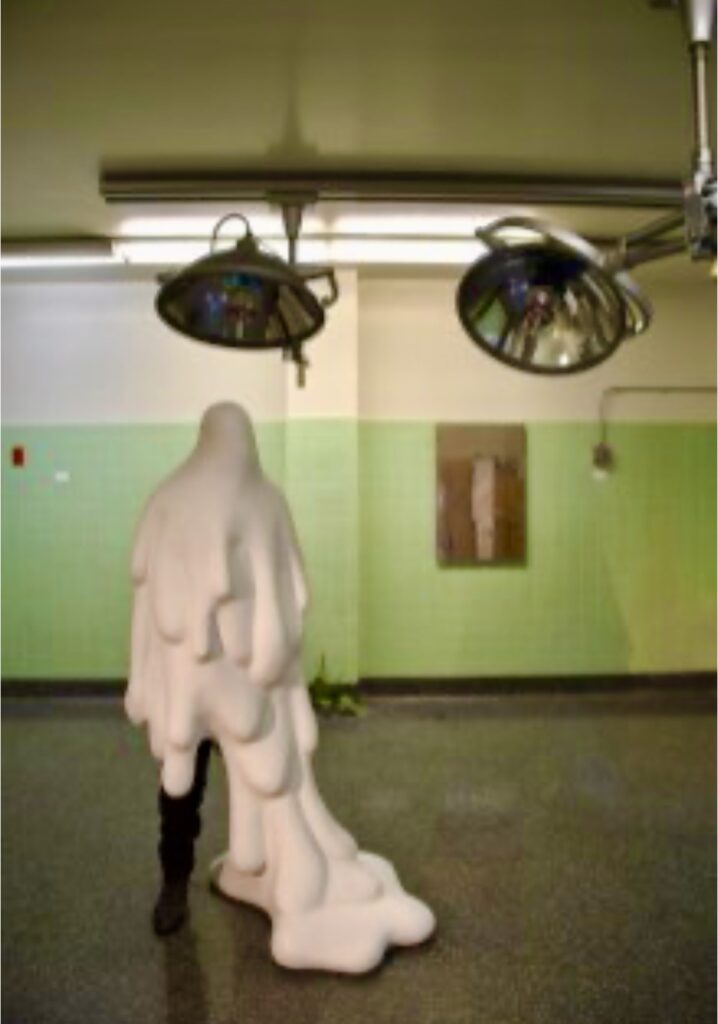
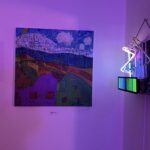
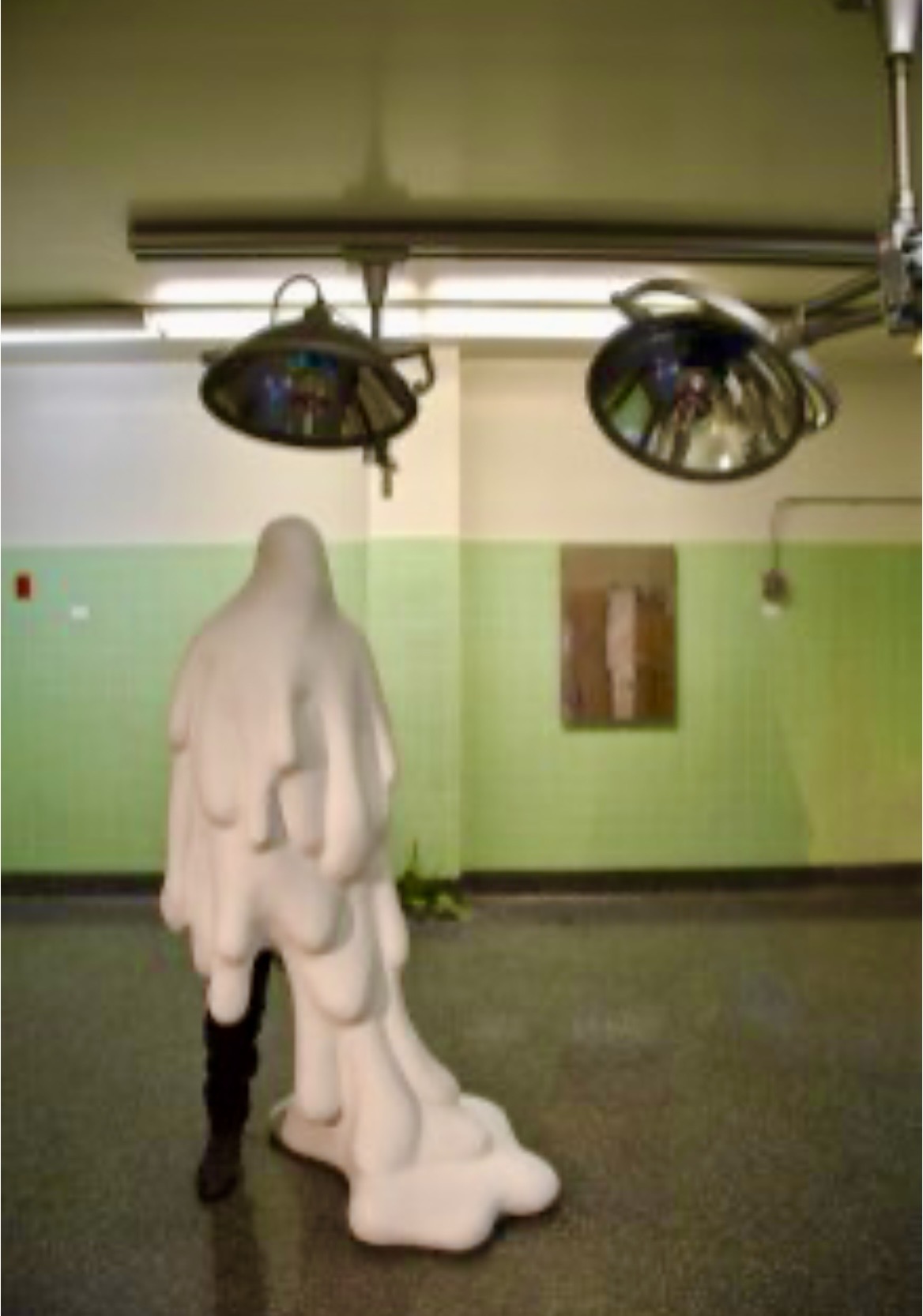
Ten years ago, in 2016, I visited another pop-up hospital art installation at what was once the Los Angeles Metropolitan Medical Center in West Adams, titled Human Condition (above). That medical art tour-de-force was curated by art advisor John Wolf, and was centered on individual hospital spaces reimagined rather than on the emotions and feelings that such spaces might evoke. There was a cafeteria, a maternity ward, a psych ward, and even a morgue, all of which used the hospital setting as a stage in a dramatic artistic depiction of life itself, a “condition” that has no cure. We are all born, dream, imagine, are ill or healed, and eventualy die.
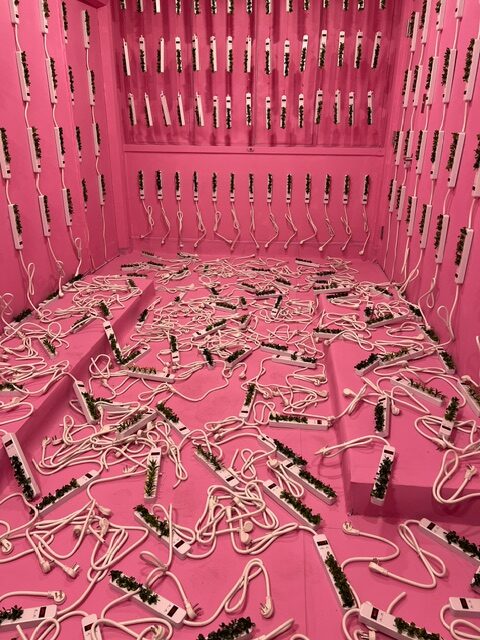
Hospital of Emotions made a fascinating comparison for me. In this iteration of a hospital-based art exhibition. Here, the focus is not on what empircally happens within those medical center walls to all of us inhabiting the human body, but rather on the emotions, feelings, and thoughts contained in our minds, hearts, and spirits.
It would be wonderful to someday see both installations combined in a true mind/body experience. For now, check out the vibrant and tactile flow of feelings on display in Hospital of Emotions, located at St. Vincents Hospital at 2131 West 3rd St in Los Angeles, and will be showing through August. Yes, you should go check yourself in.
- Genie Davis; photos by Genie Davis