

The Cube: Manuel Lima

WEB_B31-D4s_JV10623-Edit-Edit

Above, a look at an evening performance by Manuel Lima, photo by Jon Viscott. Note: Sunset Strip’s resident “Jesus” adds his own element to the performance space.

Watching Brazillian-born artist Manuel Lima perform his piano score “The Sunset Cube” inside a translucent cube in a West Hollywood parking lot is a transcendental experience.

Lima calls his piano composition and performance a “composition of a life for ten days,” but the music and the experience goes beyond that. The performance artist is perched inside a translucent cube, in which he has lived for ten days, performing essentially around the clock in the Sunset Strip parking lot at 8775 Sunset Boulevard, and inviting the listener/viewer to merge his experience with their own.

In a copy of his score, Lima attests “I want to reach a point where work, life and art are all the same. I want to be present. I want to be away from my phone and social media and have my heart on one thing at a time.”

Watching his shadowy form through the cube, and at night, the red lights synchronized to his music, the listener/viewer is transported to somewhere almost unworldly. It is a landscape within a landscape, sound within sound. While traffic rushes by on Sunset Boulevard, the music throbs with intensity one minute and flows with serene intent the next. The hazy vision inside the cube itself is like a glimpse into another dimension, one in which the external landscape sifts like sand through an hourglass.

Lima notes that “art is process and life is process. This piece is just to remind you we are all going crazy. If I can have my life back again I will call it art.” At first considering being locked in his cube 24 hours a day for the ten day performance period, Lima instead realized he could more healthily encompass a morning run when he wakes up in the cube, going out for a coffee, dining on a budget, and sharing tea with his viewers. Stepping outside his contained space also enriches his composition with creative interactions.

The artist describes his time in the cube as beginning with initially driving to the cube and entering it; “I will be like a worker on a 9 to 5 job by day. During the evening I will be a Bohemian.”

Lima’s schedule follows a set routine day and night, Bohemian or not. From 7 to 9 a.m. he wakes, runs, showers, and breakfasts. From 9 to noon, he performs his “Sunset Boulevard” composition moving from left to right on the FM dial for inspiration, improvising five-minute piano segments that riff on the music and sounds he hears.

Lima says that he works essentially as “transducer” of radio waves during this time period, defining a transducer as a “device that converts one form of energy to another.”  He has designed this piece to be naturally progressive, adding new piano loops and performing those done before.

He takes a lunch break from noon to one. Working with a severely limited budget for food, Lima thanks every restaurant that helps him to eat with a sign in front of the cube and a heartfelt thank you for sustenance.

He then returns to perform this composition from 1 p.m. until 5, when he offers a public tea just outside the cube space until 7 p.m. This provides a unique opportunity for the community to speak with the artist. His interactions are so genuine and warm that he becomes no longer a performer of life but a participant in life.

A dinner break lasts from 7 to 8 p.m., after which the artist performs a different composition, his “Red Light Piano.”

We enjoyed hearing and seeing this piece, which combines both light and sound in sixty different music cycles lasting between one and five minutes in length, with variations increasing in length each day. It can last around five hours, but respectful of his neighbors, Lima primarily stops around 10 p.m. so as not to disturb area residents. And then, close to midnight, Lima sleeps, or attempts to do so.

Is the experience private or public? It varies. Lima’s cube floats like a cloud above the tumult of Sunset Boulevard, removed from the world yet uniquely of it, whether Lima is living and performing inside his sparely-furnished 10-foot-square cube or interacting with viewers outside it. It is a meditation of music, performance, sound, light, and spirit, a glimpse into a private and powerful creative world, but also a public event in which watchers gather throughout the day and night to interact whether in conversation or by listening to Lima’s music.

WEB_B30-D4s_JV10035

Above, Lima by day, performing. Photo by Jon Viscott.

Lima plays his musical compositions blindfolded, creating an insular world within a world that allows him to focus entirely on the music and not on who is watching or participating in the experience. He explains the decision to blindfold himself as one to prevent nervousness and distraction, but his blindfold also creates a space between himself and his audience and the aural experience of the boulevard itself, and filters external references.

WEB_B30-D4s_JV19808

Above, a look inside Lima’s live/work space, as sunset finds Sunset Boulevard. Photo by Jon Viscott.

Lima received a full scholarship from the Brazilian government to attend grad school in the U.S., and recently earned his Doctor of Musical Arts degree from CalArts in Valencia. He performed in his cube initially in the hills outside Valencia; his transition to the current West Hollywood landscape has created a shift in his performance that encompasses the urban environment and his interactions with viewers/listeners.

WEB_B31-D4s_JV10595

Above, “Jesus” watches Lima, his cube ablaze in a light show that highlights his music. Photo by Jon Viscott. 

Cube 2

Above, following an evening performance, Lima steps from his cube for a late night break. Photo by Jack Burke.

Lima discusses the experience of his evening performance with us. “Every night that I play I have structures that develop little by little. The composition gets more developed. My work was commissioned by the City of West Hollywood and highlights a process more than a product. It’s about finding art in life, both inside and leaving the cube,” he says. “Art and life are not separate. In the score you can get a feel for the experience. It’s meditation, the Red Light Piano.”
Cube 1

Above, Lima’s red lights begin to glow. Photo by Genie Davis. 

Asked what it is like being so exposed yet so contained in his cube, Lima says “It’s noisy. People are always walking past you, even as you are getting ready for bed.”

IMG_1438

Above, Lima with author Genie Davis. Photo by Jack Burke.

“It’s been a privilege to be here. It’s amazing, like being in a very surreal artistic residency,” Lima relates. “Between public and private interactions I get a lot of time to create, but I am in the middle of regular life, which informs the art.”

Lima’s incredibly unique and stirring performance ends tomorrow, August 21st at 10 p.m. Stop by for a listen, a look, or a conversation.  Lima is performing his closing on the same night the Olympic closing ceremonies take place in Brazil.

Lima’s cube is perched in the city parking lot at 8775 Sunset Boulevard; parking is plentiful and hourly.

  • Genie Davis; Photos and video by Jon Viscott, Genie Davis, Jack Burke

Let Them Roar: The Los Anegles Zoo’s Roaring Nights

F23C8046

Lions, tigers, bears, oh my – and music too. That’s the Los Angeles Zoo’s Roaring Nights summer music series.

F23C8042

At the second of four evening events for ages 18 and up, it was country music that had a friendly, lively crowd dancing. Performers covered the best in country hits, and line dancing lessons were also on tap. Bands included Highway Starr, Grant Langston and the Supermodels, Rocky Neck Bluegrass Band, and South Bay Country.

F23C8010

Even the elephants were having a good time. The Rocky Neck Bluegrass Band (above) was within range of those elephant ears, and we saw one elephant swaying pleasureably.

F23C7979

The reptile exhibits at the zoo were open and fascinating, from frogs to snakes to lizards, it was great to see some of these jewel-colored creatures up close and personal without the daytime crowds.

F23C7975

F23C7988 F23C7984

Fish and sea turtles were on display too.

F23C7860


Some of these creatures are descended from dinosaurs…which leads us to the wonderfully realistic, life-size, Dinosaurs: Unextinct at the L.A. Zoo. With evening lighting adding to the dramatic appeal, these animatronic wonders made an exciting evening stroll.

F23C7922

And it wasn’t all just fun and games, we learned some dinosaur facts, too – for example, some were feathered (above).

F23C7918 F23C7915

Hatchlings above, what could be Survivor Dinosaur Island, below.

F23C7896

F23C7891

Above, the gentle Edmontonia.

F23C7885

Above, guests were treated to a surprising water spray greeting by the Dilophosaurus.

F23C7880 F23C7875

Citipati above, looks a bit like an ostrich.

F23C7867 F23C7865 F23C7862

Not your ordinary T-Rex standing stationary, here, the carnivores were slashing at the plant-eaters, viewers were treated to a startling spray of water from the mouths of some of these amazing creatures, baby dinos were hatching, and a fossil “dig” allowed participants to comb the sand and discover fossils just like the scientists do (below).

F23C7903

What a pleasure to tour that exhibit and wander the entire zoo at dusk and once the sun was fully down – with our LA heatwave, the zoo’s cool temps were just as inviting as the cool program itself.

F23C7851

F23C7926

But wait, there was more, a painting station that provided the materials needed to create images of participants’ favorite animals…

F23C7931 F23C7928

a game area with board games, pop-up zookeeper talks, and plenty of well-placed food trucks and full service bars.  Grilled Cheese Truck? Rice Balls of Fire?

F23C7933 F23C7935 F23C7952 F23C7961 F23C7972 F23C8055 F23C8044 F23C8058

The exotic pleasure of hearing animals stirring, calling, and yes, roaring; the magical dinosaur exhibition, the live music located throughout the zoo, the drinks and dining, the beautifully lit landscaping – Roaring Nights is hands down (and paws down, too) more fun than any dance club in town.

A live indie sound replaces Texas twang on Friday August 26th, when the zoo serves up another Roaring Night of fun with music from Black Crystal Wolf Kids, Well Hung Heart, FifthLaw and DJ Steve Prior. Go wild!

  • Genie Davis, photos: Jack Burke

August Brings Art on the Outside to West Hollywood
weho 5 the chase as well
The dog days of summer are considerably enriched by West Hollywood this August, where the heat is on: exciting new art installations sizzle on the streets.

weho 4 can you dig it

A vibrant collections of works include “Food-Prints,” a new entry in the “Can You Dig It?” sculpture garden in Plummer Park; “The Cube,” a 10-day, ‘round the clock solo performance installation in the heart of the Sunset Strip; and “The Chase,” large scale, origami-like steel sculptures on Santa Monica Boulevard.

WeHo Arts is offering an outside, site-specific public art program that captivates and enlightens.

Weho 3 Food Prints
Located in Plummer Park as a part of the “Can You Dig It” series dealing with California’s drought, “Food-Prints” by Brett Snyder, Edward Morris, and Sussanah Sayler uses wooden food sculpture in a whimsical zen-like dry garden to depict California’s most abundant native agricultural products.
This sculptural piece reveals how water use correlates to the food we eat. Food sculptures form a circle that reveals the item’s virtual water footprint. The style of the installation evokes the Zen rock garden of Ryoan-ji, one of the most famous in Japan. The placement of the installation itself close to the park’s weekly farmer’s market, references the past history of Plummer Park as a farm, as well as the produce vendors themselves. The installation is an interactive experience for viewers, including a guide that compares the water footprint of each food, from almonds to grapes, as well as exploring the footprint of the entire “art zone,” designed to represent the virtual water needed to “grow” a single piece of steak.
The garden itself offers a dual art experience: the garden is contemplative in nature, the large fruit and veggie sculptures are as playful as they are educational and appealing to the youngest visitors at the park. Revealing how water affects the food we eat, the duality of the exhibit is carried even further, revealing the differences between nature itself and our food culture.

Weho 1 The Cube

Located in the Sunset Strip’s city parking lot at 8775 Sunset Boulevard, Brazilian born artist, pianist and composer Manuel Lima offers a 10-day, around the clock performance piece from August 12 through 21. Lima will live in a translucent, sparsely furnished 10-foot-square cube. The purpose: integrating daily life with his own artistic process, and creating a meditation in a public space. His only time outside the cube other than rest breaks will be a morning shower and breakfast. From 9 to 5 daily, the artist will perform his composition “Sunset Blvd.,” riffing piano compositions based on what he hears moving from left to right on the FM radio dial. Then from 5 to 7 p.m., he’s take a tea break outside the cube, allowing viewers to join him for conversation. At 8 p.m, Lima performs an original light and sound composition, “Red Light Piano,” which utilizes some sixty music cycles each ranging from one to five minutes, with variations increasing in length each day of his performance, until reaching five hours in length. Then, near midnight, he will sleep.

This fascinating performance integrates place, personal space, and culture. This is not the inaugural performance for “The Cube;” he performed a 10-day trial near Valencia earlier this year. A metamorphosis for both the artist and the viewer, this experiential performance piece engages, stimulates, and changes both viewer and viewee through landscape and the creative process.

We Ho 2 The Chase

Place and process are also key with “The Chase,” origami-like shapes of steel that vividly depict the quest for survival. Created by LA-based public artist Hacer, there are four large scale sculptures along the median of Santa Monica Boulevard, starting at Doheny Drive. The works will be installed August 20-21. The abstract but highly defined pieces include “Coyote, Stalking” which looks east at its prey, “Rabbit Sitting,” unaware of the danger stalking it while scouting for food. “Coyote, Running” takes a sharp turn in an attempt to gain on “Rabbit, Running,” who is now facing the eyes of the hunter. The sculptures form an open-ended quartet in terms of story: each animal is fighting to survive in a land of limited natural resources. Who survives is left to the viewer. The sculptures are powder coated steel, and evoke the tension of a predator on the prowl, the leap toward escape by the prey. Motion captured and frozen in a monumental moment in time, these pieces are meant to create a sense of commonality – we are all in this together – as well as expressing differences. Hacer was inspired in this work by the book Sadako and the Thousand Paper Cranes which he read as a child. The sculptures share a playful and conceptual approach with the works of Alexander Calder and Jeff Koons. Hacer notes “Like the dynamic, formative process hidden by my seemingly simple designs, my work’s simple existence aims to elicit a dynamic response about the viewer’s relationship to their formative process: childhood.”

In combination or viewed separately, these three public installations offer an insightful experience for the viewer, one that immerses viewers into a different world – of predator and prey, a partnership in the eco-system, an intimate engagement with creative process, and a learning experience involving drought, food ecology, and meditation.

Entering that world, summer doldrums slip away. These exhibitions resonate a powerful artistic vision in West Hollywood. Don’t miss them this August.

CA 101: Mall Art Gets a New Meaning

CA 20

Mall art used to conjur up images of blah Andy Warhol prints and tepid ocean views. No longer.  The 2016 edition of the CA 101 art exhibition is located in the South Bay Galleria shopping mall in Redondo Beach, and is packed full of fascinating artworks from paintings and photography to some stunning installations.

CA 101 runs through July 31st, and should be on anyone’s shopping list. Produced by the Friends of Redondo Beach Arts (FRBA), a non-profit organizationpromoting the arts in Redondo Beach, the opening last Friday was jam packed with art lovers – over a thousand, in fact, visited this former clothing store.

The 5000-square-foot-space was divided into two spaces, the CA 101 Gallery and the CA 101 Affordable Art Store, where original works were for sale at $200 or less in price.

Curated by Nina Zak Ladon and exhibition director Sandra Dyer Liljenwall, the exhibition changes locations throughout Redondo Beach every year, with artworks chosen adapting well to their varied environments – last year, the former AES Power Plant near Redondo’s waterfront. The Galleria location led to some pointed and wonderful pieces that reflect the space, from body image to sexuality, from commercial culture to feminism.

CA2

Above, Bibi Davidson and Dwora Fried combined forces to produce an installation located, as most of the installations were, in the former dressing rooms of the store. Their “Peeping Tom” depicts a transgender man spying on a woman in a dressing room, not for titillation, but to learn how to properly wear a bra.

CA3 CA4

The lively, fun piece had viewers buzzing.

CA5

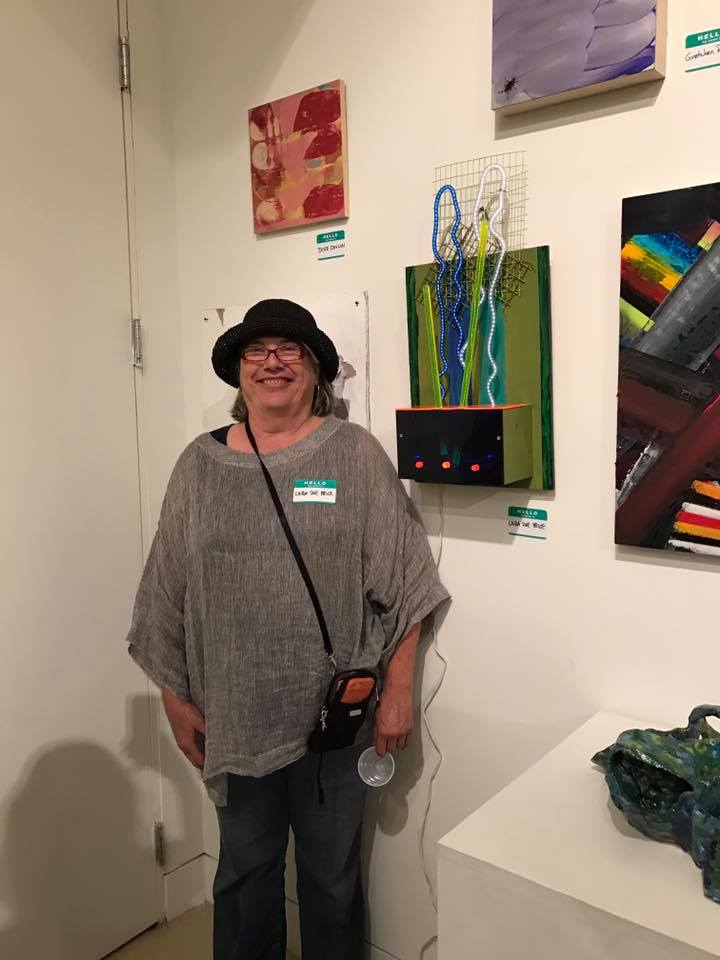
Above, neon artist Linda Sue Price exhibits “Jesse,” an homage to her father. The beautifully symbolic piece included references to their conversations together, his love of Chinese food, and his work with machinery.

CA6

Above, the work of Sandra Lauterbach, whose beautiful fabric work befits this former-clothing-store location. The piece is titled “Materials Matter! Why textiles?” and features bold, dimensional abstract work.

CA7

Above, Janet Johnson’s “Up a Tree” provides a whimsical take on the yarn bombing movement.

CA9

Above, a close-up detail of “Butcher’s Window” by Katie Shanks and Stephanie Sherwood, which creates a static shell as container for human bodies – and the fetishized flesh of our society. As with many of the works here, there is a focus on consumerism, consumption, and society’s view of the body – and soul.

CA10

Above, paintings by Sheli Silverio are part of “The Selfie Experiment.” The artist utilized selfie images sent to her to create painted conversations of self-perception.

CA13

Above, Lena Moross’ beautifully lush impressionism features one of her favorite colors, red.  Her watercolors are as rich as if they were painted in oil.

CA26

Above, artist Andrea Kitts Senn with her “Chromer,” part of a collection of pieces focusing on bones and beasts, whose dazzling form represents the essentials inside – when stripped of flesh and fantasy.

CA 1

Above, Cie Gumucio with one of her two installations at CA 101, this one focused on what the artist terms “the grace and ease of sculpted fabric.”  This piece, “Open Windows” uses mirrors and video footage, the latter culled from years of filming, to depict both “promise and possibility.”

CA 11

Above, artist Malka Nedivi with her exhibition first place prize winner, “Home Nest.’ A mix of paintings and sculptural forms shaped from cardboard, this beautiful instillation is a dreamy and elegaic tribute to the comfort and memories of “home.”

CA 14

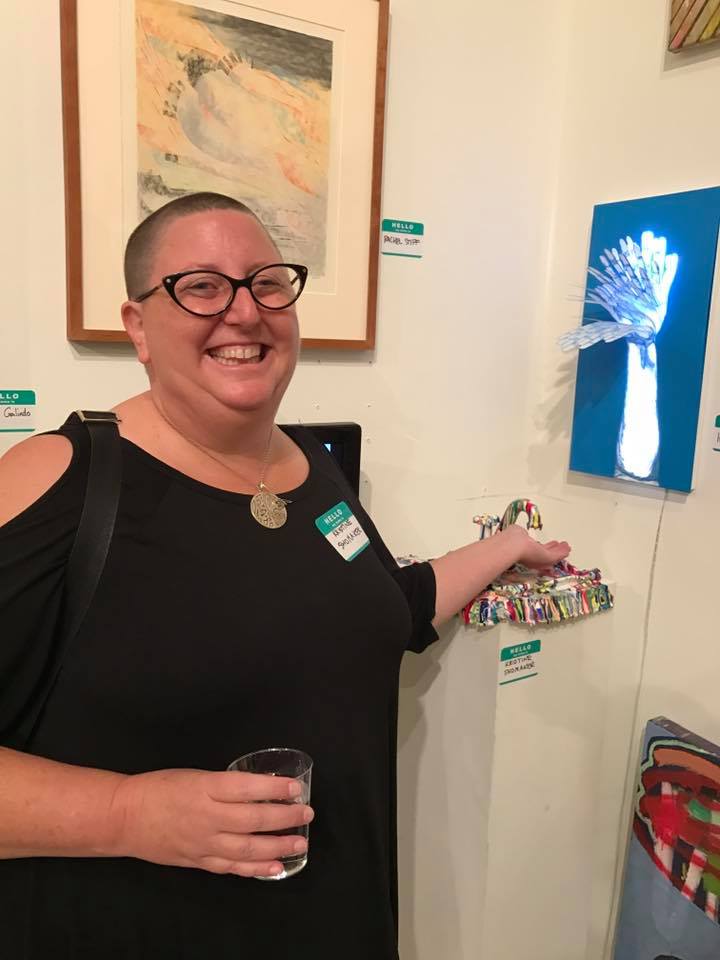
Above, artist Kristine Schomaker with one of her mannequins, subjects in her “A Comfortable Skin” series. Schomaker aims to alter societal obsession with body image, and heighten self-awareness. She uses her gorgeous, multi-hued palette to engage viewers’ eyes and function as a metaphorical mask, a skin hidden behind.

CA 15

Above, Susan Melly with several of her works, which dynamically explore female identity, fashion, and power. Inspired by her mother’s work as a seamstress, and her use of powerful sewing machines, Melly takes retro dress patterns and the female form, and re-purposes both in images that suggest ritual tattooing.

Melly, Schomaker, and Senn are all focusing in their own distinctive works on body image, on strength, on what goes on beneath the artifice of clothing and skin. Likewise, L. Aviva Diamond’s “Window Display, West Hollywood,” which graced the exhibition’s catalog cover, took on the perception and portrayal of the female form.

CA 18

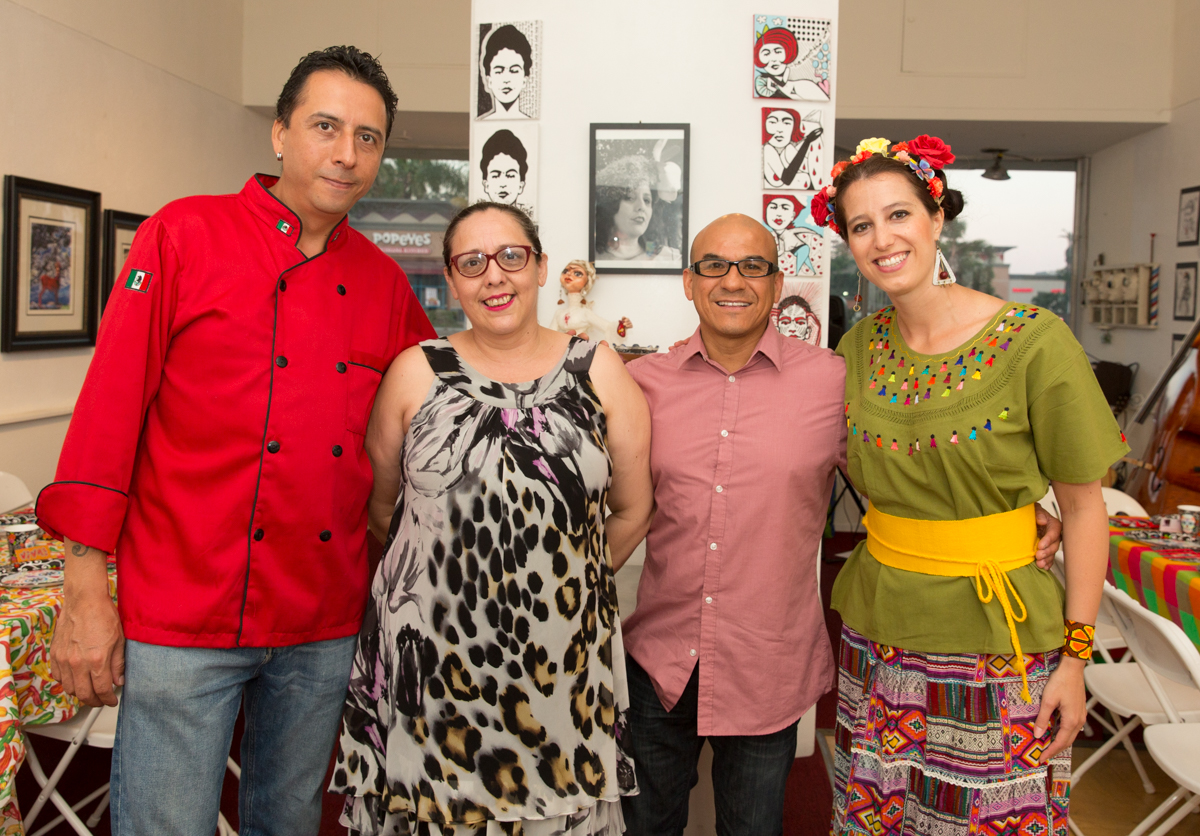
Above, artists Malka Nedivi, Chenhung Chen, Bibi Davidson, and Susan Amorde.

CA 19

Above, Chenhung Chen with a sinuous, sensual sculpture that is a part of her Entelchy series. Chen’s work here evokes the feminine form.

CA 21

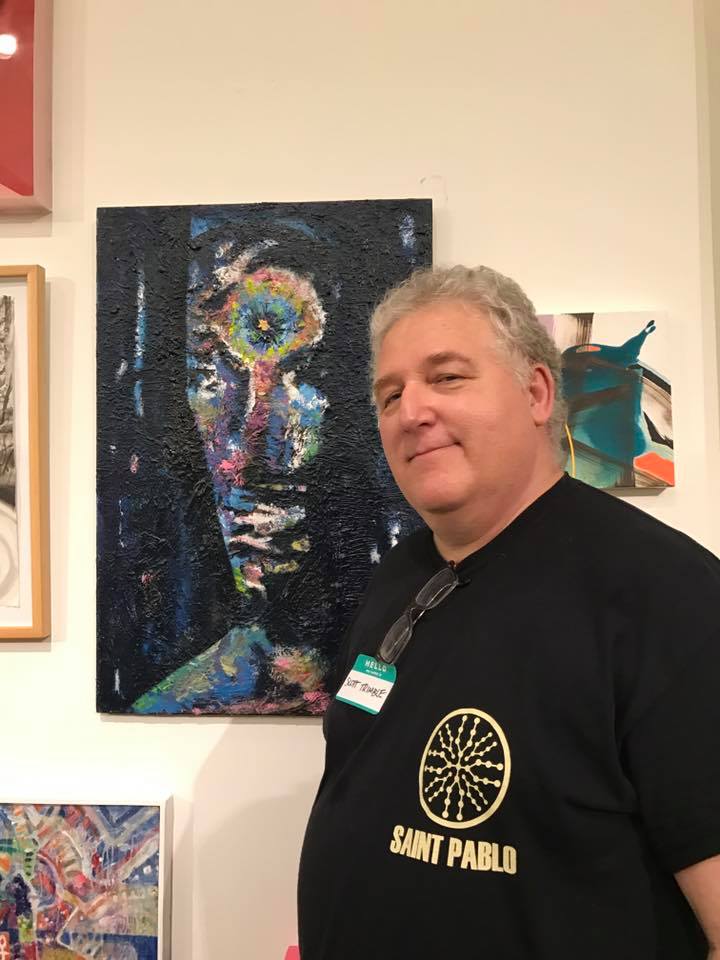
Above, Scott Trimble, whose marvelously poignant portraits create a look into the soul.  Trimble has several pieces in the show, each with evocative, nuanced impressionistic style that is distinctly his own.

CA 22

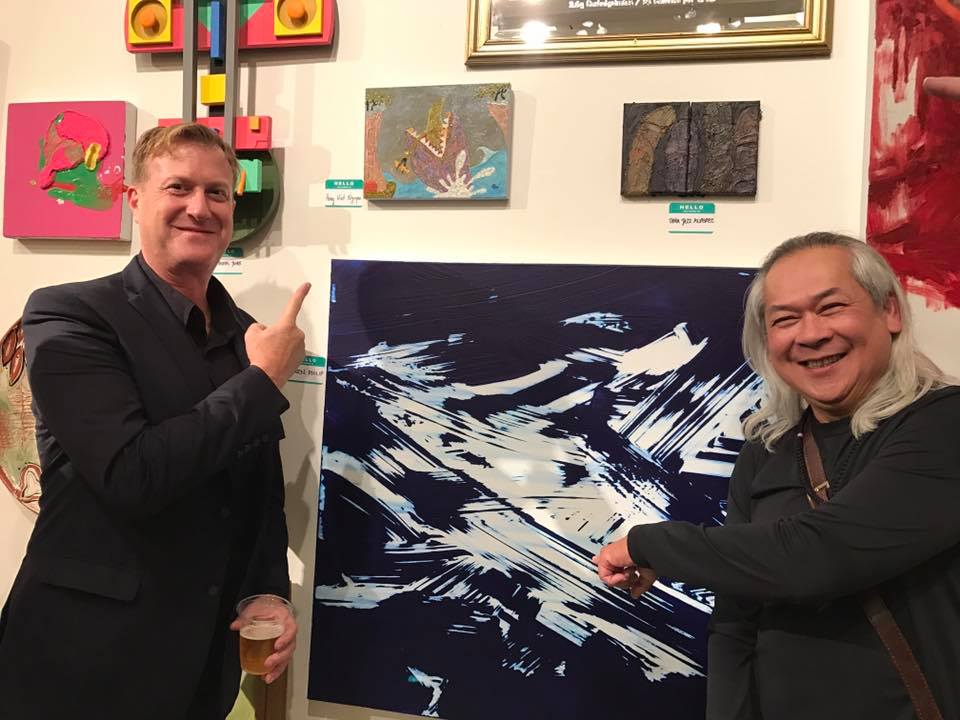
Above, Hung Viet Nguyen with his “The Queen/Sacred Landscape II,” a beautiful, mystical piece with a mosaic-like quality and jewel-colored glow. Detail, below.CA 23

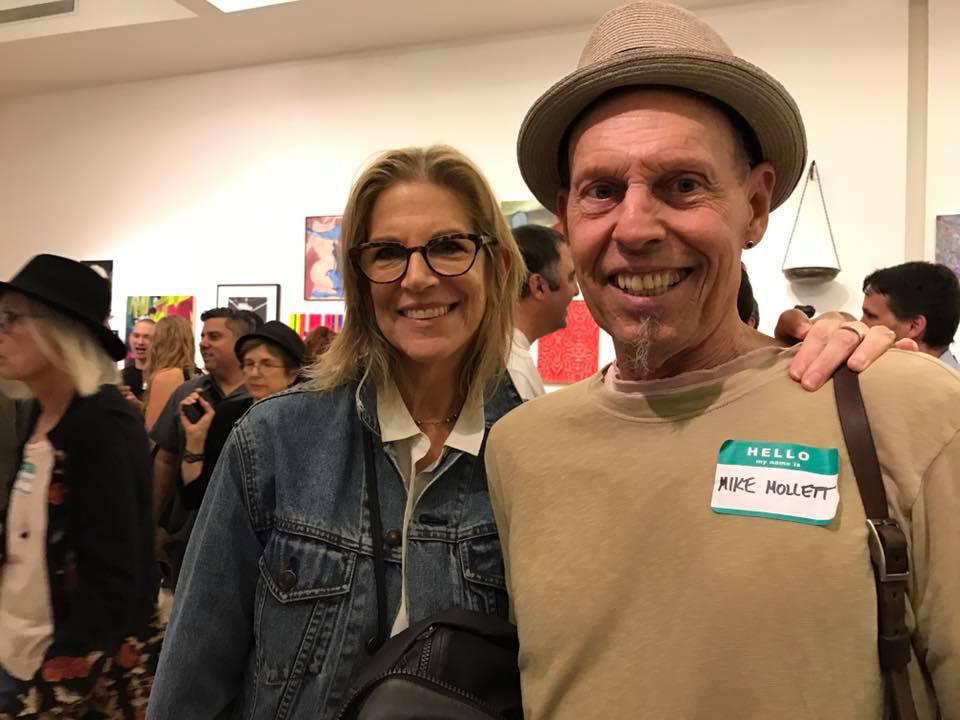
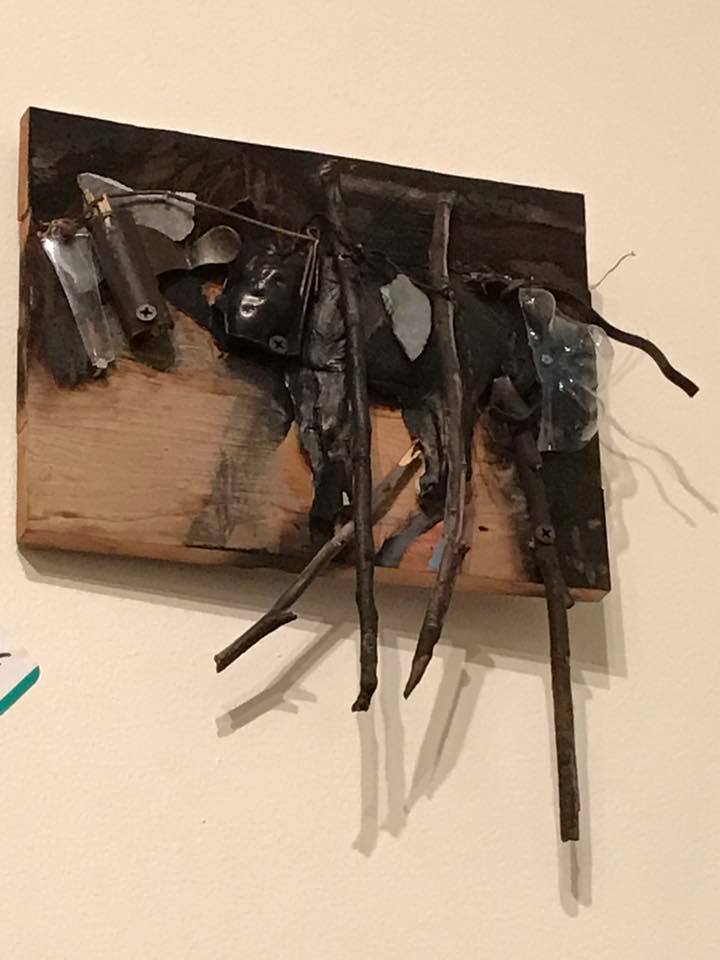
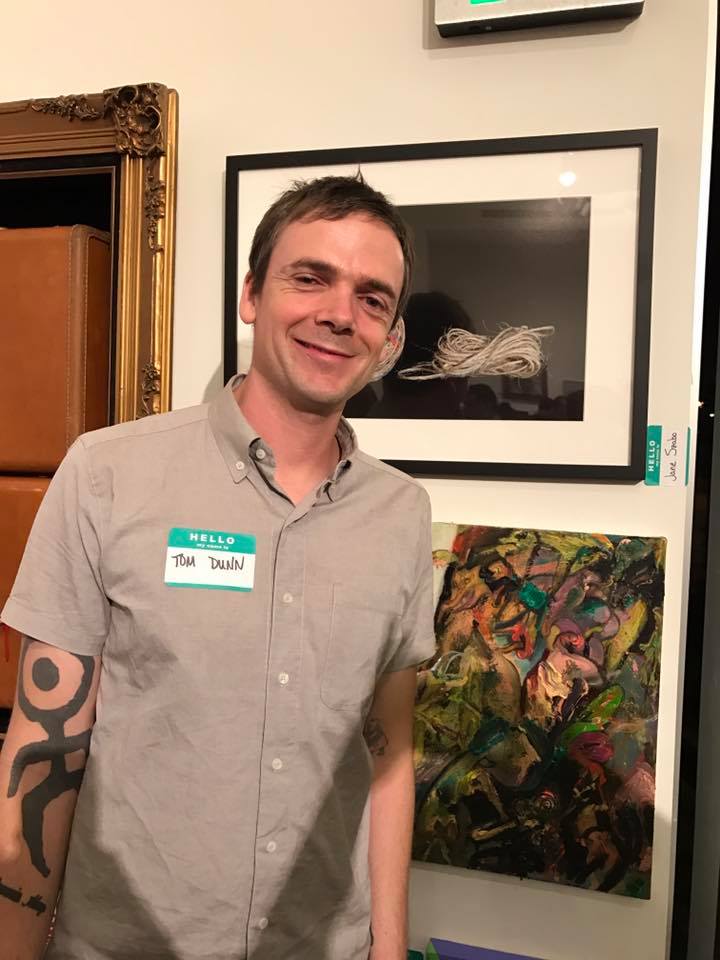
Other pieces that were standouts in the show include Mike M. Mollett’s installation, “Winter in the Poet’s Garden II,” a forest of sticks and pipes and poetic phrases scattered like leaves below them; three dimensional work by Shelly Heffler;  Steve Fujimoto’s take on commerce, “The Task,” and Ellen Riingen’s abstract brown on brown planes in “Redondo Beach Strolling.” Photographic artists Jane Szabo and Janet Milhomme each created profoundly strong images as well, Milhomme depicting views of architecture looking in, and Szabo depicting two works, including a uniquely individualized dress as the armature of the person unseen inside.

jane

Above, Jane Szabo with curator Nina Zak Laddon.

With over 240 artworks on display, not every artist is mentioned here, of course – but each is well worth experiencing.

Don’t miss the mall art this weekend in Redondo Beach.

  • Genie Davis; photos: Genie Davis and Jane Szabo