Light and Space Infuse the Photographic Art of Alice Esposito

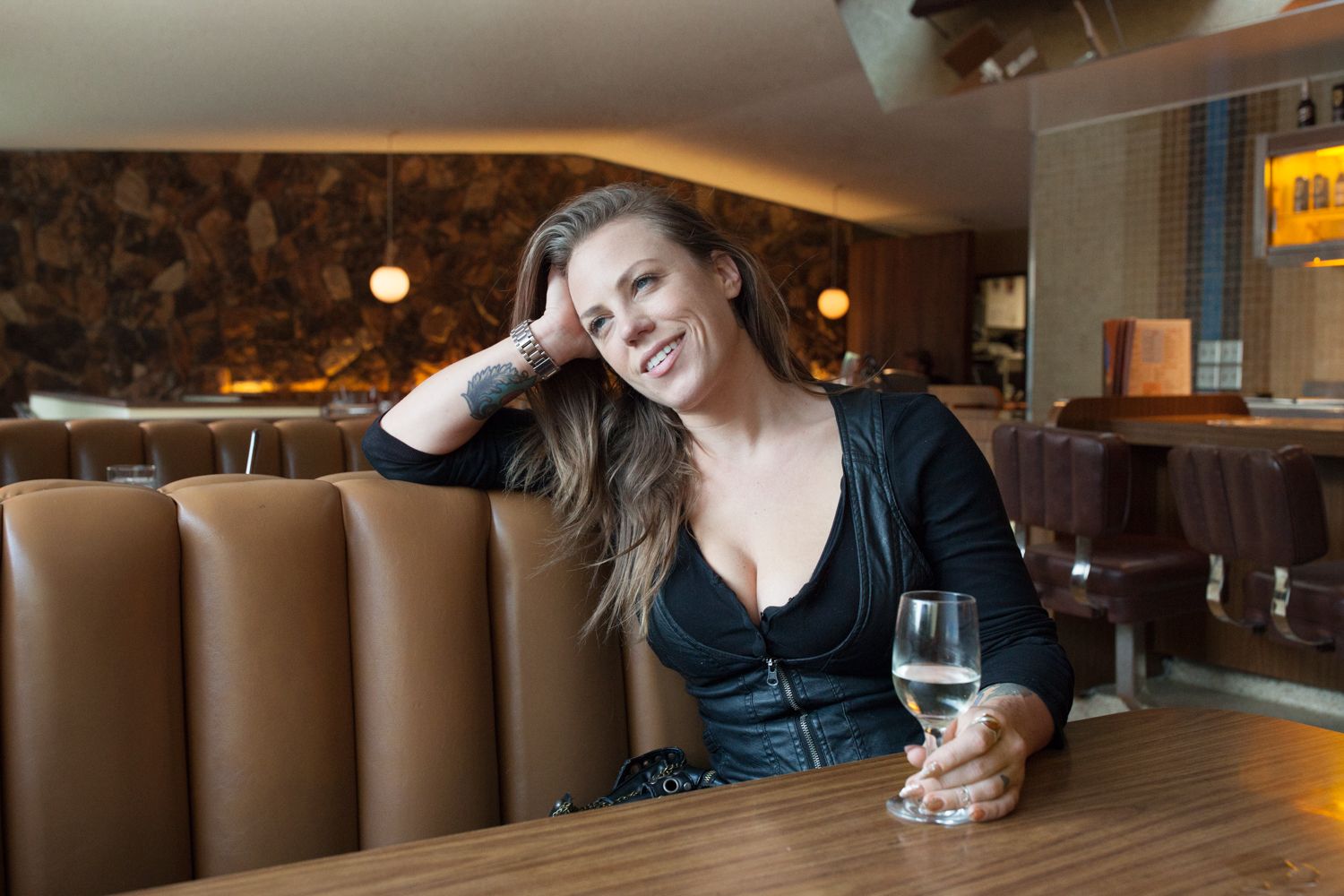
Portrait of the artist by Ashleigh Castro

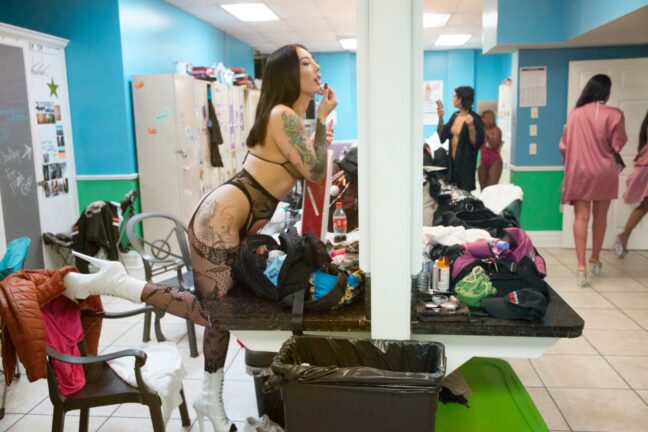
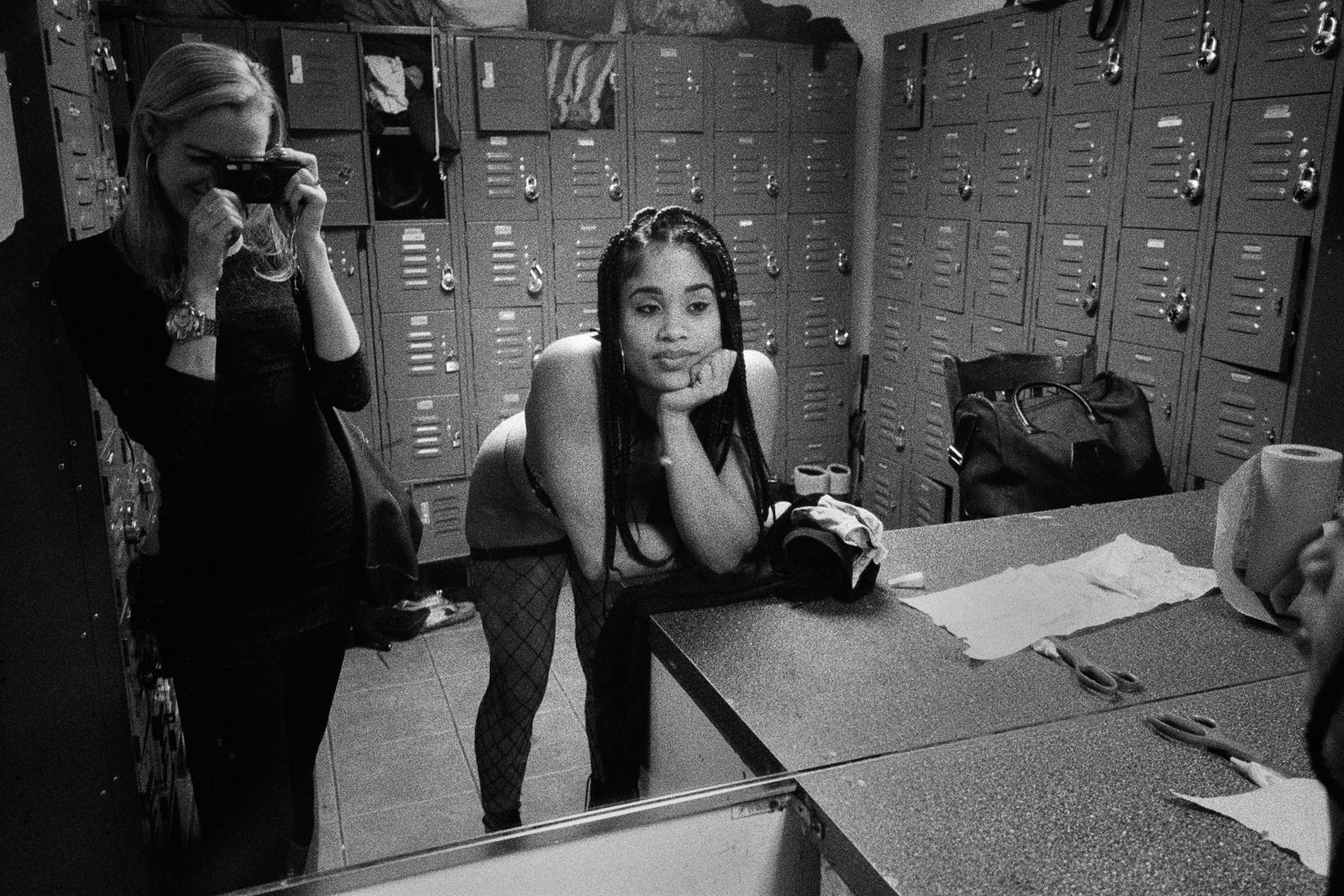
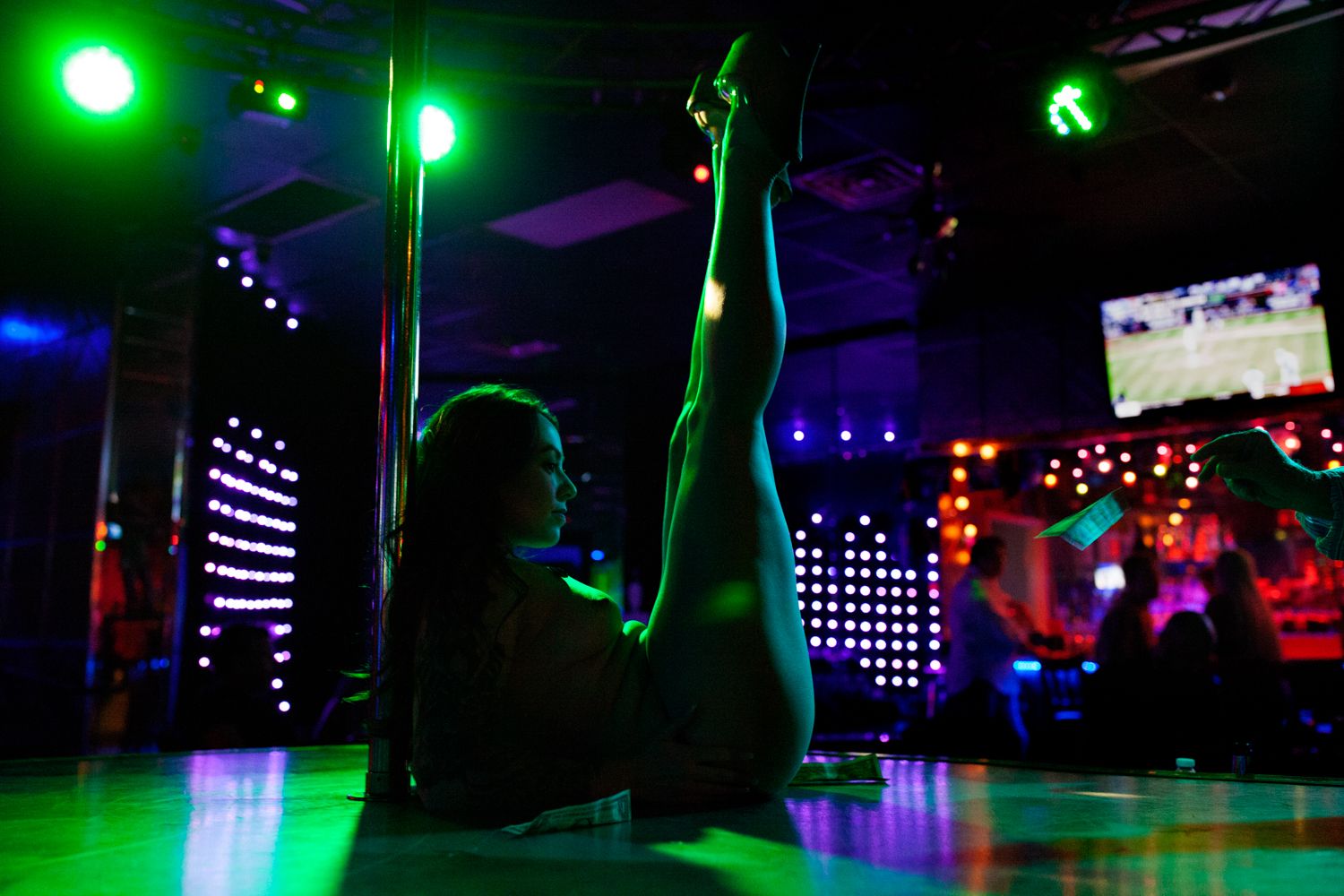
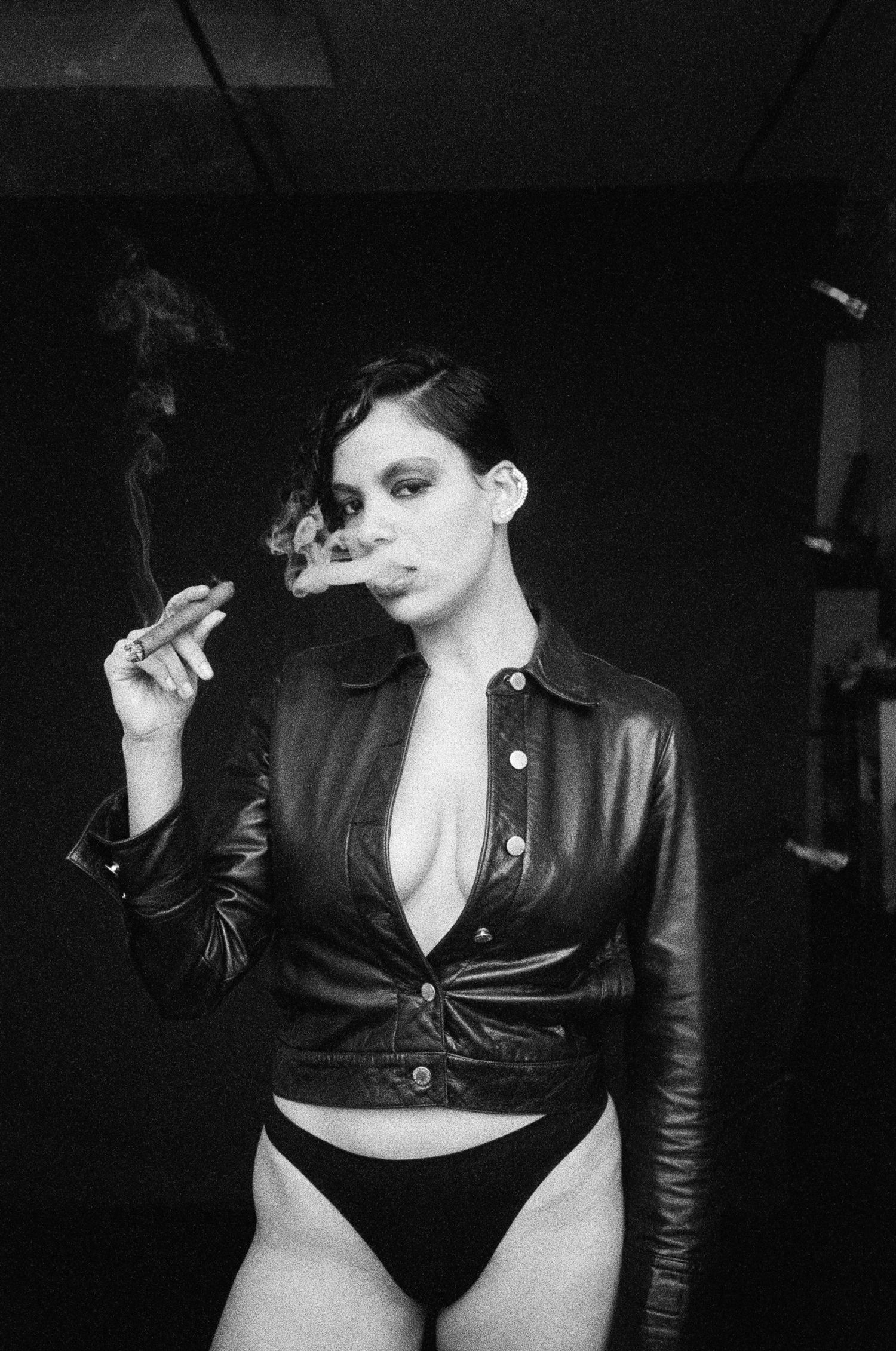
Creating a portrait of people is what inspires photographic artist and filmmaker Alice Esposito but surrounding her subjects with light and space is what informs her work. Calling her subjects her “community,” and explaining her work as a response to and documentation of her life, Esposito’s still images appear visually entwined with her film work.

“I grew up watching, Italian Neorealism, Nouvelle Vague and Film Noir; they all influence my work greatly in  photography and film,” she says. “In my movies I like more of an experimental approach, exploring existential themes. I’m interested in the  change in the psyche and approach of everyday life and  its conditions, from social issues, oppression, injustice,  especially the use of irony as a tool to  explore these themes.”

Both bodies of work are poetic and lyrical and evoke a sense of connection with the viewer. “I rarely photograph people without having a conversation with them, I want to understand the person I’m about to photograph, their mannerisms, their posture, what makes them laugh, cry, and think. I love to see the place where they live, to know what they’re passionate about, what kind of energy surrounds them.”

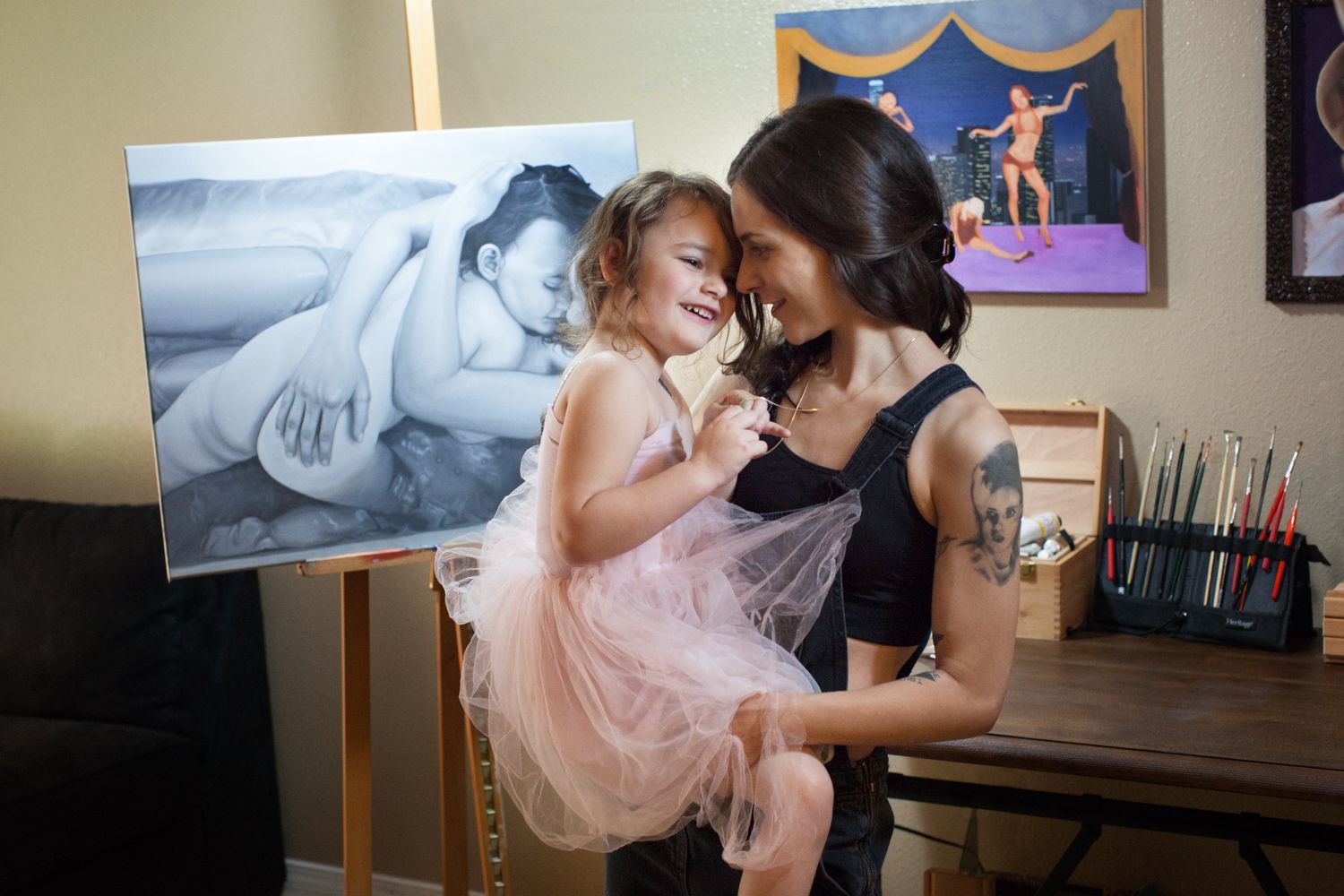
Viewing one’s home as a personal “temple,” she frequently uses this setting in her work, saying this is where her subjects are most comfortable in expressing themselves, and revealing an intimate sense of their spirits.

“When you understand the soul, the essence of a person, it becomes easy to capture their attitude and presence with the camera,” Esposito explains. “Having and using a camera should be seen as an honor, you are put in an extremely privileged position. It’s like having a friend that will never abandon you, and it has a special gift to see things that otherwise you could not.”  She adds “It’s basically like having a superpower, when the shutter goes down inside the camera, you don’t actually see what’s going on, everything can happen in 1/1000 of a second.”

She terms the best photographs “happy accidents…you can set up at the scene perfectly and try to control all  the elements of it, but you need to be ready for things to  go wrong and play with it, you need to have a sense of  contingency, you need to be willing to transform your expectations and reshape your initial idea.” 

That sense of spontaneity, her love of light, and her engagement with her subjects is vividly present in her work, as is her love of storytelling. “I want the full life experience of the person in front of me. Sometimes,” she admits, “I become obsessed with this method, before taking a portrait of a person it takes me days, weeks, to find the perfect moment, or sometimes, it’s after 5 minutes. It depends when I see what I want to capture, then I’m ready to get behind the camera.” 

From a personal standpoint, Esposito admits “I think camera offers me some kind of protection, but it also gives me courage. I don’t only appreciate and love the camera as a tool for my work, but also as an instrument for me to come out of my shell without being too scared, I guess.”

As an admirer of Fellini and Antonioni, Goddard and Truffaut, Diane Arbus and Nan Goldin, both her films and photographs have a quality of dreamy imagination; they are tinged with both a touch of magic and the surreal.

“I want to create a unique and bizarre atmosphere, I love using both natural light and stark artificial lighting effects, to achieve a particular feeling. I often play with double exposure when using film…I want to navigate between the reality at the surface of life and bring a dreamy nostalgia [to it].”

As her process has become more methodical over time, she says today she’s most interested in expressing allusions and subtle meanings, creating a more analytical approach to her work – while still welcome the unpredictable moments, she asserts. Her work itself has been a spiritual evolution, she adds “Photography gave me a freedom to be who I am without being scared or worried.”

That openness of self-expression has not changed due to the pandemic, though certainly her subjects have. “I haven’t had many chances to see people, apart from a window of social distancing. This has been the chance for me to complete or reprise some unfinished work, and in my editing work, I’m spending a lot of time on the computer and I’m building a huge archive, conceptualizing ideas I could apply now to my work now or later, when I’ll be finally free to leave my studio.” 

Esposito recognizes that when she does so, it will be as if emerging into a changed world, altered in terms of many intimate relationships, as well as through pandemic restrictions and changes. Undoubtedly she’ll capture it all through her camera.

  • Genie Davis; photos from Alice Esposito

High Beams 2 Blasts Halloween Light

Hagop Najarian enters the exhibition space at High Beams 2

Held in the Gallery Also parking lot in Lincoln Park, High Beams 2 was an absolutely terrific treat for Halloween night. In a year like this one, an outdoor show with wildly wonderful art and artists in costumes as well as pandemic-safe masks, would’ve been a great experience no matter what art was being shown.

But thankfully, High Beams 2 went far beyond that base line, to present an exciting, visually stimulating, perfect-for-nighttime show that literally and figuratively was a blast of light.

The High Beams concept of collectives that each show an installation of art is planned to continue next year, which is something to look forward to. This was the second iteration of the concept, the first having taken place on a parking garage roof and involving drive-through attendees.

Halloween night featured a curatorial collection of primarily Bendix Building art spaces in a walk-through exhibition.

Some were interactive, such as a wonderful, haunted pirate themed mini-golf course from Gallery Also, and the mesmerizing shifting portal of Sean Noyce’s projected work, “Portal 2,” presented through his gallery with Katya Utvitsky, Noysky Projects.

He describes the piece as “using conventions common to a witches’ magic circle, a gateway to the paternal spirits of my family in Utah.” The work uses a pyramid to harness both “masculine and feminine power, concentrating their energy at the zenith where the four corners meet.” Noyce views the work as “an opportunity to learn from the mistakes and blunders of my ancestors, while cumulatively building on their core strengths and values.” The digital projection, from a purely visual perspective, is stunning, while culturally fascinating in its exploration of homage paid to ancestors who “were imperfect at best and downright repugnant at worst.” 

Noyce viewed the exhibition itself as “a refreshing way to experience the social aspects of an art opening, but without all the safety issues related to a traditional one. We’re all figuring out how to live our lives by maintaining our mental health and other ancillary aspects that are germane to being an artist. It makes you realize how important it all is.” 

ARLA
ARLA

From projected images such as Noyce’s and superb film by Ibuki Kuramochi, to the mixed media sculptures presented by ARLA, to a gorgeous, crystal-like pillar of changing colors and mind-skewing geometric shape, the exhibits each had a somewhat supernatural quality that fit the theme of “The dead tell no tales.”

Museum Adjacent
from Museum Adjacent’s installation

At Musuem Adjacent location, according to Hagop Najarian, “Our concept was to say goodbye to and destroy old things from 2020, so each member from our group made a video of themselves destroying their art work. I made a loop video of all 5 members videos that we palyed all night. The display was a memorial/ graveyard, if you will, of our works.”

Seen below, the wonderful pillar is Ismael de Anda III’s “Lazaro’s Run,a riff on the science-fiction film Logan’s Run, depicting a utopian future society, revealed as a dystopia where everyone who reaches the age of thirty dies.

“To track this, each person is implanted at birth with a ‘life-clock’ crystal in the palm of the hand that changes color as they get older and begins blinking as they approach their ‘Last Day,’” de Anda explains. “’Lazaro’s Run’ is a thirteen-foot-tall mutation of the giant robotic crystal hand sculpture featured in the film… A varied, geometric, negative space ‘crystal’ pattern is featured in the center of the cardboard hand with pulsating LED lights placed inside the sculpture, allowing colored light to emanate as a beacon from the center…”

de Anda with his work

He adds “From the original film’s title, Logan is changed to Lazaro, my grandfather’s name, the Spanish version of Lazarus, a biblical figure that rises from the dead.”

Exhibiting for Durden and Ray along with fellow collective artist Tom Dunn, who offered complex, intense, and involving wall artwork, de Anda calls his inclusion “an honor. It was exciting how all the organizers for the High Beams events are continuously looking for alternative and innovative ways to present art to the public… On this astronomical night of the rare blue full moon, observing safety protocols, I had the rare opportunity during these times to make new friends and feel a reinvigorated solidarity with L.A.’s dynamic and unique artist community.”

Work by Tom Dunn, to the right
de Anda by Tom Dunn’s work

According to Durden and Ray collective curator Alanna Marcelletti, termsthe exhibition exuded “a fun-house-style” creative experience, “It has been such an exciting experience to create a show… with an amazing mix of curators from different artistic backgrounds and curatorial initiatives.”

Carl Baratta, left

Artist and curator Carl Baratta says the motivation for holding the second High Beams exhibition on Halloween night was primarily “fun. We knew the following week would start to get cold, and the elections were gearing up, and like everyone else, we wondered if we were trying to hold an event with ideas of civil war or whatever floating around. The pandemic is hard enough as it is, so, we decided to pick the most fun night we could to keep the momentum going after our successful run with the drive-through exhibition.”

Monte Vista Projects

Baratta notes “We just thought carving out some space to take a break and see unexpected things not on video chat would hopefully energize folks for the week(s) to come with election madness. We also really love throwing these events for our art community and miss the interaction, so we really pushed hard to get things together in time. For me it was really nice to show Ibuki Kuramochi who’s at home taking care of an elderly loved one. She couldn’t make it to the event in person, but it still gave her something to look forward to, and that’s in rare supply these days. We all need something to look forward to that’s positive.” Describing the experience as “great” and one that offered a fresh mix of artists, Baratta says the collectives are looking forward to more alt space High Beams events in March 2021. He says the group will “start hatching new plans for 2021 on Monday.”

Participating art spaces/collectives this time around included:
Acceptable Risk LA, Durden and Ray, Gallery ALSO, Monte Vista Projects, Museum Adjacent, Noysky Projects, TSALA, Wow Project LA, and 515 Gallery, the latter offering a musical presentation.

Featured artists were Ismael de Anda III, Rachel Apthorp, Carl Baratta, Michael Castañeda, Coby Cerna, Carly Chubak, Sean Cully, Tirsa Delate, Tom Dunn, Dominick Garritano, Lesya Godfrey, Linus Gruszewski, Matt Haywood, Ibuki Kuramochi, Kim Marra, Easton Miller, Oliver Mayhall, Lauren Moradi, Hagop Najarian, Sean Noyce, Alaïa Parhizi, Alyssa Rogers, Adrienne Sacks, Katie Shanks, Katya Usvitsky, Josh Vasquez, Cheyann Washington, Surge Witron, Larissa Nickel.

Ismael de Anda III and Tom Dunn
Katya Usvitsky and Sean Noyce
  • Genie Davis; photos, Genie Davis and Ismael de Anda III
Sarah Arnold: Painting a Rapidly Disappearing Past in Perfectly Present Images

Painting the Los Angeles neighborhoods of times past – specifically the 1920s and 1930s – artist Sarah Arnold creates lush, layered images that are as contemporary as their subject is historic.

The expression “to live in the present” is echoed in each of her works. She creates a vivid present-moment image of a rapidly changing landscape, one in which the architecture is historic, or perhaps already from the past. Just as shadows shift throughout the day, so does the look of the city, and she captures her own perception in the immediate.

Her thick, feathered brush strokes and rich textures form a mosaic-like detail; as layered as a collage, a tactile as if they were woven from fabric. Her lovely palette intimately reveals both light and color. Each landscape is depicted in an intensely measured, almost musical composition, as if each painted stroke were a rhythmic note played in a perfect tempo. She captures and preserves images of landmark structures with a graceful, flowing style, and infuses them with an inward glow, as if capturing them in a clear amber, in a resin that’s dipped in sunlight and shadow.

Each image appears as a moment frozen in time. That is not to say her images are either rigid or lost. Rather, the scenes are preserved – as befits an artist who also describes herself as an “avid architectural preservationist.” She describes the neighborhoods she captures as having diverse home styles and mature landscaping of lawns, gardens, and trees.

The eclectic nature of the communities she depicts include a sea of constant change – classic structures replaced by modern, and in danger of being eliminated by the drift of time and the urgency of construction.

Arnold says that she looks for neighborhoods teetering on the edge of irrevocable change, preserving through her art a singular moment in a community’s physical look, and its gestation of light and dark, tradition and change. Her work is not specifically representative of one home, one block, one roof; rather, she shapes a complex world, a special place that elevates a single moment in time, a single emotional moment – the Zen of home, a cocoon of comfort and a destination of the spirit. She depicts a rootedness that is too often pulled up, torn down, and obliterated in the ceaseless flow of urban life and popular landscapes. Each landscape is entirely different, though evoked in the same almost-dreamy style.

Her style is somewhat abstract, with a grounding in realism. We see the trees, buildings, flowers, sky but in an abstract/contemporary impressionist way. We get a sense of the neighborhood she’s revealing, whether through a unique tree or terrain, an architectural style or a quality to the rooftops catching the light of the sun.

With her painting “Wilmore City Jacarandas,” the darkest purples convey shadow and early morning light, they are lush and almost wild, a cascade of color and vibrating, lingering darkness.

The subject may be jacarandas again – her purple palettes are among the most compelling – but it is an entirely different view in the more muted late afternoon of “Purple Building with Jacaranda.”

Her view from “Kenneth Hahn Park” is all blues and greens in the foreground, intensely vivid; the long view of mid-Wilshire and Los Angeles is lost in a hazy blue grey, the nature both dominant and restricted.

“Terrace Park” gives us a long panoramic horizontal view of a street of houses and their trees, a larger blue building at the far right of the work, casting a shadow of dominance and change to come.

“Wilshire Vista,” is more urban, multiple-unit structures in groupings of quintessentially-LA architectural Spanish and deco styles and paler colors punctuated by a few in brick-red.

Using a plein-air technique, Arnold’s work, while perfect balanced, also conveys a sense of immediacy, an emotional presence impressed upon each scene. Fascinated with these Southern California neighborhoods, her many museum and gallery exhibitions include a lush current solo show at South Los Angeles Contemporary through October 31st.

Arnold’s work is paired at SOLA with that of artists’ Charity Malin, Carmen Mardonez, and Kim Marra who comprise a wonderful group exhibition, Tactility. Arnold’s work deftly conveys similar themes to their beautiful show, those of memory and domesticity, and of creating a sense of place.

The place that Arnold creates is both dreamy and wondrous, poignant and poised to become memory. As an artist, she creates memories for the viewer that link emotion to place, and texture to landscape.

The gallery is open Thursday through Saturday, 11 a.m. to 4 p.m., COVID-19 mask requirements are necessary; appointments are not, although can be requested for additional viewing times. SOLA is located at 3718 W. Slauson Avenue in South L.A.

  • Genie Davis; photos provided by artist

Pam Douglas – Sanctuary Part Two Offers Exceptional Images of Escape and Memorial

Pam Douglas has created an enormous – literally and figuratively – installation artwork in her Sanctuary series. The series is in three parts, with the second on view at TAG Gallery by appointment now through October 31st. It is filled with grace and power, as the artist uses sculptural and drawn images to create works that are visceral and resonant.

Creating a vital conversation about America’s ongoing humanitarian crises during pandemic times is difficult at best, and yet she has more than succeeded. Depicting both seeking, finding, and not finding sanctuary is the subject of the mixed-media series, which offers a look at those who seek by land, sea, and refugee tents. 

In all three sections, viewers find themselves in an immersive and textural environment that seethes with the fury at the dehumanization of people seeking refuge. There is a cruelty that undercuts so much of this world, and Douglas does not shy away from revealing it in her limited but lovely palette, cerating images that appear bronzed by the elements. 

Part One took viewers into a world of life-size drawings with sculptural elements that were displayed from floor to ceiling behind a chain link fence. Walking figures sought refuge; children were caged behind ropes.

In her current Part Two, above, Douglas has created hand-made rafts built on “logs” shaped from burlap fabric and roped around foam rolls. Some she had covered  with bark. The extreme tactility of these works engages the viewers’ senses as well as their eyes and hearts.

Douglas has also utilized sails made from the same canvas she works with in the other iterations of the series. Some of the rafts are even larger than the images she exhibited in part one, and rise 4 to 5 feet in height. They spread from a 36-foot abstract mural which also contains scraps of clothing and a clothes hanger. They echo the devastation the refugees are escaping from, making use of found objects such as rusty metal wires, discarded shoes, wood, rope and more.

The work is nothing short of dramatic, and Douglas herself describes her refugee rafts as seemingly escaping from that mural, which depicts a devastated land. The artist says she began the project last year as a response to refugees seeking asylum both on the U.S. Border and worldwide. “In 2020, the series grew into a metaphor for all of us adrift in the winds of change,” she relates. 

For Douglas, as for many cultures, the raft itself has potent symbolic meaning. “The Buddha compared his teachings to a raft that helps us cross over to the other shore – the shore of peace, freedom, and well-being. Of course, rafts were entirely real for refugees from Cuba in the 20th century, and recently they’ve been a grim memorial for families trying to navigate the Mediterranean Sea fleeing climate disasters and wars.”

Shaped from simulated logs and tree bark, Douglas has created 12 rough crafts for Sanctuary Part Two, some afloat, some capsized, each 4 to 5-feet high. They fly canvas sails, with images of the raft passengers drawn in charcoal with great sensitivity and loving detail.

“Remnants of daily life such as a clothes hanger in ‘Grandma Tried to Dry Our Clothes’ (above) make these lives immediate,” Douglas attests. “In ‘Almost There’ a mother cradles her sleeping baby’s foot. In ‘Prayer for Safe Passage,’ a lone girl draped in a coffee bean bag conveys hope.”

Douglas powerfully weaves ordinary aspects of life with courageous ones through the people with which she has populated her rafts.  

As with Sanctuary One, Part Two features her limited palette of charcoal and chalk on natural linen and tan burlap taken from coffee bean bags. Both muted and magical, the palette itself allows viewers to focus on “the struggle and the beauty of the faces.” Much like a newspaper image, the visuals seem to be drawn from daily photographs of the relentless struggle of immigrants, although Douglas notes that none of these figures are actually taken from newspapers. 

“I hope viewers comprehend the scale of Part Two that ranges from small details – like a mother’s hand clasping a baby’s foot, tiny praying hands atop a flagpole and baby’s shoes left on an abandoned raft – to a 36-foot painting, and includes intricate construction of rafts in plywood, bark, burlap, rope, twine and other materials. Compared to the wall-hung figures drawn on canvas in Part One, the rafts are a significant progression,” Douglas states.

It’s important to Douglas that viewers note the evolving conceptual advances in the series as well as the materials used and her own artwork. “Integrating drawing with physical artifacts in 3-dimensional space has been one of the challenges in Part Two,” she reports. “Looking at ‘Prayer for Safe Passage,’ for example, how does a drawn figure ‘kneel’ on a raft? How do her hands of clay emerge from the drawn body seamlessly? Where is the line between artifact and reality? This philosophical question grows throughout the series and will culminate in Part Three.

She wants viewers to take special note of the continuing use of found and re-purposed materials similar to the used coffee bean bags she utilized in Part One. “From an environmental perspective, materials that are found in nature or recycled touch the soul of all three parts of the show: nothing and no one is a throw-away,” she asserts.

Following the October installation of Part Two, the entire Sanctuary exhibit including Part Three, Shelter, occupies all 6500 sq. ft. of TAG Gallery. The third installment will take place January 19 to February 13, 2021.

It’s envisioned by Douglas as a culmination of these travels, revealing poignant images of refugees arriving homeless to fabric-draped shelters. Again, she will  create her figures drawn in charcoal in the same styles as in Part One and Part Two, but adding an additional element of pottery to her mixed media work.

“I think of Sanctuary as more than another art show. It’s also more than a social justice communication – though it has both of those qualities. I intend it to combine world-building and traditional art to create an encompassing experience for a visitor. I would like audiences to consider it innovative in a way that’s different from the way innovation is often conceived – as mostly technological. This is about the impact.”

It is indeed an impactful show. One cannot help but admire both the people she has created, the lives she has opened for viewers to experience and feel, as well as the skill, strength and passion of the art itself.

Currently, Douglas is involved deeply in creating Sanctuary Part Three. She says she is working on it every day. “Most of the tents and their inhabitants are now complete as is another 36-foot mural, this time a realistic landscape.” She notes that Part Three is around twice the size of Part Two, and similarly will feature free-standing hand-crafted structures that extend onto the gallery floor, with the show extending over two rooms, with the second large room serving as a simulated clinic. “That’s where I will be raising funds for Doctors Without Borders, thus completing the outreach into the real world.”

She will explore that idea more when the time comes. For now, the time requires – and I cannot use that word too strongly – viewers to more beyond the pandemic itself, and take in the inspiring, riveting, and richly moving work that is Sanctuary Two at TAG.

“When all three parts are assembled together as planned at TAG Gallery in 2021, the cumulative effect should be as devastating as it is immersive, leading viewers into a vital and multi-faceted experience,” Douglas says.

Sanctuary Part Two will be shown at TAG Gallery October 6 to October 31st by appointment; look for the online video link to come as well. Sanctuary One will run at LAAA October 30 through December 4th.

If you missed the virtual walk-through of Sanctuary Two earlier in October, look for LA Art Documents video available on YouTube towards the end of the month.

  • Genie Davis; photos: Pam Douglas, TAG Gallery, Shoebox PR