Large and Delightful – Robert Therrien at The Broad

Large and Delightful – Robert Therrien at The Broad – Genie Davis

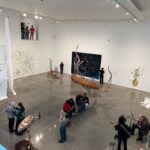
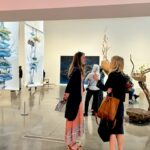
The encompassing and frankly enchanting exhibition of Robert Therrien’s work, This is a Story, is now at The Broad through April 5th. It’s a lot of fun and its playfully revelatory, the largest museum presentation of the late artist’s work to date, featuring more than 120 pieces spanning five decades of of creative evolution.

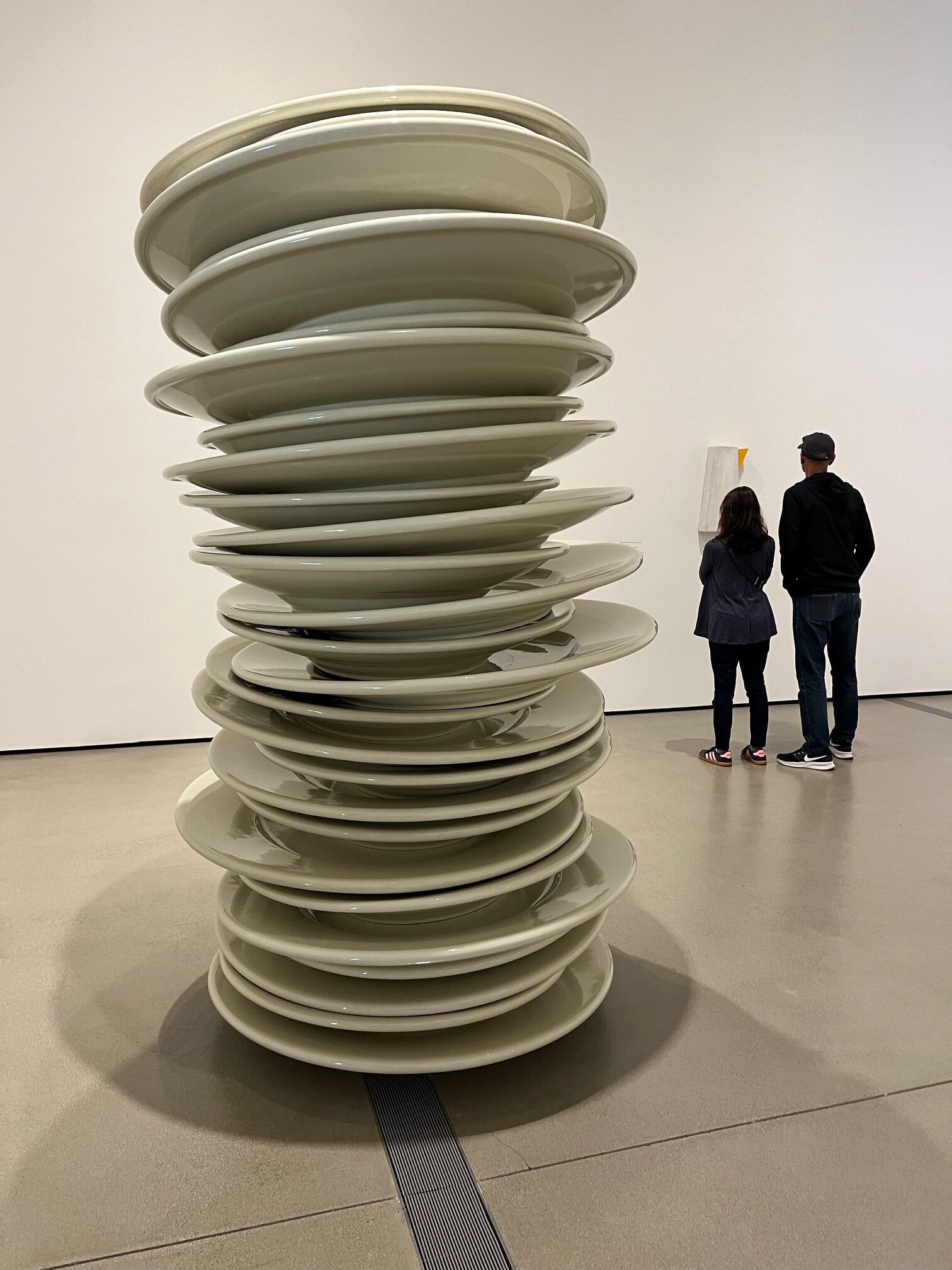
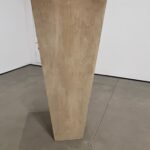
It’s an immersive and tranformative exhibition: start by walking in and circling Therrien’s towering sculpture of white ceramic plates, which seem to reolve with you. Each piece seems to take a surreal delight in reshaping the viewer’s approach to the world, inviting us to reconceive how we feel about the every day objects that inhabit our lives.

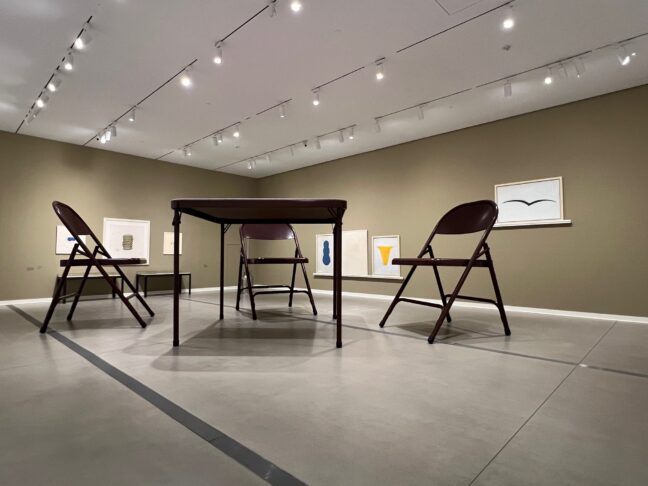
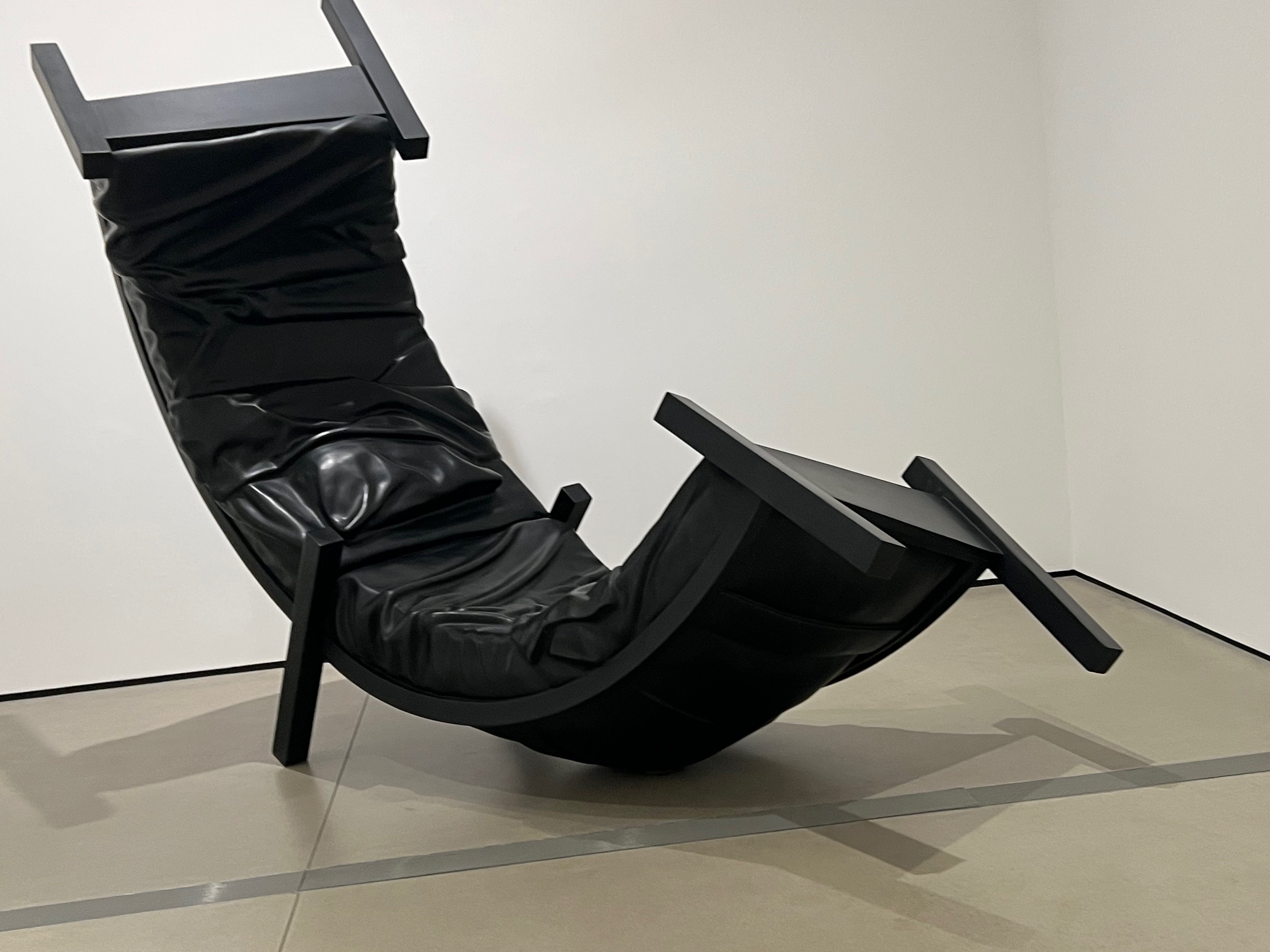
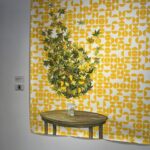
Among the oversized and reconceptioned subjects are the artist’s magically mammoth “No title (folding table and chairs, dark brown),” which may make viewers feel as if they dropped in from the set of Honey I Shrunk the Kids.  

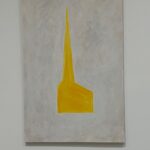
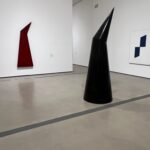
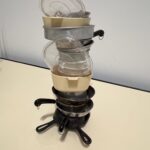
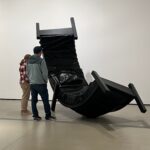
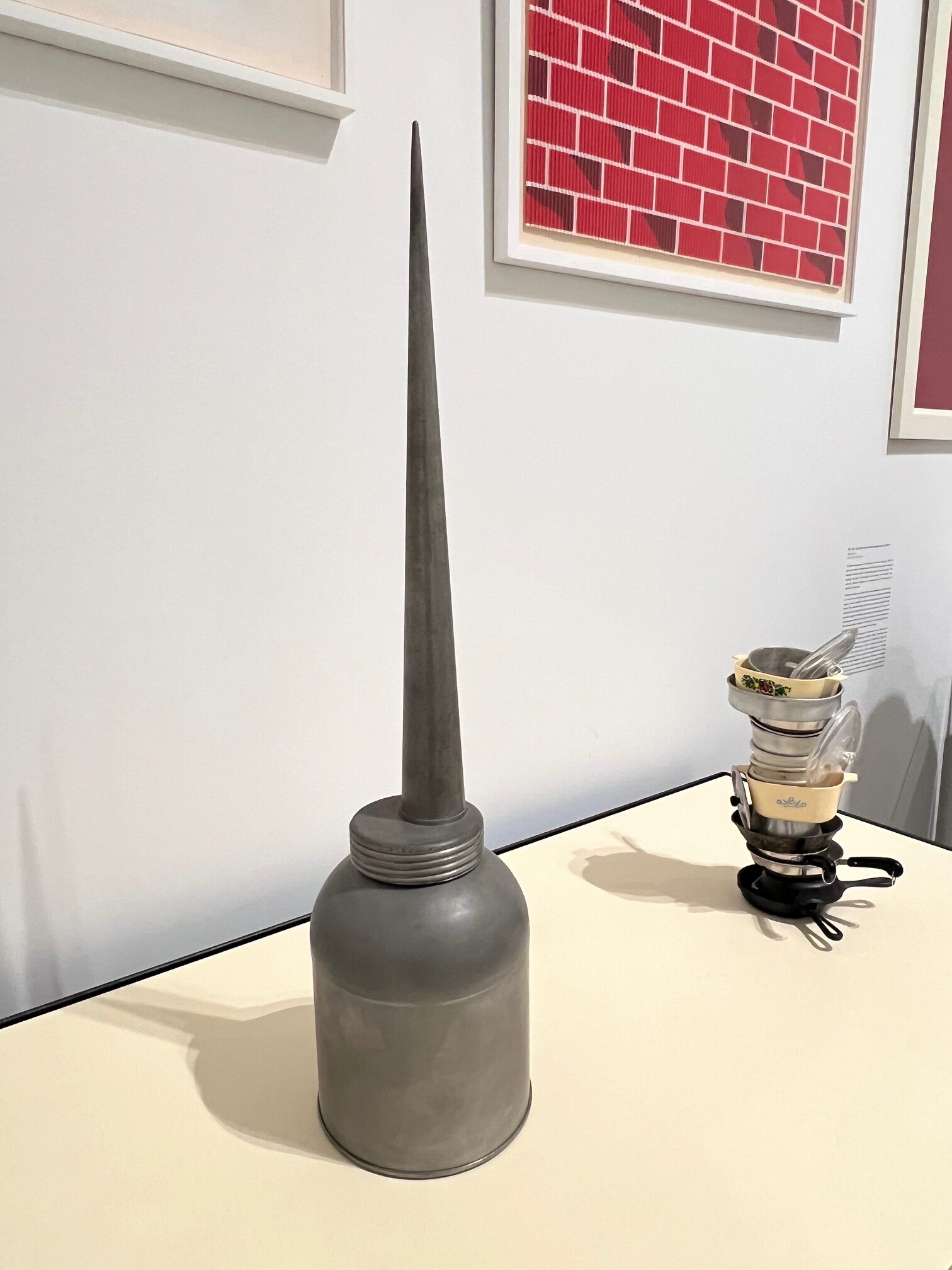
There is the whimsically twisted “No title (black beds)” a sinuous twist of plastic and enamel; a steel and enamel series of shadows and phone cords, a sculpture of looped wire, an oil can and a steeple with similar slender points and peaks. Work is untitled as the artist is more concerned with connecting themes and common objects writ into meticulously towering poetic forms.

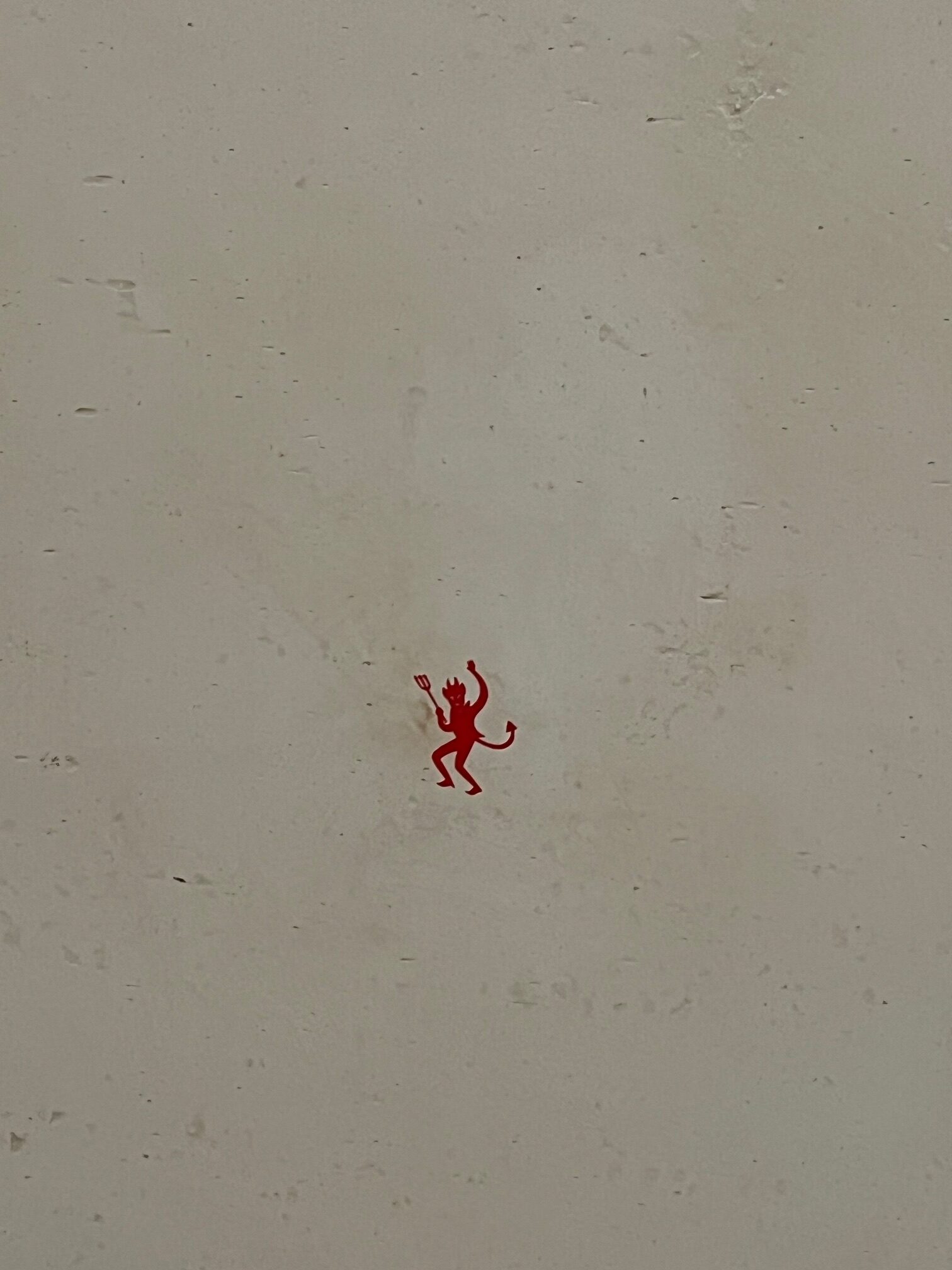
Can work be both surreal and comforting? Therrien appears to have it both ways, never more evident than with his recurring theme of the Underwood deviled ham logo of a red devil and pitchfork, found on large paper works, silkscreens with random tiny devils, and on a massive panel of red dots that the artist is said to have envisioned after using his own asthma inhaler.

Working in his own massive studio space in Los Angeles, the artist retooled his childhood memories and sensations to create them writ large in both form and imagination.

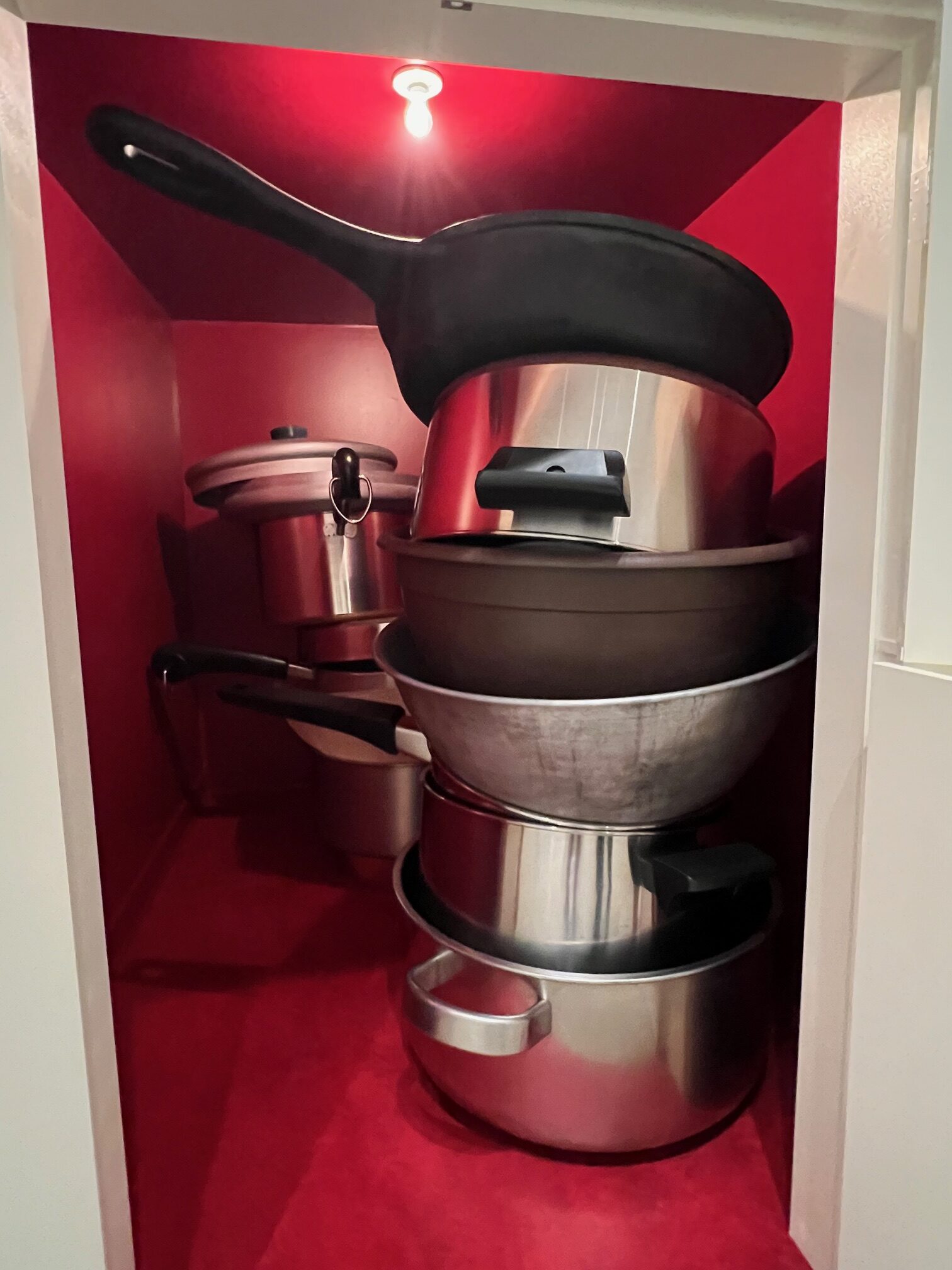
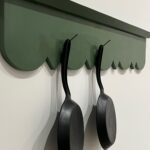
His “Untitled (room, pots and pans I),” spills cooking items from a mammoth pantry with a dutch door,  while his “Red Room” offers a mixed media work featuring 888 red objects stuffed into a space the size of a closet. More open, and allowing viewers to intimately explore this “set” is Not title (room panic doors) which resembles a space in an institution – hospital, jail perhaps, with bare walls and an unattractive florescent light.

In some ways, Therrien’s work resembles being perpetually on a movie set or having stepped down into Alice in Wonderland’s rabbit hole.

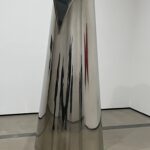
There are snowmen and chapels, dishes and doorways, reflective pitchers as sleek as they are the overpowering, all the enormity of domestic objects in an oversized childhood imagination reenvisioned as art. The Broad’s encompassing show allows viewers to feel a sense of wonder in the everyday, to dance through a wild world of memory as vast as its scale.

It invites viewers to essentially reconsider how even ordinary objects can shape our inner lives, or perhaps more to the point, how our inner lives can reshape the everyday into something quite wonderful. Referencing both memory and personal history, Therrien’s work is tactile, energetic, and conceptually elegant.

And as to the exhibition itself, it is, pun intended, a monumental show, both accessible and thoughtful, enlightening viewers on the artist’s history, and providing outsized delights. Go enjoy.

  • Genie Davis; photos by Genie Davis 

Echoes of Gen X Resonate

Echoes of Gen X Resonate – Genie Davis

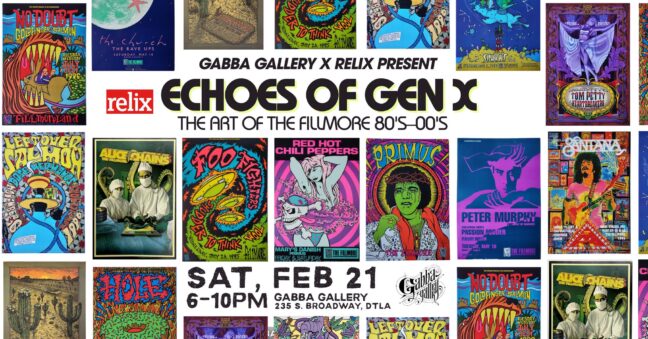
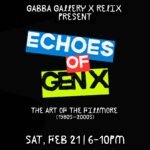
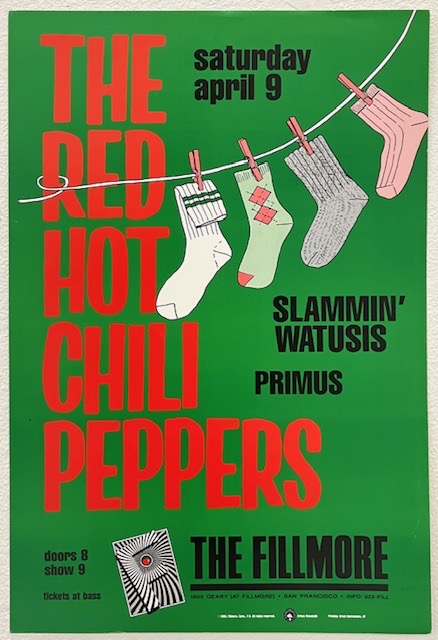
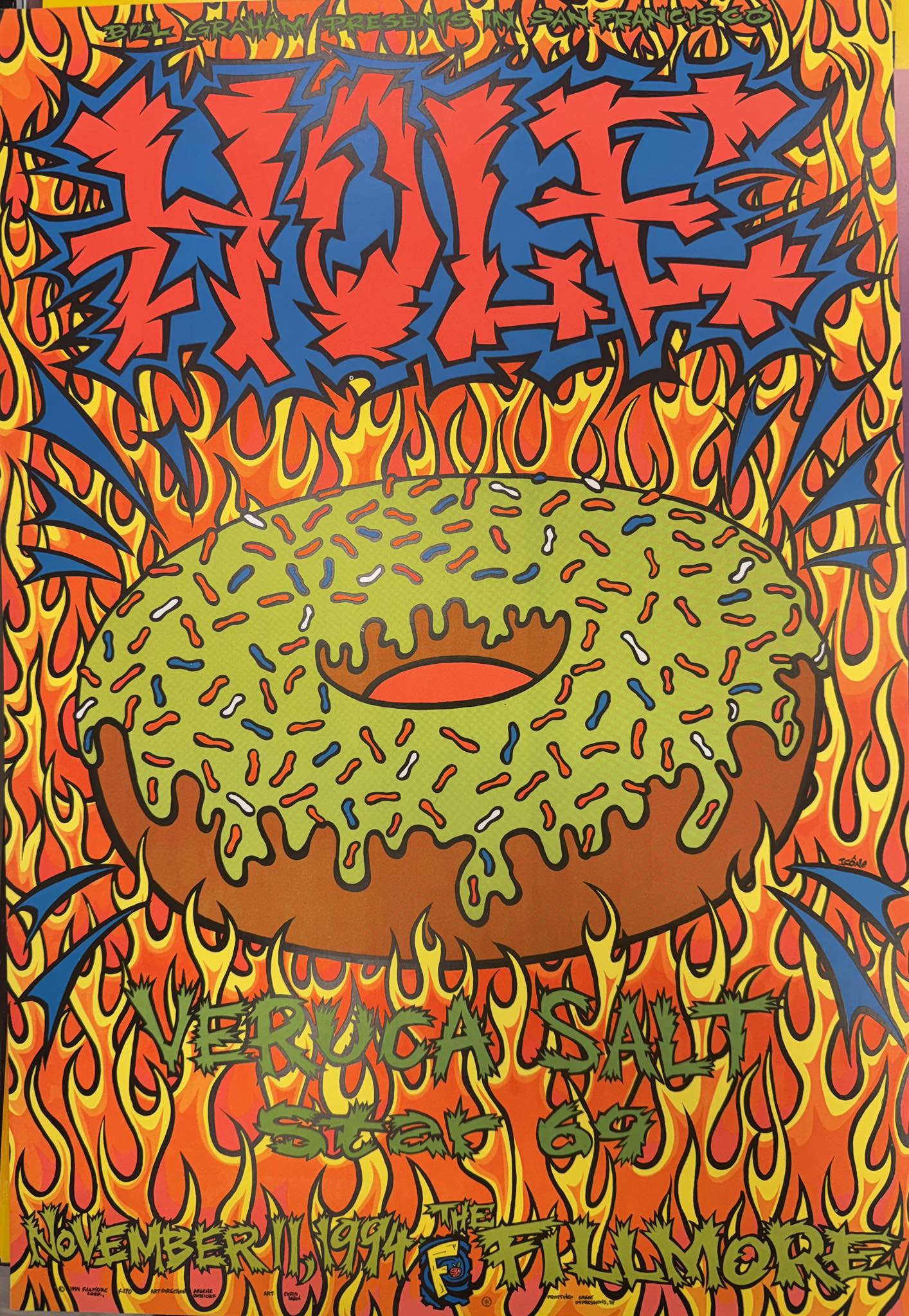
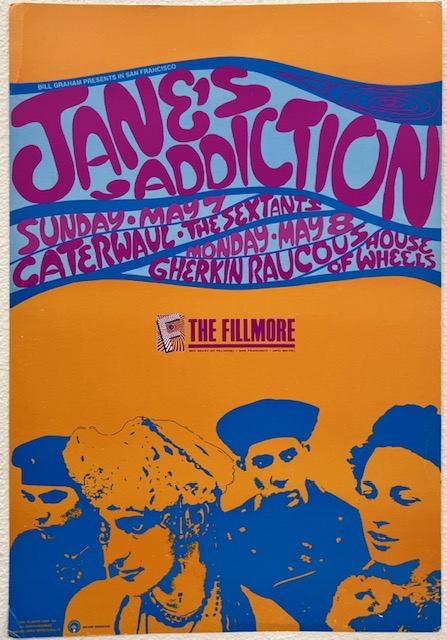
There’s a treat ahead for both music and art lovers at Gabba Gallery in DTLA. Opening February 21st, the gallery presents Echoes of Gen X: the Art of the Filmore. 

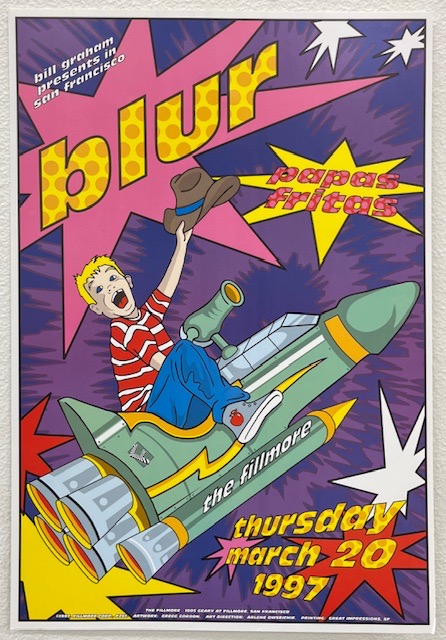
Gallerist Jason Ostro says the exhibition was inspired by “A love of music and art and meeting the right person [along] with an incredible historic collection of the dead stock to the Fillmore. There will be over 700 concert prints along with a historic representation of how gig prints began with Bill Graham and his music scene, which grew and grew but always had art associated.”

Ostro notes that the “right person” he met is Dana Marver, the original collector of all this material who has decided to share and sell his astonishing collection. Marver was a rock and roll producer and musician who found “great happiness within himself in creating this collection.”

There are over 1,000 concerts in this vast collection, with dates ranging from the 80s to the 2000s. Bands include acts from Tom Petty to Santana, Blues Traveler, Green Day,  Weezer, and Red Hot Chili Peppers among many others.  As to the artists creating these works, they include among them Chuck Sperry, Chris Shaw, Christopher Peterson, Frank Kozik, Harry, Rossit, Lee Conklin, Randy Tuten, Rex Ray and Todd Slater.

Asked for some of his personal highlights, Ostro calls them too many to list, but adds that among his favorites are classic prints by The Red Hot Chili Peppers, Jamiroquai, Medeski Martinand Wood, “so many Grateful Dead side projects,”  Bob Weir, and STS9 among many bands in all genres, acts that the gallerist attests he’s either seen “or wish I could have seen.”

Gabba is also displaying and selling images of all Bill Graham’s venues online as well as in the brick and mortar gallery. Ostro curated along with Gabba’s Elena Jacobson.

And speaking of the gallery itself, Gabba has always had both a welcoming vibe and cutting edge exhibitions. Ostro explains that the act of creating these shows is fairly seamless. “We create ideas that we love together. We have a very special team at Gabba Gallery and we’re always open to each others ideas. This has kept us fresh and [allows us to be] ever changing to show all forms of art.”

The large and welcoming gallery moved from a smaller space in Fillipinotown to downtown a few years ago, and the new space has allowed Ostro to create “larger and more thought-out productions.”  These include offering occasional Los Angeles community shows working with groups such as Cannibal Flower.

As to the upcoming Echoes of Gen X, he describes the exhibition as a “love letter to the music Gen X truly appreciated in our younger days. The Fillmore is one of those classic venues with so much history that being able to share it in an art show feels like a museum exhibition.”

The encylopediac collection is both impressive and galvanizing, and the enthusiasm with which the gallery is presenting it, and creating specialized exhibition walls to display it exciting. For Ostro, the experience is also deeply moving.

“Just going thru the art has brought up so many emotions,” he says. “One great facet of this show is seeing all the early work done by some of today’s biggest names in gig prints.”

Both poignant and passionately presented, this exhibition both rocks and rolls, making it a don’t-miss.

Echoes of Gen X: the Art of the Filmore opens February 21st at 6 p.m. Gabba Gallery is located at 235 S Broadway in Los Angeles.

  • Genie Davis, photos provided by the gallery

Metaphor for Magic: Stunning Work from Vojislav Radovanovic and Museum-Wide Exceptional Exhibitions at the Museum of Art and History  

Metaphor for Magic: Stunning Work from Vojislav Radovanovic and Museum-Wide Exceptional Exhibitions at the Museum of Art and History  – Genie Davis
The Museum of Art and History’s Metaphor, which runs January 31st through April 19th is a dazzling series of exhibitions featuring solo shows and installations from Nathan Huff, Sharon Kagan, Diane Briones Williams, Frances C. Robateau Jr., Brian Singer, Bachrun LoMele, and Vojislav Radovanovic.

MOAH curator Robert Benitez, Heber Rodriguez, and curatorial assistants Clara Baxter and Jaushua Rombaoa have presented a rich cornucopia of works which each resonate with poignancy and visual poetry.
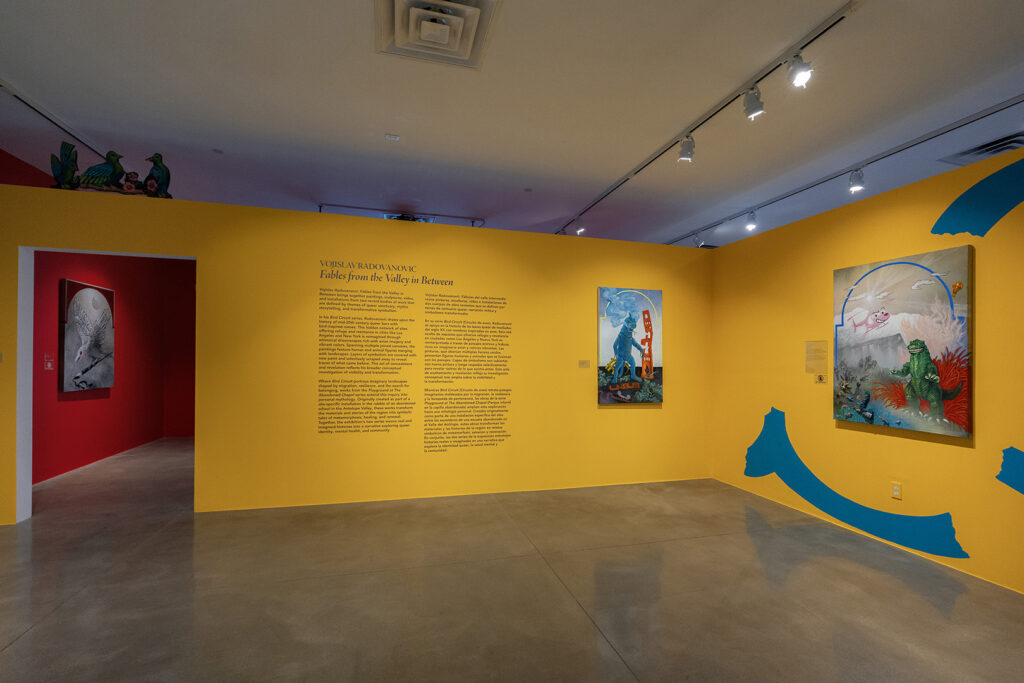
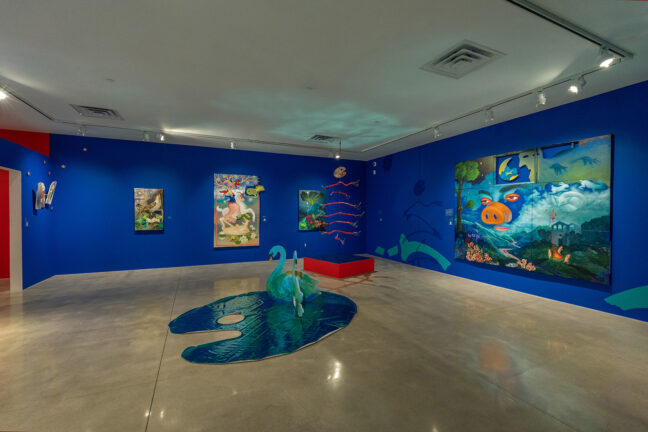
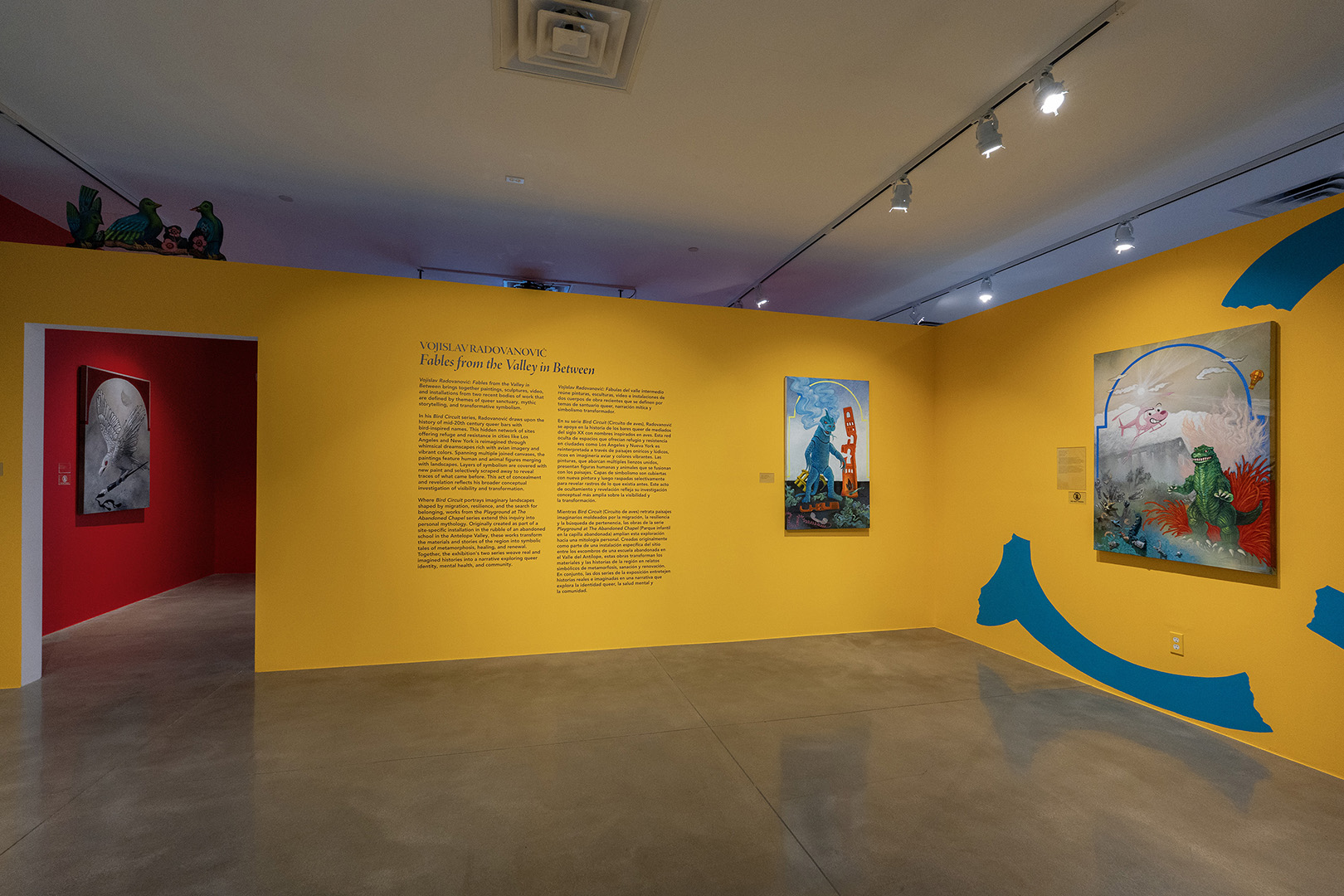
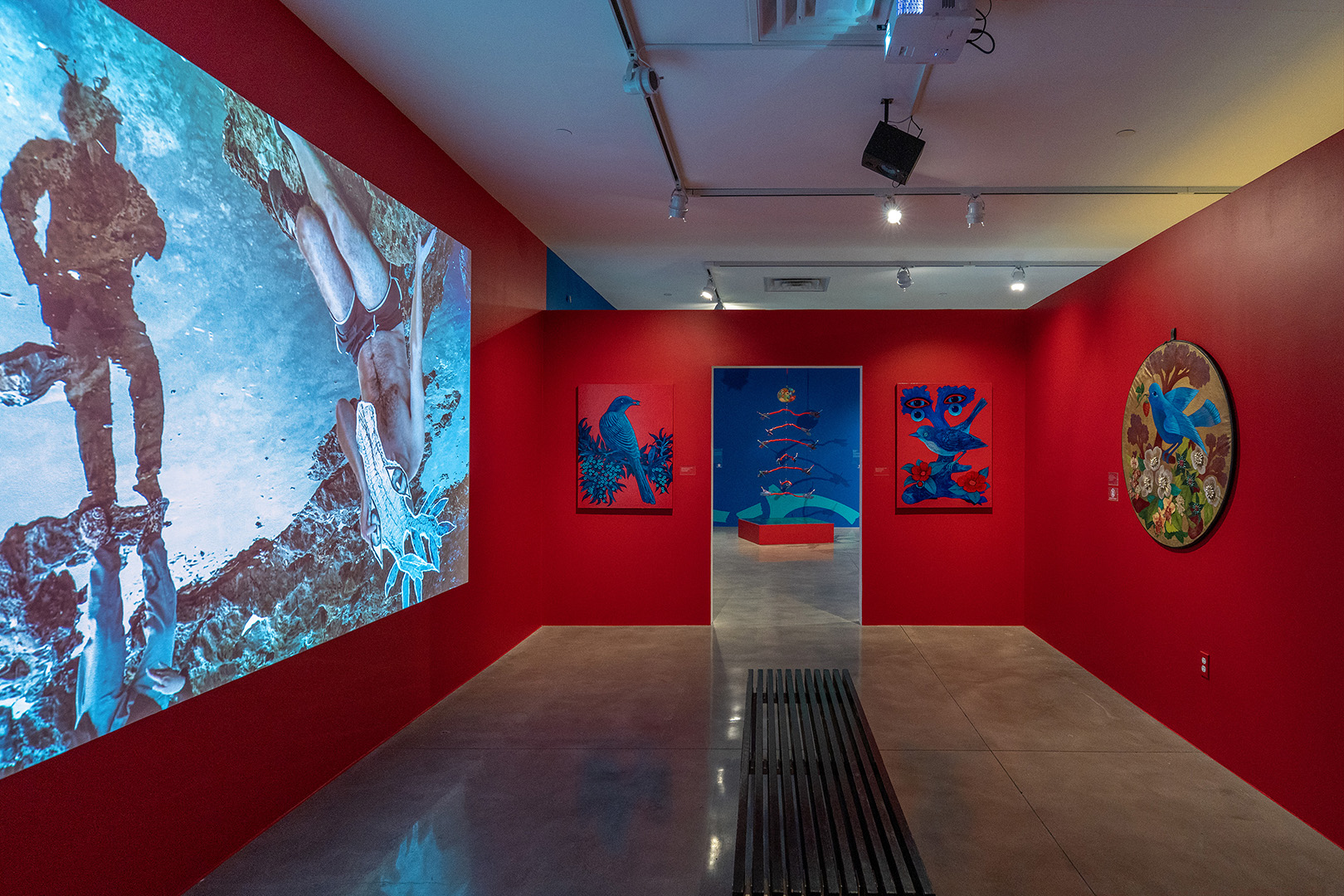
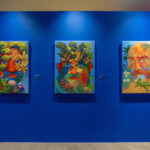
Each show is strong and beautiful, although my focus here is on the work of Vojislav Radovanovic, who always creates mystical, magical worlds in his exhibitions. Here, with gallery walls painted in electric hues that tie in with his work, his Fables from the Valley in Between is especially alchemic. Enriched with an exuberant palette, with intricate bead work and applique, and a sublime attention to detail, the artist entrances the viewer into experiences that are rapturous and transformational.

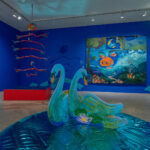
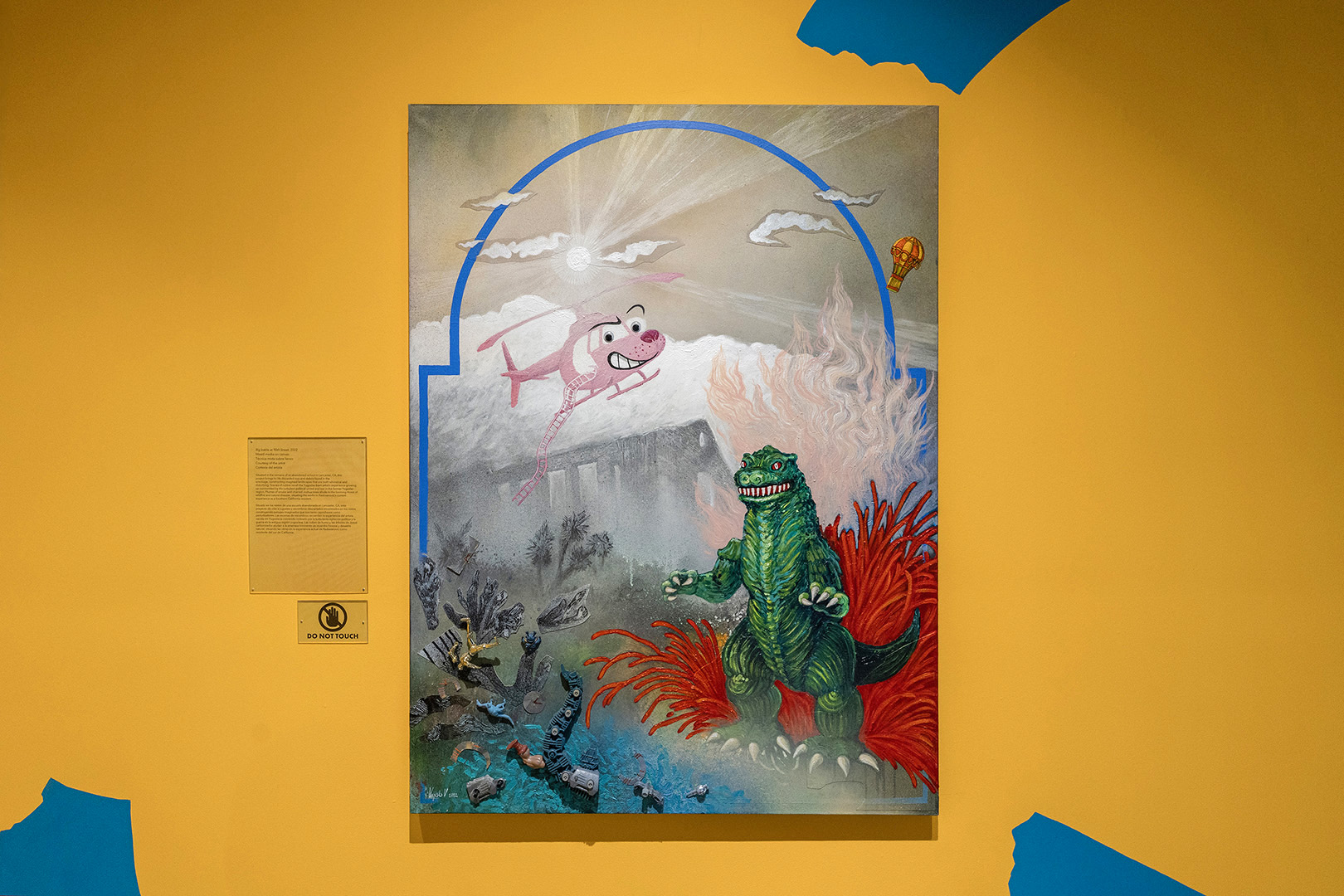
Three-dimensional swans float across a shimmering lake; a sculpted frog and lily pad perch nearby. Paintings of birds are perfectly rendered, representing multiple meanings in serendipitous settings. Childhood play-monsters come to life; a video installation ties together elements of play, nature, pain, and passion amid natural landscapes; fairy tale characters and delightful animal figures inhabit special places in large scale works. These works are dream-like fanciful, fabulous, and deeply moving.
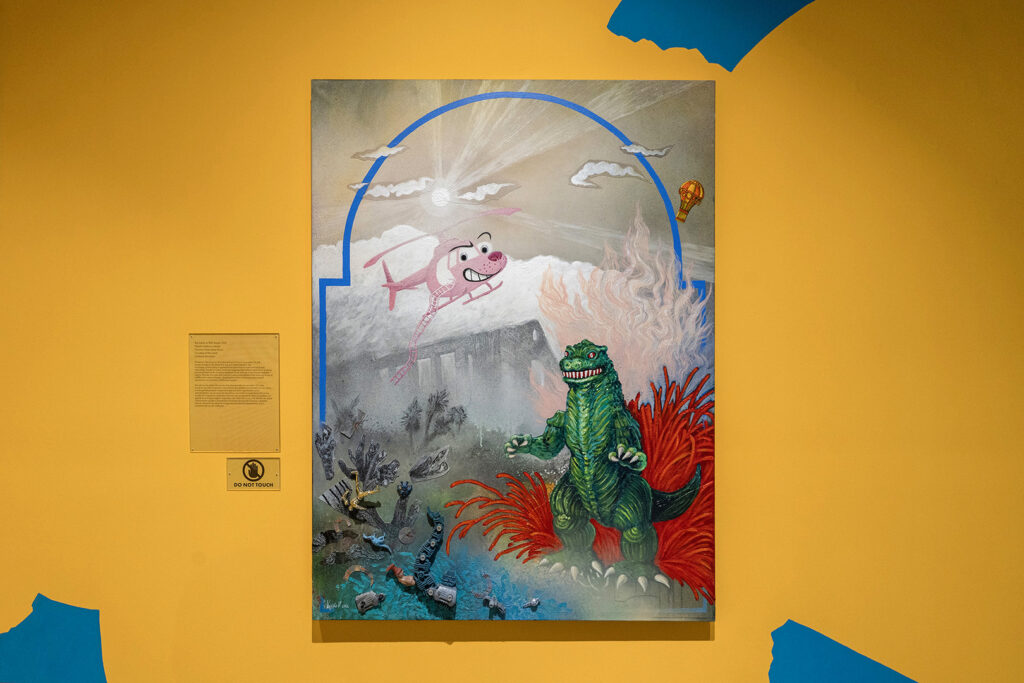
Integrating both human figures and animal life, weaving a tapestry of rich storytelling, Radovanovic creates a galvanizing and lovely exhibition that leads viewers through a land of connected gallery rooms. In the first, the room is populated by paintings of childhood toys and deserted Lancaster-area locales that tie into the artists own experience of turbulent unrest and warfare in eastern Europe.
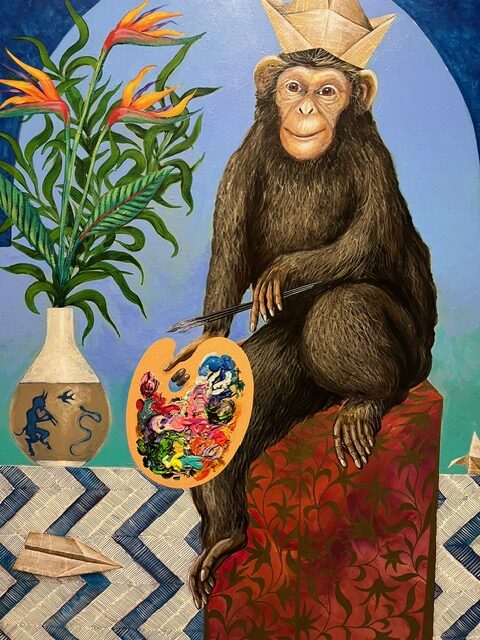
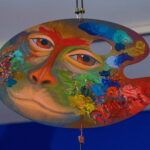
Segueing into other series, “Portrait of a Painter,” gives the viewer a look at an artist as chimpanzee, paint palette in hand, paper jester’s crown on his head. It serves as a transition point from the conjoined images of warfare and play to the freedom and sense of hope in richly nuanced paintings featuring the symbolism of birds.

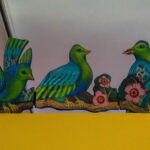
These paintings are a part of the artist’s Bird Circuit series, which refers to a network of mid-20th-century gay bars. The birds themselves are symbols of sanctuary and safety, indicating the location of gathering places for the gay community despite laws discouraging congregation. These images exude a powerful sense of energy, purpose, and resistance. Within the artist’s avian world there are anthropomorphic creatures, playful scenes, loving couples, and sculptural images that both charm and delight. A cut out of three “Small Birds” with beautiful green and lapis lazuli blue plumage stands above a doorway, leading into the next gallery rooms.
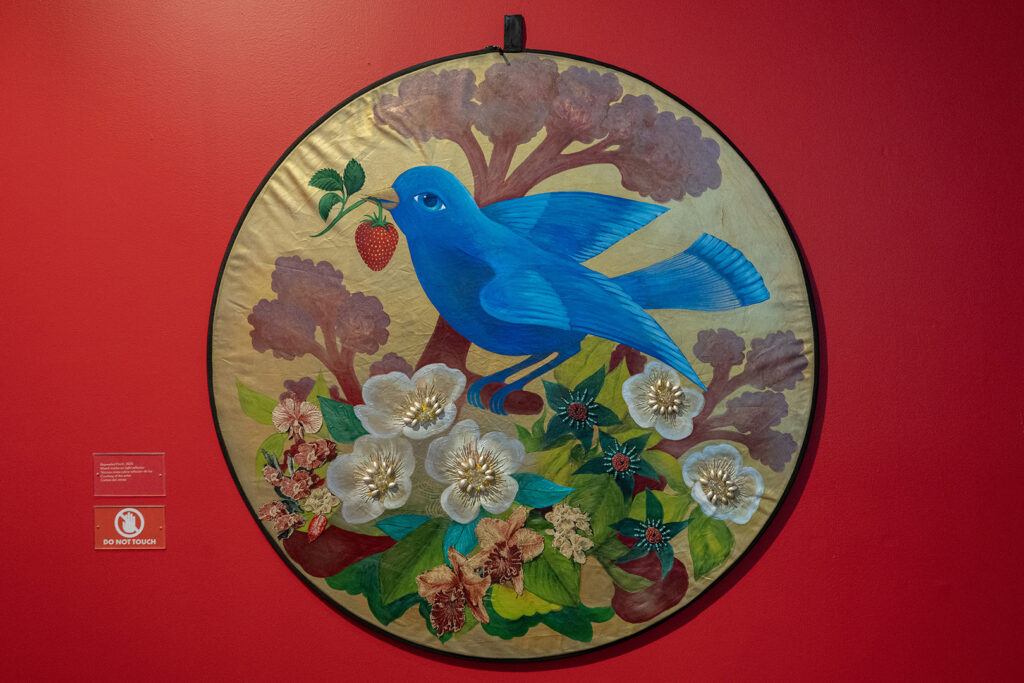
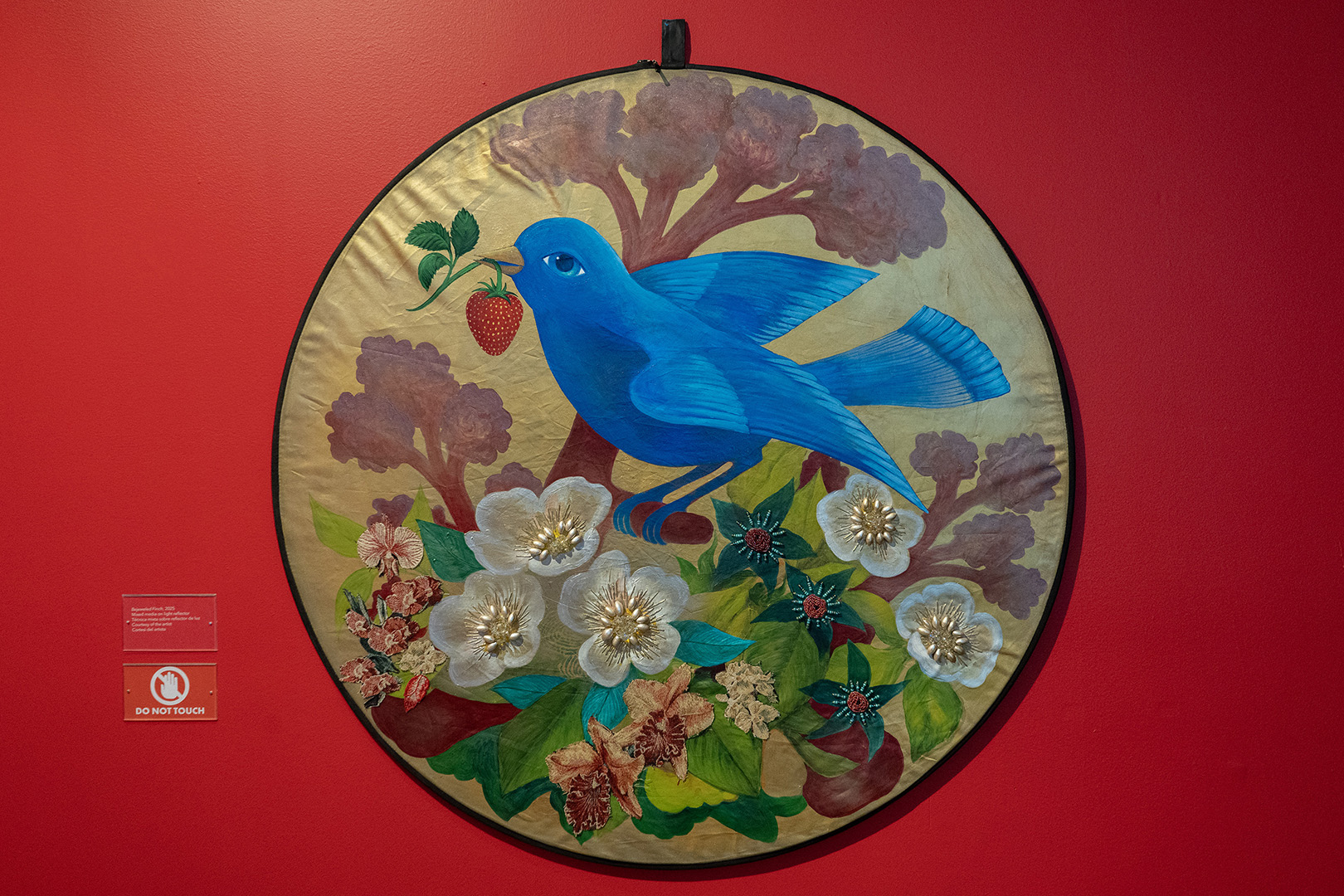
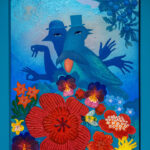
One of the most gorgeous images here is “Bejeweled Finch,” featuring a brilliant blue bird with a strawberry in his beak; lush, jeweled appliques sparkle in floral bursts, and the entire piece is set on a gold light reflector. It recalls both traditional religious icons and shields carried by medieval knights in battle. A very different avian image haunts the imagination in the mixed media “Omen,” featuring a silvery bird clutching a fountain pen between his teeth, ink trailing from its tip.
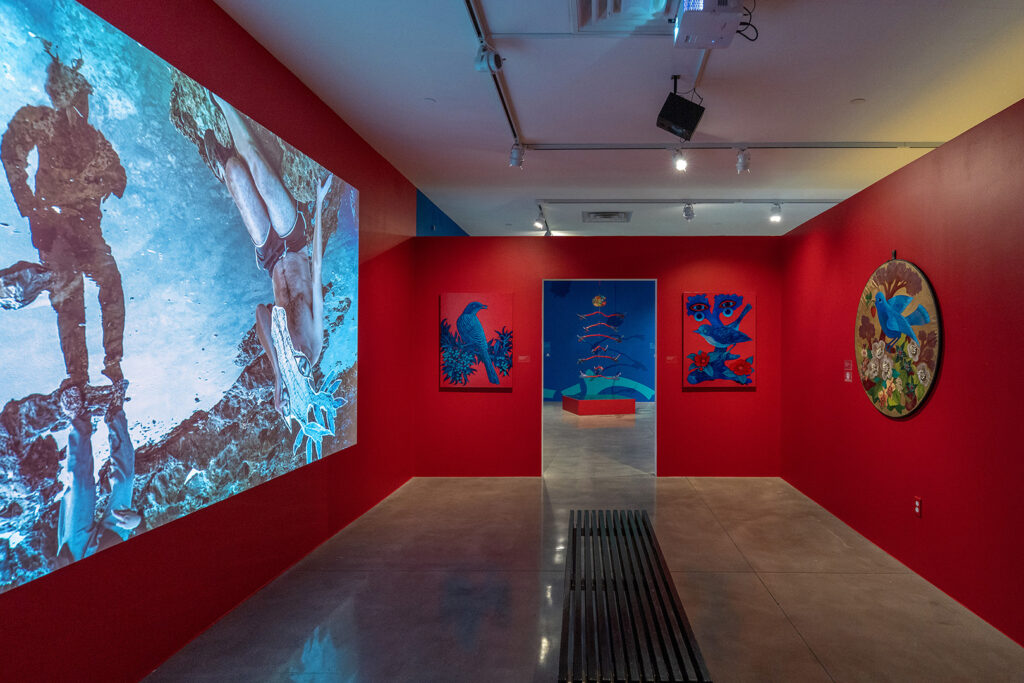
Across the gallery, a large video installation plays titled similarly to the exhibition itself as “The Valley in Between and Other Fables.” A variety of experimental film segments play created through poetic collaboration with the late Robert Patrick Playwright, Jason Jenn, Chuck Hohng, and Joseph Carrillo.

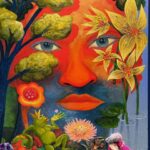
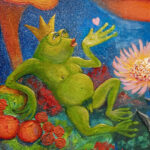
Having moved from childhood toys engaged in news media chaos and warfare to the fraught but free sanctuary of Radovanovic’s Bird Series, the final and largest room of the exhibition, moves into a series of works that speak to fairy tales, fantasy, and pure magic. Here viewers will meet the heavily floral image of a “Frog Prince” whose hair is landscaped into the fecund branches of a brilliant green tree. At the base of the painting, within the flora, an actual frog wearing a small gold crown, blows a kiss.

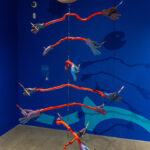
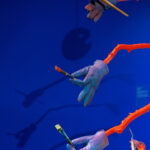
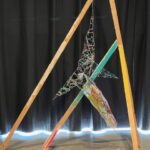
A suspended sculpture, reminiscent of Alexander Calder in shape is described by Radovanović as a “self-portrait.” The multi-armed figure has a head in the shape of a painter’s palette, while multiple arms and hands hold paint brushes. This piece also recalls the many-handed figures of Greek mythology, the Hekatonkheires.
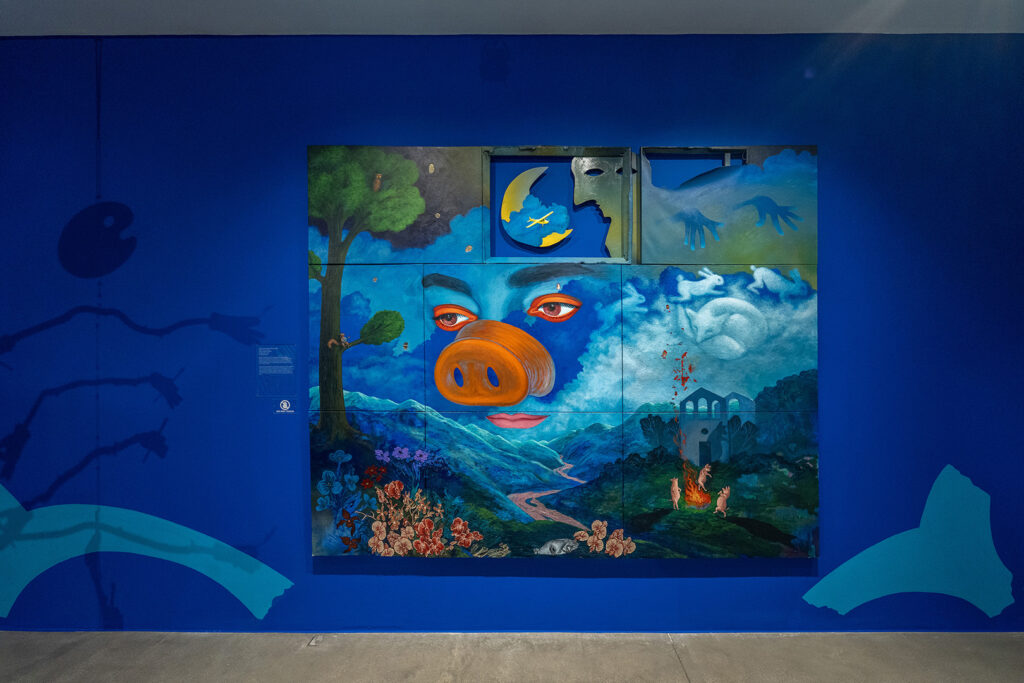
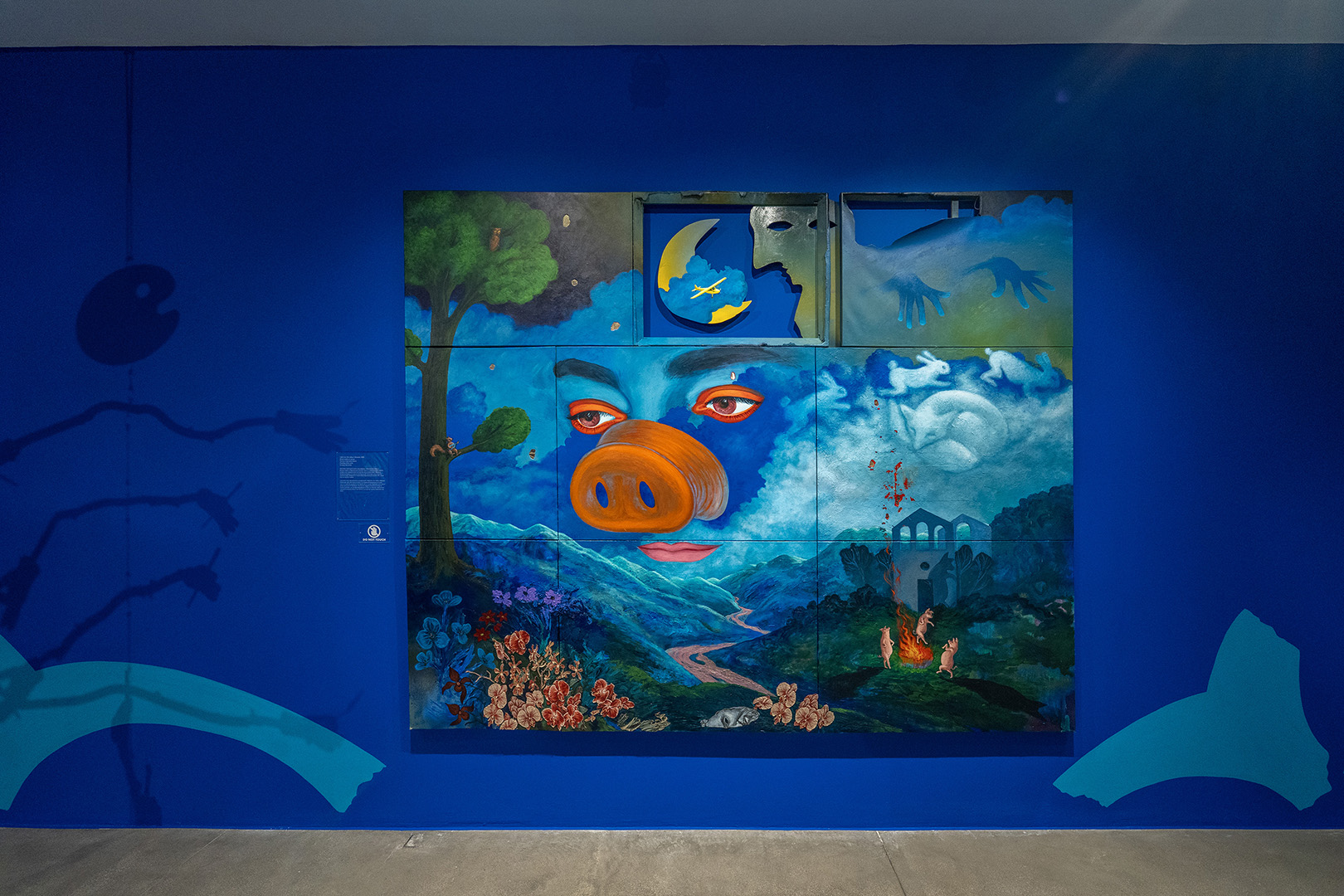
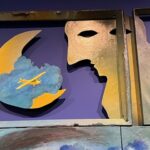
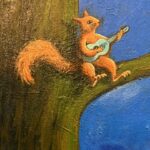
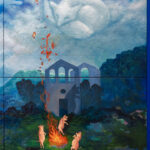
Moving deeper into fairy tale mythology is “Fable from the Valley in Between,” which includes the “Three Little Pigs” dancing by a roaring fire while a wolf’s shadow lurks, a charming owl, a musical squirrel in a tree, and a painter’s palette moon.

Dreamy and also lightly ominous, here the magical and the sublime eclipse the possibility of dread.
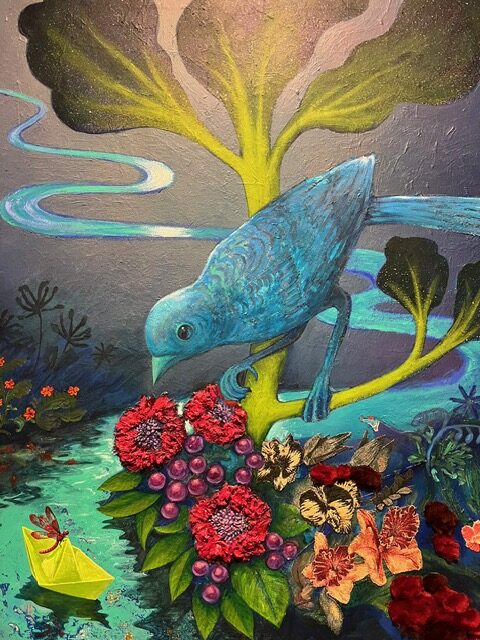
“Journey Down the Stream” in this same gallery is exquisitely wonderful, depicting a curious bird watching a small paper boat carrying a dragonfly as it sails down a small, moonlit stream. This piece speaks to hope and promise, including the promise of another world. Dragonflies, after all, represent many things, including change, transformation, self-realization, joy, light, and even a connection to the spirit world — all of which are a part of Radovanovic’s work.

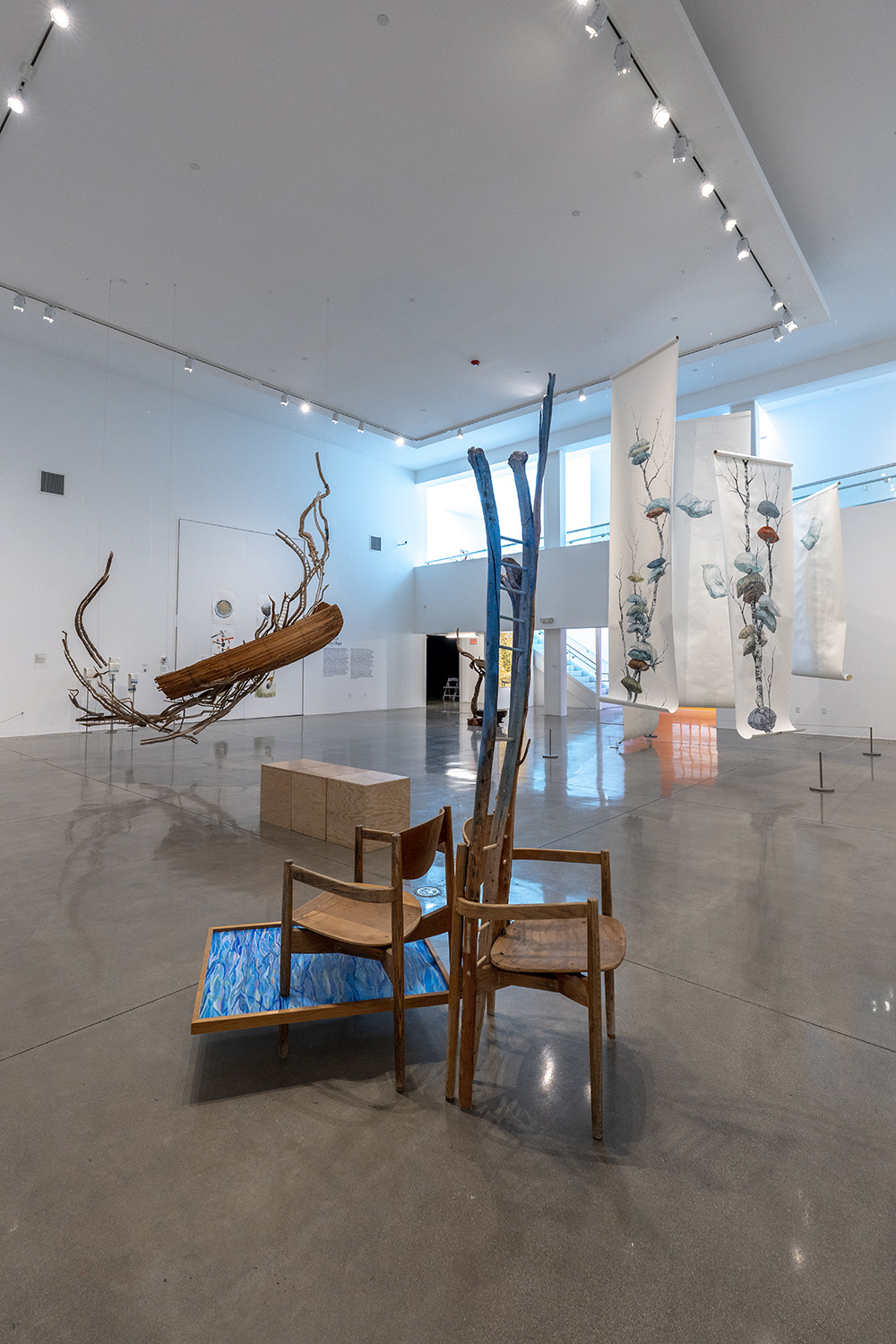
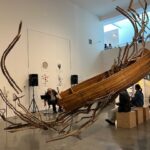
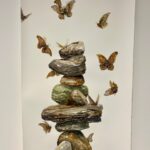
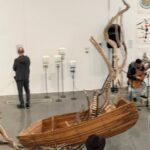
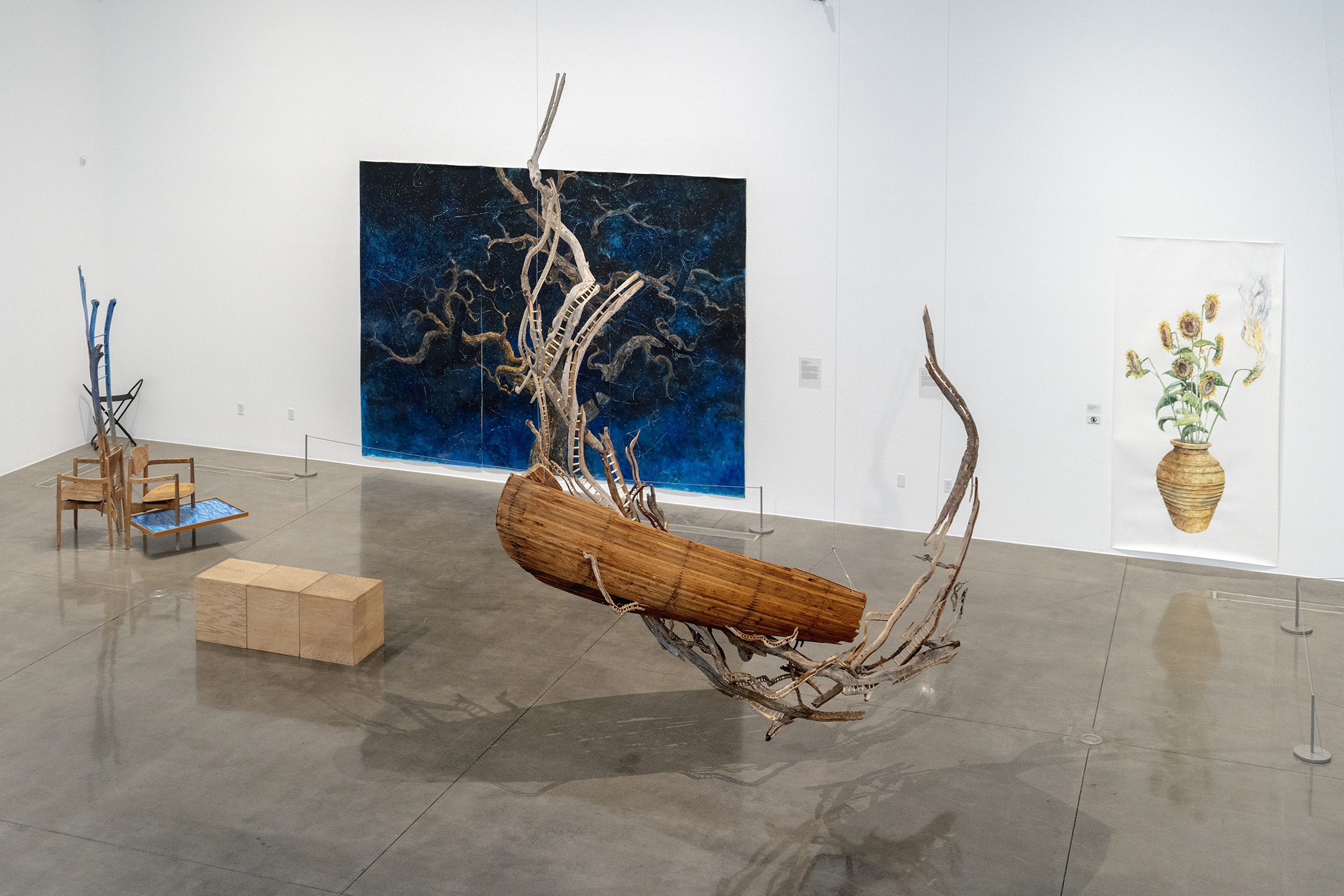
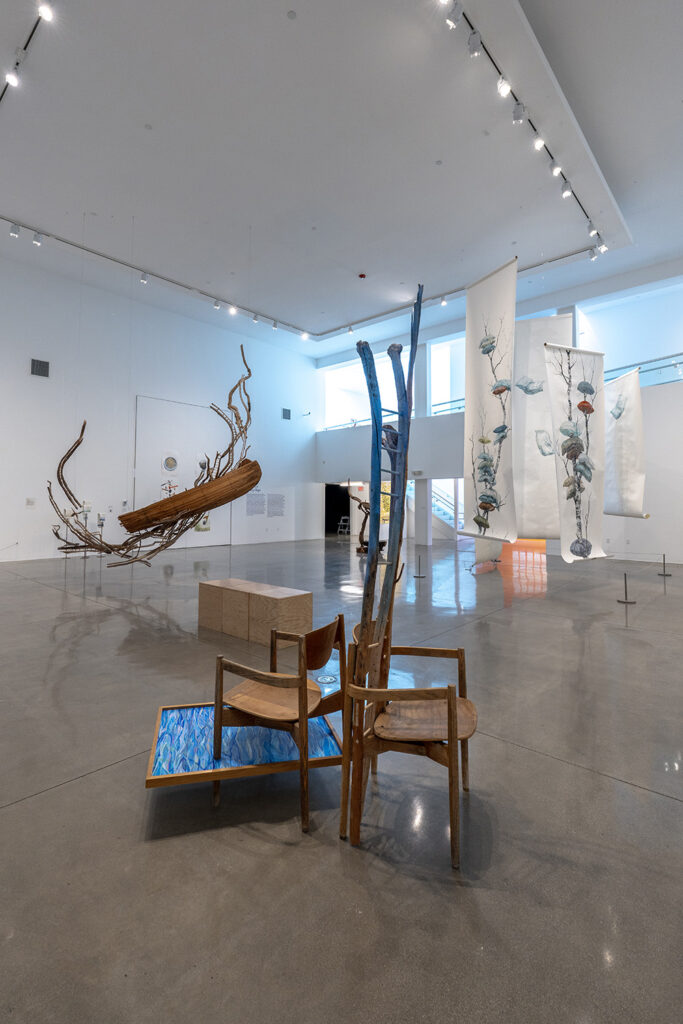
The other exhibitions in the museum are also potent and lovely. Nathan Huff’s Heavy Hope mixes natural beauty with elements of domesticity, creating a delicate and complete balance that includes installations and sculptures, paintings and drawings. Like Radovanovic, but completely different in style and tone, Huff deals with magic. Located in the expansive first floor gallery, the exhibit gives the viewer upended boats, chairs and flowers and stones, table tops with golden, hovering flowers.
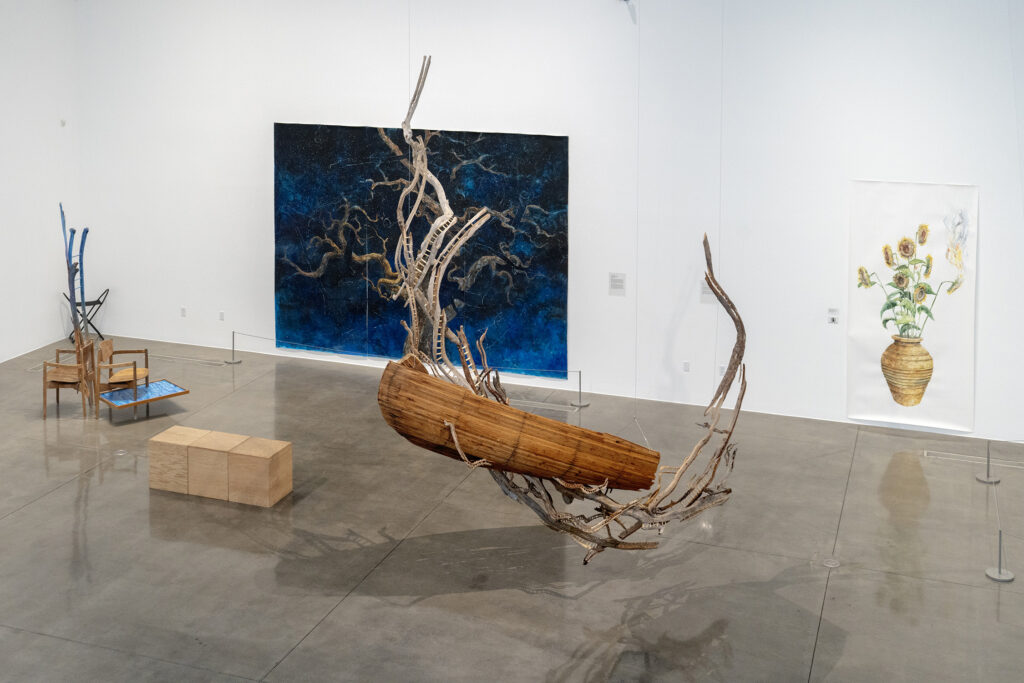
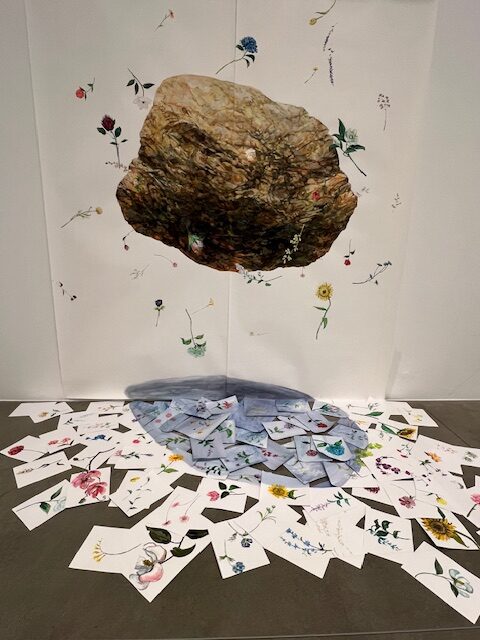
There are perfectly nuanced gouache and watercolor works that glow with inner and external light, installations that upend expectations and move toward delight. This, too, is a fairy tale, but one steeped in the alchemy of nature and the ache of the human heart.

Sharon Kagan’s Bearing Witness is also woven with deep meaning, both literally and figuratively. Working in both mixed media painting, drawing, and textile work, her exhibition is finely wrought. Her knitted, linked, conjoined, and wonderfully sinuous sculptures explore both pain and compassion along with a profound sense of strength.

That strength and deep emotions is carried in both her use of seemingly fragile materials and through an indomitable subject. Her beautiful work explores both her own experience of human connectivity and her connection to the trauma of the Holocaust as a survivor’s daughter.

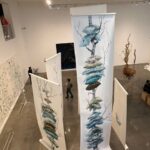
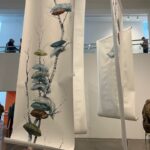
Other MOAH exhibitions include the expansive sculptural installation by Bachrun Lomele, Burn Pile/All Kinds of Murmuring Here and There which includes anonymous phrases and statements made by residents of the San Joaquin Valley, reconfigured to serve as symbols for the disjointed and ever mutable world we live in today. The installation towers between the two floors of the museum.

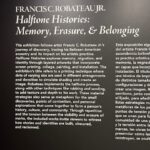
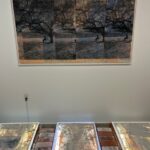
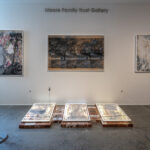
Francis C. Robateau Jr.’s Halftone Histories: Memory, Erasure, and Belonging is a hauntingly lovely mix of screen printing, collage, and painting. There are Mayan ruins and Lamanai sites in Belize as well as images from the LA area depicted here, each adding not only accumulated visual layers but a sense of the layers of history and ancestry, self-discovery, and communal heritage.

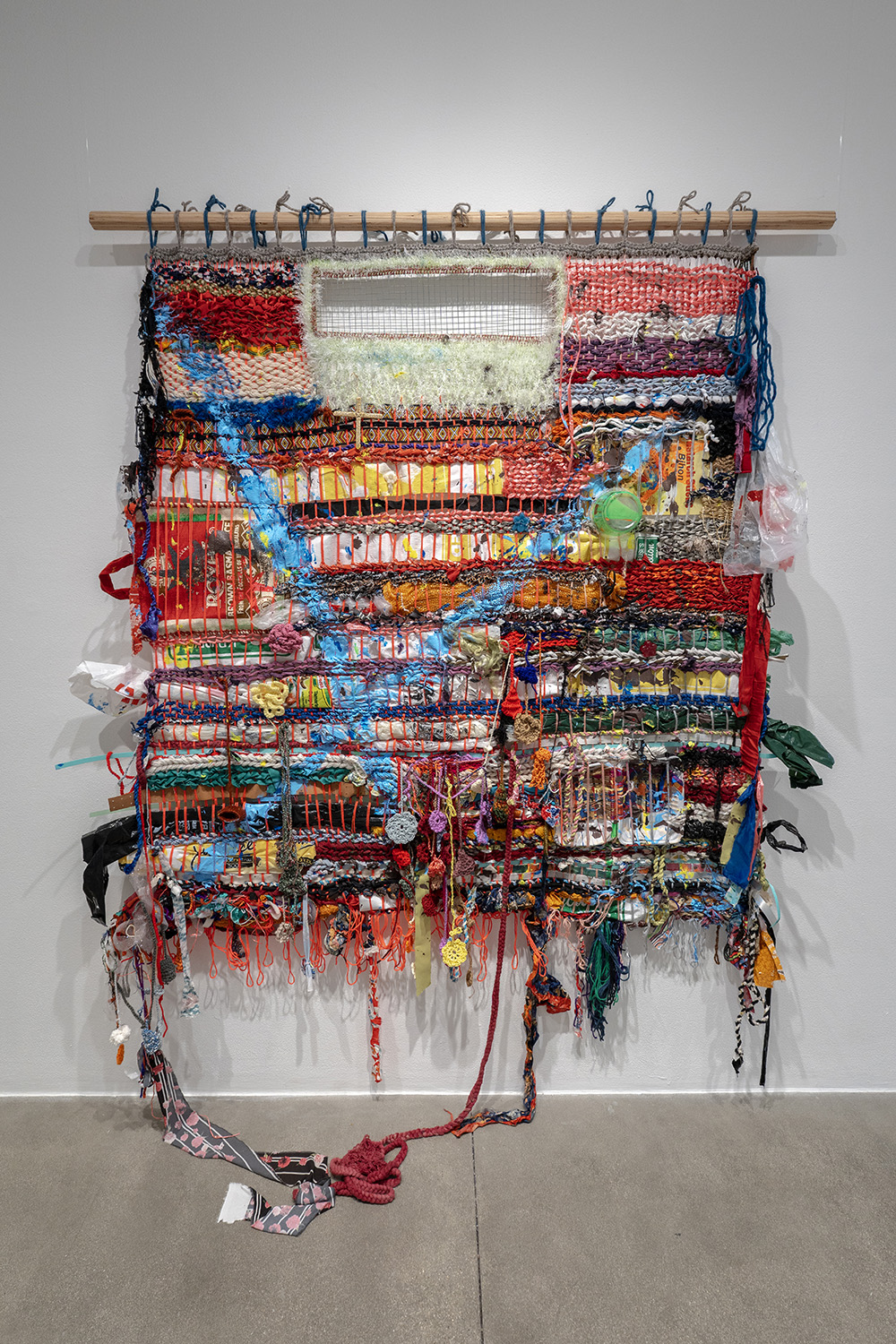
Also evoking a sense of heritage and cultural reimagining is artist Diane Briones Williams in her The Precarious Life of the Parol, where mixed media and textile works examine not just sculptural weavings but the memories and past history of her Filipinx identity.
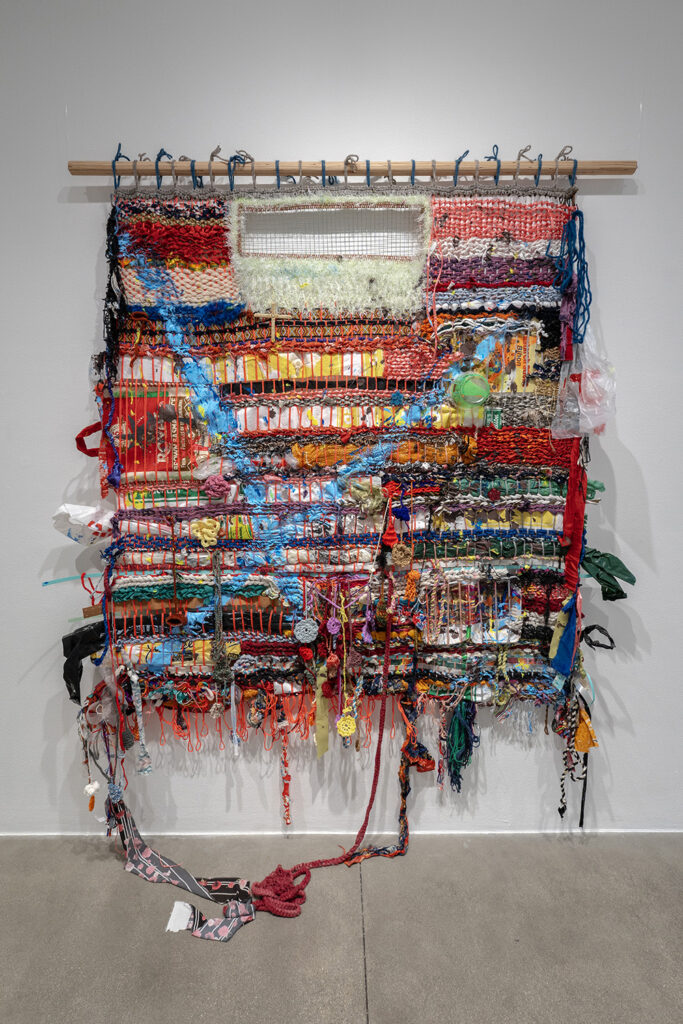
Jubilantly colorful and bearing the weight of collected detritus, each image is complex and carefully rendered.

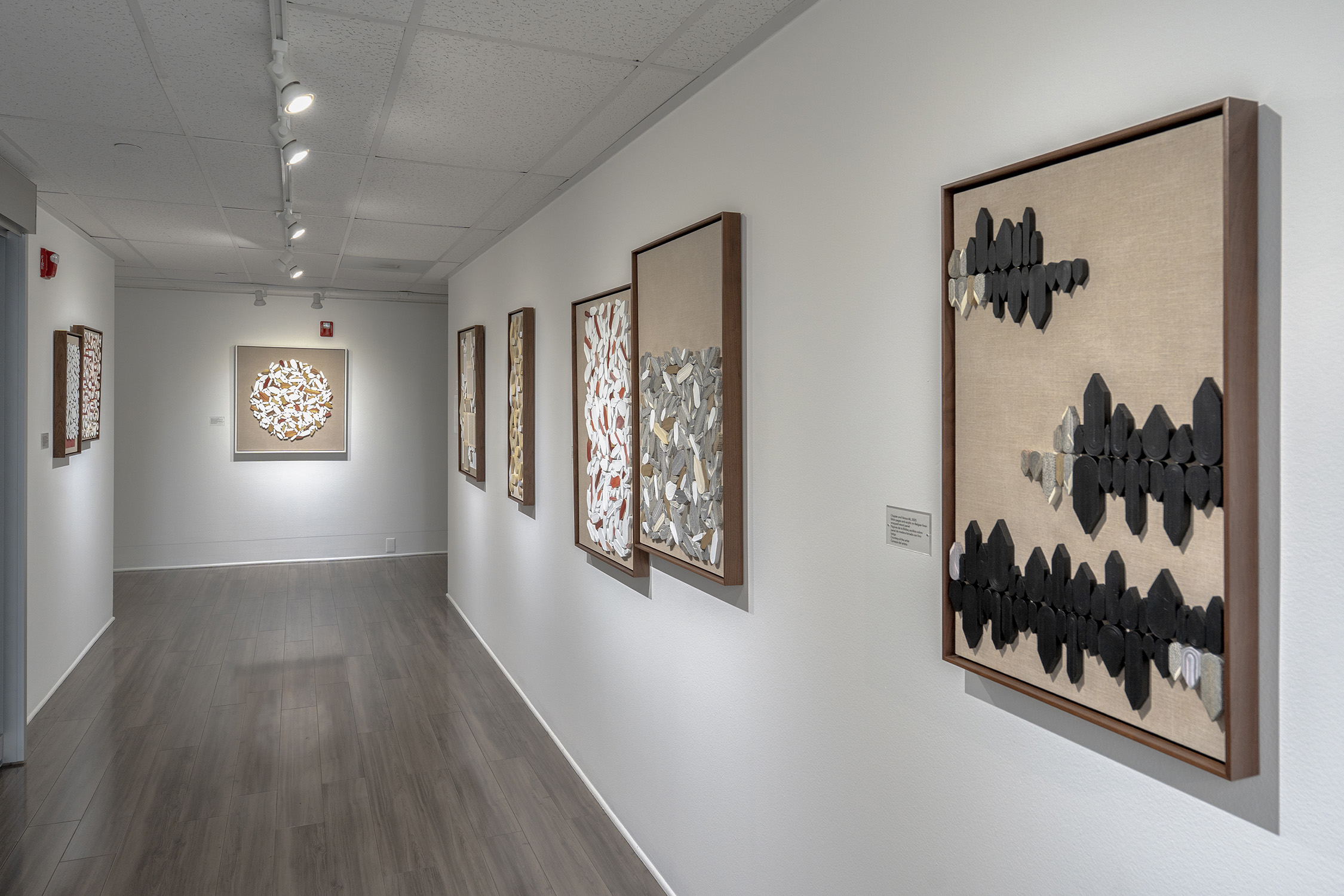
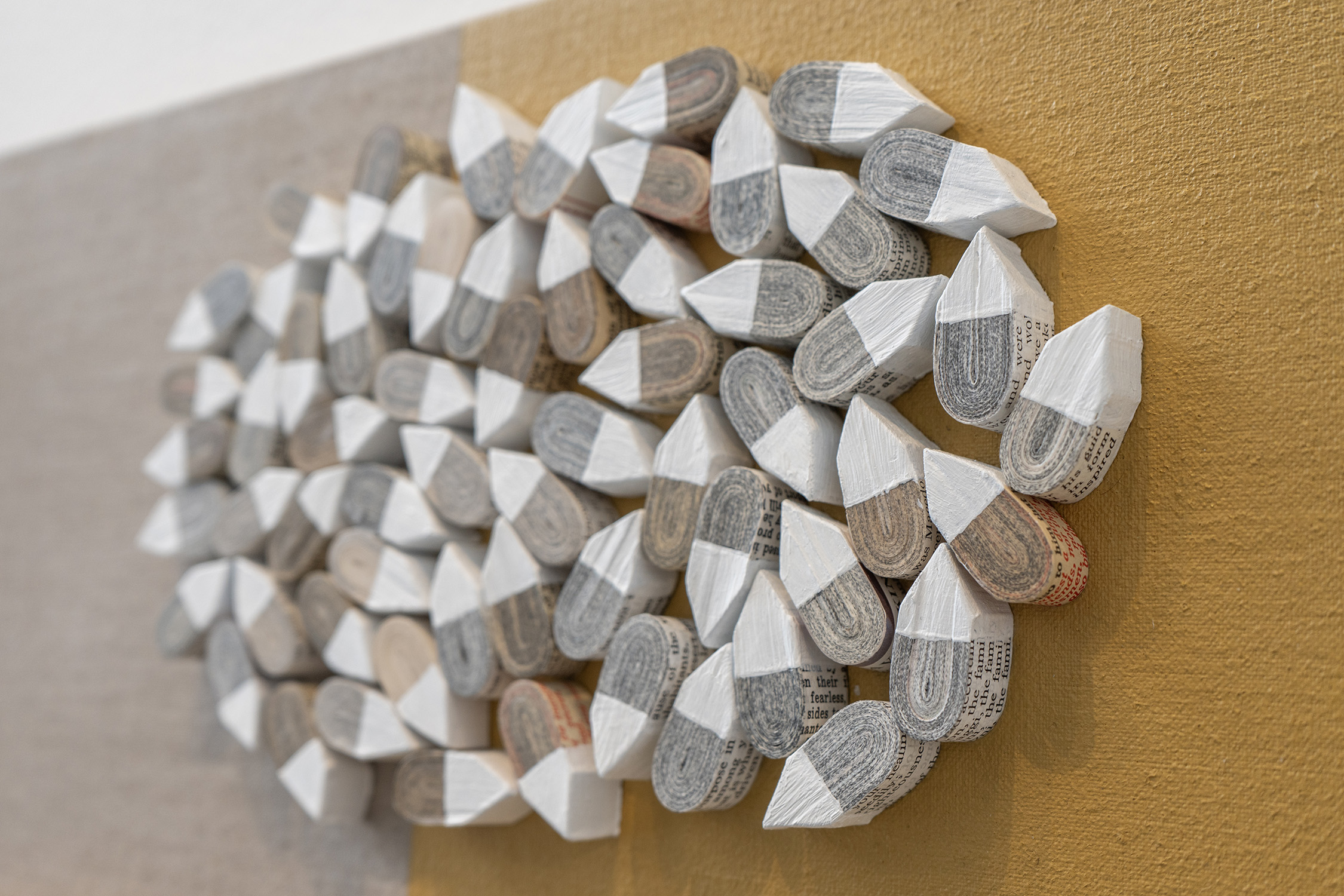
In contrast, it is a loss of heritage that makes the focus of Brian Singer’s It was a pleasure to burn.
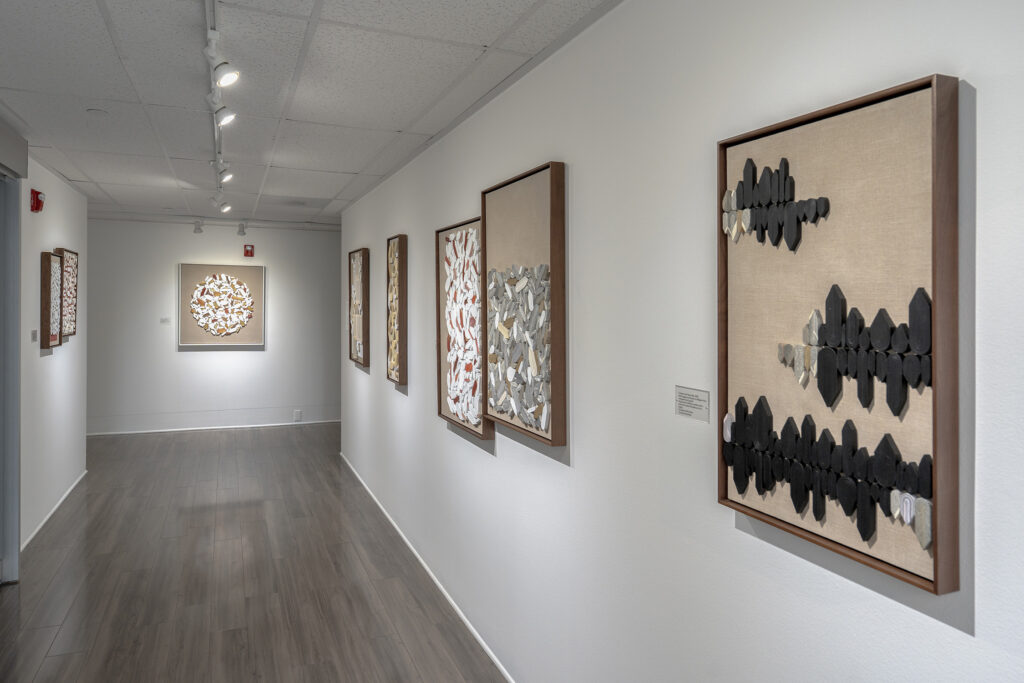
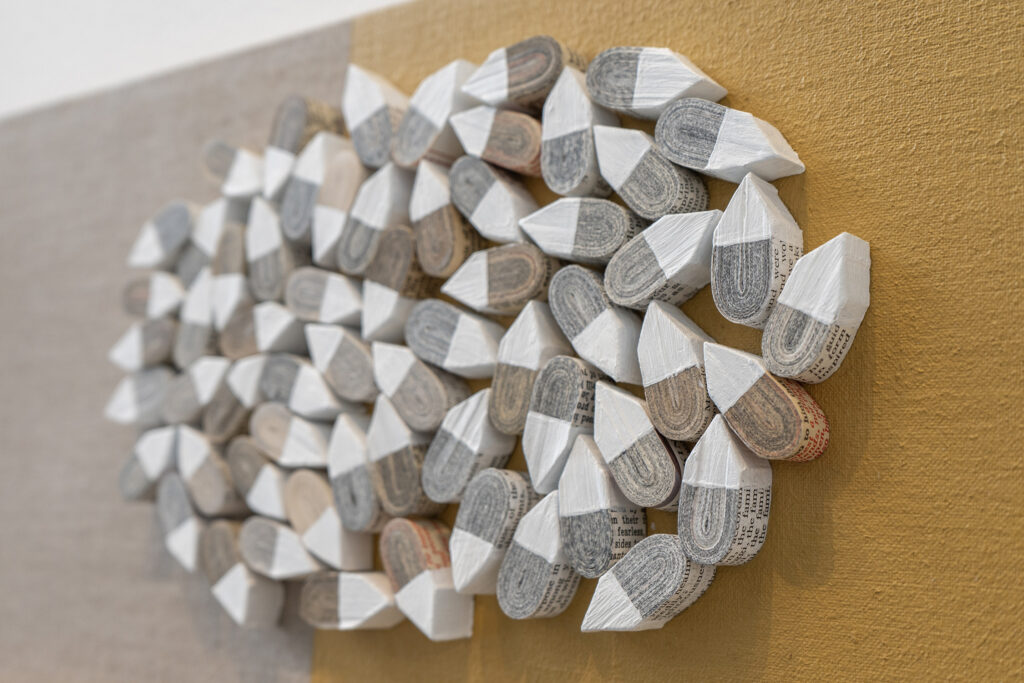
In this exhibition, the artist examines the power of words, utilizing the text of banned books and the Bible to create beautiful, muted mosaics made of compressed book pages.

Taken together or individually, the museum’s Metaphor is a beautiful mix of the representational and abstract, of deep meaning arising from stories writ large and luminous. Experience the joy and absorb the stories: you will be wiser and happier for making the drive.

MOAH is located at 655 Lancaster Blvd. in Lancaster.

  • Genie Davis; photos by Genie Davis and provided courtesy of L.A. Art Documents 
We Are All Under One Roof

We Are All Under One Roof – Genie Davis

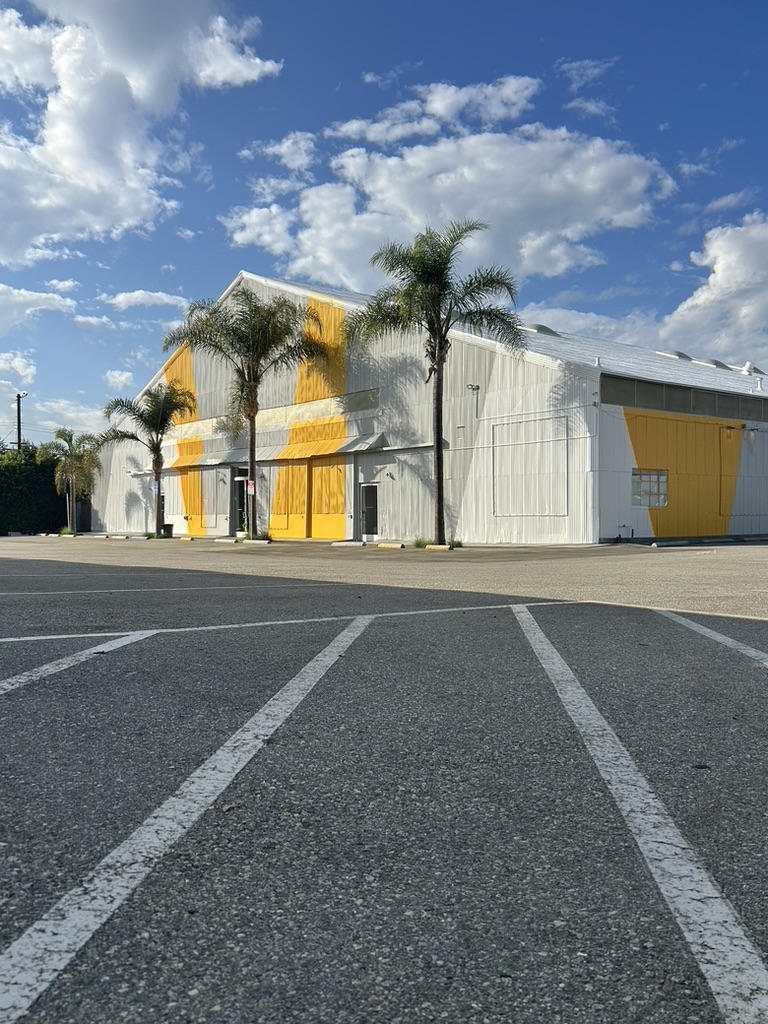
Opening Sunday, February 22nd at Santa Monica Studios at the Airport Arts Center, Under One Roof is a sweeping exhibition featuring 32 artists. The show is located in a space managed by LA’s Community Arts Resources and is curated by Peter Frank. The title speaks not just to the artists who are in the show, who work in the Airports Arts Center complex, but to the zeitgeist of today’s world. Despite the many fissures, cracks, and divides, we all live in one world, under one roof of sky.

The works are as varied as the artists creating them, ranging from painting to sculpture, photography, drawn images, ceramics, and textiles. Exhibiting artists include:

Melinda Smith Altshuler, M Susan Broussard, Barbara Carrasco, Gregg Chadwick, Claudia Concha, Lola Del Fresno, Alexandra Dillon; Wendy Edlen, Nina Girvetz, Elizabeth Gorcey, Deborah Lynn Irmas, Sara Issakharian, Sheila Karbassian, Annette Miae Kim, Susie McKay Krieser, Sally Lamb, Makala Lee,  Luigia Martelloni, Patrizia Martiradonna, Crystal Michaelson, Mobina Nouri, Margaret Oakley, Sabine Pearlman, Elham Sagharchi, Gwen Samuels, Daniela Schweitzer, Pamela Simon, Doni Silver Simons, Julie Weiss, Joan Wulf, Rebecca Youssef, and Leila Youssefi.

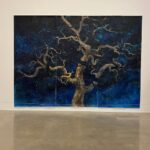
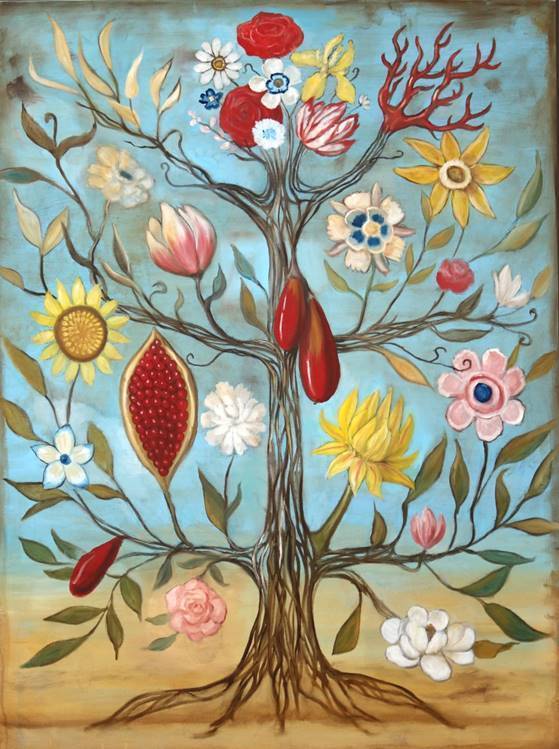
Among the many highlights are Alexandra Dillon’s “Tree of Life,” with its ripe pomegranates and delightful flowers bursting from some seemingly withered branches, speaking to the resilience of life and nature itself.


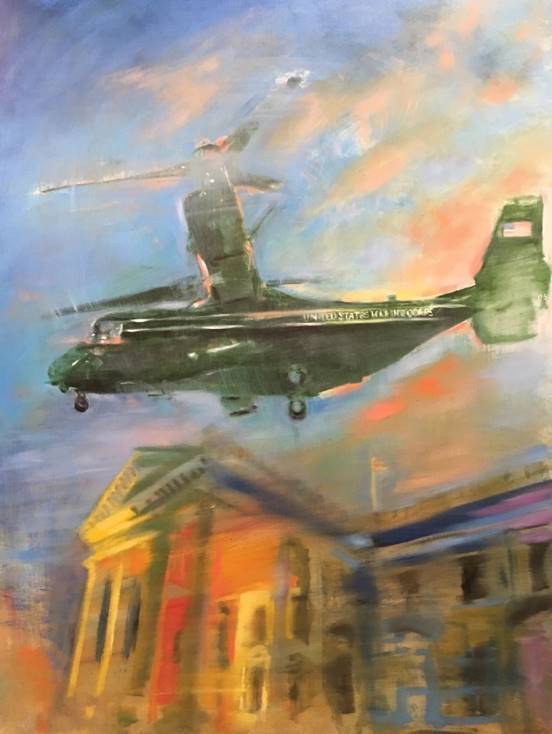
Gregg Chadwick’s “Arrival and Departure” is a softly impressionistic blur of motion with an army helicopter hovering over the White House, an image that speaks to our time while also being quite lovely and mysterious in a wash of golden light. Is someone fleeing the scene? Is someone being protected?


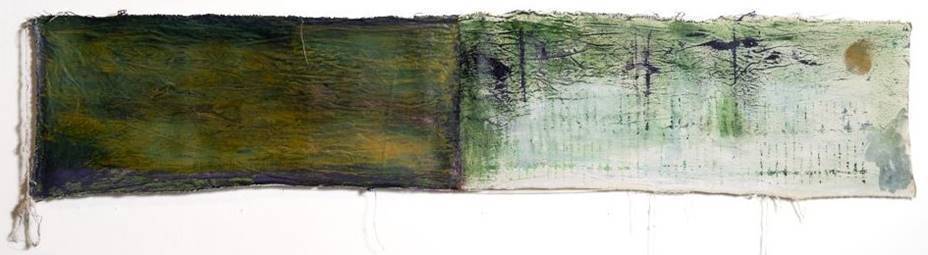
Doni Silver Simon’s “Untitled,” an acrylic on unstretched canvas work, provides a lush, elusive green and olive composition that is quiet but compelling, evoking a forest, a swamp, and a sense of two possibilities, one dark, one light.

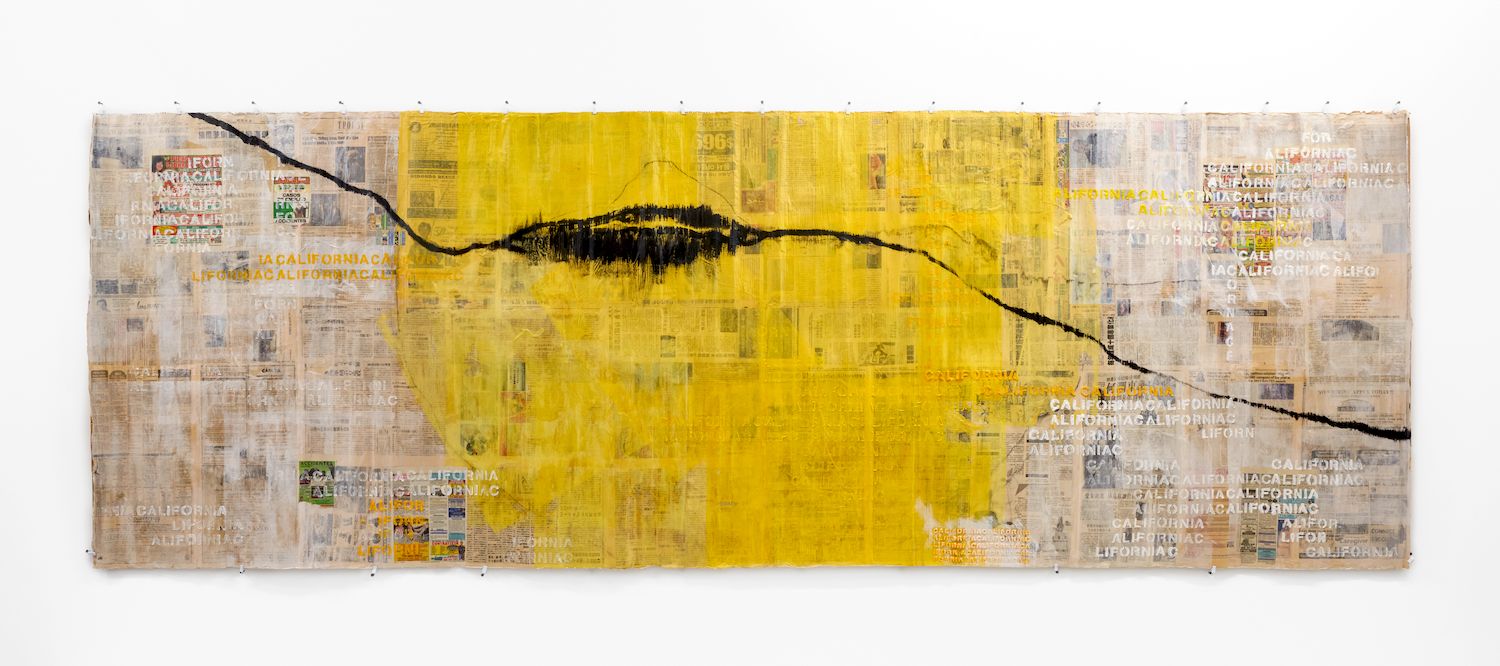
Annette Kim’s “California” is a map and grid with a black chasm in the golden center that speaks to both the potential divisiveness of the natural world – the San Andreas fault, perhaps, and our social divide. The golden state is not entirely whole, and neither are we.

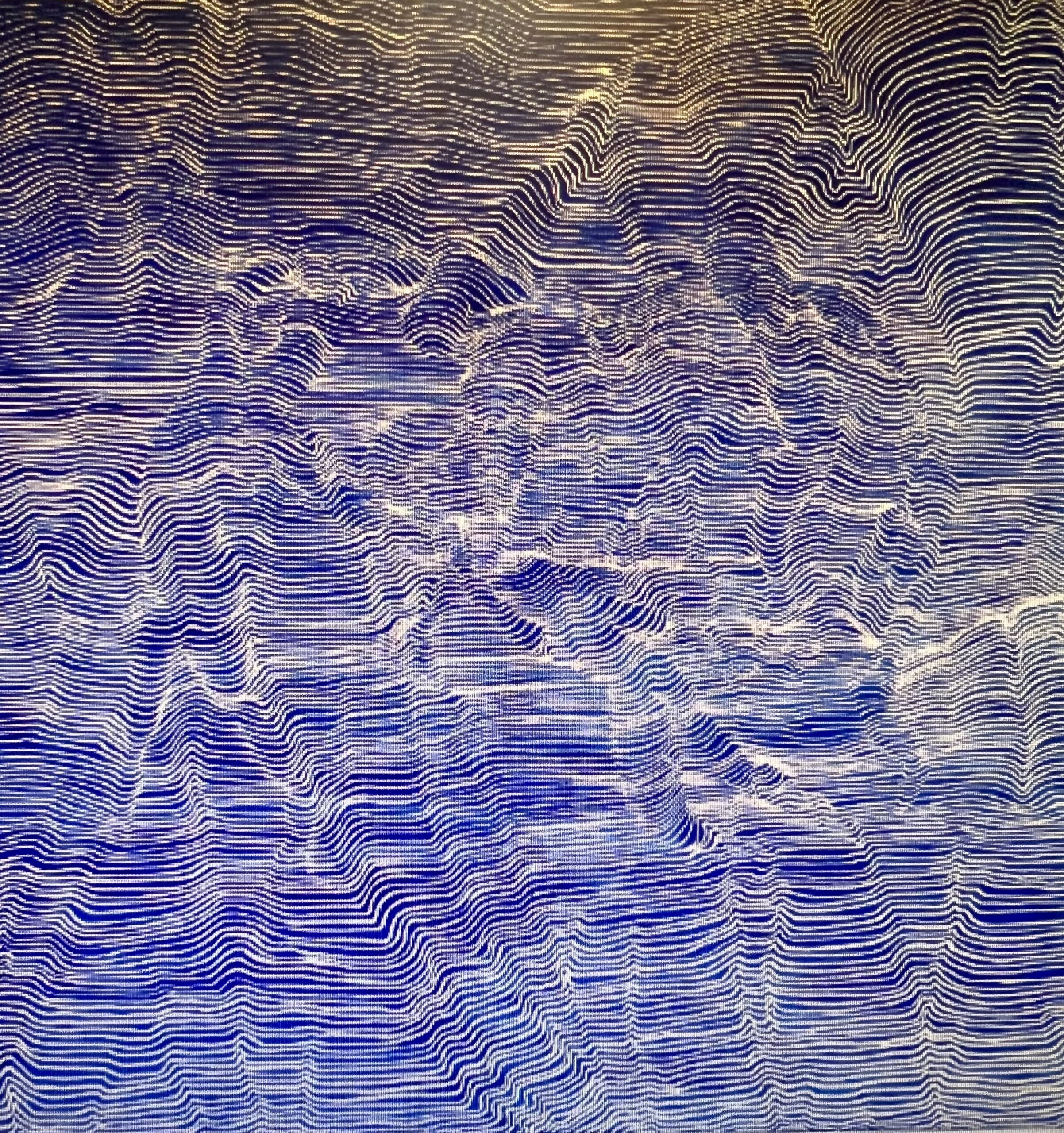
Mobina Nouri offers a hypnotic, wavelike series of patterns, thin and perfect white lines undulating over a rich dark blue background amd tranforming into human figures with a mesmerizing effect.

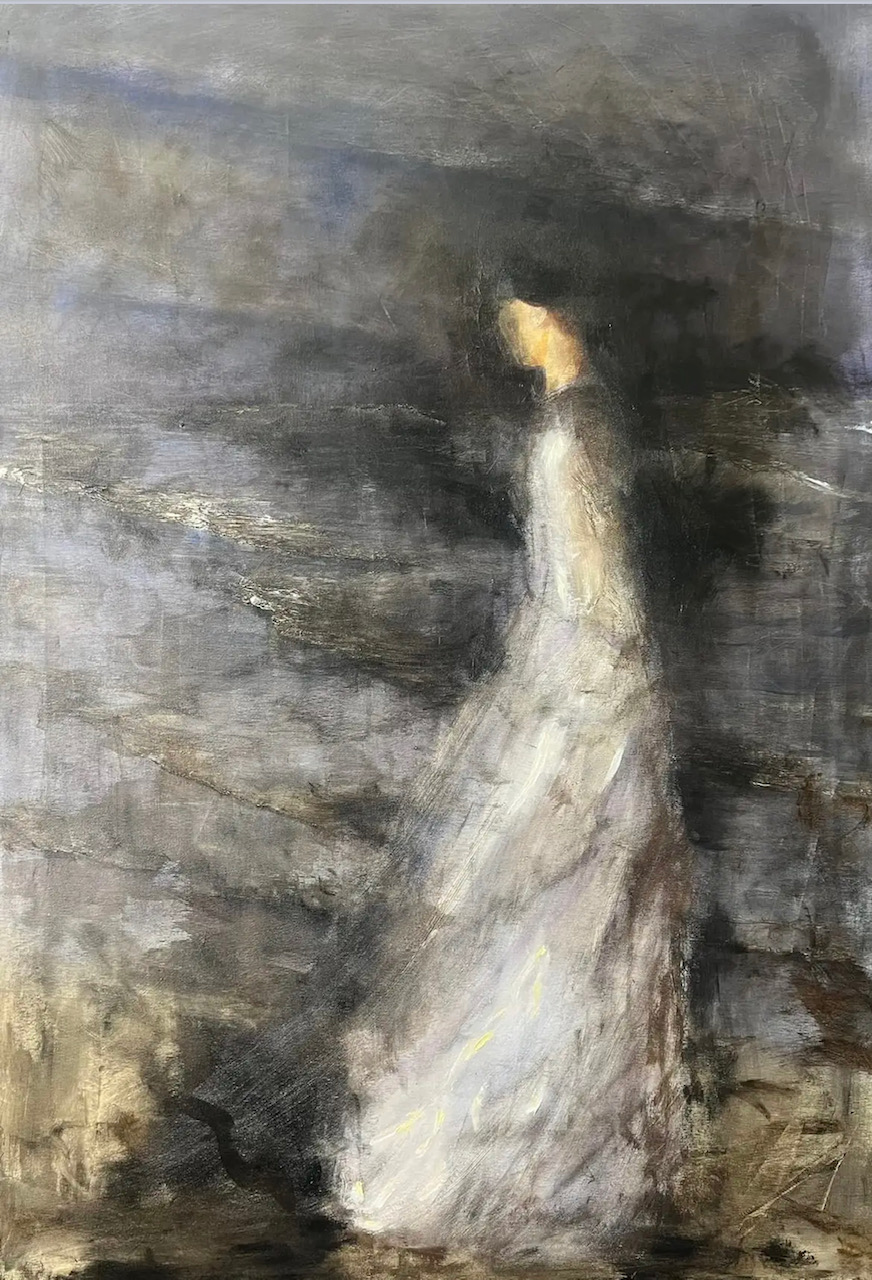
Elizabeth Gorcy’s haunting figurative work, as softly out of focus as the dark background into which it blends, recalls both saints and sinners, Puritan ancestors and witchy women.
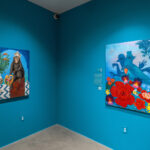
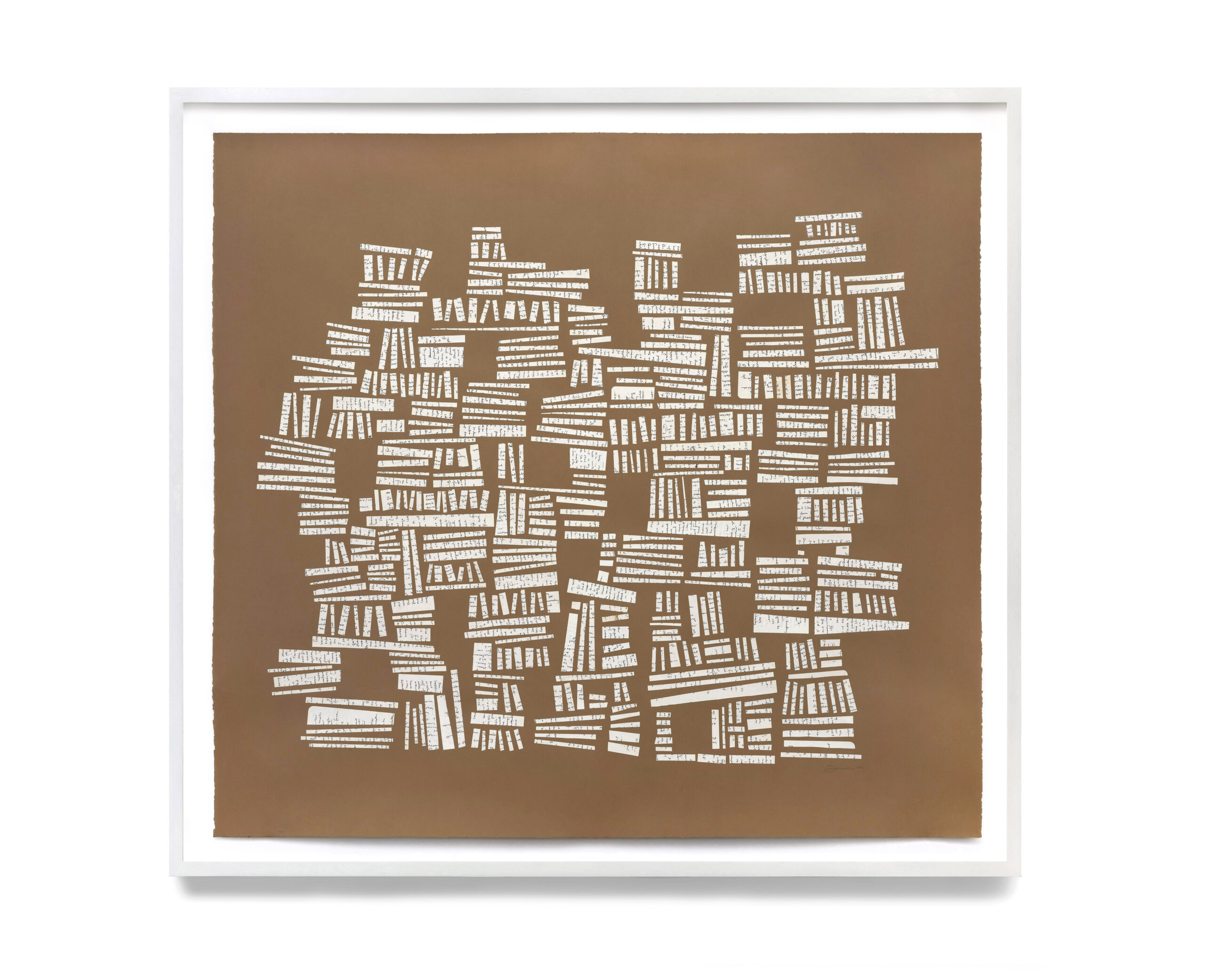
Joan Wulf’s “Meditations” reveals a repeated pattern of columns or books, a mind game that matters.

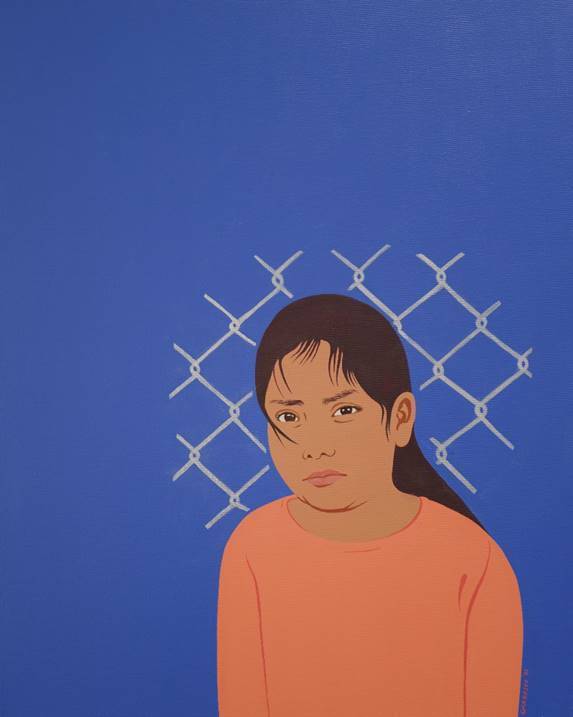
And most poignantly, Barbara Carrasco’s “Detained Girl” is an image of a young, vital immigrant with a wire fence behind her, and undoubtedly around her, an image that provides a clean, sharp, figurative look as real as today’s world.

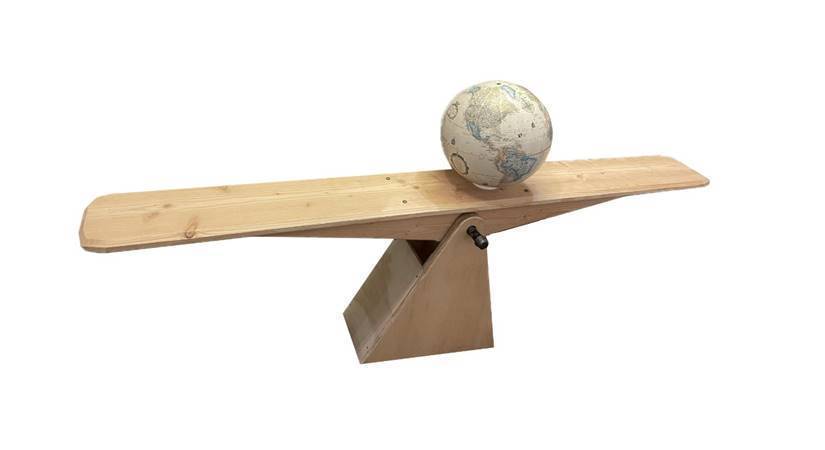
And speaking of the world itself, Luigia Martelloni offers a globe precariously positioned on a wooden seesaw-like base in “Unrooted.”

Each of the works presented here are rich with heart and soul, forming an exhibition that is powerful and bold.

An opening reception is scheduled for Sunday, February 22, from 2 to 5 p.m. at 3026 Airport Arts Center, Santa Monica.
  • Genie Davis; photos provided by the exhibition