
Randi Matushevitz: Artist Profile

Randi cover

The art of Randi Matushevitz is magical. It has the quality of a fairy or folktale; a narrative brave, loving, and a little bit spooky. There are symbols and signs, figures and landscapes – the impact of viewing her work is immersive and emotional. Enter the world of Matushevitz and become transformed. This is an alternative universe, like our own but unlike it, both delicate and intense.

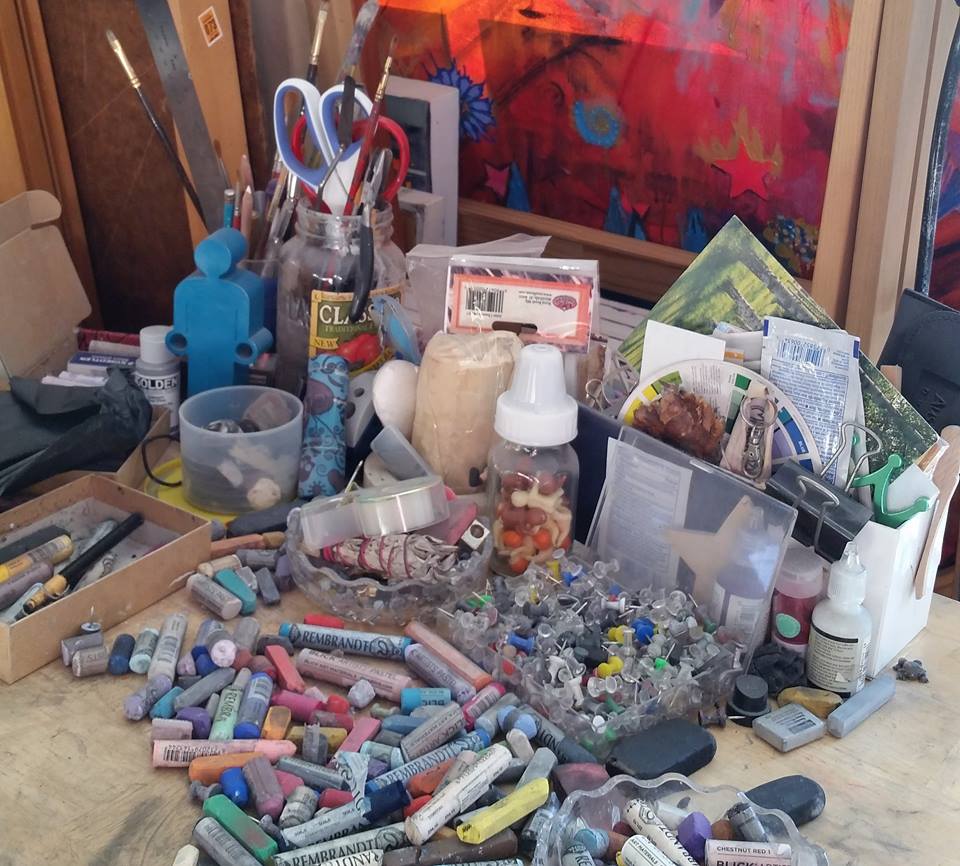
“My process swings from intuitive to formal and back again. I draw. The work develops over days and weeks or more. I layer. I draw. I spray. I look and repeat.” In short, Matushevitz, working in pastels, deep charcoal, and acrylics, creates works as physically layered as they are emotionally dense.

Randi Bad Habits

In her “Bad Habits By The Pool,” she works in charcoal, pastel, and paint on paper to depict what appear to be two small nymph like creatures – or children – watching a woman smoking a cigarette by the pool. The pool is dark and dense, inky. The smaller figures stare, and near them is a box, which could be Pandora’s, perhaps. The yellow background and the pink of the woman’s skin are both the colors of dreams.

Throughout her recent series, “Mysterious,” the artist uses symbols and figures drawn and stenciled. “I provide the innuendo of space, intentional references and implied mood or location,” she says.

Randy liberty

In “Liberty or Death” burnt sienna patterns dot a piece that also includes the outline of the Statue of Liberty’s crown. A bed, a bus, pipes, hearts, flowers – there is a wildness and an energy, a garden of technology, an infusion of love into our often harsh world. Are those bombs exploding? Fireworks “bursting in air?” Are the hearts floating in space simply symbolic hearts or are they living creatures infused with the ability to create love where none previously exists?

Matushevitz is less interested in explanations than she is in emotion. She says she includes “the power of color, texture, and pattern” to create the perception of love. “What we see has influence over how we perceive, interpret, and absorb information and thus determines what we think and who we become.”
Randi studio

The artist’s work is based on the idea that what we see has a deep effect on human perception and feeling – and what affects the individual also affects a larger society. She’s exploring all sides of the idea of love and the artifacts of human emotion, using tools of harmonious and disharmonious color, and her own unique combinations of symbols, colors, and patterns.

“I use memory, sentimentality and childlike whimsy to create images that are embellished and decorated to reveal kindness, respect and accountability,” Matushevitz says. “It’s a multi-sensory message that has been metaphysically explored since the beginning of time.”

In short, she believes we are what we think. While earlier works by the artist reflected a brighter tone and more whimsical nature, her more recent series plays with the idea of perception in an edgier tone.

Randi Elephant

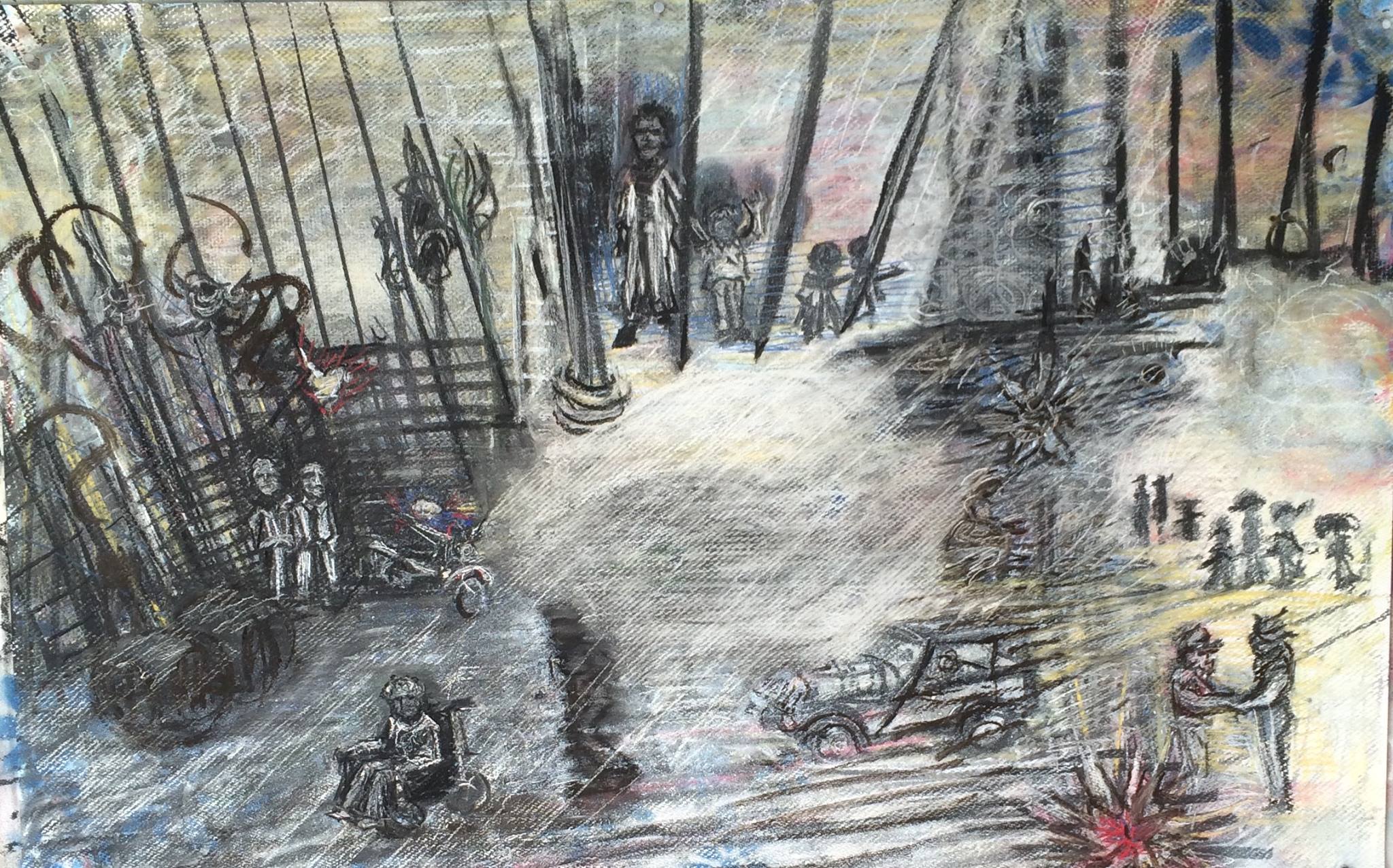
In “Elephant in the Room,” for example, symbolic depictions of elephants are scattered across the page, a car, a butterfly, a fireplace, and over that fireplace, a painting or a mirror or a window reflects more cars. Is the elephant a metaphor for our lumbering vehicles, creating environmental chaos?

“It is a fight for the sanity of our culture as we know it,” the artist says, “we neglect and take for granted what is so important that it is discounted as if disposable. As if it is something that will always be there, until it is not.”

There is much to see and absorb in Matushevitz’s work. Like life itself, her works dance on an edge between belief and perception, light and dark. We are creations of our own dreams, she seems to be saying. But can we dream better?
Randi movie time

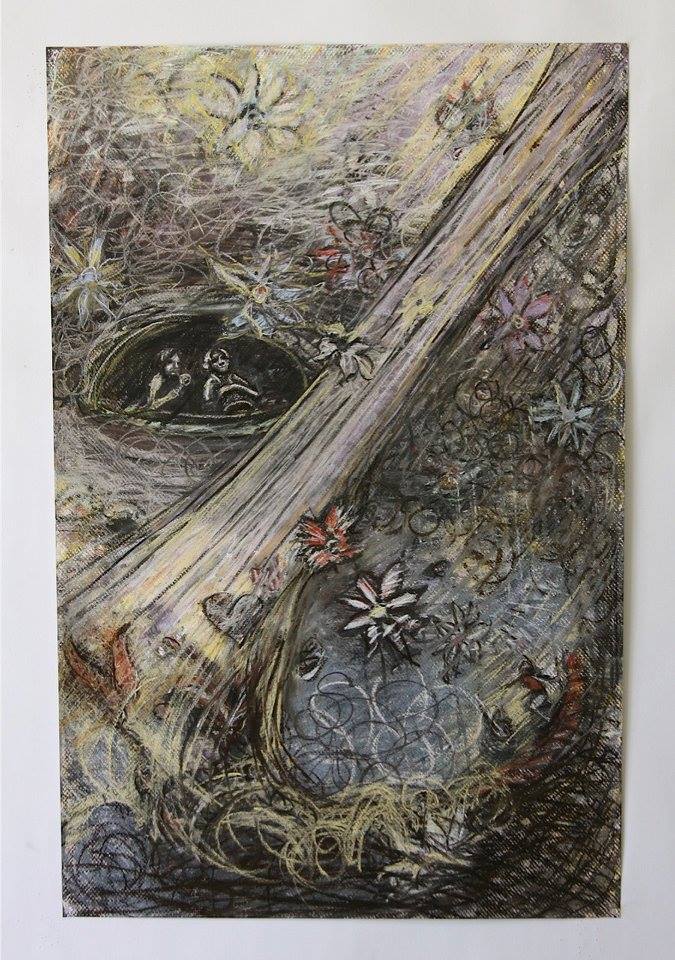
In “Movie Time,” the answer appears to be affirmative, as two children watch a stream of flowers, and a small, fairy-like figure surfs a tangle of water-like roots on a seed pod. The niche in which the children are positioned is in the shape of an eye. Is this all an image taken from the mind’s eye, a moving picture of life?

randi self portrait

Perhaps her “Self-Portrait” holds the answer. This piece is nearly monochromatic, touches of red like fire in her eyes, touches of green like growing things in the foreground. Her hair is wild, what could be fairies, trolls, or dybbuks wait on either shoulder. But her eyes are calm and kind, her lips pressed into a half-smile. Matushevitz seems to be saying what we accept, what we cannot know, what we see, what is unseen – it should all be approached with equanimity.

Whatever the world holds, in its mystery, in its magic, in its folklore and fairytales, the artist believes we need to give expression to that vision.

Matushevitz’s works have been shown both nationally and internationally in New York, LA, Las Vegas, Miami, Buenos Aires, Caracas, Madrid, and Xalapa. Her most recent exhibition was held in March on the UCLA campus.
The Antarctic Dreams of Lily Simonson

F23C1020

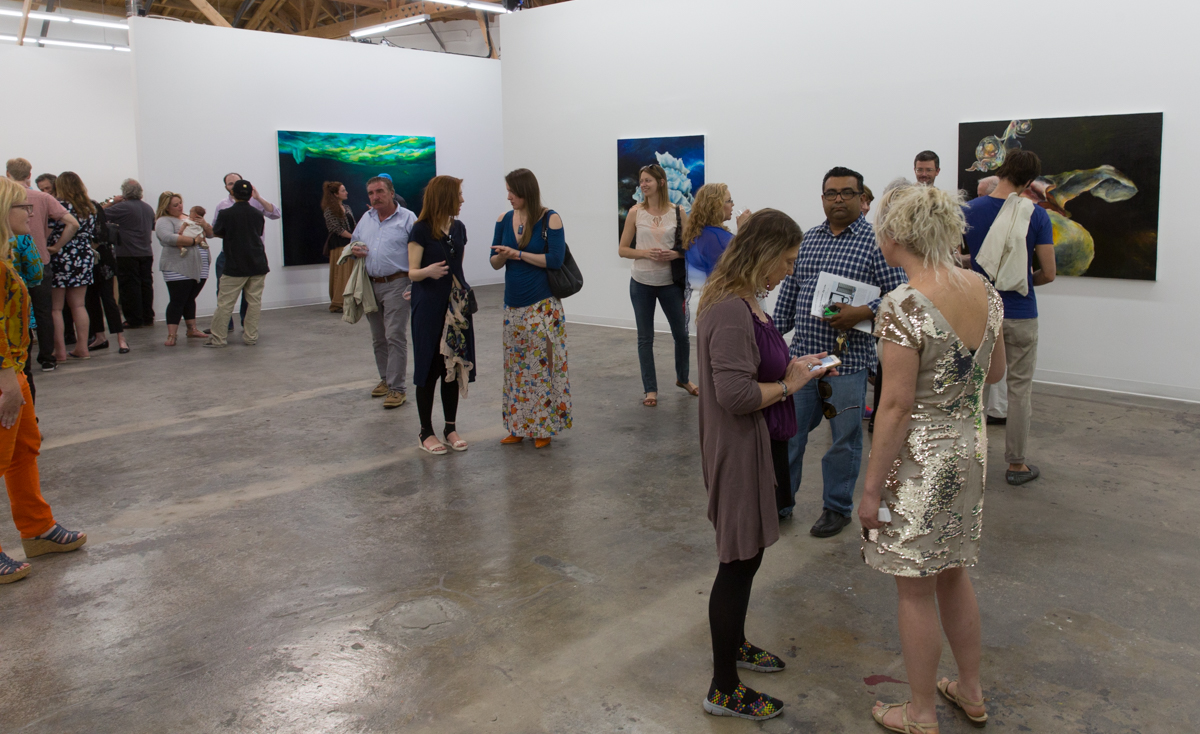
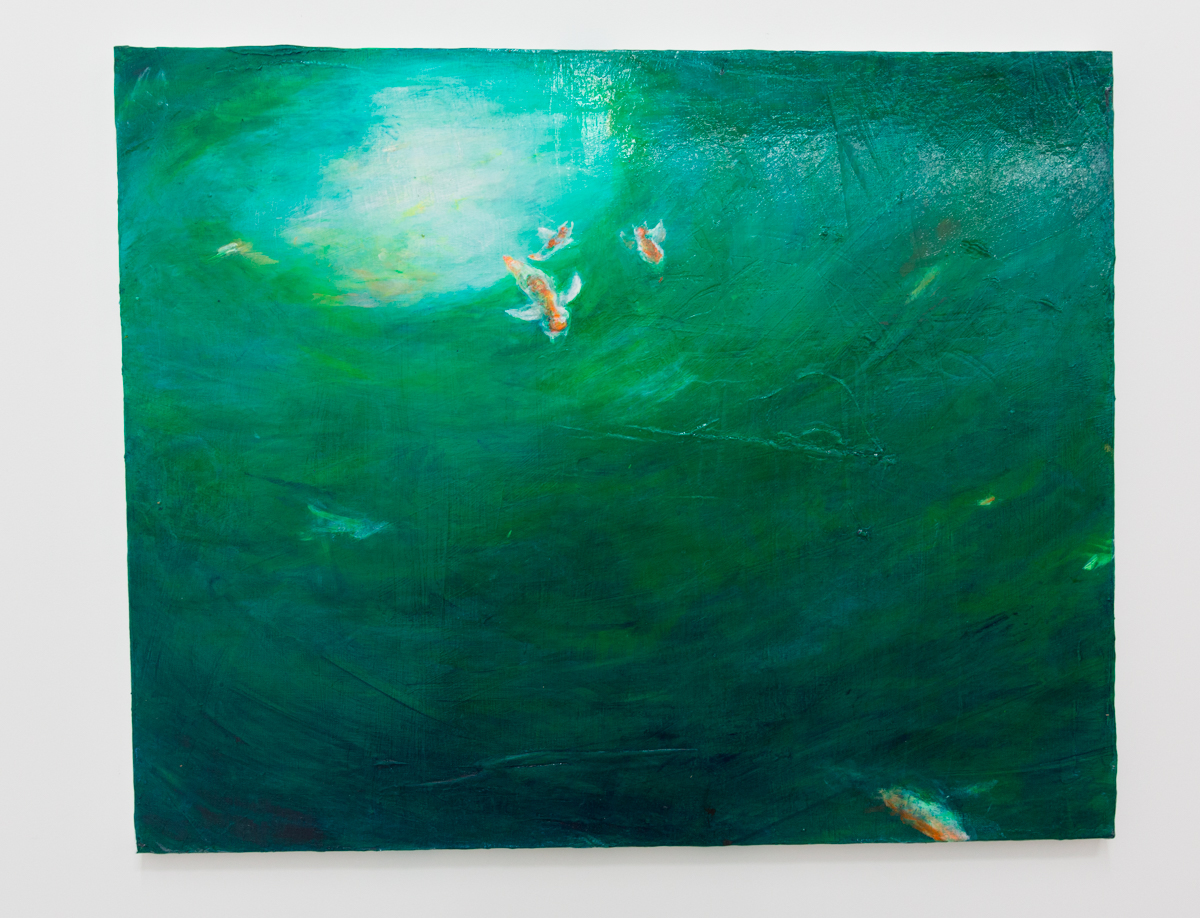
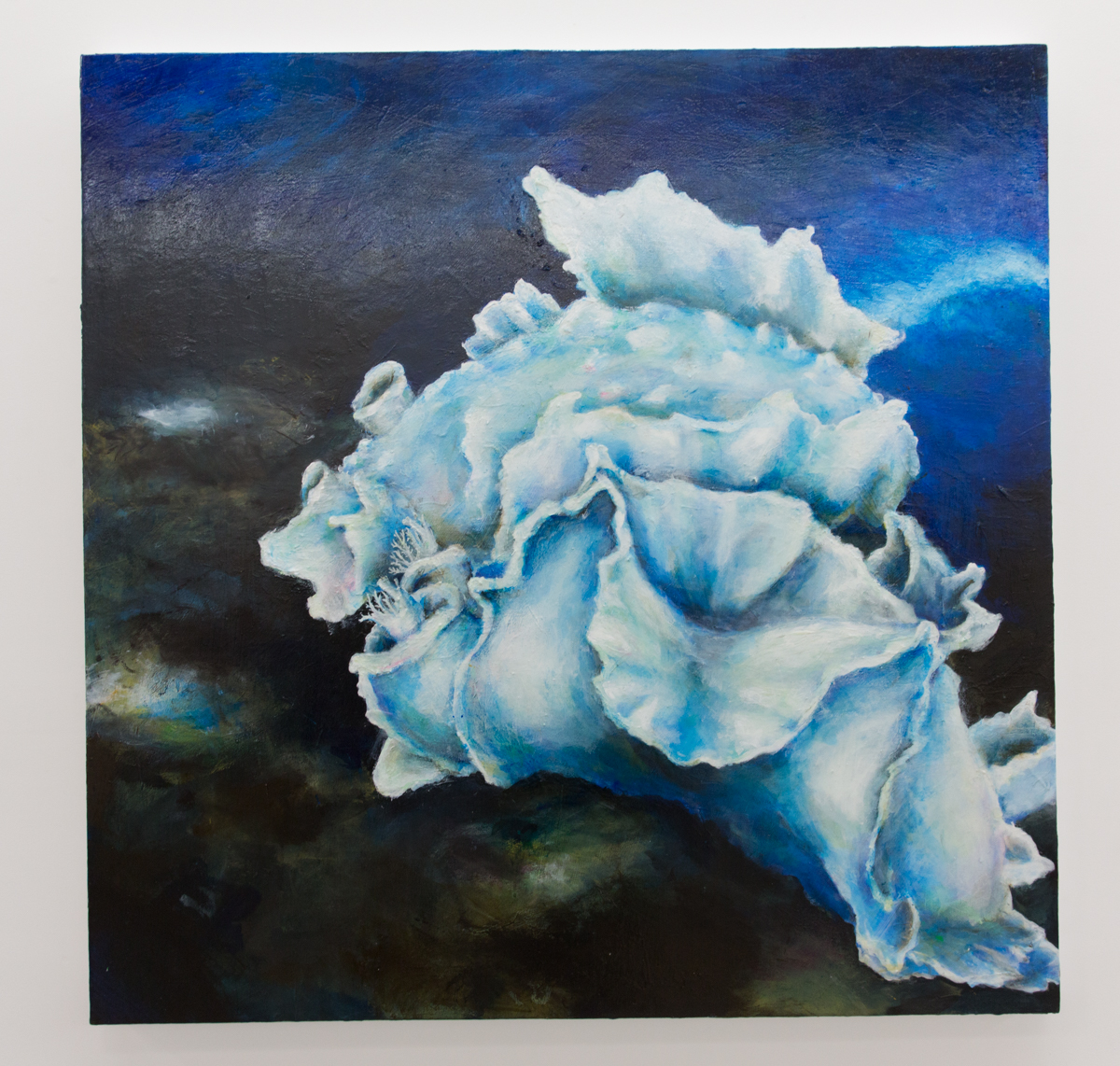
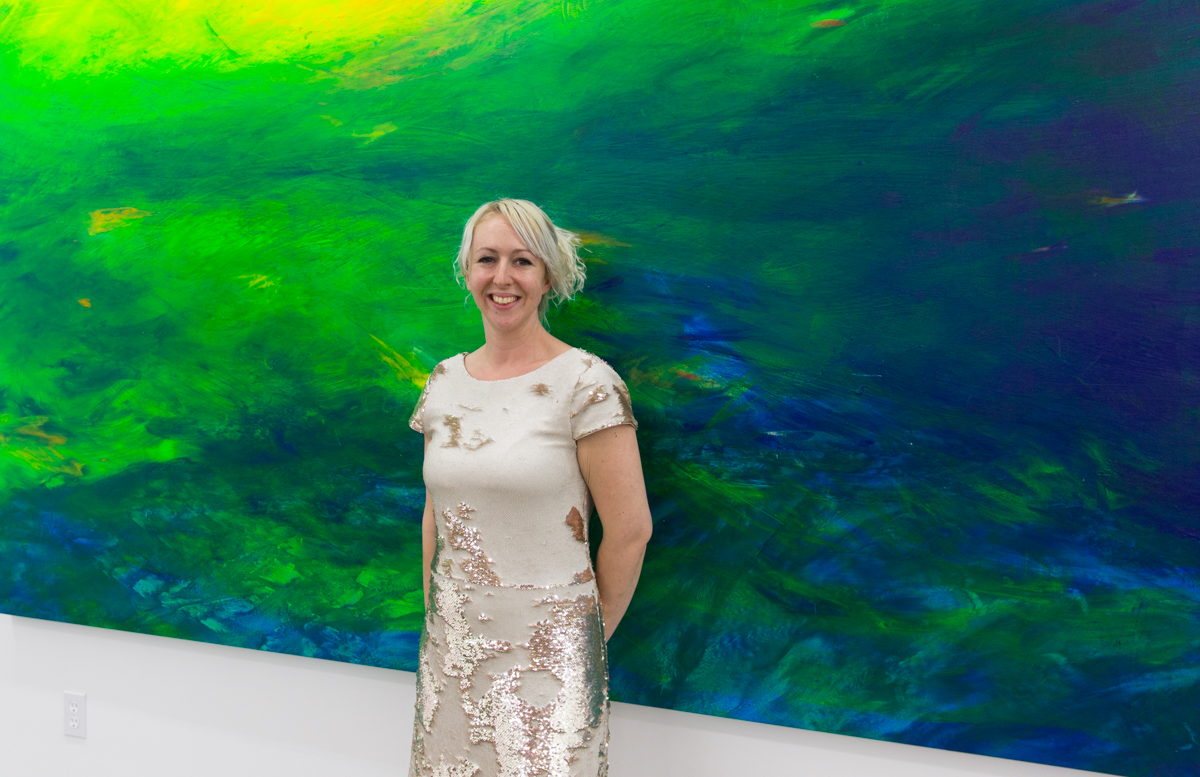
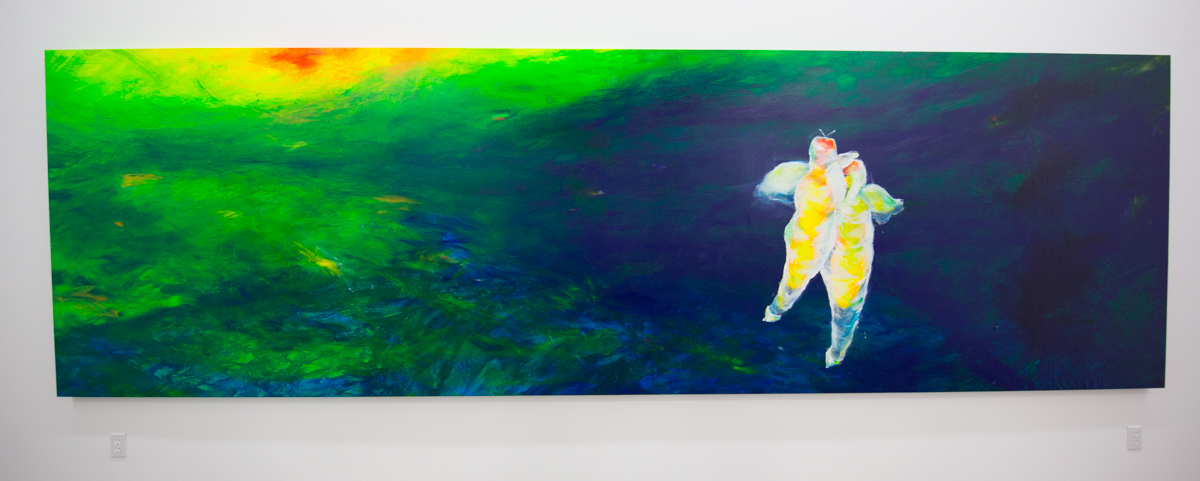
“Beneath the Midnight Sun,” an exhibition of breathtaking works by Lily Simonson is on view at CB1 Gallery through May 29th. The exhibition leads viewers into a world that literally glows, inside and out.

F23C1017

There’s nothing quite like the colorscape Simonson uses. It vibrates both on and under the surface.

The exhibition’s origin is the artist’s trips to Antarctica. She served as the Awardee for the National Science Foundation Antarctic Artists and Writers Program. Simonson’s art is very much an adventure, for the artist as well as the viewer. Along with her Antarctic expeditions, she served as the Artist in Residence aboard the Exploration Vessel Nautilus and the Research Vessel Melville.

F23C1027

“It’s exciting to reveal the life under the sea ice and on land, the crazy geological formations, and to share some of the surprisingly diverse and unexpected beauty, ” Simonson relates.

F23C1013

She uses acrylics, oil, and fluorescent pigment that glows in black light and creates a translucent appearance in white light. The effect is one of dazzling depth, a multi-layered immersion in surreal, vibrant colors.

F23C1008

Simonson is an explorer, both literally and through her innovative, experiential art. Dive on in.

F23C1025

Simonson’s work is on view at CB1 Gallery from April 16 – May 29, 2016. CB1 is located at 1923 S. Santa Fe Ave. in DTLA’s warehouse district.

  • Genie Davis, all photos: Jack Burke

Peter Scherrer- Artist Profile

Scherrrer Salt

Acrylic on canvas is the medium for artist Peter Scherrer’s large, muscular artworks of abstract shapes and landscapes. Some feature bold graphics, others are all slashing, vital strokes of color. It is the kind of painting that is very much of Los Angeles. Blues are as inviting as swimming pools for the eye to dive in. White, grey and chartreuse paint creates jagged images that could be the fronds of palm trees. Bright yellows, greens, and golds are the colors of LA sunsets and Griffith Park, bold strokes of black evoke images of highways driven.

While many of the works exude a freeform style, in fact Scherrer works with a grid, his pieces as carefully laid out as a freeway interchange.

Scherrer’s modern, clean, bright images and his trenchant graphic phrases, are as vibrant as sunshine. Originally from Elgg, Switzerland, Scherrer migrated to the City of Angels in 1991, driven to explore the beach culture and rock n’ roll lifestyle that he perceived as the heart of the city.

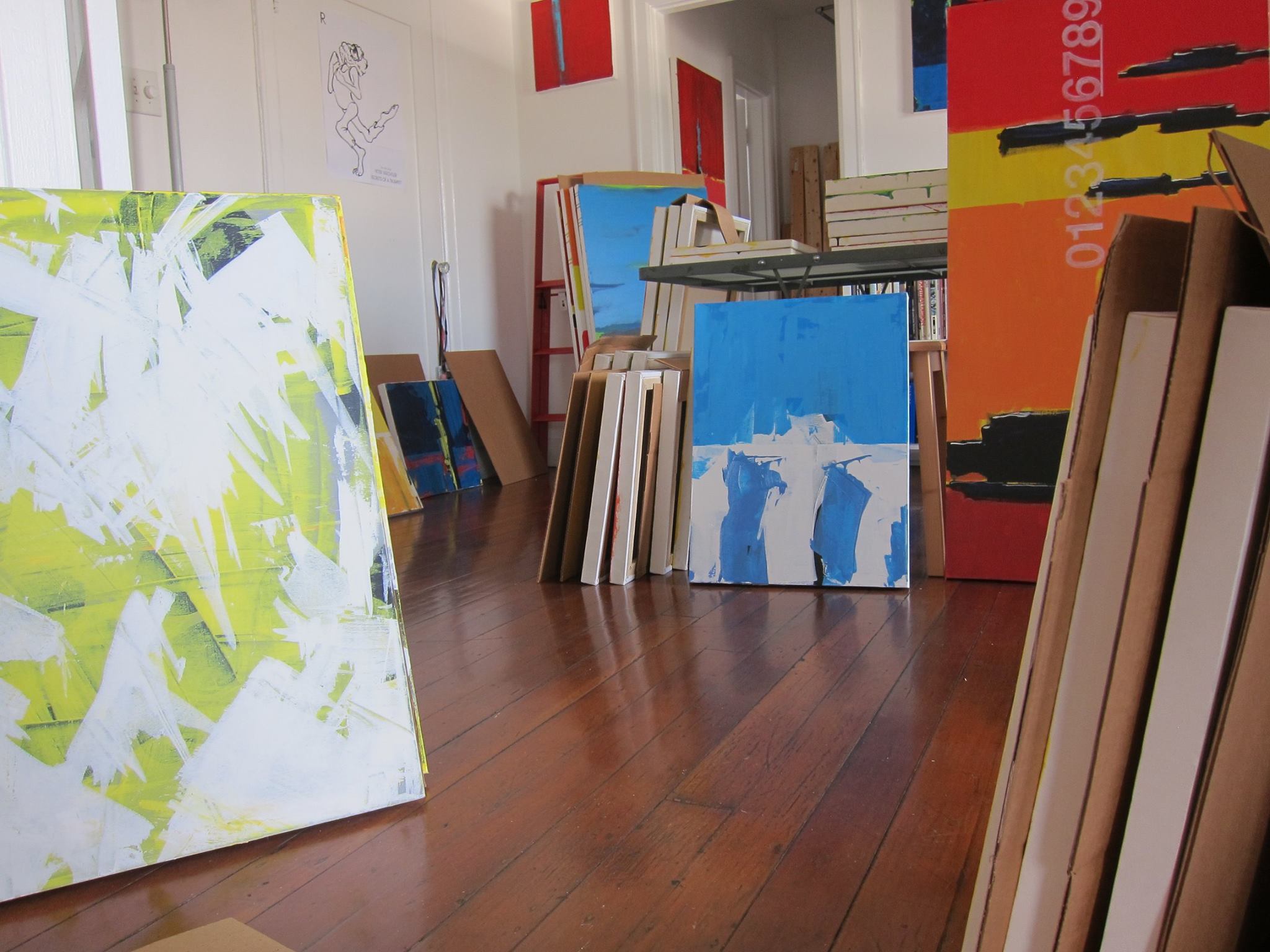
Scherrer studio

With a degree in graphic design and directions to the Rainbow Room, Scherrer was excited by the potential of the LA art scene in the early 90s, and enrolled at Art Center College of Design, completing a BFA in graphic design and packaging, followed by an MFA in media and communications.

Eventually, Scherrer began and ran his own design studio, transitioning from paper and drawing boards to computer-driven designs. But always in the back of his mind as he worked was his love for his first medium, painting. And in the last several years, he’s returned to it, creating a prolific amount of large scale paintings. Today, his computer design is primarily used to set the typography he uses on some of his canvasses.

“In the end, I think my work is very reflective of who I am,” he says. “It’s my way to process my experiences.”

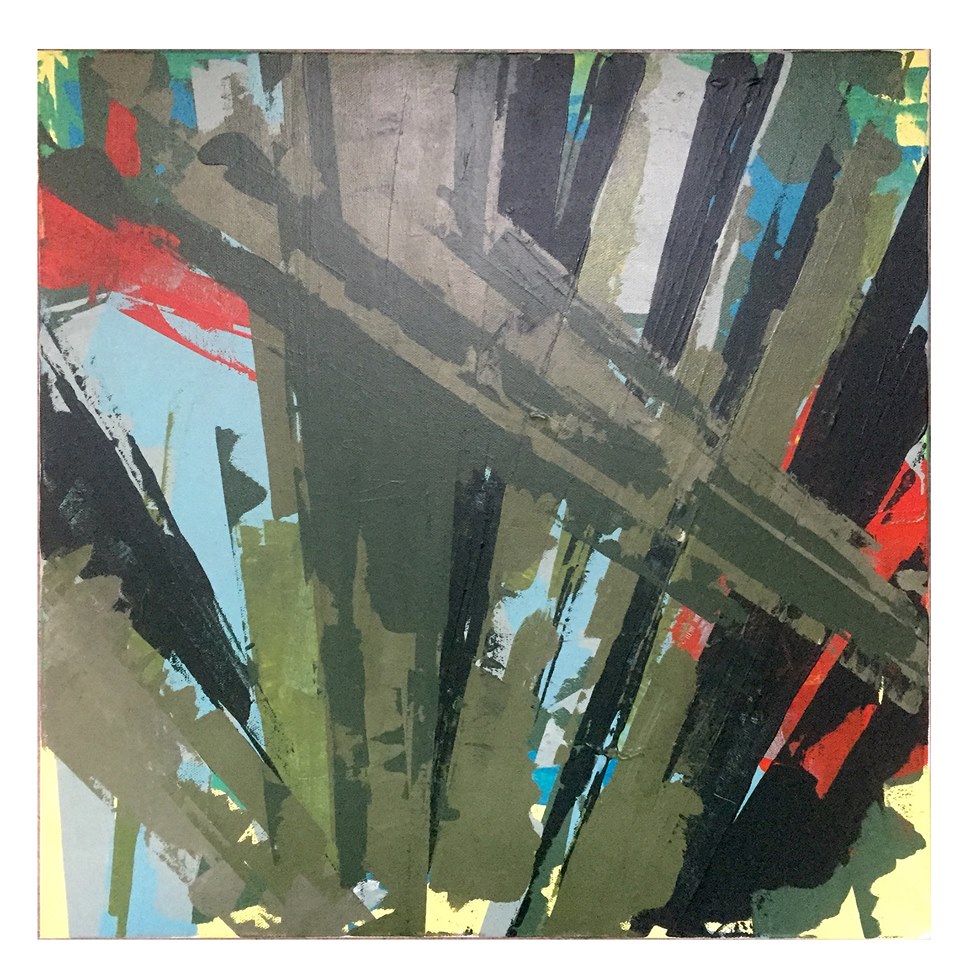
Scherrer acrylic 1

One untitled piece features sweeping, thick olive green lines that reach toward the top of the canvas. The branches of palms, the leaves of birds of paradise, the shadows on downtown skyscrapers, these are the images this piece evokes. The visual pull is toward the sections of blue sky seen through these patterns, drawing the viewer in and up.

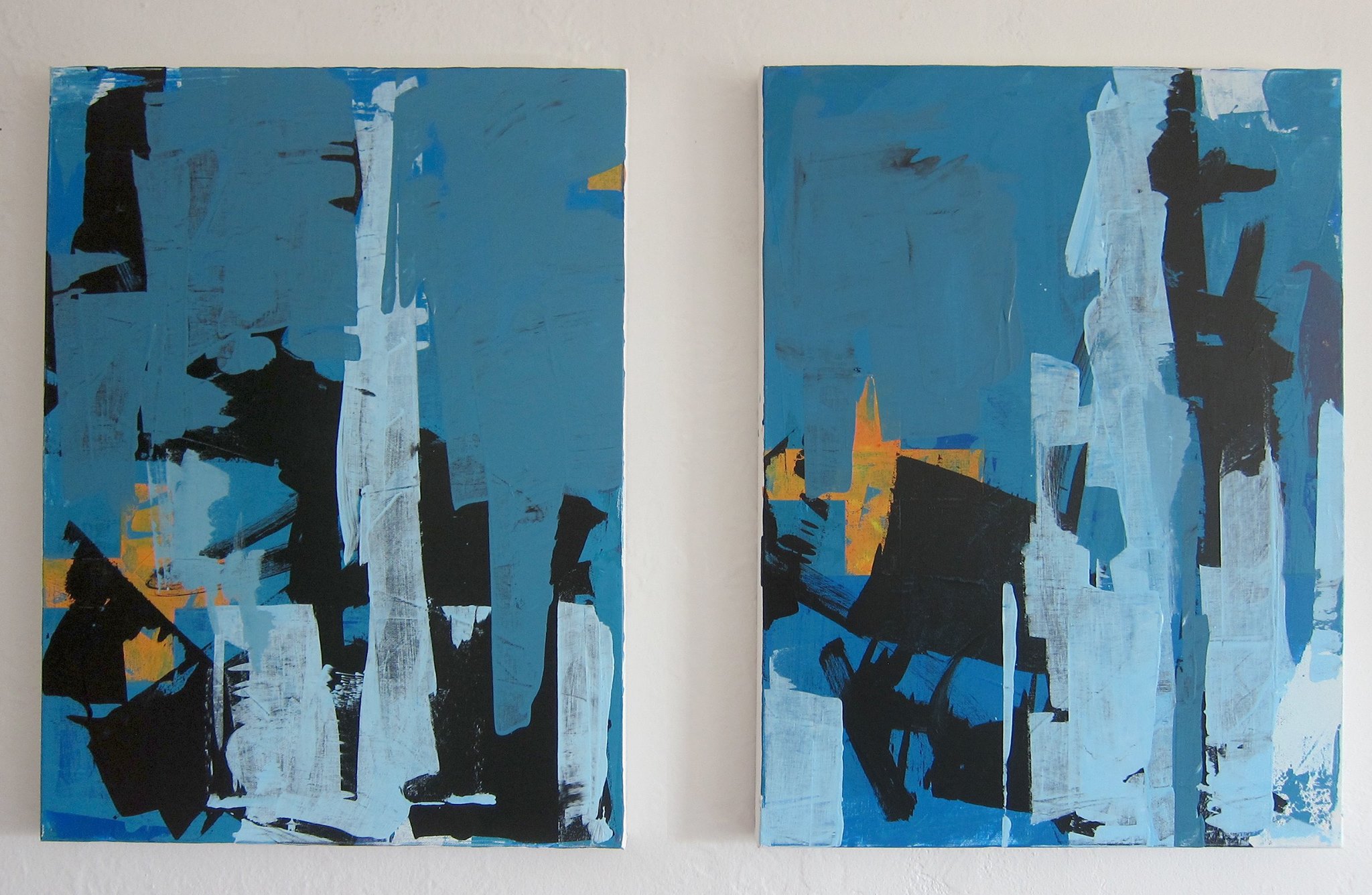
Scherrer Morning after

Another work, “The Morning After,” features cool, vertical swathes of blue, while less linear black and gold shapes jut out from it, in images that resemble supplicants. The question here is what happened the night before.

Scherrer acrylic 2

An untitled 18 x 18 canvas features white, green, blue, and pink rectangular shapes, bisected by sinuous gold, black and mint green. The colors and the shapes themselves very much evoke Southern California, perhaps as seen from a descending airplane at LAX, or as images on Google Earth.

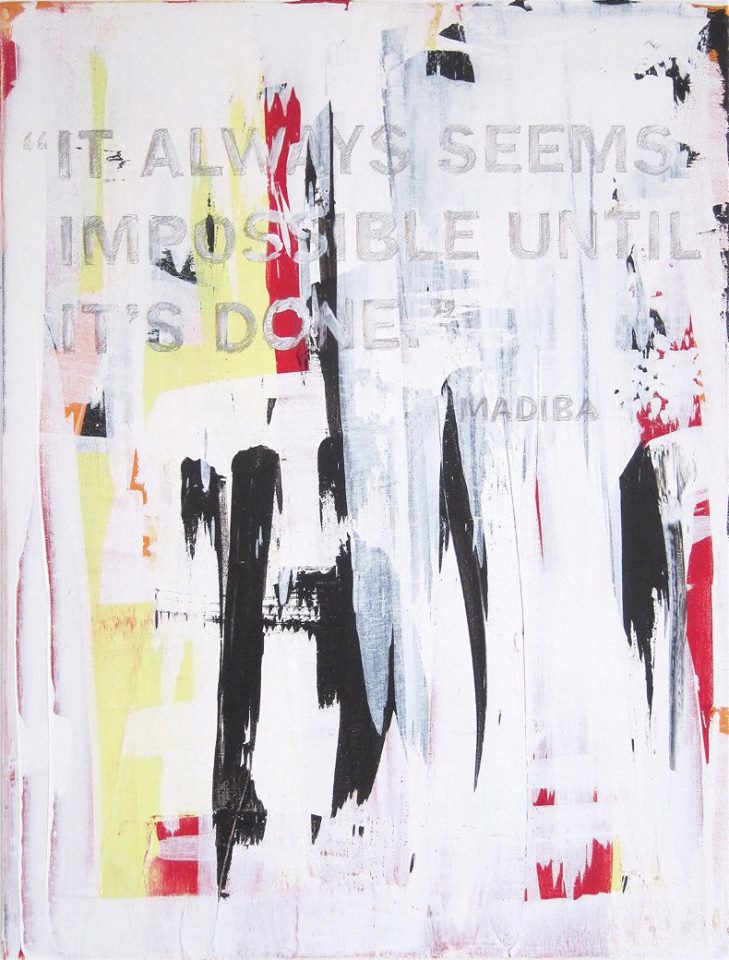
Scheerer it always seems impossible

“It Always Seems Impossible Until It’s Done” strongly reinforces its graphic component with white paint layered on top of black, red, and yellow. What is this impossible task? A white- washed fence? White-washing feelings or issues? Painting itself? Some of the patterns here are reminiscent of tire tracks. There’s a traveling motion to the piece, a journey to that impossible place, whatever and wherever it may be.

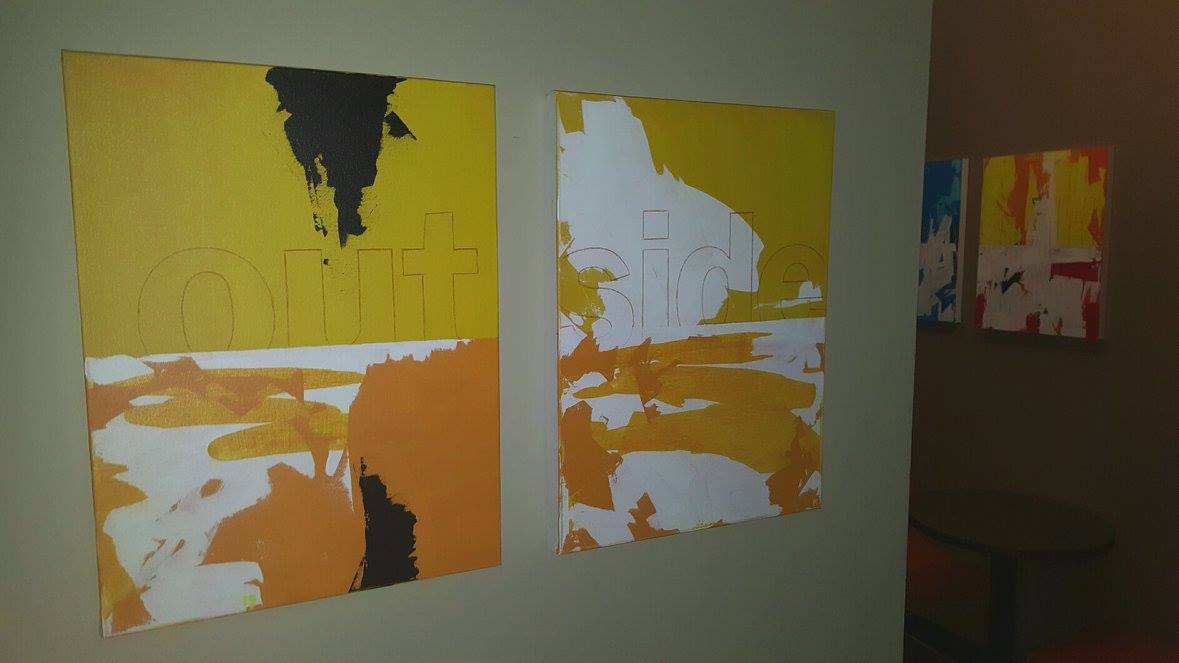
Scherrer Out Side

“Out side” are two paired pieces in gold, bronze, and white, the canvas that reads “out” includes rough islands of black. Depicting what could be sand dunes, beaches, an escape into and from the Golden State, these works, like so many others, are almost subliminally evocative of Los Angeles as a whole. Having come from a completely different space – a small Swiss town – at a young age, Scherrer may well be channeling both his first impressions of LA and the qualities of its color, light, and meaning that he has absorbed over the years.

Scherrrer Salt

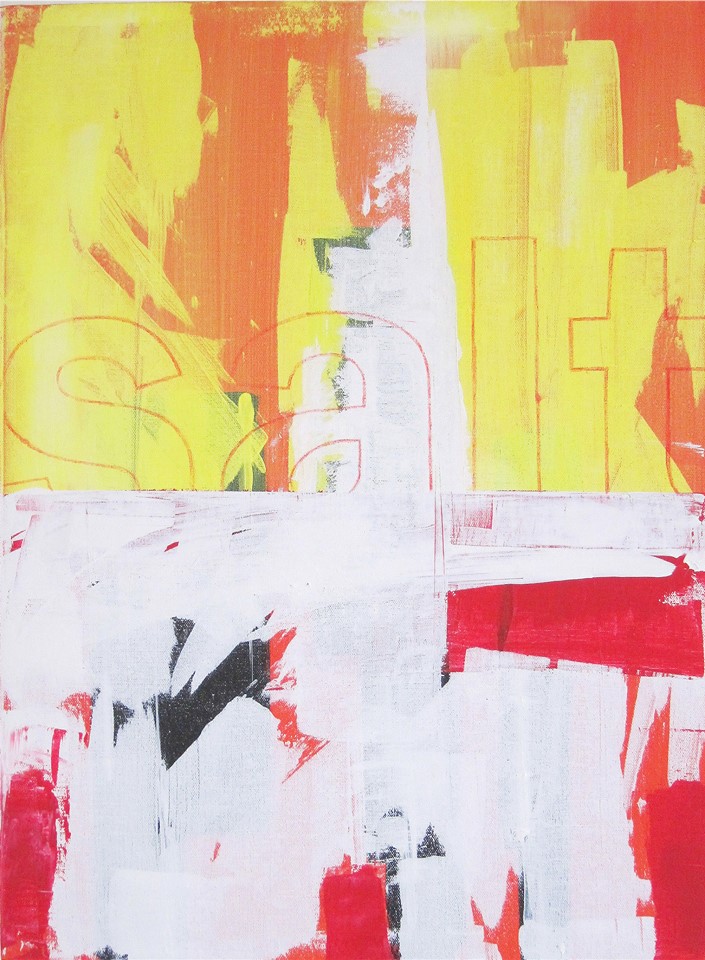
“Salt” is a white mounding over red, black, yellow, and orange. The word expresses the design here, which appears to suggest a certain seasoning added to heighten sunset shades, or a visceral flavor added to what could be a mundane mix of colors and shapes.

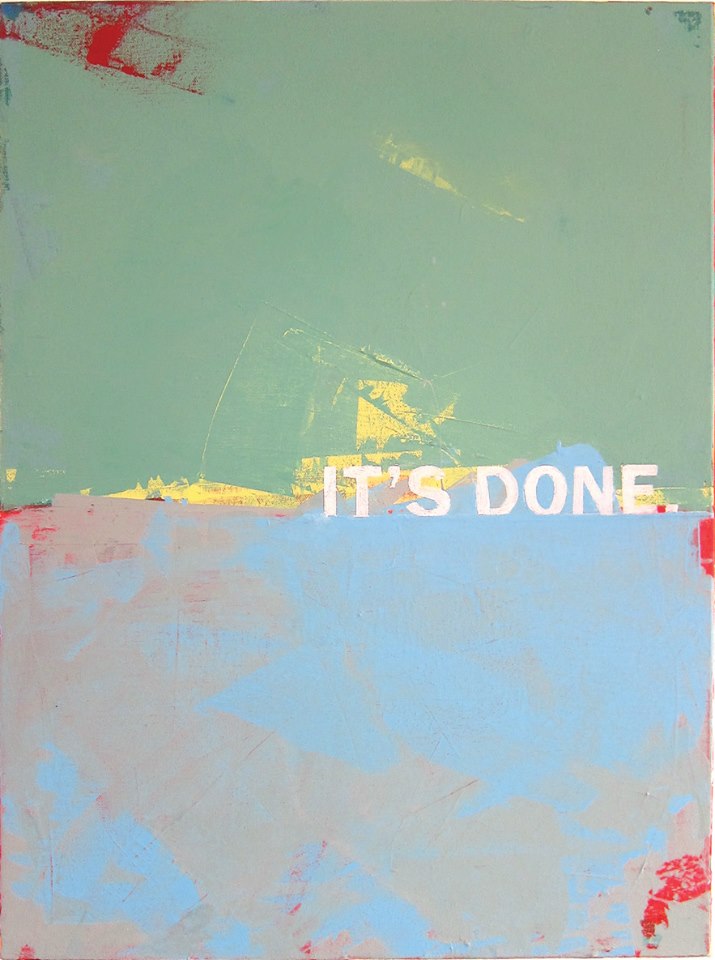
Scherrer done

There is nothing that is tepid or staid in Scherrer’s works, all are richly visually flavored. They’re bold, they’re bright, they’re images we may not be able to explain and yet ones that we intrinsically recognize, primal. The artist’s big pictures – both literally and figuratively – are as instantly identifiable as the Hollywood sign, and in their own way, already as iconic.

  • Genie Davis; Photos provided by artist and ShoeboxPR

Self Portrait as Self: Jane Szabo at MOAH

jane Szabo 3
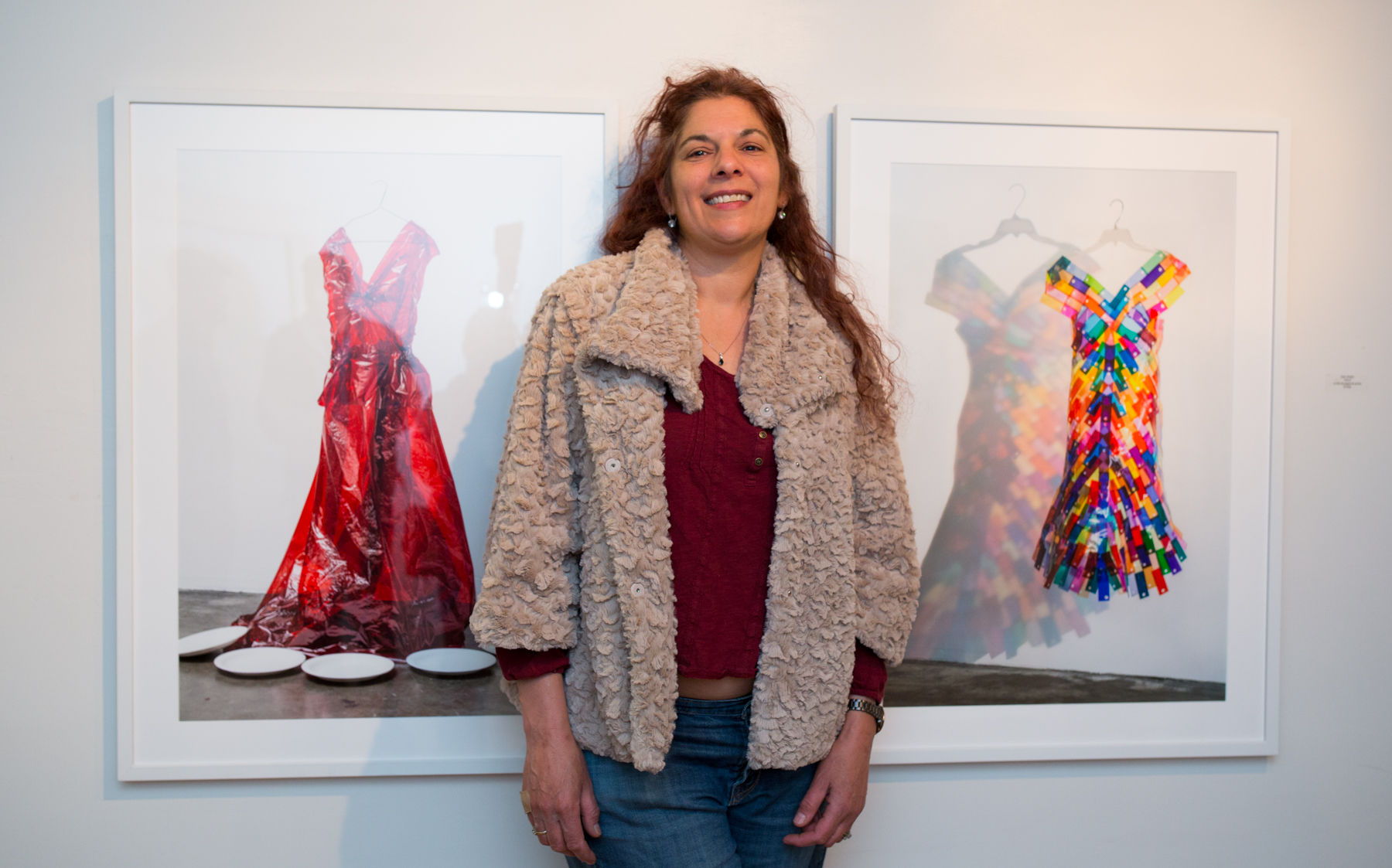
Opening May 7th at MOAH, the Museum of Art & History in Lancaster, contemporary artist Jane Szabo’s Self Portrait as Self Investigation is one of four solo exhibitions that comprise the museum’s Artist as Subject.

F23C8621

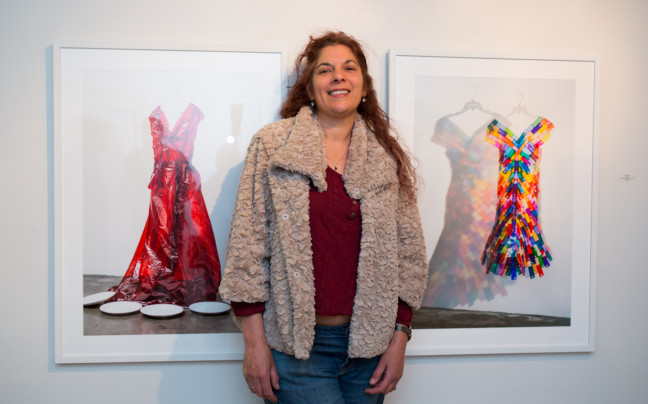
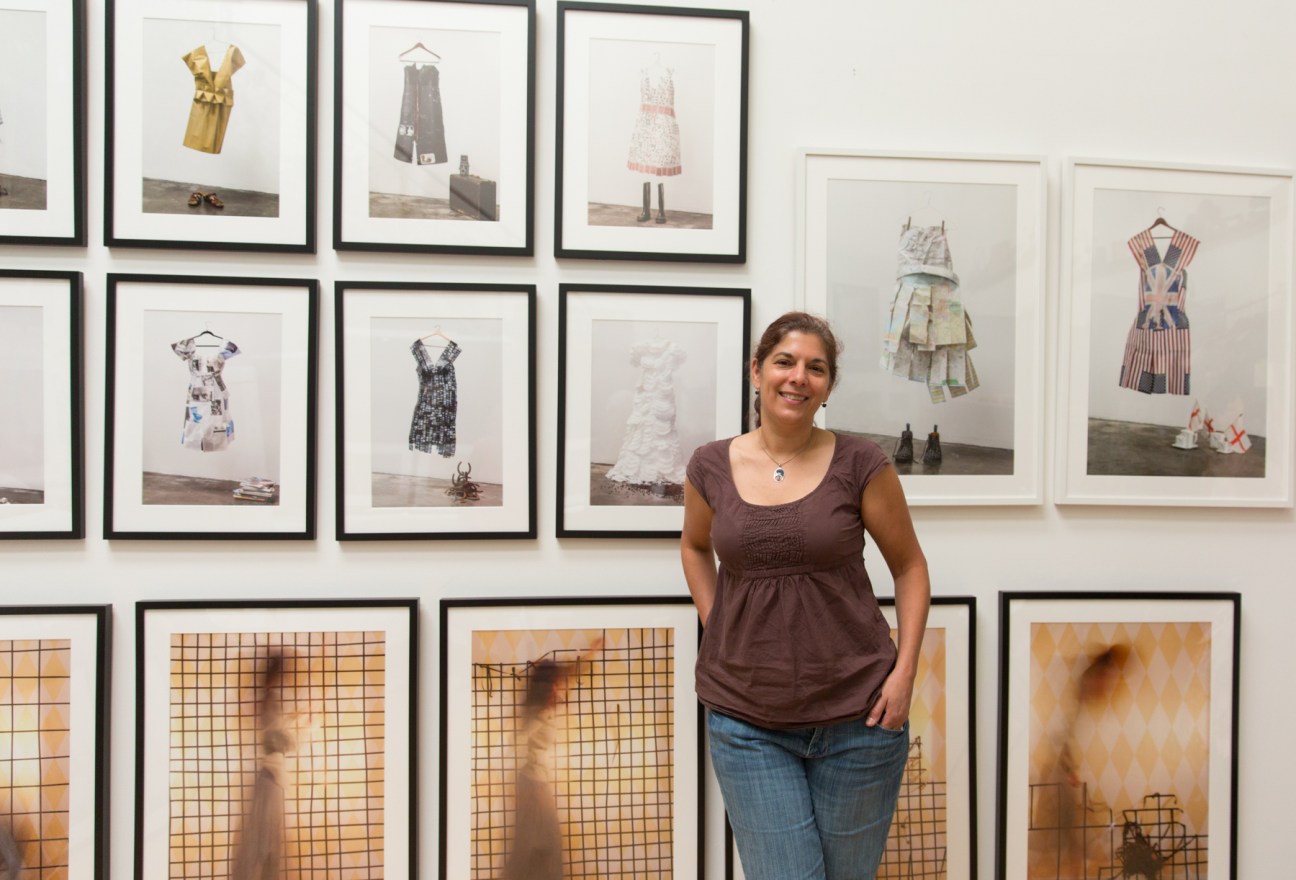
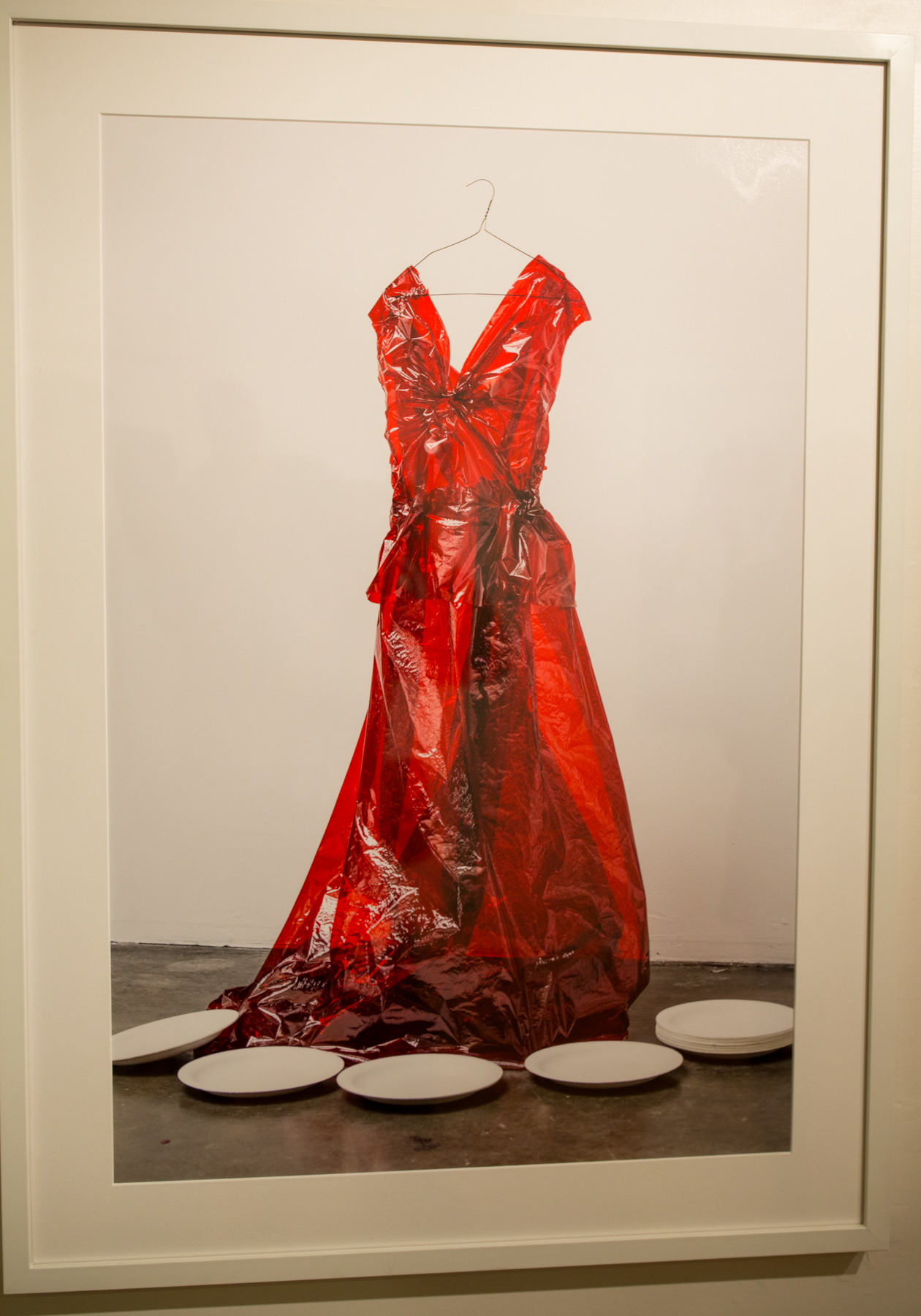
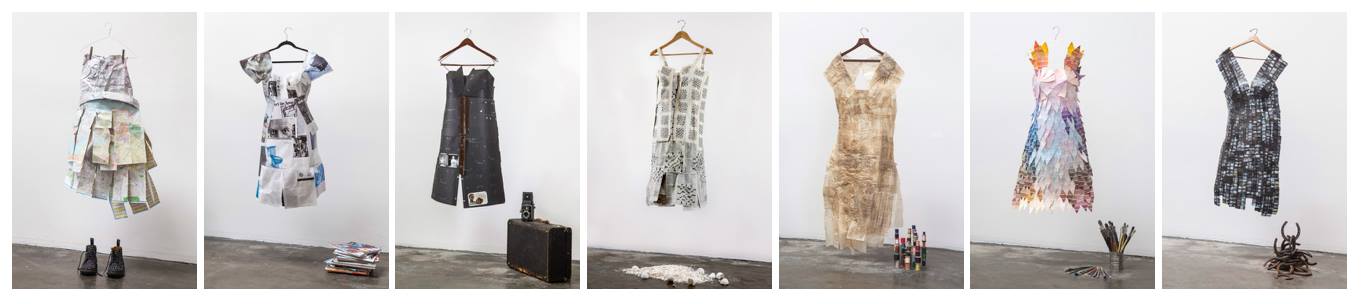
Szabo’s fine art photography blends sculpture, installation art, and photography with fashion itself through her series of portraits, which go far beyond what is typically thought of as self-portraiture. She does not appear in her photographs physically, although her presence is nonetheless very much felt. Instead, Szabo’s self-portraiture is all about the dress. The artist photographs dresses. But these are no ordinary dresses, rather they are constructs, artworks designed as dresses that in a beautiful, evocative way define the person they are meant to clothe, the artist – and the viewer.

The garments themselves are stunningly beautiful, crafted by Szabo out of everyday objects such as road maps, coffee filters, cellophane, even sample filters for lighting gels. She explains “They suggest a persona and become a stand-in for myself, who I am, am not, and who I wish to be.”

Jane Szabo dresses

Each of her works seem alive with light and form. The pieces are playful, using the human form – or the dresses that could be hung upon it – as sculpture. Her photography is vivid and representational, yet her somewhat surreal fashions create an almost otherworldly look. Her dresses could be the carapaces of creatures from a different planet – or the external “skin” we shed, the covering that hides, or, like Egyptian sarcophogi, represents, the spirit within.

Szabo’s subjects are each a still life, a study in a garment that clothes the spirit rather than the body. And yet, though clearly unable to “move” on their own, her photography is hardly still. Rather, it creates a breathtaking illusion, as if the dresses could suddenly start dancing, and take on a ghostly life of their own.

Recently, the artist has begun, in her own words, to “push the envelope” on her dress photographs. “I’m engaging in different ways than I have in the past. I don’t want to get too formulaic with the dress ingredient.”

F23C8622

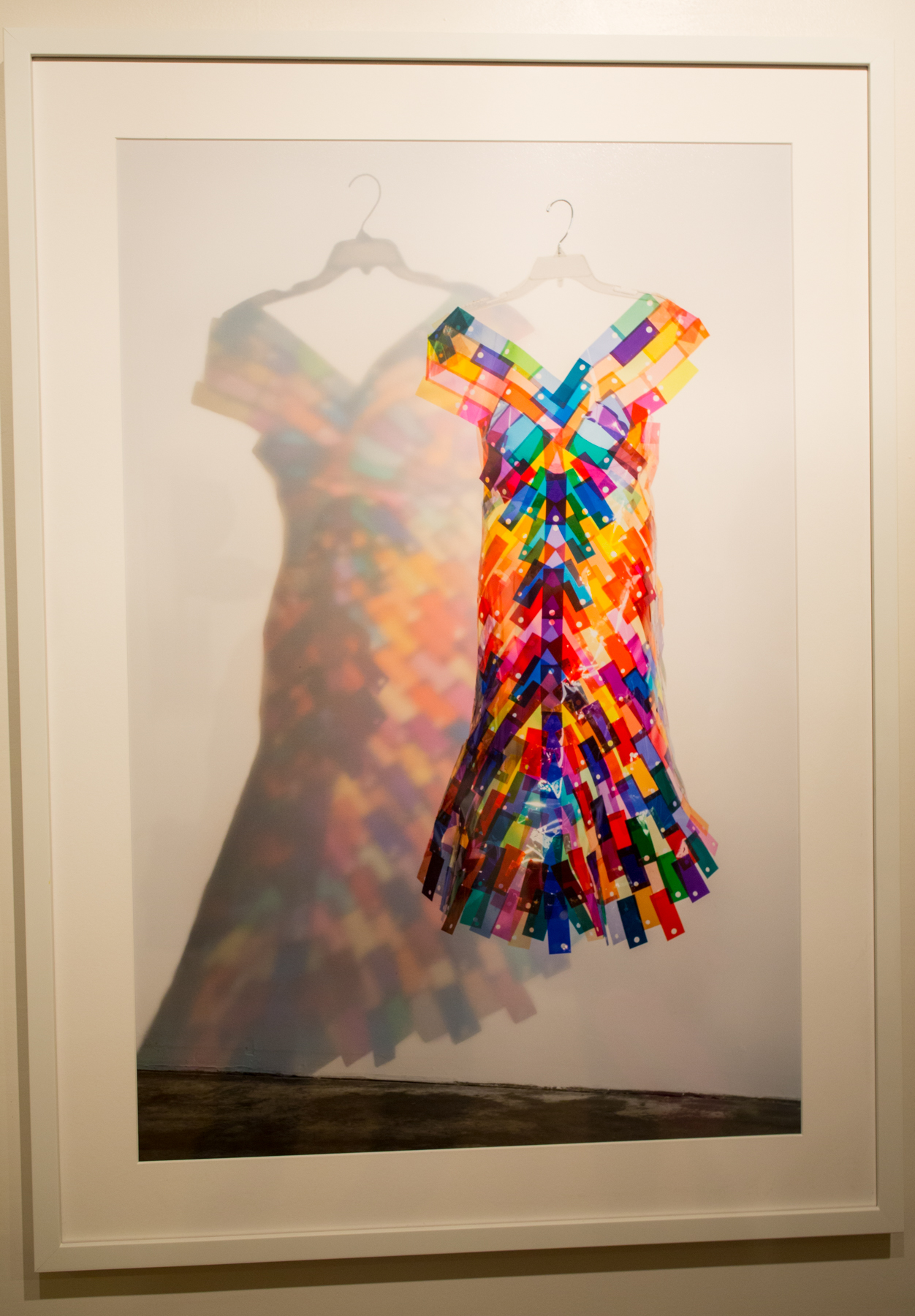
Take as an example the dress made from sample filters for different lighting gels available for use in the film industry. From these, Szabo created a dress that is part rainbow, part stained glass, a multicolored, transparent “skin” that captures light and reflects it. The dress as a window to the soul, perhaps.

“I love the out of focus, cast light projection behind the dress. It was projected on the wall behind the dress and photographed using a single exposure,” the artist relates.

As one of four artists interpreting self-portraiture at MOAH, Szabo has long been intent on exposing the inner through the outer. If a raiment is the wrapping paper, what is inside? And who says you can’t literally wear your heart – and soul – on your sleeve? Szabo definitely does, expressing self-identity, female identity, and society’s role in creating both personal and gender image.

Her photographic narrative is highly personal, expressing the dichotomy between self-imposed structure, societal structures, and the nearly indefinable yet unquenchable spirit of true self. One could not find a more experiential form of self-portrait for both viewer and subject.

Along with the dresses themselves, Szabo pairs related objects with the dresses, creating a complete story with compelling connections between society, the individual, and self.

Jane Szabo 2

She pushes the boundaries of self-reflection beyond a simple gaze at her reflected image into the core of her being, drawing her portraits from what she describes as her own mythology, yet letting the images take on a life and story of their own, encouraging viewers to “try on” one of the personas she depicts.

Her photographic compositions have the formal construction and delicate appearance of paintings, while maintaining the illusion that they’re ready to swirl into motion. Both aspects of Szabo’s work reflect her background as a painter and installation artist, as well as a career that included creating custom props and scenery.

F23C8617

The Los Angeles based artist has had work included in exhibitions at the Oceanside Museum of Art, the Griffin Museum of Photography, Colorado Center for Photographic Arts, PhotoSpiva, San Diego Art Institute, The Los Angeles Center for Photography, Orange County Center for Contemporary Art, and Gallery 825 in Los Angeles. Her series Sense of Self was featured in a solo show at the Los Angeles Center for Digital Art in 2014, and earlier this year, as a solo exhibition, Investigating Self at the Yuma Fine Art Center in Arizona.

Along with Szabo’s work, MOAH’s “Artist as Subject” features solo exhibitions by Nataša Prosenc Stearns, Kent Anderson Butler, Eric Minh Swenson, Rebecca Campbell and a retrospective on local artist Andrew Frieder.

Artist as Subject
Lancaster Museum of Art and History – MOAH
665 W Lancaster Blvd, Lancaster Ca 93534
Public opening reception May 7, 4 p.m. to 6 p.m.; the exhibition runs through July 24, regular museum hours are 11 a.m. to 6 p.m., until 8 p.m. on Thursday. The museum is closed on Mondays.

  • Genie Davis; Photos by Jack Burke, and provided by artist