
Four Solo Shows Connect at LAAA’s Gallery 825


F23C0743

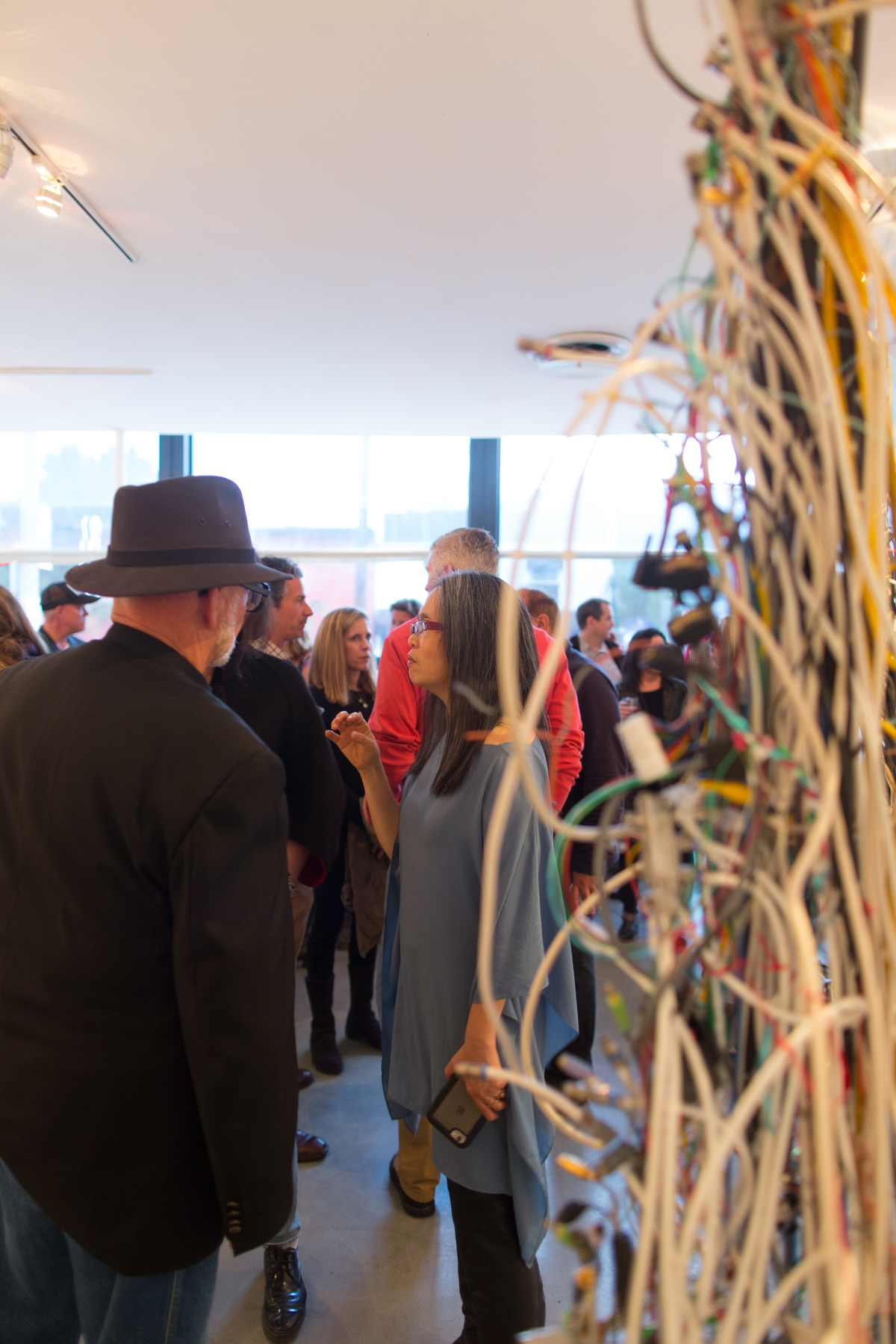
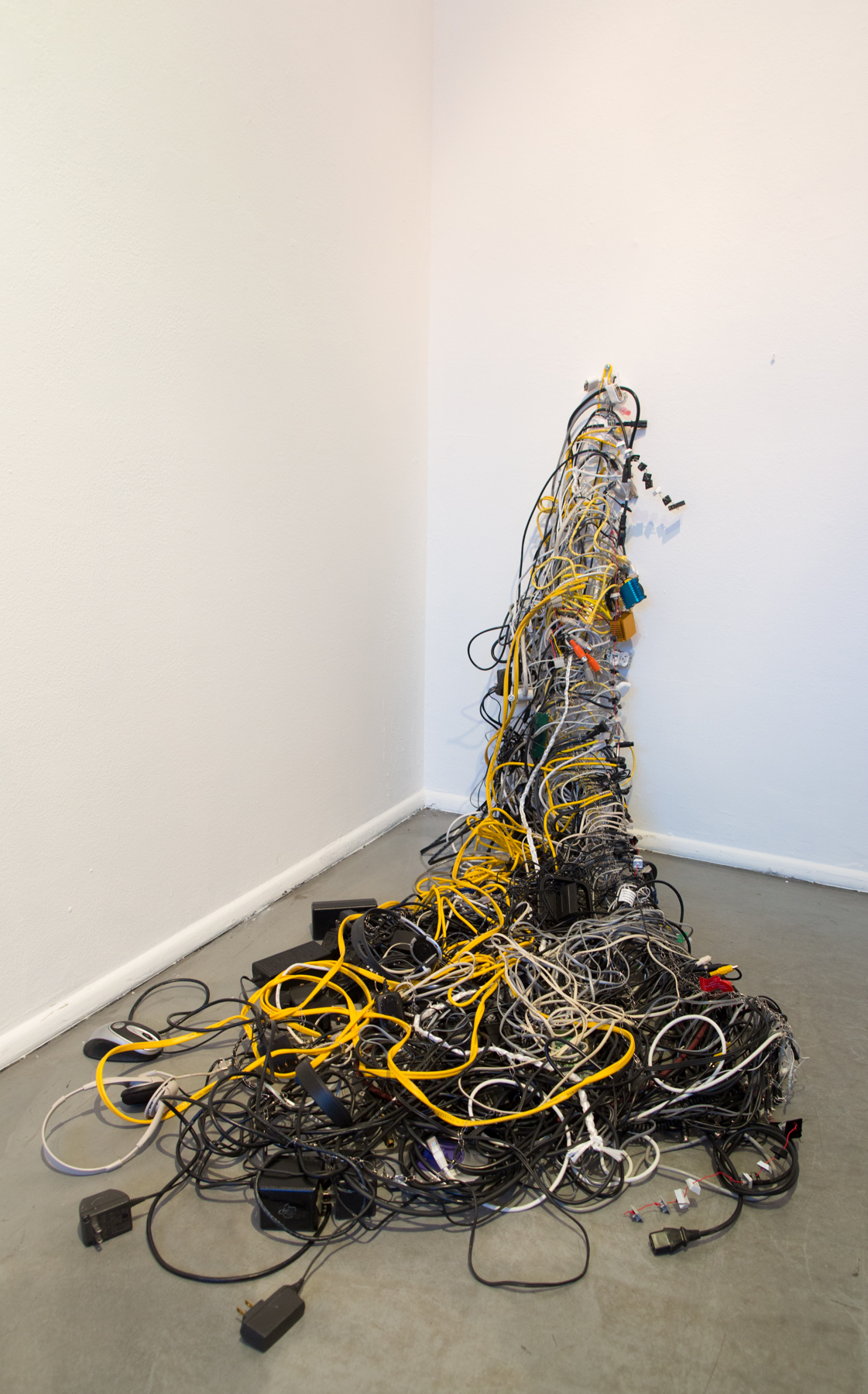
The “4 Solo Shows” now at the Los Angeles Art Association’s Gallery 825 are brilliant parts of a dazzling whole. From Chenhung Chen’s freestanding, exciting sculptures created from wire, cords, and the detritus of technology to Seda Saar’s complex, blossoming  works in colored plexiglass and mirrors, both what we see and what we imagine come to vivid life.
F23C0766

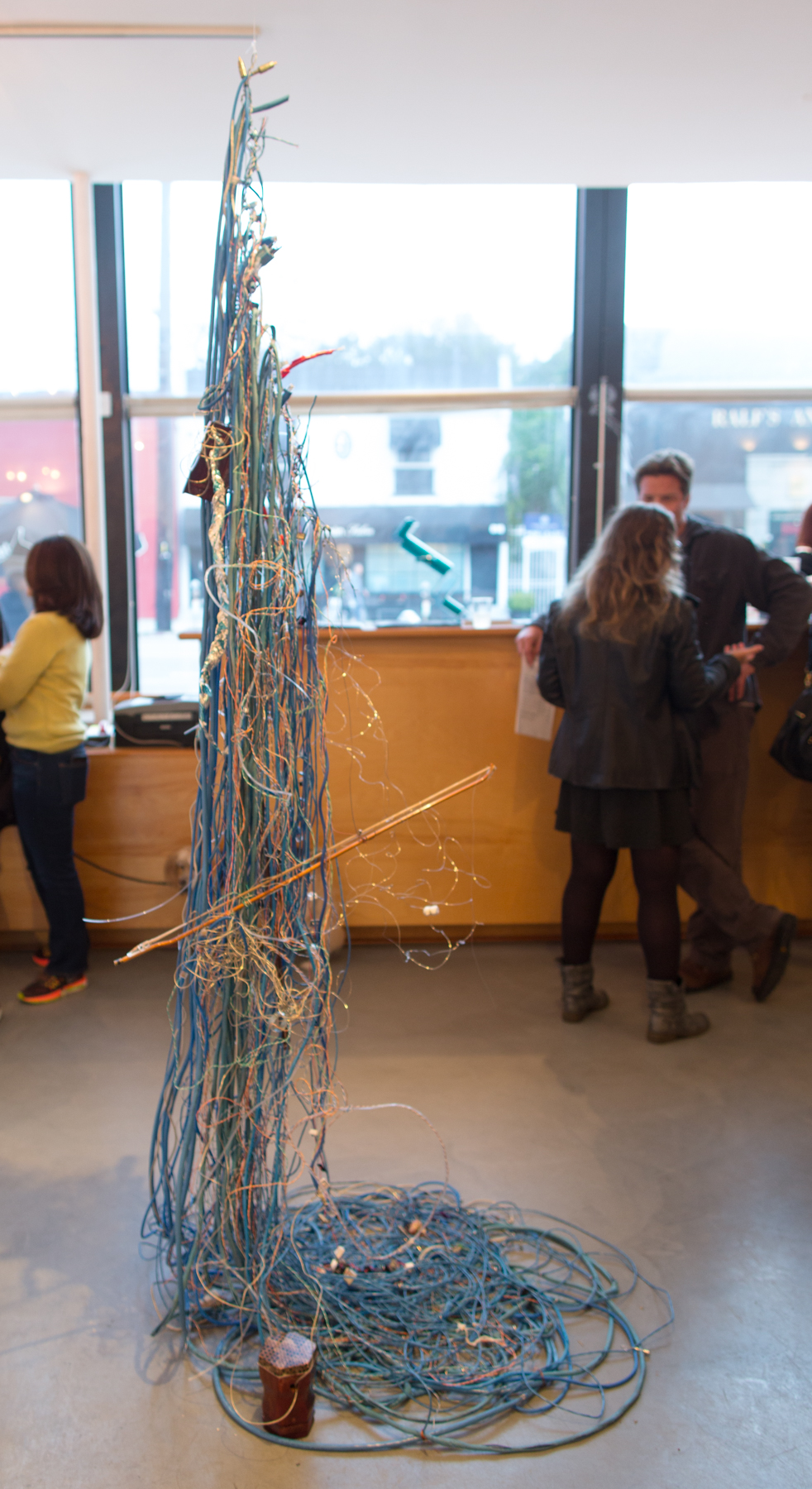
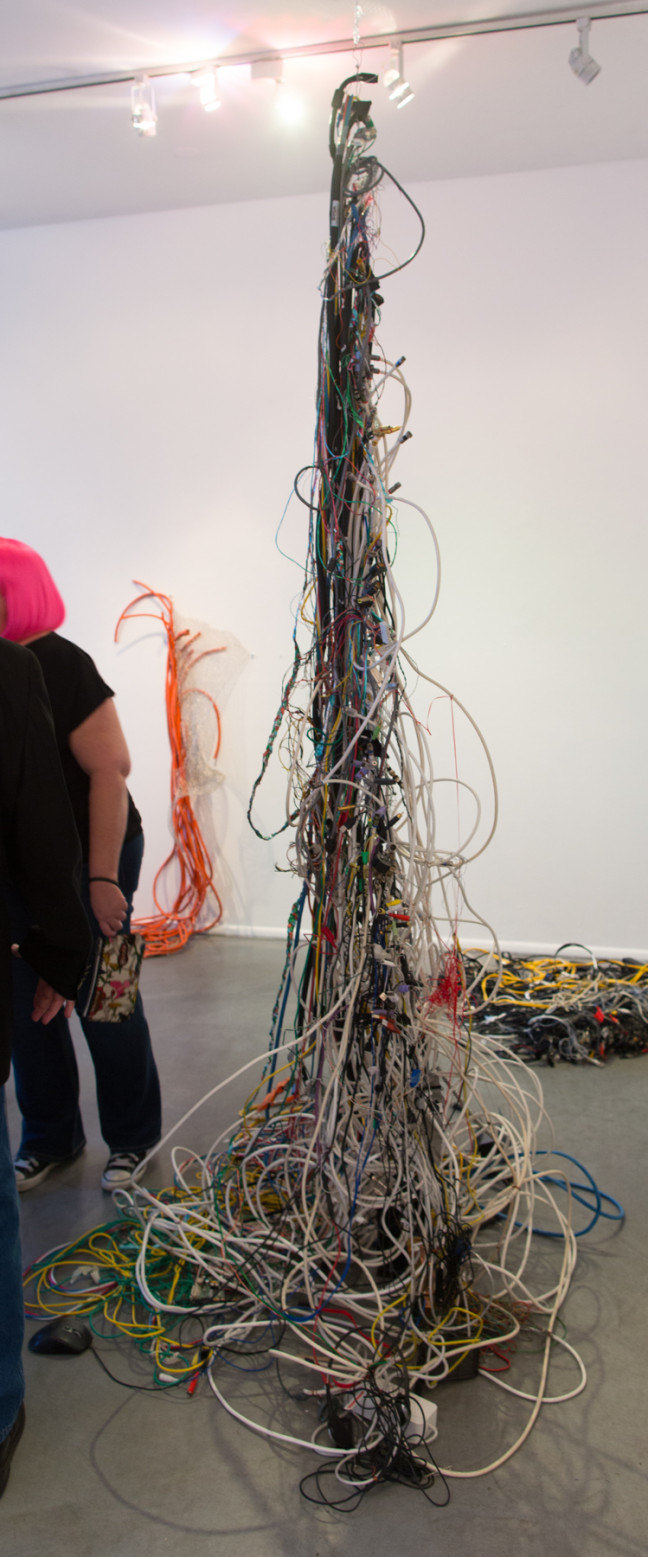
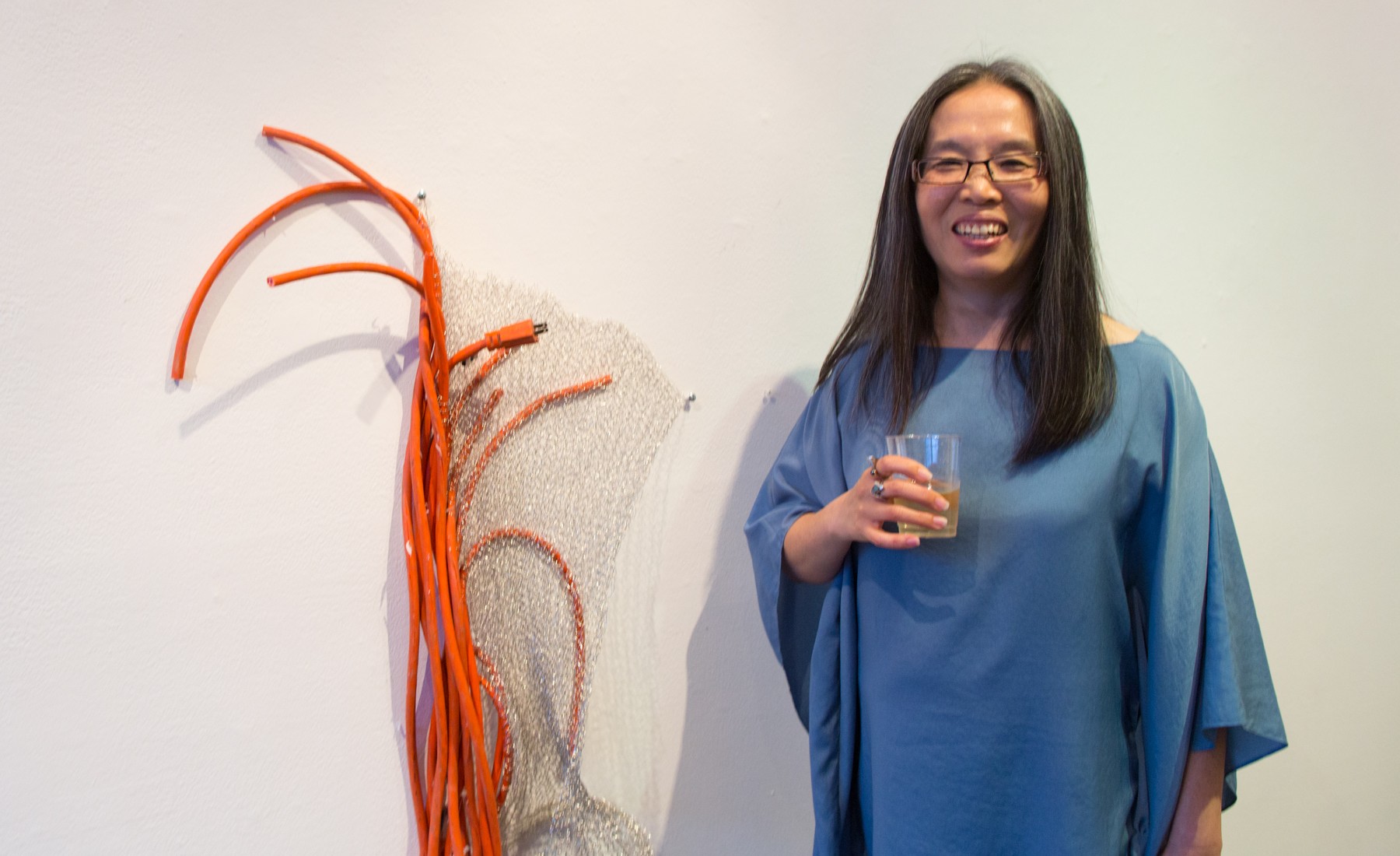
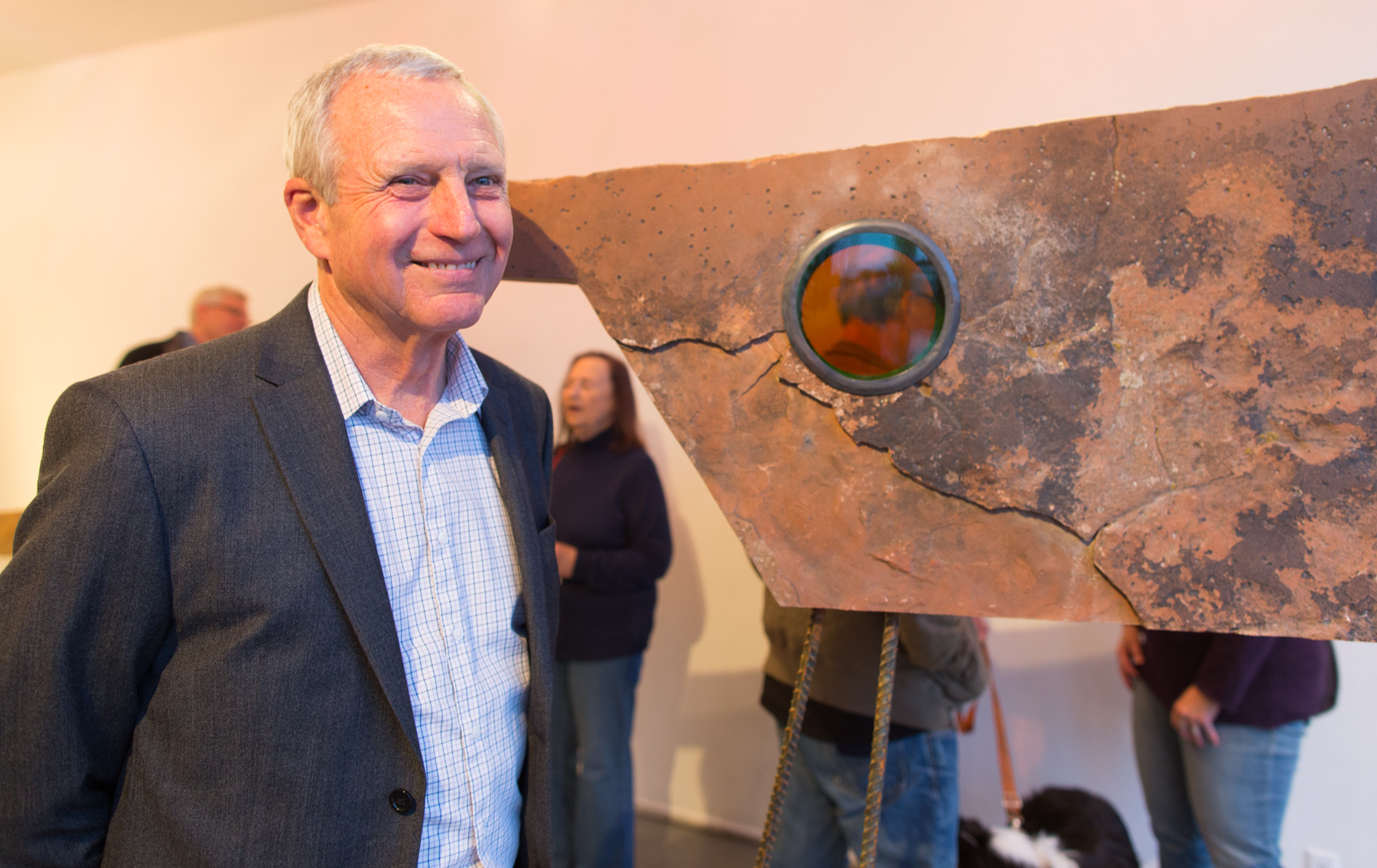
Above, Chen with Entelechy #23

F23C0746

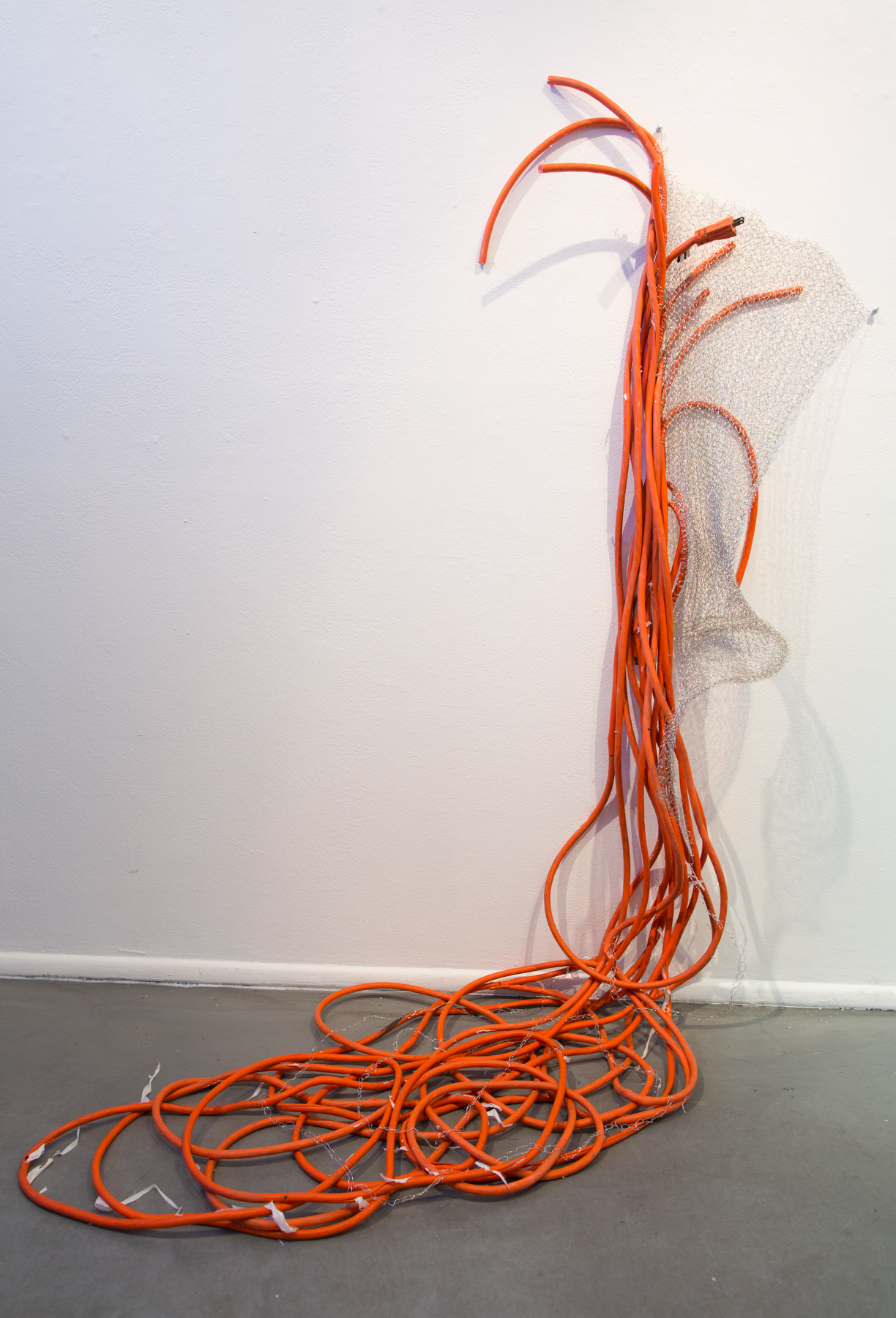
Chenhung Chen’s “Entelechy” is a world built with wires and crocheted metal alloys, with each piece as packed with motion and inside-out exposed imagery as if living creatures have sprung to life from an alchemy of technology and spirit. With each piece vividly different and fluid, the powerful nature of Chen’s vision draws upon the feminine and masculine in each of us, upon the kinetic nature of life itself, humming through our veins as electricity does through wire.  Don’t miss the chance to “plug into” Chen’s compelling work.
F23C0762

F23C0757

F23C0803

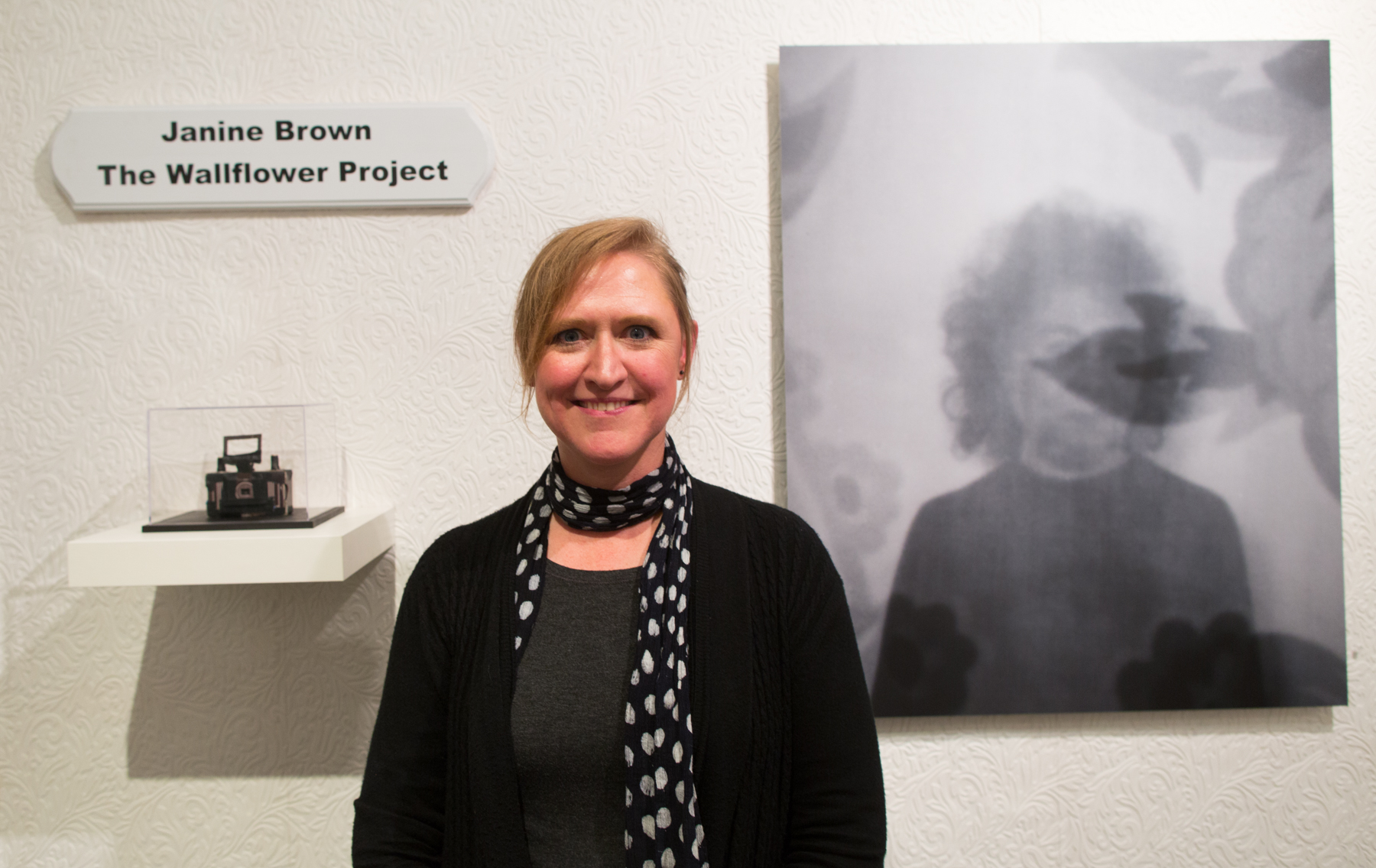
Above, Janine Brown

F23C0801

F23C0799

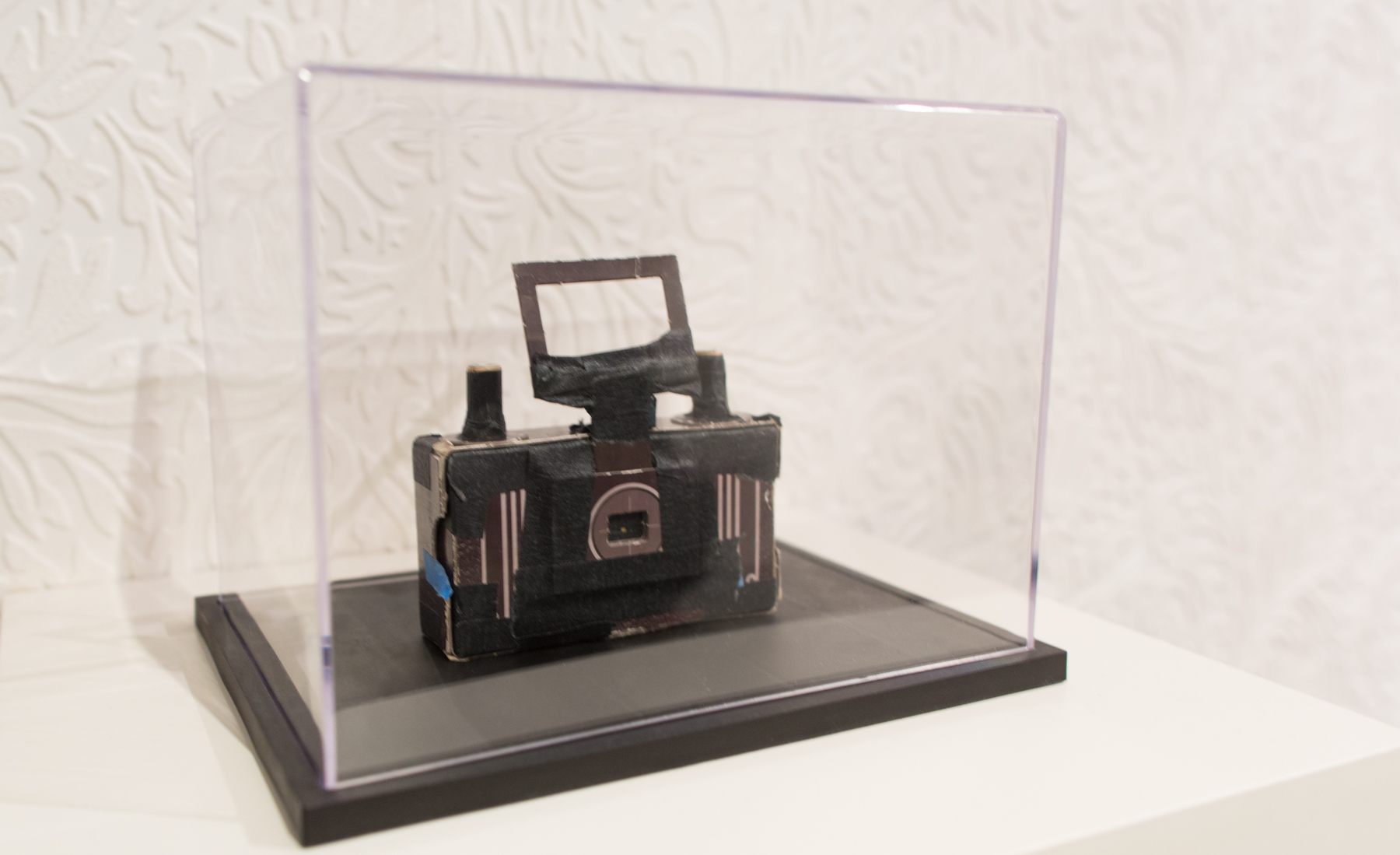
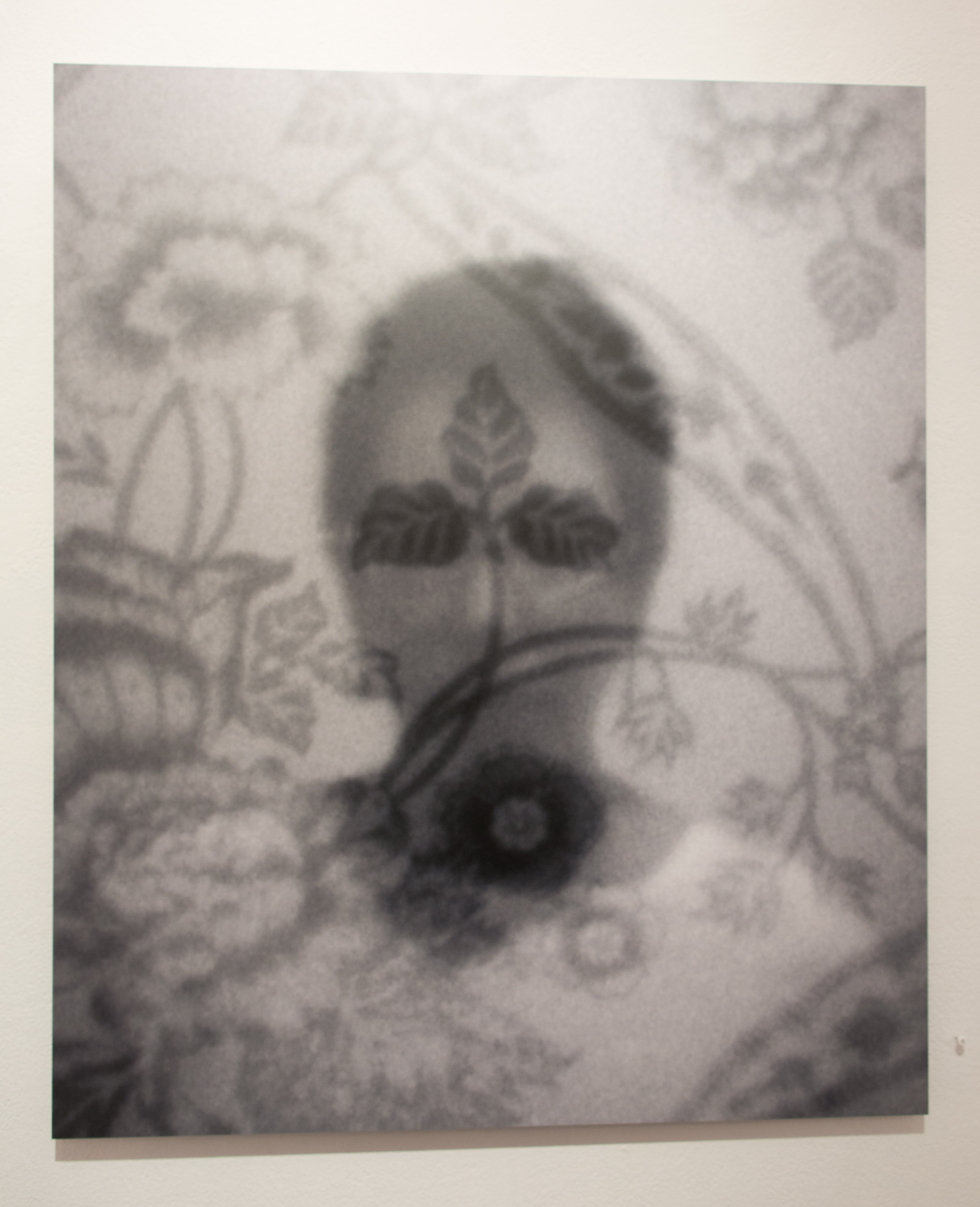
Janine Brown’s “The Wallflower Project” haunts with delicate, almost translucent portraits captured through her self-made cardboard pinhole camera. The idea of a person being a wallflower is the inspiration for her works, an idea which came from a casual remark about her husband’s handsomeness and her own tendency to take a step into the background. The word wallflower was, the artist notes, “coined in Victorian times, a time period in which actual wallpaper was popular.” She started gathering wall- paper samples to create a look in which the subject begins to disappear into the patterns themselves. As her project has evolved, so has her art form, moving from the black and white images in this show, to color images printed directly on wallpaper itself.  The pieces here are haunting, images of the past captured through the prism of the present.
F23C0783

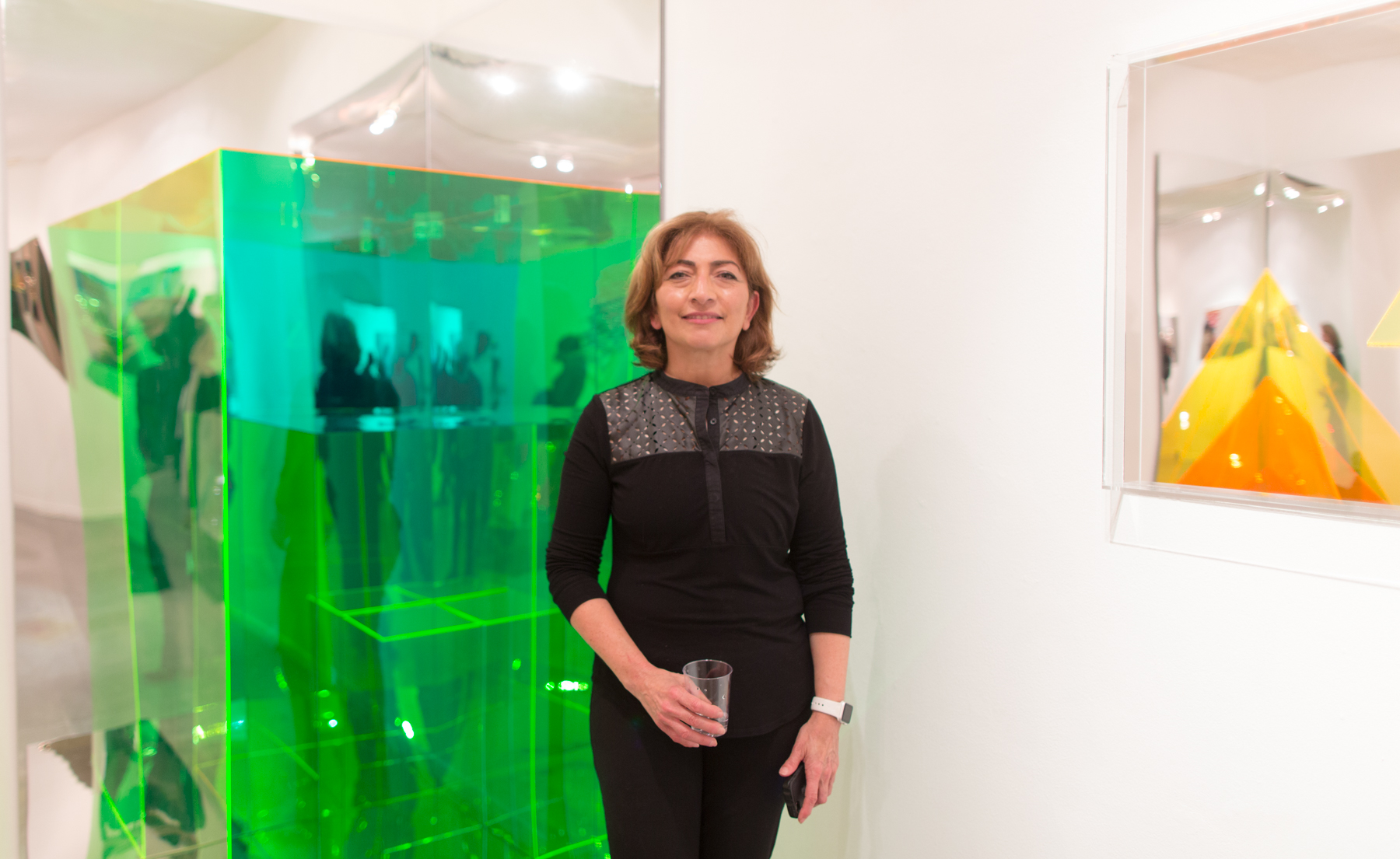
Above, Seda Saar

F23C0797

F23C0786

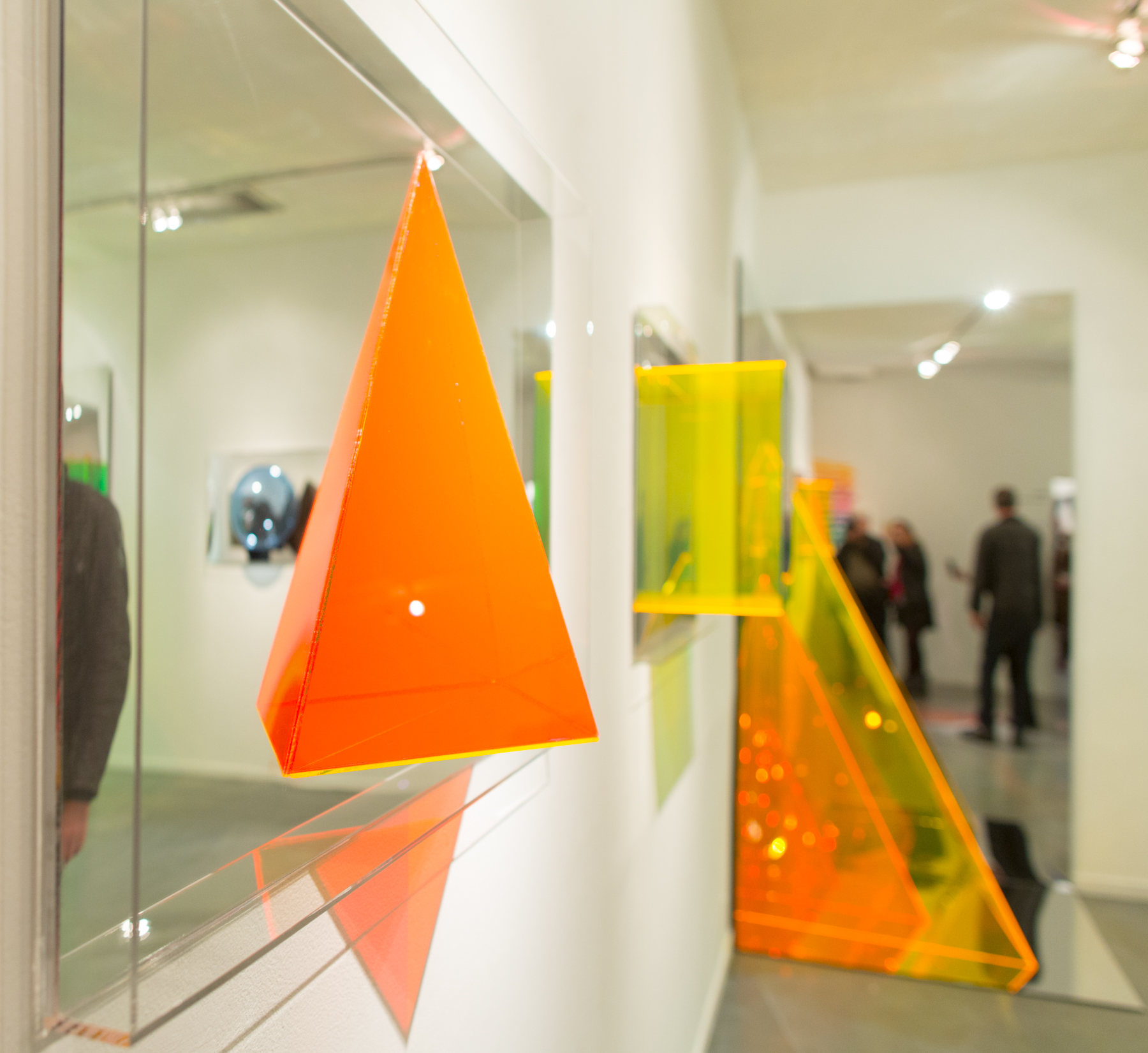
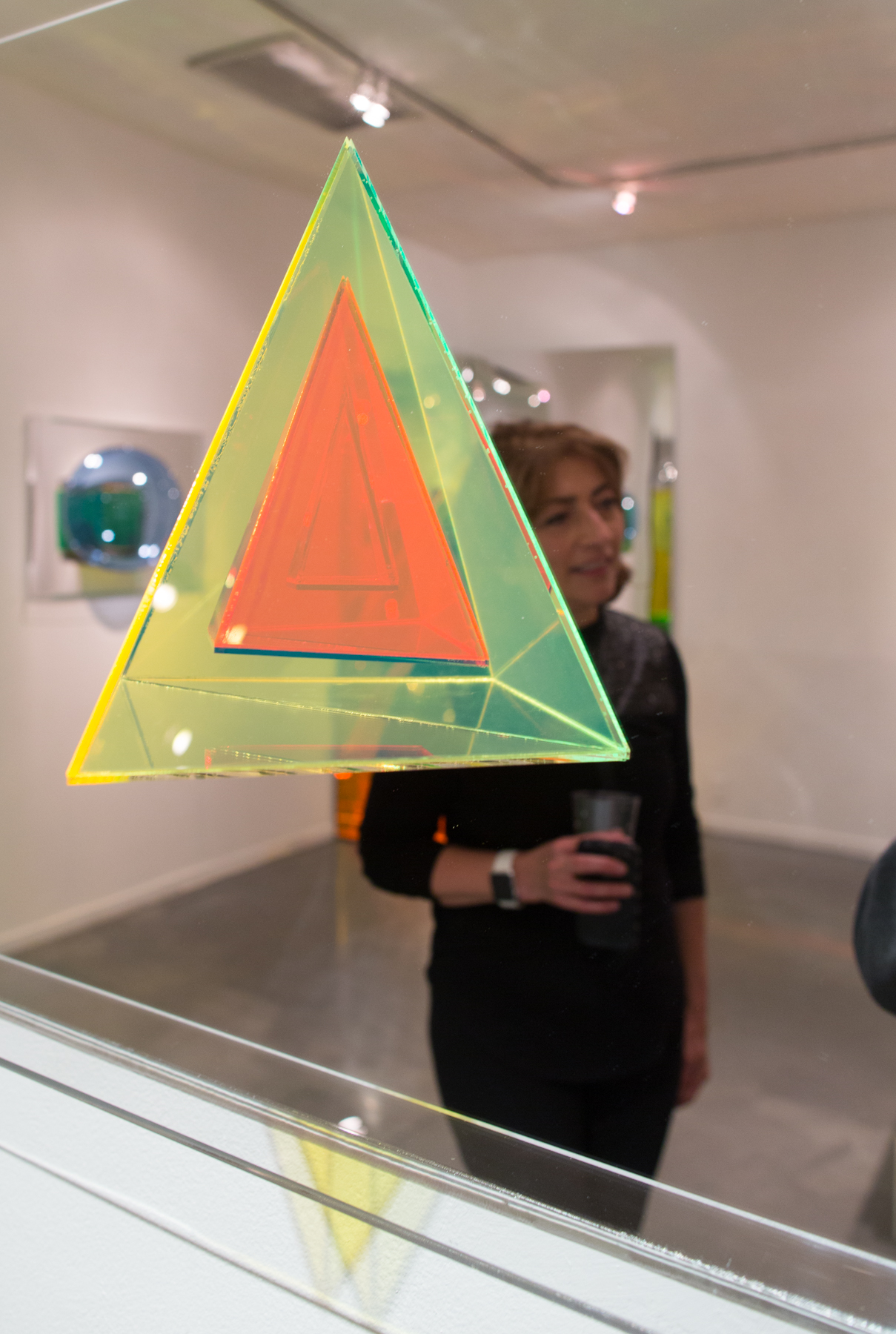
Seda Saar’s “Polyhedron : Art + Reality Are One” is all about illusion. Saar, who has also worked her magic in theme park design as well as sculpture, pulls viewers into a 3D vision that appears to go on forever, “like the ocean, on and on.” Layering light and color constructions made of plexiglass and mirrors, the trippy through-the-looking-glass feeling of Saar’s work is truly magical. The judicious use of mirrors creates a scene that feels like an alternate reality – figuratively stepping inside, the viewer sees the building blocks of fractals creating an entire universe both light and bright.
F23C0764

Above, Devin Thor

F23C0735

F23C0731


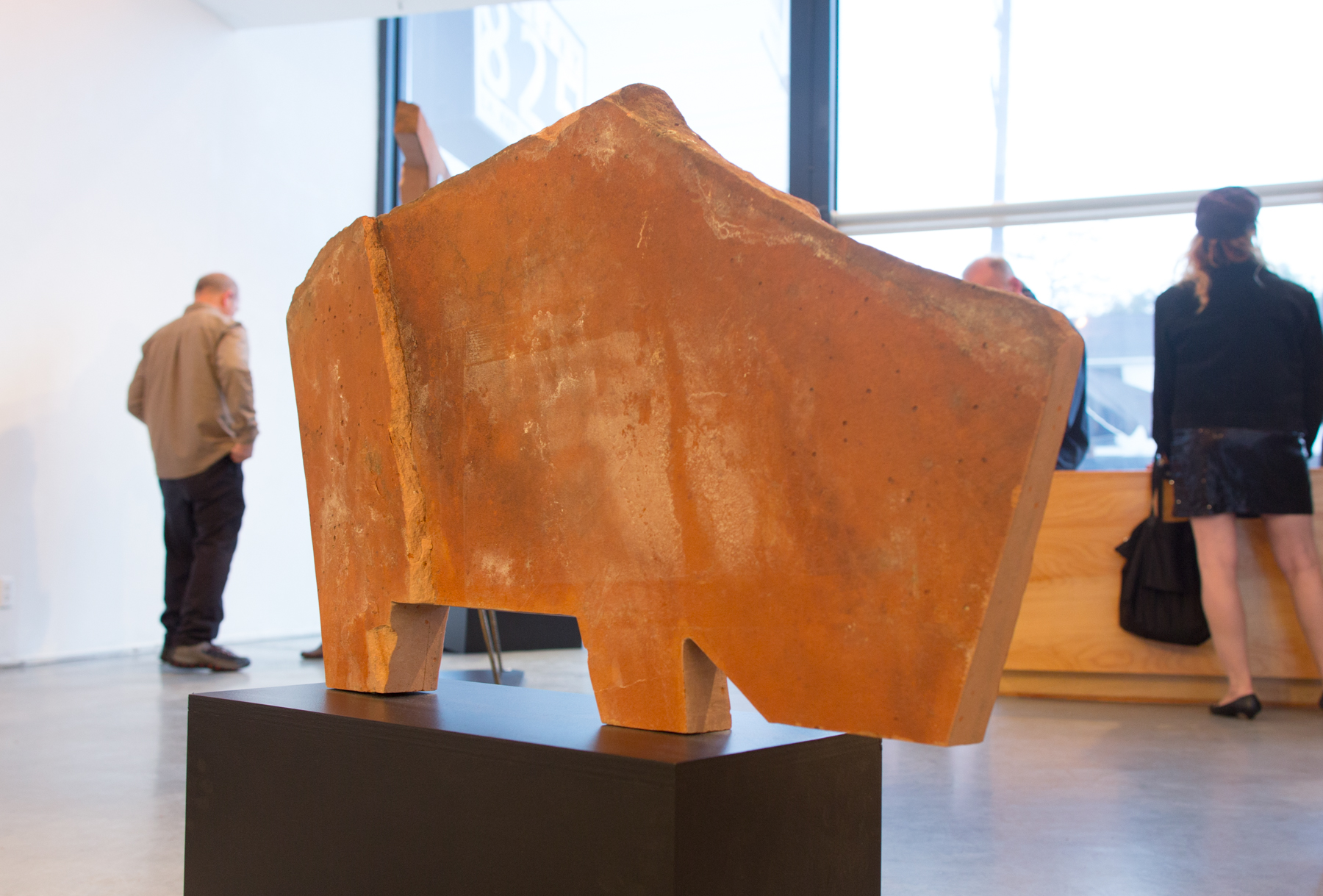
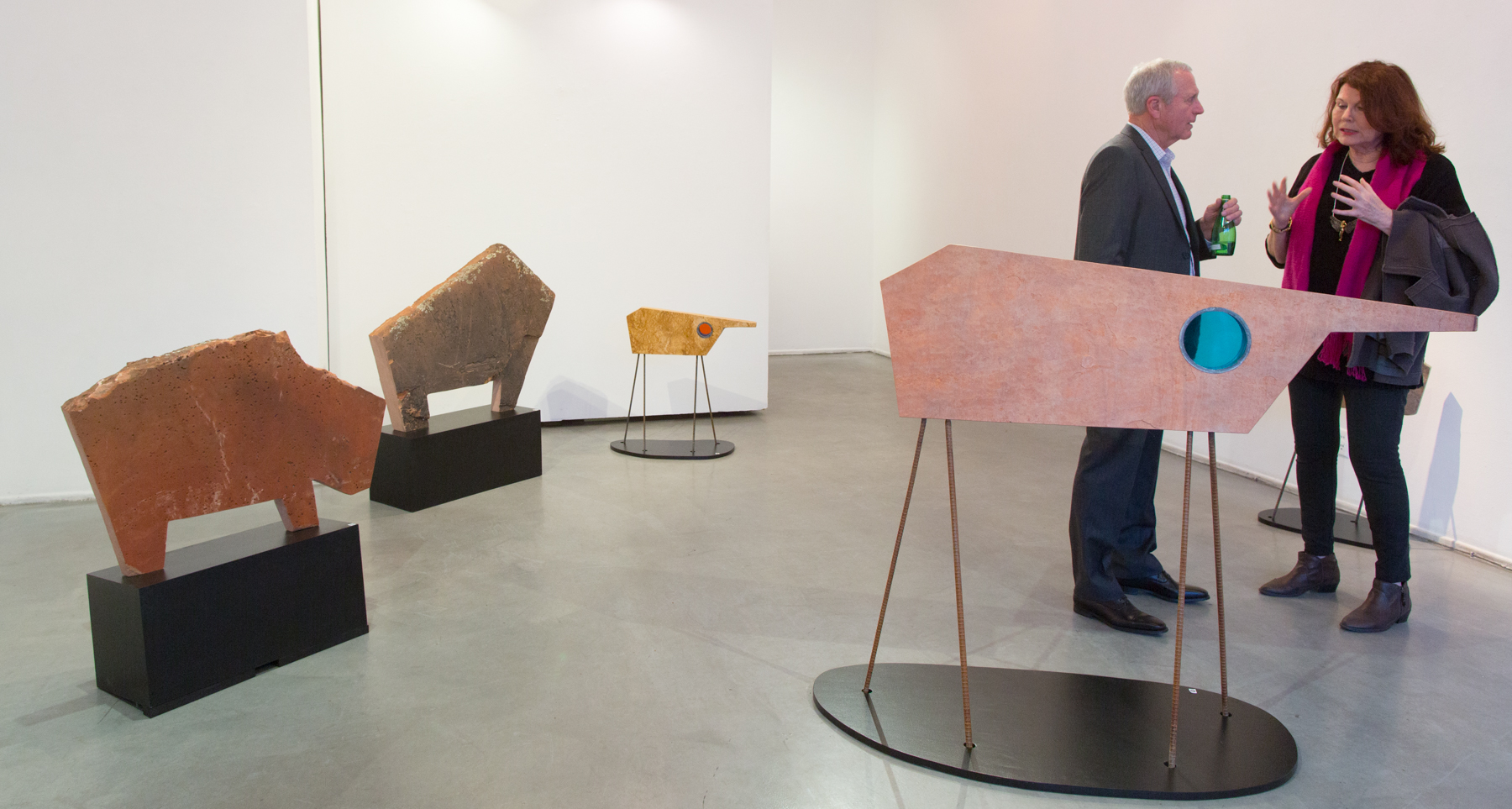
Devin Thor’s “Paleolithic Creatures” are also from an alternate reality, one in which extinct creatures live again as sculptures cut from sandstone. A geologist as well as an artist, Thor’s flat images are tribal in nature, astonishing in their simplicity, an elegy to existence lost, a hopeful monument to better stewardship for our planet. His minimalized approach is purposeful: limiting the number of lines necessary to define his creatures creates a universal reality uniting creatures of all kinds, even humans.

Unifying this exhibition of four brilliant artists is each of their attempts to create a reality that moves and engages. Whether through mirrors, wires, sandstone, or photographic images new worlds are opened, ready and waiting to explore and engage.


Tom Lasley – Assemblage Art with Narrative Strength

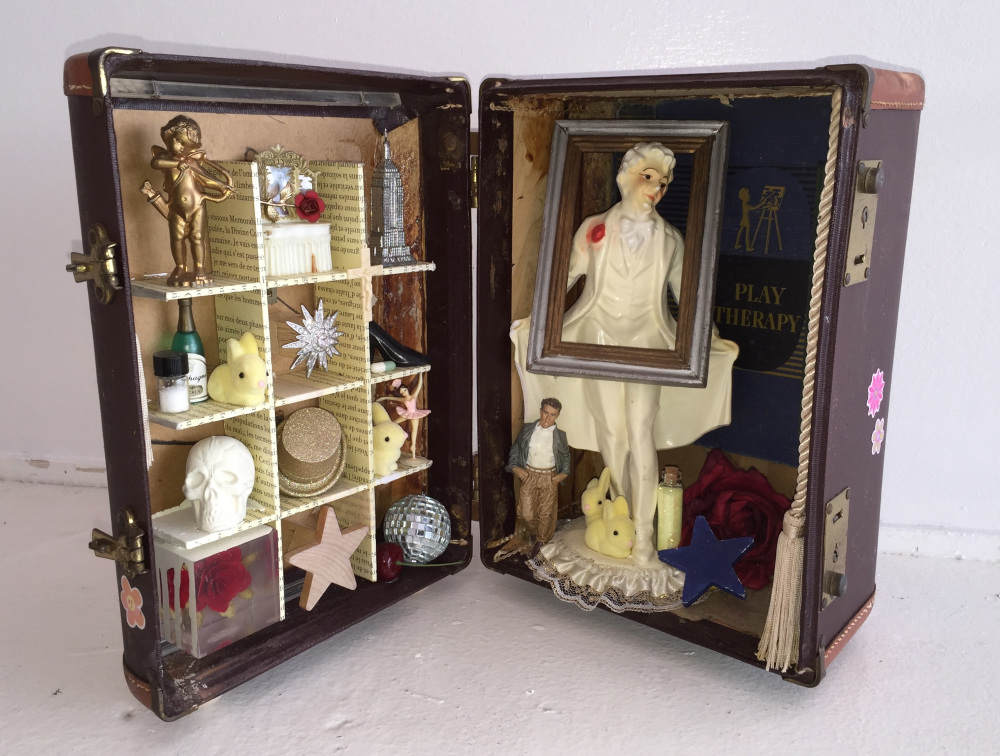
Tom Lasley play therapy
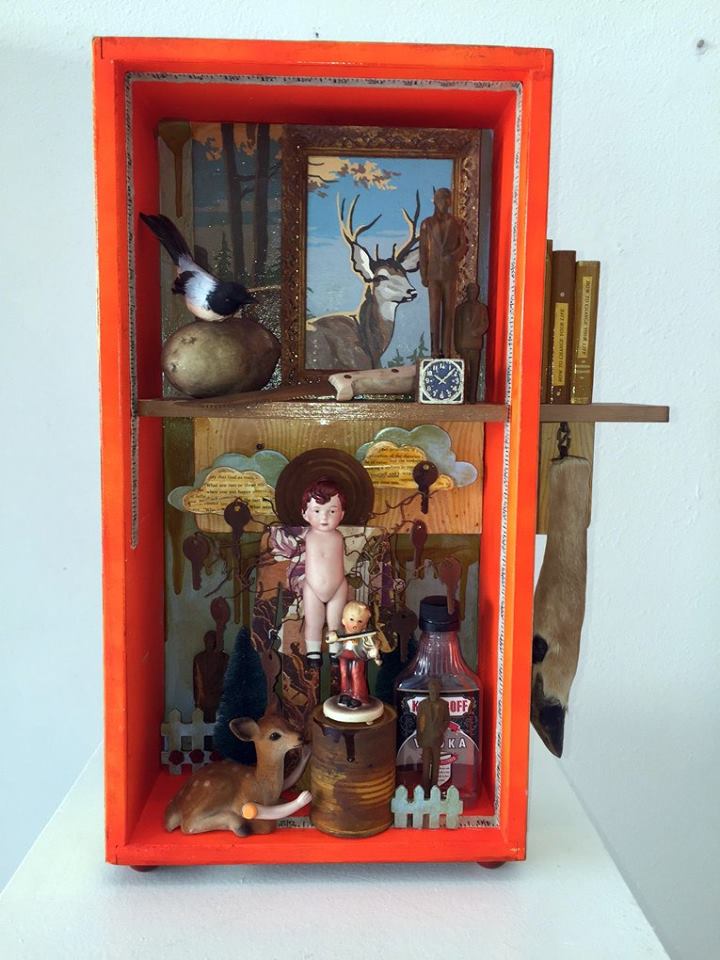
Artist Tom Lasley uses assemblage to create miniature universes with strong statements, about religion sexuality, fame, and fortune. Rescuing objects from thrift shops, yard sales and dumpsters to populate his small but powerful worlds, Lasley says “I combine them with items from craft and hardware stores in ways I hope add up to something poignant, beautiful, meaningful, or at least, funny.”

Lasley has succeeded: his pieces are often mordantly funny and deeply touching, paeans to the absurdity and faith that make us human.

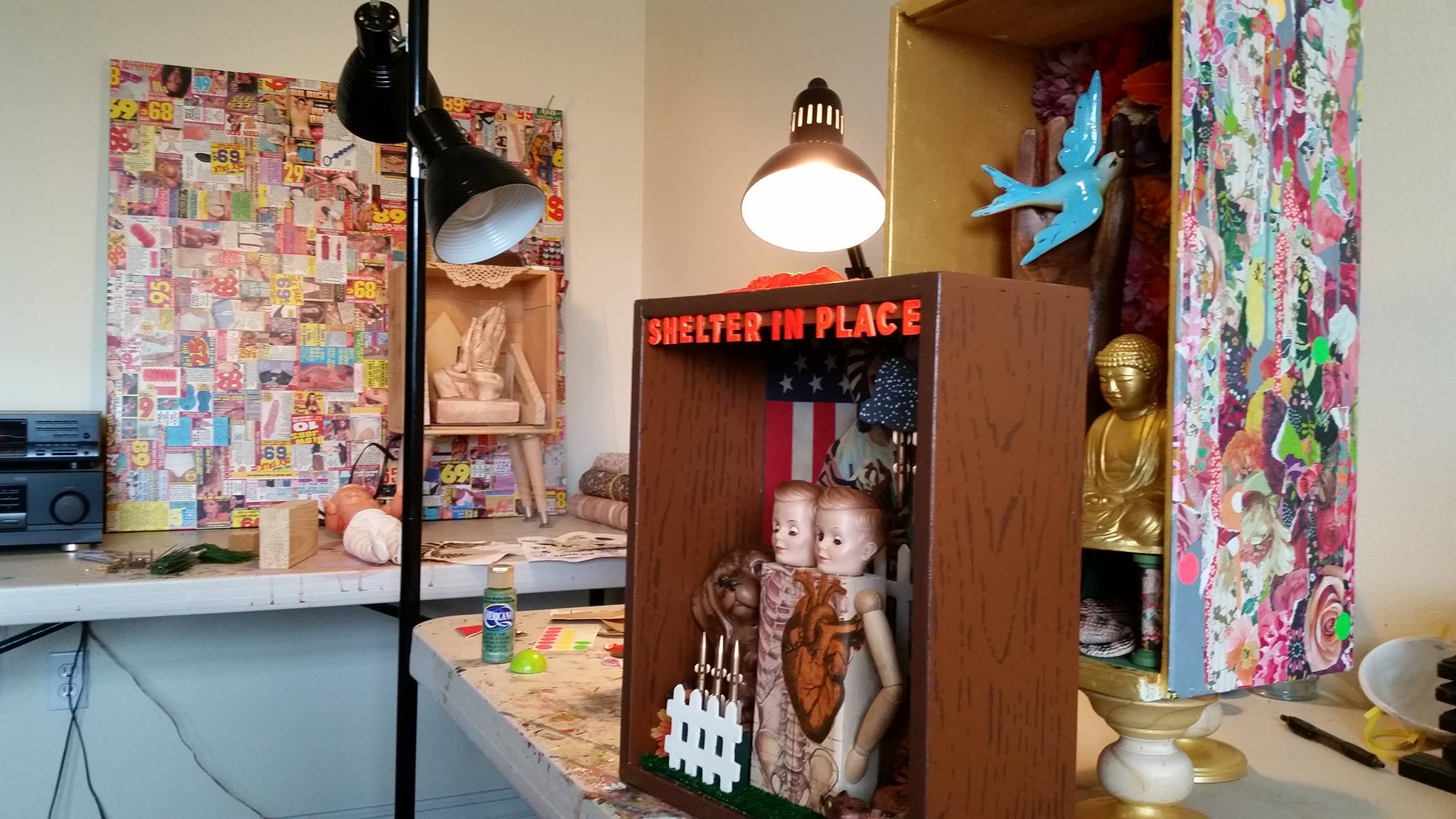
Tom Lasley studio

Always attracted to Pop, Folk, and Outsider art, Lasley had no formal art training when he began utilizing his powerful urge to create. Now, with classes at the Art Center College of Design behind him, his works express issues and experiences both physical and metaphysical. He fills his shadow boxes with both old and new objects that evoke personal, significant recollections of a specific event or period of his life. “Or they represent a concern I currently contend with. As objects interact, the autobiographical narrative strengthens and the piece takes form,” he explains.

Tom lasley how to change your life 2

Lasley’s process revists and sorts through his experiences, and provides a meditation on his personal life history. Certain subjects are re-imagined in a variety of different pieces. “I often return to include my experience as a gay man and how growing up Catholic impacts my current metaphysical beliefs. The objects I select serve as an idiosyncratic, symbolic vocabulary.” The artist notes that although the resulting pieces can be both quirky and surreal, the narrative they present is “cohesive, comprehensible and relatable.”

Born in New York City, Lasley lives in Los Angeles, and his work reflects a mix of New York’s dense urbanity and the Los Angeles cultural touchstones of both nature and celebrity.

Tom Lasley shelter in place

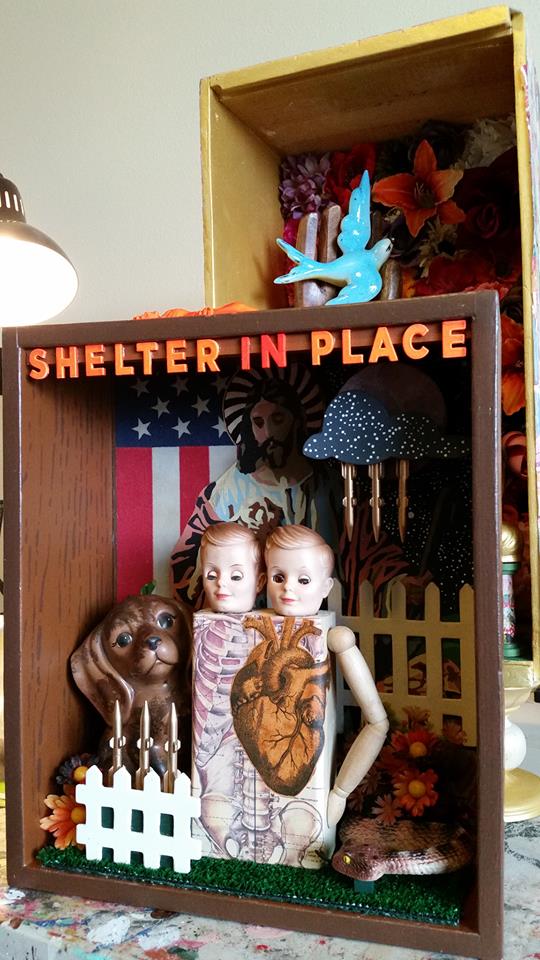
Lasley often expresses fears of nuclear holocaust or other devastation, societal obsession with fame, and the beautiful but absurdist events that can occur when man meets nature. In Shelter in Place, Lasley’s carefully detailed diorama touches on his Catholic background with a figure of Jesus watching over a two-headed, one heart human in a world in which weapons of mass destruction rain down from the sky. A white picket fence bearing the signage “Safe” and an overlarge figure of a pleasant looking pet dog speak of security, while a snake in the grass belies that promise.

Tom Lasley prince of forest breaks wind

The artist’s The Young Prince Of The Forest Breaks Wind features Bambi, butterflies, a caterpillar, and the word “Resurrection.” Bambi farts butterflies, which may also have emerged from the caterpillar transformed; a thickly antlered ancestor perches near the Rainbow Bridge, while flowers, a fairy, and skulls co-exist. On either side of the shadowbox, two large, candelabra-like holders contain deer hooves with fringed tops, which take the place of candles. These ersatz candles frame what is essentially an altar to change, metamorphosis, and the taboo yet entirely natural functions of death, passing wind, and growing up.

Tom Lasley Workboot

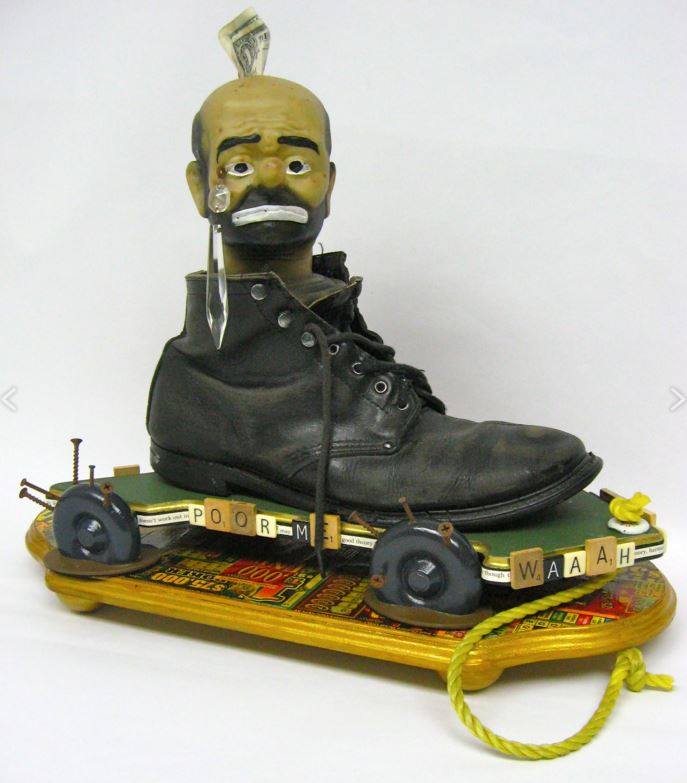
In Workboot, a sad-eyed clown head rides in a boot on a skateboard. From his head protrudes a dollar bill, and from his ears drip earrings made from chandelier crystals. “Poor me, wah,” is spelled out in scrabble letters along the edge of the skateboard, which also bears nails in its wheels. This piece evokes the plague of the working man – underpaid, bemoaning his fate, and strapped to wheels that may take him to a place he does not really want to go.

Lasley’s As If, Arrogant Youth is a meditation on the ephemeral nature of youth, fame, and fortune. A golden bust wearing a bling dollar-sign necklace and sporting a head of very blonde, full hair, is perched on a table edged with abbreviations of the days of the week. Pills, cigarettes, a heart – these are contained beneath the table, everything this arrogant youth needs to survive – maybe. “As if” is spelled out in glittery gold letters behind the bust, which is framed by two candles, like a saint in a Catholic church. The shadow box itself is a mixed media collage of sensuous-looking young beauties cut from magazines, sparkly beads, and the words “Dream On” placed on the back of the box.

Tom lasley.kneelingbench

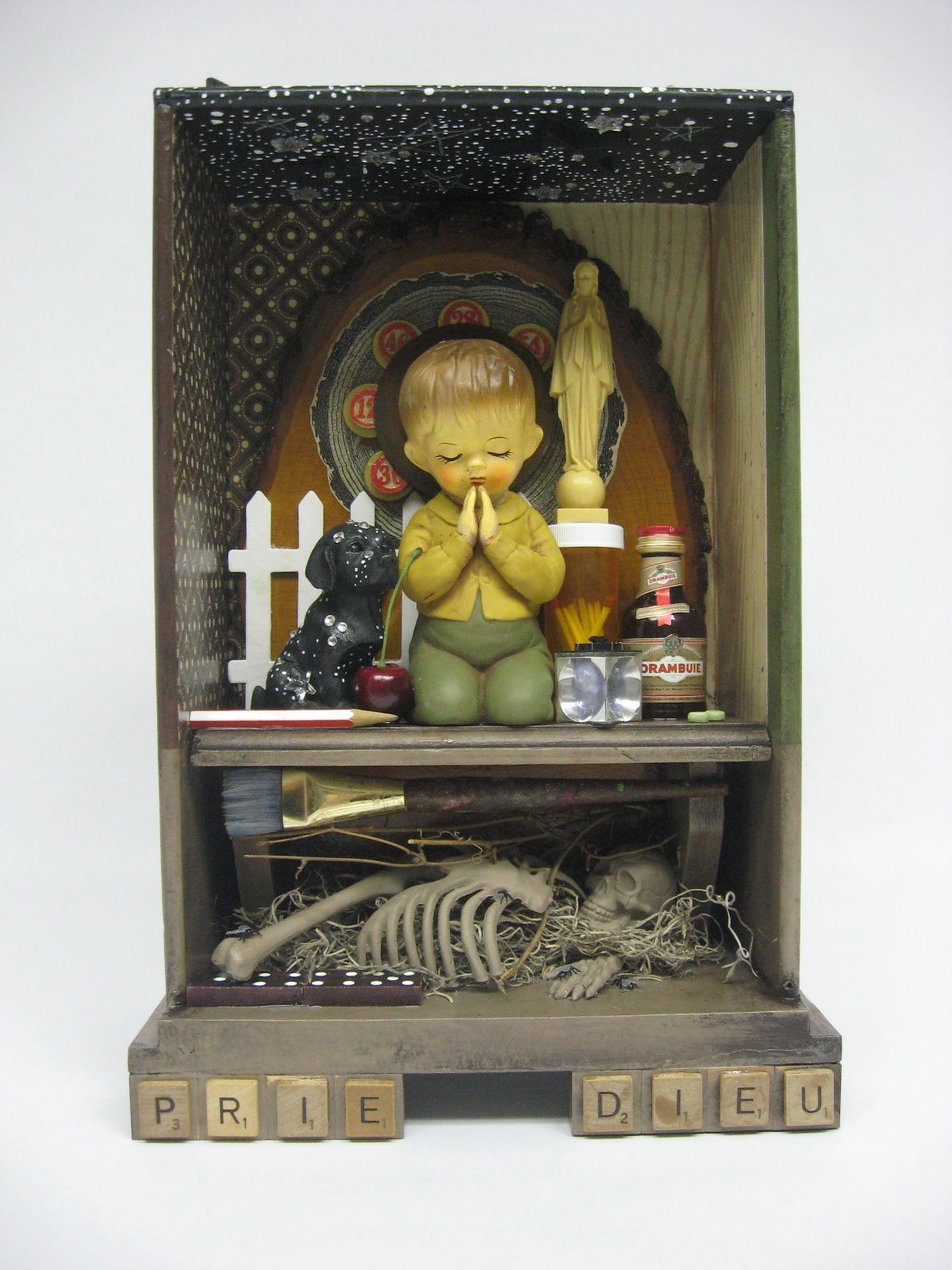
Whether through a child in prayer in Kneeling Bench, or a halo-like frame of pearls in Boy with a Pearl Necklace, Lasley’s religious roots are definitely showing. Boy with a Pearl Necklace evokes an icon-like image; Kneeling Bench is a riff on classic illustrations for childrens’ prayer books. Father and Son each clearly both subvert and follow images of icons down to the gold paint.

Tom Lasley big queen

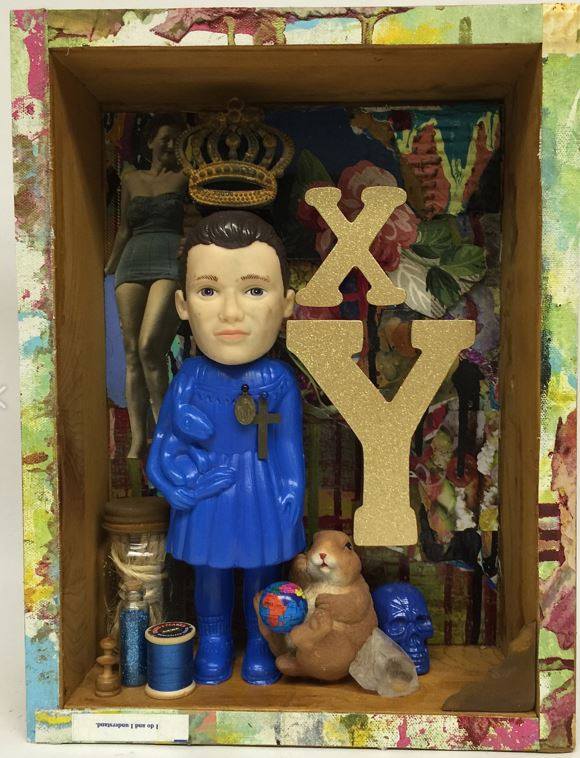
Likewise, images of sexual confusion or acceptance show up in pieces such as Gender Dysphoria|The Little Prince, in which said prince is wearing a dress while two gold double-x chromosomes dance behind. Gender Dysphoria|The Big Queen conjures up both areas of Lasley’s life. The double-x chromosomes, the fact that the queen is sporting a male head, are both elements of sexual imagery, while the icon-like crown floating above this queen’s head, and the cross he wears, are both meant to evoke the church and mock its rigidity.

In short, Lasley’s thematic elements are strong; his assemblage and shadowbox worlds each tell a compelling and clearly realized story; his use of recycled materials creates a sense of history even within an historical story. With recent exhibitions of his work at Wallspace Gallery and Gallery 825/LAAA, Lasley has resoundingly proven that his art is not mere “shadows,” but rather a richly realized series of resonant, three-dimensonal stories told in vibrant hues and amusing juxtapositions of recycled materials.

Literature Lovers and Book Babies: It’s Poetry Month in West Hollywood

poetry large header

April is National Poetry Month, and the city of West Hollywood is celebrating poetry and presenting a number of other literary programs this spring. WeHo is dazzling residents and visitors with “Poetry in Lights” electronic billboards and lamppost poetry banners that are literally bringing poetry to the streets. It’s literature as visual art, and as kinetic as it is moving. But don’t stop there – workshops, readings, and the chance to build your own Little Free Library are all a part of the city’s plan to woo readers and writers.

Poetry Steven Reigns full image

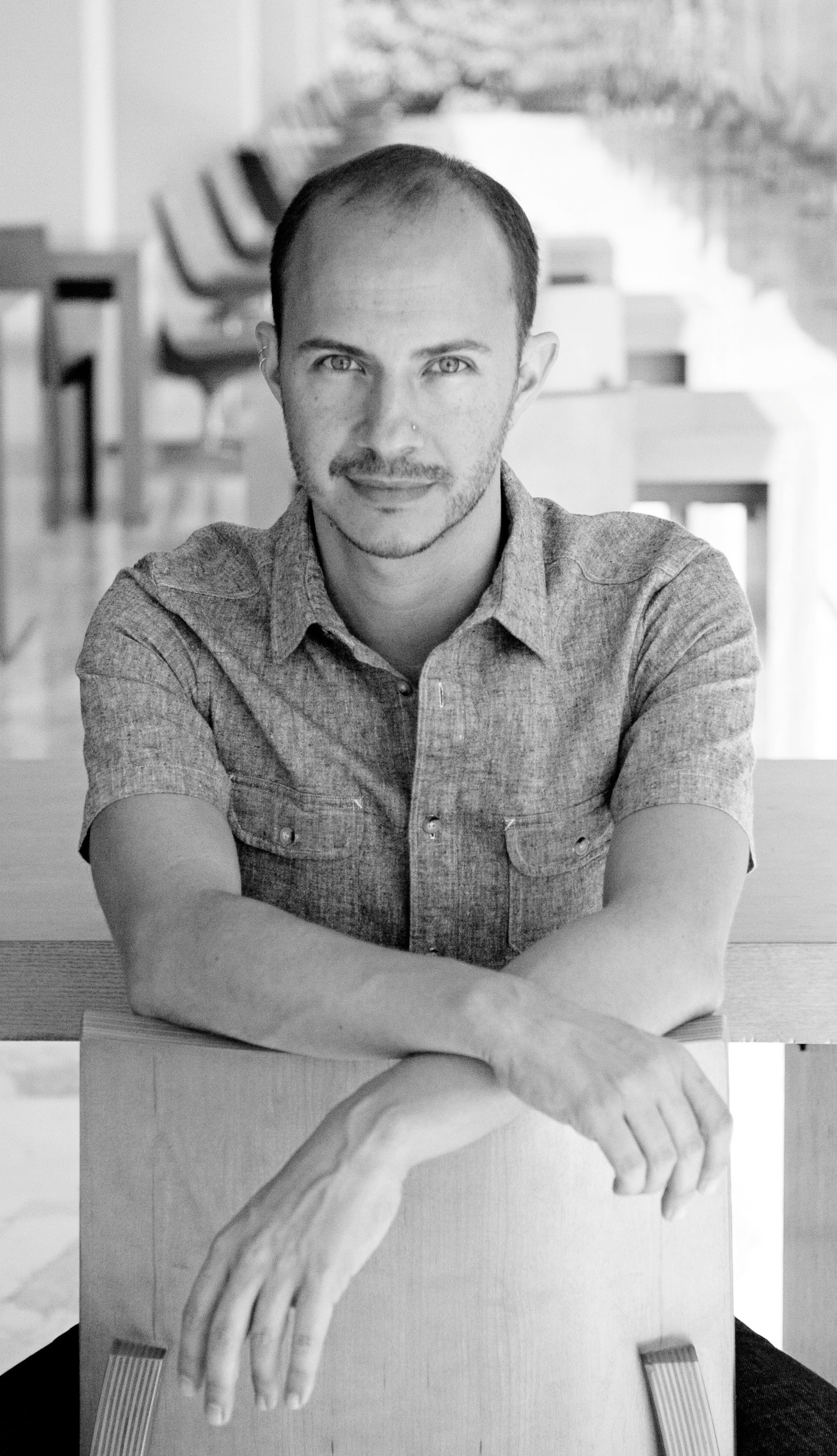
The city’s celebration of National Poetry Month is the biggest news, city poet Steven Reigns has put together a wide-ranging calendar of events and workshops, and is leading a free poetry writing workshop himself on April 21st at 7:30 p.m. in the West Hollywood Library Community room. Both novices and the more experienced can join – the only requirement Reigns makes is a willingness to try plus a pen and some paper.

Along with his tenure as City Poet of West Hollywood, Reigns is a nine-time recipient of The Los Angeles City’s Department of Cultural Affairs’ Artist in Residency Grant, and has led the My Life is Poetry workshop, an autobiographical poetry workshop for LGBTQ seniors, and edited an anthology of their work. He also has led the 2016 Lambda Literary Book Club series, a monthly discussion of LGBTQ literature that is on-going.

Poetry_Sunset_Woloch_01b

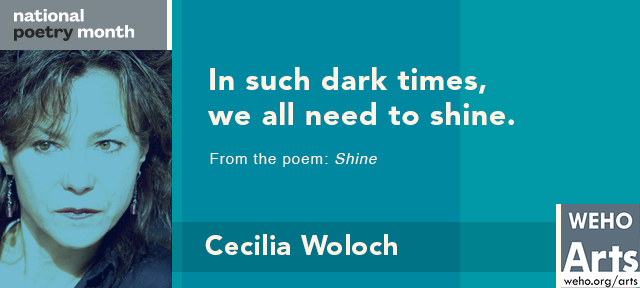
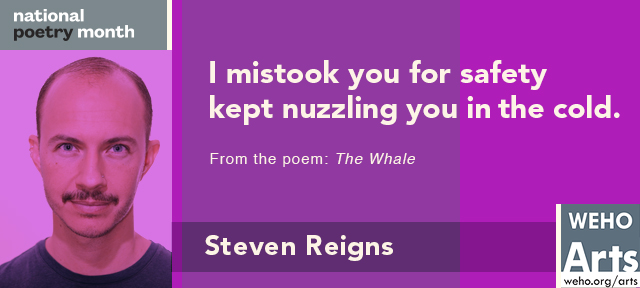
“This year, my final year as City Poet, my focus has been to introduce poetry to more people,” Reigns says. “Poetry is powerful and I want to share it with as many people as possible.” Reigns is particularly driven to express the relevance of poetry for those who’ve discounted the medium. The Poetry in Lights initiative was his own, with the support of Alex Bazley at West Hollywood Gateway, and graphic designer Eric Hanson, who created the visuals showcasing the poets.

Poetry_Sunset_Reigns_01b


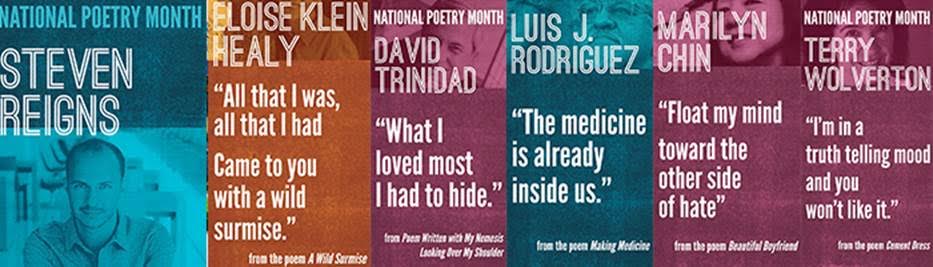
This digital public art project is being displayed intermittently on two electronic billboards, one at West Hollywood Gateway in the 7100 block of Santa Monica Boulevard, and the other at 1OAK located at 9039 W. Sunset. These billboards flip through portraits of 22 contemporary poets and feature excerpts from their works. Visually compelling, the project is also of course a good read.

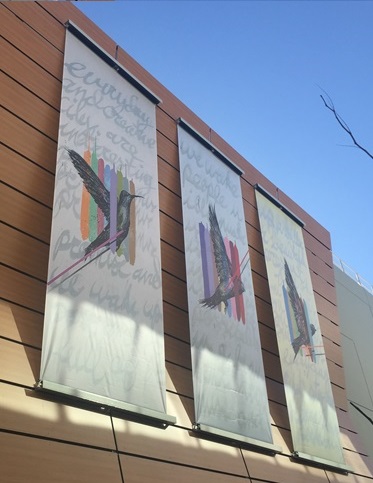
Poetry month banner

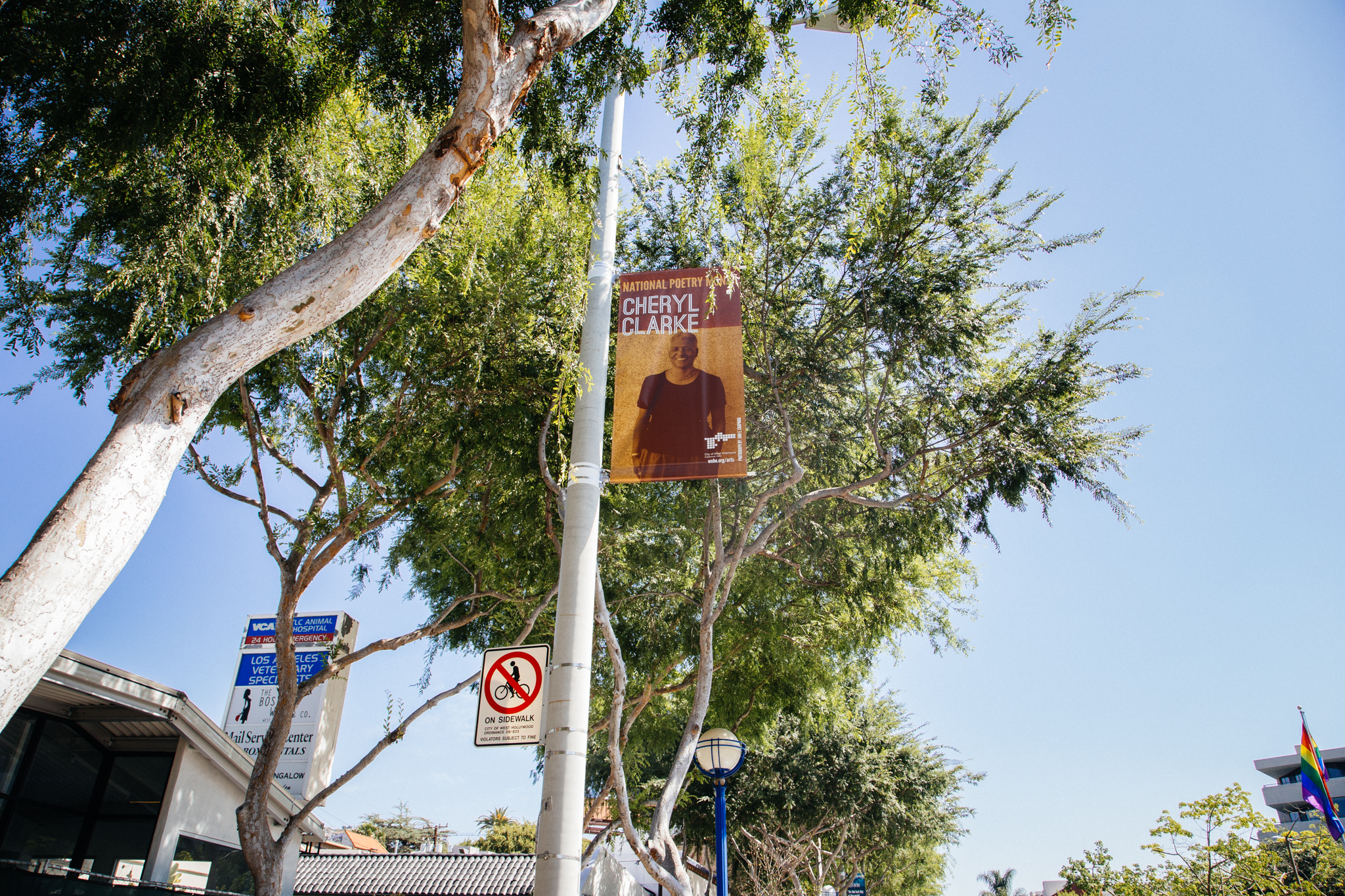
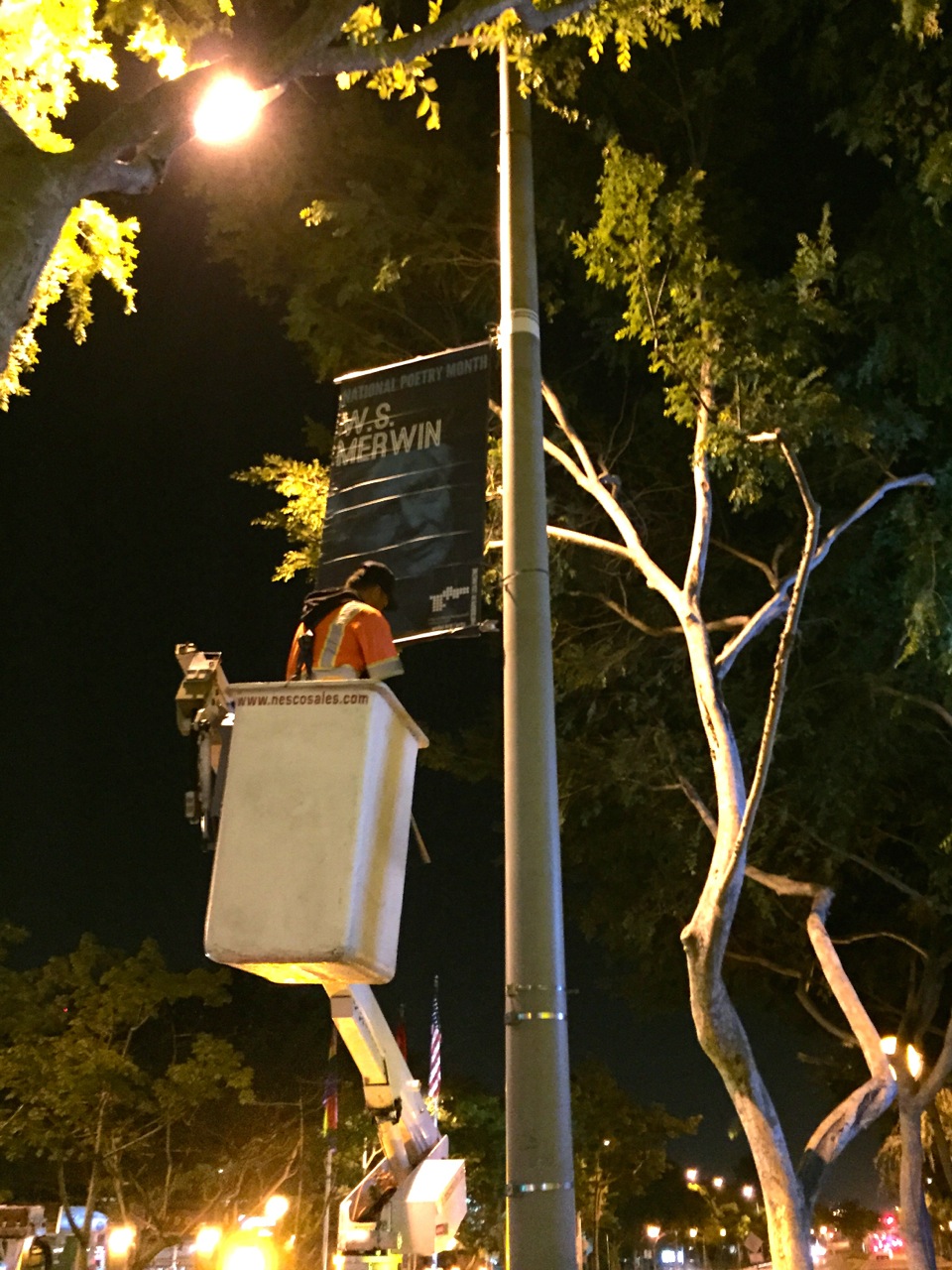
The lamppost banners that are flying in conjunction with this project and National Poetry Month dot the landscape along Santa Monica Boulevard from Sweetzer Avenue to Westbourne Drive. These banners also feature a poet’s image along with a line from the poet’s work.

Poetry month banner at night

As an added bonus, free bookmarks depicting four of these lamppost poets are being distributed throughout the city, at the West Hollywood Library, City Hall, and other locations.

Grab a bookmark while you can, and along with Reigns’ workshop on the 21st, check out events that include a poetry reading by three Red Hen Press poets at Book Soup on Monday the 25th. Don’t miss these events, remember, as poet Lawrence Ferlinghetti once said, “Poetry is eternal graffiti written in the heart of everyone.” Living in LA, that’s a pretty potent metaphor.

Poetry WeHo community arts installation

Proving that WeHo will continue to be a literate community even after National Poetry Month rhymes on, is the Little Free Library Program. West Hollywood residents can apply on the city’s website for one of eight $600 grants to build their own “take a book, leave a book” shelter. While most participants start off using their own books, the group Friends of the West Hollywood Library has agreed to donate a starter set of books to each person who receives a grant from the city to build one. The initial pilot program still has enough funding for five more Little Free Libraries, so bibliophiles in West Hollywood are encouraged to apply.

And lastly, writers who reside in West Hollywood should look up the three PEN Center USA Scholarships, which include an eight-week master class in fiction and non-fiction, a session with an editor, and a reading. But would-be applicants better hurry – the deadline to apply is Monday 4/18. To apply, visit https://emerging-voices.submittable.com/submit.

For complete information on Poetry Month in West Hollywood, including bios of featured writers, visit http://weho.org/residents/poetry-month-2016

And for WeHo residents interested in building a Little Free Library visit www.weho.org/residents/arts-and-culture/little-free-library

Hauser, Wirth & Schimmel: Expanding the Art Scene in DTLA


 Hauser Cover

DTLA’s burgeoning art scene now has a strong international presence with the opening of Hauser, Wirth & Schimmel in what was once the Globe Mills flour factory.

A vast, 10,000-square-foot complex with a beautiful, open outdoor plaza, the gallery includes bookstore ARTBOOK, and will, come summer, feature it’s own restaurant, Manuela.

Hauser 9 courtyard


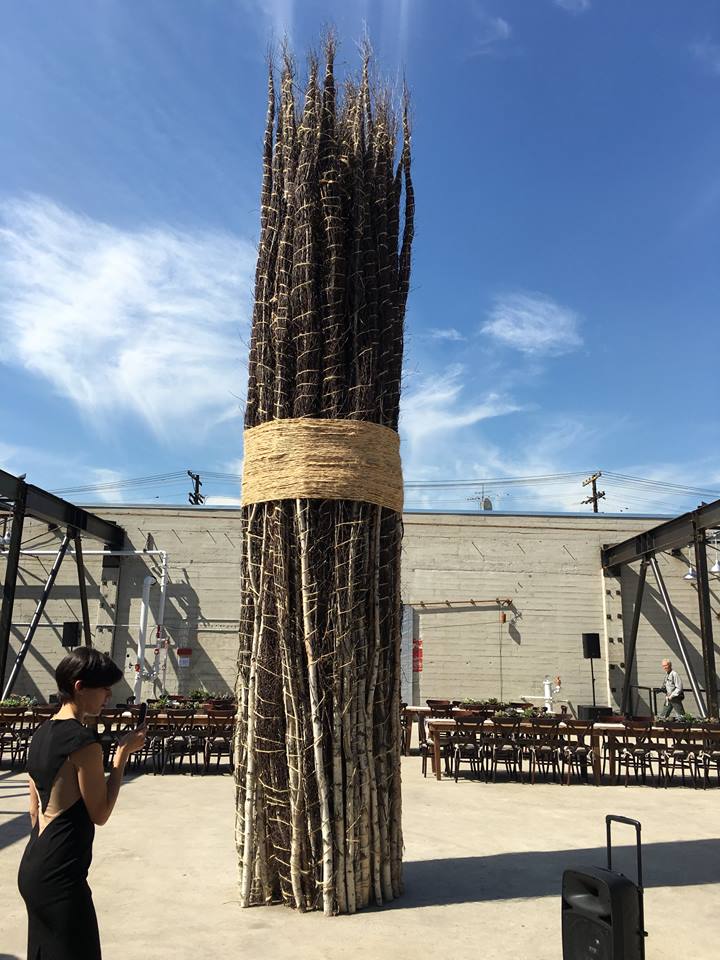
Above, Jackie Winsor’s  “30 to 1 Bound Trees,” originally created in Nova Scotia for a contest in the early 1970s and re-created here.

It may be the open public space that is the most appealing aspect of the vast and – pun intended – artfully restored building. The courtyard’s sunshine is entirely Los Angeles in nature, and this space, which links the galleries, plus the soon-to-be-developed public gardens brings back an evocative childhood memory of the skylit courtyard in the National Gallery of Art in Washington, D.C., alive with plants and fountains.

Such a space was a pleasure for a child, and for adults to breathe a little while their eyes, hearts, and minds took in all the art on view.

Hauser 8

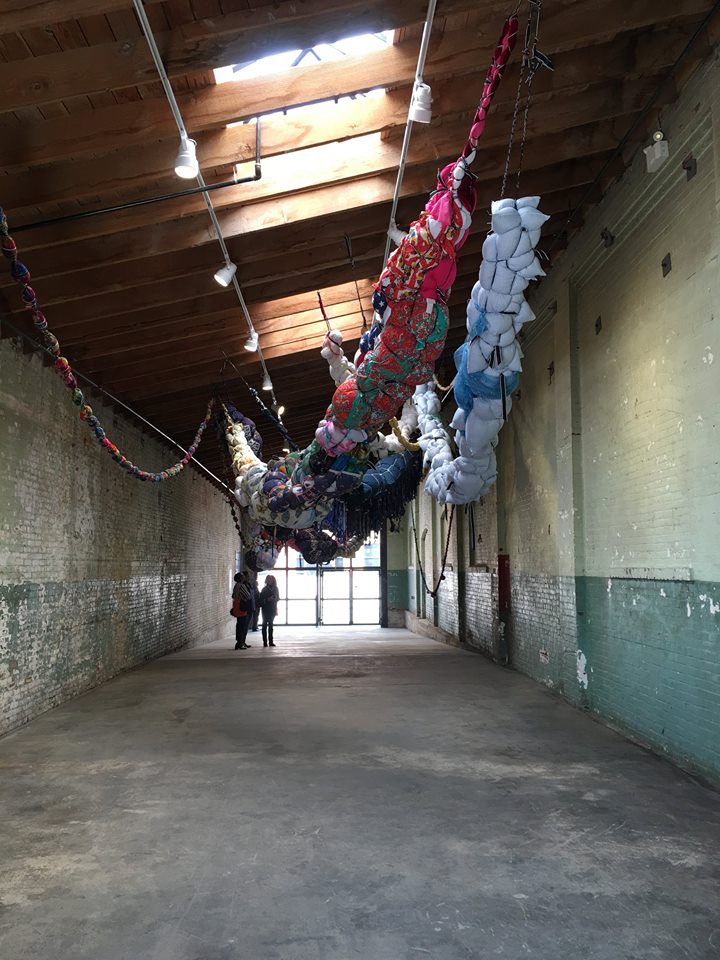
A Hauser, Wirth & Schimmel, a dedication to this open and breathable space also has carved out a passageway between 2nd and 3rd streets. The artwork hanging above the public passage is “Forgiving Strands,” by Shinique Smith.

Hauser Wirth & Schimmel was founded in 1992 by Manuela Wirth and her mother Ursula Hauser. The gallery now has locations in Zurich, London, New York, and Somerset, England. The Somerset property is a holistic creation on rural land; the gallery’s Los Angeles incarnation aims for a similar completeness. Iwan Wirth describes the DTLA space as providing “a way to seek to connect art through community, conservation, and discoveries.” Paul Schimmel adds “We want to expand the notion of what a gallery can be and it’s relationship to the artist. It’s our certainty that people will come from all over the world.”

Hauser 10

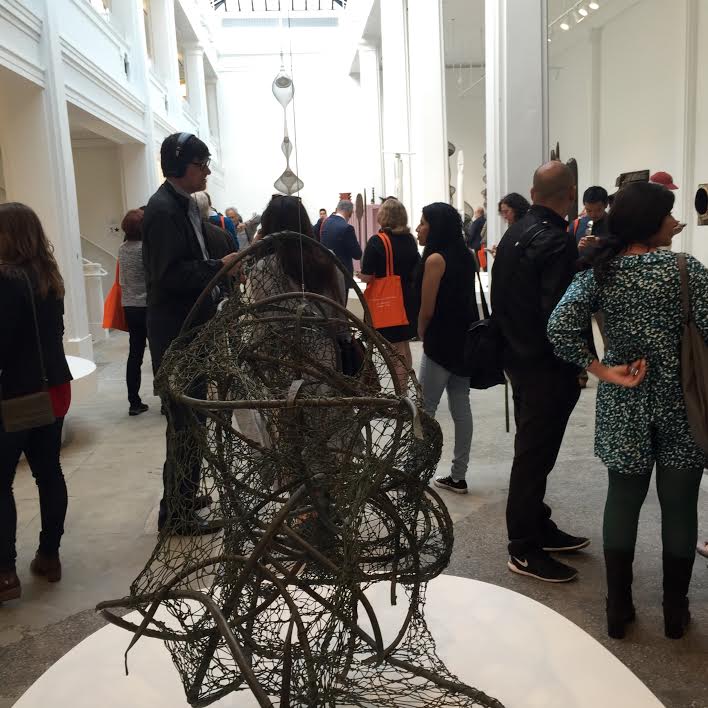
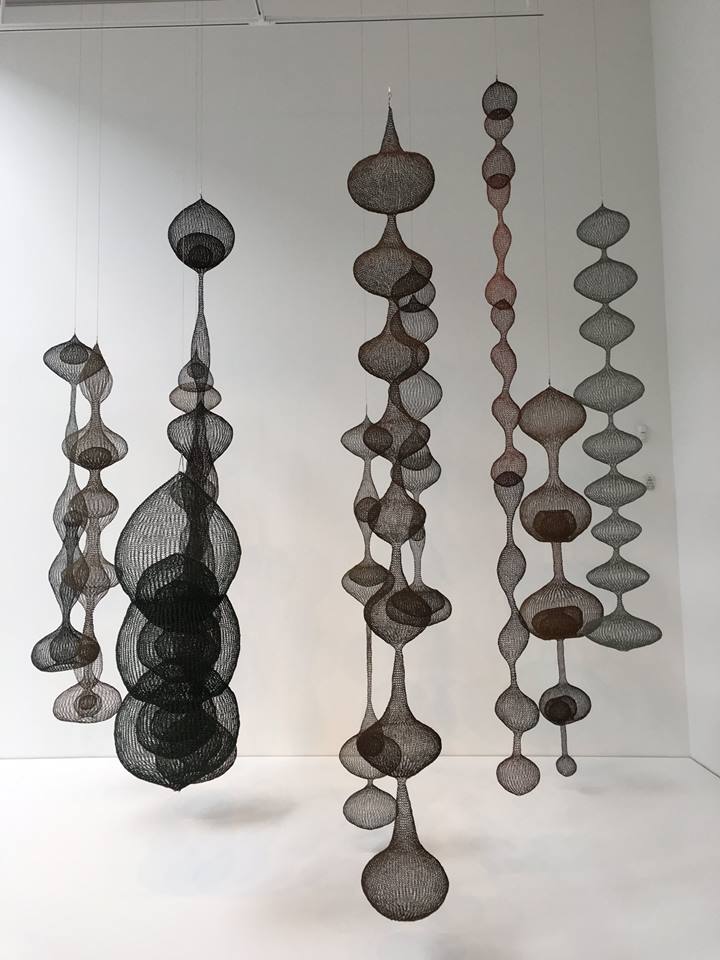
Ruth Asawa’s delicate suspended sculptures above seem like cocoons for living beings.

The co-curator of the opening exhibition, Jenni Sorkin, notes that the gallery itself is broken into four different spaces, whose openness within each room and their separation from each other works spectacularly well as museum-like space for the opening exhibition, “Revolution in the Making: Abstract Sculpture by Women 1947-2016.” A survey of sculpture by women from  post-World War II to the present, the art on display includes that of seminal French sculptor Louise Bourgeois, German-born Eva Hesse, Brazilian Lygia Pape, Tokyo-based Yayoi Kusama, New York-based Louise Nevelson, Ruth Asawa, and Lee Bontecou, among others.

Hauser 1

Above, Claire Falkenstein, who began her career as a sculptor crafting jewelry.

The towering ceilings of the south gallery features the progenitors of abstract sculptures, dating from a pre-WWII era when sculpture itself was dominated by men making large scale works.  Sorkin explains that there was a gendered division in the public school system in which boys were sent to skilled labor shop classes and girls to home ec. “Women were not given the skill set to build and make,” Sorkin reports, which makes the pieces in this first gallery all the more impressive.


Women needed, Sorkin notes, not a room of one’s own as Virginia Wolf expressed, but a studio of their own.

Hauser 3


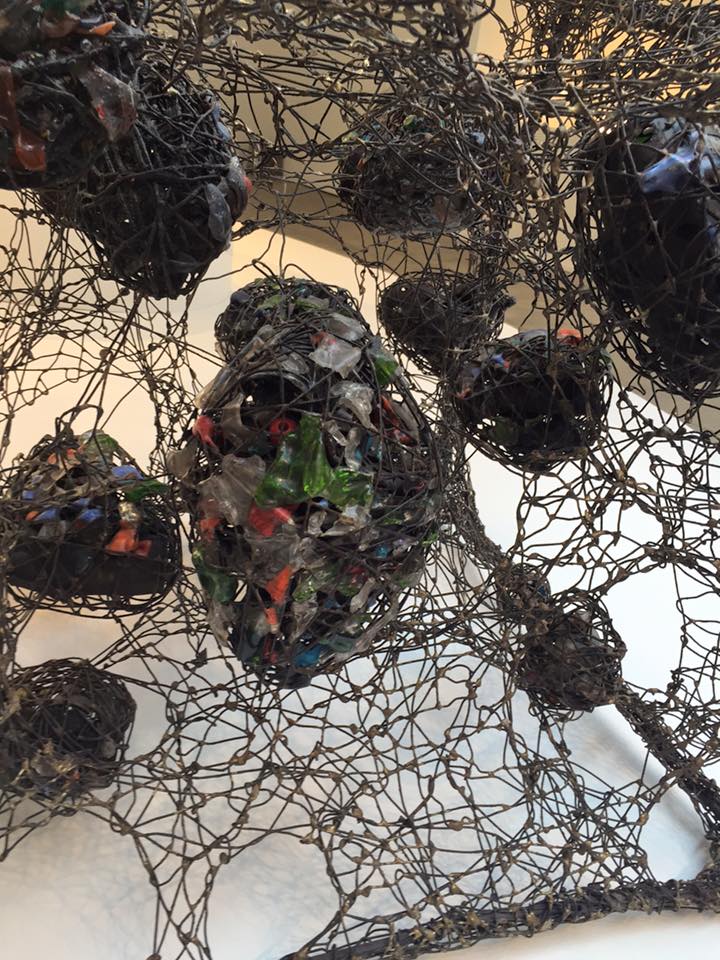
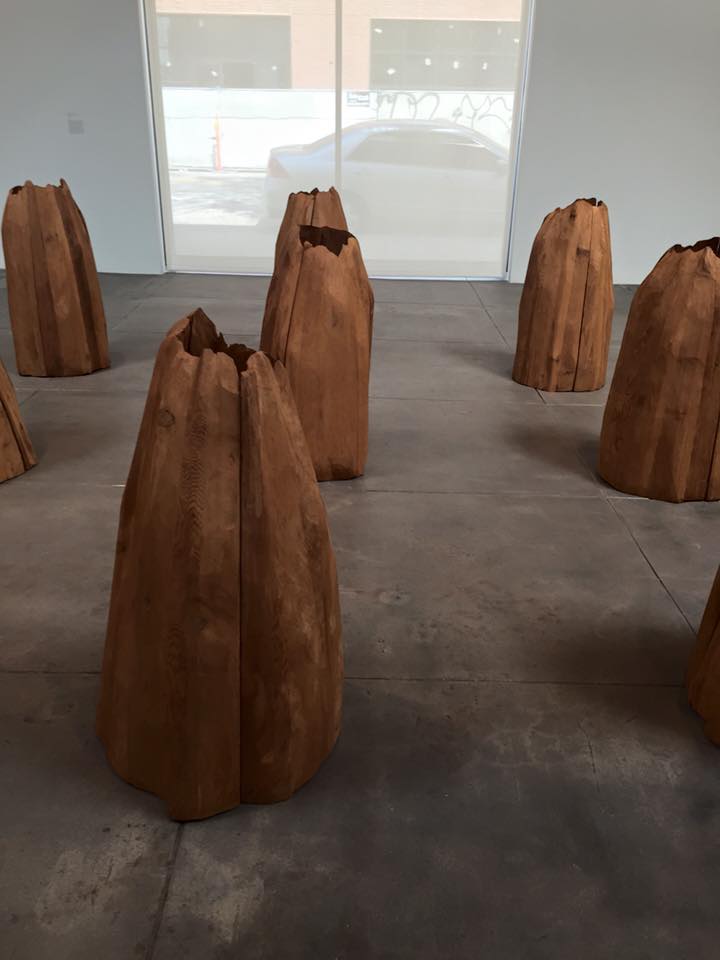
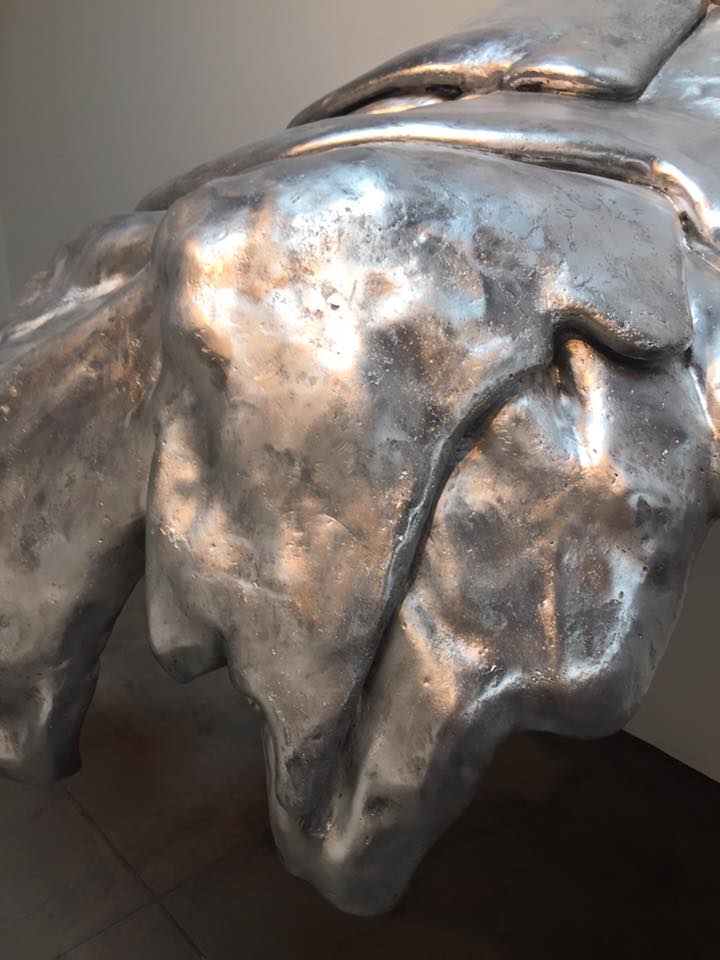
Moving into the north gallery, seminal pieces such as “Wheel With Rope,” by Polish artist Magdalena Abakanowicz were created in the 70s, as were New York-based Ursula von Rydingsvard’s “Untitled (Nine Cones),” above. These cedar pieces were hand-tooled in her studio. Like many other pieces in the exhibition, including a pair of sculptures by Lynda Benglis made from aluminum, below, there is a living quality to the pieces, as if they housed creatures now born.

Hausert 2

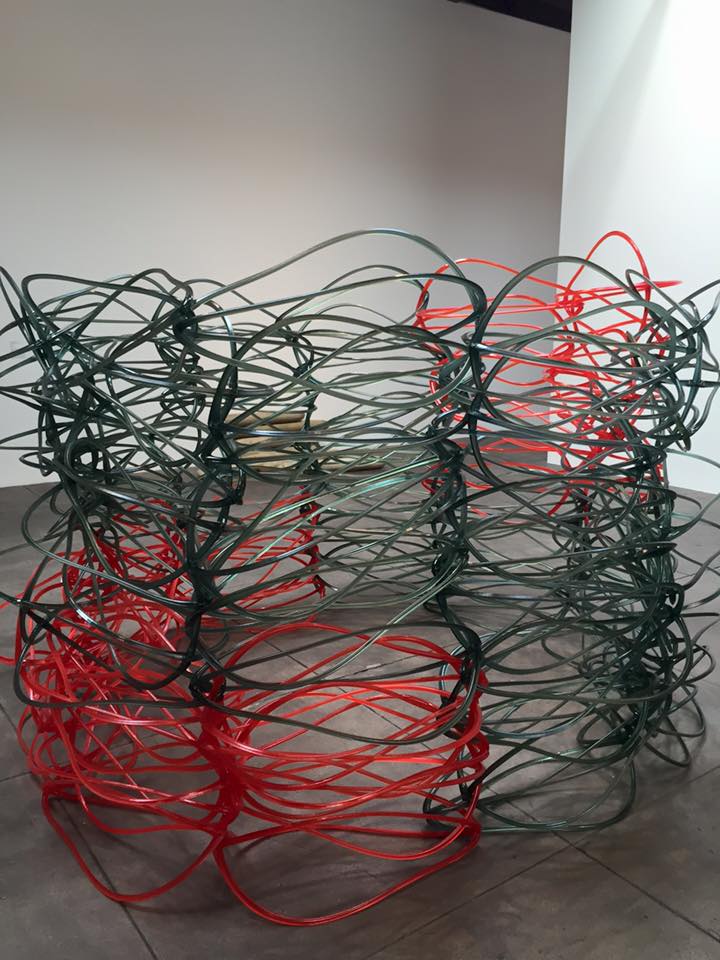
Below, work by Liz Larner.

Hauser 5

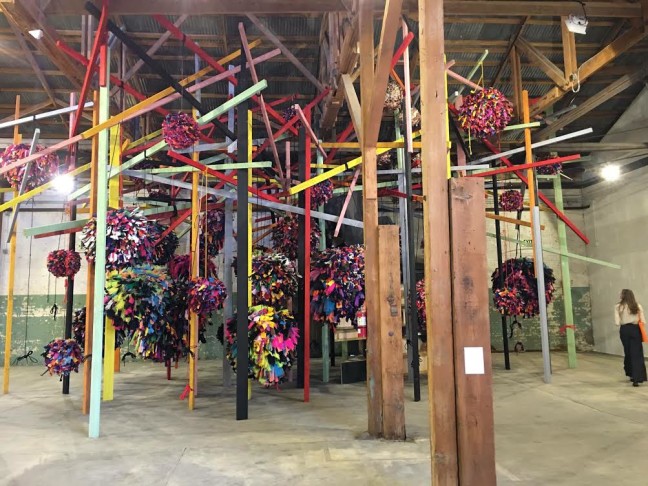
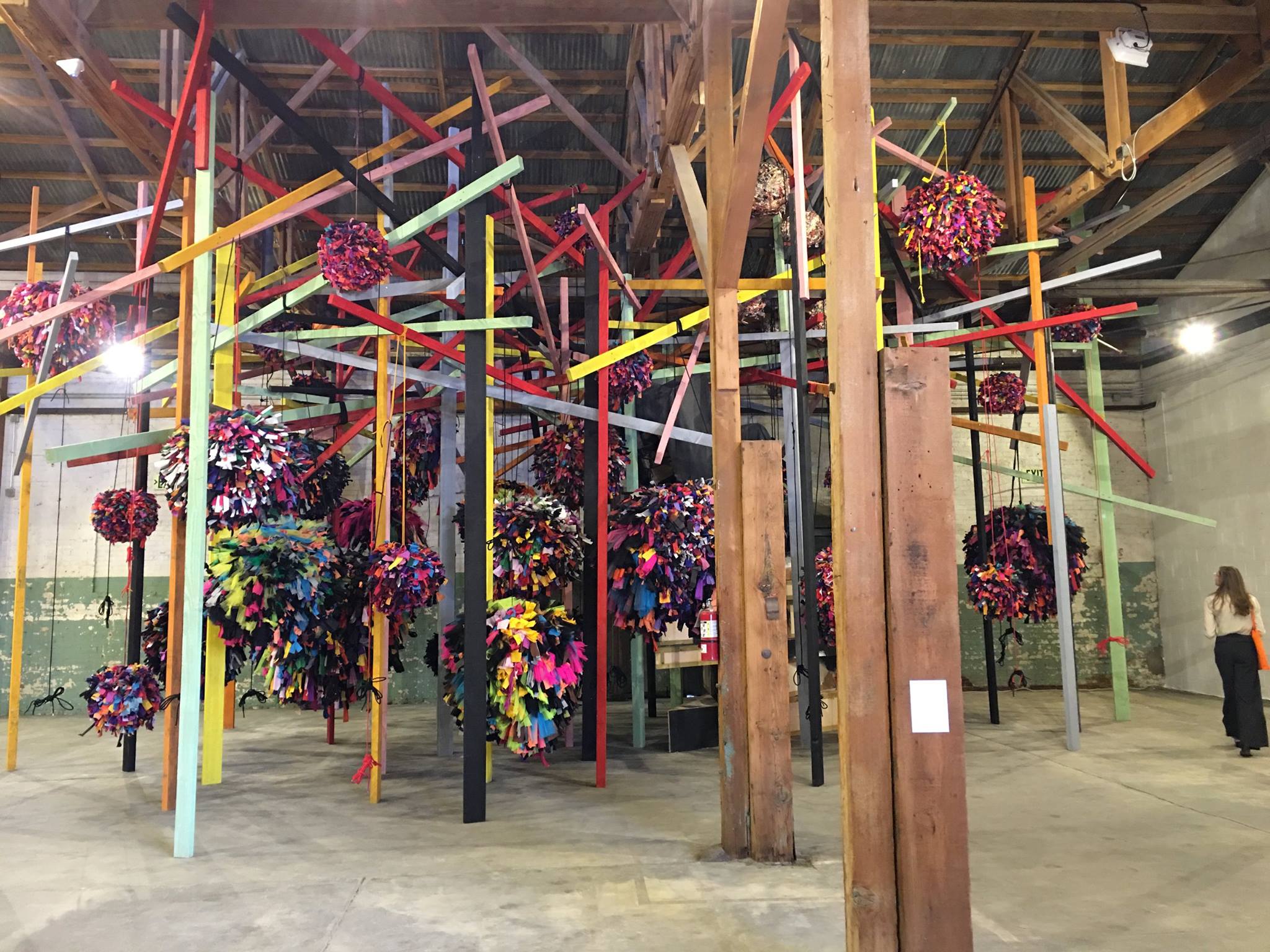
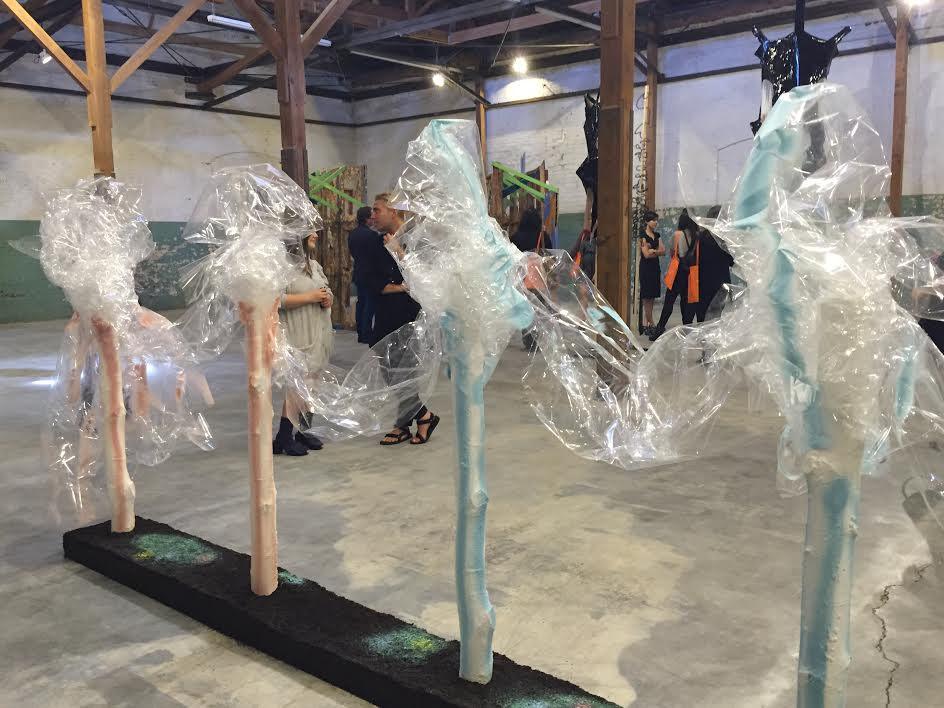
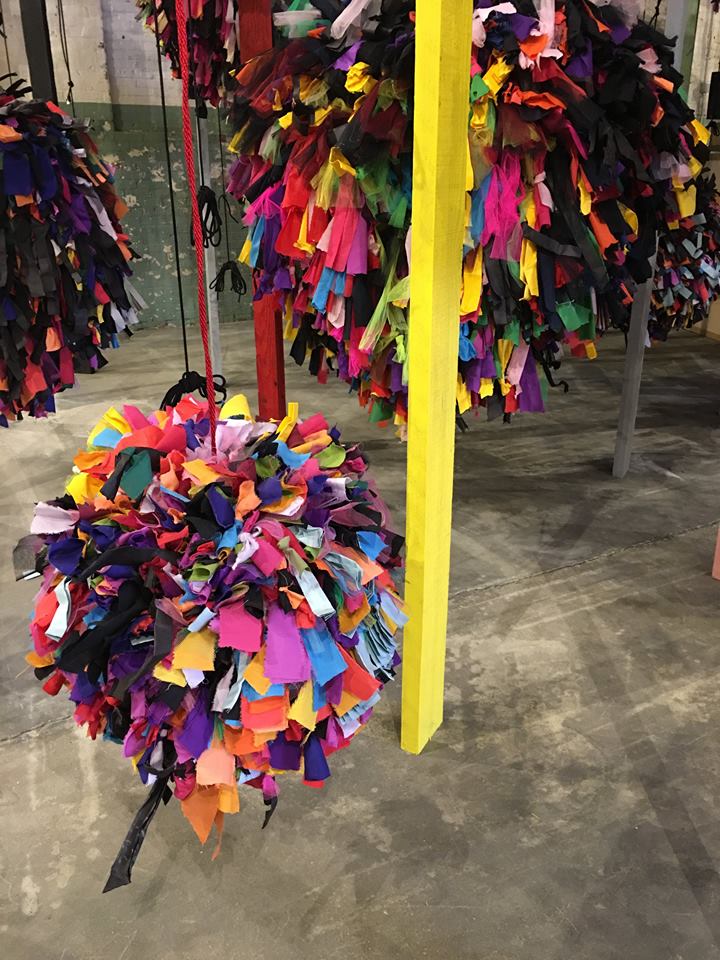
The east gallery houses the most contemporary works, and also the largest installations. Not a coincidence: now, as we approach more current work, women sculptors finally have the space to think big.  They also have the permission to create in vibrant color. Here are the works of Abigail Deville, and Rachel Khedoori who used craft techniques in her creations;  large scale pom-poms that could be massive cat toys are the work of Phyllida Barlow. Knee high pantyhose, chopsticks, discarded couches – found art elements, recycled materials are key here.


Hauser gallery present day sculptures Hauser Opening Exhibition Hauser 6

The exuberant and all too rare female-driven opening exhibition is a don’t miss; and then you’ll want to see and experience the gallery space itself.

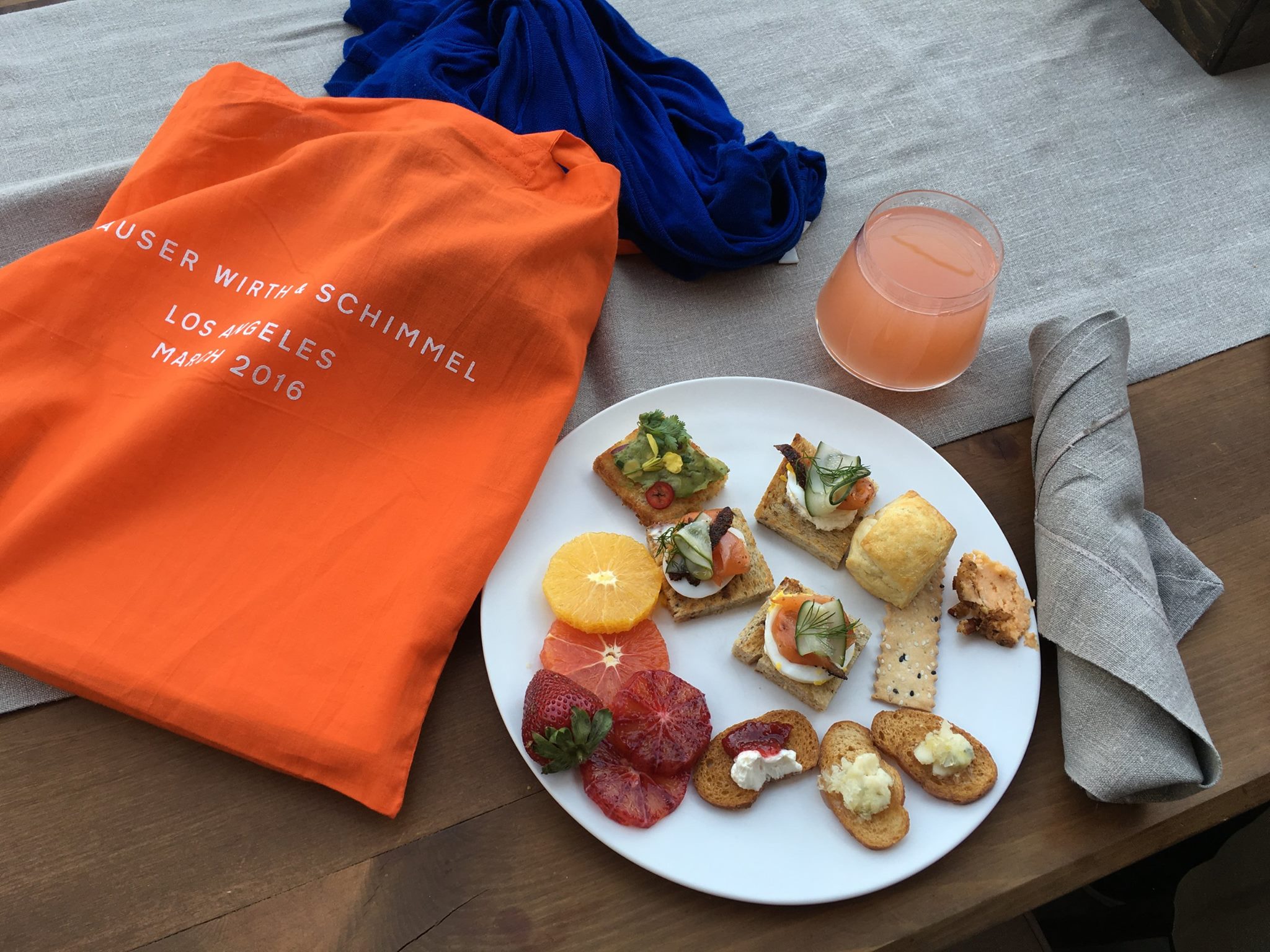
Press was lucky enough to score a delightful brunch – we look forward to seeing what summer’s addition of a dining space will provide.

Hauser food

Hauser, Wirth & Schimmel is located at 901 E 3rd St. in DTLA.


http://www.hauserwirthschimmel.com/