
Buena Johnson – A Passionate Soul’s Cry

Wade in the Water

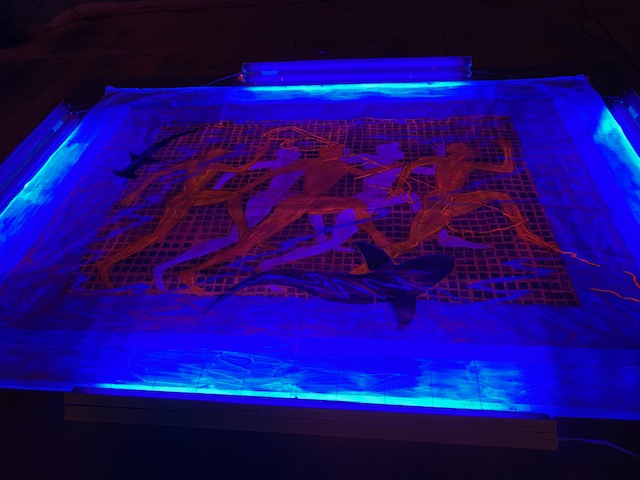
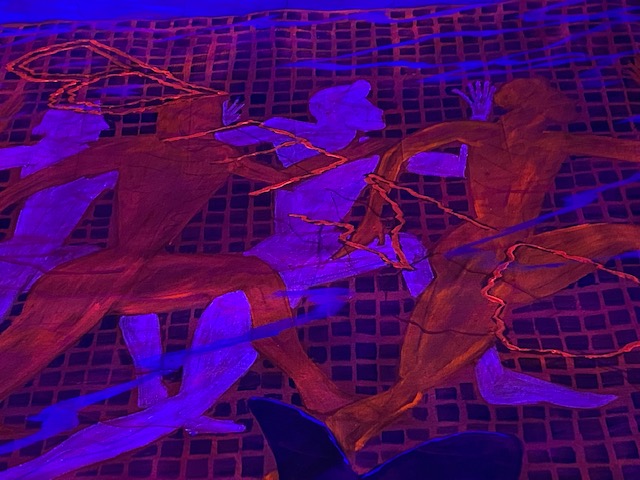
Buena Johnson creates powerful art that is rich in story; intimate, vital work that has the quality of a resonant dream. Johnson says of her trajectory as an artist, “Art became my best friend, my peace, my consolation, escape, and safety net.  It’s always been my purpose and search for my art to have a meaningful message…art is only a burden and untapped treasure if it has nothing to say.”

I’ll Fly Away

Johnson has plenty to say. Her work, which has a transformative quality with an edge of the surreal in many of her current pieces, fully expresses her purpose. “I have an inner need for a deeper message based on my life’s experiences as a woman, visual artist, and artist of color. From birth to now, I’ve faced too many obstacles because of the color of my skin, whereas with the power of art as a tool, I felt I could address and voice these issues. ” 

Address them she has. For her current exhibition Soul’s Cry, now at TAG in mid-city, she created almost entirely new works and updated a few others “because life and history is constantly happening.” Her current work departs from past series honoring jazz, blues, and entertainment icons, as well as being quite different from her Angel series, which is based on Bible verses and scriptures meaningful to her. Johnson notes that she plans to always continue her angels and spiritual imagery, however.

Sweet Revenge

But Soul’s Cry is an aching and glorious response to racism. “From early childhood [I had] experiences of racism, [including] being told as if it was a compliment, that I am an ‘exception to my race,’” she says, also describing the pain of racism that she saw reflected in her parents’ experiences. “I couldn’t keep silent any longer. I needed to express our history from 400 years of oppression and inequality to now.” From the first enslaved people brought to Point Comfort, Va. in 1619, to the horrific recent rise of emboldened white supremacy groups, Johnson sought to recognize that  “America was built with the blood, sweat, tears, deaths and lives of black people.”

Land of the Free

Soul’s Cry is just the beginning for Johnson, who plans to continue this series. “My work is to educate, so we can stop having ‘Karens,’ racial and financial inequities, police killings of minorities without accountability. [It is] to inform, heal, and uplift by the sheer power of recalling our history…to act as a recorder, a visual storyteller of our truths past and present, advocating for positive change.”

In short, this is an important body of work, both artistically and thematically. Johnson works primarily in pencil, and calls her astonishingly detailed work “pencil painting.”  While well-versed in other mediums, she says she loves the “challenge of using one’s natural ability to draw or paint with pencils. I do not like lengthy prepping of a media before I can get started; with pencils I can mix right on the surface I’m working on, and when I take a break or finish, there’s no lengthy cleanup necessary or potentially harmful chemicals.”
Madam, a Crown Deserved – You Nurtured a Nation

That Johnson’s work is inspirational is a given; she says she self-identifies her work as “inspired” because she feels guided as she creates by her “higher power or knowledgeable being revealing and speaking calmly to my spirit and into my life. If at times it doesn’t work out or flow well, it means that there is too much of me in the way, and I need  to reconnect to my power source for guidance and help,” she attests.

Johnson began as an artist before she even reached school age, mesmerized, as she puts it, by art and the fact that a human being could create art images. From her teaching degree to advanced studies at the Cleveland Institute of Art, the Philadelphia College of Art, and the Pratt Institute of Art in New York, Johnson never stopped producing and perfecting her illuminative and passionate work.

Moving from Chicago to Los Angeles, she’s been showcased in the Smithsonian, The Getty Collection, MOCA Los Angeles, and more, as well as producing commissioned works for members of the Hollywood elite from Halle Berry to Queen Latifah, as well as creating for companies such as the Los Angeles Dodgers to United Airlines. But through it all, her ultimate plan is to reach a vast audience and truly elicit transformation through her work.

Songs of the Soul

Today, she plans for expand on a series of works concerning Slave Songs/African American Spirituals, as well as expanding Soul’s Cry as a series. Her purpose is to both expose America’s history of racial injustice and to “motivate positive change.”

Always expansive, she plans to create a new series highlighting and honoring women as well, primarily women of color.

Steal Away

She wants viewers to “hear the cry of the ancestors, to feel uncomfortable with the knowledge of America’s history, the pain, struggle, and injustices I’ve visually recorded.” She hopes that everyone witnessing her works will “let the message speak to your spirit and conscience and move you to see that we all are of the human race and we can make a change for the better together.” Her hope is to evoke the vital necessity of change, so that others will not experience what she did in researching and creating the images in Soul’s Cry, during which process, she says “Many times I’ve felt like ‘I can’t breathe!’”

Johnson’s work, on the other hand is a welcome, expansive, cleansing breath of fresh air, carrying substantial vision. TAG is open for in-person viewing of Johnson’s work, or virtually at http://taggallery.net/buena-johnson-souls-cry

There will be a virtual artist talk and walk-through of the exhibition on Thursday, March 18th at 7 p.m. To join, visit: https://www.taggallery.net/shop/buena-johnson-soulscry-virtual-walkthrough 

Soul’s Cry will be on view March 16th through April 10th; TAG is located at 5458 Wilshire Blvd. in mid-city. On March 25th, a virtual reception for Johnson and other exhibiting solo shows will also be presented online at https://www.taggallery.net/shop/lightner-soetebier-johnson-huffman-virtual reception-tickets.

  • Genie Davis; photos provided by the artist

A Bright New Light from Linda Sue Price with Safe in the Light

What could be better than a drive-up or walk-by art exhibition of lustrous abstract neon? Linda Sue Price offers a lush, vibrant, and yes, lit-up experience in her new show, Safe in the Light, opening today, Saturday March 6th, at Loiter Galleries in Long Beach.

The gallery notes that after months of storefront closures and darkness due to the pandemic, gallerists felt it was “now time” to make the city’s 4th Street promenade shine with this pop-up exhibition located at The Streets shopping center.

Price’s new exhibition opens at 6:30 p.m. tonight, with an outdoor look at the art; it will be on display and clearly visible from the windows of the gallery until April 17th.

The exhibition marks a grand reopening of the galleries’ space. Price was chosen for the reopening because, “her work’s dual focus on light and positivity felt right for the moment,” the gallery states. It’s neon nature also lends itself to outside viewing by passersby, making it perfectly COVID-19 safe, as well as uplifting.

Jesse

Price says “The work in this show trends toward bright light because it is exhibiting in daylight,” she notes, when describing what makes this particular body of work different from others of her highly textural, sinuously-shaped neon art.

Rose

“I was invited to this show because the curators wanted to focus on light and positivity. Two pieces Rose, and Jesse, honor people who encouraged me to be me and also celebrated the energy of abstract art,” she explains.

Energy is certainly a quality that her work is infused with. It is the transcendent quality of her medium itself, her choice of color, her use of curves and shadows. The supple quality of her bending evokes movement and fluidity, providing the viewer with a synthesis of light, color, and captured motion. Her ability to exude light as a kind of life-force permeates the consciousness, inspiring an inward energy and awakening in the viewer.

Seeds

Echoing the passion and connectivity of all great abstract art, Price paints with her tubing in intense and visceral strokes.

Turn Left

Like many artists during pandemic times, she relates that the pandemic itself has of course influenced her work and impacted her personally. “I changed my focus from art making to gardening. While I continued to practice my bending skills, my creativity was channeled into figuring out how to successfully grow healthy vegetable plants. I recently grew my first winter garden. The journey continues. I am now using seeds to grow some of my plants rather than purchase them from a nursery.”

Unsurprisingly, her interest in gardening has also influenced the literal and figurative growth of her artwork. “My current project is to create invented herbs that will encourage the appreciation of women with opinions, and the sipping of two other invented herbs that will encourage support democracy…and the list goes on.”

Curves Ahead

In short, her neon continues to bloom and grow, just like her garden. And viewers can experience it live in Long Beach, starting tonight.

Loiter Galleries is located at 180 E. 4th Street windows in Long Beach; opening outdoors, live Saturday March 6th and on Instagram Live at Loiter Galleries.

  • Genie Davis; images courtesy of the artist

Randi Matushevitz: Gets in Your Headspace and Hums a Dystopian Lullaby

Artist Randi Matushevitz has created astonishing three recent bodies of work that are both emotionally resonant and plugged into the zeitgeist of today’s world.

The earliest series is Dystopian Lullaby. What is such a song? Does it soothe, does it rock the saddest soul into something astonishingly beautiful, hovering at the edge of hope? Does the strange melody somehow also seem distorted and off-balance, chaotic and inchoate? Matushevitz somehow manages to do all of these things with this series , one which is so poignant and real as to defy any routine categorization.

It is that poignancy perhaps that serves as a lullaby to these dystopian faces and settings. The people she creates, and even their elusive situations, are each sublimely real; they have lives we may not have been invited to visit before. For every element of distortion or horror at the state of their – and our – world – there is a sense of the rhythm of life, a brief impulse of comfort or longing. Created in oil on linen, the artist’s paintings feature backgrounds that are muted, often grey toned; the faces themselves reveal a palette of oblique and uncommon shades, while remaining entirely recognizable as “real.”

In images such as the artist’s “Cluster 4” (above), this dichotomy is richly evident. Matushevitz shapes an intimacy that compels the viewer into identifying with these dystopian inhabitants. In this work, a large, possibly disembodied figure appears to comfort a fully realized, frightened young girl. Behind her to one side, a shadowy outlined figure watches, with a benevolent if sorrowful expression. Two disembodied heads display alarm; one figure is partially reclining and seemingly viewing something entirely inward – perhaps this entire scene is a part of her memory. Like a film that makes the viewer long for a sequel, this work, too, aches for continuation and explanation, while still being wholly satisfying in its mystery.

There is a sense of family in each of the artist’s clusters, whether it is a “real” family, or characters that inhabit our own minds. Some of these characters reveal a sense of abject dread, but others seem at peace, resigned, ready to accept/embrace the dystopian world around them and possibly even shape an antidote for it.

Each image is both grounded in realism and yet layered in metaphorical abstractness. One can see the physical layers, which the artist creates by drawing, smudging, superimposing, and re-drawing or painting; and within those physical representations, within those impressive, passionate countenances, are layers of meaning and belief. If our own realities are made up of years of experience and knowledge, social interaction, and beliefs passed on from others and learned within ourselves, then so is the reality of these images.

With Headspace and Headspace 3D (above), Matushevitz continues her nuanced exploration of the human condition and spirit, her works entering into increasingly complex spaces, mesmerizing and self-illuminative.

She often presents a conundrum of the spirit, in which she reveals the fears and indecisions, even the anger, that may lurk in each of us, but also a sense of exhilaration, of hope and connectivity, all filtered through her own affection for and exploration of human emotion. Just as her work itself is physically – and now, dimensionally – layered, so too is the meaning within it, packed with feeling and perceptive sensation.

Using what she describes as “emotional” portraiture, she captures an enormous amount of grace and resiliency in human expression, in both the oil on linen Headspace series, and its 3D and video iterations, Headspace 3D, the latter of which offers a vast expansion of fresh perceptions.

To create Headspace 3D Matushevitz initially used smartphone technology to animate her works, furthering her passionate deep dive into human expression, and to foster a sense of connectivity and community.

She began with simply animating the still images from her Headspace series, shaping a number of the images into Headspace 3-D. However, now they have grown into longer video explorations, revealing the subject of each image as a character with a breadth of emotions, as the artist explores meaning and non-meaning, and the true nature of understanding, and when it can occur. Matushevitz believes “We have an innate human ability that is in our DNA and in our sympathetic nervous system to understand. It goes beyond culture, gender and language.”

These new-media digital art works last from 6 to 20 seconds, and offer an intimate looking into portraits that have become uniquely alive.

As an artist, she reassures us that we may not be perfect constructs – in fact, we are each inherently flawed – but that does not make us any less valuable or worthy. She celebrates her people, however imperfect, revealing varied expressions, changing moods, and inviting the viewer into a full and immersive interaction with them in her 3D works.

It is a wonderful morphing of technology and art, very much of the moment and yet very much infused with a classic, intuitive intimacy associated with the art of portraiture. Nodding, laughing, turning, smiling, eyes close to filling with tears – these are the “living” manifestations of the moments her oil works portray.

Both in the more surreal-tinged 3D version, and in the original Headspace, much like ourselves, the people in her portraits are complex. They are both fully realized and in-progress, both expressing our outward personas and our inward dreams, fears, hopes, and unrevealed traumas.

Matushevitz’ “Adoration” may be the most benign image of the Headspace series. Peaceful, accepting, she has a half-smile and the most realistically-grounded skin tone.

“At the Wedding” (above, top) is another graceful image, one that nonetheless reveals watchfulness, resignation, subdued interest or acceptance; “Call Me Coiffed, I just left the Salon” (second image, above) offers a similarly recognizable and interested countenance, here, that familiar expression of feeling self-confident in one’s looks, in appraising one’s appearance in a passing window or mirror and feeling “well-done.”

“Chuckles, an ode to Matthew Barney” (above) is darker in tone, just as Barney’s works were often riven with allusions to defeat, failure or a sense of conflict.

It is perhaps with “I am She” (above) that all aspects of this series coalesces: this portrait appears to be of the Headspace universe’s creator, certainly of an every-woman. She feels, thinks, and is – everything. You see pleasure, sadness, hesitation, strength, all of these shifting across this image, although it remains physically still, not a 3D AR depiction – at least as yet.

Two interesting things to note about the wonderfully deep Headspace and Headspace 3D series: they are all of women, and in some way appear to be a kind of personal as well as collective self-portraiture; and the backgrounds are perfect and puzzling. Like a kind of patterned wallpaper or edgy Zoom background, these faces stand out against an environment that both clashes and offsets. All in all, that is not so dissimilar to how we experience the world today. We are who we are; the backgrounds we inhabit, whether IRL or virtual, do not empirically change us, although we may change them.

Headspace and Headspace 3D are both relatable and mind-bending, as all truly passionate art must be. These wonderfully immersive works make a perfect pairing with a visual “listen” to Matushevitz’ Dystopian Lullaby, a song for the senses, a melody of hope playing softly in a very discordant world.

  • Genie Davis; photos provided by the artist

The Film Party is Over: Final Day of Virtual 2021 Sundance Film Festival

We packed in every film we could in the final hours of Sundance 2021 with a variety of award winners in the mix. Here are the hits and misses.

Hits:

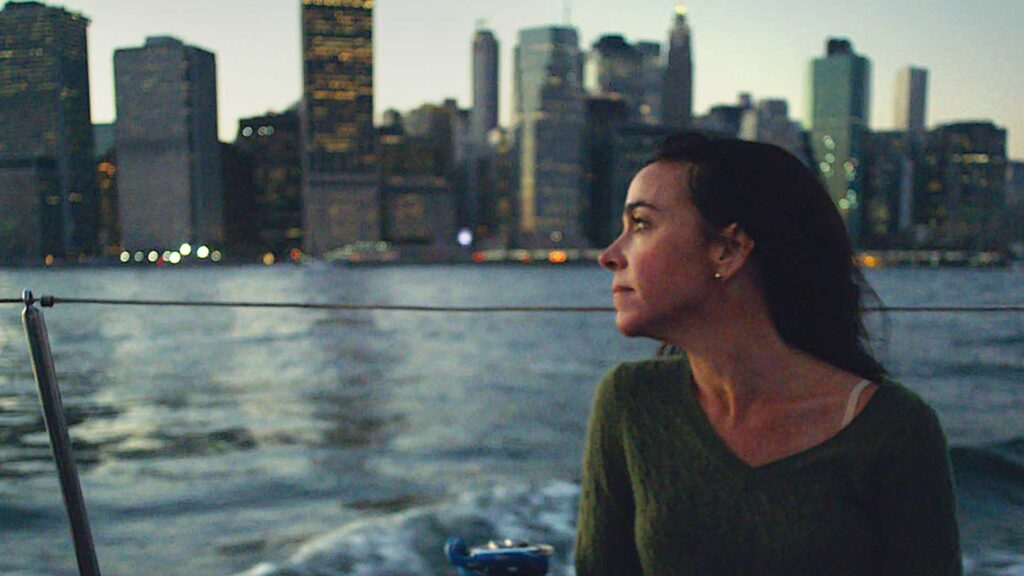
Sabaya is a pure wow of a documentary with unbelievable imbedded footage from the harrowing rescues of kidnapped Yazidi girls from the hands of the Daesh terrorists, who abused and sold them as sex slaves. Brave, poignant, riveting, Hogir Hirori’s film is a powerhouse, more than deserving of the World Cinema Documentary Award for directing.

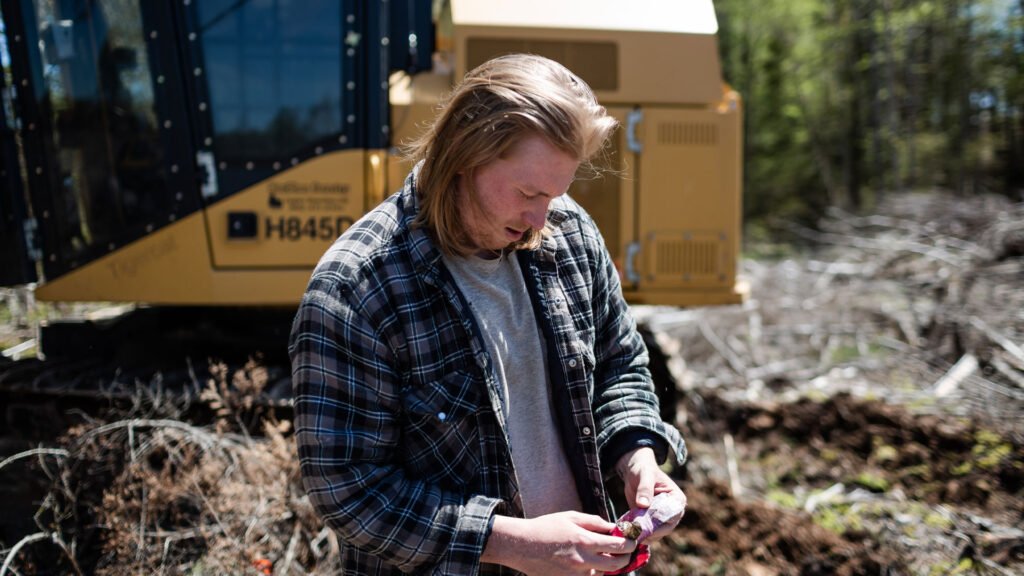
Luzzu: Winner of a Special Jury Award for acting. Filmed and set in Malta, which has not had an entry at Sundance previously, director Alex Camilleri’s debut project tells the story of Jesmark, a fisherman and new father, as he tries to earn a living in a market controlled by EU regulations. Giving up the open sea, his passion, is a sacrifice – and the film aches with longing for a no longer viable way of life.

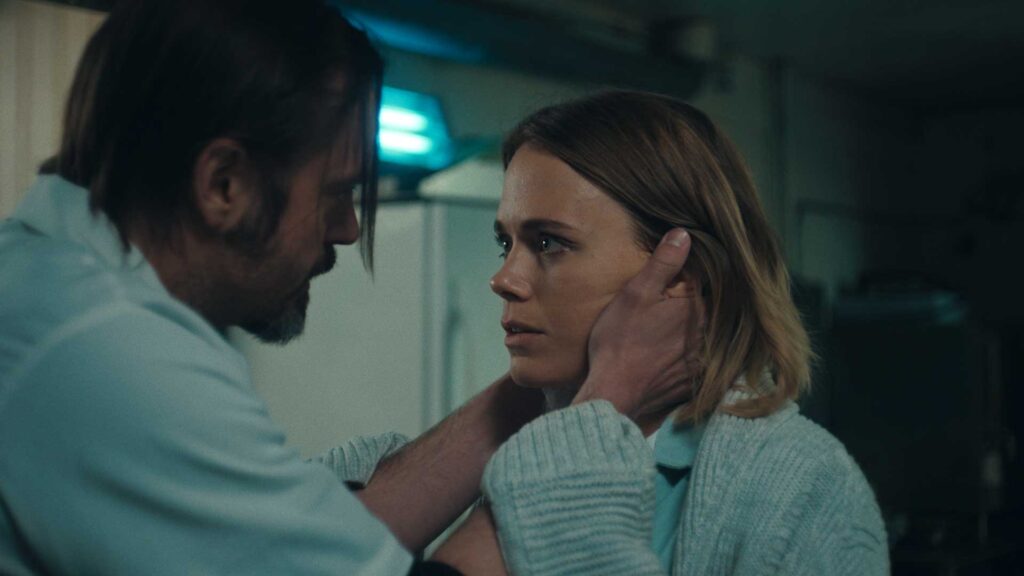
The World to Come: From the festival’s Spotlight selections, this well-acted drama of thwarted lesbian love is moving, aesthetically deliberate, and absorbing. Set in the frontier era, the rugged setting and sense of loss is punctuated by bursts of too-short pleasure. Mona Fastvold’s short-story-based film is quietly tragic and extremely well acted, but does not break any new ground.

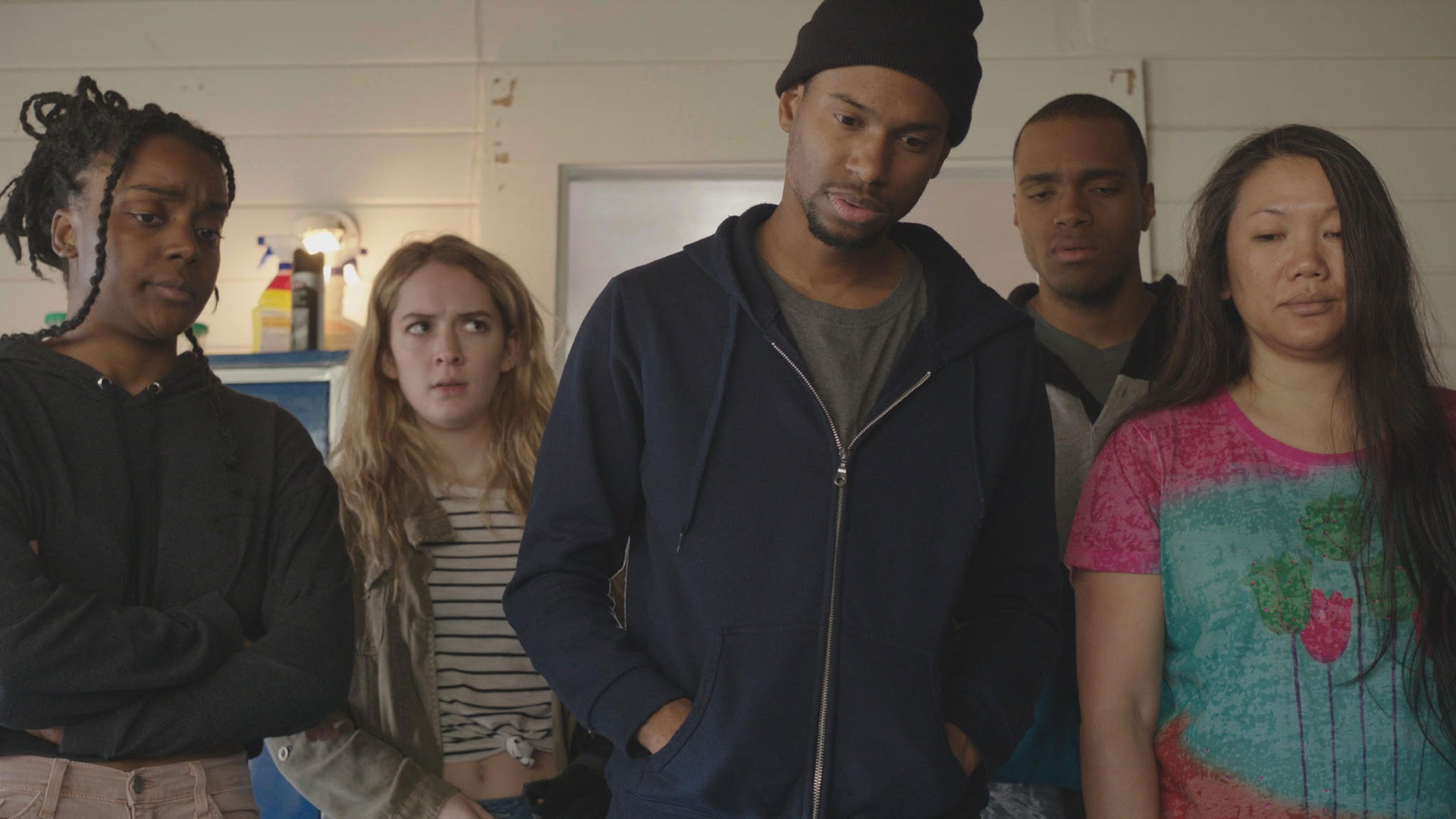
Cusp: Some things never change? Women are still prey to a patriarchal society, this one in modern day Texas. Winner of the special jury award for emerging filmmaker, this intimate documentary follows a summer in the lives of teens Autumn, Brittney, and Aaloni and their families.  The directors, Parker Hill and Isabel Bethencourt, offer an absorbing and deeply intimate view of the girls as they navigate fraught family lives and the older boys they date and party with, as well as a history of abuse. Their fast food eating and beer drinking social life is quite a contrast with the young women in Sabaya, and yet there are some parallels.

Documentary top prize winner Ahmir “Questlove” Thompson’s Summer Of Soul (…Or, When The Revolution Could Not Be Televised) is a joyous compilation packed with terrific music, presenting primarily archival material about the Harlem Cultural Festival of 1969, forgotten amid the Woodstock hype from the same year, and very likely due to systemic racism. The festival was not just a musical event, it was truly a celebration of black culture, and a galvanizing social event. Current-time interviews and political commentary contribute to a balanced, smart film.

Misses:

On the Count of Three, award recipient for screenwriting, just didn’t work for me. The story of two suicidal friends veered through a roller coaster of a day; the beginning of which was far more compelling than its conclusion. Darkly comic, director Jerrod Carmichael’s film has its moments, but ultimately went nowhere.

Already sold to Magnolia, the uniquely animated Cryptozoo gives us a fanatical animal world and some awesome creatures, but not much else. Random violence from the beginning was off-putting. Dash Shaw’s film was four years in the making, and certainly lovely to look at, but similar to the old saying about black olives, probably just not to everyone’s taste – at least not to mine.

And that’s a wrap for Sundance 2021, virtual edition, where pandemic life, racial inequality, and a color palette of pink (The Pink Cloud, Strawberry Mansions, Blazing World, and Eight for Silver all exhibited memorable moments awash in this shade) stood out thematically. 

  • Genie Davis; photos provided by Sundance Institute