
Debbie Korbel is Living the Dream

Debbie Korbel is Living the Dream by Genie Davis

Debbie Korbel‘s mystical, marvelous solo exhibition Living the Dream, now at Riverside College Quad Gallery in Riverside, is an exciting, enchanting sculptural show filled with wit, poetry, and a profound sense of grace.
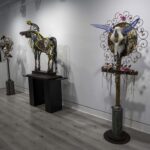
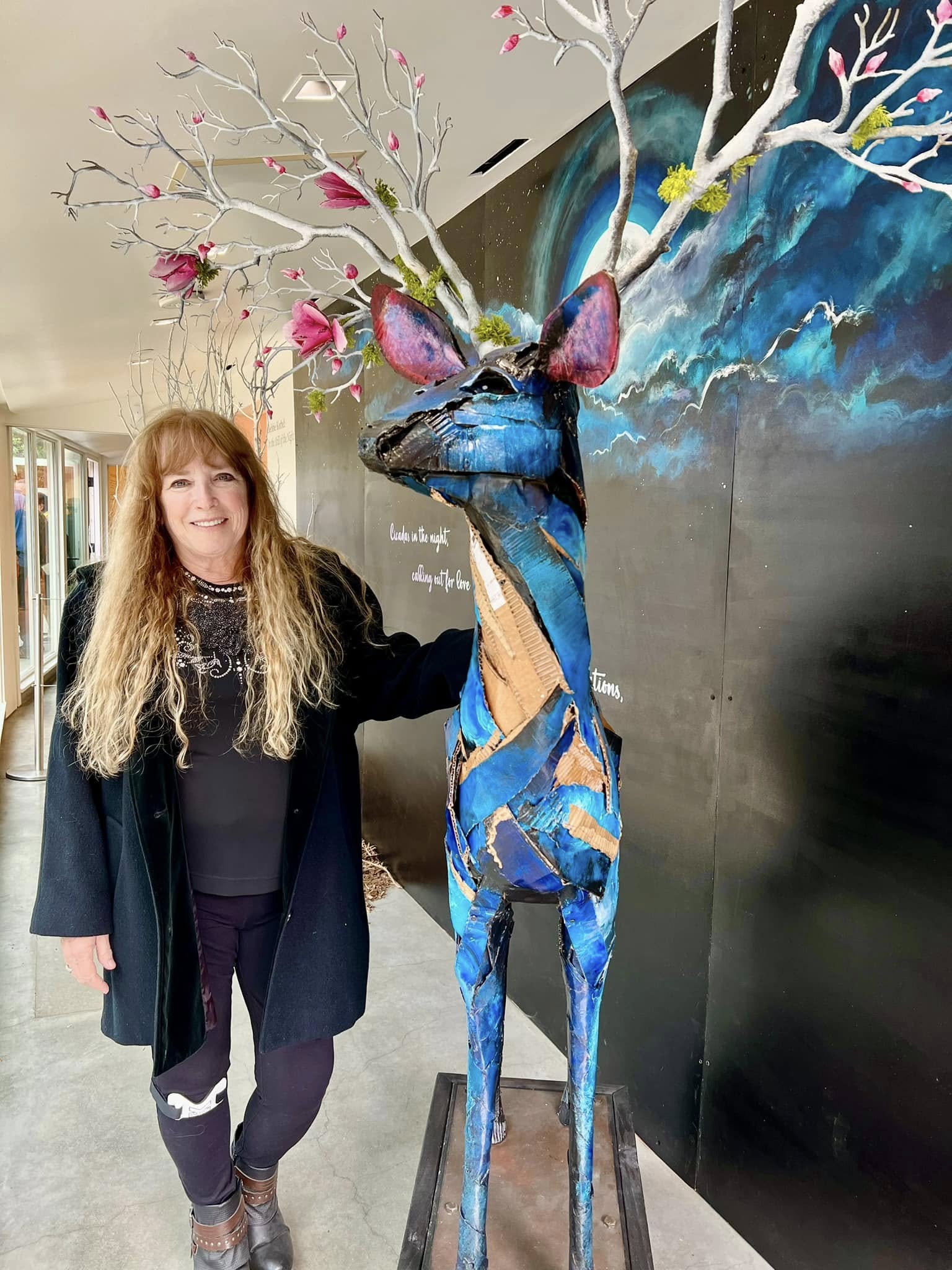
Entering Korbel’s world is like taking a walk through both the artist’s dreams and your own. Horses made of wire and found metal parts are ready to gallop across a wild prairie; Frankenstein and Jesus are merged into one suffering and ecstatic image; flowers burst from an elegiac “Indian Summer,” and an electric blue deer conjures up a vision of beauty and delight.

The artist’s use of unusual materials is exciting and inventive, but it is her sense of motion, through both joy and pain, that is the most unique.
Living the Dream is an apt title for an exhibition that is both dream-like and packed with abundant life. Each work in its own way conveys a sense of yearning, a longing for the dream to continue or shift, for reality to bend. And if anyone could actually bend it, that would be Korbel, whose gift for creation is magically, marvelously slightly off kilter.

Taken as a whole, the exhibition weaves a complex spell of alternative reality, one both intimately recognizable and strangely alien. Individually, each piece has a powerful emotional resonance, a kind of ache to be set free, find happiness, achieve a transformation that might provide both, or neither.
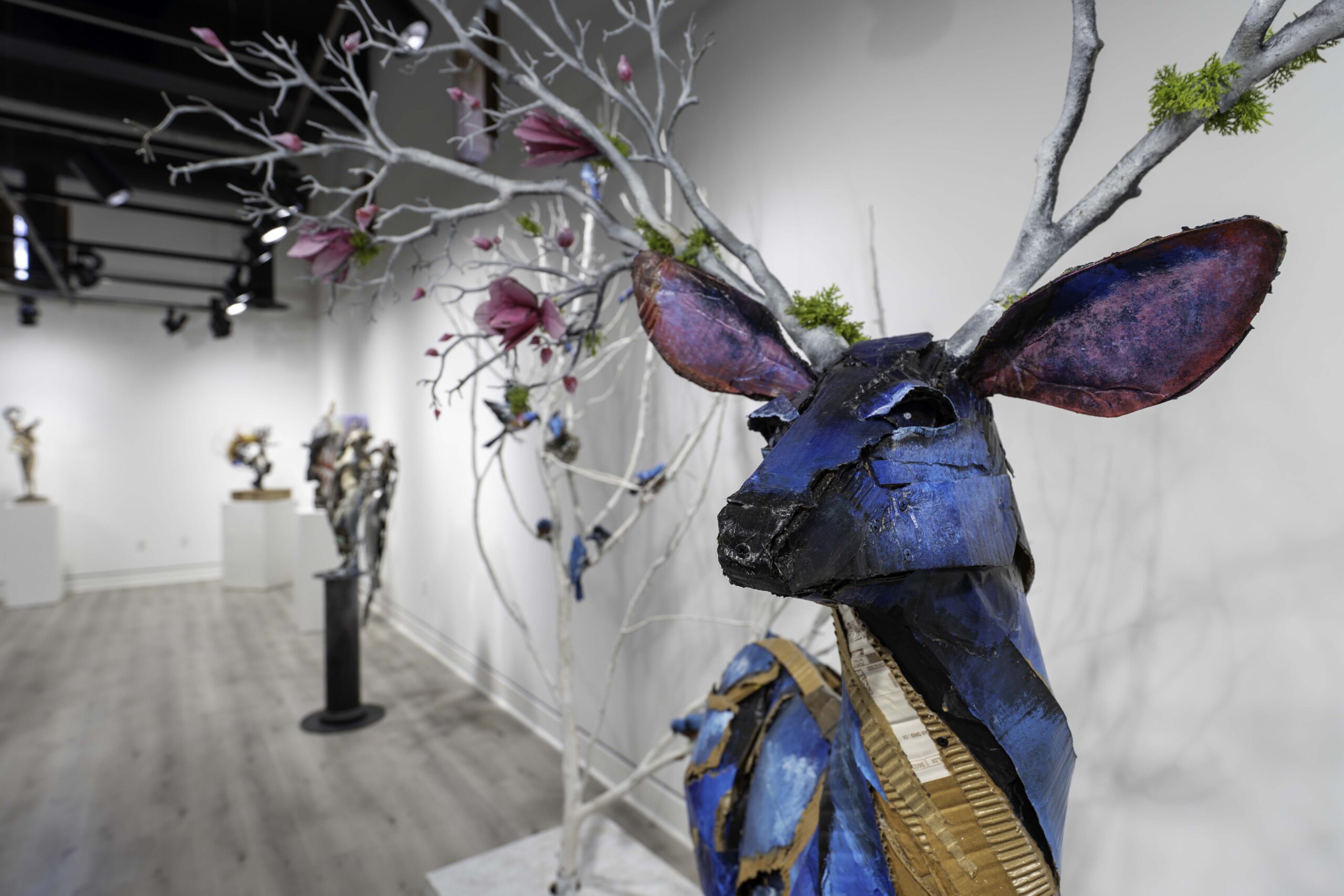
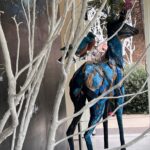
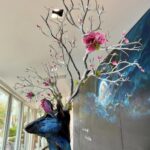
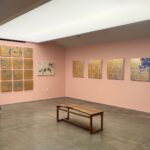
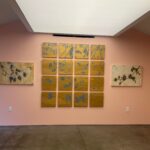
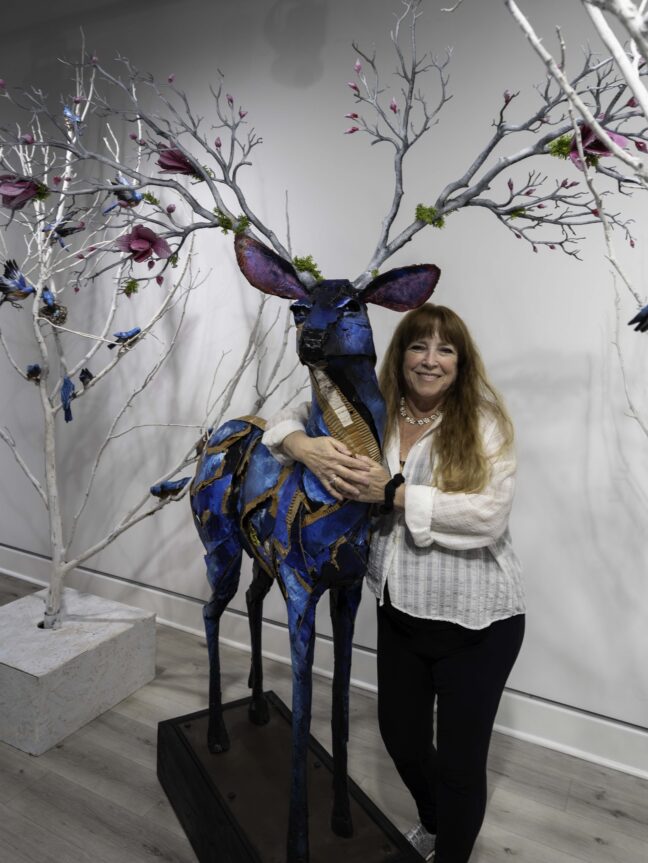
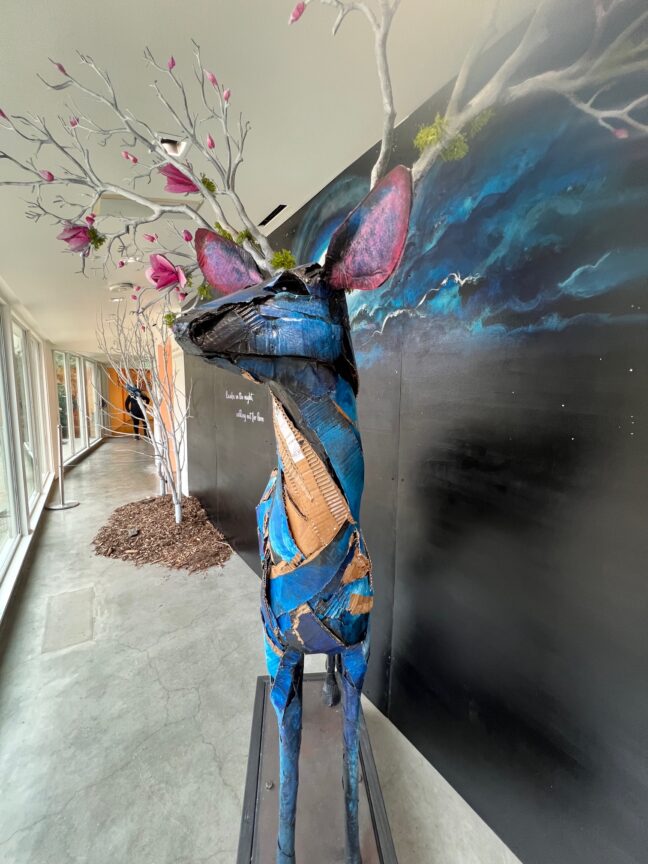
“Night Dreaming” is a glorious image, a deer that is mutant indigo, with patterns of black and beige a part of his painted coat. With purple ears and tree branch antlers from which lustrous pink flowers spring, this lovely young deer is the bringer of spring and hope.
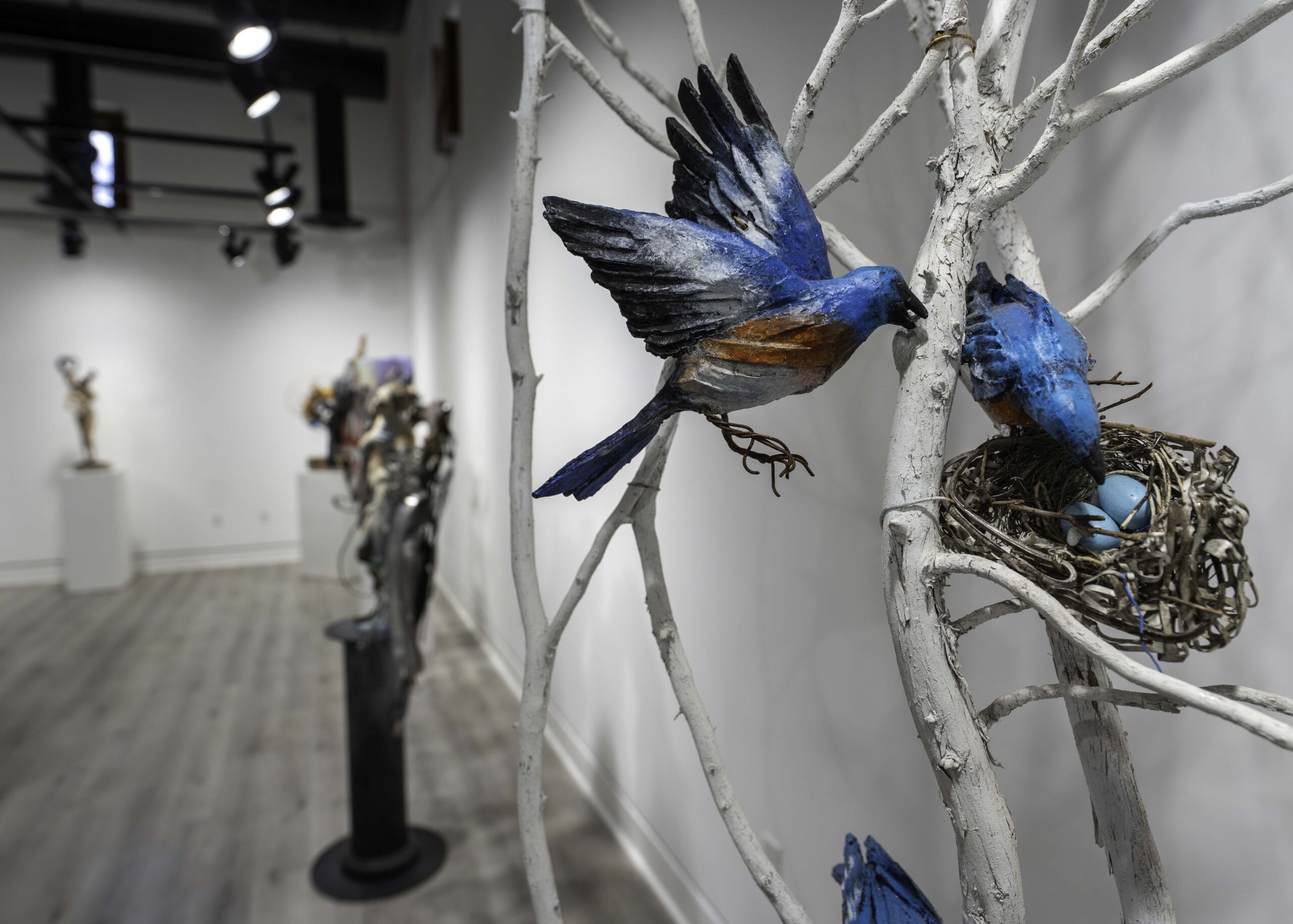
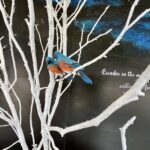
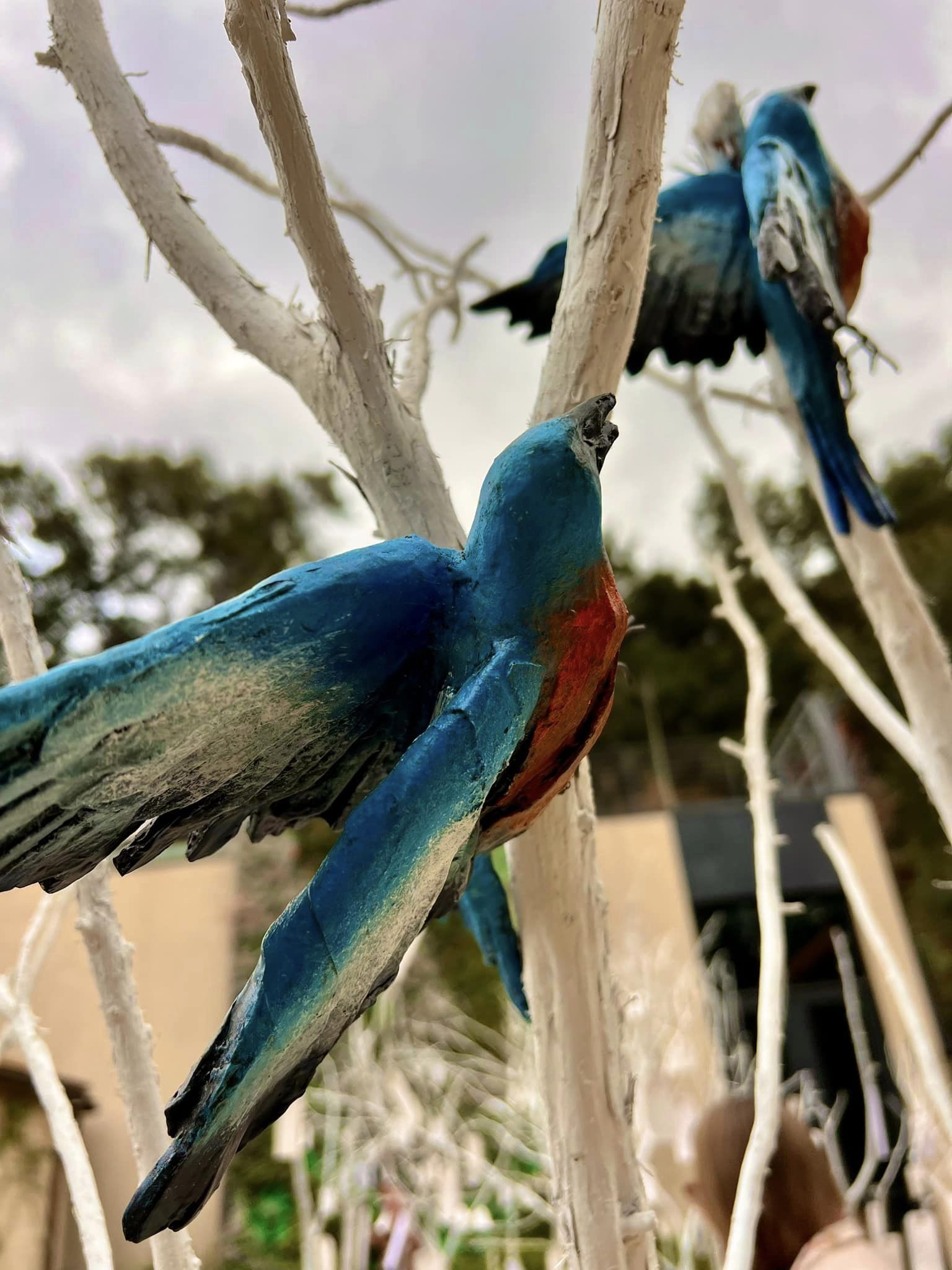
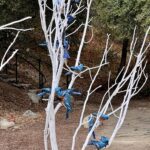
Positioned beside him in the gallery are white-painted trees abloom in their own right with vibrant nesting bluebirds, in a delicate work simply titled “Birds in Trees.”
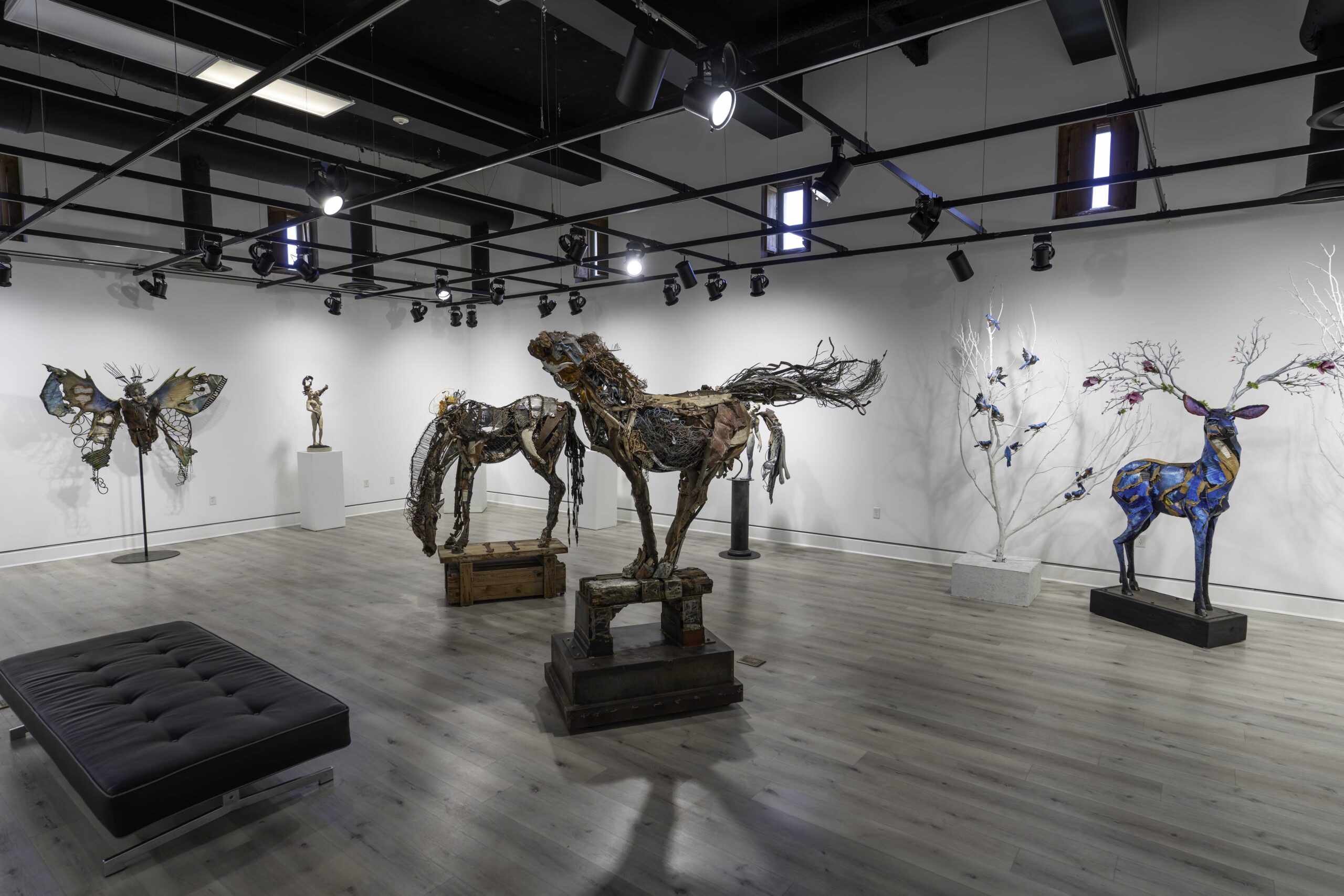
From this light, joyous focal point along the center wall of the gallery, weightier titles, topics, and materials spread out. Positioned in the middle of the gallery,  “The Call” is exuberant, wild, and brilliantly free. Wire tail flung outward like a flag, head raised, back arched, this is the call to run, to feel the wind, to carry it home.

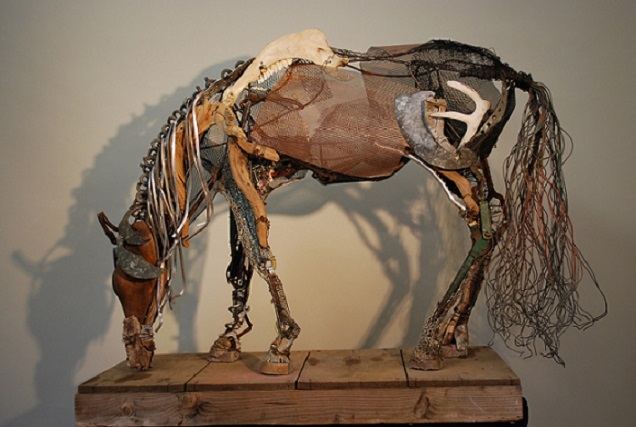
Next to this beauty stands “Small Talk,” head bowed as if grazing, his perfect dangling tail created from found electrical conduits. Both these fine beasts are sinew and muscle made from a steampunk reality of metal and wire that, once conjoined, becomes more alive than flesh and bone. They stand on bases that are intrinsically created by Korbel to be of one piece with the sculptures themselves, not merely a base but the place on which these mythical creatures could stand. “Small Talk” is poised on what could be the wooden floor of a barn; “The Call” is balanced on what could be part of a road or rail ties.

There is a rich nuance to these horses, each intricate component, whether a factory discard, automotive part, mesh, or metal wire all come together in a kinetic rush to form a coherent, tough, yet delicate whole. “Small Talk” also embodies a poem written by the artist, “Quasimodo Love,” which reads in part “I don’t know how to be more.” And which of us do? And, which of us don’t make ourselves smaller in our own self-talk, sure that love will leave us if we cannot perfect our flaws.
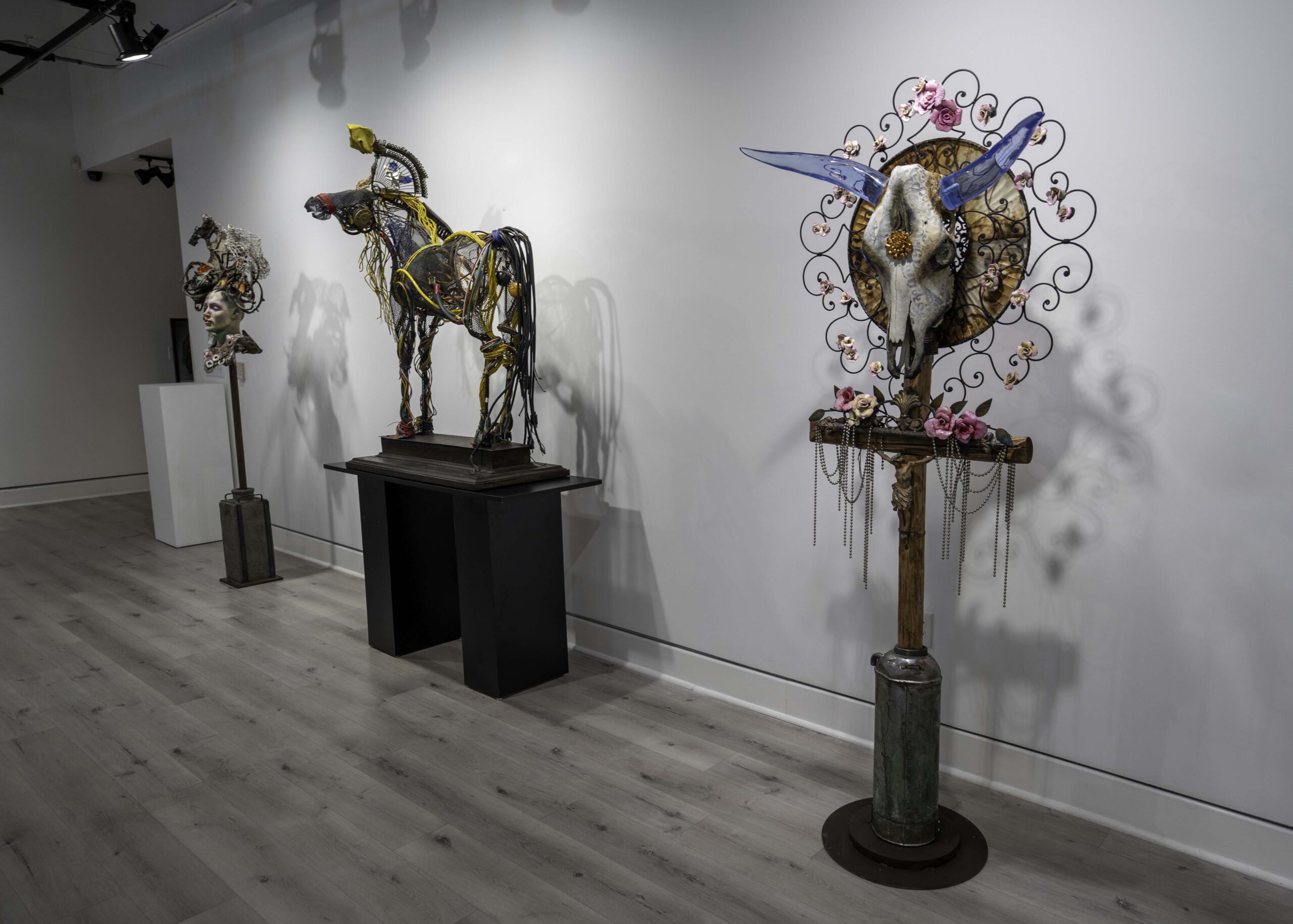
Another equine, “Wired,” proudly poses on a pedestal wearing a crown shaped from a part of a fan, his muscular torso lined with bright yellow wire, a sunshine brightness so galvanizing his title can only speak to it. Encased in a mesh-fleshed body, this young stallion has pool balls as a part of his genitalia.
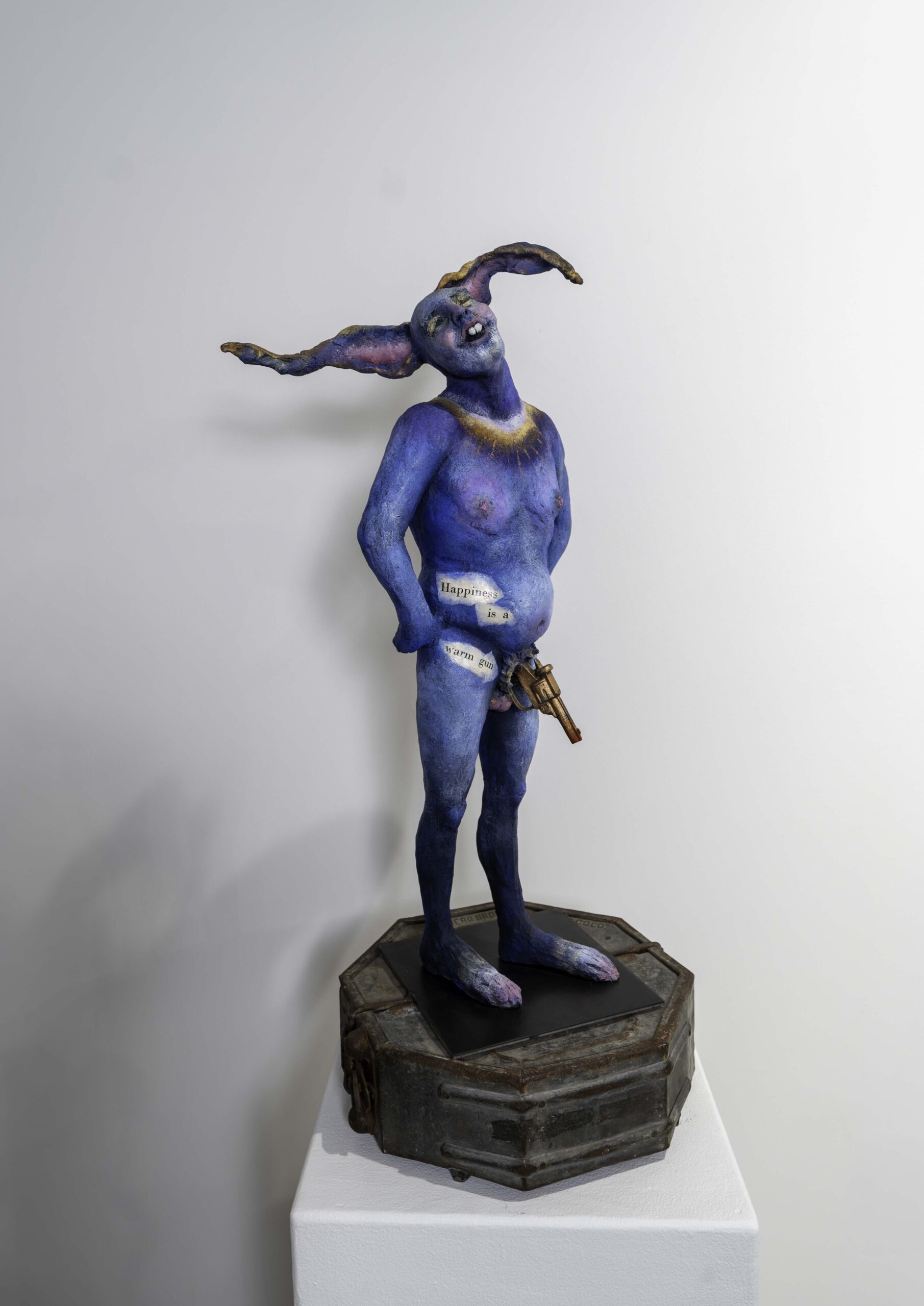
A different sort of ballsy humor is embodied by “Happiness is a Warm Gun” in which a bright blue man/rabbit throws back his head, quite pleased with himself and his scatologically placed firearm, his title is transcribed on his thigh. While recognizably human, his long rabbit ears and rabbit-hoof feet make his tough-guy posturing as comical as it is deadly.
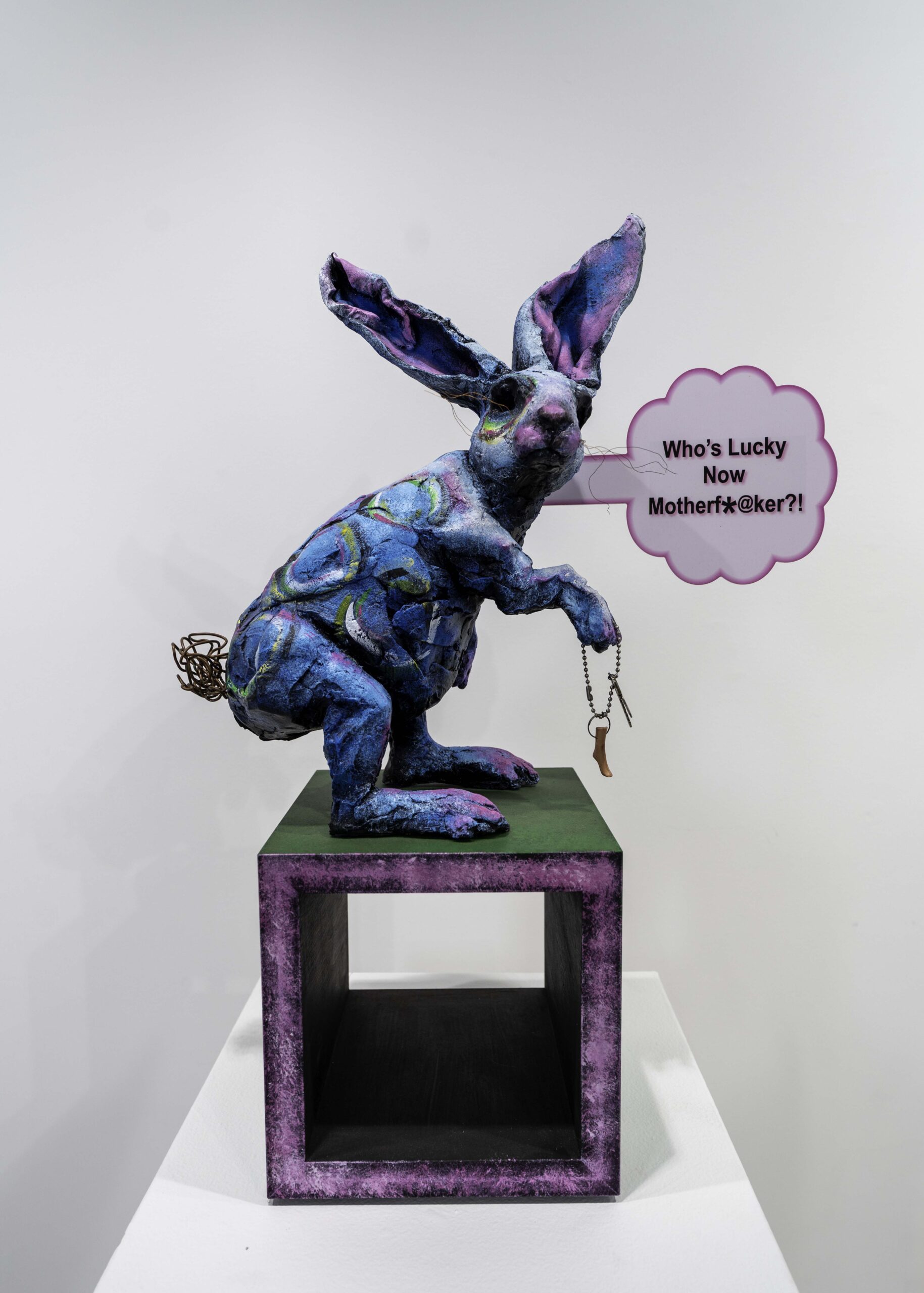
A full rabbit is the subject of “Who’s Lucky Now, Motherf*@ker?!” Here, positioned on a square open box that could be a rabbit hutch, this is definitely “somebunny” as he dangles a human leg on a key ring, just as once upon a time we might have carried an actual small rabbit’s foot for “good luck.” His slightly psychedelic purple, green, and white patterning and cute wire tail belies an expressive face that’s seen some things. And acted on others.
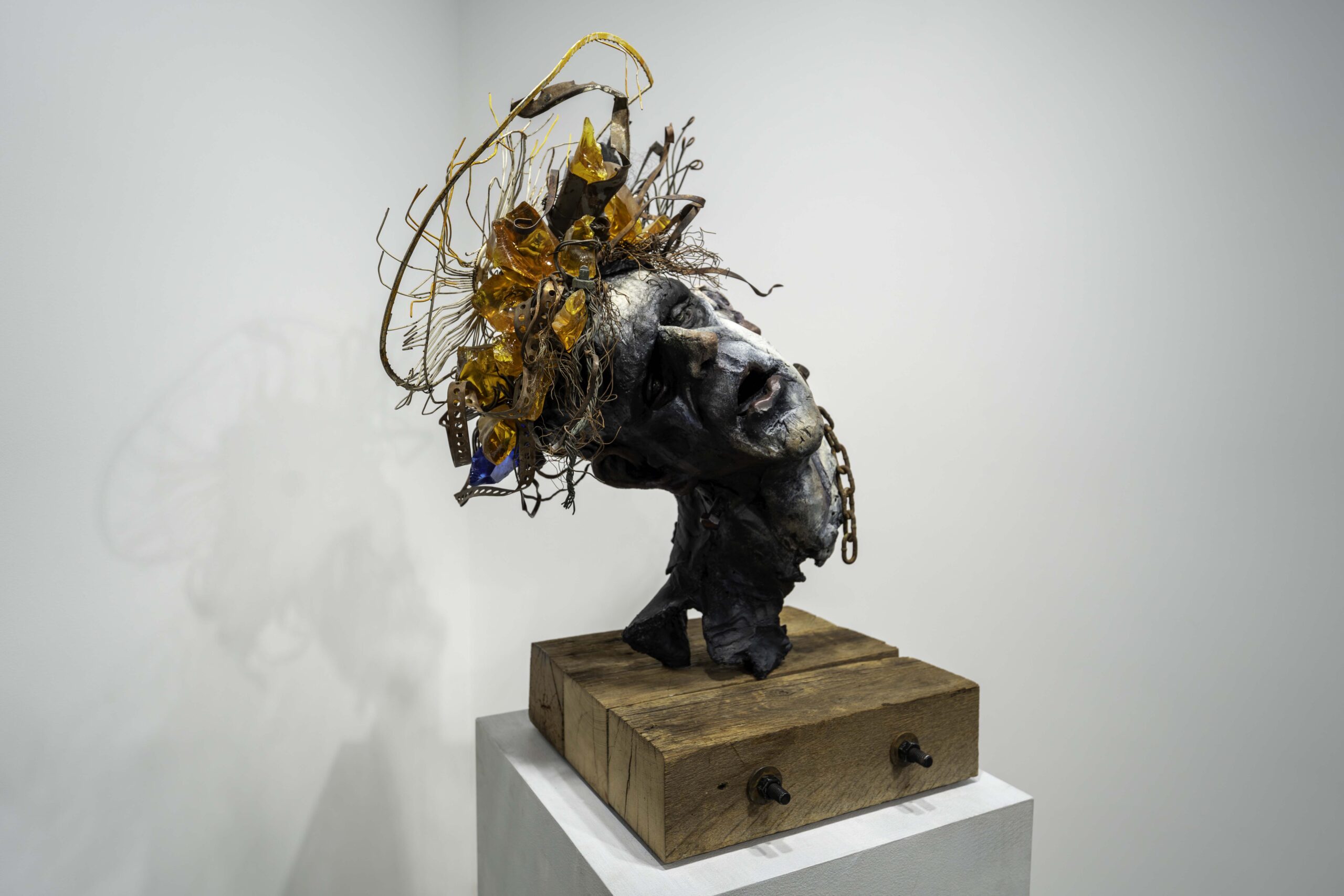
Turning more seriously toward the human and inhuman condition, “Forsaken” gives us a Christ-like Frankenstein, his halo constructed of amber glass and a part of a fan, his face drawn back in a rictus of both suffering and ecstasy. With a chain dangling against one cheek, this man has suffered as all humans suffer, and perhaps for us as well.
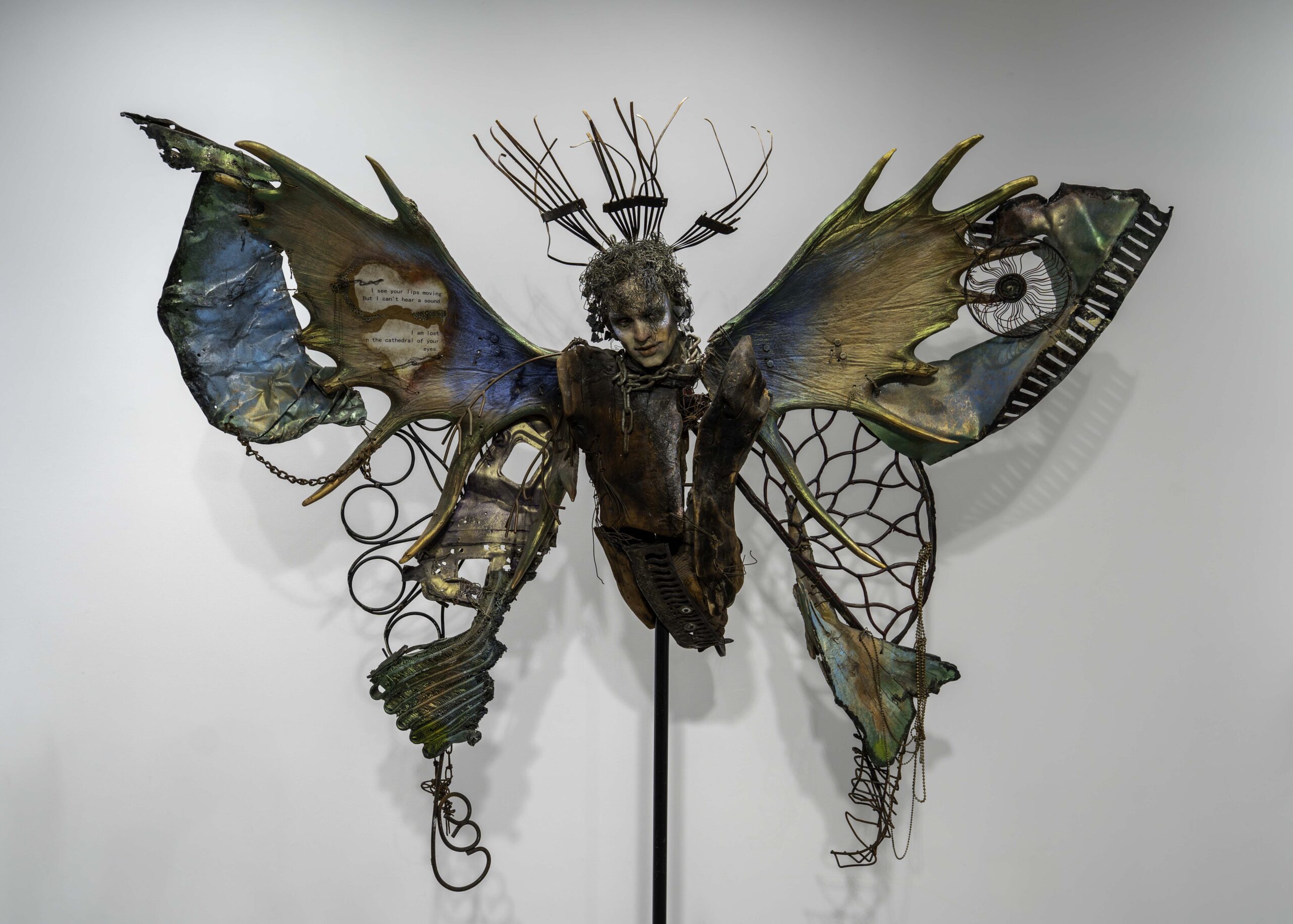
There is a quiet transcendence in the suffering of “Metamorphosis,” as a human man, his face deep in thought, riven with both a cocky boldness and regret, merges into a ragged butterfly. One wing is imprinted with poetry written by Korbel, “I see your lips moving but I can’t hear a sound/I am lost in the cathedral of your eyes.” Is this the kind of terrible, ecstatic morphing of love, or  an ache that hopes to achieve it?
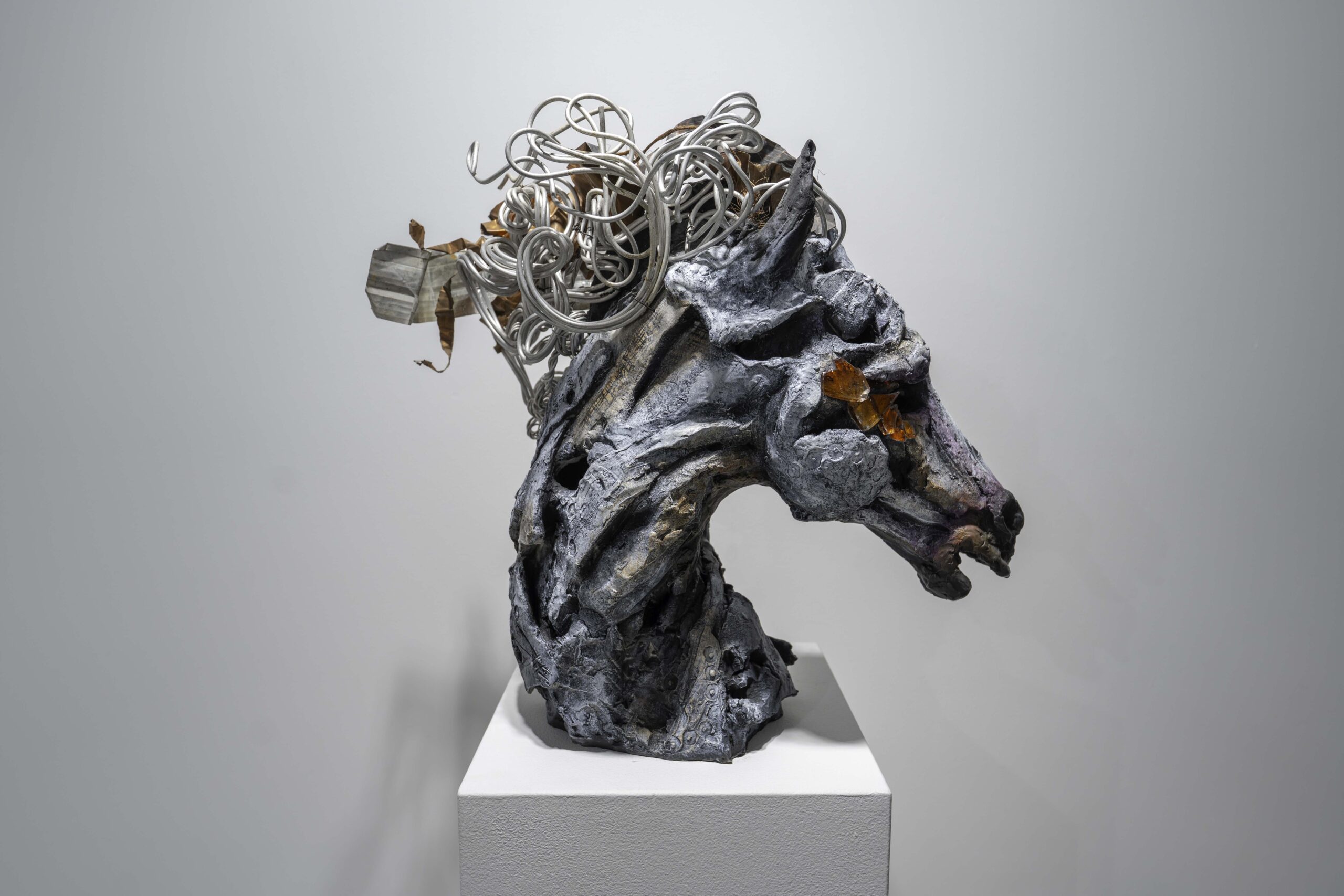
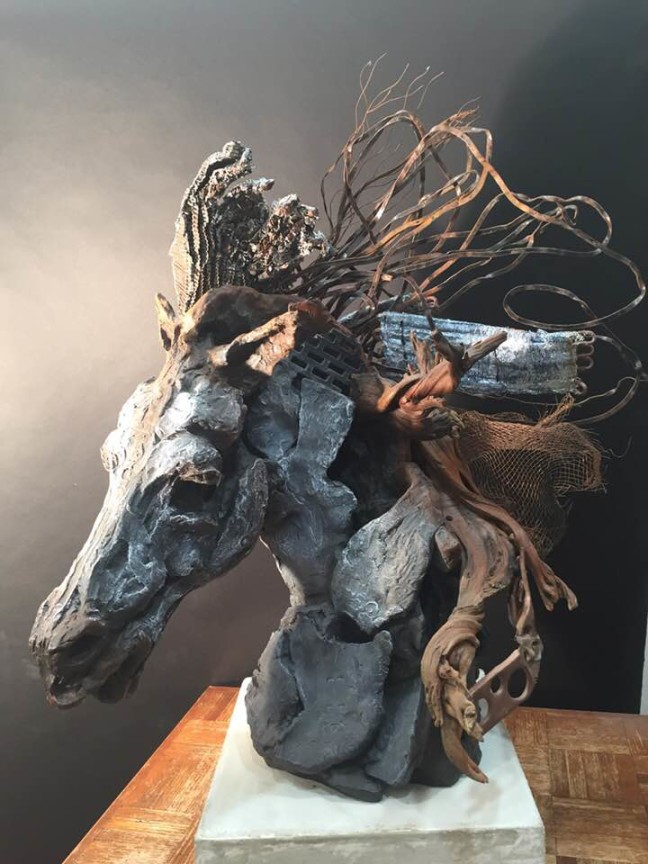
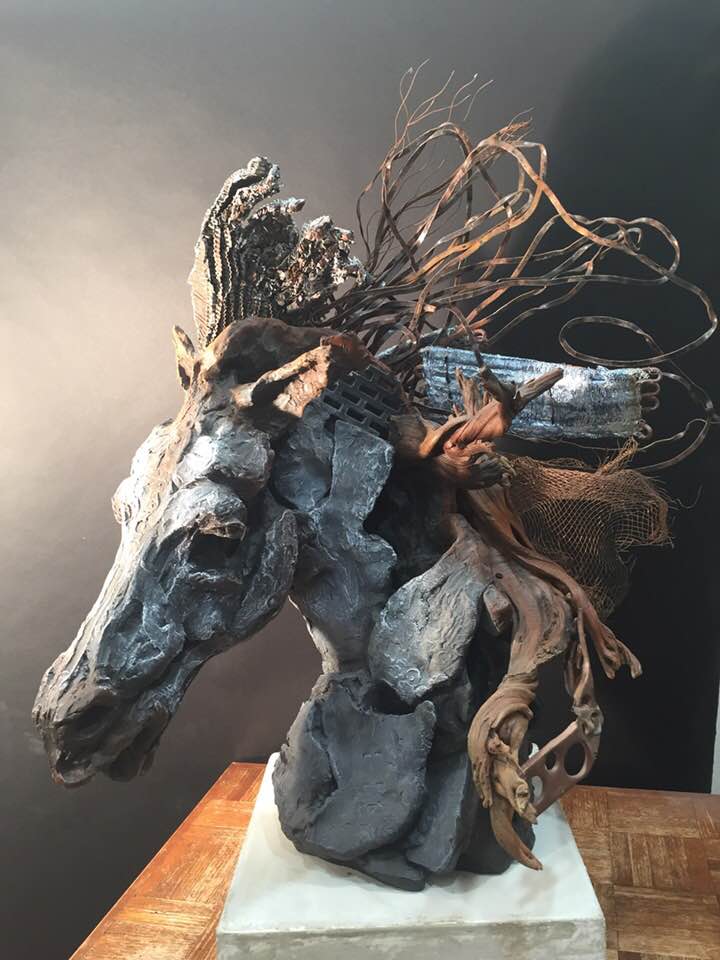
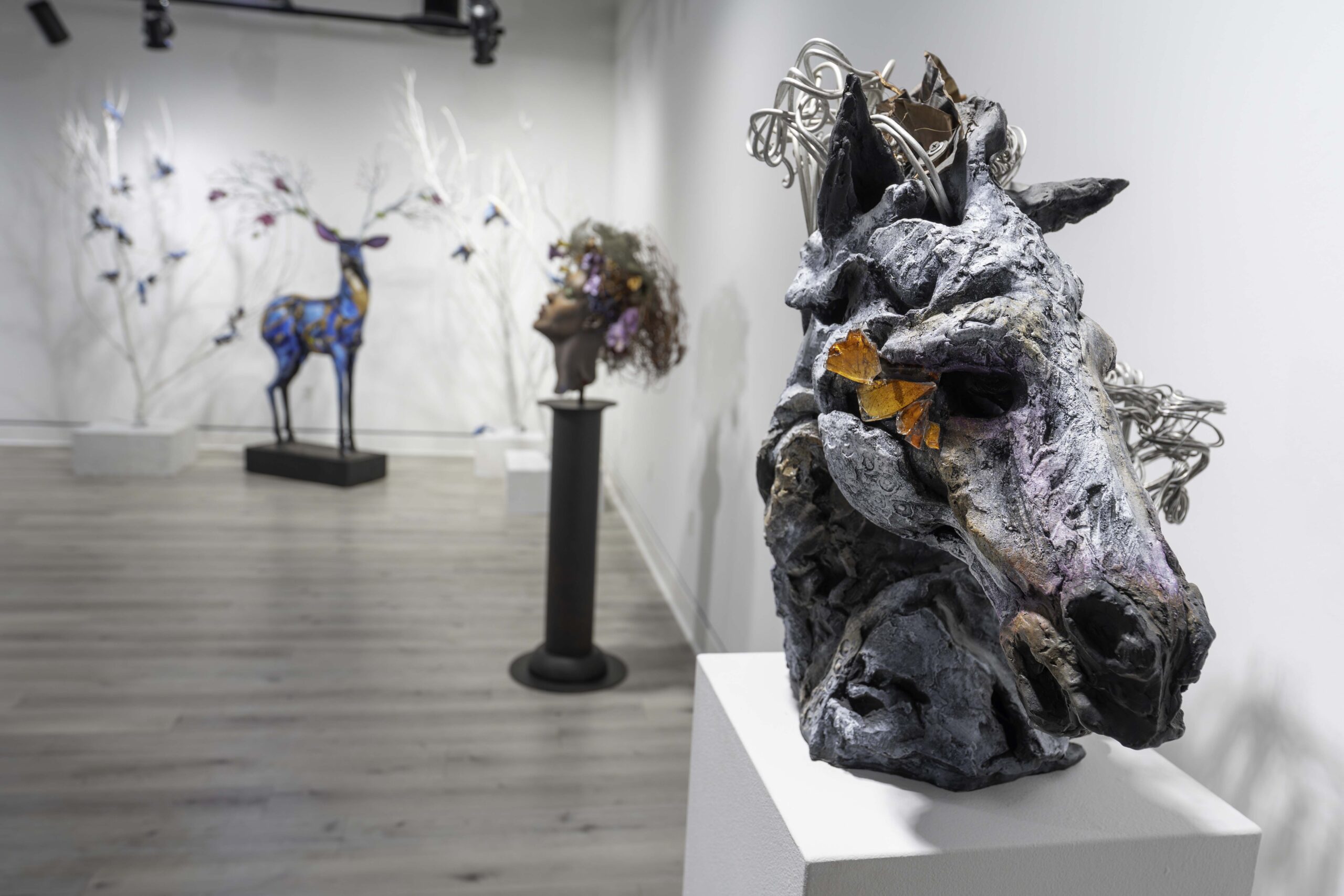
“Wild is My Heart” is the head of an elegant horse, partially turned, with amber glass sparkling near his eyes and a tangled aluminum wire mane. His nostrils flare, his elegant, fiery spirit awaits a freedom he cannot yet achieve.
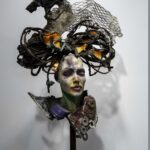
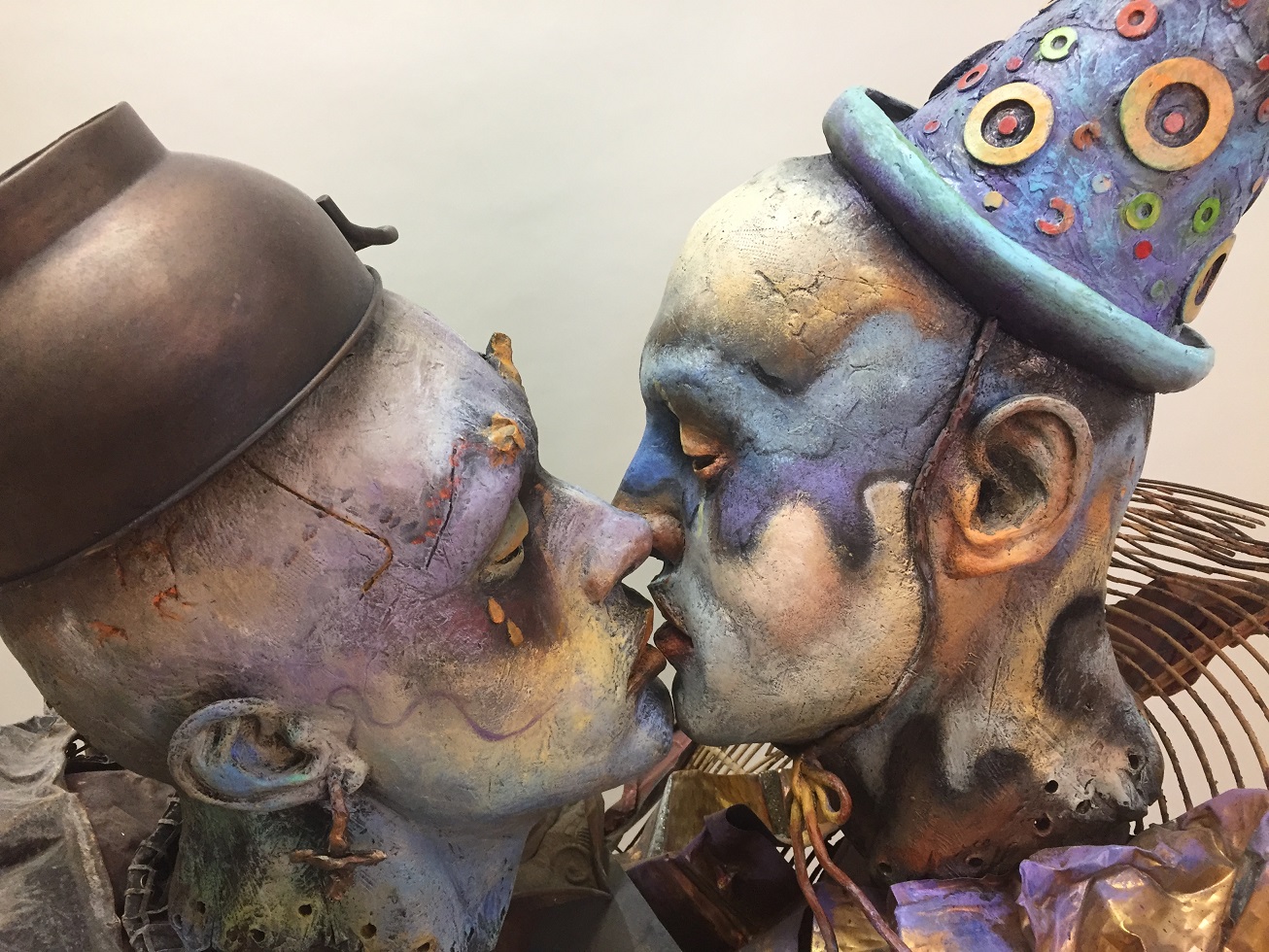
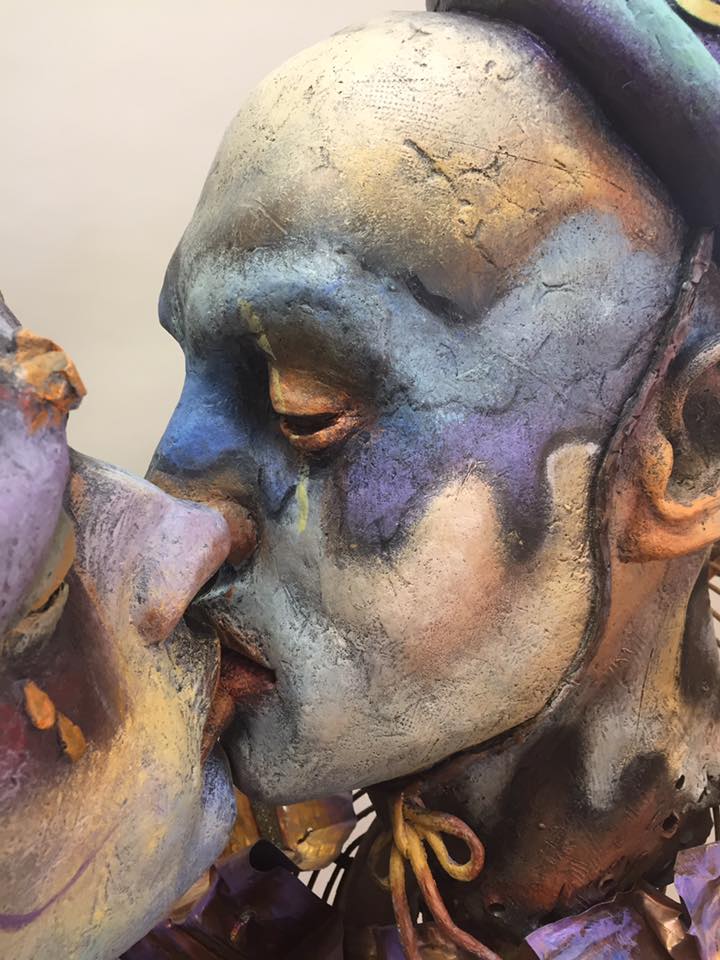
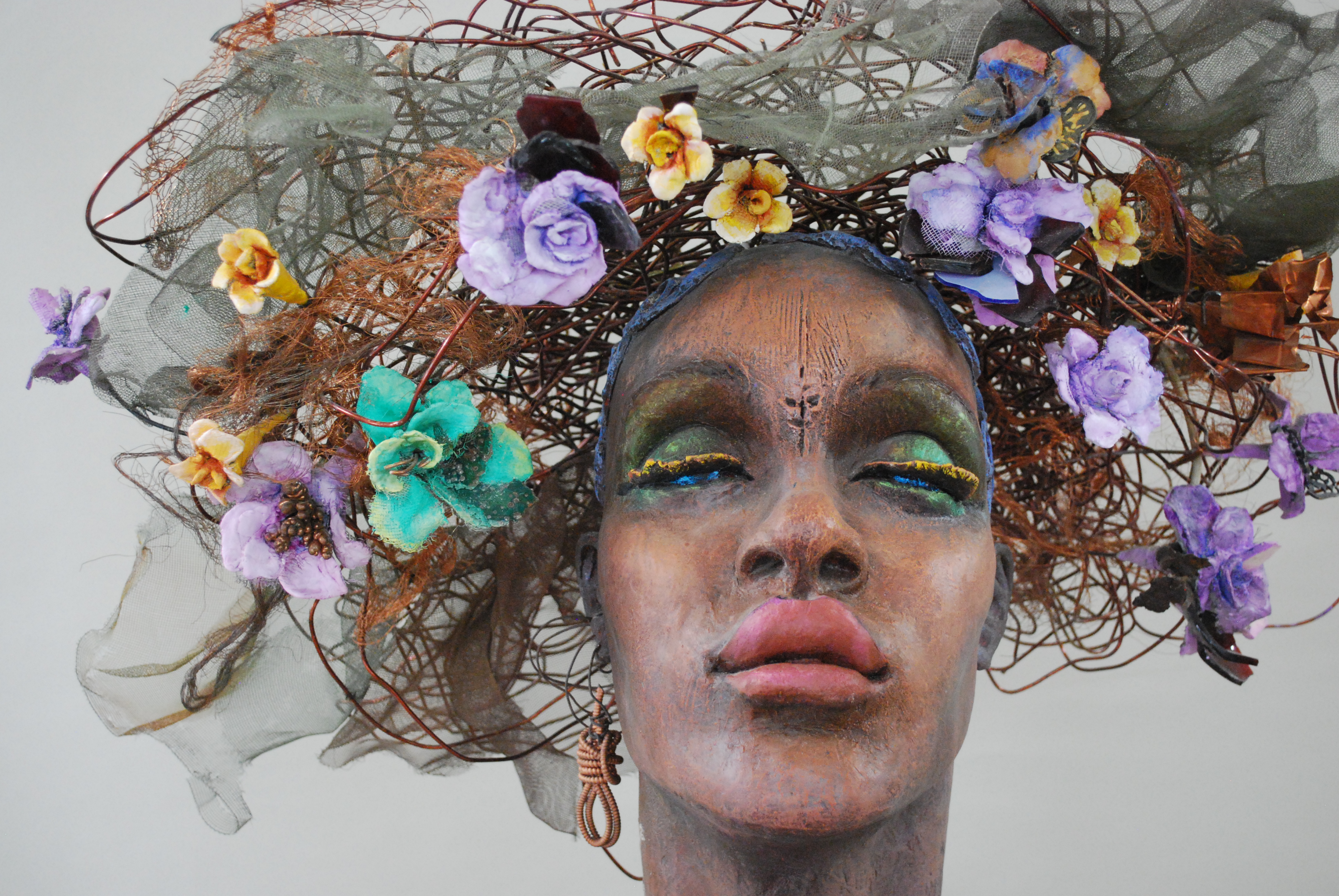
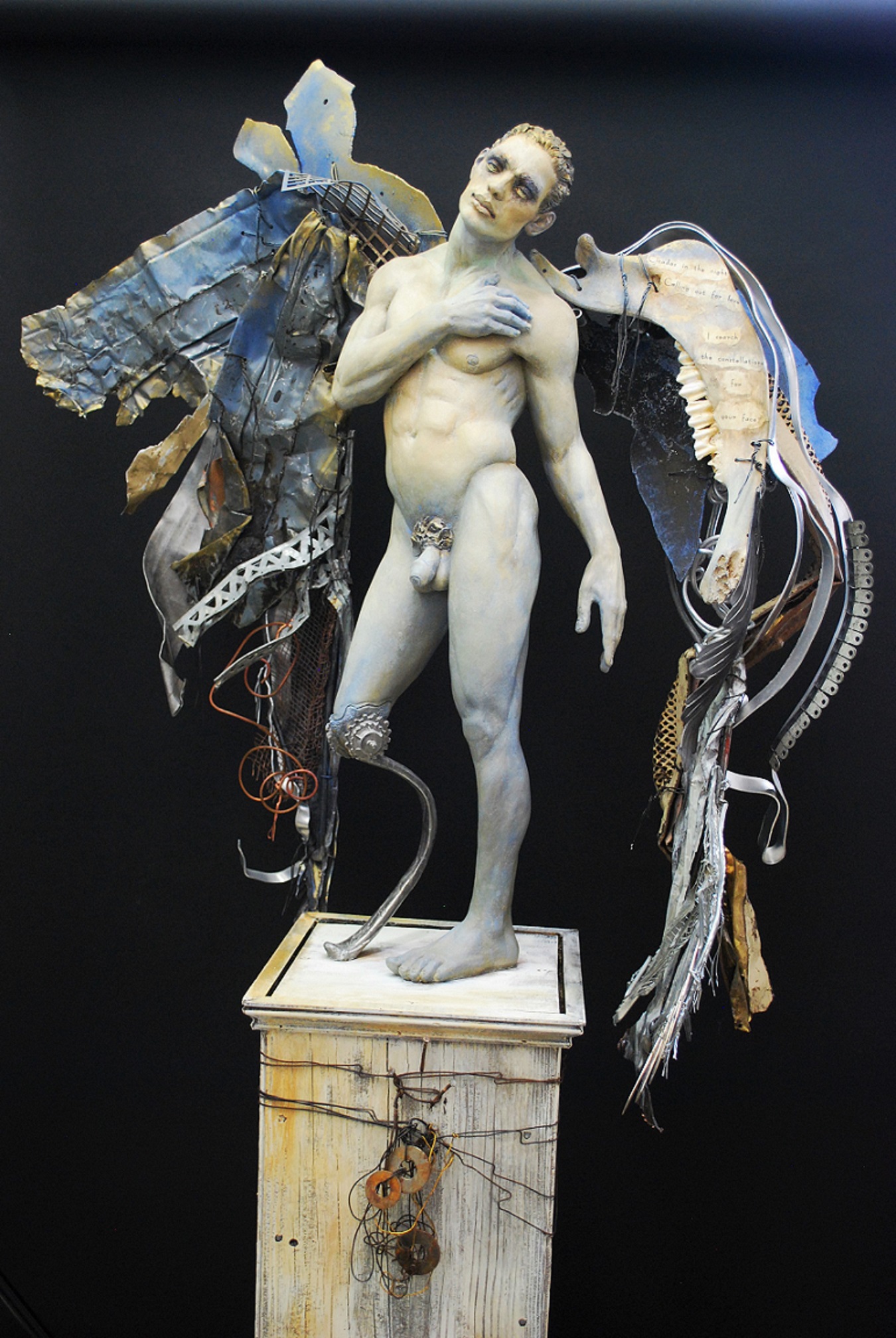
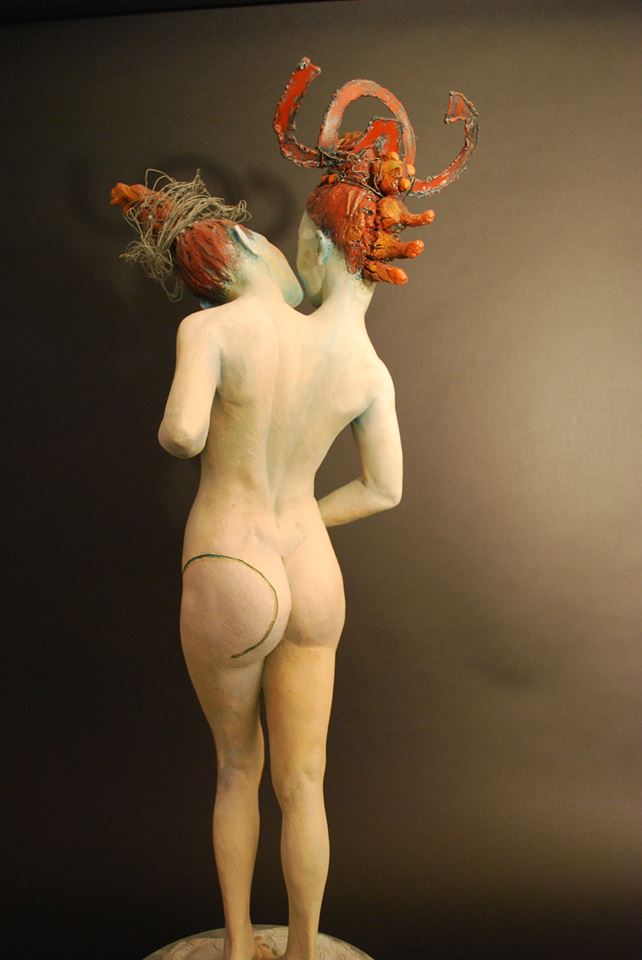
Other works are just as lovely and inchoate with hope and loss: “The Kiss” gives us conjoined sisters, as restricted as they are, they express a deep tenderness; “Dreaming” gives us a beautiful man growing his ragged angel’s wings; “Flirt” is a teasing woman with an impossible headdress.
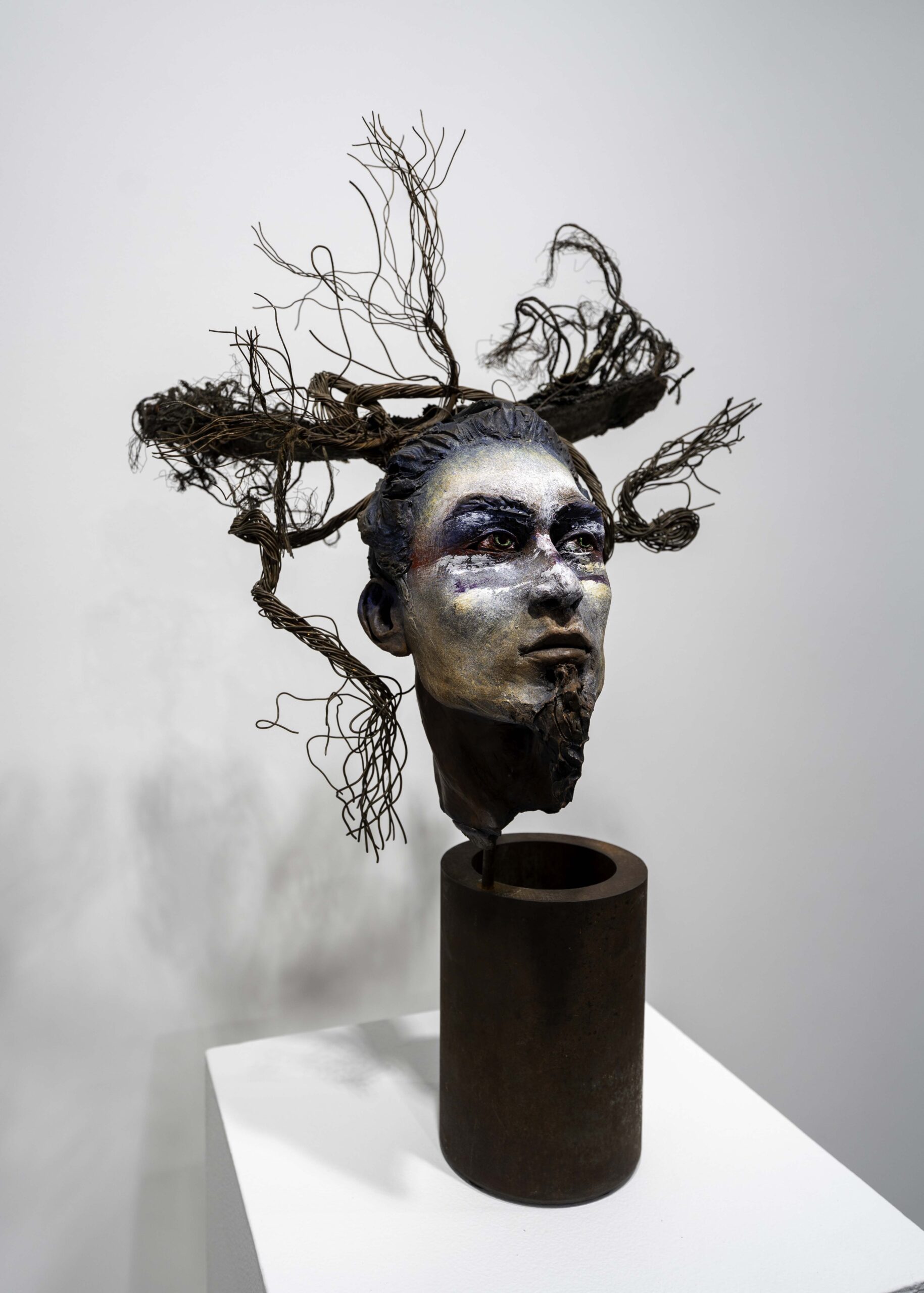
Above, “Michael,” is another tender, insightful work.

Regardless of title, whether human, deer, horse, rabbit, or a mythical mix, each of these wonderful, wondrous sculptures glows with a fierce lifeforce that the artist herself embodies. Never losing their sense of humor or their hope for a better world, the dream they live, along with that of their creator, is simply marvelous.

Living the Dream runs through April 6th; Riverside College Quad Gallery is located at 4800 Magnolia Ave. in Riverside.

  • Genie Davis; photographs by LA Art Documents


Days of Reverie Entrances at Stuart Haaga Gallery

Days of Reverie, carefully curated by Vojislav Radovanovic, is a compelling exhibit that brings together four visual artists who work in different mediums – drawing, painting, sculpture and installation, along with one composer. All these artists lift the viewer out of the ordinary “here and now” existence into an extraordinary meditative and otherworldly state of mind. The four visual artists – Catherine Ruane, Jill Sykes, Jason Jenn and Debbie Korbel — were tasked with creating new work for the exhibit at Stuart Haaga Gallery at Descanso Gardens using actual materials sourced from the gardens or inspired by the gardens, while musician and composer Joseph Carrillo was asked to create the soundscape that accompanies the exhibition. The results are astounding, and though each room is decidedly different from the next, each artist seems to work at the threshold of the real and the artificial with surprising synchronicity of color and materials.

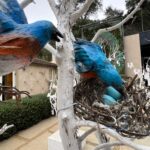
Debbie Korbel’s two sculptural pieces are the only ones that are outside the gallery and immediately greet the viewer. Outdoors, her bare trees, painted a ghostly, wintry white, stripped bare of their original colors and foliage, speak to a mystical winter’s tale. The two trees in the front are populated with Korbel’s sculpted Lazuli Bunting Songbirds, some caring for their eggs in a nest, others just perched on a branch.

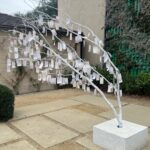
The other trees become wish trees where viewers are encouraged to write their intentions and messages on paper tags and affix them to the branches, thereby repopulating the bare trees with leaves of desire. This concept was popularized by Yoko Ono in 1996. She modernized a Japanese custom started in the 17th century of writing wishes on tanzaku (small strips of paper) and attaching them to bamboo trees.

Debbie Korbel

Visible through the glass window is Korbel’s striking life-like and full -sized mixed-media deer mule, looking alert yet relaxed in a painted nightscape that references natural history dioramas. The flowers and plants entwined around the antlers speak to rejuvenation amid winter’s thaw a theme echoed throughout the exhibition. A beautiful short poem is written on the wall she illustrated behind the deer.
Jill Sykes

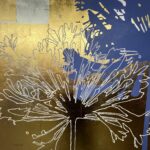
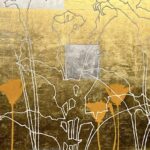
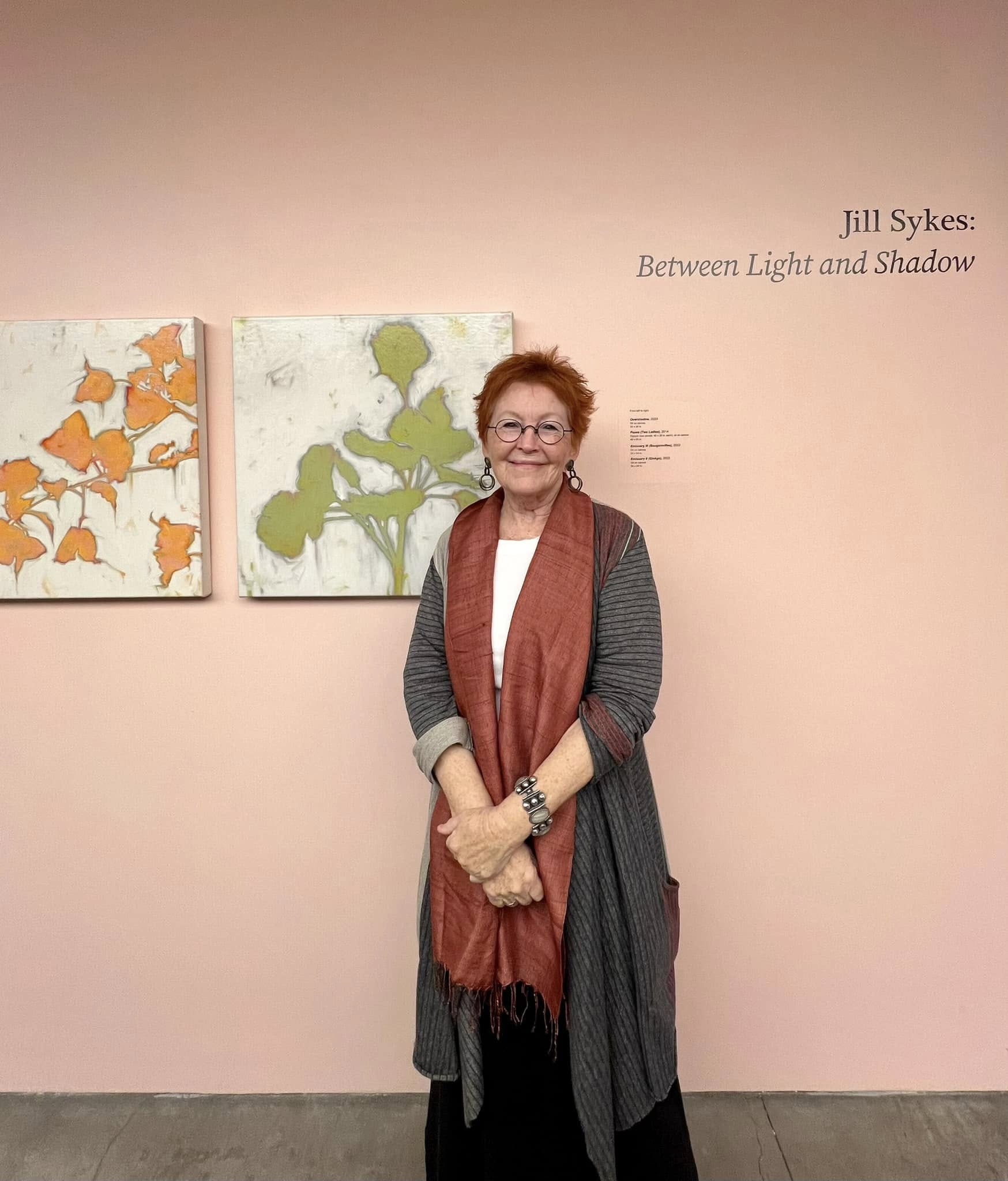
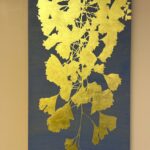
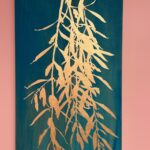
Inside we enter the room filled with Jill Sykes’ radiant botanical paintings of roses, poppies, calla lilies and agapanthus which all grow in the gardens here. If Korbel’s work harkens to a wintry thaw, then Sykes work simulates spring with new growth visible on slender branches.

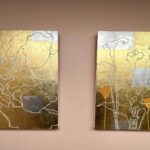
Sykes’ plants and flowers are undifferentiated in color and instead are recognizable by their flattened outlines and their shape. All parts of the plant, leaf, flower and stem are the same color, as if a shadowy presence seen on a wall, ground, scrim or window shade. Paradoxically, her specific yet highly abstracted imagery captures the very essence of the flowers, distilling the image like intimate poetry. In the five large gold leafed works, Sykes delineates flowers with delicate, white lines over a faint grid of gold. Like Byzantine painters who generously used gold leaf to symbolize divinity and otherworldliness, Sykes’s luminous paintings, highlighted against the pale pink wall, glow magically while inviting quiet contemplation.
Catherine Ruane

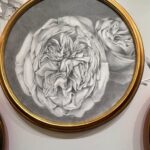
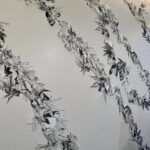
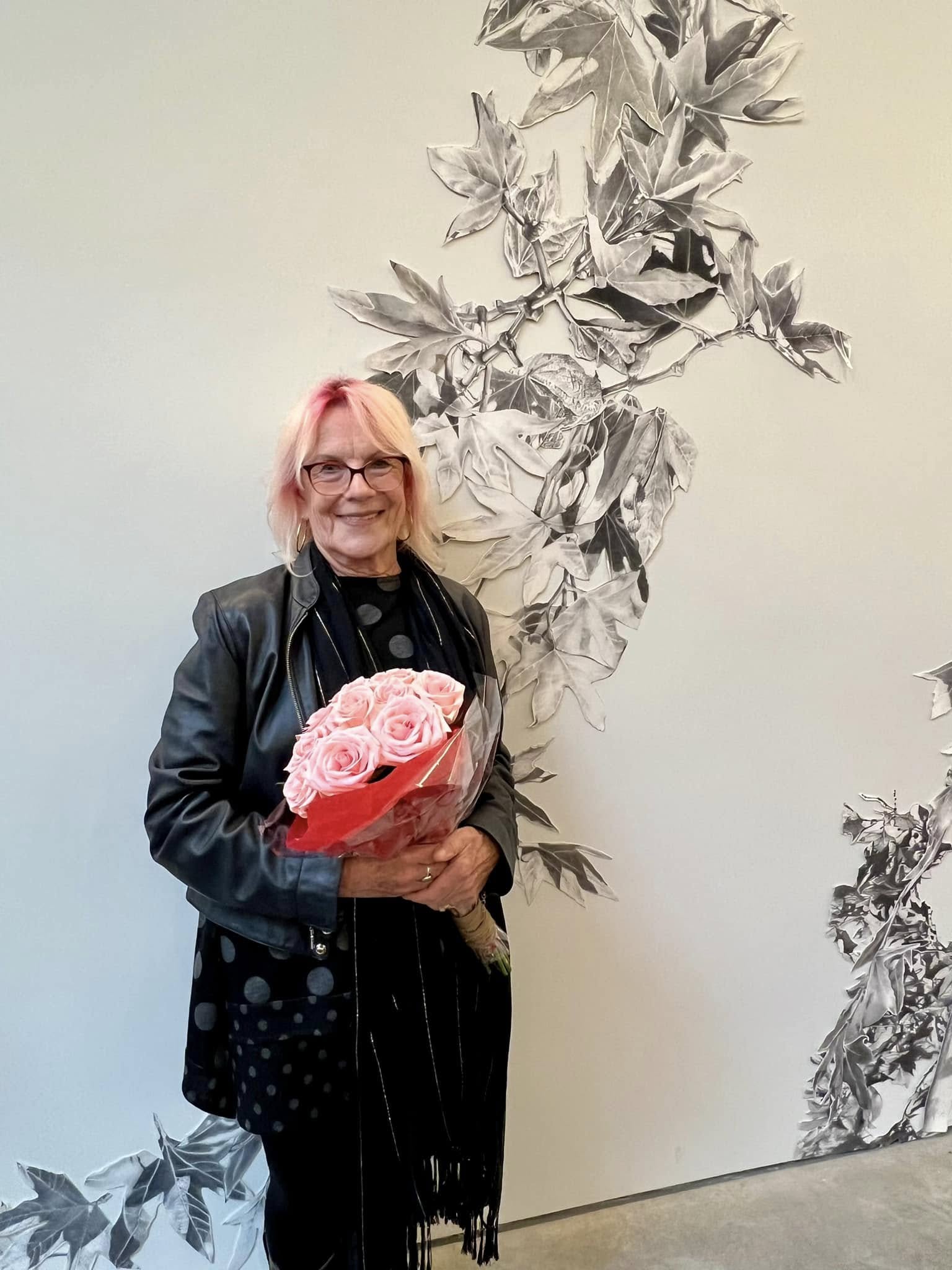
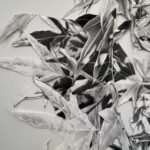
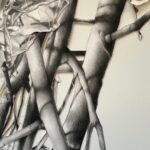
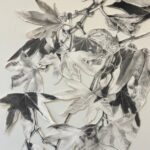
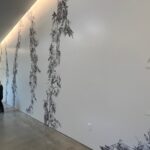
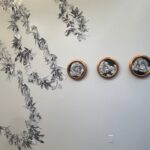
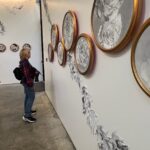
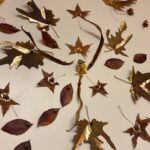
While Sykes’s luminous paintings are hushed and meditative, Catherine Ruane’s dramatic site-specific installation is operatic in scale and concept. Composed of painstakingly detailed and lovingly rendered Sycamore leaves and branches, Ruane’s achromatic pencil and charcoal drawings are cut out and rearranged to soar around the gallery. Looping and swooping gracefully, their rich robust darks are highlighted against the white of the gallery walls, creating wonderful negative spaces. Included in the installation are clusters of realistic rose drawings – portraits if you will.

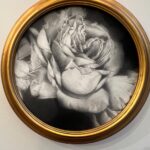
Historically, roses are a potent symbol of beauty, divine love and spiritual enlightenment, which is the subtext of all the work on display. Each rose drawing is in a round gold frame that is painted red on the back, casting a surprising pink almost neon aura on the wall. These are grouped close together as they would be in a rose garden. This series of drawings became a sort of unintentional memento mori as the very roses Ruane was drawing were shortly torn out. Unbeknownst to her, they had come to the end of their twenty-five year cycle – once more reminding us that there is a season for all things.

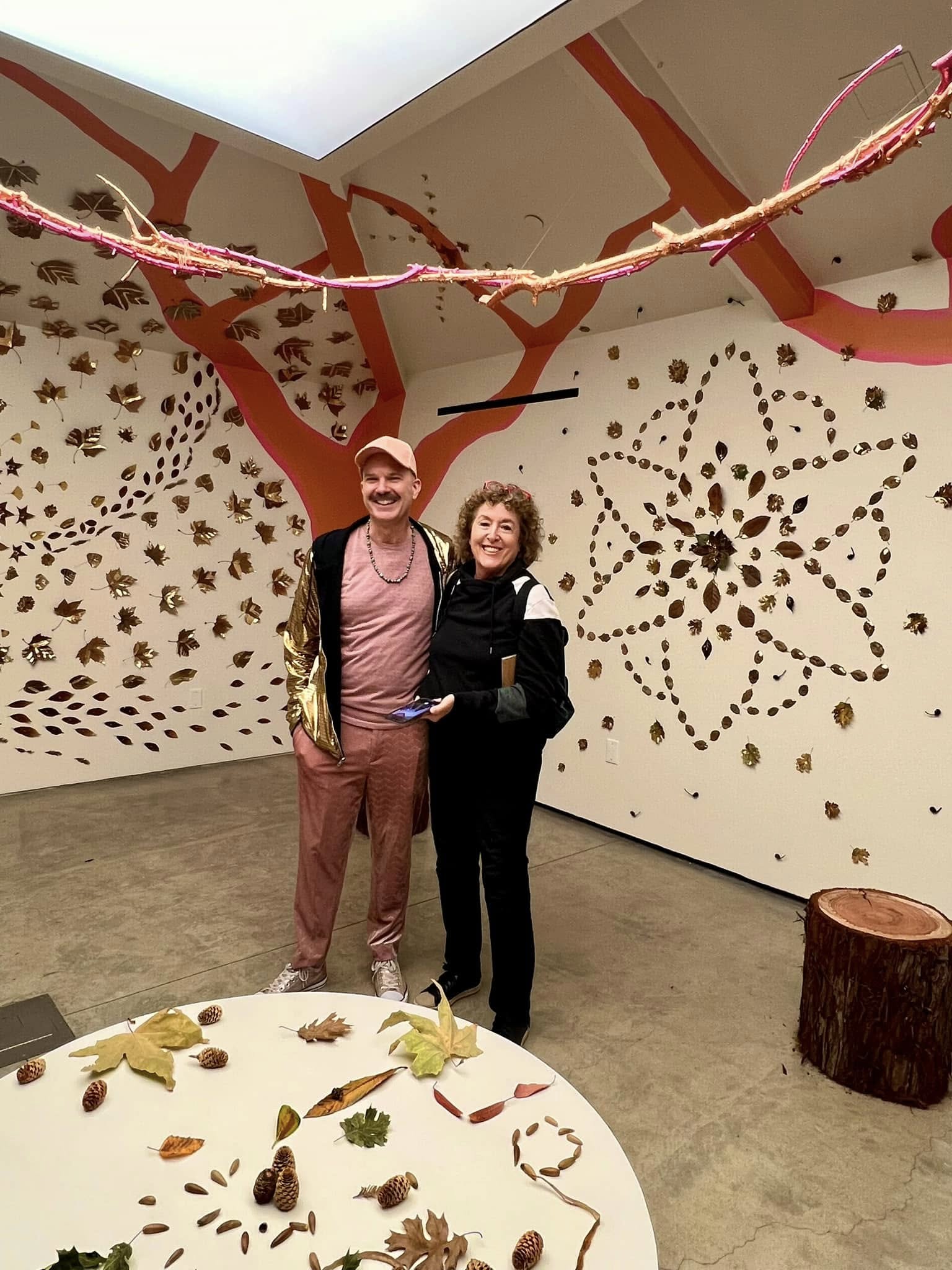
Jason Jenn, left, with author Nancy Kay Turner

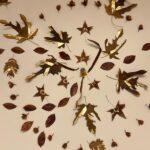
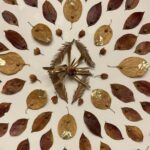
Autumn is the time when deciduous trees shed their leaves. Depending on one’s geographic location, the red, orange, yellow colors which the leaves turn are truly spectacular. Jason Jenn began sourcing his materials of fallen leaves at Descanso Gardens for his installation a year before the exhibit opened. The vast collection of organic materials employed is impressive in scale, shape, variety and color, highlighting the infinite visual complexity of nature.

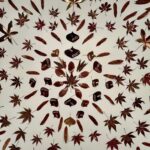
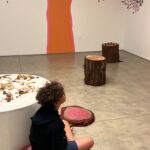
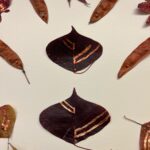
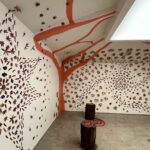
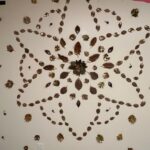
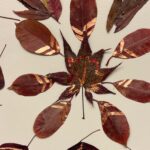
Jenn treats the leaves which he gathers so that they can be handled without becoming brittle, thereby allowing him to paint and gild them transforming the multitude of leaves into glittery, golden-hued mandalas that ring four walls. Mandalas, a Buddhist 4th century tradition, represent dreamers in search of spiritual enlightenment. Mandalas, sacred circles, are thought to transform suffering into joy, healing the world. Jenn’s immersive installation is the most interactive with a large round low table filled with plants that visitors, mostly children can sit around (handmade pillows are provided) and create their own versions of the art. There are pink painted trees at the corners of the room, their branches reaching overhead, creating a cozy, womb-like feeling of protection. Stumps from fallen trees ring the installation covered with festive tree ring pillows stitched by Jenn. This continues Jenn’s longstanding interest in the healing power of art.

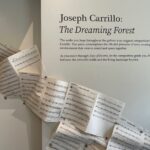
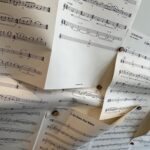
Joseph Carrillo provides not only the soundscape that accompanies the exhibition which is his own composition, but also provides the score of the piece. He has artfully arranged the sheets of paper (also called leaves) letting them cascade and slide down like a waterfall of musical notes. Those who read music can engage with the visual notation while also listening to the score that is played by Carrillo himself and a group of musicians he generously acknowledges. This exhibit is a balm for the soul as it addresses universal truths about life, death, resurrection and offers valuable lessons learned from listening to and valuing Mother nature.

  • Nancy Kay Turner; photos by Nancy Kay Turner and Genie Davis 

Debbie Korbel: The Alignment of Inspiration and Laughter

Lovers in progress w DebDebbie Korbel says what most inspires her sculptures is laughter.

“I love to laugh and to make other people laugh. As a kid it was fun to go up to people and tickle them.  I’ve found, as an adult, that is not so appreciated, but I can try ‘tickle’ them with something I make.”

Lovers cu_Debbie_Korbel

And indeed she does. Her beautiful, sometimes poignant, sometimes wonderfully amusing assemblage sculptures are a pure pleasure to see, layered and sensorial indulgence that truly reaches into the viewer’s mind and heart. Her works tell stories we want to hear again and again.

17553753_10209190841265243_1322957177902708786_n

“In a specific way, I am inspired when an idea just wafts in the window in my mind. There it rests, and blossoms – or festers – until I decide what to do about it. The origins of these ideas are varied –perhaps something is provoked from an overheard conversation, or I might come across an old car part that has a beautiful organic shape,” she relates. “Trying to dissect inspiration feels a little like trying to understand a butterfly by pulling off the wings—it doesn’t look that great when you tear it apart, but there is magic when everything is in alignment.”

Korbel-Passion Flower

Korbel explains that she hopes to connect with viewers on an emotional level, and wants viewers to recognize something they can relate to, or find familiar in her work. “Maybe, even see a bit of themselves at a vulnerable moment and by seeing me, a stranger, express these feelings, be reminded that as humans we all share them, even though we put on our socially appropriate adult exteriors.”

One way in which she tries to connect with her viewers is through the laughter that inspires her as an artist. “So, when I do pieces that I think are funny I am always so delighted if other people find them so, because in laughter, there is understanding,” she attests. “There is a bond in both laughter and tears. I am always on the verge of either laughing or crying.  Some of the work I do is a combination of the melancholy and humorous, while other projects are more solidly in the vin triste category.”

deb and skull

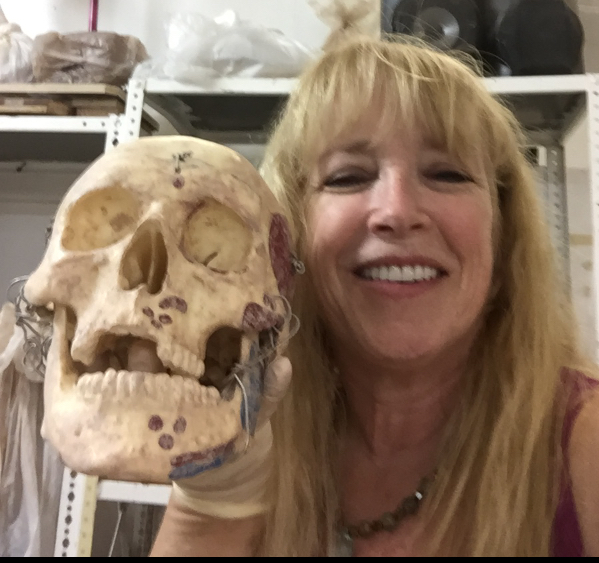
Korbel has always gravitated toward art. She’s made jewelry, learned Chinese brush painting, written for television, and believes she’s truly hit her stride with sculpture.

“It combines the process of conceptual thinking with the tactile nature and satisfaction of physically making something,” she notes.

Korbel_D_Lazyboy

Her sculptural assemblages are incredibly unique, and according to the artist, she begins with an idea or image in mind at times, and at others, with a material that attracts her.

“Sometimes I find a piece of scrap metal or wood that is interesting to me. It will ‘look like a part of something’ to me—perhaps the shape will remind me of a of a human leg, a samurai’s skirt, or a rabbit’s ear, and then I think about what the rest of a sculpture might look like. I base the scale of the sculpture on the size of the initial piece. Other times, I have an idea percolating in my head and I consciously look for materials that might work well in the execution of my idea.”

Dreaming_Debbie_Korbel- sm - Copy

The richness and texture of her work seems entwined with her use of found materials, but she has not always worked with such mixed mediums.

“When I started sculpting, I began working in clay. I soon came to realize that there were problems and limitations in working solely in this material.  I didn’t want to be confined to these limitations. When I use pieces of steel and other metals, they have the inherent strength to support a large sculpture.  Also, it was so much fun to find unusual materials and repurpose them in my art piece. I often don’t know the original use for some of the pieces I find, and people enjoy identifying them and will come up and tell me, ‘Oh, look, it’s an old air compressor valve’ or ‘Look, it’s a horse femur,'” she laughs.

To say her work is textured, or uses an incredible mix of materials to shape what are really classically perfect sculptures is almost to miss the point – of course her works are composed in this way, but it is the spirit that infuses them through these techniques that makes them so fascinating. They are dream-like yet real, mysterious yet richly comprehensible. Her works feel inhabited – they have gravitas, wit, and soul.

One of the reasons Korbel says that she is so drawn to using assemblage is a philosophical ones. “I actually like the idea of assemblage being a metaphor for us, human beings. We are certainly the sum total of many things sewn together.”

26047138_10211312791392670_1900196660964140651_n

Artistically, Korbel says one of the things she loves best is “the license to indulge my imagination, to be open to new ideas, projects and materials. It’s much more motivating to stumble across unexpected inspiration.” She adds “I tend to work on a couple of sculptures at a time and am very focused until I complete them.  However, I don’t like to plan too many projects in advance, as that starts to feel like a to-do-list and kind of kills my creative mojo.”

26238800_10211449256004200_4790434091910632653_n

26239691_10211449258364259_2050823207171842210_n

For Korbel, the freedom to make impulsive choices in her work adds the serendipity. “I feel that I am able to maintain a level of excitement this way.”

Viewers can certainly feel that palpable excitement in her  inventive work when they see it, and will be able to do so, soon.

26196056_10211403219453315_181346381054042837_n

Korbel will be participating in an open studio event at the Hawthorn Arts Complex in Hawthorne, Calif. August 5th from 2-6 p.m., and exhibiting in the show About a Box at Shoebox Projects in DTLA, August 12 through 26. She has shows upcoming with Red Tie Promotions in October and November as well, with dates TBA.


  • Genie Davis; photos: courtesy of Debbie Korbel