
Scott Tansey Is Bursting With Images

There are two new photographic books soon to emerge packed with evocative images from artist Scott Tansey. Each are quite different but both represent a lush ethos of images that linger once viewed. Wet Point Lobos and Surfaces present very different topics, but both show astonishing grace.
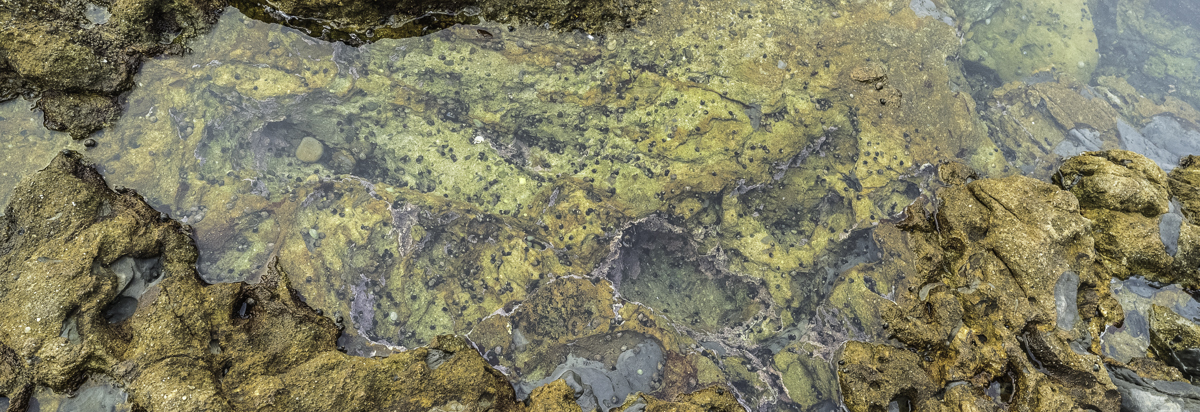
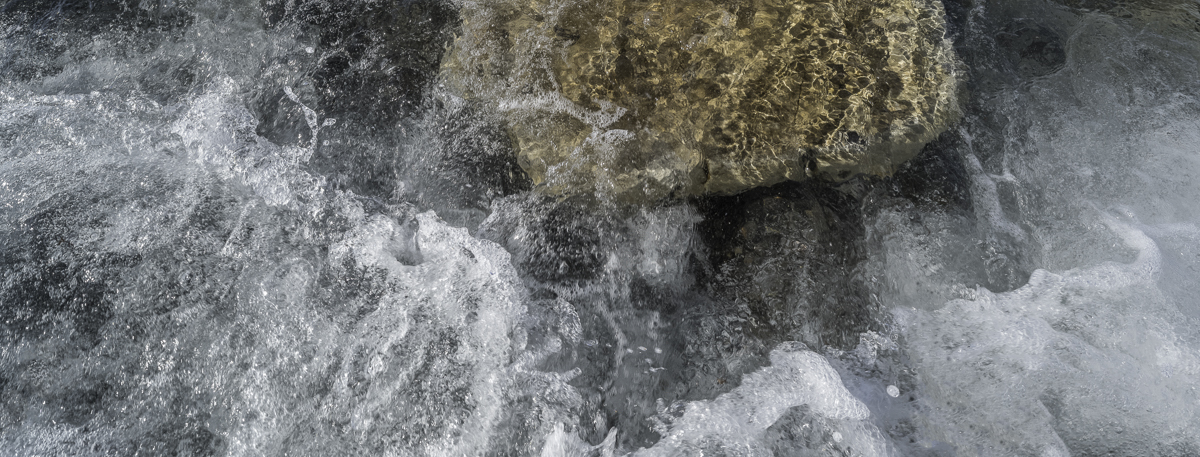
In Wet Point Lobos, Tansey has captured the shape of vast sweeping landscapes and the intimate, sinuous, sensual closeness of sea and shore. He has truly made Point Lobos his own, giving us a personal and profound a look at a destination that is inherently meaningful for the artist, and for his viewers alike.
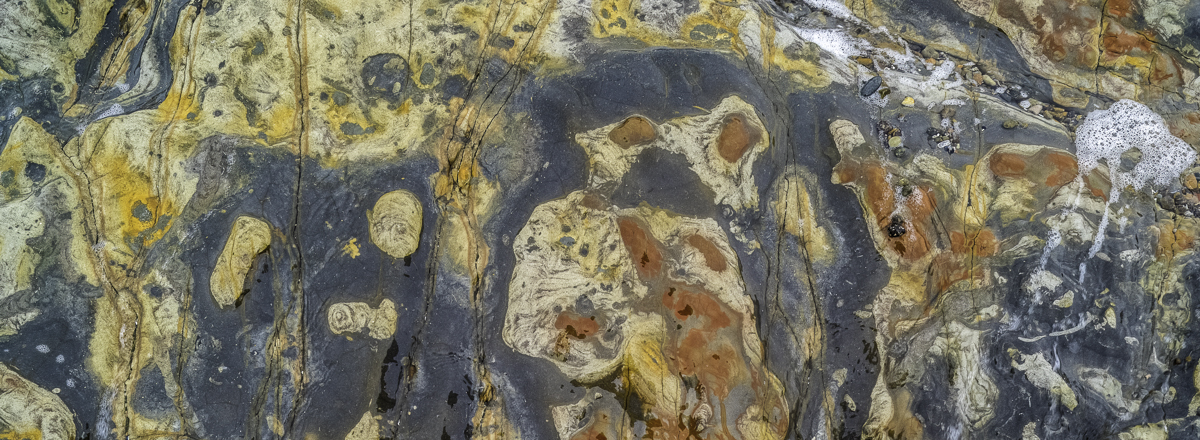
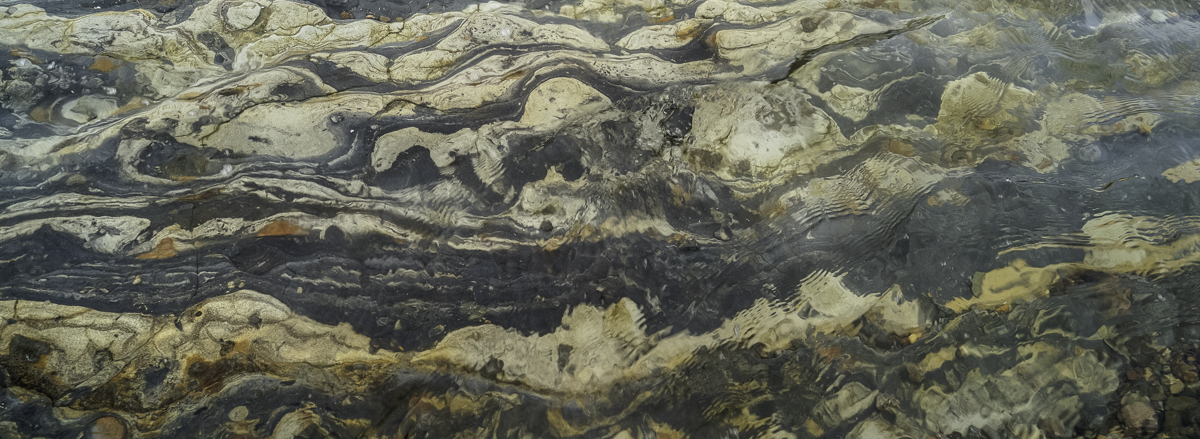
In these images of Point Lobos, Tansey gives us the stones, pebbles, sea creatures, tide lines, and sea foam of the Central California Coast as an intimate gift. Each image is a jewel, sparkling and wet: he gives us the visceral texture of sand grains, the roughness of rock layers, the eroded shapes of curving and linear tide pools, the glow of water and sunlight, of winter waters and spring tides.
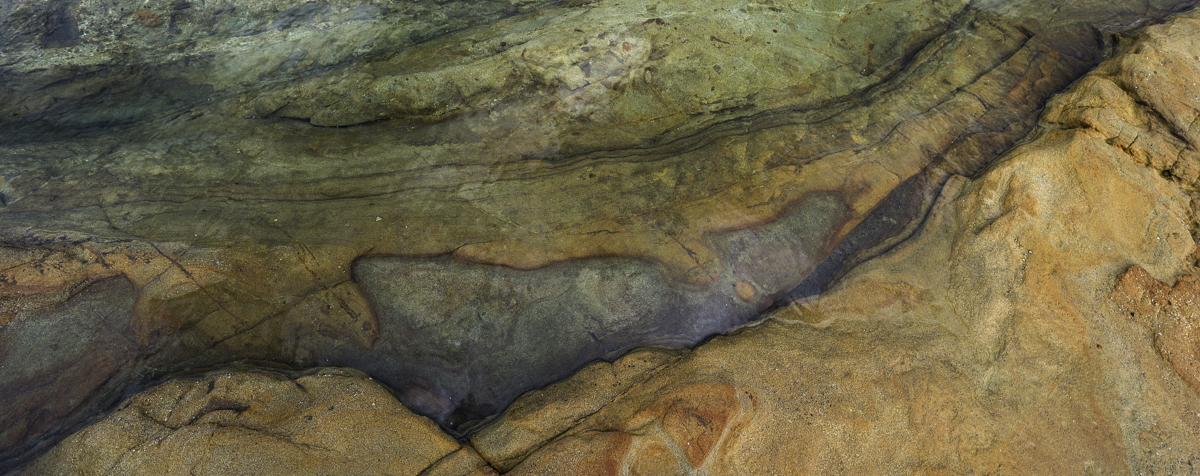
California, Central California, Monterrey County, Point Lobos, Point Lobos State Reserve, Rocks, Water

As a photographic artist, Scott Tansey has captured the shape of vast sweeping landscapes and the intimate, sinuous, sensual closeness of sea and shore. He has truly made Point Lobos his own, giving us a personal and profound look at a destination that is inherently meaningful for the artist, and for his viewers alike.
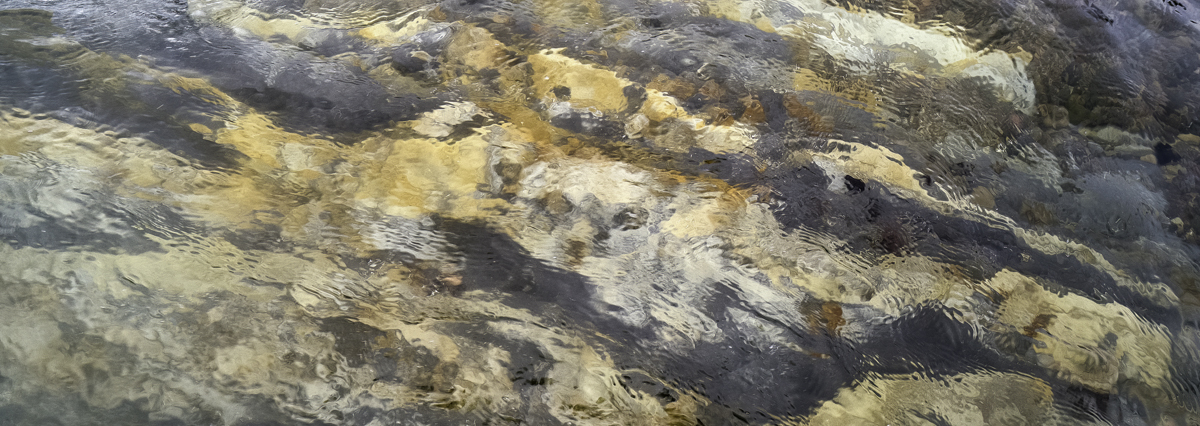
The cross hatching of sedimentary rock reminds us of well-worn skin; foamy waves erupting through narrow cliff-side channels pulses like a clear, wild blood through our veins. Cerulean blue stone, caressed by calm reminds the viewer of an astronaut’s glimpse of our blue marble Earth from space.
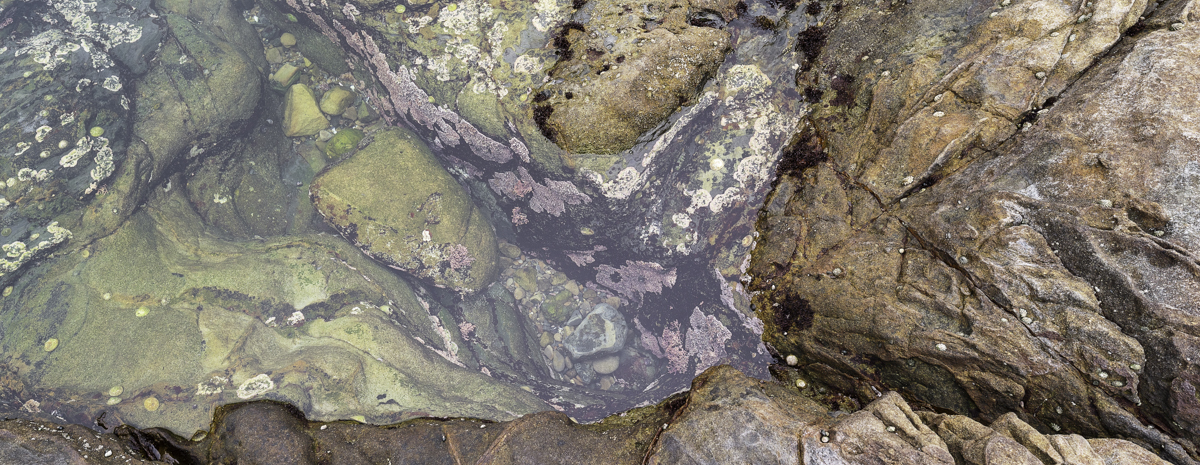
California, California Coast Line, Central California, Monterrey County, Point Lobos, Point Lobos State Reserve, Rocks

This is Wet Point Lobos: a miracle of time, tide, and tenacity, a world in which the viewer can wade through images as cool and alluring as the sea itself.
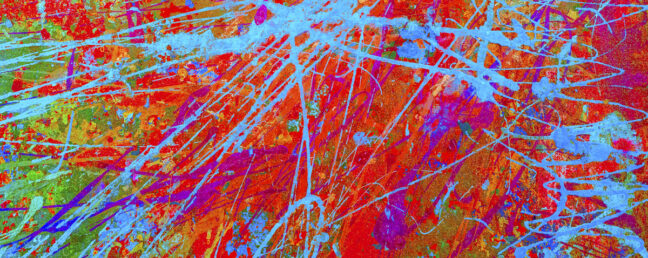
Moving from sea to land, Tansey’s Surfaces vary, but color explodes in an utterly unique and mesmerizing series of images. As Tansey explains, “Photographs are created, not merely captured,” and his creation of surfaces makes the world around us vibrate in a wild explosion of color and force.
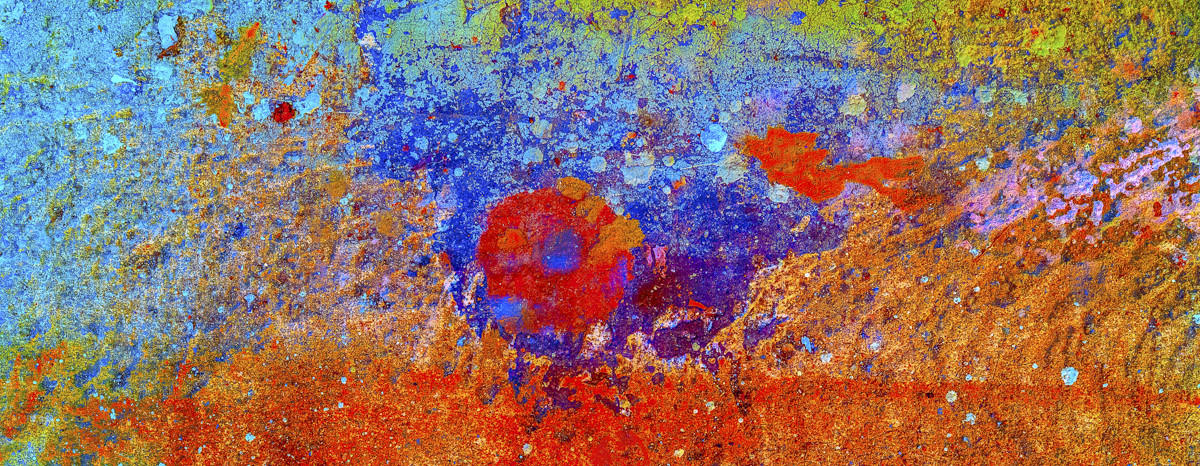
Using post-production techniques that could have been utilized more than a decade earlier, he has shaped a vision that is nonetheless absolutely of this moment, as transforming and dazzling as if the viewer looked through a prismatic screen, exploring compelling kaleidoscopes of color, and a rainbow of resonance.
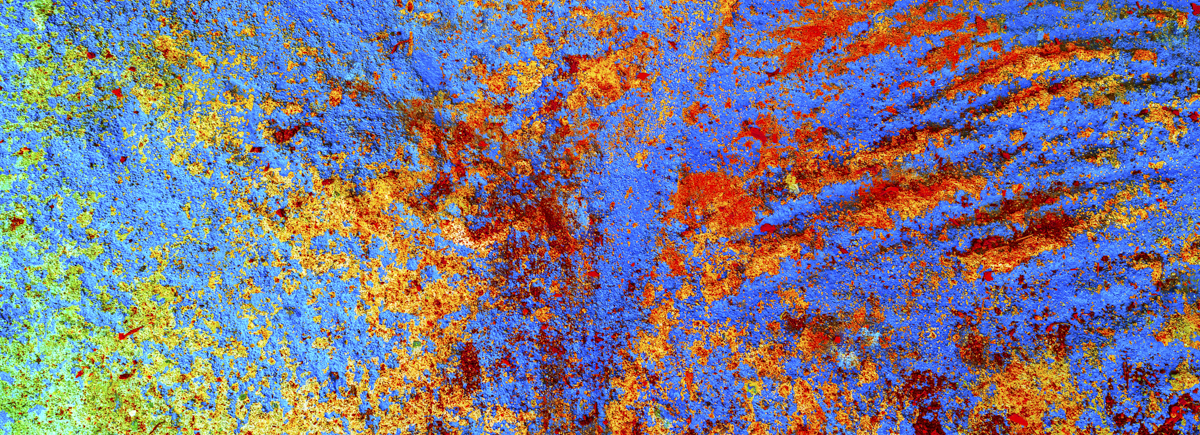
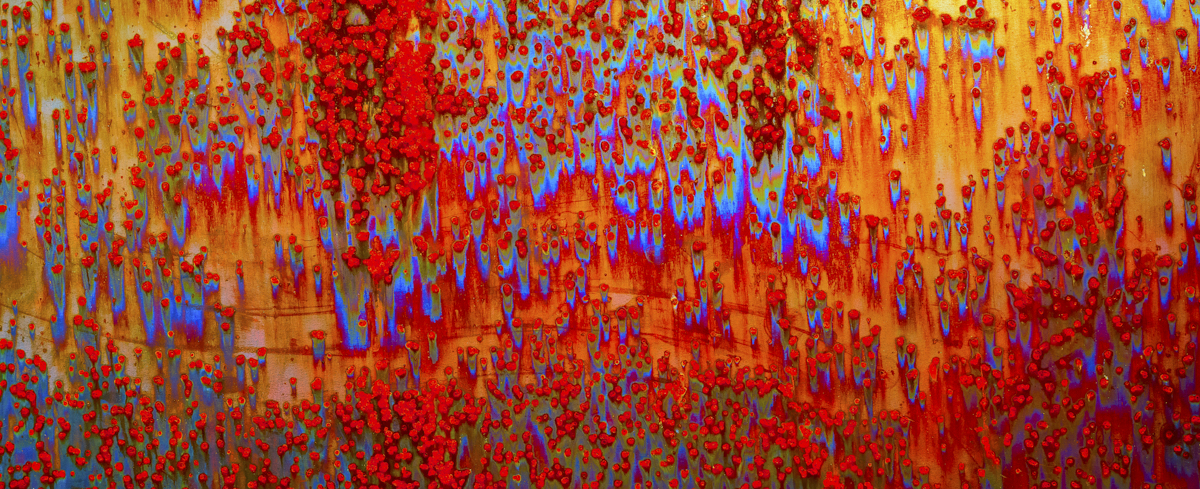
Altering the color space of simple surfaces alters the mundane, transforming it into something visionary. Whether it is a wall observed outside a restaurant or simply the ground Tansey walks on, these images appear brave and incendiary. Textures are colors, colors are surfaces, color seeps through the pores of every substance revealed in this collection. The artist creates the auras around landscapes, the auroras of opalescent light that make the prosaic into the profound and spiritual.
Seattle

As a viewer, ask yourself if you can imagine animate life leaving behind a resonant glow, a fresh color field. Tansey certainly provides that here, shaping a new spectrum of light and vision. As he notes, “Hundreds of thousands walk over the surface of [these] image[s] each year…” without seeing within them.
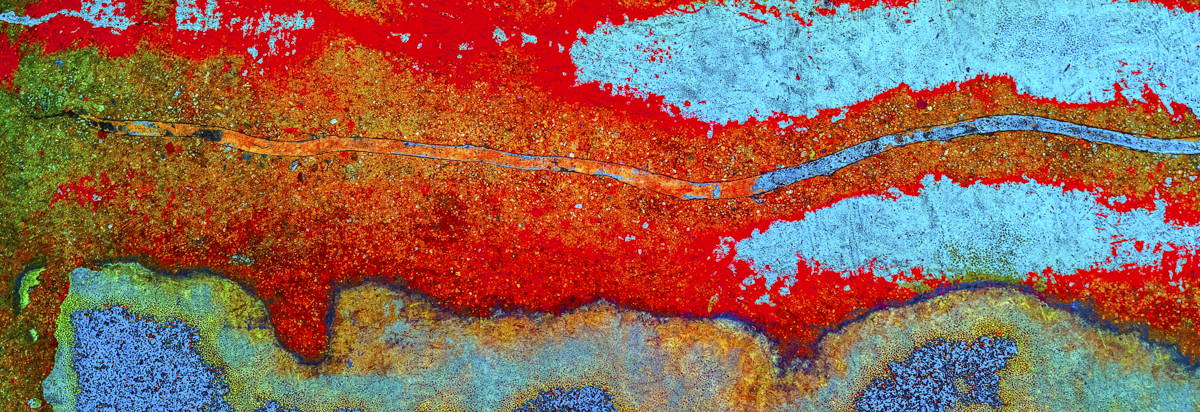
Exotic as many of the artist’s images appear at first glance, this abstract and vivid series of works are based on locations captured less than four miles from where he lives. It is a fascinating change for an artist who has traveled the world’s glaciers, explored cities, cathedrals, and distant seas.  What Tansey has done in these collections is a revelation of what lies within the core of the earth itself.

  • Genie Davis; images provided by the artist
 

From Wide View to Up-Close and Personal: Meet Photographic Artist Scott Tansey

As a photographer, Scott Tansey’s art is moving from large scale, such as the vast and glorious view of Strike Valley above, to more personal views, seen in his pearl like close-up of the salt flats in the Badwater area of Death Valley, below.

From a personal standpoint, Tansey can trace his own history within his work – and reach viewers with the same kind of rewardingly connective images.

Above, the Panamint area of Death Valley gets the intimate treatment, while below, he’s more expansive in scope.

Antarctic Peninsula, Antarctica, Below Surface Portion of Iceberg, Iceberg, Southern Ocean

From that point on, he started to focus on intimate images. “I made close-up images of coastal rocks. Later, I went to the desert. One thing that has changed over the last few years is that I am trying to take the scene out of the image and put myself in,” he explains. “What I mean is that I have traced my psychological history in my images. When I was in Joshua Tree, I noticed that I took images of small lonely trees in subdued lighting. This reflected my being on the spectrum when I was a little boy where I felt alone.” He also experienced sensory overload. “Thank goodness that I am one of the 18% who was fortunate to come out of the severe spectrum.”

Tansey describes his original work as that of “large panoramic vistas,” which he began to create in 1977. In the early 90s he added more intimate images; and in the 2010s he made the switch from film to digital, adding post-processing skills to his artwork.

Abstract, Arctic, Kongsbreen Glacier, Glacier, Haakon VII Land, Spitsbergen, Svalbard, Ice, Cold

Landscapes, sacred places – whatever he photographs image inspiration varies, he relates. “It depends. If I go to a location, I want to gather the basic images. This is how I did images of Patagonia, Svalbard, Israel and Antarctica. In those trips, I started different projects as they came up. From Patagonia, I started my interest in glaciers. That was picked up in Svalbard and Antarctica.”

Antarctica, Iceberg, Antarctic Peninsula, Southern Ocean

Even locally, Tansey finds new themes for his work. “I was walking in my neighborhood, and I saw some beautiful roses, so I started a rose project.” The images are often tender, and delicately close-up.

Going abroad, he took images of synagogues and churches. “I continued the project in Israel, where I included mosques, and in my home town,” he says.

Cavernas de Marmol, Catedral de Marmol, Marble Caves, Lago General Carrera, Aisen Region, Aysen Region, Patagonia, Chile

Then came coastal rock images which began in Maine after seeing an interesting rock pile, and continued everywhere from throughout California to Newfoundland, Ireland and Svalbard.”

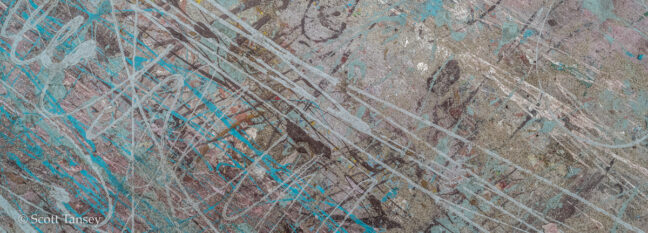
From Tansey’s Urban Surfaces project

And while in Israel, Tansey started a desert project that continued in Joshua Tree and Death Valley. “In Death Valley, I saw cracks in the parking lot that mimicked some of the patterns I saw in nature. That was the beginning of my Urban Surfaces project that I worked on for eighteen months. It seems that something grabs my attention and interest, and then I run with it.”

Chile, Glaciers, Grey Glacier, Lago Gray, Magellanes Region, Torres del Paine

Regardless of the project or the image, one thing is consistent throughout his work, which he describes as “the sense of wonder that I have when I make each image, whether it is a broad view of the scenery or close-up images.”

After dealing with some health issues for the past 18 months, Tansey is currently socially isolating, working on images he took in Death Valley, and Big Sur. 

California, Central California, Monterrey County, Point Lobos, Point Lobos State Reserve, Rocks, Water

While he is passionate about both locations, his favorite spot to shoot, at least as far as the number of photographs he takes and the number of visits he’s taken, is Point Lobos Reserve, which he describes as “my favorite place in the world to take photographs. Point Lobos has been called the greatest place where land meets the sea,” he says, and obviously concurs. “I have been taking photos there since the 1980s. My most recent trip was last November series of images shot along the shore there for the past six years. “These images are all intimate images.”

As to what’s ahead – along with undoubtedly another trip to this favorite spot, “If I am able to travel to Alaska, I will continue my series of glacier images.”

More from the Urban Surfaces project

Perhaps, given his inclination to go with close-range subjects, he will make the large small, and the small universally grand, as he continues his series.

  • Genie Davis; photos provided by the artist