Monuments by Nancy Kay Turner
The most terrible thing about war, I am convinced, is its monuments – the awful things we are compelled to build in order to remember the victims…
W.W.B.Du Bois, The Perfect Vacation, in The Crisis, 1931
Monuments, the startling, chilling, thought provoking exhibition now at MOCA Geffen and The Brick is a must- see show. This exhibition is co-curated by Hamza Walker, Director of The Brick; Bennett Simpson, Senior Curator at MOCA; and artist Kara Walker (along with Hannah Burstein and Paula Kroll). It brings together 10 decommissioned monuments which honored the Confederacy alongside 19 contemporary artworks commissioned to be in conversation with the enormous debased statues. These works examine a particular and fraught time in our nation’s past while illuminating our present as well. We now live in a “post-truth” world that is populated by “alternative facts” and filled with competing views on our shared history. This timely exhibition requires the viewer to consider who writes history (traditionally the victor) and what, after all, is remembrance? What should or could be erased, debunked or forgotten and what are the consequences of these decisions and omissions?
The museum wall text is incisive and extremely helpful in explaining the historical background of these epic-sized sculptures. Most of these monuments were commissioned almost 60 years after the end of the Civil War to foster the idea of the” lost cause.” The Lost Cause of the Confederacy theory is a post-Civil War concept that postulates that the war was essentially to protect states’ rights and that slavery was a helpful institution that benefited the enslaved people.
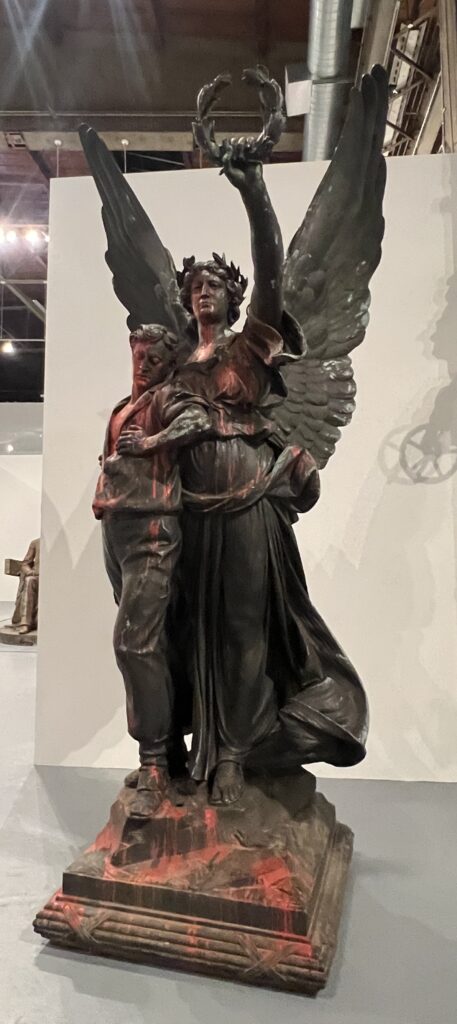
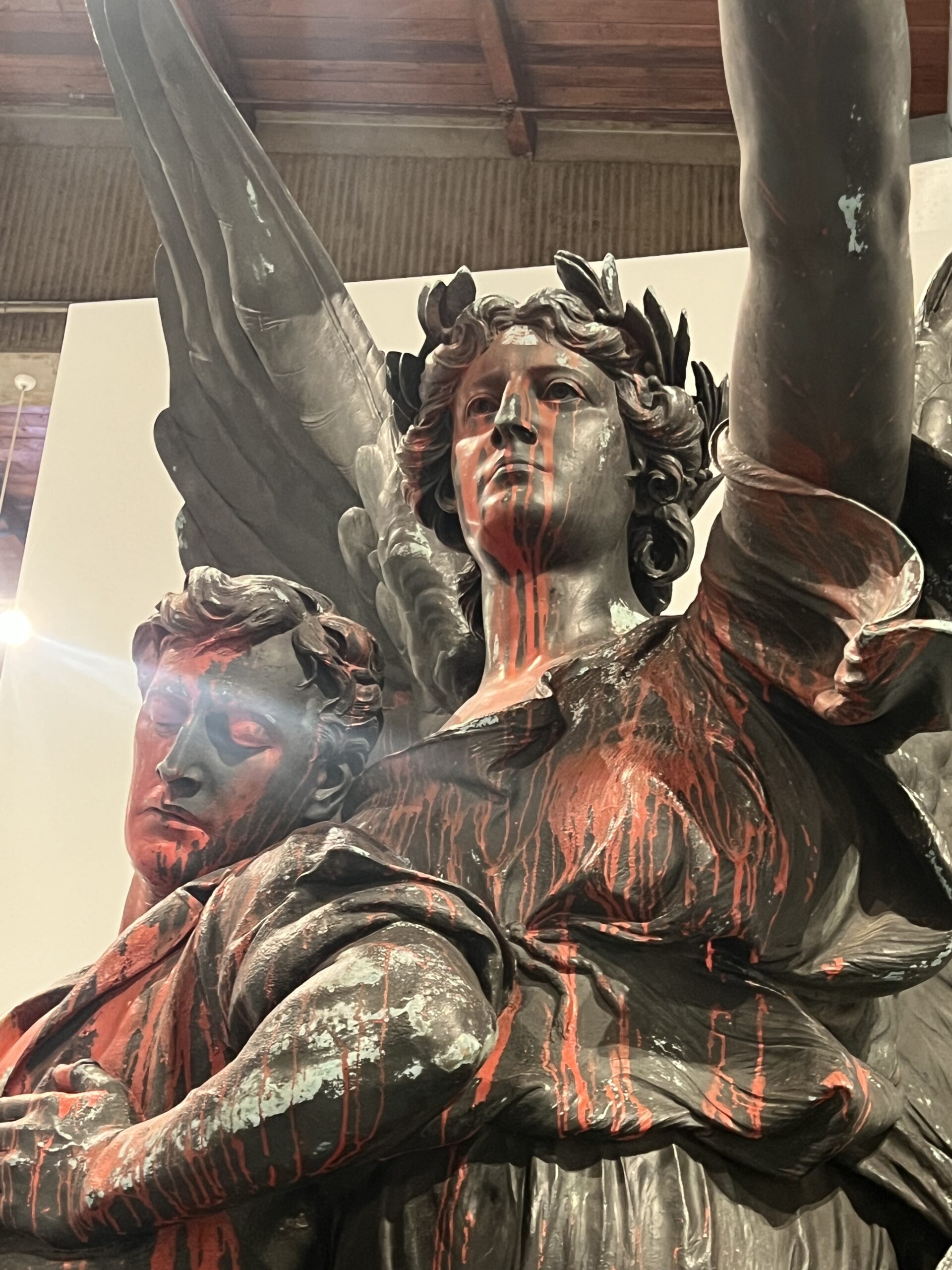
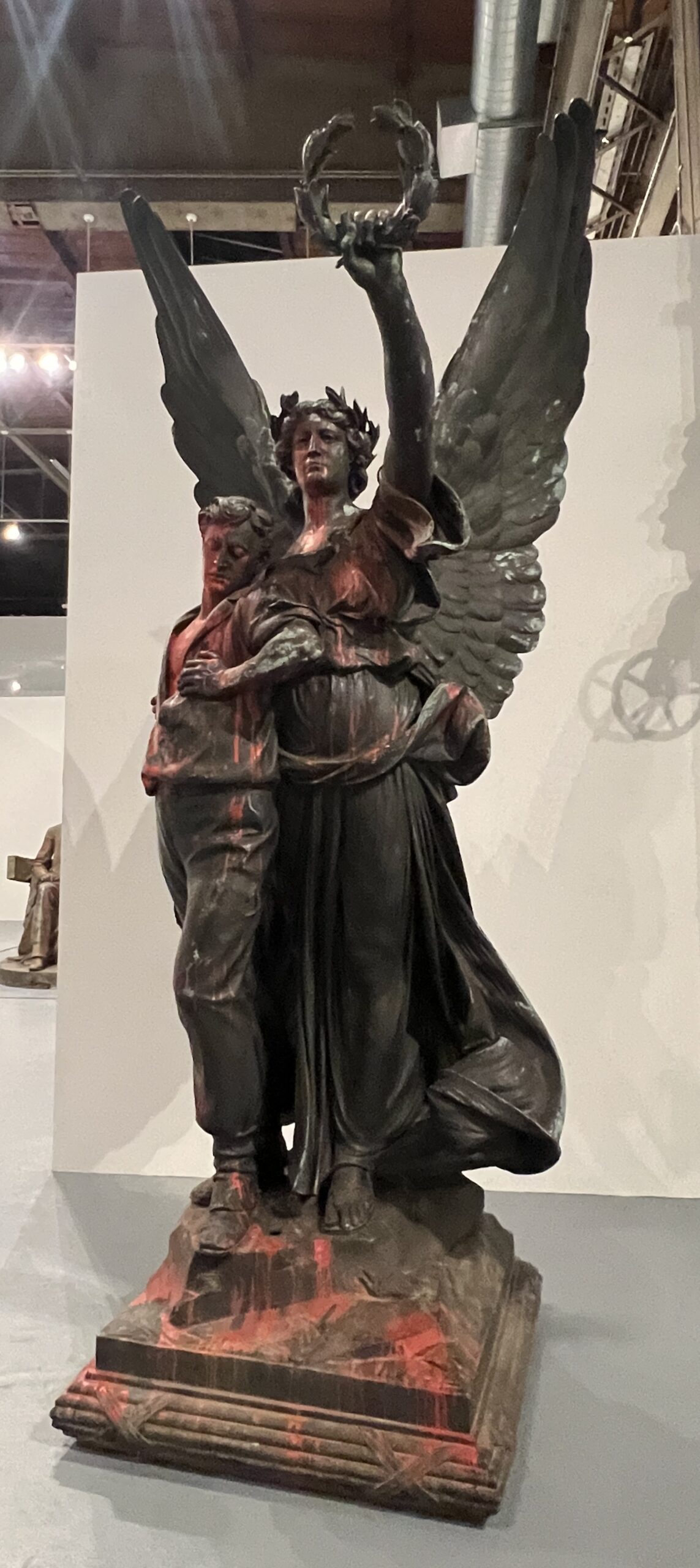
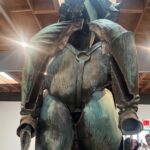
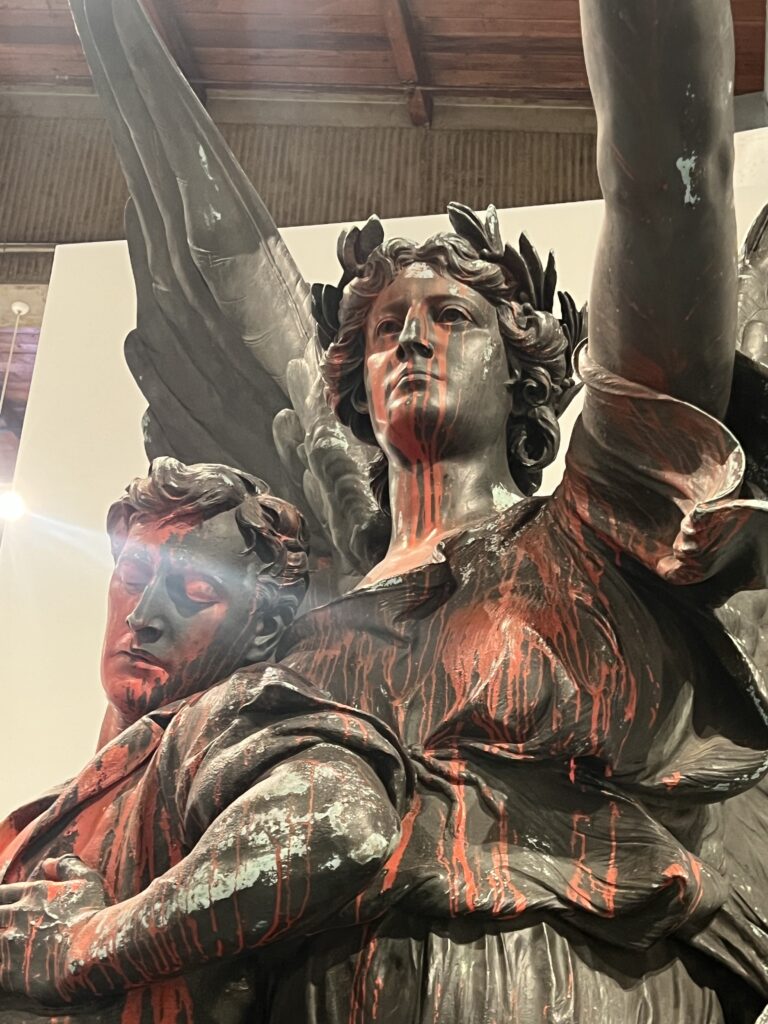
Confederate Soldiers and Sailors, 1903, by Frederick Wellington Ruckstuhl, sets the tone of the exhibition. A winged female figure, looking very mythic and somewhat Greco-Roman, is meant to personify glory. Arm aloft in a triumphant or defiant gesture, she is holding a wreath crown meant for the wounded youth she supports. Red paint was flung on this statue and other by those protesting the 2017 “Unite the Right” rallies In Charlottesville, Virgina. Subsequently it was decommissioned along with about 200 other Confederate statues. The red paint splashed on the statue is reminiscent of dried blood and is quite disturbing. It’s instructive to remember that Richmond, Virginia was the capitol of the Confederacy from 1861-1865. The historical ramifications of the Confederacy still echo today.
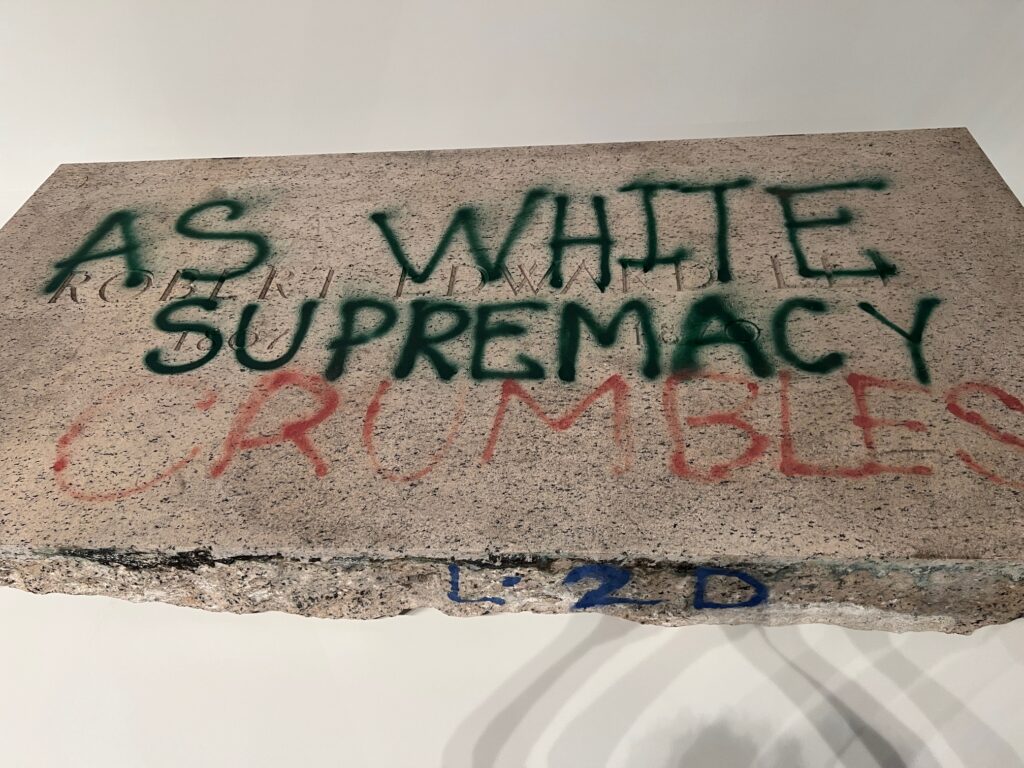
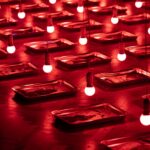
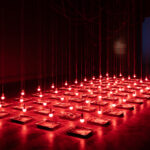
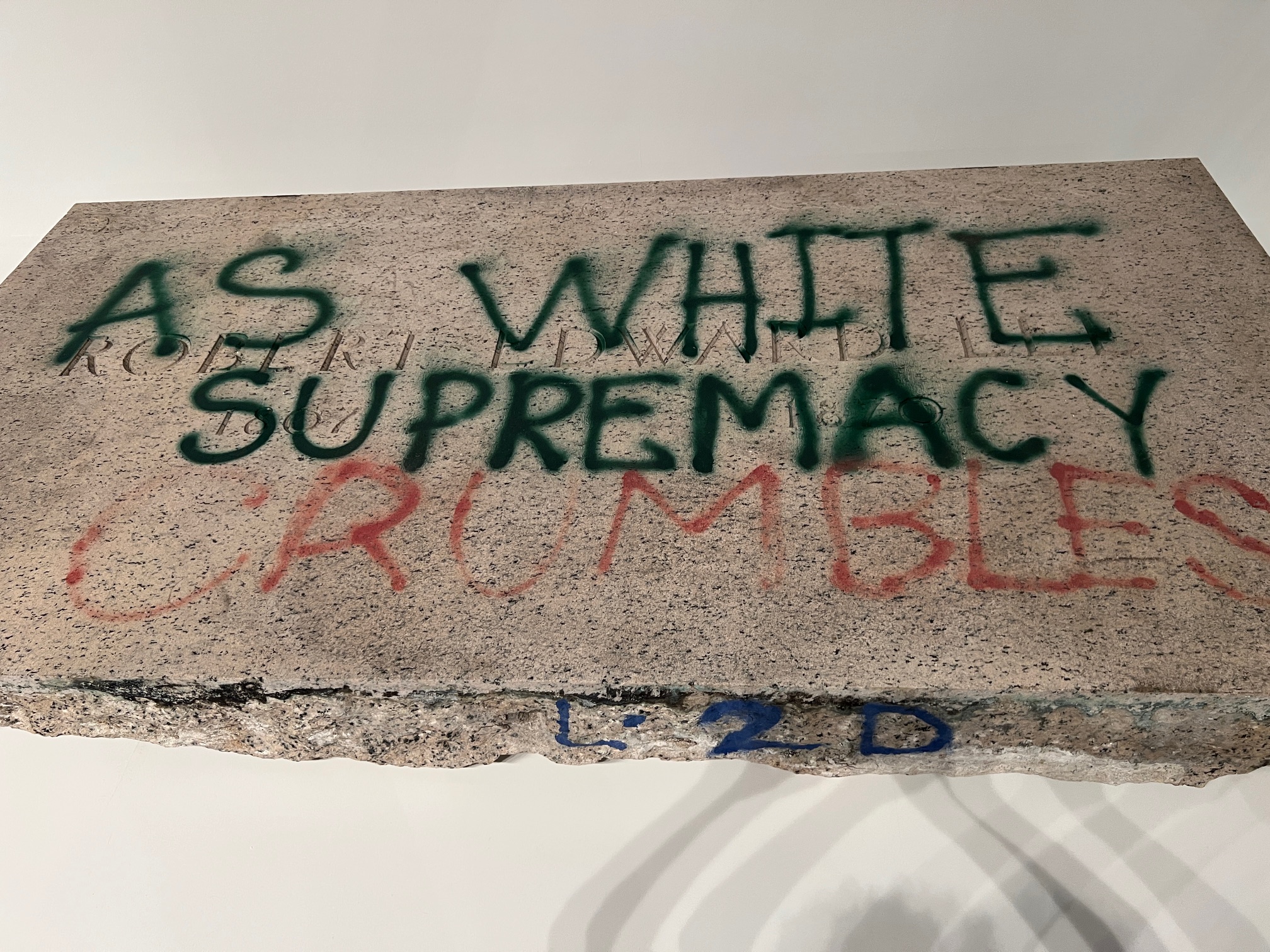
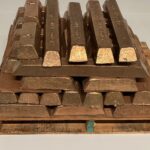
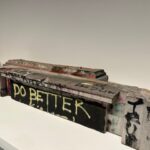
Just outside this gallery are many of the spray-painted bases that these monuments once stood on. One especially poignant one reads “AS WHITE SUPREMACY CRUMBLES….” In light of recent reversals by the current administration, this becomes a still unmet goal for those awaiting equality. Also in this first gallery are the remains of a Robert E. Lee Monument that has been melted down into bronze ingots. Stacked here like gold ingots, they are intended for a future new work of public art.
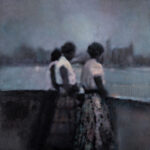
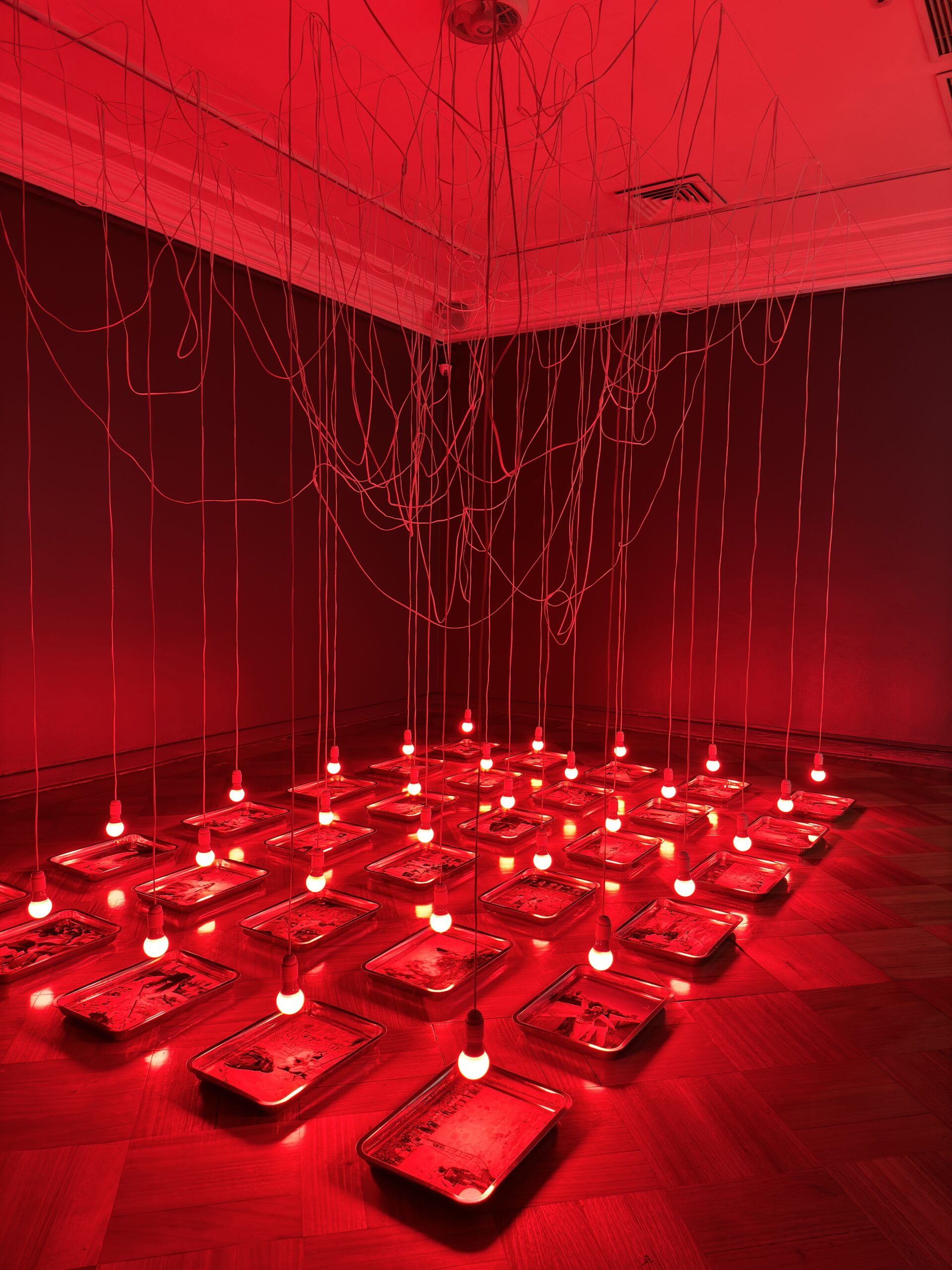
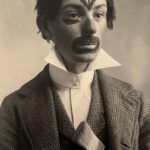
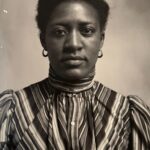
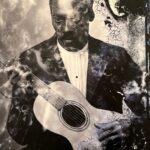
Many but not all of the contemporary works are videos and narrative photographs. My favorite of these is the work by the largely unknown white photographer Hugh Mangum, whose negatives were found in the family’s barn only in 1972. Using the techniques of the time, he photographed black and white sitters equally, charging only pennies for their portraits. He reused the glass negative over time resulting in occasional and accidental superimpositions. Time and weather have further degraded some negatives and when printed digitally they are especially beautiful and haunting. That Mangum photographed both black and white people equally is what is remarkable about these images which look startlingly contemporary.
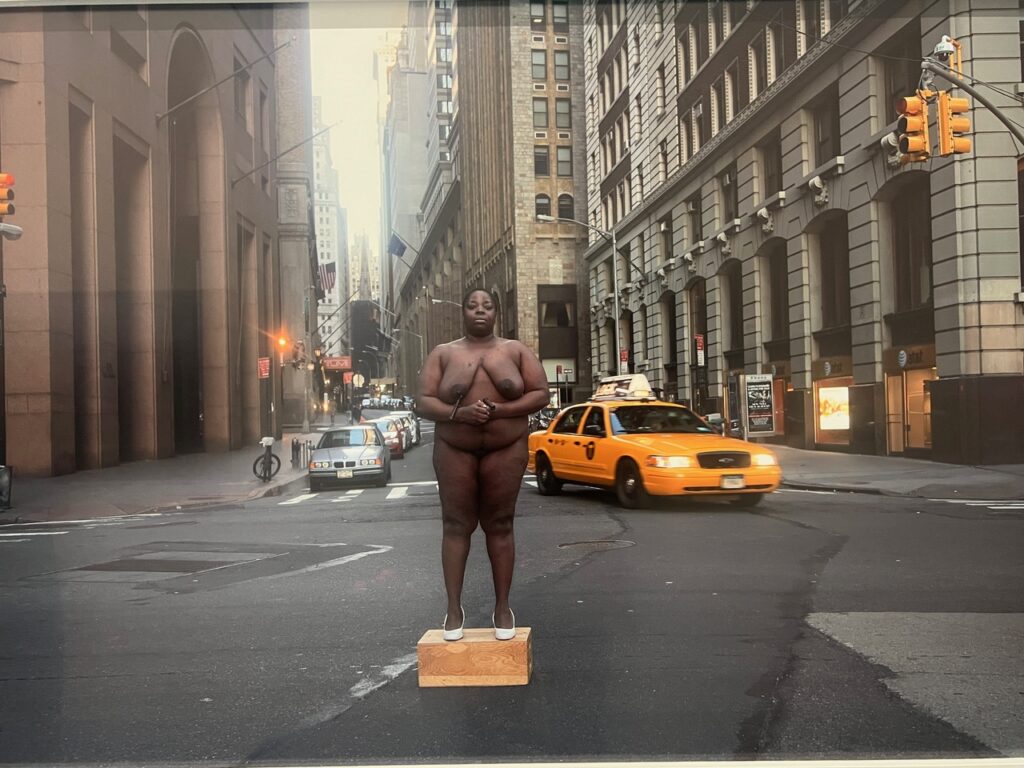
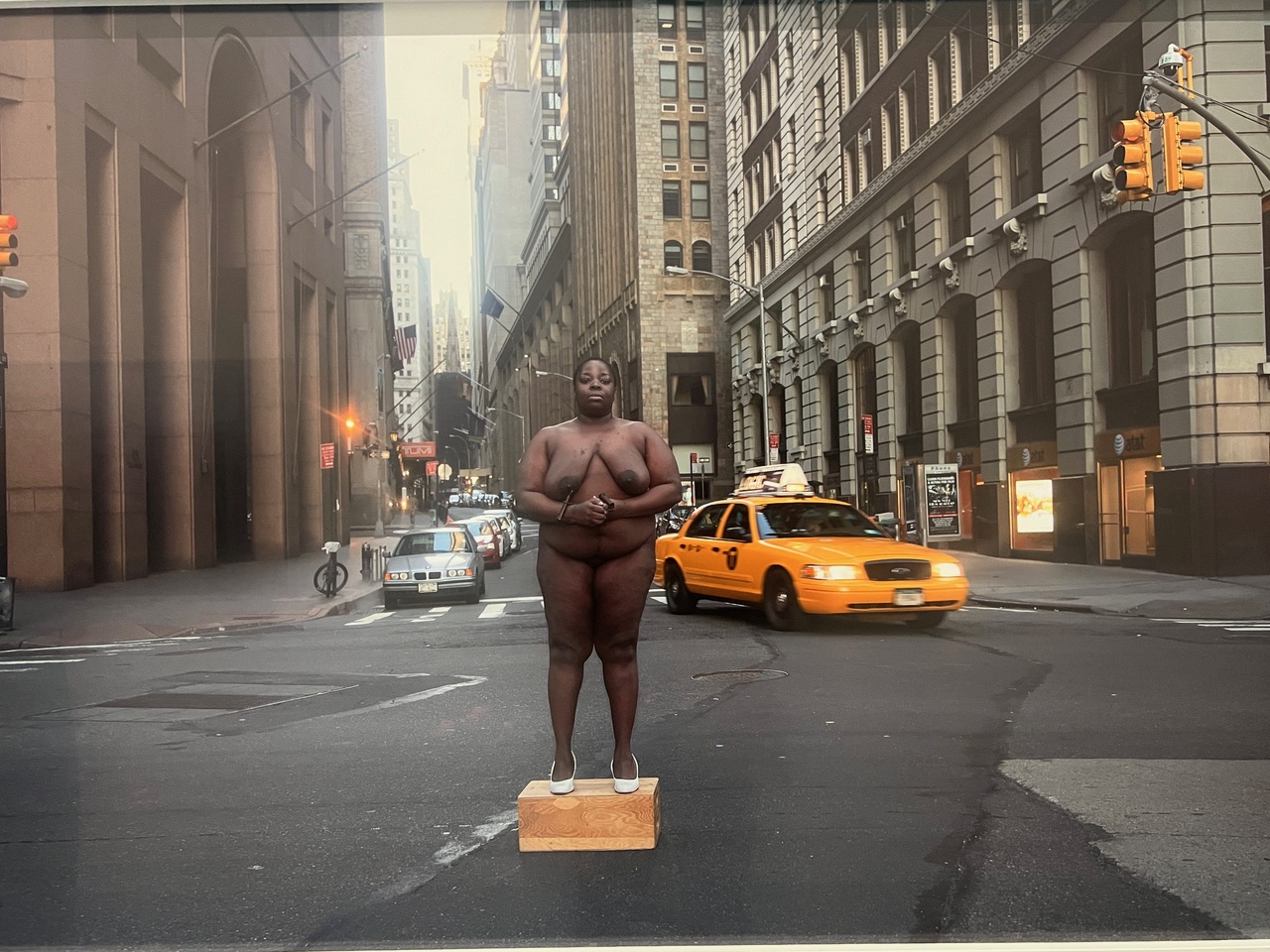
Nona Faustine’s powerful black and white self -portraits of herself naked and vulnerable clad only in white shoes or white skirt, standing alone on empty New York City streets are both brave and sad. Taken from 2013-2018, each location she picked has a particular meaning -one is where slaves were auctioned off or another is where a now unmarked burial ground for enslaved people was located. With this series, she defiantly shines a light on the history of slavery in the North as New York’s harbor was a point of entry in the slave trade.
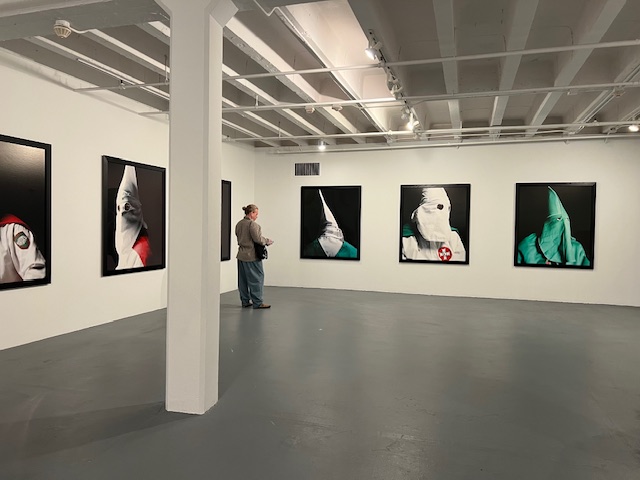
In 1990, Andres Serrano, known for picking particularly difficult subjects (such as blood, urine and other bodily secretions) photographed Ku Klux Klan members in Georgia. These images reminded me of Philip Guston’s satirical Klansman – silly in their white sheets, eyes peering out. They looked like defanged animals- all puffery, no bite. The Klan itself was founded right after the Civil War when the members suited up and ferociously attacked and killed newly freed slaves. The organization still exists but Serrano believes his photographs show that the Klan as a symbol is more potent and significant than these actual members in their white hoods.
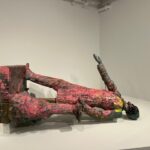
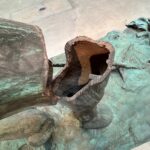
In 1921, Charlie Keck created a statue of “Stonewall” Jackson upon his trusty steed known as “Little Sorrel” heading into battle, sword raised. Exactly one hundred years later, the artist Kara Walker was deeded this decommissioned statue and was allowed to deconstruct and reconfigure it. Walker’s “Unmanned Drone” is displayed at The Brick alongside incisive text, her collages and drawing, and process pictures of the complicated dismembering of the original statue. The resulting sculpture, an amalgam of disjointed elements, is like a three-dimensional collage. Instead of being epic, though it is quite impressive in scale, Walker’s version uses the elements to tell a story of defeat, tiredness and destruction evident by the general’s arm and sword now dragging forlornly on the ground. Cut into these pieces, the viewer can see the hollow inner core of legs, arms, bodies which seems like a timely metaphor – hard metal outside but hollow inside like a rotten apple. Walker’s shockingly contemporary title instantly conjures up the current war in Ukraine that is fought by hundreds of unmanned drones daily, raining down destruction on largely civilian populations. Perhaps this is a nod to the drumbeat of endless wars, that while automated still results in ruin.
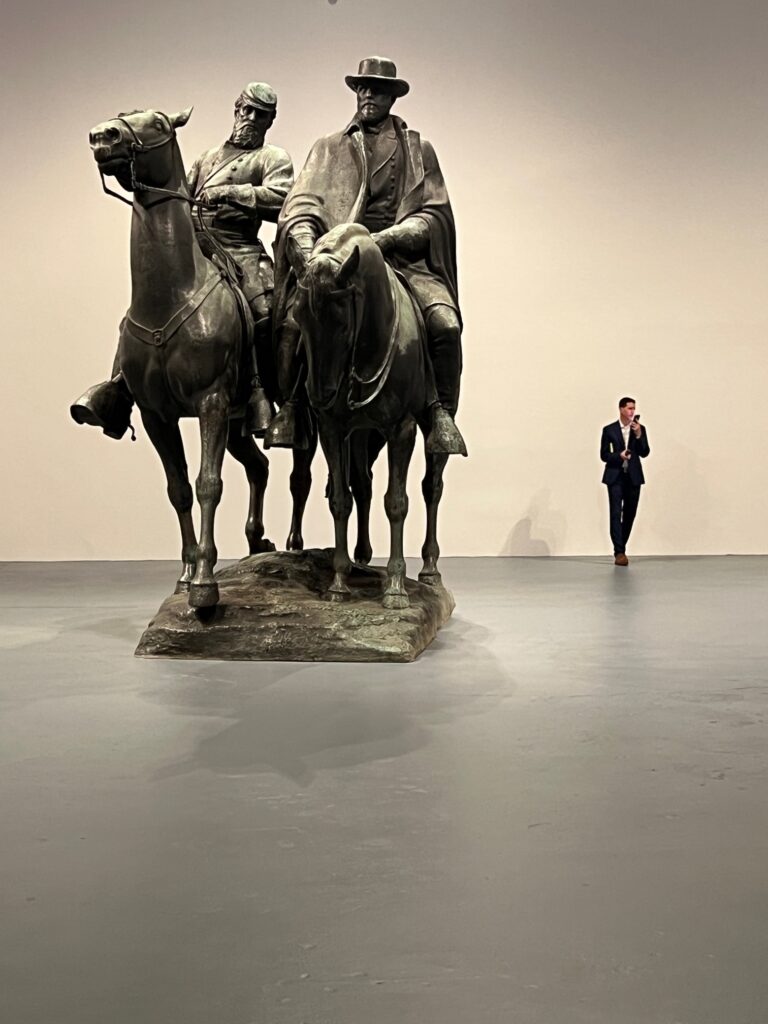
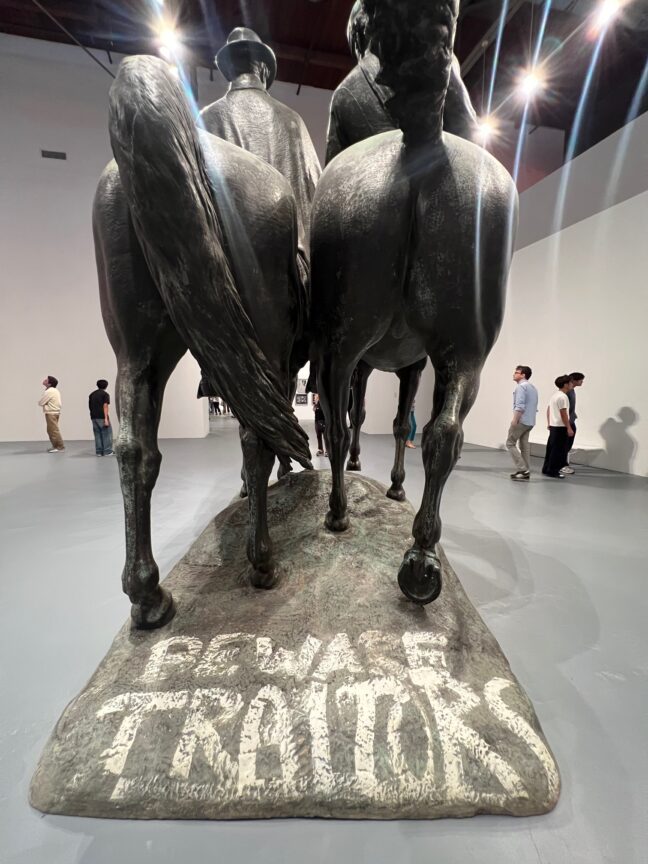
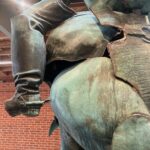
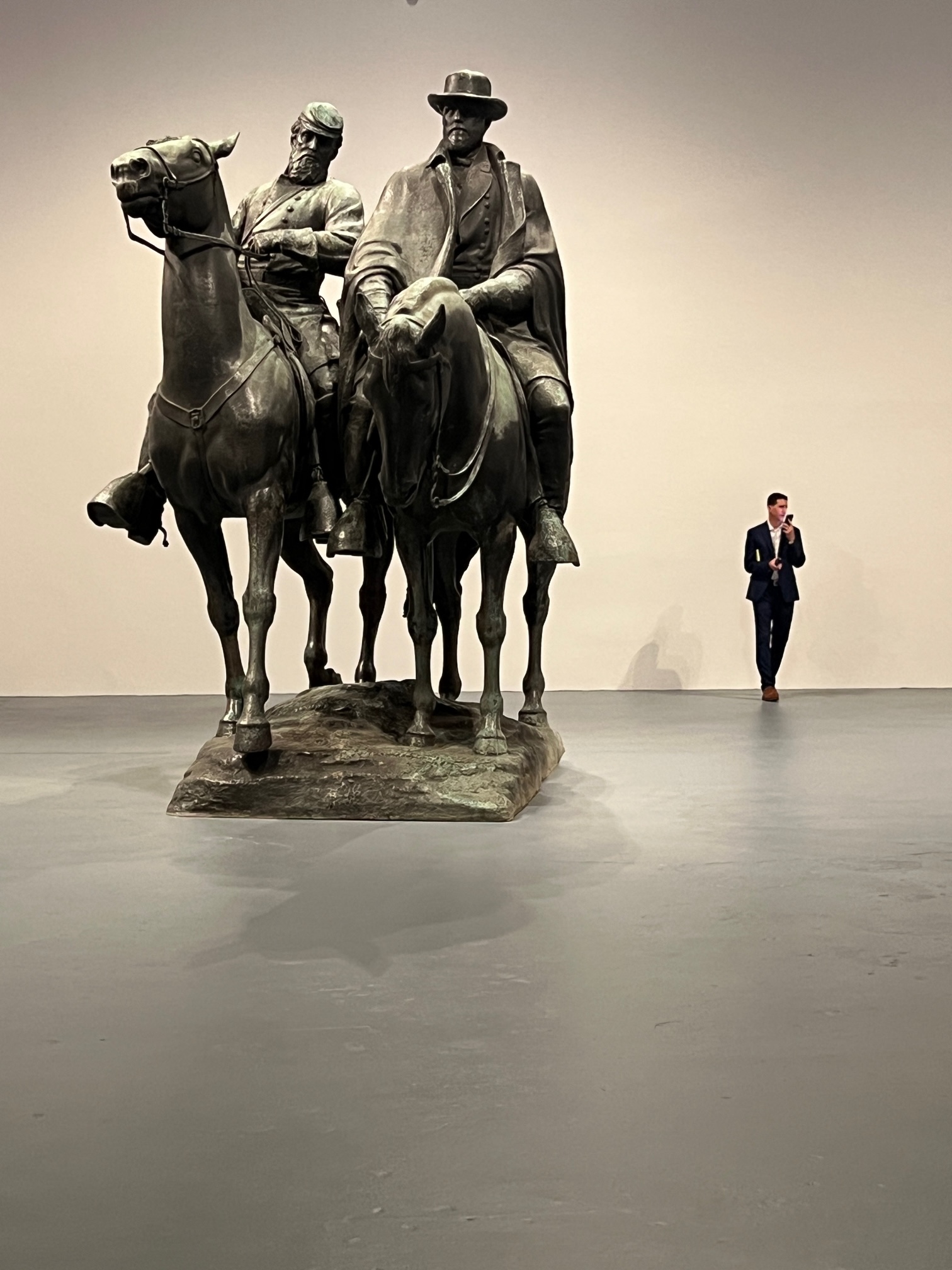
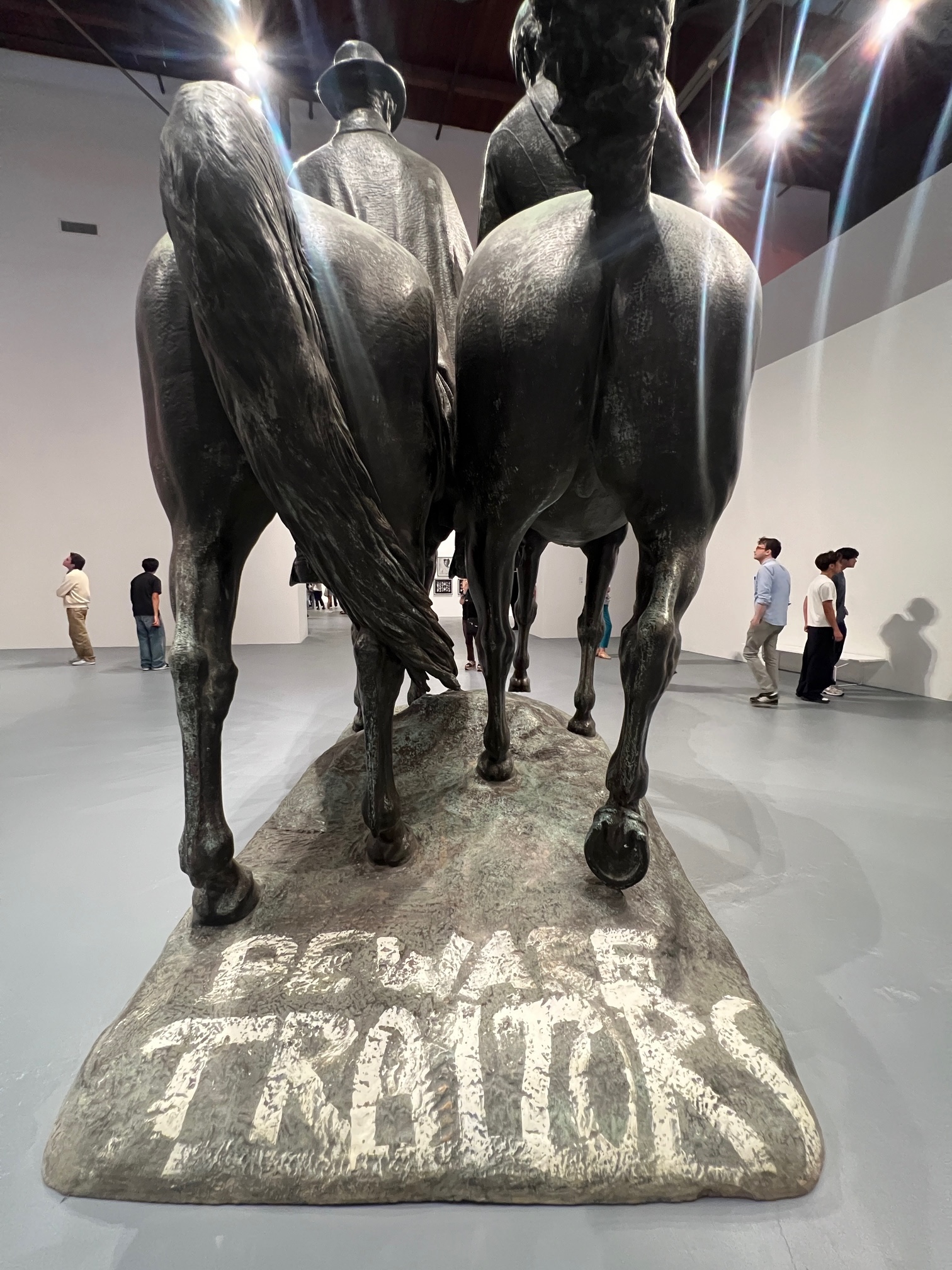
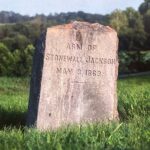
On May 1, 1948, in the city of Baltimore, an epic statue by Laura Gardin Fraser, depicting Robert E. Lee and “Stonewall” Jackson astride their horses was unveiled to commemorate their meeting before The Battle of Chancellorsville. Jackson was wounded there by friendly fire and died 8 days later after having his arm amputated. Weirdly, his arm was buried separately and has its own tombstone, demonstrating a deep hero worship. Eighty-three years after the Civil War ended, the mayor of Baltimore hailed these two generals as “paragons of American strength,” according to the detailed wall text. Heroes who remind us to be “resolute and determined in preserving sacred institutions…” It is slavery that is the institution that they wanted preserved.
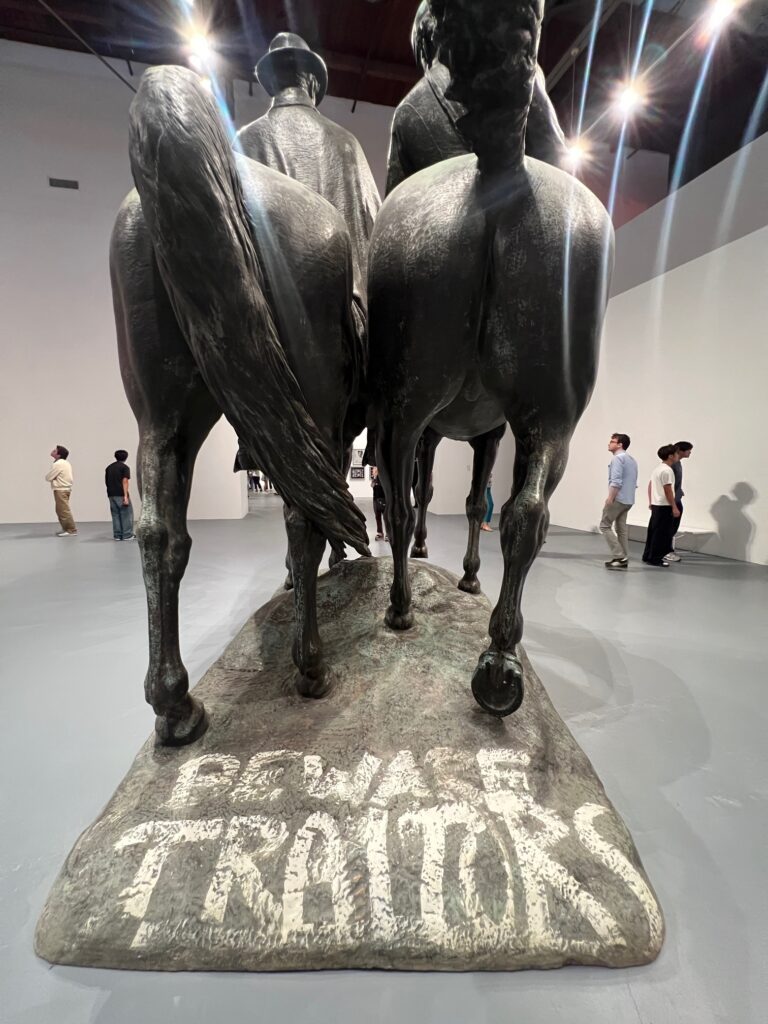
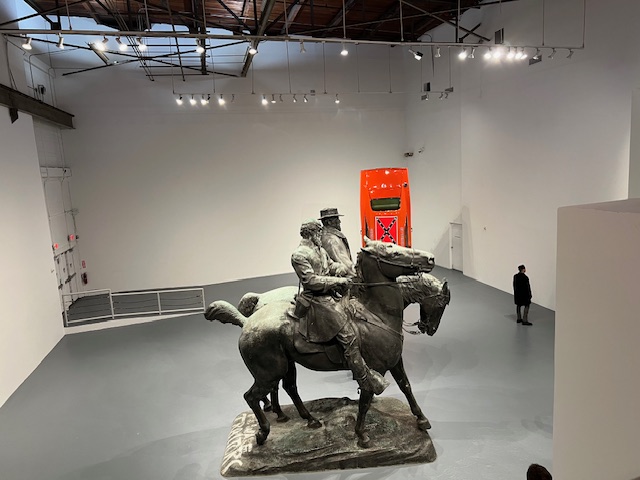
It is fitting that this striking monument which dwarfs the viewer commands the space that the curators have intentionally afforded it. Looking untouched from the front, it is only when the viewer moves behind the statues that the jarring words – ”BEWARE TRAITORS” becomes visible. This clearly encapsulates the warring ideologies presented here. Who are the traitors?
In Ken Burns’ amazing documentary on the Revolutionary War, the viewer comes to see that war as the first civil war – as the rebels or patriots fought their neighbors and family who were loyalists. The scars from that war have never healed and we are reminded by this excellent, but difficult exhibition that we must strive to fulfill the Declaration of Independence that all men are created equal. The American experiment is fragile and attention must be paid. Extensively researched, the curators here have fashioned an unusual exhibition that provokes, educates and enlightens the viewer as well as stirring up uncomfortable feelings and truths. It is not to be missed.
- Nancy Kay Turner; photos by Nancy Kay Turner and by Genie Davis