An Open Invitation to Exciting Art: Dave Clark is a Shape Shifter

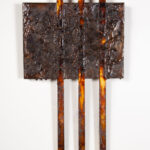
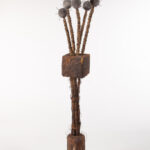
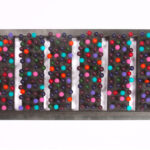
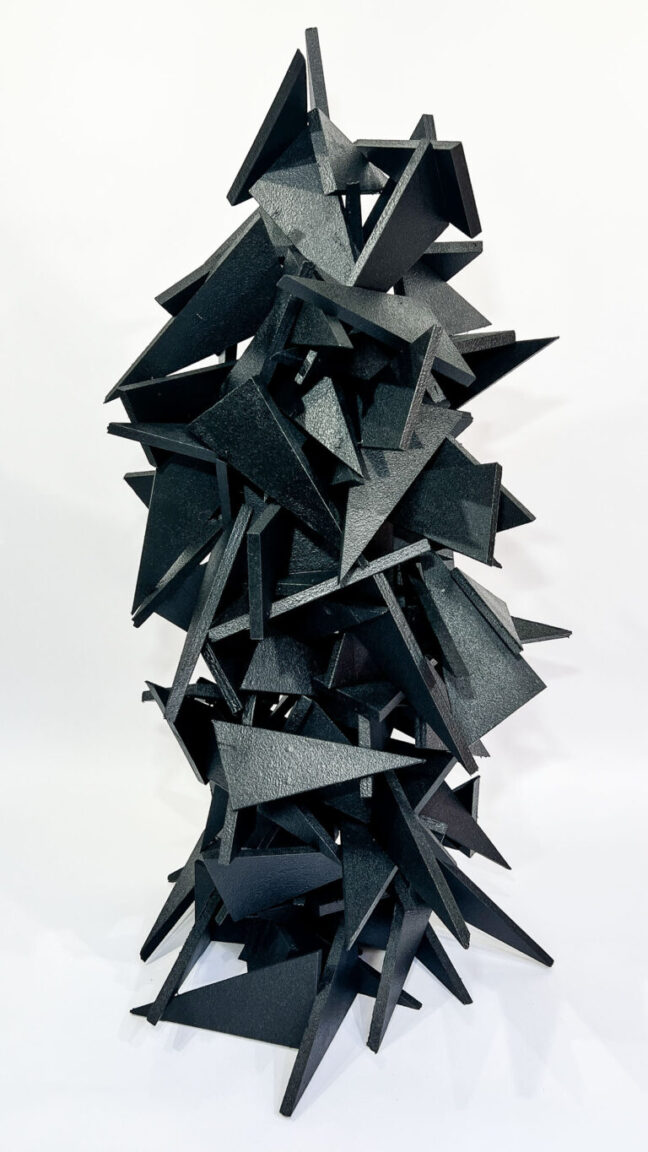
Dave Clark works with a wide range of mediums to create one-of-a-kind compelling sculptural forms, whether 2D or 3D. A master magician of found materials and repurposed ones, Clark makes tables, wall art, and free standing sculptures that rock a viewer’s world.
Clark is currently one of three solo artists that make up the Shapeshifters exhibition now at Diversions Fine Arts Gallery in Manhattan Beach. His inspirations are as varied as his work. “With pieces in the Perception series, [my inspiration] is the
anger and frustration of the manipulation of the populace; the need to communicate what I see as control of what people see and hear via the media. With other pieces it is either the need to do something or to do something that allows me to create an object to stimulate a person’s imagination, as is evident in the Mechanicals series [which is] reflective of the ideas behind my Design Fiction [series],” he explains.
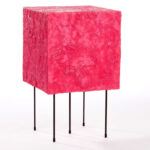
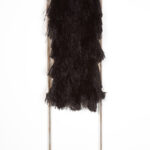
His early work, art created in the 1970s and 1980s was “reflective of what I had in terms of materials and tools. This was heavily influenced by industrial machinery and things that did something. Lots of exploration of materials, shapes,” he relates.
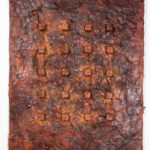
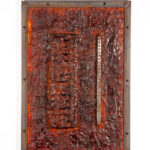
From that era, his worked evolved into what he describes as more of a Pop Art aesthetic, and then “back into pieces that are meant to make the viewer react in some way. Wanting this from my art has allowed me to bounce around from the Skins series to the Mechanical series to the Perception series. And various pieces that don’t fit into anything other being sculptural in nature.,” he attests, admitting that when he becomes bored with a subject or series, he simply moves on.
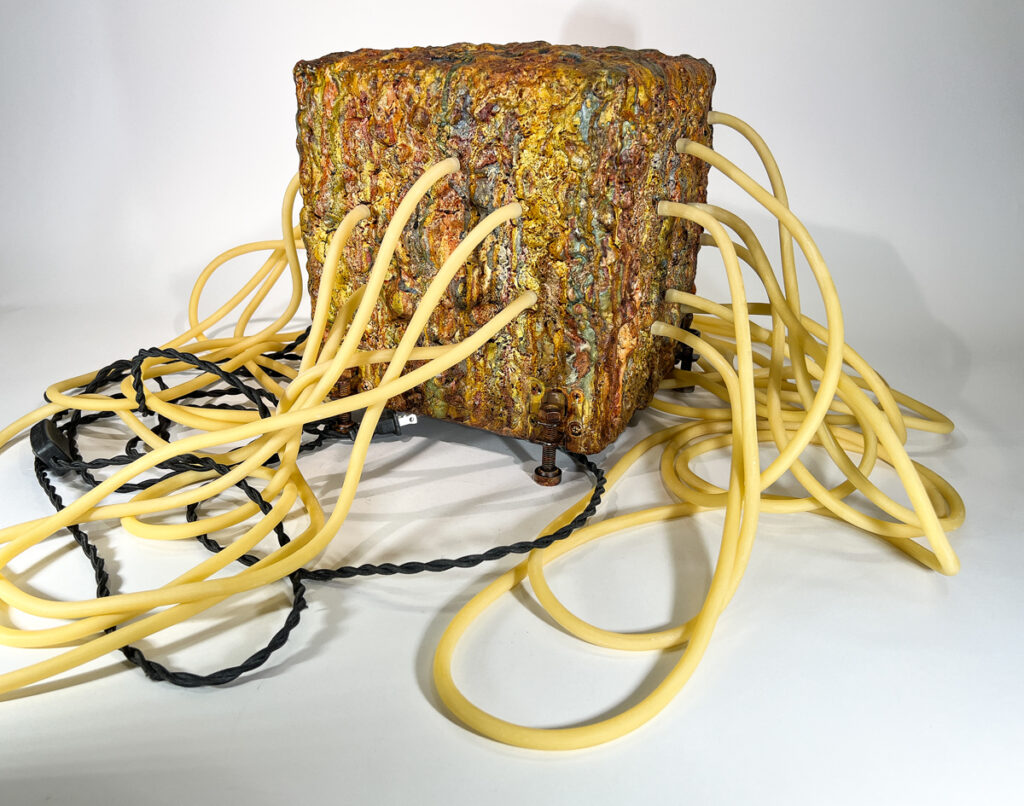
As to his materials themselves, he notes that “A lot of what I use is mechanical or electrical in nature , or simply something I discovered that can be manipulated to create a texture….a texture to create a reaction.”

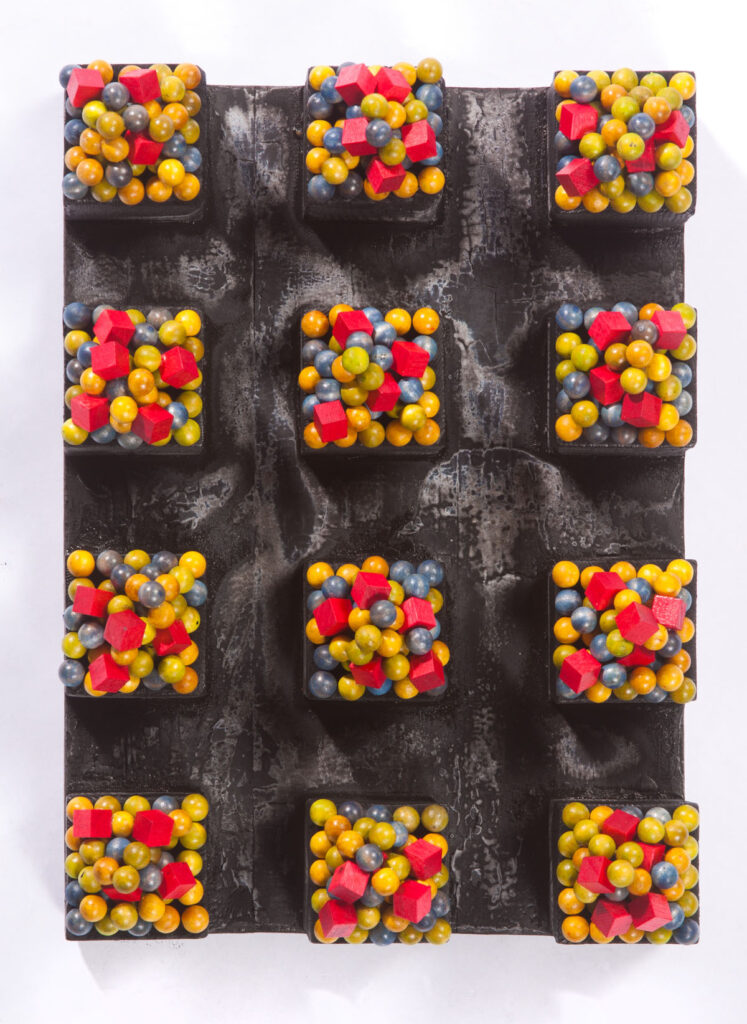
At the moment, he is working in the theme of Design Fiction, and has taken that thematically one step further by “creating ‘boxes’
that hold inside something reflective of a ‘reality.’ In this case,  something is happening inside that might cause one to imagine their own explanation of this ‘ reality,'” he notes.  He explains that he has also revised some of his pieces in an earlier Mechanical series to achieve “a degree of chaos.”

As to what lies ahead, Clark jokes “Fame, fortune… obscurity? No idea really. I just keep plugging along  either making what I make or building and supporting the arts community. One day at a time.”
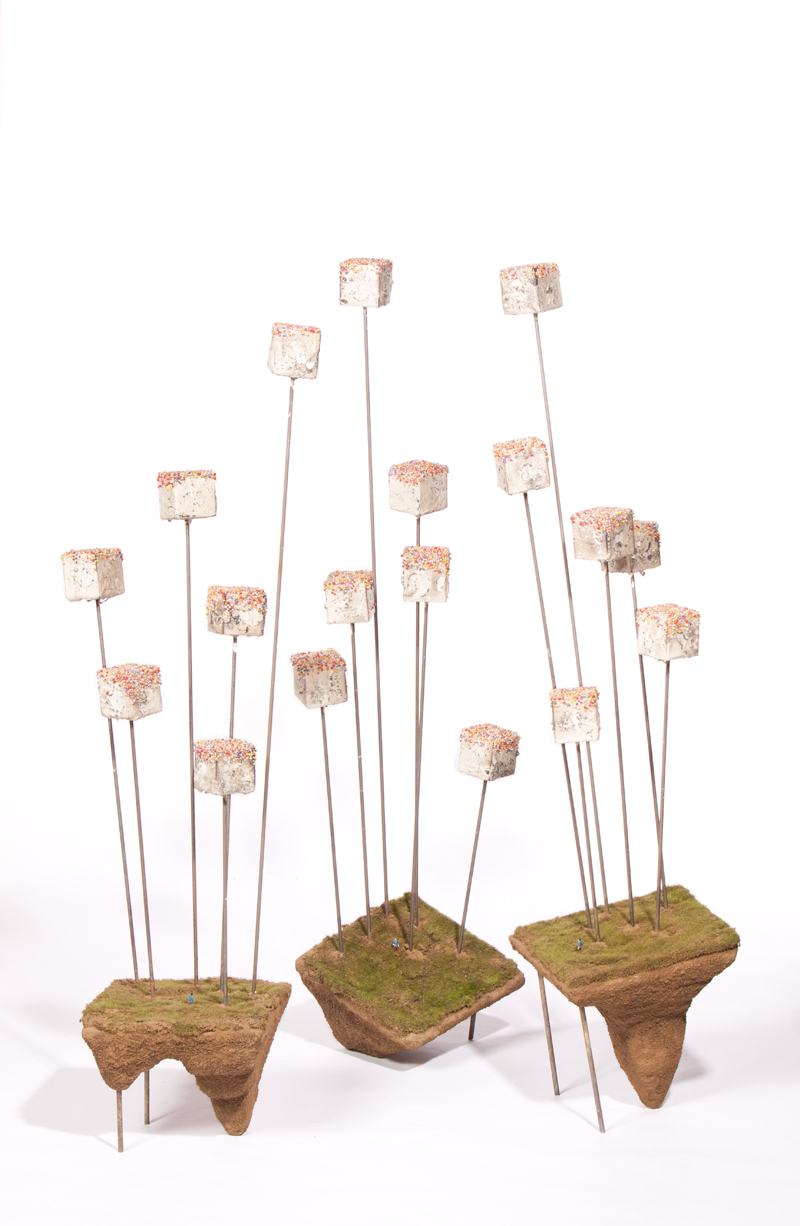
The insight he choose to offer about his work over all is simple and complex: which more or less sums up each of his fascinating sculptural images. “It is what it is. It does what it does, or doesn’t. You tell me. My work is an open invitation. Rather than telling viewers what my art means, I am far more interested in what it means to [others], the conversation that unfolds between a viewer and a piece – that moment of personal recognition or unexpected association – is at the heart of what I make.”
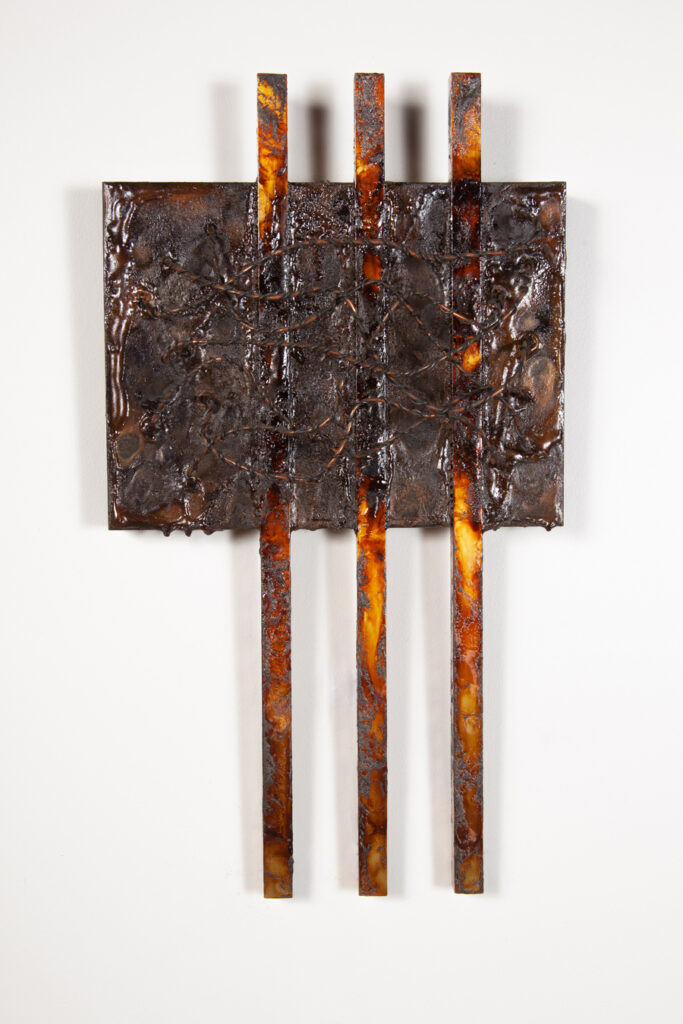
Asked the most unique material he has ever worked with, Clark struggles to choose just one. “That is a tough one. Burned Gorilla Glue? Fabric dyes on paper? Formed concrete?” He adds that what drove him to repurpose electronic and other elements was the “look and feel” of industrial machinery, which he has always loved.

Creating art that is based on what those “machines do or did, or even might do” has been intrinsic to Clark’s process. “Art in the sense of creating or building things that worked, that functioned in some way [appeals to me.] So, using materials in that realm, allowed me to create my own mechanical devices.”
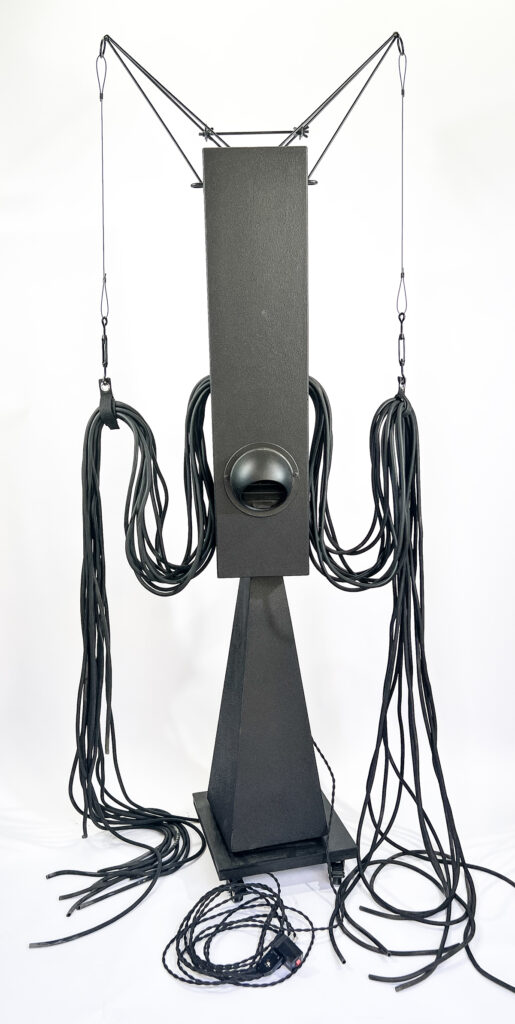
He describes those devices as failling into the overall theme of Design Fiction, a tech and design specific term that talks about the role of make-believe within the world of functional design. “Ideas generated within Design Fiction can be whimsical, inventive and off kilter though not by necessity,. What Design Fiction does is through its use of a prop or a device or a structure – say a thing – presents the ‘thing’ in everyday life as if it’s real. As such it is accepted as fact – it just is – in order to spark the imagination so it can be talked about and bandied about as if it were already real.”
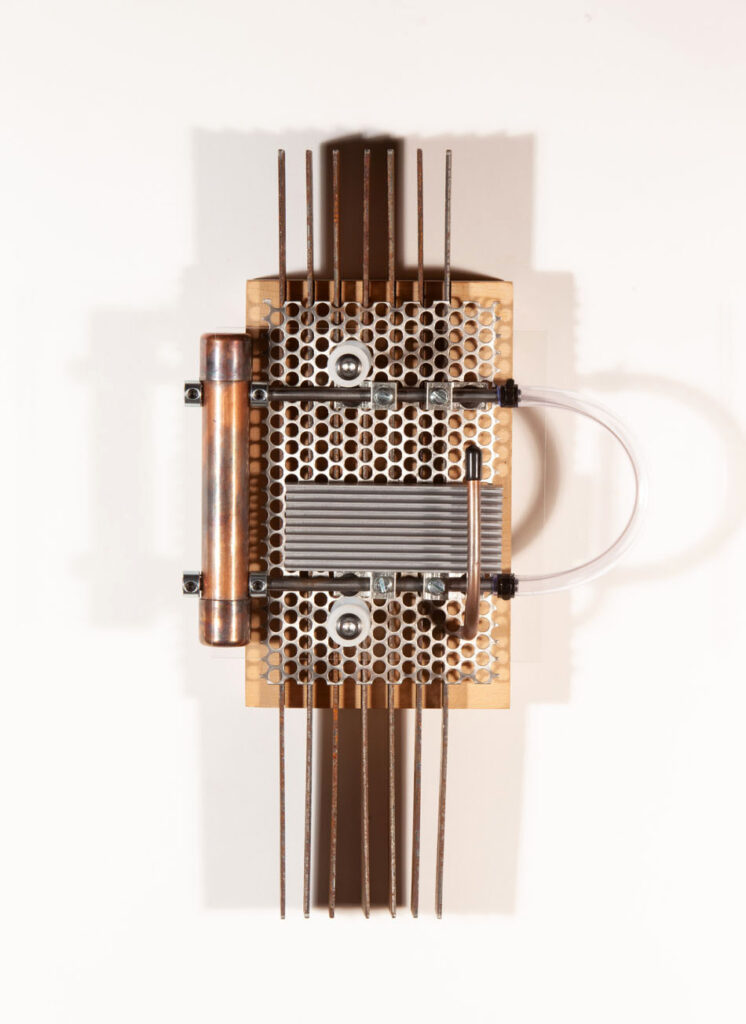
In short, just as a novel creates an entire believable world, visually, Design Fiction does the same.  For Clark, his Mechanical Series “can be considered as Design Fiction in that we’re not sure what it is, what it does, or if it does anything… but it very much exists. These seemingly once-functional objects look like they belong in our world, but we just don’t know how or what happened to them to get to the point where they are today. And that lends them a bit of mystery.”  In other words, it makes them into the science fiction of art.
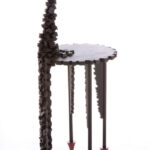
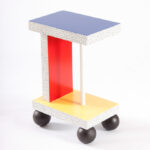
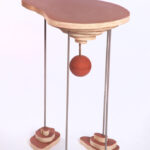
Clark has also created his own Design Fiction spin on functional tables that are the coolest must useful art around.

Along with his own awe-inspiringly innovative sculputral work, Clark has also recently created a series of small box galleries.
He describes their existence as based on being able to “share and/or promote art and artists by providing an alternative venue to show smaller scale art works with the larger community. There is no curation, and also no cost to the artist.”

The micro galleries, as he calls them, have created neighborhood art districts, which have also provided not only space but new ways of engaging culturally. They’re built on home owner property at that owner’s request, with more than 40 now spread across Long Beach and four already in the South Bay. Soon there will be more. “It is quite organic in growth with a gallery happening every month of so,” he says.
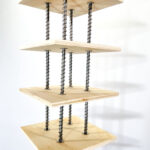
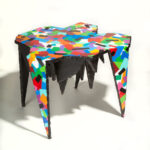
Clark’s magical mystery tour of sculptural art will be at Diversions Fine Arts Gallery  1069 N. Aviation Blvd. in Manhattan Beach from October 10th to November 1st. The opening reception is on the 10th from 4-7; don’t miss the chance to meet the artist and see these incredibly special works.

  • Genie Davis; photos provided by the artist
Annie Clavel: Art That Bursts With Texture

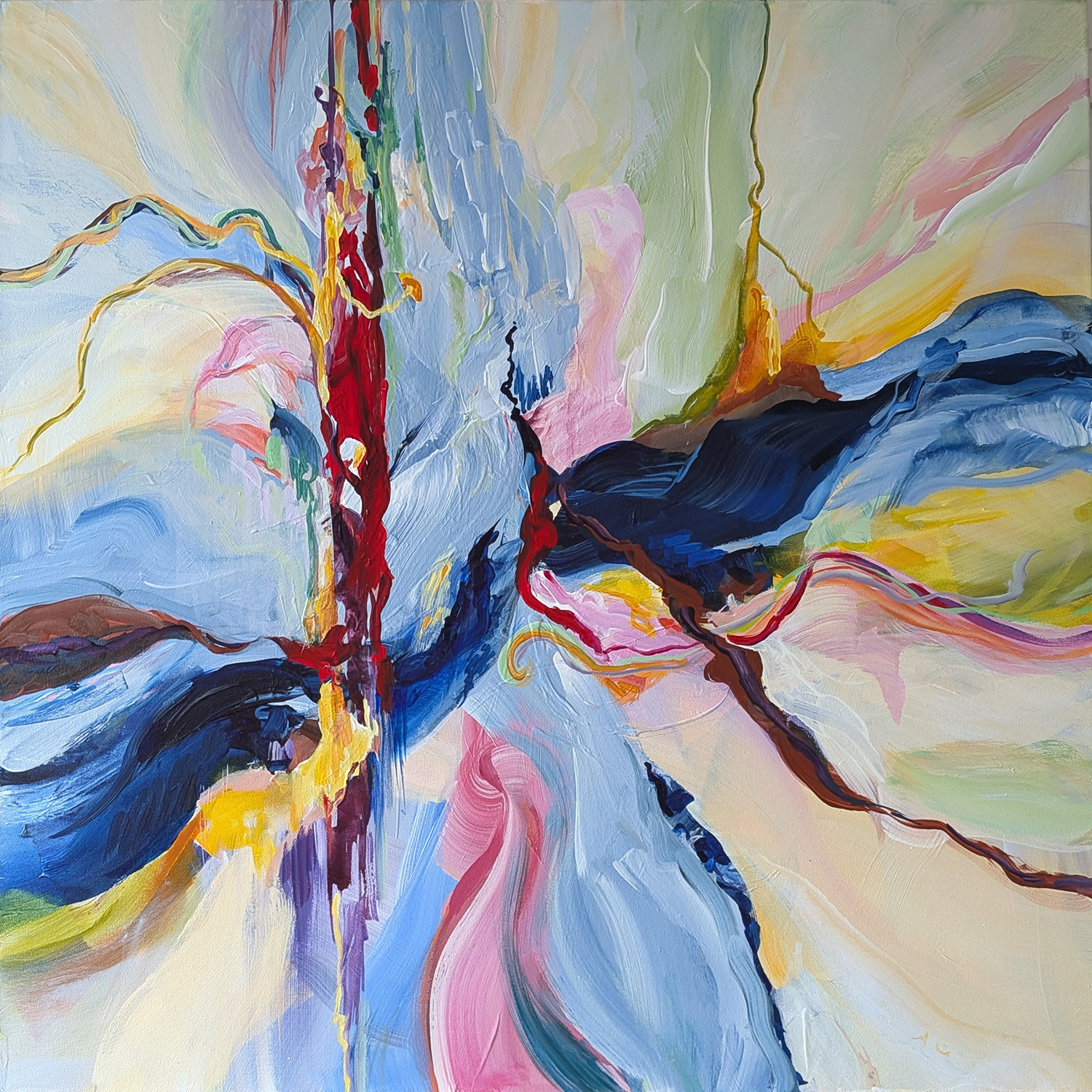
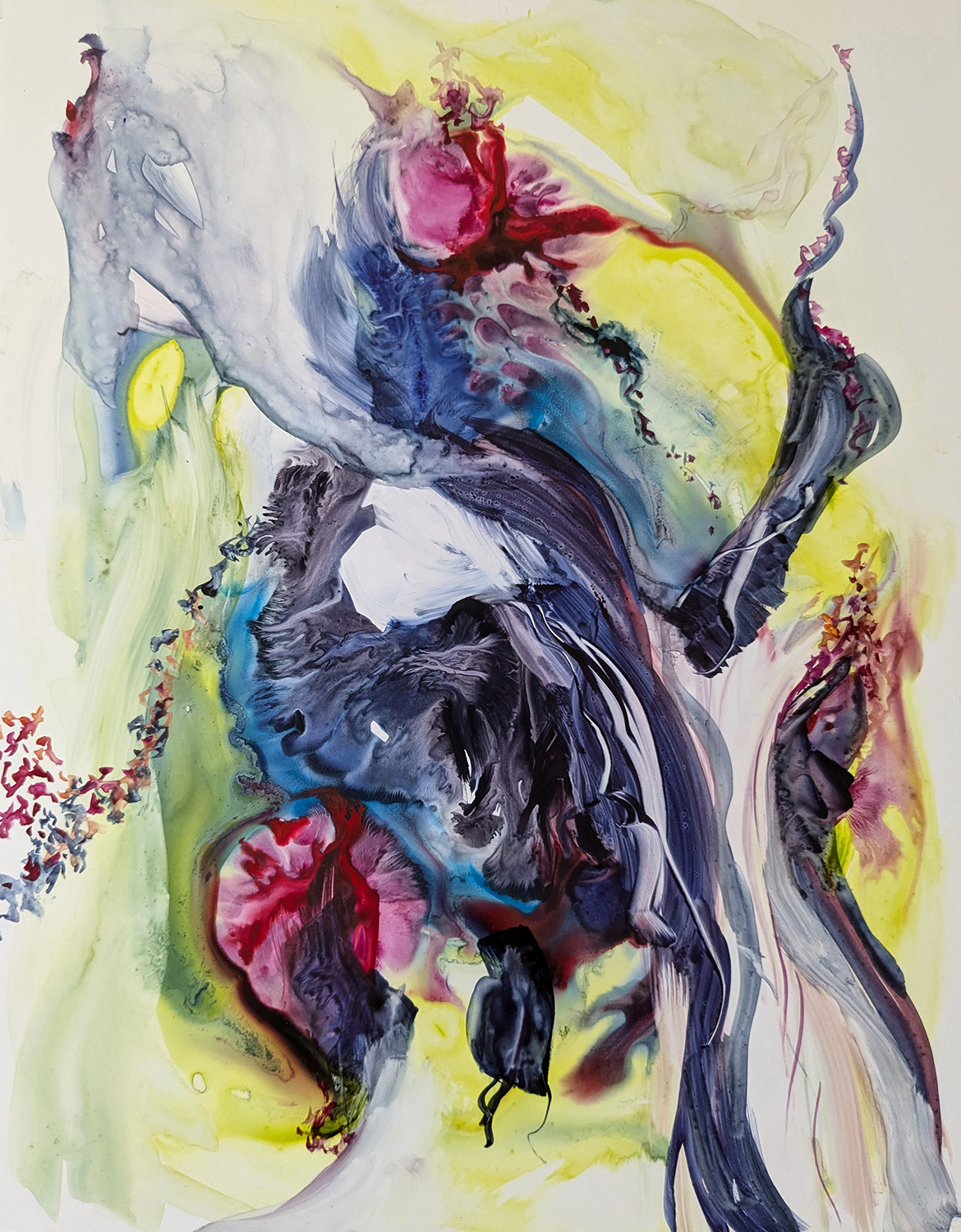
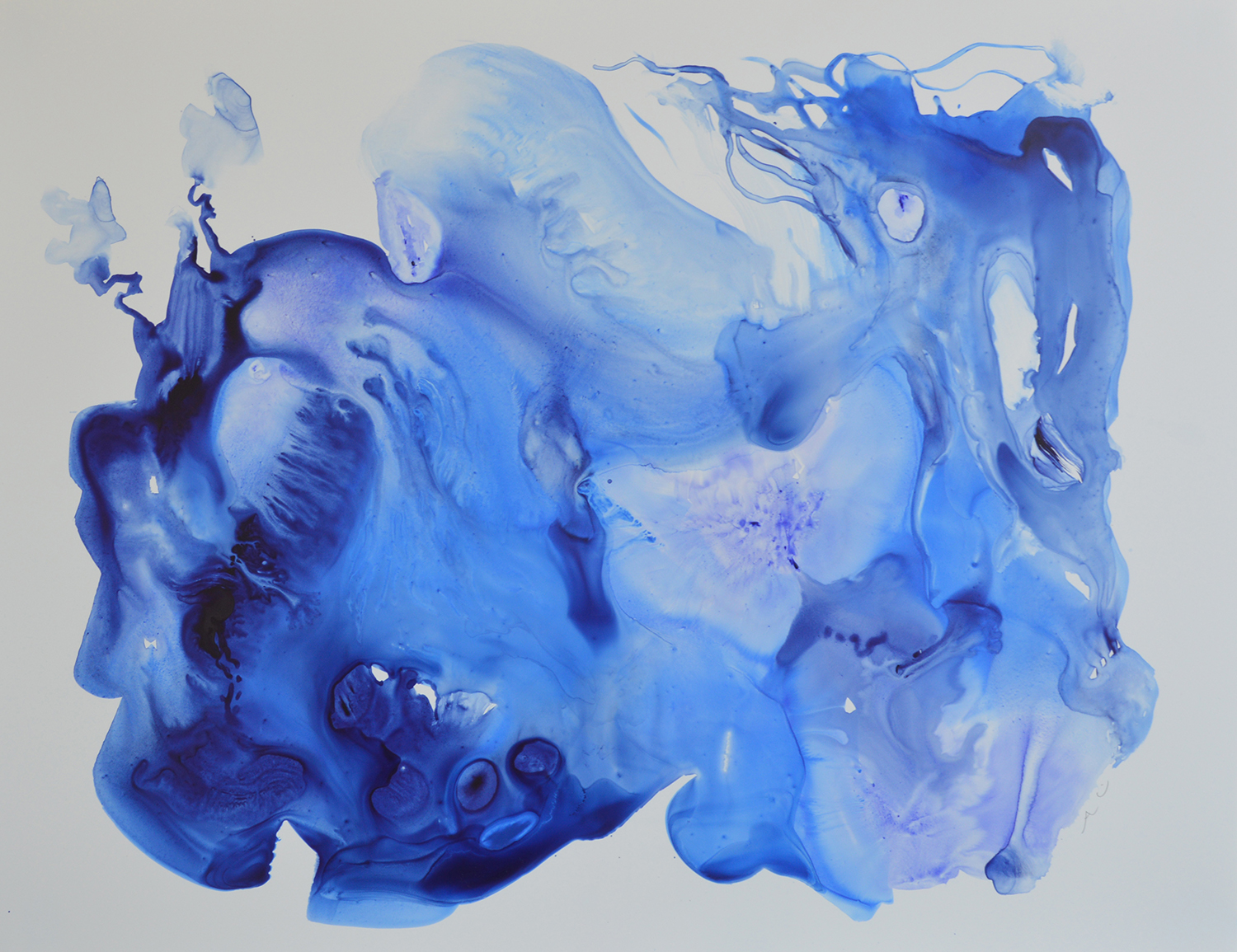
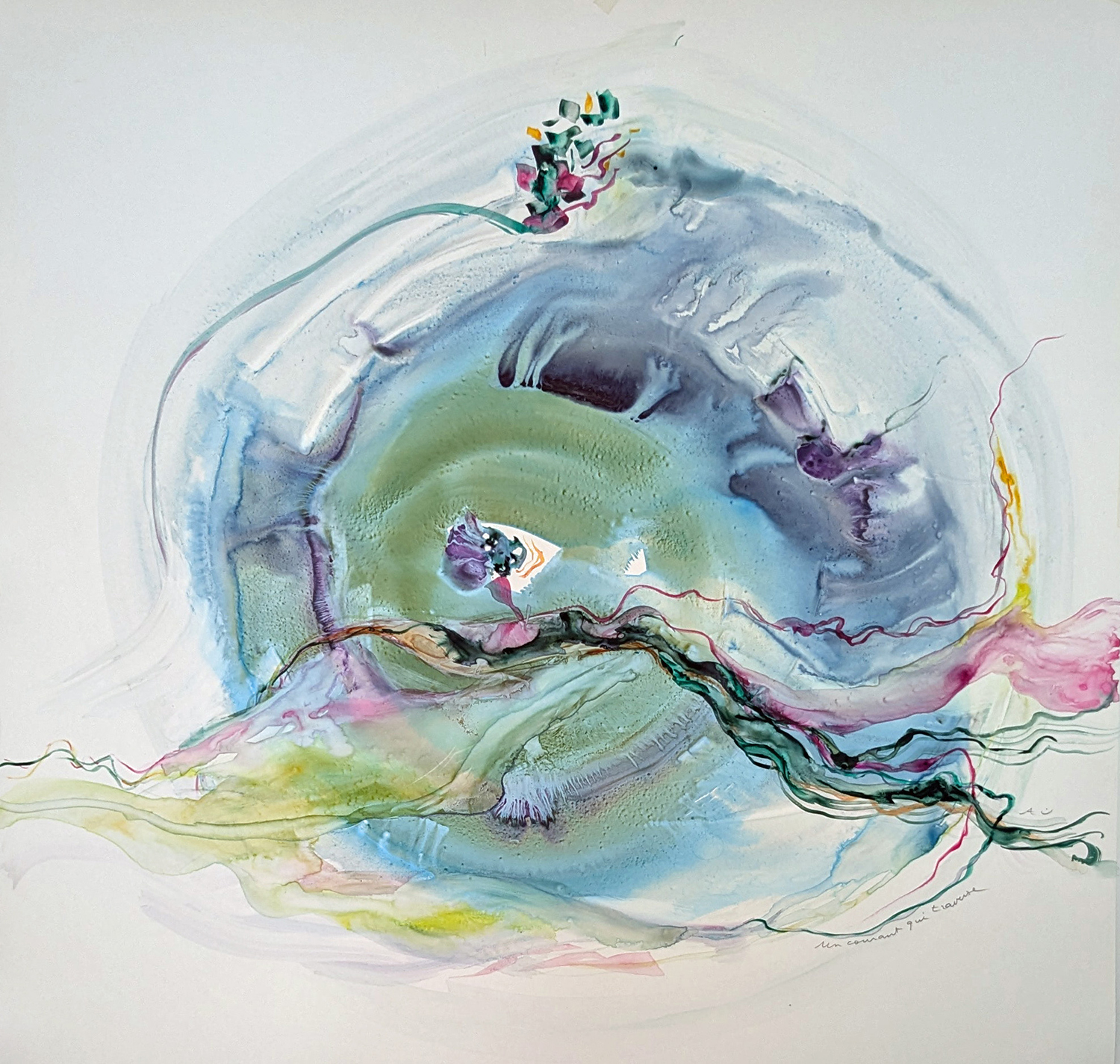
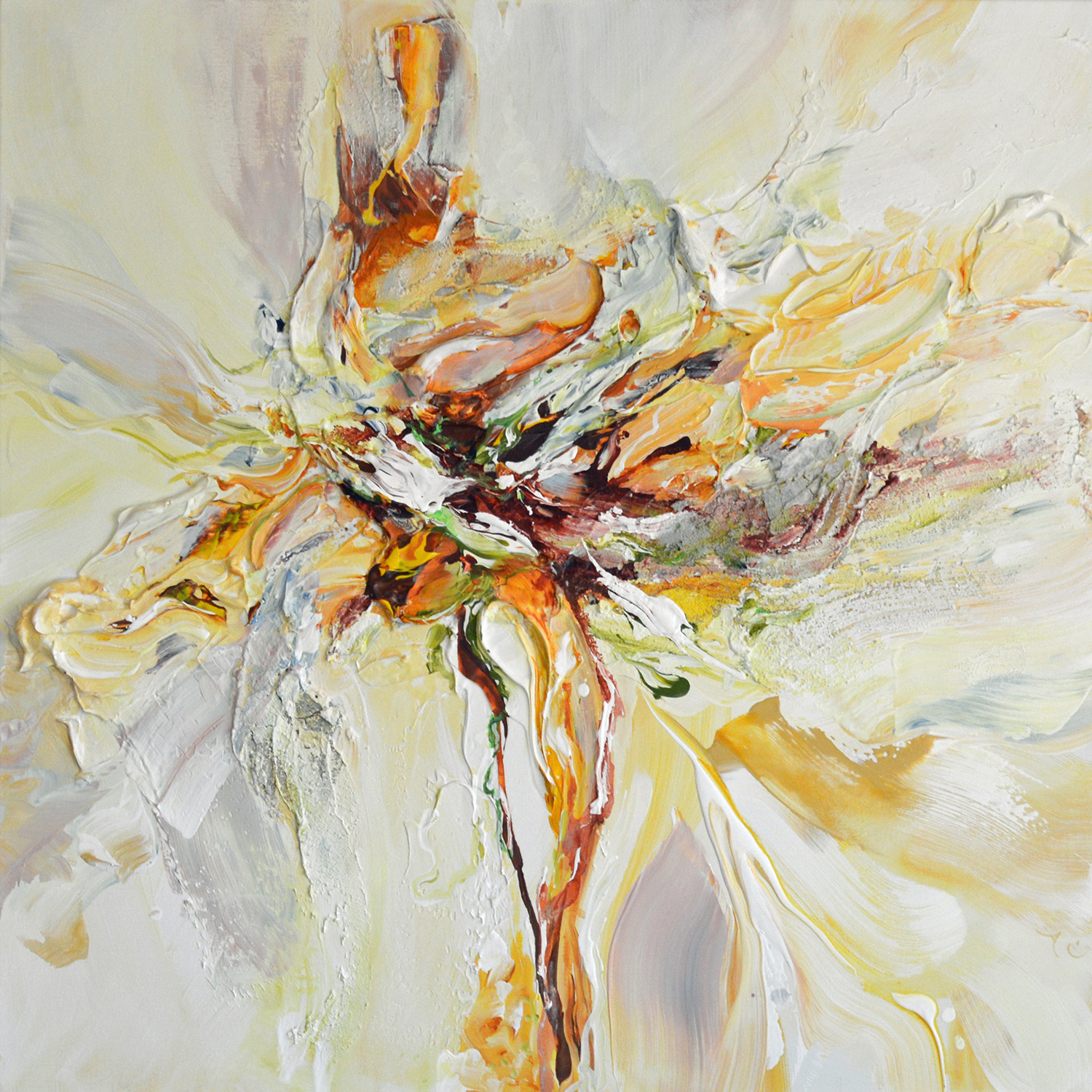
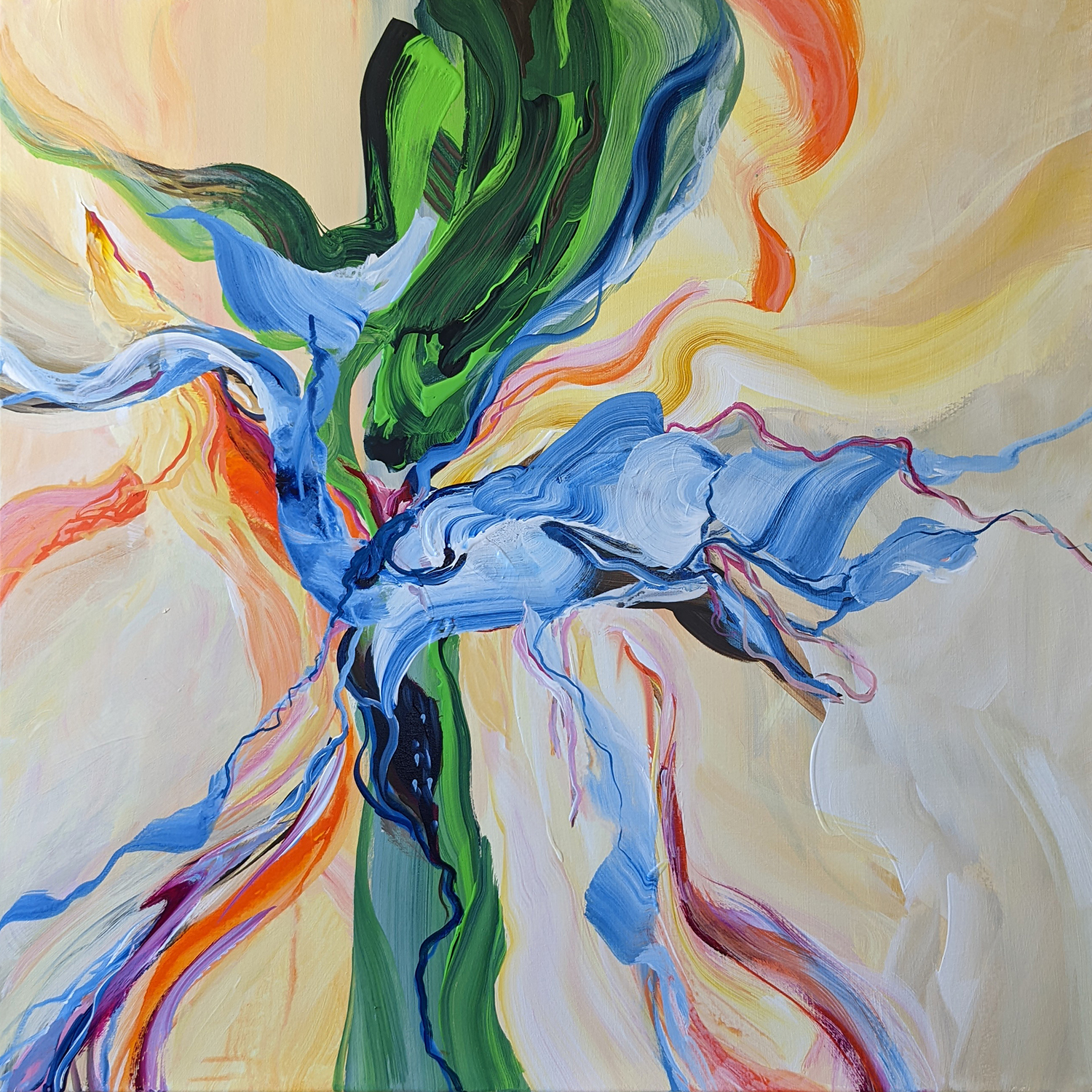
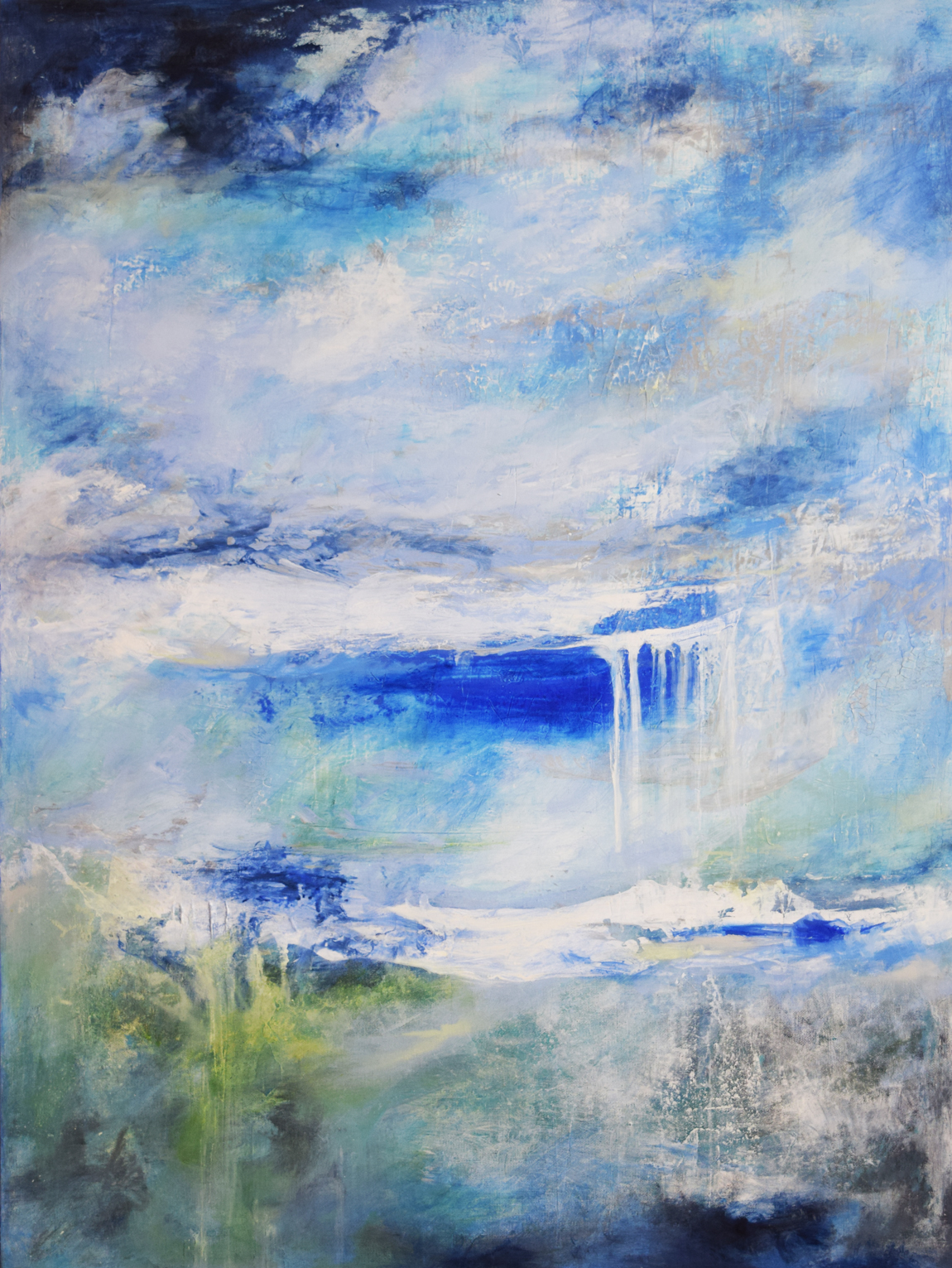
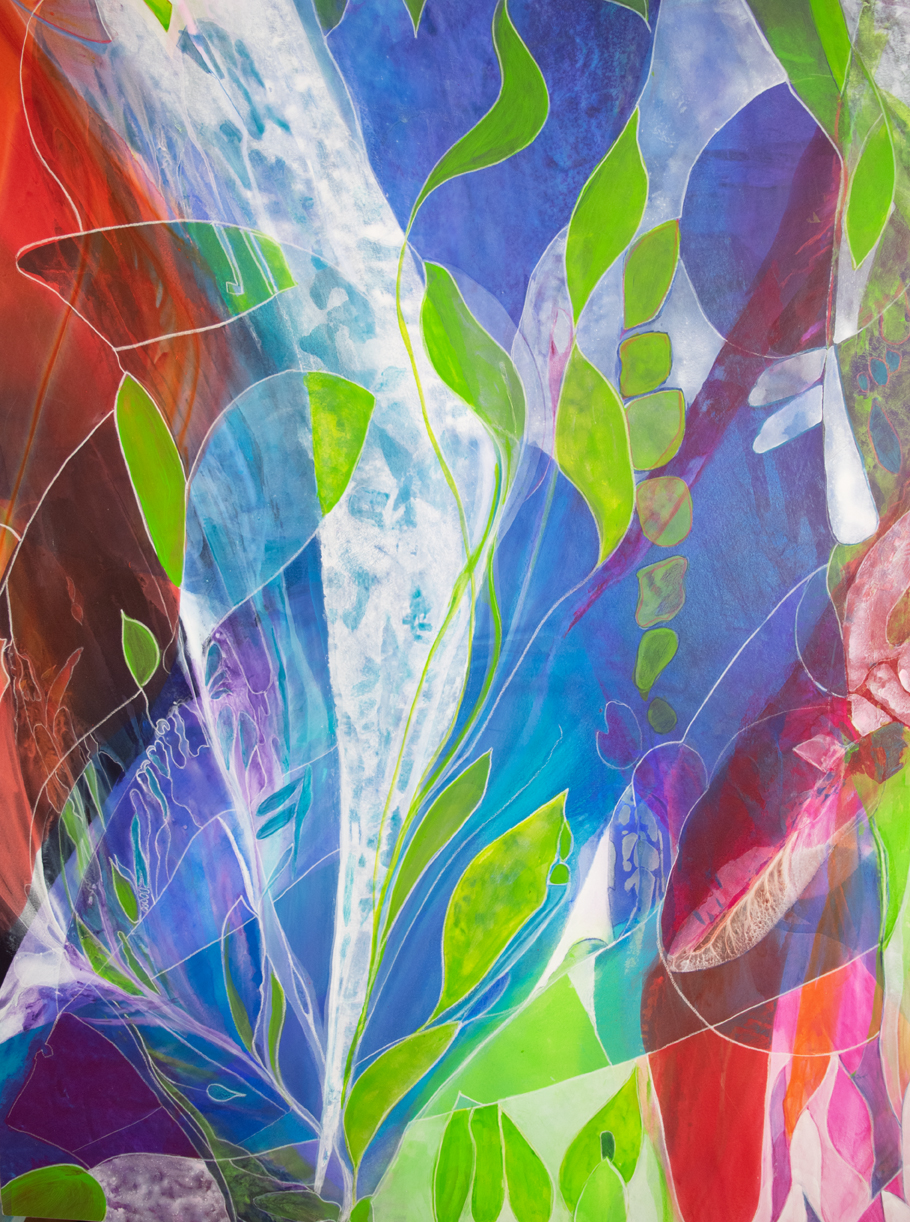
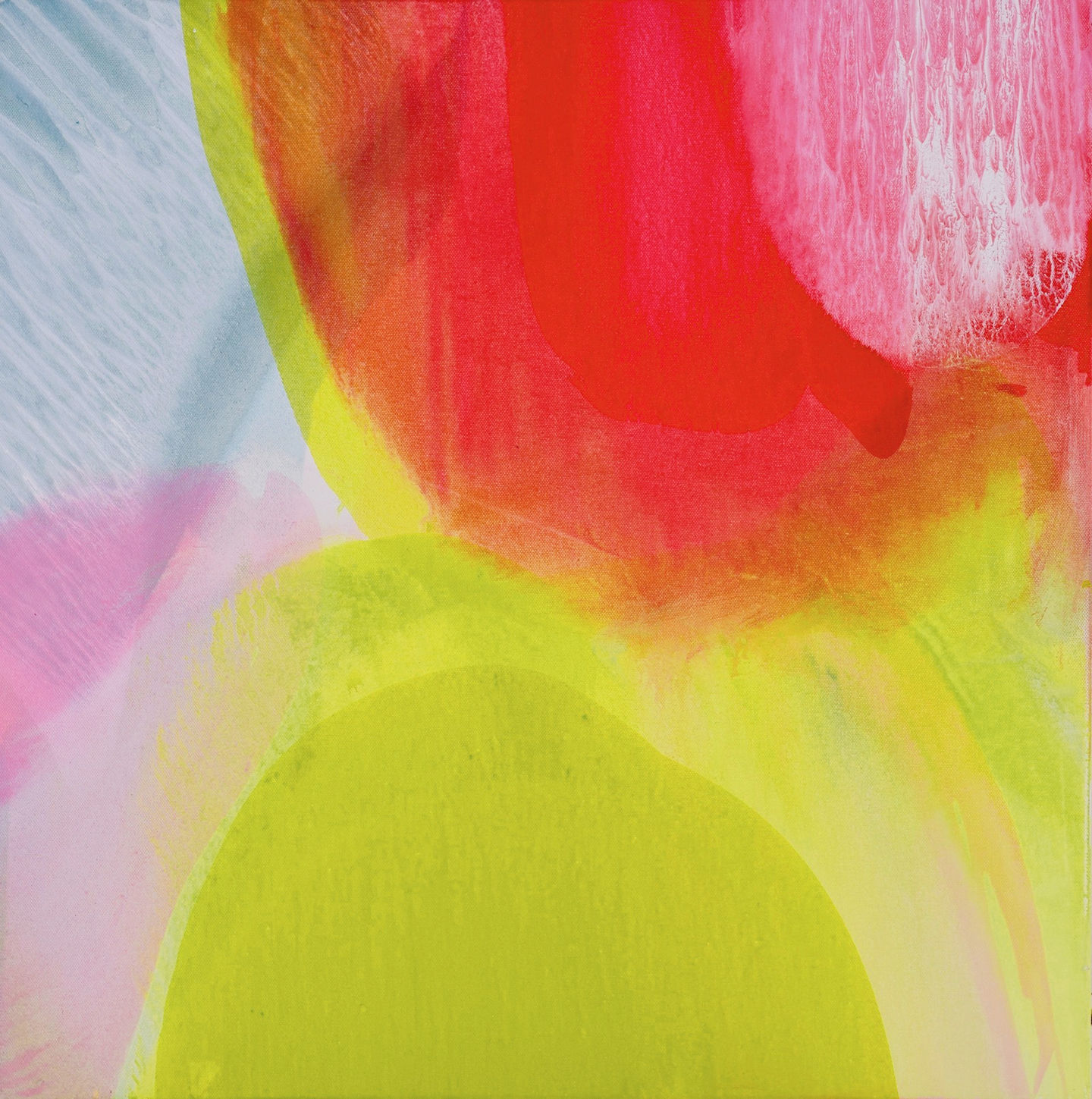
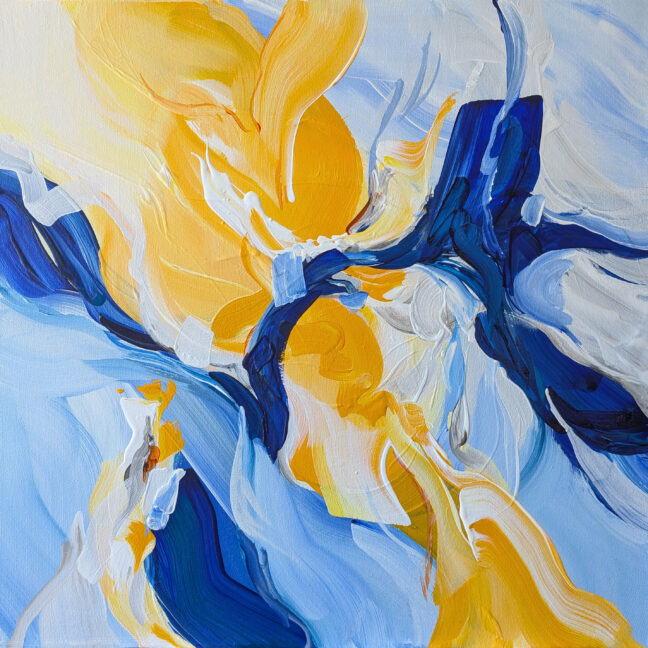
Annie Clavel’s work is a swirling expansion of the visual soul, bursting with texture and triumphant with color. According to the artist, her inspiration is as diverse as her work. Currently, she says “I enjoy following the launch of new telescopes designed to explore the cosmos. There are so many unanswered questions about the true nature of the universe. Perhaps for me, this is a way to put our existence on Earth into perspective amidst the news and scenes that surround us. That’s where some of my inspiration comes from.”
But she also finds inspiration closer to earth, “I am constantly influenced by what I see in my daily life: the California light, the movement of a hummingbird outside my window, or the shouts of a homeless person near the Taco Bell [in my neighborhood.]”
And then there is a fascinating right-brain component. “Mathematics, which I have both studied and taught, plays a significant role in my art and helps me envision abstract worlds.” The depths of the cosmos, indeed.
Clavel began painting over forty years ago, she says, creating figurative watercolor work while still living in France, prior to her move to Callifornia. While still abroad, she “set out to explore abstract atmospheres using acrylics.  Upon arriving in the United States some twenty years ago, I faced several challenges: gaining a better understanding of American culture, defining what I wanted to paint, and building a network.”
As an artist, Clavel more than rose to those challenges. She describes herself as influenced by Dael Patton, an instructor at the Palos Verdes Art Center, which led her to be “truly immersed  in abstraction. I joined various art associations and participated in numerous exhibitions. I also felt that, as the years went by, figurative painting was losing the meaning I had originally attached to it, whereas abstract art was taking on profound significance for me.”
With that change, Clavel also changed her mediums. “For many years, I worked with watercolor on paper. Today, however, my preferred mediums are acrylic on canvas and watercolor on YUPO.  When painting with acrylics, I enjoy mixing fluid paints to create new colors, then applying them in free, layered strokes onto a stretched canvas.”
The artists points out that she “began using watercolor much more intensively after discovering YUPO as a new painting surface. YUPO is a non-absorbent paper that allows water to flow and colors to blend unpredictably. For me, the medium’s fluidity and watercolor’s vast color palette are major assets; they allow me to give free rein to my imagination as I explore abstract worlds and the events associated with them.”
Thematically, with her family living throughout the globe, she is exploring both her Vietnamese and French roots. “I would like to channel my inspiration into the feelings I have about the diversity of my background and the diverse environment I am now immersed in. I would like to develop a series dedicated to my ancestors and my scattered family. I think I will use a softer palette, without bright colors.”
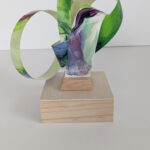
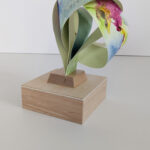
In her current exhibition at Diversions Fine Arts Gallery, she displays an audacious and awesome mix of color, thick layers of paint, pinwheel-perfect small paper sculptures, and dreamy watercolor Rohrschachs.
She will also be participating in an open studio tour October 3rd and 4th from 1 to 5 pm, at 3101 E 2nd Street, #7C, Long Beach, and in an exhibition titled “Right Here, Right Now” on October 10th from 4-7 at Gallery Hellada at 117 Linden Ave also in Long Beach.
Regardless of where you view her lustrous work, Clavel wants her viewers to know that she lets her “instinct and intuition guide” her work in order to “capture parallel moments of time, advancing each work towards a personal resolution. I never sketch before painting. I put my present feelings directly on the surface, hoping that the viewers will find an echo in themselves.”
Clavel’s solo show in Diversions Fine Arts’ Golden Days exhibition runs through October 4th with an artist talk and closing 1-3 on that date. DFA is located at 1069 N. Aviation Blvd. in Manhattan Beach.
– Genie Davis, photos provided by the artist and Davis

The Magical World of Glenn Waggner’s Figurative Art

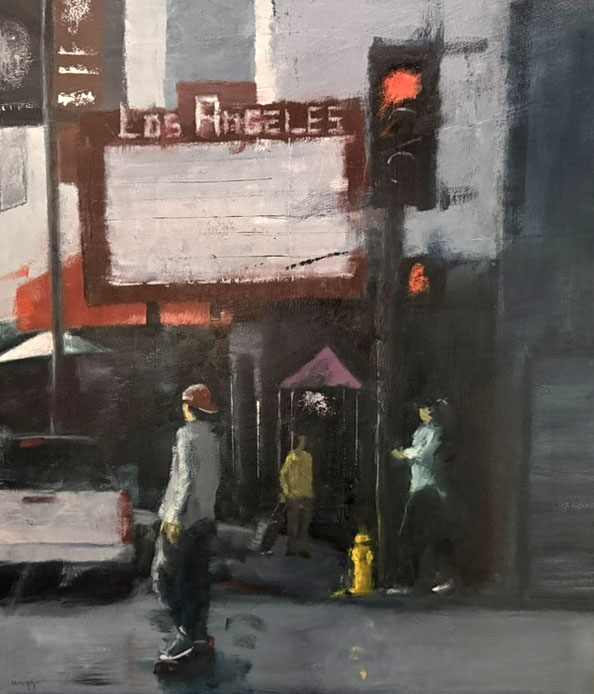
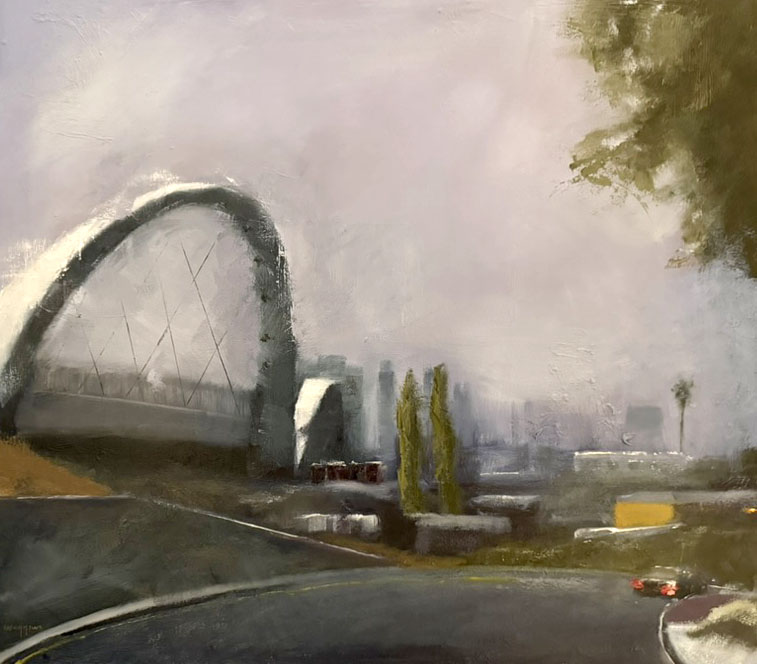
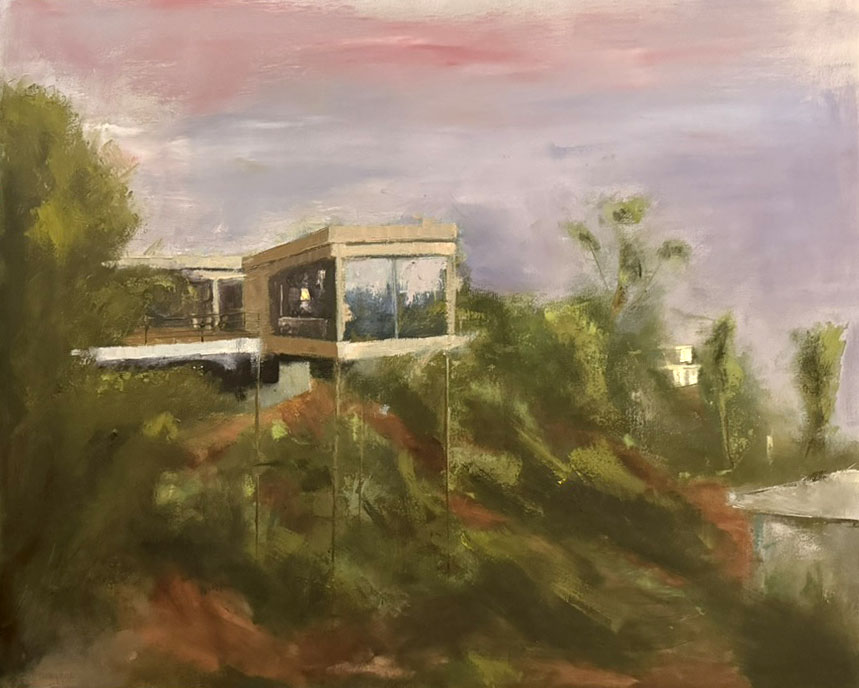
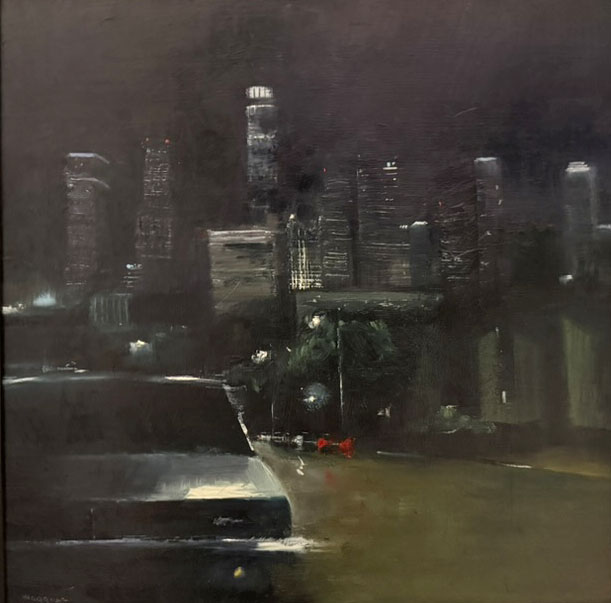
Every picture tells a story, and for artist Glenn Waggner, it’s a magical one, merging the real world with a sense of wit and wonder. Working in oil,  Waggner creates resonant, meaningful figurative works that soar with imagination and devote themselves to indelible detail.

Waggner is both an architecht and an artist, and as such, it is perhaps unsurprising that he says he is “inspired by cities and mostly urban environments. A few times I have been in certain places where I had the feeling that everything was perfect. That’s what I want to paint.”

When he first began his journey as an artist he says he “started out painting twisting buildings at impossible angles. The work evolved into a more realistic portrayal while becoming more abstracted and looser. He adds that “Over time, the lighting and tones have become a little more surreal, like the lighting that occurs during an eclipse or seen in dreams.”

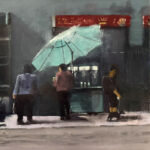
Make no mistake, Waggner’s worlds have that special hint of the magical that transforms even the most recognizable scene of getting morning coffee at a stand or hailing a taxi.  He works in oils exclusively and finds that he plans to keep that medium as his first choice for creation.

“I switched to acrylics for a short time, and while I found the colors were the same, acrylics dried way too fast for me. I like to blend the paint in layers to give it a richness,” he points out.

Thematically, he says he is moving toward a change, however. “I am heading towards a more abstracted, expressionistic style. Not abstract expressionism, but more of a disruption of images.”

While he is currently exhibiting a solo exhibition at Diversions Fine Arts Gallery, he will also be exhibiting at the Brewery Artwalk in November, where he has shown for ten years; and returning to DFA for an exhibition in a December group show.

He is also looking forward to building a new body of work for future shows, and regardless of the changes he is planning in his work thematically, he will always tell wonderful stories. Asked what comes first, the story-making or the visual art, he says “The visuals almost always come first. The narrative develops naturally during creation. I also like to have fun with titles.”

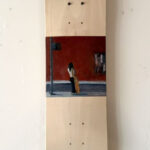
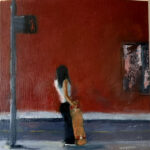
Above: Waggner uses a skateboard for a canvas for his “Mall Grip;” detail of same; a look at “Girl Times Three.”

Waggner adds that “I love it when people see my work and [I can] watch it trigger memories or a narrative, many times completely different from what I see or intend.”

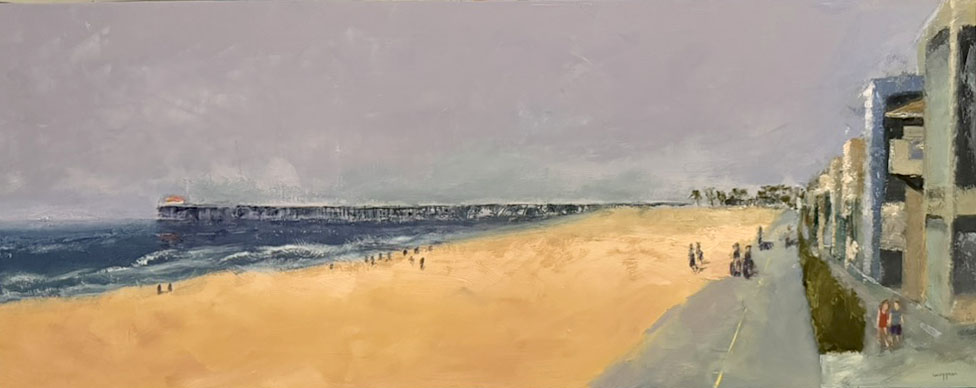
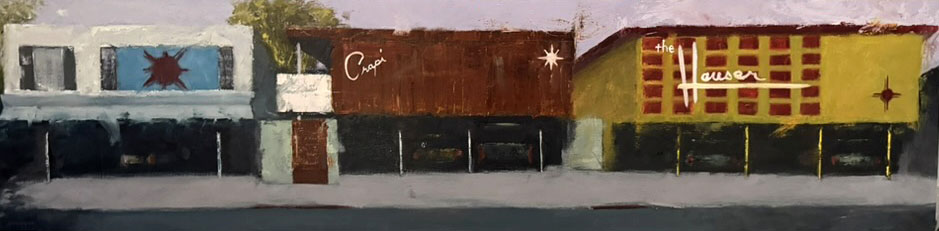
Certainly in his current exhibition, there are a wide range of pieces that could and do evoke memories and stories in the viewer, such as a stunning, panoramic take on LA’s Dingbat architecture; another such dimensional piece depicting a stunning view of the Strand beach walk, sea and sky…

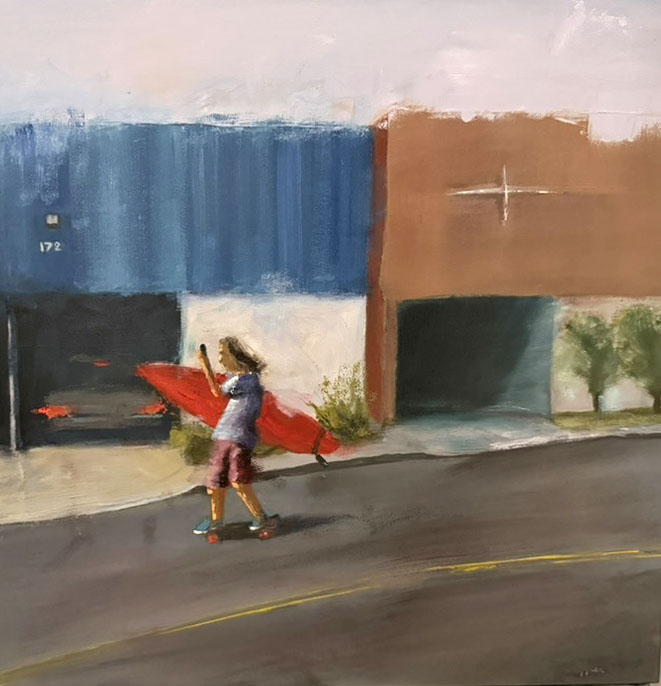
…and even a simple and warmly recognizable image of a surf-board-carrying youth, holding his iPhone as he does what the title suggests, “Texting in Sick” in order to catch a wave.

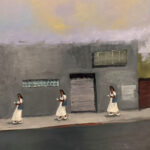
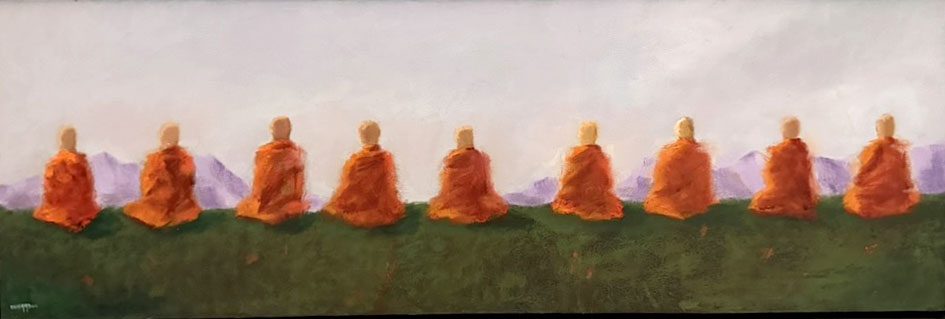
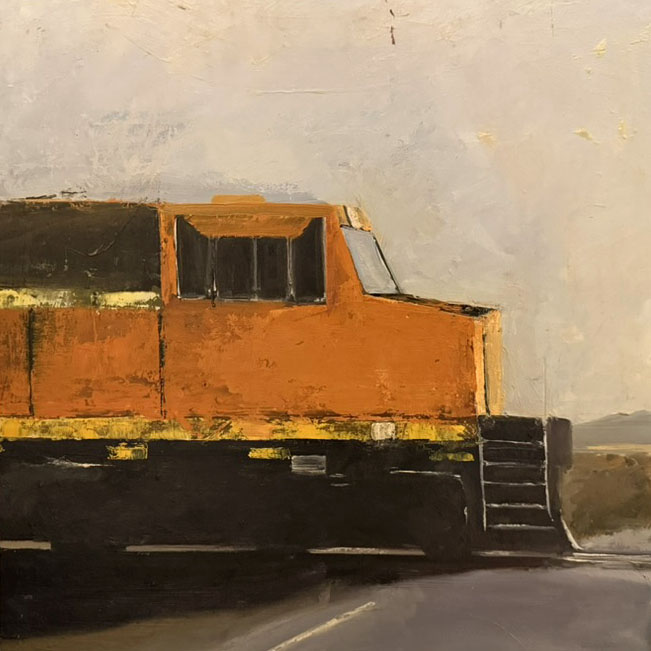
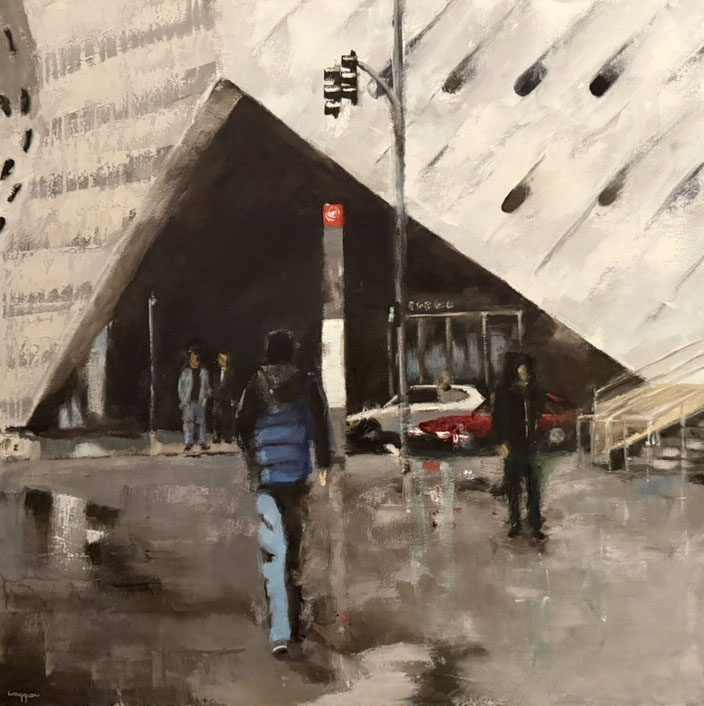
There are orange clad monks in meditation, a dark car on a rain-slick road, a mustard-yellow train engine chugging on, and even a lovely portrait of the Broad Museum in DTLA.

Take a peak at these and other examples of Waggner’s bountiful, beautiful slice-of-life visual stories in Golden Days, now at Diversions Fine Arts Gallery located at 1069 N. Aviation Blvd. in Redondo Beach through October 4th.

  • Genie Davis; photos courtesy of the artist and Davis


Linda Stelling Paints Nature’s Portraits

Linda Stelling doesn’t paint what she sees: instead she paints what she knows, “from my childhood, from my life. Nature first; the garden, the weather, water, atmosphere, seasonal change, environmental shifts…I absorb it from experiencing it and noticing.”

She describes color as a “physical necessity for me: color is my food.” And she washes that down with a deep perception, she says.
“I’m fascinated by how differently we each see and experience the same thing.”

Stelling’s work is also steeped in memory, dreams, and the subconscious, and she lets her work lead her brush. “I respond to how the painting wants me to go. Inspiration for me can come from anywhere. I think I’m constantly collecting things without realizing I’m doing it at all.”

While the artist began making art at a young age, supported by a family that included those who were artists herself, her art creation has shifted and grown over the years. “Style has alway been difficult to identify from the inside. I’m highly responsive to my surroundings and experiences and these leaves residues which stick to my emotional cavity, affecting my choices…but I don’t think I am always aware of that.”

She notes that change is ineveitable for her, because she is always absorbing her art work. “I can’t remain the same. For me it would be horribly boring.”

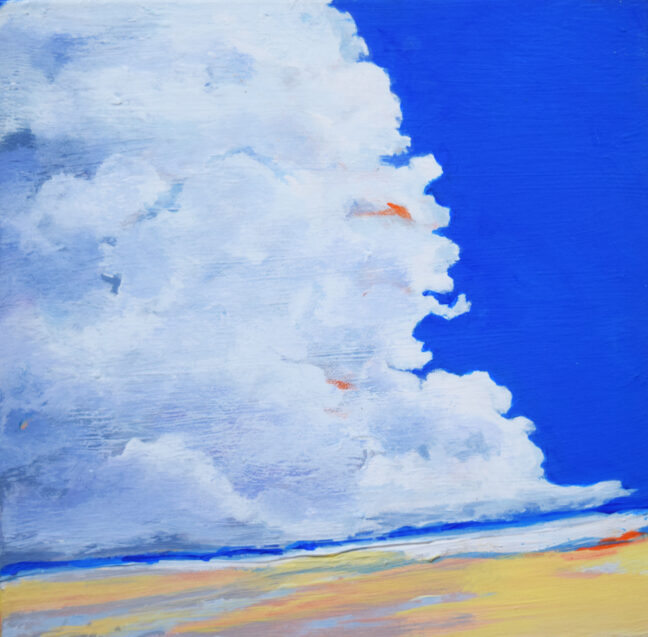
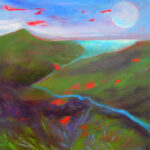
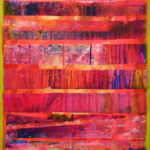
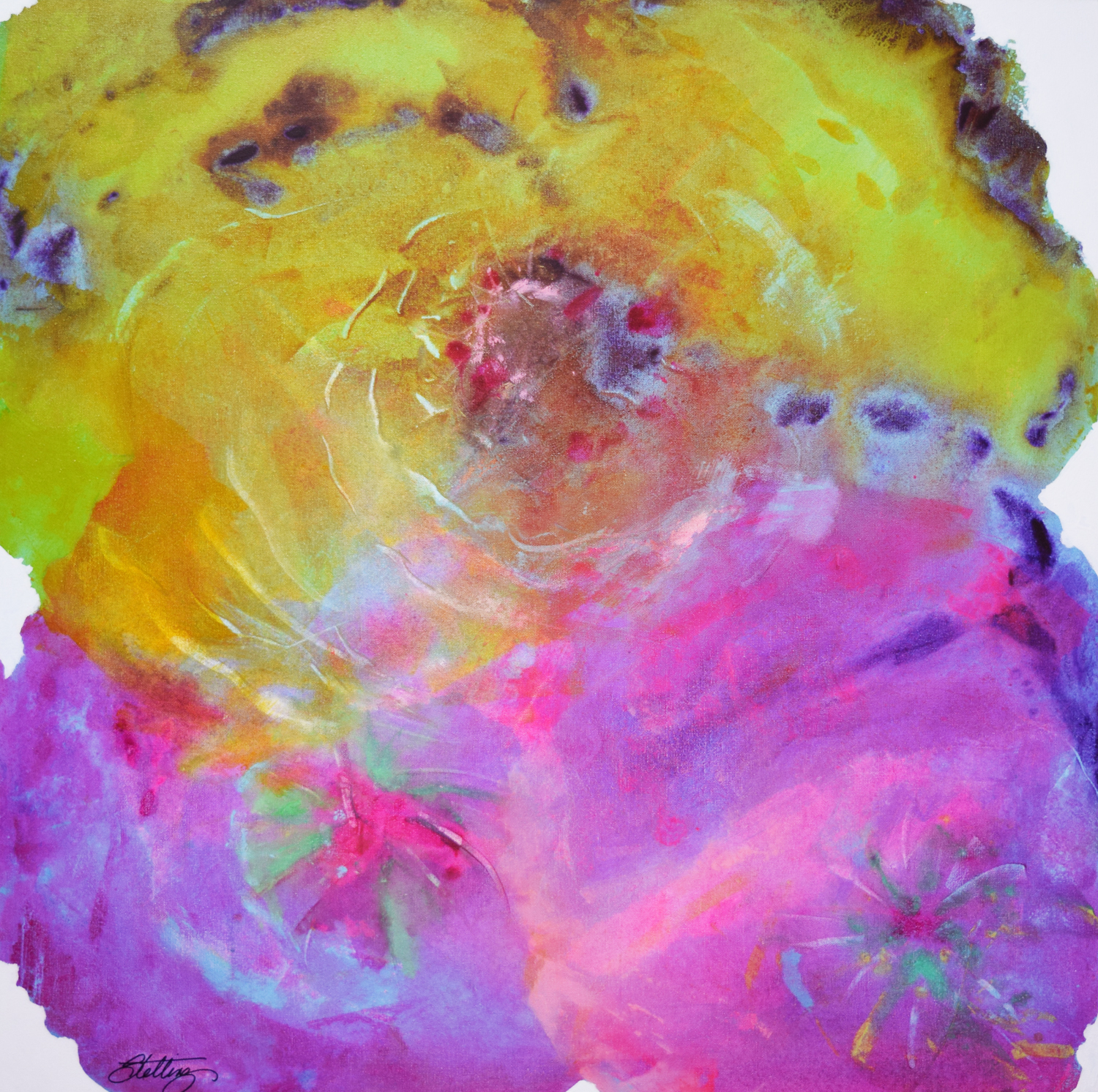
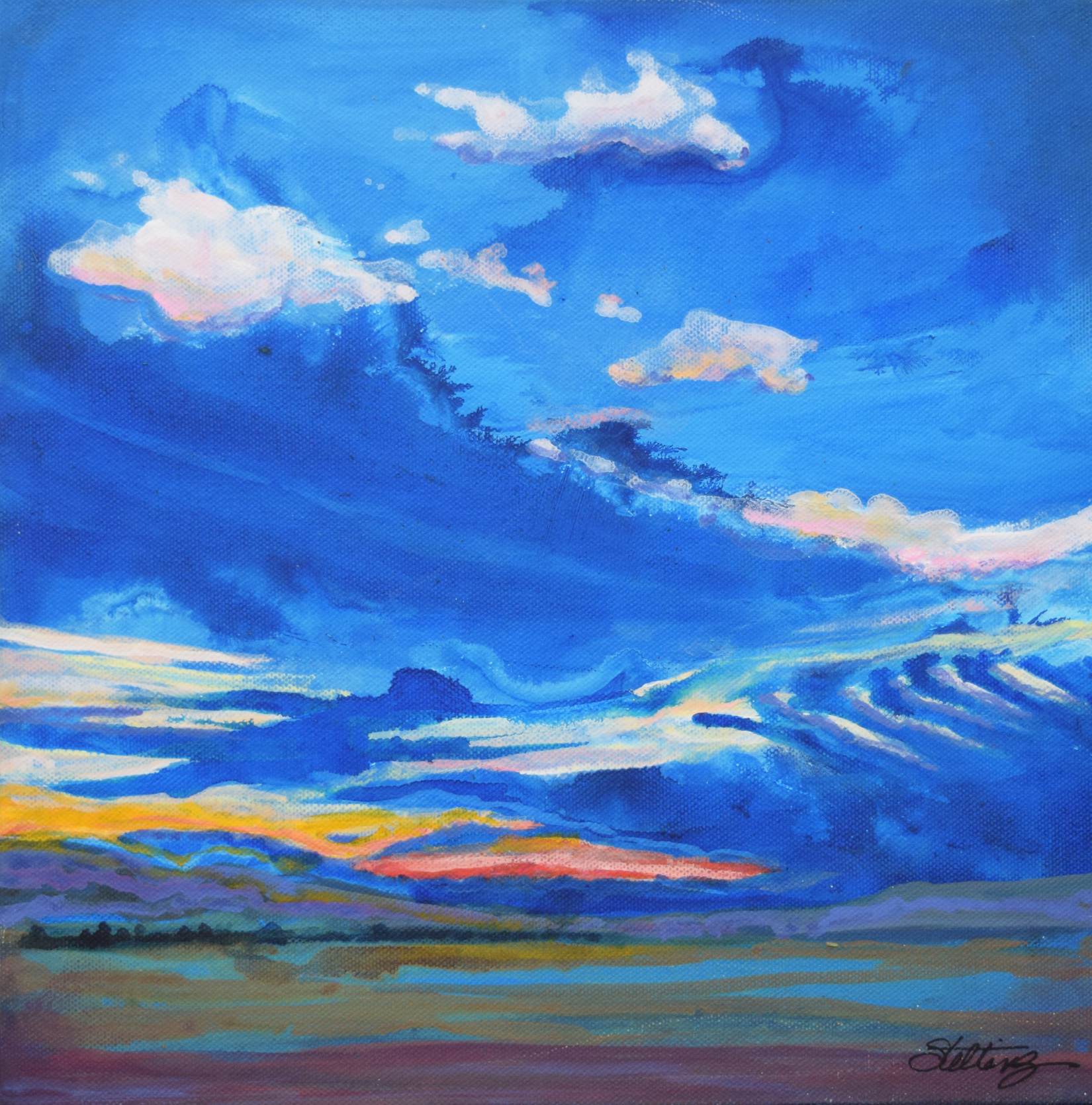
Her art has an alchemic energy, whether she is creating landscapes with full moons or blazing suns, calming ocean waves, or bouquets of clouds. She creates abstract, hot pink and orange striations as seemingly effortlessly as she shapes figurative cloud and seascapes and flowers and a wide range of landscapes and emotional scales between the two.

“Place was a big change for me,” she says. Originally living in Wisconsin, coming to Los Angeles was exciting and challenging for her, she notes.  “Sensitivity and experience gave me a different way of seeing. What changed in me is what changed the work. I think what has changed most is not necessarily how I create but how much more life I bring with me when I go to the studio.”

She adds that becoming a mother changed her “internal compass. Time became more real. Time eventually asks us to choose. Wandering has given me material. I’ve taken detours, changed environments, taught, and kept making work. Time is funny thing.”

Stelling works in a wide range of mediums from painting, weaving, and wearable art, to ceramic sculpture, stained glass, and the creations of large scale installations. Her undergraduate degere in ceramic sculpture helped give her “form and dimensionality,” but painting has become her “most immediate language.”

Currently, the artist has a solo exhibition at Diversions Fine Arts in Manhattan Beach,  and a near-future goal in mind, to “develop a two or multi- women show at a large space.”

In the meantime, nature is her manifestor. “[It] is sensory for me. The changing light, a sudden warm current of air that can change all movement. I notice everything…Sound, smell , vibrations, all produce a reaction and a resonance.”

Color is a big component of that manifestation. ” It’s what drives me, excites me, feeds me on so many levels. My emotional brain goes on overload. Color is how nature reaches me. The studio which is like a giant tree house that provides me with a bird’s eye view of blue water, green trees, pink and red flowers, the bluejays flying by ( stopping for the peanuts I feed them). Color is sustenance for me.”  She attests that “Painting is mark making but color says what marks cannot.”

It is also an invitation from Stelling. “It pulls the viewer toward the painting and then asks them to enter it. Once inside, I’m not asking them to understand anything, just allow a memory or recognition. If I’m lucky, the viewer might leave with a sensation or a pleasure.

Diversions Fine Arts is located at 1069 N. Aviation Blvd. in Manhattan Beach. The exhibition runs through October 4th; there will be a curatorial walk through at 3 p.m. on October 3rd; on October 4th, an artist talk and closing reception will run from 1-3 p.m.

  • Genie Davis; photos provided by the artist and by Diversions Fine Arts