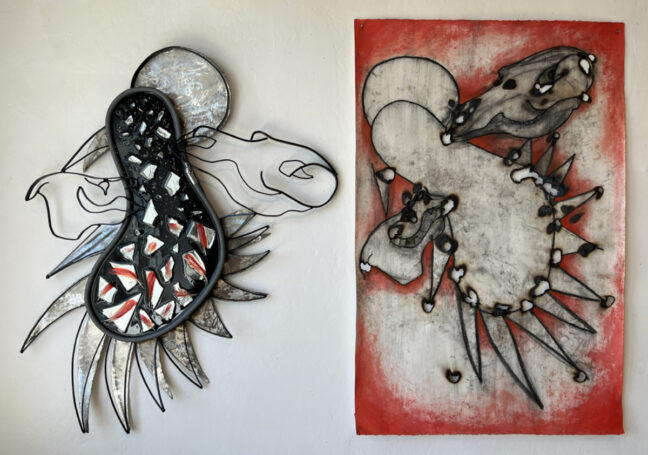
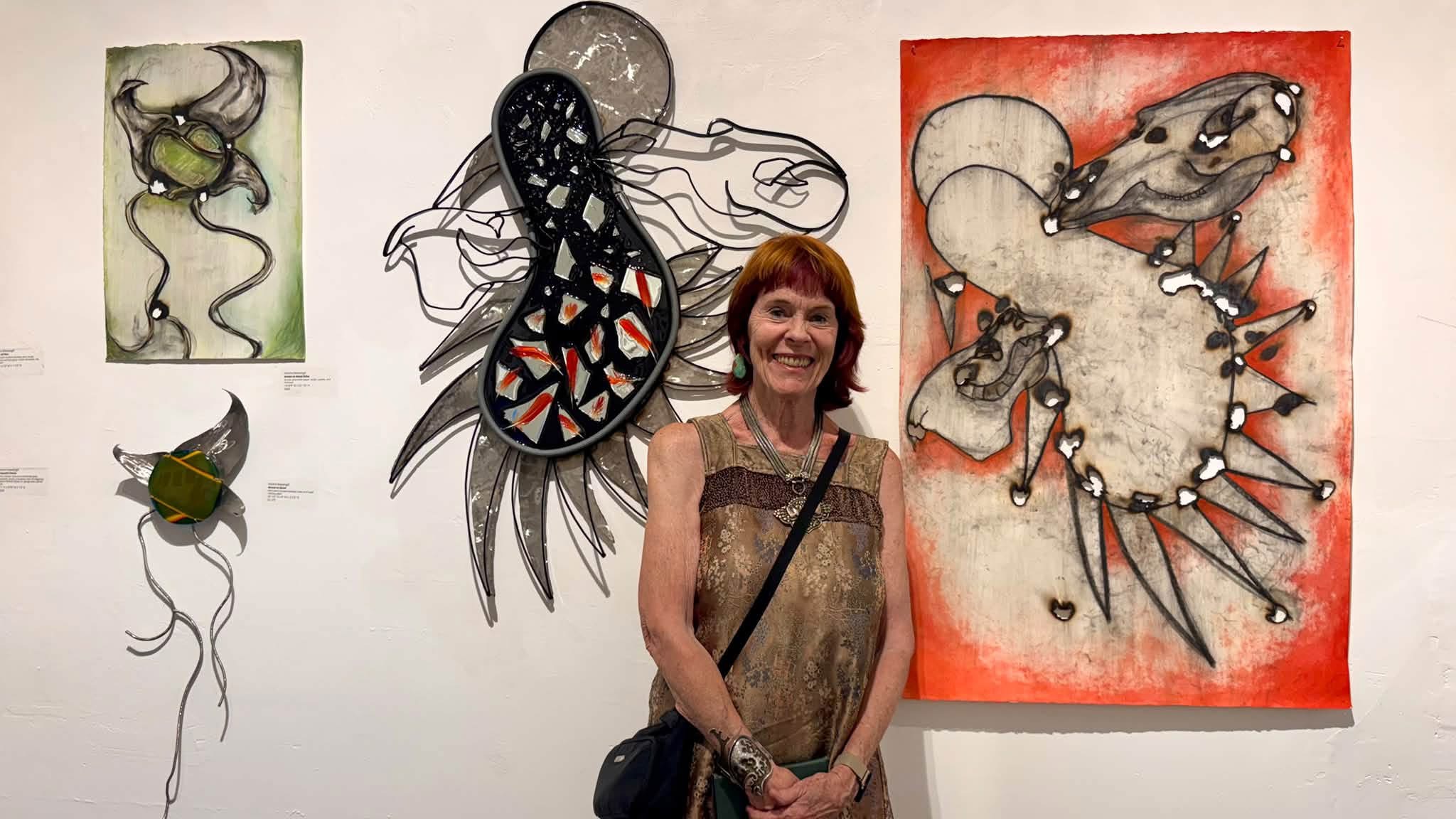
Karena Massengill is both an artist and art activist. Her brilliant sculptural work in mediums from mild steel to fused glass and painted works is infused with the same kind of committment and rich meaning that she puts into the causes she espouses.
According to the artist, “My inspiration has largely been a desire to inspire other people to become a part of the solution and not be a part of the problem of climate change. When people recognize the power of their own voices to be heard and truly make a difference it is very inspiring to me.” She laughs that “Several years ago, a well-known critic (who will remain nameless) looked at my work and said ‘your work is unique and very special. And I have never seen anything like it! Though with your addressing climate change, it will never sell.'” Clearly that assessment has been incorrect.
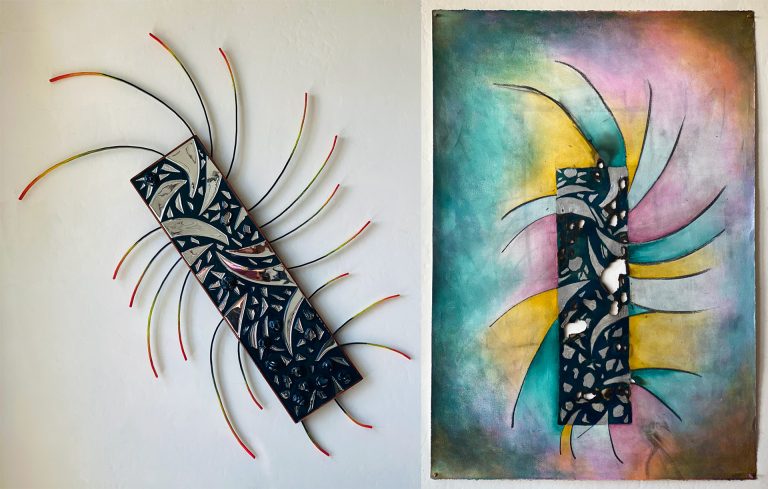
Massengill has been an activist since high school. “Air pollution was a big problem from the TeePee burners at the lumber mills in Ukiah, California. A couple of friends and I wrote letters and pressured the city to do something about this problem. It worked. Another girlfriend and I got the dress code at school changed to allow girls to wear pants to school. It is so inspiring to me when people stand up for what is right,” she relates.
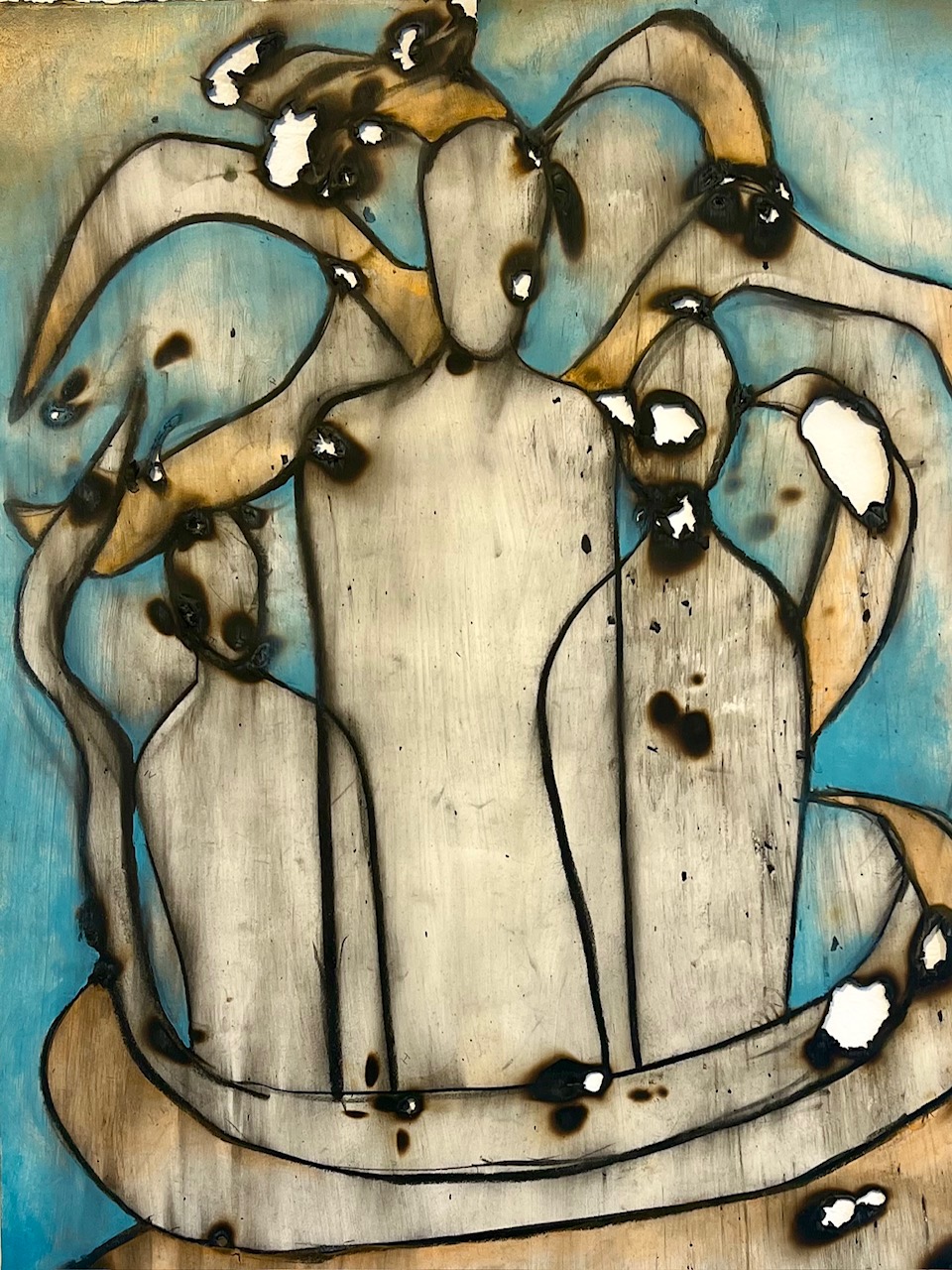
Her work and her political passions have both continued to evolve. Referring to her art, she notes that “I always did lots of life drawing in art school, [and I] traveled around South America painting,landscapes and portraits, and was invited into people‘s homes for food,” she recalls.
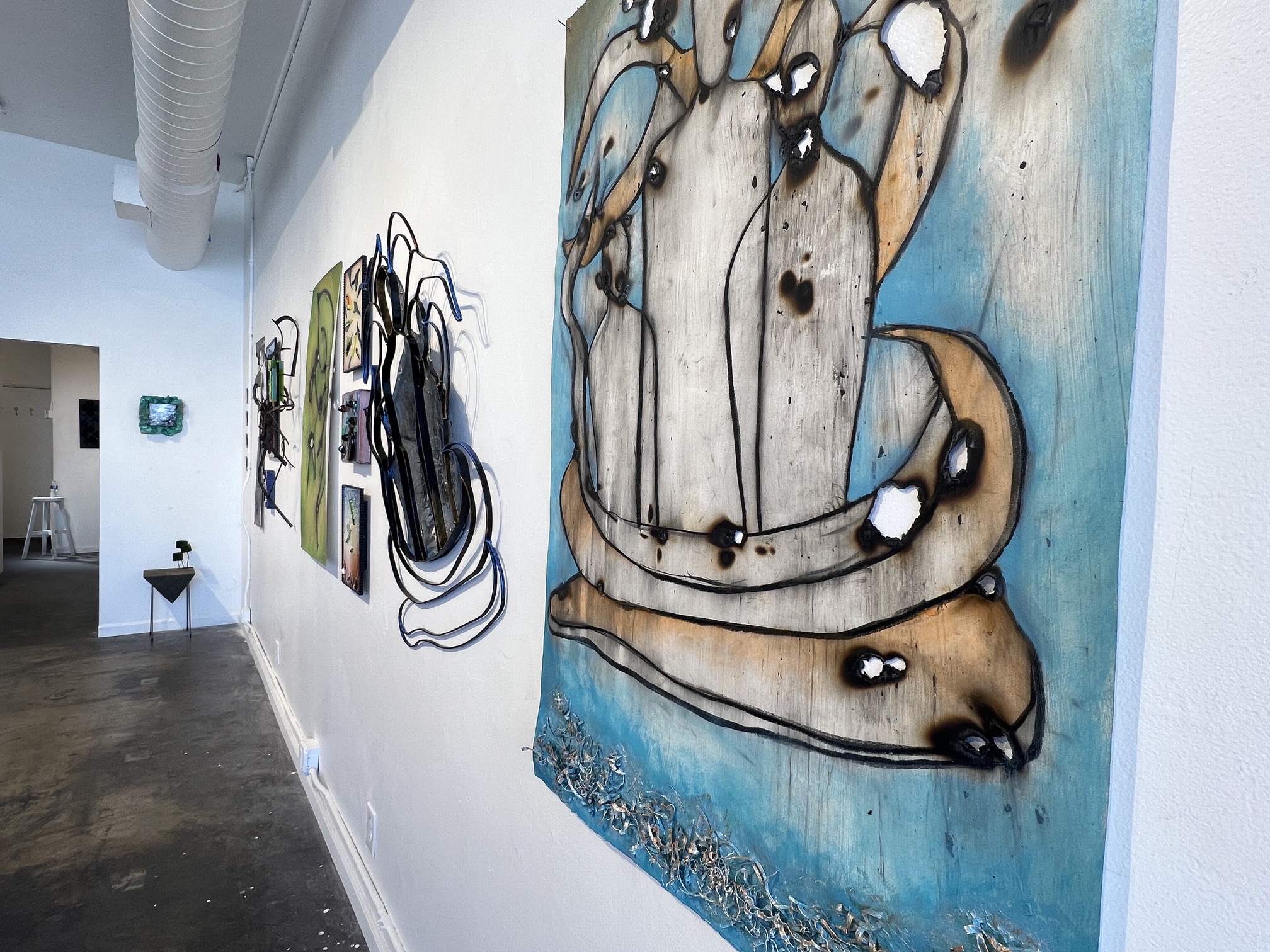
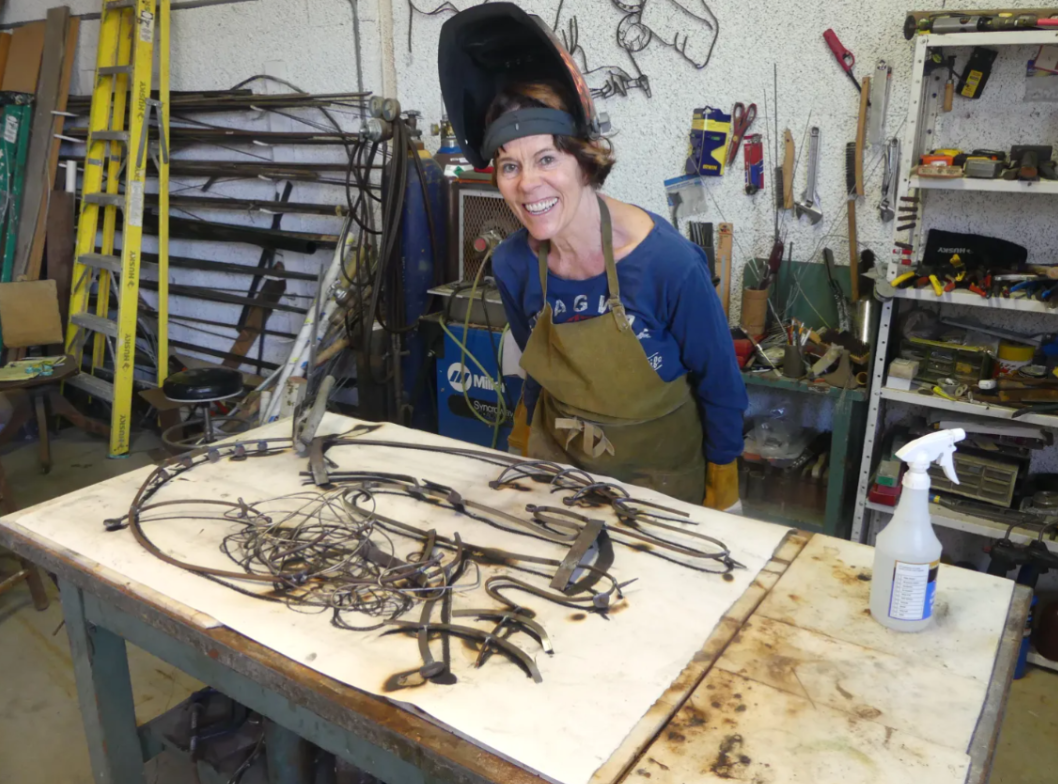
“Metalsmithing took on a passion for me until I realized the scale was too small. I discovered welding and was able to continue with my love for drawing and painting, and incorporating it within my sculptures,” she says.
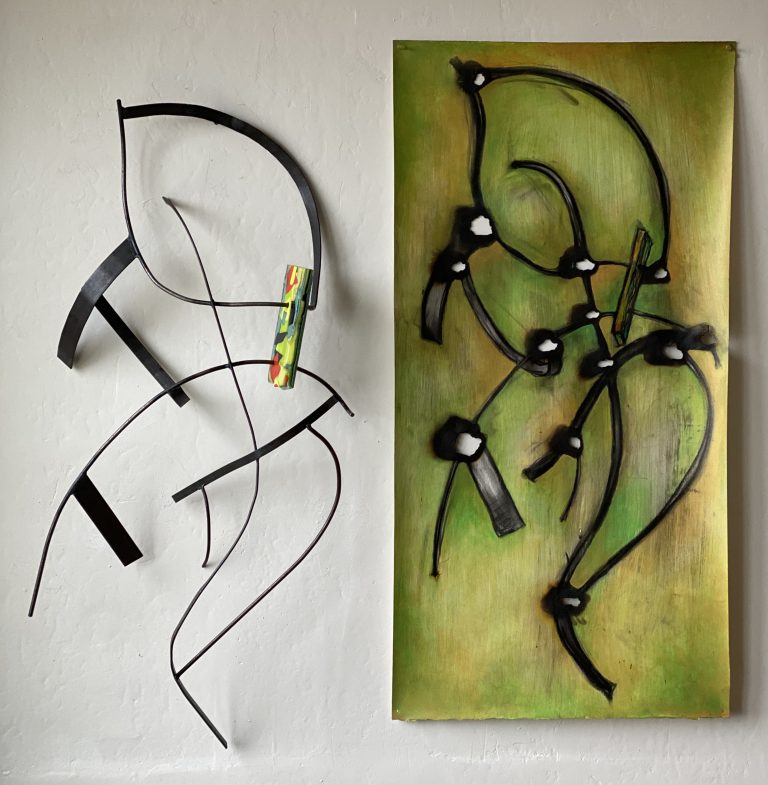
Massengill loves to work with metal, and prefers recycled metals. “[I go] to scrapyards and pick up what I find on the street if it works as well. Because I love to paint and work with color. I incorporate that within the sculptures and [what I call accompanying works to many of my sculptures], Echoes. I also work with found materials and juxtapose materials in unorthodox ways, all while seeking to have a conceptual meaning behind it. Sometimes, as I work,very intuitively, I don’t even understand what the work means until I’ve completed it,” she explains.
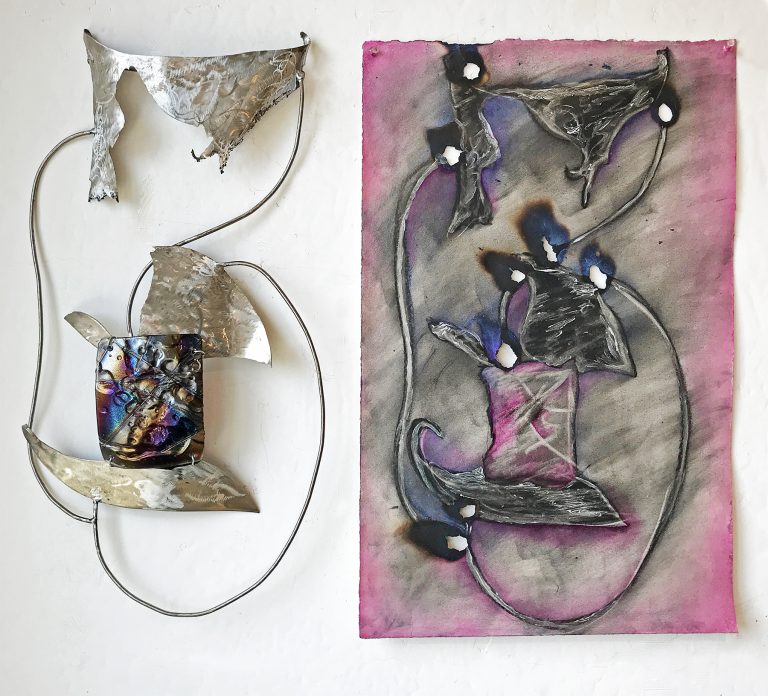
Thematically her current work reflects her passion concerning climate change. “I work with recycled materials to help eliminate landfill as much as possible. I love to create [by] combining unorthodox materials, things that you would normally not see put together into some manifestation of my current passion.”
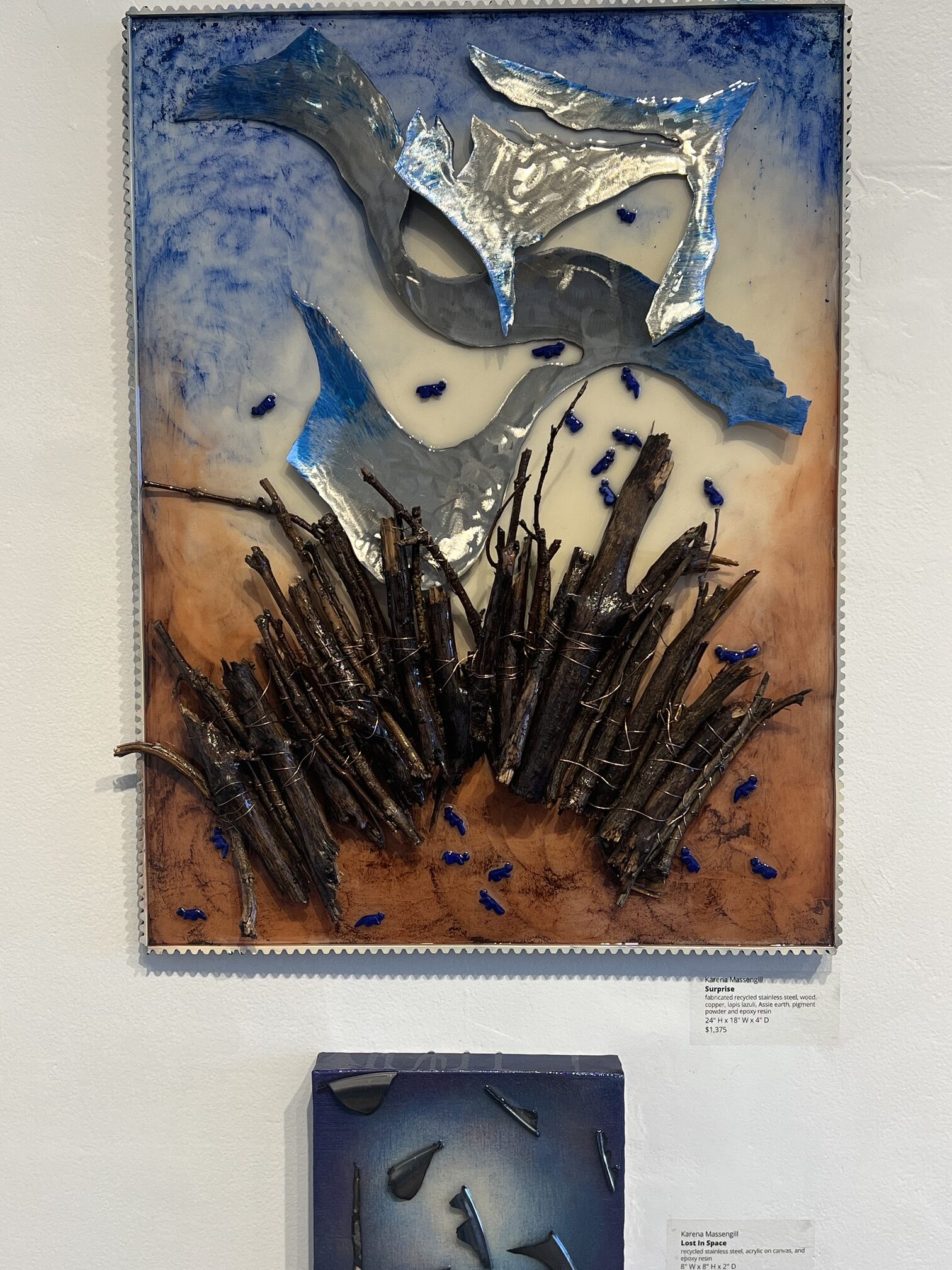
Indeed, she has at times included beads, sea shells, and a wide variety of metal scraps in her work. Her steel working skills are unparalleled, and shape a body of work that is quite unusual.
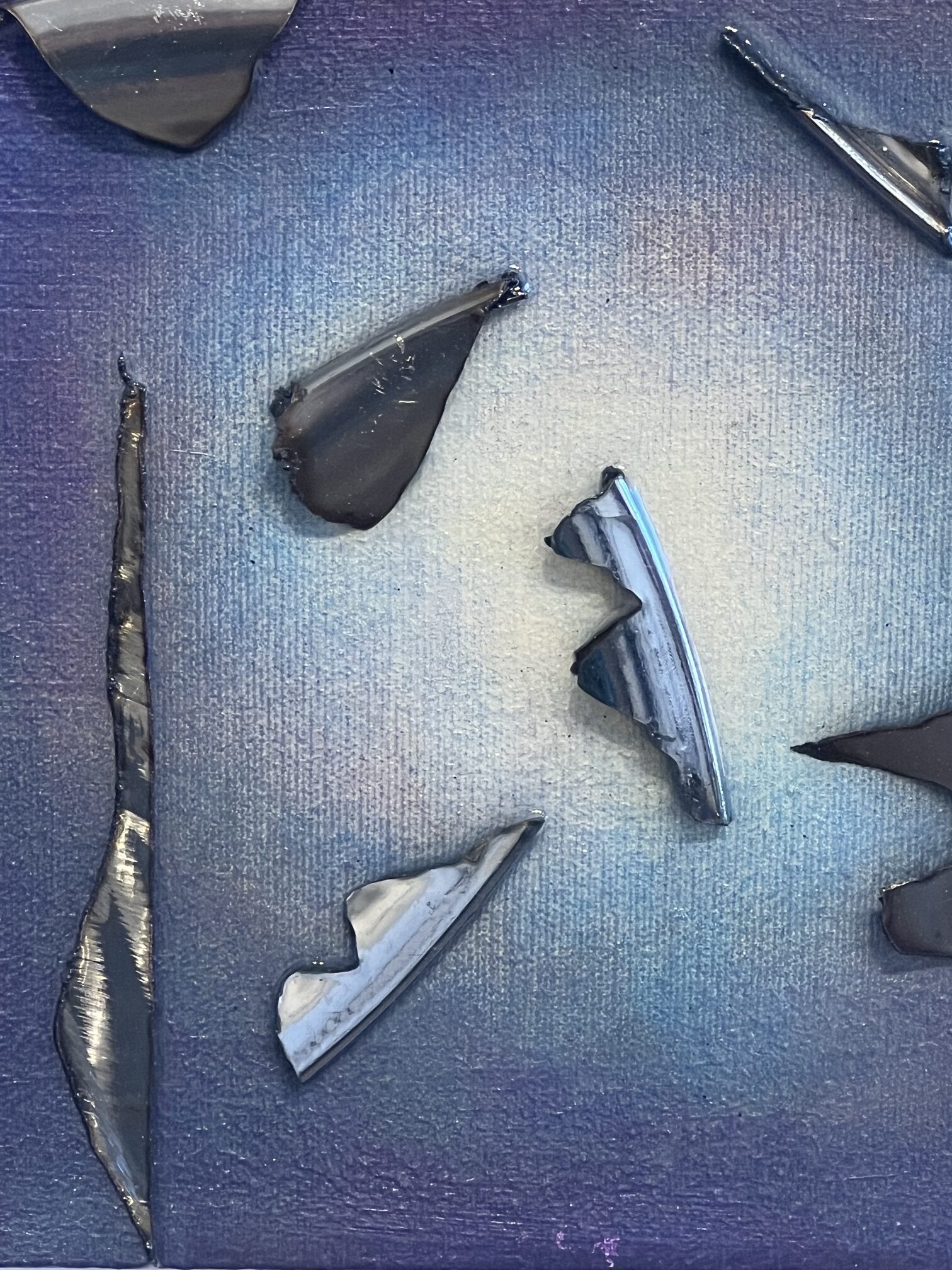
Welding itself is what drew her to work in this medium. “When I immigrated to Canada after graduating with my BFA from Tyler School of Art, Temple University in Philadelphia, there was an ad in the paper offering successful applicants to be trained as welder-fitters to work on the pipeline transporting crude oil down from Alaska through Canada and into the U.S. ,” she relates. “I applied and got the job! I trained along-side convicted felons seeking a better life for themselves. I had to earn their respect along with [honing] my craft. When I worked in traditional metal smithing, I found the scale too confining, so this was a perfect fit for me.”
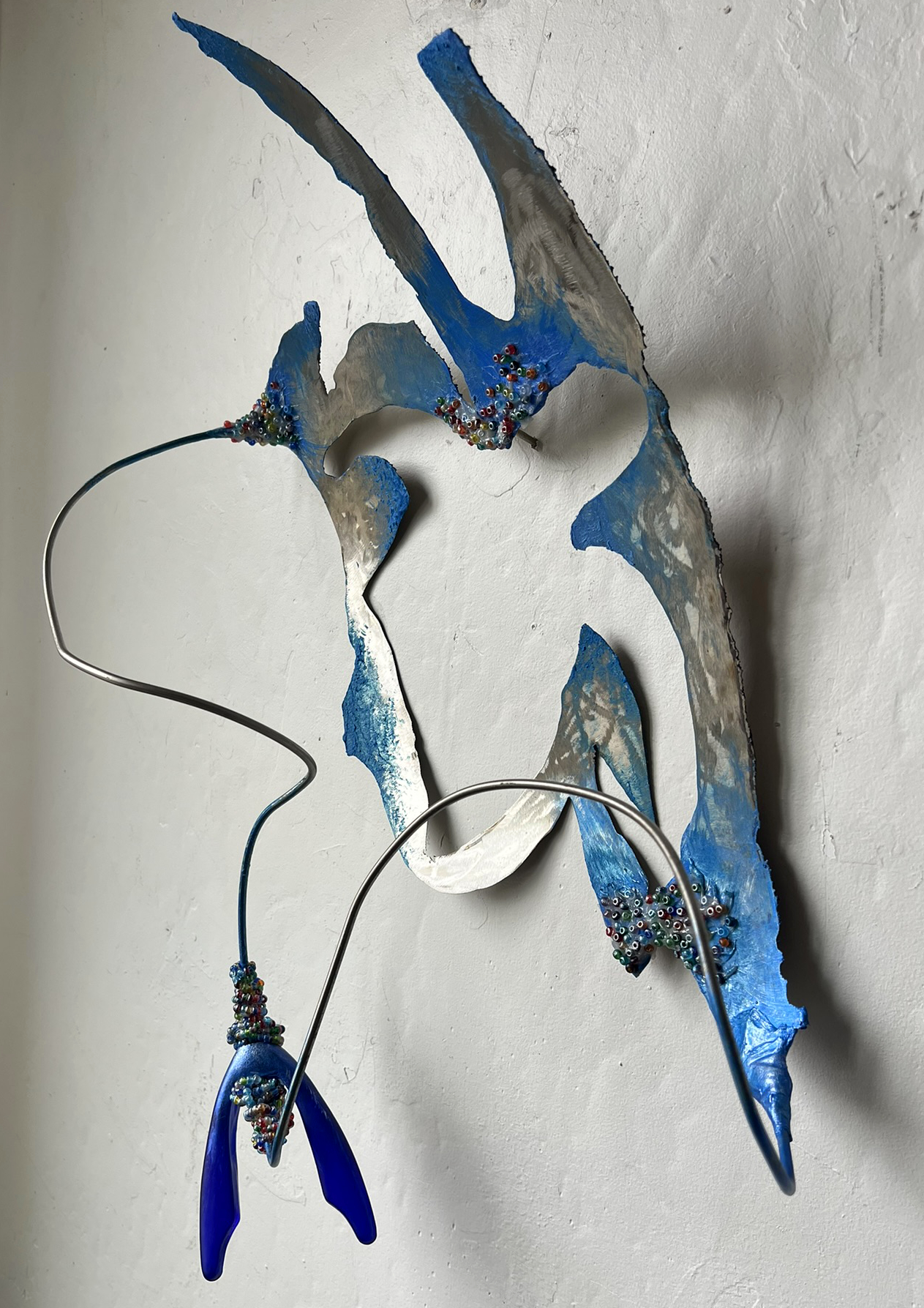
Over the years, her welding skills have enabled her to work on large public commissions in both Canada and the U.S.
While working on the artwork for her public work, Gateway to Downey, in Downey, California, she used the opportunity to celebrate the aeronautical history of Downey, as well as addressing the food and shopping venues in the area. “The overhead cutouts create shadows that promote [the city of] Downey and simultaneously provide a shaded area as was requested by my client for having a meal outside.”
Massengill also created the public art project, “Rosie’s Dog Beach” for the City of Long Beach. She says that this piece “has reminded me of the power possessed by artwork, out in the public eye. It can stimulate conversation and generate ideas, emotional experiences, and even an intangible thought-provoking impact. I captured the joy of dogs playing on the beach and in the ocean,” she tells us.
The artist has been busy recently, with social exhibitions first at the Palos Verdes Arts Center and currently at Diversions Fines Arts Gallery. Asked what’s next, she reveals that she is looking forward to focusing on work in her studio without other distractions.
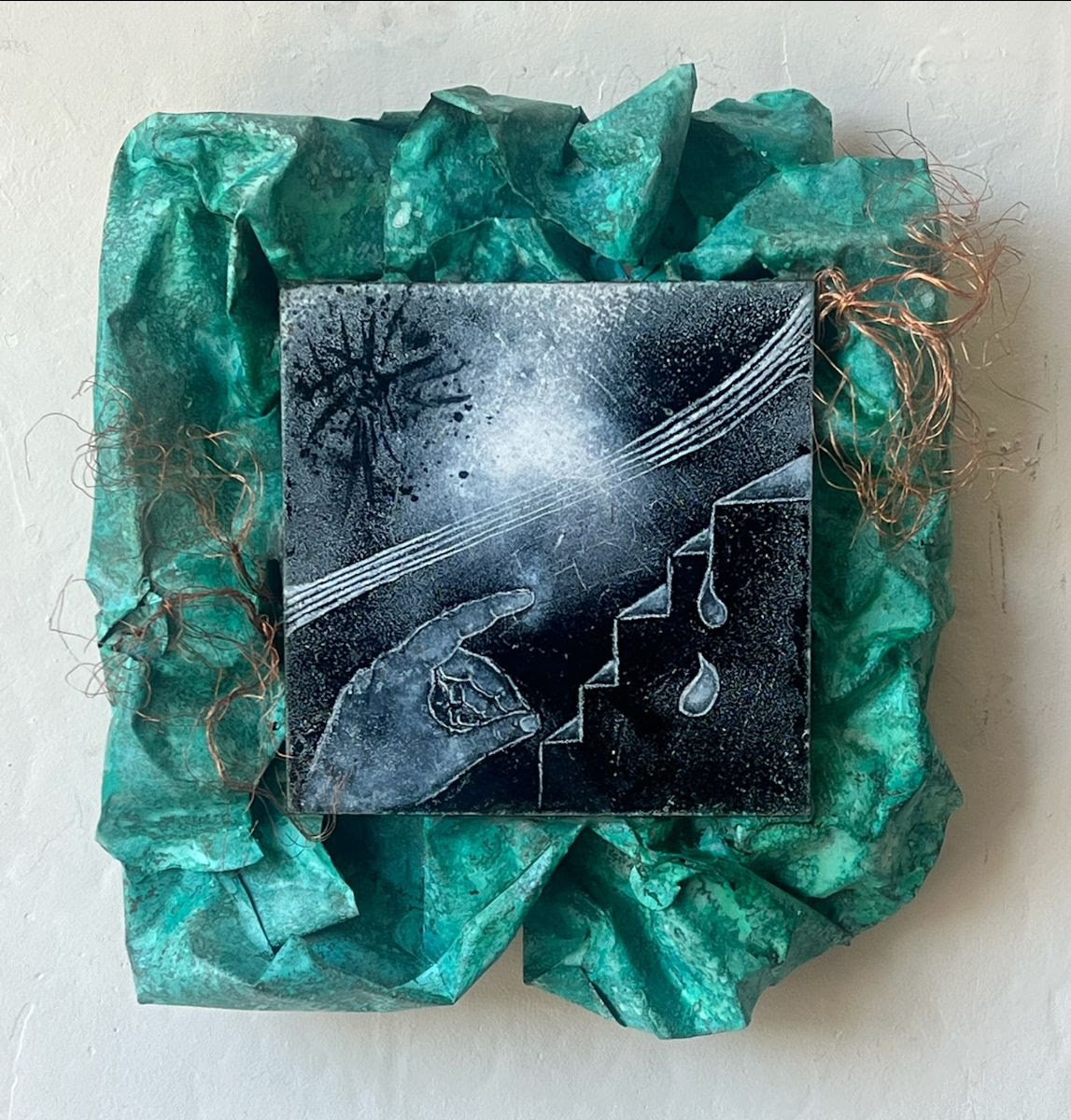
“I get so excited when an idea hits me and nothing else seems important until I can get into the thick of it! I love to make things, but I also love to feel like what I’m doing has meaning and is potentially important,” she says.
She welcomes other opportunities to show her work and the “stimulation of conversation…When people look at my work there’s an intimacy when they feel something and are moved to express their own experience of it.”
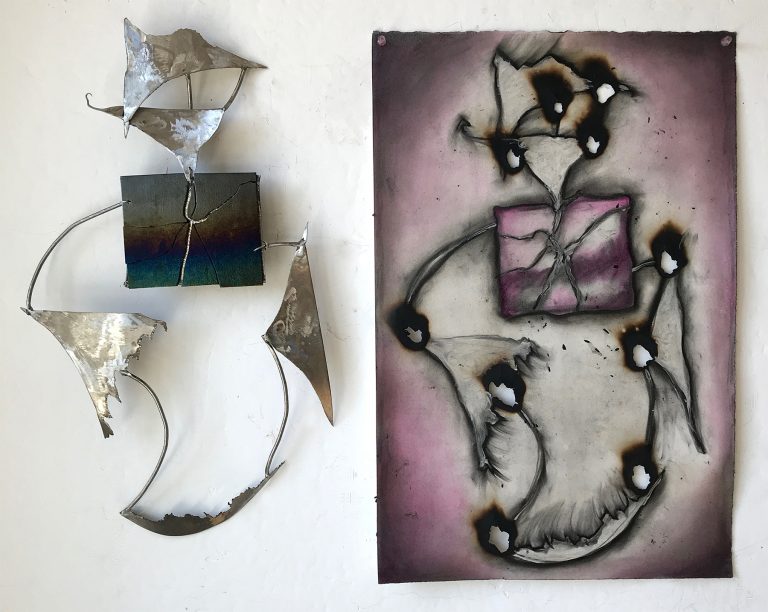
She says that what matters most to her is the reaction of her viewers, when people “see my work either emotionally, intellectually, or viscerally. I love it when they see things that I didn’t know are buried beneath– and it affects the way I see my work from then on,” she shares. She adds that to her, “One of the most powerful things about abstract art is that it gives people permission and encouragement to explore the work personally as they have their own filters impacting this experience of it.”
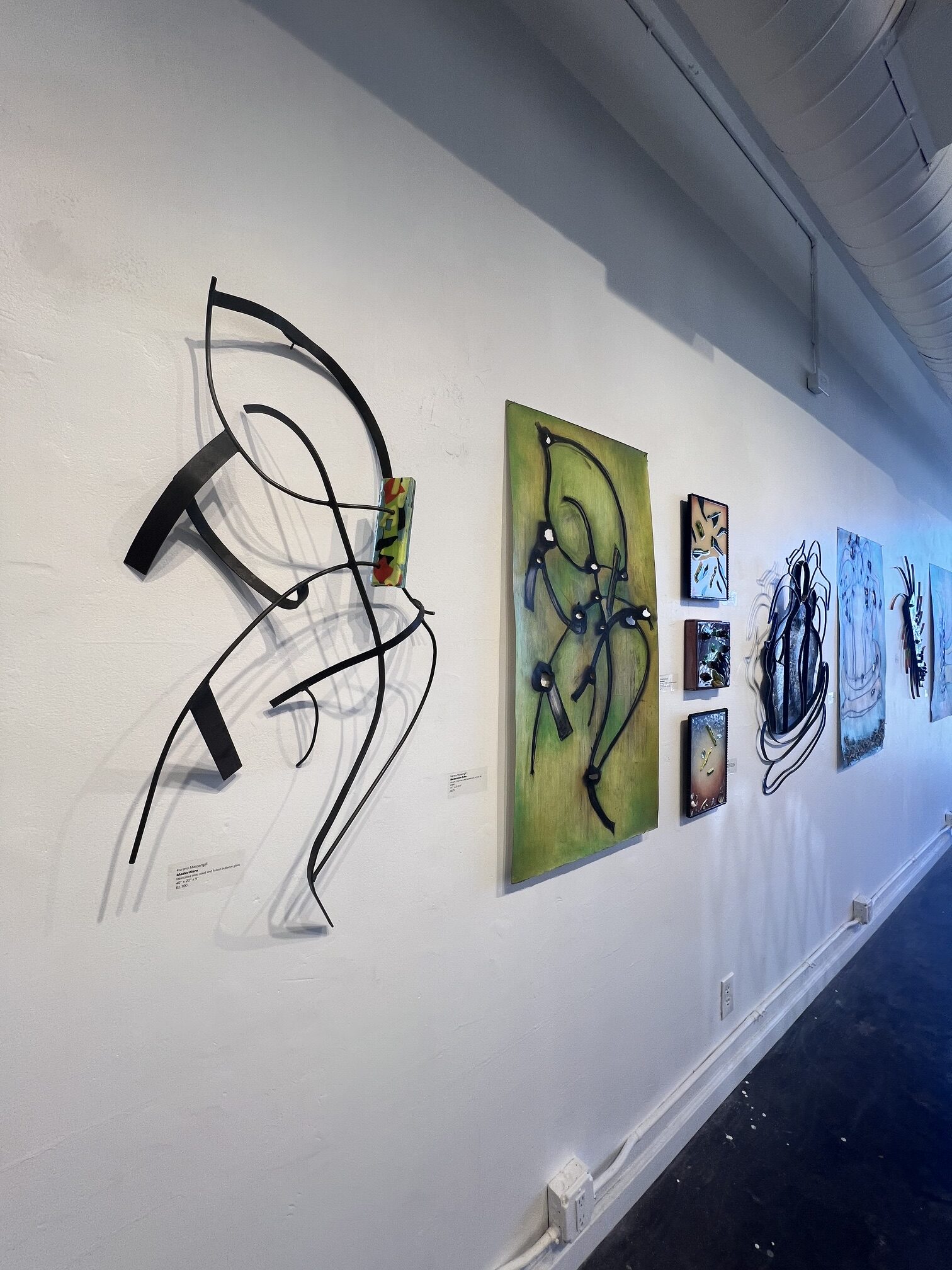
Visit Karena’s multifacted and lovely work at Diversions Fine Arts, 1069 N. Aviation Blvd. in Manhattan Beach: open house and curatorial walkthrough 10/24 1-4; artist’s talk and closing reception 11/1; or stop by during regular gallery hours for a visit.