Steel Art, Committed Heart: The Activism and Art of Karena Massengill

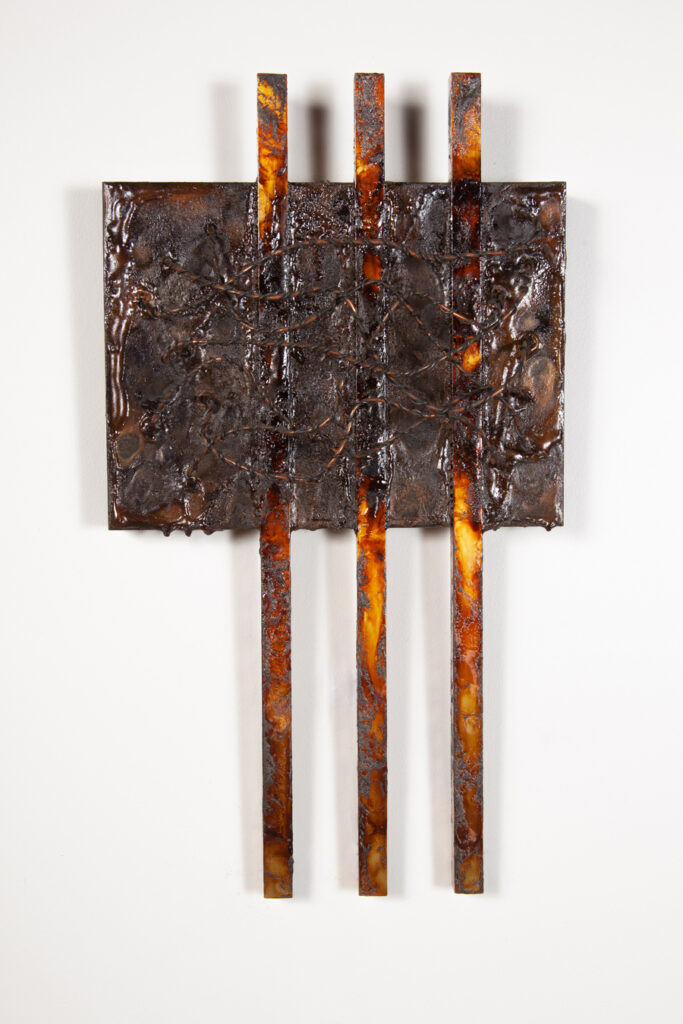
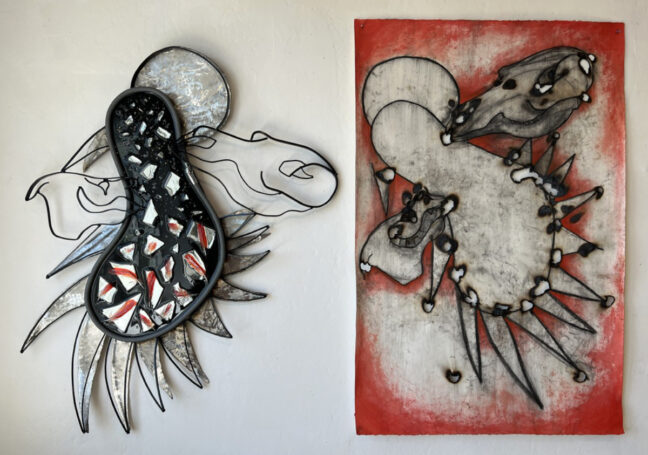
Karena Massengill is both an artist and art activist. Her brilliant sculptural work in mediums from mild steel to fused glass and painted works is infused with the same kind of committment and rich meaning that she puts into the causes she espouses.
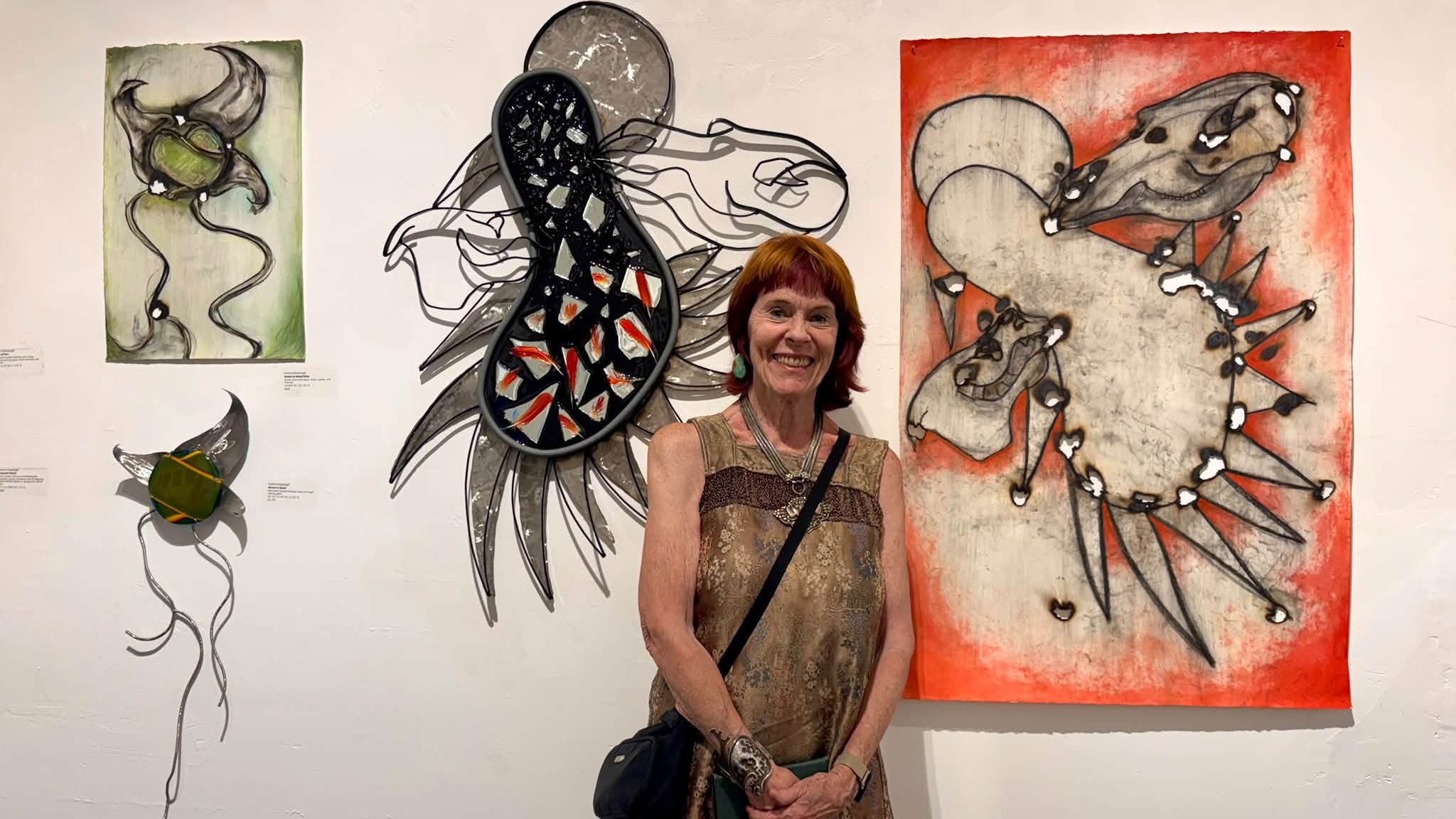
According to the artist, “My inspiration has largely been a desire to inspire other people to become a part of the solution and not be a part of the problem of climate change. When people recognize the power of their own voices to be heard and truly make a difference it is very inspiring to me.” She laughs that “Several years ago, a well-known critic (who will remain nameless) looked at my work and said ‘your work is unique and very special. And I have never seen anything like it! Though with your addressing climate change, it will never sell.'” Clearly that assessment has been incorrect.
Massengill has been an activist since high school. “Air pollution was a big problem from the TeePee burners at the lumber mills in Ukiah, California. A couple of friends and I wrote letters and pressured the city to do something about this problem. It worked. Another girlfriend and I got the dress code at school changed to allow girls to wear pants to school. It is so inspiring to me when people stand up for what is right,” she relates.
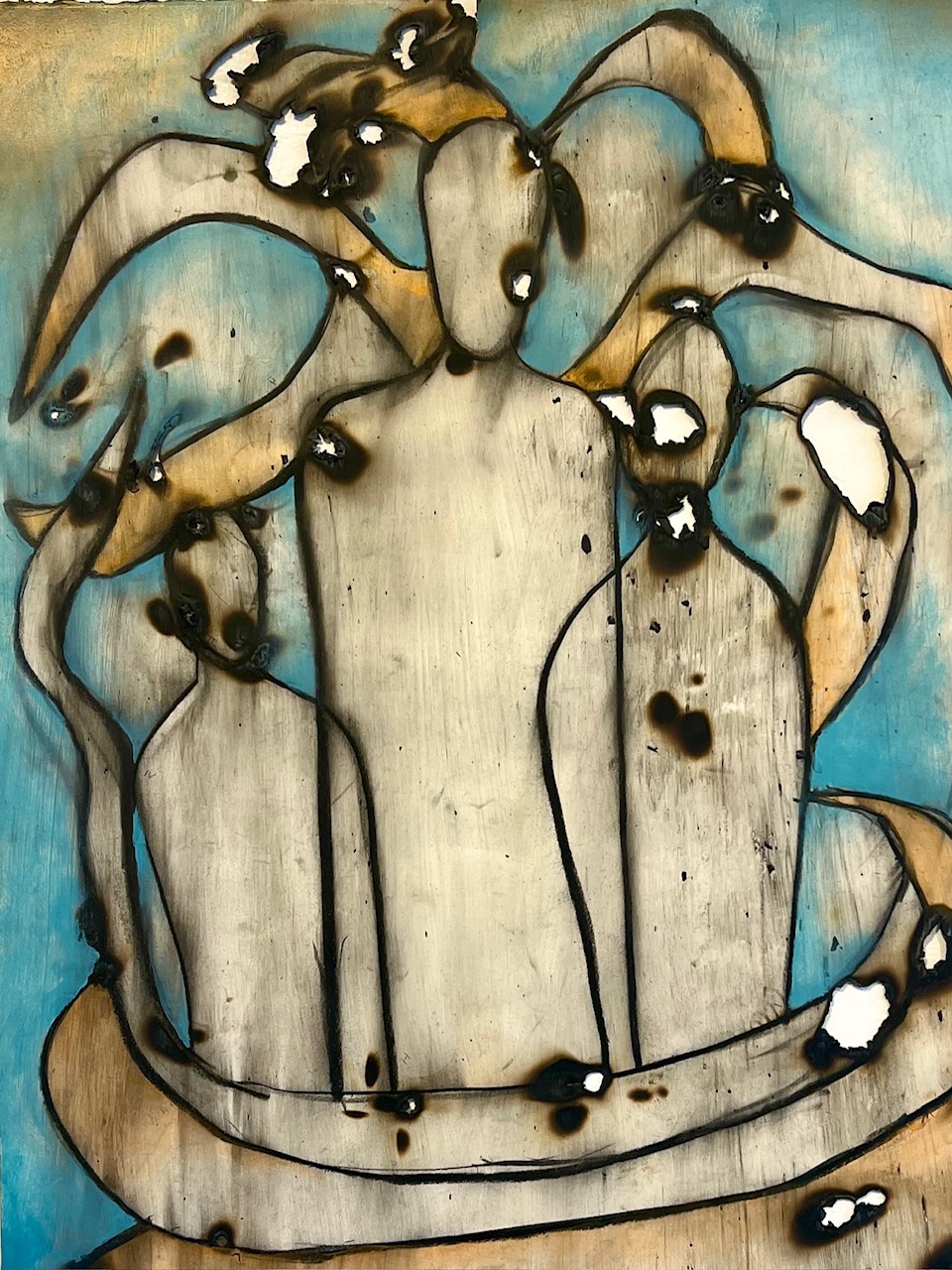
Her work and her political passions have both continued to evolve. Referring to her art, she notes that “I always did lots of life drawing in art school, [and I] traveled around South America painting,landscapes and portraits, and was invited into people‘s homes for food,” she recalls.
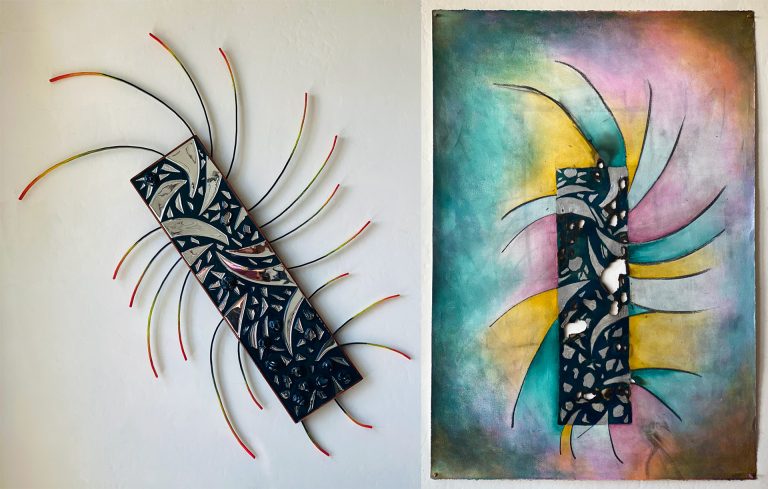
“Metalsmithing took on a passion for me until I realized the scale was too small. I discovered welding and was able to continue with my love for drawing and painting, and incorporating it within my sculptures,” she says.
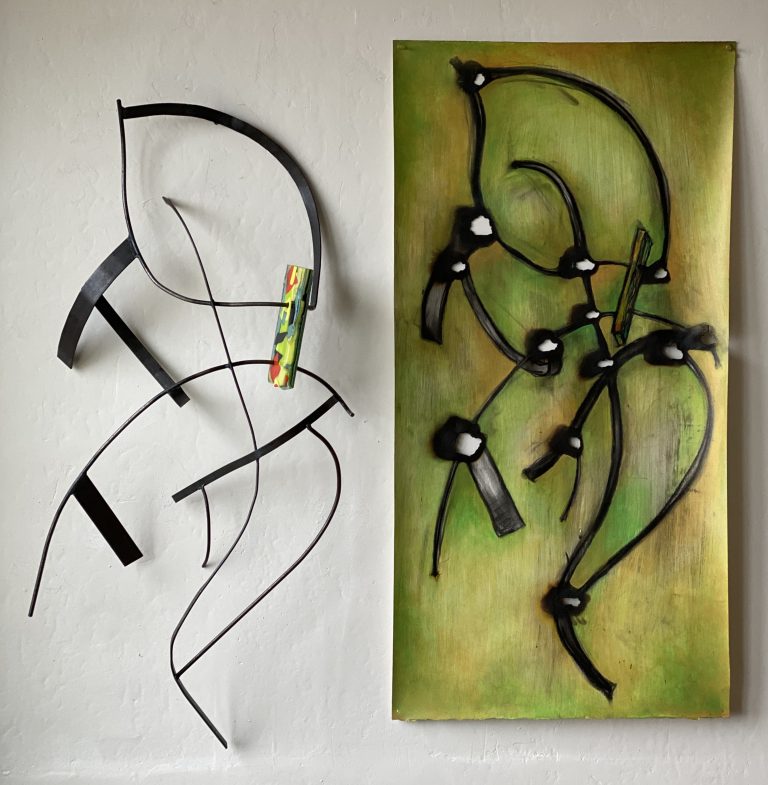
Massengill loves to work with metal, and prefers recycled metals. “[I go] to scrapyards and pick up what I find on the street if it works as well. Because I love to paint and work with color. I incorporate that within the sculptures and [what I call accompanying works to many of my sculptures], Echoes. I also work with found materials and juxtapose materials in unorthodox ways, all while seeking to have a conceptual meaning behind it. Sometimes, as I work,very intuitively, I don’t even understand what the work means until I’ve completed it,” she explains.
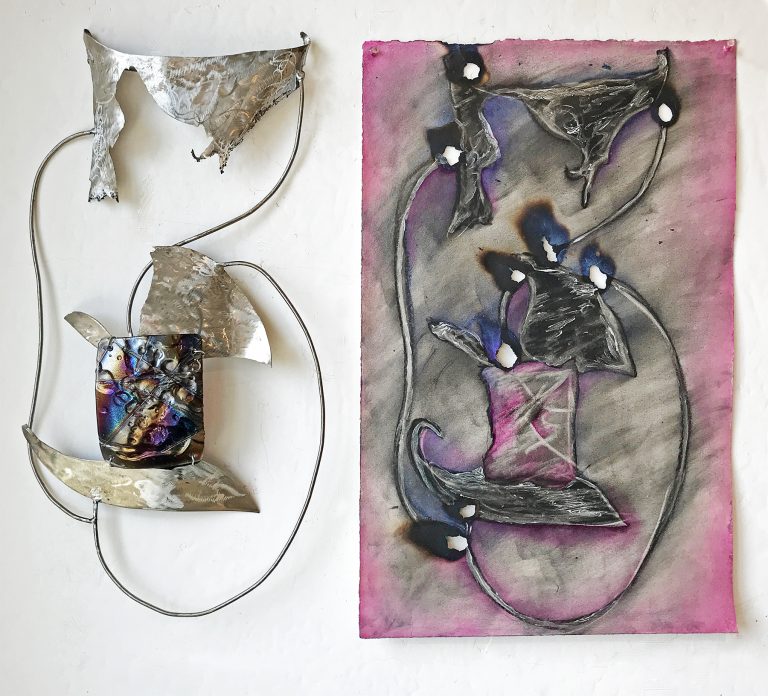
Thematically her current work reflects her passion concerning climate change. “I work with recycled materials to help eliminate landfill as much as possible. I love to create [by] combining unorthodox materials, things that you would normally not see put together into some manifestation of my current passion.”
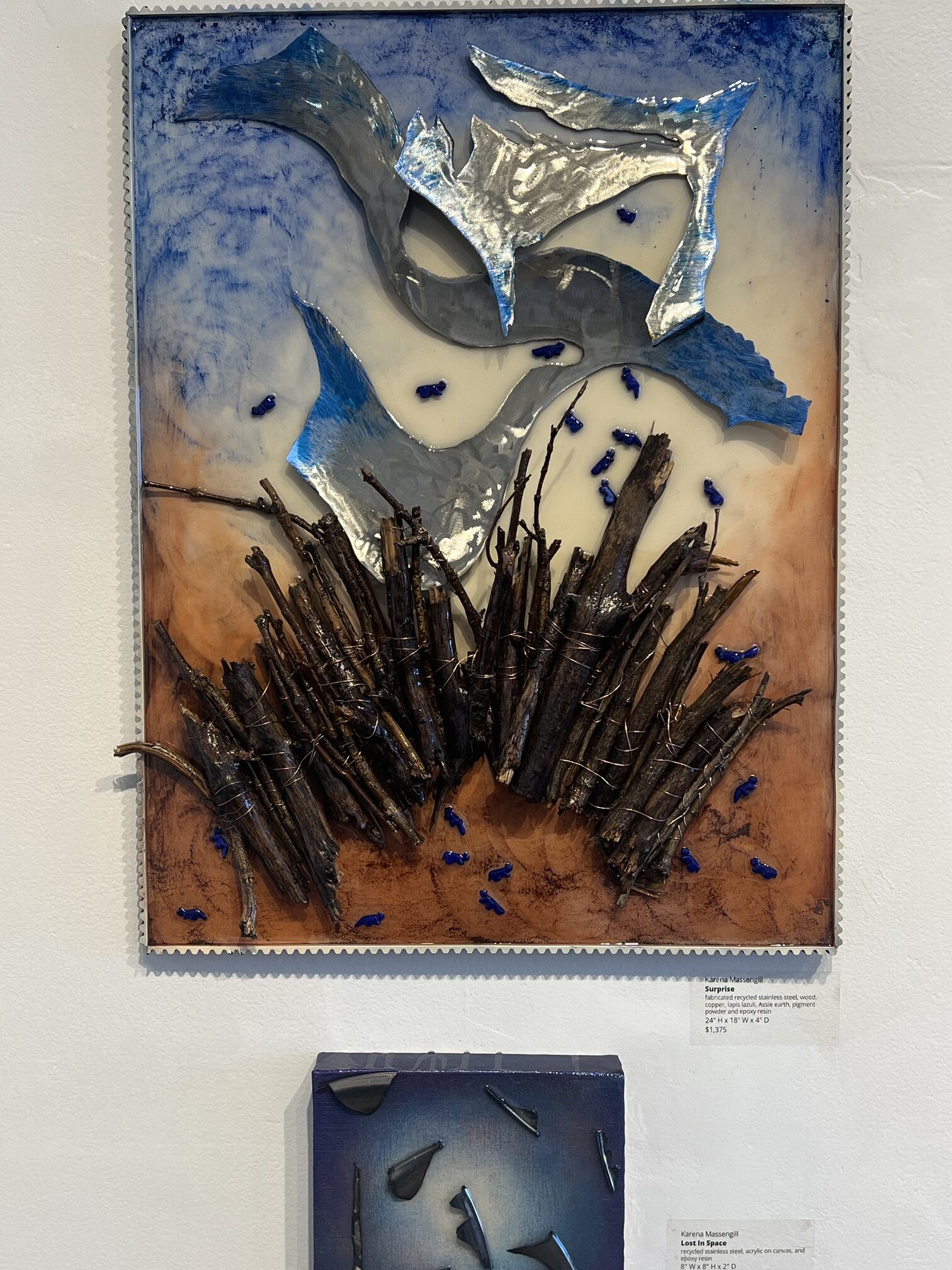
Indeed, she has at times included beads, sea shells, and a wide variety of metal scraps in her work.  Her steel working skills are unparalleled, and shape a body of work that is quite unusual.
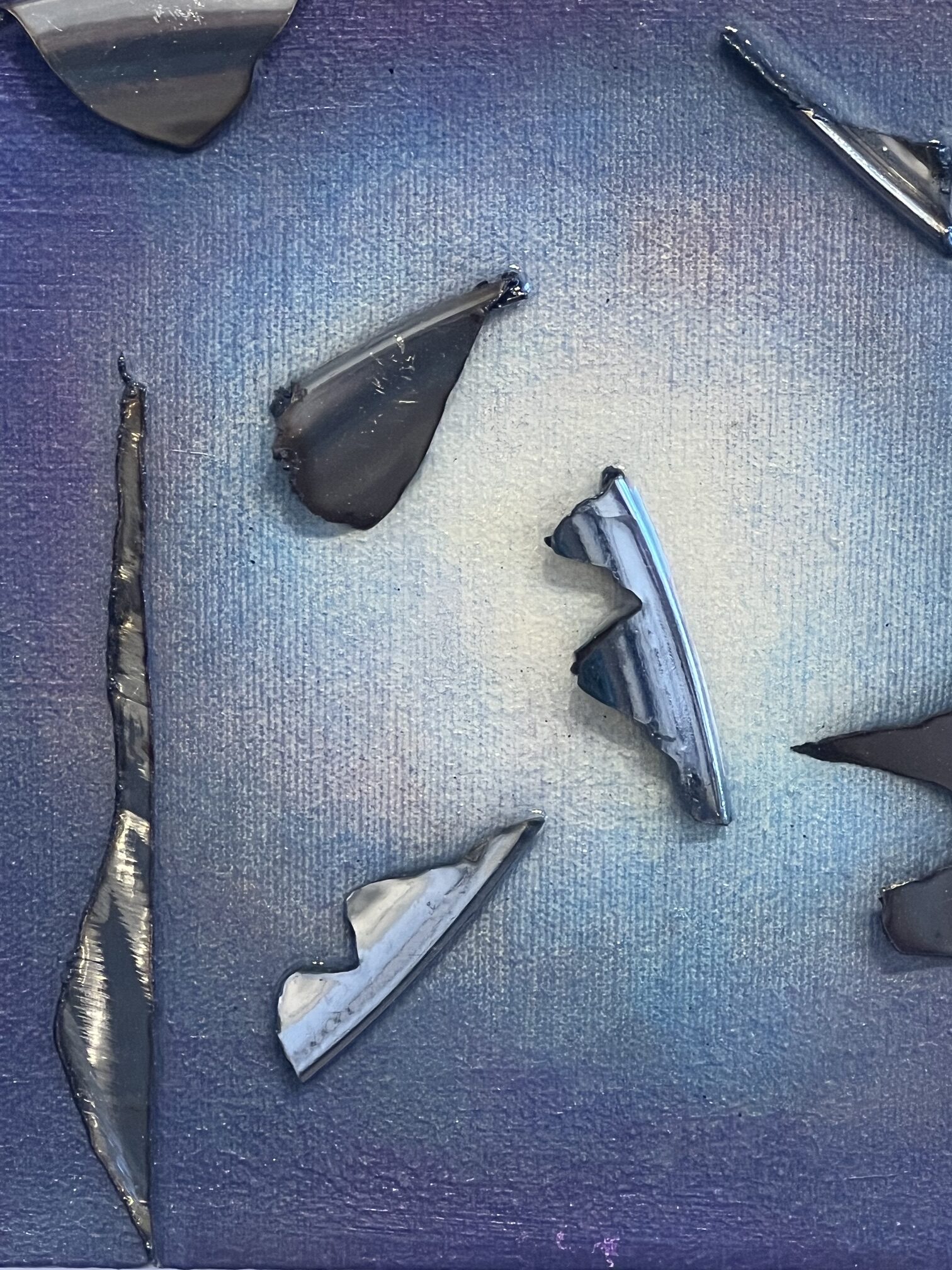
Welding itself is what drew her to work in this medium. “When I immigrated to Canada after graduating with my BFA from Tyler School of Art, Temple University in Philadelphia, there was an ad in the paper offering successful applicants to be trained as welder-fitters to work on the pipeline transporting crude oil down from Alaska through Canada and into the U.S. ,” she  relates. “I applied and got the job! I trained along-side convicted felons seeking a better life for themselves. I had to earn their respect along with [honing] my craft. When I worked in traditional metal smithing, I found the scale too confining, so this was a perfect fit for me.”
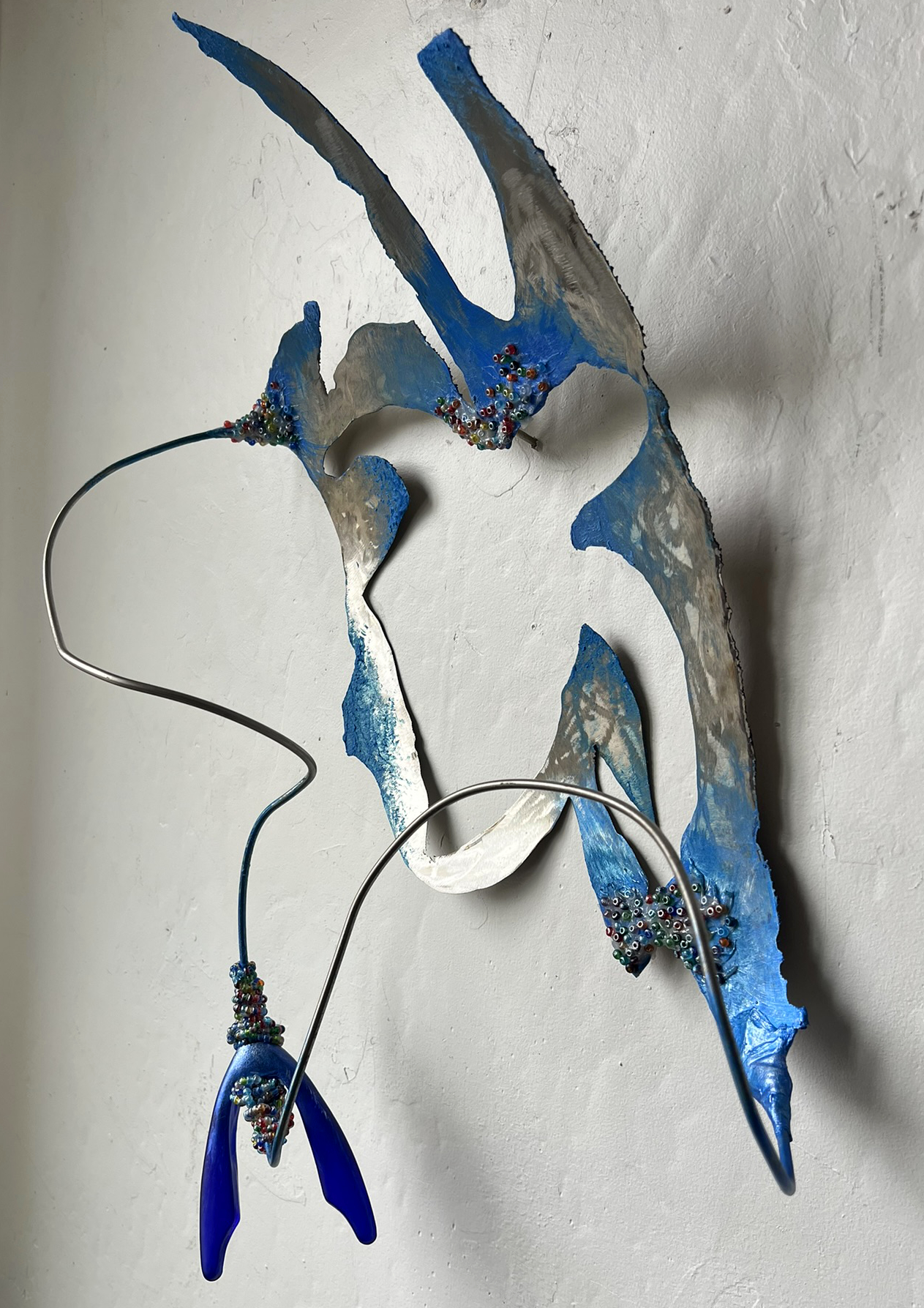
 

Over the years, her welding skills have enabled her to work on large public commissions in both Canada and the U.S.

While working on the artwork for her public work, Gateway to Downey, in Downey, California, she used the opportunity to celebrate the aeronautical history of Downey, as well as addressing the food and shopping venues in the area. “The overhead cutouts create shadows that promote [the city of] Downey and simultaneously provide a shaded area as was requested by my client for having a meal outside.”
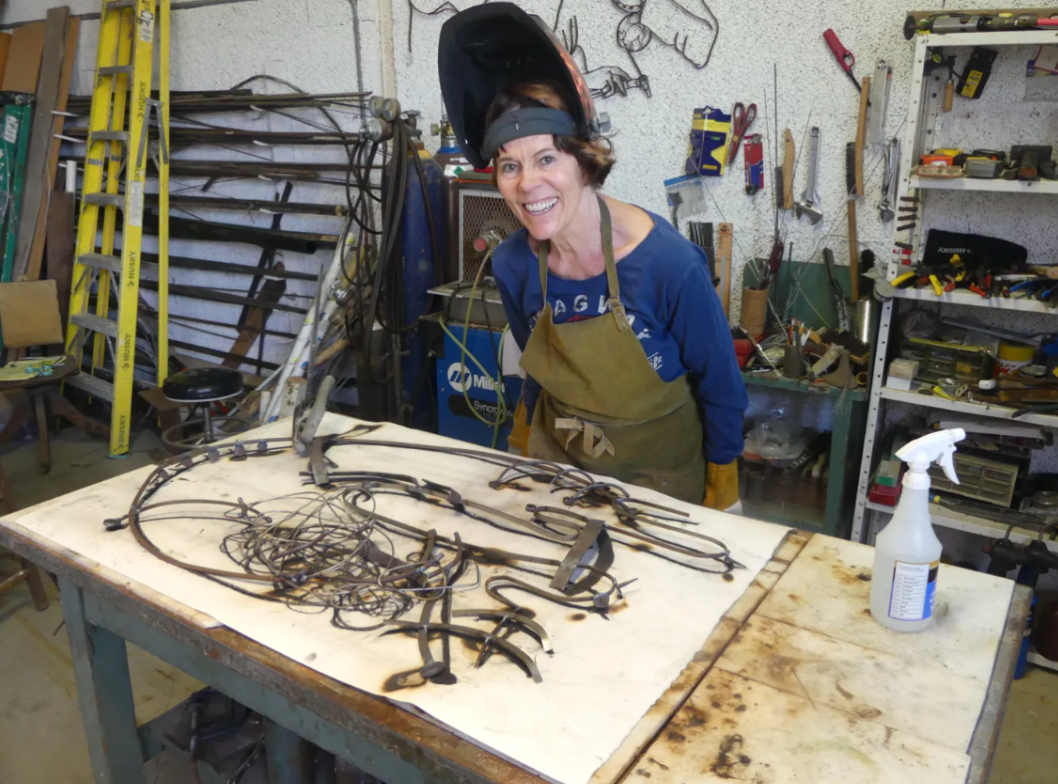
Massengill also created the public art project, “Rosie’s Dog Beach” for the City of Long Beach. She says that this piece “has reminded me of the power possessed by artwork, out in the public eye. It can stimulate conversation and generate ideas, emotional experiences, and even an intangible thought-provoking impact. I captured the joy of dogs playing on the beach and in the ocean,” she tells us.

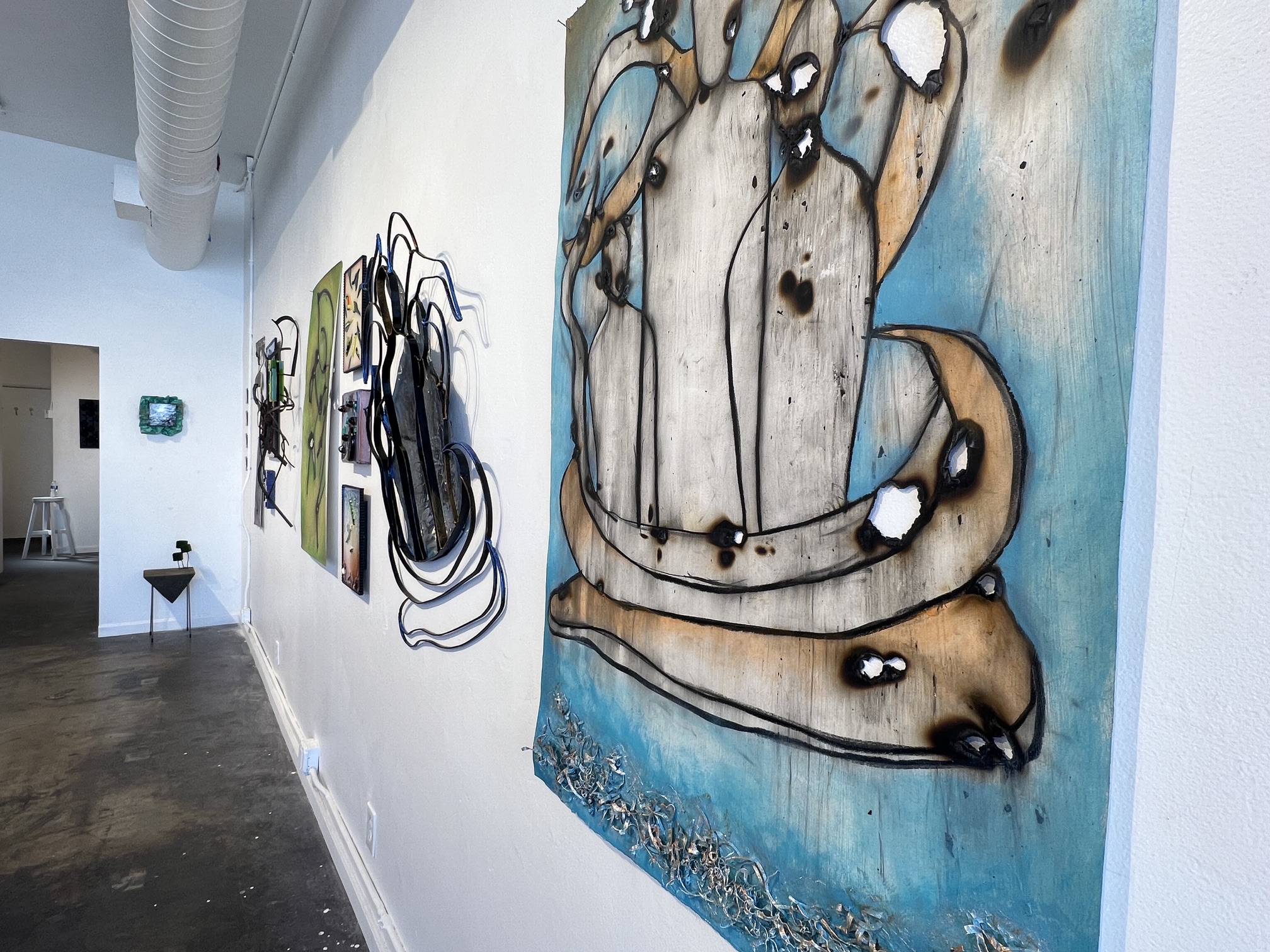
The artist has been busy recently, with social exhibitions first at the Palos Verdes Arts Center and currently at Diversions Fines Arts Gallery. Asked what’s next, she reveals that she is looking forward to focusing on work in her studio without other distractions.
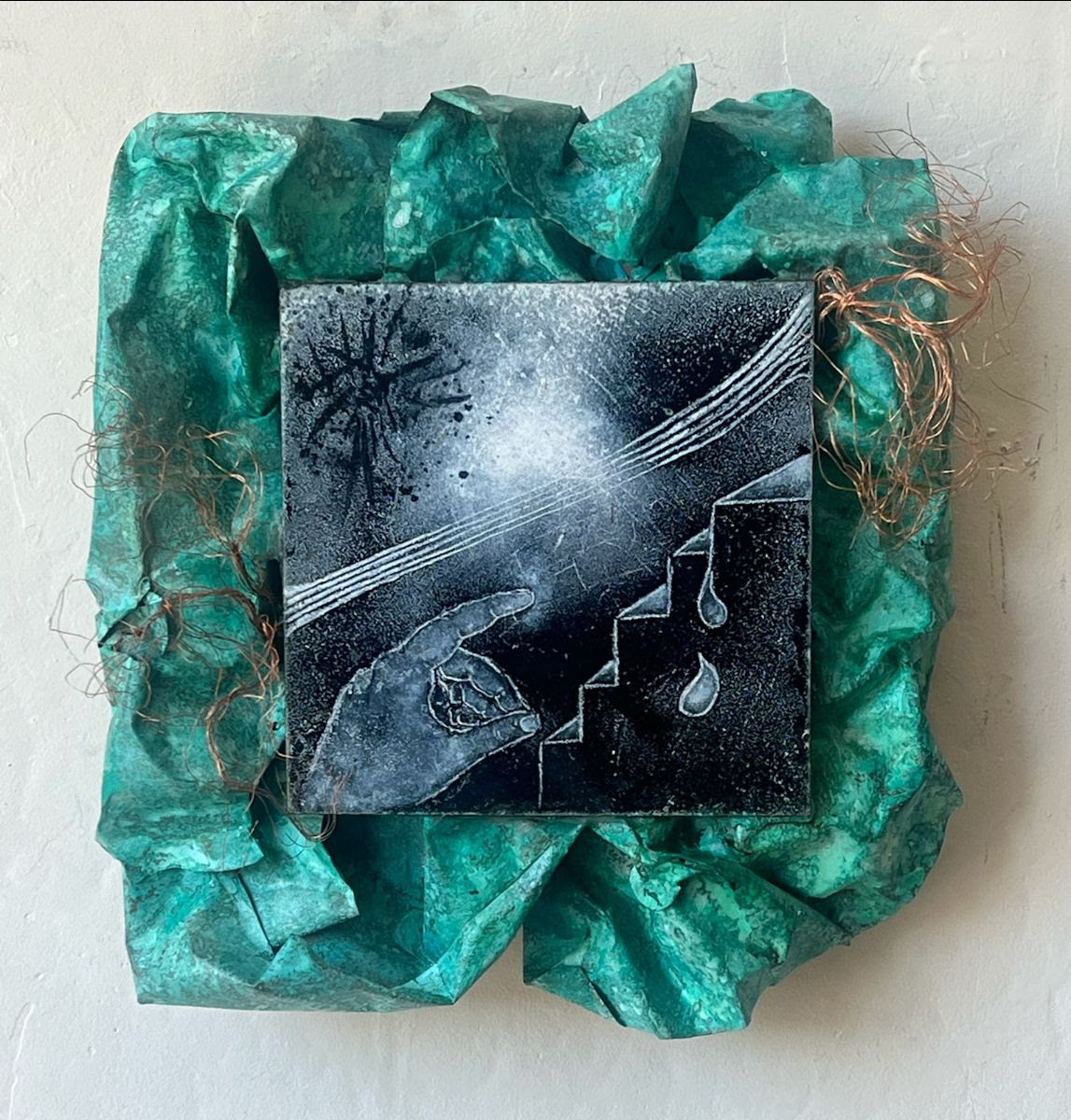
“I get so excited when an idea hits me and nothing else seems important until I can get into the thick of it! I love to make things, but I also love to feel like what I’m doing has meaning and is potentially important,” she says.

She welcomes other opportunities to show her work and the “stimulation of conversation…When people look at my work there’s an intimacy when they feel something and are moved to express their own experience of it.”
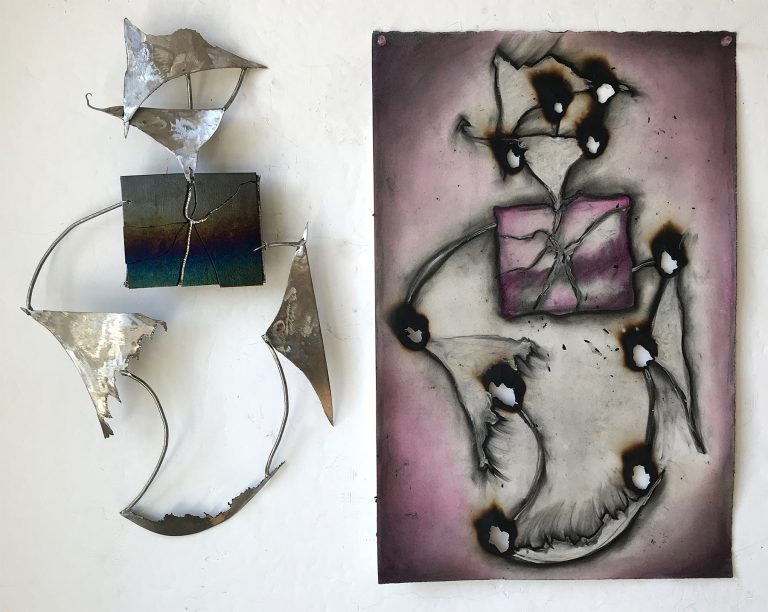
She says that what matters most to her is the reaction of her viewers, when people “see my work either emotionally, intellectually, or viscerally. I love it when they see things that I didn’t know are buried beneath– and it affects the way I see my work from then on,” she shares. She adds that to her,  “One of the most powerful things about abstract art is that it gives people permission and encouragement to explore the work personally as they have their own filters impacting this experience of it.”
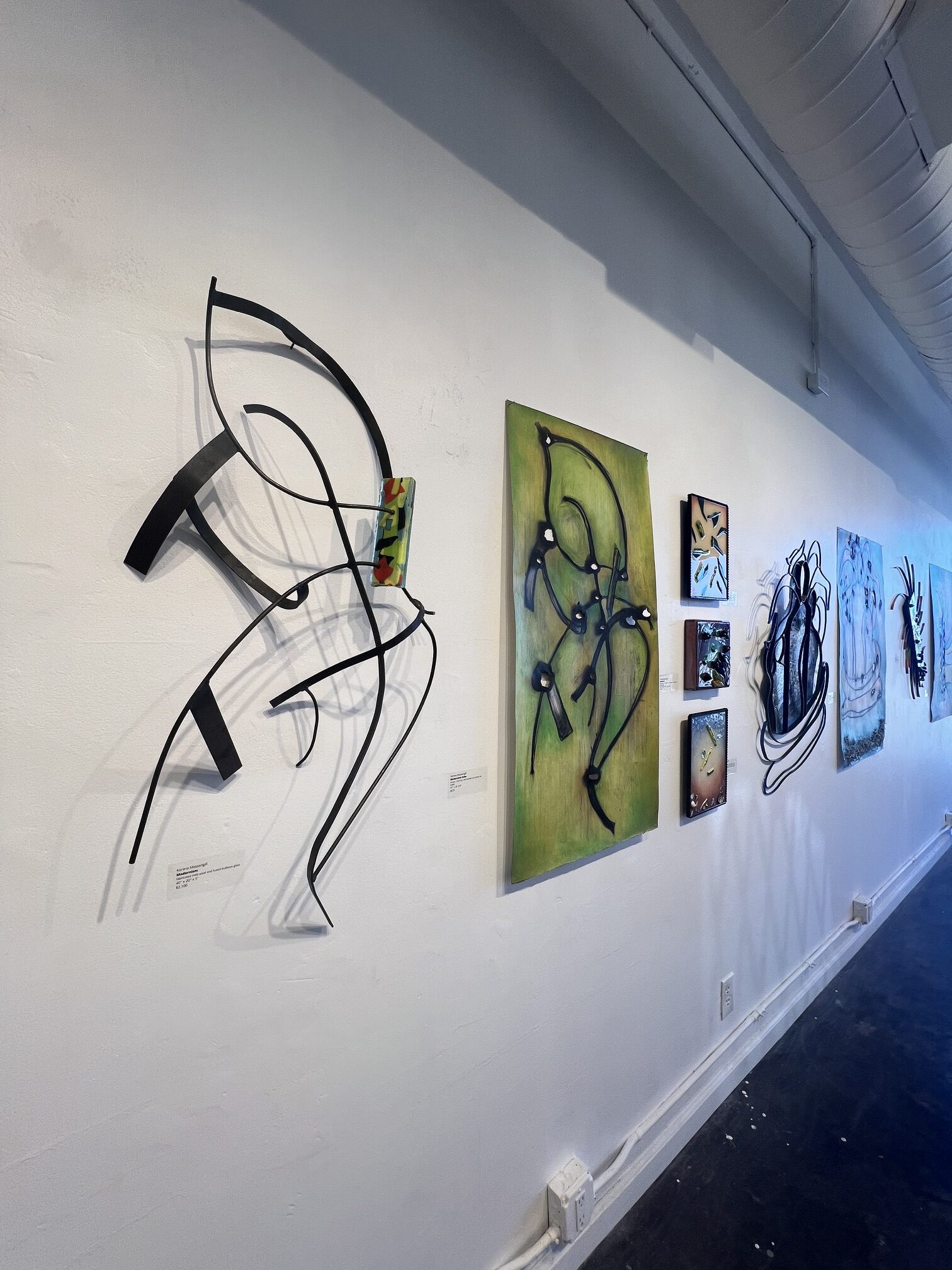
Visit Karena’s multifacted and lovely work at Diversions Fine Arts, 1069 N. Aviation Blvd. in Manhattan Beach: open house and curatorial walkthrough 10/24 1-4; artist’s talk and closing reception 11/1; or stop by during regular gallery hours for a visit.
An Open Invitation to Exciting Art: Dave Clark is a Shape Shifter

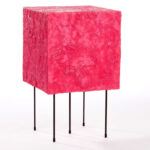
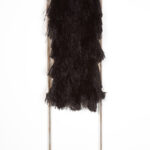
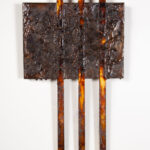
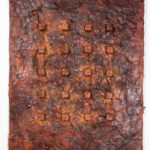
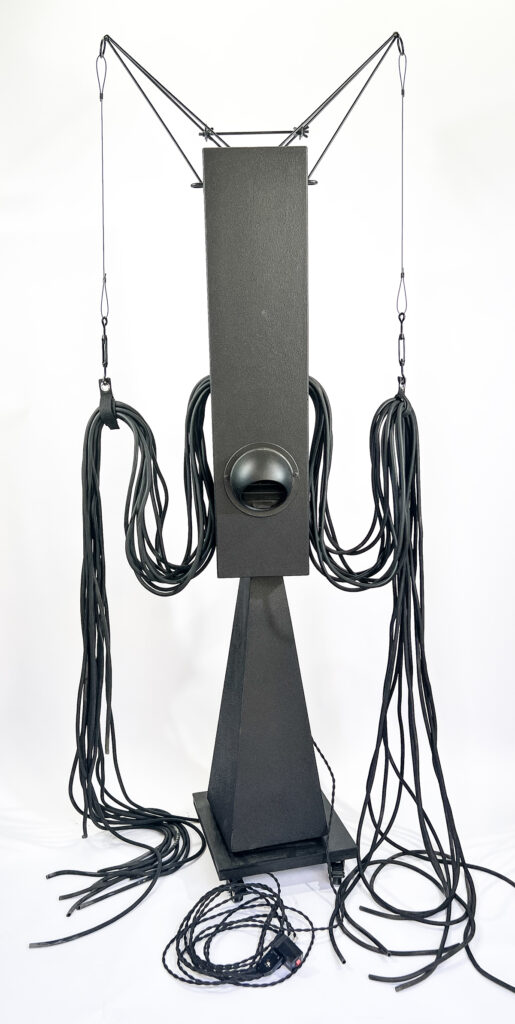
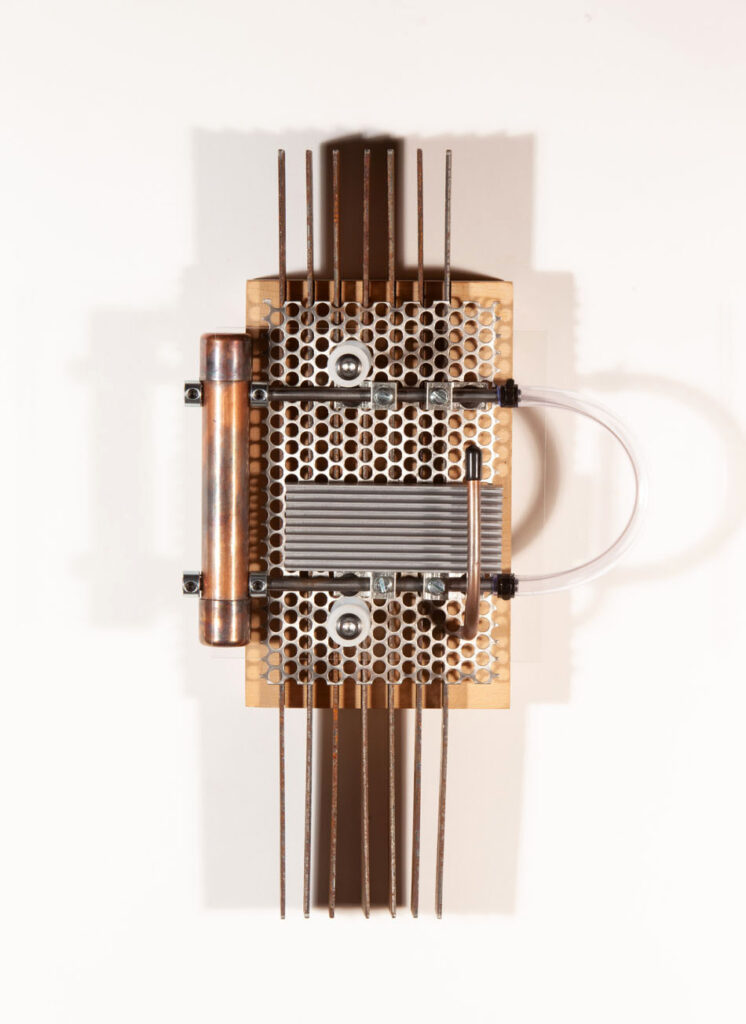
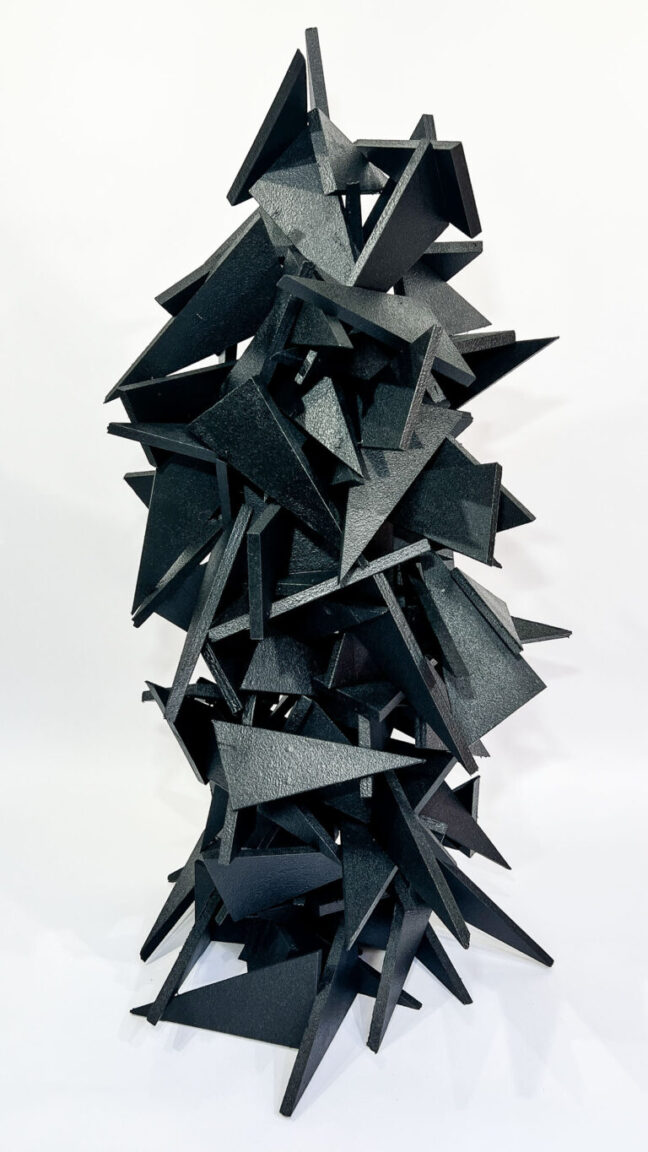
Dave Clark works with a wide range of mediums to create one-of-a-kind compelling sculptural forms, whether 2D or 3D. A master magician of found materials and repurposed ones, Clark makes tables, wall art, and free standing sculptures that rock a viewer’s world.

Clark is currently one of three solo artists that make up the Shapeshifters exhibition now at Diversions Fine Arts Gallery in Manhattan Beach. His inspirations are as varied as his work. “With pieces in the Perception series, [my inspiration] is the
anger and frustration of the manipulation of the populace; the need to communicate what I see as control of what people see and hear via the media. With other pieces it is either the need to do something or to do something that allows me to create an object to stimulate a person’s imagination, as is evident in the Mechanicals series [which is] reflective of the ideas behind my Design Fiction [series],” he explains.

His early work, art created in the 1970s and 1980s was “reflective of what I had in terms of materials and tools. This was heavily influenced by industrial machinery and things that did something. Lots of exploration of materials, shapes,” he relates.

From that era, his worked evolved into what he describes as more of a Pop Art aesthetic, and then “back into pieces that are meant to make the viewer react in some way. Wanting this from my art has allowed me to bounce around from the Skins series to the Mechanical series to the Perception series. And various pieces that don’t fit into anything other being sculptural in nature.,” he attests, admitting that when he becomes bored with a subject or series, he simply moves on.

As to his materials themselves, he notes that “A lot of what I use is mechanical or electrical in nature , or simply something I discovered that can be manipulated to create a texture….a texture to create a reaction.”

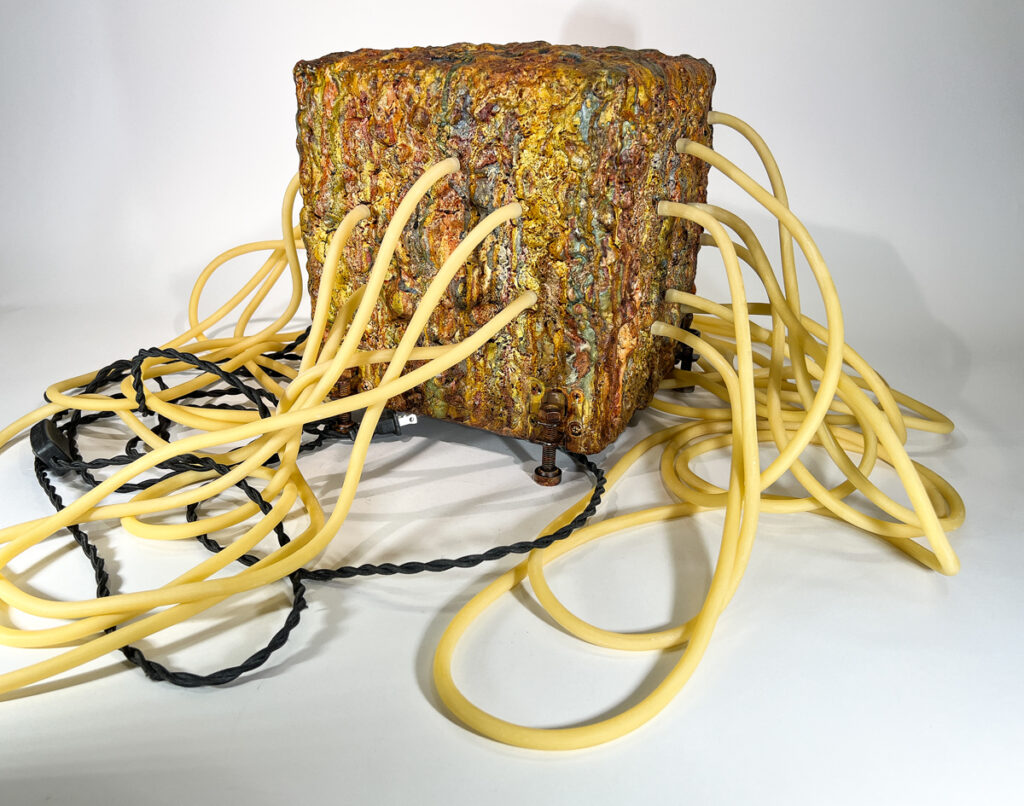
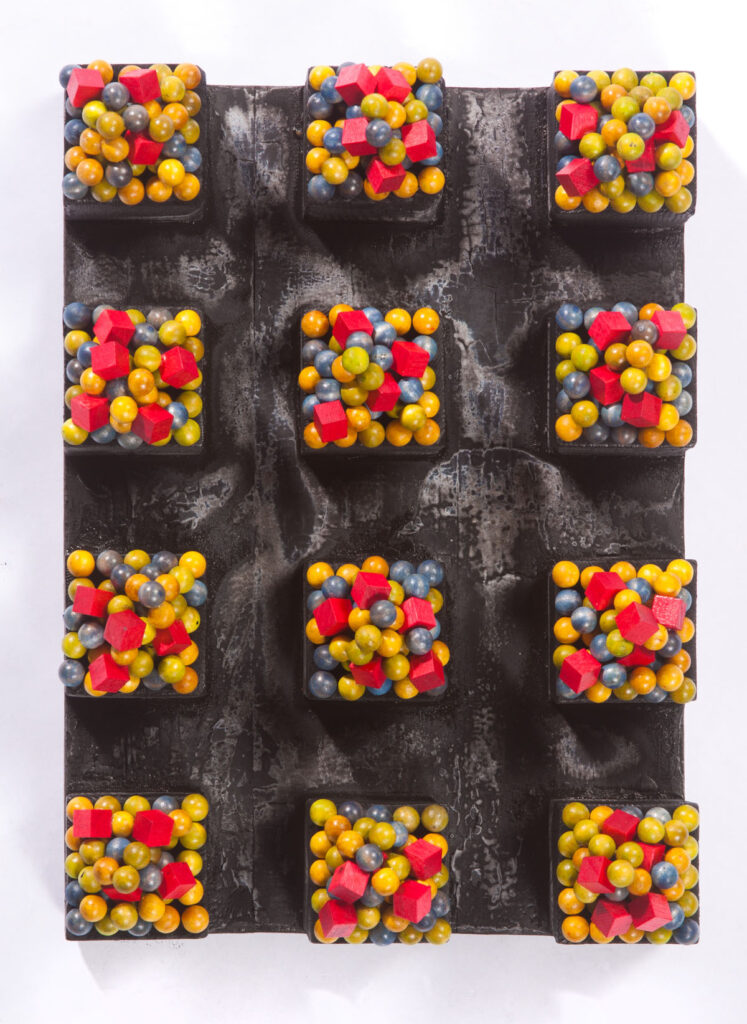
At the moment, he is working in the theme of Design Fiction, and has taken that thematically one step further by “creating ‘boxes’
that hold inside something reflective of a ‘reality.’ In this case,  something is happening inside that might cause one to imagine their own explanation of this ‘ reality,'” he notes.  He explains that he has also revised some of his pieces in an earlier Mechanical series to achieve “a degree of chaos.”

As to what lies ahead, Clark jokes “Fame, fortune… obscurity? No idea really. I just keep plugging along  either making what I make or building and supporting the arts community. One day at a time.”

The insight he choose to offer about his work over all is simple and complex: which more or less sums up each of his fascinating sculptural images. “It is what it is. It does what it does, or doesn’t. You tell me. My work is an open invitation. Rather than telling viewers what my art means, I am far more interested in what it means to [others], the conversation that unfolds between a viewer and a piece – that moment of personal recognition or unexpected association – is at the heart of what I make.”

Asked the most unique material he has ever worked with, Clark struggles to choose just one. “That is a tough one. Burned Gorilla Glue? Fabric dyes on paper? Formed concrete?” He adds that what drove him to repurpose electronic and other elements was the “look and feel” of industrial machinery, which he has always loved.

Creating art that is based on what those “machines do or did, or even might do” has been intrinsic to Clark’s process. “Art in the sense of creating or building things that worked, that functioned in some way [appeals to me.] So, using materials in that realm, allowed me to create my own mechanical devices.”

He describes those devices as failling into the overall theme of Design Fiction, a tech and design specific term that talks about the role of make-believe within the world of functional design. “Ideas generated within Design Fiction can be whimsical, inventive and off kilter though not by necessity,. What Design Fiction does is through its use of a prop or a device or a structure – say a thing – presents the ‘thing’ in everyday life as if it’s real. As such it is accepted as fact – it just is – in order to spark the imagination so it can be talked about and bandied about as if it were already real.”

In short, just as a novel creates an entire believable world, visually, Design Fiction does the same.  For Clark, his Mechanical Series “can be considered as Design Fiction in that we’re not sure what it is, what it does, or if it does anything… but it very much exists. These seemingly once-functional objects look like they belong in our world, but we just don’t know how or what happened to them to get to the point where they are today. And that lends them a bit of mystery.”  In other words, it makes them into the science fiction of art.

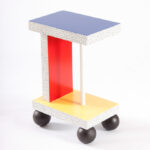
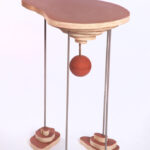
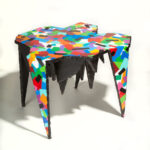
Clark has also created his own Design Fiction spin on functional tables that are the coolest must useful art around.

Along with his own awe-inspiringly innovative sculputral work, Clark has also recently created a series of small box galleries.
He describes their existence as based on being able to “share and/or promote art and artists by providing an alternative venue to show smaller scale art works with the larger community. There is no curation, and also no cost to the artist.”

The micro galleries, as he calls them, have created neighborhood art districts, which have also provided not only space but new ways of engaging culturally. They’re built on home owner property at that owner’s request, with more than 40 now spread across Long Beach and four already in the South Bay. Soon there will be more. “It is quite organic in growth with a gallery happening every month of so,” he says.

Clark’s magical mystery tour of sculptural art will be at Diversions Fine Arts Gallery  1069 N. Aviation Blvd. in Manhattan Beach from October 10th to November 1st. The opening reception is on the 10th from 4-7; don’t miss the chance to meet the artist and see these incredibly special works.

  • Genie Davis; photos provided by the artist

The Magical World of Glenn Waggner’s Figurative Art

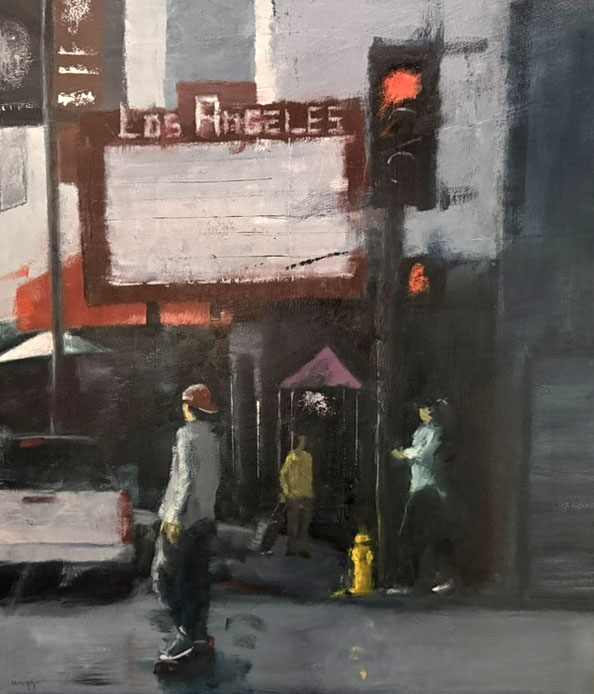
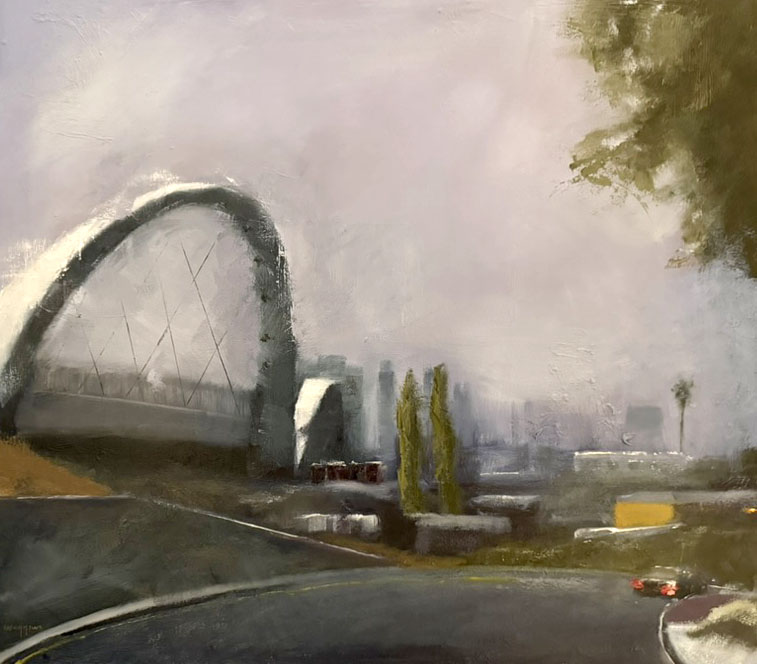
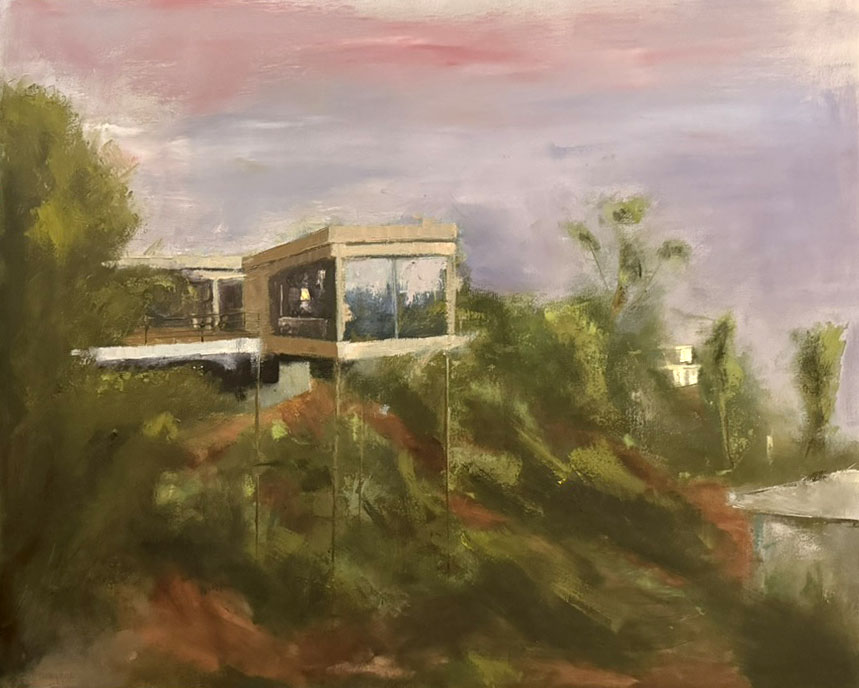
Every picture tells a story, and for artist Glenn Waggner, it’s a magical one, merging the real world with a sense of wit and wonder. Working in oil,  Waggner creates resonant, meaningful figurative works that soar with imagination and devote themselves to indelible detail.

Waggner is both an architecht and an artist, and as such, it is perhaps unsurprising that he says he is “inspired by cities and mostly urban environments. A few times I have been in certain places where I had the feeling that everything was perfect. That’s what I want to paint.”

When he first began his journey as an artist he says he “started out painting twisting buildings at impossible angles. The work evolved into a more realistic portrayal while becoming more abstracted and looser. He adds that “Over time, the lighting and tones have become a little more surreal, like the lighting that occurs during an eclipse or seen in dreams.”

Make no mistake, Waggner’s worlds have that special hint of the magical that transforms even the most recognizable scene of getting morning coffee at a stand or hailing a taxi.  He works in oils exclusively and finds that he plans to keep that medium as his first choice for creation.

“I switched to acrylics for a short time, and while I found the colors were the same, acrylics dried way too fast for me. I like to blend the paint in layers to give it a richness,” he points out.

Thematically, he says he is moving toward a change, however. “I am heading towards a more abstracted, expressionistic style. Not abstract expressionism, but more of a disruption of images.”

While he is currently exhibiting a solo exhibition at Diversions Fine Arts Gallery, he will also be exhibiting at the Brewery Artwalk in November, where he has shown for ten years; and returning to DFA for an exhibition in a December group show.

He is also looking forward to building a new body of work for future shows, and regardless of the changes he is planning in his work thematically, he will always tell wonderful stories. Asked what comes first, the story-making or the visual art, he says “The visuals almost always come first. The narrative develops naturally during creation. I also like to have fun with titles.”

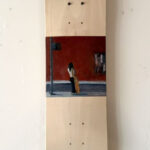
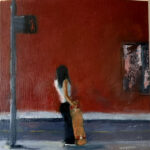
Above: Waggner uses a skateboard for a canvas for his “Mall Grip;” detail of same; a look at “Girl Times Three.”

Waggner adds that “I love it when people see my work and [I can] watch it trigger memories or a narrative, many times completely different from what I see or intend.”

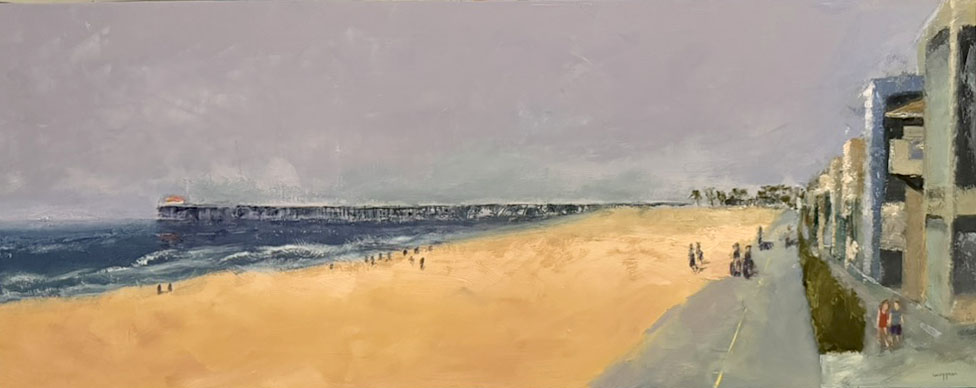
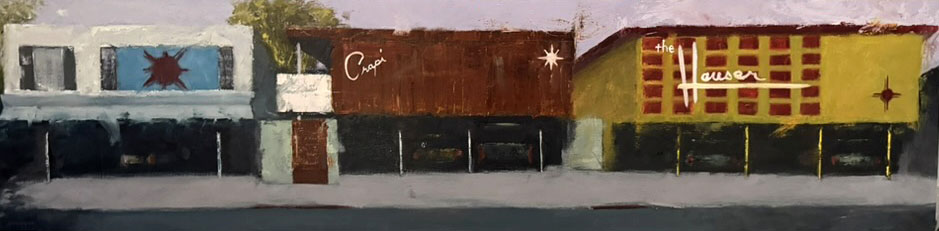
Certainly in his current exhibition, there are a wide range of pieces that could and do evoke memories and stories in the viewer, such as a stunning, panoramic take on LA’s Dingbat architecture; another such dimensional piece depicting a stunning view of the Strand beach walk, sea and sky…

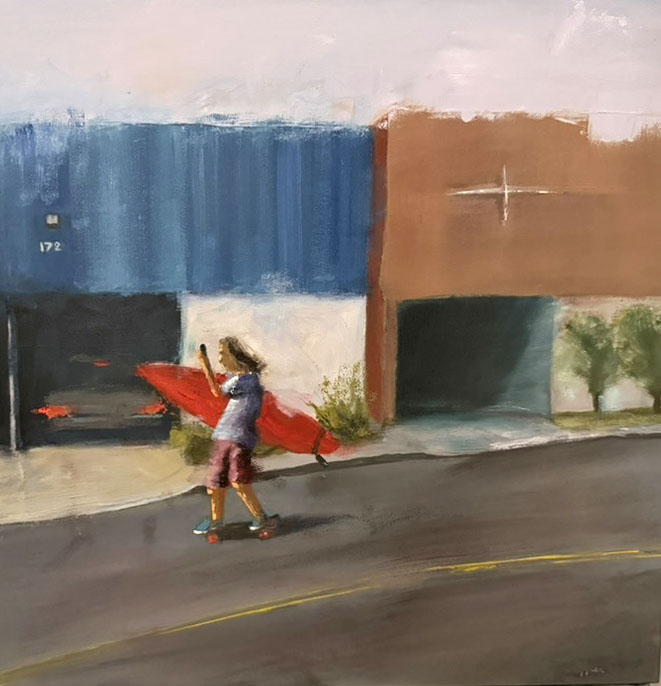
…and even a simple and warmly recognizable image of a surf-board-carrying youth, holding his iPhone as he does what the title suggests, “Texting in Sick” in order to catch a wave.

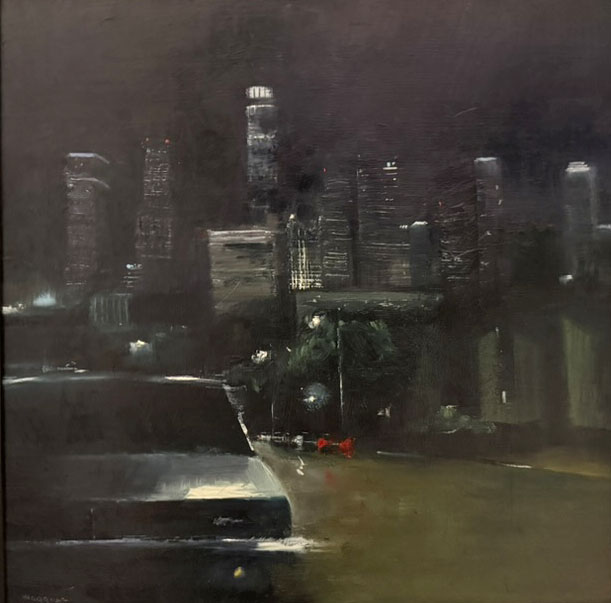
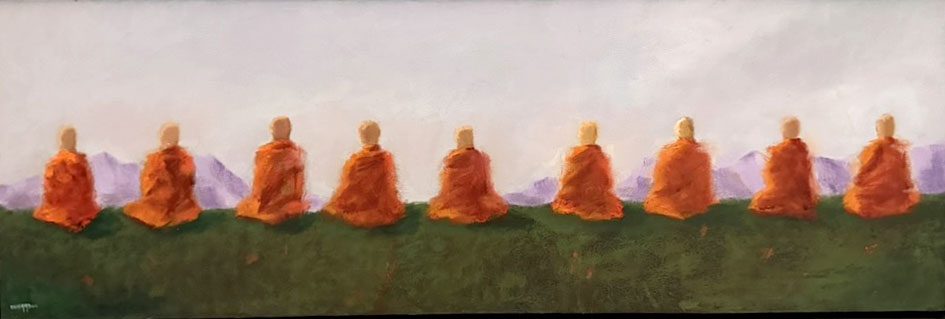
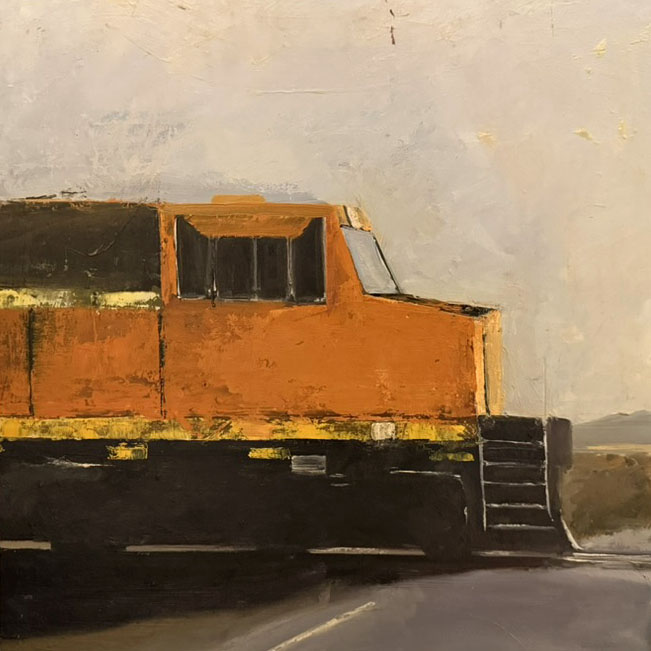
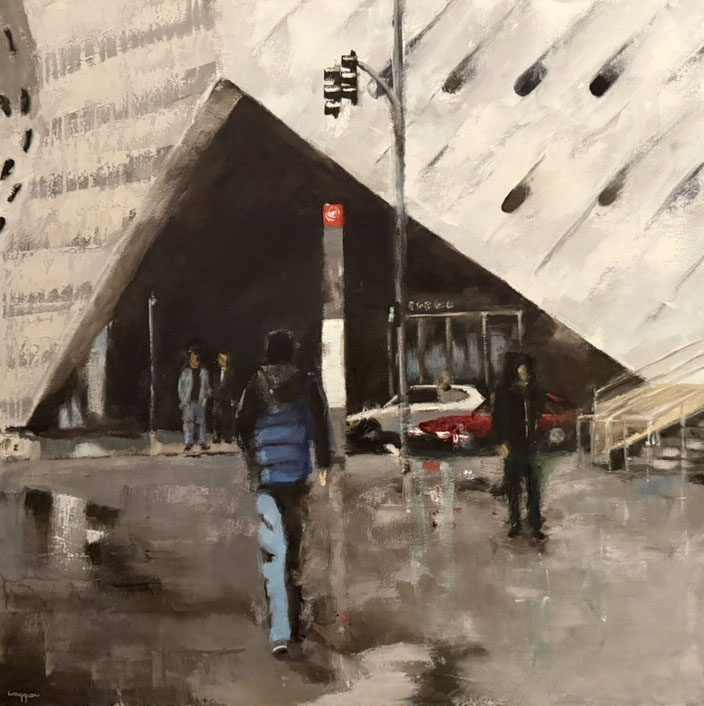
There are orange clad monks in meditation, a dark car on a rain-slick road, a mustard-yellow train engine chugging on, and even a lovely portrait of the Broad Museum in DTLA.

Take a peak at these and other examples of Waggner’s bountiful, beautiful slice-of-life visual stories in Golden Days, now at Diversions Fine Arts Gallery located at 1069 N. Aviation Blvd. in Redondo Beach through October 4th.

  • Genie Davis; photos courtesy of the artist and Davis


Graceful Watercolors: The Art of Claudia Kazachinsky

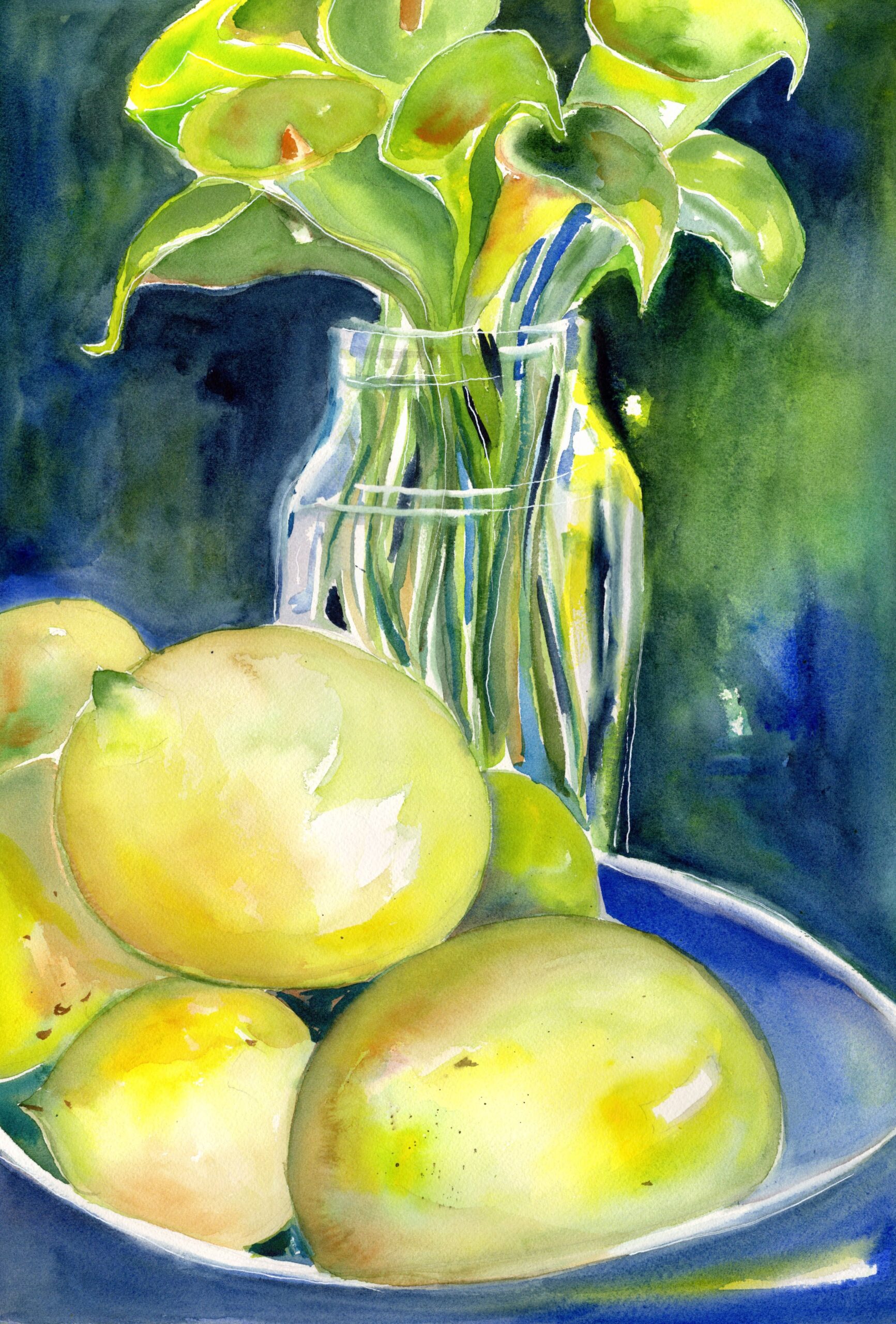
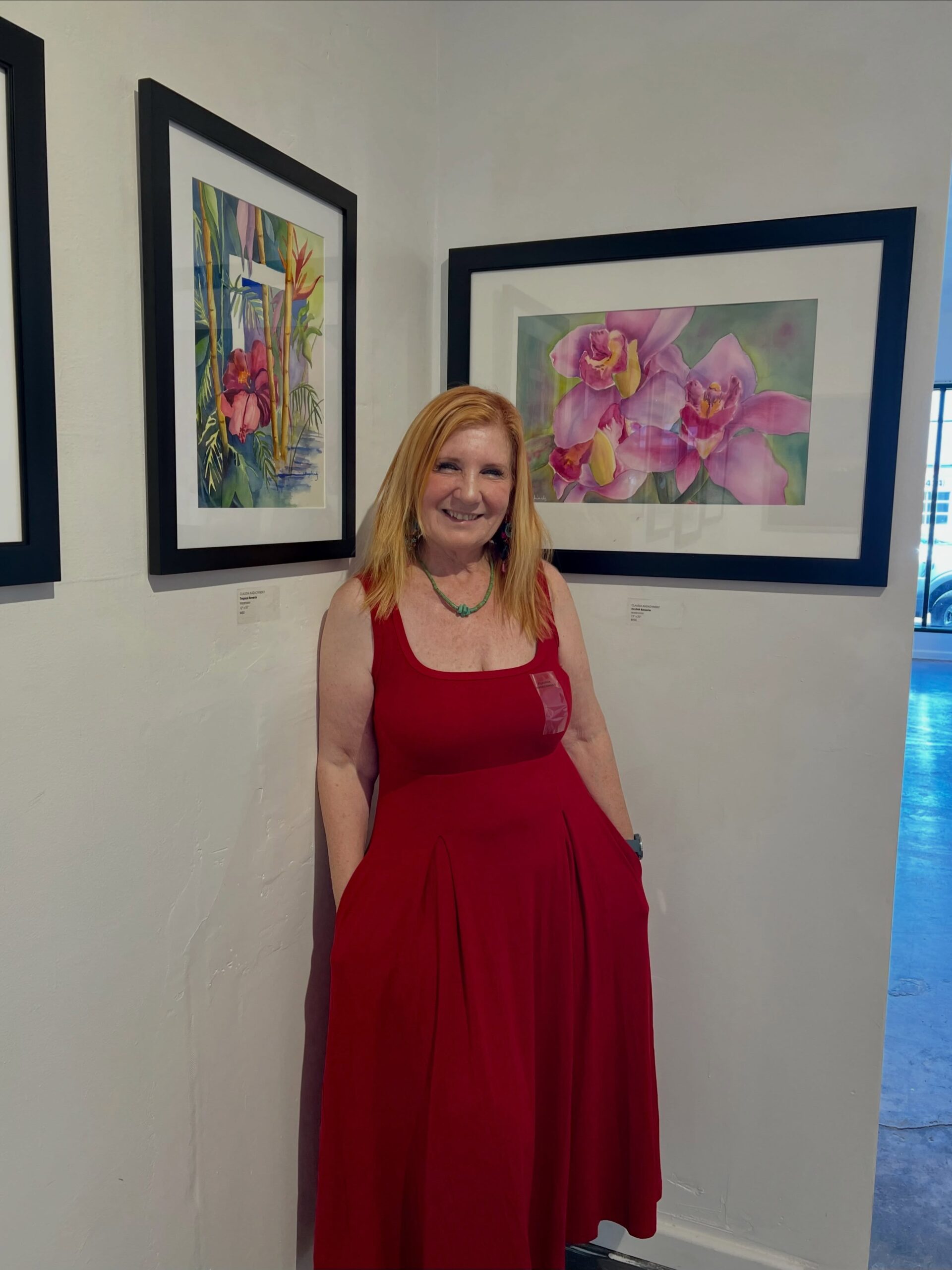
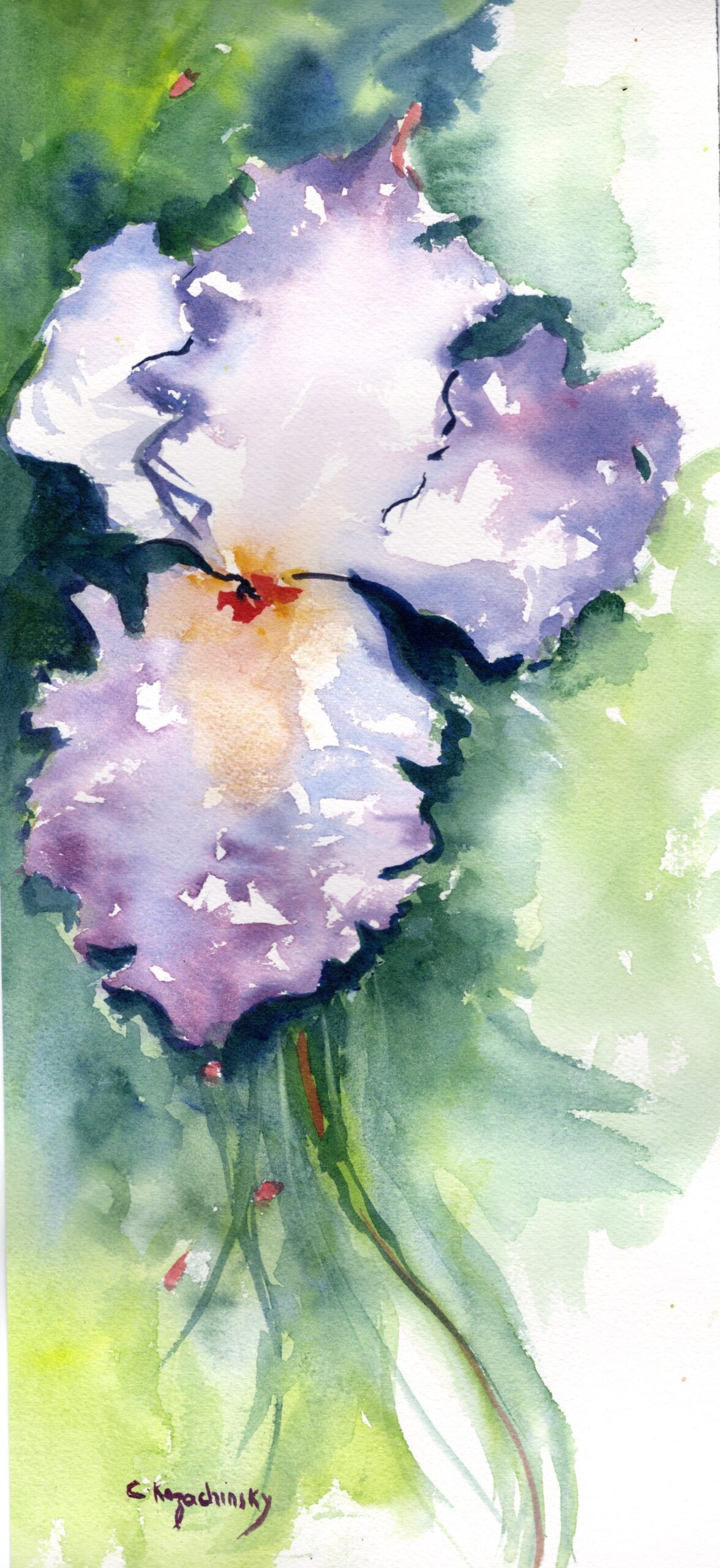
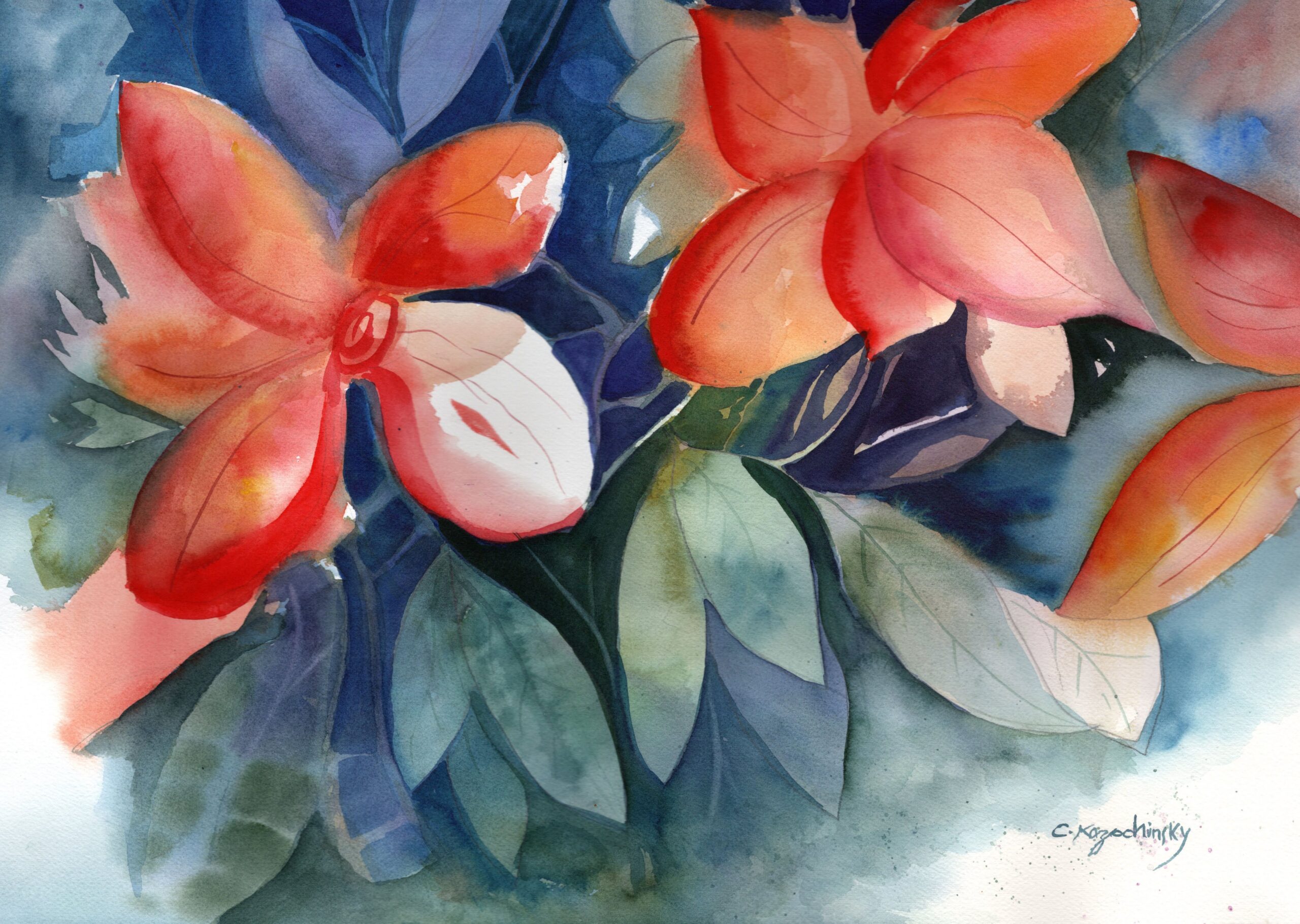
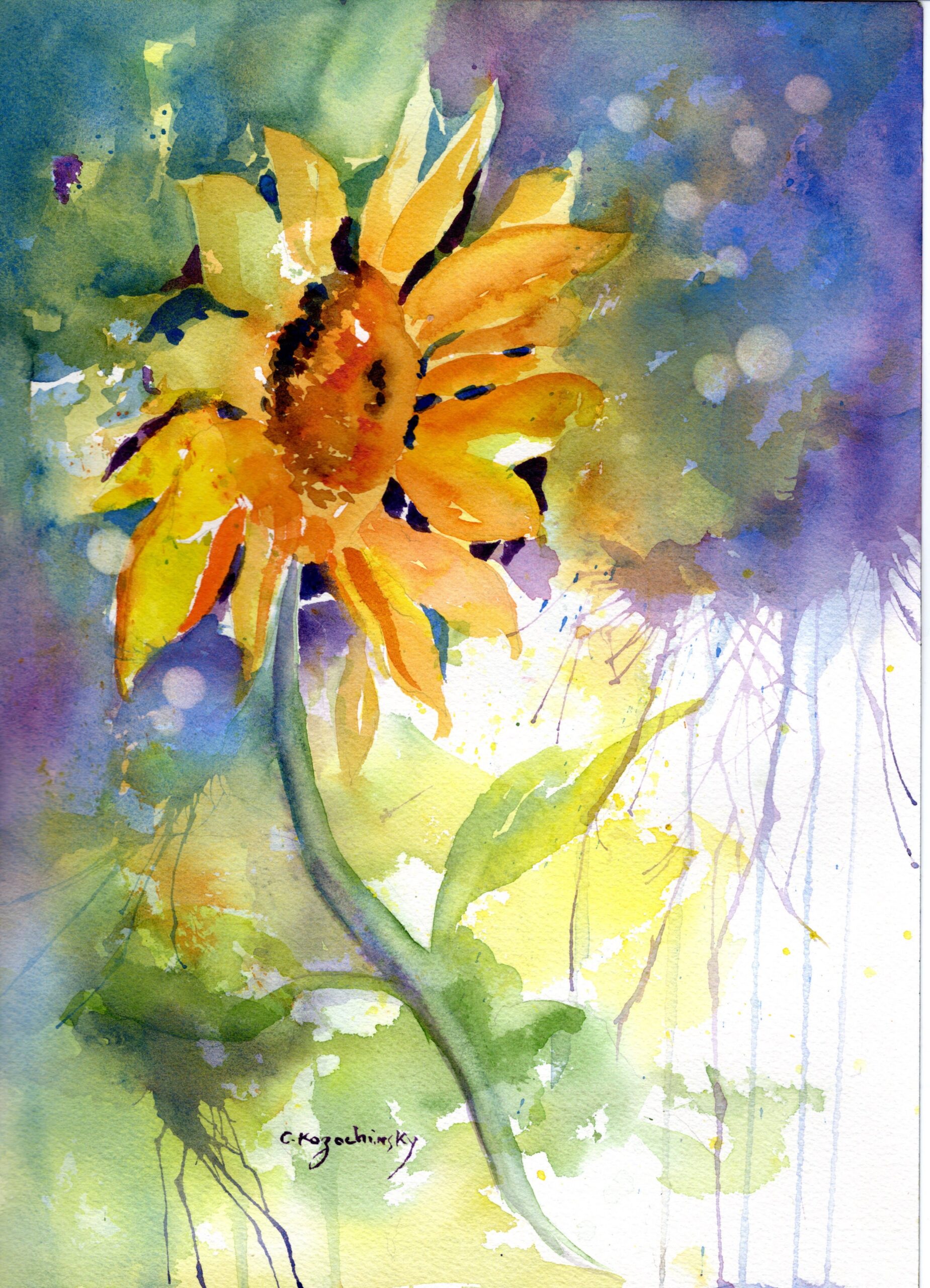
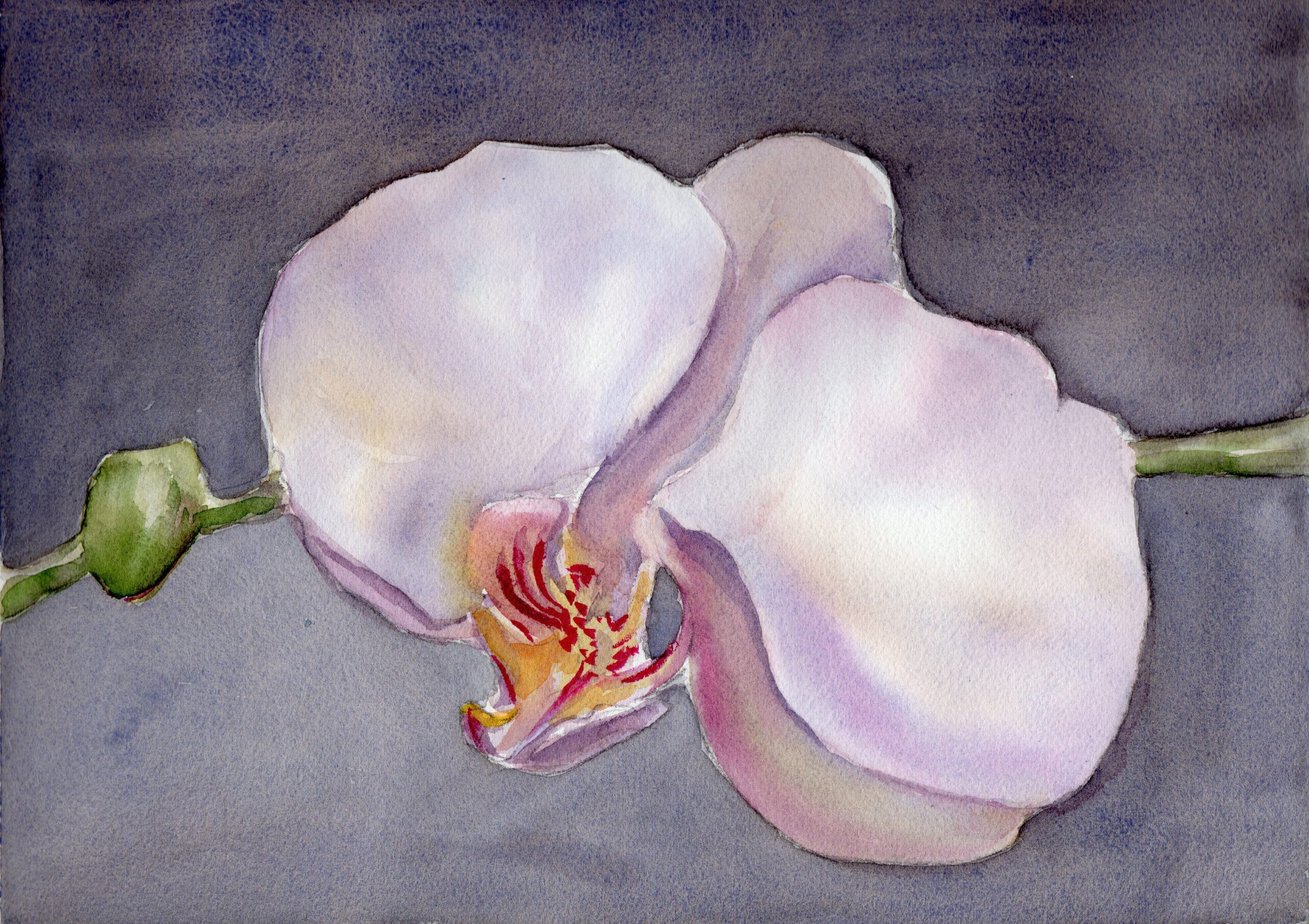
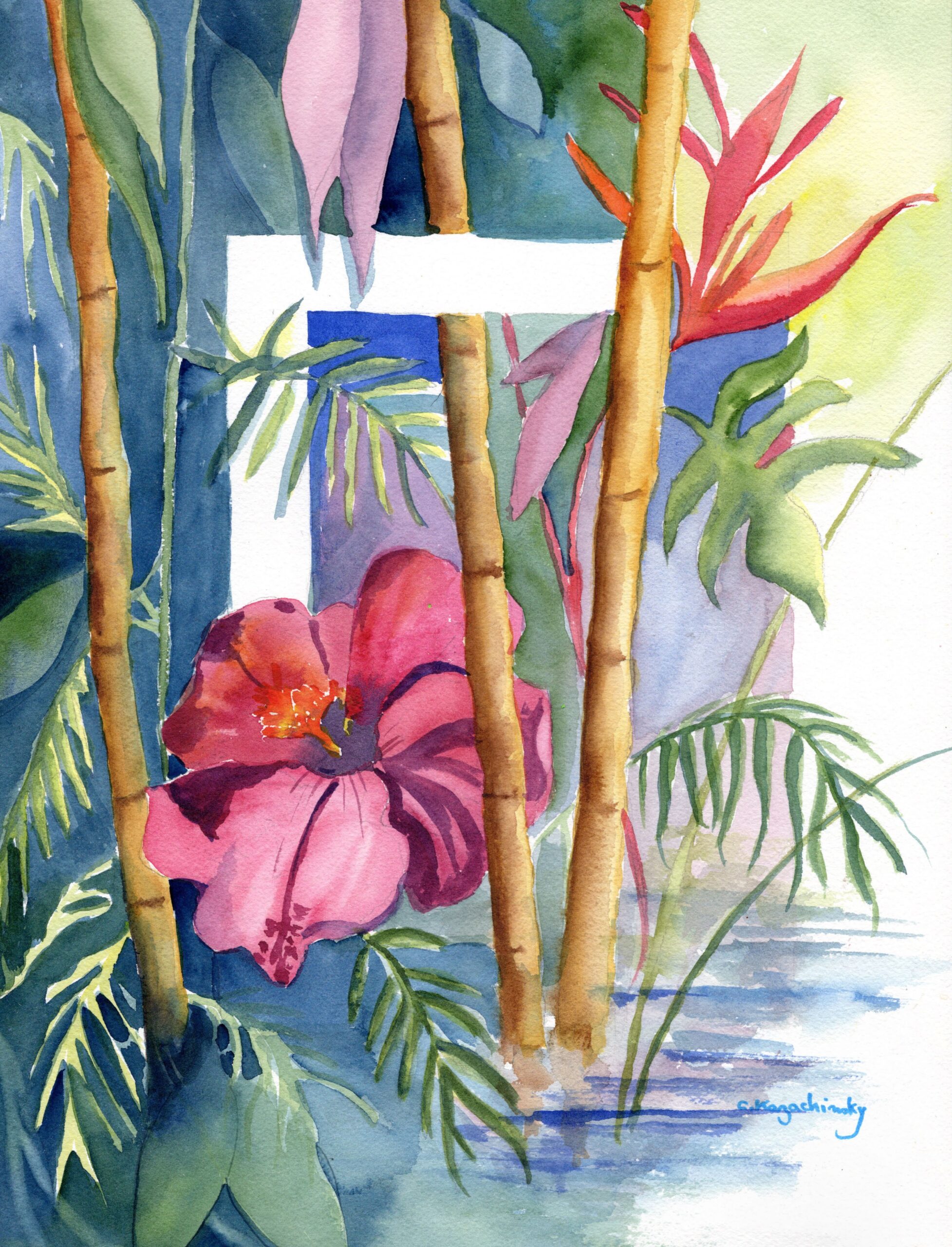
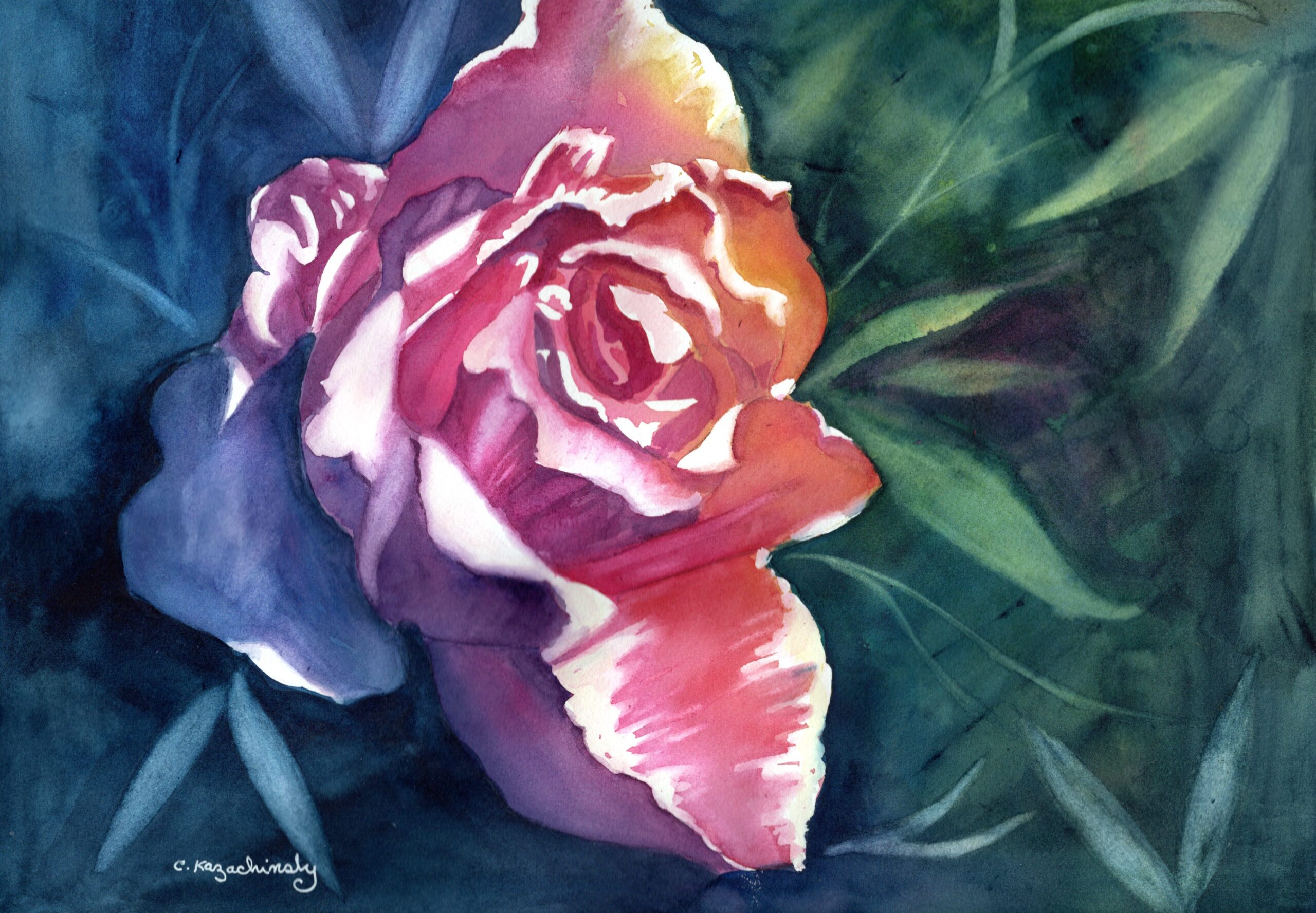
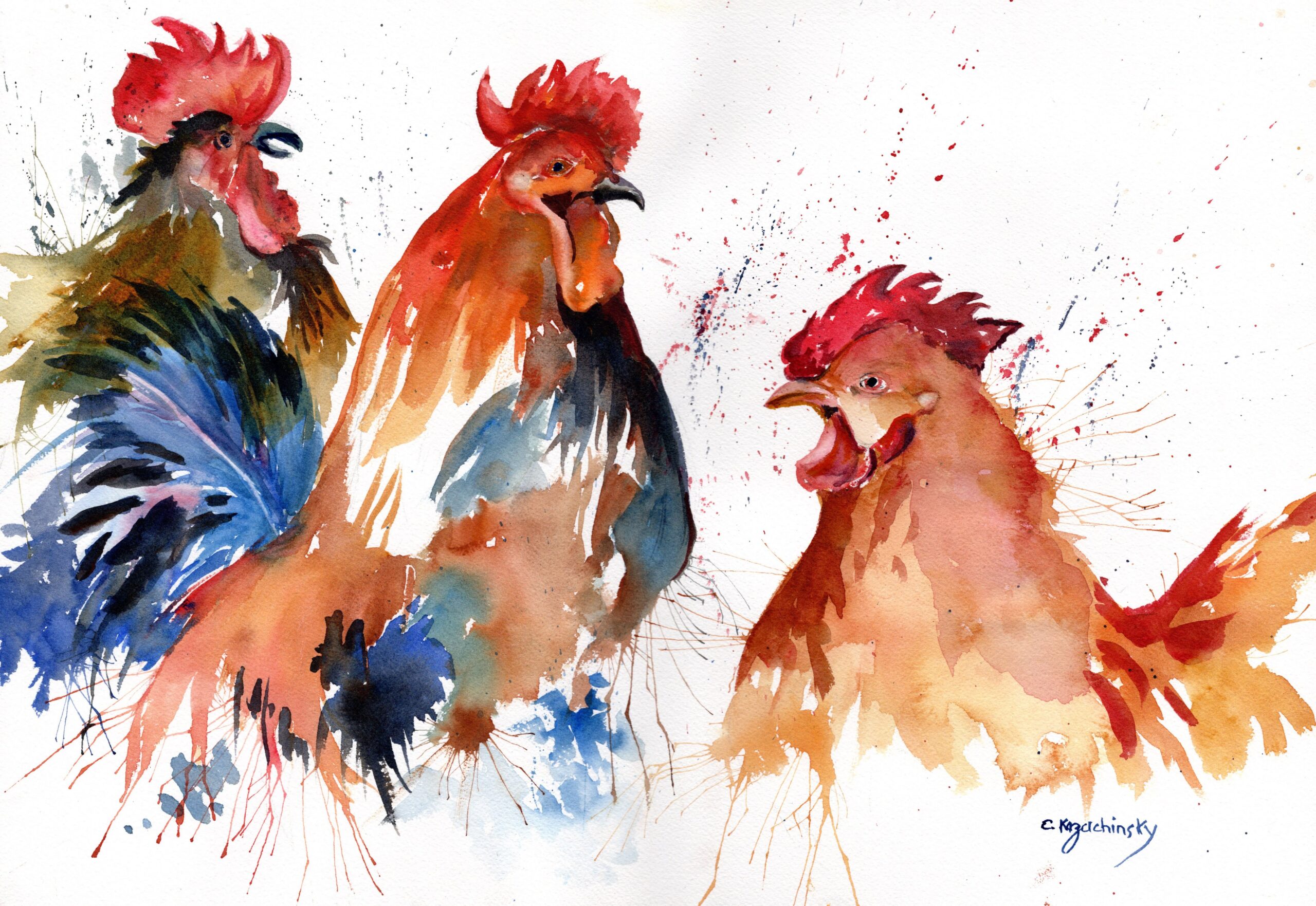
Claudia Kazachinsky primarily works in watercolor, painting delicately nuanced beauty inspired by everyday life. Everything this prolific and passionate artist sees becomes an image she cherishes and often paints.

She says “from a flower I photograph on one of my walks to an interesting face or scene I happen to notice in a restaurant, museum, or while traveling… I think artists are always observing the world around them, and I’m no exception. I am an avid urban sketcher and almost always carry a sketchbook, a pen, and a small watercolor palette with me because I never know when I’ll come across something I want to capture. I consider myself primarily an observational artist, painting what I see, but I also love to let my imagination take over. ”

According to Kazachinsky, she often adds “whimsical elements, rich textures, expressive backgrounds, and handmade printed paper collages that bring another layer of interest and storytelling to my work. While my paintings begin with real-life observations, they often evolve into something that reflects not just what I saw, but how I experienced the moment.”

She began painting when she was a small child and never stopped. “Art has always been a part of my life,” she attests. “I can honestly say that my style has continually involved.”

When she began to paint regularly ten years ago, she relates that she worked “almost entirely from observation,” describing herself as more timid with her art. While today she still begins her work by painting what she sees, now she is more willing to “let my imagination take over” and introduce “unexpected elements, textures, and patterns that make each painting uniquely my own.”

The artist describes herself as a “fast, loose painter” and notes that her current challenge is learning to “slow down and pay closer attention to detail. I especially love painting portraits and the human figure, although it took me a long time to become confident with them. As the saying goes, it’s ‘all about the miles on the brush. Every painting has taught me something.”

While she says that her first love is and always will be watercolor, she also enjoys working in mixed media. In regard to watercolor, she explains that “Most people don’t realize that it’s actually one of the most difficult mediums to master. I love its
spontaneity, its fluidity, and the luminosity of its colors. There is something magical about watching the paint move across the paper, creating effects that can’t be completely controlled.”

When it comes to mixed media she says that she jokes about throwing “everything at the canvas but the kitchen sink. I enjoy experimenting with texture, collage, handmade printed papers, and anything else that adds depth and interest to the work.”

Kazachinsky has even returned to a past love of oil painting, rediscovering her enjoyment of the medium. ” Unlike watercolor, oil forces me to slow down. The longer drying time gives me the opportunity to step back, rethink, and refine my paintings,
something that has been an important part of my growth as an artist.”

Over the years, her work has changed most dramatically in terms of thematic focus, having initially spent many years painting portraits. “In 2019, while visiting Washington, D.C., we happened to stumble upon the Outwin Boochever Portrait Competition exhibition at the Smithsonian National Portrait Gallery. Standing in those galleries, I made a promise to myself that one day I would submit my own work to the competition…it has motivated me to keep learning, growing, and becoming a better portrait painter with every brushstroke.”

That said, Kazachinsky creates dynamic floral works and delightful images of animals as well.  And while she describes portraiture as her “greatest passion” she also enjoys plein air painting that allows her to “observe light, atmosphere, and color in a way that continues to influence all of my work.”

Her current exhibition at Diversions Fine Arts Gallery in Manhattan Beach represents “the largest body of work I have had
the opportunity to showcase,” but the artist continues to be an integral part of multiple group exhibitions around greater Los Angeles.

Kazachinksy spent nearly 35 years as an interior designer while continuing to paint throughout her career. That experience gave her “a unique perspective on how art transforms a space and how the right piece can completely change the feeling of a home.”

She loves to assist collectors and designers in sourcing artwork and placing it. “Choosing art isn’t simply about finding something that matches the sofa—it’s about selecting pieces that speak to you emotionally while also considering scale, proportion, placement, and how the artwork interacts with the architecture and furnishings around it.”
She feels that some people are intimated by the act of buying original art simply because they don’t know enough about it. “My goal is to make that process enjoyable and approachable. Art should move you first and foremost, but when it is thoughtfully
chosen and beautifully displayed, it has the power to elevate not only a room but the way you experience your home every day.”

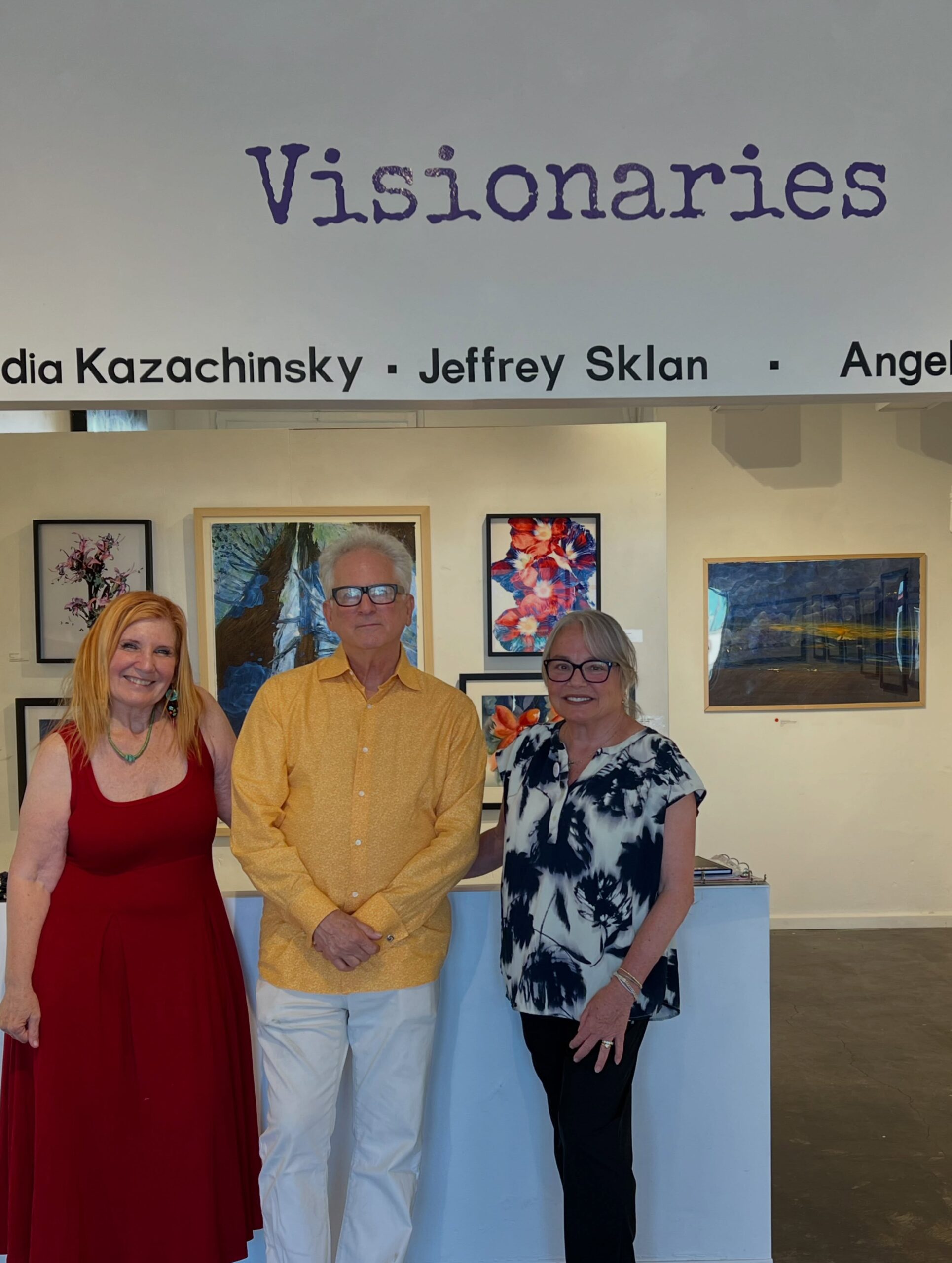
Viewers can let Kazachinsky’s art elevate their lives at Diversions Fine Arts Gallery through August 30th. The gallery is located at 1069 N. Aviation Blvd. in Manhattan Beach. A gallery hop with other area galleries will take place August 22nd 12-3; the exhibition will have a closing reception and artist talk on the 30th from 1-3 p.m. along with fellow exhibiting artists Jeffrey Sklan and Angelica Sotiriou.

  • Genie Davis; photos provided by the artist and by Davis