
Cynthia Minet: Glowing and Winged Things Illuminated with Meaning

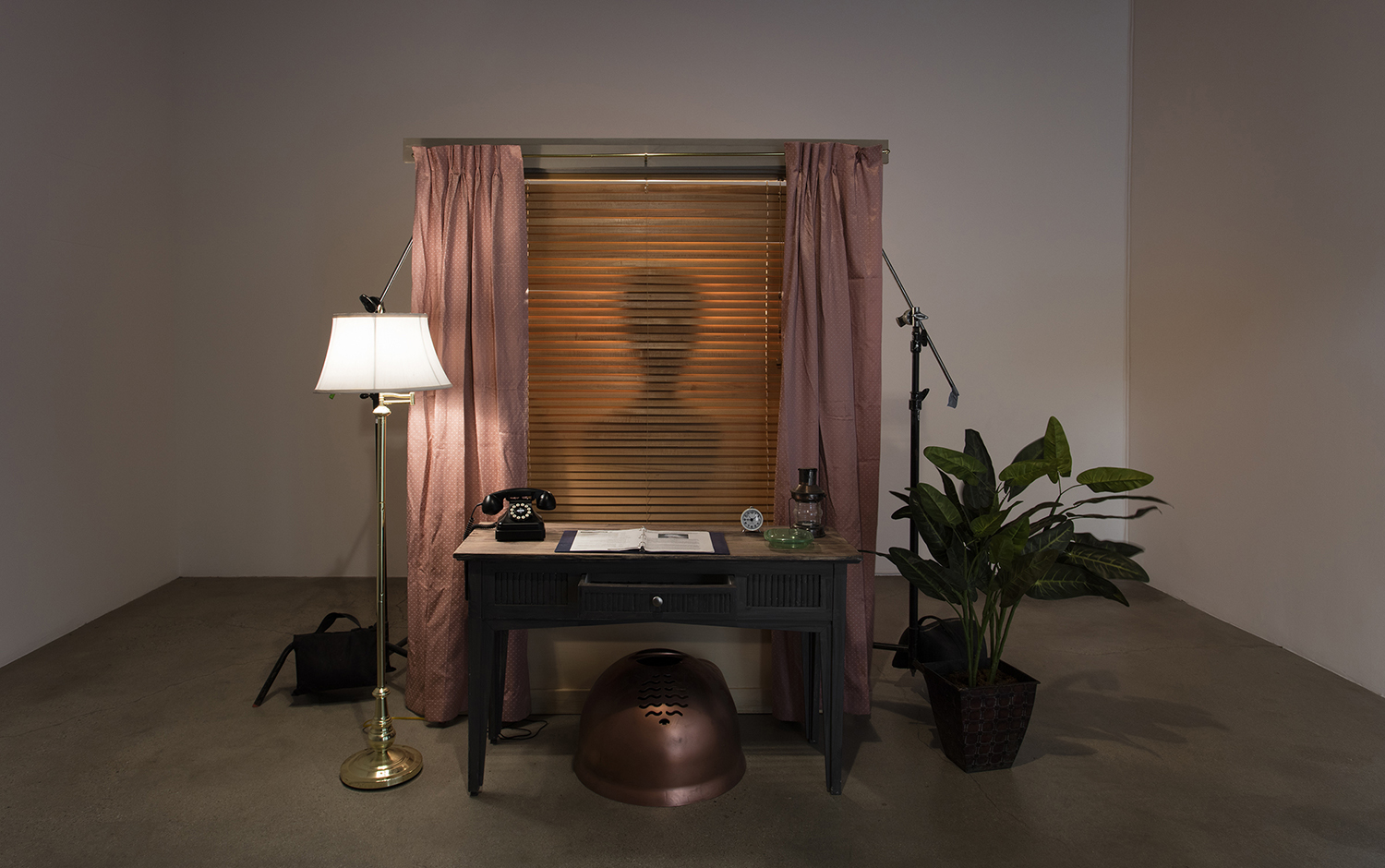
Entangled exhibition at the Animal Museum, featuring themes of fish netting, plastic pollution in the ocean, celebrity pets and the gift store.

Los Angeles based artist and sculptor Cynthia Minet creates dynamic, soul-alive animals. This is found art that’s “found” new life in her vivid, LED-illuminated glowing animals. Whether it’s a life-sized baby elephant, a camel, or an ox, Minet uses post-consumer plastic, PVC, and LED lights to shape her mixed media sculptures. The figures essentially have a transparent plastic skin, through which the LED-lighting wires run like veins. She also draws these animals in a beautifully realistic, motion-filled style. These serve both as models for her sculptures and as a different way to express the life of her animals.

Minet 6

At the same time, Minet exposes the waste of our dependence on plastic, transforming these discarded products into sculptural beauty.

Minet 5

“My process involves drawing, research into anatomy, gesture and behavior of animals, model and armature building, collecting of materials, lots of trial and error, and exploration of different ways of working with light and color,” Minet says.

Minet’s meticulous attention to detail with her large-scale figures results in life-like creatures that are both dreamscape and entirely realistic. They’re moving and intimate, the glow from her LED lights manifesting an almost spiritual presence.

Minet 8

The incredible use of found materials in her work developed fortuitously in 2008, when Minet was invited to create an exhibition in an Italian nightclub. “The club was next door to a recycling facility. I had just seen an amazing show of work using fiber optics and light in Finland. I came back to LA and started working with plastics and light right away.”

Minet 9

Minet says her work is influenced by “Everything having to do with science, anatomy, environmentalism, place, social issues, light and color.” Specific artists also inspire her, including the work of Auguste Rodin and Marcel Duchamp, Louise Bourgeois, and Olafur Elliason, as well as Lee Bul’s work.

Currently, the artist is working on Migrations, a solo project for the International Museum of Art and Science in McAllen, Texas, which will run from November 2017 to February 2018.

She says there are a number of aspects as to the museum’s location itself that excite her: the fact that McAllen borders Mexico on the Rio Grande, and that it lies on the Avian Central Flyway Corridor.

Minet 2

“Both of these factors inspire me to create an installation that features seven life-size sculptures of roseate spoonbills, and one that considers both avian and human migration through the use of found materials and interactivity.”

Minet 1

Minet 3

She describes the show as consistent with her other work focusing on animals and environmental issues, and that it, too, uses LEDs and post-consumer plastics, and is site-responsive. However, the work is also different from past projects. “It’s interactive; motion sensors will activate sound elements, and the lights will incorporate a sequencing animation to enhance the sense of movement in the work. I am collaborating with Vaugh Hannon, an artist and technical wiz, on the interactivity and the lighting sequences,” she explains. “I do seek help with lighting design, as that is a continuous learning curve for me.”

There are other differences in the material that she is utilizing as well.

“It incorporates materials gathered from the borderlands along the Rio Grande River, and carries a political as well as environmental message. When I visited McAllen, I found some materials dropped by migrants along the river, and I remain struck by the pathos in those objects.  I left the clothes I found behind because I found them too sad for me to handle, but I collected plastic bottles, toothbrushes, a hat, sandals.”

Additionally, Minet also received items collected by McAllen-based artist and activist Scott Nicol. “He has sent me Homeland Security bags, a small child’s necklace, earphones, and other items. I have imbedded these items into the bird sculptures, so that the works point to the desperation and resilience of the people who are continuously risking all in order to make a better life for themselves.”

Minet relates that she views her role in this new installation as a “provocateur without answers. I hope to encourage a dialogue around the complexity of the social, political and environmental issues in the region, and by extension, on our planet.”

Minet 7

Minet 9

Following her installation in Texas, Minet has plenty to fill her calendar, with her Peace on Earth Migrations installation set for January 2019 at the Museum of Art and History in Lancaster, Calif.

She’s also scheduled to construct a solo installation in the window and lobby area of the Craft and Folk Art Museum in Los Angeles, in September, 2019.

“The CAFAM show will be a new interactive sculptural project that will be influenced by the La Brea Tar Pits and the Page Museum across the street,” she notes.

Minet says what she most wants people to understand about her art is the multiple layers of meaning she puts into it. “I want to capture a sense of life in my work. I build everything myself, as I like the challenge of solving the engineering problems of how things fit together and come apart.”

Let it glow.

  • Genie Davis; photos provided by the artist


Jewish Artists Initiative of Southern California (JAI) Flashpoints: A Collective Response – Jerusalem Biennale 2017

JAI 1

Flashpoints: A Collective Response is a stunning new exhibition of murals created by the Jewish Artists Initiative of Southern California (JAI) for the 2017 Jerusalem Biennale. JAI is an artist-run organization dedicated to visual art by Jewish artists and the promotion of a dialog about Jewish identity in the arts community. This collective spirit is especially evident in the collaborative project currently being undertaken for the Jerusalem Biennale.

JAI 13

With the theme of the Biennale being“Watershed,” a moment of important change, JAI decided a collaborative work based on the watershed of America’s highly visible political divide was the appropriate undertaking. Designed to raise a collective voice, this highly ambitious undertaking features five large-scale collaborative murals. Each mural focuses on watershed moments, particularly those which had a lasting effect on the world.

JAI 8

JAI 9

JAI 10

The mural teams were given these subjects: Civil Rights, Water, Nationalism, Human Rights, Political Polarization. The process follows the framework of the Surrealist parlor game, “Exquisite Corpse,” as a way to explore both the divisions in the U.S. today and the desire for unity. The game requires each participant to draw an image on a sheet of paper, fold it to conceal what they drew and pass it to the next player. Once unfolded, the drawings present a larger truth, a sum of the individual artistic parts. In the same fashion, each mural was created to tell a unique story of change and challenge.

JAI 2

JAI 3

According to JAI board member and mural curator Georgia Freeman-Harvey, “The decision to create a series of murals came about because we were trying to think how to position ourselves at the Biennale  and what would make us stand out, what would be a challenge for us, and be something different than a collection of individual work. Looking at the Exquisite Corpse game structure with its surprise element and loose connection between each part was an inspiration,” she adds. “In the game, everyone hides what they have done and the next person takes over – you can get all sorts of wonderful combinations of things.  Traditionally with the game, it’s a human figure, but we allowed each group to just explore their subject.”

The results are something special indeed, with art that is linked and lovely, mysterious and mythic.

JAI 22

Working with an outside juror, Emily Zaiden, a Los Angeles based curator from the Craft in America Center, teams were compiled, and mural curators selected: Ann Hromadka Greenwald and Georgia Freedman-Harvey, who then, along with the JAI executive committee, selected the mural themes and what each would encompass. Freedman-Harvey is an independent curator and the curator for the Platt/Borstein Galleries at American Jewish University; Hromadka Greenwald is a curator, educator, and founder of AMH Art Advisory, an LA based art consulting firm.

JAI 23

The Civil Rights mural includes images referencing the Civil Rights Act, Black Lives Matter, and Immigration; artists for this project are Elena Siff, Melinda Smith Altshuler, Judy Dekel, and Ellen Cantor. Artists working on the Water project, which features images of the California drought, and Israeli water rights include Randi Matushevitz, Cathy Weiss, Lorraine Bubar, and Karen Frimkess Wolff. The Nationalism mural, which references the changing understanding of nation-states, as well as Zionism, features the work of artists Avi Roth, Ruth Weisberg, Marisa Mandler, and Bill Aron; while the artists working on the Human Rights Mural, with references to Feminism, the global refugee crisis, and LGBTQ issues include Doni Silver Simons, Renee Amitai, Marleene Rubenstein, and Nancy Goodman Lawrence. The Political Polarization mural emphasizes images of the great recession and the 2016 elections, and includes the work of artists Susan Gesundheit, Jackie Nach, and Debra Sokolow.

JAI 17

JAI 19

Hromadka Greenwald and Freedman-Harvey will review the results of each team’s collaboration and help select the final images to be created for each. The group meetings allow the artists to create designs, sketches, and renderings for the final murals.

JAI 14

JAI 15

“When we submitted our proposal to the Biennale, we really talked about how to develop and understand what we thought were very important watershed moments within our own country. We gave the artists this chance to blend and mesh within their particular watershed moments, and let them stand out individually, but collectively present a stronger message about that watershed moment,” Freedman-Harvey relates.

JAI 20

JAI 21

When submitting samples of their work for consideration, the artists were asked to choose their first and second choice as to which mural group category they wanted to be a part of, as Freedman-Harvey explains. “We then had to really think about what art would work well together, and what topics made the most sense. We left it to the juror to look at the quality of pieces submitted. We felt it was important to use an outside person to do the final selection, and we ended up with five really strong teams.”

JAI 11

The mediums the artists are working in are varied. Some work in mixed media and collage, as well as traditional painting, solar plate etching, charcoal and spray paint, drawings and installations. The result: a diverse collection of artistic mediums and murals that transcend form.

JAI 7

“Within our exhibition space in Jerusalem, the murals will be presented as five large-scale pieces of art. Three are already being shipped, attached and ready to hang, two will be assembled by us on site,” Freedman-Harvey notes. “This is the 3rd Biennale, and our second time participating. This year there were 96 applications and 20 were selected from around the world – and we were one of them.”

Along with the funds JAI is providing to cover participation costs in the Biennale, a September fundraiser is planned to make the exhibition possible. JAI is also running a crowd-sourcing campaign on Jewcer.com.

JAI 5

“I think the pieces are more powerful because multiple people were addressing and interpreting each watershed moment, as opposed to there being five individual works. They each support and strengthen each other,” Freedman-Harvey says. “We are thrilled to be going back again. This biennale keeps growing in size and in its reach around the world.”

JAI 6

The Biennale runs from October 1st through November 16th. It’s dedicated to exploring the intersection of contemporary art with the world of Jewish content, and serves as a stage for professional artists who refer in their work to Jewish thought, spirit, tradition or experience. And above all else, toward a transcendent beauty such as that seen so powerfully here.

  • Genie Davis; photos provided by JAI

Of Ice and Wonder: J.J. L’Heureux

LH herself

Her studio is in Venice, Calif., but her work is more far flung.  J.J. L’Heureux is a photographic artist, painter, and naturalist – and she justifiably describes herself as an adventurer as well. Having travelled annually to Antarctica, studied penguins, seals, and whales, and photographed Admiral Robert Scott and Sir Ernest Shackleton’s Cape Royds Huts along with the wildlife, the artist is indeed a world traveler to far-off places. Participating on a joint-venture with the London Zoo, she’s spent time in Russia; studied penguins in South Africa,  and written two books about these and other experiences. With current solo exhibitions at the Houston Museum of Natural Science through March 18, 2018, and the New York Hall of Science in New York through September 8 of this year, her work is as well-traveled as she is.

More locally, L’Heureux’s work is part of a group show, “At The Museum,” at the Oceanside Museum of Art, in Oceanside, until August 29th, and was recently a part of the Personal Narratives exhibition at the Annenberg Beach House.

Impressive travels and exhibit credentials, but it is her work itself that speaks the most strongly.  Both her artistic vision and her interests are an unusual and wondrous fusion of beauty and science – although perhaps they are one and the same, at least in L’Heureux’s eyes.

LH More 1

Her Bergy Bit Series of paintings is abstract, creating fierce, images of refracted light in ice and snow. Like flowers expanding or butterfly wings, these stunning blue spectrum colors shift, delicate and formidable. A Bergy Bit is a large glacial ice chunk or small floating iceberg. Perhaps now more than ever, as our environment alters, her delicate yet powerful depictions of what lies beneath the surface impression of these geologic forms are profoundly moving and graceful.  Her work here evokes the pixilated dots of Seurat or even the brush work of Van Gogh up close; from a greater distance, it is a weaving of lace.

L H bergy

L’Heureux says “The ice came alive to me in ways that transcended its coldness and vastness. There was spirit in those places…”

L H Ice+Barrier+7

More stark, are her towering glacial images in the series Ross Ice Shelf Photographs provides a stunning depiction of a 50-150-foot-high section of the shelf.White, aqua, pale blue, and an opalescent quality visually vibrate from the photographs. palette dominates, creates a sensation of awe and fragility within this vast image – the shelf itself, the artist notes, is the same size as France.  Once again, L’Heureux has found color within the ice, which seems both smooth and rough, harsh and fragile, all at the same time. So remote, so cold, yet so alive – these are the thoughts a viewer culls from the artist’s work here.

L H Shackleton's+Stove

Also in Antarctica,  L’Heureux photographed explorer Sir Ernest Shackleton’s hut in Cape Royds in the Ross Sea. While there, she photographed the interior of the hut, from rustic bed to life-preserving stove, to supplies and boots, as well as its weather-beaten exterior, supply boxes, and isolated – which seems too tame a word – location. The photos here are still-lives of Shackleton’s life,  a document of history, images both humble and profound. 

LH More 2

Similarly, her series Kamchatka Region – Russia serves as a series that depicts the history of a place, this one still quite lived-in. Residences, residents – including children, strollers, a play area – this is a unique landscape, and one through which L’Heureux captures both its differentness from more well-known regions of the world, and it’s sameness. We all love our children,  hope for their future.

LH Venice 2

While these distant regions are a large part of the artist’s work, she has not forgotten her home base.  Photographs California Water depict dry land not water itself,  the stark effect of water policy and drought. Her Venice Beach Photographs are landscapes of a beach community that is gloriously quirky, images of luxury homes on Venice canals, of a discarded mattress with the words “Someone fell in love on me” written upon it.

LH mattress

We’ve seen paintings and photographs, but L’Heureux offers one more art form in her quiver.

L H Etichette+#8_26x22

Her Etichette Series is comprised of Italian fruit and cheese labels or etichette. What began as a hostess gift became a series of collected labels,  stitched together using her own unique knot. Inspired by Picasso and Braque’s paintings, these collages form both fascinating geometric patterns and shapes – and create their own unique landscapes of a region.

The most impressive thing about L’Heureux’s work may be that whether she is creating abstract paintings, layered collage travelogues, or stunning photographic landscapes and still-life, she reveals something special beneath the surface. If the artist loves ice, it may be for what it contains, mystery and magic; and for her, that same mysterious and alluring quality is present in a Russian playground and a Venice sunrise.

Offering us a rare look into something inchoate and yet profound, L’Heureux is an artist and a magician, a documentarian and a dreamer, all at once.

  • Genie Davis; Photos: provided by artist and Shoebox PR


The Devil Made Me Do It: Satan’s Ball at Art Share

Satan 3

Closing this weekend, Satan’s Ball takes viewers at Art Share on a dynamic dance through darkness, dreams, and passion. With brilliant, soaring sculptures, rich and insightful paintings, and deep, evocative photographic works, there is something for every tormented artistic soul at this affaire.

Featuring the work of artists Allegra Bick-Maurischat, Andrew K. Currey, Andy Daley,
Leonard Greco, Cindy Jackson, Isabel Jackson, Randi Matushevitz, Matthew Mojica
Lori Pond, Samuelle Richardson, Jane Szabo, and Scott Trimble, this is a uniquely original collection that commands lengthy and repeated viewing.

We are looking at the magical, the mysterious, the tormented, and the glorious here, in an exhibition as artistically “hot” as well, Hades.

Satan 19

Satan 18

Samuelle Richardson, who also works with sophisticated fabric over aramature sculptural forms, here offers 2-D painting that evokes the work of Gaugin in its colors and shapes.

Satan 7

Jane Szabo presents a series of images from her “Family Matters” series, which features rich dark backgrounds from which heirloom and other household items seem to emerge as if from a dream.

Satan 8

Each object appears to represent not just itself, but serves as a stand-in for a person, a family member – who matters.  These still lives are anything but still – memory and emotion seems to vibrate from each frame.

Lori Pond’s dark, fable-like photographs are also represented at the exhibition.

Satan 1

A highlight of the show are the incredible, classical images of the late Cindy Jackson, whose ecstatic and agonized human forms are lit from within, glowing, grand, and viscerally passionate.

Satan 4

Satan 2

These sculptures are suspended from the ceiling at Art Share, low enough to the ground that viewers can witness their light source, yet elevated enough to seem as if they are flying. Such beautiful and unique work from an artist who left the Los Angeles community far too soon. Jackson’s sculptures are spiritual in nature, sophisticated yet emotionally accessible, exploding with movement and longing.

Satan 9

Randi Matsushevitz continues to explore consciousness and experience, unafraid to delve into psychological depths.

Satan 10

Satan 11

Working in charcoal, pastel, and spray paint on paper, her large scale works observe and create an entire universe, one in which the viewer is pulled into emerging images that fascinate and provoke, leading one into a compelling world just beyond our own.

Satan 16

Likewise, Scott Trimble’s figurative yet freeform expressionistic style, is awash in layered light and motion. Here, mysterious landscapes and inscrutable shadowy figures sift into viewers’ consciousness.

Satan 17

Poetic and exotic, yet ultimately striking a resonant chord of deep understanding, Trimble’s work vibrates with not-quite discernible emotion.

Satan 12

Leonard Greco’s works are a fusion of Biblical, fairy-tale, and brilliantly modern images. His paintings and fabric sculptures work are packed with detail, powerful and haunting, surreal icons dealing in mythic imagery.

Satan 14

Satan 13

There is nothing quite like Greco’s work anywhere, filled with joy and anger, tumult and introspection.

Ready to take a spin on the dance floor? Spend this weekend waltzing through Satan’s Ball, and let the devil take the hindmost.

Satan 5

Satan 6

  • Genie Davis; Photos: Genie Davis