The City of West Hollywood is celebrating the Getty Foundation initiative Pacific Standard Time: LA/LA with WeHo Artes. This special program encompasses exhibitions funded by The Getty, and additional original projects featuring Latin American and Latino art presented by the city of West Hollywood. Celebrated throughout West Hollywood, WeHo Artes events are about to start soaring. With an exciting exhibition of works by Ramiro Gomez and David Feldman, presented in association with the Charlie James Gallery, and an interactive, site-specific theater piece, Señor Plummer’s Final Fiesta, as centerpieces, there’s no lack of fantastic arts events in the program, which is presented with the support of the City of West Hollywood’s WeHo Arts program.
On Wednesday the 23rd, WeHo Artes events kick off with the opening reception for In West Hollywood, the work of Gomez and Feldman.
In West Hollywood is not Gomez’ first project with the city of West Hollywood. In 2012, the artist worked on Install: WeHo, an LGBTQ pop-up art village that included the artist’s creation of large cardboard cut-outs that included movers, a couch, and a valet. Even before his official collaboration with the city, Gomez had made visual waves placing cardboard cut-out figures around West Hollywood, art focusing on the “invisible” workers such as gardeners. After installation, Gomez left the pieces where they were placed, symbols of the forgotten work of domestic laborers. A West Hollywood resident, the artist is well known for addressing immigration issues, and illuminating the domestic labor forces around Los Angeles. Photographic artist and filmmaker Feldman, his collaborator on the upcoming In West Hollywood, documented the cutouts, and these unique photos are a part of the new exhibition. Feldman’s short film Los Olvidades covered Ramiro Gomez’s creation and installation of a work in Arizona’s Sonoran desert, and was the winner of the Oxford Film Festival in 2015.
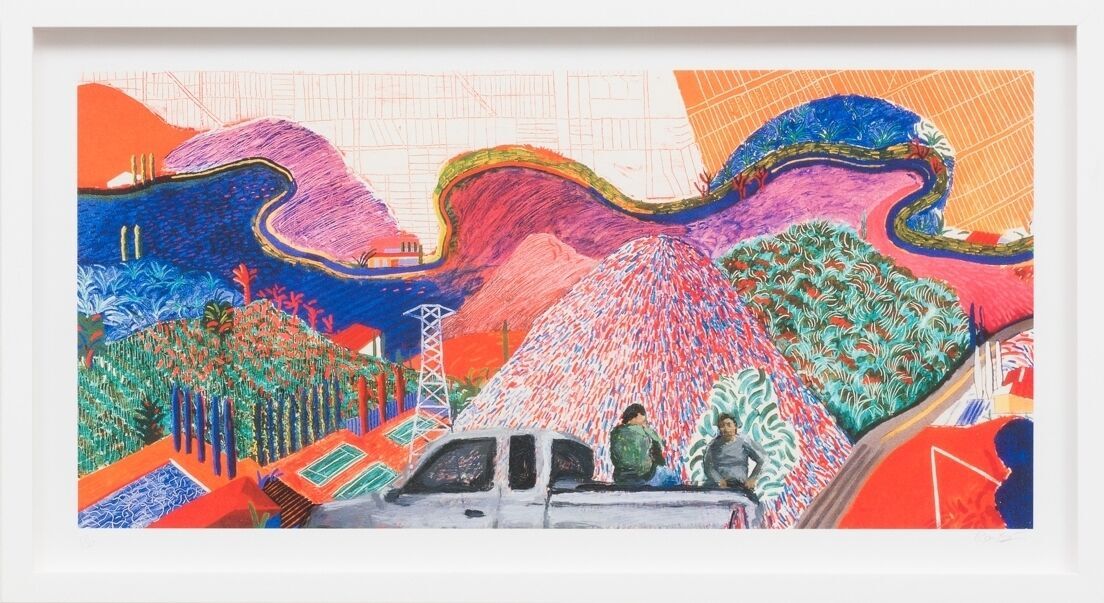
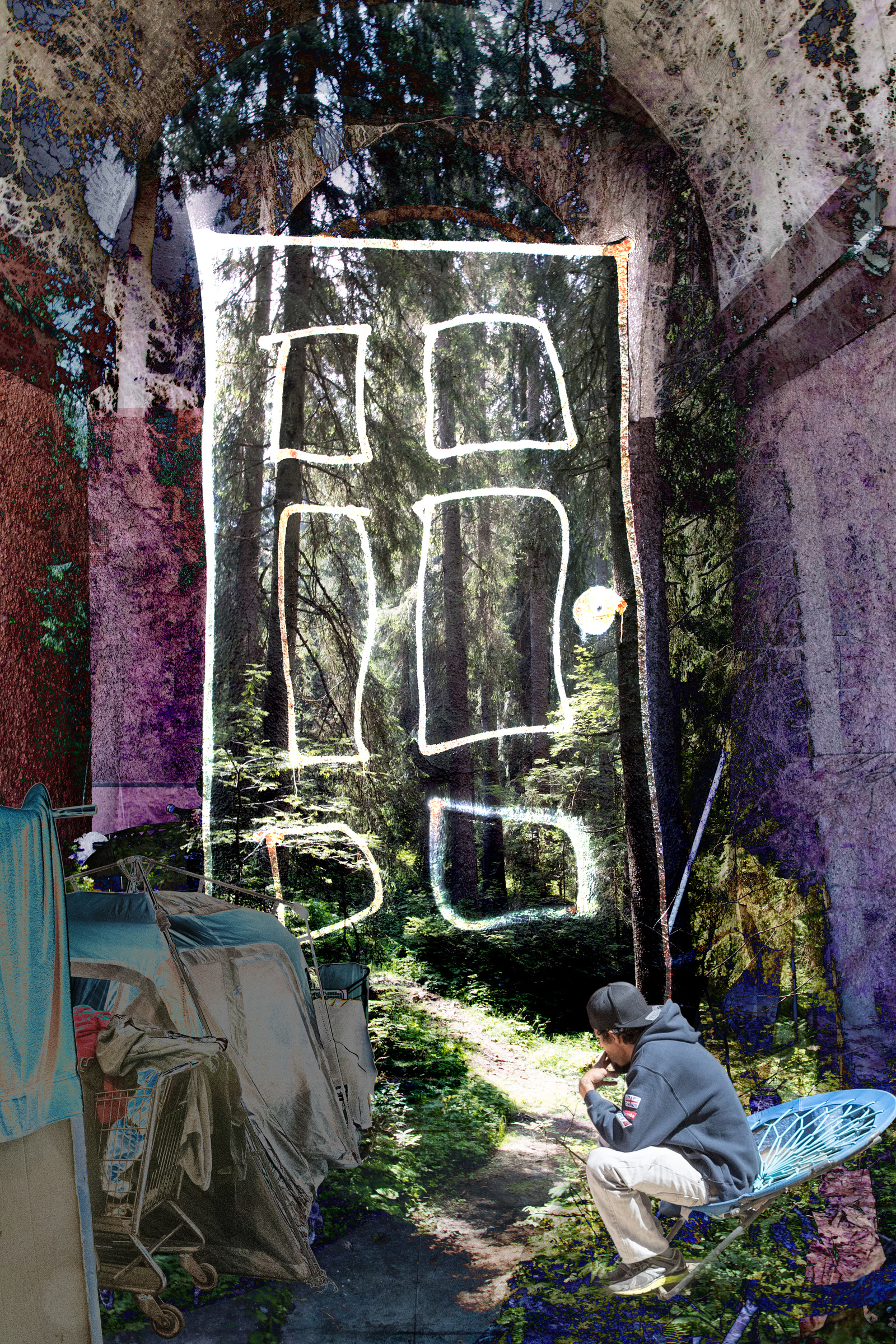
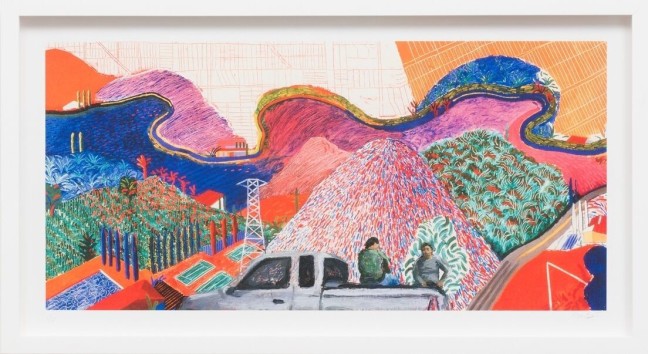
Above: (c) 2015 Ramiro Gomez, “Mulholland Drive: On the Road to David’s Studio (after David Hockney’s Mullholland Drive: The Road to the Studio, 1980)
With Gomez and Feldman’s work presented together in this new exhibition, the installation serves as a powerful and impactful statement on the influence of Latin America in the culture and art of Los Angeles. Included in the exhibition will be a never-before-seen commissioned painting from Gomez. Adding to the reception celebration is the live music of Mariachi Arcoiris de Los Angeles, the world’s first LGBTQ mariachi group. The reception and exhibition will be held at the West Hollywood Library.
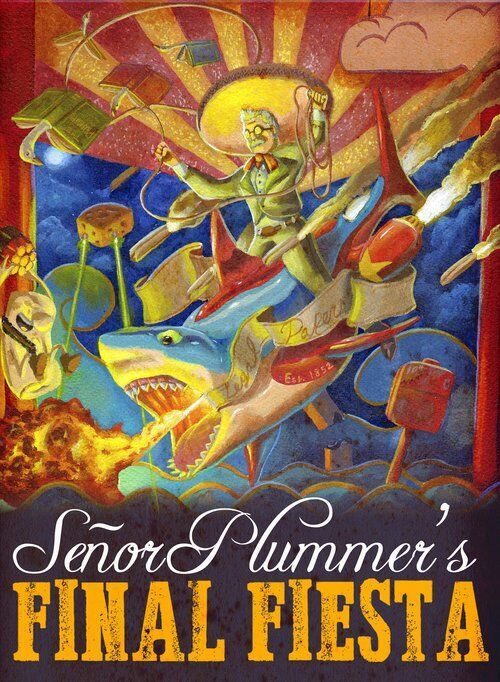
Photo credit: Otis Woods
Another WeHo Artes highlight is the commissioned performance of the Rogue Artists Ensemble’s interactive, site-specific theater performance, Señor Plummer’s Final Fiesta. Using a heady mix of tall-tales, puppets, masks, and music, the play celebrates the 75th anniversary of the 1942 book Señor Plummer: The Life and Laughter of an Old-Californian. Written by former Los Angeles Times writer John Preston Buschlen, the book documents interviews with Eugene Plummer, or Don Eugenio, a Spanish-American pioneer whose family once owned 942 acres of land in the area. Considered West Hollywood’s first resident, Don Eugenio is a fascinating, larger than life figure. Rogue Artists will workshop the play with an open rehearsal on August 19, and offer performances with full readings, sets and costumes August 24-26th in Plummer Park, the site of Don Eugenio’s last residence.
Of course, WeHo Artes offers other stellar programming as well, with PST LA/LA Getty Foundation-Funded Projects sited in West Hollywood presented by LAND, LAXART, ONE National Gay and Lesbian Archives, and MAK Center for Art and Architecture.
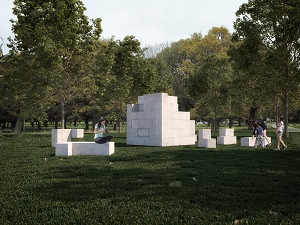
Photo credit: Sense of Place Artist Render, Estudio Jose Dávila, 2017
Jose Dávila’s Sense of Place presented by LAND, the Los Angeles Nomadic Division, is a commissioned work by the Guadalajara-based artist, a multi-site, large-scale, public sculpture exhibition which invites viewers into an experiential view of LA’s diverse urban landscape. The work paints a portrait of the city’s experiences, geographies, and histories. A nine-foot square interactive sculpture made up of 40 unique modular forms will be installed in West Hollywood Park, with an opening on September 16th. The sculptural work will be disassembled and reconfigured at three different public sites during the exhibition, which runs through May 2018. With each reimagining, scheduled for November, January, and March, the piece will take on a changed functional shape. It will return to both its original whole cube shape and the West Hollywood Park location in April 2018. The piece is Dávila’s largest public work, and his first major exhibition in Los Angeles.

Pável Aguilar, Retransmisión (
LAXART presents Video Art in Latin America, the first substantive U.S. survey on this subject, moving from the late 1960s to the present. The exhibition will be held at LAXART’s Santa Monica Blvd. location. The show moves from early video experiments in South America expressing dissent in an era of repressive military regimes, to the ways in which contemporary video artists discuss subjects such as labor, ecology, migration, and issues of identity and the consequences of social inequality. These single-channel video programs will be accompanied by a selection of dimensional environmental video installations.
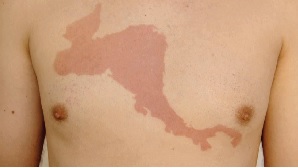
Photo credit: ONE National Gay and Lesbian Archives Gallery
Also on tap for WeHo Artes will be Axis Mundo: Queer Networks in Chicano LA, presented by ONE National Gay and Lesbian Archives Gallery at the USC Libraries and exhibited at the ONE Gallery, West Hollywood and the Museum of Contemporary Art Los Angeles’ Pacific Design Center September 9 to December 31, 2017. Co-curated by C. Ondine Chavoya, professor of art and Latina/o studies at Williams College, and David Evans Frantz, curator at ONE Archives, the exhibition features over 40 LGBTQ and Chicano artists with experimental works in a variety of mediums. Pieces created between the 1960s and early 1990s include works by LGBTQ and Chicano artists, many of whom passed away due to the AIDS crisis. Artist Edmundo “Mundo” Meza (1955-1985), who collaborated with many of the featured artists, will be a focal point of the exhibition.
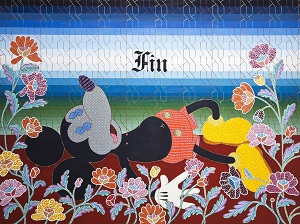
Photo credit: MAK Center for Art and Architecture
And at the Mak Center for Art and Architecture’s Schindler House, How to Read El Pato Pascual: Disney’s Latin America and Latin America’s Disney will be presented by MAK Center for Art and Architecture and Luckman Gallery at Cal State L.A. Over 150 works by 48 Latin American artists challenge nearly 100 years of cultural influence between Latin America and Disney. The exhibition, curated by writer and filmmaker Jesse Lerner and artist Rubén Ortiz-Torres explores the idea that there are no clean boundaries between art, culture, and geography. The large scale exhibition will have its reception at Schindler House September 9th, and will be split between that location and the Luckman Gallery on the Cal State LA campus.
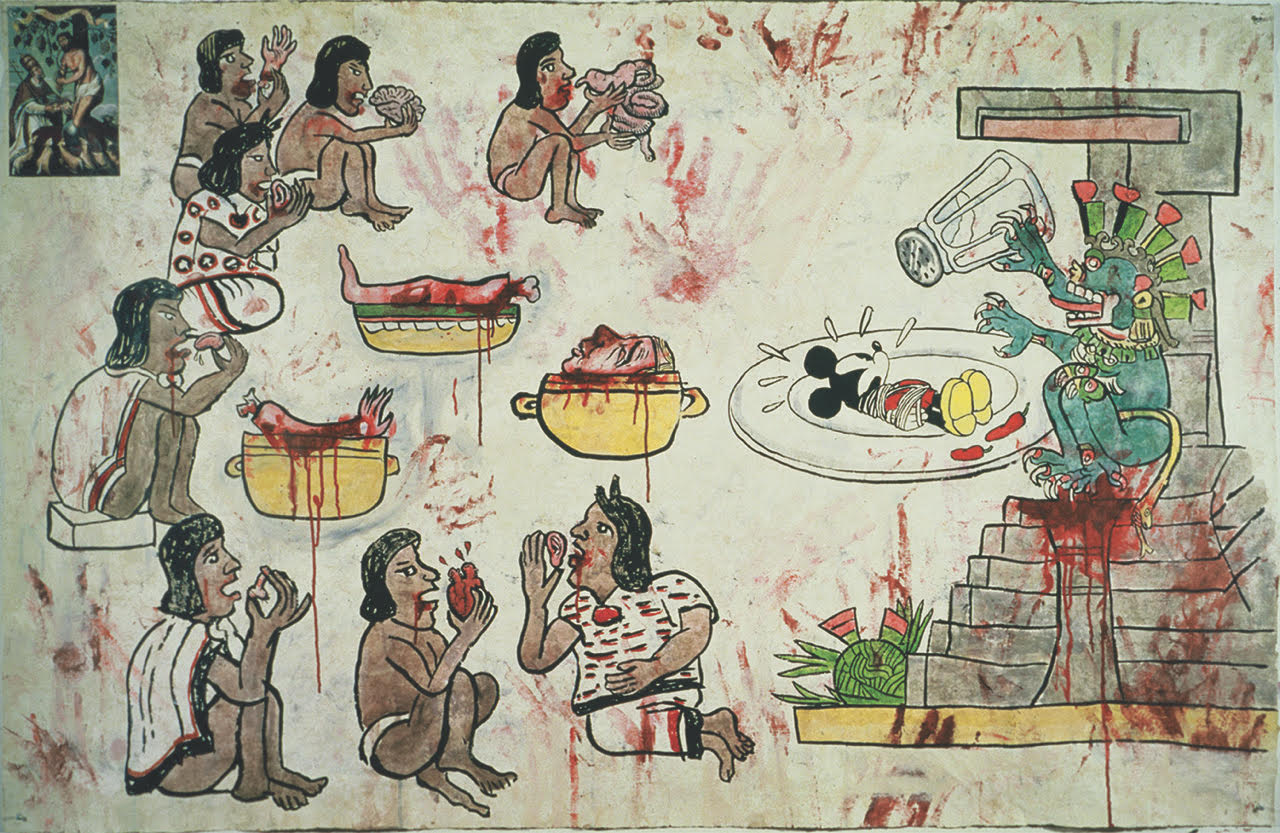
Photo credit: MAK Center for Art and Architecture
The Chase, a large-scale multi-piece sculpture is created by Los Angeles-based artist HACER, and will be installed on Santa Monica Boulevard east of Doheny Drive; and later in the year, Queer Califas: LA Latinx Art, will open in November at Plummer Park’s Long Hall. Both projects are part of the City’s Art of the Outside public art program.
For more information on WeHo Artes: http://weho.org/residents/weho-arts-and-culture/west-hollywood-celebrates-pacific-standard-time-2017
For more information on PST LA/LA, an inclusive and wide-ranging exploration of Latin American and Latino art in Los Angeles held throughout Southern California, and supported by the Getty Foundation, visit: http://www.
In West Hollywood, an exhibition of works by West Hollywood-based artists Ramiro Gomez and David Feldman will be shown at the West Hollywood Library (625 N. San Vicente Blvd., 90069) The opening reception will be August 23 from 7-9PM; the event is free and open to the public, but RSVPs are required; to RSVP, contact: nschonwetter@weho.org.
Señor Plummer’s Final Fiesta will be performed at an open rehearsal August 19, (drop in anytime between 1-4PM), and performances with full readings, sets and costumes on August 24, 25 and 26 at 7PM in Plummer Park(7377 Santa Monica Blvd., 90046) – the site of Don Eugenio’s last residence. Seating is limited; to reserve tickets RSVP at https://www.rogueartists.org/senor-plummers-final-fiesta – guests are asked to pay what they can to join the fiesta, with a suggested minimum donation of $5.00.
- Genie Davis; photos courtesy of the city of West Hollywood