
Scott A. Trimble: A Painter of Otherwordly Grace

scott 1

He’s a mystic and poet – and a prolific artist who paints rich and complex stories every day.

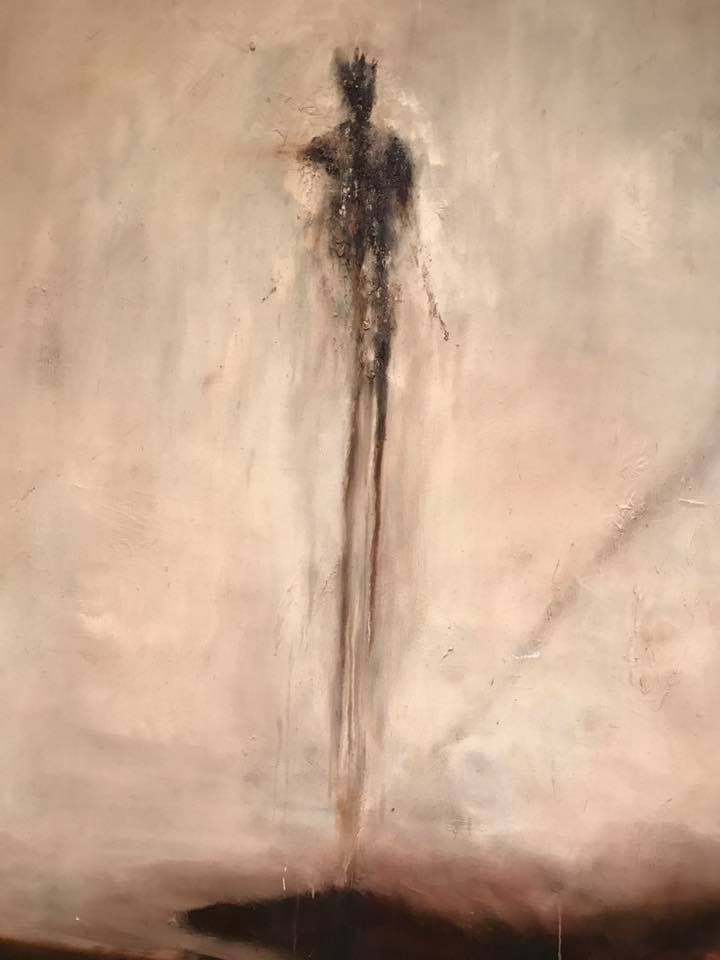
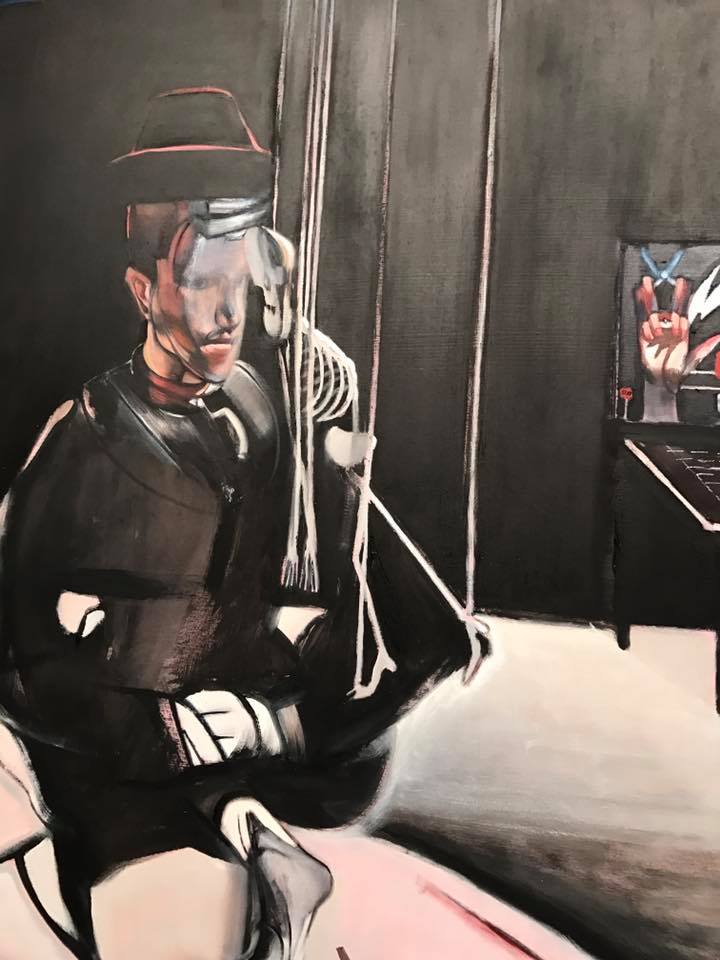
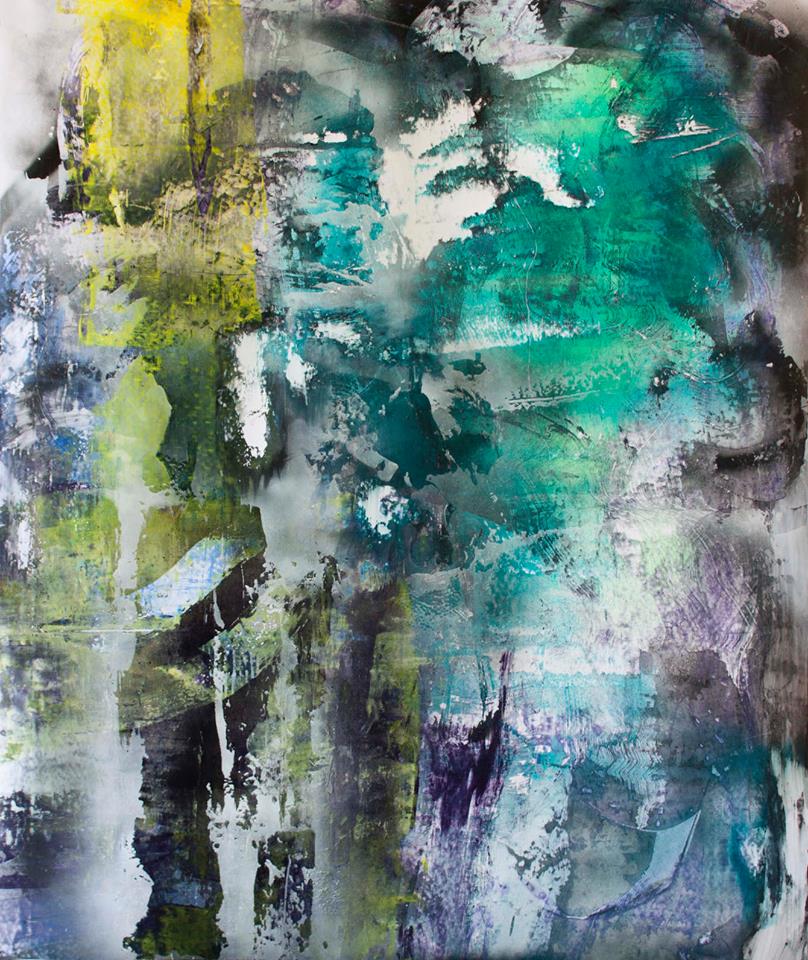
Scott A. Trimble is a painter of profound depth and grace; each work is not only visually acute but resonates with meaning both opaque and transparent. His unique, figurative yet freeform expressionistic style, captures light and motion in layers of paint, shadowy faces, and otherworldly landscapes.

scott 5

“What enables me to paint is that I found a way to not be concerned at all about what other people are going to think. I don’t engage my mind, I just try to use my eyes and enjoy myself-  it’s a real simple process,” Trimble relates.  “I don’t worry about something being particularly recognizable or anatomy being precise, I just enjoy what I’m doing.”

scott 6
Indeed, there’s an almost wild joy in his work, a thrumming sense of emotion in each piece.

Scott me 9
Each painting tells not just a story but a novella of emotion. One piece, “A Love of Place” was inspired as a reaction to what the artist calls a “disturbance in the essence of life’s fabric” by our current political landscape as well as by a strong love of place, according to the artist. Dealing with troubling politics and long days, Trimble painted aqua sky and sea – calm and divine. For Trimble, blue represents happiness.

“It was inspired by a time when my kids were young, and every weekend we would pick different environments in Los Angeles to explore – whatever popped up first in Google search, we would visit. What I learned and imparted to my boys, was that most people really loved where they lived no matter what we thought of the place. People who lived there, it was their home and they loved it. This is Los Angeles for me.”

The piece also features four small bars of light.  “I use that constantly – four is a reference to me, my wife, and two kids – so they always know I’m thinking of them.”

Scott me 2

He adds “In most of my paintings those groupings of four have three bars clustered together and one apart, observing or being observed.”

The observer – that’s Trimble indeed.

Scott me 3

“I’ve spent my whole life thinking the single most important thing in life is your memory. My mom had several strokes a few years ago and her memory is gone.  I’ve become interested in the way memory functions, the way it can be elusive, and memories mixed with other memories, and I wanted to replicate that process in the action of doing paintings that are physical manifestations of memory,” he explains, “and treat them with differing levels of preciousness, the way a really fond memory is nurtured and saved, where a less interesting memory is forgotten.”

With that elegiac thought in mind, Trimble has begun to paint over some works.

scott3

“I haven’t bought new canvas in five months,” he says. “Most of my paintings have been through the wash cycle more than once.”

Trimble notes that his very first paint-over was originally created in 1984, and painted over in 2014. “When my sons asked me why I had partially painted over something they had grown up with, I replied that it took me 30 years to finish it,” Trimble laughs. “It was an empowering thing to do to paint over it.”

scott 2

Although Trimble has painted for decades, he took a hiatus when day job and family life consumed his time. “I had no time at all to paint, so I started again in 2013 when my son started college.”

He painted angry portraits of unlikeable people, abstracts, shadow figures, human figures, faces, and landscapes.

scott 22

His voluminous output – art perhaps stored in his heart for years, follows an almost relentless process of nightly painting. “When I get home at 7:15, I come straight to my garage studio and work until 10:30 or midnight. I’m enjoying the moment, flashing through memories with paintings that are growing and changing.”

Older works exhibit thicker paint from paint-overs.

Many of his paintings have a dark and dreamlike quality, with images partly out of focus, due perhaps in part to working by a dim 60-watt bulb in a small space.

scott me 6His titles reflect his past studying screenwriting – which is the wordsmith equivalent of visual poetry.

Scott me 4

Take “I’m Pining for our Bench at Two Bunch Palms,” with a white bench, a reflection in a pond of skyline and desert mountains. The viewer immediately recognizes desert, but the intense blue is oceanic – it’s the visualization of the longing in the title, grand and inchoate.

“Ultimately in each of my paintings, I try to create pocket narratives, a short story comprised of a set of mixed up memories, emotions, and history, that are distilled down to a single sensation. It’s not something you can easily describe, but it’s meant to be felt.”

Feel what Trimble feels this month: the artist has 5 works that are a part of Satan’s Ball, the large group show currently at DTLA’s Art Share, and a collaborative piece at VS, a show which pairs artists together at Gallery 825 in West Hollywood. Sixteen other paintings are on exhibit in a stellar solo show at Laemmle’s NoHo Theater in North Hollywood.  You can see more of the artist’s work at www.scottatrimble.com

  • Genie Davis; Photos: Genie Davis and provided by artist
Steve Seleska: Environmental Artist

Seleska 2

With a rich and beautiful show at Ark Gallery through June 30th, Steve Seleska offers a window into time and space. There is no “final frontier” here, but rather a doorway into multiple frontiers, into worlds within worlds. The self-taught artist’s first solo show, Uncharted Territory,  presents environments and fantasy landscapes, evocative work that is not only visually fascinating, but morally insightful. Seleska is encouraging viewers to look at changes in the world today on what he terms a molecular level; big events that affect human existence taken on an intimate scale.
Seleska_Steve_ARK_Exhibition

This body of work has a political passion, one that speaks to the national climate that has led to March for Science rallies, and nationwide cries for real facts and analysis versus propaganda. The fragility of our world and its eco-systems is the subject of Seleska’s artistic territory here, which presents the wonders of nature, the cosmos, the layering of the scientific with the phantasmagorical, the web of life.

SeleskaSeleska says “My work focuses on environments. My Micro-Environment series focuses on human observation of microscopic environments, perhaps viewed through a microscope,” he explains.

Selesca Landscapism 4

Landescapism #4 above. “With the Landescapism series, the human becomes microscopic, observing a dystopian environment.” The viewer is deep inside the world here, beneath the shell of life as we know it.

The artist says that Unchartered Territory is representative of his current body of work, both in its intensity and its political bent. “My influences are environmental disasters. Oil spills and forest fires provided many visual references,” he relates.

Seleska Microenvironment 15

His Micro Environment #9 evokes motion, living creatures, caught and suspended, encapsulated. Micro Environment #111 appears like glossy liquid, water, oil, mutable substances.

Seleska Micro 111

Deeply dimensional, like lace spun by spiders or filaments strewn by another species, Seleska’s work at Ark literally and figuratively makes viewers want to dive inside his world. Both graceful and intense, these fantastically textural works appear ready to come alive, swirl a new universe straight off the gallery walls.

Seleska 3

In terms of his thick and dreamy medium, Seleska notes “Layering acrylic and resin allows me to create a three-dimensional effect that invites the viewer into the painting.”

Although Seleska owns Resin Floor Studios, a company that creates art-like unique flooring, Seleska likes to keep his business and his art work separate. “The only real connection is that I use epoxy resin in both.”

The medium is at least in part the message in Seleska’s artwork, as he explores human events and consciousness. “Multiple layers of epoxy resin give rise to an intricate dimensionality. Reactions between oil, acrylic, resin and other chemical compounds hold evidence of interconnectedness and reflect transformation.”

Seleska 4

Seleska says his intention is to have the viewer “consider their relationship to our mysterious, precarious existence. My subject matter combines the representational and abstract. Together these elements create a transcendent aesthetic — an environment that is there and simultaneously not there.”

While it is still “there,” catch the last days of Seleska’s Ark exhibition this week, and see Seleska again with an exhibit at Launch LA in September 2017.

Samuelle Richardson: Of Fine Art and Fabric

Sam 6

Samuelle Richardson may have entered the world of fine art as a painter, but her work now is in creating astounding fabric sculptures.  These beautiful pieces seem ready to spring to life.

“The figures I make are hand-built armature with fabric stretched and stitched over the form. The character of a shape is my most important concern and I achieve it by building up layers,” Richardson relates. “My art practice is rooted in life drawing and long ago, I saw that a deeper knowledge of anatomy would help me make better decisions in rendering the human form, so I immersed myself in a process called écorché where a scale model of the skeleton is built by hand, in clay.”

Sam 4

Her pieces feel magical in their completeness, as if motion were simply frozen within their fabric, and should one look away, the pieces would come alive.

Sam 10

Her Ghost Dogs, which use wood as well as fabric, seem ready to take off and run. They live up to their title, haunting figures, beautiful and frail.

Sam 2

A different sort of beautiful energy infuses the artist’s earth angels, figures that are flying toward and carrying earth to safety.  These gliding and protective figures are suspended in a ten foot radius, soaring and strong.

Sam 1

To see such powerful work made from cloth is to wonder both at the strength of the medium and the intensely classical form of the artistry.

Sam 3

“Fabric has been familiar to me for a long time. My background in the design industry is where important decisions were made based on the characteristics of fabric. Various types of fabric yield different results when applied in the same way.  I love the feel of fabric and I see characteristics in fine material that remind me of the way my favorite painters have mastered color,” she says.

sam 9

“In my three-dimensional work, I especially appreciate the crush and pull of fabric as it relates to skin over bone.  I also like matching fabric to the character of the sculpture.”

Richardson explains that she saw a catalog of Louise Bourgeois’ Cell Series and knew she’d have to try her cloth figure technique. “I had made figures in clay before but I had not yet thought of combining my knowledge of fabric and the three dimensional form,” the artist explains.

Sam 12

The result are sculptures that seem incredibly alive, as if beneath their cloth they breathe.  The softness of the material further enhances the powerful and persuasive illusion that there is a living spirit beneath the cloth.

“Today I am looking closely at images of Manuel Neri’s work from the 50’s. The series was made in the image of his favorite model and there are some interesting figure studies done in fabric strips, wire, wood and other found material.  I am also looking for ways to incorporate found material in my work and I gain a lot through the perspective of my favorite artists.”

Asked who those favorites would be, Richardson cites “Calder for his humor, Diebenkorn for his elegant command of color and design, and James Havard for his rare quality of naïve imagery based on a classical knowledge of the figure.”

Sam 13

Richardson credits her transition from canvas to fabric to the vicissitudes of violent weather. “I might still be a painter today had my studio not been destroyed in a record-breaking storm in 2009. It took a year to repair the damage, so I moved my work into the house and began experimenting with hand-built armature and fabric. I liked my new medium so much that I never looked back.

Richardson will be part of a July 2017 group show curated by Betty Ann Brown at Groundspace Project, It’s a Wonderful World. Looking forward ahead, she’s scheduled for two group shows at MOAH in Lancaster, Calif., in 2019.

“My new work is underway and it will be about human figures.  I plan to make a group that interacts similarly to the figures in Ghost Dogs.”

  • Genie Davis; photos: Genie Davis; and courtesy of the artist


Ramona Otto Goes “Inside the Jewel Box”

Ramona 6

Above, detail from the work of Ramona Otto.

Artist Ramona Otto’s solo exhibition at the Fine Arts Building in downtown Los Angeles is a glittering look at found art.

The cathedral-like interior of the 1917-era Fine Arts Building is a spot-on perfect venue for Otto’s 17 jeweled sculptures which evoke Faberge eggs and intricate mosaics. The show, curated by Nancy Larrew, runs through July 8th.

The lush, sparkling, and layered works began, Otto says, with her search for vintage treasures at flea markets, yard sales, and antique shops, found pieces for her dynamic artistic puzzles.

Otto intends her art work to complement the architecture of her exhibition space, and she does, with both location and art quite literally dazzling. The Santa Monica-based artist has been crafting her found-art works for over twenty years, as well as working as an elementary school teacher for gifted children.

Ramona 7

There are some swirling, rich works here that Otto says represents the body of her work. “I have always used vintage pieces in my art. I like the history and the stories associated with the pieces that I find.  The sculptures in this body of work are assemblages made from vintage jewelry. However, I continue to make other art that is made from a wide range of vintage and antique materials. I made most of the furniture in our house, and in the exhibit, you’ll see a cabinet from my studio that is made from vintage signs, yardsticks, hardware from an antique printer’s type case, and a hand carved folk art carving of an angel that my husband gave me.” As well as her jeweled “Dog is My Co-Pilot,” below.

Ramona More 1

Otto says her work is all about her love for a “treasure hunt” and the “preparation, organization, and research involved in finding something illusive, the excitement of searching for hidden gems, the thrill of finding the unexpected, and the payoff of completing a time-consuming endeavor.” 

She says that collecting the materials for each themed piece can take many years. “It provides me with many ‘thrill-of-the-hunt’ moments. Each time I find a piece that will work perfectly, my heart skips a beat. My studio contains several ‘cabinets of wonder’ to keep everything organized.”

Ramona show 2

Above, a look at Otto’s studio.

If finding the pieces to complete her art is a long experience, so is crafting each work.

The actual making of the piece is very labor intensive, taking many months to over a year. When I work on a piece, I surround myself with piles of jewelry with a combination of infinite possibilities. Searching for pieces with the right shape to convey the right idea is very much like completing a puzzle without a picture to guide me.”

The exhibit itself takes its title and approach from the exhibit space, in a tribute that is as involved as Otto’s art-making process.

Ramona show 1

Above, interior of the exhibition space.

“When I visited The Fine Arts Building for the first time, memories from my childhood came rushing back to me. Growing up in Grinnell, Iowa, we had a great deal of civic pride over an architectural gem that we felt lucky to have in our small hometown. It was common knowledge that a famous architect, Louis Sullivan, had designed the Jewel Box Bank.” She notes that in that moment she had her first artistic experience with architecture.

bank

Above, interior of the Grinnell bank. Courtesy of BarBBlog

“I loved the intricate terra-cotta carvings on the façade, the griffins that stood guard over the entrance, the soaring ceilings, the gleaming brass cages where we cashed checks, and the stained glass windows that filled the space with a rainbow of colors. When I saw The LA Fine Arts Building for the first time, I was immediately struck by how many of the architectural components were reminiscent of the ones in the building that I loved as a child.”

Otto says she was thrilled to have found the perfect venue for her sculptures, including it’s child-friendly attributes. “As a former teacher of gifted students, it was always very important to me to inspire creativity in my students. I love that the venue of the Fine Arts Building is child friendly. Everything is behind glass so parents don’t have to worry about small hands reaching out to touch the art.”


Otto also loves inspiring viewer curiosity, including many hidden “Easter eggs” in her work.  In short, along with the beauty of her works, the intricacy of their creation is carried through to the intricacy of the finished design, challenging and meaningful, playful yet thoughtful.

Ramona More 2 Pearl Before Swine by Ramona OttoHer “Pearls Before Swine” features a vintage art deco mannequin followed by fiberglass and wooden pigs, riffing on everything from “lipstick on a pig” to “silk purse out of a sow’s ear,” and of course, “when pigs fly.”

Ramona More 4

Ramona 2

Meanwhile her “Easter Bunny Delivers a Faberge Egg” takes on Easter themes with a wooden rabbit and an egg mounted on an art deco light fixture. Note the “easter eggs” within this spring-themed confection, below.

Ramona More 5 Ramona More 6

Otto also cites her piece “Elephant in the Room;” created of white rhinestones, the piece includes letters that spell out ‘ignore me,’ with its circus headgear referencing  the mistreatment of elephants when they worked in the circus, as well as hidden references to the parable of “The Elephant and the Blind Man,” Dr. Seuss’ “Horton” character, and Jean de Brunhoff’s “Babar” among others.

While these incredibly clever references and word play are terrific, more to the point is the deeply involved visual layers that Otto uses. The richness of her color palette, the tactile texture of her work, and the rather astonishing combinations of items that she fits together are enormously compelling. To look at a piece is to dive beneath its jeweled surface and into a hidden depth of shimmering light. 

Saturday, July 1st, the gallery will host a reception from 3- 6 p.m., with an artist’s talk at 3. There will also be a second closing reception on Sunday July 2nd, from 2-4 p.m.  The Fine Art Building gallery is open regularly 8 a.m. to 8 p.m., seven days a week. It’s located at 811 W. 7th Street in DTLA.

  • Genie Davis; Photos: courtesy of the artist and by Leonard Monje; Grinnell Merchant Bank courtesy of BarBBlog.