
Creedmoria: A Terrific Film Gets VOD Release

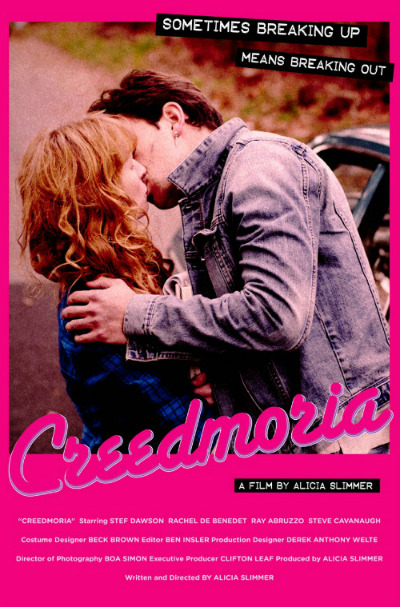
creedmoria Poster shrunker

F23C4556

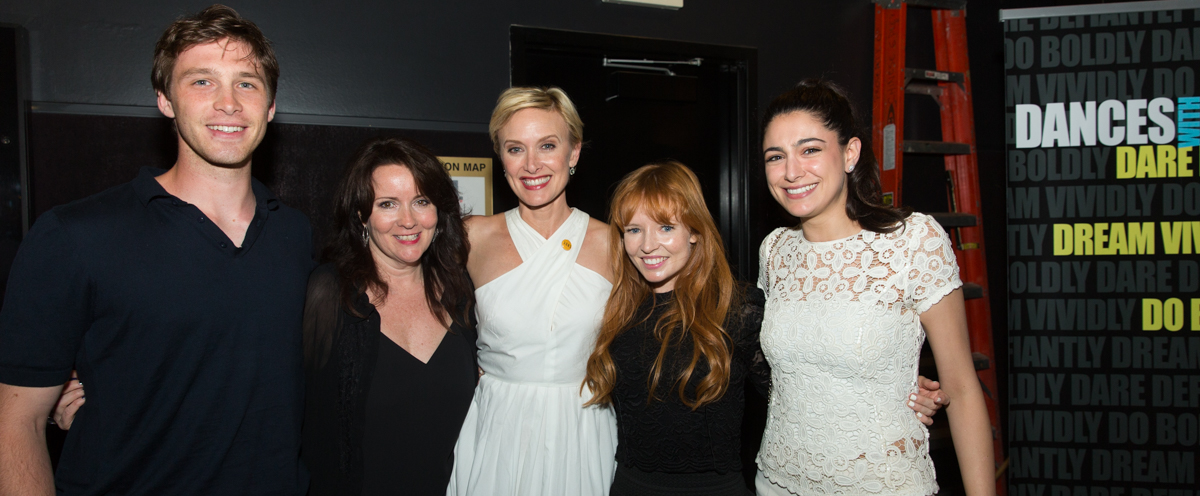
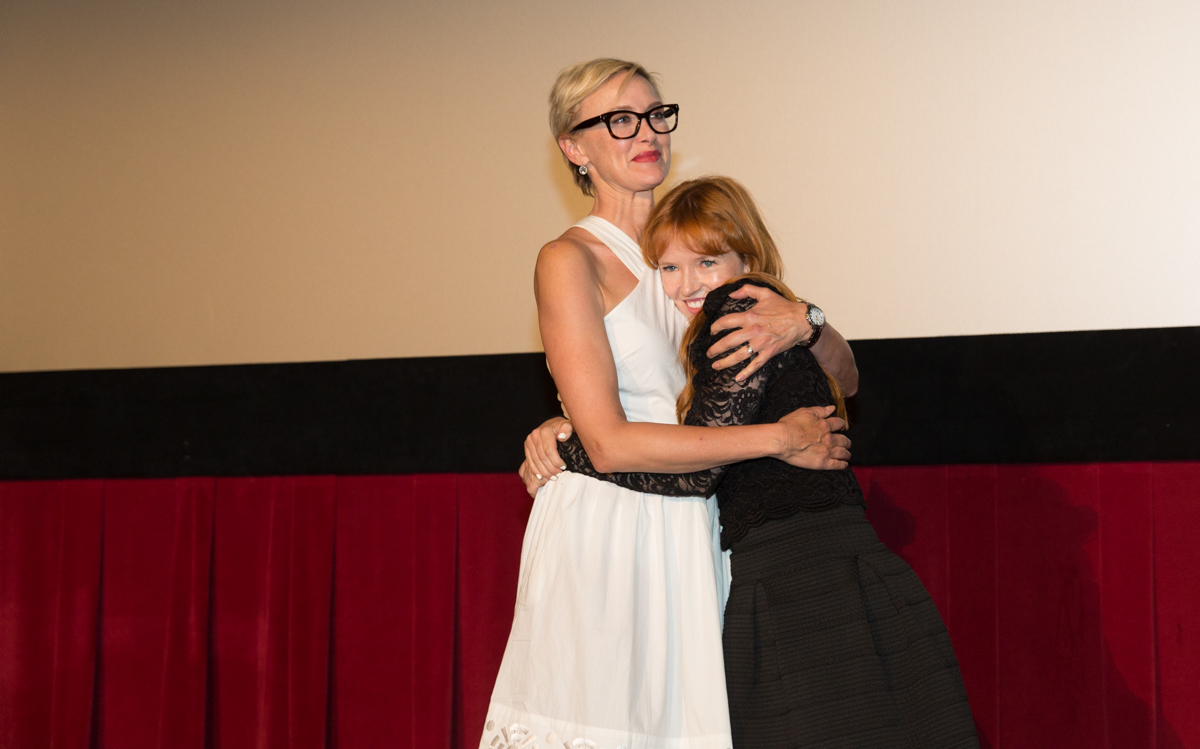
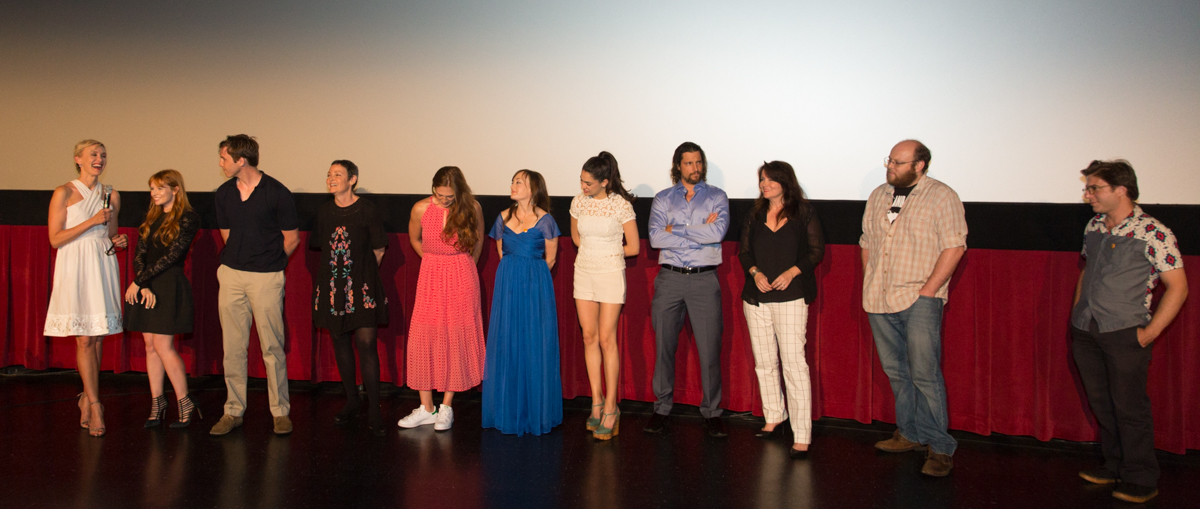
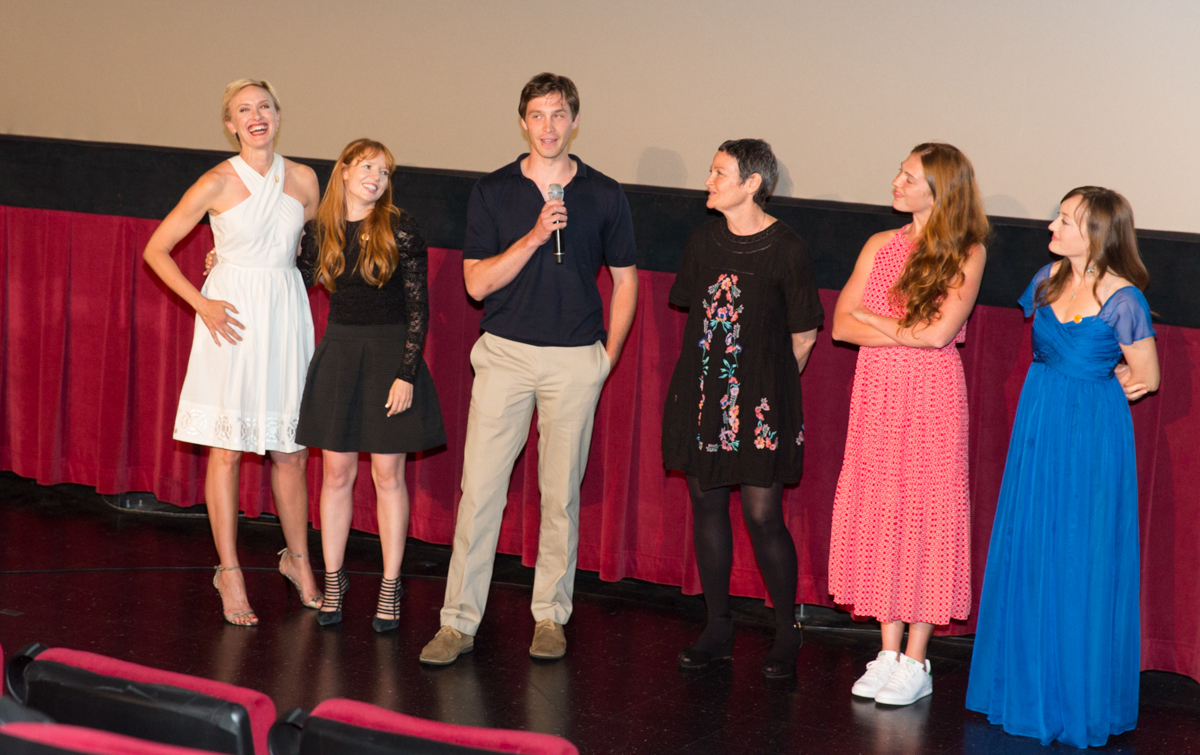
Above star James Kelley, director Alicia Slimmer, stars Rachel de Benedet, Stef Dawson, and Giuliana Carullo of Creedmoria.

Just in time for Mother’s Day, get ready for the VOD release of Creedmoria on May 15th.

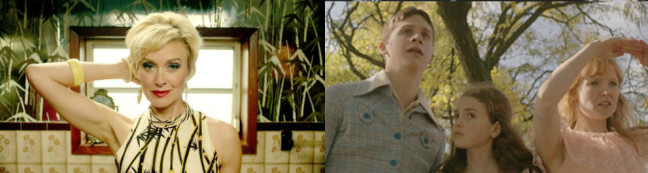
The 12-times winner festival film – Cinequest, Brooklyn Film Fest, Dances With Films, and more –  Creedmoria stars Stef Dawson, ranked #1 by PEOPLE Magazine for Australia’s Best Up-and-Coming Actresses and one of the magazine’s “Ones to Watch.”

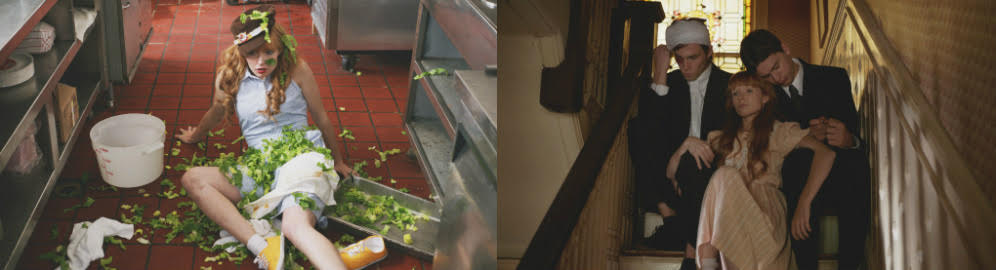
When we viewed the film at LA’s Dances with Films Festival, we were in love with this coming of age film with a stellar score, spot-on direction, and pitch perfect acting. Writer/director Alicia Slimmer has created something wonderful here, in the tale of growing up in a dysfunctional family – and coming not just of age, but into one’s own. Stef Dawson is about to be a breakout star, and her full-on inhabitation of lead Candy is absolutely riveting.

F23C4524

Rachel de Benedet plays the narcissistic and cruel mom, and her real life baby son is her grandson in the movie. While she jokes about how difficult it was not to cuddle her son on screen, her powerful portrayal of the mom is unforgettable. It’s a Mother’s Day cautionary tale.

F23C4502

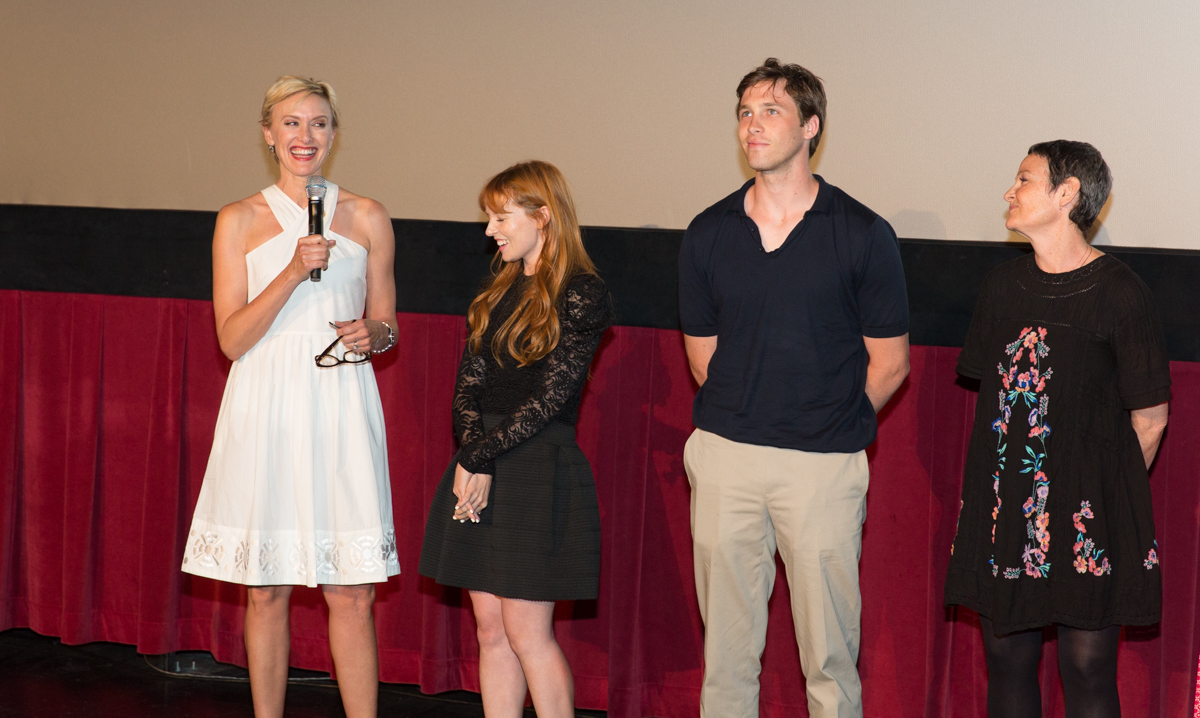
Director Slimmer relates. “It took me awhile to make this film for a number of reasons. For one thing, I got pregnant, and had a baby. But really that got me thinking about how it was to be a mom, and the idea came to me of how to not be a mom, how do you survive a crazy family in a crazy time period.”  Creating a period piece set in the early 80s wasn’t easy with a limited budget. “It was tricky. We couldn’t afford to have the street locked up. As to the period cars, I pimped up my best looking girl friend to go to car shows and ask people to show up on the set, and they did. And my wonderful costume designer, she just literally took people’s clothes, and shoes that she thought would fit. The house was my co-producer’s parents’ house. It was stuck in a time warp, we were just lucky.”

F23C4522

Slimmer has a fantastic score, “I used the score I wanted to use, and made the film I wanted to make,” she says.

She cast the production herself doing free online casting listings. “I knew Rachel already, and Stef sent out an amazing self-taped audition complete with 80s attire,” she relates.

unnamed (15)

Dawson, an Australian native, had never been to New York before. “I took my accent from watching a bit of The Nanny growing up, and that just stuck in my brain.”

F23C4545

Creedmoria is about growing up in Queens, the power of hope, and the craziness in one family set against the nearby state mental hospital, Creedmoor. Both funny and sad, don’t miss this one.

  • Genie Davis; all photos: Jack Burke; poster courtesy of Creedmoria


Cinematic Mad Love – Fou d’Amour

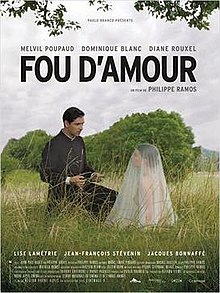
220px-Fou_d'amour_poster

The darkest of dark comedies or a strangely seductive decent into insanity? In Mad Love (Fou d’Amour) a comic morality tale and a terrifying depiction of a monstrously deluded man merge. Highly charged and tinged with eroticism, the story of a small town priest’s romantic foibles makes for compulsive viewing.

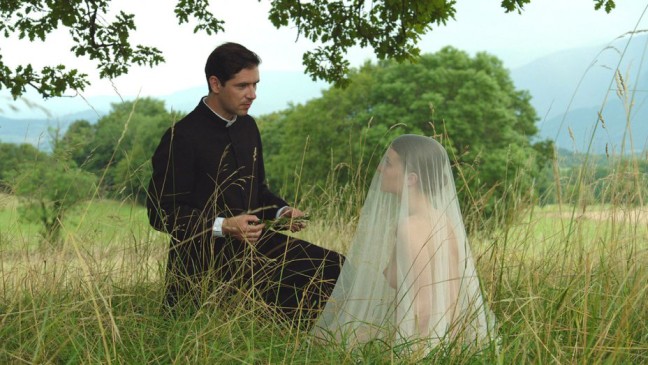
 Set in an isolated French village with a fecund green landscape, the film begins with the beheading of its protagonist, a priest (Melvil Poupaud). With his head lying untended in a corner away from the bloody guillotine, the priest begins to narrate his story, and what brought him to his death.

MELVIL_P.jpeg

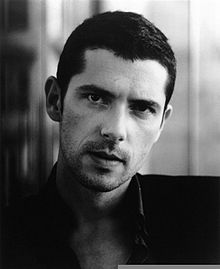
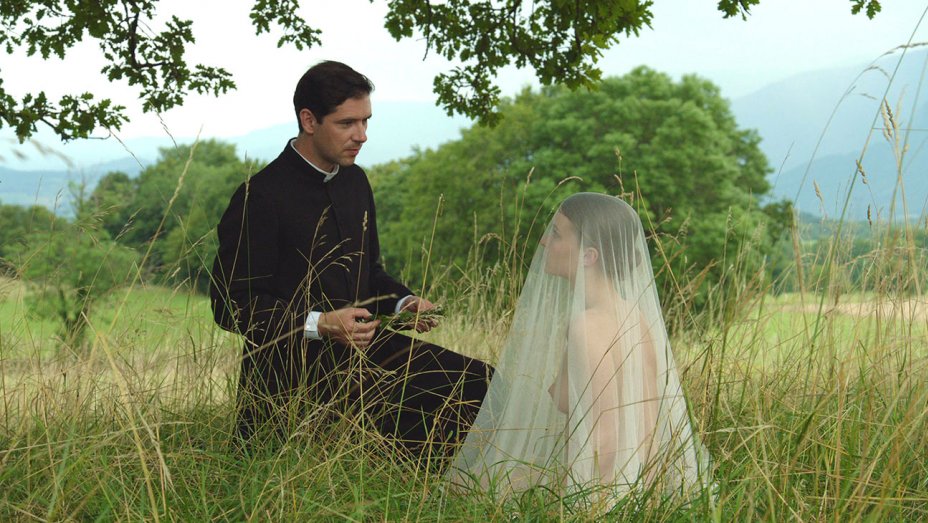
As self-justifying in death as he has been in life, he tells of his arrival in the small town of Albon, apparently transferred after rumors of an untoward sexual dalliance in a less isolated town. As played by Poupaud, above, the priest is a magnet for the unsatisfied women of the town, including a wealthy widow, Armance; a lusty milkmaid, Odette; and several other pliant women. With Armance’s help he starts a soccer club and a theater group, supplementing his priestly and carnal duties to stave off boredom.

As a religious mentor, the priest is sorely lacking in virtue, but he infuses the town with a lively spirit, providing activities both innocent and lustful that engage many of the town-folk.

His secret trysts and non-secular activities are briefly questioned by a priest from a neighboring town and his superior, but any concerns are sloughed off, and the priest’s rather idyllic existence is allowed to continue.

Diane_Rouxel_Cabourg_2016

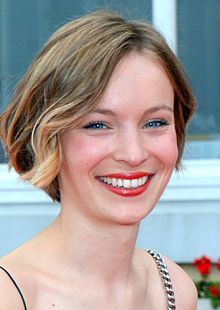
But then comes the arrival of Rose (Diane Rouxel), a stunningly lovely and innocent young blind woman who joins his theater group. The two initially seem somewhat evenly matched in both their passion and secretiveness; Rose arranges their initial clandestine meetings under the nose of her grandmother. Rose is as much seductress as she is seduced, appearing before the priest naked, clad only in a sheer veil. But, of course, none are so blind as those who will not see, to paraphrase the Old Testament.

123635_-_h_2015As inevitable as the slice of the guillotine, things do not stay idyllic for long. Rose becomes pregnant and the priest becomes unhinged, first abusing Rose, then begging her forgiveness. It is Rose, however who gives the priest his penance, denying him access to her, and leaving the village for a time.

Despite spending a week in the woods waiting for God’s answer to desperate prayers and renouncing some of his more earthly pleasures, when Rose returns to town, ready to give birth, the reason for the priest’s date with the guillotine becomes horrifyingly clear.

While the film’s tone never wavers from the darkly comic tone set by its self-aggrandizing narrator,  it does darken in its penultimate moments, when the priest eliminates the threat to his ministry.

Somewhat surprisingly based on a true story, the film has the look and feel of a fable, from its bucolic village setting to the justice of the priest’s beheading. Although set in the 1950s, this tale could be told anywhere in time,  one of both madness and vanity. Visually, director Phillipe Ramos, who also serves as his own cinematographer, has created images that are steeped in a kind of fairy-tale quality, rich and damp, with stone buildings and dusty stables something that transcend time.

As lyrical and licentious as its narrator, Mad Love is about a delusion that reaches even beyond the grave, its wry sense of humor leading viewers to a complicit involvement in the priest’s twisted confessionary story.

The Breaking Point: Documentary as Thriller

BreakingPoint_2000x2850_preview

With The Breaking Point, three-time U.S. academy award-winning documentary director Mark Jonathan Harris teams with Ukrainian director Oles Sanin for this American-Ukrainian production, a thoroughly compelling thriller of a documentary about the War for Democracy in the Ukraine. Sanin directed the Ukraine’s official entry for the 2014 Academy Awards for Best Foreign Language Film. 

Together, the directors have created powerful tension which builds exponentially throughout the film,  as they examine a country transformed by a democratic revolution. The multiple protagonists, who have given up their lives to fight a Russian invasion, are each provocative storytellers, bringing their personal experiences to the insightful analysis of a war that has killed over 10,000 people and displaced 1.9 million Ukrainians.

It’s a harrowing story, and Harris, known for carefully culling those he casts, has shaped a taut tale.

Essentially, Breaking Point examines revolution and war on an intimate, personal level. And, it offers a potent warning against allowing foreign powers into the election process and the press — a warning that should resonate strongly with viewers in the U.S. as Russian interference into our own election continues to be investigated.

Breaking Point begins with a poetic voice-over on a foggy road, as one of the film’s subjects, discusses his belief that “beauty, art, and love” will save the world. But these beliefs have been put the ultimate test. He notes that when “they started killing people – it was the breaking point, when people realized helping from a distance was not enough anymore.” From a look at a bleak and bombed out airport still under attack, the film neatly sequees back to 2013, when a social media post drew huge crowds to Maiden Square in the nation’s capital, Kiev, to protest the Ukrainian president’s refusal to allow the country to join the EU.

With tense and compelling editing and the juxtaposition of a variety of stories, the film describes how the protestors “lost the fear of death,” and takes a long hard look at the “most blatant land grab” for the Ukraine’s territory by Russia’s Vladimir Putin, and how the revolution against Russia’s interference led to the formation of a people’s army.

Director_preview

Above, Mark Jonathan Harris

Harris and Sanin expertly weave stories such as that of an investigative reporter run off the road and beaten by thugs affiliated with the Ukrainian government, with that of resistance leaders, and political scholars.

The shocking recognition of Russian influence in the media, as well as the government itself, should strike a familiar chord for viewers – the phrase “fake news”  is all too real in the Ukraine. From photoshopped images spreading lies about protesters to paid actors portraying pro-Russian Ukrainian citizens, the manipulation is chilling and well-orchestrated. In describing the Russian propaganda machine, the point is made that “Russians understand western media better than western media does. They understand the short attention span… the flood of events.”

In short, Breaking Point offers an entirely relatable story, a tribute to the spirit of the Ukrainian people and their belief that they could win their fight and recover.

With subjects narrating their stories in an interwoven quilt of first-person events, this harrowing look at the Ukraine is both raw and real.  Viewers will find themselves on the edge of their seats, as the events that began with a protest on The Maiden unfold.

The underlying message of the film could not be more timely, that the future of European democracy, and perhaps of democracy itself demands that Russia stop undermining the west. In the Ukraine, ordinary citizens took on those demands; in today’s U.S. political climate, the film is a must-see.

  • Genie Davis; photos provided by filmmakers


Ernie Holzman: Life ReFocused

Terry 1

This Sunday, November 12th, join Ernie and Terry Holzman in an exhibition of sculptures, assemblages, collages and more – in the presentation Ernie Holzman: Life ReFocused. The art show offers a completely different look – a deconstructed one – into the phrase “lights, camera, action.”

The beautifully curated exhibition celebrates film cameras and lenses from the 20th century. Presented by writer-director Matt Reeves (War for the Planet of the Apes, Dawn of the Planet of the Apes, Cloverfield), Oscar®-nominated cinematographer Jeff Cronenweth, ASC (The Girl with the Dragon Tattoo, The Social Network), and cinematographer Ernie Holzman, ASC (Without a Trace, Cora Unashamed, Thirtysomething), the event offers assemblages and sculptures created by Holzman, as well as a rare print of the iconic set of Alfred Hitchcock’s Rear Window. All proceeds benefit cancer research at City of Hope.

Terry 3

When cinematographer Ernie Holzman was diagnosed with Non-Hodgkins Lymphoma, he had to retire from making movies and television. He put his creative energy into deconstructing vintage motion picture cameras a friend had given him and re-assembling the pieces into abstract sculpture.  In order to give back to the cancer community that saved his life and put him into remission, Holzman is presenting 75 Life Refocused works for sale to benefit the City of Hope Cancer Center.

Holzman relates “The opportunity to create art, and ultimately have this showing, has not only been enormously healing for me, but has given my life greater meaning than I have ever known.”

His wife Terry Holzman made sure none of the exquisite memorabilia went to waste. 

Terry 2

“My part of the show is I took all the extra bits—thousands of extra motion picture camera parts, from large lenses to tiny screws, and created 150 6×6” collages. It’s called Splice Here: Collages by Terry Holzman,” she relates. “I used the word “Splice” not only because it’s a film term, to join together photographic film segments, but also as a general term to “join together or unite” which is what Ernie and I are doing. Uniting to raise money to benefit cancer research at City of Hope.”

Enjoy the art, live music, food, and drink and help support the Holzmans this Sunday from 4-7 p.m. at RED Studios Hollywood, 864 N. Cahuenga Blvd, Los Angeles, 90038. An RSVP is not necessary to attend.

  • Genie Davis