
Lock/Unlock Opens New Doors to Art at Loft at Liz’s

Lock/Unlock Opens New Doors to Art at Loft At Liz’s  by Genie Davis
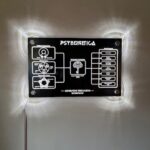
LOCK/UNLOCK examines the past, present and future of security, privacy and protection through art and technology. Interactive, inventive installations and artwork cover the gamut from 19th century BC lock and key mechanisms to today’s present encryption and biometrics.  Participating in the exhibition, a part of the Getty’s PST programming of art and science pairings, are artists, engineers, coders and historians, including:  Krista Blake, Derek Curry, George Dyson, Liz Gordon, Jennifer Gradecki, Debby Kline, Larry Kline, Laure Michelon (Studio MMR), John Peralta, and Lena Alexandra Root.

As the exhibition’s curatorial notes state, the artists in this exhibition are posing questions such as: “Do we consider privacy a human right? What is the trade off between privacy and transparency? Are we afraid of technology or who controls it? Are we willing to change our digital behavior?” All intriguing questions and premises for art exploration, as is the notation that “the need for security systems remains resolute” in today’s world.
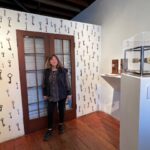
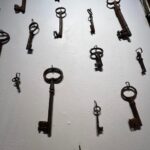
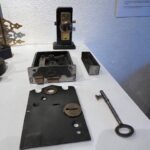
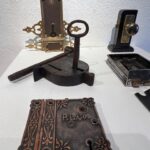
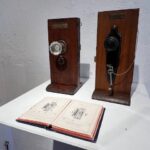
Along with new work by these artists, there are on exhibit historical wrist restraints;  locks and dead bolts and keys, all displayed  by gallerist Liz Gordon. The installation of antique keys is both beautiful and mysterious.
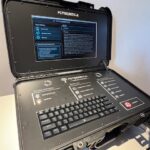
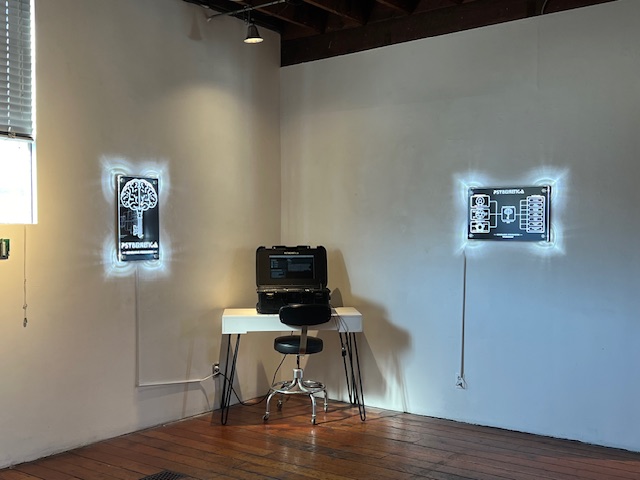
It’s exciting and innovative work, including many fascinating and viewer-involving, thought-provoking works such as Jennifer Gradecki and Derek Curry’s “Generative Persuasion,” an interactive installation with a mobile command center that reveals the startling effectiveness of live language models at generating false content – the world of disinformation we live in now come to demonstrable life.  Those who participate can enter their or another’s bias in perception to generate completely different takes on “reality.”
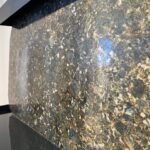
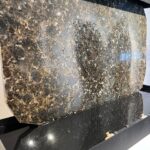
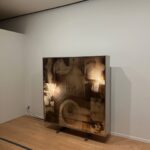
Debbie and Larry Kline offer “Unlocking the Truth,” in which stone sulptures – granite and powdercoated stainless steel – are washed periodically in water to reveal the word “truth” only when the flow of water stops. The intentionally blurry carving increases the viewers focus and analytical capabilities, ably demonstrating an exploration in clarity and confusion. The thematic approach is inspired by a talk given by Thomas Albright at the Salk Institute for Biological Sutdies, discusing the brain’s inability to see accurately.
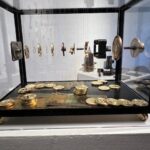
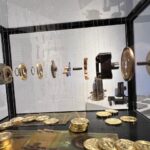
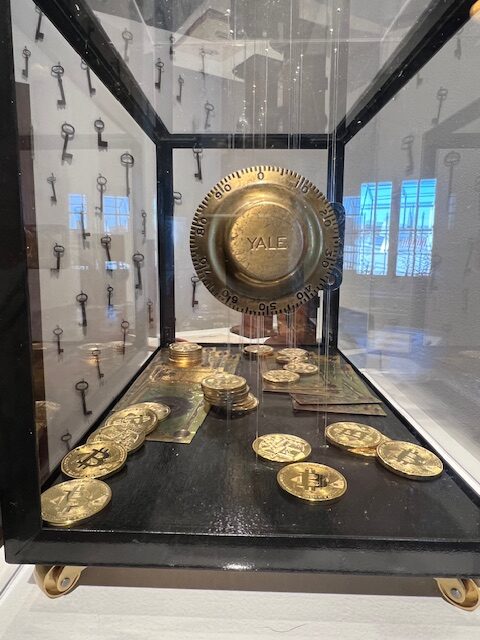
Even more visceral in terms of the Lock/Unlock subject matter is the Yale safe lock and bitcoin piece created by John A. Peralta, “How Safe,” which is both a visual game and an apt illustration of the illusion of security and the ability to “crack” it.
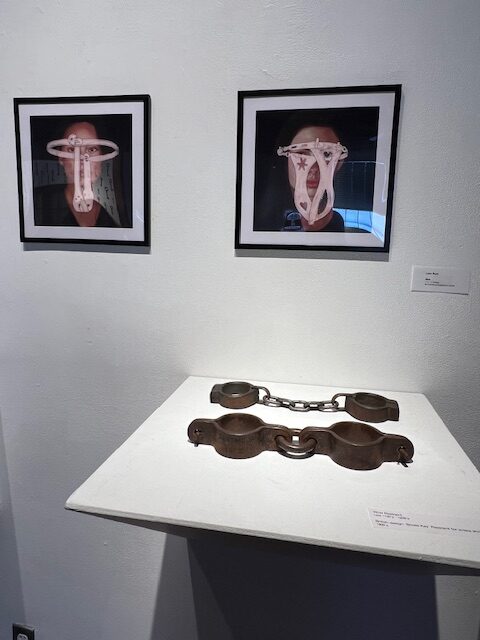
Lena Root’s “Men” takes a feminist viewpoint of technology and “locking” the truth, with images that depict chastity belts in front of a woman’s face.
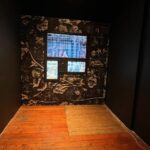
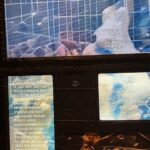
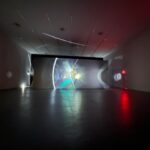
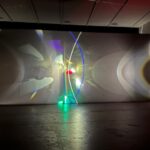
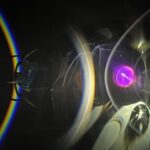
Studio MMR has another immersive work in technolgy that interacts in words and image to one’s presence in the secondary, smaller space at the Loft, just off the main gallery – impressive and involving work. “Mediated Realities” provides sensory inputs to interactions with the viewer.
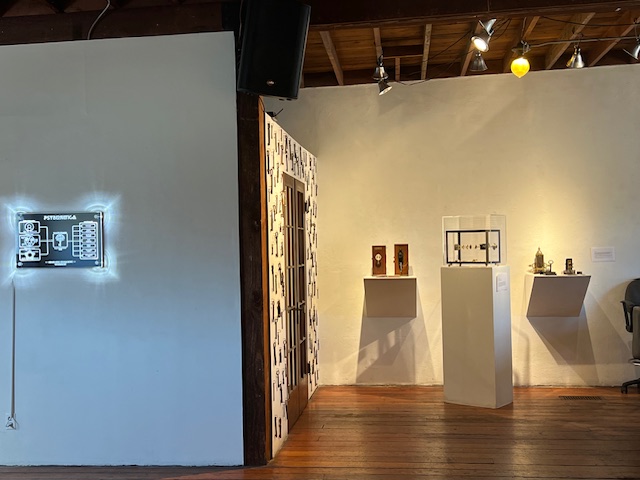
Krista Blake and George Dyson also present involving and thought-provoking work.

Art talk and closing reception are February 1, from 3-5 – time to unlock all the vicissitudes of the new year and uncover possible remedies with a visit to this exciting exhibition.

  • Genie Davis; photos, Genie Davis
Kaleidoscopes of Color and Light at MOCA Geffen

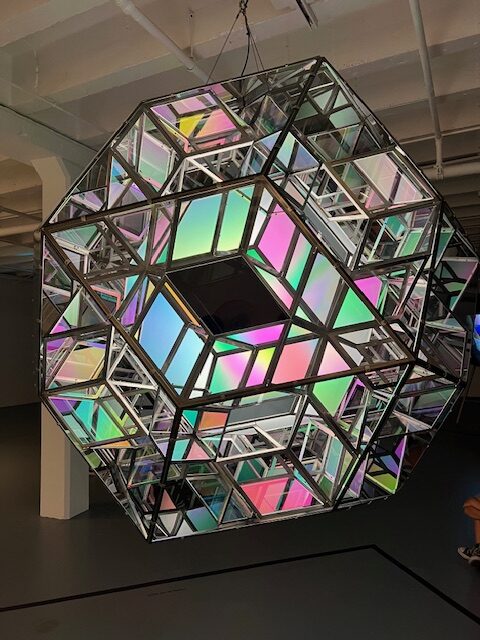
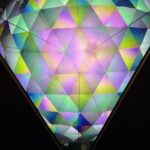
As dazzling as the midnight sun – a sight doubtlessly familiar to Icelandic-Danish artist Olafur Eliasson –  is his new exhibition OPEN. The exhibition fills the MOCA Geffen with light and color in an astonishing series of works by a powerful and deeply compelling artist. As a part of the Getty’s PST ART programming, it’s a dynamic one, and my favorite body of work within it. OPEN is the first solo mueseum show by Eliasson in the greater LA area.

Merging light with color, the precision of the geometric form with child-like wonder, Eliasson continues and expands upon his own explorations, here involving parts of the museum’s  own architecture.

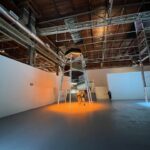
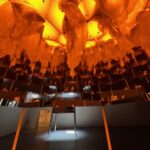
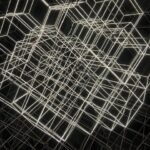
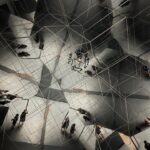
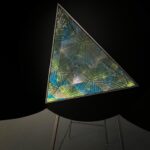
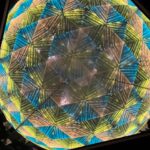
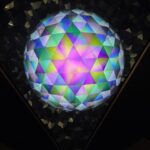
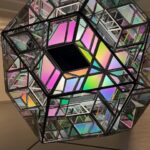
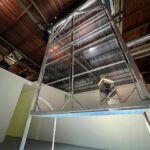
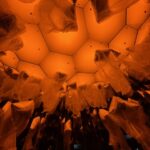
The main gallery is home to towering kaleidoscopes beneath observation structures that point both skyward and to the MOCA Geffen building itself.  While some show the effects of light and mirrors, others offer looks into the sky or roof top.

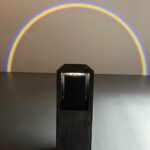
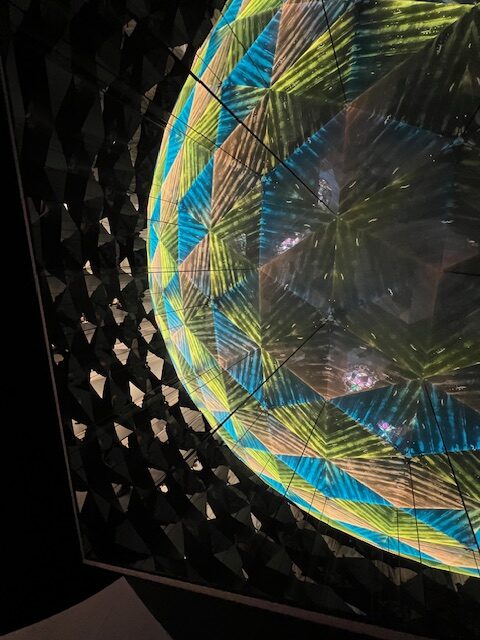
Some offer fascinating, even surreal hexagons and interconnecting, jungle-gym-like lattices that seems as if they came from another world; another is a simple rainbow. Images shift with time of day and weather, creating marvelous illusions of color, shadow, light – and pure joy, in both the artistry and the wonder of the exhibition.

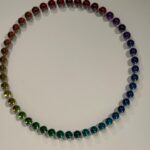
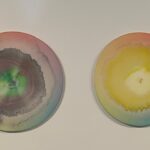
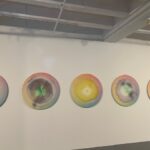
In another gallery space, colorful jeweled rings and painted works represent the color spectrum along the gallery walls.

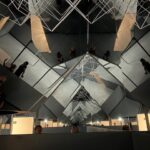
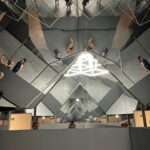
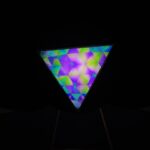
In the center of the space, triangular shaped kaleidoscopes point not outward but inward, forming shifting geometric color shapes that resemble flowers or buildings. In the same gallery a large geometric prism hangs, a sculpted version of light and shape made manifest.

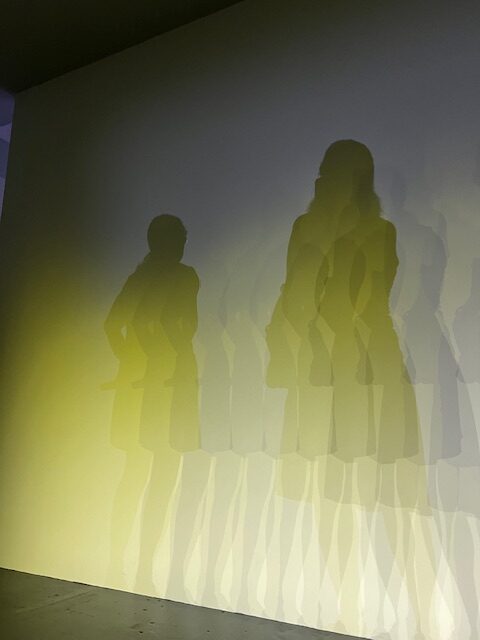
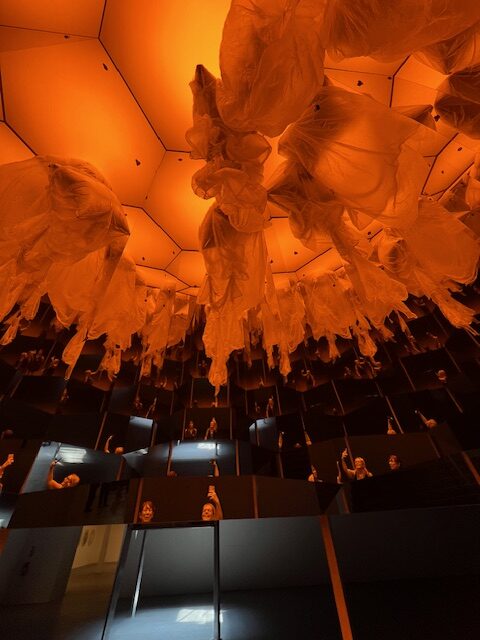
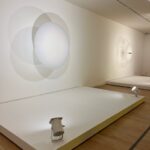
Elsewhere on the museum’s cavernous ground floor, an interactive room invites viewers to become colorful shadow participants in light and color magic; upstairs a series of mirrors and large half rings create riveting optical illusions as if one is standing inside a ring within a ring.

The artist and the museum encourage viewers to borrow a pillow from the information desk and recline or sit beneath the main gallery’s large structures to contemplate and view the magical shifts of light and form. Yes, it is all smoke and mirrors – no real smoke, just that of the imagination – and it is an incredible illusion, one that will entrance, enthrall, and change how you view the world.  It’s the vision of magicians and angels, and the viewer is the better for having seen it.

As the artist himself posits:

“AM I OPEN/ To facing my numbness?/ To receiving a No?

To explore where I place my attention?/To wonder?/To vulnerability?

To explore where I place my attention? To wonder?/To vulnerability?

Step into this exhibition and invite yourself to find out.

Olafur Eliasson: OPEN is organized by José Luis Blondet, Senior Curator, and Rebecca Lowery, Associate Curator, with Emilia Nicholson-Fajardo, Curatorial Assistant, and Anastasia Kahn, former Curatorial Assistant, The Museum of Contemporary Art, Los Angeles.

The exhibition runs through July 6, 2025 – OPEN up your eyes to it this year. MOCA Geffen is located at 152 North Central Avenue, Los Angeles in Little Tokyo.

  • Genie Davis; photos by Genie Davis
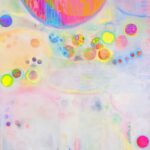
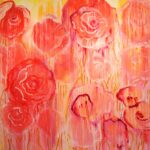
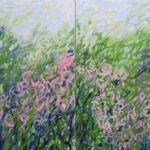
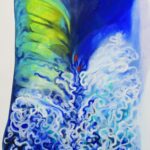
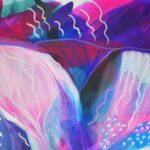
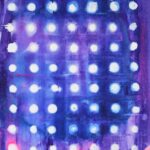
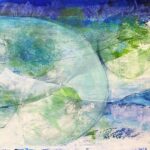
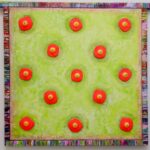
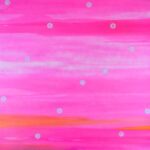
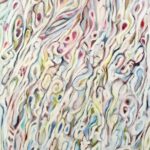
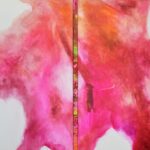
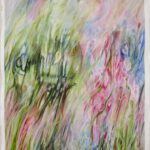
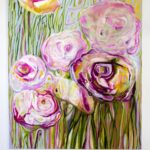
Linda Stelling Explodes with Color

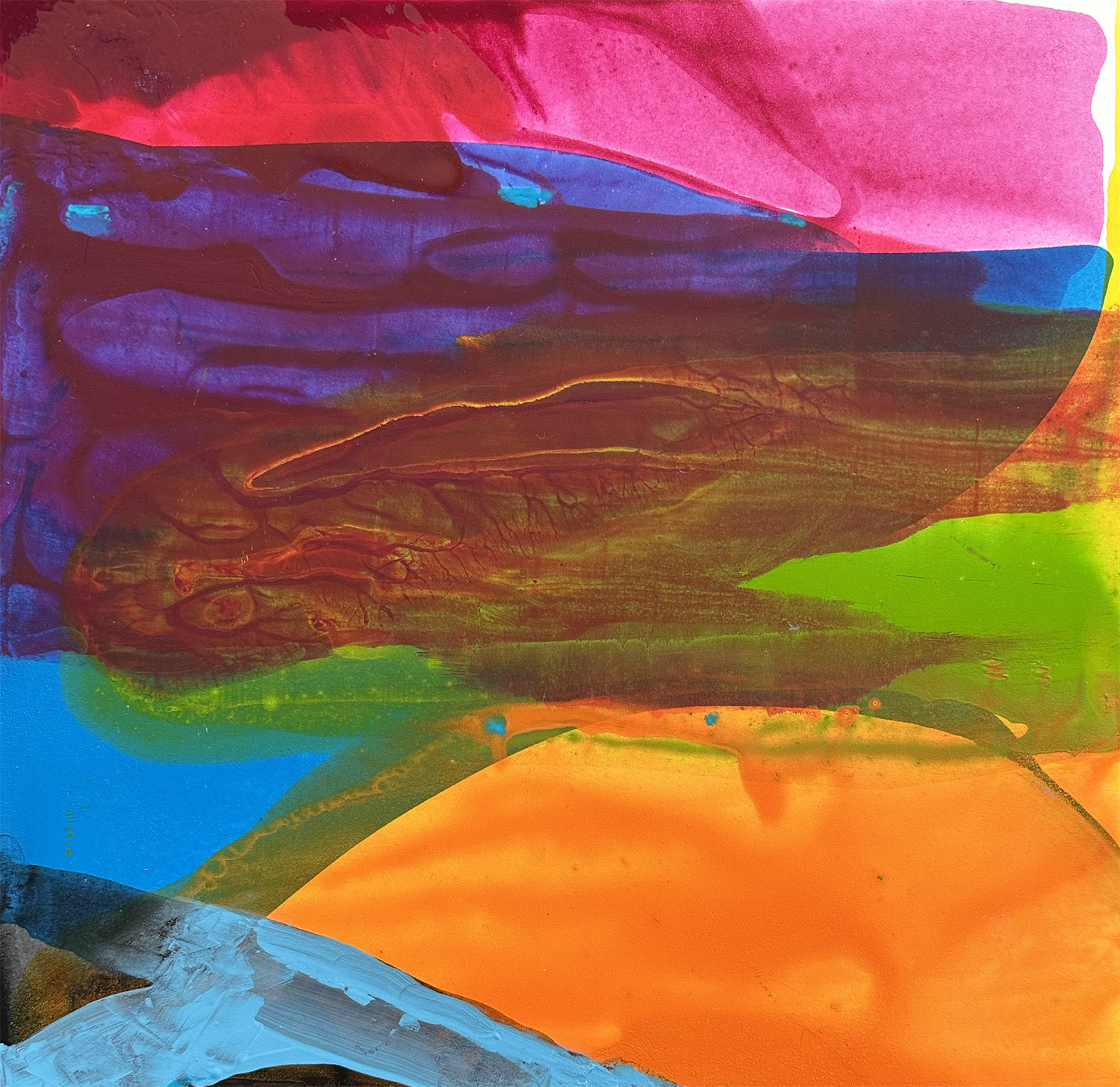
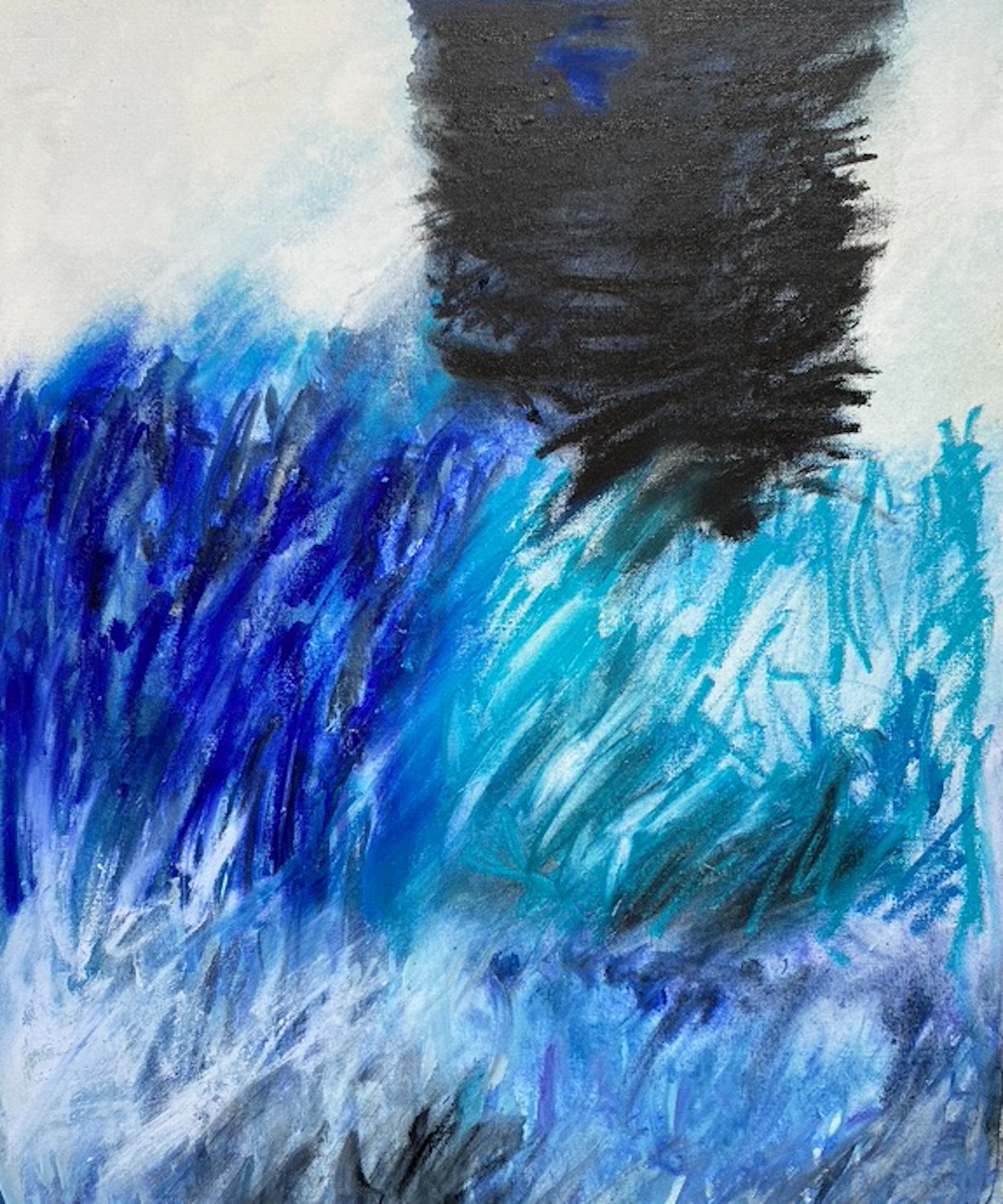
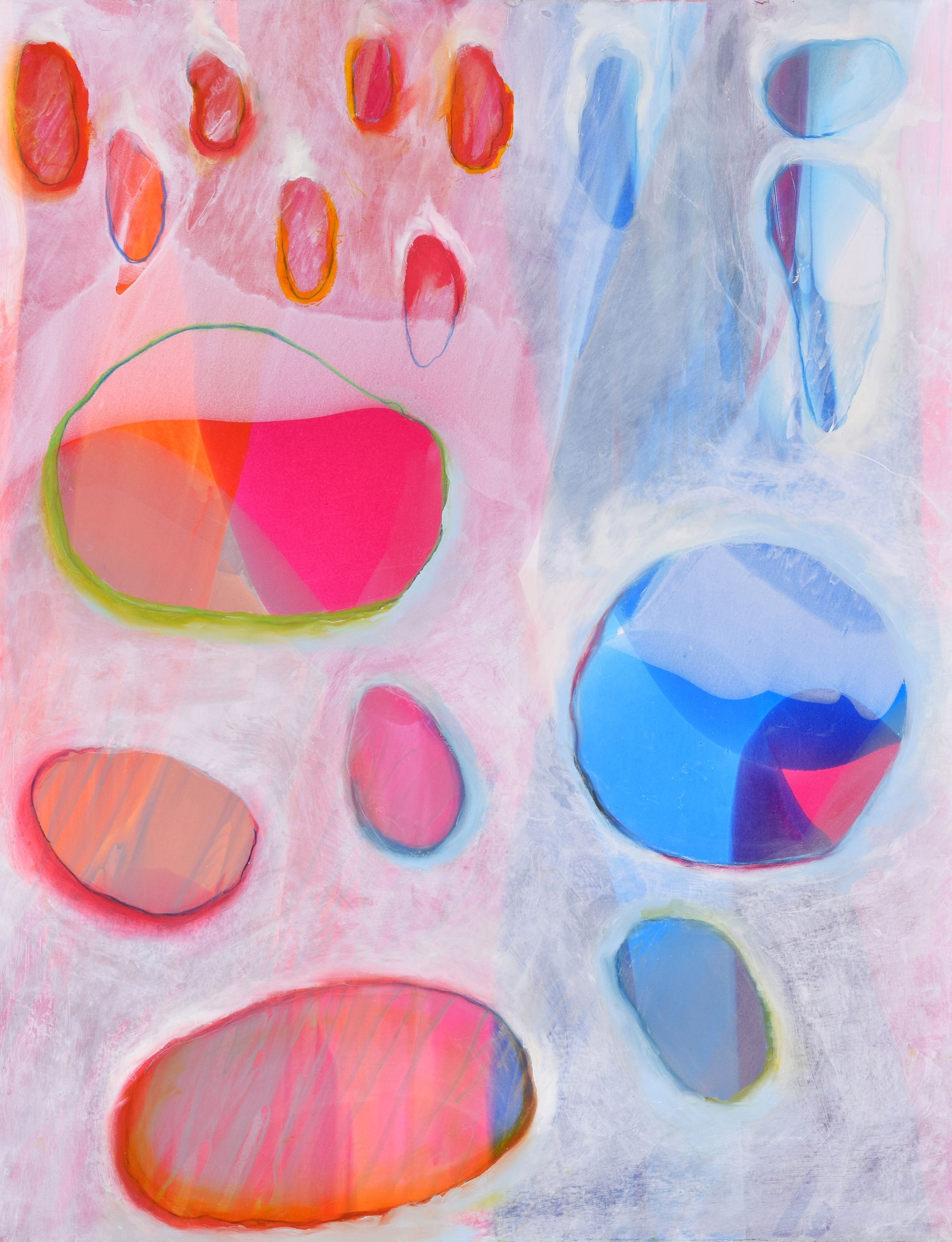
According to artist Linda Stelling, her work is inspired by color, sound, texture, scent — and the “raw, visceral experience of feeling the world deeply through all of my senses.”
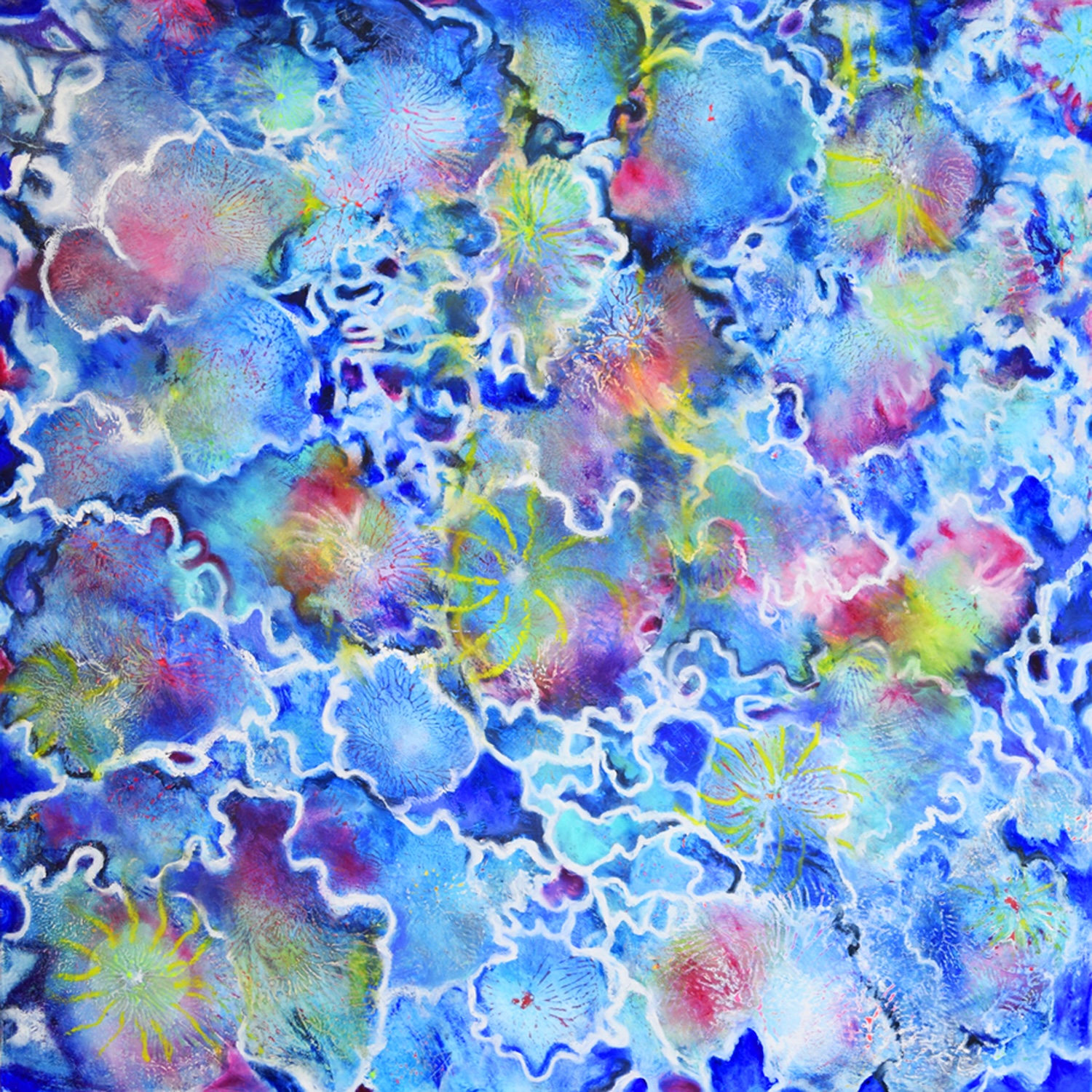
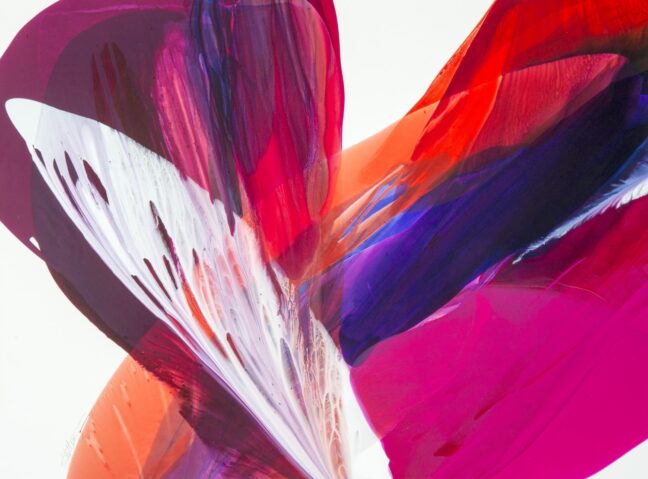
Pulsating with color and form, Stelling turns her sensations into what she describes as a visual language, a way to translate her intensity of feeling and explore the inchoate, a world of exploring “the ways we experience and perceive beyond what is immediately visible. It’s about creating a space for viewers to ‘see’ with more than just their eyes, to feel the complexity of existence in a single, suspended moment.”
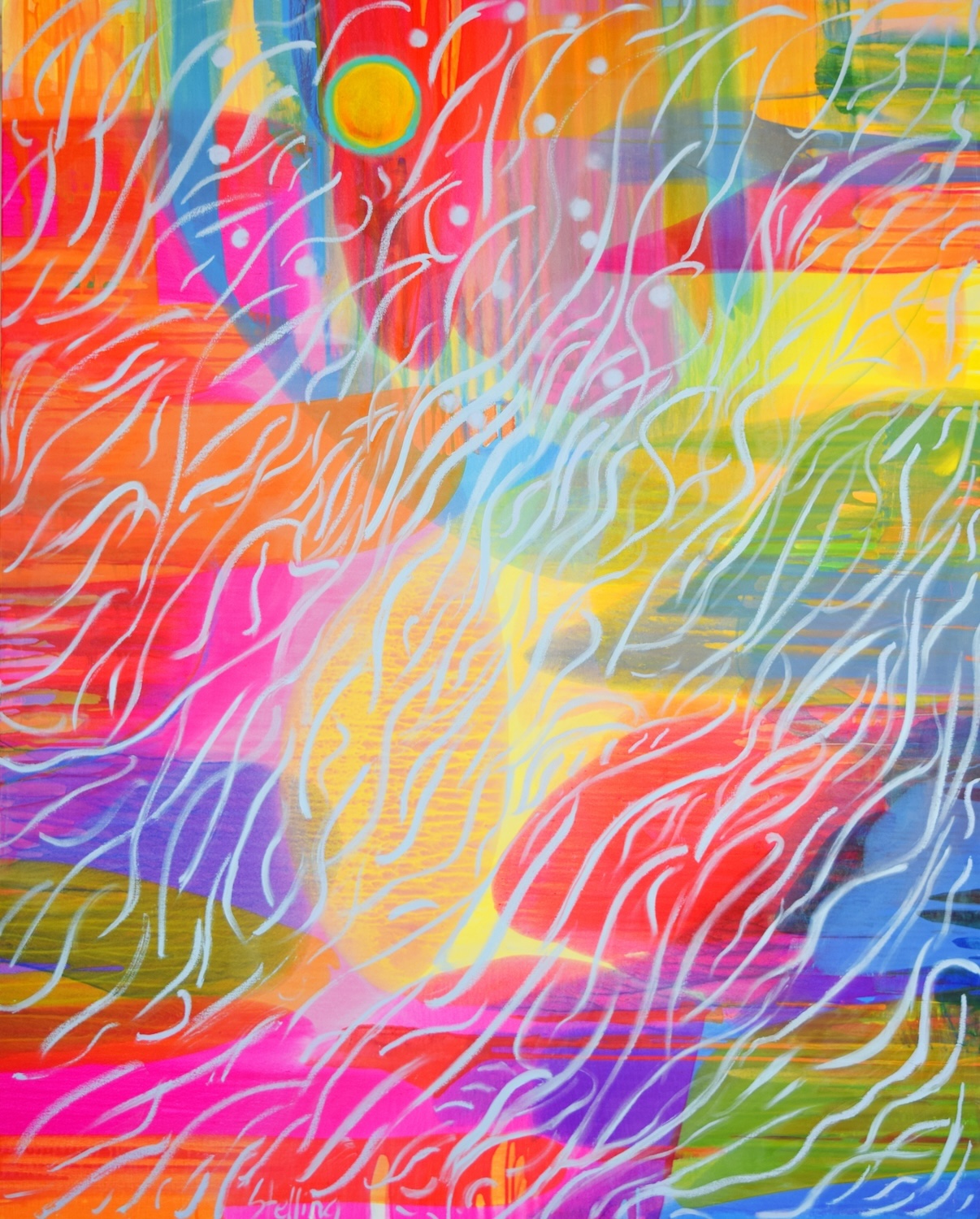
Indeed, Stelling’s work literally and figuratively flows with meaning, as she creates a dialog with the natural world. She explains that “My work…is a dialogue mostly about the natural world. I am very close to the earth, the people and the animals that live here.”

While sometimes taking on figurative or impressionistic form, Stelling’s work primarily focuses on the abstract, and the freedom abstraction provides for her. She relates that she is “fascinated by curvilinear forms and how I can use them to evoke a response.”

She also utilizes dream work, touching on dream symbolism in order to “develop a choice for initial creation [and] involve color, imagery, emotional attachments, and abstraction as the projected expression of connecting the inner world to the outer world in the form of a painting or sculpture.”

Connecting inner and outer worlds is the heart of Steling’s work, as she converts a personal dialog with color and shape into meaning through her, and the viewer’s, perception.

“Perception is the subjective roulette wheel and can be altered by position, mood, size, and relationship to social climate, as well as how I was raised,” she says, with her upbringing including early exposure to familial artisans and her mother’s profound love for the garden.

According to Stelling, her favorite medium for painted work is oil, whose qualities she asserts is “the most seductive, and gives me the color I crave.” However, she also loves working in clay, and the tactile nature of doing so.

Shaping multi-layered work in whatever medium she selects, Stelling’s goal is to allow viewers to find their own entry point and response to her images. “I am making beauty for all,” she says, noting that “Many of my paintings and installations are about women’s issues, the environment and our responses to the world.”

For Stelling, regardless of subject, her paintings are both conceived and created as journeys, layered materials that she carefully builds up over time with each element ultimately contributing to a finished piece. Simply put, she explains that “I try to make what I like and what gives me joy,” which she then shares with her viewers.

Having shown both internationally and throughout the U.S., Stelling is especially excited about a recent 20-work purchase by UCLA Stein Eye, and by her inclusion in the “Open Show LA” at LAAA’s Gallery 825 through January 10th.  Gallery 825 is located at 825 La Cienega Blvd. in West Hollywood, and is open by appointment.

  • Genie Davis; images provided by the artist

Come into the Light at Norton Simon Museum

Art lovers do not commonly associate neon and other electric/electrifying art mediums with the Norton Simon Museum, whose more classic art forms are what the lovely Pasadena museum are well known to embrace.

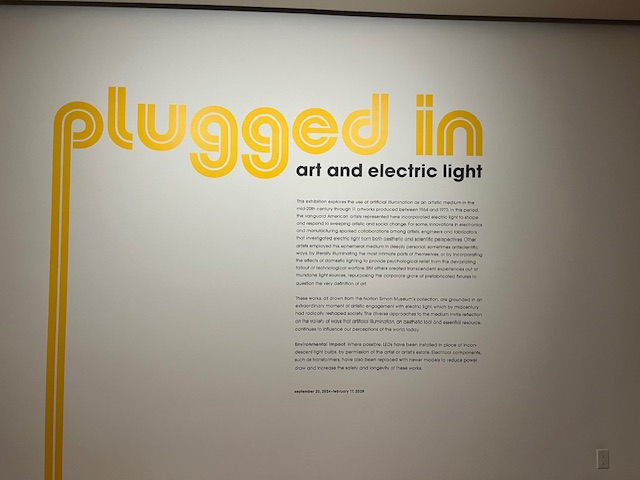
However with Plugged In: Art and Electric Light, curated by Maggie Bell in conjunction with PST Art: Art & Science Collide, takes viewers on a new and enlightening journey.

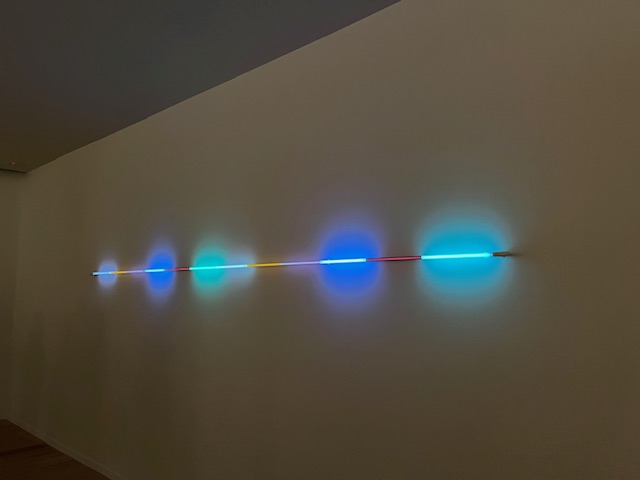
Above, Laddie John Dill

The exhibition examines the use of electric light as an art medium in the mid-20th century. Eleven works of art are exhibited, featuring 8 different artists:  Walter Askin, Laddie John Dill, Dan Flavin, Robert Irwin, Jess, Robert Rauschenberg, Allen Ruppersberg and Andy Warhol.

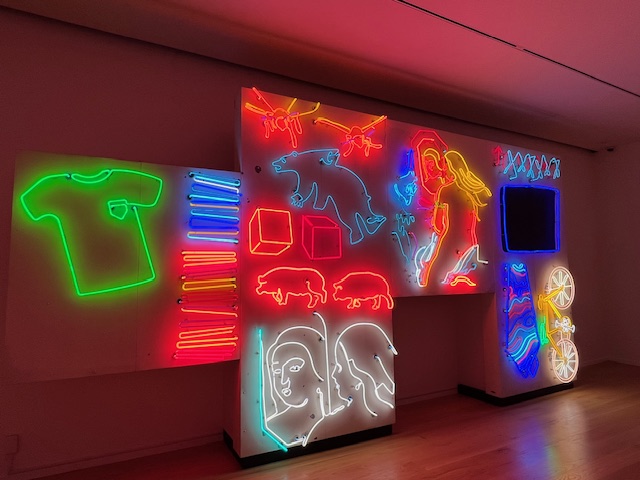
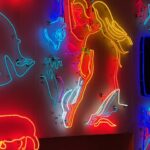
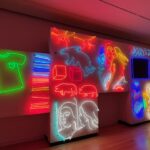
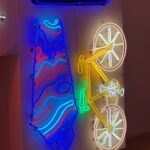
Each artist utilized electric light in their work. The star of the show is in the final of three connected, lower-level gallery spaces: an enormous work by Robert Rauschenberg, titled “Green Shirt.” Rising some 10 feet by 20 feet in length, multiple neon images, including an eponymous green shirt are illuminated. While based on the artist’s images, the work was created with Artkraft Strauss, which manufactured neon signage. It’s a lively, fun work, hissing with color and recognizable, figurative images such as a man’s tie, a woman riding a horse,  two pigs.

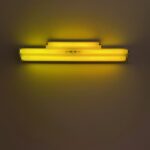
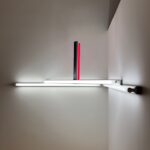
Also on view: Dan Flavin’s prefabricated fluorescent lights to create somewhat sterile and mysterious installations utilizing what the curator notes as “factory floor lighting.”  One such piece commemorates the historical figure and personal friend of his friend’s mother in law,  a “Mrs. Reppin,” during World War II as an ersatz monument.

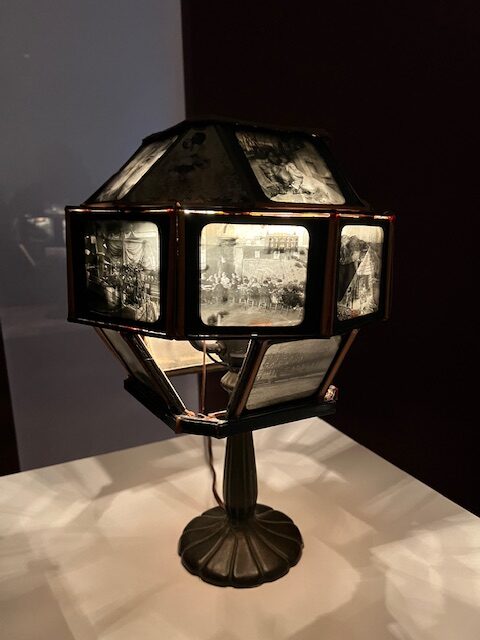
Jess, aka Burgess Collins, uses art with incandescent light bulbs and salvaged objects. The artist’s “Assembly Lamp Eight” combines glass langer with images of families, landscapes, and busy harbor scenes with decoupaged magazine clippings. This collage of visual images is lit with electric candle light to create a sort of light box of layered and not quite understandable images.


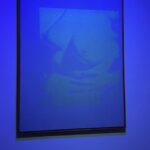
Andy Warhol’s controversial “White Painting” is another fascinating and not quite discernable piece, presenting a naked female torso that is activated through the use of ultraviolet light.  Allen Ruppersberg’s large-scale “Location Piece” uses ambient lighting to bathe the viewer in an uneasy wash of illumination in a haunting space, while Robert Irwin’s “Untitled” combines sythemtic polymer paint on a metal disc and arm with a glowing light that’s half shadow-maker behind it.

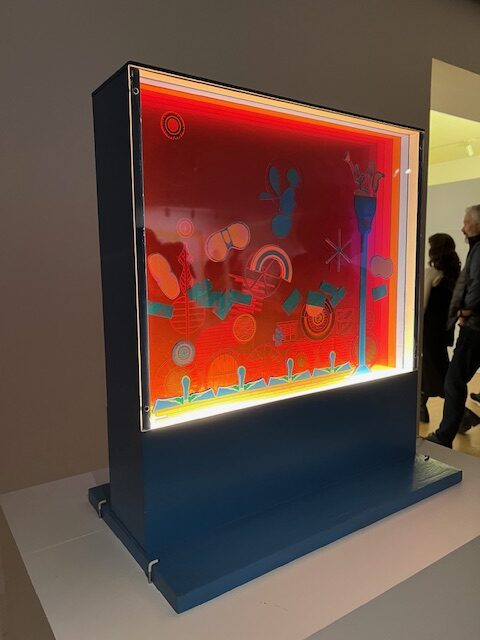
Walter Askin’s “Polyplanographs” feature decals applied to layers of plexi. Per the late artist’s wife, artist Elise Anne Doyle, Askin wanted “the viewer to come closer and engage his “Polyplanographs” in order to discover forms and details which seemed to float in a dreamlike space – the light strongest at the bottom of the scene as if coming from stage lights to enhance a sense of mystery, play, surprise, expansiveness and discover the subtle fade to the top of light – and atmospheric float…the ethereal laying of forms floating and fading in color and shadow…” These are indeed intriguing works.

The exhibition is compact but well worth experiencing, given the unusual, even rare, use of electrically illuminated media by these artists.


Plugged In is illuminating the Norton Simon Museum until February 17, 2025. The museum is located atT411 W. Colorado Blvd. at Orange Grove Boulevard in Pasadena; admission is $20 for adults, $15 for senior, 18 and under admitted free. Admission is always free the first Friday of the month from 4-7 PM; the museum itself is open Thursday through Monday.

Genie Davis; photos by Genie Davis