Metaphor for Magic: Stunning Work from Vojislav Radovanovic and Museum-Wide Exceptional Exhibitions at the Museum of Art and History  

Metaphor for Magic: Stunning Work from Vojislav Radovanovic and Museum-Wide Exceptional Exhibitions at the Museum of Art and History  – Genie Davis
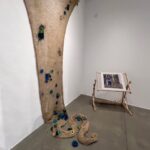
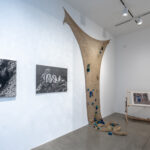
The Museum of Art and History’s Metaphor, which runs January 31st through April 19th is a dazzling series of exhibitions featuring solo shows and installations from Nathan Huff, Sharon Kagan, Diane Briones Williams, Frances C. Robateau Jr., Brian Singer, Bachrun LoMele, and Vojislav Radovanovic.

MOAH curator Robert Benitez, Heber Rodriguez, and curatorial assistants Clara Baxter and Jaushua Rombaoa have presented a rich cornucopia of works which each resonate with poignancy and visual poetry.
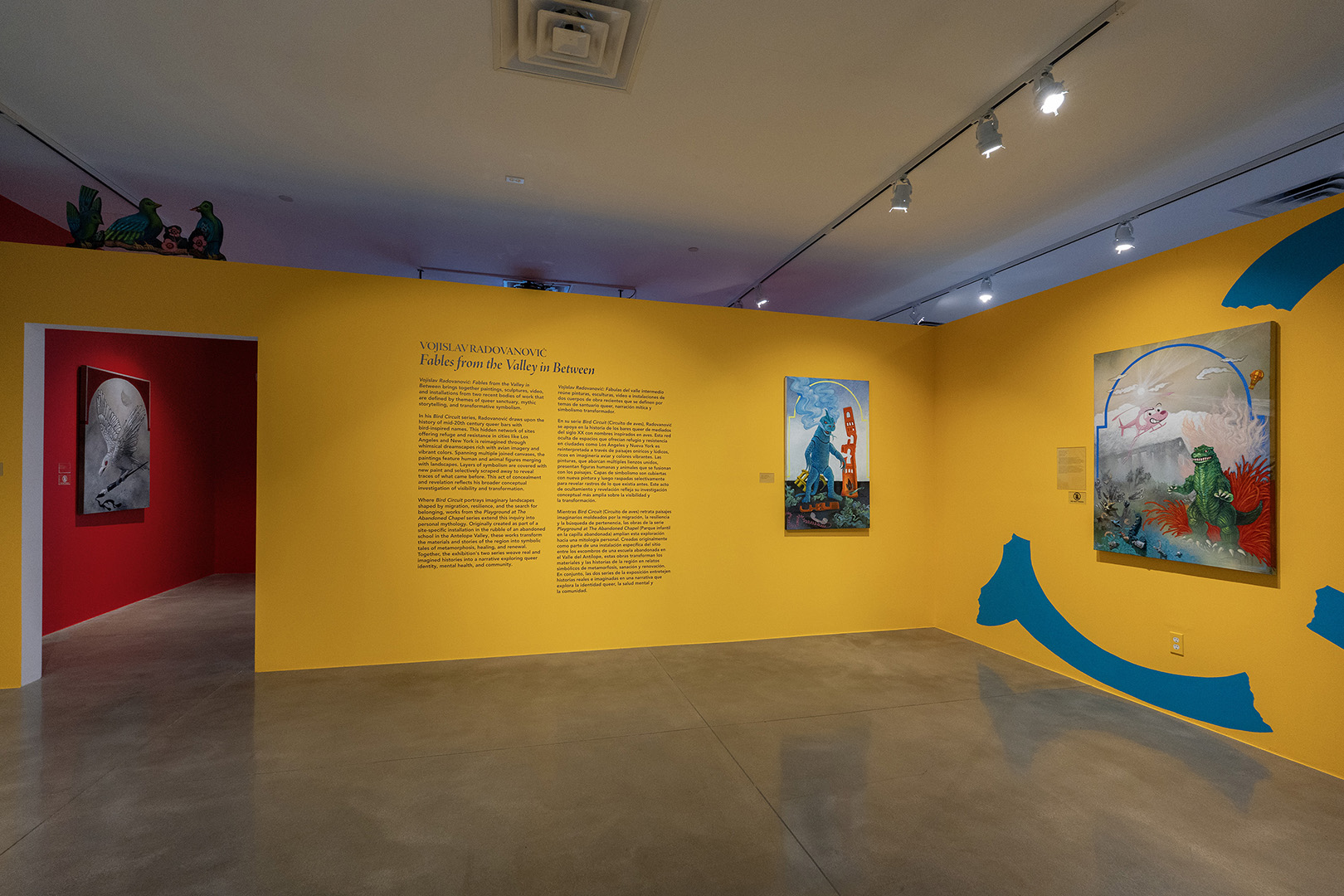
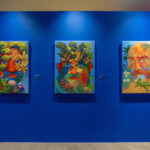
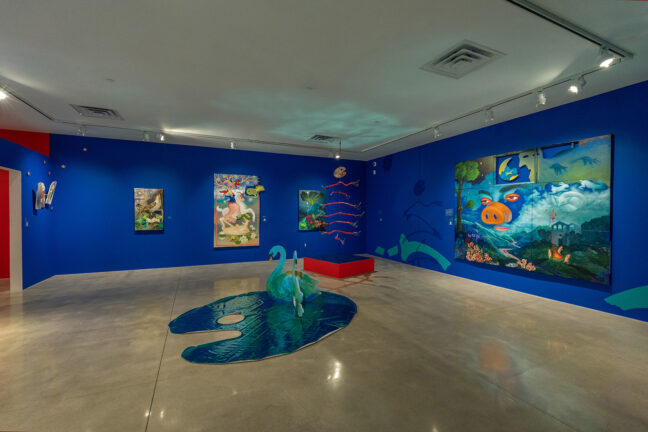
Each show is strong and beautiful, although my focus here is on the work of Vojislav Radovanovic, who always creates mystical, magical worlds in his exhibitions. Here, with gallery walls painted in electric hues that tie in with his work, his Fables from the Valley in Between is especially alchemic. Enriched with an exuberant palette, with intricate bead work and applique, and a sublime attention to detail, the artist entrances the viewer into experiences that are rapturous and transformational.
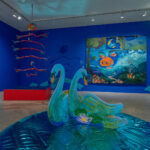
Three-dimensional swans float across a shimmering lake; a sculpted frog and lily pad perch nearby. Paintings of birds are perfectly rendered, representing multiple meanings in serendipitous settings. Childhood play-monsters come to life; a video installation ties together elements of play, nature, pain, and passion amid natural landscapes; fairy tale characters and delightful animal figures inhabit special places in large scale works. These works are dream-like fanciful, fabulous, and deeply moving.
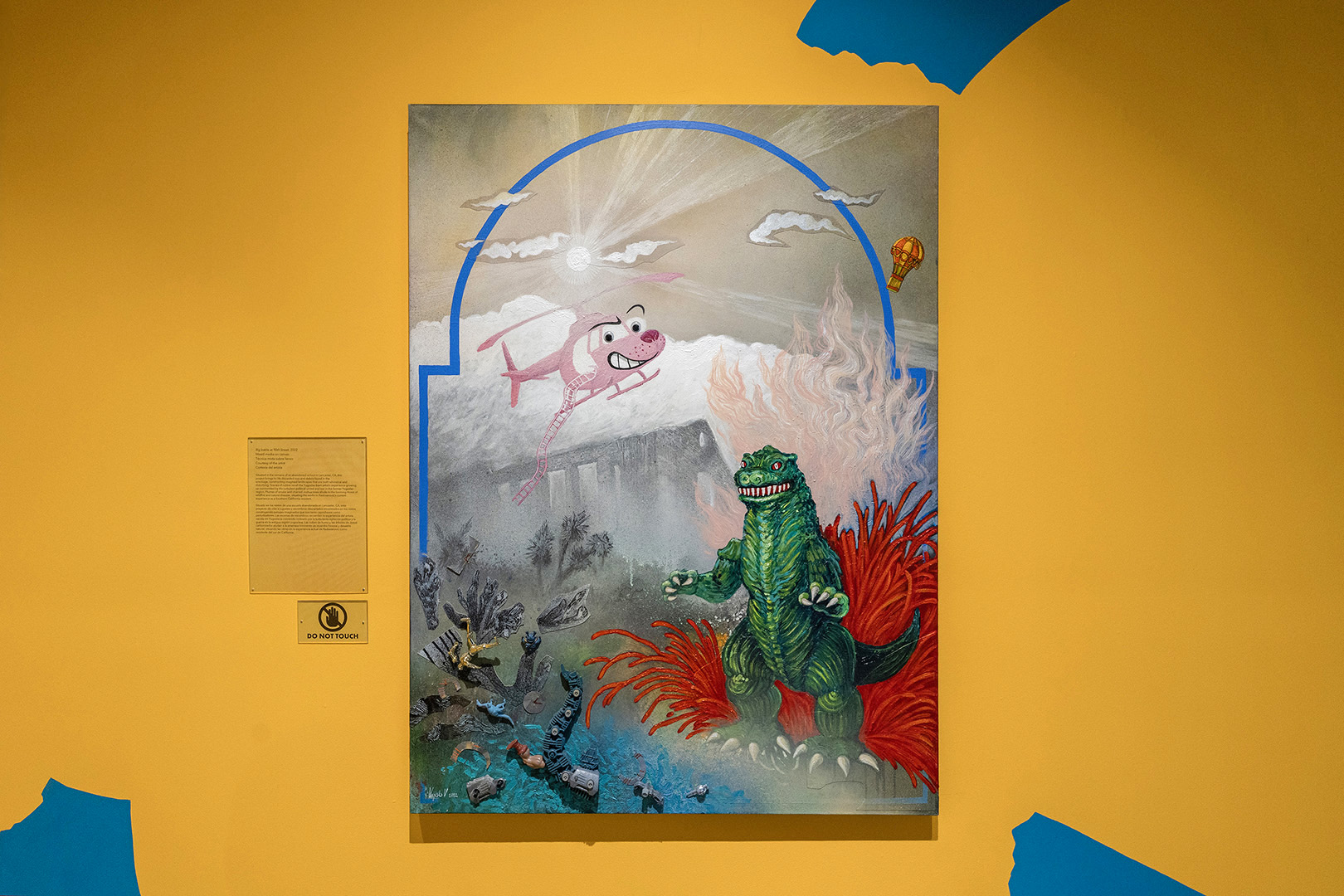
Integrating both human figures and animal life, weaving a tapestry of rich storytelling, Radovanovic creates a galvanizing and lovely exhibition that leads viewers through a land of connected gallery rooms. In the first, the room is populated by paintings of childhood toys and deserted Lancaster-area locales that tie into the artists own experience of turbulent unrest and warfare in eastern Europe.
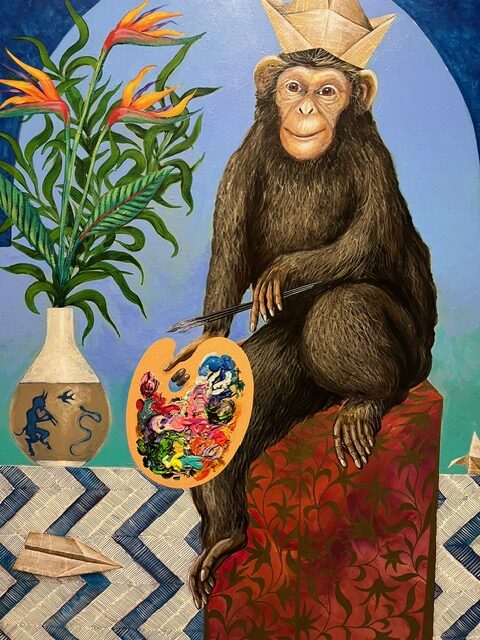
Segueing into other series, “Portrait of a Painter,” gives the viewer a look at an artist as chimpanzee, paint palette in hand, paper jester’s crown on his head. It serves as a transition point from the conjoined images of warfare and play to the freedom and sense of hope in richly nuanced paintings featuring the symbolism of birds.
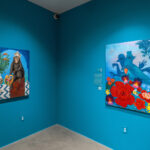
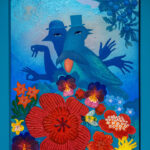
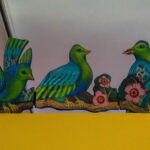
These paintings are a part of the artist’s Bird Circuit series, which refers to a network of mid-20th-century gay bars. The birds themselves are symbols of sanctuary and safety, indicating the location of gathering places for the gay community despite laws discouraging congregation. These images exude a powerful sense of energy, purpose, and resistance. Within the artist’s avian world there are anthropomorphic creatures, playful scenes, loving couples, and sculptural images that both charm and delight. A cut out of three “Small Birds” with beautiful green and lapis lazuli blue plumage stands above a doorway, leading into the next gallery rooms.
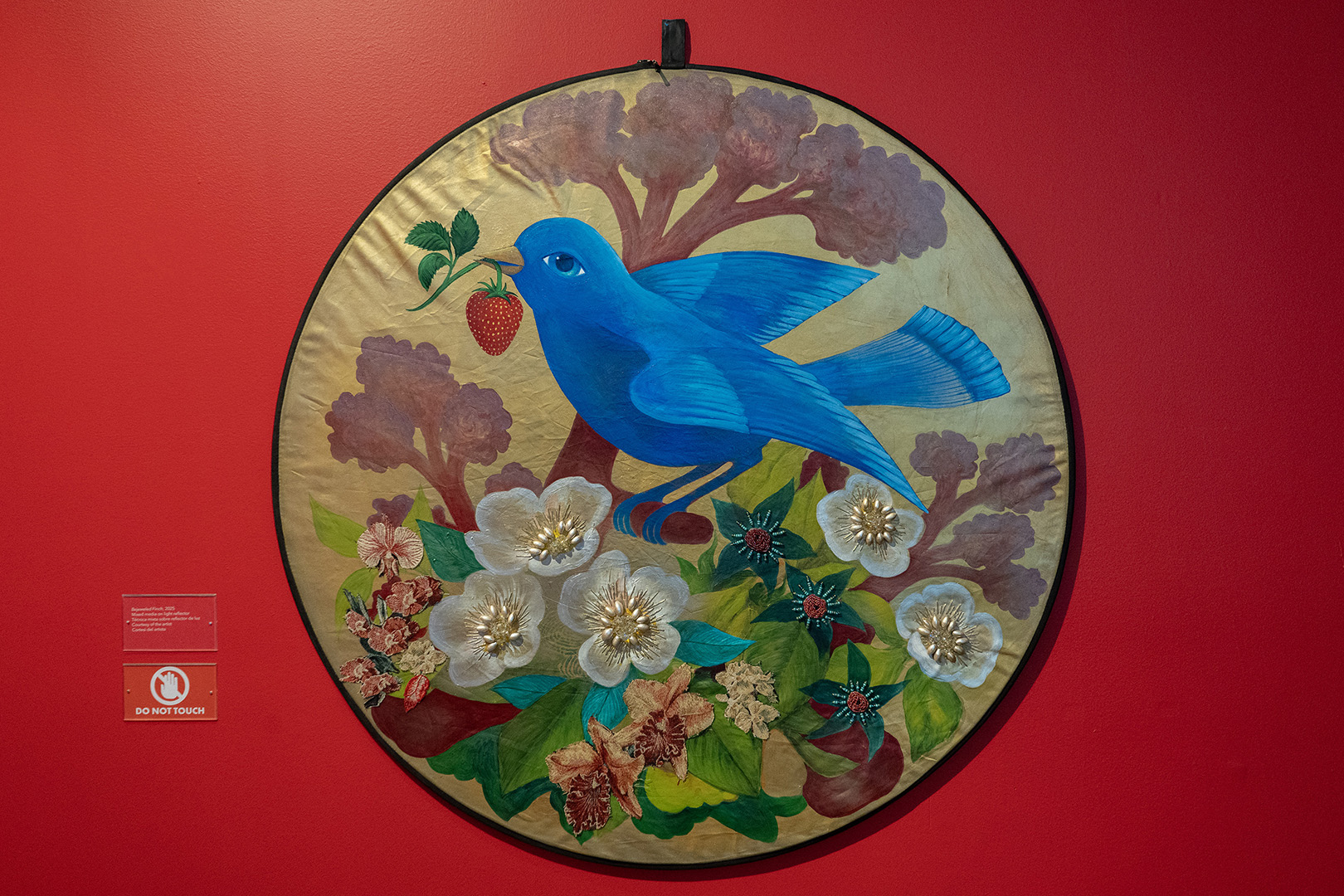
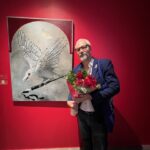
One of the most gorgeous images here is “Bejeweled Finch,” featuring a brilliant blue bird with a strawberry in his beak; lush, jeweled appliques sparkle in floral bursts, and the entire piece is set on a gold light reflector. It recalls both traditional religious icons and shields carried by medieval knights in battle. A very different avian image haunts the imagination in the mixed media “Omen,” featuring a silvery bird clutching a fountain pen between his teeth, ink trailing from its tip.
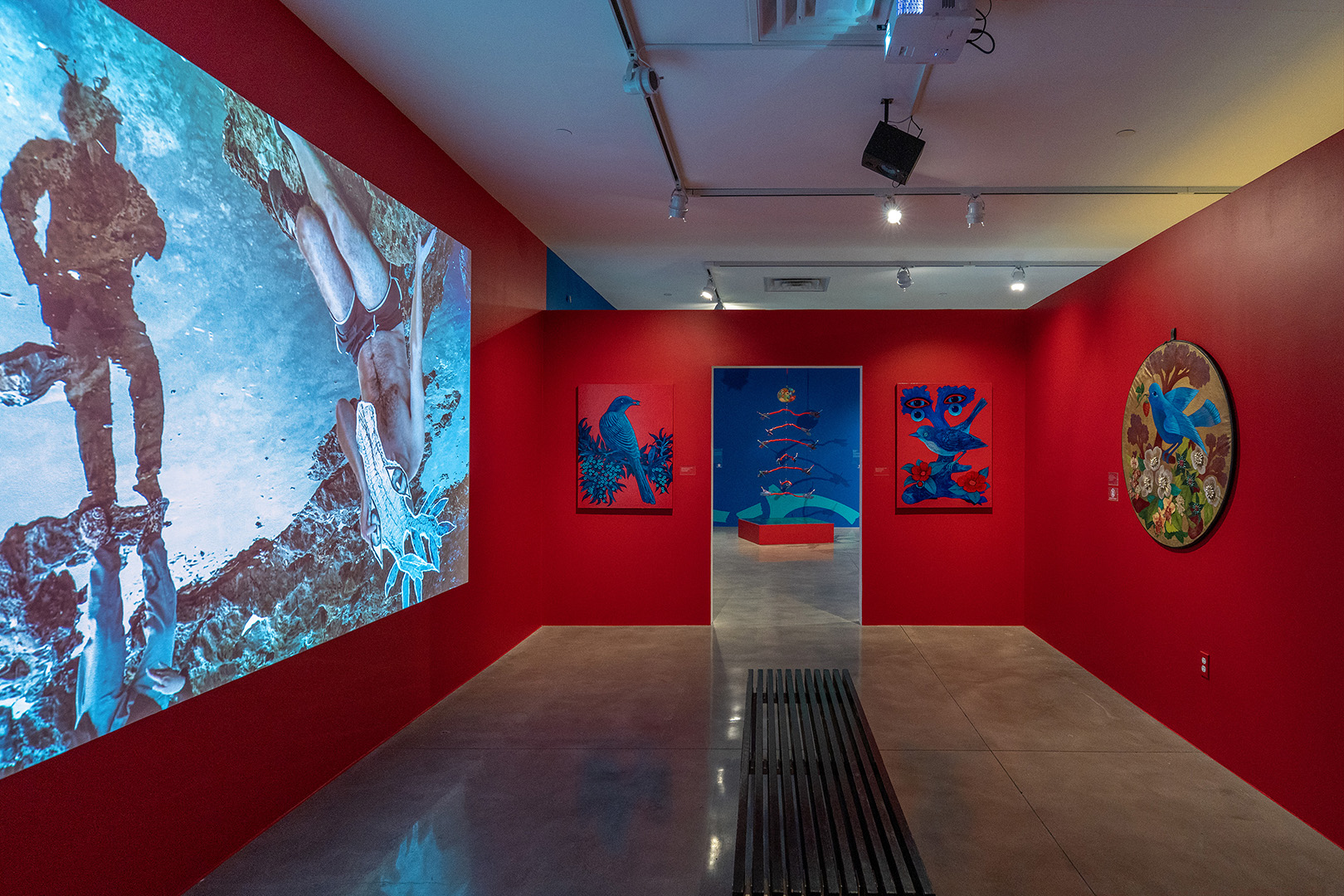
Across the gallery, a large video installation plays titled similarly to the exhibition itself as “The Valley in Between and Other Fables.” A variety of experimental film segments play created through poetic collaboration with the late Robert Patrick Playwright, Jason Jenn, Chuck Hohng, and Joseph Carrillo.
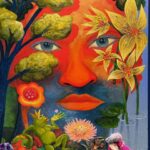
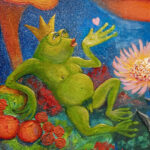
Having moved from childhood toys engaged in news media chaos and warfare to the fraught but free sanctuary of Radovanovic’s Bird Series, the final and largest room of the exhibition, moves into a series of works that speak to fairy tales, fantasy, and pure magic. Here viewers will meet the heavily floral image of a “Frog Prince” whose hair is landscaped into the fecund branches of a brilliant green tree. At the base of the painting, within the flora, an actual frog wearing a small gold crown, blows a kiss.
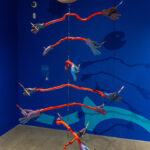
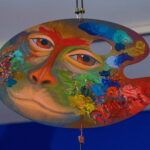
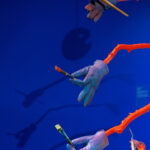
A suspended sculpture, reminiscent of Alexander Calder in shape is described by Radovanović as a “self-portrait.” The multi-armed figure has a head in the shape of a painter’s palette, while multiple arms and hands hold paint brushes. This piece also recalls the many-handed figures of Greek mythology, the Hekatonkheires.
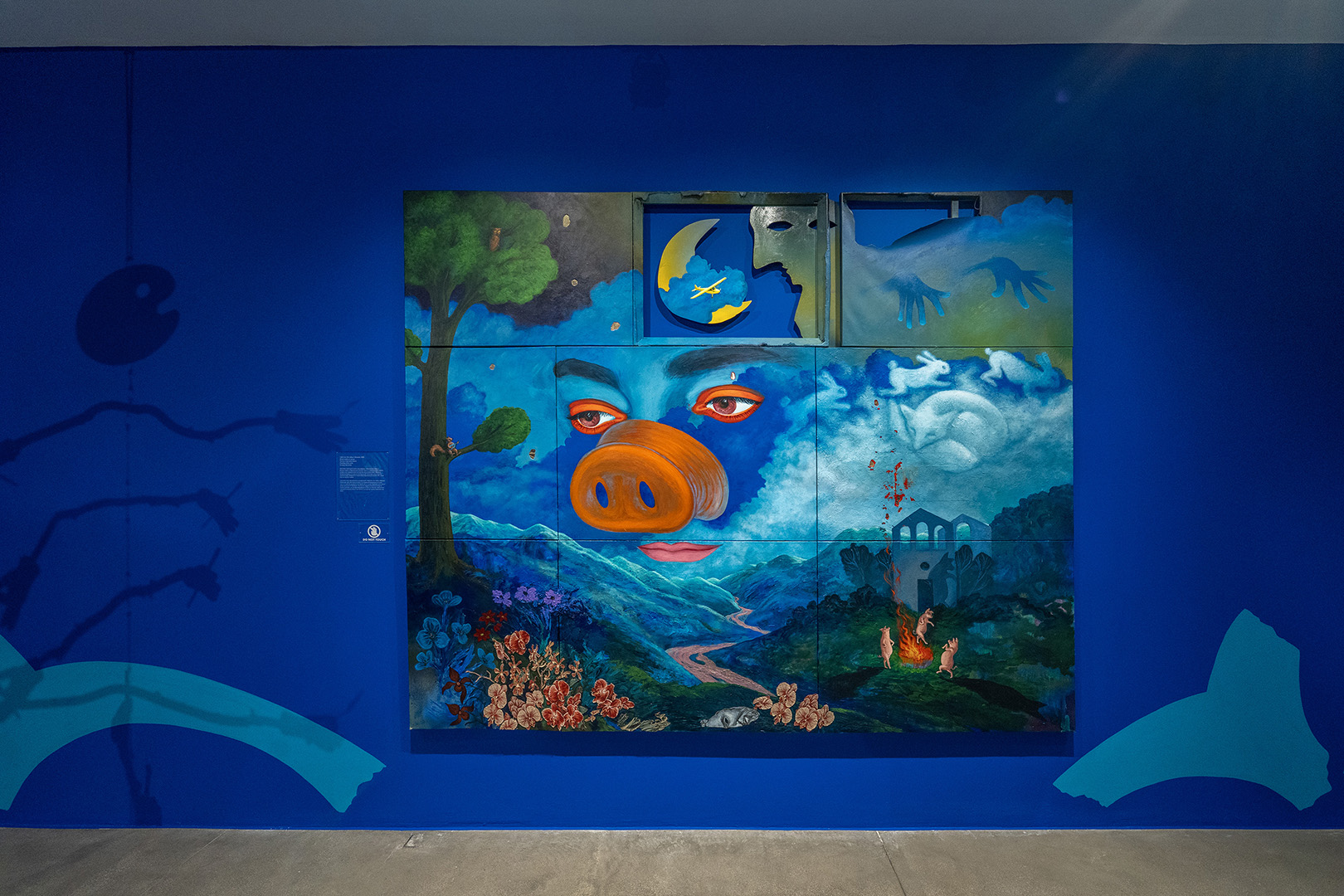
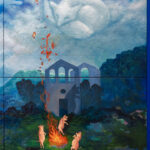
Moving deeper into fairy tale mythology is “Fable from the Valley in Between,” which includes the “Three Little Pigs” dancing by a roaring fire while a wolf’s shadow lurks, a charming owl, a musical squirrel in a tree, and a painter’s palette moon.
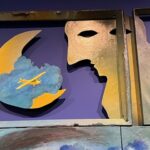
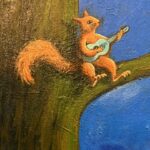
Dreamy and also lightly ominous, here the magical and the sublime eclipse the possibility of dread.
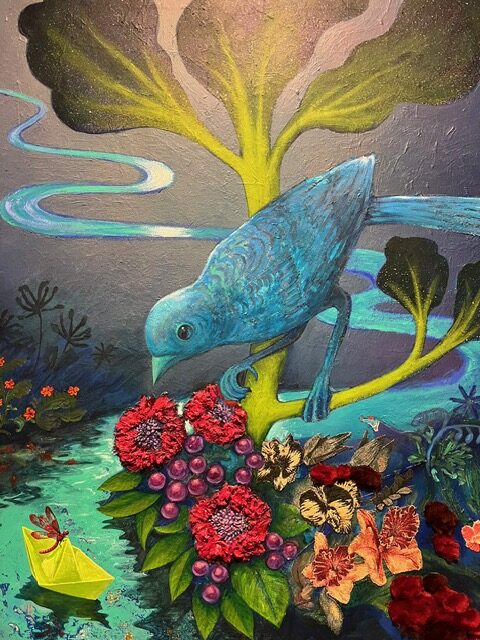
“Journey Down the Stream” in this same gallery is exquisitely wonderful, depicting a curious bird watching a small paper boat carrying a dragonfly as it sails down a small, moonlit stream. This piece speaks to hope and promise, including the promise of another world. Dragonflies, after all, represent many things, including change, transformation, self-realization, joy, light, and even a connection to the spirit world — all of which are a part of Radovanovic’s work.
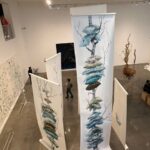
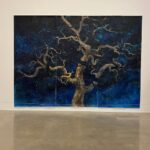
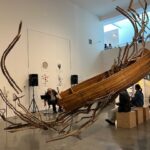
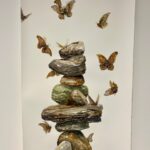
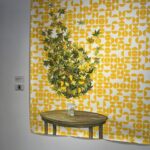
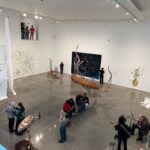
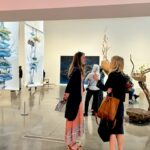
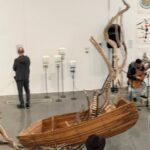
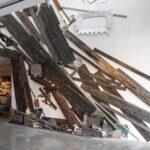
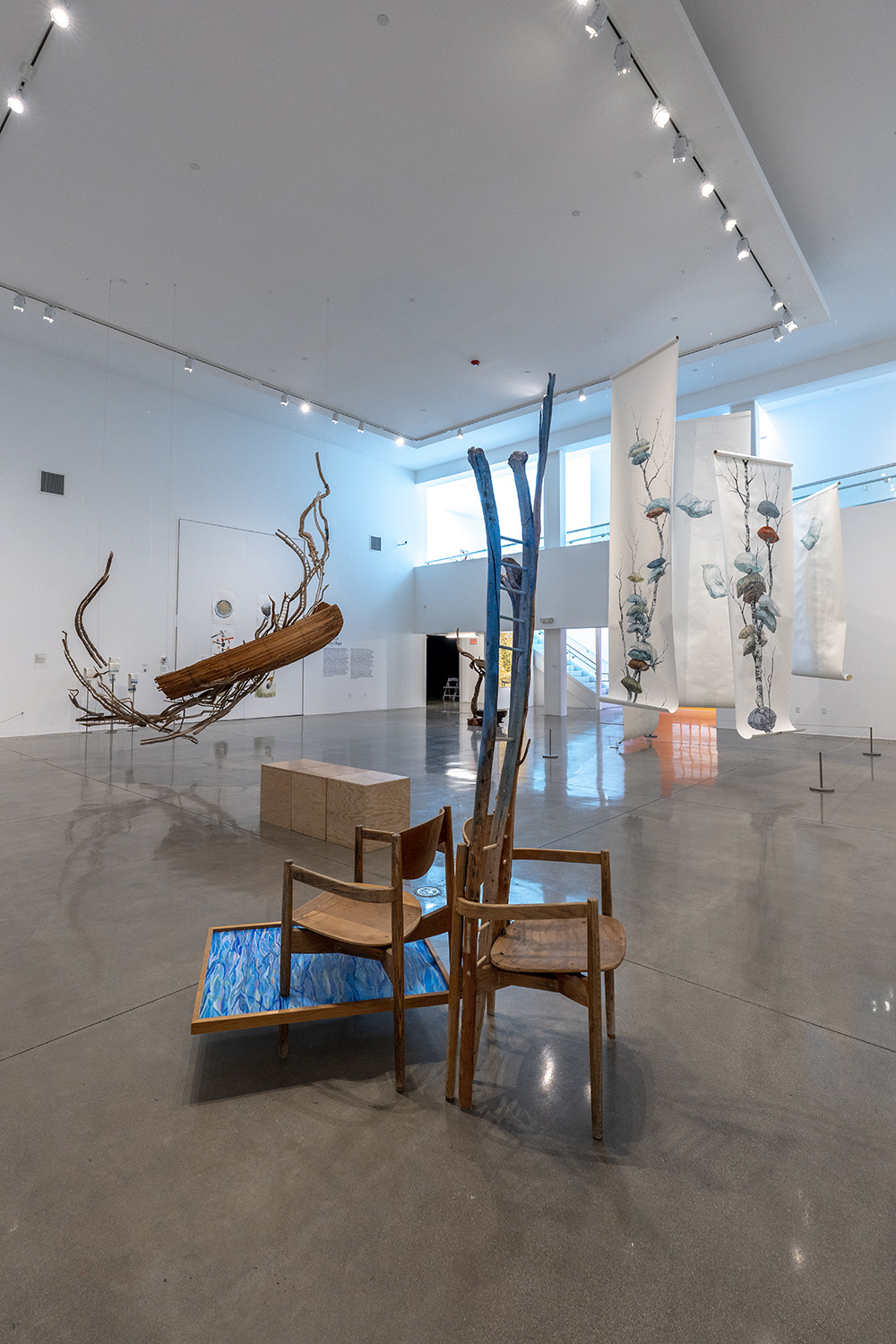
The other exhibitions in the museum are also potent and lovely. Nathan Huff’s Heavy Hope mixes natural beauty with elements of domesticity, creating a delicate and complete balance that includes installations and sculptures, paintings and drawings. Like Radovanovic, but completely different in style and tone, Huff deals with magic. Located in the expansive first floor gallery, the exhibit gives the viewer upended boats, chairs and flowers and stones, table tops with golden, hovering flowers.
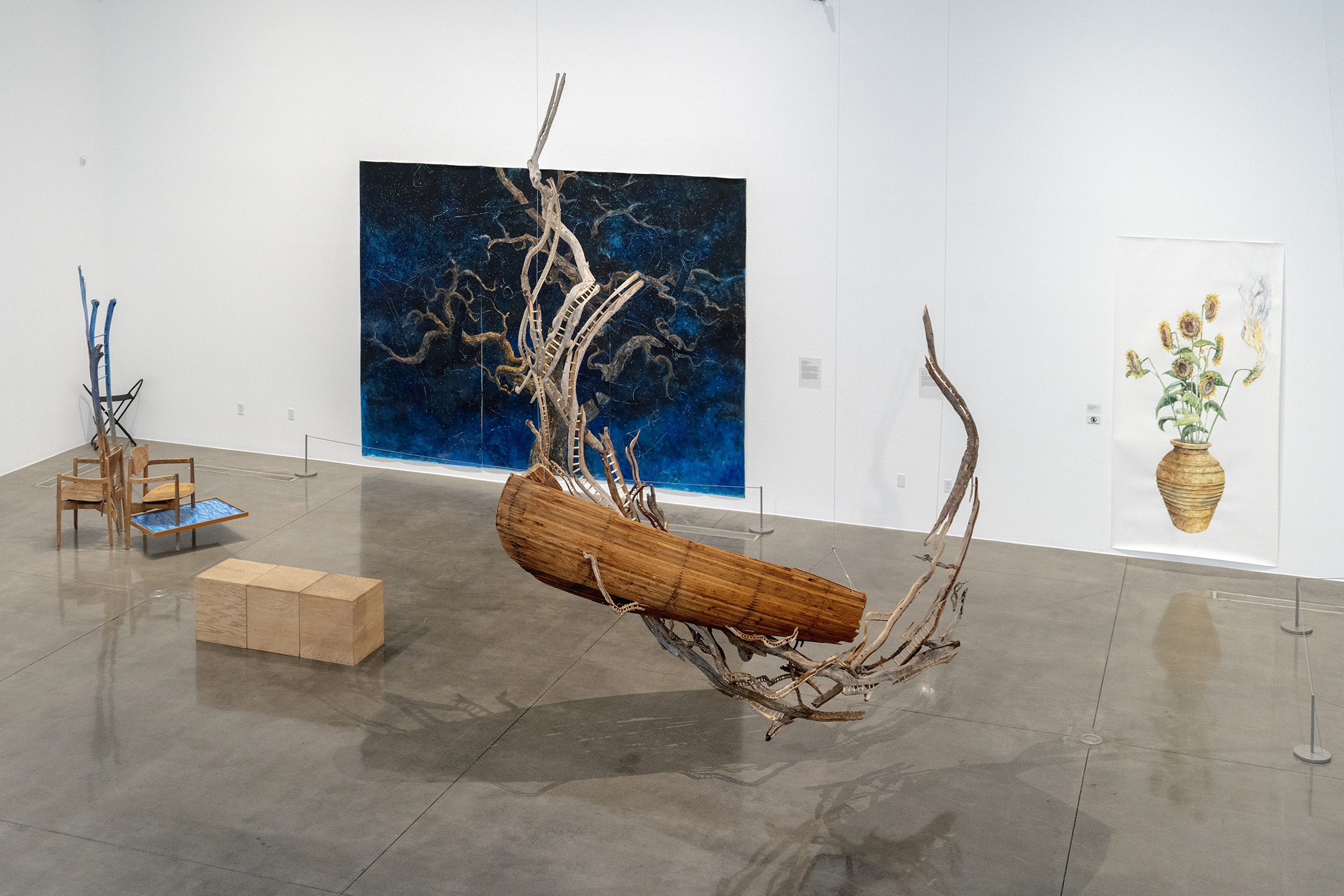
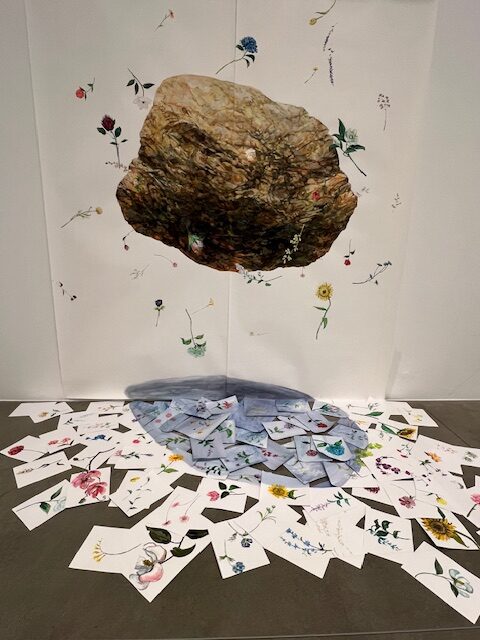
There are perfectly nuanced gouache and watercolor works that glow with inner and external light, installations that upend expectations and move toward delight. This, too, is a fairy tale, but one steeped in the alchemy of nature and the ache of the human heart.
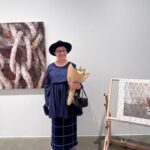
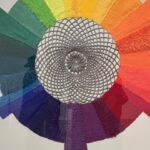
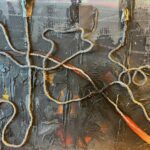
Sharon Kagan’s Bearing Witness is also woven with deep meaning, both literally and figuratively. Working in both mixed media painting, drawing, and textile work, her exhibition is finely wrought. Her knitted, linked, conjoined, and wonderfully sinuous sculptures explore both pain and compassion along with a profound sense of strength.
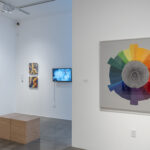
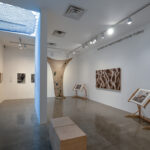
That strength and deep emotions is carried in both her use of seemingly fragile materials and through an indomitable subject. Her beautiful work explores both her own experience of human connectivity and her connection to the trauma of the Holocaust as a survivor’s daughter.
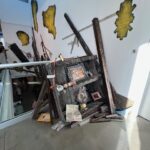
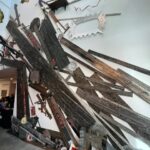
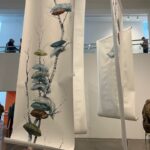
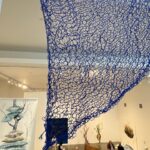
Other MOAH exhibitions include the expansive sculptural installation by Bachrun Lomele, Burn Pile/All Kinds of Murmuring Here and There which includes anonymous phrases and statements made by residents of the San Joaquin Valley, reconfigured to serve as symbols for the disjointed and ever mutable world we live in today. The installation towers between the two floors of the museum.
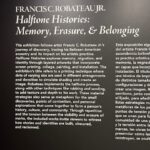
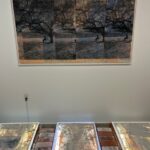
Francis C. Robateau Jr.’s Halftone Histories: Memory, Erasure, and Belonging is a hauntingly lovely mix of screen printing, collage, and painting. There are Mayan ruins and Lamanai sites in Belize as well as images from the LA area depicted here, each adding not only accumulated visual layers but a sense of the layers of history and ancestry, self-discovery, and communal heritage.
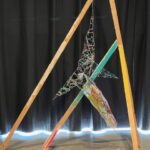
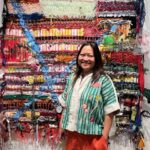
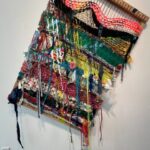
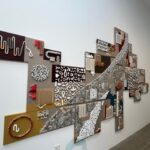
Also evoking a sense of heritage and cultural reimagining is artist Diane Briones Williams in her The Precarious Life of the Parol, where mixed media and textile works examine not just sculptural weavings but the memories and past history of her Filipinx identity.
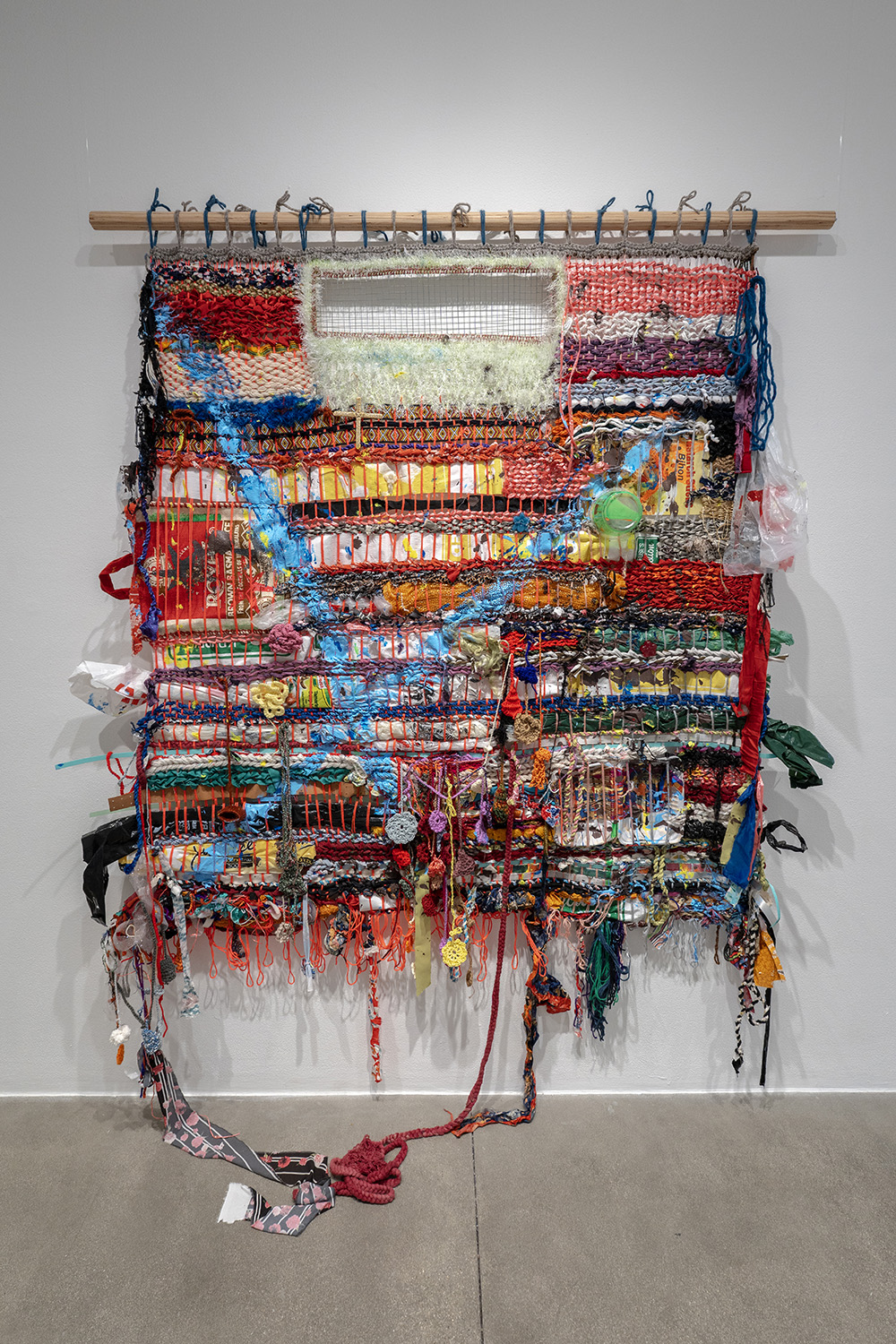
Jubilantly colorful and bearing the weight of collected detritus, each image is complex and carefully rendered.
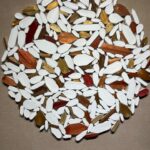
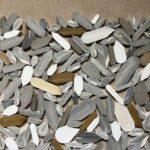
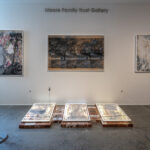
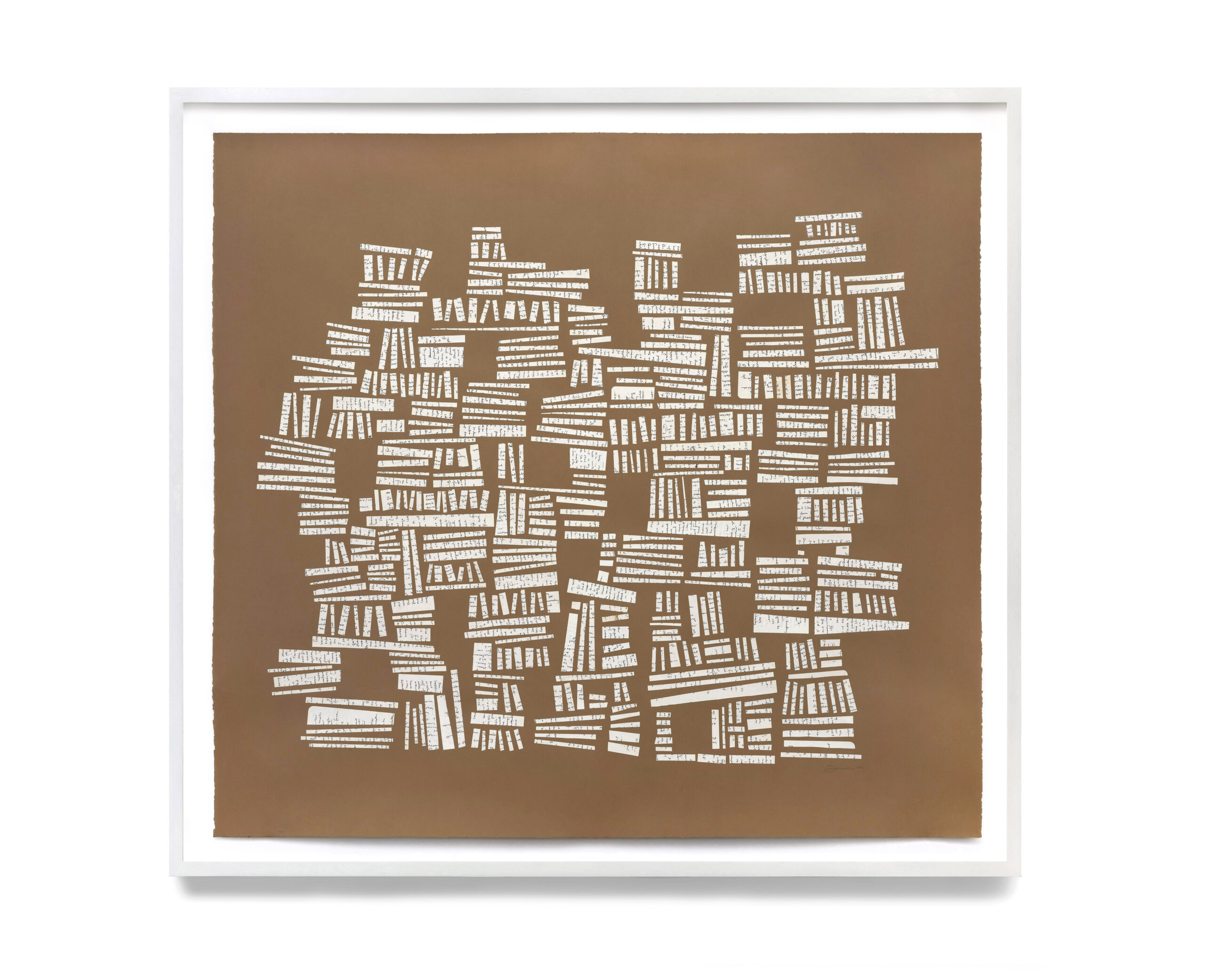
In contrast, it is a loss of heritage that makes the focus of Brian Singer’s It was a pleasure to burn.
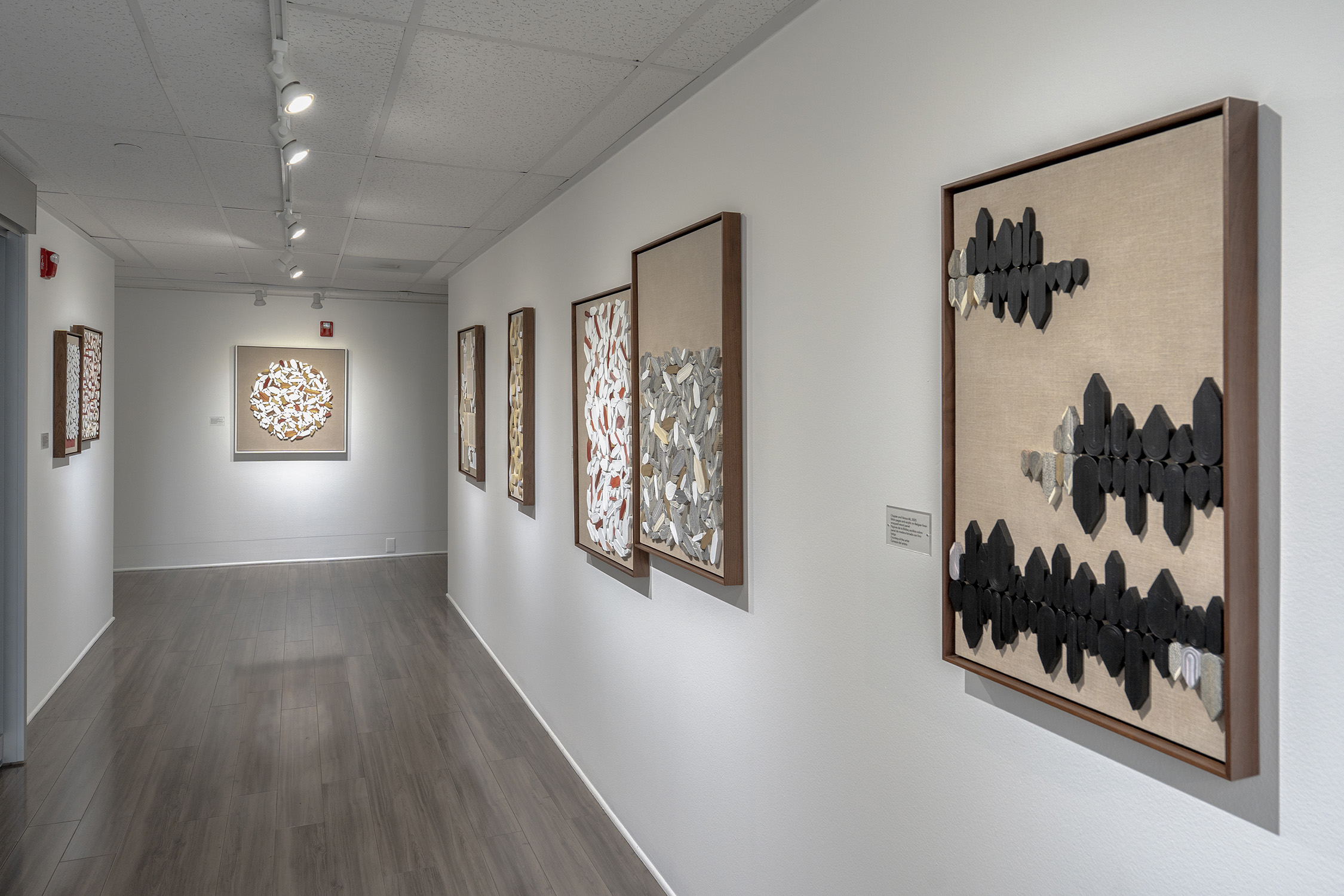
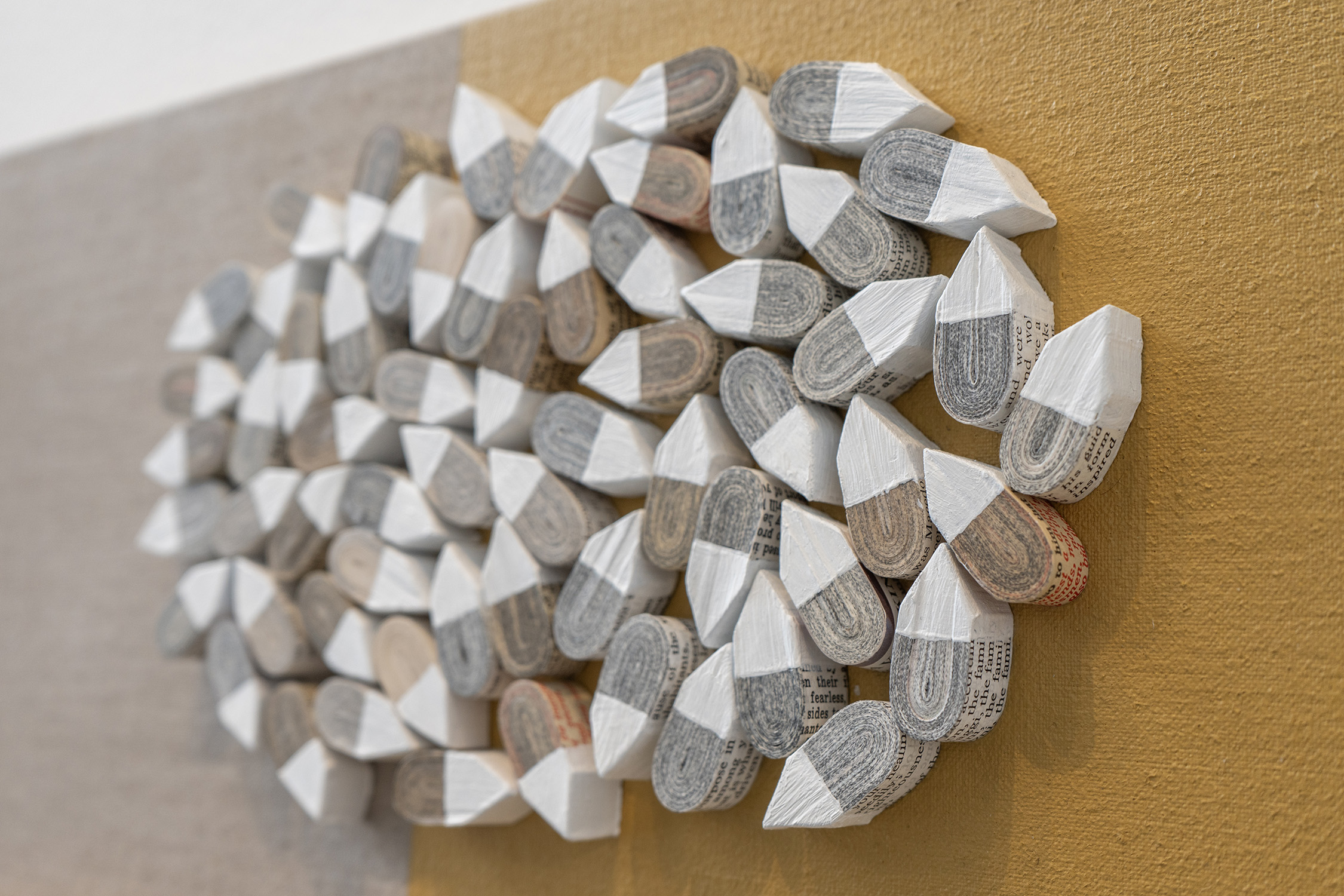
In this exhibition, the artist examines the power of words, utilizing the text of banned books and the Bible to create beautiful, muted mosaics made of compressed book pages.
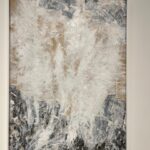
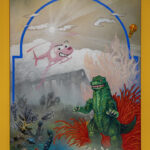
Taken together or individually, the museum’s Metaphor is a beautiful mix of the representational and abstract, of deep meaning arising from stories writ large and luminous. Experience the joy and absorb the stories: you will be wiser and happier for making the drive.

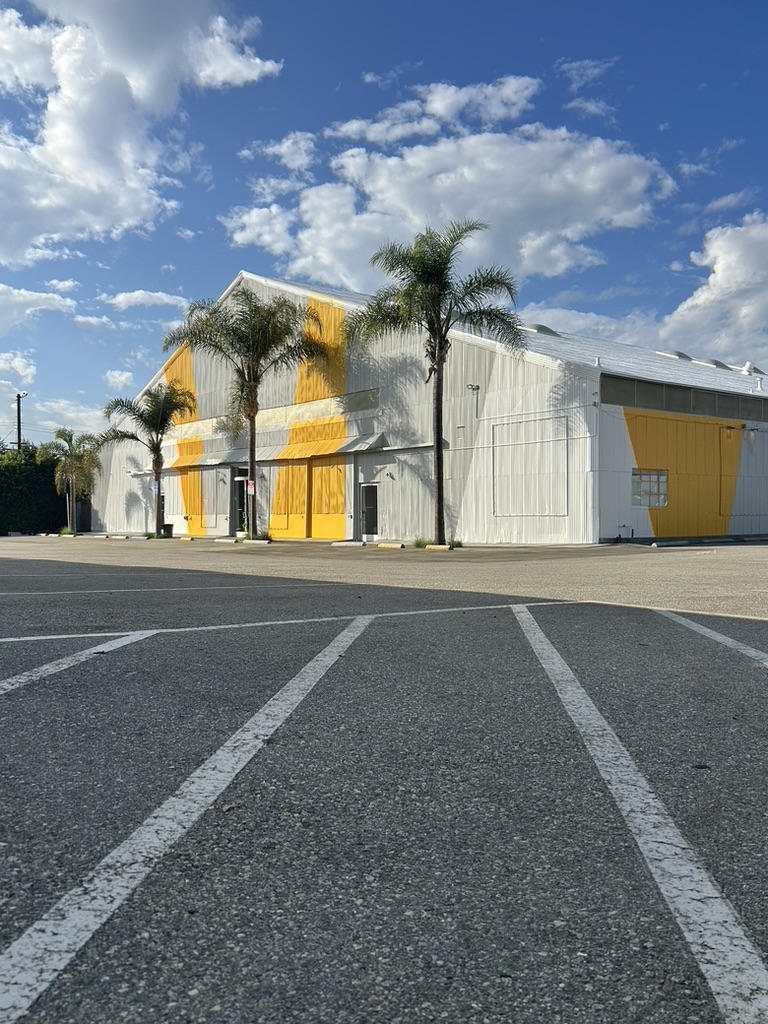
MOAH is located at 655 Lancaster Blvd. in Lancaster.

  • Genie Davis; photos by Genie Davis and provided courtesy of L.A. Art Documents 
We Are All Under One Roof

We Are All Under One Roof – Genie Davis

Opening Sunday, February 22nd at Santa Monica Studios at the Airport Arts Center, Under One Roof is a sweeping exhibition featuring 32 artists. The show is located in a space managed by LA’s Community Arts Resources and is curated by Peter Frank. The title speaks not just to the artists who are in the show, who work in the Airports Arts Center complex, but to the zeitgeist of today’s world. Despite the many fissures, cracks, and divides, we all live in one world, under one roof of sky.

The works are as varied as the artists creating them, ranging from painting to sculpture, photography, drawn images, ceramics, and textiles. Exhibiting artists include:

Melinda Smith Altshuler, M Susan Broussard, Barbara Carrasco, Gregg Chadwick, Claudia Concha, Lola Del Fresno, Alexandra Dillon; Wendy Edlen, Nina Girvetz, Elizabeth Gorcey, Deborah Lynn Irmas, Sara Issakharian, Sheila Karbassian, Annette Miae Kim, Susie McKay Krieser, Sally Lamb, Makala Lee,  Luigia Martelloni, Patrizia Martiradonna, Crystal Michaelson, Mobina Nouri, Margaret Oakley, Sabine Pearlman, Elham Sagharchi, Gwen Samuels, Daniela Schweitzer, Pamela Simon, Doni Silver Simons, Julie Weiss, Joan Wulf, Rebecca Youssef, and Leila Youssefi.

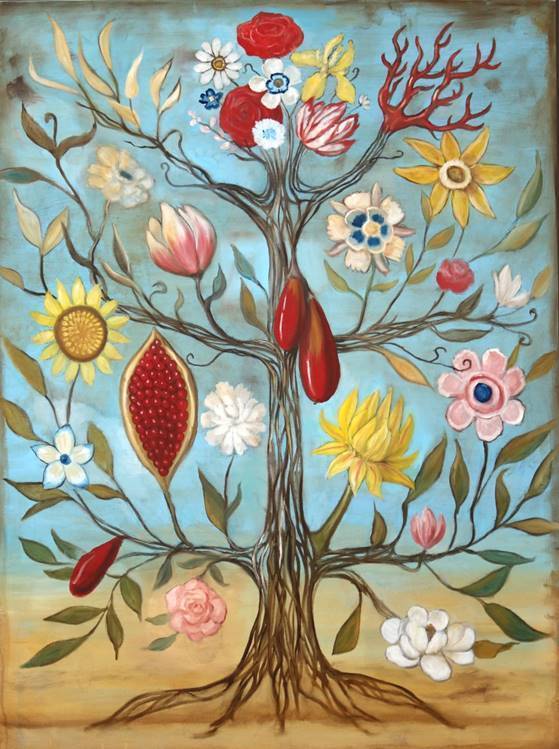
Among the many highlights are Alexandra Dillon’s “Tree of Life,” with its ripe pomegranates and delightful flowers bursting from some seemingly withered branches, speaking to the resilience of life and nature itself.


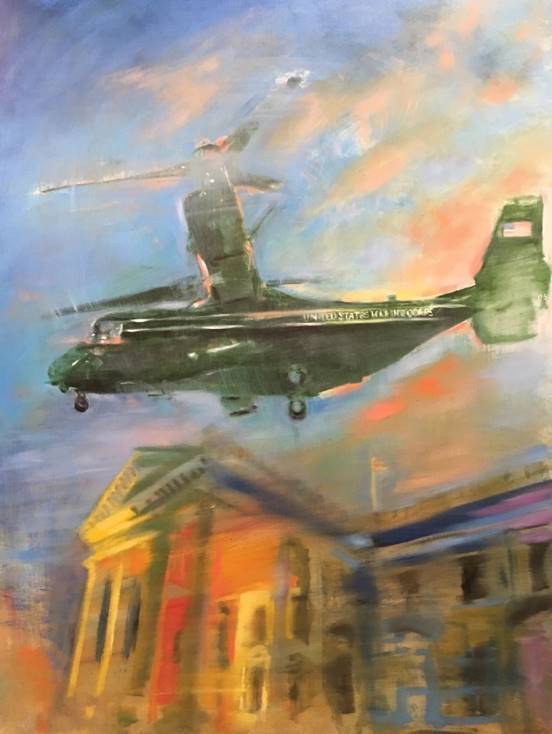
Gregg Chadwick’s “Arrival and Departure” is a softly impressionistic blur of motion with an army helicopter hovering over the White House, an image that speaks to our time while also being quite lovely and mysterious in a wash of golden light. Is someone fleeing the scene? Is someone being protected?


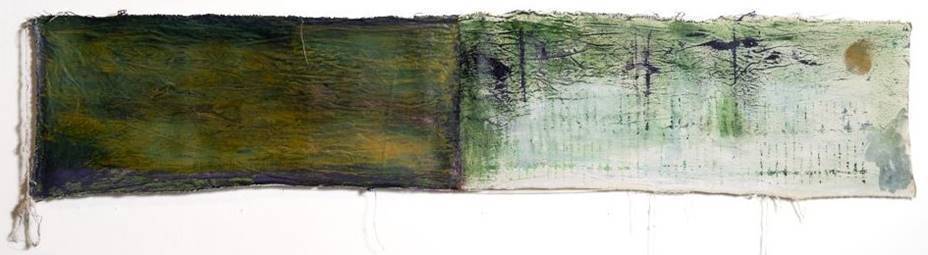
Doni Silver Simon’s “Untitled,” an acrylic on unstretched canvas work, provides a lush, elusive green and olive composition that is quiet but compelling, evoking a forest, a swamp, and a sense of two possibilities, one dark, one light.

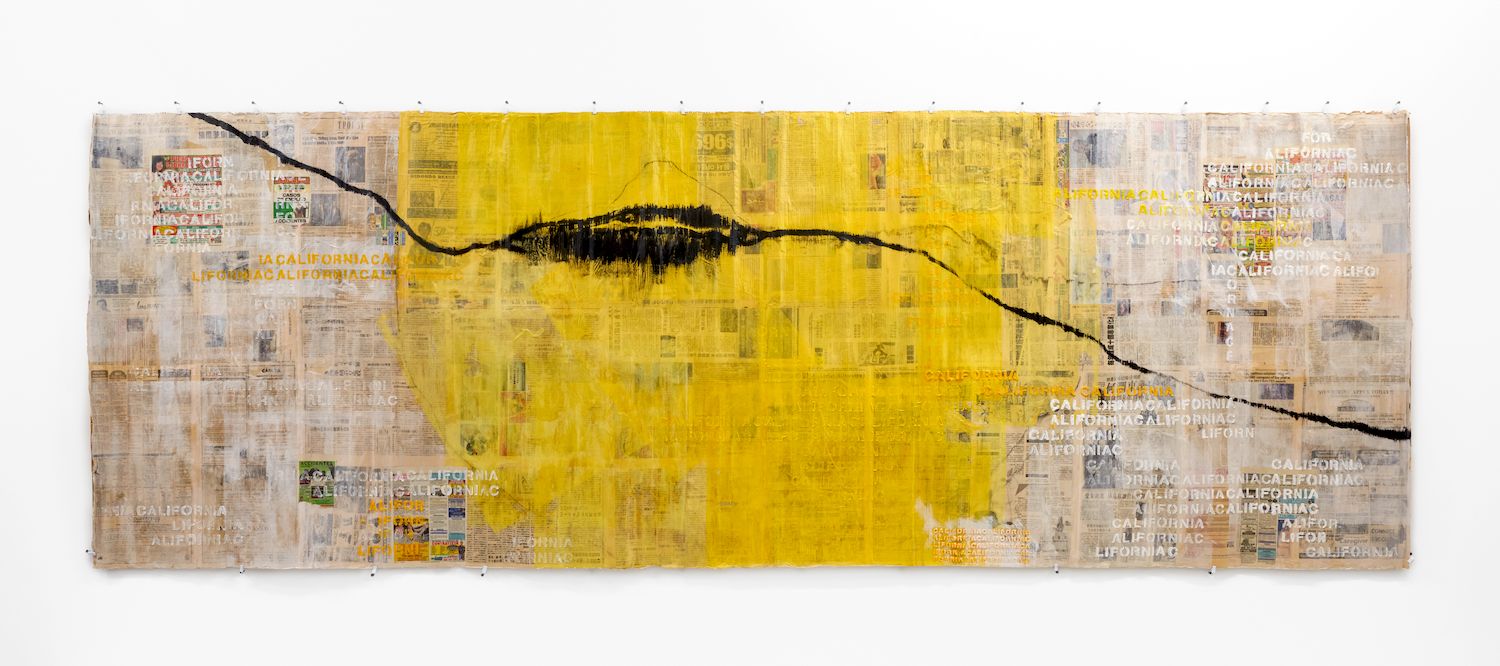
Annette Kim’s “California” is a map and grid with a black chasm in the golden center that speaks to both the potential divisiveness of the natural world – the San Andreas fault, perhaps, and our social divide. The golden state is not entirely whole, and neither are we.

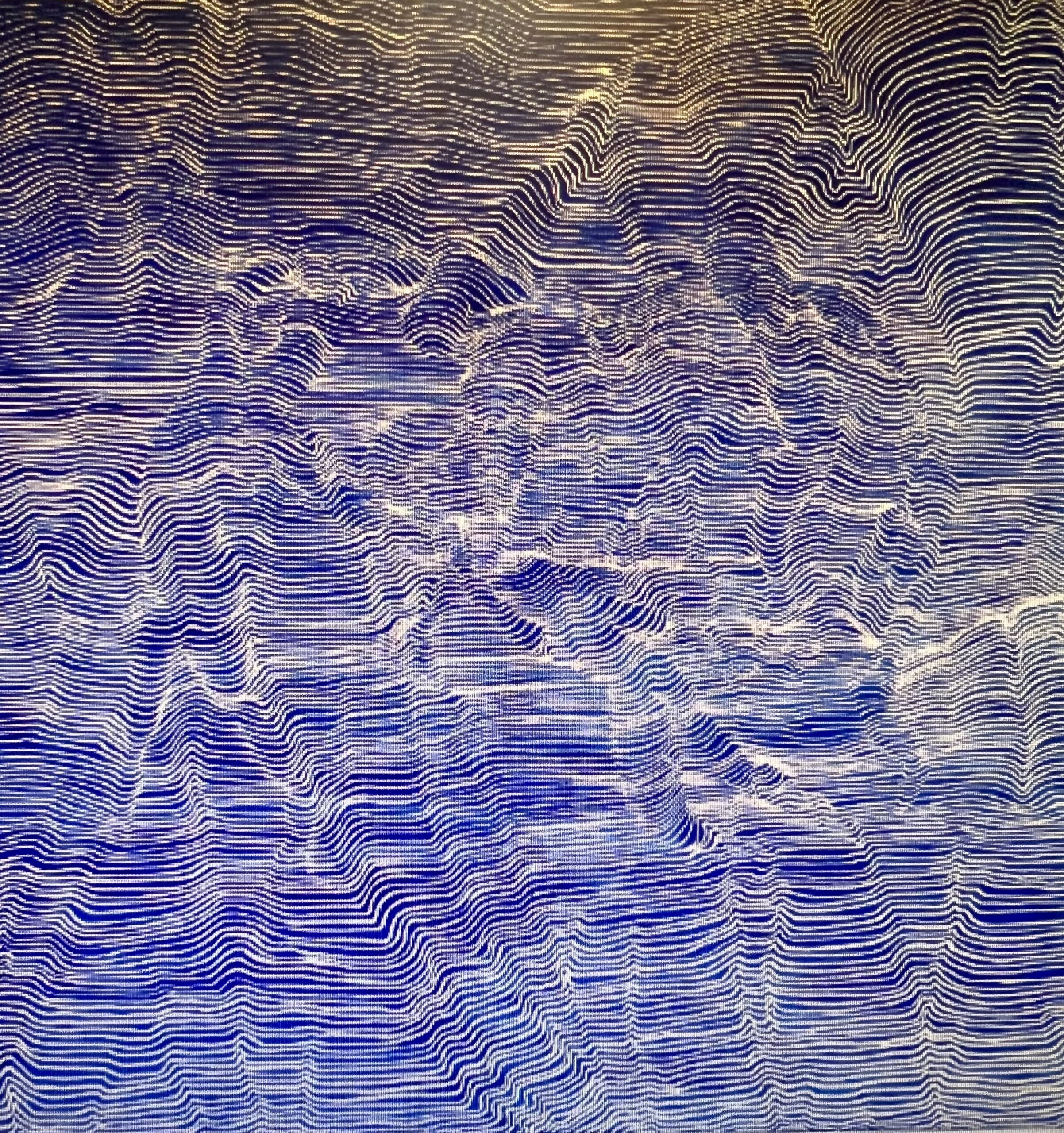
Mobina Nouri offers a hypnotic, wavelike series of patterns, thin and perfect white lines undulating over a rich dark blue background amd tranforming into human figures with a mesmerizing effect.

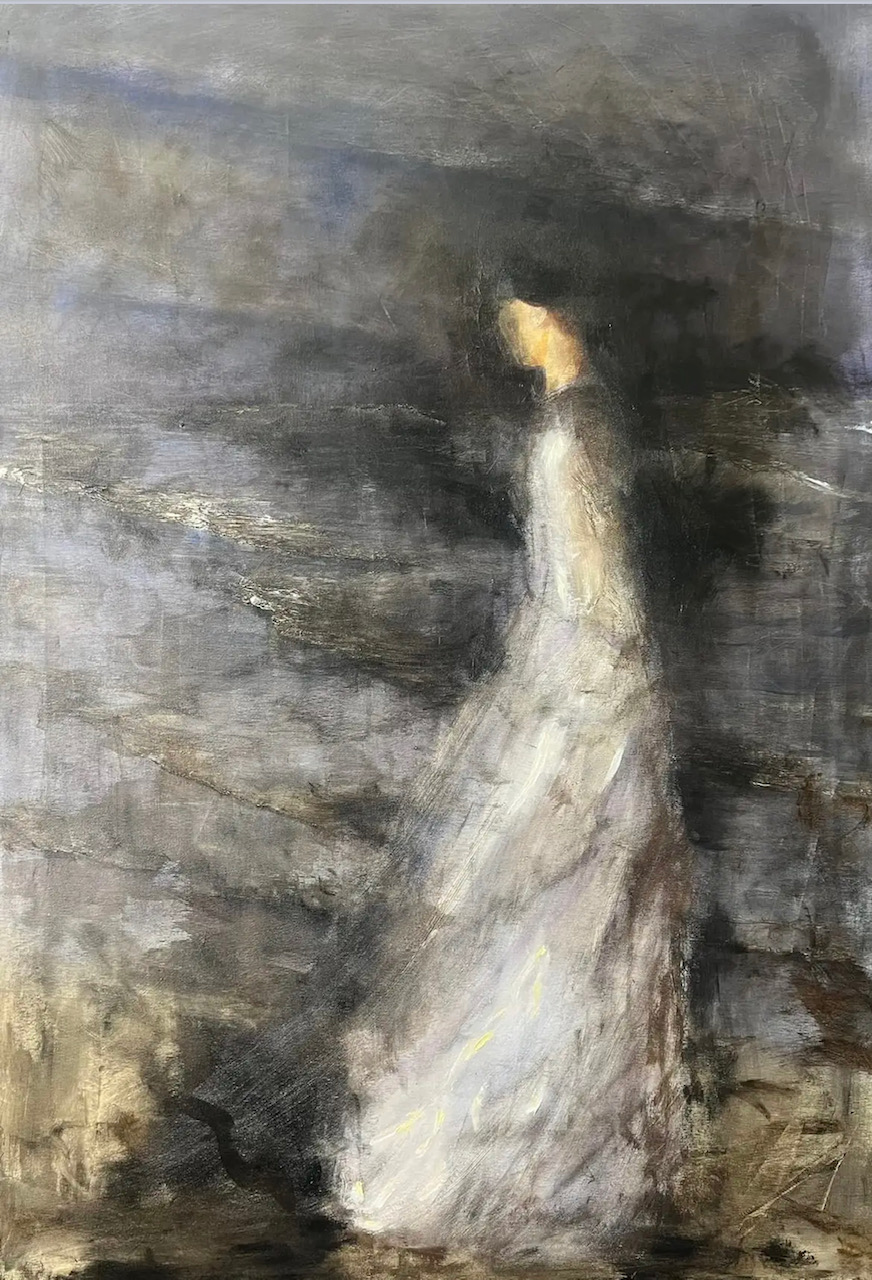
Elizabeth Gorcy’s haunting figurative work, as softly out of focus as the dark background into which it blends, recalls both saints and sinners, Puritan ancestors and witchy women.
Joan Wulf’s “Meditations” reveals a repeated pattern of columns or books, a mind game that matters.

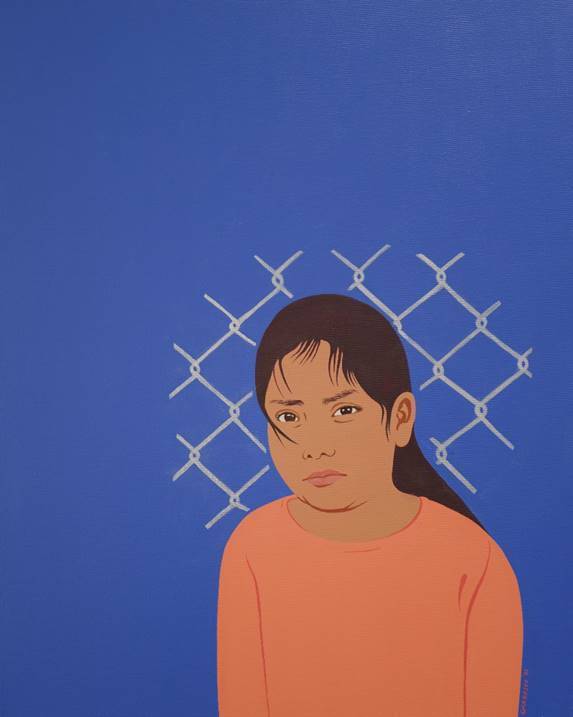
And most poignantly, Barbara Carrasco’s “Detained Girl” is an image of a young, vital immigrant with a wire fence behind her, and undoubtedly around her, an image that provides a clean, sharp, figurative look as real as today’s world.

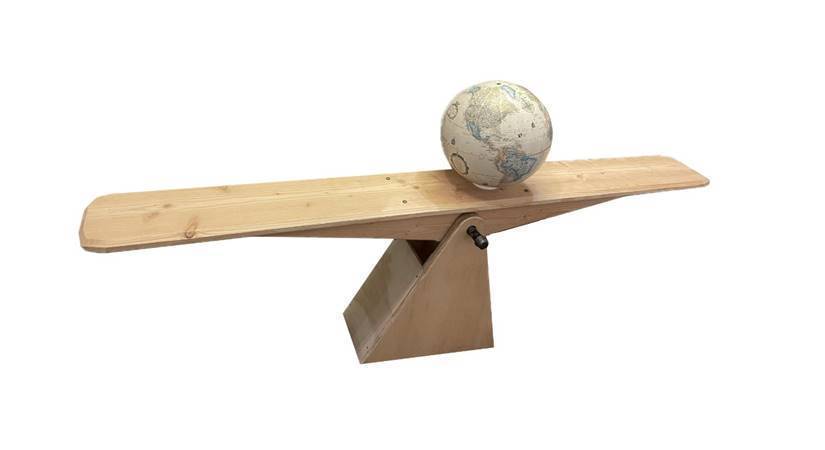
And speaking of the world itself, Luigia Martelloni offers a globe precariously positioned on a wooden seesaw-like base in “Unrooted.”

Each of the works presented here are rich with heart and soul, forming an exhibition that is powerful and bold.

An opening reception is scheduled for Sunday, February 22, from 2 to 5 p.m. at 3026 Airport Arts Center, Santa Monica.
  • Genie Davis; photos provided by the exhibition

Kevin Jacobs: Layered Collages Illustrate Life and Challenges

Kevin Jacobs: Layered Collages Illustrate Life and Challenges – Genie Davis

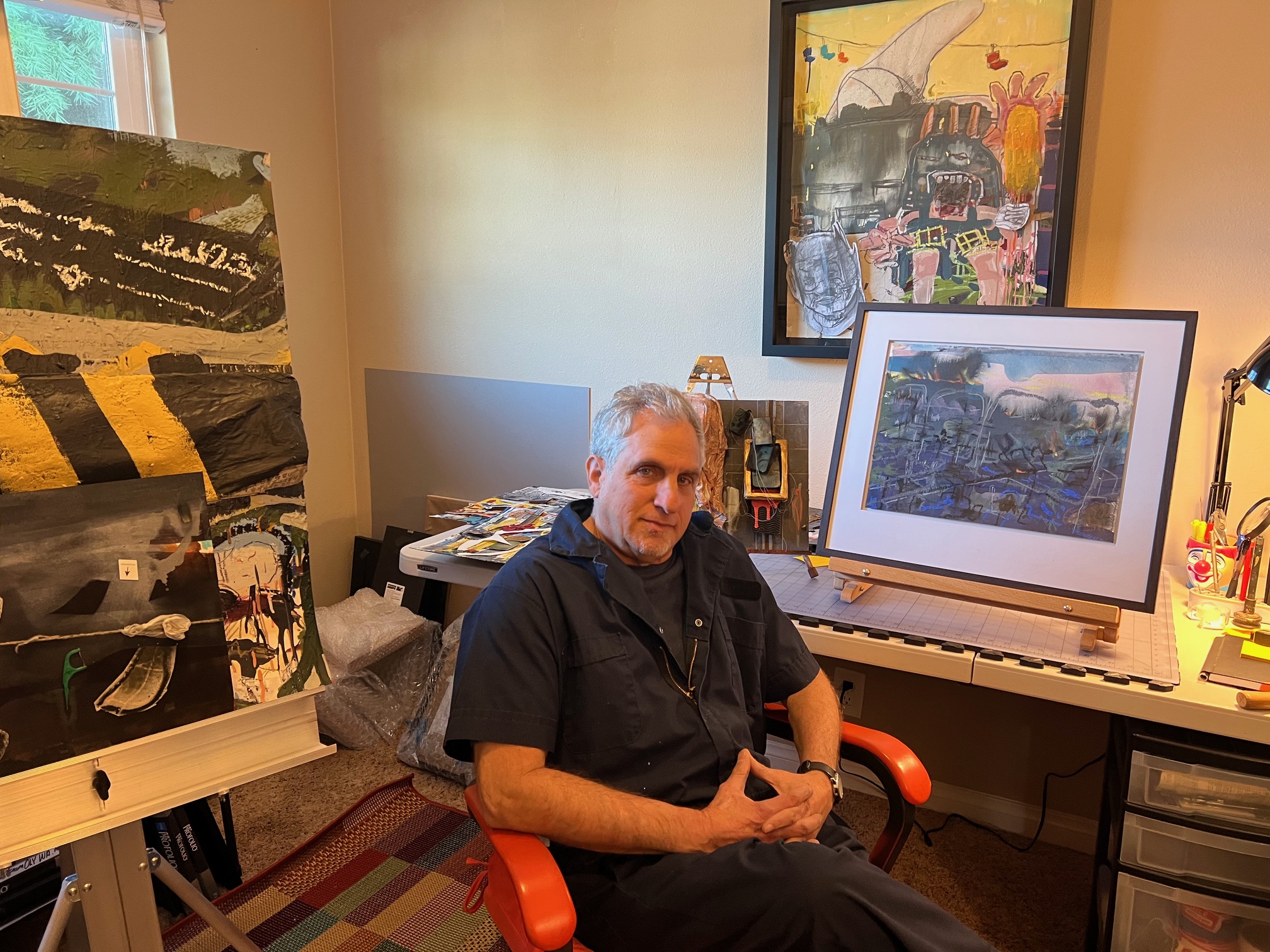
A self-taught graphic artist and fine artist, Kevin Jacobs is the owner of Firestarter Graphics, and a creator of layered, highly nuanced work that takes viewers on a deep dive into rich storytelling and passionate messaging.

Jacobs uses a wide range of material that add to the visual interest and highly textured surfaces of his art. Working with found objects, paint, pencil, YUPO paper, collaged images, household paint, and both oil and watercolor pastels, he mixes humor and hope with a sense of impending dread in some works, and the yin and yang twists of fate that are a part of every life.

Using a variety of found objects and manipulatable substances gives his art a deliciously outside-the-box ingenuity that adds visual interest and a subtext of rebellion that resonates. The artist often chooses acrylic flat house paint mixed with watercolor paint to create his work, basing specific color choices on paint swatches he collects from home improvement stores. A graphic designer for over 30 years, Jacobs admits he is impatient to get on with his work, and often seeks an exact color using those types of paint without resorting to mixing it himself, which is where the house paint swatches come in handy.

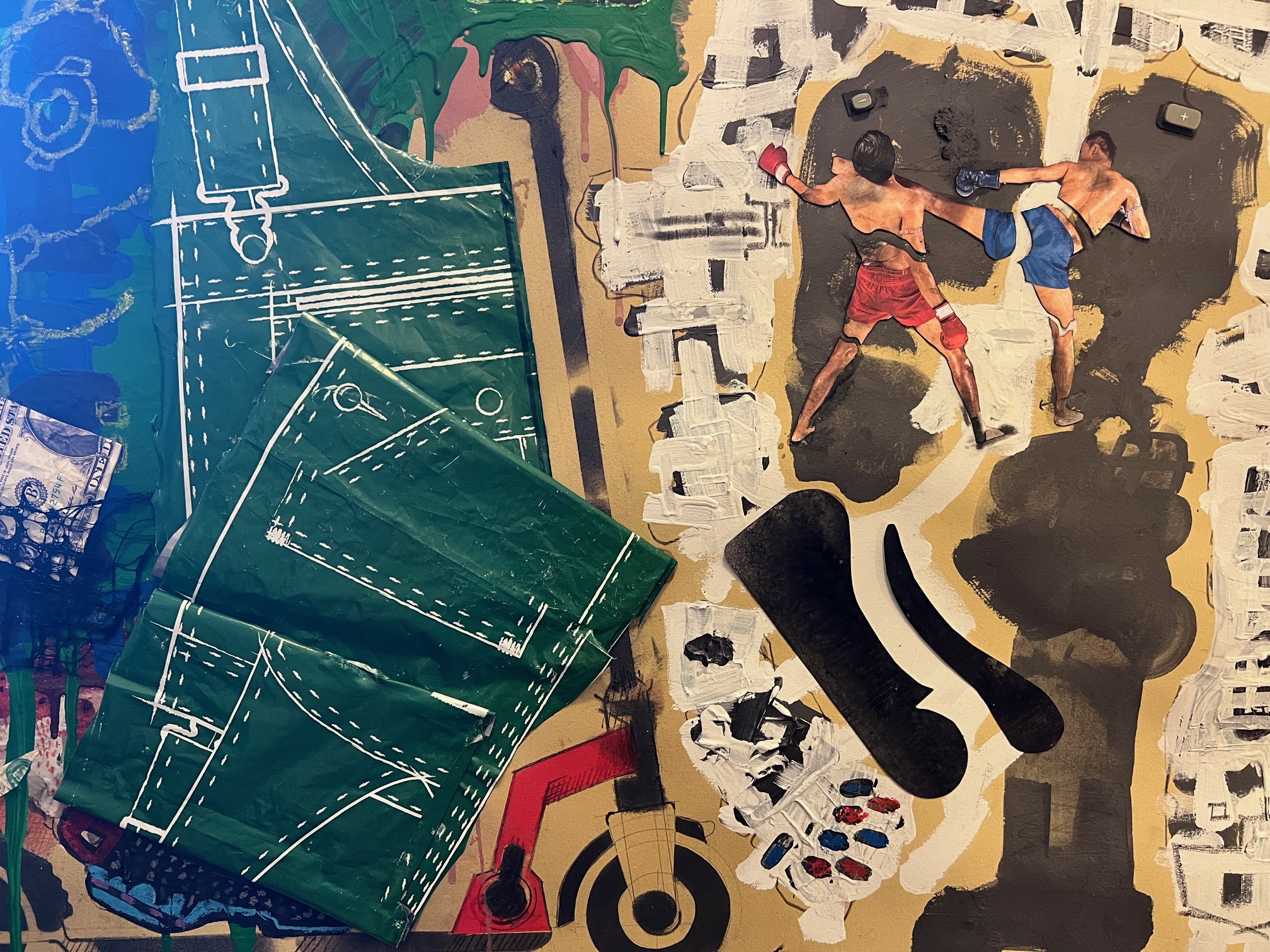
He describes his own work as having an “urban feel, with both the negative and the positive present in any situation.” In his collage “Bullies,” he truly exemplifies the good and the bad, the winner and the loser, the unexpected redemption in the face of fate. His vibrant splashes of painted color and found objects such as a folded green wrapper from men’s coverall packaging shape a work that is as much emotionally laden archeological dig as it is visceral art.

His technique often includes in a graphics design program as a kind of “trial image;” then using his signature mixture of drawing, painting, and found materials, he creates a finished piece, “straight from the heart and mind. I don’t want to spend too much time refining a piece; I want to complete it before my analytic brain ruins it.”

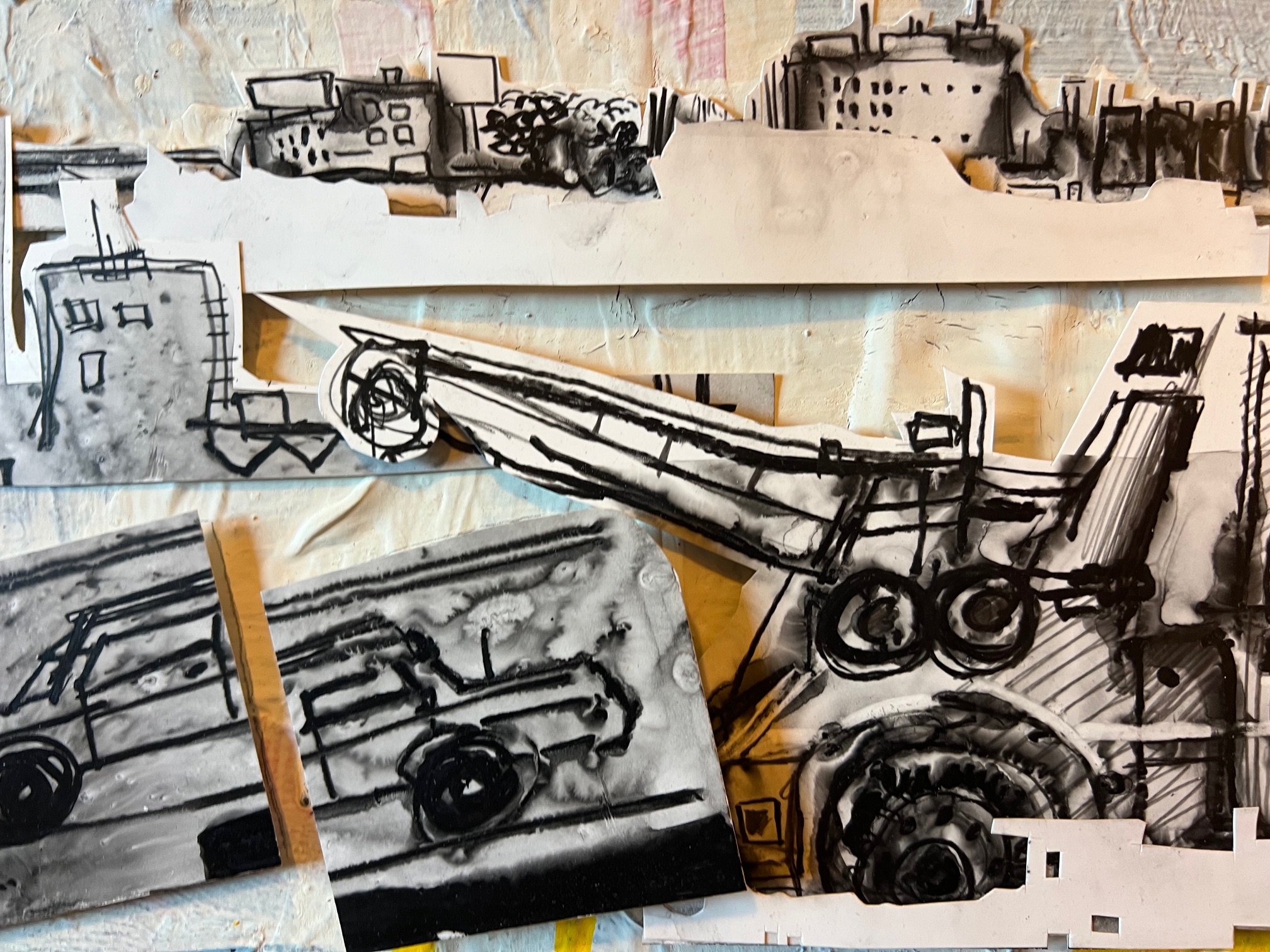
According to Jacobs, each piece “starts with an image in my head, and my poetry brain comes up with the title or there is something that I am thinking about subconsciously that forms a title, and then I work around that.”  One of his many techniques involves drawing with water soluble carbon cake on YUPO paper, creating individual small works that he collages into his larger pieces.

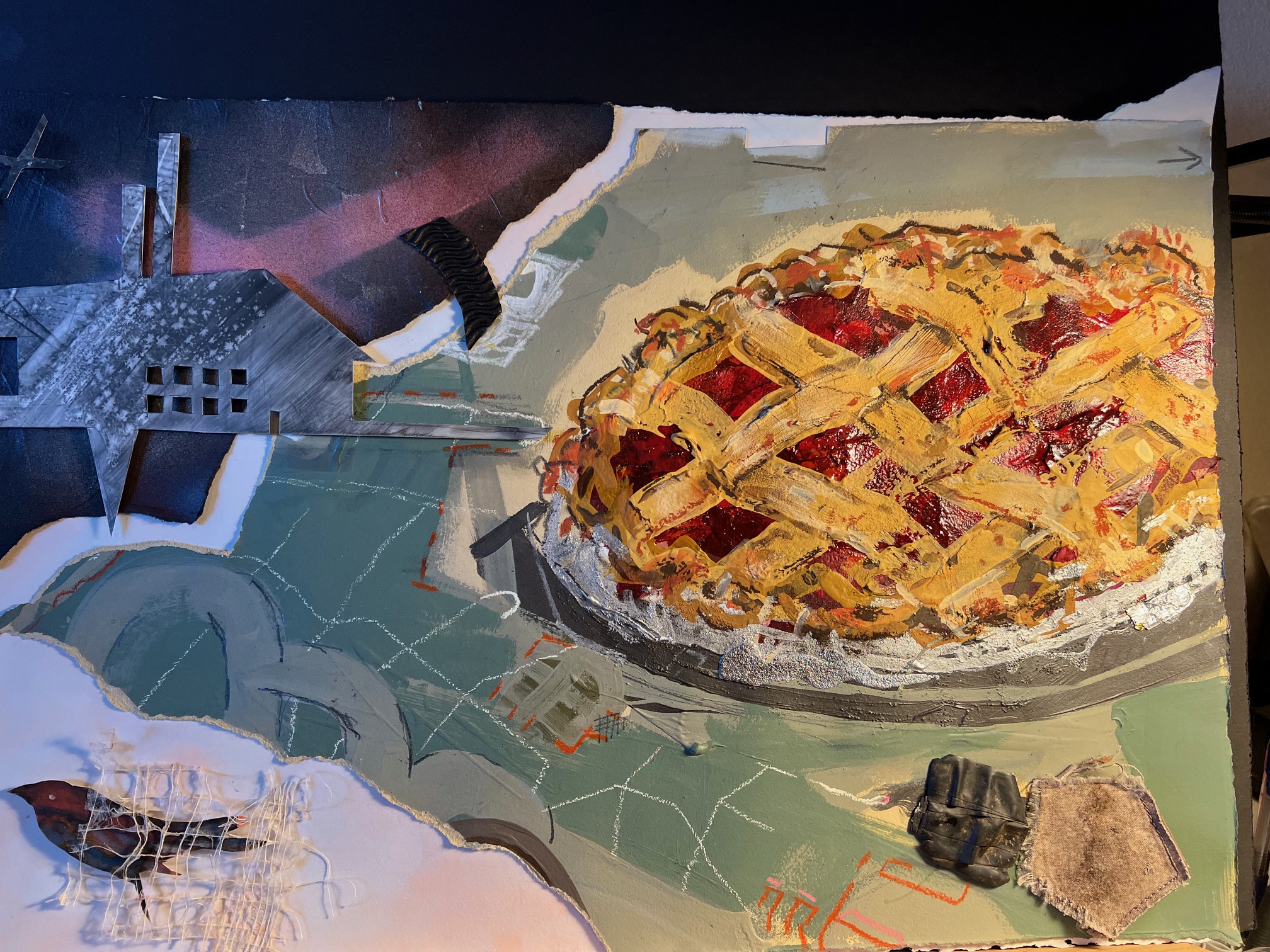
Once recent piece, “Room Temperature” includes a factory building created in this way, a dark, almost ominous structure positioned on one side of a large work that is dominated by a beautiful, luscious looking cherry pie that Jacobs painted traditionally. The idea behind the piece gestated from the artist watching a “documentary about pies made by sweet elderly ladies” and contrasting that with the fact that many pies today are baked in factories and sold commercially.

In the same painting is a perfectly painted bird trapped behind a piece of found netting, which appears to represent a sense of a fractured America, one in which freedom is not so free any more. Curiously the work also includes a small piece of electrical tape in the right corner, another dichotomy with the traditional craft of pie making versus the modern world.

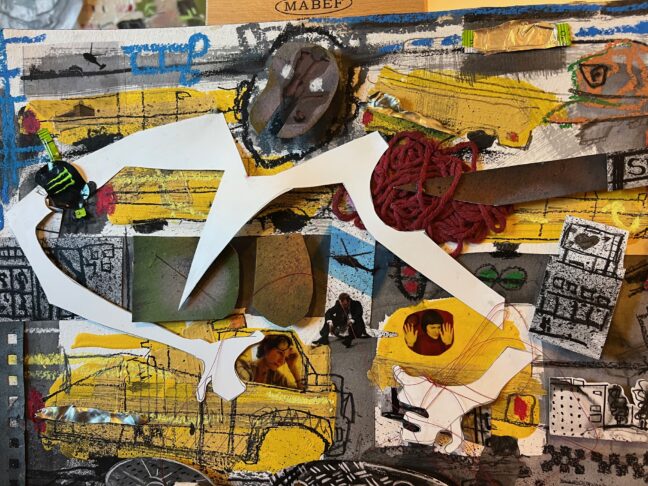
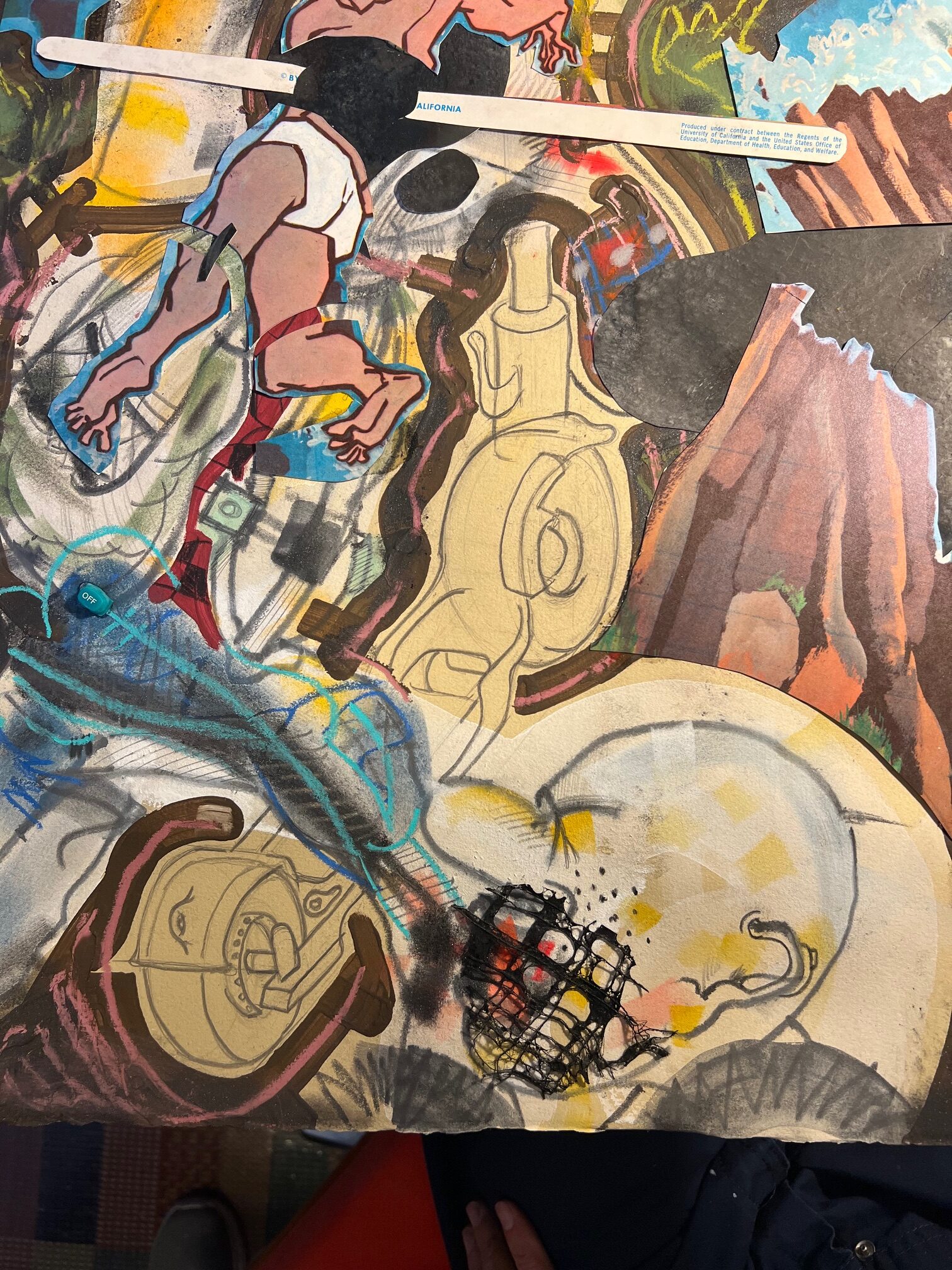
Many of Jacobs’ works involve dichotomy: In “Stolen Scooter,” a mixture of drawn images and collage tells the story of a “bad dude” stealing a scooter in a chaotic, involving work filled with overlapping images and mediums.

Jacobs says he has loved collage his entire life, and “finding random things unexpectedly. I like the sense of surprise and absurdity that can throw me off as well as the viewer.”

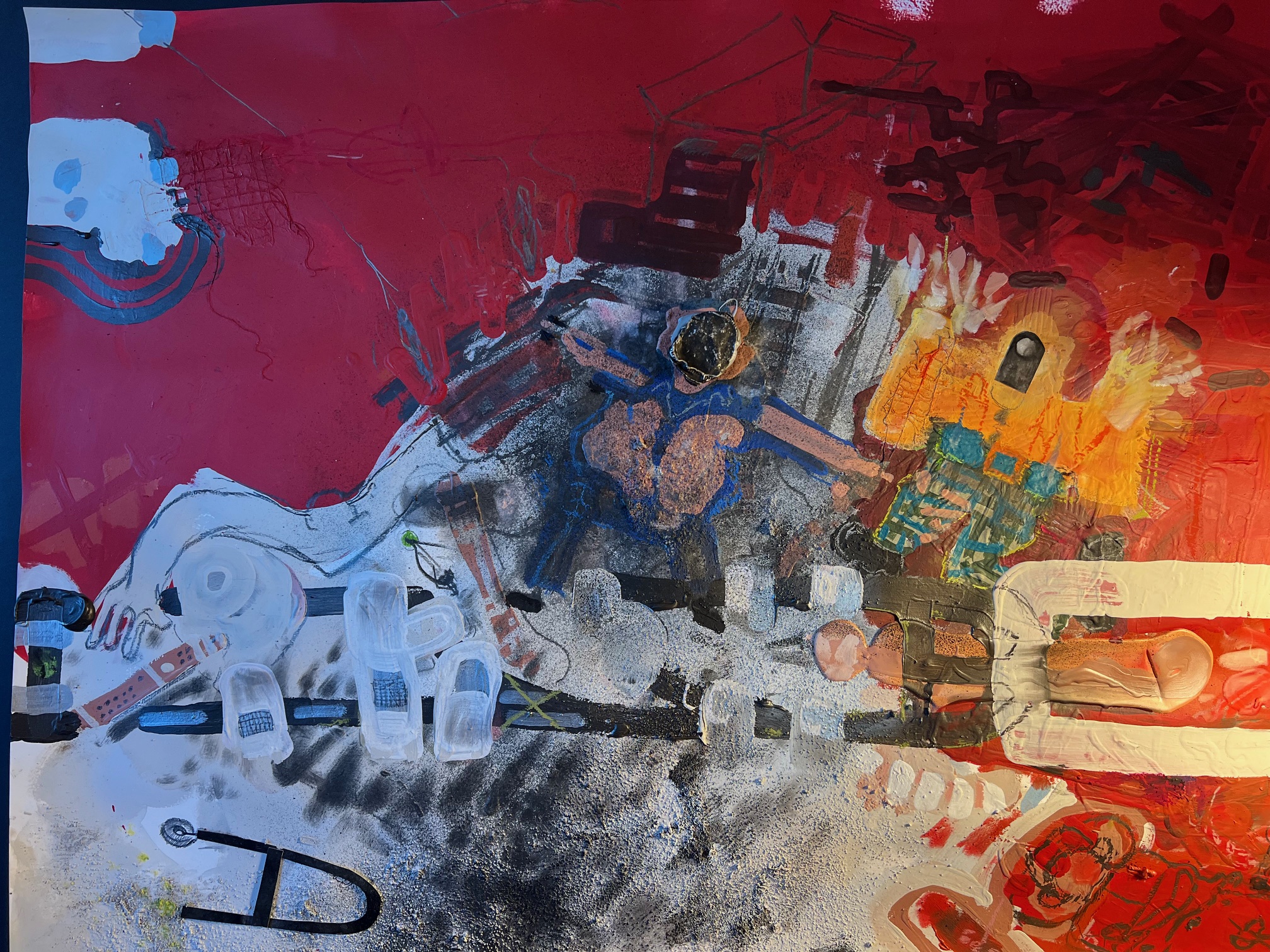
Personally speaking, the artist has had a harsh time in recent years, dealing with his own health problems and the passing of his wife. “Aging” explicitly reveals a sense of “shattered dignity” and a struggle with home health care, the hospital gadgets, the nurse “ghosts” who pass in and out of a haunted existence while recovering from physical ailments. The central figure, the patient, has a face made from a smashed bottle cap.

Yet another work, “Red Tape, Red Flags, and Loopholes” takes on invasive technology from drones observing us to other advancing surveillance technology we have no control over. The work has dimensional pull from raised collage elements, which speak to another love of the artist’s: along with collage he has a great fondness for pop-up books, and terms his art “a poor man’s pop-up book” as well as referring to his images as created by a “poor man’s Red Grooms.” While Jacobs may infer this about his work, there is nothing poor about his art excavations for the viewer experiencing his robust visual storytelling.

Jacobs’ art also touches on other passions in his life: science fiction and music. Once the guitarist in a traveling rock band that also featured his wife as lead singer, his collages also exude a kind of rhythmic pull. One of his works expressly recalls the “sleazy hotels we had to stay in when we were traveling with the band.” That collage, titled “Encrypted Love” contains a visceral anxiety based on a time when these hotels were “awful, sleazy, feeling unsafe and anxious. You stay where you can when it’s 2 a.m. and the band just finishes playing,” he explains.

More lighthearted is “End of Summer,” a representation of the Orange County Fair, with fair food, wacky people, screaming faces, and an overhead skyride. “Drone Lost on a Trail” is a representation of a true story in which Jacobs lost his way on a mountain trail near Olympia, Washington, before drones existed. In this piece, drones drawn on semi-translucent vellum float dimensionally, lifted off the surface of the collage on clear beads.

From a poignant yet humor-laced collage story depicting a speed bump at a mortuary and ghostly footprints visiting a cemetery to a series of works based on building or not rebuilding decimated neighborhoods after the 2025 fires in Altadena and the Pacific Palisades, the artist takes weighty, of-the-moment emotions and shapes them as stories both personal and profound. His fire series includes works titled “Mr. Ash” and “Land Developer” as well as “Downed Wires,” each a meaningful gut punch.

Jacobs, an LA native, even takes on New York City with the ghoulish figures and bright yellow taxis in “City Scarecrow” and its companion piece “New York City” that features an image of a tow truck fracturing a car being towed.

Regardless of medium, from printmaking and monotypes to graphic designer and fine artist, Jacobs visually tells stories laced with humor, heart, pain, and passion. Bold and inventive, this is an artist who encourages viewers to experience every aspect of human life. And maybe that of drones, androids, and ghosts, too.

  • Genie Davis; photos by Genie Davis


First Foot: Landscapes for a New Year

While this new year has certainly been fraught as far as the current national and global news goes, individually and collectively we still have the chance to put our “first foot forward.”

With First Foot: Landscapes for a New Year, opening this Saturday, January 17th from 4-7 p.m. at Garel Gallery in Manhattan Beach, five artists are doing exactly that with vivid and exciting looks forward at scenes both beautiful and edgy, ranging from the representative to the abstract.

In Scottish, Northern English, and Manx folklore, the first foot refers to the first person to enter a home on New Year’s Day, with that person thought to be a bringer of good fortune for the coming year.  Attending the exhibition might just bring good luck to all viewers, and it will certainly bring five unique visions to start the year right.

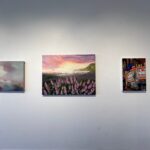
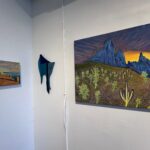
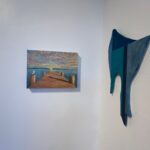
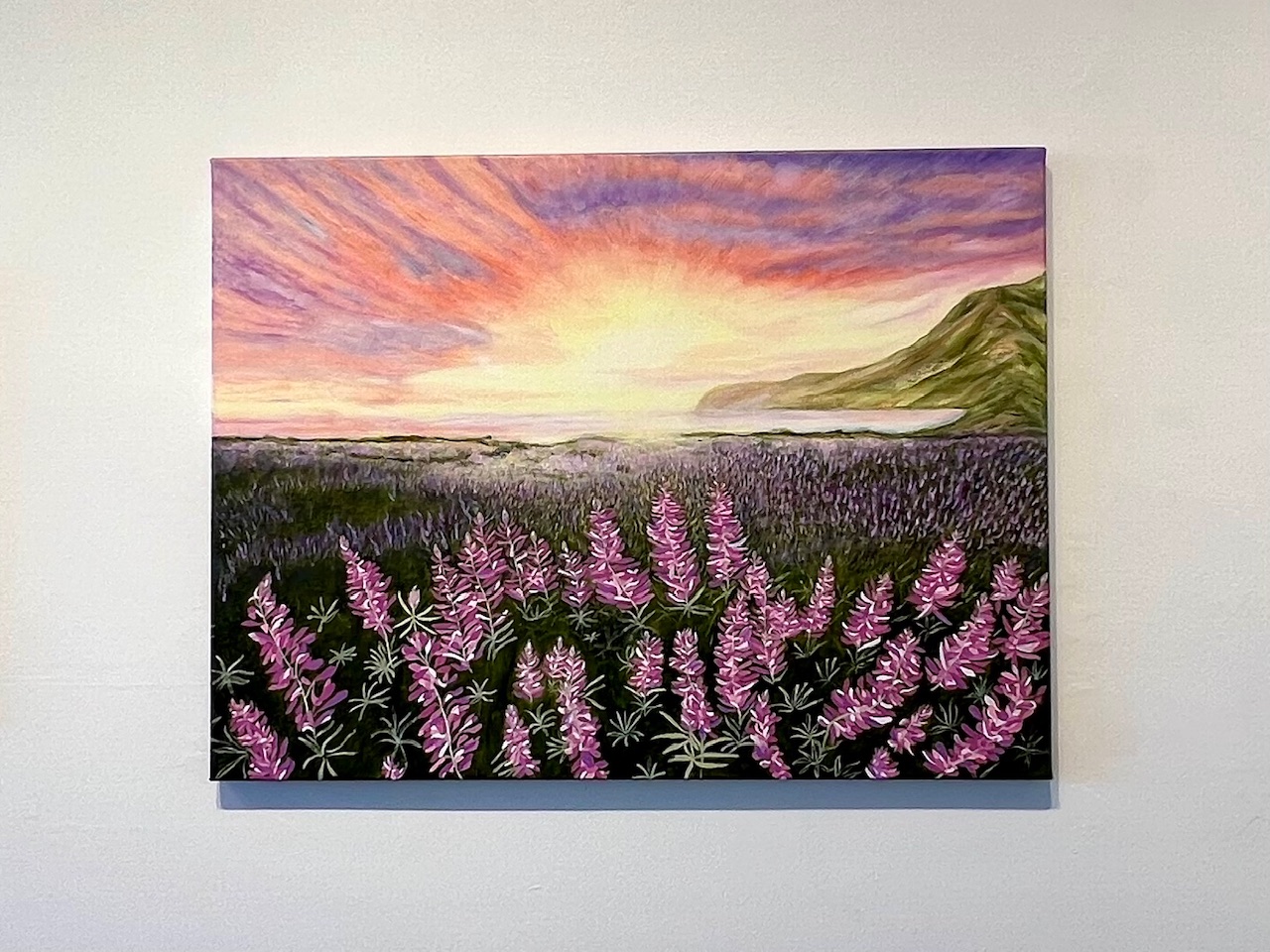
Working in oil, Eileen Oda brings lush and dreamy magical realism in her vividly colored, richly dimensional seascapes and desert vistas that sing with light. There are fields of pale purple flowers with a sky lucid and pink behind them, royal blue mountains, and dimensional, exsculpainted flowers blossoming on a sweeping coastal cliff.

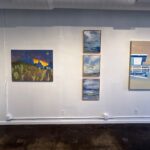
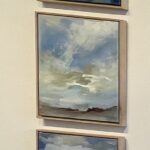
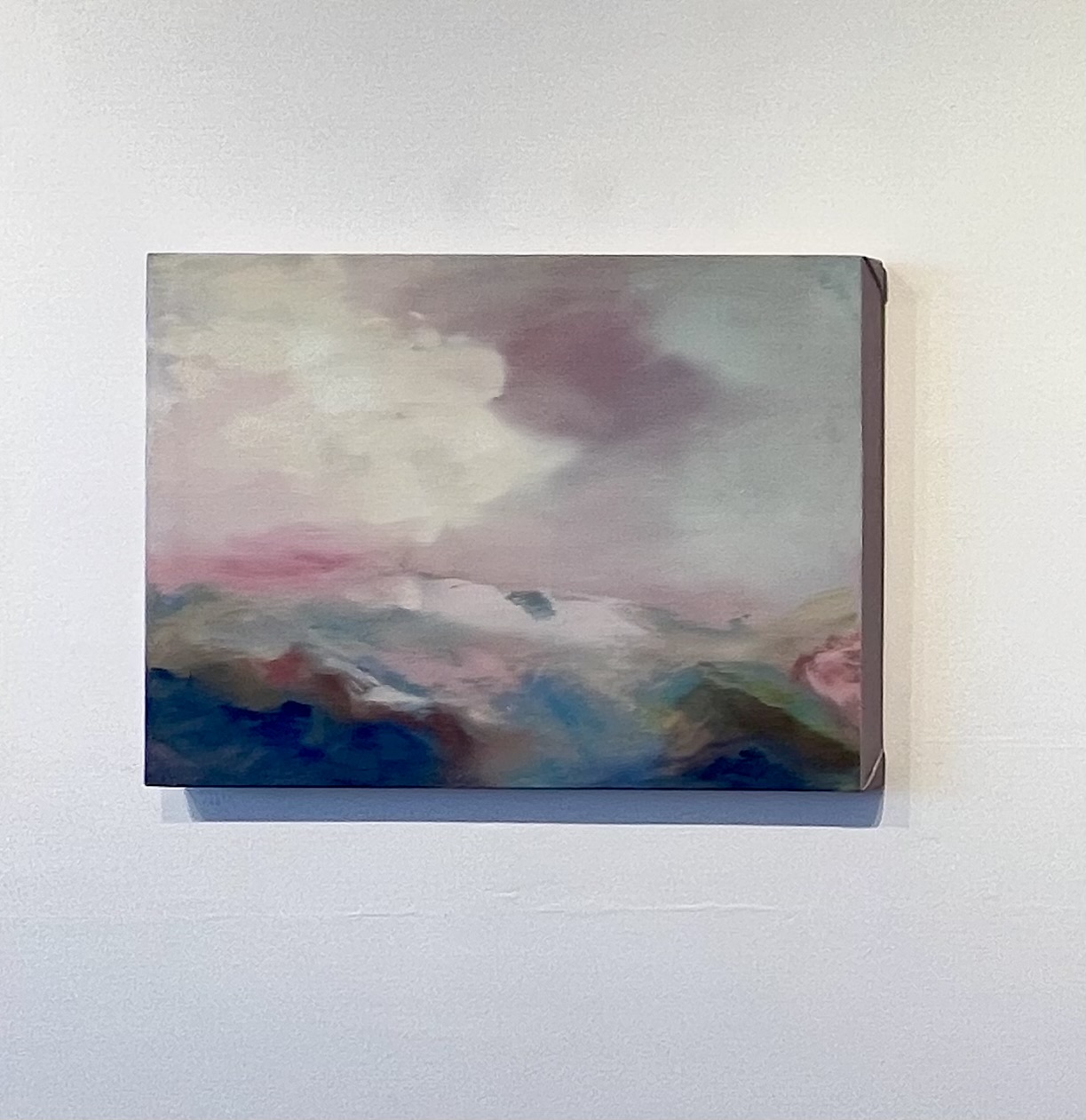
Linda Stelling’s hypnotically blissful, motion-filled images of nature’s beauty invest her mix of the impressionistic and the abstract with wonder. Here are opalescent ocean tides and delicate, moody sunset skies that shimmer dreamily.  Her acrylic on canvas works are immersive and wondrous.

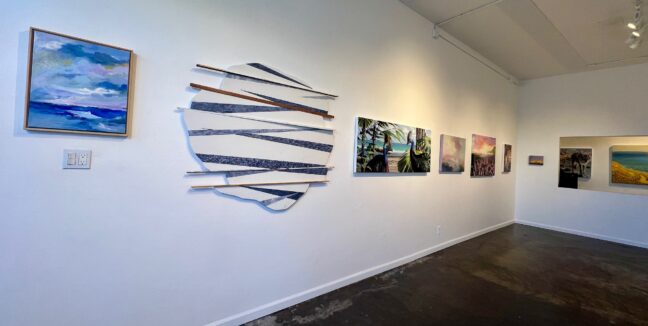
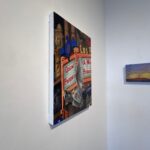
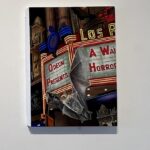
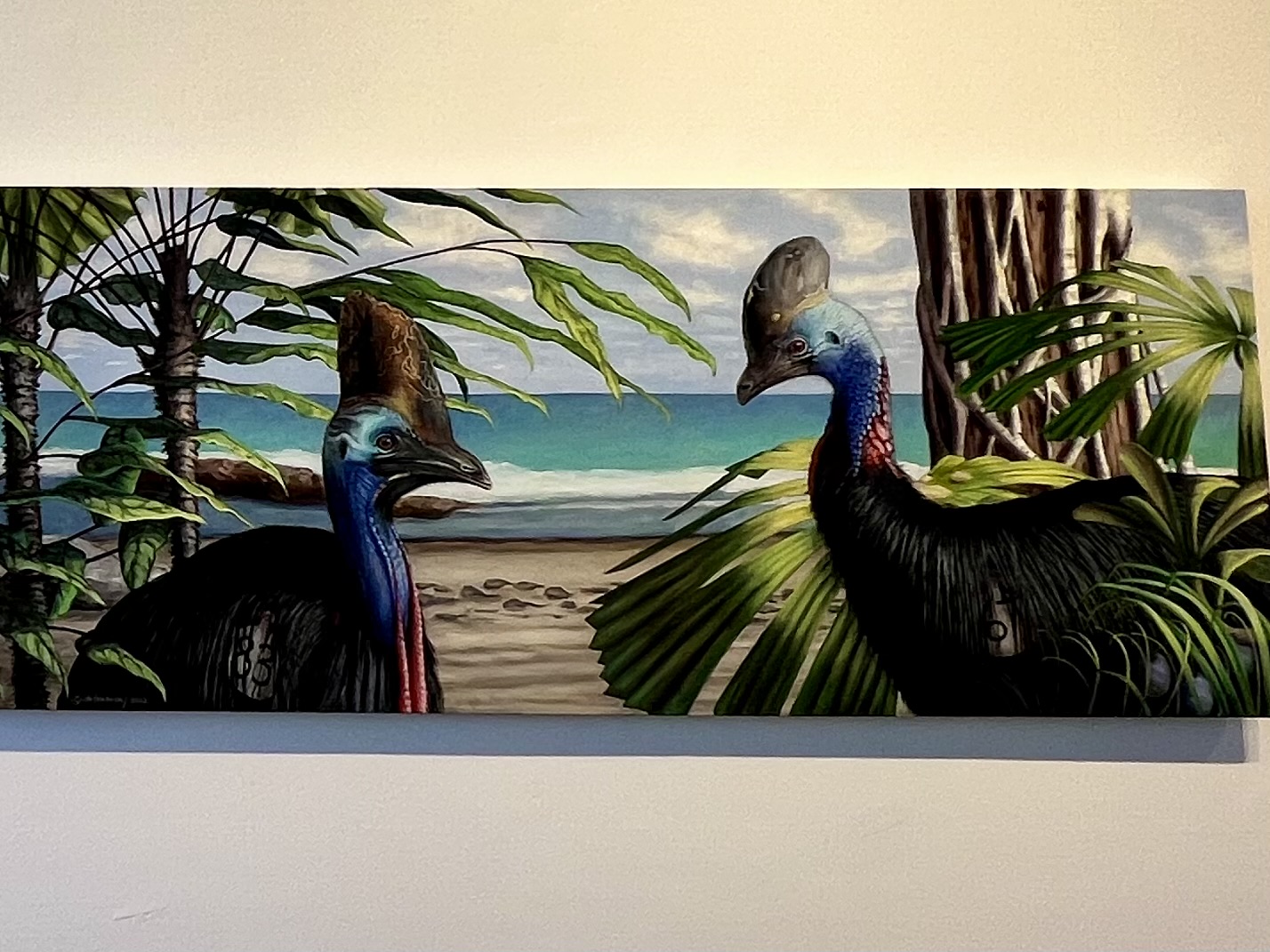
Lynette K. Henderson’s startling urban realism juxtaposes familiar Los Angeles landscapes with the hauntingly visceral animals whose habitats our lives have upended. From a startled bat outside the Odeon Theater marquee to a vigilant coyote by the Santa Monica pier,  and voluptuous flightless cassowaries luxuriating in island palms. these are stunning images pull the viewer

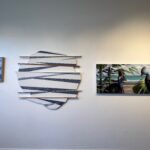
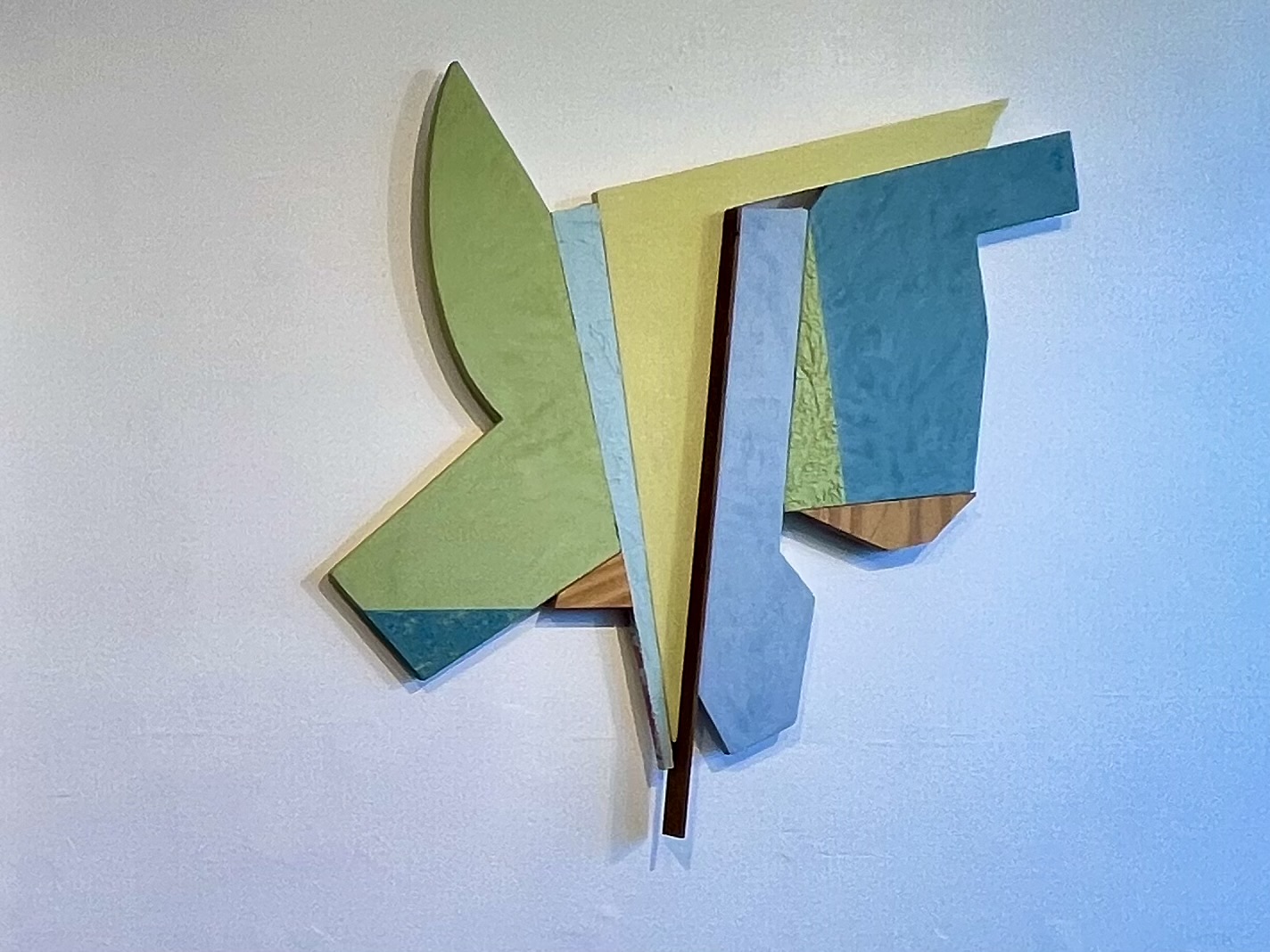
Valerie Wilcox focuses on the landscape of the architectural, reinventing the world around her with mixed media wall sculptures that lead the viewer into a bold, riveting new world. Abstract and utterly involving, these wall sculptures are as compelling as they are contemplative.

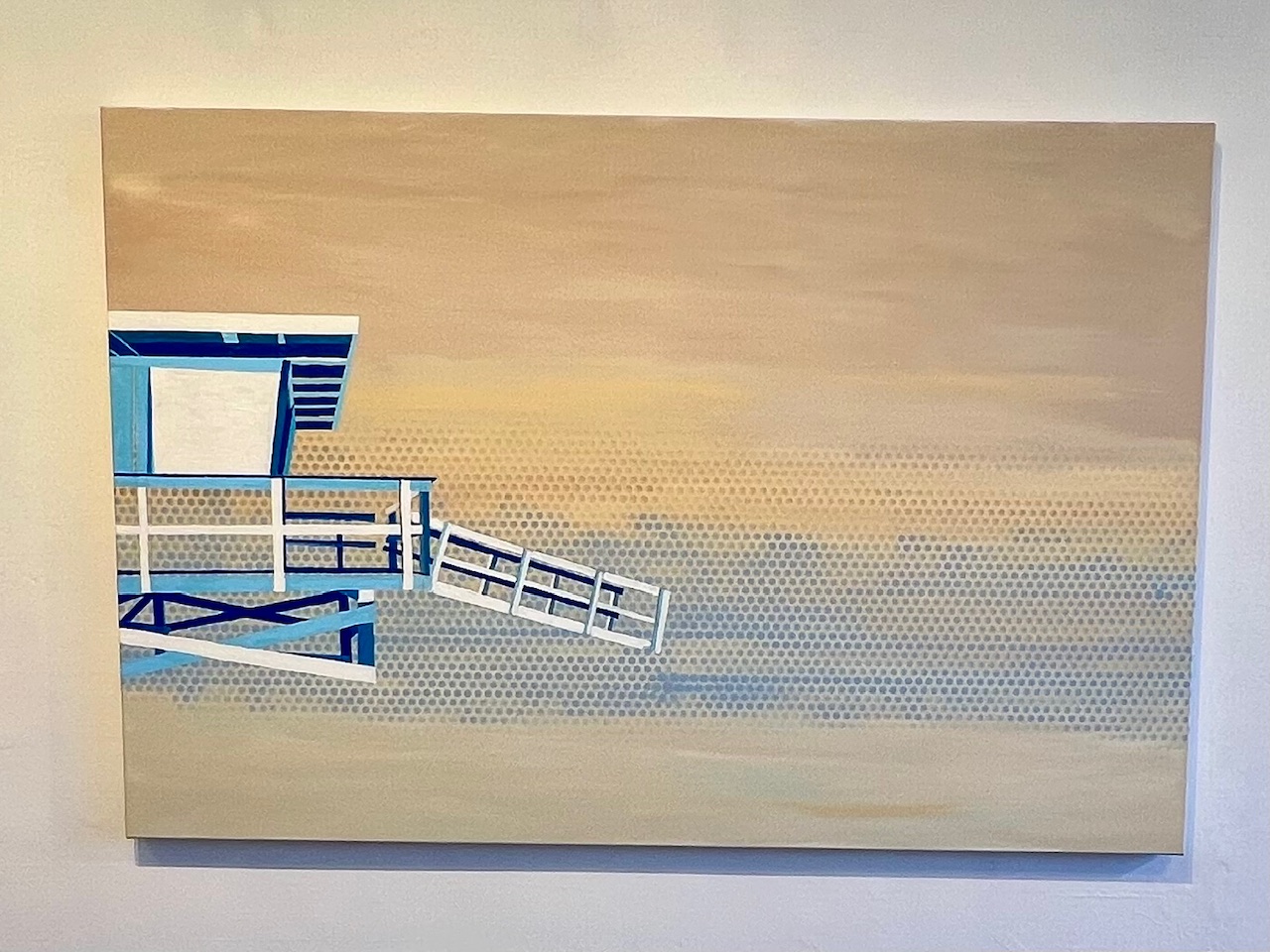
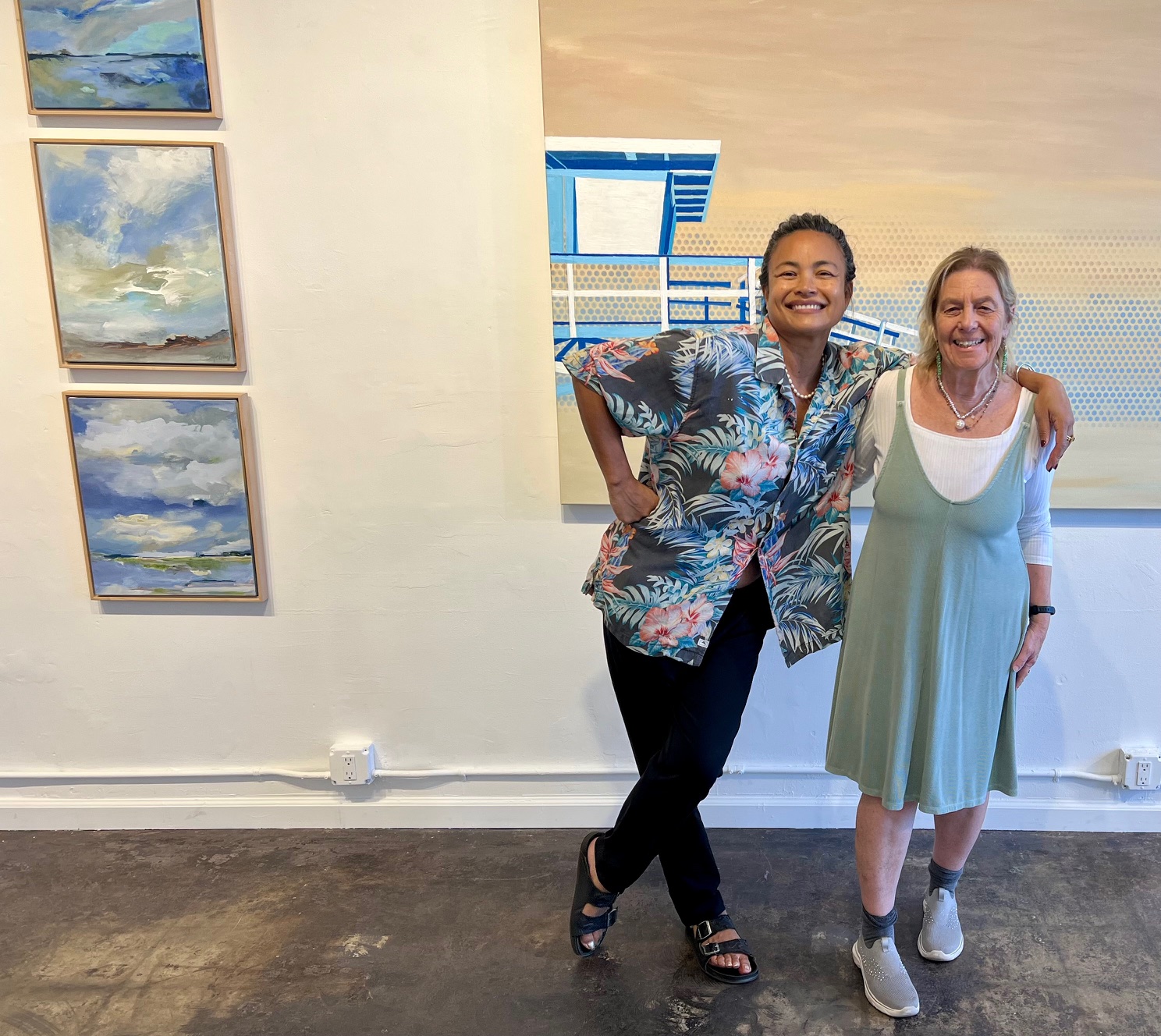
Also exhibiting is gallerist and artist Joanna Garel, whose cool, clean, beach-centric landscapes feature iconic images such as lifeguard towers and sky-brushing palms in a rainbow of colors.

Above: Gallerist and artist Joanna Garel, left; myself, right

Self-involvement noted: I had the pleasure of curating these beautiful works, and with a nod to the (near) future, I will soon be taking over this gallery space with a new name, Diversions Fine Arts Gallery, and many amazing artists. So come get a taste this weekend – after all, we have to step into this new year first foot and all!

Garel Fine Arts is located at 1069 N. Aviation in Manhattan Beach. Tons of free side street parking.

Opening reception: Saturday, January 17th 4-7 p.m.
Artist talk and closing: Saturday, February 7th 3-5 p.m.